
If there’s one piece of furniture clients consistently underestimate, it’s the humble bar stool. They’ll spend weeks agonizing over countertop material and cabinet color, then grab “whatever stools are on sale” as an afterthought. I get it — but I’m here to change your mind.
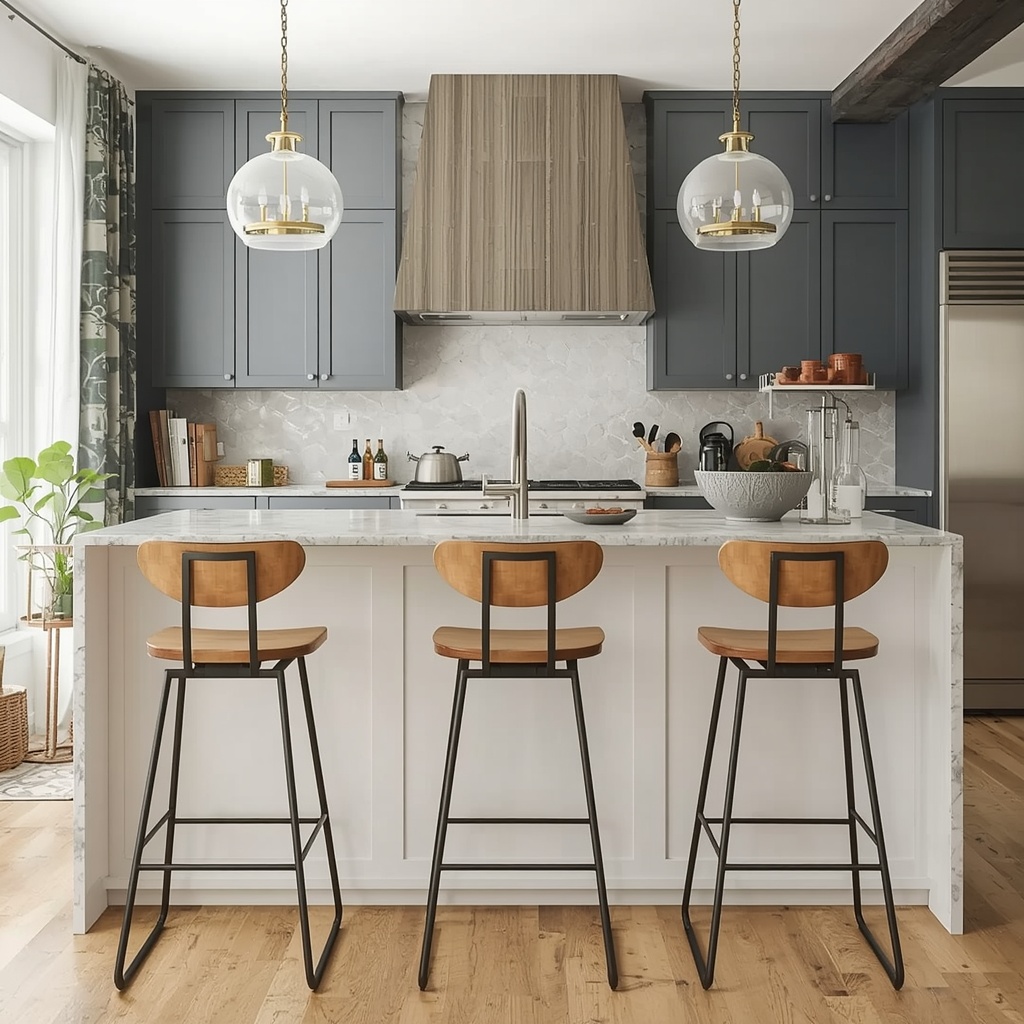
Bar stools sit at eye level in one of the busiest rooms in your home. They’re touched, scooted, sat in, and photographed more than almost any other piece in your kitchen. Choosing the right ones isn’t just a styling decision — it’s one of the highest-impact, lowest-cost ways to transform your kitchen’s entire aesthetic.
Why Bar Stools Are the Unsung Heroes of Kitchen Design
Think of your kitchen island or breakfast bar as a stage, and your stools as the performers standing on it. Even a beautifully designed kitchen with quartz countertops and custom cabinetry can feel flat if the seating doesn’t pull its weight. On the flip side, a modest kitchen can look like a designer showroom with the right stool choice.
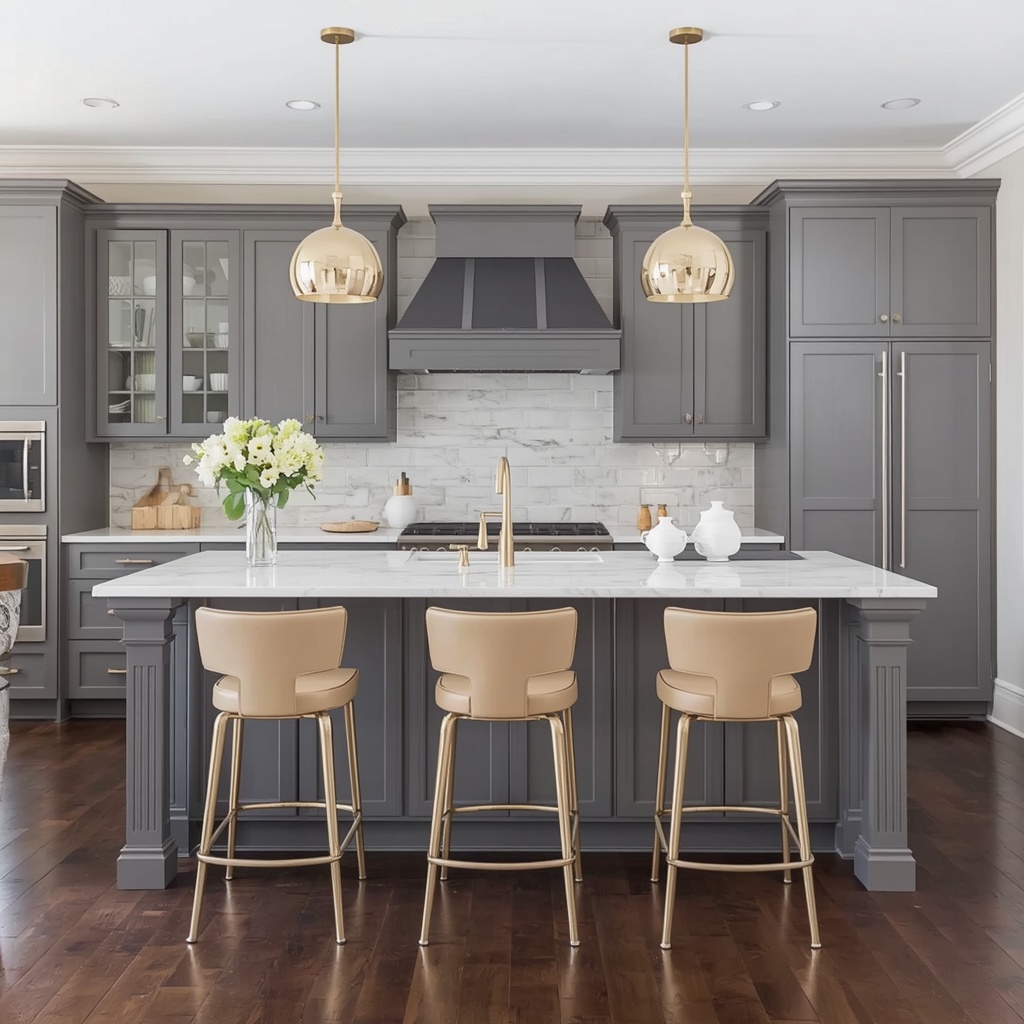
Bar stools also do something few other furniture pieces can: they bridge function and personality. They need to hold up to daily wear, tuck neatly under your counter, and still express your design sensibility — whether that’s warm farmhouse charm, sleek mid-century modern, or moody industrial edge. Getting this balance right is the foundation of good kitchen decor.
“Good design is invisible until it’s missing. The moment you sit on a stool that’s the wrong height or finish, you feel the whole room go slightly off-key.” — A lesson every interior designer learns early
Bar Stool Height 101: Getting the Fit Right
Before we talk style, let’s talk fit — because no amount of beautiful upholstery will save a stool that’s the wrong height for your counter. This is the single most common mistake homeowners make, and it’s also the easiest to avoid once you know the numbers.
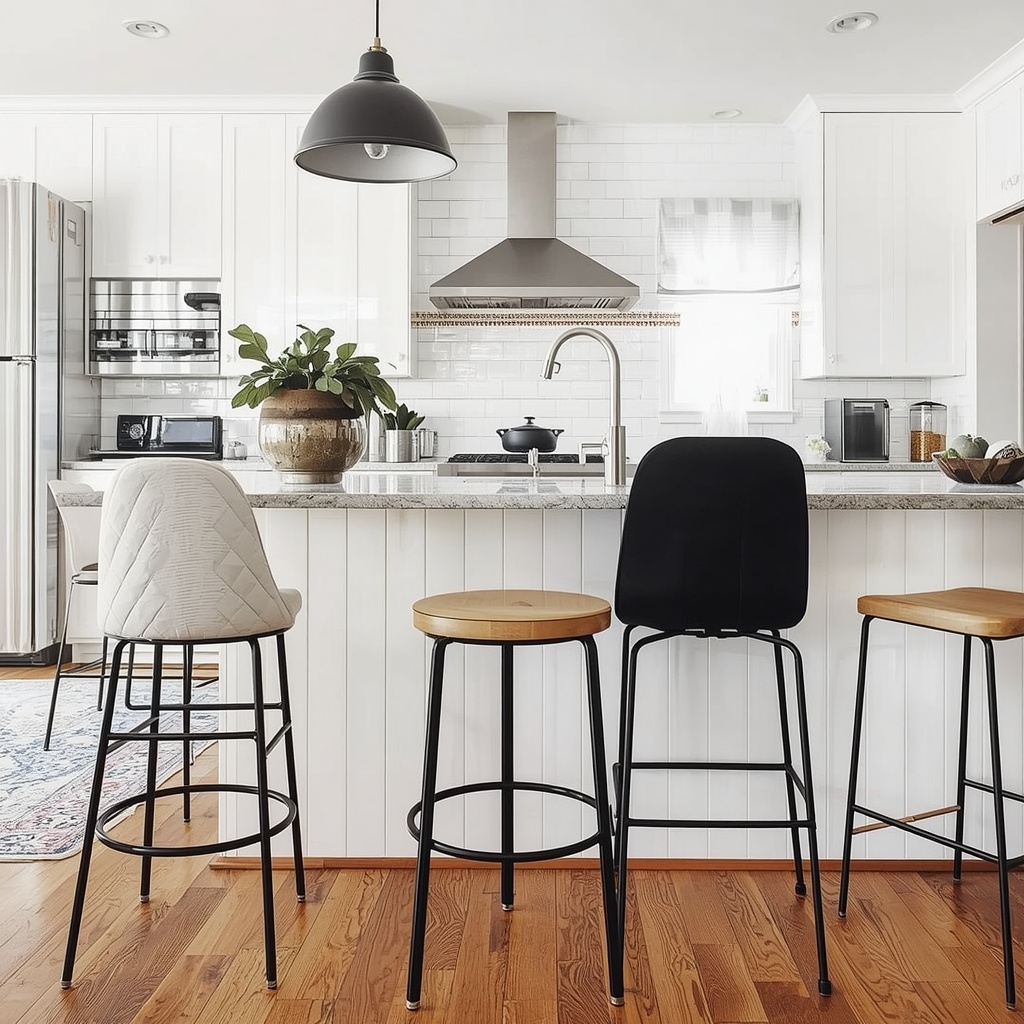
The general rule of thumb is to leave 10 to 12 inches of clearance between the top of the seat and the underside of your counter or bar top. That gap keeps knees from feeling cramped and lets you sit comfortably for long stretches — whether you’re sipping coffee or hosting a dinner party.
| Counter/Bar Type | Surface Height | Recommended Stool Seat Height |
|---|---|---|
| Standard kitchen island/counter | 34–36 inches | 24–27 inches (counter stools) |
| Bar-height counter or pub table | 40–42 inches | 28–30 inches (bar stools) |
| Spectator/extra-tall bar | 46–50 inches | 34–37 inches (tall bar stools) |
| Dining table (as a chair swap) | 28–30 inches | 16–23 inches (dining stools) |
A quick way to double-check your fit: measure from the floor to the underside of your counter, then subtract 10–12 inches. That’s your ideal seat height. If your kitchen island sits at the standard 36 inches, you’re looking at classic counter stools — the most common and most versatile choice for everyday kitchens.
Pro Tip 💡
Before buying, set a stack of books or a sturdy box at your counter and sit on it for a few minutes while doing a “task test” — chopping, eating, scrolling your phone. If your knees bump the counter or your arms feel awkward, size up or down before you commit. This five-minute trick saves countless returns.
Choosing the Right Material for Your Kitchen Aesthetic
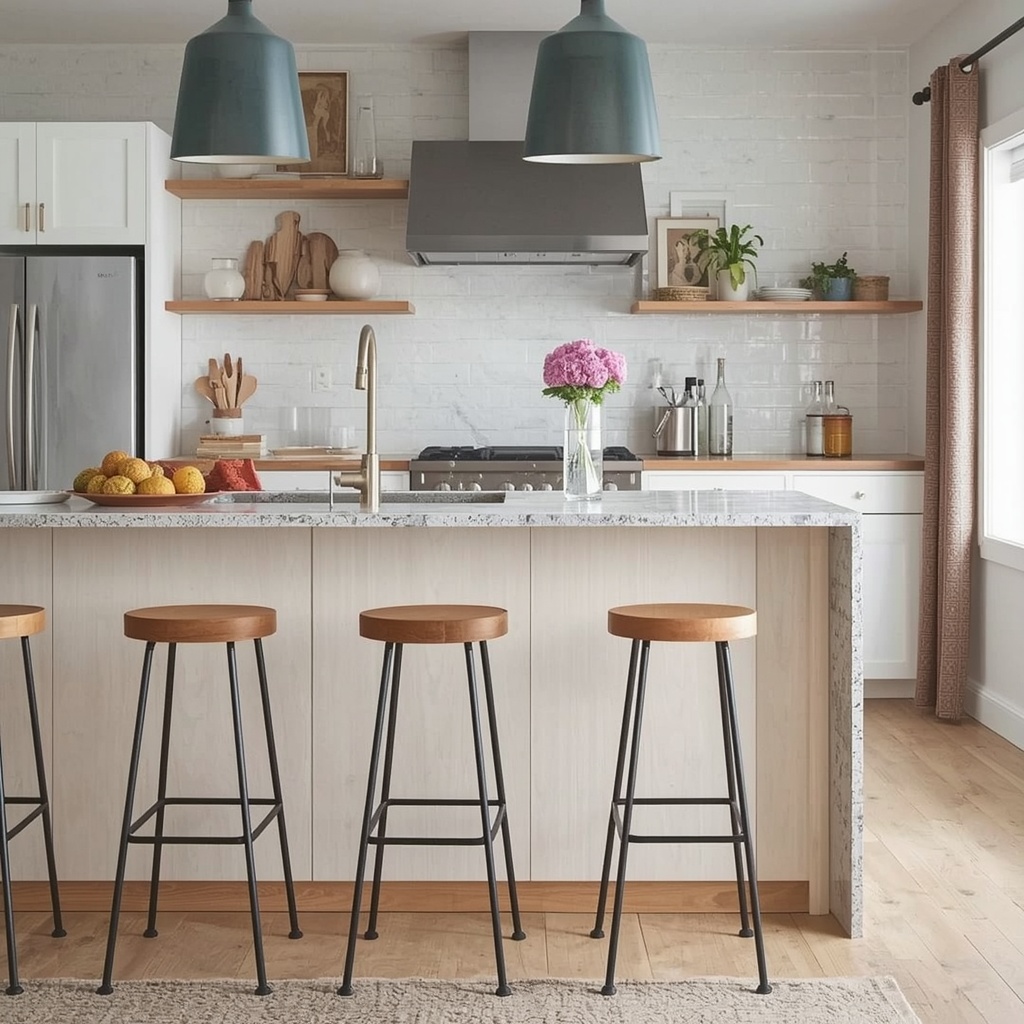
Material is where your bar stools start to genuinely shape the room’s mood. The same silhouette can read completely differently in oak versus brushed steel versus boucle upholstery. Here’s how the most popular materials tend to perform, both visually and practically.
| Material | Best For | Style Vibe | Maintenance |
|---|---|---|---|
| Solid wood | Farmhouse, traditional, coastal kitchens | Warm, organic, timeless | Low — wipe clean, occasional oil/wax |
| Metal (iron, steel) | Industrial, modern, loft-style spaces | Edgy, minimal, durable | Low — dust, occasional rust check |
| Rattan / woven wicker | Boho, coastal, transitional kitchens | Textural, relaxed, breezy | Medium — avoid excess moisture |
| Upholstered (fabric/leather) | Contemporary, transitional, luxe kitchens | Soft, comfortable, elevated | Medium-high — stain-resistant fabric recommended |
| Acrylic / Lucite | Modern, eclectic, small kitchens | Airy, space-saving, playful | Low — prone to visible scratches |
If you’re decorating for a busy household with kids and frequent spills, lean toward performance fabrics, sealed wood, or wipeable metal. If your kitchen is more of a showpiece, upholstered stools in a rich leather or boucle add a hotel-lounge level of polish.
Top Bar Stool Styles for Every Kitchen Aesthetic
Once height and material are sorted, style is where the fun really begins. Here are the looks I return to again and again with clients, and the kitchens they’re built for.
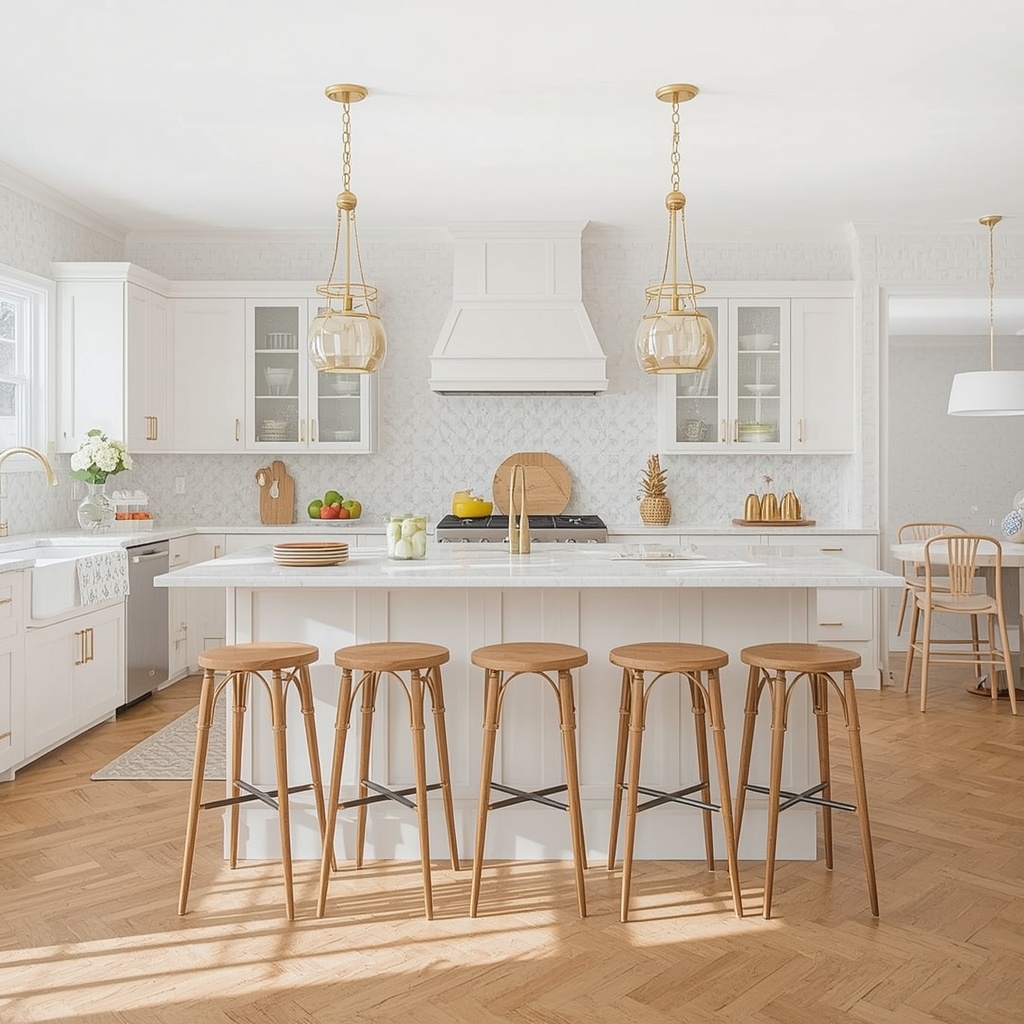
- Farmhouse: Turned wood legs, ladder backs, and a slightly worn or whitewashed finish. Perfect for shaker cabinets, butcher block counters, and apron sinks.
- Industrial: Blackened steel frames, exposed rivets, and distressed leather or cognac-toned seats. A natural match for exposed brick, concrete counters, and Edison bulb lighting.
- Mid-century modern: Tapered wooden legs, molded plywood or bentwood seats, and warm walnut tones. Pairs beautifully with walnut cabinetry and brass hardware.
- Contemporary minimalist: Clean lines, monochrome palettes, and sculptural silhouettes in metal, acrylic, or molded plastic. Ideal for handleless cabinetry and waterfall-edge islands.
- Coastal/boho: Natural rattan, light woods, and woven textures. A go-to for kitchens with shiplap, light oak floors, or ocean-adjacent palettes.
- Transitional: A blend of classic silhouettes with updated upholstery — think nailhead trim on a swivel base. Works almost anywhere, which makes it the safest “can’t go wrong” pick.
Swivel, Backless, or With Arms? Functionality Meets Form
Style aside, the mechanics of your stool matter just as much for daily livability. Each option comes with real trade-offs worth weighing before you buy.
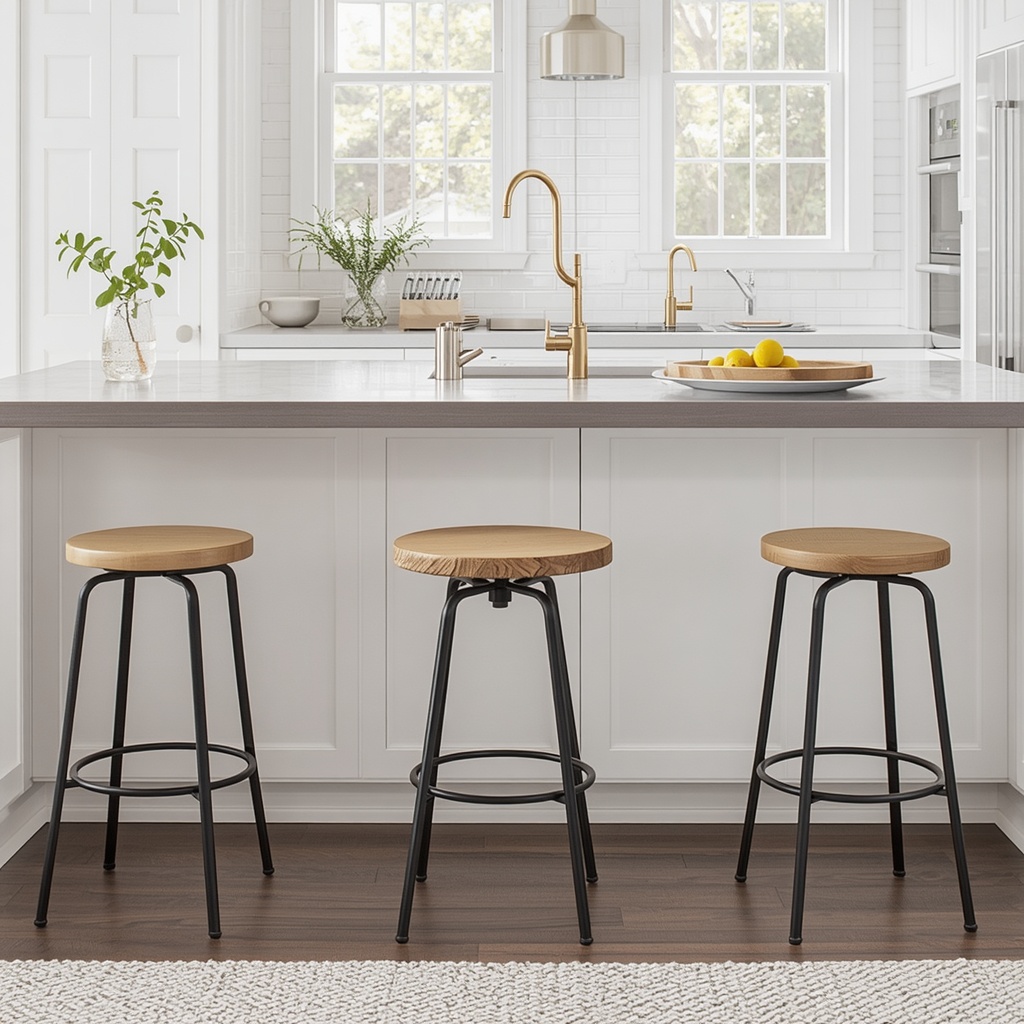
Swivel stools make it easy to turn and chat without scooting the whole stool, which is great for entertaining and for kids who fidget. Backless stools are the most compact and visually light option — they slide fully under the counter and won’t block sightlines in open-concept kitchens, but they’re less comfortable for long sit-down meals. Stools with arms add comfort and a more “chair-like” feel, but you’ll need to measure carefully, since arms can prevent the stool from tucking under counters with a shallow overhang.
My general advice: if your stools live mostly under a counter overhang and get used for quick meals, go backless or low-back. If they’re a dedicated lounge or entertaining spot, invest in arms and a supportive back.
Color and Finish: Tying Stools to Your Kitchen Palette
Bar stools are one of the easiest ways to introduce a pop of color or texture without committing to a full repaint. A neutral kitchen with white cabinets and a marble-look counter can take on an entirely new personality depending on whether your stools are matte black, warm rattan, or a saturated jewel-tone fabric.
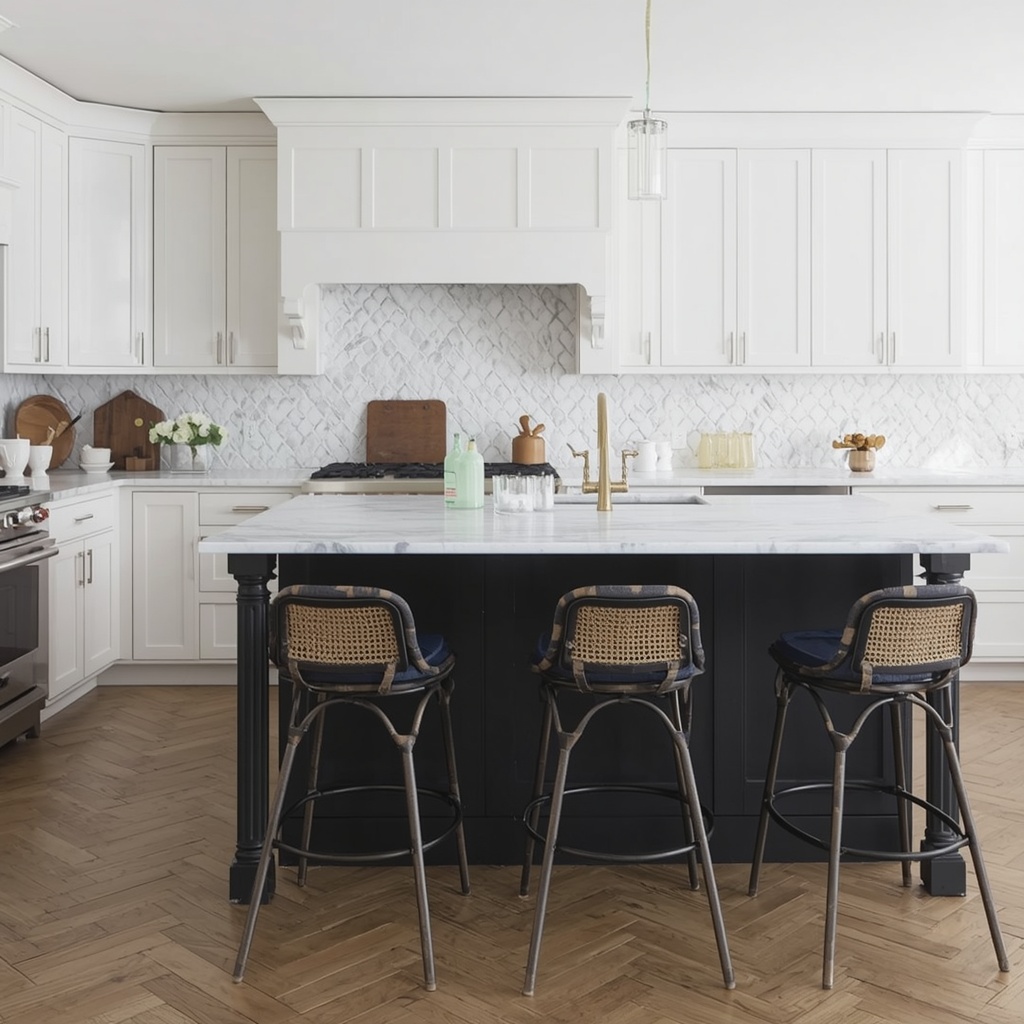
A few palette pairings that consistently work in client kitchens:
- White/light kitchen + black or charcoal metal stools — crisp, modern contrast.
- Wood-toned kitchen + black leather or cognac stools — warm, cohesive, lived-in.
- Bold cabinet color (navy, sage, terracotta) + neutral linen or boucle stools — lets the cabinetry shine while keeping seating timeless.
- All-neutral kitchen + one accent-color stool fabric — a low-risk way to experiment with trend colors.
“Stools are the jewelry of a kitchen — small in footprint, but they’re often what people remember about the room.” — A principle I share with nearly every client during the seating phase.
How Many Stools Do You Need? Spacing and Layout Tips
Getting the quantity and spacing right is just as important as style and height. Overcrowded seating feels chaotic; too few stools and your beautiful island looks underused.

- Allow roughly 24 inches of counter width per stool, measured center-to-center.
- For wider seats, stools with arms, or swivel bases, increase spacing to 28 inches between centers.
- Leave 6–10 inches of clearance between stools depending on seat width, so guests aren’t bumping elbows.
- A simple formula: divide your counter’s total length (in inches) by 24 to get a starting estimate of how many stools will fit comfortably.
- Always leave at least 36 inches of walking clearance behind the stools for safe passage through the kitchen.
If your island seats four on one long side, an even, symmetrical line-up reads as classic and tidy. For larger islands or peninsulas, consider mixing two stools on one side with a single accent stool at the end for visual interest.
Mixing and Matching: The Curated, Collected Look
One of the biggest shifts in home decor over the past few seasons has been a move away from rigid matching sets toward a more curated, collected-over-time feel. You don’t need four identical stools anymore — and honestly, some of the most memorable kitchens I’ve designed use intentional variety.
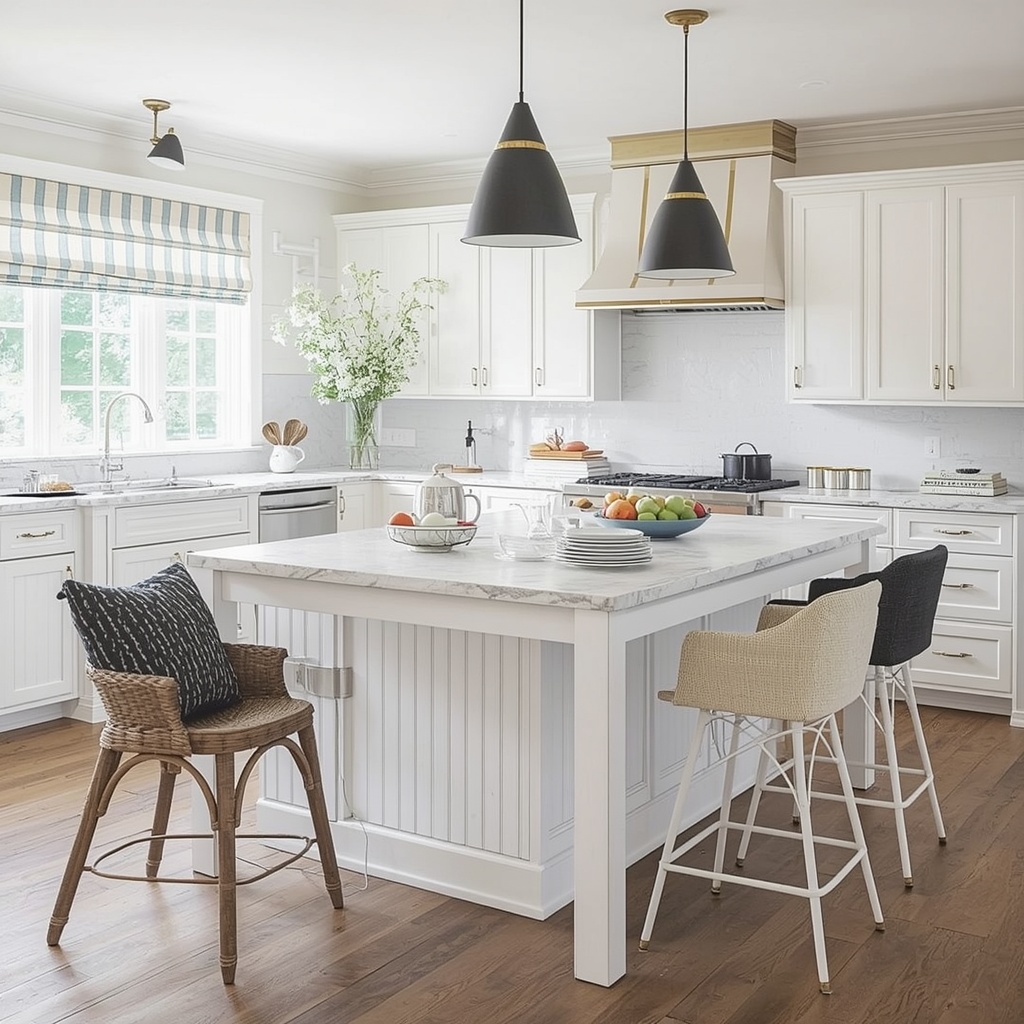
Try pairing two different stool styles that share a common thread — the same wood tone, a matching metal finish, or a unified color family — even if the silhouettes differ slightly. This approach adds depth and signals that the room was thoughtfully composed rather than purchased as a matching set off a showroom floor.
Pro Tip 💡
If you’re nervous about mixing styles, start small: buy one “anchor” stool style for the majority of your seats, then add a single different stool at the end of the counter as an intentional accent. It reads as a stylistic choice, not a mismatch.
Budget Considerations: Where to Splurge and Where to Save
Bar stools range from under $50 to well over $1,000 each, and price doesn’t always track with quality or style impact. Here’s where I tell clients to prioritize their budget.
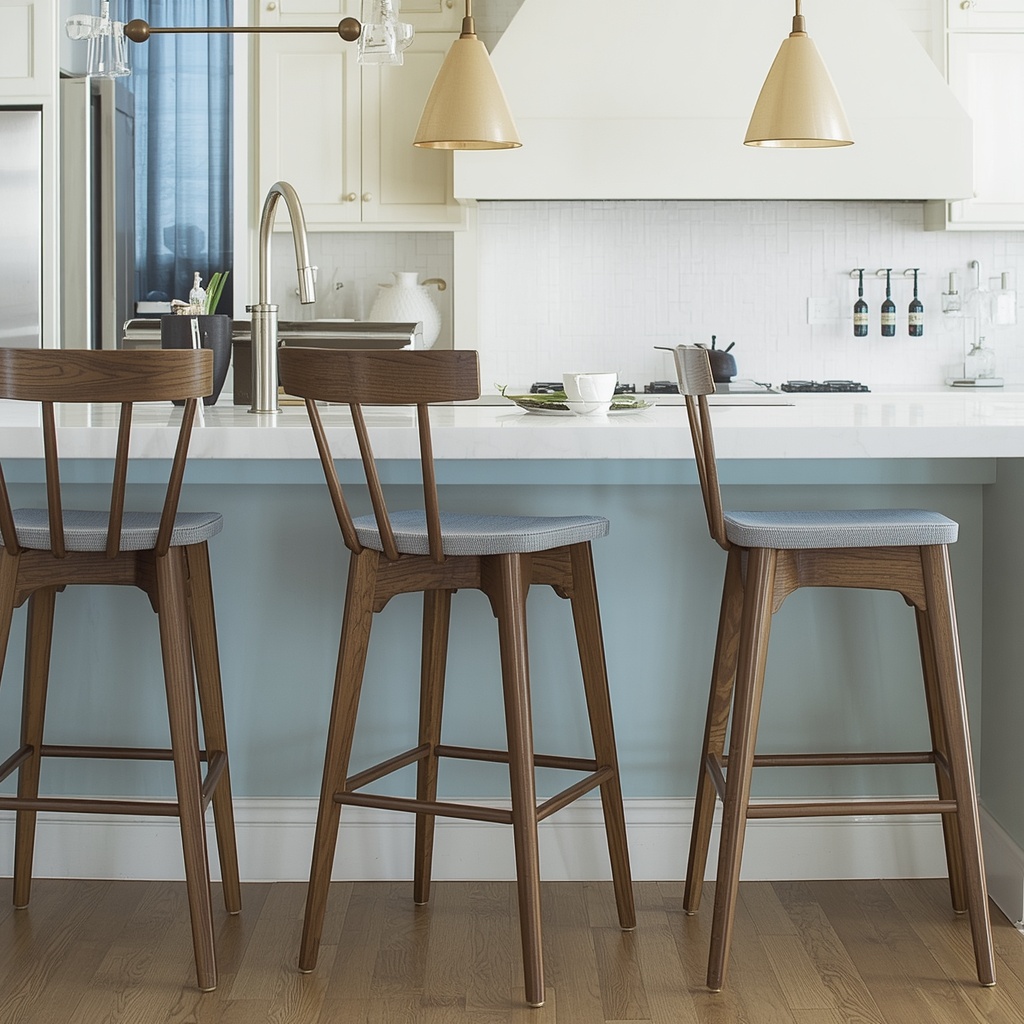
Worth the splurge: upholstery fabric quality (especially performance or leather options that withstand daily use), swivel mechanism durability, and overall construction stability — wobbly stools are a safety issue, not just an aesthetic one. Fine to save on: trend-driven colors or finishes you might want to refresh in a few years, and backless or simple stools used in secondary spaces like a basement bar or breakfast nook.
A smart middle path many of my clients love: splurge on two to three statement stools for the most visible side of the island, and choose a simpler, budget-friendly option for any additional seating that’s less in the line of sight.
Final Thoughts: Let Your Stools Do the Talking
Your kitchen island or counter is often the heart of the home — the spot for morning coffee, homework, wine with friends, and everything in between. The bar stools you choose set the tone for all of it. Get the height right, pick a material and finish that genuinely fits your lifestyle, and don’t be afraid to let your stools carry a little personality.
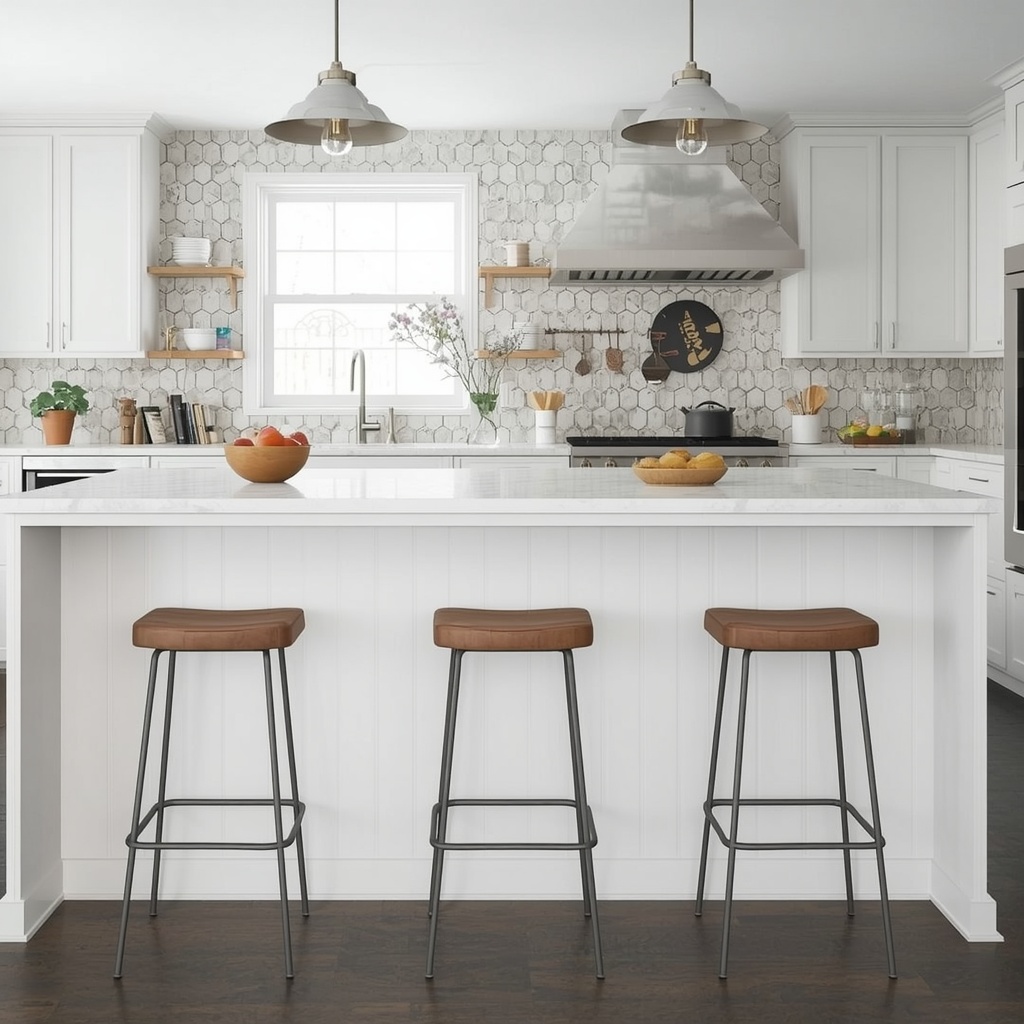
Whether you’re drawn to warm farmhouse wood, sculptural mid-century lines, or sleek industrial metal, the right bar stools will do more than give people a place to sit — they’ll quietly tie your entire kitchen aesthetic together.
Quick-Reference Checklist Before You Buy
- [ ] Measured counter/bar height and confirmed correct seat height
- [ ] Decided on swivel, backless, or arms based on daily use
- [ ] Chosen a material that fits your maintenance tolerance
- [ ] Confirmed spacing (24″+ per stool, 36″ walking clearance)
- [ ] Selected a finish/color that complements your existing palette
- [ ] Set a budget and identified where to splurge vs. save
Frequently Asked Questions
Can I use bar stools at a counter-height island? Technically yes, but they’ll sit too high and leave your legs dangling uncomfortably. Always match seat height to surface height rather than buying based on style alone — comfort should never be an afterthought.
Do all stools at my island need to match exactly? No. As discussed above, a curated mix with a shared design thread (same wood tone, metal finish, or color family) often looks more intentional than a uniform matching set.
Are swivel bar stools worth the extra cost? For households that entertain often or have kids who fidget, yes — the convenience pays off daily. For a quiet kitchen used mainly for quick meals, a fixed-base stool will save money without sacrificing much function.
How do I keep upholstered stools clean in a busy kitchen? Look for performance fabrics labeled stain-resistant or “indoor/outdoor,” which handle spills far better than standard cotton or linen blends. Leather and faux leather are also easy to wipe down after meals.
What’s a budget-friendly way to upgrade old stools without replacing them? Reupholstering the seat cushion in a new fabric, swapping out worn wood for a fresh stain, or adding new metal floor glides can refresh tired stools for a fraction of the cost of buying new ones.
Helpful Further Reading
- Counter Height vs. Bar Height Stools – Lowe’s Buying Guide
- Standard Counter Height vs. Bar Height – KitchenAid
- Counter vs. Bar Height: What’s the Difference? – Whirlpool