
If you’ve ever stood in your kitchen holding a casserole dish with nowhere to put it, you already know the struggle. Small kitchens don’t lack potential — they lack a plan. As an interior designer who has reworked dozens of compact kitchens across the country, I can tell you the difference between a cramped kitchen and a functional one almost never comes down to square footage.
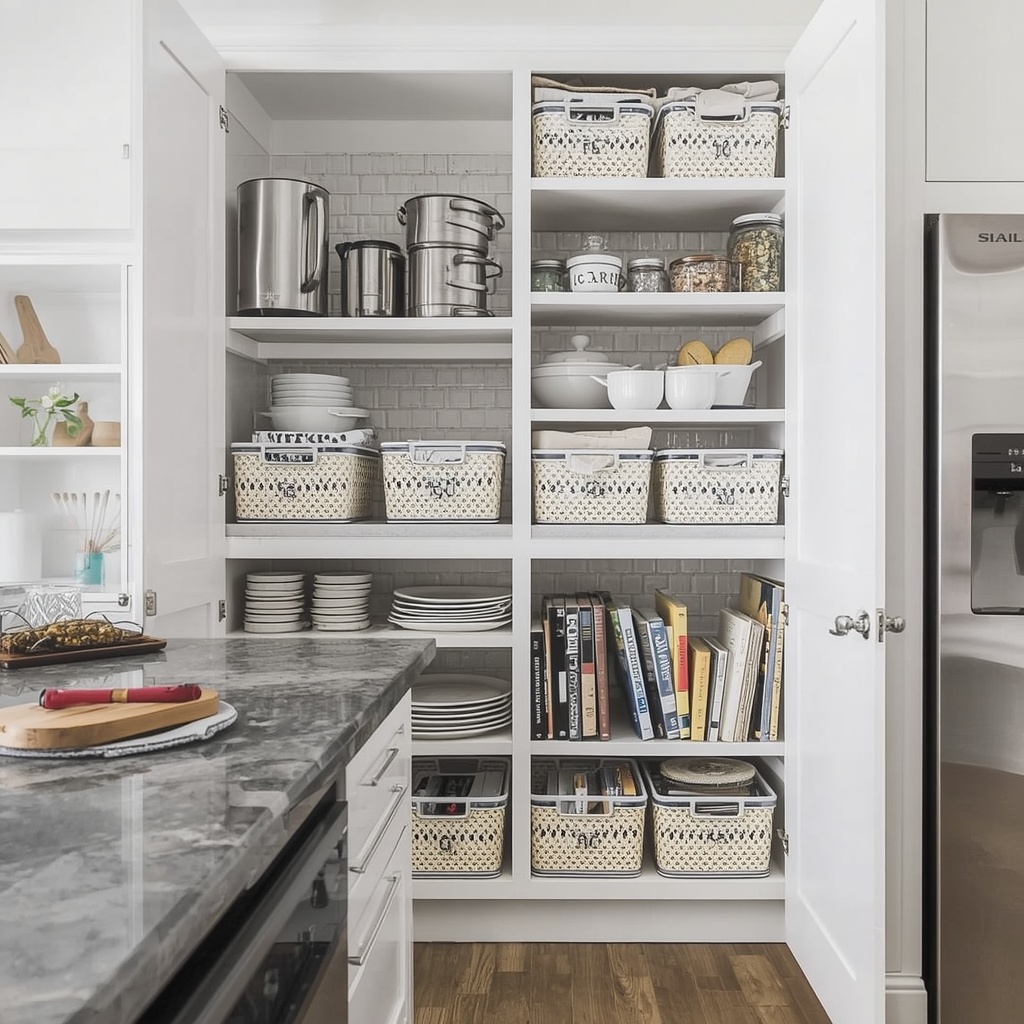
It comes down to storage strategy. The good news? You don’t need a renovation budget to fix it. Below are the small kitchen storage solutions I turn to again and again — the kind that make people say, “why didn’t I do this years ago?”
Why Small Kitchen Storage Matters More Than You Think
A cluttered kitchen doesn’t just look messy — it actively slows you down. Every extra second spent digging through a junk drawer or shuffling pots to find a lid adds friction to a room that’s supposed to make daily life easier. In design terms, this is a workflow problem disguised as a storage problem.
Good kitchen organization also affects resale value. According to the National Kitchen and Bath Association, kitchen storage and layout consistently rank among the top factors buyers consider when evaluating a home. In other words, this isn’t just about convenience — it’s an investment in how your home functions and how it’s perceived.
“A small kitchen with smart storage will always outperform a large kitchen with none. Space is just square footage; storage is strategy.” — a lesson I learned redesigning my first 80-square-foot client kitchen.
Vertical Storage: The Most Underrated Space in Your Kitchen
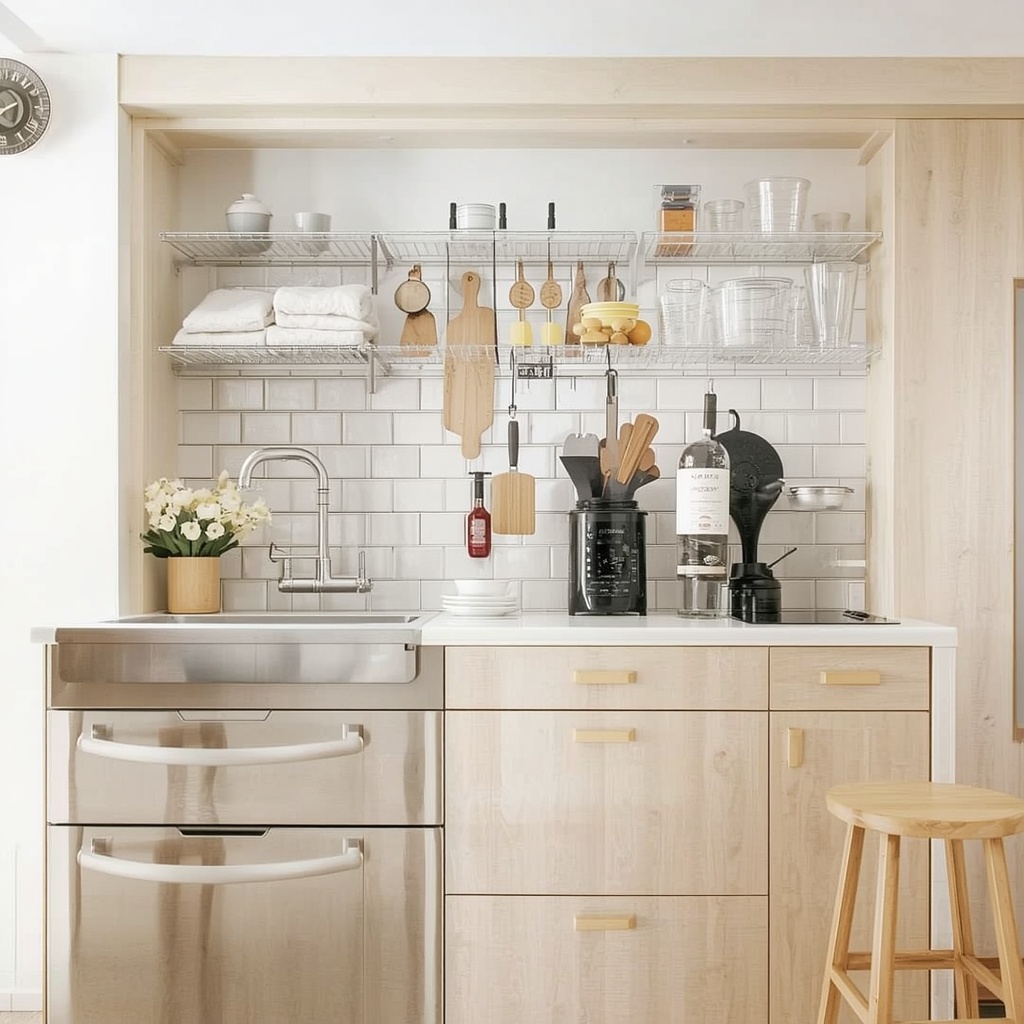
Most small kitchens are organized horizontally — counters, lower cabinets, a single shelf above the stove. But the real opportunity is vertical. Walls, the backs of doors, and the empty air above your upper cabinets are prime real estate that almost nobody uses.
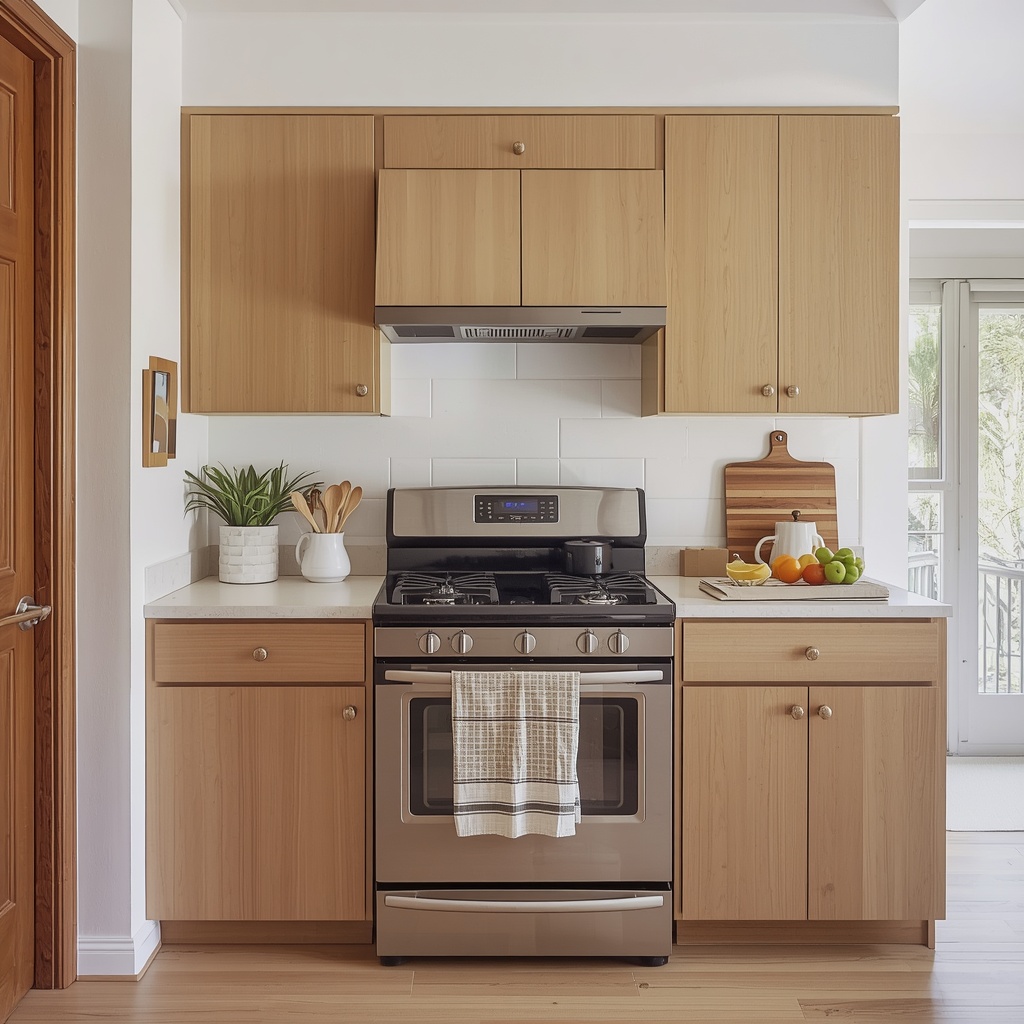
Think of your kitchen as having three storage zones: eye-level, reach-up, and reach-down. Most people only decorate the eye-level zone and ignore the other two completely. Reclaiming vertical space is often the single fastest way to add functional storage without removing a single cabinet.
Vertical storage ideas worth trying:
- Wall-mounted magnetic knife strips (frees up a drawer entirely)
- Hanging pot racks installed over an island or stove
- Stackable wire shelf risers inside cabinets
- Door-mounted racks for spices, foil, or cutting boards
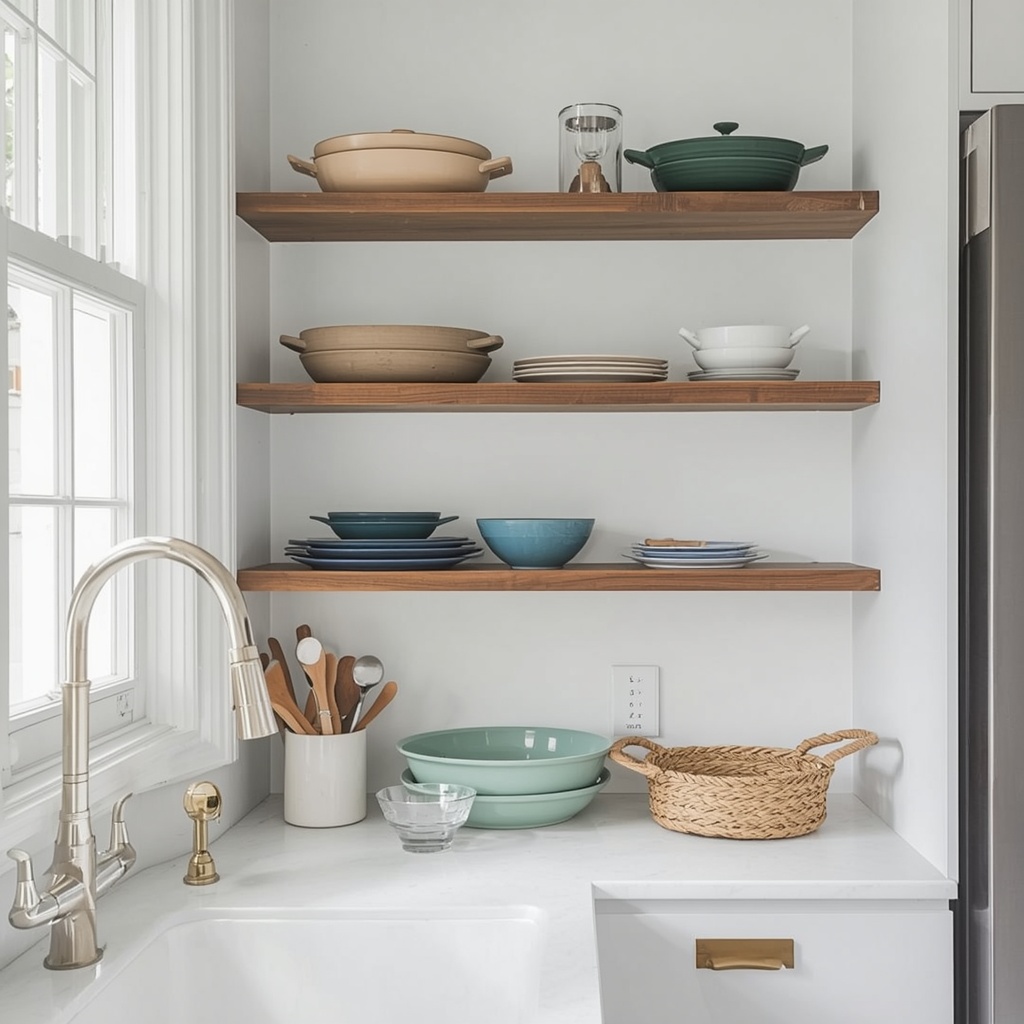
- Open shelving installed above counters for everyday dishware
💡 Pro Tip: Install a tension rod inside a lower cabinet to create an instant vertical divider for baking sheets, cutting boards, and trays. It costs less than $10 and takes five minutes.
Cabinet Organization Hacks That Actually Work
Cabinets are often the most mismanaged storage in the entire kitchen — not because there isn’t enough space, but because the space is one giant, unorganized box. Pull-out shelves, lazy Susans, and tiered organizers turn that wasted depth into usable, visible storage.
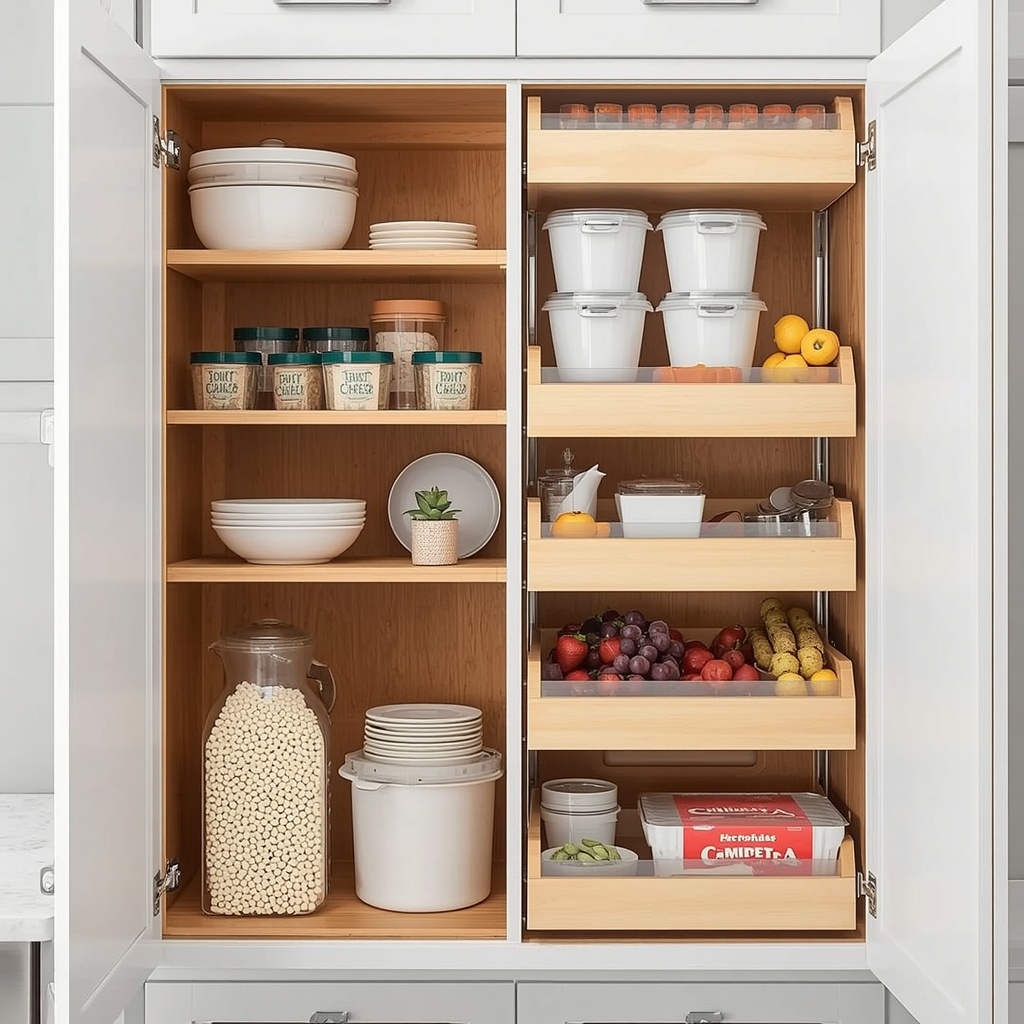
The trick is matching the hack to the cabinet’s purpose. A corner cabinet benefits from a rotating lazy Susan, while a narrow cabinet next to the stove is perfect for a pull-out spice rack. Don’t organize cabinets generically — organize them around what actually lives in each one.
| Cabinet Type | Best Storage Solution | Approx. Cost |
|---|---|---|
| Corner cabinet | Lazy Susan or pull-out carousel | $20–$60 |
| Narrow gap cabinet | Pull-out spice rack | $30–$80 |
| Deep lower cabinet | Pull-out drawers/shelves | $40–$150 |
| Upper cabinet | Stackable shelf risers | $10–$25 |
| Under-sink cabinet | Sliding storage bins | $15–$40 |
Drawer Dividers and Inserts Worth the Investment
If cabinets are the chaos zone, junk drawers are the chaos epicenter. A few well-placed dividers can transform a drawer from a catch-all into a tidy, intentional system. The key is sizing the divider to the drawer rather than buying a generic kit and hoping it fits.
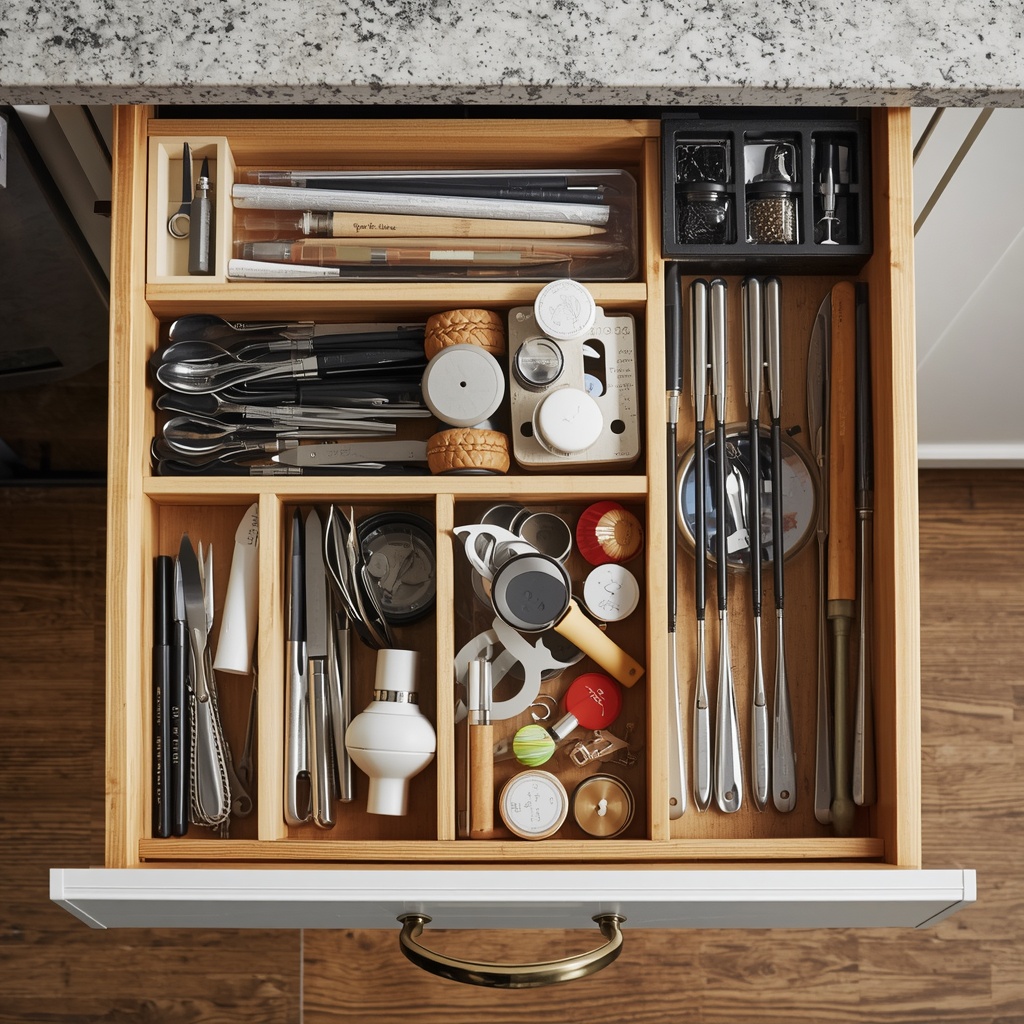
Customizable drawer organizers — the kind with adjustable pegs or modular trays — tend to outperform fixed plastic trays because they adapt as your tools and gadgets change. This is especially useful in rental kitchens or homes where you might rearrange storage down the line.
Drawers that benefit most from dividers:
- Utensil drawers (separate by function, not just size)
- Junk drawers near the entry or phone-charging station
- Knife drawers with built-in blade slots
- Lid and container drawers near the stove
- Linen drawers for kitchen towels and potholders
Pantry and Open Shelving Solutions for Tiny Kitchens
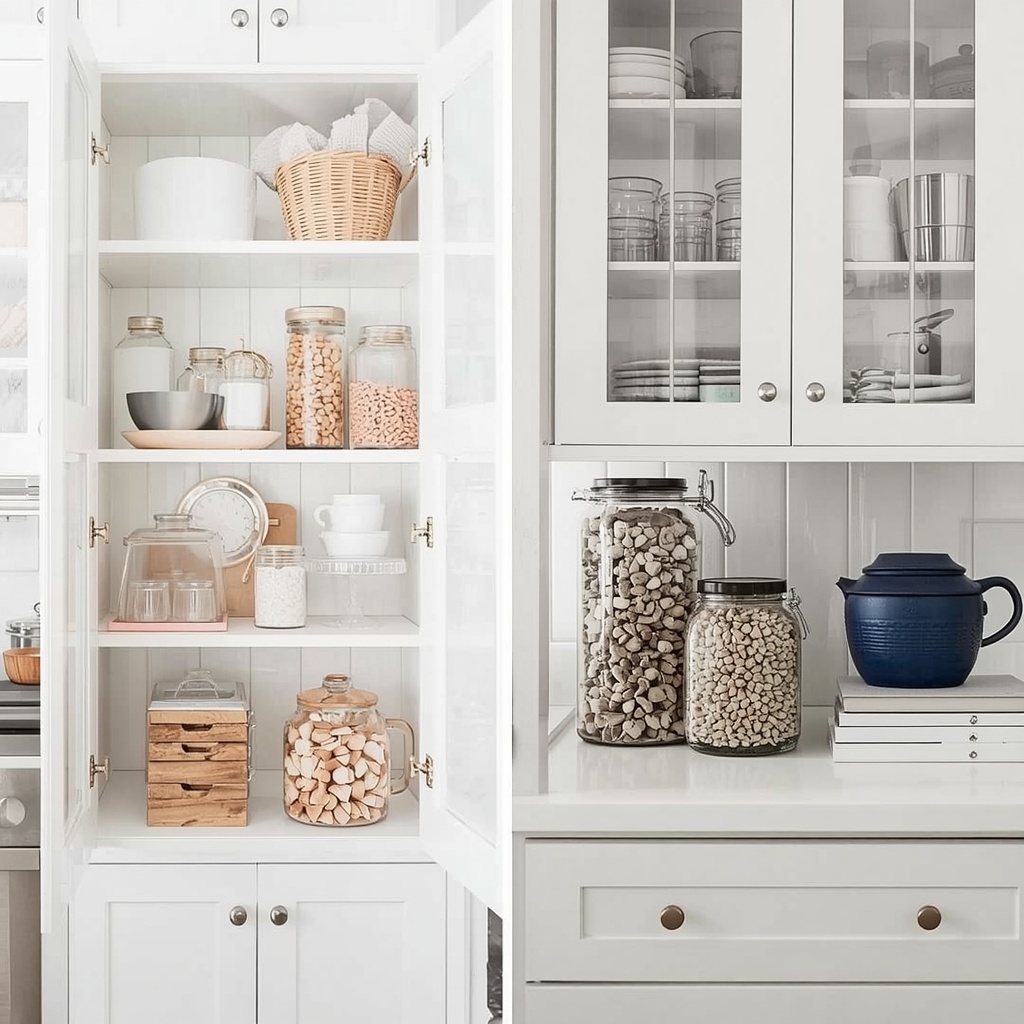
Not every small kitchen has a walk-in pantry — and that’s fine. A single deep cabinet, a narrow closet, or even a tall, slim rolling cart can function as a pantry substitute when it’s organized with intention. Clear, labeled bins do more for a small pantry than any amount of square footage ever could.
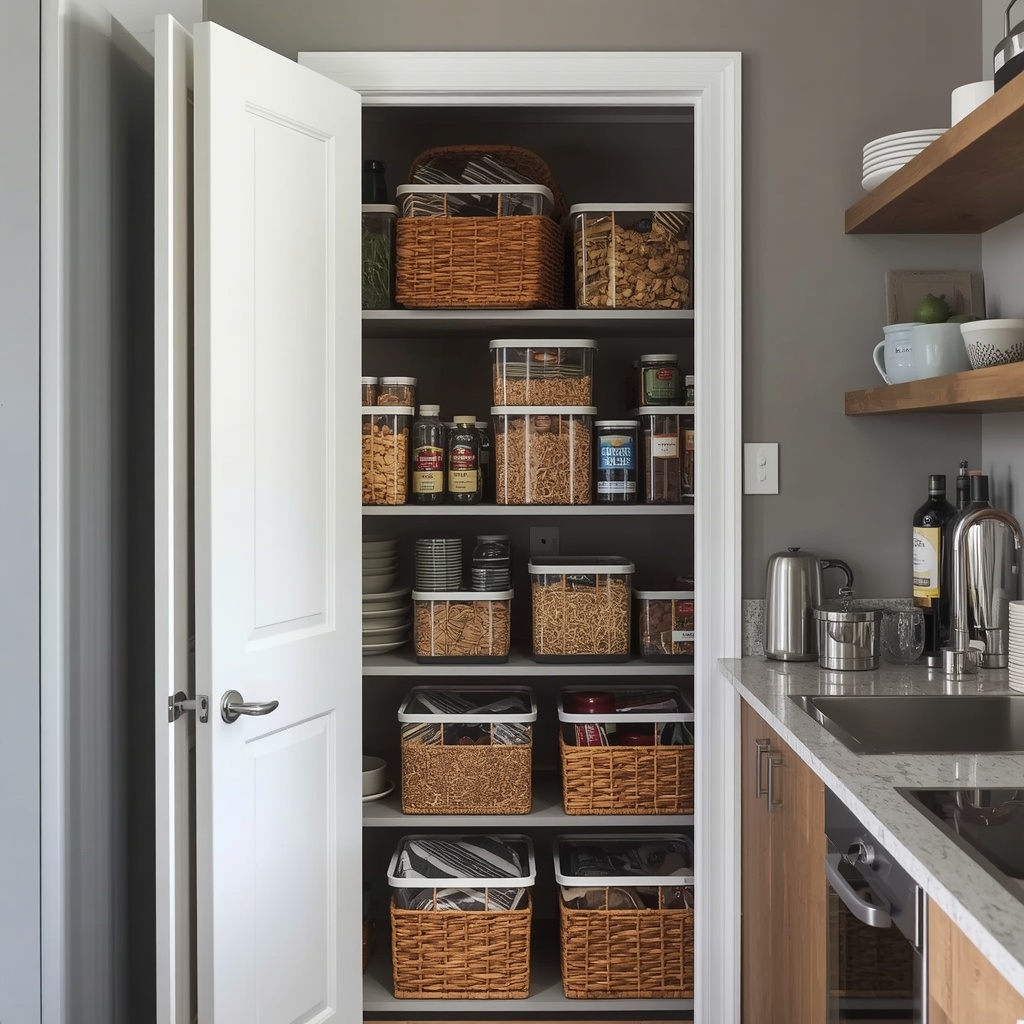
Open shelving is the other half of this equation. While it requires more discipline (everything is visible, so clutter shows immediately), it tends to make small kitchens feel larger by removing the visual bulk of upper cabinet doors. Many designers, myself included, use open shelving strategically — just for the items that look good and get used often.
Quick wins for pantry-style storage:
- Clear stackable bins for pasta, grains, and snacks
- Lazy Susans for oils, sauces, and condiments
- A slim rolling cart in any unused gap between appliances
- Labeled baskets for items that don’t need to be visible
- Tiered can organizers for vertical canned-goods storage
💡 Pro Tip: Decant dry goods into uniform, stackable containers. It looks polished, but more importantly, it lets you see exactly what you have and how much — cutting down on both clutter and food waste.
Under-Sink and Hidden Storage Opportunities
The cabinet under the sink is usually a tangle of cleaning supplies, spare sponges, and forgotten bags. With a tension rod, a few sliding bins, or a tiered riser, that same space can hold twice as much without feeling crowded. Pipes don’t have to dictate chaos — they just require organizers built to work around them.
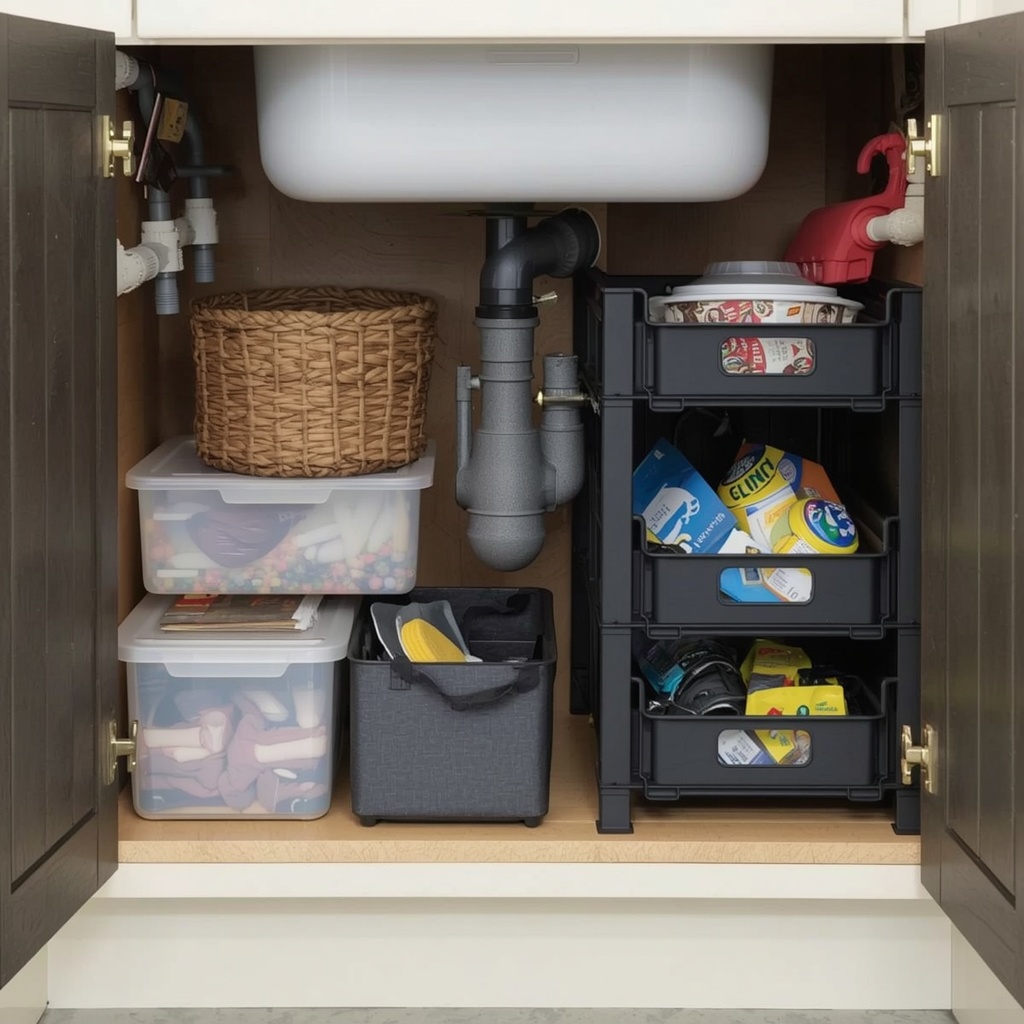
Hidden storage opportunities also exist in places most homeowners overlook: the side of the refrigerator, the toe-kick space beneath cabinets, and the inside of cabinet doors. Toe-kick drawers, in particular, are a favorite of mine for storing flat items like baking sheets or platters that rarely get used but are awkward to store anywhere else.
Often-overlooked hidden storage spots:
- Toe-kick drawers beneath lower cabinets
- Magnetic strips on the refrigerator’s side panel
- The back of the pantry or cabinet door
- Empty space above the refrigerator
- Inside a kitchen island’s end panels
Multi-Functional Furniture and Smart Appliances
When square footage is tight, every piece of furniture should earn its keep. A kitchen cart with built-in shelving, a drop-leaf table with internal storage, or a bar cart that doubles as a coffee station all add function without adding bulk. This is one of the easiest ways to gain storage in a kitchen too small for a traditional island.
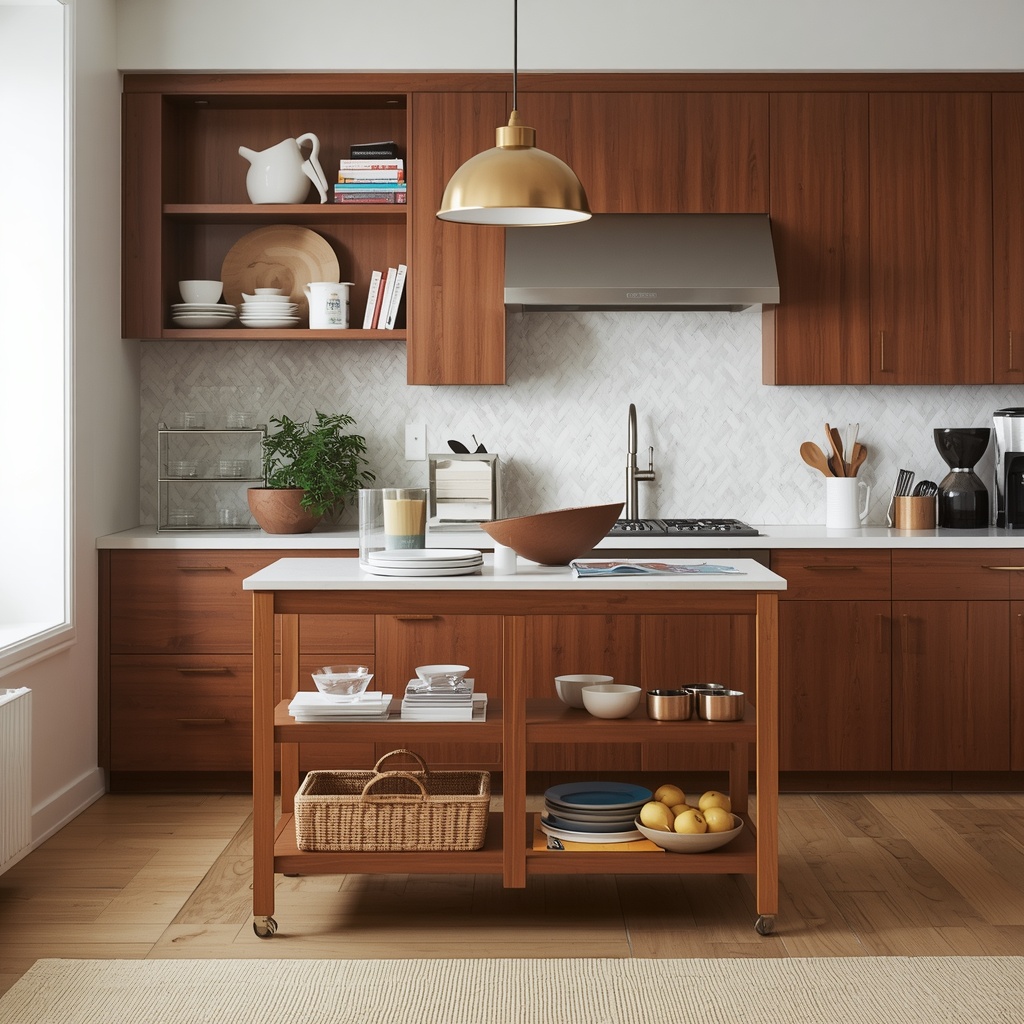
Appliances matter here too. Slim dishwashers, stacked washer-dryer-style microwave drawers, and apartment-sized refrigerators all free up floor and counter space that can be redirected toward storage. It’s a small shift in mindset — buying for footprint as much as for features — but it pays off every single day.
“In a small kitchen, every object should have a job and a home. If it can’t do both, it doesn’t belong on the counter.” — a principle I repeat to nearly every client with a kitchen under 150 square feet.
Countertop-Clearing Tricks for a Streamlined Look
Counters fill up fast, and once they do, a small kitchen starts to feel even smaller. The goal isn’t to remove every appliance — it’s to give each one a logical home that isn’t your primary workspace. Appliance garages, under-cabinet mounts, and rolling carts all help reclaim counter space without sacrificing convenience.
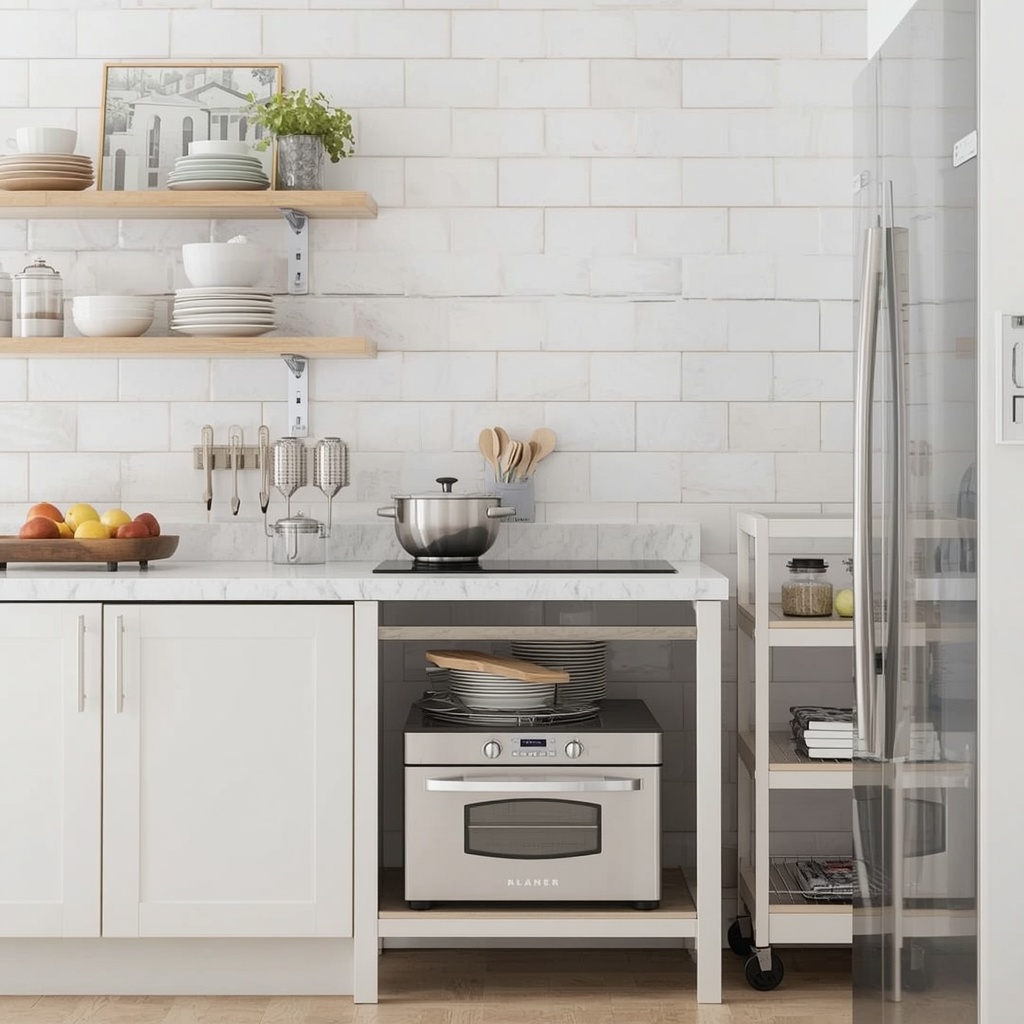
A cluttered countertop also affects how a kitchen photographs and shows to potential buyers, which matters if you’re considering resale down the line. Clean counters read as larger, more functional, and more move-in ready — three things every small kitchen benefits from.
Easy countertop-clearing moves:
- Mount the microwave under an upper cabinet
- Use a vertical coffee station instead of a counter setup
- Store small appliances in an appliance garage or pull-out shelf
- Swap bulky utensil holders for wall-mounted rails
- Keep only daily-use items on display; store the rest
Budget vs. Splurge: Storage Solutions Compared
Not every kitchen storage upgrade needs a big investment, but some splurges genuinely pay for themselves in daily convenience. Here’s how the most common options compare:
| Solution | Budget Option | Splurge Option |
|---|---|---|
| Cabinet organization | Adjustable shelf risers | Custom pull-out drawer systems |
| Pantry storage | Stackable clear bins | Built-in pantry cabinetry |
| Drawer organization | Expandable plastic dividers | Custom-cut wood inserts |
| Vertical storage | Tension rods, wall hooks | Professionally installed shelving |
| Hidden storage | DIY toe-kick drawer kits | Built-in toe-kick storage |
Quick-Reference Storage Checklist
Before you start buying organizers, it helps to assess what your kitchen actually needs. Use this checklist to prioritize:
| Area | Ask Yourself | Solution to Consider |
|---|---|---|
| Cabinets | Are corners or deep shelves wasted? | Lazy Susan, pull-out shelves |
| Drawers | Is there a “junk drawer”? | Adjustable dividers |
| Walls | Is there bare wall space? | Hooks, racks, shelving |
| Pantry | Is everything visible and labeled? | Clear bins, tiered organizers |
| Counters | Are small appliances cluttering space? | Appliance garage, wall mounts |
| Under-sink | Are supplies stacked haphazardly? | Sliding bins, tension rods |
Final Thoughts: Small Kitchen, Smart Systems
The most common mistake I see in small kitchens isn’t a lack of space — it’s a lack of system. Once storage has a clear purpose and a designated zone, even a modest kitchen starts to feel intentional, organized, and surprisingly spacious. None of the solutions above require a full remodel; most can be done in a weekend with a modest budget and a clear plan.
Start with the zone that frustrates you most — whether that’s the junk drawer, the corner cabinet, or the counter clutter — and build outward from there. Small, consistent changes compound quickly, and before long, you’ll wonder how you ever lived without them.
If you’re ready to take it further, the Container Store’s organization guides and the National Kitchen and Bath Association both offer additional resources for kitchen layout and storage planning that pair well with the strategies above.
Looking for a more personalized plan? A short consultation with a kitchen designer can often identify storage opportunities a homeowner might overlook — sometimes saving both money and a future renovation.
Frequently Asked Questions
What’s the single best storage upgrade for a small kitchen? If I had to pick just one, it would be pull-out shelving for lower cabinets. It instantly makes deep, hard-to-reach storage fully visible and usable, which is usually where the most wasted space in a small kitchen hides.
Do I need a renovation to improve kitchen storage? Not at all. Most of the solutions in this guide — tension rods, drawer dividers, shelf risers, and clear bins — are renter-friendly and require no permanent changes. Even rental kitchens can be transformed with a weekend project and a modest budget.
How do I keep open shelving from looking cluttered? Treat open shelves like a curated display rather than overflow storage. Keep only items you use daily or that look intentional — matching dishware, a few plants, glass canisters — and move everything else into closed cabinets or bins.
Is it worth investing in custom cabinet inserts for a small kitchen? If you plan to stay in your home for several years, custom inserts (like built-in pull-out drawers or tailored dividers) tend to pay for themselves in daily convenience and can even support resale value. For short-term living situations, budget-friendly adjustable organizers are usually the smarter choice.
Bringing It All Together
What makes these small kitchen storage solutions work isn’t any single product — it’s the mindset behind them. Every drawer, cabinet, and wall has more capacity than it appears to at first glance; the limiting factor is almost always organization, not square footage. Once you start viewing your kitchen in terms of zones rather than just rooms, new storage opportunities tend to reveal themselves in places you’ve walked past for years.
I’ve watched clients go from feeling like their kitchen was working against them to feeling like it finally works for them, often after changing nothing more than a few drawers and one corner cabinet. That’s the real payoff of smart kitchen organization: it’s rarely about the size of the room, and almost always about how thoughtfully that room is used. Try even two or three of the ideas above, and there’s a good chance you’ll find yourself wishing you’d done it sooner.