
If your kitchen has an island, you already know it’s never just a countertop. It’s where coffee gets poured, homework gets finished, wine gets opened, and half your guests end up standing during every party. The kitchen island has become the unofficial command center of the American home — which means it deserves decor that’s as functional as it is beautiful.
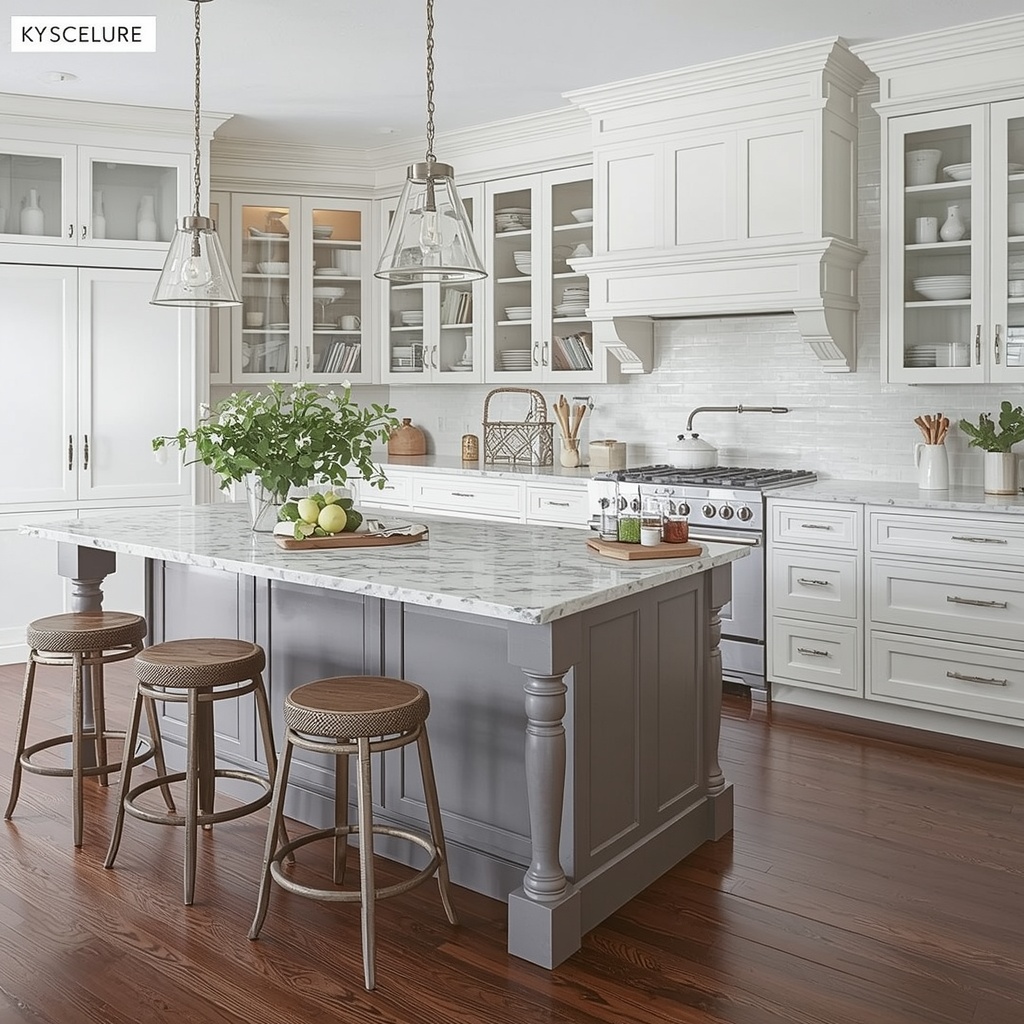
As an interior designer who works almost exclusively on kitchens and everyday living spaces, I can tell you that styling a kitchen island isn’t about Pinterest perfection. It’s about creating a centerpiece that feels warm, intentional, and genuinely usable. Below, I’ll walk you through exactly how to do that — from choosing a style direction to picking the right bowl for your countertop.
Why Your Kitchen Island Deserves the Design Spotlight
Open-concept floor plans have made the kitchen island the visual anchor of the entire main living area. It’s often the first thing guests see when they walk in, and the last surface anyone touches before bed. That kind of visibility means your island decor sets the tone for your whole home’s design language.
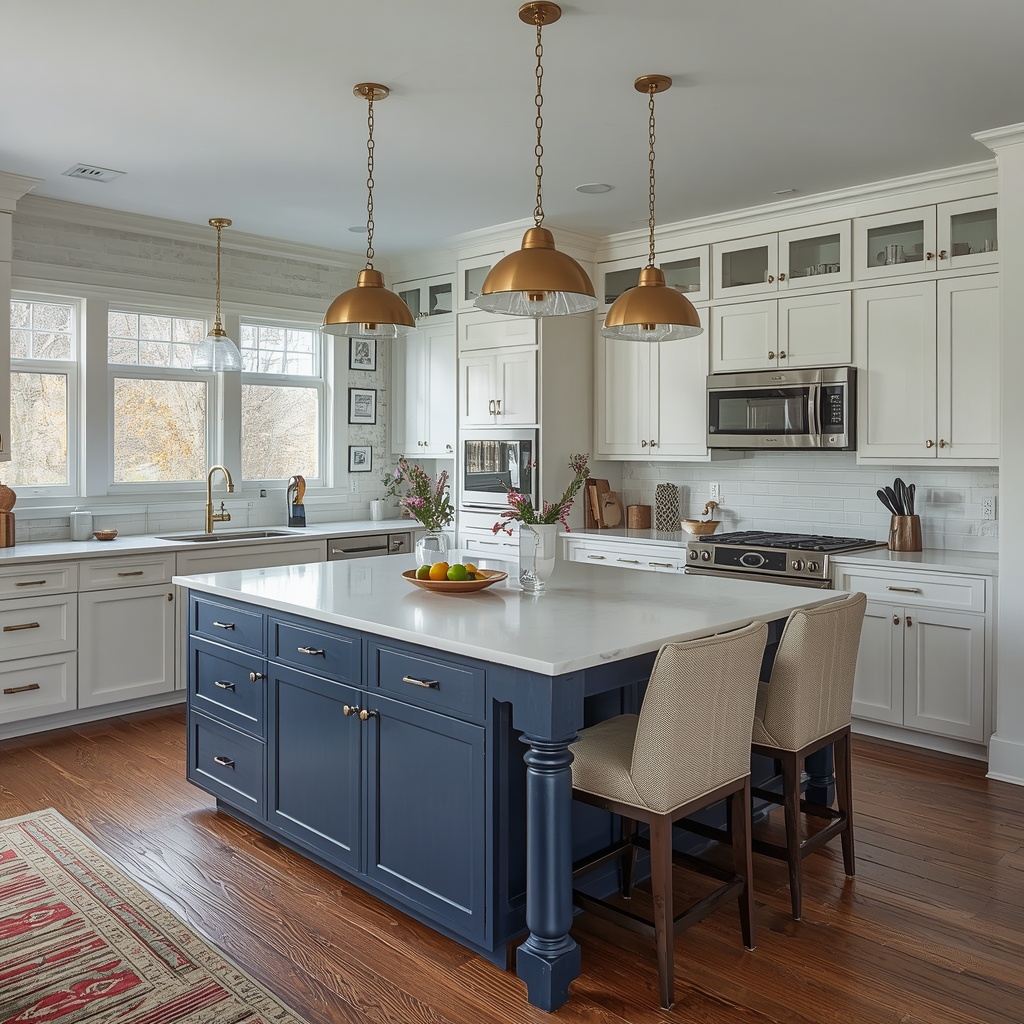
Beyond aesthetics, a well-styled island also signals function. A thoughtfully arranged tray, a stack of cookbooks, or a small herb planter tells visitors this is a kitchen that’s actually lived in — not a showroom. That lived-in warmth is exactly what most homeowners are chasing in 2026, as kitchen design continues shifting away from sterile minimalism toward comfort, texture, and personality.
Start With a Style Direction That Fits Your Kitchen
Before you buy a single tray or vase, decide on a style direction. Every great kitchen island decor scheme is built on a consistent aesthetic — mixing too many styles is the fastest way to make an island look cluttered instead of curated.
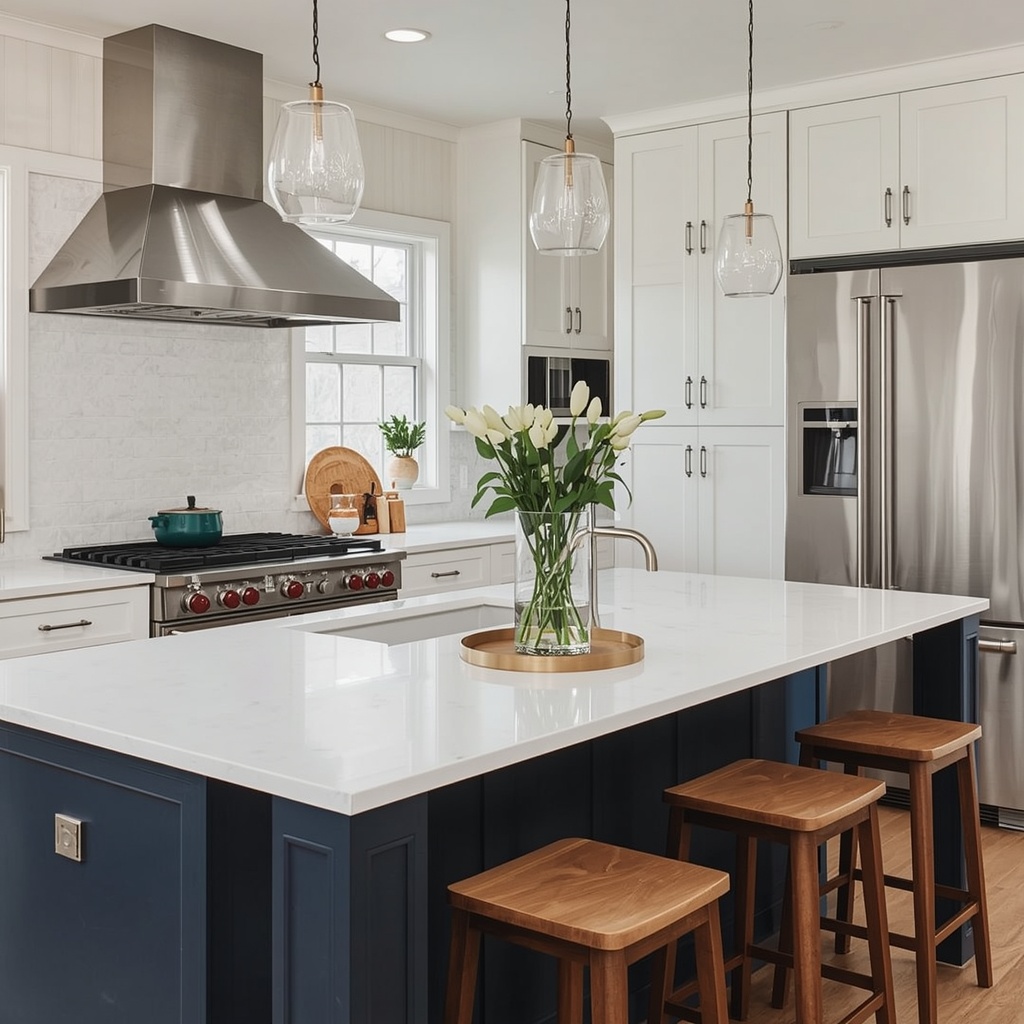
Here’s a quick breakdown of the most popular kitchen styles right now and how they translate into island decor:
| Style | Color Palette | Materials & Textures | Signature Decor Pieces |
|---|---|---|---|
| Modern Farmhouse | Warm white, soft gray, black accents | Reclaimed wood, matte black metal, linen | Woven baskets, ceramic crocks, dried wheat or eucalyptus |
| Transitional | Neutral tones with one bold accent | Marble, brushed brass, natural wood | Glass cloche, stacked bowls, a single statement vase |
| Industrial | Charcoal, exposed brick tones, copper | Concrete, stainless steel, leather | Edison-bulb pendants, metal trays, vintage scales |
| Coastal | Soft blue, sandy beige, white | Rattan, light oak, linen | Woven trays, glass jars, a bowl of citrus |
| Minimalist | Monochrome, all-white, or all-black | Quartz, lacquer, glass | One sculptural object, a single plant, nothing else |
Pro Tip: Pick your style direction before your countertop and cabinetry, if you’re remodeling — but if you’re just decorating an existing island, work backward. Look at your cabinet finish and countertop veining, then choose decor that pulls one or two of those existing tones forward.
The Anatomy of a Well-Styled Kitchen Island
Every island that photographs well — and functions well — follows a similar formula. It’s not random; it’s layered intentionally. Designers tend to group items by height, texture, and purpose so the eye has somewhere to land without feeling overwhelmed.
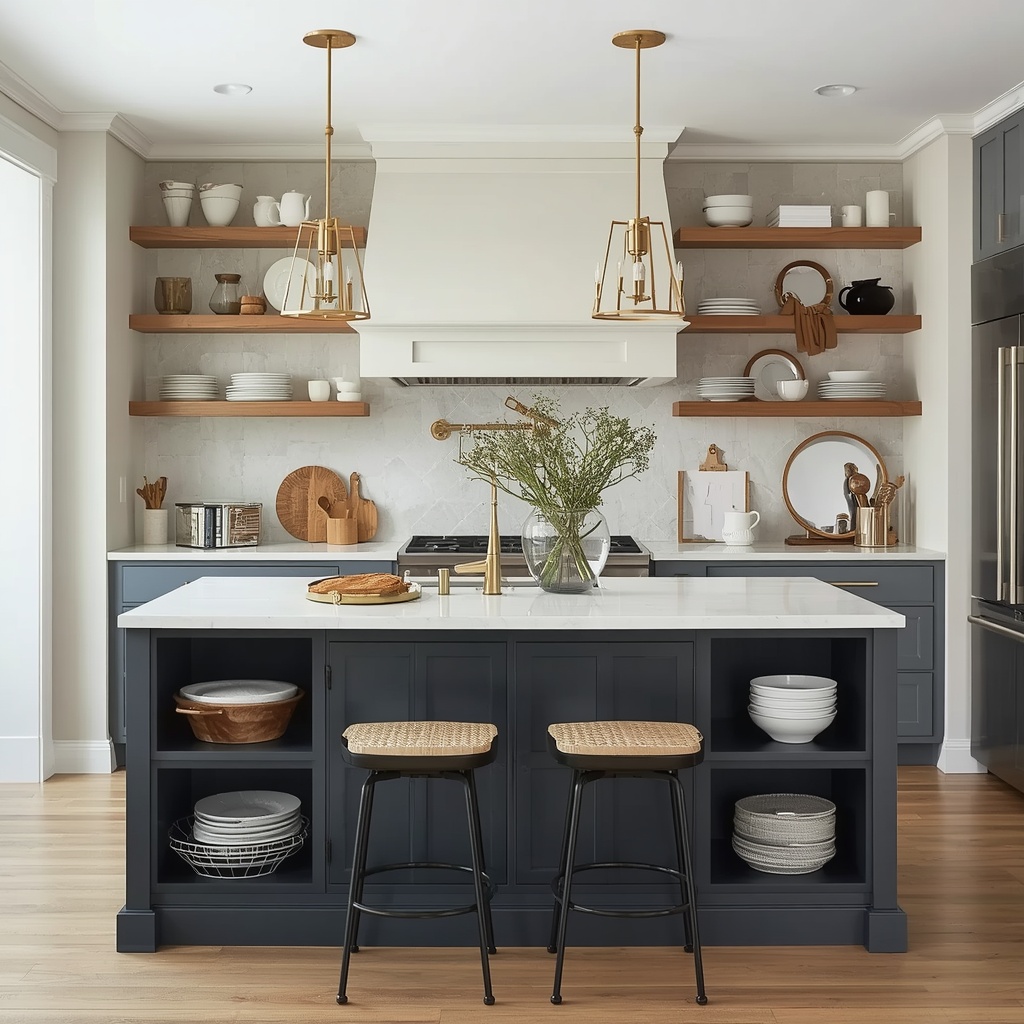
Here’s what that layering typically includes, from base to top:
- A runner or tray base to anchor the vignette and protect the countertop
- A centerpiece — a bowl of citrus, a sculptural vase, or a small plant
- A height element — a candlestick, a stack of cookbooks, or a tall vase
- A texture layer — woven baskets, ceramic crocks, or a wooden cutting board
- A utility piece that’s still decorative, like a crock of wooden utensils or a soap dispenser
- Negative space — the most underrated ingredient of all
“The best-styled kitchen islands always leave room to breathe. If there’s no space for a coffee cup or a cutting board, it’s decoration — not design.”
Don’t Forget the Storage Side of Decor
Decor and function aren’t separate categories on a kitchen island — the best-looking islands are usually the most organized ones underneath. Open shelving on one end of the island has become a favorite move in 2026 kitchens, giving homeowners a spot to display cookbooks, stoneware, and everyday glassware while keeping the rest of the cabinetry closed and streamlined.
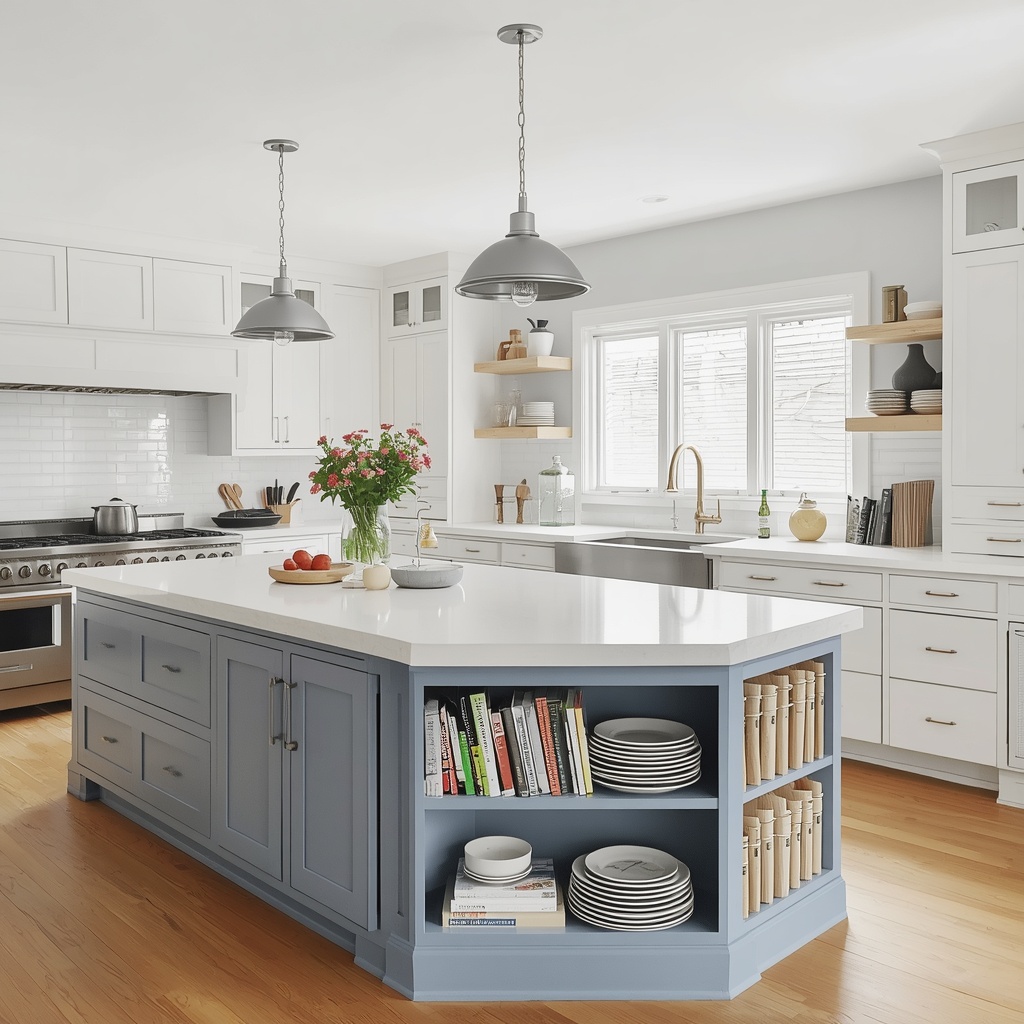
If a full shelving build-out isn’t in your budget, a slim wall-mounted rail on the island’s side panel works almost as well. Hang a few S-hooks for kitchen towels, a small cutting board, or a hanging planter, and you’ve added both storage and texture without touching the countertop itself. This kind of “vertical decor” is especially useful in smaller kitchens where every inch of island real estate needs to multitask.
Choosing the Right Countertop and Base Materials
Your countertop material does more decorative heavy lifting than almost anything else on the island, since it’s the largest visible surface in the room. Quartz and quartzite remain top choices for their durability and low maintenance, while marble and soapstone are having a major moment for their warmth and natural veining.
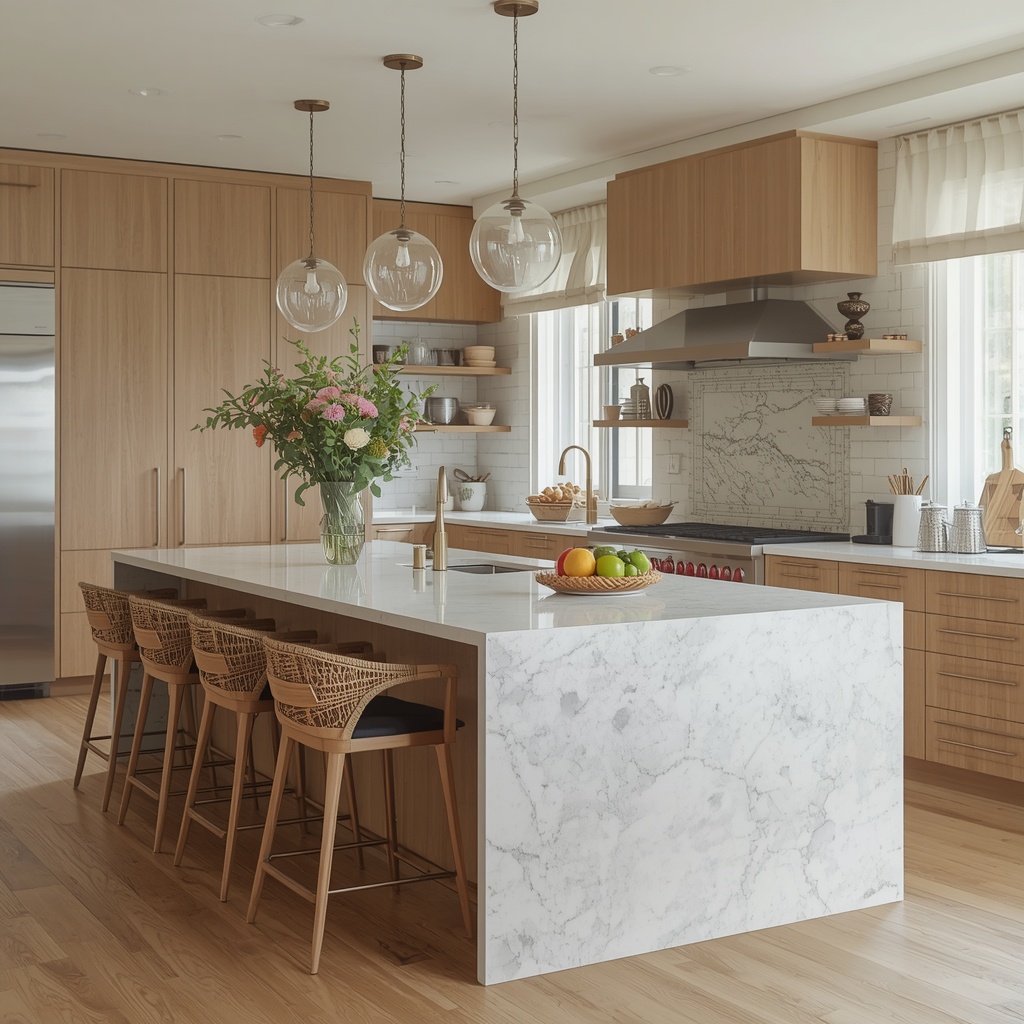
One trend worth noting for 2026: more homeowners are choosing an island countertop in a different color or material than the surrounding perimeter counters, creating a deliberate focal point rather than a matched set. If you’re not ready for a full remodel, you can echo this trend with decor alone — a contrasting wood cutting board or a stone tray can create the same visual separation without any construction.
| Countertop Material | Best For | Maintenance | Style Pairing |
|---|---|---|---|
| Quartz | Busy households | Low | Modern, transitional |
| Marble | Statement islands | Moderate (needs sealing) | Traditional, transitional, glam |
| Butcher Block | Warmth and texture | Moderate | Farmhouse, cottage |
| Soapstone | Heat resistance | Low | Industrial, farmhouse |
| Granite | High durability | Low | Traditional |
Lighting That Makes a Statement
Pendant lighting is, without question, the single highest-impact decor decision you can make above your island. It’s jewelry for the kitchen — and oversized, texture-rich fixtures are leading the way this year, especially in woven rattan, hand-blown glass, and warm brass finishes.
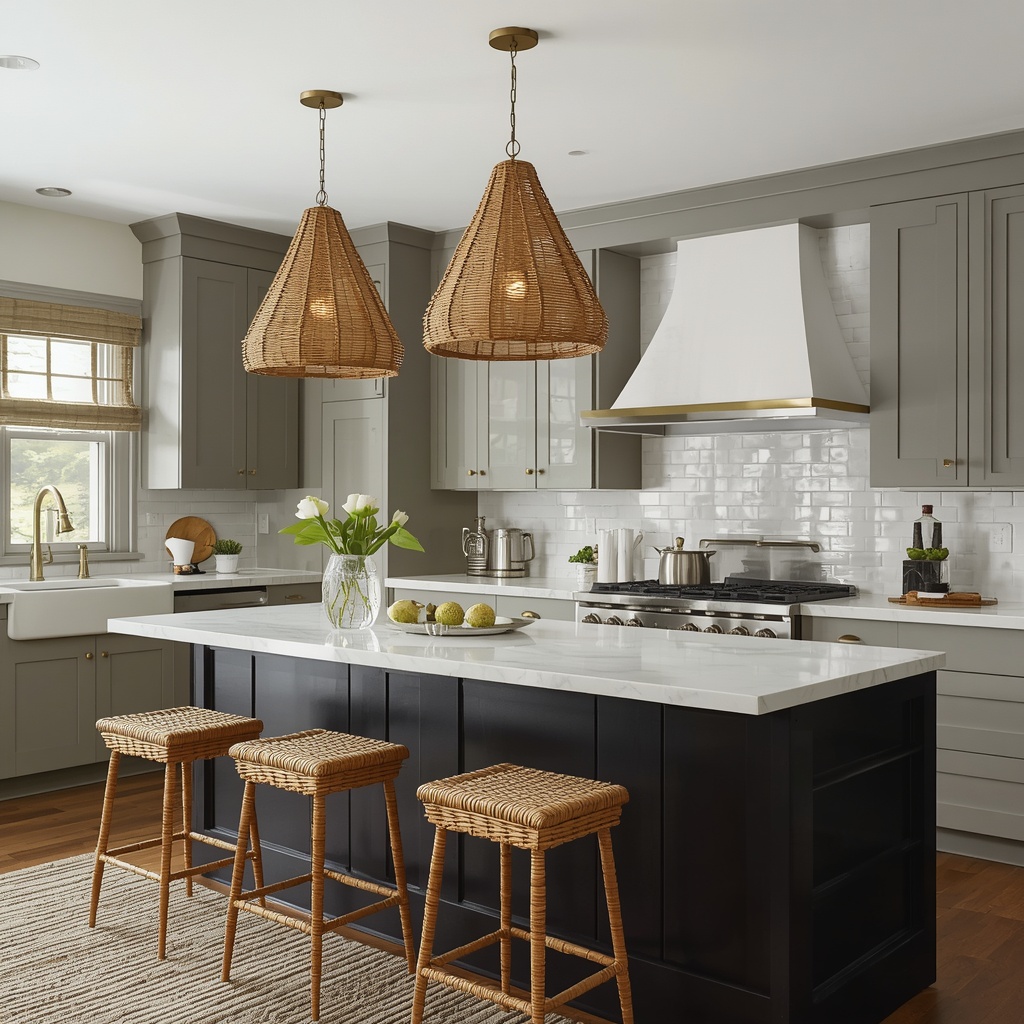
When choosing pendants, hang them so the bottom sits roughly 28 to 34 inches above the countertop, which keeps sightlines open across the island while still creating a defined glow over the workspace. Group lighting styles by the same logic as your decor objects: pick one material story (all warm metal, all woven texture, all glass) rather than mixing several at once.
A few pendant styles worth considering by kitchen type:
- Woven or rattan pendants — coastal, farmhouse, organic-modern kitchens
- Linear glass pendants — transitional and minimalist kitchens
- Sculptural brass or mixed-metal fixtures — luxury and traditional kitchens
- Exposed-bulb or cage pendants — industrial and loft-style kitchens
Seating That Invites People to Linger
Kitchen island seating has quietly shifted from purely functional to genuinely lounge-worthy. Where backless bar stools once ruled, more homeowners are now opting for upholstered, cushioned, or low-back seating that encourages people to actually sit and stay a while — turning the island into a gathering spot rather than a quick prep counter.
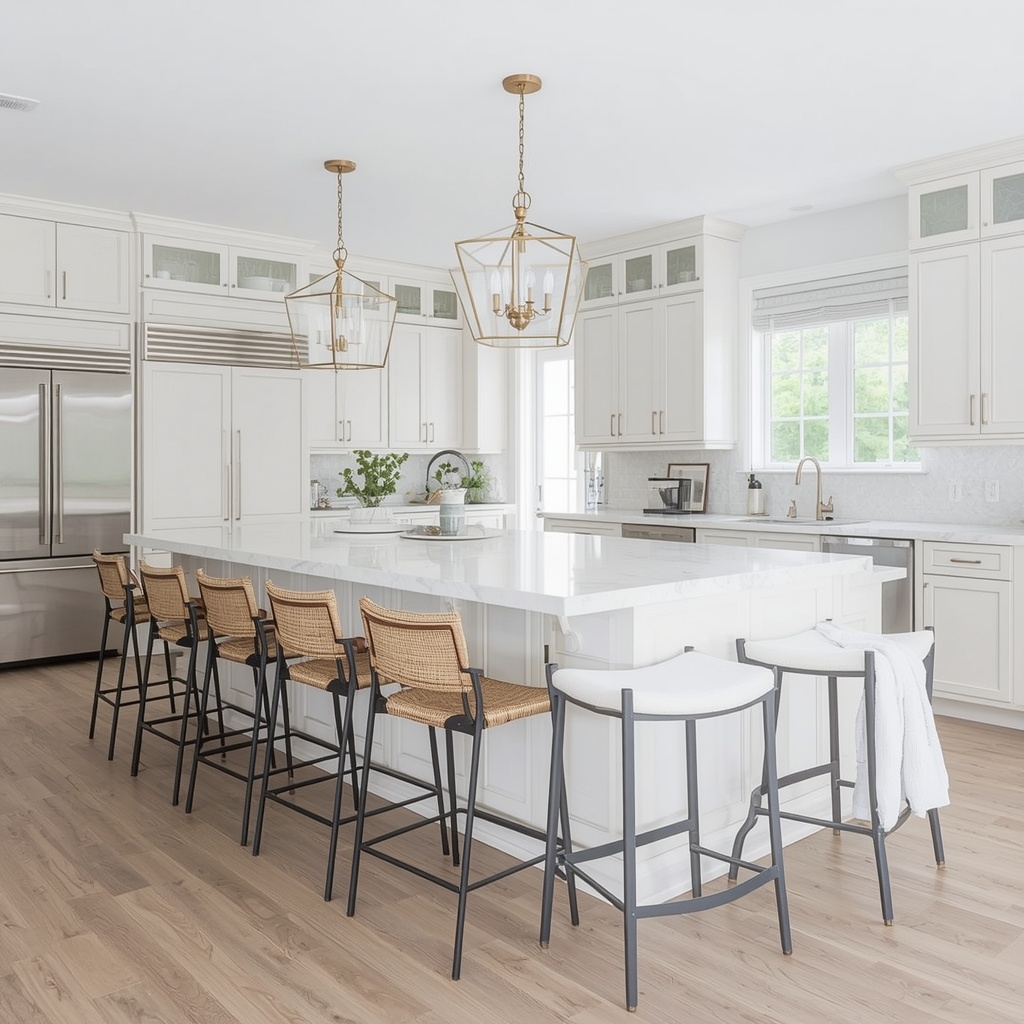
If your island already has stools, you can refresh the whole look without replacing furniture. A set of woven seat cushions, a leather strap detail, or simply swapping metal finishes (brushed nickel and matte black are both leading hardware choices right now) can modernize the seating instantly.
A quick stool-selection cheat sheet:
| Counter/Island Height | Recommended Stool Height | Best Stool Style |
|---|---|---|
| 36″ standard counter | 24″–26″ seat height | Counter stool |
| 42″ raised bar | 28″–30″ seat height | Bar stool |
| Mixed-height island | Match seat to each section | Combination seating |
Everyday Styling Tips for a Lived-In Look
The goal isn’t a museum display — it’s a kitchen that looks intentional even mid-recipe. A few simple habits make a noticeable difference:
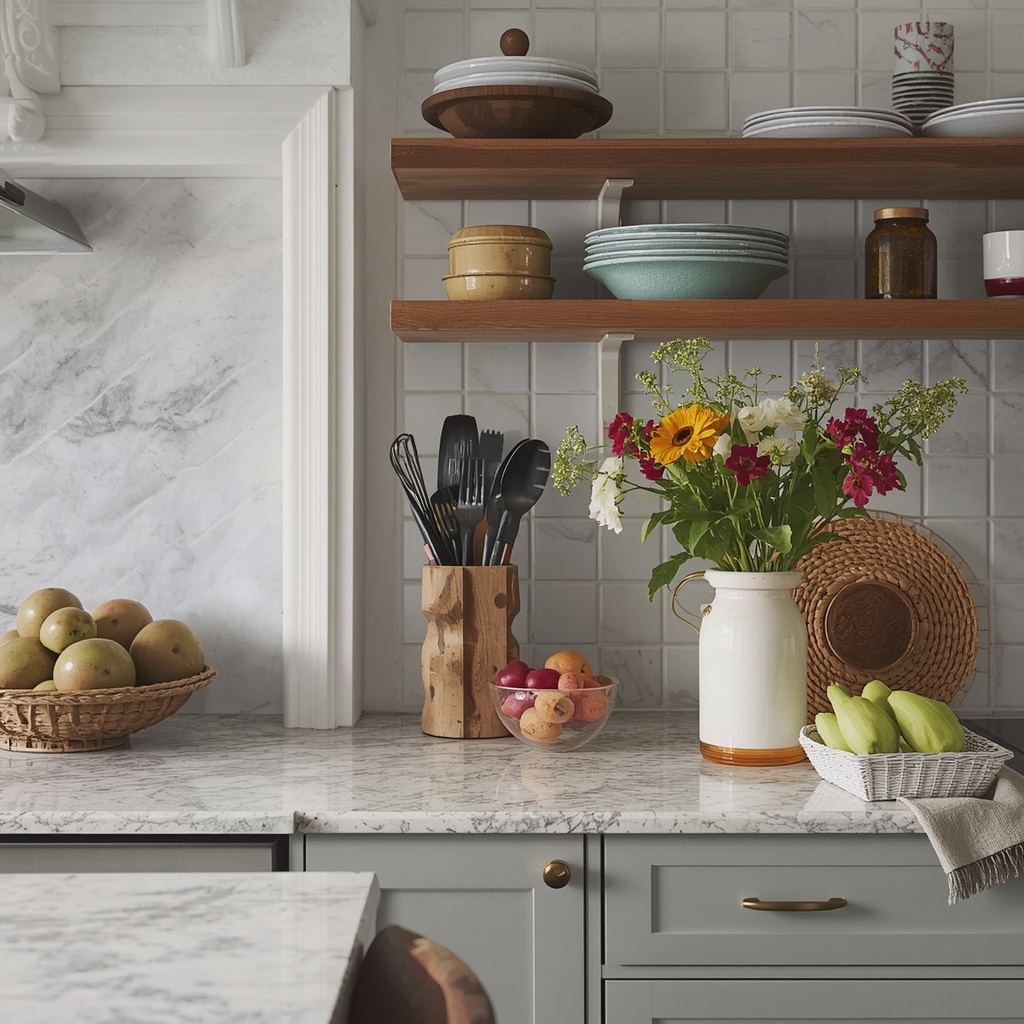
- Group decor in odd numbers (three is the magic number for vignettes)
- Stick to one centerpiece bowl rather than several scattered objects, to avoid visual clutter
- Use a runner to define a “styling zone” separate from your active workspace
- Add one living element — a small herb planter, a stem of greenery, or a potted succulent
- Rotate accessories seasonally instead of buying all new decor every few months
Pro Tip: Keep one “working corner” of the island completely clear at all times — usually the end closest to your stove or sink. This is the zone where prep actually happens, and it keeps decor from ever feeling like it’s in the way of real life.
Seasonal Styling: Refreshing Your Island Year-Round
Small seasonal swaps keep your kitchen island feeling current without a full redecorating budget. Here’s a simple seasonal rotation framework:
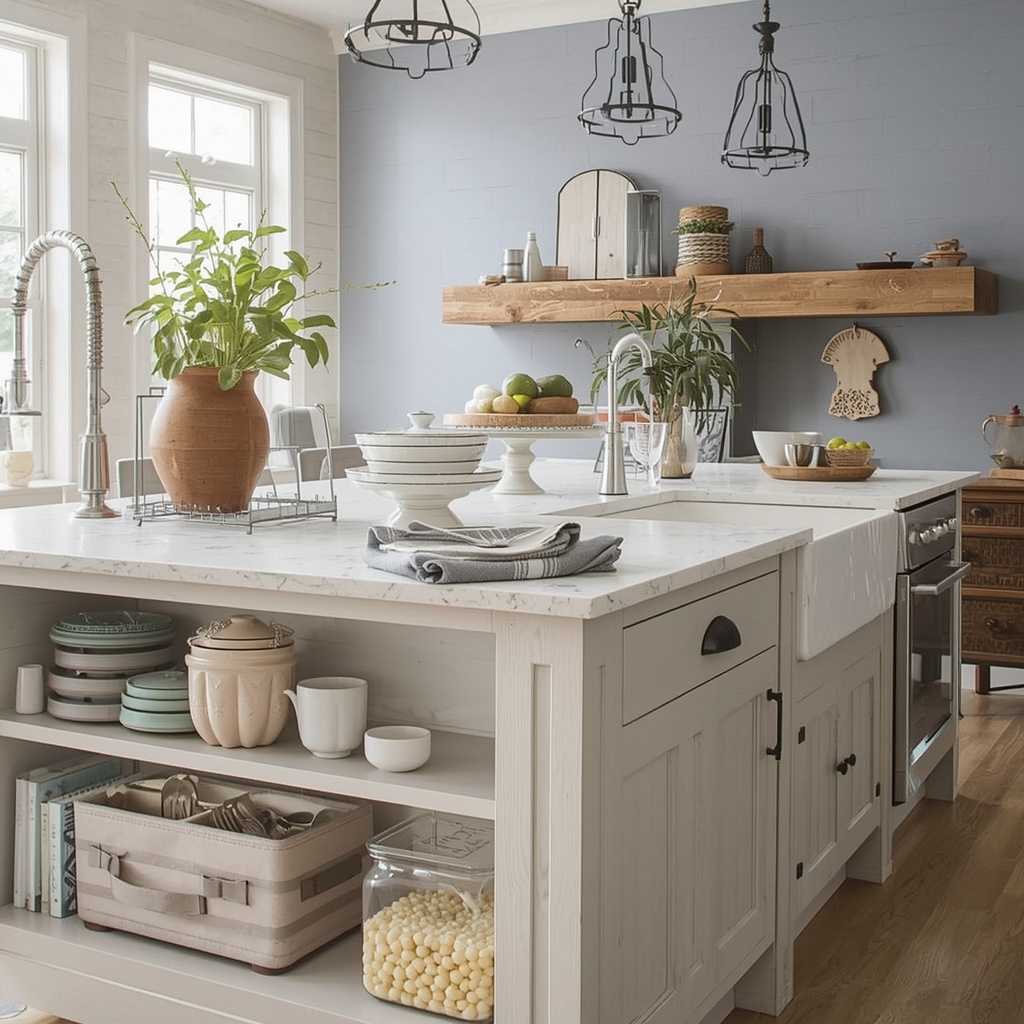
- Spring: Fresh florals, pastel linens, citrus bowls
- Summer: Woven trays, herb planters, light linen runners
- Fall: Stoneware crocks, dried wheat or pampas grass, warm-toned candles
- Winter: Greenery sprigs, brass accents, neutral wool or knit runners
Common Kitchen Island Decor Mistakes to Avoid
Even well-intentioned styling can backfire. Watch out for these frequent missteps:
- Overcrowding the surface — if there’s no room for a coffee mug, you’ve gone too far
- Mismatched metal finishes — pendant, hardware, and faucet finishes should relate to each other
- Ignoring scale — a tiny vase on a massive island reads as an afterthought
- Ignoring the island’s “back side” — if it faces a living room, style that side too
- Skipping greenery entirely — even one small plant adds life and softens hard surfaces
Quick Reference: Kitchen Island Styling Checklist
| Element | Purpose | Easy Starting Point |
|---|---|---|
| Runner or tray | Anchors the vignette | Neutral linen runner |
| Centerpiece bowl | Adds color and function | Ceramic bowl with citrus |
| Height element | Creates visual interest | Tall vase or candlestick |
| Lighting | Sets ambiance | Oversized pendant light |
| Seating | Encourages lingering | Upholstered counter stools |
| Greenery | Softens the space | Small potted herb |
Frequently Asked Questions
What should I put on my kitchen island for everyday decor? A simple combination of a centerpiece bowl, a small plant, and a tray with one or two functional-but-pretty items (like olive oil in a glass cruet) covers most everyday styling needs.
How do I style a kitchen island without it looking cluttered? Stick to the rule of three, use a runner to define boundaries, and always leave open counter space for actual use. If you can’t set down a cutting board without moving three things, it’s time to edit.
Do kitchen islands need pendant lights? They’re not mandatory, but pendant lighting is one of the most effective ways to add personality and warmth above an island, especially in kitchens with otherwise neutral finishes.
Should my kitchen island match my perimeter cabinets? Not necessarily. One of the biggest 2026 kitchen trends is choosing an island in a contrasting cabinet color or countertop material on purpose, so it stands out as the room’s focal point rather than blending into the rest of the cabinetry.
What’s the most popular kitchen island countertop material in 2026? Quartz remains the most common choice for durability, while marble, soapstone, and contrasting countertop colors are trending for islands specifically, even when the rest of the kitchen uses a different material.
Bringing It All Together
Your kitchen island is the one surface in your home that has to do everything — host dinner parties, hold homework, display fresh flowers, and survive a Tuesday-night taco prep, sometimes all in the same week. The best decor honors that dual identity instead of fighting it.
Start with a style direction that matches the rest of your kitchen, layer in a few intentional decor elements, and leave enough breathing room for real life to happen on top of the design. Do that, and your island won’t just look good in photos — it’ll feel like the true heart of your home, every single day.