
If you’ve ever stood in front of your bathroom vanity searching for a bobby pin buried under three half-empty lotion bottles, you already know the struggle. Small bathroom vanities are one of the most common design challenges in American homes, especially in older houses, apartments, and starter homes where square footage is tight.
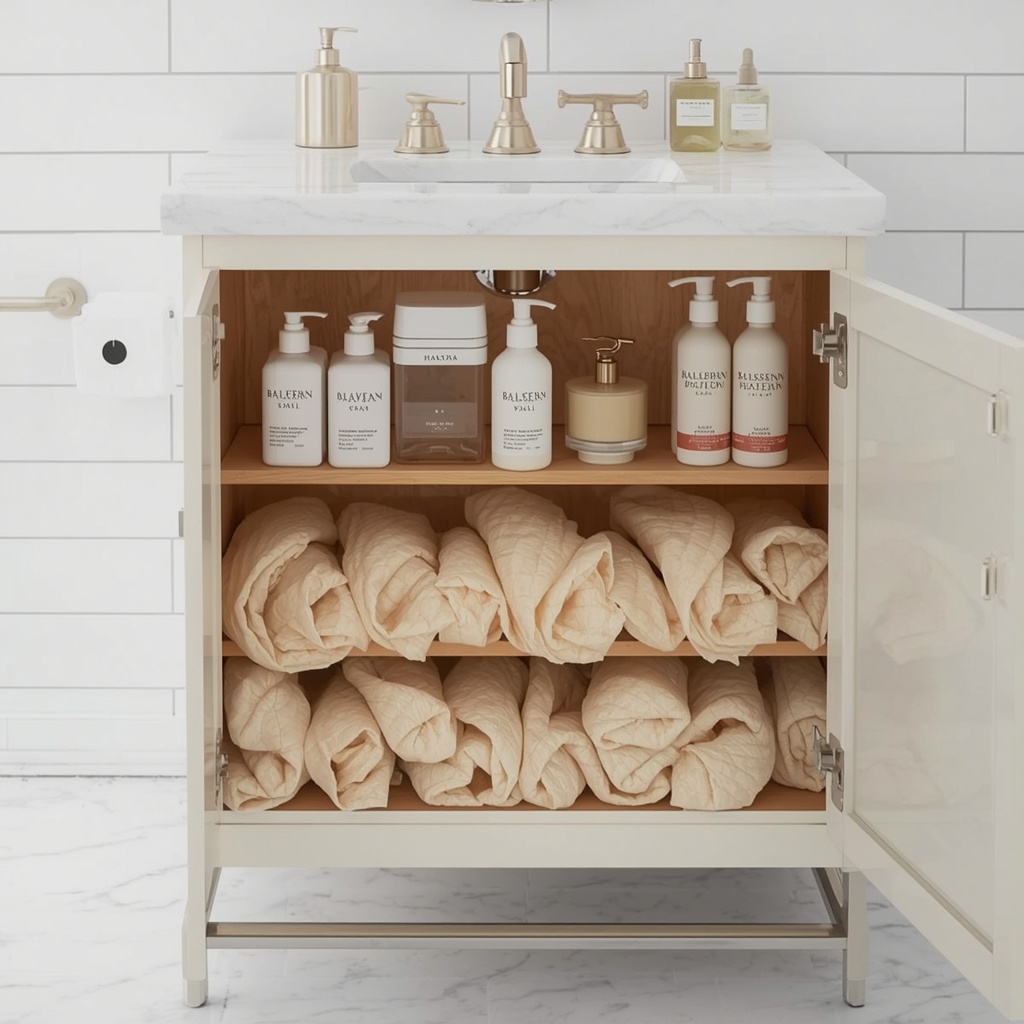
The good news? A cramped vanity doesn’t have to mean a cluttered one. With the right storage strategy, even a compact 24-inch vanity can function like a spa-level dream. As an interior designer who works with small bathrooms every day, I’ve learned that organization isn’t about owning fewer things — it’s about giving every item a home. Let’s walk through exactly how to do that.
Why Small Bathroom Vanities Need Smart Organization
Bathroom vanities are the hardest-working surface in the house. In just a few square feet, they’re expected to store skincare products, hair tools, medications, cleaning supplies, and grooming essentials — often for more than one person. Without a system, clutter multiplies fast.
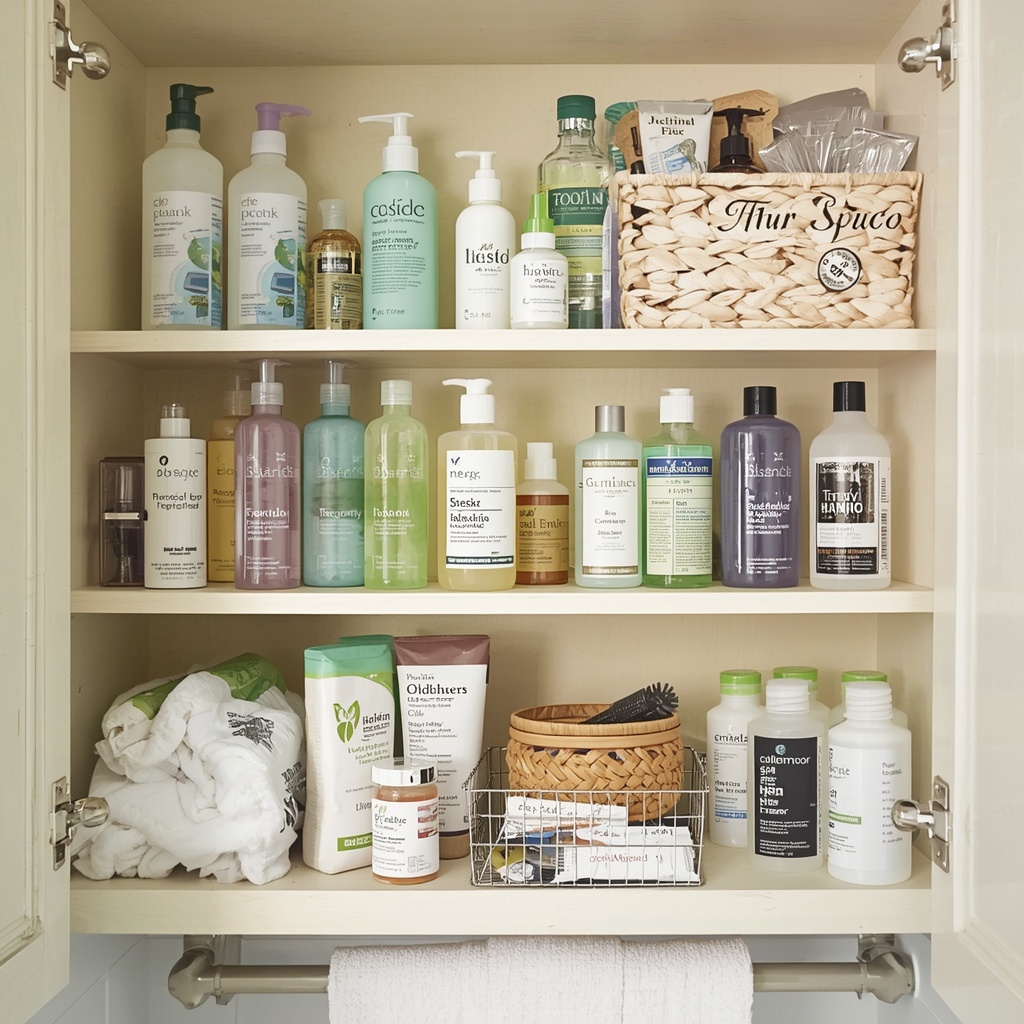
Poor vanity organization doesn’t just look messy; it wastes time, damages products, and makes small bathrooms feel even smaller. A well-organized vanity, on the other hand, creates visual calm and makes your morning routine noticeably faster.
“In small spaces, storage isn’t a luxury — it’s the design. Every inch of a bathroom vanity should be working double duty, or it’s wasted real estate.” — a principle every good interior designer lives by when tackling compact bathrooms.
Step One: Audit Before You Organize
Before buying a single organizer, empty your vanity completely. This single step reveals expired products, duplicate items, and things you genuinely never use — and it’s the foundation of any real bathroom storage solution.
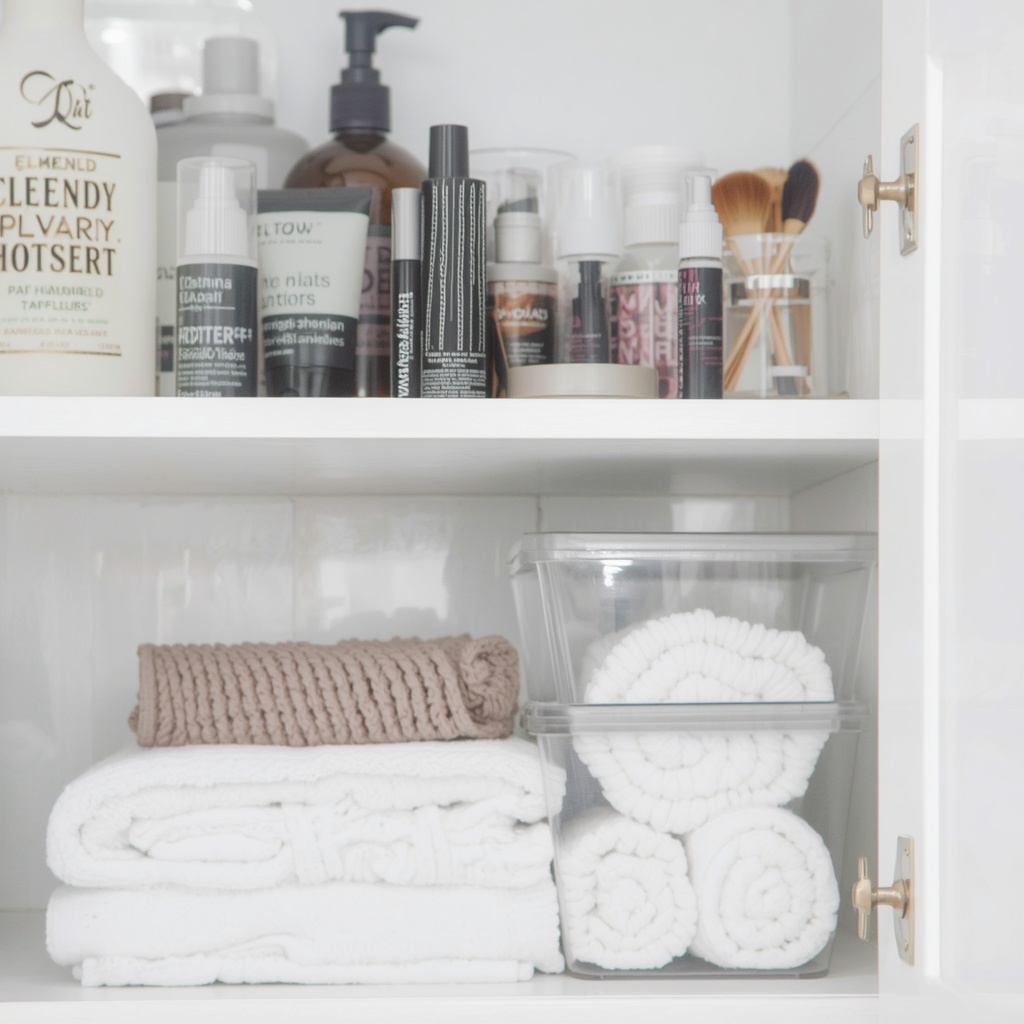
Sort everything into three piles: keep, toss, and relocate (items like cleaning supplies or extra towels that don’t belong in the vanity at all). This decluttering process typically frees up 20–30% more usable space before you add a single storage bin.
Quick audit checklist:
- Check expiration dates on skincare, sunscreen, and medications
- Toss dried-out nail polish, empty bottles, and dead makeup
- Group duplicate products (you likely don’t need 4 half-used lotions)
- Separate daily-use items from occasional-use items
- Identify what truly needs to live in the bathroom vs. a linen closet
Pro Tip
Pro Tip: Use the “12-month rule” for skincare and beauty products. If you haven’t touched it in a year, it’s taking up prime vanity real estate for nothing — donate, toss, or relocate it.
Drawer Organization: The Heart of Vanity Storage
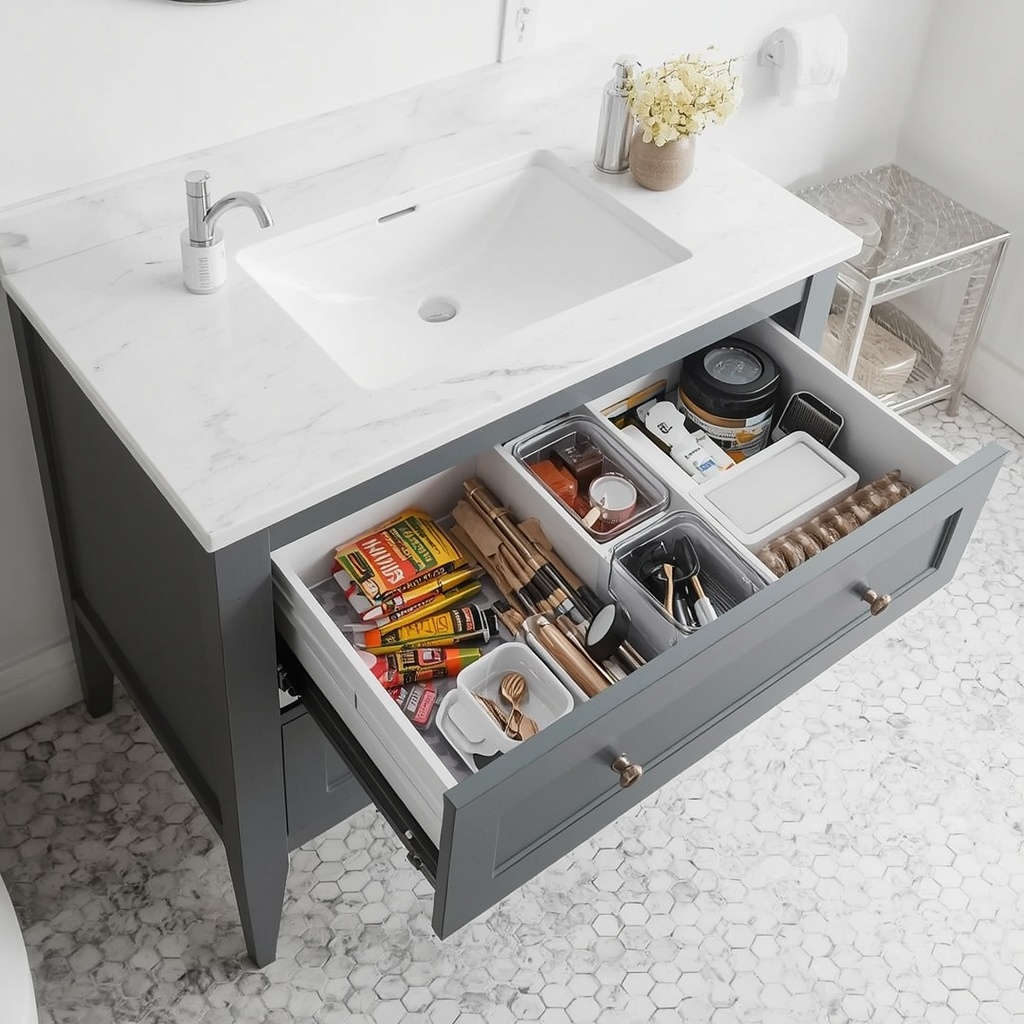
Vanity drawers are prime real estate, but without dividers they become a junk drawer fast. Drawer organizers — whether adjustable trays, acrylic bins, or expandable dividers — are the single highest-impact purchase you can make for small bathroom storage.
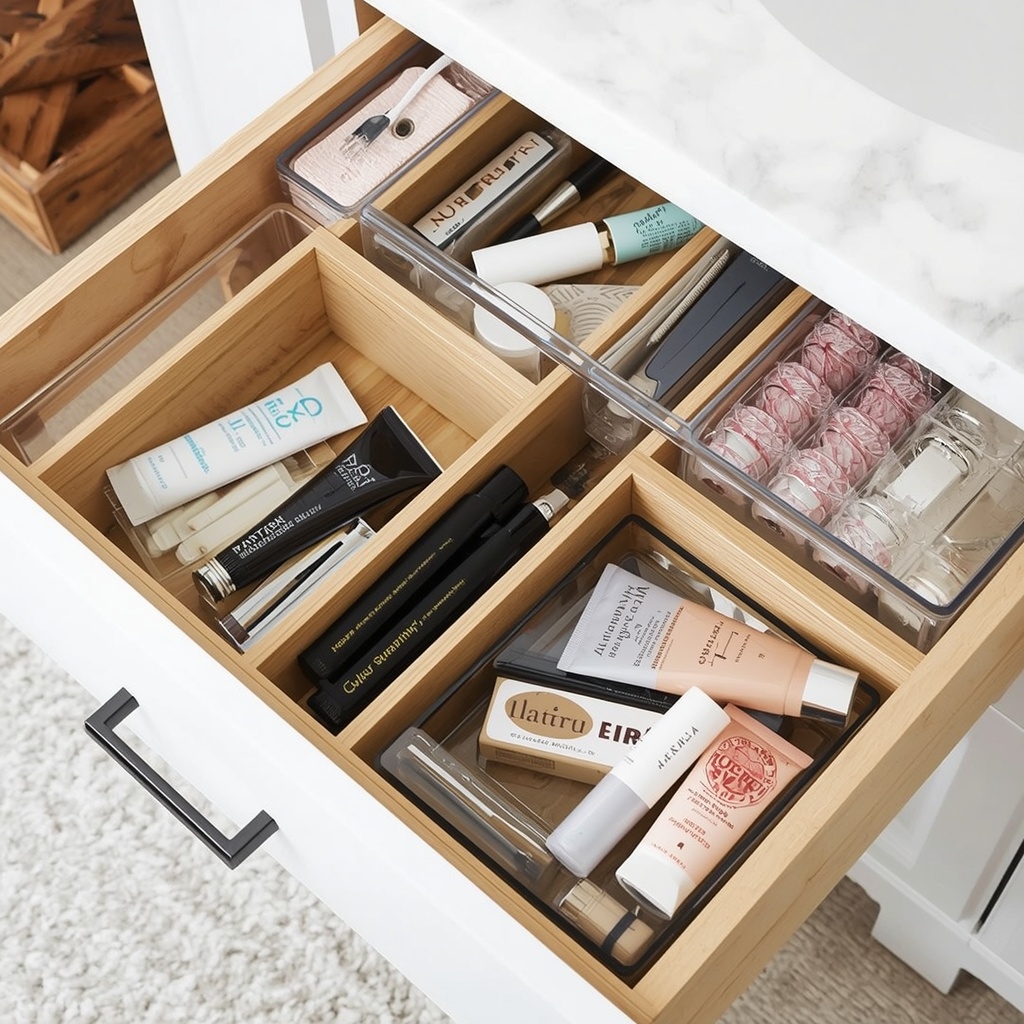
Group items by category and function rather than by size. Toothbrushes and floss go together; hair ties and clips go together; skincare tools stay separate from makeup. This category-based system means you can find what you need in seconds, even in a shallow 3-inch drawer.
Best drawer organization methods:
| Drawer Type | Best Organizer | Ideal For |
|---|---|---|
| Shallow top drawer (2–3″) | Expandable cutlery-style trays | Makeup, hair accessories, small tools |
| Deep drawer (6″+) | Stackable acrylic bins | Hair dryers, straighteners, bulk supplies |
| Narrow side drawer | Vertical dividers | Nail polish, skincare bottles |
| Junk drawer | Modular grid trays | Miscellaneous small items |
Under-the-Sink Storage Solutions
The cabinet beneath the sink is often the most under-used space in a small bathroom vanity, largely because of awkward plumbing pipes cutting through the middle. The fix is to work around the pipe, not against it.
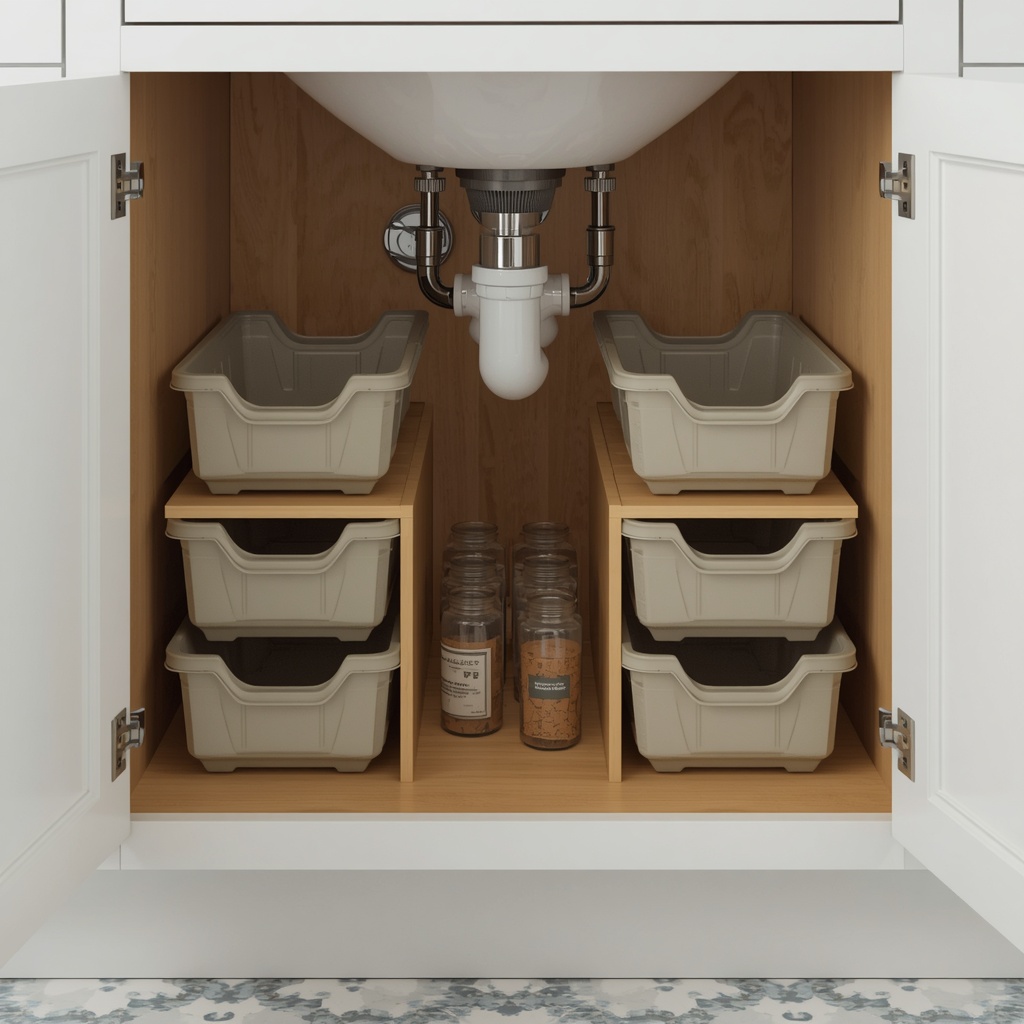
Tiered risers, stackable bins, and pull-out drawers turn this dead zone into functional storage. Lazy Susans are especially effective for corner cabinets or U-shaped pipe layouts, letting you spin to access items instead of digging.
Under-sink storage essentials:
- Stackable, pipe-friendly bins that split the cabinet into tiers
- A slim pull-out drawer organizer for cleaning supplies
- Command hooks on the inside cabinet door for spray bottles or hair tools
- A tension rod installed low in the cabinet to hang spray bottles by their trigger handles
- Clear, labeled bins so contents are visible at a glance
Pro Tip
Pro Tip: Install an over-the-cabinet-door organizer for hair tools like flat irons and curling wands. Heat-resistant pouches keep hot tools safely stored the moment you’re done using them — no more counter clutter or cord tangles.
Countertop Organization: Less Is More
Countertop clutter is the fastest way to make a small bathroom vanity feel chaotic, even when everything else is tucked away. The goal is to keep only your daily-use essentials visible, and store the rest.
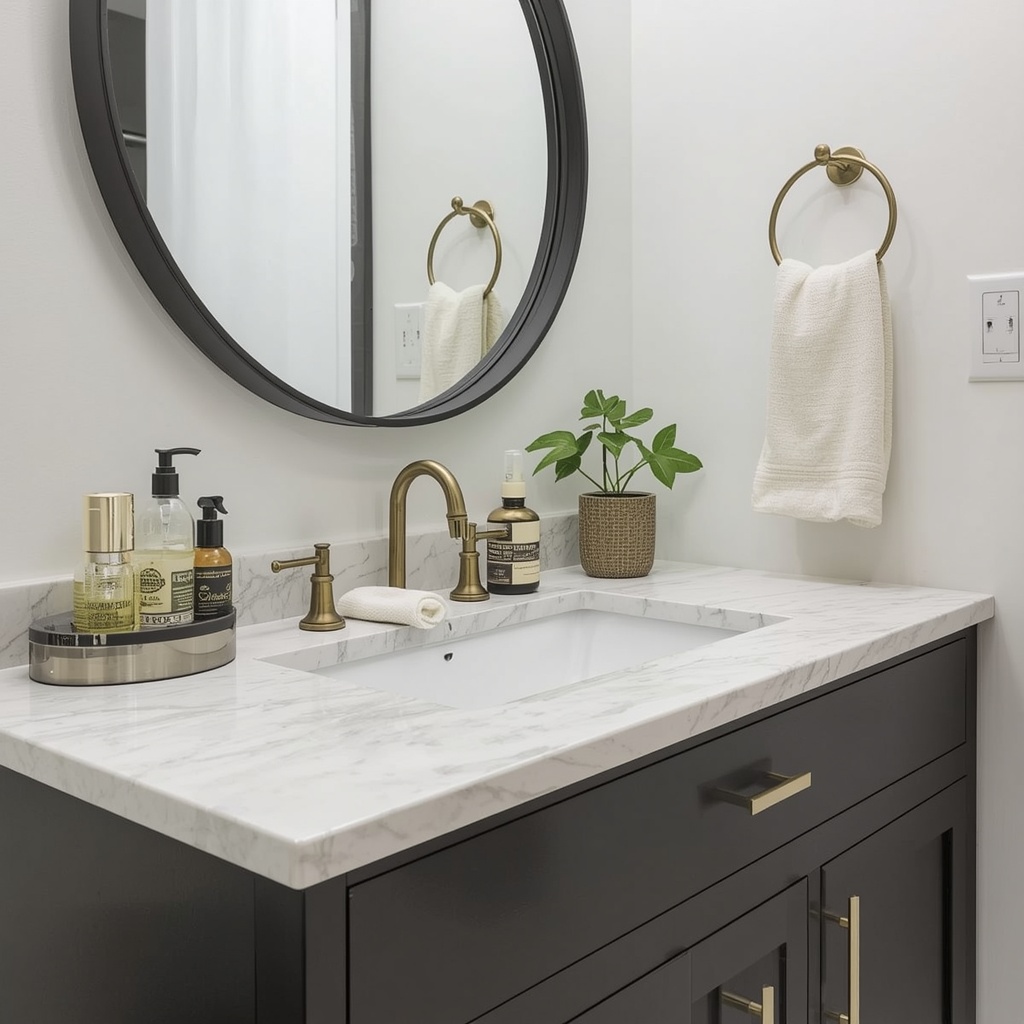
A good rule of thumb from professional home organizing: if it’s not used every single day, it belongs in a drawer or cabinet, not on display. This “surface minimalism” approach is a cornerstone of modern small-bathroom design.
What should stay on the counter:
- Soap dispenser or a matching pump bottle
- One tray or catch-all dish for rings and small items
- A toothbrush holder (or wall-mounted alternative to save space)
- Daily skincare items used within arm’s reach of the mirror
What should move into storage:
- Backup product bottles and bulk supplies
- Hair tools not used daily
- Medications (better suited to a dedicated medicine cabinet)
- Seasonal or occasional-use items
Vertical Storage: Look Up, Not Just Down
When floor and counter space run out, the walls above and beside your vanity become valuable square footage. Vertical storage is one of the most underrated small bathroom vanity ideas because it adds capacity without touching your existing footprint.
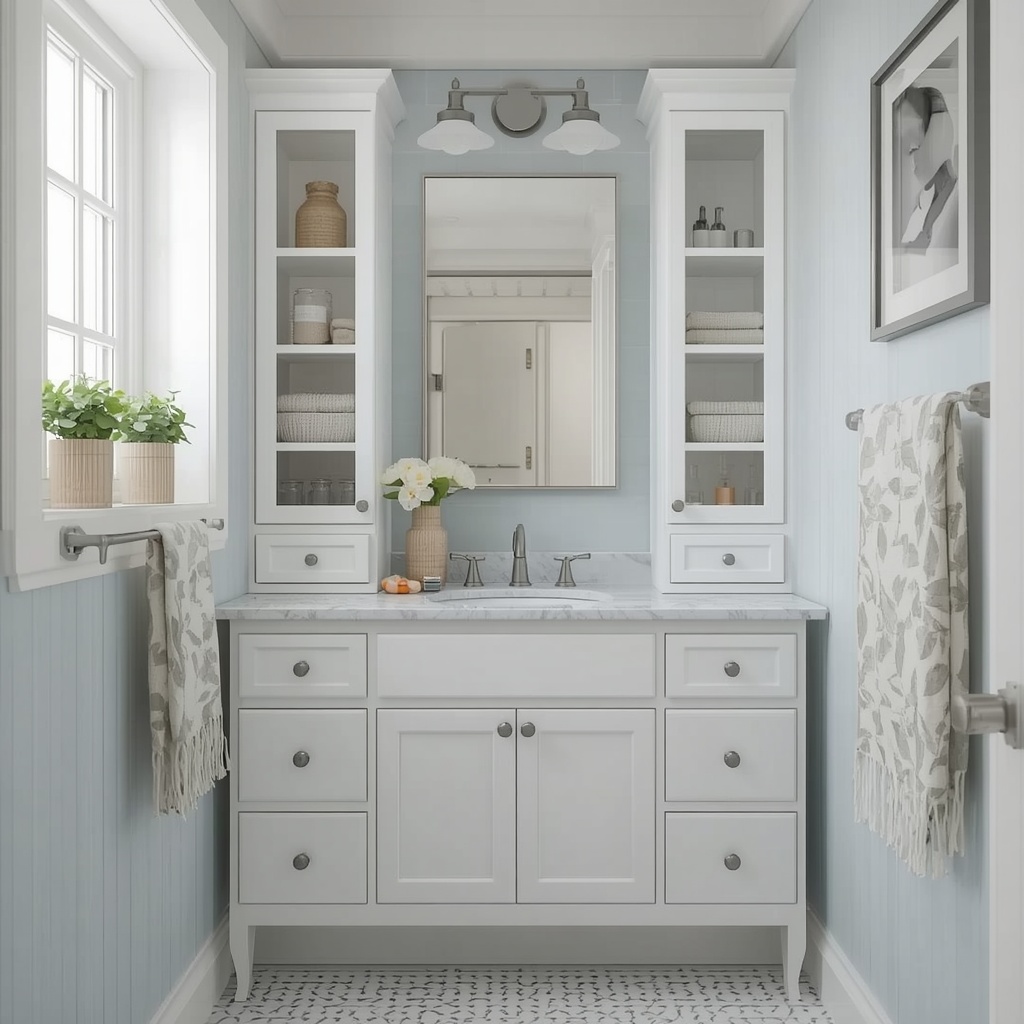
Floating shelves, wall-mounted baskets, and over-the-mirror cabinets all take advantage of vertical space that’s otherwise empty air. Even a narrow 6-inch shelf beside the vanity mirror can hold rolled towels, glass jars of cotton balls, or a small plant for a spa-like touch.
Vertical storage ideas worth trying:
- Floating shelves above the toilet or beside the vanity mirror
- A narrow rolling cart tucked into any gap next to the cabinet
- Wall-mounted magnetic strips for metal tweezers, nail clippers, and bobby pins
- Over-the-door hooks for robes, towels, or hanging organizers
- A tiered wall basket set for a farmhouse or coastal aesthetic
Multi-Functional Furniture and Storage Add-Ons
If your vanity itself is small, let the surrounding furniture pick up the slack. Multi-functional pieces are a designer favorite because they add storage capacity without visually crowding the room.
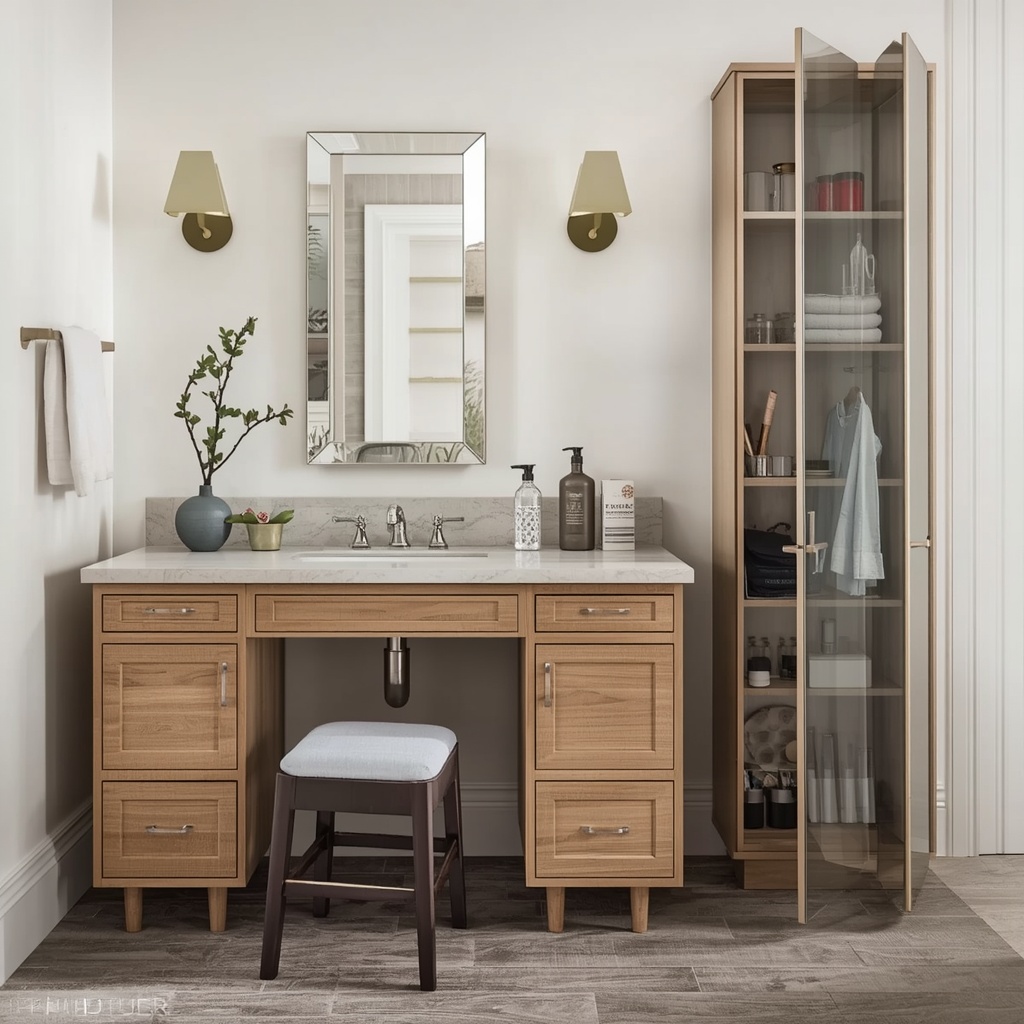
A vanity stool with a lift-top seat, a slim bar cart, or a mirrored medicine cabinet with hidden shelving can all expand your storage footprint while contributing to the overall design. Choose pieces that match your existing finishes so added storage looks intentional, not improvised.
Comparison of multi-functional storage add-ons:
| Add-On | Storage Boost | Design Bonus |
|---|---|---|
| Lift-top vanity stool | Hidden interior storage | Doubles as extra seating |
| Mirrored medicine cabinet | Deep shelving behind mirror | Expands mirror space visually |
| Rolling bar cart | 2–3 open tiers | Easy to move for cleaning |
| Ladder shelf | Multiple open shelves | Adds height and visual interest |
| Woven storage baskets | Soft-sided flexible storage | Adds texture and warmth |
Pro Tip
Pro Tip: Choose open shelving or baskets in a material that echoes another finish in the room — like a woven basket that matches a wicker mirror frame. Coordinated textures make added storage feel like part of the original design, not an afterthought.
Labeling and Maintenance: The Step Everyone Skips
Even the best organization system fails without maintenance. Labeling bins and drawers isn’t just for aesthetics — it trains everyone in the household to put things back where they belong, which is what keeps a vanity tidy long-term.

Set a recurring 5-minute reset, ideally weekly, to corral stray items, wipe down surfaces, and restock daily essentials. This small habit prevents the slow creep of clutter that undoes even a beautifully organized bathroom vanity.
Simple maintenance habits:
- Do a weekly 5-minute “reset” of drawers and countertops
- Replace paper labels with waterproof or laminated ones near sinks
- Do a seasonal deep declutter every 3–4 months
- Immediately return items to their designated bin after use
Common Small Vanity Organization Mistakes to Avoid
Even well-intentioned organizing efforts can backfire. Here are the mistakes I see most often when helping clients redesign small bathroom storage.
Avoid these common pitfalls:
- Buying organizers before measuring your actual drawer and cabinet dimensions
- Storing daily-use items out of easy reach to “save” prime space
- Overcrowding the counter with decorative items that don’t serve a purpose
- Ignoring vertical space above the vanity entirely
- Using opaque bins under the sink, making it hard to see what’s inside
- Skipping labels, which leads back to disorganization within weeks
Quick-Reference: Small Vanity Organization at a Glance
| Zone | Best Solution | Time to Implement |
|---|---|---|
| Drawers | Adjustable dividers | 30 minutes |
| Under-sink | Tiered, pipe-friendly bins | 1 hour |
| Countertop | Minimalist tray + daily essentials only | 15 minutes |
| Walls | Floating shelf or magnetic strip | 1–2 hours |
| Furniture | Lift-top stool or bar cart | Varies by purchase |
Frequently Asked Questions
What’s the best way to organize a small bathroom vanity with only one drawer? Use a single expandable tray divided by category — skincare, hair, and grooming — and move overflow items to under-sink bins or wall-mounted storage.
How do I organize a vanity around awkward under-sink pipes? Choose stackable, adjustable-tier organizers designed specifically to fit around plumbing, and use the flat top of the pipe area as a shelf base wherever possible.
Do bathroom organizers need to be waterproof? Yes — moisture and humidity are constant in bathrooms, so choose acrylic, treated wood, or coated metal organizers that won’t warp or rust over time.
Final Thoughts
A small bathroom vanity will always have physical limits, but it doesn’t have to feel limited. The difference between a chaotic vanity and a calm, functional one almost always comes down to system, not square footage — dividers, tiers, labels, and a regular habit of resetting the space.
Start with one zone this weekend, whether that’s a single drawer or the space under your sink, and build outward from there. Small, consistent changes compound into a bathroom vanity that finally works as hard as you need it to.