
If there’s one room in the American home that takes the most daily abuse, it’s the mudroom. Muddy boots, dripping umbrellas, dog leashes, backpacks, and sports gear all funnel through this small but mighty space before anyone even reaches the kitchen. And yet, so many mudrooms end up looking like an afterthought — a chaotic pile of shoes by the back door instead of a functional, good-looking entryway.
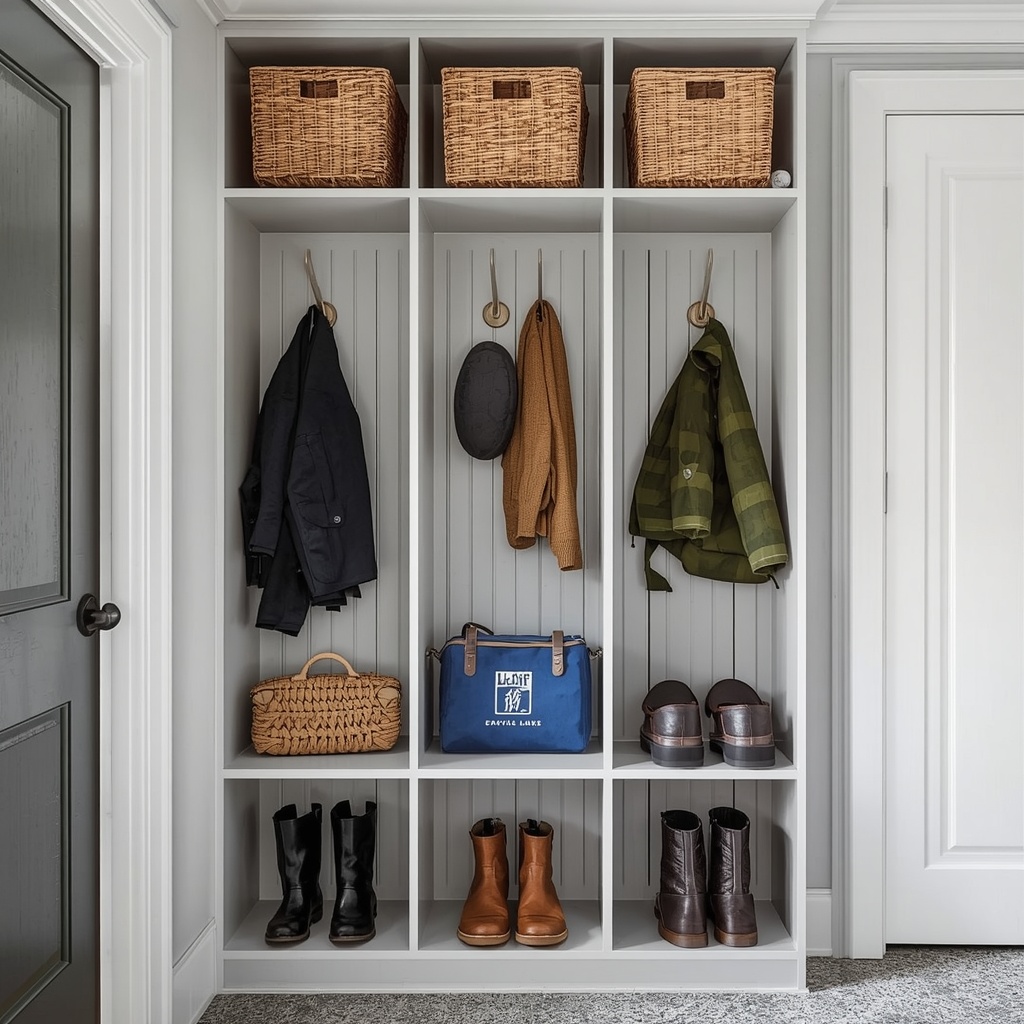
As an interior designer who works with busy American households, I can tell you that a well-designed mudroom is one of the highest-return renovations you can make. It’s not just about storage bins and hooks; it’s about creating a transition zone that protects your home, organizes your family’s gear, and still feels like an extension of your décor. In this guide, I’ll walk you through how to blend heavy-duty functionality with real style, so your mudroom works as hard as it looks good.
Why Your Mudroom Deserves a Design Upgrade
Most homeowners treat the mudroom as purely utilitarian, but that mindset is exactly why so many entryways fall apart within a year or two. A mudroom is the daily handshake between your outdoor life and your indoor sanctuary, and it needs to be built for that job.

Think about how many times a day your family walks through this space with wet coats, muddy paws, sports equipment, or grocery bags. Without a system in place, that traffic turns into clutter, and clutter turns into a room nobody wants to look at, let alone use properly.
“A mudroom isn’t a luxury add-on — it’s functional armor for your home. When designed correctly, it protects your flooring, your entryway walls, and honestly, your sanity.” — Common sentiment among professional home organizers
The good news? You don’t need a sprawling addition to get this right. Even a narrow hallway or converted closet can become a durable, stylish mudroom with the right storage strategy and design choices.
Core Principles of a Functional Mudroom Layout
Before you pick a single paint color or cabinet finish, nail down the bones of your layout. A mudroom’s success depends on how well it channels foot traffic and gear into designated zones.
Zone Everything by Function
The most efficient mudrooms are broken into clear zones — a place to sit and remove shoes, a place to hang coats and bags, a place to stash bins and baskets, and often a landing strip for keys, mail, and phones. When every item has an assigned home, clutter has nowhere to accumulate.
Essential mudroom zones to plan for:
- Seating zone — a bench, built-in seat, or sturdy stool for putting on/taking off shoes
- Hanging zone — hooks, pegs, or a closet rod for coats, backpacks, and leashes
- Storage zone — cubbies, baskets, or drawers for shoes, gloves, and accessories
- Drop zone — a shallow shelf or tray for keys, mail, and sunglasses
- Floor protection zone — durable flooring and a boot tray or mat near the entry
Match Storage to Household Size
A family of five with two dogs needs a vastly different mudroom than a couple in a condo. Before you buy a single storage piece, take inventory of what actually needs a home: how many pairs of shoes, coats, bags, sports bags, and pet supplies pass through daily.
Heavy-Duty Storage Solutions That Still Look Good
This is where style and durability have to meet in the middle. The materials you choose need to survive water, dirt, and daily wear — but that doesn’t mean settling for a look you don’t love.
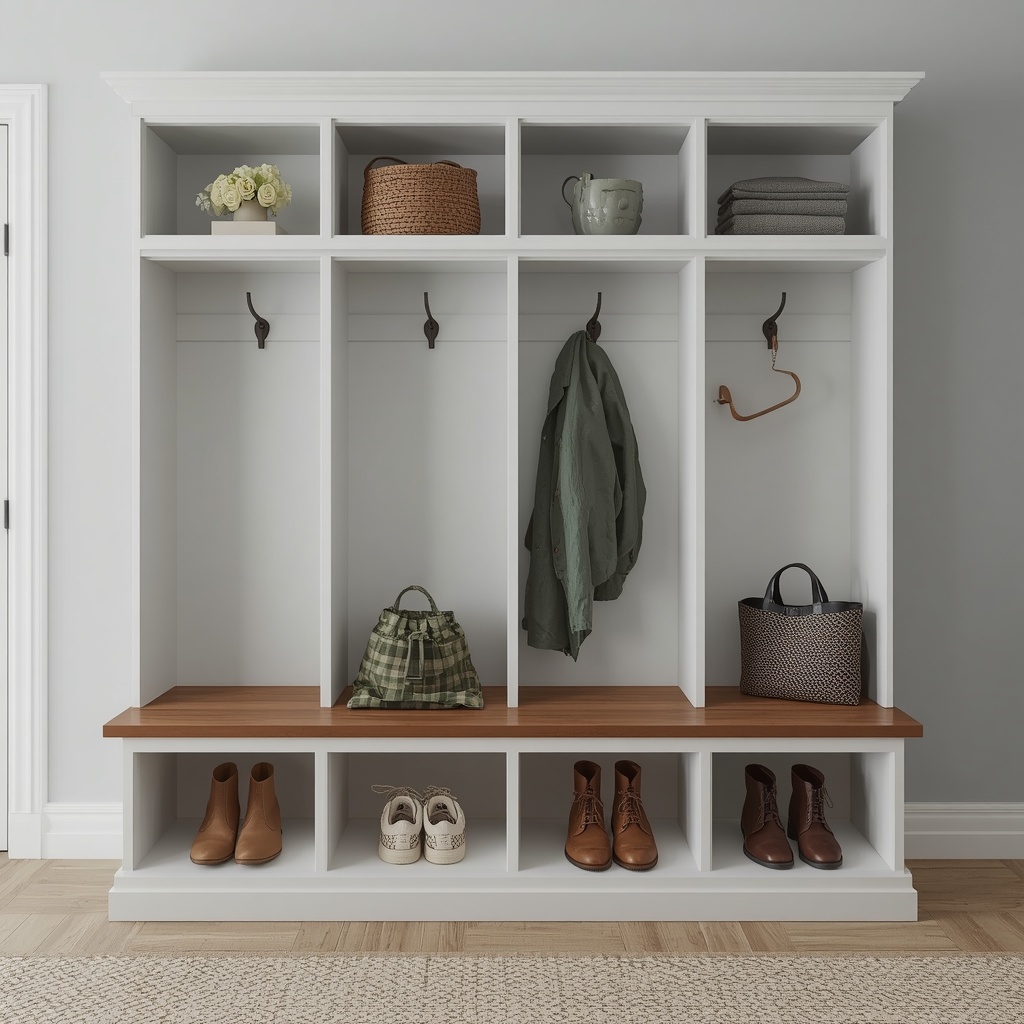
Built-in cubbies with individual cubby storage remain the gold standard for family mudrooms because they assign each person their own space, which cuts down on the “whose shoes are these” chaos. Pair them with a durable bench seat on top, and you’ve got a multi-functional piece that looks custom-built even if it’s a modular system from a retailer like The Container Store or IKEA.
Open shelving with woven baskets is another designer favorite because it hides visual clutter while staying breathable, which matters for wet or muddy items. Look for baskets made of durable, wipeable materials rather than delicate natural fiber if your household deals with a lot of moisture.
Comparing Popular Mudroom Storage Systems
| Storage Type | Best For | Durability | Style Flexibility | Approx. Cost Range |
|---|---|---|---|---|
| Built-in cubbies | Families, multiple users | High | Medium-High | $$$–$$$$ |
| Open shelving + baskets | Small spaces, renters | Medium | High | $$ |
| Wall-mounted hook rail | Coats, bags, leashes | High | High | $ |
| Modular locker system | High-traffic households | Very High | Medium | $$$$ |
| Freestanding bench with storage | Flexible, no renovation needed | Medium | High | $$–$$$ |
<div style=”border-left: 4px solid #4a7c59; padding: 12px 16px; background: #f4f7f4; margin: 20px 0;”> <strong>Pro Tip:</strong> Choose closed-back cabinetry or lined baskets for shoe storage specifically. Shoes track in the most dirt and moisture of any mudroom item, and an open, unlined shelf will show grime faster than any other surface in the room. A simple washable liner or tray insert saves you hours of cleaning over the course of a year. </div>
Flooring That Can Take a Beating
Mudroom flooring needs to handle water, salt, mud, and sharp dog nails without flinching, all while tying into the rest of your home’s aesthetic. This is not the room to install delicate hardwood or plush carpet.

Porcelain tile, luxury vinyl plank (LVP), and sealed concrete are the three most popular choices among designers right now, largely because they’re waterproof, scratch-resistant, and available in finishes that mimic natural wood or stone. If you want the warmth of wood without the water damage risk, LVP has become the go-to compromise for style-conscious homeowners.
Whatever material you choose, make sure it has enough slip resistance for wet conditions, and consider a contrasting grout or trim color to help disguise the inevitable dirt that collects near the door.
Choosing a Color Palette That Hides Wear and Adds Warmth
Mudrooms take a beating, so your color choices should work double duty: looking intentional while forgiving daily grime. Designers often lean into deeper, richer tones for lower walls and cabinetry, since these hide scuffs far better than stark white.
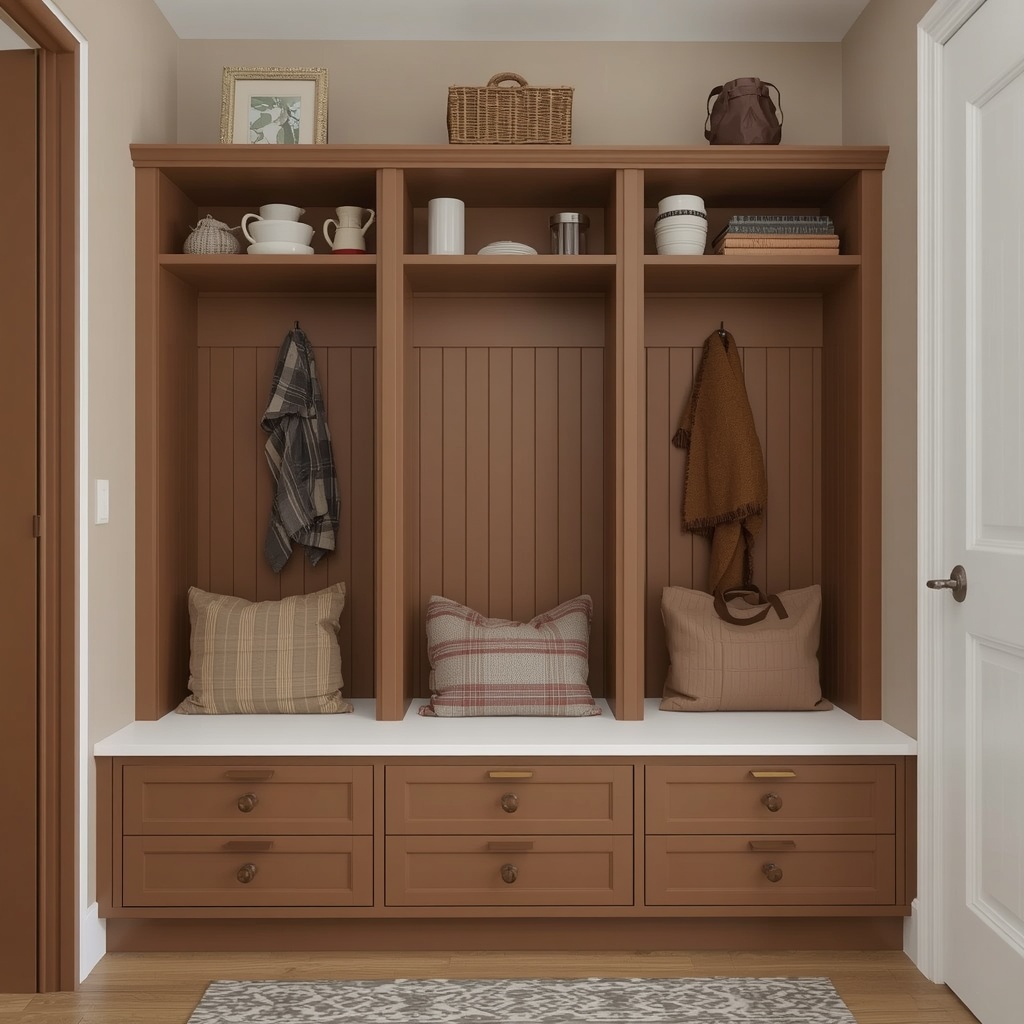
Popular mudroom palettes right now include navy or forest green cabinetry paired with warm wood tones, soft greige walls with black hardware accents, and classic white with natural rattan or wicker textures for a coastal feel. Whatever direction you choose, try to echo at least one color or material already present in your kitchen or entry hallway so the mudroom feels connected rather than tacked on.
A few palette combinations that read as both stylish and practical:
- Forest green cabinetry + brass hardware + light oak bench
- Charcoal gray lockers + white shiplap walls + black hooks
- Warm greige walls + navy blue bench cushion + woven baskets
- Classic white beadboard + natural wood accents + matte black fixtures
Smart Storage Add-Ons Worth the Investment
Beyond the big-ticket cabinetry, a handful of smaller storage add-ons make an outsized difference in how well a mudroom actually functions day to day. These are the details that separate a Pinterest-worthy mudroom from one that just looks good in photos.
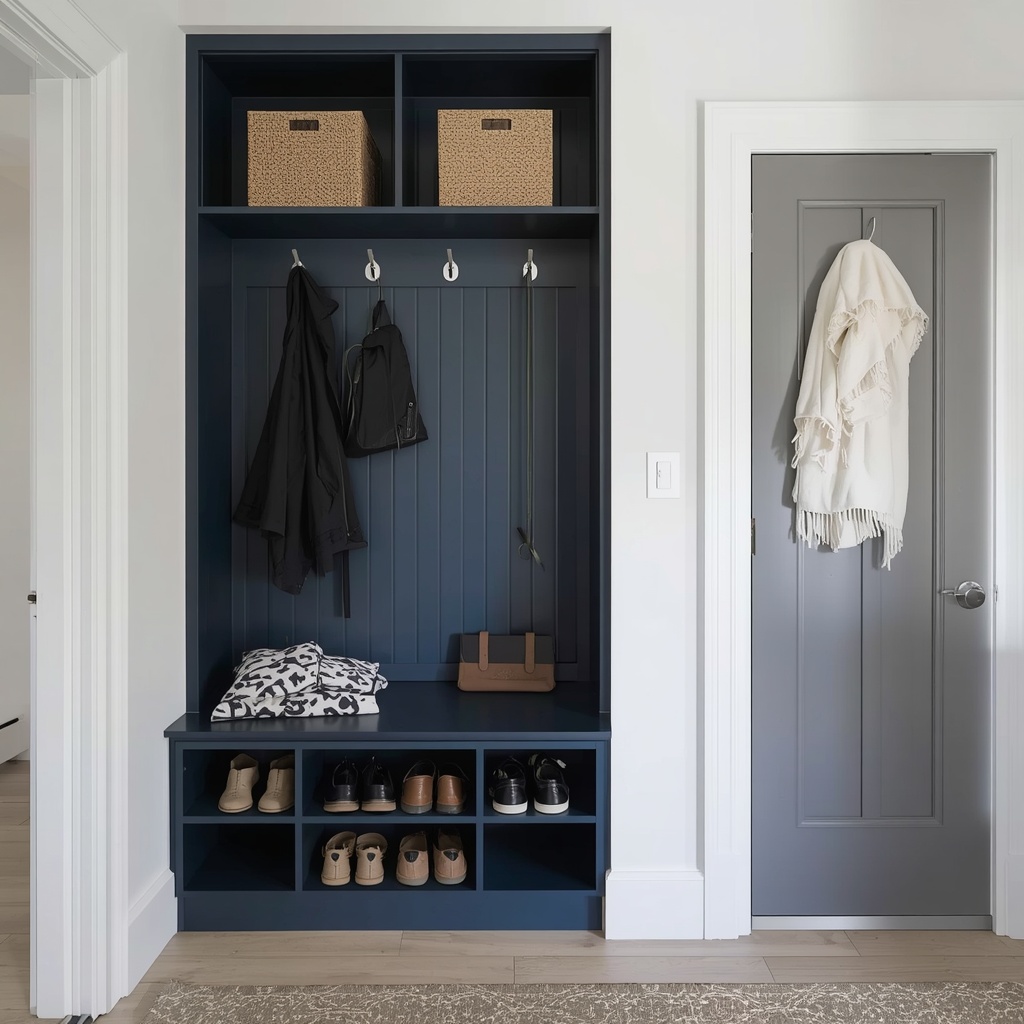
A pull-out shoe rack keeps footwear off the floor without taking up visual space, while a dedicated charging station tucked into a drawer keeps phones and tablets from cluttering your drop zone. If pets are part of the family, a built-in feeding station or leash hook near the door adds function that guests will actually notice and appreciate.
For further reading on organizing systems that pair well with mudroom design, the National Association of Productivity and Organizing Professionals offers useful guidance on entryway and household organization strategies.
Sample Mudroom Storage Checklist by Household Type
| Household Type | Must-Have Storage | Nice-to-Have Add-Ons |
|---|---|---|
| Family with kids | Individual cubbies, bench seating, low hooks | Homework/backpack station, chore chart |
| Pet owners | Leash hooks, paw-wipe station, closed shoe storage | Built-in pet feeding nook |
| Small space/apartment | Wall-mounted hooks, slim bench, over-door organizer | Fold-down shelf, mirror for space illusion |
| Active/outdoor family | Ski/gear rack, boot tray, drying rod | Charging drawer, seasonal bin rotation |
Lighting and Finishing Touches
Good lighting in a mudroom isn’t just about visibility — it’s about making a utilitarian space feel intentional. A flush-mount fixture or a pair of sconces flanking a mirror can instantly elevate the room from purely functional to genuinely welcoming.
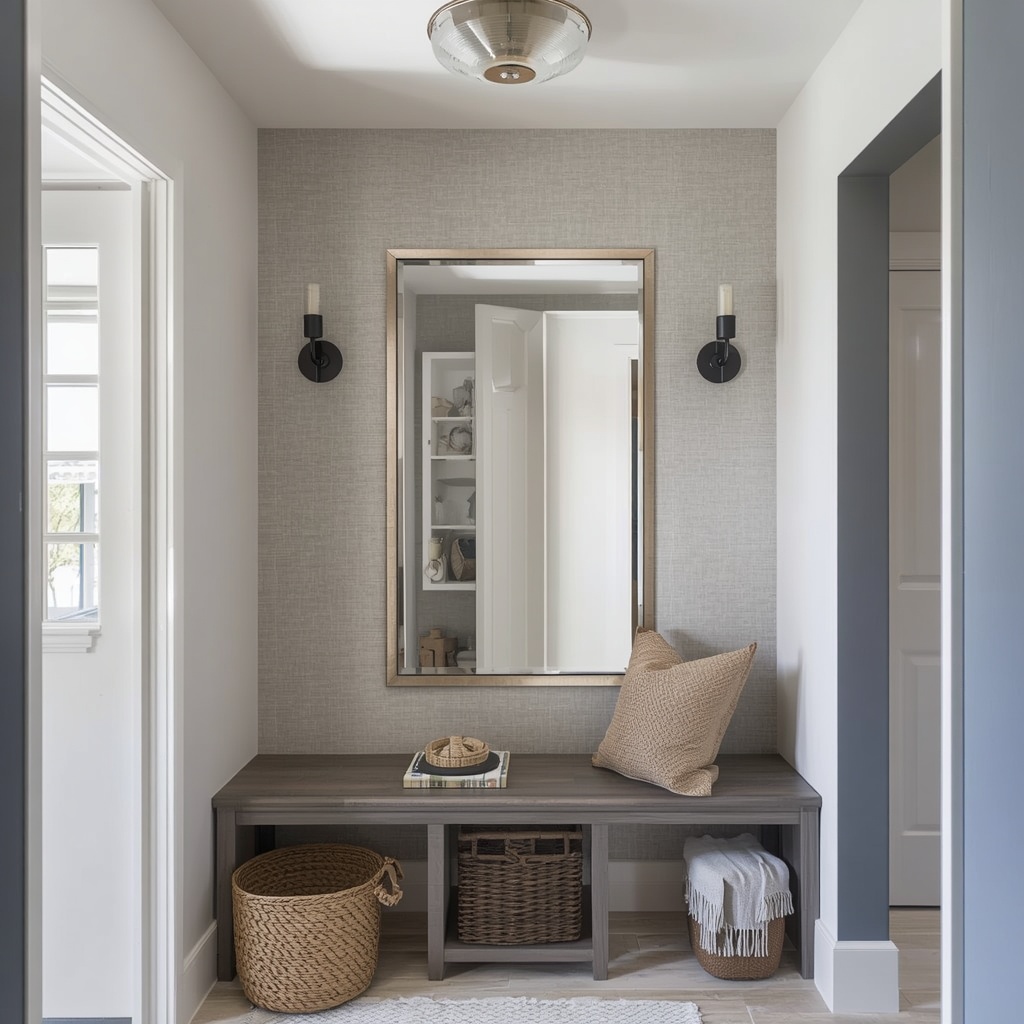
Don’t overlook small finishing touches like a durable runner rug, a wall-mounted mirror for last-minute outfit checks, or open shelving styled with a plant and a few decorative baskets. These details signal that the room was designed, not just organized.
Frequently Overlooked Mudroom Mistakes
Even well-planned mudrooms can fall short if a few key details get skipped during the design process. Here are the most common issues I see in client homes.
- Choosing hooks that are too high for young kids to reach independently
- Skipping a boot tray, leading to water damage on flooring near the entry
- Not accounting for seasonal rotation (swapping snow gear for summer gear)
- Using open baskets for items that need to stay contained, like loose gloves or dog toys
- Underestimating how much backpack and bag storage a family actually needs
Final Thoughts: Function First, Style Close Behind
A truly great mudroom makeover doesn’t force you to choose between durability and design — the best ones are built on a foundation of smart, heavy-duty storage and finished with a color palette and material selection that feels like the rest of your home. Start with your household’s real daily habits, zone the space accordingly, and then layer in the style choices that make the room feel like more than just a drop-off point.
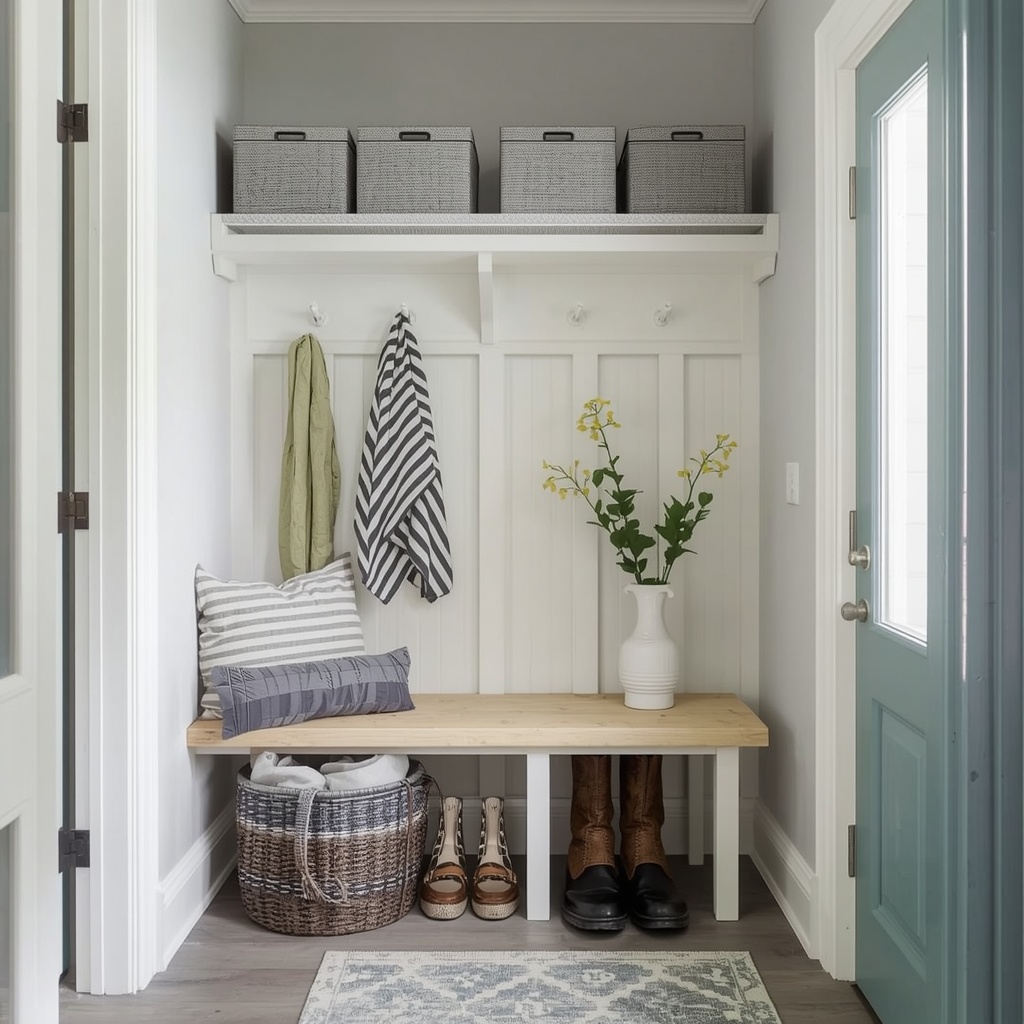
Whether you’re working with a full renovation budget or simply upgrading a closet-sized entry, the principles stay the same: durable materials, dedicated zones, and a design that can take a hit without losing its charm. Get those three things right, and your mudroom will do exactly what it’s meant to do — protect your home and welcome your family back into it, every single day.