
Meta description: Discover small space living room layouts for entertainment, from movie nights to game days. Designer-approved arrangements, measurements, and furniture picks for apartments and compact homes.
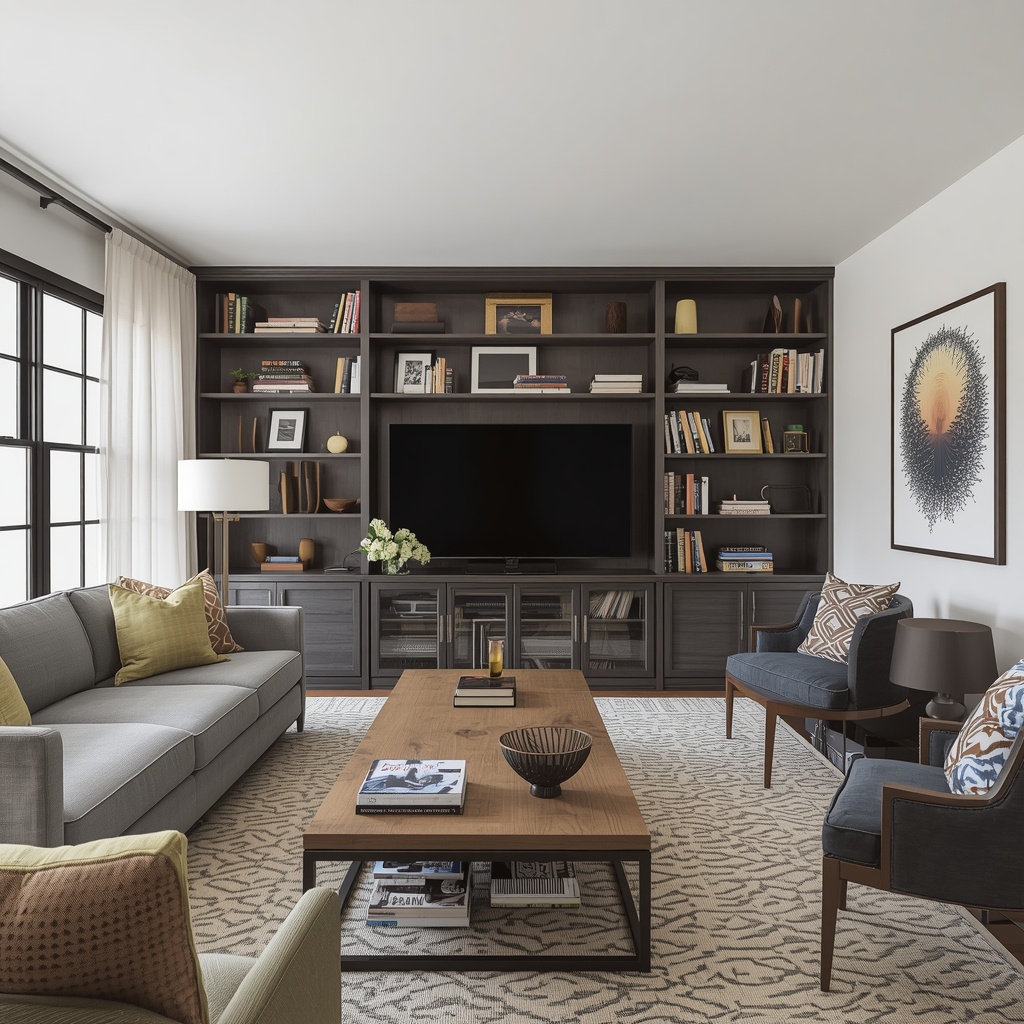
Walk into almost any American apartment, condo, or starter home and you’ll find the same challenge: a living room that has to be a movie theater, a game room, a dining overflow zone, and a quiet reading nook, all in 150 to 250 square feet. After years of styling compact homes, I can tell you the problem is rarely the size of the room. It’s the layout.
The good news is that a well-planned small living room can entertain better than a sprawling one. Tight spaces create intimacy, sound carries better, and everyone is closer to the action. This guide covers the exact layouts, measurements, furniture, and styling tricks I use to turn compact rooms into entertainment hubs.
Why Layout Matters More Than Square Footage
Most people blame the room when their space feels cramped. In reality, the culprit is usually poor furniture placement: a sofa pushed flat against a wall, a TV stand that eats up a corner, or a coffee table that blocks every walkway. A smart layout helps even a 10 by 12 foot room feel open and purposeful.
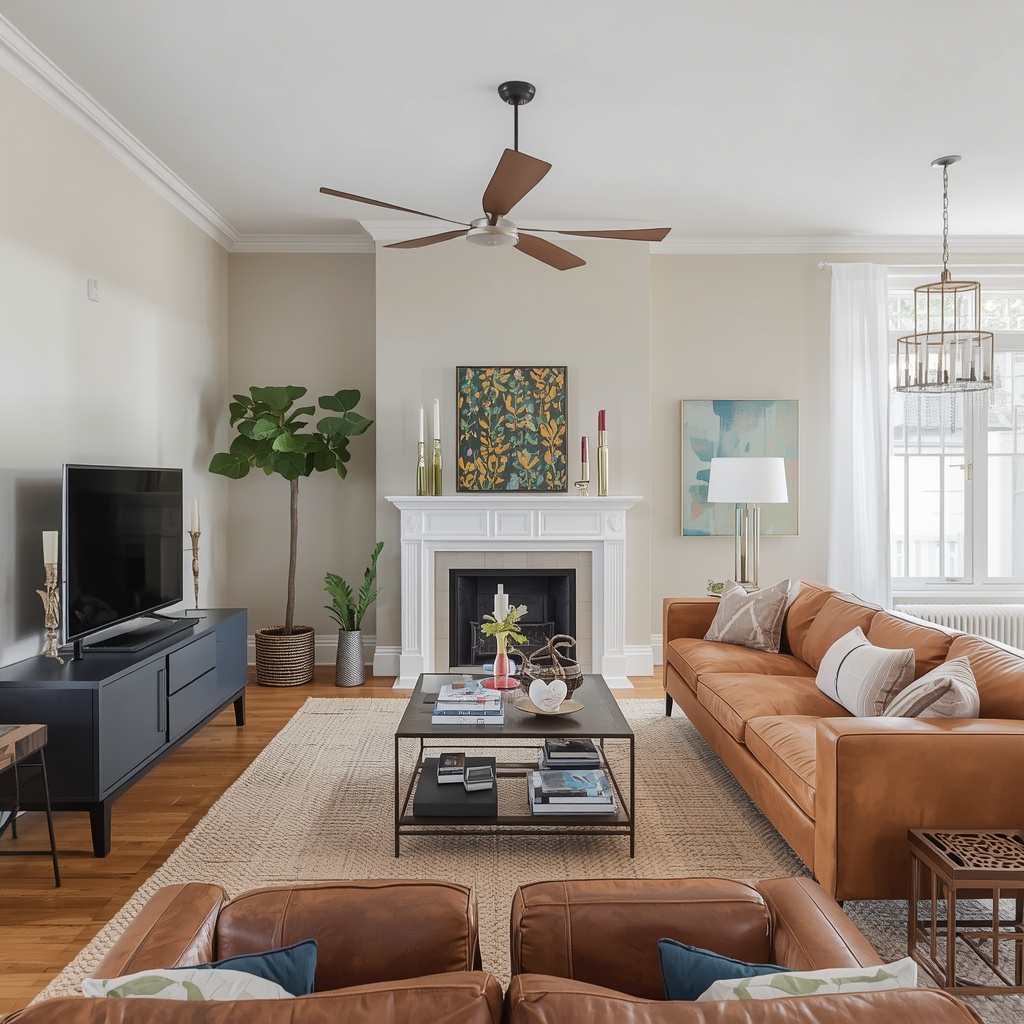
Think of your living room as a stage set. Every piece needs a job, and the audience (your guests) needs clear sightlines, comfortable seating, and room to move. When you plan around how you entertain, the room feels bigger and works harder, which is the core of effective small space living room design.
Designer’s rule of thumb: “Plan for the activity first and the furniture second. A room that supports how you live will always look better than one that simply matches a Pinterest board.”
Start by Defining How You Actually Entertain
Before you move a single chair, decide what “entertainment” means in your home. A couple who streams films three nights a week needs a very different arrangement than a roommate group that hosts football Sundays or a family that lives for board games and karaoke.
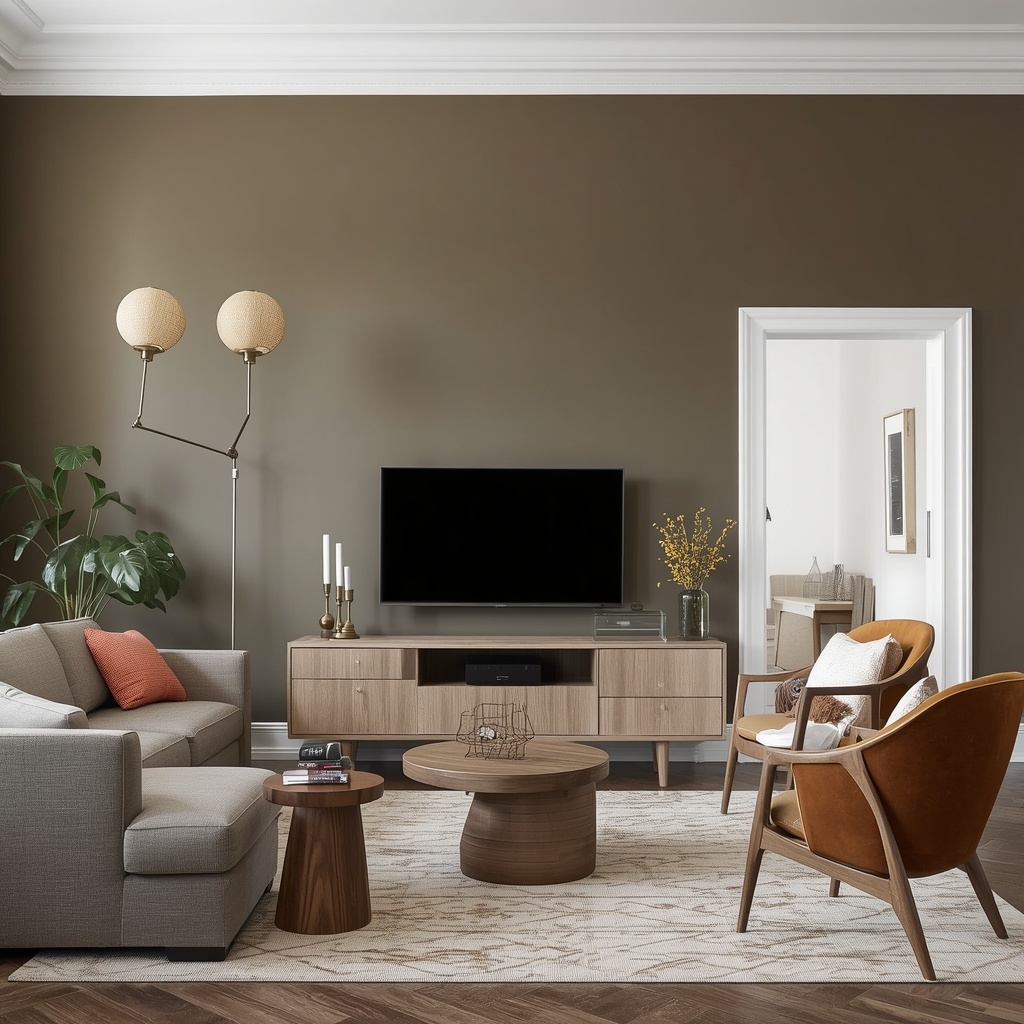
Write down your top two activities and design for those first. Everything else becomes secondary. This single step prevents the most common mistake I see, which is trying to make a small room do everything equally and ending up with a space that does nothing well.
| Entertainment Style | Priority Features | Best Layout Type |
|---|---|---|
| Movie and streaming nights | Sightlines, dimmable lighting, deep seating | Sectional or sofa facing media wall |
| Game day and sports | Flexible seating, wide viewing angles, sturdy tables | Sofa plus swivel chairs |
| Board games and card nights | Movable table, floor seating, bright lighting | Conversation grouping |
| Cocktail parties | Open floor, perching spots, drink surfaces | Open zones with ottomans |
| Gaming and consoles | Low glare, cable management, close viewing | Desk-style or floating media wall |
The Measurements Every Small Living Room Needs
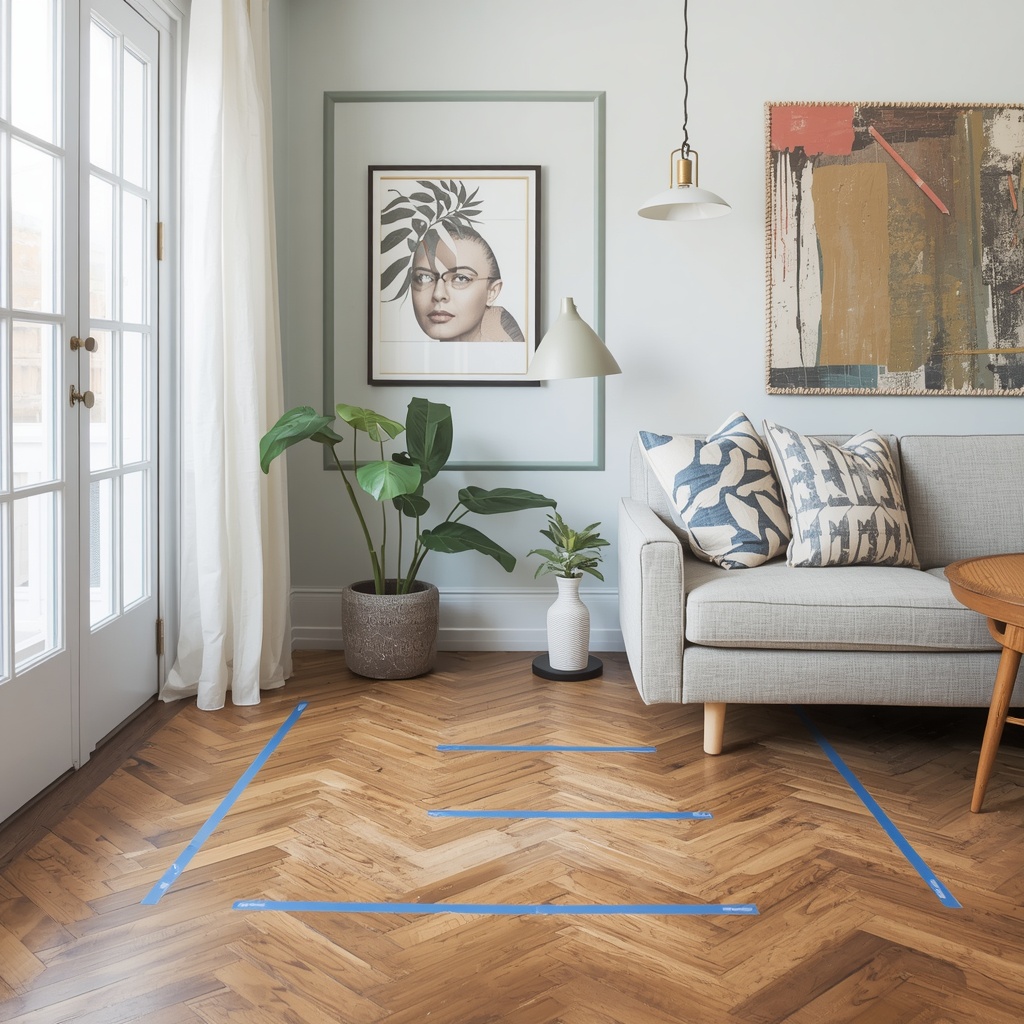
Great layouts follow numbers. These guidelines come from standard interior design practice, and they keep a compact room from feeling like an obstacle course. Measure your space with painter’s tape on the floor before buying anything.
A common viewing guideline is to place seating about 1.2 to 1.6 times the diagonal screen size away from your TV. For a 55-inch TV, that’s roughly 5.5 to 7.5 feet, which fits nicely in most small rooms. Leave about 14 to 18 inches between your sofa and coffee table, and keep main walkways at least 30 to 36 inches wide.
| Element | Recommended Measurement |
|---|---|
| TV viewing distance (55″ TV) | 5.5 to 7.5 feet |
| TV viewing distance (65″ TV) | 6.5 to 9 feet |
| Sofa to coffee table | 14 to 18 inches |
| Main walkway width | 30 to 36 inches |
| Seating conversation distance | 6 to 8 feet apart |
| TV center height | Eye level when seated (about 42 inches) |
Pro Tip: Use blue painter’s tape to outline your furniture footprint on the floor, and walk the room for a full day. You’ll quickly feel which pieces block traffic before you spend a dollar.
Layout 1: The Floating Sectional Setup
A compact sectional, placed so it floats away from the wall, can define your living area and double as a room divider. This works beautifully in open-concept apartments where the living room blends into a kitchen or dining zone. The back of the sofa creates a soft boundary without needing walls.
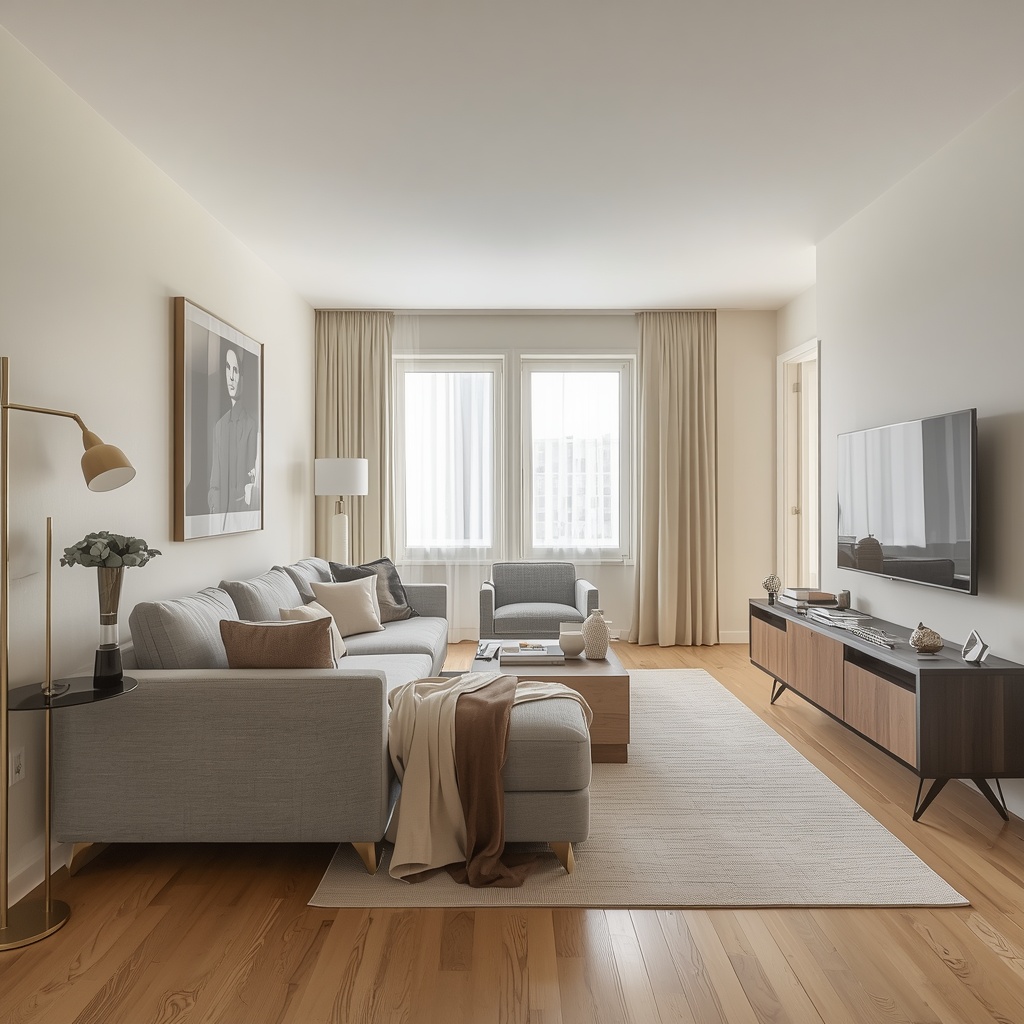
Choose an apartment-sized sectional with a chaise or a modular design you can reconfigure for parties. Position the TV on the opposite wall, and add a slim console table behind the sofa to hold drinks, snacks, or a lamp. This layout seats five to six people comfortably in just 11 by 13 feet.
- Best for: Studios, open floor plans, movie lovers
- Key furniture: Modular sectional, slim console, round coffee table
- Watch out for: Oversized arms that eat floor space
Layout 2: The Conversation Circle
If your entertaining leans social rather than screen-focused, arrange seating in a loose circle or U-shape so guests face each other. Pair a loveseat with two accent chairs and a central ottoman or coffee table. The TV can sit on one side, visible but not dominant.
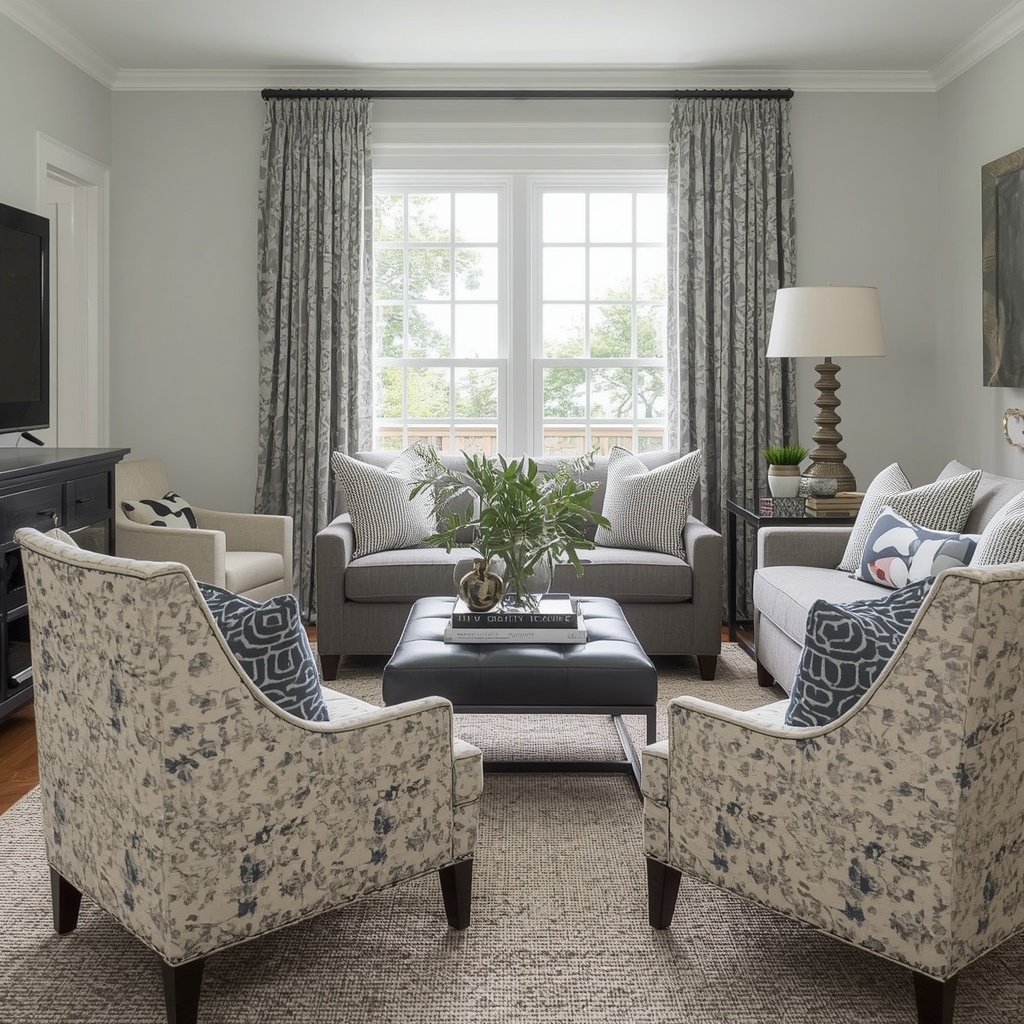
This arrangement shines for game nights, book clubs, and dinner party lounging. Swivel chairs are the secret weapon here because guests can turn toward the screen or toward each other in seconds. Choose chairs with open legs so you can see the floor beneath, which makes the room feel lighter.
Designer’s note: “In a small room, seating should always be able to say two things at once: ‘watch the show’ and ‘let’s talk.'”
Layout 3: The Zoned Studio Living Room
Studio dwellers have the toughest job: one room must work as living, sleeping, and entertaining space. The solution is zoning. Use a large area rug to anchor the lounge area, and place a bookcase, open shelving unit, or tall plant to visually separate it from the bed or dining nook.
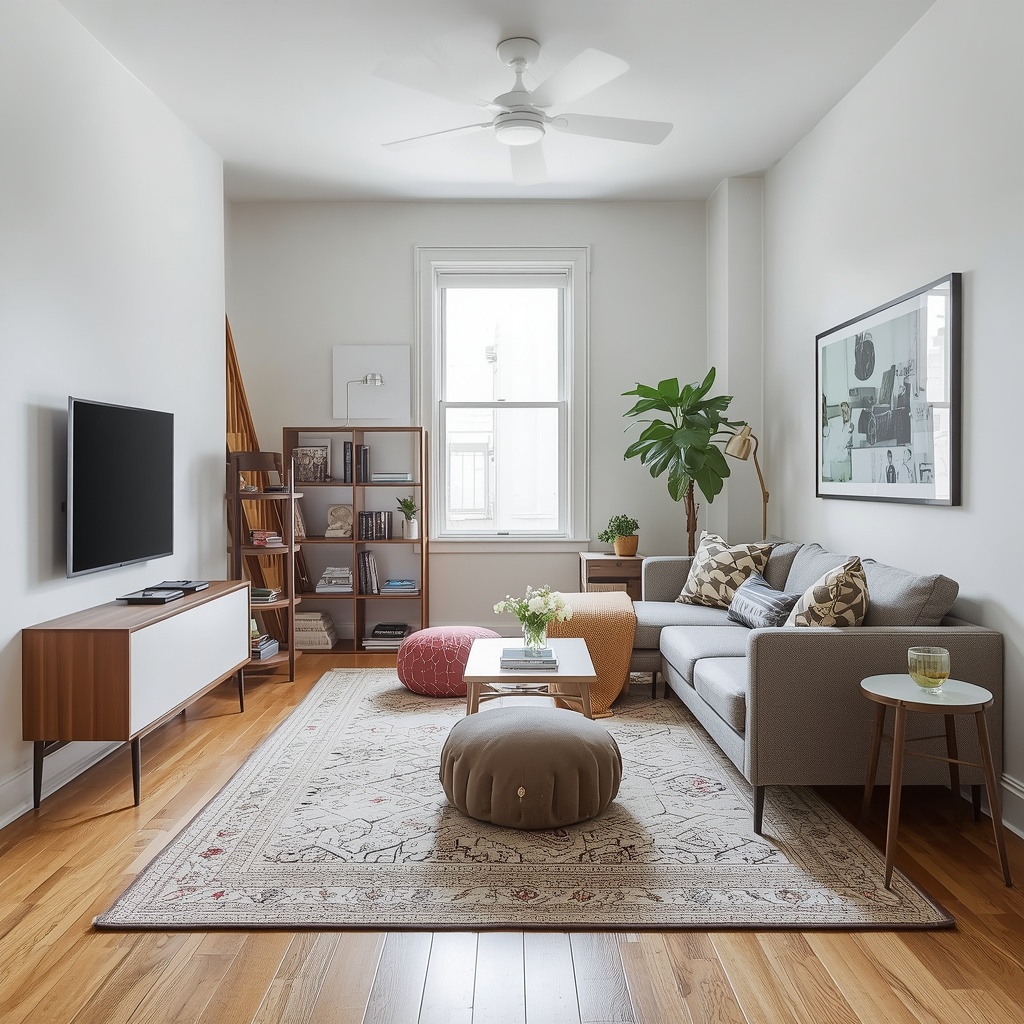
Keep the lounge zone compact, with a loveseat or small sofa, one or two poufs, and a wall-mounted TV. Poufs are especially smart because they tuck under a console when not in use. A rug sized correctly (front legs of all seating on it) pulls the zone together and makes the whole studio feel organized instead of cluttered.
Pro Tip: Open-back shelving, such as a cube bookcase, divides a studio without blocking light, so your small space still feels airy and connected.
Layout 4: The Narrow Living Room Solution
Long, narrow rooms, common in row houses and older apartments, can feel like bowling alleys. The trick is to break the length into two mini zones rather than lining everything along the walls. Place your TV wall at one short end and the main sofa about two-thirds of the way down.
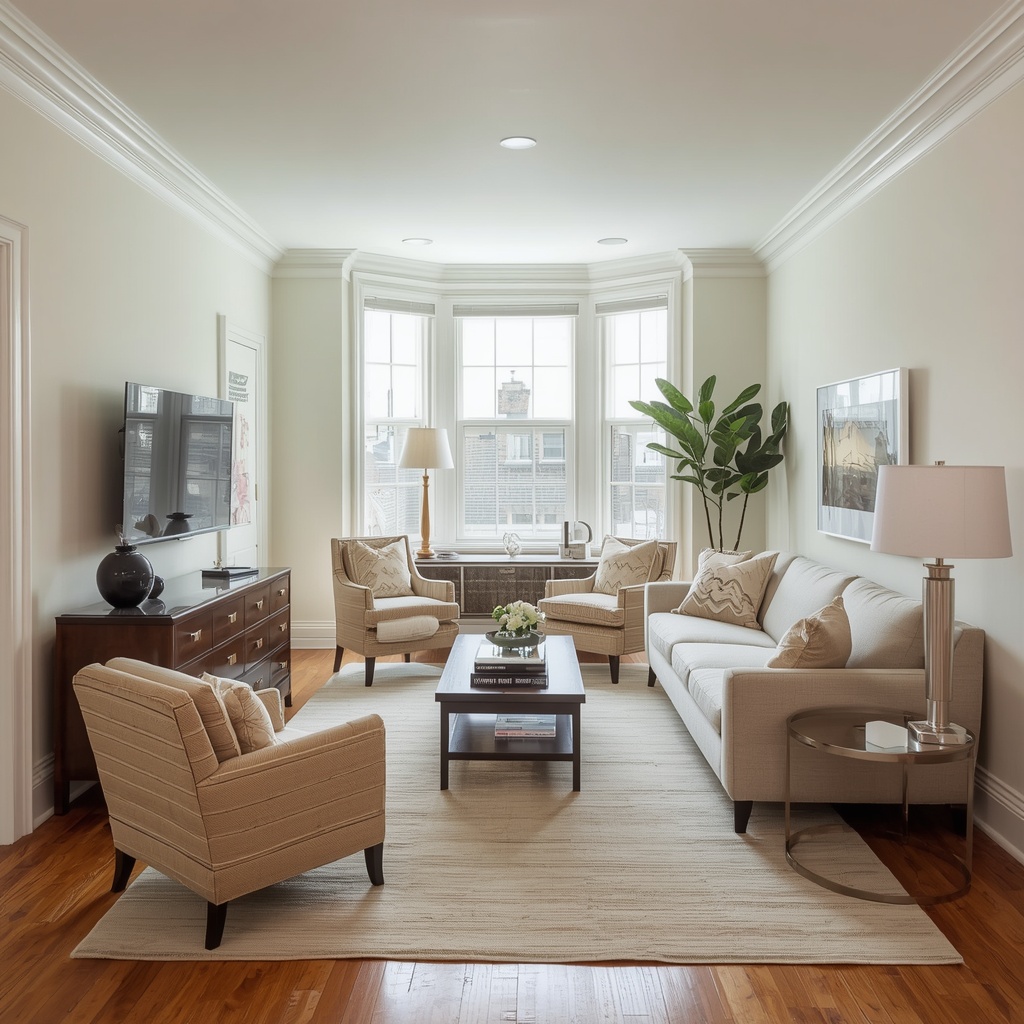
Add a pair of chairs near the entrance or window as a secondary conversation spot. Angling one chair slightly softens the rectangular shape and improves traffic flow. A runner-style rug or two matching smaller rugs also helps visually widen the room by breaking up the long floor lines.
- Float the sofa instead of pushing it flush to the long wall
- Use a narrow console behind the sofa for lamps and storage
- Choose a round or oval coffee table to avoid sharp corners
- Hang mirrors on the long wall to bounce light
Layout 5: The Projector and Flexible Media Setup
Skipping the traditional TV stand can free up serious square footage. A short-throw projector with a retractable or paint-on screen lets you create a home theater feel without a large black rectangle dominating the wall. When the screen rolls up, you simply have a clean wall for art.
Pair this with lightweight, movable seating such as poufs, floor cushions, and a loveseat. Everything can slide aside for dancing, workouts, or a party. Add blackout or layered curtains to control daylight, since projectors perform best in dim rooms. For more gear ideas, browse the speaker and home audio options at Sonos.
Furniture That Works Overtime
In small living rooms, every piece should earn its place. Multi-functional furniture is the heart of smart small space living room layouts for entertainment, because it supports guests without permanently claiming floor space.
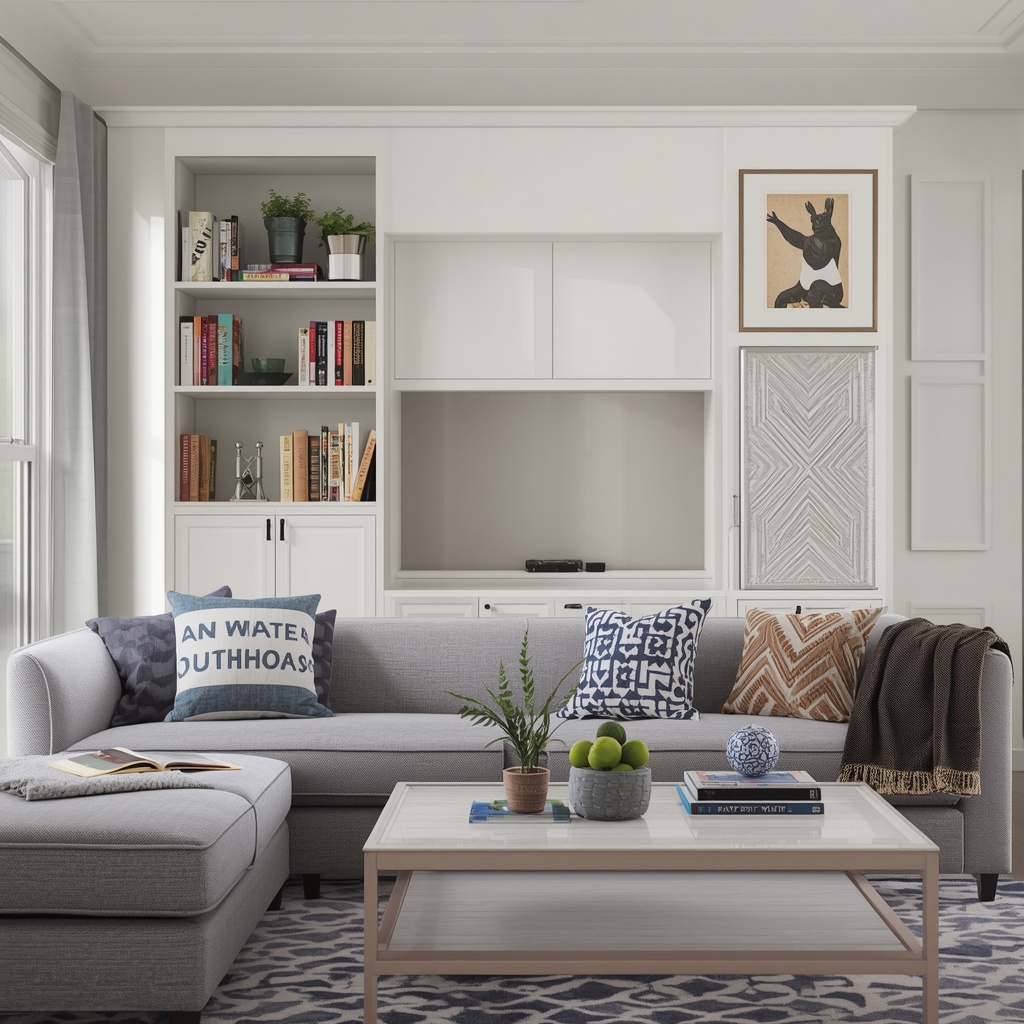
Look for items that store, stack, fold, or transform. A lift-top coffee table becomes a dining or gaming surface. A storage ottoman hides blankets and controllers. Nesting tables appear for parties and vanish afterward. You can find budget-friendly versions at retailers like IKEA and Wayfair.
| Furniture Piece | Entertainment Benefit | Space Saved |
|---|---|---|
| Storage ottoman | Extra seating plus hidden blankets | One chest or basket |
| Lift-top coffee table | Dining, gaming, or laptop surface | A separate desk |
| Nesting tables | Drink surfaces on demand | Permanent side tables |
| Wall-mounted TV | Frees up the floor entirely | A bulky media stand |
| Sleeper sofa | Overnight guests and lounging | A guest bed |
| Stackable stools | Bonus party seating | Extra chairs |
Lighting and Ambiance for Entertainment
Lighting turns a living room from functional to fun. Overhead lights alone flatten a small space and glare off screens. Instead, layer three types: ambient (general), task (reading), and accent (mood). Dimmers are a small investment with a huge payoff for movie nights.
Place a floor lamp in a corner to draw the eye upward, add a table lamp on your console, and consider LED strip lighting behind the TV to reduce eye strain and add a cinematic glow. Smart bulbs let you shift from bright game-night white to warm movie-night amber with a single voice command.
Pro Tip: Choose warm white bulbs between 2700K and 3000K for cozy evenings, and keep one brighter task light available for board games and card nights.
Sound, Acoustics, and Cable Control
Great entertainment depends on great sound, and small rooms have an advantage because you don’t need massive speakers. A compact soundbar with a subwoofer, or a pair of bookshelf speakers, fills a 12 by 14 foot room beautifully. Place speakers at ear level when seated for the clearest audio.
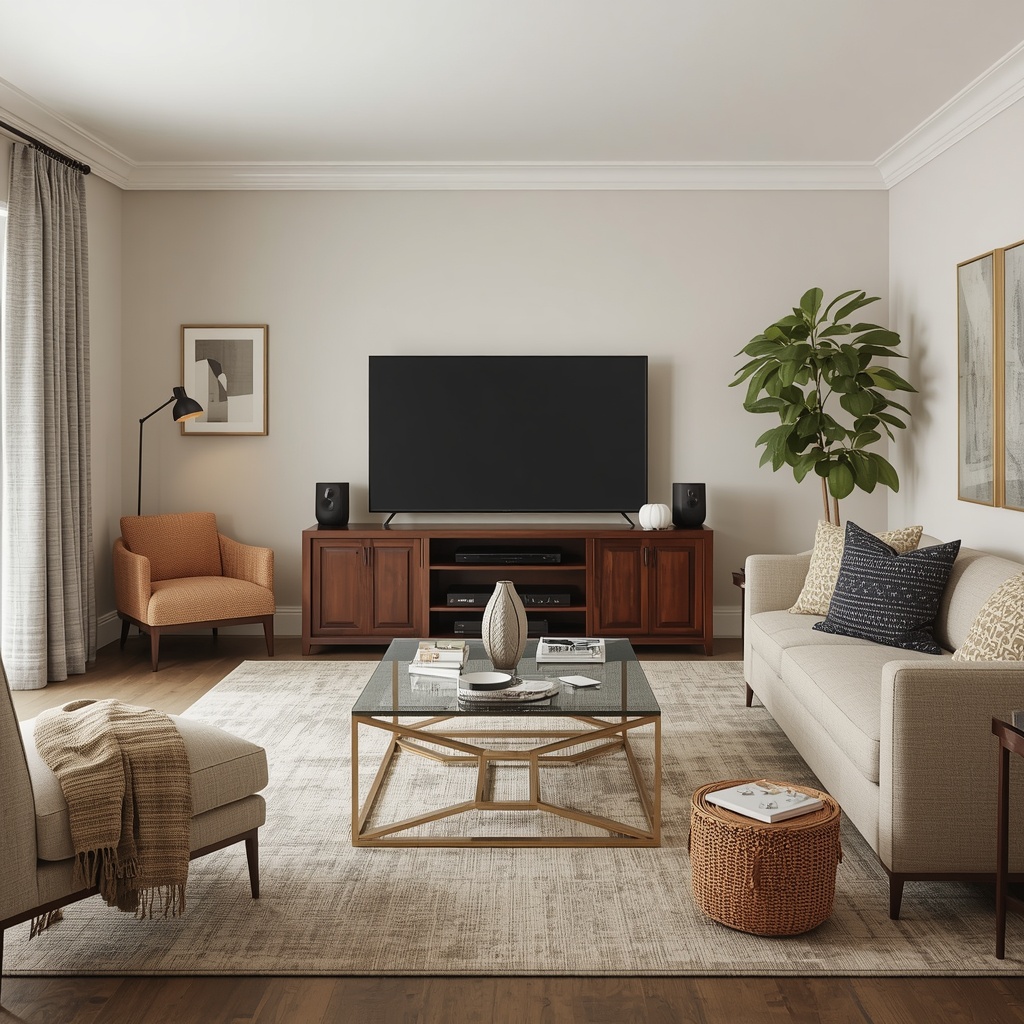
Soft materials absorb echo, so rugs, curtains, upholstered furniture, and throw pillows all improve acoustics. Meanwhile, tangled cables can ruin even the prettiest room. Use cable raceways, in-wall concealment kits, or a media console with built-in cord holes. A clean, wire-free look makes the room feel larger and more polished.
- Mount the soundbar directly below the TV
- Use cord covers painted to match your wall color
- Group electronics on one power strip with surge protection
- Add felt pads under speakers to reduce vibration
Color, Rugs, and Visual Tricks That Enlarge the Room
Light, cohesive color palettes make small living rooms feel bigger. Soft whites, warm greige, pale sage, and dusty blue all reflect light and create a calm backdrop. If you love drama, try a deep color on just the TV wall, since dark tones help screens blend in and reduce glare.
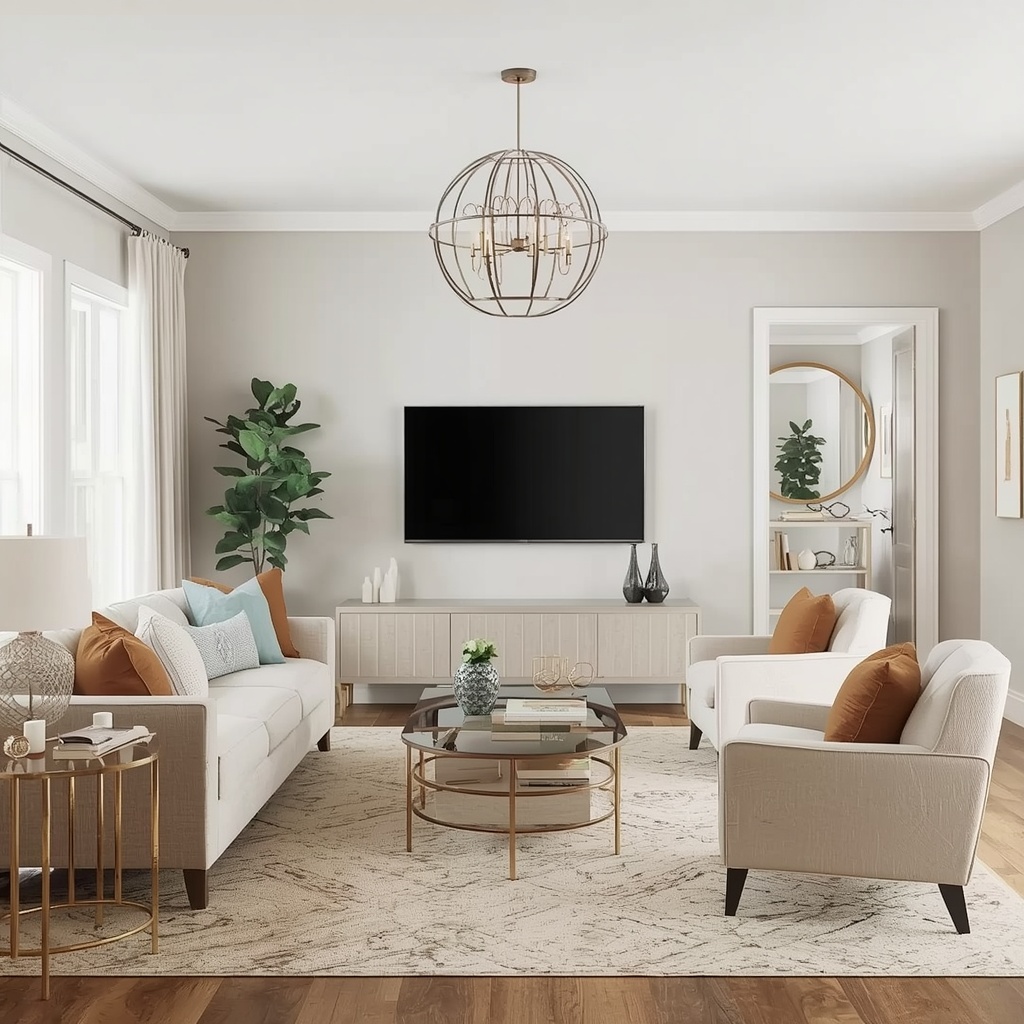
Mirrors, glass-topped tables, and acrylic or open-leg furniture create the illusion of space. Hang curtains high and wide, near the ceiling, to stretch the walls upward. Choose one large area rug rather than several small ones, because a single rug visually unifies the room and anchors your seating zone.
Designer’s note: “Small rooms don’t need fewer things. They need fewer competing things.”
Hosting Tips: Movie Night, Game Day, and Parties
Once your layout works, small touches make hosting effortless. For movie nights, keep a basket of throw blankets handy and use ottomans as footrests. For game day, set out a nesting table or two and a tray for snacks so no one hovers over the coffee table.
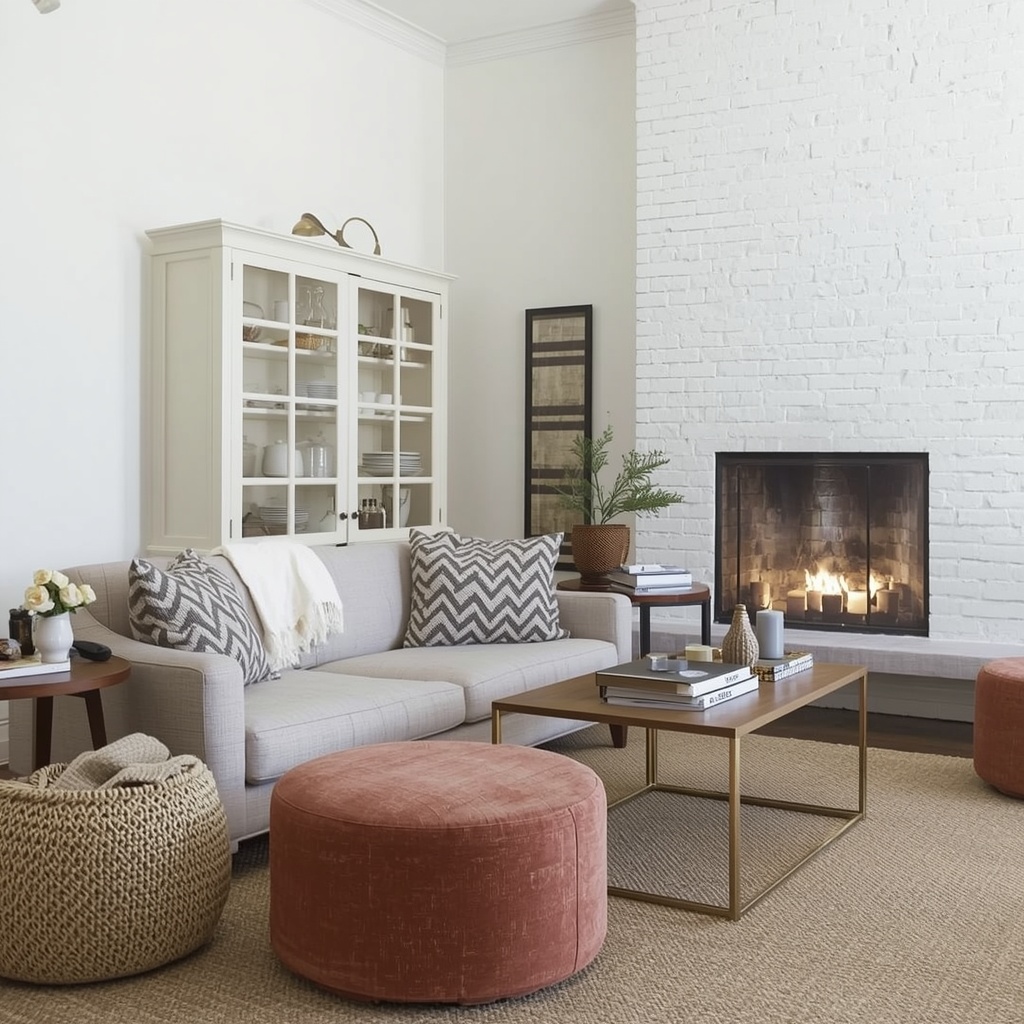
For parties, push seating toward the walls and let guests mingle in the center. Add perching spots such as a bar cart, a stool by the window, or a sturdy bench. If you want to explore more compact-friendly ideas, check out the living room inspiration at Apartment Therapy and Better Homes & Gardens.
Pro Tip: Keep a “party kit” in a storage ottoman: coasters, extra throws, a portable speaker, and a few board games. Setup takes thirty seconds.
Common Small Living Room Mistakes to Avoid
Even seasoned decorators fall into predictable traps. The most frequent mistake is buying furniture that’s too large. An oversized sofa might look luxurious in the showroom, but it can swallow a small room whole. Always measure doorways and floor space first.
The second big error is pushing everything against the walls. It feels logical, but it leaves a dead zone in the middle and makes the room feel like a waiting room. Pulling furniture slightly inward creates intimacy and better flow. Here are more pitfalls to dodge:
- Placing the TV too high, causing neck strain
- Skipping a rug and leaving the room feeling cold and echoey
- Using heavy, dark drapes that shrink the window
- Ignoring vertical space and leaving walls bare
- Choosing a coffee table with sharp corners in a tight walkway
- Overcrowding surfaces with decor
Frequently Asked Questions
What is the best layout for a small living room with a TV?
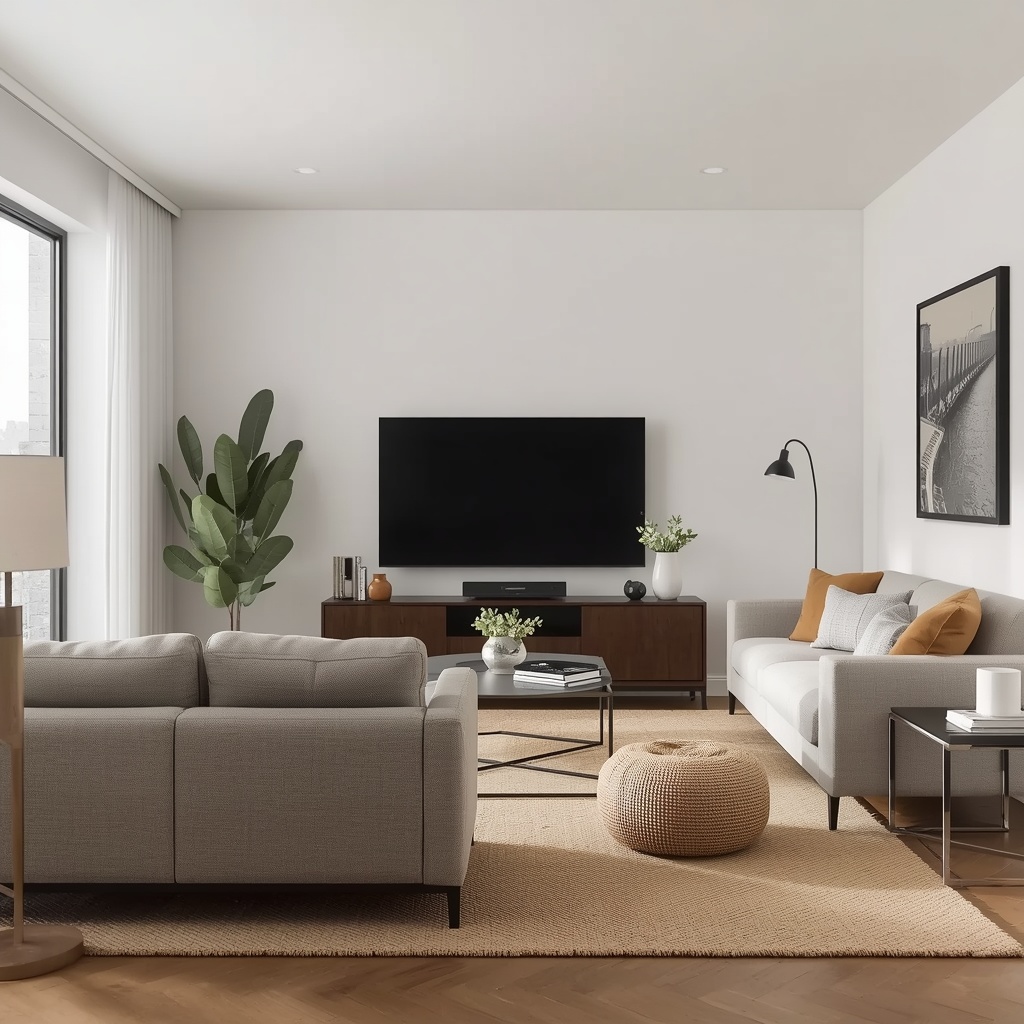
Position the sofa opposite the TV at the recommended viewing distance, keep a 30 to 36 inch walkway, and use a compact coffee table or ottoman. A floating sectional or sofa-and-chair combination works for most rooms.
Should I mount my TV on the wall?
In most small rooms, yes. Wall mounting frees floor space, lets you place the screen at eye level, and gives you a cleaner look. Pair it with a slim shelf below for streaming devices.
How many people can a small living room seat?
A 12 by 14 foot room typically seats five to eight with a sofa, two chairs, and a couple of poufs or stools.
What colors make a small living room look bigger?
Soft neutrals, light cool tones, and tone-on-tone palettes reflect light and keep sightlines open.
Final Thoughts: Make Your Small Living Room the Favorite Room
A small living room isn’t a limitation. It’s an invitation to design with intention. Start by identifying how you entertain, measure carefully, choose a layout that fits your lifestyle, and fill the space with multi-purpose furniture, layered lighting, and smart storage.
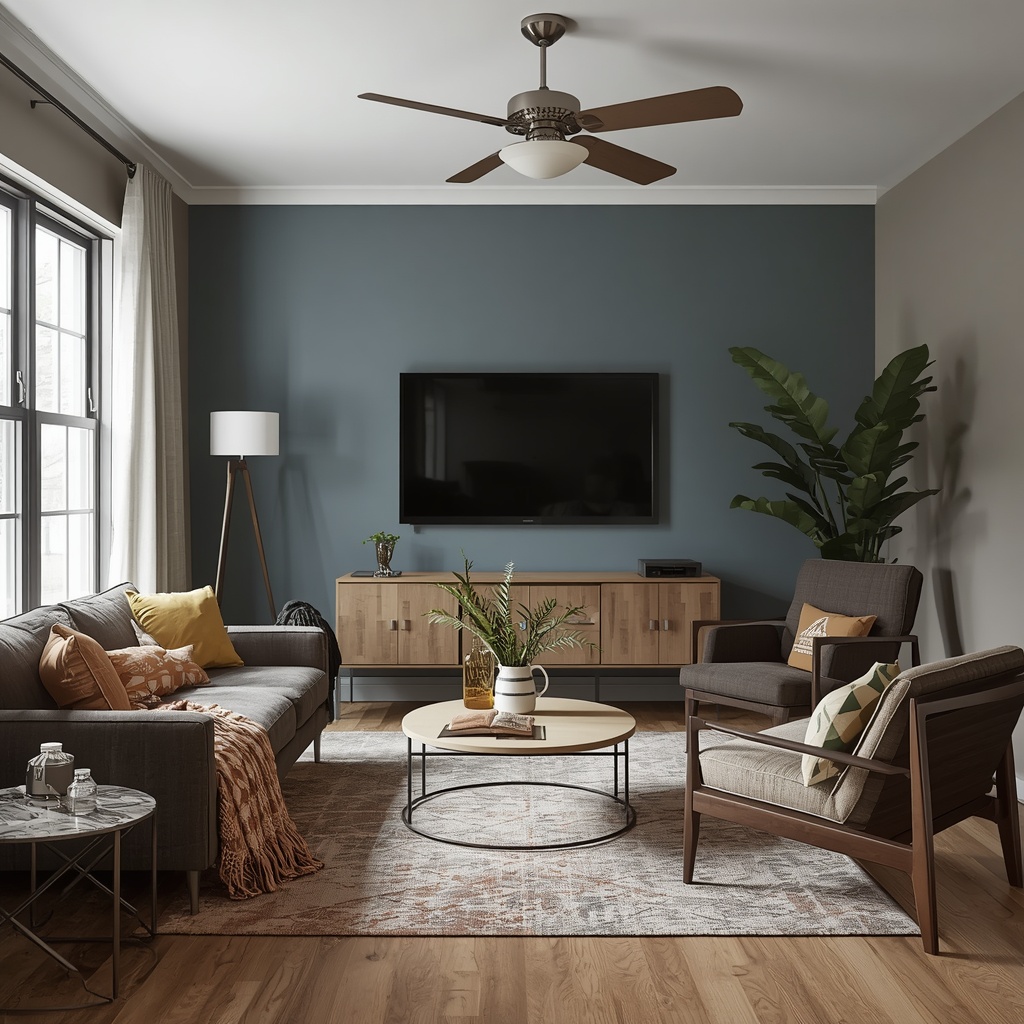
Whether you pick a floating sectional, a conversation circle, or a projector-powered lounge, the goal is the same: a room that welcomes friends, feels comfortable on quiet nights, and looks great doing both. Tape out your plan this weekend, rearrange once, and you may be surprised how much room you already have.