
Meta description: Discover smart hidden storage ideas for minimalist small apartments. Room-by-room solutions, DIY tips, and design tricks to stay clutter-free in any studio or one-bedroom.
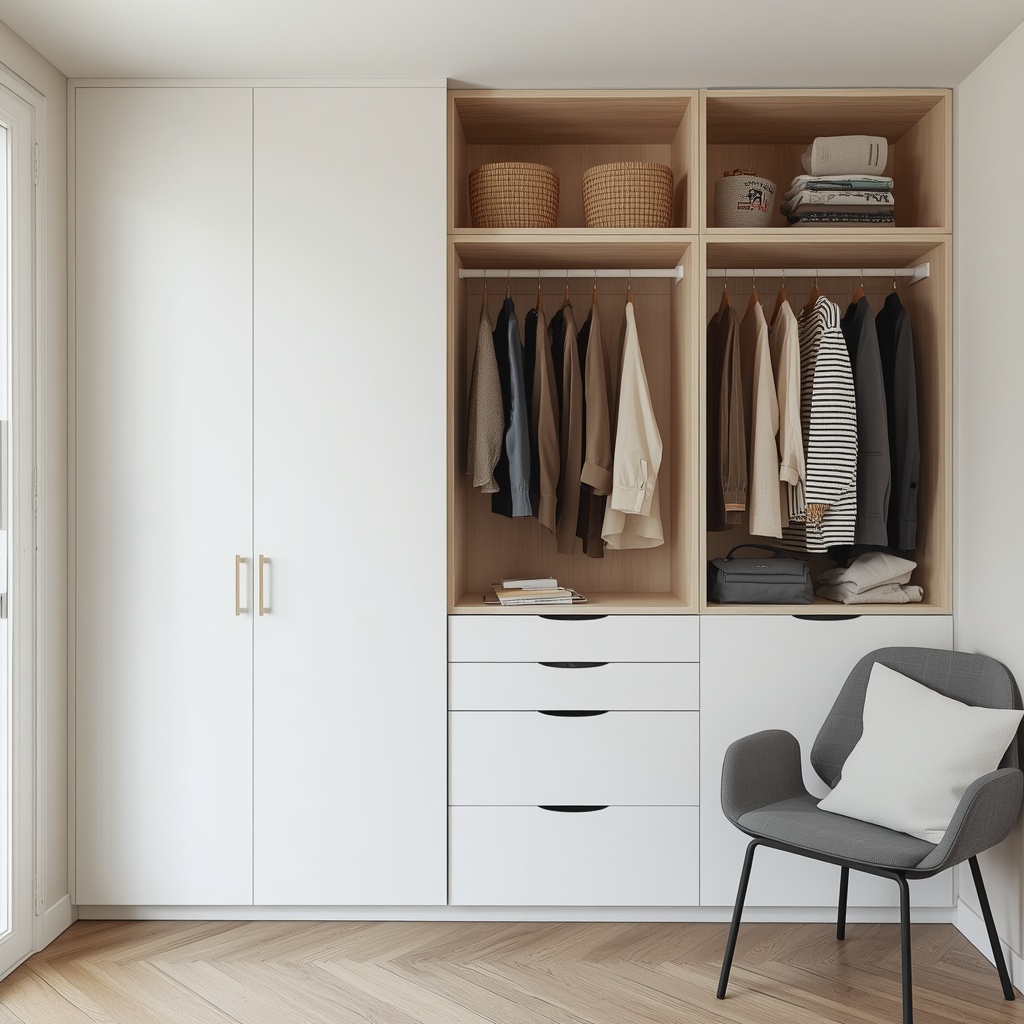
Primary keyword: hidden storage ideas for small apartments.
If you live in a small apartment, you already know the struggle. Square footage is precious, rent is high, and every item you own competes for a spot. Minimalism promises calm, open spaces, but a clean look doesn’t happen by owning nothing. It happens by giving everything you do own a smart, invisible home.
As an interior designer, I’ve helped dozens of renters and first-time buyers turn cramped studios into serene, functional homes. The secret is almost always the same: hidden storage. When your belongings disappear into the architecture and furniture itself, your space feels larger, brighter, and far more peaceful. This guide walks you through the best ideas, room by room.
Why Hidden Storage Is the Heart of Minimalist Small Apartment Design
Minimalist design is built on visual quiet. Open shelves packed with knickknacks, stacked baskets, and overflowing countertops all create what designers call “visual noise.” In a 450-square-foot apartment, that noise is amplified because everything sits within your line of sight at all times. Concealed storage removes the noise without removing your belongings.
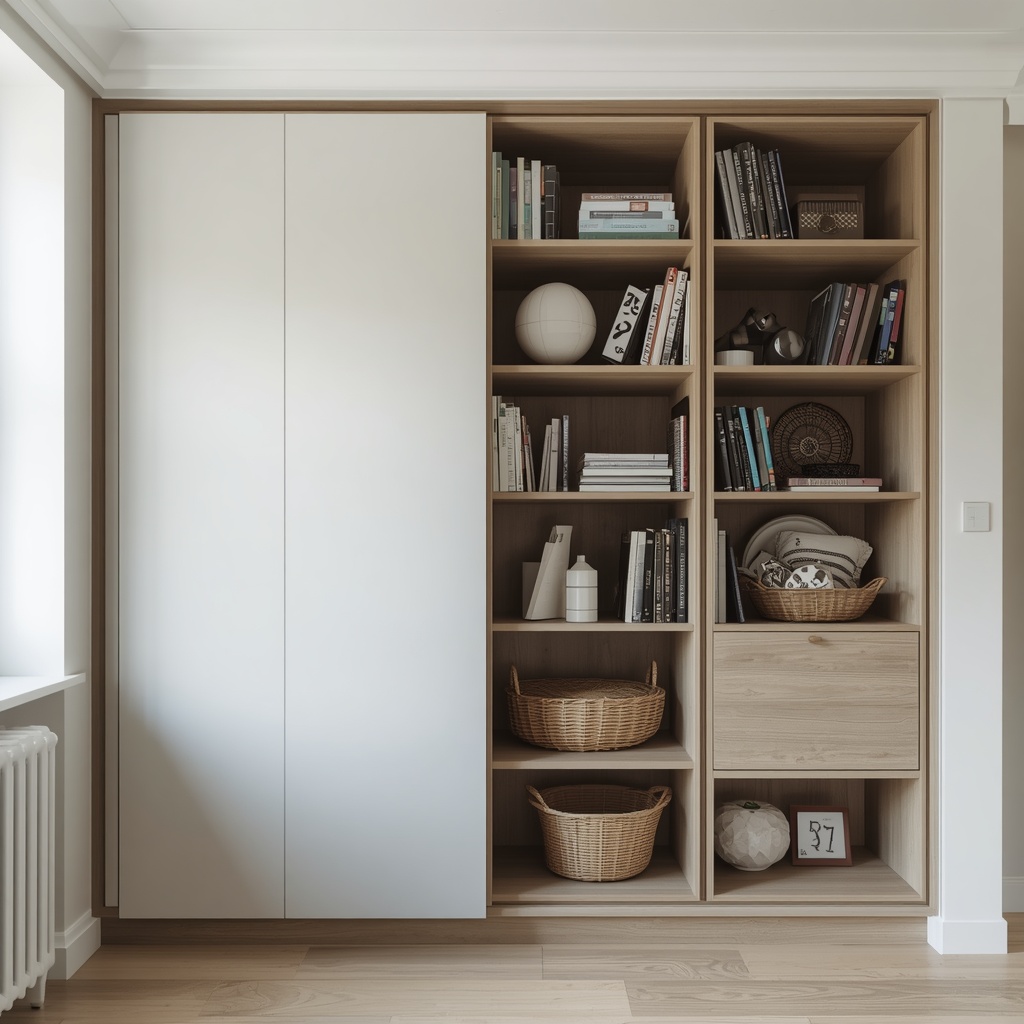
There’s also a practical payoff. Hidden storage lets you keep seasonal items, spare linens, tools, and paperwork on hand without sacrificing floor space. You get the clean lines of a minimalist home with the practicality of a full-sized house. That balance is what separates a space that looks good for a photo from one that actually works for daily life.
“Have nothing in your house that you do not know to be useful, or believe to be beautiful.” — William Morris
Morris’s advice is a perfect starting filter for small space organization. Hidden storage isn’t a license to hide everything you’ve ever bought. It’s a system for protecting the things that earn their place in your home.
Start With a Declutter Before You Build Any Storage
Before you shop for a single storage ottoman, edit what you own. Storage is only helpful if it holds things you use. I always tell clients to sort belongings into four groups: daily use, weekly use, seasonal, and sentimental. Anything that doesn’t fit one of those categories is a strong candidate to donate or sell.
Once you know your true inventory, you can measure what you actually need to store. A person with three coats and one winter duvet needs a very different solution than someone with a craft hobby and a home office. This step prevents the most common mistake I see: buying clever furniture and then filling it with items you haven’t touched in two years.
Pro Tip: Use the “one-year box” trick. Pack questionable items in a labeled box and store it out of sight. If you haven’t opened it in twelve months, donate it without looking inside.
Hidden Storage Ideas for the Living Room
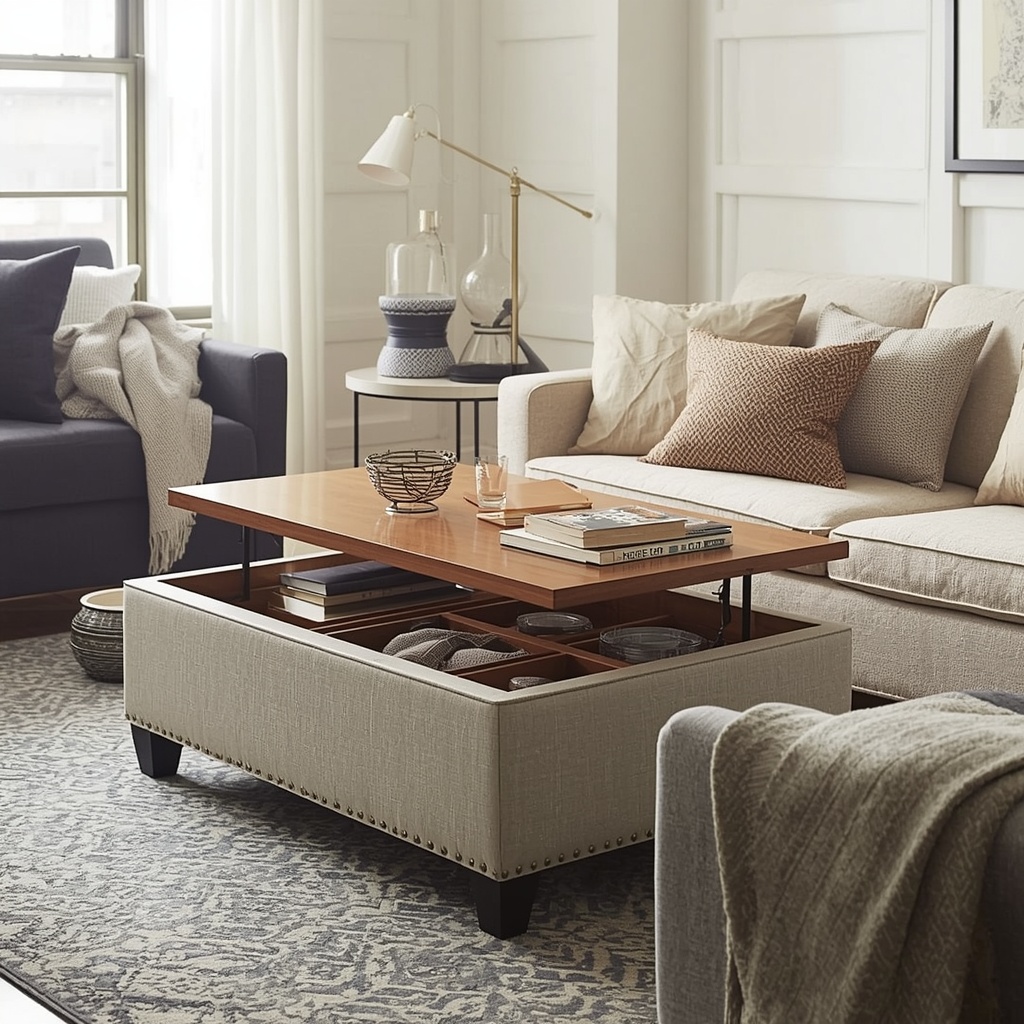
The living room is usually the busiest zone in a small apartment, serving as lounge, dining area, and sometimes office. That makes it the best place to invest in multifunctional furniture. A lift-top coffee table is a classic example. The surface rises to laptop height and reveals a deep compartment for remotes, books, throw blankets, and board games.
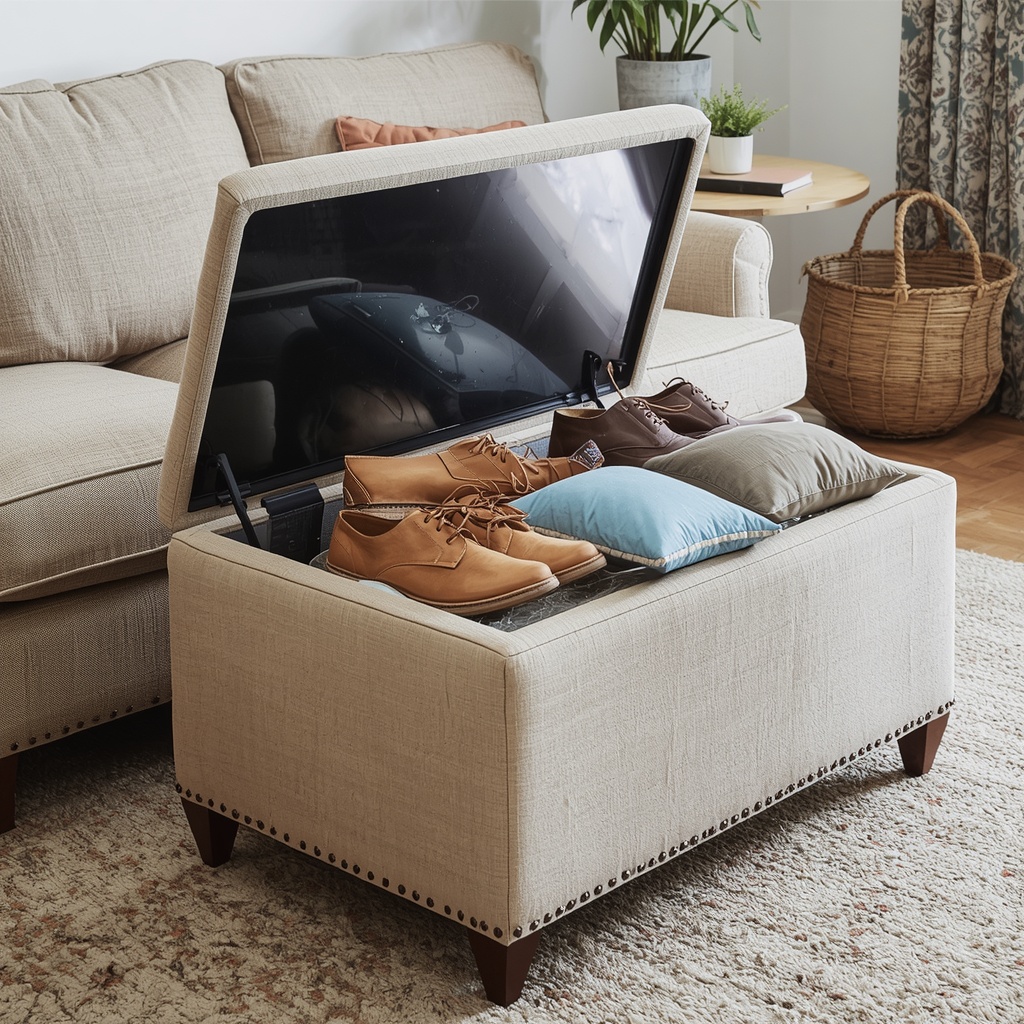
Storage ottomans are another living room hero. Choose one with a sturdy hinged lid and a neutral upholstery color that blends with your sofa. For a more built-in look, consider a bench with a lift-up seat placed under a window. It provides seating, a spot for pillows and blankets, and a clean horizon line that keeps the room feeling open.
More Living Room Ideas
- Sofa with built-in storage: Sectionals with chaise compartments hold bedding for overnight guests.
- Media console with doors: Closed cabinets hide cables, gaming consoles, and clutter behind flat fronts.
- Floating shelves with closed cabinets: Mix one or two open shelves for display with concealed boxes below.
- Nesting tables: Tuck them away when you’re not entertaining to reclaim floor space.
- Behind-the-sofa console: A narrow table with baskets underneath turns dead space into usable storage.
Pro Tip: Choose furniture with legs that lift the piece at least six inches off the floor. Visible floor beneath furniture creates an illusion of more space, even when the piece is full.
Smart Hidden Storage Ideas for the Bedroom
Bedrooms in small apartments often double as closets, offices, and workout zones. Under-bed storage is the most obvious and most effective solution. A platform bed with deep drawers can swallow an entire off-season wardrobe, while a lift-up hydraulic frame gives you access to a space the size of a small closet. If you prefer to keep your current frame, low-profile rolling bins work well.
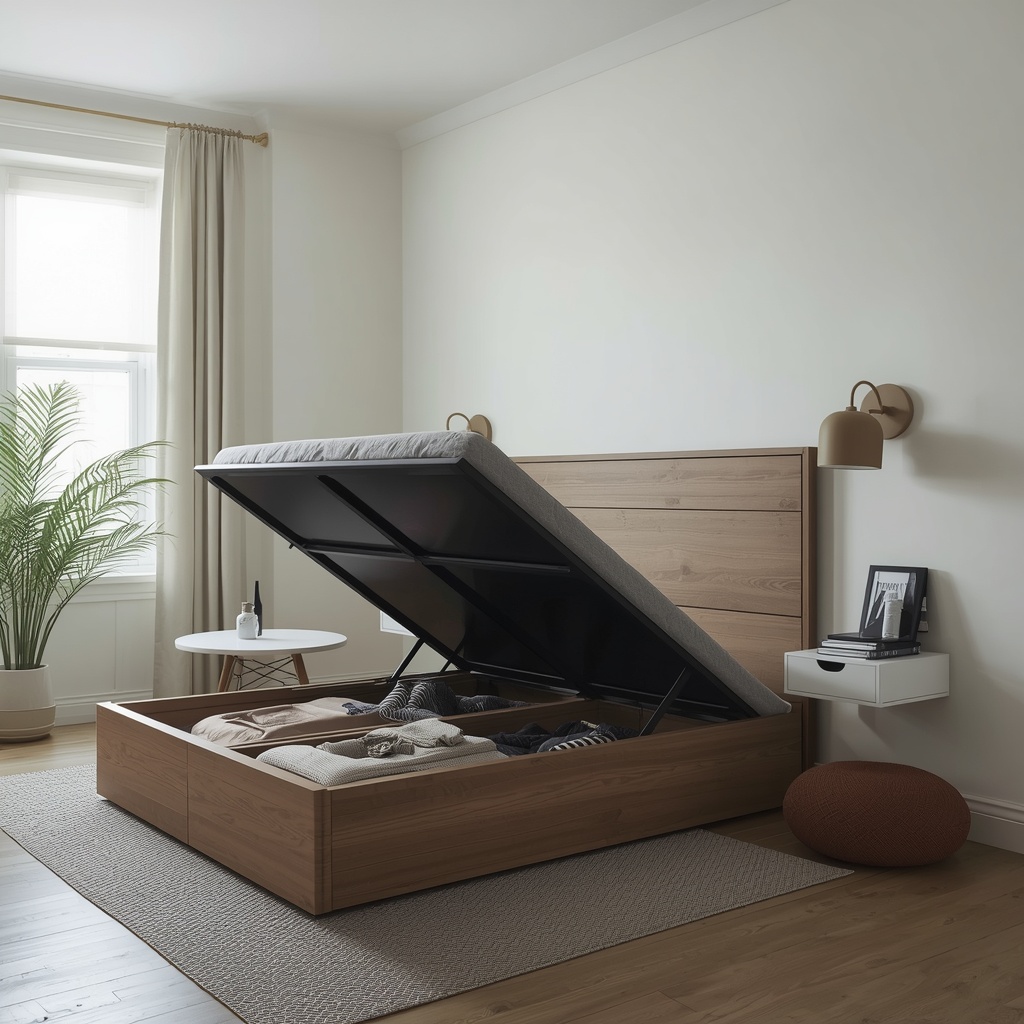
Don’t overlook the headboard. A storage headboard with shallow cabinets or a ledge can replace nightstands completely, which is a big win in narrow rooms. Wall-mounted floating nightstands with a concealed drawer also free up floor area. The goal is to keep surfaces clear so the bedroom feels like a restful retreat rather than a storage unit.
Bedroom Quick Wins
- Install a ceiling-height wardrobe or curtain-fronted closet system to use vertical space.
- Use slim vacuum-sealed bags for bulky bedding and sweaters, then slide them under the bed.
- Hang an over-the-door organizer inside the closet for accessories and shoes.
- Add hooks inside the wardrobe doors for belts, scarves, and bags.
- Swap a dresser for a tall, narrow chest of drawers to save floor footprint.
Pro Tip: Fold clothing using the file method, standing garments upright in drawers like files in a cabinet. You’ll see everything at a glance and fit roughly 30 percent more in each drawer.
Hidden Kitchen Storage Ideas That Keep Counters Clear
Small apartment kitchens are notorious for lacking cabinet and counter space. The first move is to look at the places your current setup wastes. Toe-kick drawers, installed in the narrow space beneath base cabinets, are perfect for baking sheets, cutting boards, and pet bowls. Pull-out pantry units that slide into a six-inch gap beside the refrigerator can hold an astonishing amount of canned goods.
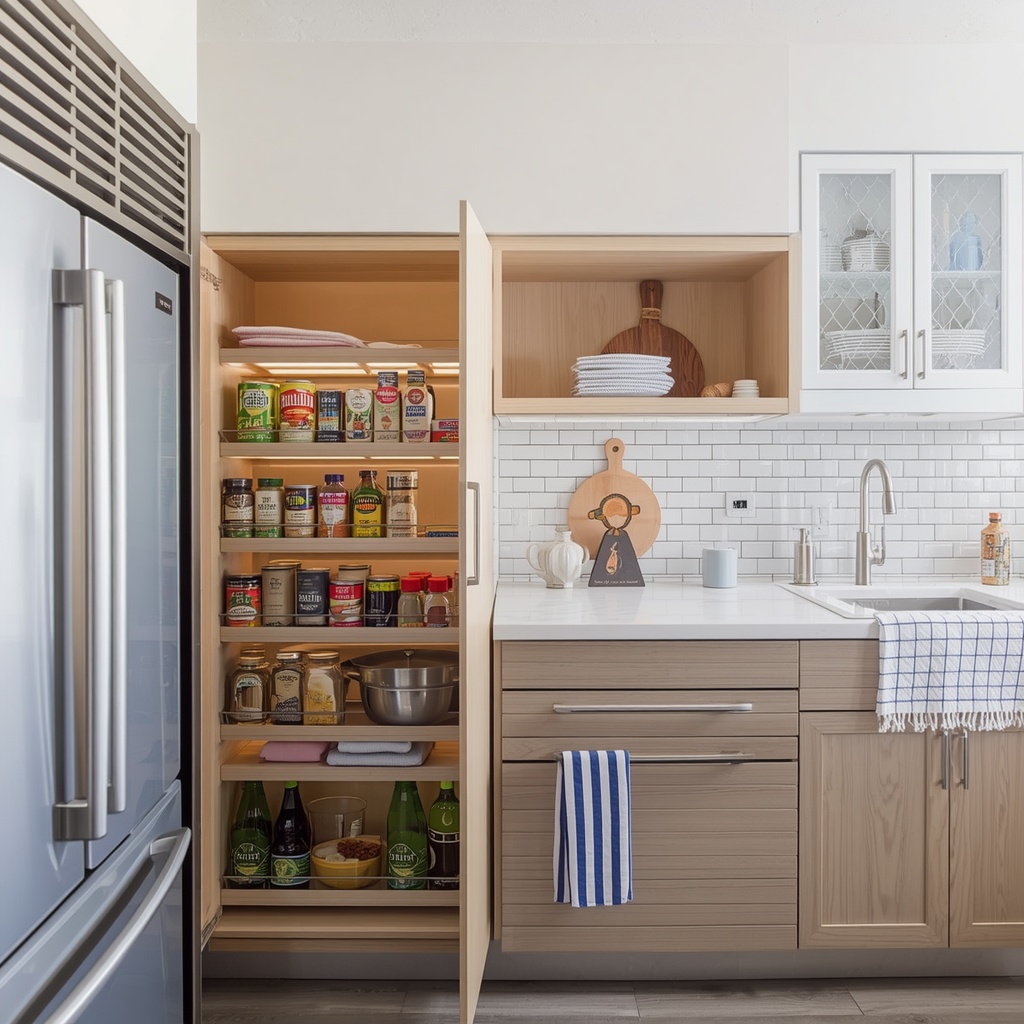
Use the interior of cabinet doors, too. Slim racks mounted inside hold spice jars, foil, and cleaning supplies. Under the sink, a two-tier sliding organizer works around the pipes and doubles your usable space. Magnetic strips, pegboard panels in matching cabinet colors, and drop-down shelves in upper cabinets all help you reach items without cluttering the counter.
Kitchen Hidden Storage Checklist
- Toe-kick drawers for flat items
- Pull-out trash and recycling cabinet
- Over-the-sink cutting board that doubles as a prep station
- Lazy Susan in corner cabinets
- Appliance garage or roll-up tambour door for the toaster and coffee maker
- Tension rod under the sink for spray bottles
Pro Tip: Decant dry goods into matching airtight containers. Uniform containers stack neatly, reduce visual clutter, and keep food fresher, which makes even an open shelf look intentional.
Bathroom Hidden Storage Ideas for Tiny Spaces
Bathrooms in small apartments are often so tight that a single towel rack feels like a crowd. Recessed medicine cabinets are a quiet game-changer. If your wall allows it, installing a recessed unit between studs gives you several inches of depth with no protrusion into the room. Mirrored doors add the bonus of making the space appear bigger.
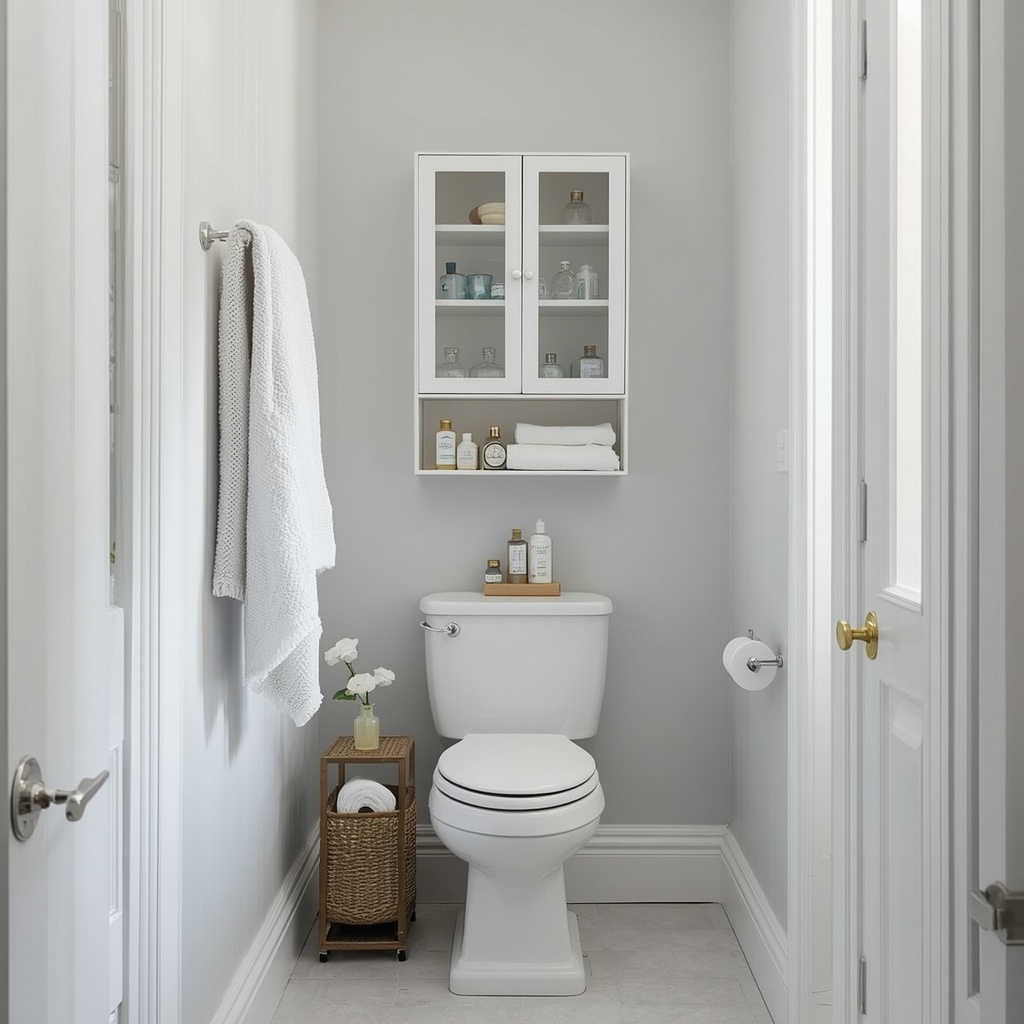
For renters, consider an over-the-toilet cabinet with closed doors, or a slim rolling cart that tucks between the toilet and the wall. A pedestal sink can be upgraded with a skirt or a wall-mounted vanity with deep drawers. Hide extra toilet paper in a lidded basket and keep daily essentials in a single shower caddy rather than scattered bottles.
Pro Tip: Mount a second towel bar on the back of the bathroom door. It doubles hanging space and uses an area most people ignore.
Entryway and Closet Solutions: Make the First Impression Count
The entryway sets the tone for your whole apartment. Without a proper drop zone, shoes, bags, keys, and mail pile up quickly. A shoe bench with a lift lid or a narrow shoe cabinet with tilt-out drawers keeps footwear hidden while giving you somewhere to sit. These cabinets are often under 8 inches deep, so they fit even in the tightest hallway.
For coats and bags, use a wall-mounted rail with a closed cabinet below. If you have a coat closet, make it work harder by adding a double hanging rod, which instantly doubles capacity for shirts and jackets. A mirror with a hidden shallow cabinet behind it is the ultimate small-entry upgrade, hiding keys, sunglasses, and mail in plain sight.
Use Vertical and Overlooked Space
When floor space runs out, look up. The area above doorways, the tops of cabinets, and the walls near the ceiling are often completely unused. Shelving mounted a foot or so below the ceiling can hold baskets of rarely used items, such as holiday decor or luggage, and it draws the eye upward, making your room feel taller.
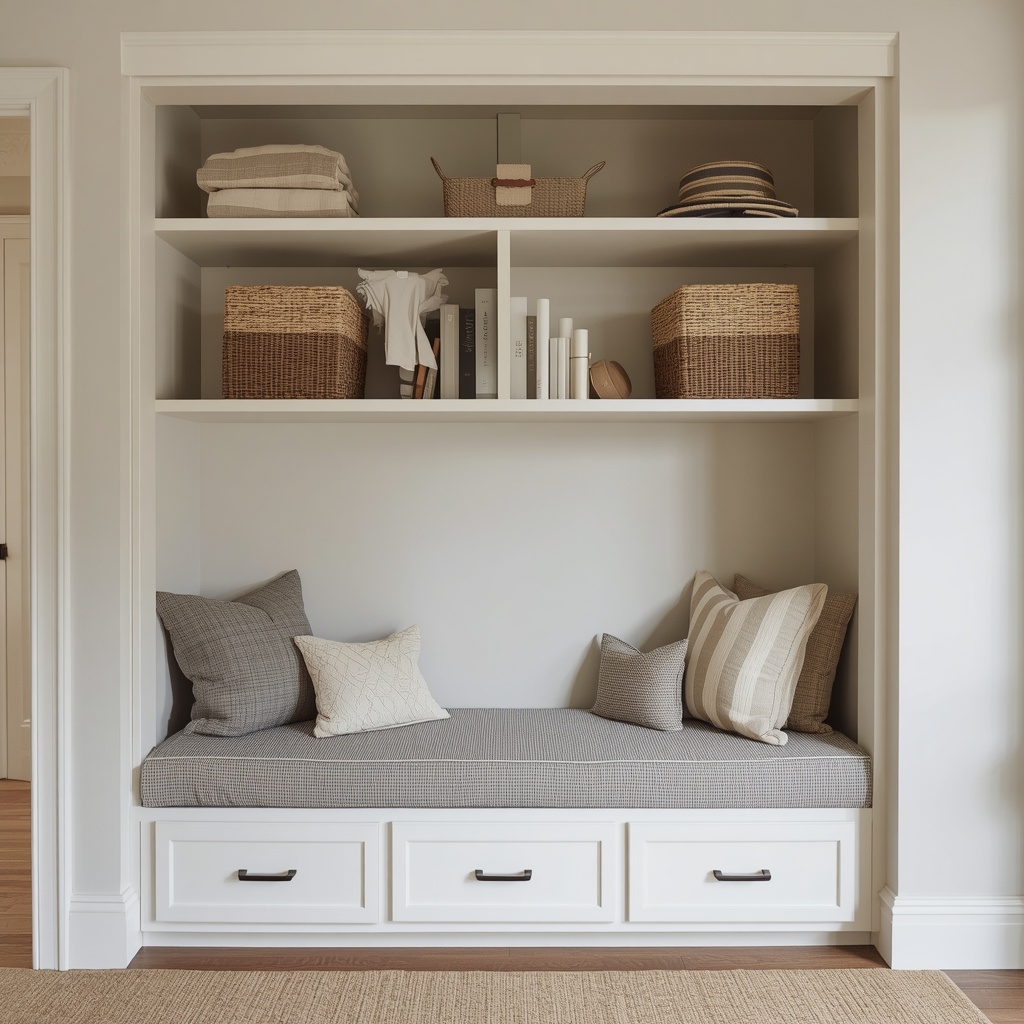
Overlooked pockets exist everywhere. The gap between a refrigerator and the wall, the space under stairs in a loft, and the inside of a window seat can all be activated. A custom or semi-custom built-in storage unit might cost more upfront, but it transforms awkward corners into the most useful areas in your home.
“Less, but better.” — Dieter Rams
Rams’ famous principle is the perfect mindset for vertical storage. Fewer, better-organized items on a well-designed wall will always beat a floor crowded with bins.
Hidden Storage Comparison Table
Not sure where to start? This table compares popular options by cost, effort, and storage capacity so you can prioritize.
| Storage Idea | Best For | Approx. Cost | Renter-Friendly? | Capacity |
|---|---|---|---|---|
| Lift-top coffee table | Living room | $150–$500 | Yes | Medium |
| Storage ottoman | Living room, bedroom | $60–$250 | Yes | Medium |
| Platform bed with drawers | Bedroom | $400–$1,500 | Yes | Very high |
| Toe-kick drawers | Kitchen | $100–$400 | Sometimes | Low–medium |
| Recessed medicine cabinet | Bathroom | $120–$400 | Rarely | Low |
| Shoe bench with lid | Entryway | $80–$300 | Yes | Medium |
| Floating shelves + baskets | Any room | $40–$200 | Yes | Medium |
| Custom built-ins | Any room | $1,000+ | Rarely | Very high |
DIY vs. Buy: Which Hidden Storage Route Is Right for You?
DIY solutions are great for budget-conscious renters. Simple projects, like building a window bench from stock lumber and hinges, hanging a pegboard, or painting plain crates to match your walls, can be done in a weekend. Always check your lease before drilling into walls, and use removable adhesive hooks and tension rods when in doubt.
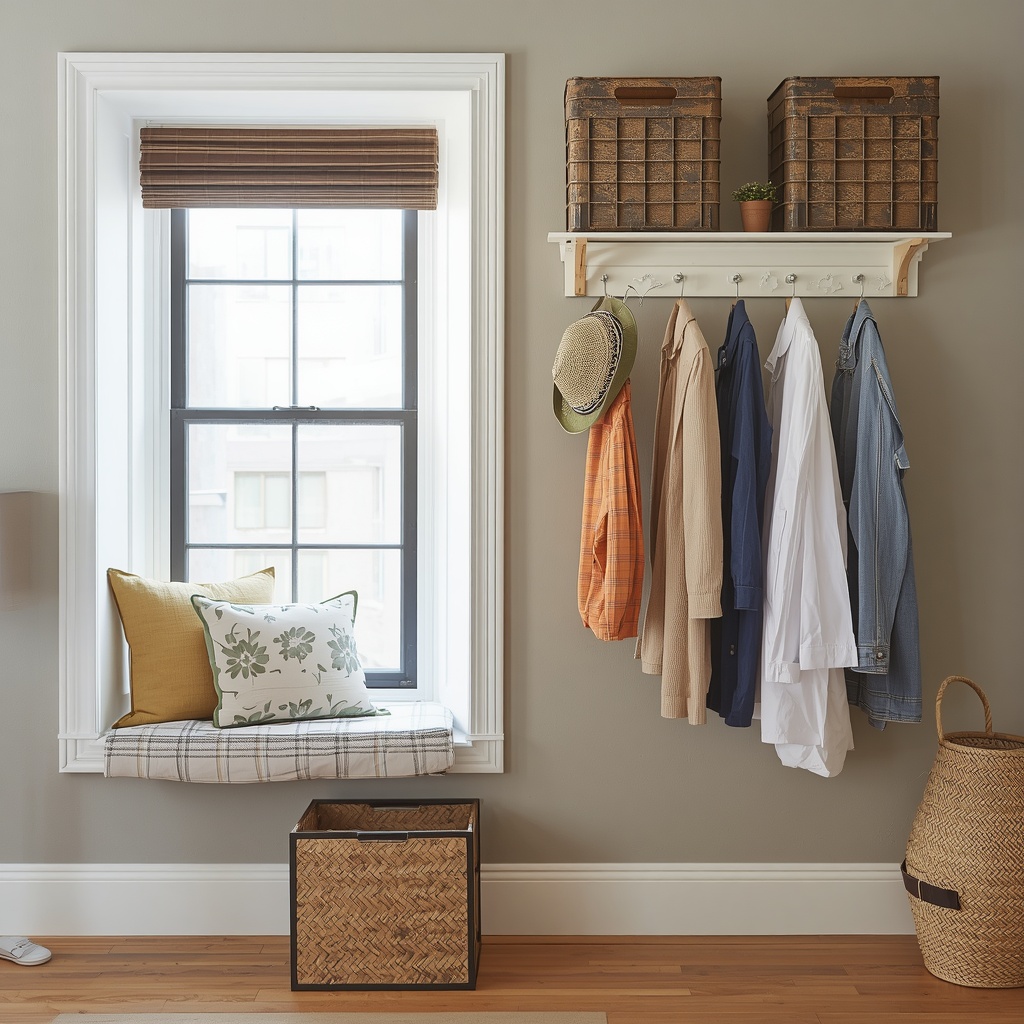
Buying ready-made pieces saves time and often delivers a more polished look. Retailers such as IKEA and The Container Store offer modular systems built for compact living, while The Home Depot is a reliable source for shelving hardware, brackets, and tools. Invest in the pieces you’ll use daily, such as your bed and sofa, and save with DIY on secondary items.
Pro Tip: Always measure twice, then measure the doorway and elevator. Nothing is more frustrating than a perfect storage piece that can’t make it into your apartment.
Design Tricks That Make Hidden Storage Feel Seamless
Hidden storage works best when it disappears visually. Paint cabinetry and built-ins the same color as your walls, a technique called color drenching, so they recede instead of stand out. Choose handleless doors with push-to-open latches or finger pulls for an uninterrupted surface. Keep materials consistent, such as light oak or matte white, across your furniture.
Lighting is another powerful tool. Add LED strips inside closets and drawers so you can see everything easily, and use warm, layered lighting to keep the room feeling cozy. Mirrors placed opposite windows bounce light around, amplifying the sense of space. These finishing touches turn a functional room into one that feels curated and calm.
Common Hidden Storage Mistakes to Avoid
Even the best ideas can backfire. The biggest mistake is over-storing, packing every hidden space to the brim. When a drawer won’t close or a cabinet bursts when you open it, the system has failed. Aim to fill hidden storage to about 80 percent so you have room to breathe and room for new purchases.
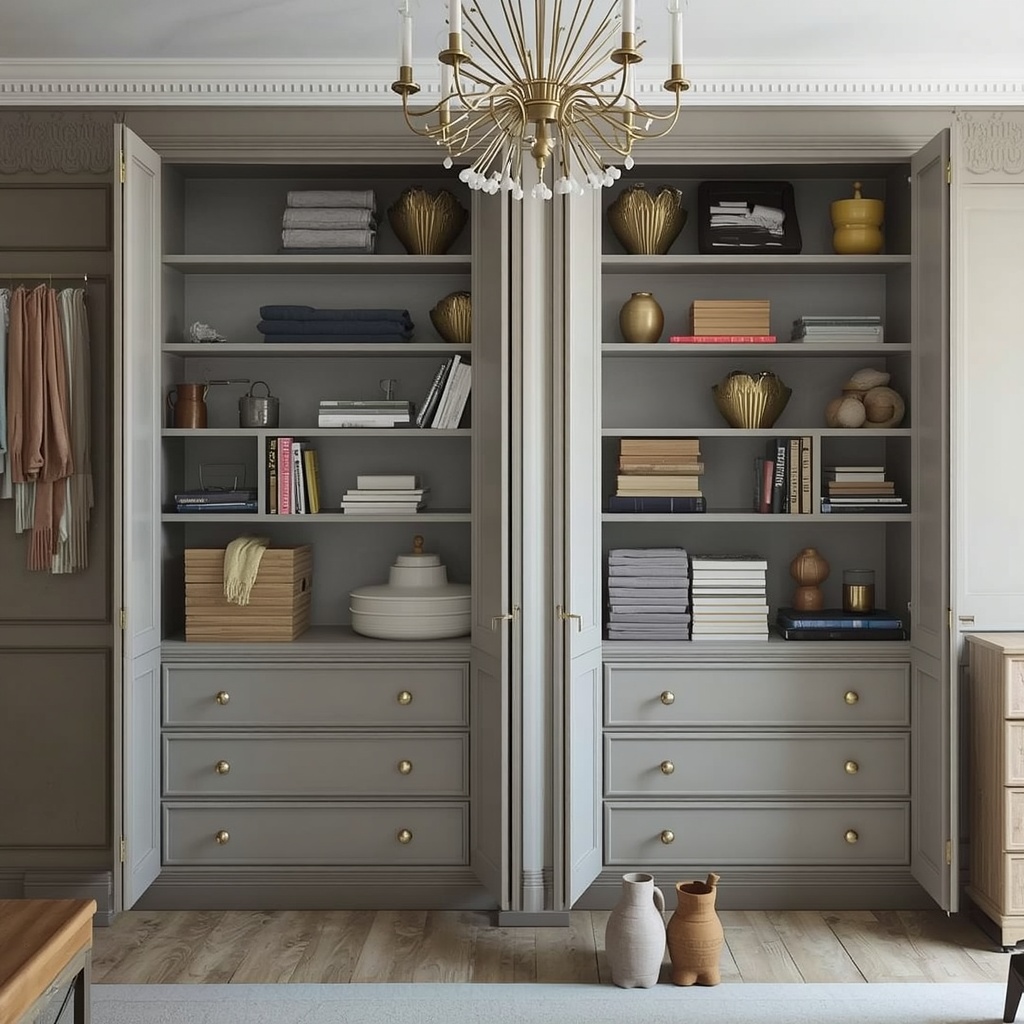
Another common error is buying storage before decluttering, or choosing pieces that are too bulky for the room. A massive storage bed in a tiny bedroom can leave no walking space. Skip furniture with clumsy mechanisms that you won’t use consistently, and always test hinges, drawers, and lids in person when possible.
Quick Mistakes List
- Buying storage before editing belongings
- Ignoring door and drawer clearance
- Choosing pieces in clashing finishes
- Forgetting to label bins and boxes
- Hiding items you use daily behind multiple layers
Maintain Your Minimalist System With Simple Habits
A hidden storage system only stays effective if you maintain it. Adopt the “one in, one out” rule: when something new comes in, something old goes out. Spend ten minutes each Sunday resetting your space, returning items to their homes, and wiping surfaces. Small, consistent habits prevent the slow creep of clutter that undermines a minimalist home.
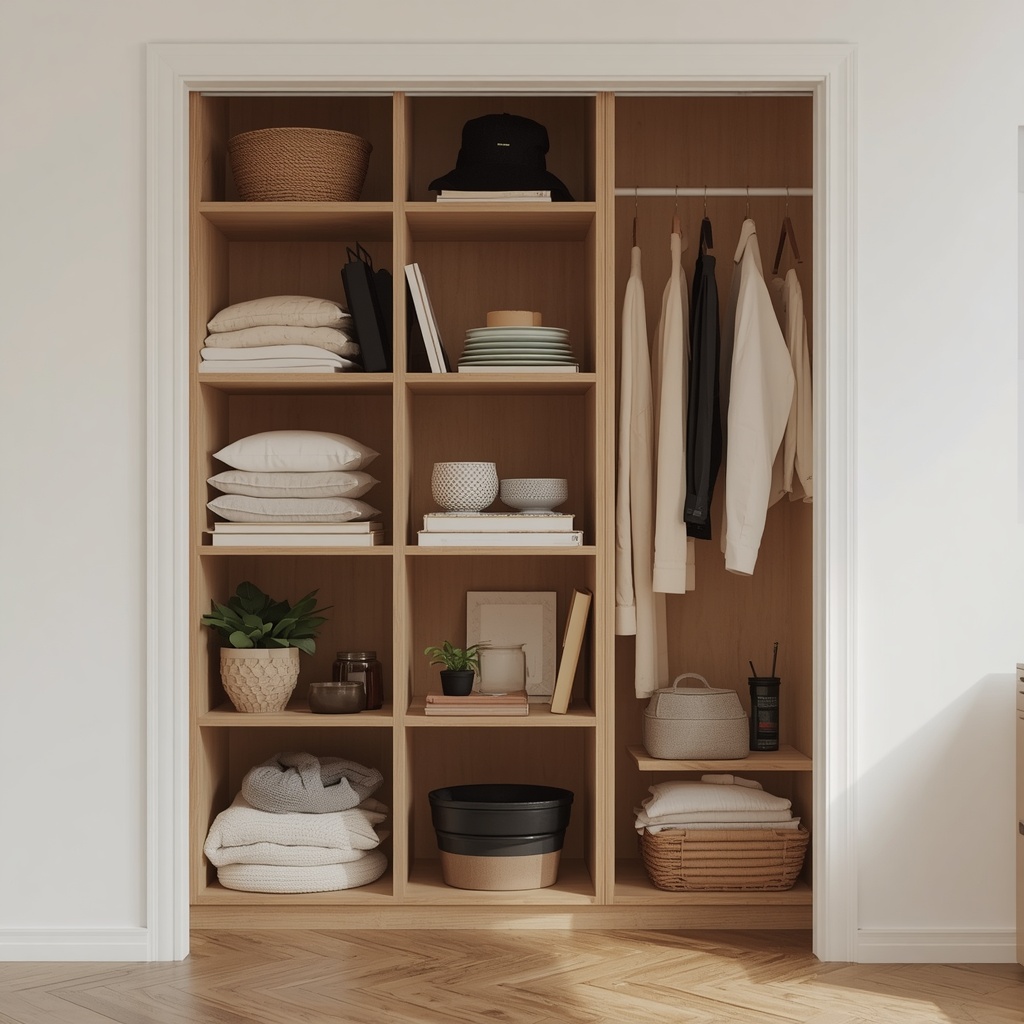
Review your storage seasonally as well. Rotate winter and summer clothes, check for expired pantry items, and reassess whether each hidden item still deserves its spot. Over time, your system will evolve with your needs, and you’ll find you need less storage than you first thought.
Frequently Asked Questions
What is the best hidden storage for a studio apartment?
A platform bed with built-in drawers combined with a lift-top coffee table gives you the most capacity without adding furniture.
How can renters add hidden storage without damaging walls?
Use freestanding furniture, tension rods, over-the-door organizers, and adhesive hooks rated for the weight you need.
How do I keep a small apartment minimalist but functional?
Edit your belongings first, choose multifunctional furniture, and give every item a designated hidden home.
Is custom built-in storage worth it?
For homeowners or long-term renters with landlord approval, yes. Built-ins maximize awkward spaces and can add resale value.
Final Thoughts: Make Every Inch Work for You
Minimalist small apartments don’t have to feel restrictive. With thoughtful hidden storage, you can enjoy open sightlines, calm surfaces, and a home that still holds everything you need. Start with one room, one piece of furniture, or even one drawer, and build from there.
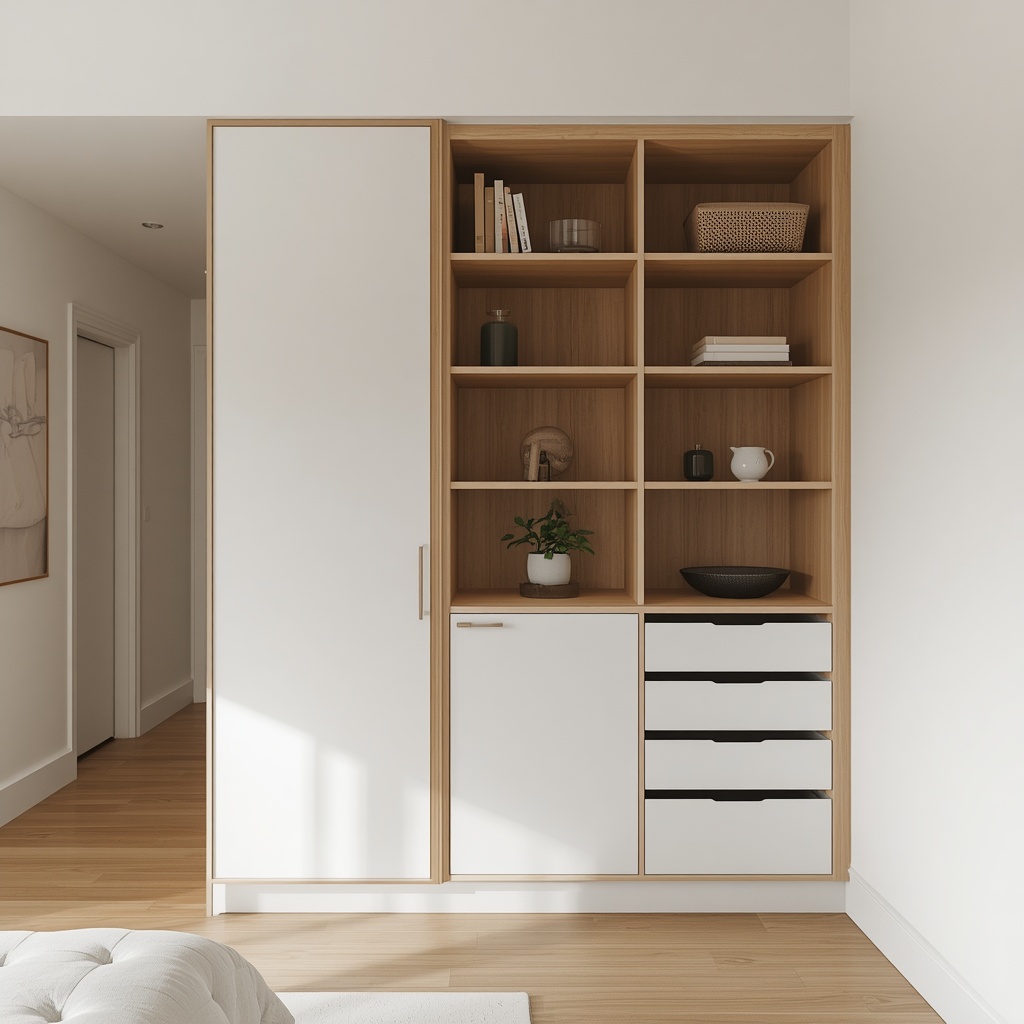
Remember that great design is about intention. Choose pieces that earn their place, hide the rest with style, and let your apartment breathe. Your small space can feel spacious, serene, and entirely your own.