
Walk into a room and feel your shoulders drop an inch. That’s the goal of organic modern design, and it’s why this style has become one of the most searched interior design trends in the US. It blends clean, contemporary lines with warm, natural materials to create spaces that feel grounded rather than sterile.
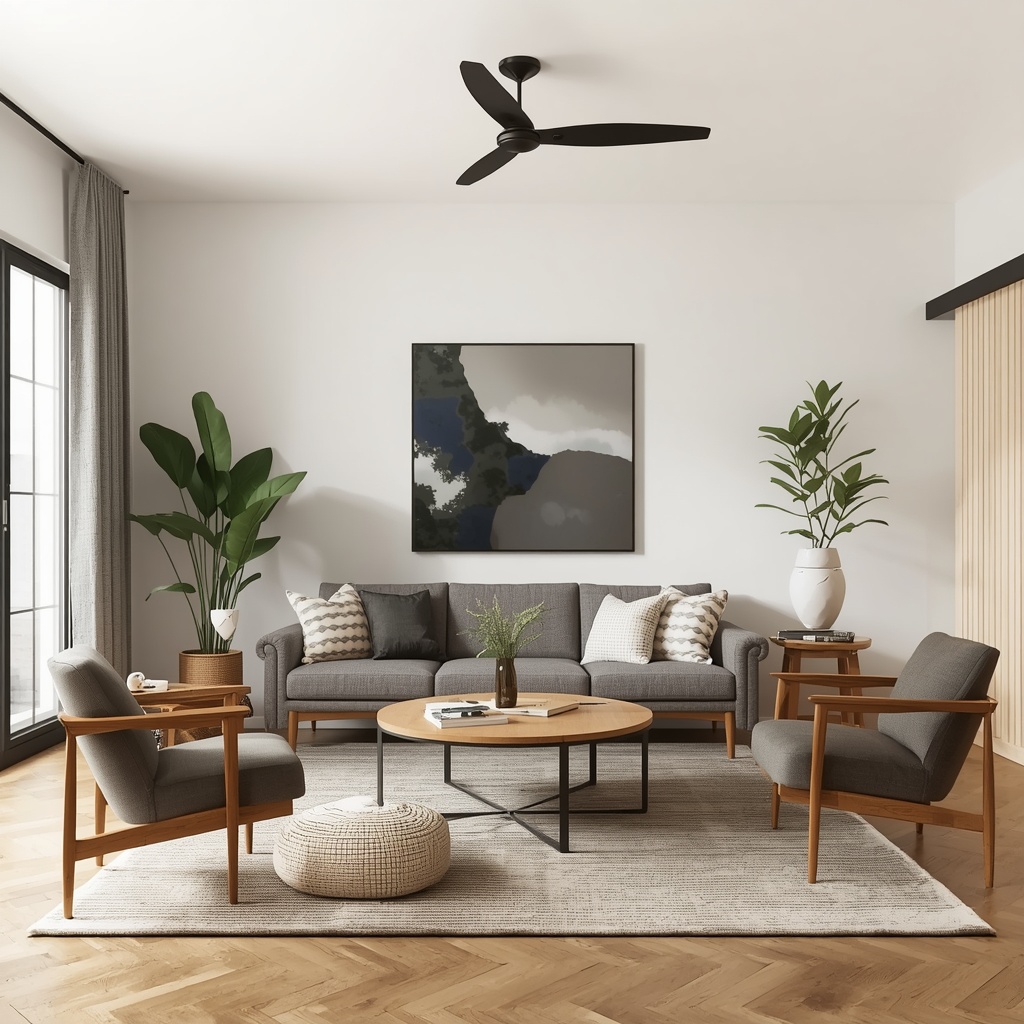
If your living room currently feels cluttered, cold, or like it belongs in a furniture catalog rather than your actual life, organic modern design offers a refreshing middle ground. It borrows the simplicity of modern design and the coziness of natural, earthy elements, then blends them into something that feels intentional and lived-in at the same time.
As a designer, I’ve noticed that clients rarely ask for “organic modern” by name. They ask for a living room that feels calm, warm, and uncluttered without looking boring. That description is organic modern in a nutshell, and this guide will show you exactly how to achieve it in your own home.
By the end of this article, you’ll understand the core principles of the style, the best color palettes and materials to use, and practical, budget-friendly ways to bring organic modern design into your living room this season.
What Is Organic Modern Design?
Organic modern design sits at the intersection of two philosophies: modernism’s love of clean lines and function, and organic design’s reliance on natural materials and forms. Think curved wood furniture, linen upholstery, stone accents, and a neutral color palette punctuated by greenery.
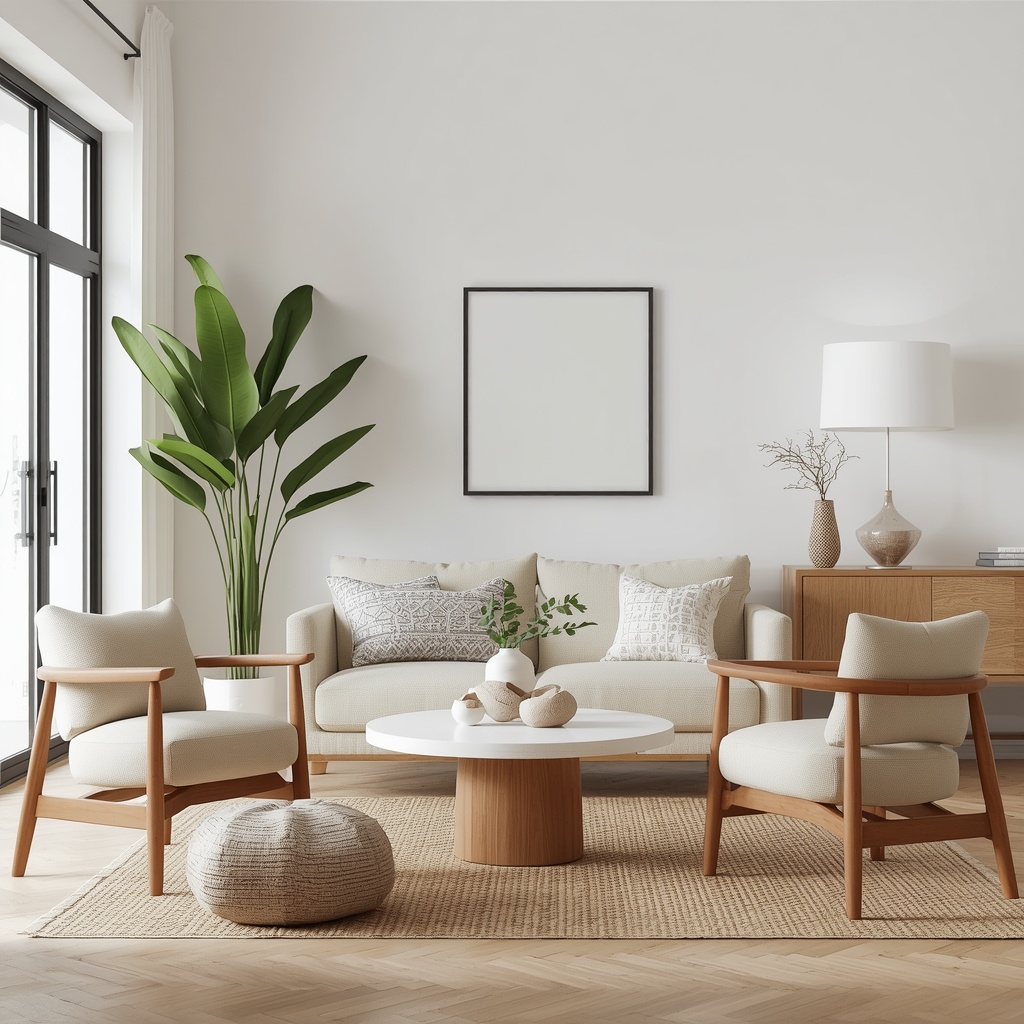
Unlike minimalist design, which can sometimes feel austere, organic modern living rooms embrace texture and warmth. Unlike traditional farmhouse or boho styles, they avoid heavy ornamentation and visual clutter. The result is a space that feels curated but not cold, simple but not empty.
“Good design is a lot like clear thinking made visual.” — Edward Tufte
That quote captures the essence of organic modern interiors. Every element earns its place, but nothing feels forced or overly minimal.
Why Organic Modern Living Rooms Feel So Calming
There’s a psychological reason this design style resonates with so many homeowners right now. Research in environmental psychology consistently links natural materials, soft lighting, and uncluttered spaces to lower stress levels and improved mood. Organic modern design leans directly into these findings.
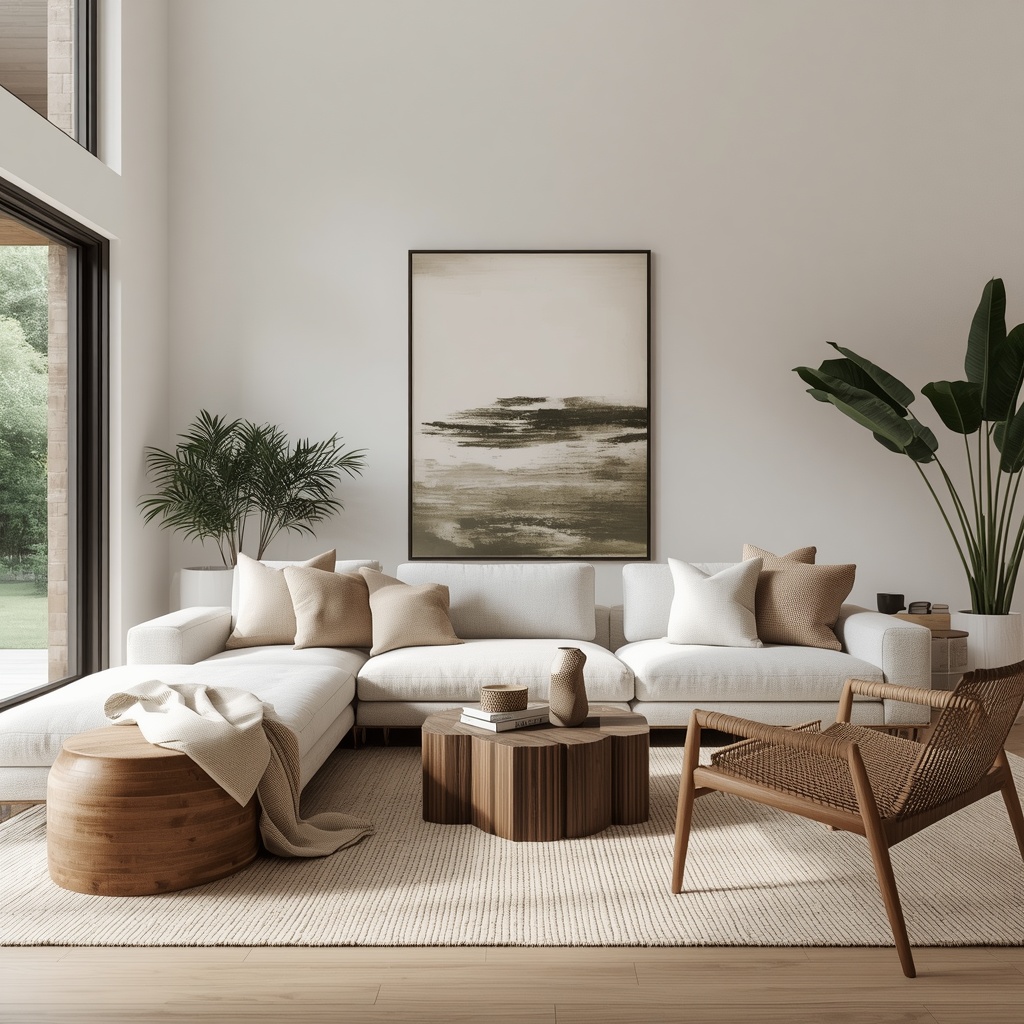
Here’s what makes the style so effective at creating a sense of calm:
- Biophilic elements — wood, plants, and natural light mimic the outdoors, which the brain associates with safety and relaxation
- Neutral color palettes — soft, muted tones reduce visual stimulation compared to bold or saturated colors
- Uncluttered layouts — negative space gives the eye room to rest
- Tactile textures — linen, wool, and jute add warmth without visual noise
- Curved, organic shapes — soft edges feel less rigid and more welcoming than sharp angles
Pro Tip
When in doubt, choose one “calming anchor” for your living room — a big potted fig tree, a linen sectional, or a stone coffee table — and build the rest of the room around it. Trying to balance too many statement pieces at once is the fastest way to lose the calming effect.
Core Elements of an Organic Modern Living Room
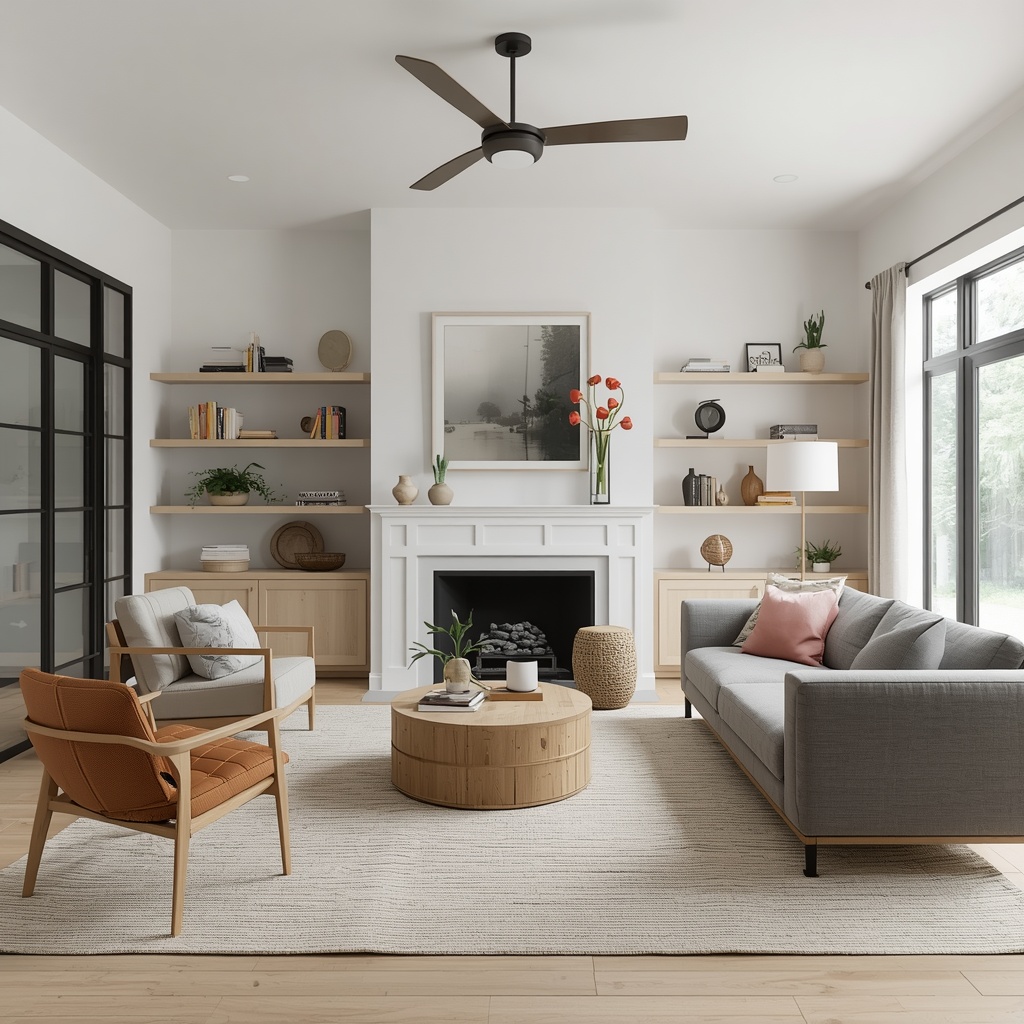
Before diving into specific ideas, it helps to understand the building blocks designers use to create this look consistently. Every organic modern living room, regardless of size or budget, tends to include the same core ingredients.
| Element | Organic Modern Approach | Avoid |
|---|---|---|
| Color Palette | Warm neutrals, cream, greige, terracotta, sage | Bright primary colors, high-gloss finishes |
| Materials | Oak, walnut, linen, boucle, rattan, stone | Chrome, glass-heavy furniture, plastic laminate |
| Furniture Shapes | Curved sofas, rounded coffee tables, organic silhouettes | Sharp angular sectionals, ornate carvings |
| Lighting | Warm ambient light, sculptural floor lamps, dimmers | Cool white overhead lighting, fluorescent bulbs |
| Textiles | Linen, wool, cotton bouclé, jute rugs | Synthetic velvet, shiny polyester |
| Accessories | Ceramic vases, woven baskets, live plants | Excessive trinkets, mass-produced decor |
Choosing the Right Color Palette
Color is where most organic modern living rooms either succeed or fall flat. The palette should feel like it was pulled from nature — think sand, stone, moss, and driftwood rather than anything synthetic or overly saturated.
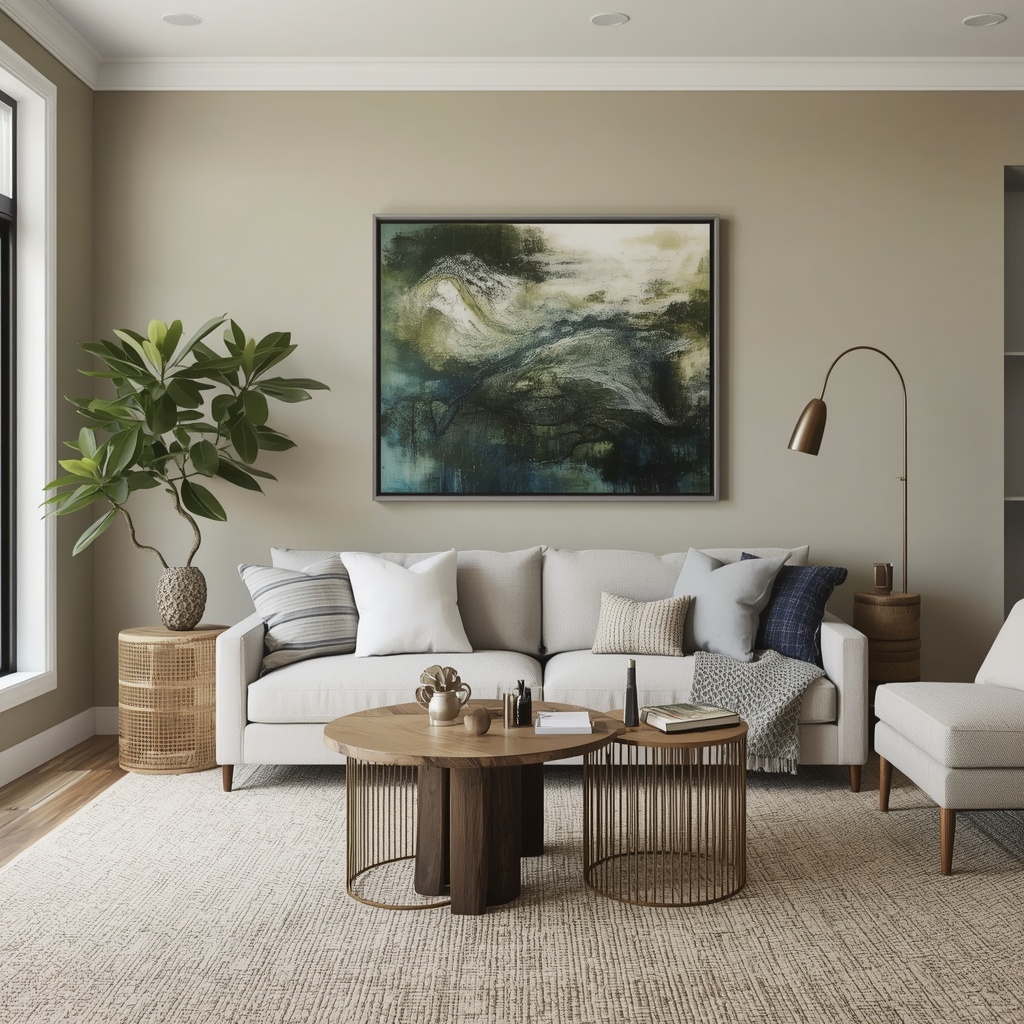
Start with a base of warm white or greige on the walls, then layer in mid-tone neutrals through furniture and rugs. Add one or two grounding accent colors, such as terracotta, olive green, or rust, through pillows, throws, or a single statement piece.
A simple formula that works in almost any space:
- 60% base neutral — walls, large furniture pieces (cream, warm white, greige)
- 30% secondary neutral — rugs, curtains, secondary seating (taupe, oatmeal, sand)
- 10% accent color — pillows, art, ceramics (terracotta, sage, deep olive)
This ratio keeps the room feeling cohesive rather than chaotic, which is essential for the calming effect organic modern design is known for.
Furniture Selection for an Organic Modern Look
Furniture is where organic modern design really distinguishes itself from other minimalist or contemporary styles. The goal is furniture with soft, rounded silhouettes made from natural or natural-look materials.
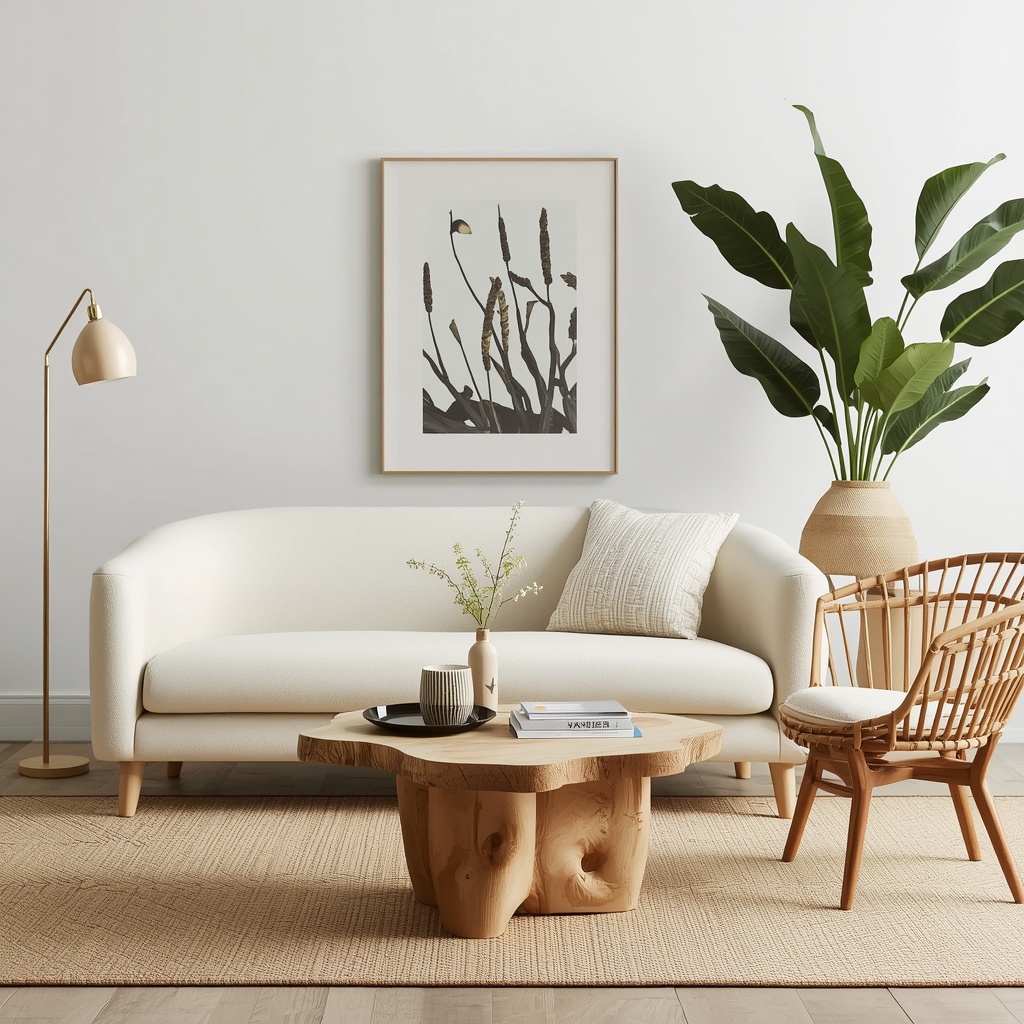
A curved bouclé sofa, a live-edge wood coffee table, or a rattan accent chair all signal organic modern instantly. Avoid anything with sharp 90-degree angles, high-gloss lacquer finishes, or heavy ornate detailing, since these read as either too modern-industrial or too traditional for the aesthetic.
Key furniture pieces to prioritize:
- A low-profile, curved sofa in linen or bouclé fabric
- A solid wood or stone coffee table with rounded edges
- An accent chair in rattan, cane, or leather
- Open wood shelving instead of closed cabinetry
- A jute, wool, or sisal area rug to anchor the seating area
Pro Tip
If you can only invest in one statement piece, make it your sofa. A curved, neutral-toned sofa instantly sets the tone for the entire room and makes every other design decision easier.
Lighting That Enhances the Calming Effect
Lighting can make or break the organic modern aesthetic. Harsh overhead lighting flattens texture and creates a cold, clinical feel, which directly works against the warmth this style is known for.
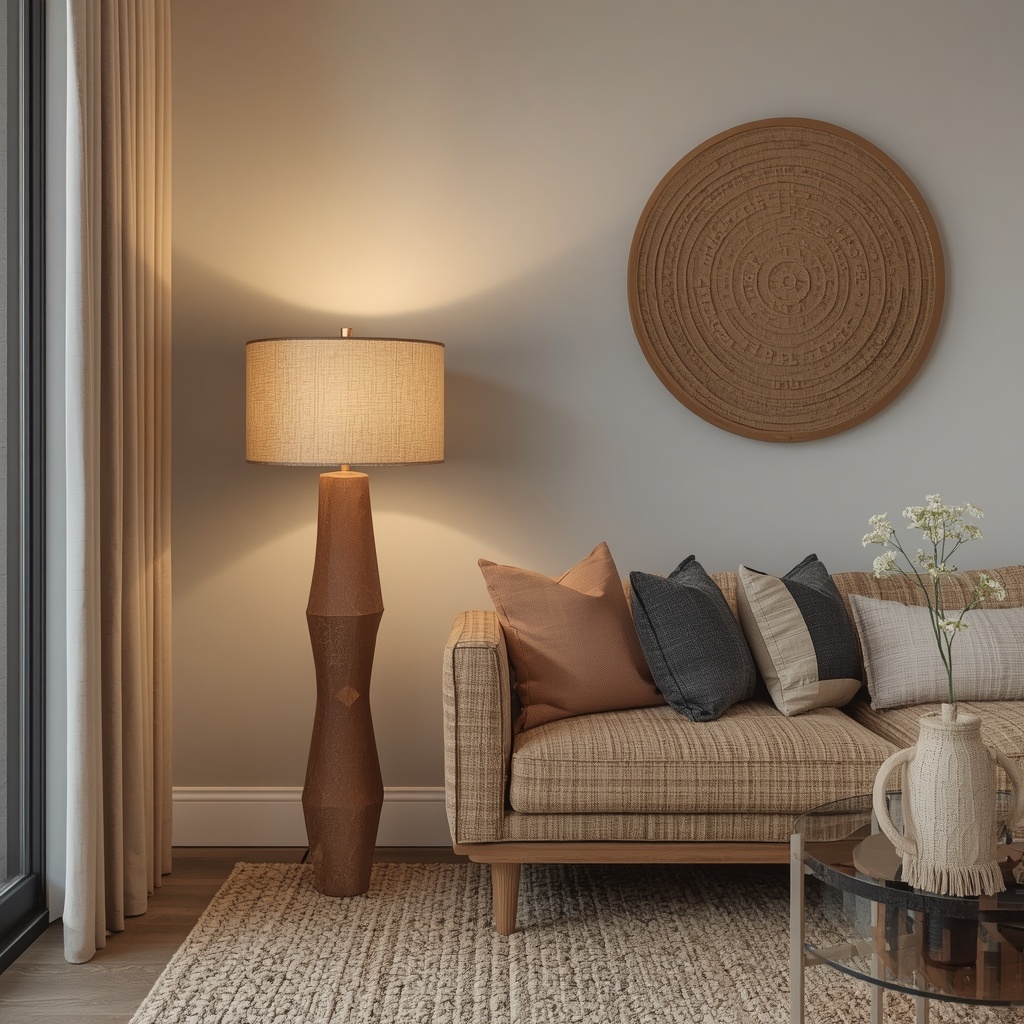
Instead, layer your lighting with a mix of ambient, task, and accent sources. Sculptural floor lamps with linen or paper shades, ceramic table lamps, and warm-toned bulbs (2700K–3000K) all contribute to a softer, more inviting atmosphere.
“Lighting is the jewelry of a room, and organic materials are its skin.” — Interior design principle often echoed by residential designers
Dimmer switches are one of the most underrated upgrades for any living room aiming for a calm, organic modern feel. They allow you to shift the mood from bright and functional during the day to warm and relaxed in the evening.
Natural Materials and Textures to Incorporate
Texture does the heavy lifting in organic modern spaces, especially since the color palette is intentionally muted. Layering different natural textures keeps the room visually interesting without relying on bold colors or patterns.
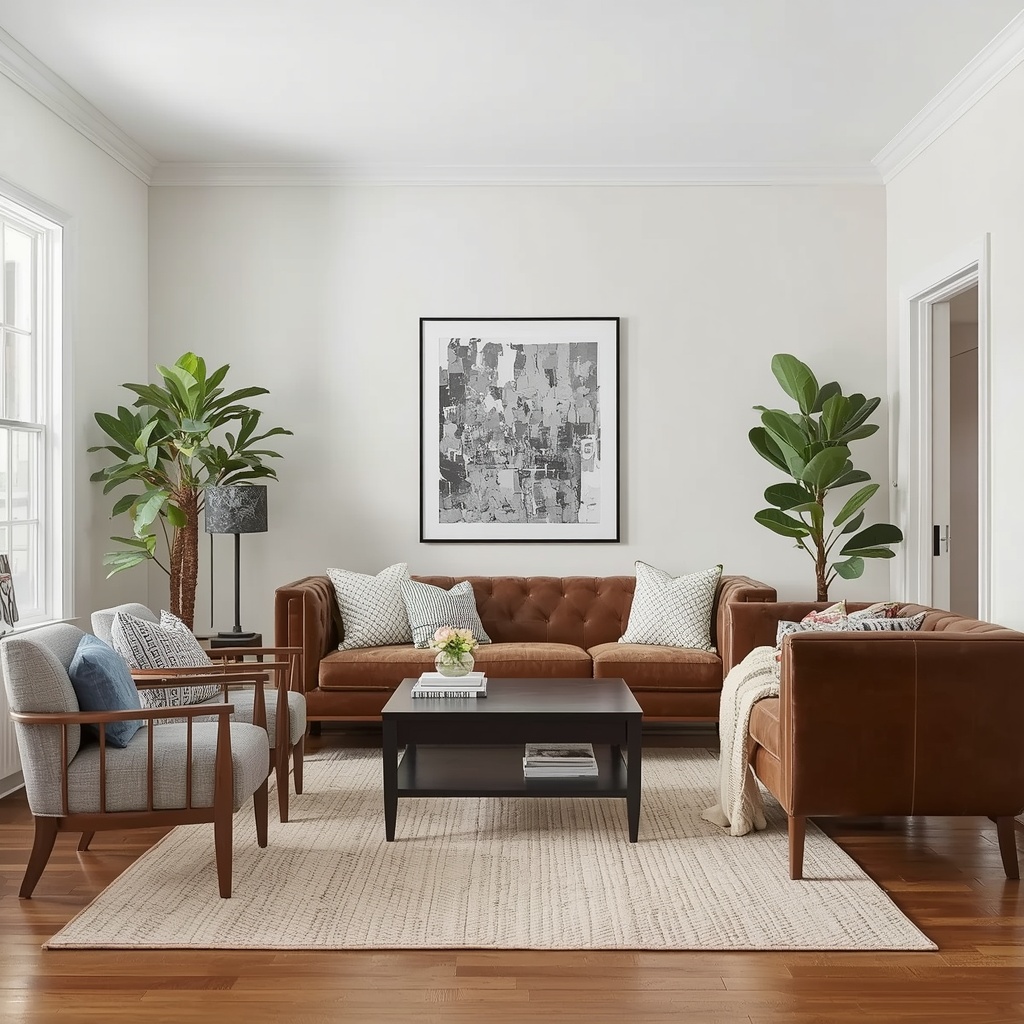
Here are the most effective materials to work into your living room:
| Material | Where to Use It | Effect |
|---|---|---|
| Linen | Sofa upholstery, curtains, throw pillows | Soft, breathable, relaxed texture |
| Bouclé | Accent chairs, ottomans | Cozy, tactile warmth |
| Rattan / Cane | Chairs, pendant lights, mirror frames | Airy, natural texture |
| Jute / Sisal | Area rugs | Grounding, earthy foundation |
| Wood (oak, walnut) | Coffee tables, shelving, flooring | Warmth and organic structure |
| Stone / Concrete | Side tables, fireplace surrounds | Grounded, tactile contrast |
| Ceramic | Vases, lamp bases, decor objects | Handmade, artisanal feel |
Mixing at least three to four of these materials in a single living room creates the layered, tactile richness that defines the organic modern look.
Bringing the Outdoors In With Plants and Greenery
No organic modern living room is complete without greenery. Plants are one of the simplest, most affordable ways to soften a space, purify indoor air, and reinforce the biophilic design principles that make this style so calming.
Larger statement plants like fiddle leaf figs, olive trees, or rubber plants work beautifully as anchor pieces in a corner or beside a sofa. Smaller plants such as pothos, snake plants, or eucalyptus stems in a ceramic vase add greenery to shelves and side tables without overwhelming the space.
A quick styling checklist for greenery:
- Use one large floor plant as a focal point
- Add two to three smaller plants at varying heights
- Choose neutral, textured planters (terracotta, ceramic, woven baskets)
- Mix real and high-quality faux plants if maintenance is a concern
- Avoid overly bright or patterned planters that clash with the neutral palette
Layout and Space Planning for a Calming Flow
Even the most beautifully decorated living room will feel chaotic if the layout doesn’t support easy movement and visual flow. Organic modern design favors open, uncluttered floor plans with furniture arranged to encourage conversation and relaxation.
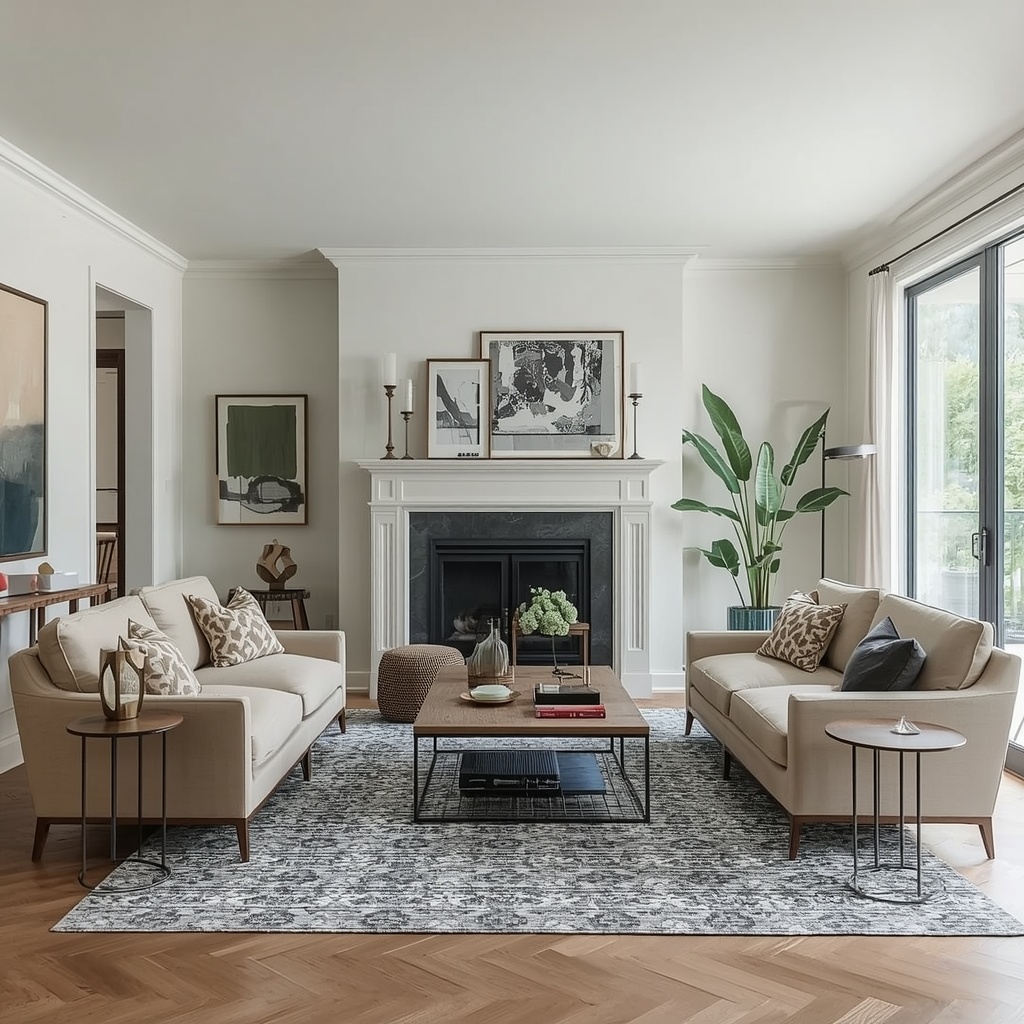
Leave breathing room between furniture pieces rather than pushing everything against the walls. A general rule is to allow at least 30 inches of walkway space between major furniture pieces, and to float furniture away from walls when the room size allows it.
Grouping furniture around a central rug helps define the seating area and creates a sense of intentional design rather than randomly placed pieces. Keep surfaces like coffee tables and shelves relatively clear, styling them with just a few curated objects rather than dense clusters of decor.
Budget-Friendly Ways to Achieve the Look
You don’t need a full renovation or a designer budget to bring organic modern style into your living room. Small, intentional changes often make the biggest visual impact.
Consider these affordable updates:
- Swap out cool-white bulbs for warm-toned (2700K) bulbs throughout the room
- Add a jute or wool area rug to ground the space
- Introduce two or three linen or bouclé throw pillows in neutral tones
- Bring in one large plant as a focal point
- Replace metal or glass decor with ceramic and wood pieces
- Declutter shelves and surfaces to create more visual breathing room
- Add a woven throw blanket for texture and warmth
Pro Tip
Before buying anything new, do a “decluttering pass” first. Removing 20-30% of the items currently in your living room often does more to create a calming atmosphere than adding new furniture ever could.
Common Mistakes to Avoid
Even well-intentioned attempts at organic modern design can miss the mark. Here are the most common pitfalls homeowners run into:
- Going too minimal — stripping the room of texture and warmth, which results in a cold, unfinished look rather than a calming one
- Mixing too many wood tones — clashing wood finishes (like cool gray wood next to warm honey oak) disrupts the cohesive, natural feel
- Overloading on trends — adding every trendy item at once instead of curating a handful of quality pieces
- Ignoring lighting temperature — using cool white bulbs, which clash with the warm, earthy palette
- Skipping greenery — missing one of the easiest ways to reinforce the organic side of the style
Final Thoughts
Organic modern design isn’t about following a rigid formula. It’s about creating a living room that feels calm, warm, and authentically yours, built from natural materials, soft curves, and a restrained, earthy color palette. The style works because it taps into something instinctive: our brains relax around natural textures, soft light, and uncluttered spaces.
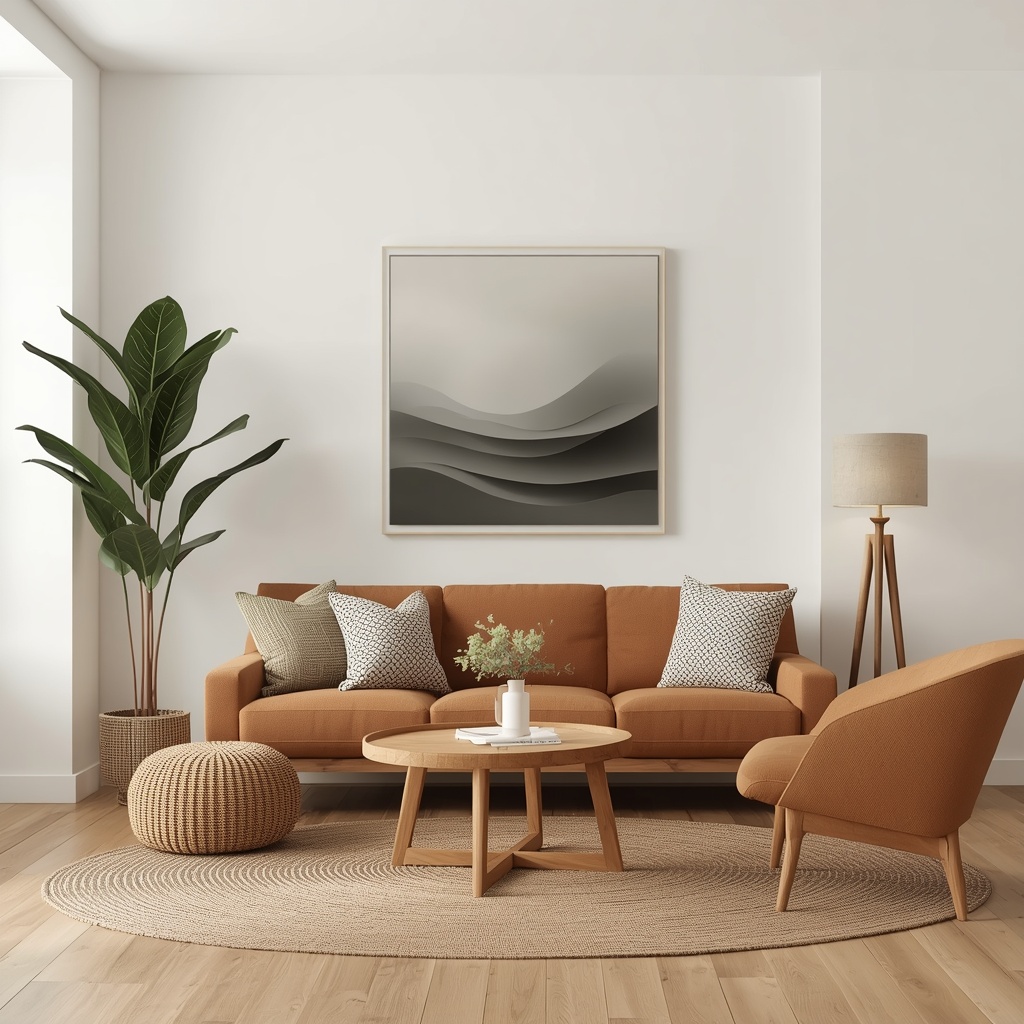
Start small if you need to. A new rug, a warmer lightbulb, or a single well-chosen plant can shift the entire feel of your living room. Over time, these small, intentional choices add up to a space that genuinely supports rest and calm, which is really the whole point of coming home.
Whether you’re redesigning from scratch or slowly evolving your current space, organic modern design offers a flexible, timeless approach that prioritizes comfort and tranquility over fleeting trends, making it one of the smartest long-term investments you can make in your home.