
Meta description: Discover the best multi-purpose furniture ideas for tiny apartments, from Murphy beds to lift-top tables, with a designer’s tips, comparison tables, and renter-friendly hacks.
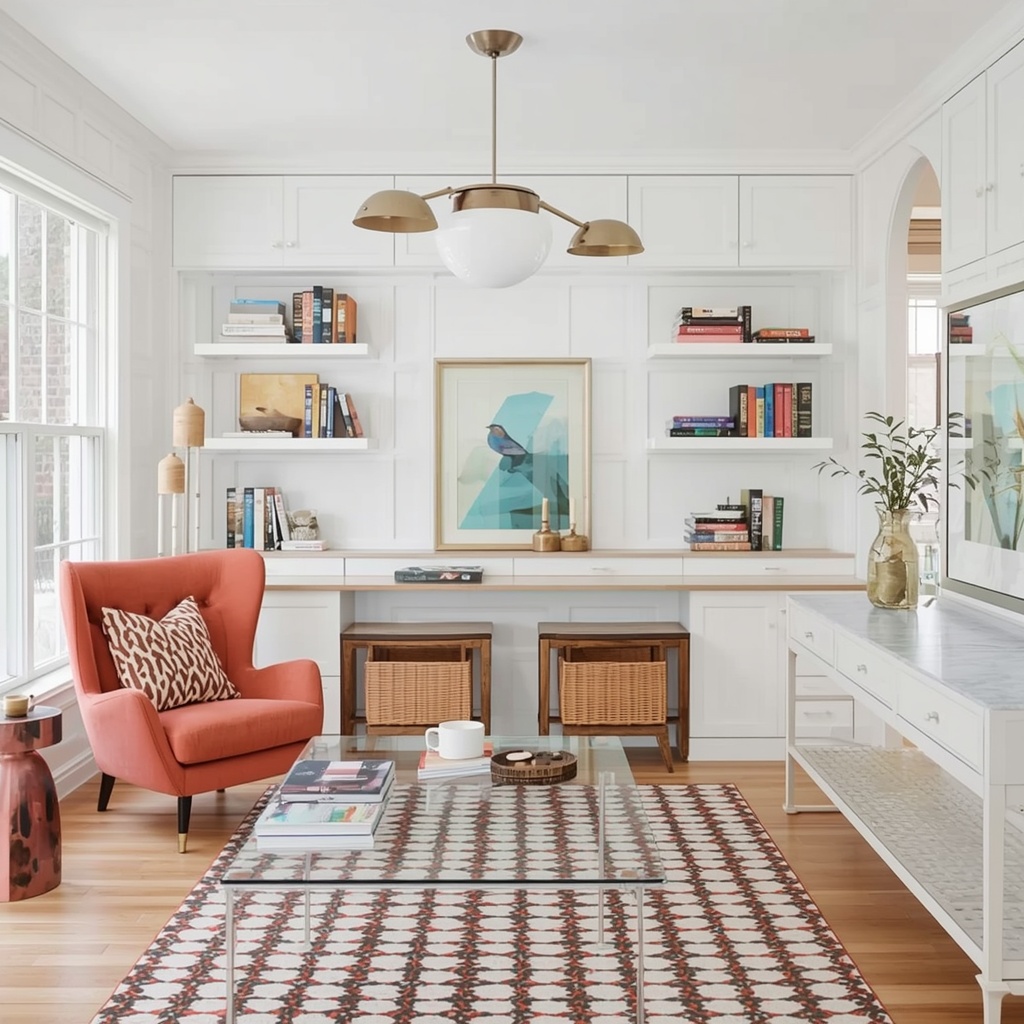
I’ve spent years designing homes under 500 square feet. Here is what I tell every client: a tiny apartment doesn’t need less life, it needs smarter furniture. The right multi-purpose pieces can turn a 400-square-foot studio into a bedroom, office, dining room, and guest suite, all without feeling cramped.
Whether you’re in a Brooklyn walk-up, a Chicago micro-studio, or a downtown Los Angeles loft, this guide covers the best space-saving furniture for small-space living. You’ll find real dimensions, price ranges, comparison tables, and designer tricks you can use this weekend.
Why Multi-Purpose Furniture Is a Must for Small Apartments
Urban rents keep climbing, and average apartment sizes keep shrinking. That leaves many Americans with less floor space than their parents ever had. Every square foot has to work harder, and single-function furniture like a bed that only sleeps or a desk that only sits there is a luxury few small homes can afford.
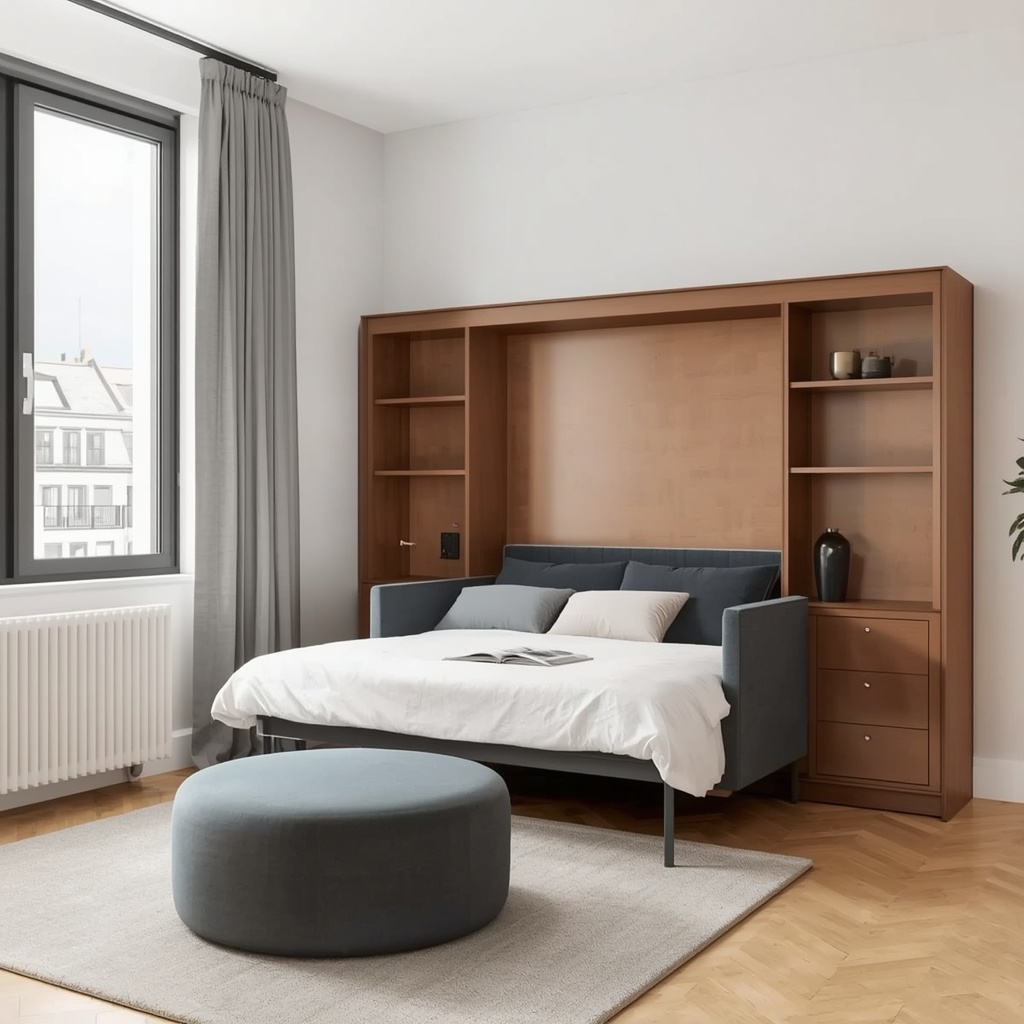
Multi-functional furniture solves this by stacking uses into one footprint. A sofa becomes a bed, an ottoman becomes storage, and a dining table folds into a console. You get more function without clutter, and your apartment feels calmer and more open.
“Have nothing in your houses that you do not know to be useful, or believe to be beautiful.” — William Morris
That quote is the heart of small-space design. The best convertible furniture is both useful and beautiful, and it earns its place every single day.
The Designer’s Golden Rules Before You Buy
Before you add anything to your cart, run every piece through a quick filter. Impulse buys are the number one reason small apartments end up cluttered. A stylish piece that doesn’t fit your layout is just an expensive obstacle.

Measure twice, and remember to measure doorways, elevators, and stairwells too. I’ve seen a gorgeous sleeper sofa stuck in a hallway because nobody checked the turn radius. Here are my core rules:
- Two jobs minimum. Every large piece should do at least two things.
- Leave 30 to 36 inches for main walkways so the room doesn’t feel like an obstacle course.
- Choose legs over skirts. Visible floor space makes a room read as larger.
- Go light in visual weight. Slim profiles, open bases, and glass or acrylic accents keep sightlines clear.
- Buy vertical. When floor space runs out, walls and ceilings become your storage.
- Stick to a tight palette. Two or three coordinated colors make a small room feel cohesive.
Sofa Beds and Convertible Sleepers: The Ultimate Living Room Workhorse
The sofa is usually the largest item in a small living room, so it should work overtime. A modern sleeper sofa gives you daily seating and a real guest bed, which matters if friends and family visit. Today’s models are far better than the lumpy, bar-in-your-back versions of the past.
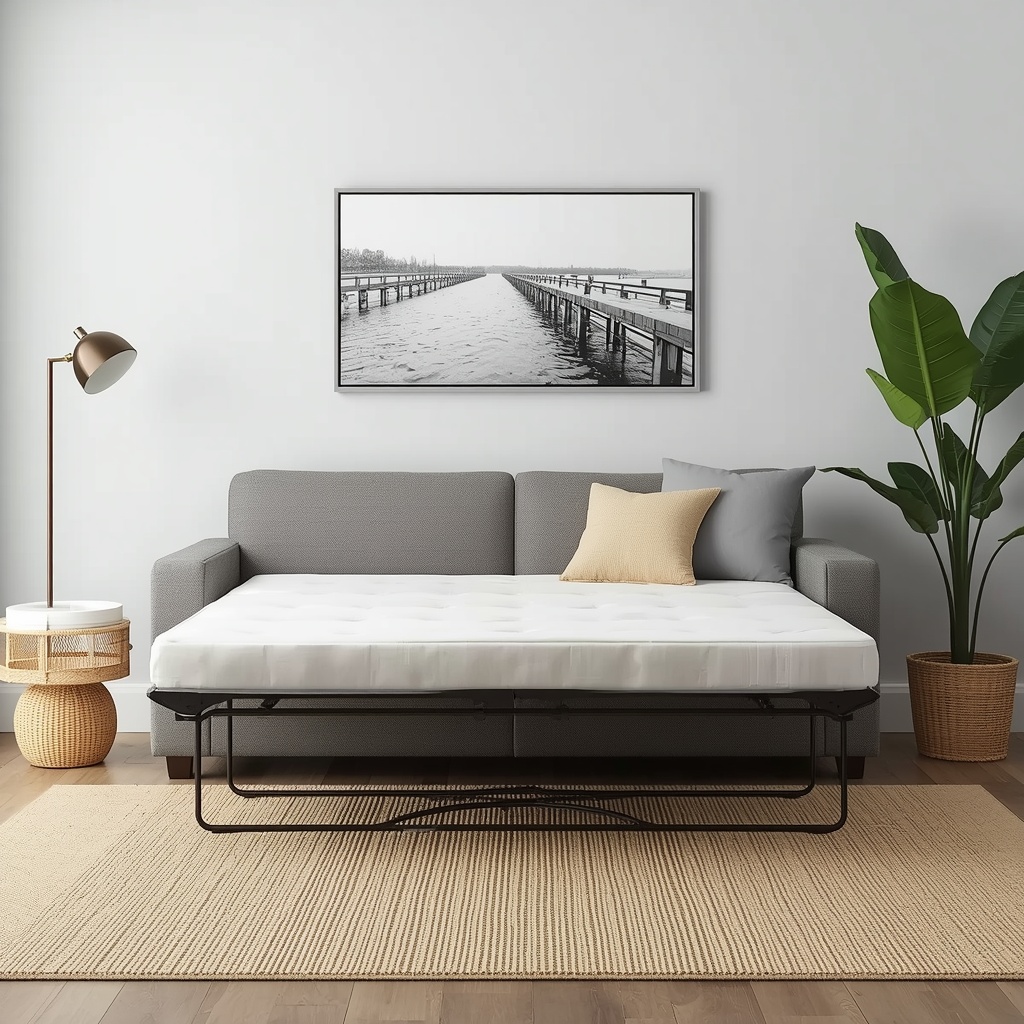
Look for a memory foam mattress rather than a thin innerspring, and test the mechanism in person if you can. For tight rooms, compact loveseat sleepers and daybeds are excellent alternatives to full-size sleepers. A futon in a clean, modern design also works well for renters on a budget.
What to look for in a sleeper sofa:
- A mattress at least 4.5 inches thick for real sleep comfort
- A smooth, easy-to-operate fold-out or pull-out mechanism
- Storage under the seat or chaise for bedding
- Performance fabric that resists stains and wear
- Slim arms that save several inches of width
Pro Tip: Choose a sofa with armless or track-arm styling and raised legs. It can save up to 6 inches of width and reflects more light along the floor, which makes the whole room feel bigger.
Murphy Beds and Wall Beds: Reclaim Your Floor by Day
If you live in a true studio, a Murphy bed (wall bed) may be the best investment you make. It folds vertically into the wall or a cabinet, freeing up 40 to 60 percent of your floor during the day. That turns a bedroom into a living room, yoga studio, or home office in about thirty seconds.
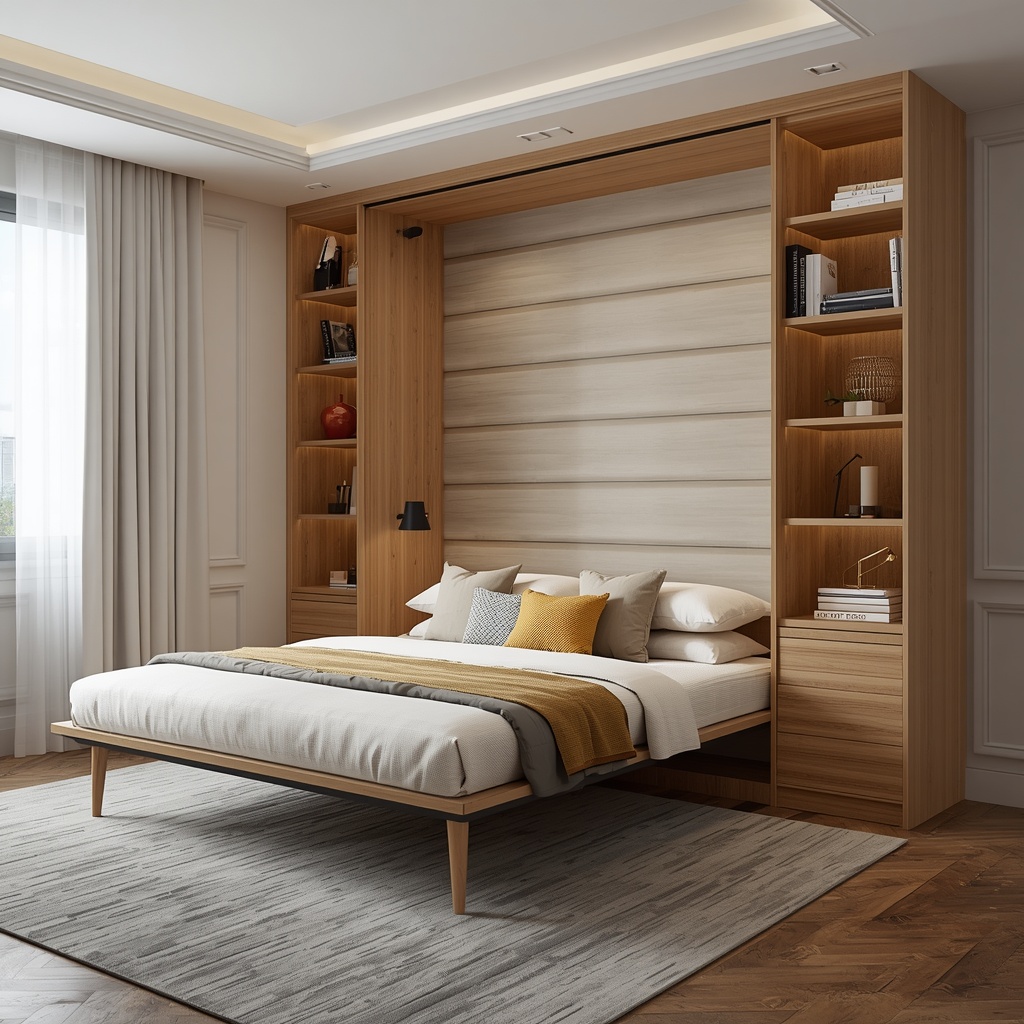
Modern versions have come a long way. Many include built-in shelving, side cabinets, fold-down desks, and integrated lighting. Murphy bed with sofa combinations are especially popular: the sofa stays put while the bed folds down above it, so you never have to move cushions.
Murphy bed styles to consider:
- Vertical (queen or full): Best for rooms with a longer wall and standard ceiling height.
- Horizontal (twin or full): Ideal for low ceilings, awkward alcoves, or rooms with a window on the short wall.
- Cabinet beds: Disguised as bookcases or armoires when closed.
- Murphy bed with desk: A fold-down work surface appears when the bed goes up.
Storage Ottomans, Benches, and Poufs: Hidden Storage Heroes
Nothing beats a hidden storage ottoman for value. It works as a footrest, extra seat, and coffee table surface, and inside it swallows blankets, board games, and seasonal clutter. Placed at the foot of a bed, a storage bench does the same job and adds a place to sit while putting on shoes.
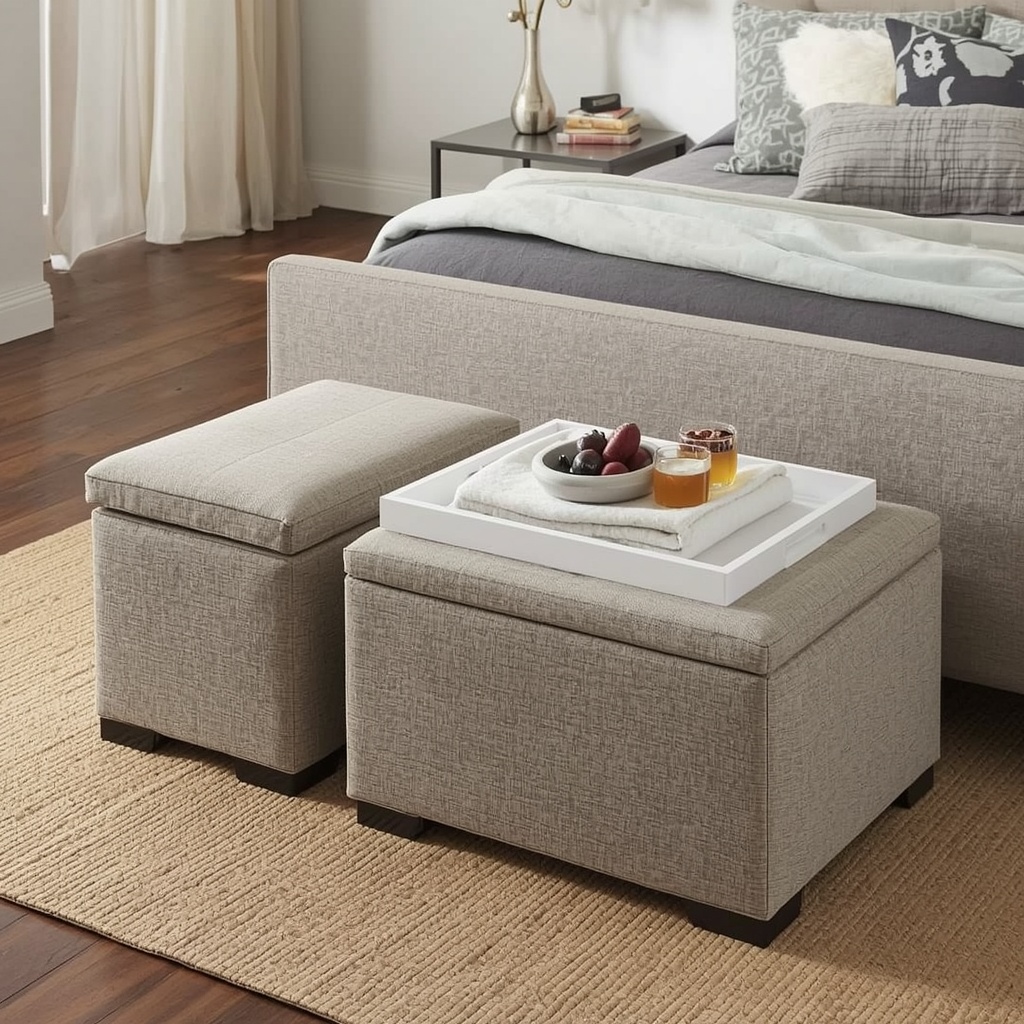
For maximum flexibility, choose ottomans with a flip-over tray top. One side is upholstered for seating and the other is a flat tray for drinks and dinner. A pair of matching cube ottomans tucks under a console when you need the floor space and pulls out for guests.
Where to use them:
- Foot of the bed for linens
- Entryway bench with shoe cubbies
- Living room coffee table alternative
- Extra seating at a dining or desk area
Extendable, Drop-Leaf, and Nesting Tables: Dining Without the Bulk
A permanent four-person dining table can swallow a tiny apartment. Instead, choose a table that grows and shrinks with your needs. Drop-leaf tables stay narrow against a wall most days and open up to seat four or six when you’re entertaining.

Nesting tables are another favorite of mine. They stack neatly for everyday use and spread out as side tables, laptop stations, or serving surfaces when guests come over. A console table that converts to a dining table is a clever option for entryways and narrow living rooms.
Pro Tip: Round or oval tables have no sharp corners, so they’re easier to walk around in tight spaces. A pedestal base also gives your legs more room than four corner legs do.
Fold-Down Desks and Hidden Workstations for the Work-From-Home Era
Remote and hybrid work is here to stay, and a desk that lives permanently in your bedroom can wreck your sleep and focus. A wall-mounted fold-down desk gives you a real workspace that disappears when the workday ends. Close the lid and your apartment goes back to being a home.

Another smart option is a secretary desk or a cabinet with a pull-out work surface. These pieces look like elegant storage when closed. Pair them with a folding or stackable chair, and you’ve created a full home office nook in about two square feet.
Compact workstation ideas:
- Wall-mounted fold-down desk with hidden cord management
- Secretary desk or armoire desk
- Narrow console table used as a standing desk
- Bookshelf with a built-in pull-out desktop
- Murphy bed with an integrated desk
Lift-Top Coffee Tables: Two Tables in One
A lift-top coffee table raises to a comfortable eating or working height, and most models add hidden storage beneath. It solves the problem of eating dinner on the couch and hunching over a laptop. For small living rooms, it can replace both a coffee table and a dining table.
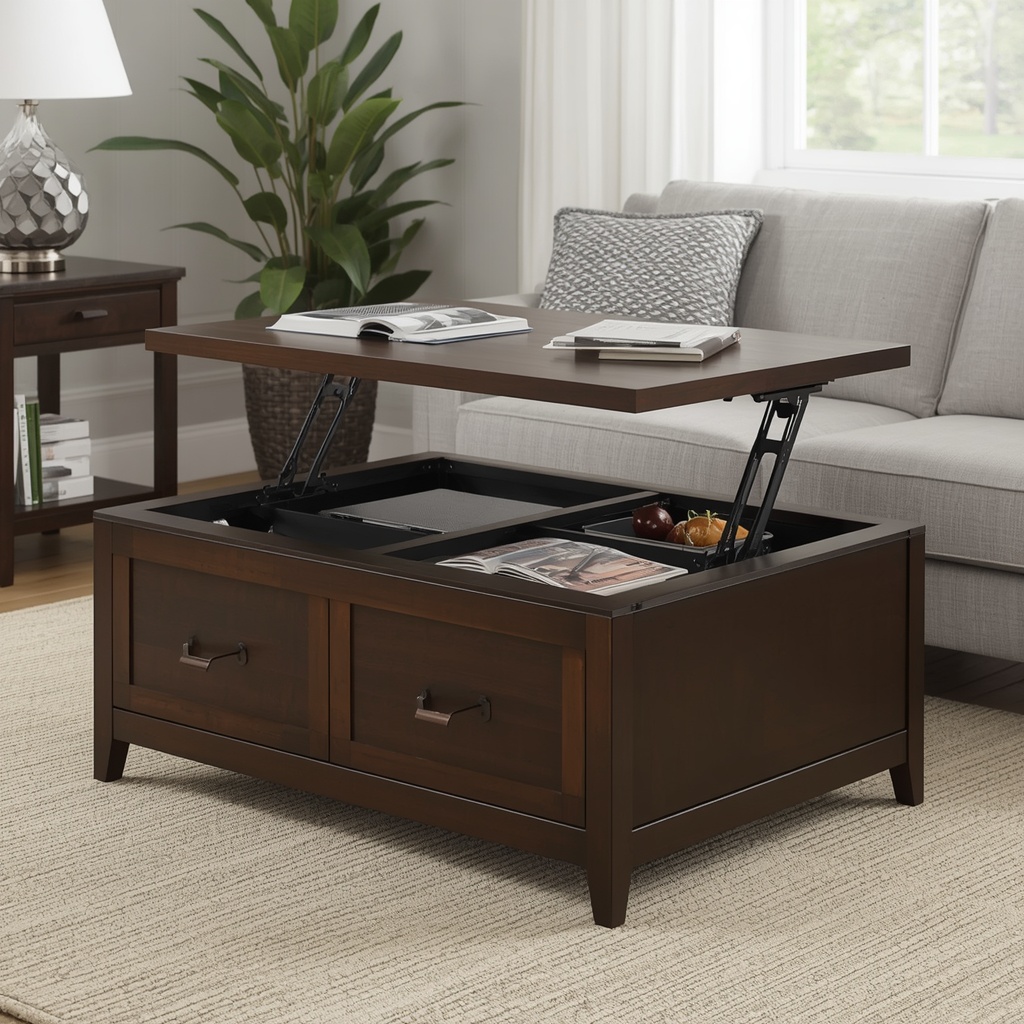
Choose a lighter wood tone, glass, or metal frame for a visually open feel. Some models include a shelf beneath for magazines and remotes, so clutter never reaches the surface. It’s one of the highest-impact pieces for the price.
Beds With Built-In Storage and Loft Beds
Under-bed space is the most underused real estate in any apartment. A storage bed with drawers or a lift-up frame can replace an entire dresser. That’s a big win in a bedroom where a dresser would leave you shuffling sideways to get to the closet.
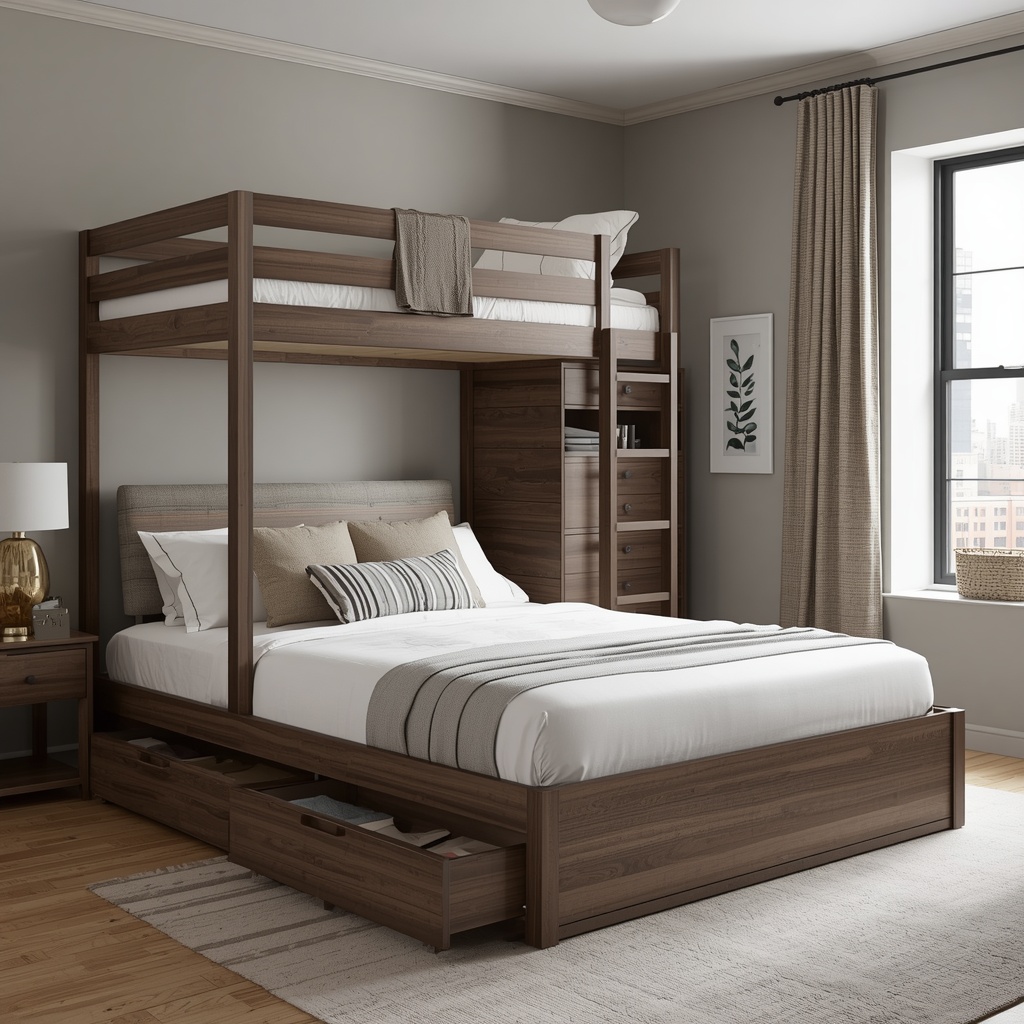
For apartments with higher ceilings, a loft bed lifts your sleeping area up and frees the floor below for a desk, lounge chair, or wardrobe. Just check your ceiling height first, since you want at least 30 to 36 inches of clearance above the mattress so you’re not sleeping in a shoebox.
Quick storage bed tips:
- Drawer models are easiest to use in tight quarters.
- Lift-up hydraulic frames hold the most but need clearance to open.
- Use vacuum bags for off-season clothes and bulky bedding.
Vertical Storage and Wall-Mounted Solutions
When the floor is full, look up. Floating shelves, wall-mounted cabinets, and tall narrow bookcases pull storage off the ground and draw the eye upward. That makes ceilings feel taller and rooms feel more spacious.
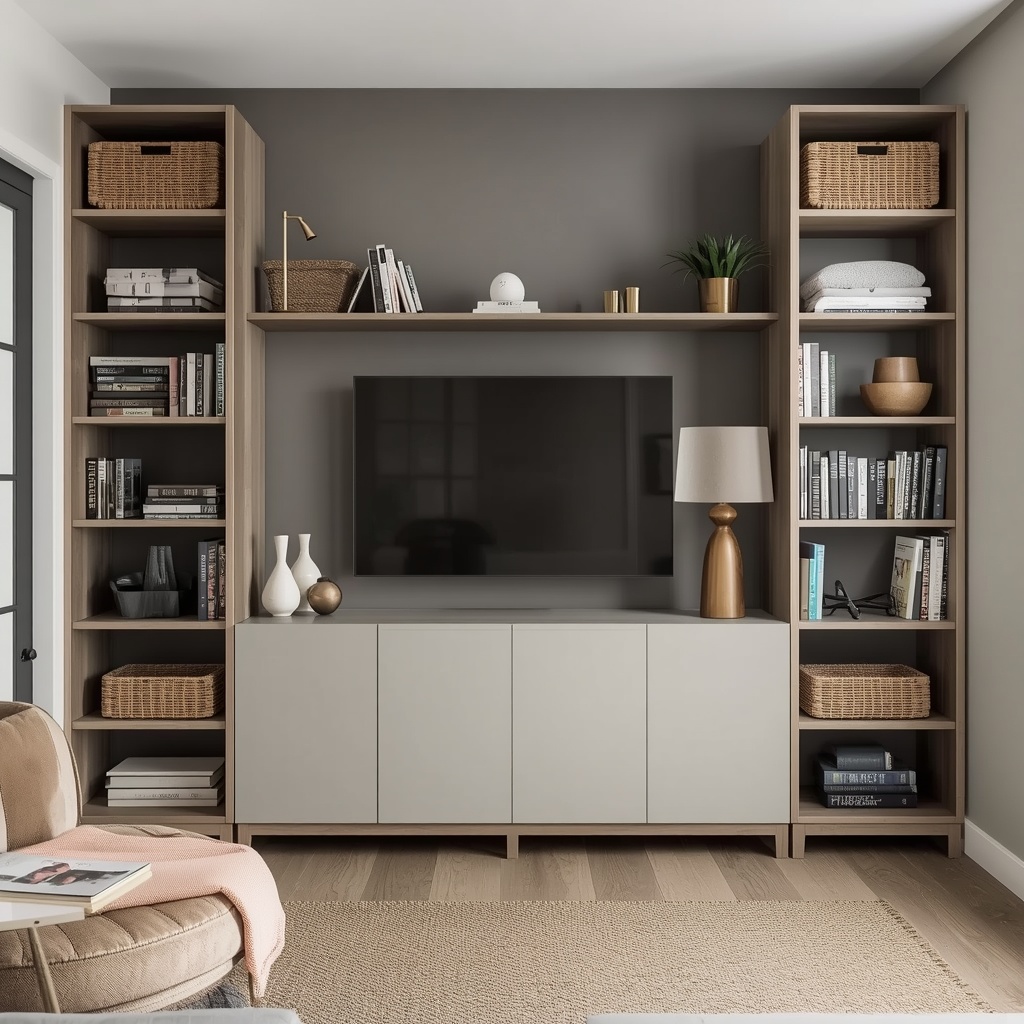
Use the back of doors too. Over-the-door organizers, hooks, and slim racks work in bathrooms, closets, and entryways. A pegboard wall in the kitchen or office keeps daily tools accessible and flexible as your needs change.
Pro Tip: Mount shelves higher than you normally would, with the lowest shelf at about eye level. This leaves useful space below for a low bench, desk, or bed, and it makes the ceiling feel taller.
| Furniture Piece | Best For | Space Saved | Typical Price Range | Renter-Friendly? |
|---|---|---|---|---|
| Sleeper Sofa | Studios and guest rooms | Replaces a bed | $600 – $2,500 | Yes |
| Murphy Bed | True studios | Up to 60% of floor | $1,500 – $5,000+ | Freestanding models only |
| Storage Ottoman | Any living room | Replaces a chest | $50 – $300 | Yes |
| Drop-Leaf Table | Small dining zones | Up to 70% when closed | $150 – $600 | Yes |
| Fold-Down Desk | Work-from-home nooks | Full desk footprint | $100 – $500 | Often (with anchors) |
| Lift-Top Coffee Table | Living rooms | Replaces two tables | $150 – $700 | Yes |
| Storage Bed | Bedrooms | Replaces a dresser | $400 – $2,000 | Yes |
| Loft Bed | High-ceiling rooms | Frees floor below | $300 – $1,800 | Yes |
Renter-Friendly and Budget-Smart Choices
Renting doesn’t mean giving up smart design. Look for freestanding furniture that needs no drilling, such as sleeper sofas, storage ottomans, and nesting tables. If you do need to mount something, use heavy-duty anchors in studs and patch holes before you move out. Always check your lease first.
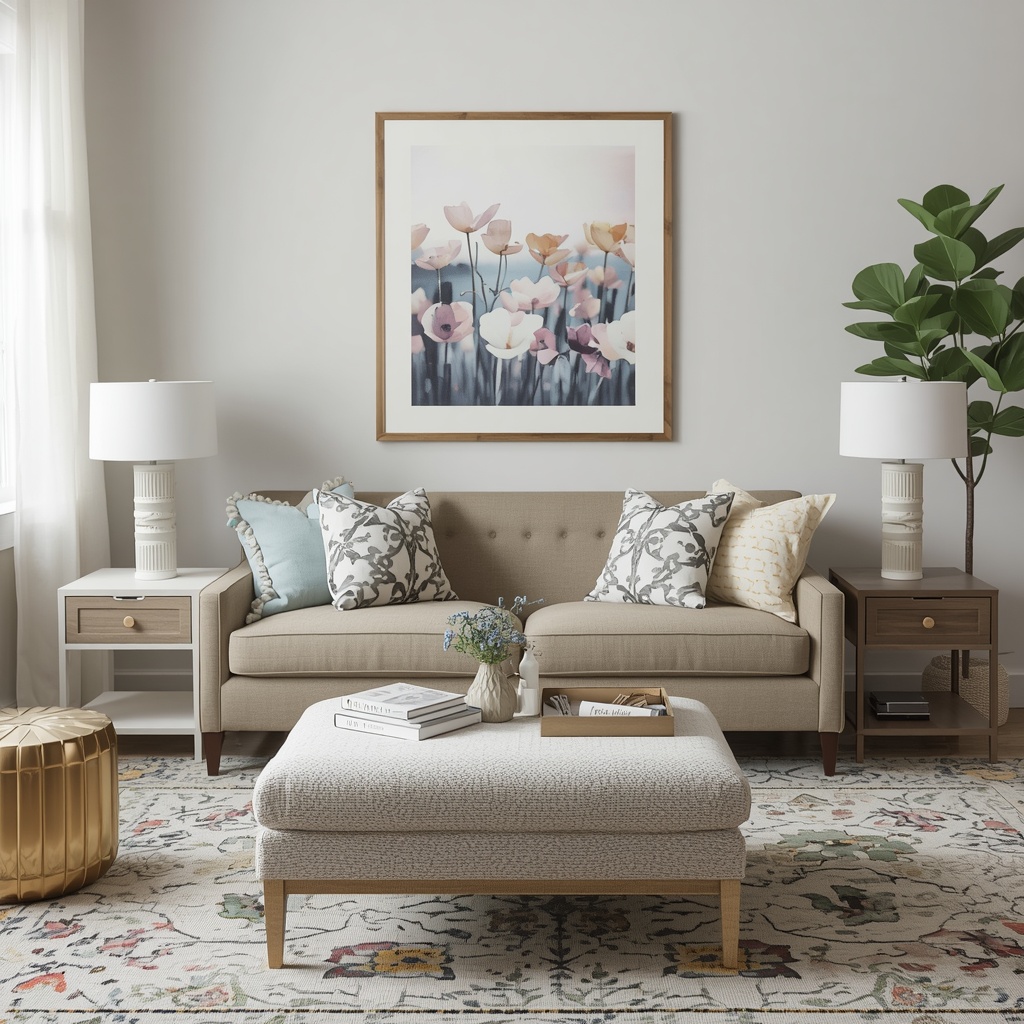
You don’t need a big budget either. Retailers like IKEA and Wayfair offer a huge range of affordable compact furniture and modular systems. For higher-end, longer-lasting pieces, look at West Elm and similar design-forward brands. For inspiration and real-home tours, browse Apartment Therapy and The Spruce.
Budget hacks I recommend to clients:
- Buy secondhand solid-wood pieces and refinish them.
- Invest in the items you use daily, like the sofa or mattress, and save on accents.
- Shop end-of-season sales for large furniture.
- Add DIY hacks like casters, legs, or peel-and-stick finishes to basic pieces.
How to Zone a Studio Apartment Layout
Even in one room, you can create distinct areas without walls. Zoning tells your brain what each part of the room is for, which keeps a studio from feeling like one big jumble. Area rugs, lighting, and furniture placement are your main tools.
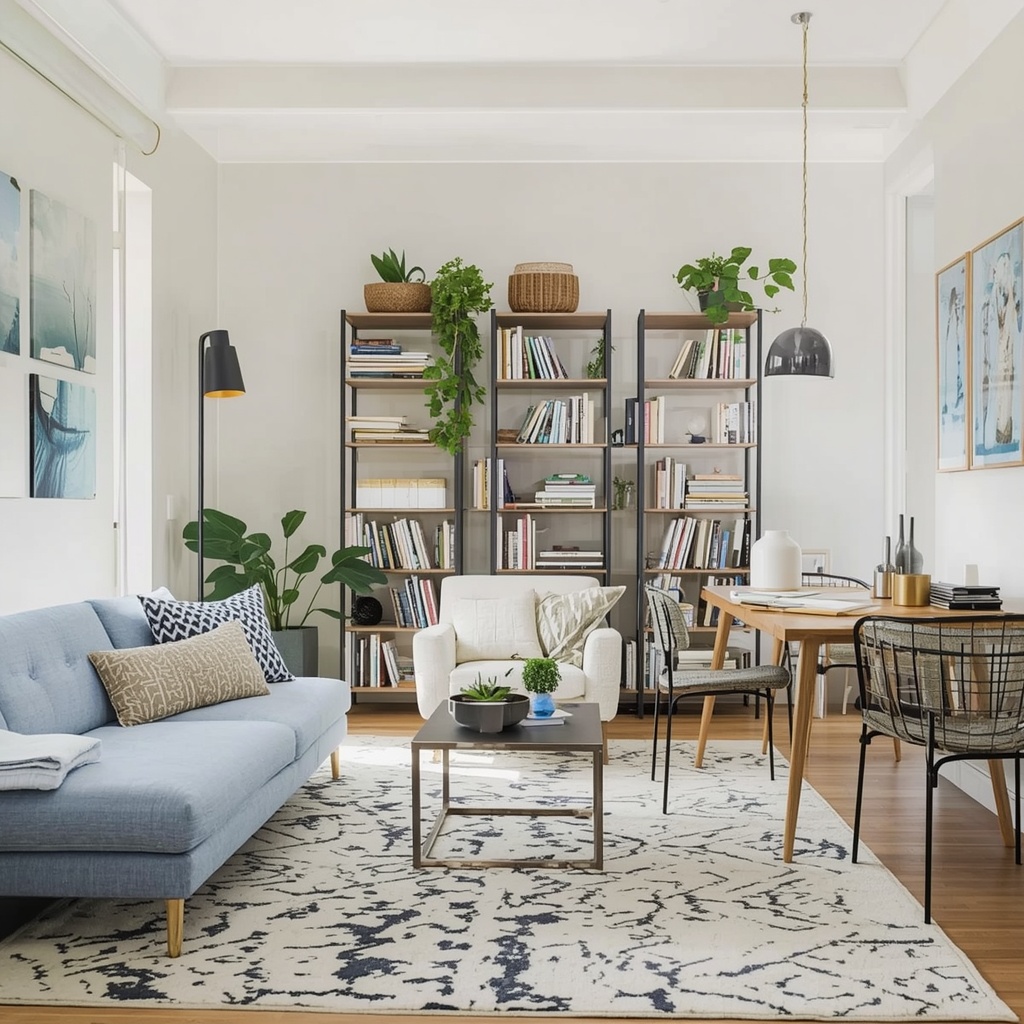
Use a low bookshelf or open shelving unit as a room divider between sleeping and living zones. It defines the space while letting light pass through. Two matching lamps or a pendant over the table can also signal a “dining room” without any construction.
Simple zoning ideas:
- A rug under the sofa to define the living area
- A slim console behind the couch as an entry or desk zone
- A curtain track on the ceiling to close off the bed
- A folding screen that doubles as art
Layer your lighting in three levels: ambient (overhead), task (desk and reading lamps), and accent (sconces and strip lights). A large mirror across from a window can nearly double the natural light in a room. Even a leaning floor mirror adds depth without any drilling.
Pro Tip: Hang curtains as close to the ceiling as possible and let them fall to the floor. This one trick can make windows and the entire room look taller.
Common Small-Space Furniture Mistakes to Avoid
I see the same errors again and again in small apartments, and most are easy to fix. The biggest one is buying oversized furniture because it looked cozy in a showroom. A showroom has 20-foot ceilings and 2,000 square feet. Your apartment doesn’t.

Another common mistake is pushing everything against the walls. It sounds logical, but floating a small sofa a few inches off the wall can actually make the room feel bigger and more intentional. Avoid these traps:
- Buying furniture without a floor plan. Tape the dimensions on the floor first.
- Ignoring scale. One or two well-sized pieces beat five tiny ones.
- Skipping quality on mechanisms. Cheap hinges and folding frames fail fast.
- Forgetting about clearance. Doors, drawers, and fold-downs need room to open.
- Over-decorating. Leave some empty surfaces so the space can breathe.
Frequently Asked Questions
What is the best multi-purpose furniture for a studio apartment?
A Murphy bed or quality sleeper sofa gives you the biggest space savings, because the bed is the largest piece in any studio. Pair it with a lift-top coffee table and a drop-leaf dining table for a fully flexible layout.
How do I make a small apartment feel bigger?
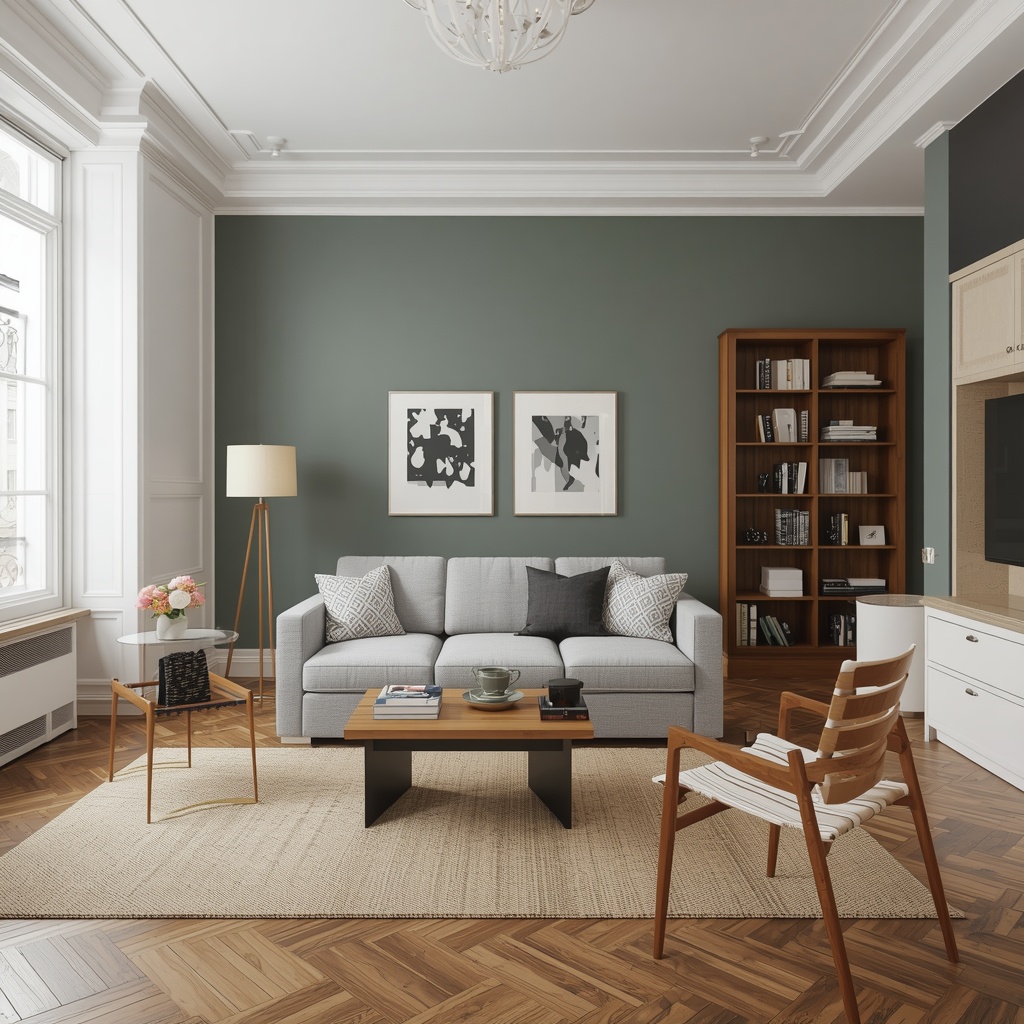
Choose furniture with visible legs, use light colors, add mirrors, and keep floors and surfaces as clear as possible. Vertical storage frees floor space and draws the eye upward.
Is multi-functional furniture worth the money?
Usually, yes. One well-made convertible piece often replaces two or three single-purpose ones, which saves money and space over time. Invest most in pieces you use daily.
Can I use Murphy beds in a rental?
Freestanding wall bed units exist, but many need anchoring to studs. Check your lease and talk to your landlord before installing anything permanent.
Final Thoughts: Design Your Small Space to Work Harder
A tiny apartment is a design challenge, not a limitation. With the right multi-purpose furniture, your home can host guests, support your work, store your belongings, and still feel like a calm retreat. Start with the biggest space-saver for your layout, whether that’s a Murphy bed, a sleeper sofa, or a storage bed, and build outward from there.

Choose pieces that earn their footprint, measure everything twice, and edit ruthlessly. When every item is useful, beautiful, and flexible, small living stops feeling small. Your apartment will work harder for you, and you’ll enjoy every inch of it.