
Meta title: How to Decorate a Small Entryway Without Crowding It (12 Designer Tips)
Meta description: Learn how to decorate a small entryway with smart storage, mirrors, slim furniture, and light colors. Designer-approved ideas to make your foyer feel open, not cramped.
Primary keyword: small entryway ideas
Semantic keywords: small foyer decor, narrow entryway, entryway storage, console table, entryway bench, mudroom alternatives, apartment entryway, first impression, home organization, wall hooks, entry rug
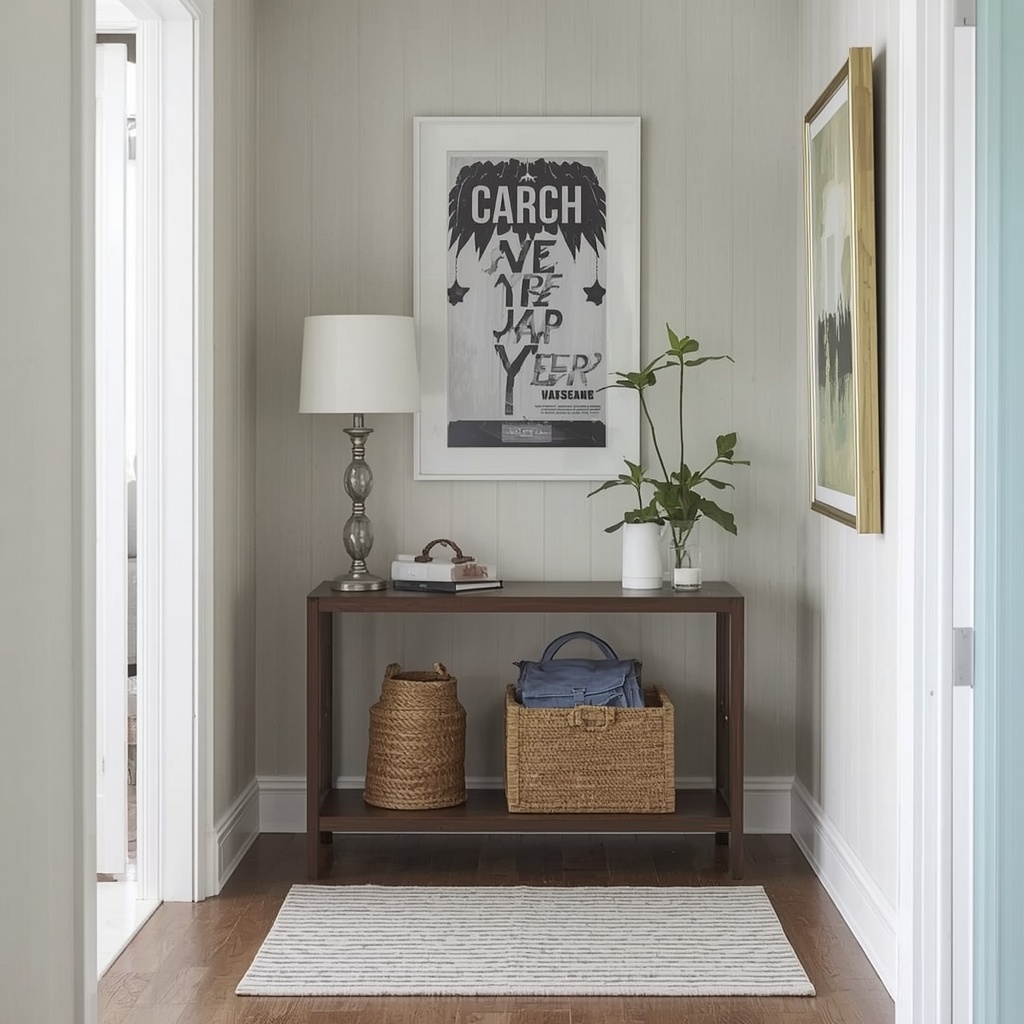
Your entryway is the first thing guests see and the last thing you touch before leaving. When it’s tiny, though, it often becomes a dumping ground for shoes, keys, mail, and that one umbrella nobody claims. The result is a space that feels cramped before anyone has even taken off their coat.
As an interior designer who works with U.S. homeowners and renters, I’ve styled entryways of every size, from 3-foot apartment landings to narrow row-house hallways. The secret isn’t more stuff or fewer things. It’s a smarter plan. This guide walks you through exactly how to decorate a small entryway without crowding it, so it looks polished and works hard every day.
Why Small Entryways Feel Crowded (and How to Fix It)
Most small foyers feel cramped for three reasons: too much furniture, too little storage, and too much visual noise. When a bulky bench, a tall shoe cabinet, and a gallery wall all compete in a 4-foot space, your eye has nowhere to rest, and the room feels smaller than it is.
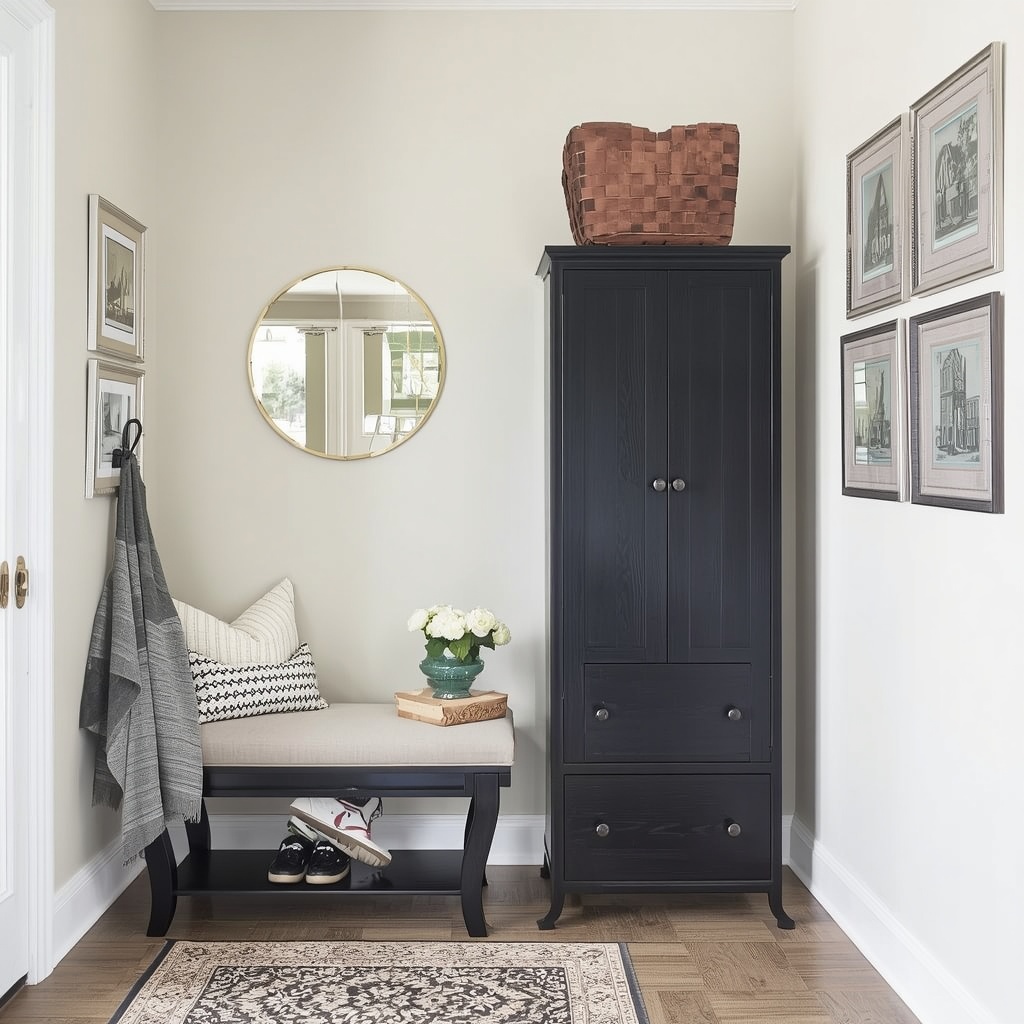
The fix is to edit first and decorate second. Every item in a small entryway should either store something, reflect light, or add real beauty. If it doesn’t do at least one of those, it’s clutter in disguise. Once you commit to that rule, every design decision gets easier.
“In a small space, every object is a vote for how the room should feel. Vote for calm.”
Start With a Plan: Measure, Map, and Define Your Needs
Before you buy anything, grab a tape measure. Note the width, depth, and ceiling height, plus the swing of your front door and any nearby closet or stair. A door that opens into your furniture is the most common small-entryway mistake I see.
Next, decide what your entryway actually needs to do. A family of five needs different things than a single professional in a one-bedroom apartment. Use the table below to identify your must-haves.
| Entryway Need | Who It Suits | Best Solution |
|---|---|---|
| Shoe storage | Families, wet climates | Slim shoe cabinet or under-bench cubbies |
| Coat storage | Cold-weather states | Wall hooks or a wall-mounted rack |
| Key and mail drop | Everyone | Wall shelf, tray, or floating console |
| Place to sit | Older adults, kids | Narrow bench or wall-mounted seat |
| Style statement | Renters, hosts | Mirror, art, and a statement light |
Pro Tip: Tape the footprint of any furniture you’re considering directly on your floor with painter’s tape. Live with it for 48 hours. If you bump into it, it’s too big.
Choose a Light, Cohesive Color Palette
Color is the fastest way to change how large a small foyer feels. Light, warm neutrals bounce more light around the room, which makes walls seem to recede. Think soft whites, creamy greiges, pale sage, or muted blush.
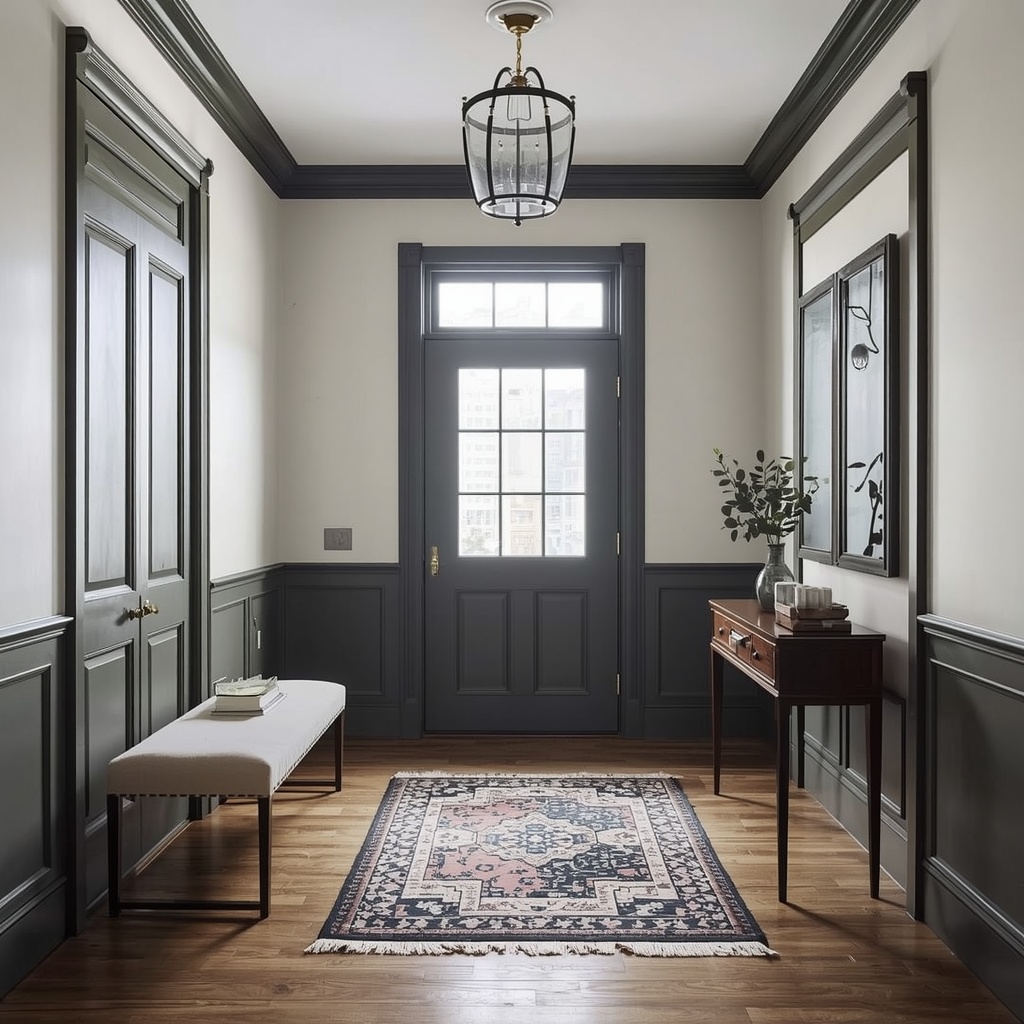
That said, “small” doesn’t have to mean “beige.” A deep, moody color can also work beautifully in an entryway because you pass through it quickly. If you go dark, commit fully: paint the trim and ceiling the same shade so the room reads as one enveloping space rather than a chopped-up box.
Here are palettes I recommend most often:
| Look | Wall Color Direction | Accent Ideas | Best For |
|---|---|---|---|
| Airy and bright | Warm white, soft cream | Brass, light oak | Windowless entries |
| Modern neutral | Greige, pale taupe | Black metal, linen | Contemporary homes |
| Fresh and natural | Soft sage, muted green | Rattan, terracotta | Cottage or boho styles |
| Bold and dramatic | Deep navy, forest green | Gold, walnut | Homes with good lighting |
Pro Tip: Use the same color family from your entryway into the adjoining room. A consistent palette creates visual flow, and flow makes small spaces feel connected and larger.
Pick Slim, Multi-Functional Furniture
Furniture is where most small entryways go wrong. The rule I give every client is simple: shallow beats tall, and floating beats floor-bound. In a narrow entryway, depth is your enemy. A console table that’s 10 to 12 inches deep gives you a landing spot without blocking traffic.
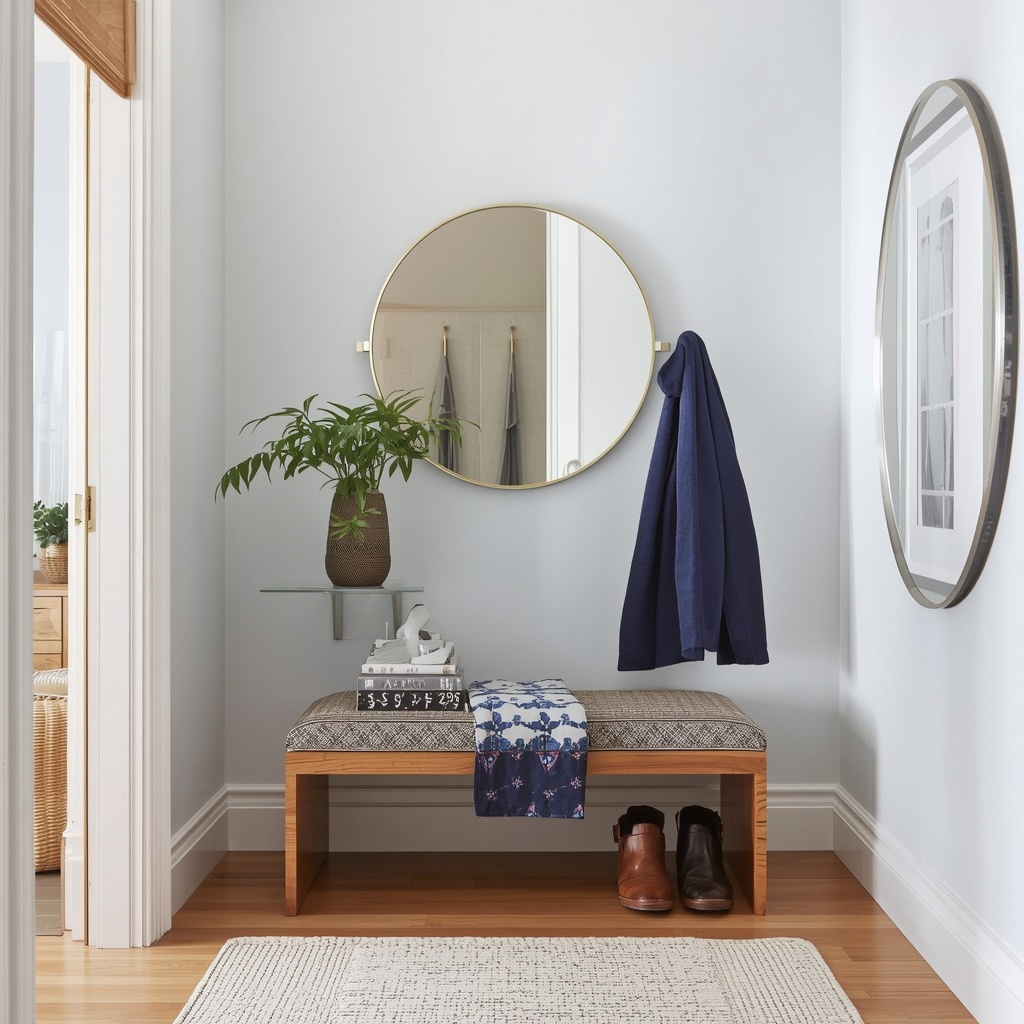
Look for pieces that double up on function. A bench with hidden storage, a console with a shoe shelf underneath, or a wall-mounted drop-zone with a fold-down surface will do the work of two or three bulkier pieces. Keep legs visible when possible, since seeing the floor beneath furniture makes a room feel airier.
| Furniture Piece | Ideal Depth | Why It Works | Watch Out For |
|---|---|---|---|
| Slim console table | 8–12 inches | Holds keys, mail, a lamp | Avoid heavy, boxy bases |
| Narrow bench | 12–15 inches | Seating plus shoe storage | Skip cushions that add bulk |
| Wall-mounted shelf | 6–10 inches | Zero floor footprint | Must be anchored properly |
| Slim shoe cabinet | 7–9 inches | Hides clutter, tilts open | Choose light finishes |
| Ladder or leaning shelf | 10–14 inches | Vertical storage | Can feel busy if overstyled |
If you love the idea of seating but truly lack the room, skip the bench and install a wall-mounted fold-down seat or a simple stool that tucks under your console. You get a place to lace up sneakers without permanently losing floor space.
Go Vertical: Use Your Walls Before Your Floor
When floor space is limited, the wall becomes your most valuable real estate. Vertical storage keeps essentials within reach while leaving your walking path clear, which is exactly what a narrow entryway needs.
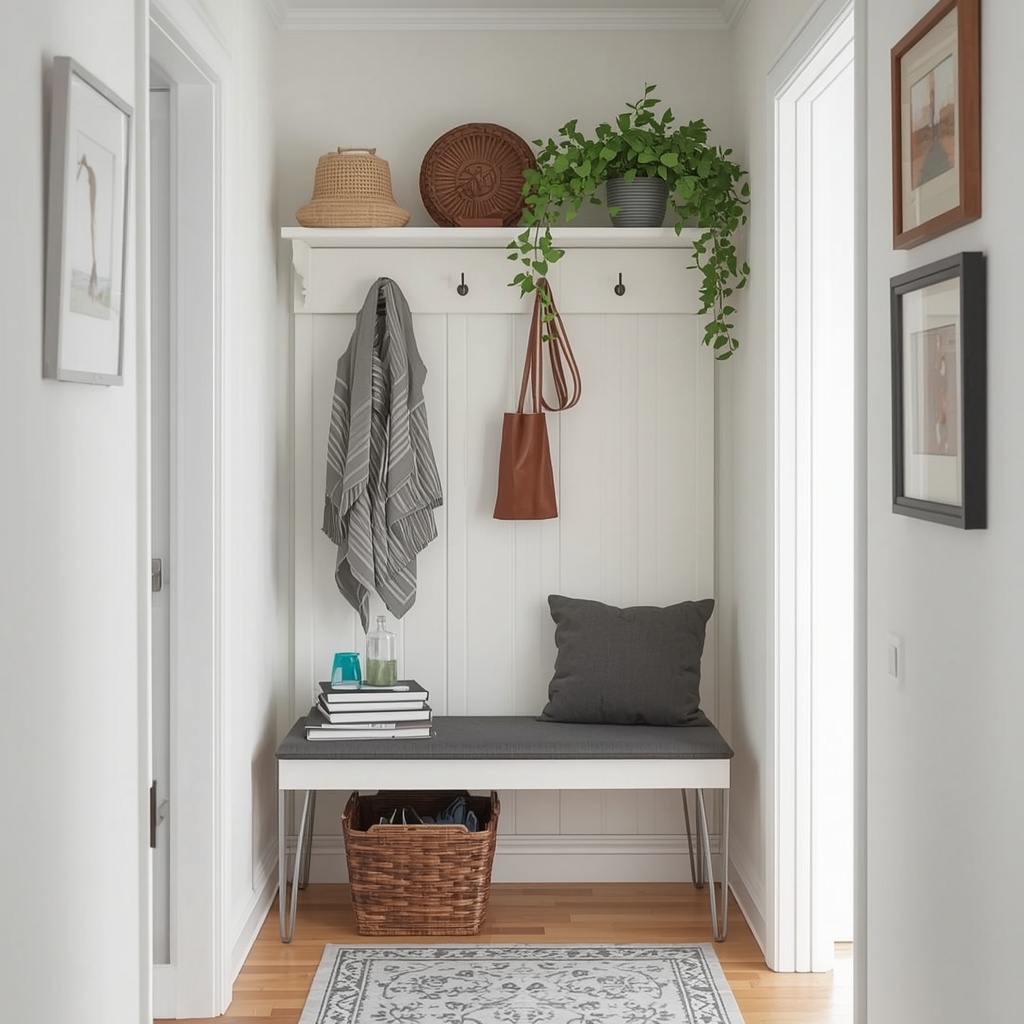
Here are my favorite wall-based solutions:
- Wall hooks: Install a row at adult height and a lower row for kids. Choose 4 to 6 sturdy hooks rather than one overloaded rack.
- Floating shelves: A single shelf above your hooks holds hats, baskets, or a small plant.
- Pegboards or rail systems: These let you reconfigure as your needs change.
- Over-the-door organizers: Ideal for renters, especially for scarves, dog leashes, and sunglasses.
- Wall-mounted key and mail organizer: Keeps small items off your console entirely.
Pro Tip: Hang hooks slightly higher than feels natural, roughly 66 to 72 inches for adults. Coats then hang clear of the floor and your shoes stay visible, which reduces the “pile-up” look.
Use Mirrors to Multiply Light and Space
A mirror is the single most effective small foyer decor item. It reflects light, creates the illusion of depth, and gives you a final check before you head out the door. Place it opposite a window or a light source so it captures and bounces brightness around the room.
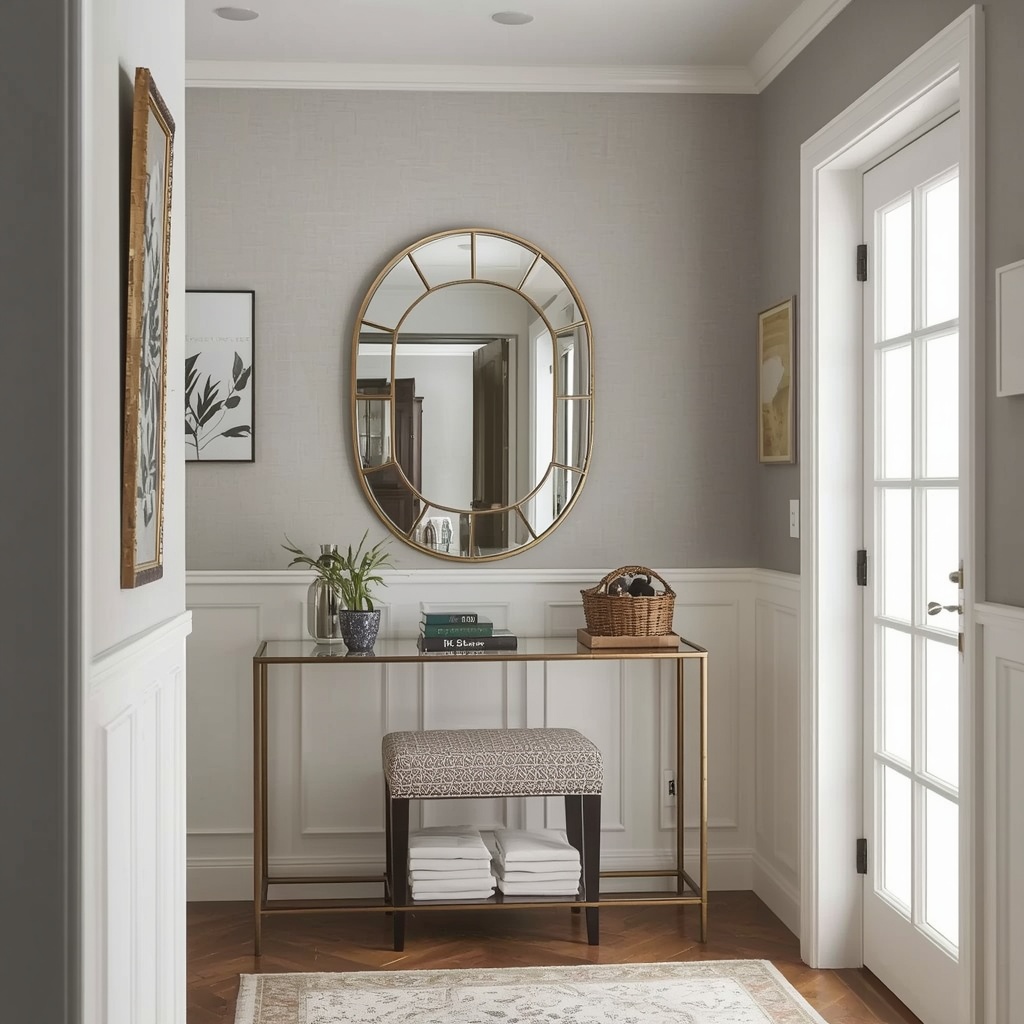
Shape matters, too. A large round mirror softens a boxy entryway, while a tall, leaning floor mirror adds height. If your walls are narrow, choose a vertical rectangle. If they’re wider, a horizontal or oversized round piece works nicely. Avoid tiny mirrors, which often read as an afterthought.
“A great mirror doesn’t just show you your reflection. It gives the room a second window.”
If you’re shopping for inspiration, sites like Houzz and Apartment Therapy offer excellent real-world examples of small entryway mirror placements.
Layer Lighting for a Warm Welcome
Small entryways are often dark, especially in apartments and interior hallways. A single harsh ceiling fixture won’t cut it. Layering light makes the space feel intentional and inviting, even if it’s only a few square feet.
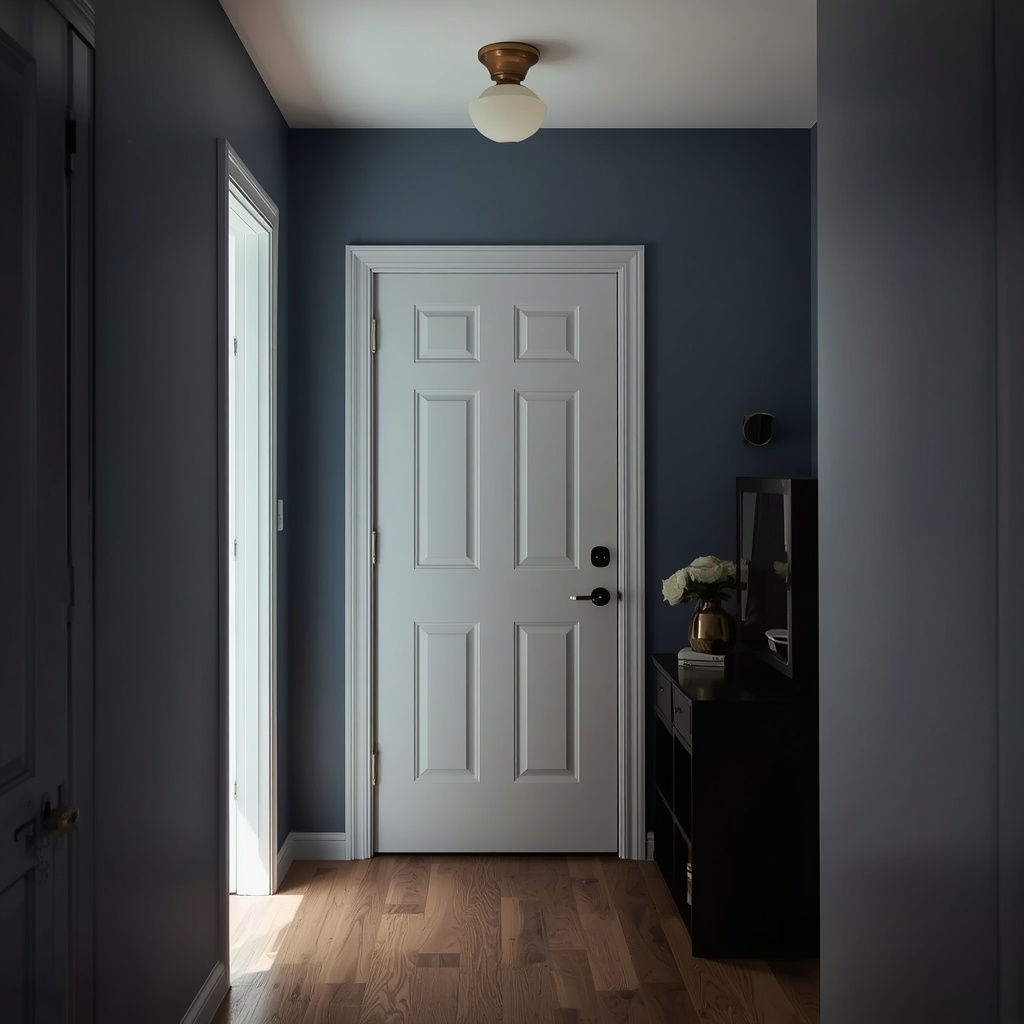
Start with a flush-mount or semi-flush pendant for overall illumination. Add a slim table lamp or plug-in wall sconce for warmth. In a very tight foyer, sconces are ideal because they free up your console surface entirely. Choose bulbs in the 2700K to 3000K range for a soft, welcoming glow.
For renters, plug-in sconces with cord covers or rechargeable, battery-operated fixtures are a fantastic no-drill option. Smart bulbs are another easy upgrade, letting you dim the lights in the evening.
Smart Storage That Hides the Clutter
Even the prettiest entryway falls apart if storage isn’t built in. The goal is a system where everything has a home, and where most of those homes are closed off or neatly contained.
Try these entryway storage ideas:
- Baskets and lidded bins: Woven baskets under a bench or console hide gloves, hats, and reusable bags.
- A slim, tilt-out shoe cabinet: It stores 12 or more pairs in under 8 inches of depth.
- A catch-all tray: One designated spot for keys and wallets prevents scattered clutter.
- Seasonal rotation: Keep only the current season’s coats and shoes in the entry. Store the rest elsewhere.
- A “one in, one out” rule: For every new pair of shoes, one leaves the entryway.
Storage bins from retailers like The Container Store and IKEA come in countless sizes, making it easy to find a fit for awkward nooks.
Pro Tip: Limit visible shoes to two or three pairs per person. Everything else lives in a closed cabinet or another closet. A row of neatly aligned shoes looks intentional. A heap does not.
Choose the Right Rug and Flooring
The right entry rug grounds the space and protects your floors, but the wrong one can make things feel choppy. In a small entryway, one rug is the limit. Choose a low-pile, flat-weave option that lies flat and doesn’t catch on the door.
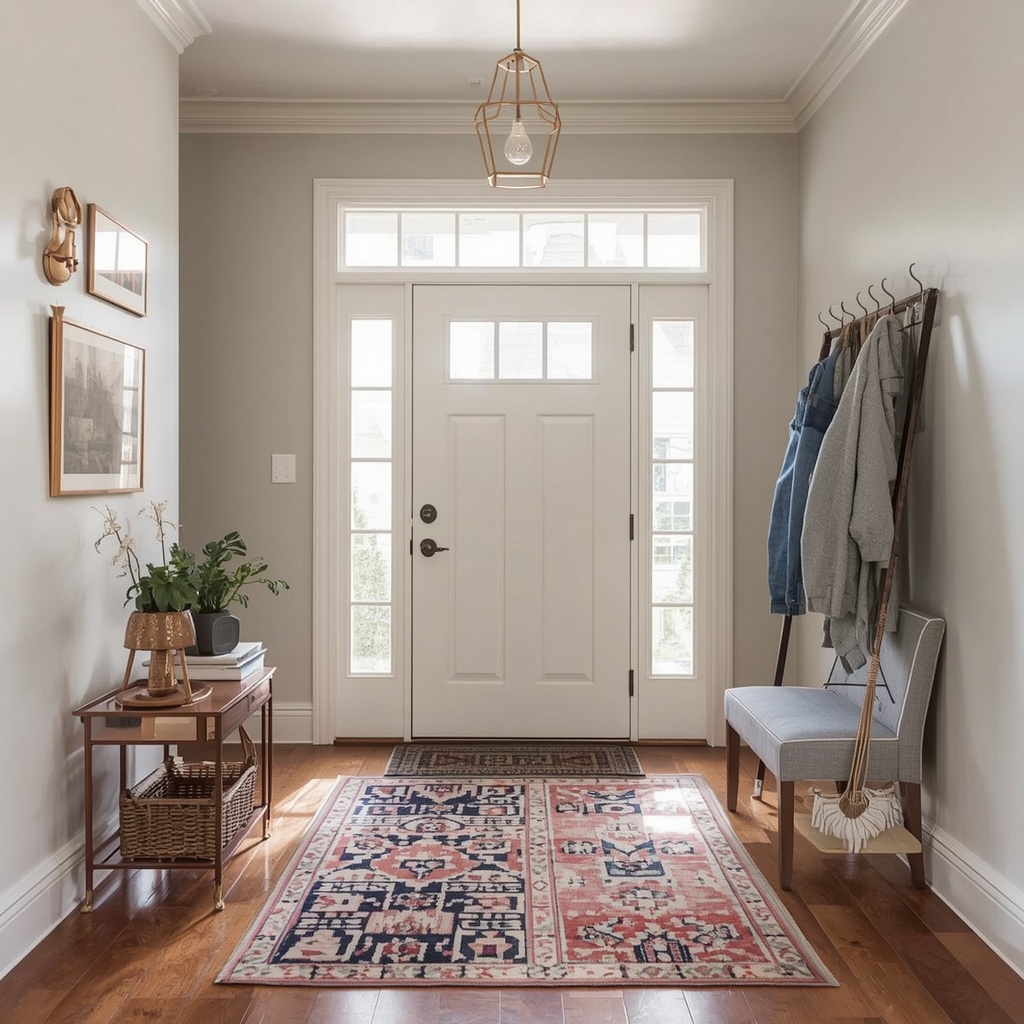
For a narrow entryway, a runner works beautifully because it emphasizes length and guides the eye forward. In a squarer foyer, a small rectangular or round rug anchors the space. Look for washable or outdoor-grade materials such as polypropylene or cotton blends, since entry rugs take a beating.
A few quick rules for rug sizing:
- Leave 2 to 4 inches of bare floor around the rug’s edges.
- Make sure the door can open fully without dragging.
- Pick patterns with a small-to-medium scale. Oversized patterns overwhelm a compact space.
- Use a non-slip pad for safety, especially in homes with kids or older adults.
If your entryway has tile or hardwood, consider a simple pattern or a light, uniform finish. Busy floors can visually shrink a room.
Style It With Restraint: Less, but Better
Once your function is sorted, it’s time to decorate. The golden rule of small foyer decor is restraint. Three well-chosen items always look better than eight competing ones. Think of it as a mini vignette rather than a display case.
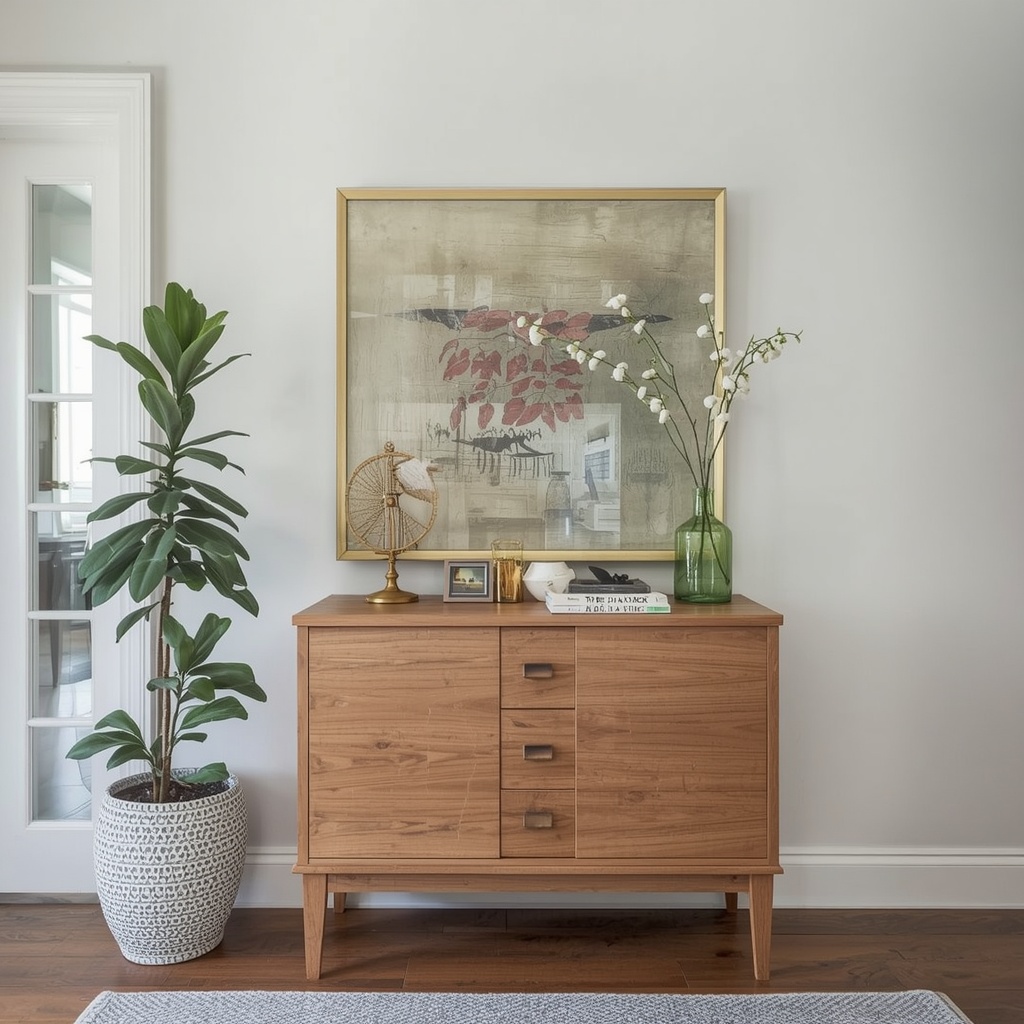
A simple formula I use is the rule of three layers:
- Something tall: A leaning mirror, a slim lamp, or a branch in a vase.
- Something medium: Framed art, a small stack of books, or a basket.
- Something small or organic: A candle, a bowl for keys, or a tiny plant.
Choose art that draws the eye upward. One large piece often feels calmer than a cluster of tiny frames. If you want a gallery wall, keep it to three to five frames in a consistent color or frame style.
Greenery is a welcome finishing touch. Low-light plants such as pothos, ZZ plants, and snake plants thrive in dim foyers. If your entry gets no natural light at all, a high-quality faux stem in a ceramic vase keeps things fresh without the maintenance.
Renter-Friendly Entryway Ideas
Living in a rental doesn’t mean giving up on style. Many of the best small entryway ideas require no drilling, no painting, and no permanent changes. Here’s what I recommend to apartment clients:
- Use removable adhesive hooks rated for the weight you need.
- Add peel-and-stick wallpaper to a single accent wall.
- Lean an oversized mirror against the wall instead of hanging it.
- Choose a freestanding coat rack or ladder shelf.
- Swap in plug-in sconces or a rechargeable lamp.
- Use tension rods inside a nearby closet for extra hanging space.
Pro Tip: Before removing any adhesive product when you move out, warm it gently with a hair dryer. It softens the adhesive and protects your paint.
Small Entryway Layouts by Size
Every entryway is different, so here are three layouts I use repeatedly, adapted to the dimensions of your space.
| Entry Size | Recommended Layout | Key Pieces |
|---|---|---|
| Tiny (under 15 sq ft) | Wall-only solution | 4–5 hooks, one shelf, a round mirror, a small rug |
| Narrow hallway (3–4 ft wide) | Single-wall setup | Slim console, wall sconces, runner, mirror above |
| Compact foyer (20–35 sq ft) | Zone-based layout | Narrow bench, hooks above, shoe cabinet, layered lighting |
For a tiny entry, resist the urge to squeeze in furniture. Wall hooks, a small shelf, and a mirror are often all you need. For a compact foyer, think in zones: a “drop zone” for keys and mail, a “hang zone” for coats, and a “sit zone” for shoes.
Common Small Entryway Mistakes to Avoid
Even seasoned homeowners make these missteps. Sidestep them, and your entryway will feel dramatically more spacious.
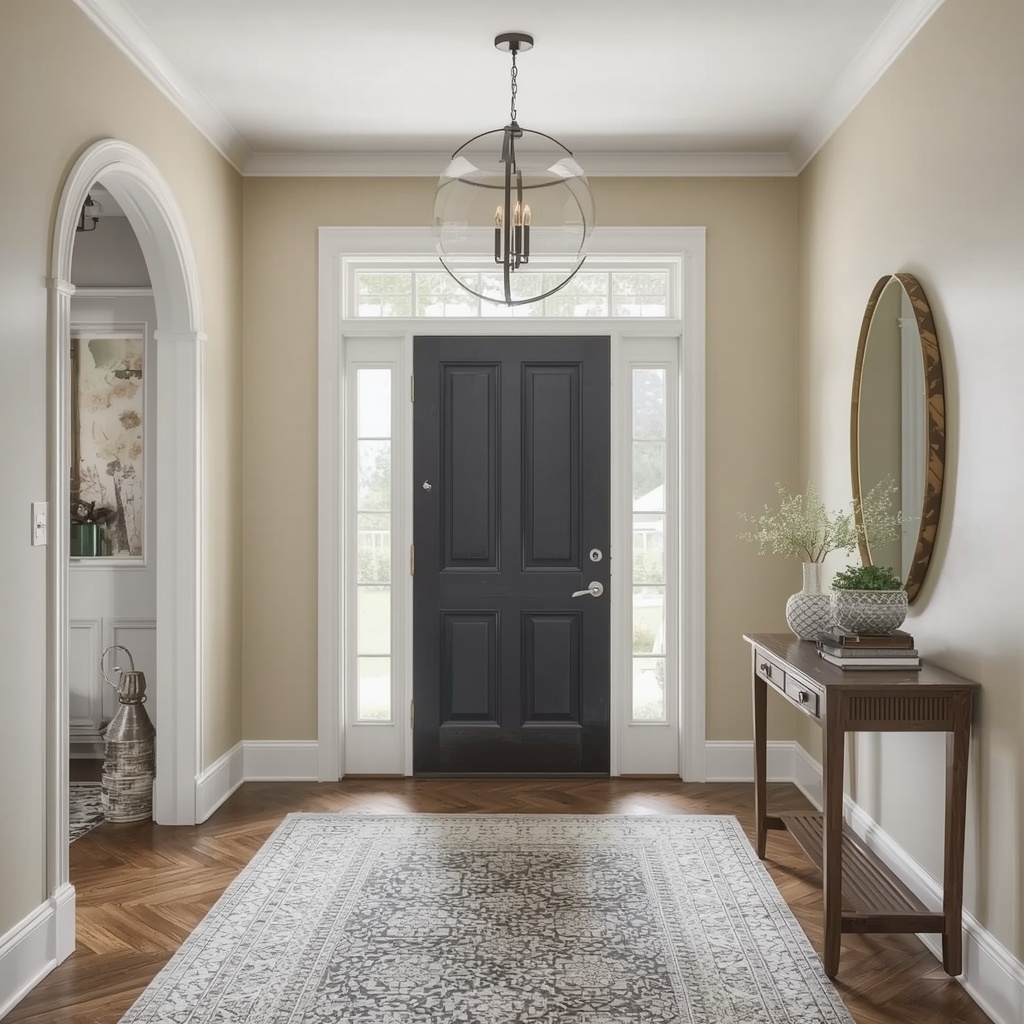
- Buying furniture that’s too deep. Measure twice, buy once.
- Ignoring door swing. Doors need clear arcs to open smoothly.
- Overstyling surfaces. Leave breathing room on your console.
- Skipping lighting. A dark entry always feels smaller.
- Forgetting daily habits. If your design doesn’t match your routine, clutter returns.
- Using too many colors and patterns. Stick to two or three in a tight space.
A Sample Budget for a Small Entryway Refresh
You don’t need to spend thousands to get a big transformation. Here’s a realistic look at what a small entryway makeover can cost across three budget levels.
| Item | Budget-Friendly | Mid-Range | Splurge |
|---|---|---|---|
| Mirror | $40–$80 | $120–$250 | $300+ |
| Console or shelf | $50–$100 | $150–$350 | $500+ |
| Hooks and rack | $15–$30 | $40–$90 | $120+ |
| Rug or runner | $30–$60 | $80–$180 | $250+ |
| Lighting | $25–$50 | $70–$150 | $200+ |
| Approximate total | $160–$320 | $460–$1,020 | $1,370+ |
Prices vary by retailer and region, but even the budget column delivers a polished, functional result if you follow the principles above.
Frequently Asked Questions
How do I make a small entryway look bigger?
Use light paint colors, a large mirror, layered lighting, and furniture with visible legs. Keep the floor as clear as possible.
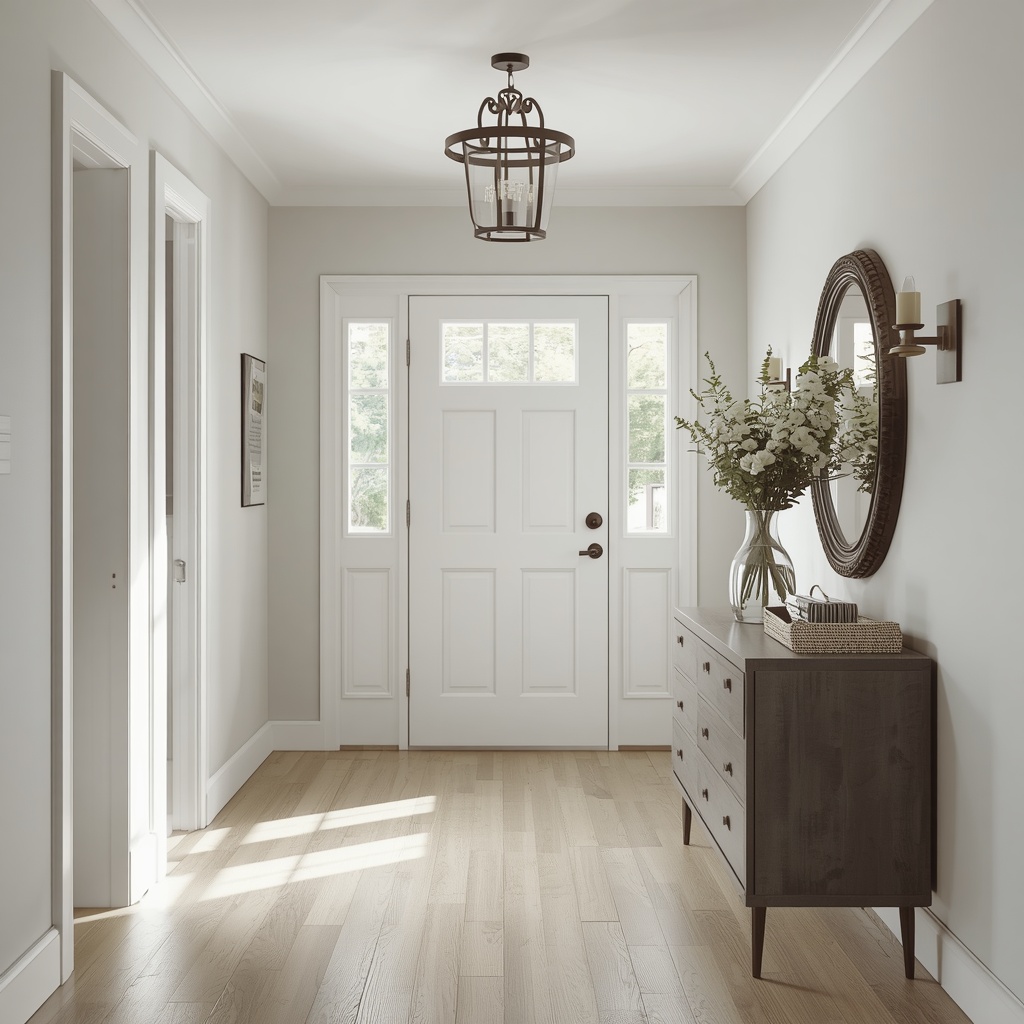
What furniture works best in a narrow entryway?
A console table 8 to 12 inches deep, a wall-mounted shelf, or a slim bench. Avoid anything that reduces the walkway below 30 to 36 inches.
Can I decorate an entryway without a closet?
Absolutely. Wall hooks, a freestanding coat rack, and a shoe cabinet handle storage without a built-in closet.
Should I put a bench in a small entryway?
Only if you have at least 3 feet of clear width after the bench is in place. Otherwise, choose a wall-mounted seat or a tuck-away stool.
Final Thoughts: Make Your Entryway Work Beautifully
A small entryway isn’t a design problem. It’s a design opportunity. When you edit ruthlessly, go vertical, and choose pieces that pull double duty, even a modest foyer can feel welcoming, organized, and full of personality.
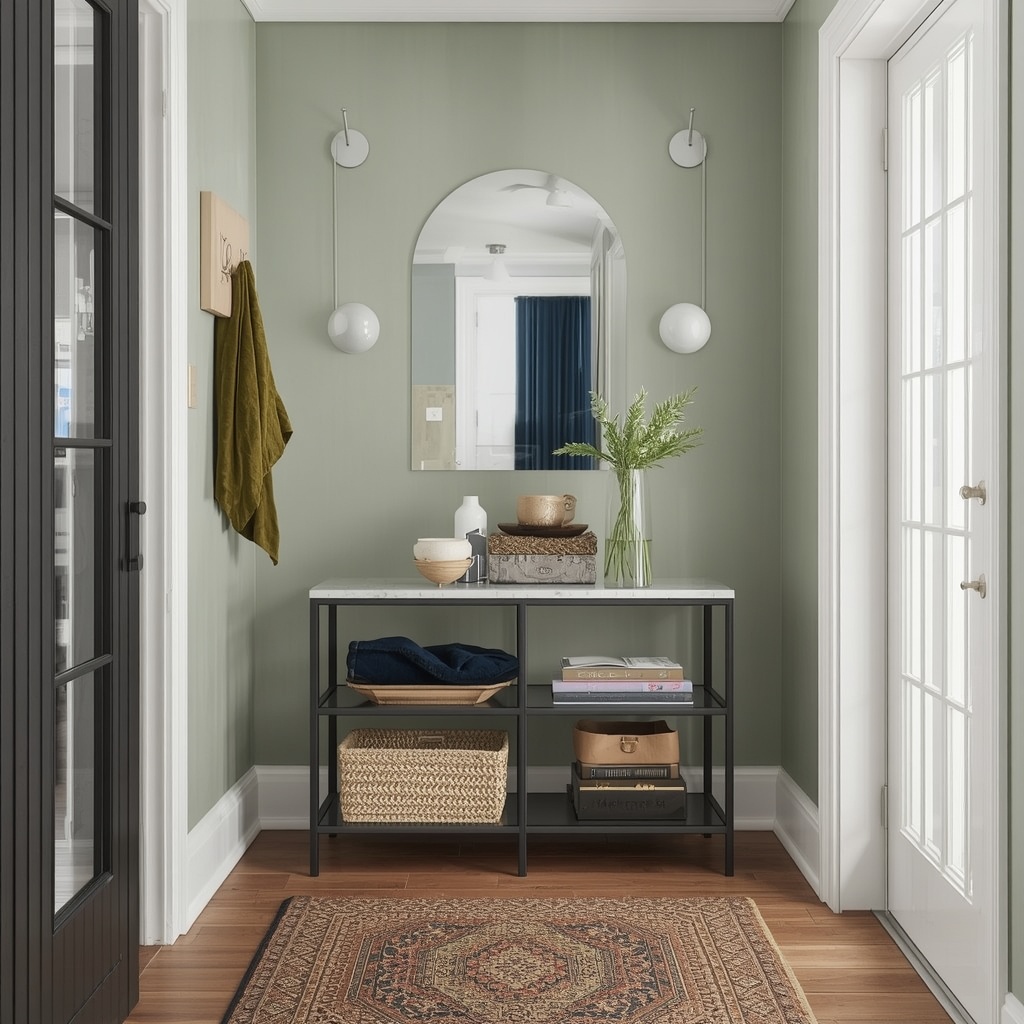
Start with one change this weekend: install a row of hooks, hang a great mirror, or swap a bulky piece for something slimmer. Small moves add up quickly, and before long, the first thing you’ll feel when you walk through your front door is calm.