
Meta description: Discover 25+ vertical storage ideas to free up floor space, from wall-mounted shelves to over-the-door organizers. Designer-approved tips for small homes, apartments, and condos.
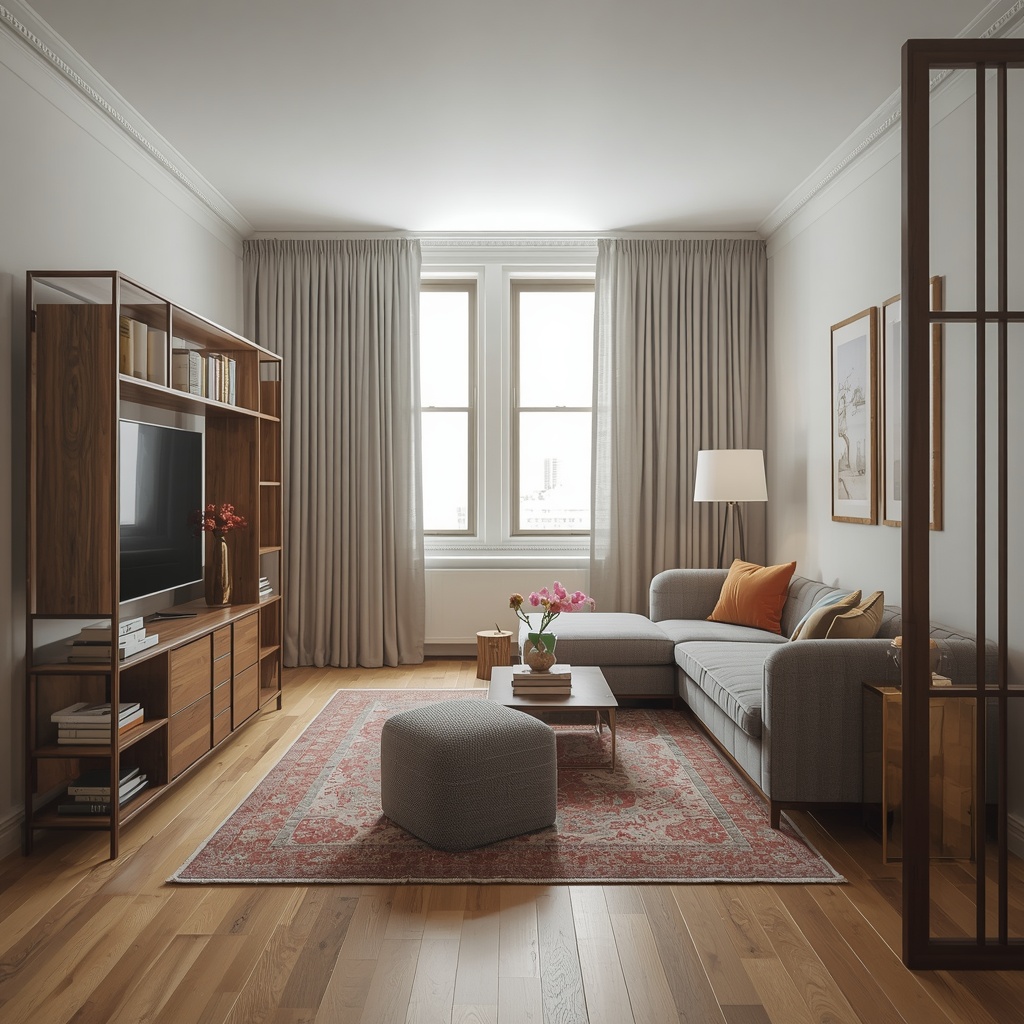
If your home feels like it’s shrinking, the problem probably isn’t square footage. It’s that you’re only using the bottom three feet of every room. Most American homes have eight-foot ceilings or higher, yet furniture, baskets, and clutter cluster at floor level and make even a decent living room feel cramped.
As a designer, the first thing I tell clients is to look up. Vertical storage turns dead wall space into functional, good-looking real estate. Below are the hacks I use most, room by room, with budget notes, mistakes to avoid, and styling tricks so your walls stay beautiful and not busy.
Why Vertical Storage Is the Smartest Move for Small Spaces
Floor space is the most valuable currency in a home. Every bookcase, bin, or dresser you park on the floor eats into walkways and breaks up sightlines. Vertical storage moves that bulk onto the walls. The floor stays visible, which makes rooms read as larger, calmer, and more open.
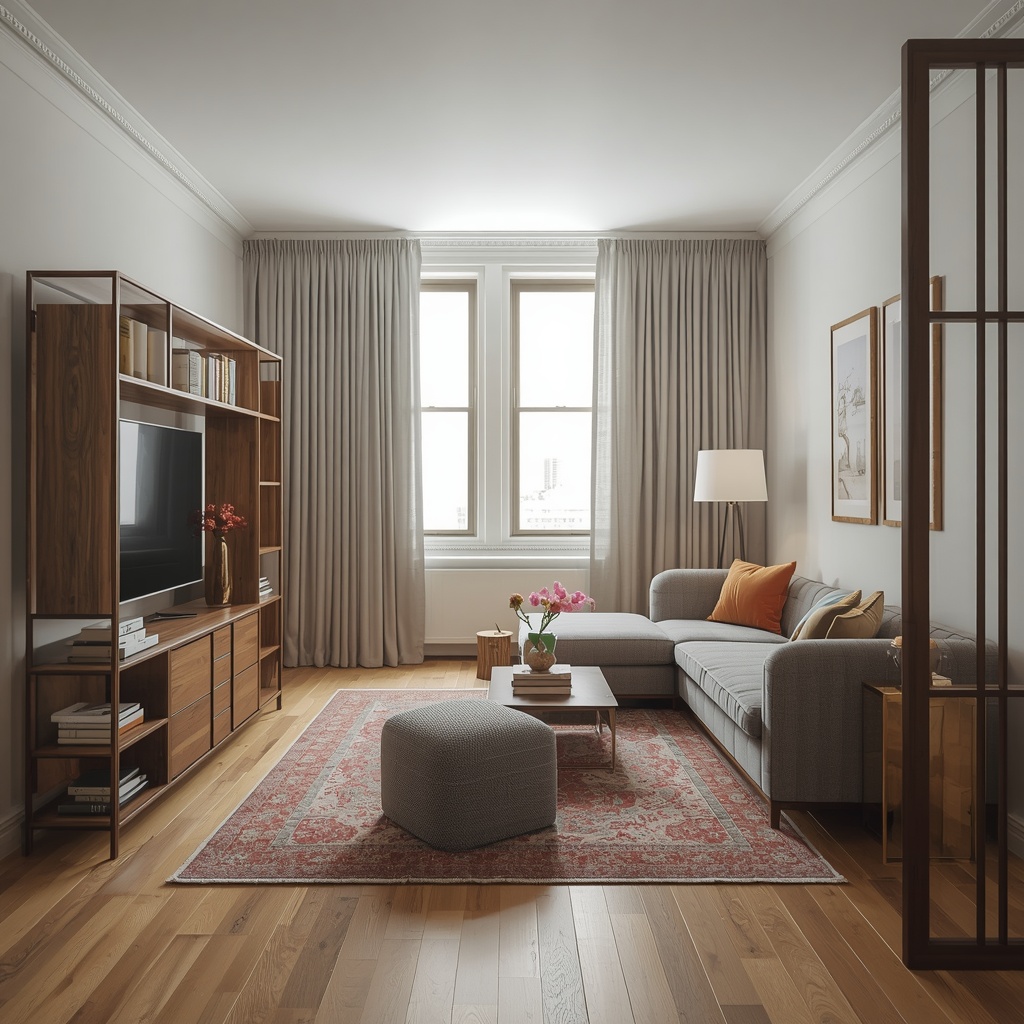
There’s a practical payoff too. Items stored at eye level are easier to find, easier to put back, and less likely to become the pile in the corner. Renters, condo owners, and families in older bungalows with tiny closets all benefit. A well-planned wall can hold what once took up an entire piece of furniture.
Designer’s rule of thumb: “If it doesn’t need to live on the floor, it shouldn’t.”
Start With a Quick Space Audit
Before you buy a single bracket, take ten minutes to see what your space can actually support. Skipping this step is the most common reason people end up with shelves that don’t fit or fixtures that crowd a doorway.
Grab a tape measure, a notepad, and your phone camera. Photograph each wall and note what’s currently sitting on the floor that could move up. This gives you a clear shopping list and keeps you from impulse-buying organizers you don’t need.
Your audit checklist:
- Measure wall height, width, and the clearance around doors, windows, and vents
- Locate wall studs with a stud finder (they matter for anything heavy)
- Note the wall type: drywall, plaster, brick, or tile
- List what needs storing: books, shoes, cookware, towels, décor, tools
- Check your lease if you rent, since some fixtures are off-limits
- Identify “dead zones” such as above doors, behind doors, corners, and the space over the toilet
Pro Tip: Use painter’s tape to outline planned shelves on the wall. Live with the outline for a day or two before drilling. If it bothers you, it’s easy to adjust.
Wall-Mounted Shelving: The Foundation of Vertical Storage
Wall shelves are the workhorse of vertical organization. They’re flexible, affordable, and suit every style from farmhouse to modern minimalist. The key is choosing the right shelf for the job and mounting it correctly so it can carry the load.
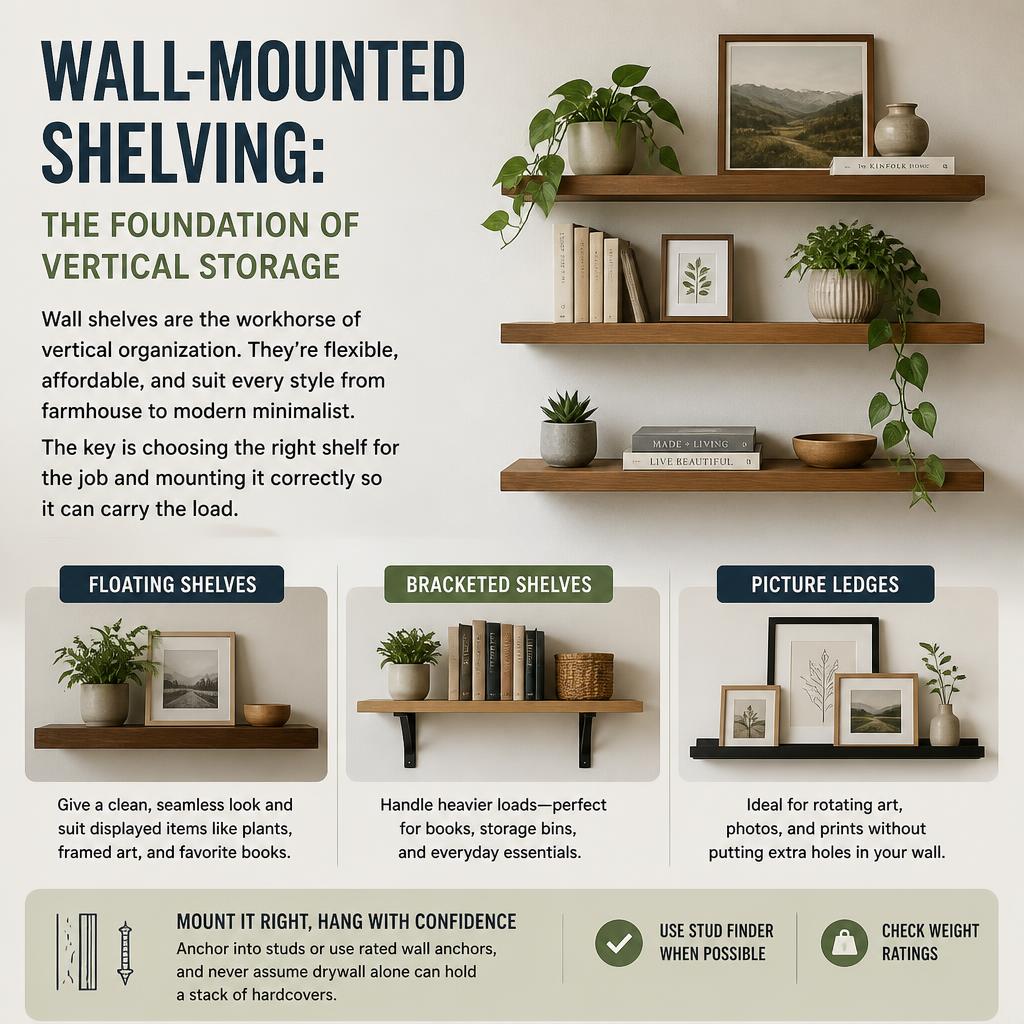
Floating shelves give a clean, seamless look and suit displayed items like plants, framed art, and favorite books. Bracketed shelves handle heavier loads, and picture ledges are ideal for rotating art. Whatever you choose, anchor into studs or use rated wall anchors, and never assume drywall alone can hold a stack of hardcovers.
| Shelf Type | Best For | Weight Capacity* | Style Vibe |
|---|---|---|---|
| Floating shelves | Décor, plants, light books | 15–50 lbs | Modern, minimal |
| Bracketed shelves | Books, kitchen items, heavy loads | 50–100+ lbs | Traditional, industrial |
| Picture ledges | Framed art, kids’ books | 5–15 lbs | Scandinavian, gallery |
| Corner shelves | Awkward corners, bathrooms | 10–30 lbs | Versatile |
| Track/rail systems | Adjustable, growing collections | 40–100 lbs | Contemporary |
*Capacity varies by brand, mounting method, and wall type. Always check manufacturer specs.
For a budget-friendly start, retailers like IKEA and The Container Store carry a wide range of wall shelving and track systems in several finishes.
Tall Bookcases and Étagères: Go Up, Not Out
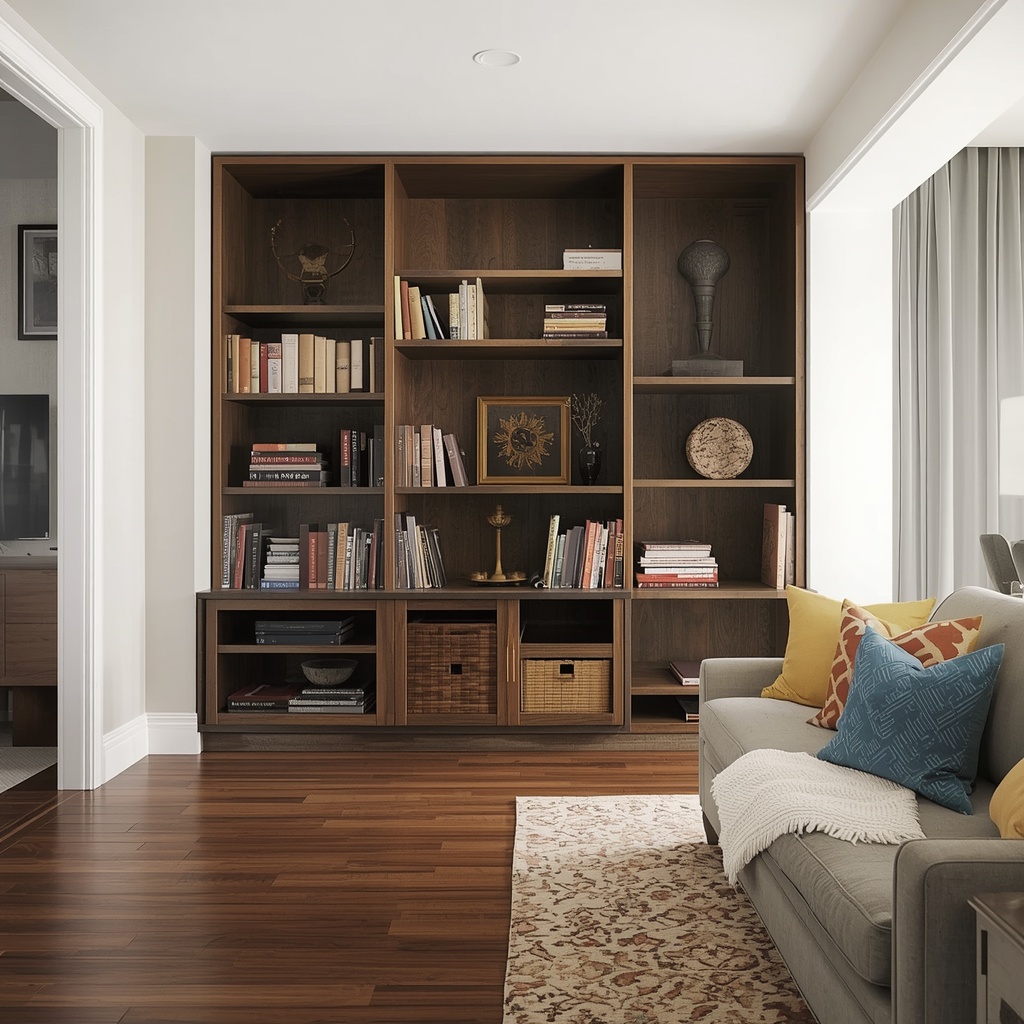
When you need serious capacity, a tall, narrow bookcase beats a wide, low one every time. A unit that’s 12 inches deep and 78 inches tall stores the same as a much wider piece, but its footprint is small enough to tuck beside a sofa or between windows.
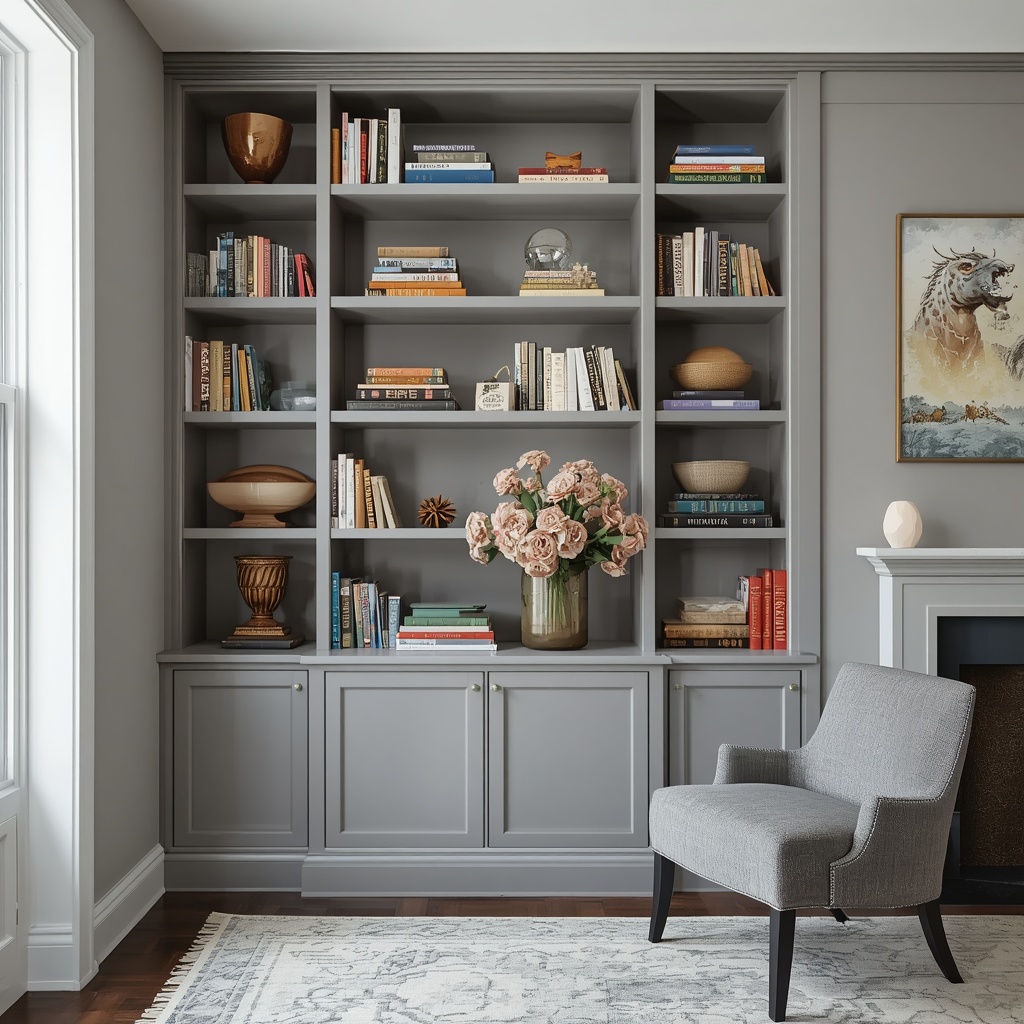
Look for open-back or ladder-style designs in tight rooms, since they feel lighter visually. Anchor every tall piece to the wall with anti-tip hardware, especially if you have kids or pets. Mix closed baskets on lower shelves with open display space above, so the clutter hides and the pretty things get the spotlight.
Ways to make tall shelving work harder:
- Use uniform baskets or bins on lower shelves to hide visual noise
- Reserve the middle “eye-level” band for the things you use daily
- Place lightweight or decorative items on the top tier
- Add a slim rolling ladder or step stool for high reach
- Leave about 20% of each shelf empty so it feels curated, not crammed
Over-the-Door and Behind-the-Door Storage
Doors are an underrated storage asset. Every interior door has a blank face that can hold shoes, cleaning supplies, wrapping paper, or accessories. Over-the-door organizers install in seconds with no drilling, making them perfect for renters and dorm-style living.
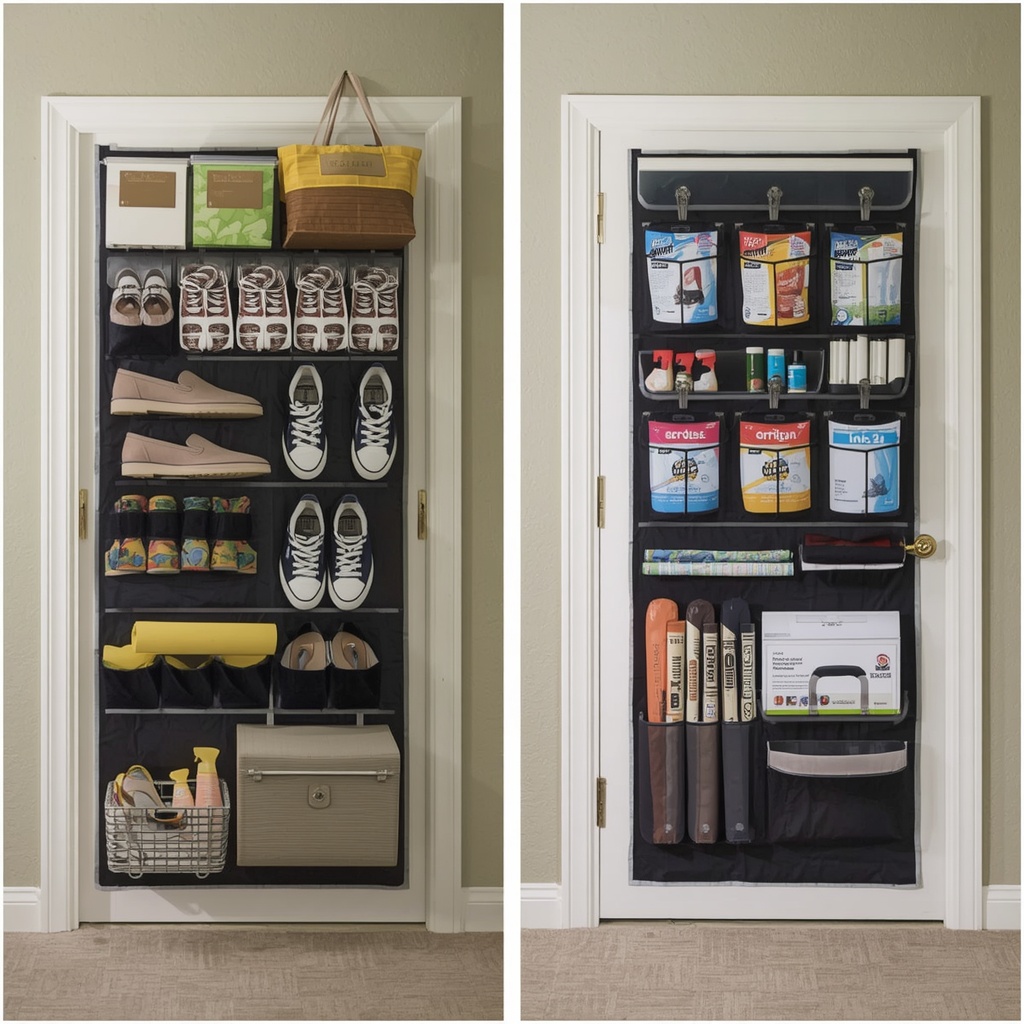
Choose sturdy metal or wood-framed options over flimsy fabric ones if you’re storing anything heavier than scarves. Measure your door thickness first, since many hooks fit only standard 1⅜-inch doors. Behind a bedroom or bathroom door, a slim rack can hold towels, robes, or a full bag collection without adding a single inch to the room.
Best uses by room:
- Bedroom: shoe pockets, jewelry organizers, full-length mirror with hidden storage
- Bathroom: towel racks, hair tool holders, extra toiletries
- Kitchen pantry: spice racks, canned goods, snack baskets
- Laundry room: cleaning supplies, lint rollers, ironing board hooks
- Entry closet: hats, gloves, dog leashes
Vertical Kitchen Storage Hacks
The kitchen is where floor space feels the tightest, and where vertical solutions pay off fastest. Counters clutter quickly, and lower cabinets are hard to reach. Moving items up and onto walls clears both.
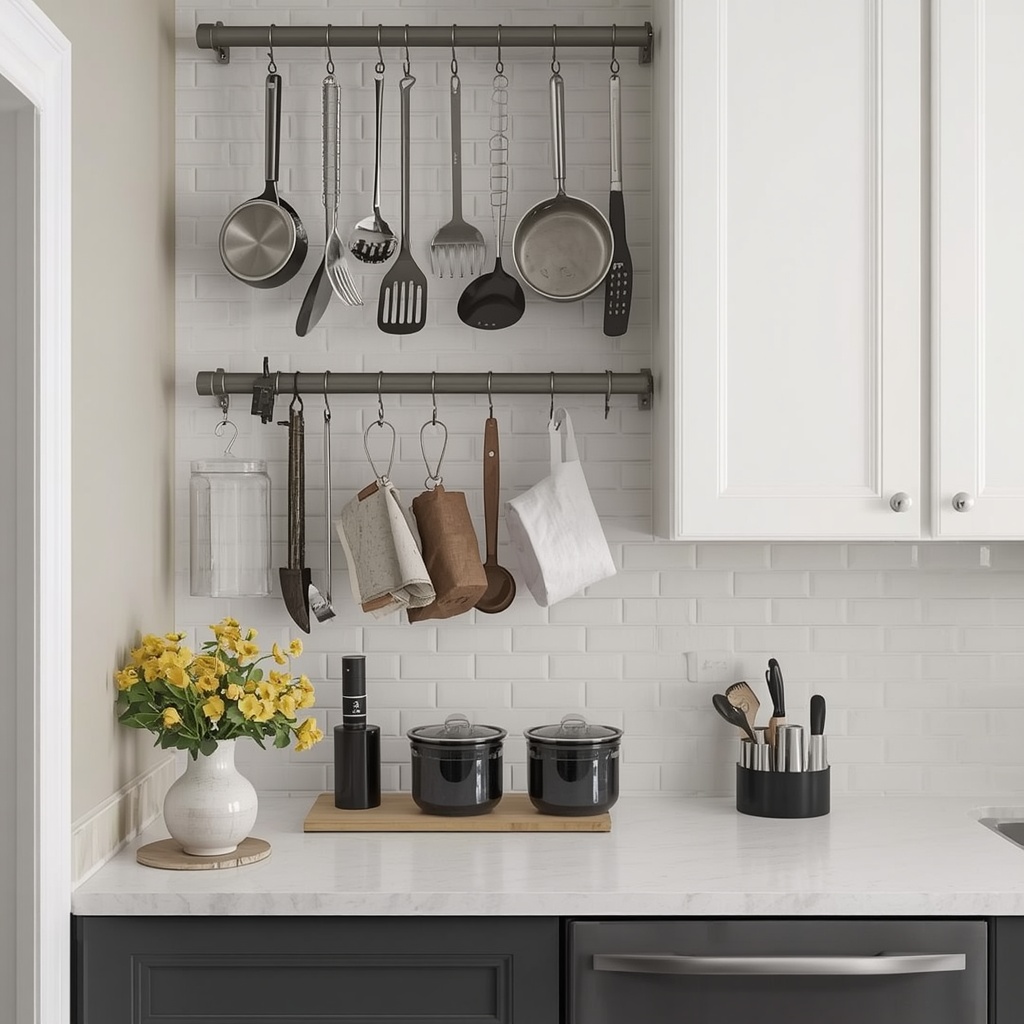
Start with a wall-mounted rail system. A stainless or matte-black rail with S-hooks can hold pots, ladles, mugs, and utensils within arm’s reach. Add a magnetic knife strip to free an entire drawer. Extend your upper cabinets to the ceiling if there’s a gap, which gives you a whole extra row for seasonal serveware.
More vertical kitchen ideas:
- Tiered risers inside cabinets to double usable shelf area
- Stackable, clear pantry bins for grains, pasta, and baking supplies
- Wall-mounted spice racks or floating ledges
- Pot-lid organizers mounted inside cabinet doors
- Hanging fruit baskets to free up counter space
- A tall, slim rolling cart that slides beside the fridge
Pro Tip: Store rarely used items, like the turkey roaster or fondue set, on the highest shelves. Keep daily-use items between knee and shoulder height for the least strain.
Bedroom Vertical Storage That Keeps Your Sanctuary Calm
A bedroom should feel restful, and visible clutter works against that. The trick is storing more without adding more furniture. Think tall, slim, and wall-hugging.
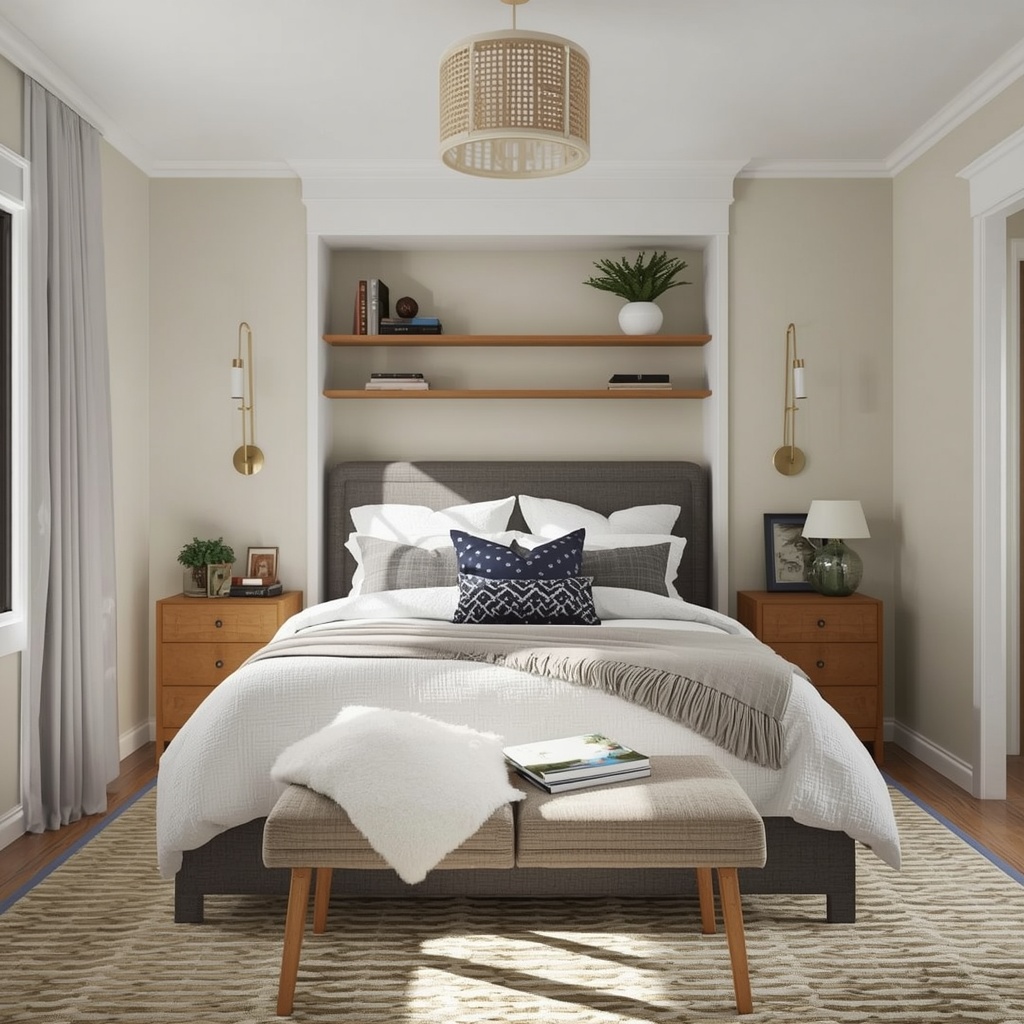
Swap wide dressers for a tall chest of drawers, which offers the same drawer count in about half the footprint. Choose a bed with built-in headboard shelving, or mount floating shelves above the headboard for books and a lamp. Raise your bed on risers to create a storage zone underneath for off-season bins. Wall-mounted sconces replace bedside lamps and free up nightstand surface area.
Bedroom quick wins:
- Install a floating shelf above the bed for books and plants
- Use wall hooks for bags, hats, and robes
- Hang a slim jewelry cabinet on the back of the door
- Add vertical dividers to shelves for folded sweaters
- Choose a full-length mirror with hidden storage behind it
Bathroom Vertical Storage for Tiny Spaces
Bathrooms are usually the smallest room in the house and the most cluttered. Fortunately, they’re also full of usable wall space. The area above the toilet alone can hold an entire linen closet’s worth of supplies.
Over-the-toilet shelving units or wall-mounted cabinets are the classic solution, and for good reason. Add a tall, narrow tower beside the vanity if space allows. Use tension-rod shelving in the shower corner, and hang wall-mounted baskets for rolled towels. Moisture-resistant materials like powder-coated metal, teak, or sealed bamboo will last longest.
| Bathroom Problem | Vertical Fix | Approx. Cost |
|---|---|---|
| Cluttered vanity | Wall-mounted medicine cabinet | $40–$150 |
| No towel storage | Ladder shelf or wall baskets | $25–$90 |
| Messy shower | Corner shelf or hanging caddy | $15–$50 |
| Not enough cabinet space | Over-the-toilet unit | $50–$200 |
| Hair tools everywhere | Door-mounted or wall-mounted holders | $10–$35 |
Entryway and Mudroom Vertical Storage
Entryways collect shoes, coats, keys, and mail all day long. Without a system, they become the messiest zone in the house. A vertical setup keeps the chaos contained and gives you a smooth launch pad for busy mornings.
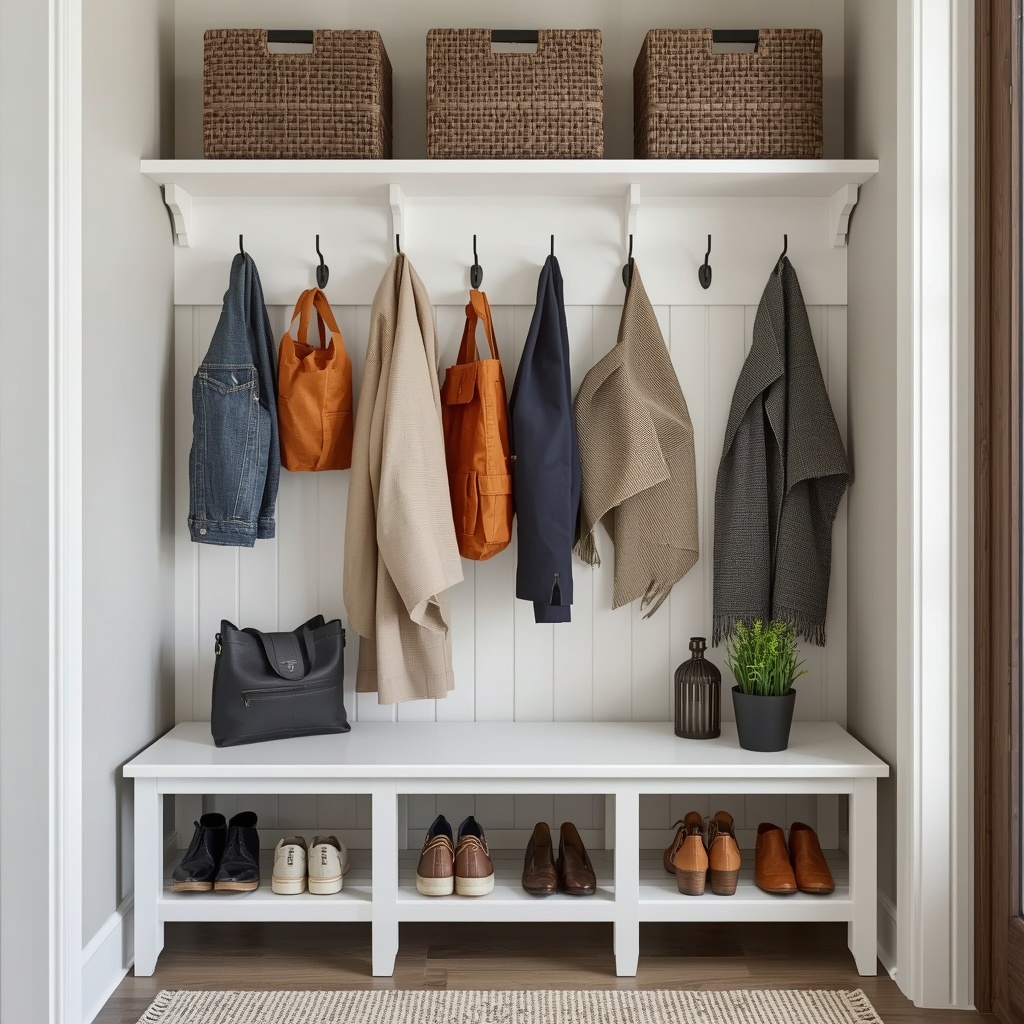
Install a row of sturdy hooks at adult height and a second row lower for kids. Mount a shallow shoe cabinet or wall-mounted shoe rack so pairs stand upright rather than sprawling across the floor. Above the hooks, add a shelf for hats, baskets, and a small tray for keys and sunglasses.
Entryway essentials:
- A wall-mounted key and mail organizer
- A floating bench or shelf with baskets below
- A tall mirror to bounce light and make the space feel bigger
- Labeled bins for each family member
- A narrow, wall-hung umbrella holder
Living Room and Home Office Vertical Hacks
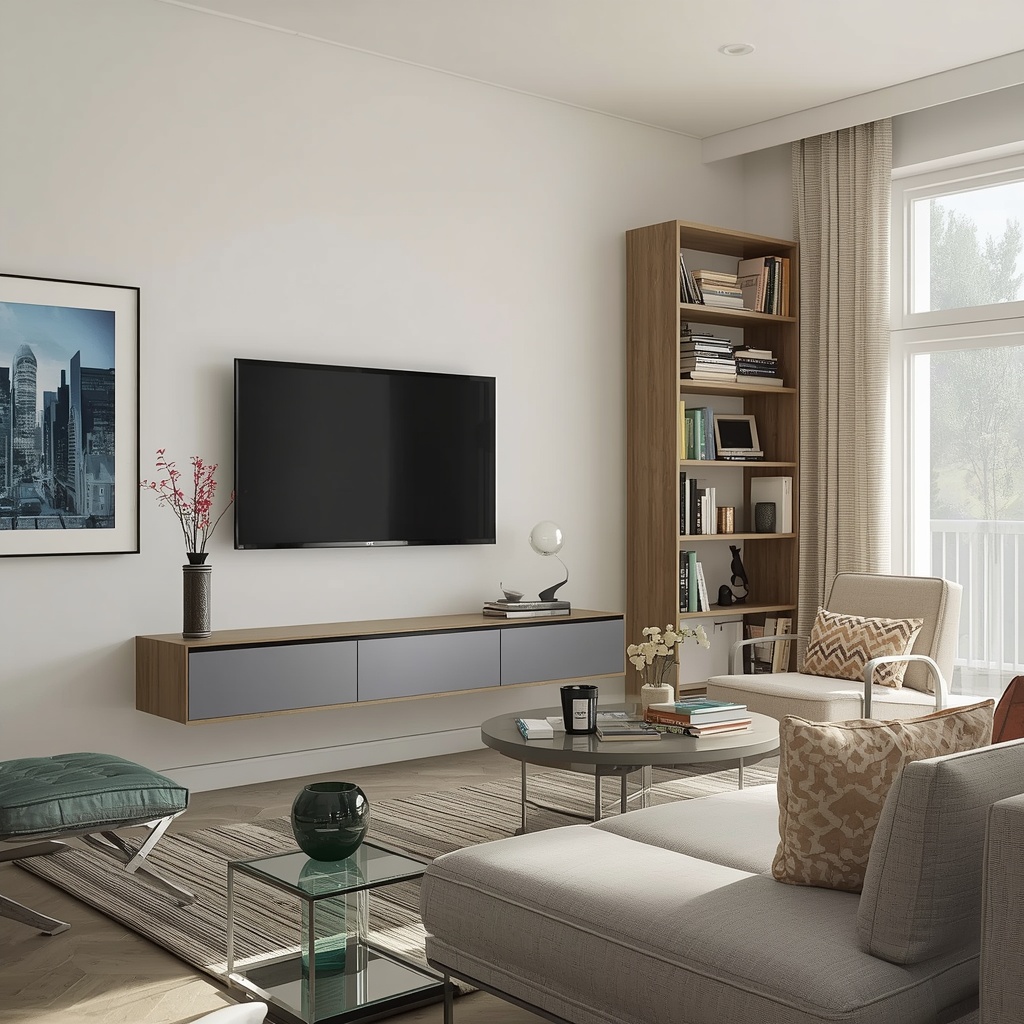
In the living room, the goal is clean lines and functional display. Replace bulky media consoles with a wall-mounted TV and floating shelves beneath. Use a tall, slim bookshelf in a corner, and consider a gallery-style ledge for rotating art and photographs.
Home offices thrive on vertical thinking. A pegboard or slat wall keeps supplies visible and reachable without eating desk space. A wall-mounted desk that folds away is a game-changer for studio apartments. Add a shelf above the monitor for reference books and a small plant to add life.
Work-from-home wall ideas:
- Pegboard with movable hooks and shelves for supplies
- Wall-mounted file organizers for paperwork
- Floating desk that folds up when not in use
- Cork or magnetic board for notes and inspiration
- Cable management channels running vertically along the wall
Pro Tip: Paint the wall behind open shelves a slightly deeper shade than the rest of the room. It adds depth and makes displayed items pop.
Closet Vertical Storage: Maximize Every Inch
Closets often waste more space than any other area. Most come with a single rod and a lonely shelf, leaving huge vertical gaps. Reconfiguring the interior can nearly double your capacity without changing the footprint.
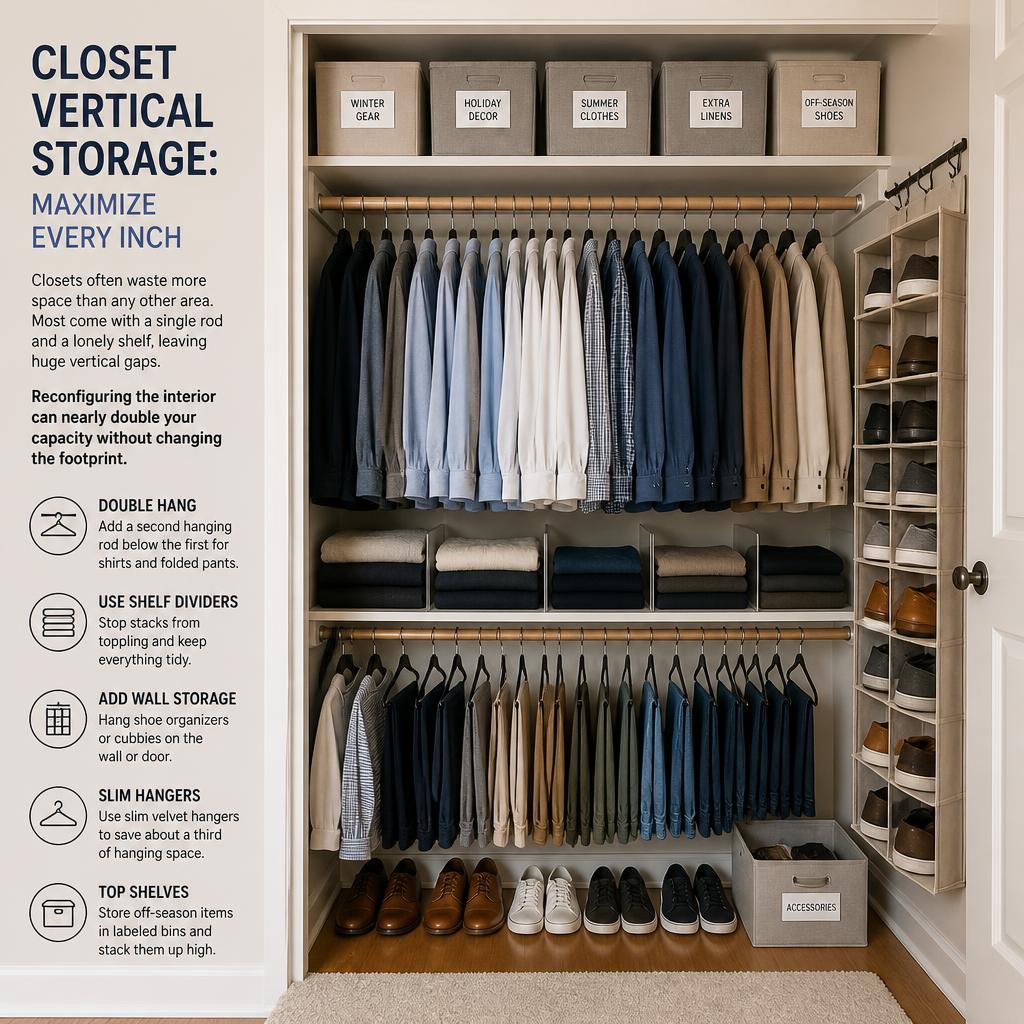
Add a second hanging rod below the first for shirts and folded pants. Use shelf dividers to stop stacks from toppling, and hang shoe organizers or cubbies on the wall. Slim velvet hangers save about a third of hanging space compared with bulky plastic ones. Top shelves suit off-season bins, labeled and stacked.
Closet upgrades ranked by impact:
- Double-hang rods (best return for the least money)
- Adjustable shelf towers
- Slim, uniform hangers
- Over-the-door hooks and shoe racks
- Stackable bins for top shelves
Vertical Storage Cost and Effort Comparison
Not every solution suits every budget or skill level. Here’s a quick look at what to expect before you start.
| Solution | Budget | Install Difficulty | Renter-Friendly? |
|---|---|---|---|
| Over-the-door organizers | $ | Very easy | Yes |
| Adhesive hooks and strips | $ | Very easy | Yes |
| Tall freestanding bookcase | $$ | Easy (anchor required) | Yes |
| Wall-mounted floating shelves | $$ | Moderate | Sometimes |
| Track shelving systems | $$$ | Moderate | Sometimes |
| Custom built-ins | $$$$ | Professional | No |
For hardware, brackets, and anchors, big-box stores like The Home Depot offer everything you’ll need, including stud finders and mounting kits.
Common Vertical Storage Mistakes to Avoid
Even great ideas go wrong in execution. These are the errors I see most often in client homes.
The biggest is overloading walls with too many small items. It reads as clutter, just moved upward. Another is ignoring weight limits, which is both a safety risk and a repair bill. And many people forget scale, buying tiny shelves for a large wall or oversized units for a compact room.
Avoid these pitfalls:
- Skipping wall anchors or stud mounting for heavy loads
- Hanging shelves too high to reach comfortably
- Mixing too many finishes, colors, and styles
- Blocking outlets, light switches, or vents
- Forgetting to leave breathing room around each piece
- Buying storage before decluttering
Designer’s reminder: Storage isn’t a substitute for editing. Purge first, organize second.
Styling Tips to Keep Vertical Storage Beautiful
Function is only half the goal. Great vertical storage should look intentional, not improvised. A few styling principles keep walls looking curated.
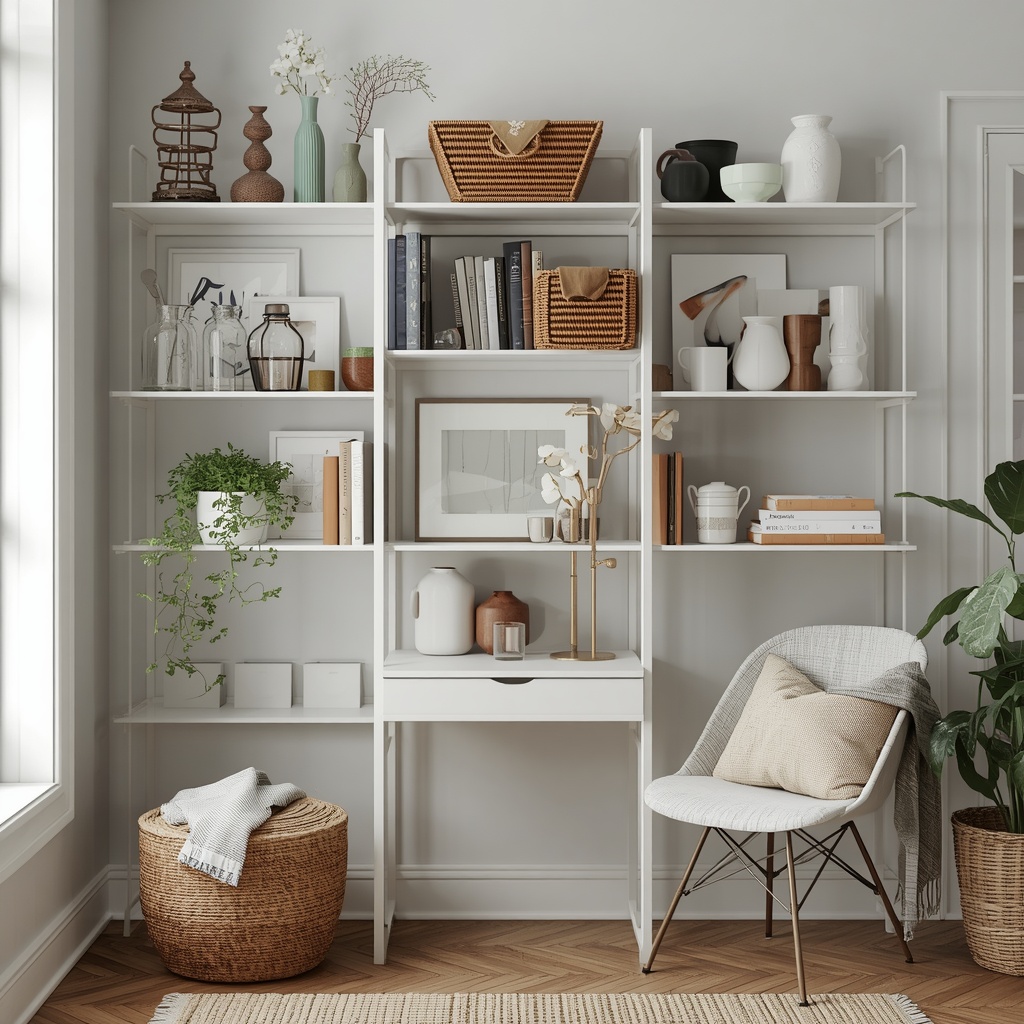
Stick to a limited palette of two or three colors across baskets, frames, and shelf finishes. Group items in odd numbers, such as three vases of varying height, and vary textures so the display feels layered. Mix open and closed storage so you hide the messy and showcase the lovely. Finally, use lighting, like picture lights or LED strips, to add warmth and highlight your favorite pieces.
Simple styling formula:
- One large item (a plant, a framed print)
- One medium item (a stack of books, a basket)
- One small item (a candle, a small sculpture)
Repeat across each shelf, shifting the arrangement slightly so it feels natural.
Frequently Asked Questions About Vertical Storage
Will vertical storage damage my walls?
Drilled fixtures leave small holes that can be patched with spackle. For rentals, use heavy-duty adhesive strips rated for the weight, or choose freestanding tall units.
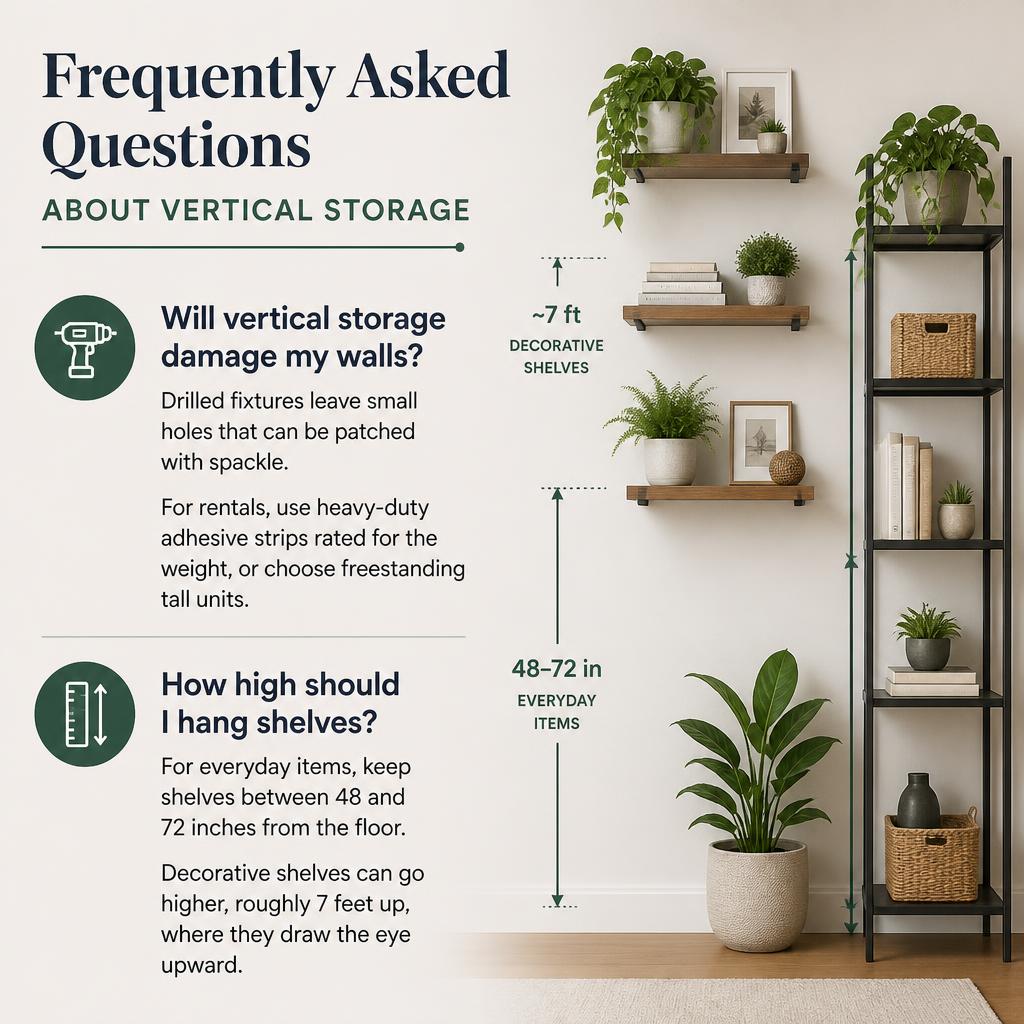
How high should I hang shelves?
For everyday items, keep shelves between 48 and 72 inches from the floor. Decorative shelves can go higher, roughly 7 feet up, where they draw the eye upward.
Can vertical storage make a small room feel bigger?
Yes. Clearing the floor creates unbroken sightlines, and tall pieces draw the eye up, which visually raises the ceiling.
What’s the cheapest way to start?
Adhesive hooks, over-the-door racks, and stackable bins are low-cost, quick to set up, and completely renter-friendly.
Final Thoughts: Look Up and Reclaim Your Space
Freeing up floor space doesn’t require moving to a bigger home or buying a storage unit. It requires seeing your walls, doors, corners, and ceilings as the untapped storage they are. Start small with one room, one wall, or even one door, and build from there.
Audit your space, choose the right tools for each room, anchor everything safely, and style with intention. Before long, your floors will be clear, your belongings will have a home, and your space will feel larger, calmer, and far more livable. Which wall will you tackle first?