
If you’ve spent any time scrolling kitchen renovation inspiration, you’ve probably noticed a recurring debate: open shelving or closed cabinets? Both camps have passionate fans, and both styles can look stunning in the right home. But “stunning on Pinterest” and “functional in your actual kitchen” aren’t always the same thing.
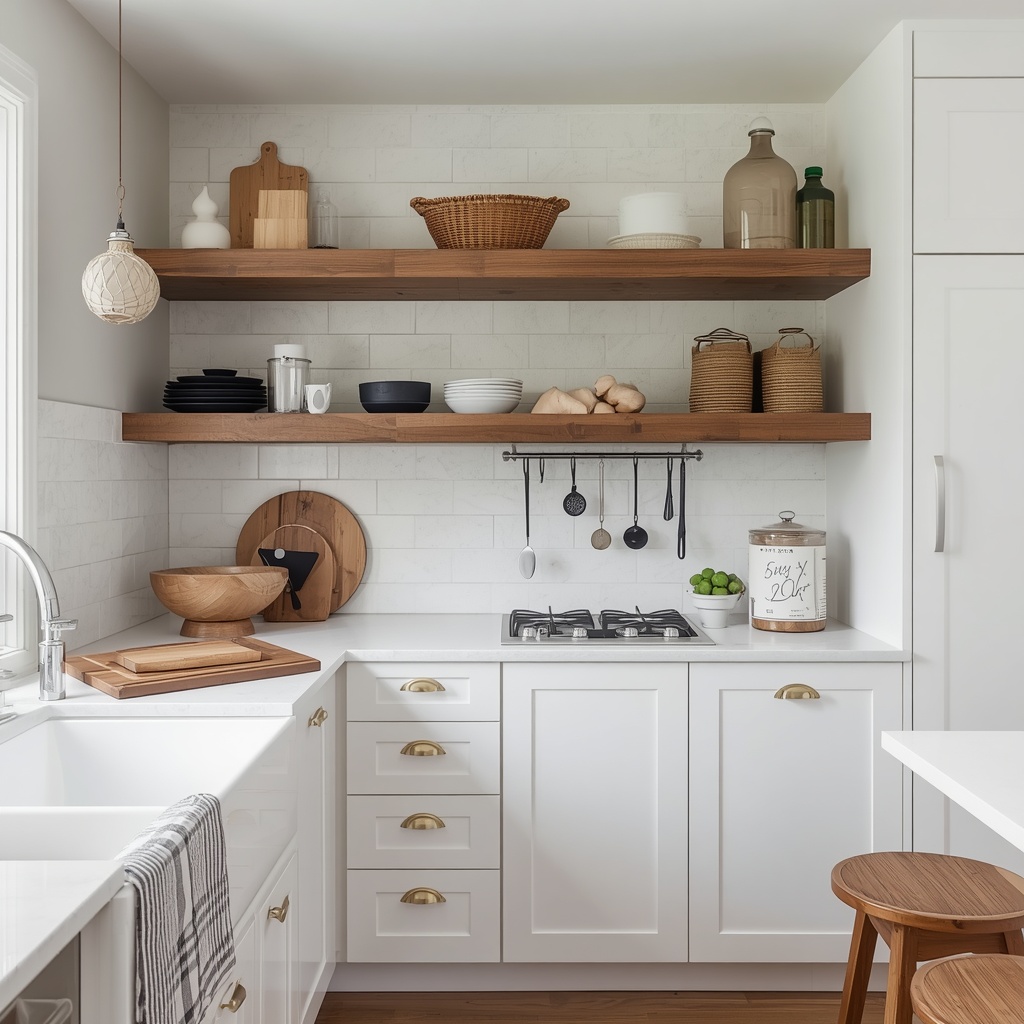
As an interior designer, this is one of the most common questions I get from homeowners planning a kitchen remodel. The honest answer is that there’s no universally “right” choice — only the right choice for your space, your habits, and your storage needs. In this guide, we’ll break down the real pros and cons of open shelving and closed cabinets, compare costs, and help you decide which kitchen storage solution fits your lifestyle best.
What Is Open Shelving, Exactly?
Open shelving refers to wall-mounted or floating shelves used in place of upper cabinets, leaving dishes, glassware, and cookware visible and within easy reach. It’s a hallmark of modern farmhouse kitchens, minimalist kitchen design, and coastal-inspired spaces, but it works across nearly any style when done thoughtfully.
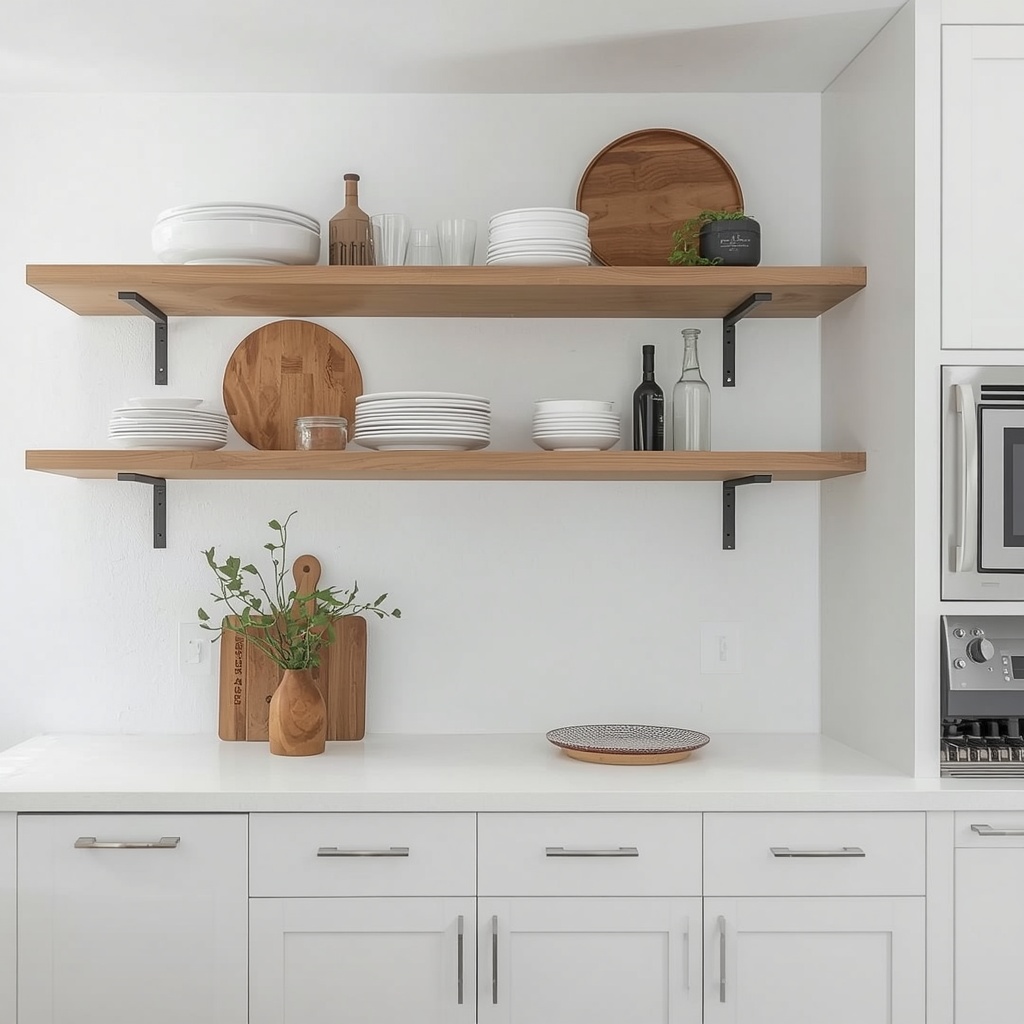
Materials range from reclaimed wood and floating oak shelves to sleek metal brackets and glass-front display ledges. The visual effect is airy and open, which is why open shelving has become a favorite kitchen trend for smaller spaces that need to feel larger than they are.
What Are Closed Cabinets, Exactly?
Closed cabinets are the traditional kitchen storage solution: upper and lower cabinet boxes with doors that conceal everything inside. They’ve dominated American kitchen design for decades because they offer dust-free, mess-free storage and a clean, uniform look.
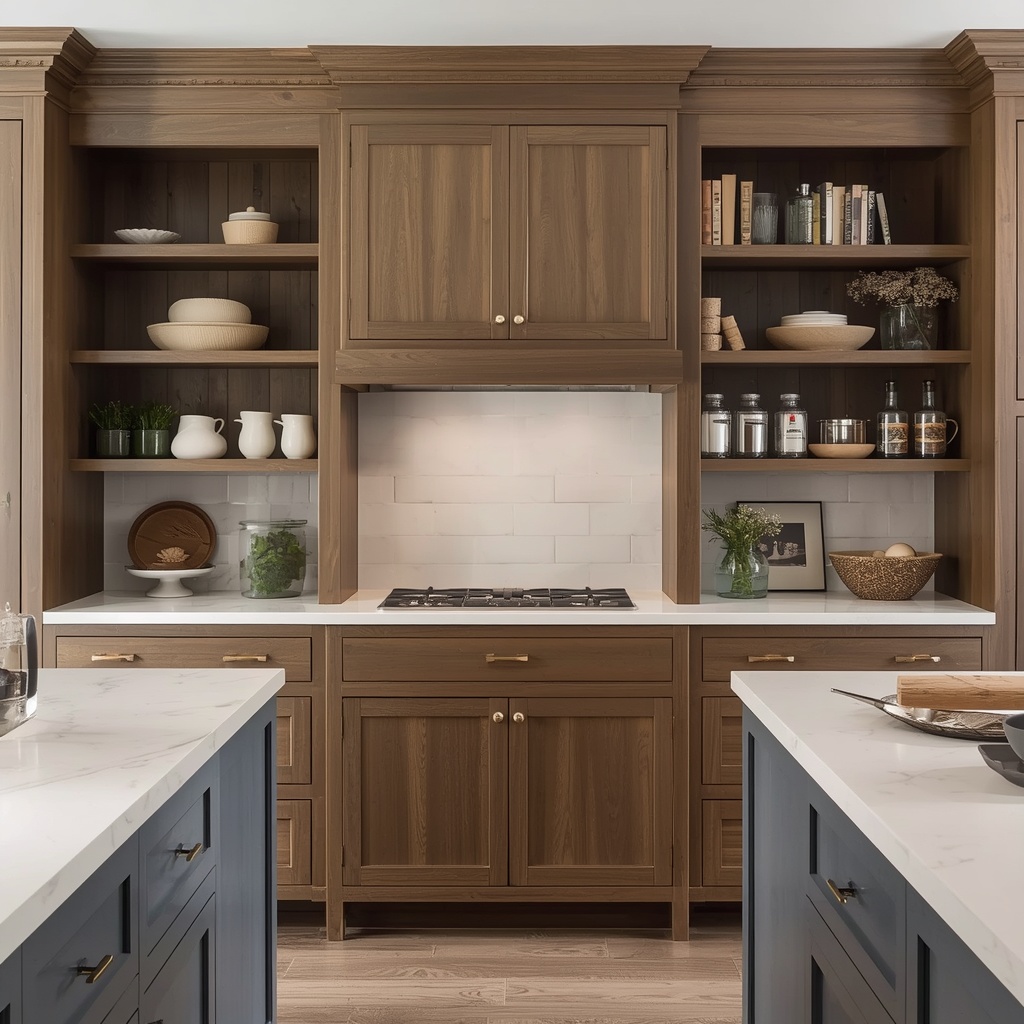
Closed cabinetry comes in countless door styles — shaker, slab, raised-panel, glass-front — and finishes, from painted wood to high-gloss laminate. Because cabinet doors hide the contents, closed cabinets are the go-to for anyone who values a streamlined kitchen aesthetic over visual display.
The Pros and Cons of Open Shelving
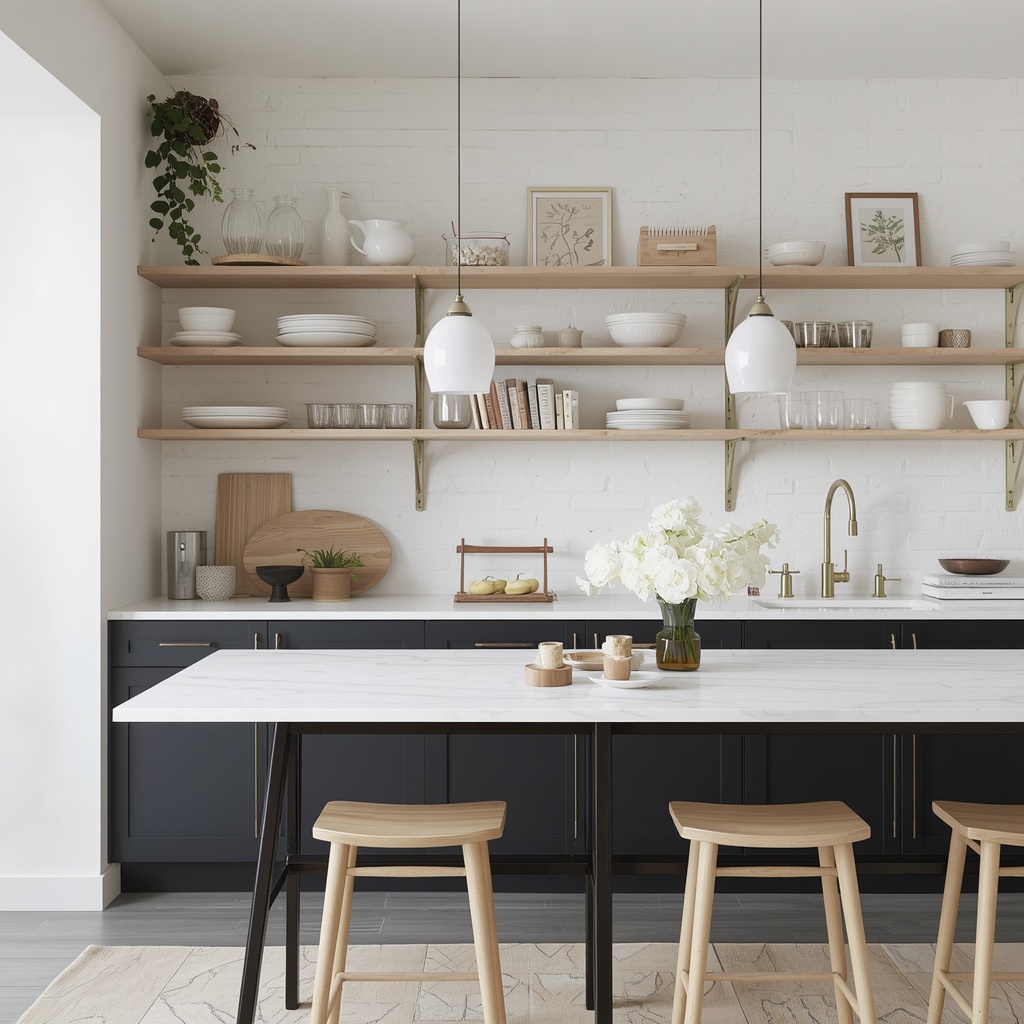
Open shelving has surged in popularity over the last decade, largely thanks to social media and the rise of minimalist, Scandinavian-inspired interiors. But it’s not without trade-offs.
| Pros | Cons |
|---|---|
| Creates an airy, spacious feel | Items collect dust and grease faster |
| More affordable to install than full cabinetry | Requires constant tidiness and styling |
| Easy access to everyday dishes | Less storage capacity overall |
| Great for displaying curated dinnerware or plants | Not ideal for hiding mismatched or bulky items |
| Makes small kitchens feel less boxed-in | Can feel cluttered if overfilled |
“Open shelving works best when you treat it like a styled vignette, not a junk drawer with a view,” is advice I give nearly every client who’s drawn to the look but worried about upkeep.
💡 Pro Tip: If you love the look of open shelving but worry about maintenance, install it only above a stretch of counter you rarely use for heavy cooking — away from the stove where grease splatter accumulates fastest.
The Pros and Cons of Closed Cabinets
Closed cabinets remain the most popular choice in American kitchens for good reason — they’re practical, versatile, and resale-friendly.
| Pros | Cons |
|---|---|
| Hides clutter and mismatched items | Can feel heavier or more closed-in visually |
| Protects dishes from dust and grease | Generally more expensive than open shelving |
| Better for storing bulky small appliances | Items can get “lost” or disorganized inside |
| Higher resale appeal for most buyers | Requires more planning for organization |
| Doors and finishes offer design flexibility | Limited opportunity for personal display |
Closed cabinetry also tends to perform better long-term in busy households with kids, pets, or frequent cooking, simply because there’s less daily upkeep involved in keeping things looking presentable.
Open Shelving vs. Closed Cabinets: Key Differences at a Glance
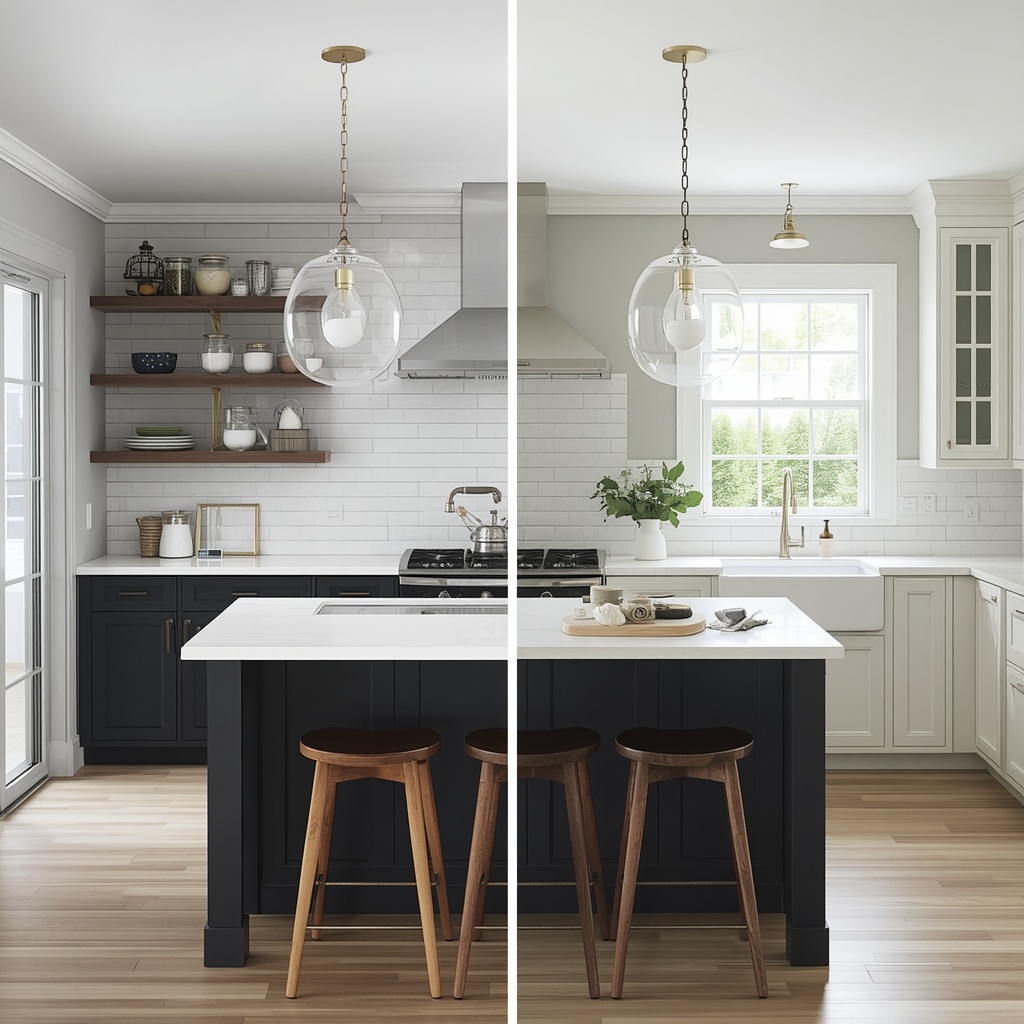
Here’s a side-by-side snapshot to help you compare both options across the factors that matter most in kitchen design.
| Factor | Open Shelving | Closed Cabinets |
|---|---|---|
| Aesthetic | Airy, light, decorative | Clean, traditional, uniform |
| Storage capacity | Lower | Higher |
| Maintenance | Frequent dusting/cleaning | Minimal upkeep |
| Cost | Generally lower | Generally higher |
| Best for | Display pieces, small kitchens | Everyday storage, busy households |
| Resale appeal | Niche, style-dependent | Broadly appealing |
| Customization | Easy to update/restyle | Requires refacing or replacement |
Cost Comparison: What You’ll Actually Spend
Budget is often the deciding factor for homeowners weighing these two options, so let’s talk real numbers. Costs vary by region, materials, and labor rates, but national averages give a useful benchmark.
| Storage Type | Average Cost (per linear foot) | Notes |
|---|---|---|
| Open shelving (wood, basic install) | $20–$60 | Lower material and labor cost |
| Open shelving (custom/floating, hidden brackets) | $75–$150 | Higher-end finishes raise cost |
| Stock closed cabinets | $100–$300 | Pre-fabricated, standard sizes |
| Semi-custom closed cabinets | $150–$650 | More size and finish options |
| Fully custom closed cabinets | $500–$1,200+ | Built to exact specifications |
💡 Pro Tip: If you’re renovating on a budget, consider a hybrid layout — closed lower cabinets for heavy, less attractive items and open shelving up top. You’ll cut costs while still getting a custom, designer-curated look.
Which One Fits Your Lifestyle? 5 Questions to Ask Yourself
Before committing to either option, walk through these questions honestly. Your answers will tell you more than any design trend ever could.
- How often do I actually put dishes away right after washing? If the answer is “rarely,” closed cabinets will save you stress.
- Do I own matching, display-worthy dishware? Open shelving looks best with a curated, cohesive collection.
- How much daily cooking happens in this kitchen? Heavy daily cooking means more grease, which favors closed storage near the stove.
- Is my kitchen on the smaller side? Open shelving can visually expand a tight footprint.
- Am I planning to sell this home in the next 5 years? Closed cabinets generally appeal to a broader range of buyers.
The Hybrid Approach: Why Not Both?
Here’s a secret most designers won’t lead with: you don’t have to choose just one. A hybrid kitchen — combining closed lower cabinets with open shelving on select upper walls — is one of the most popular kitchen remodel strategies right now, and for good reason.
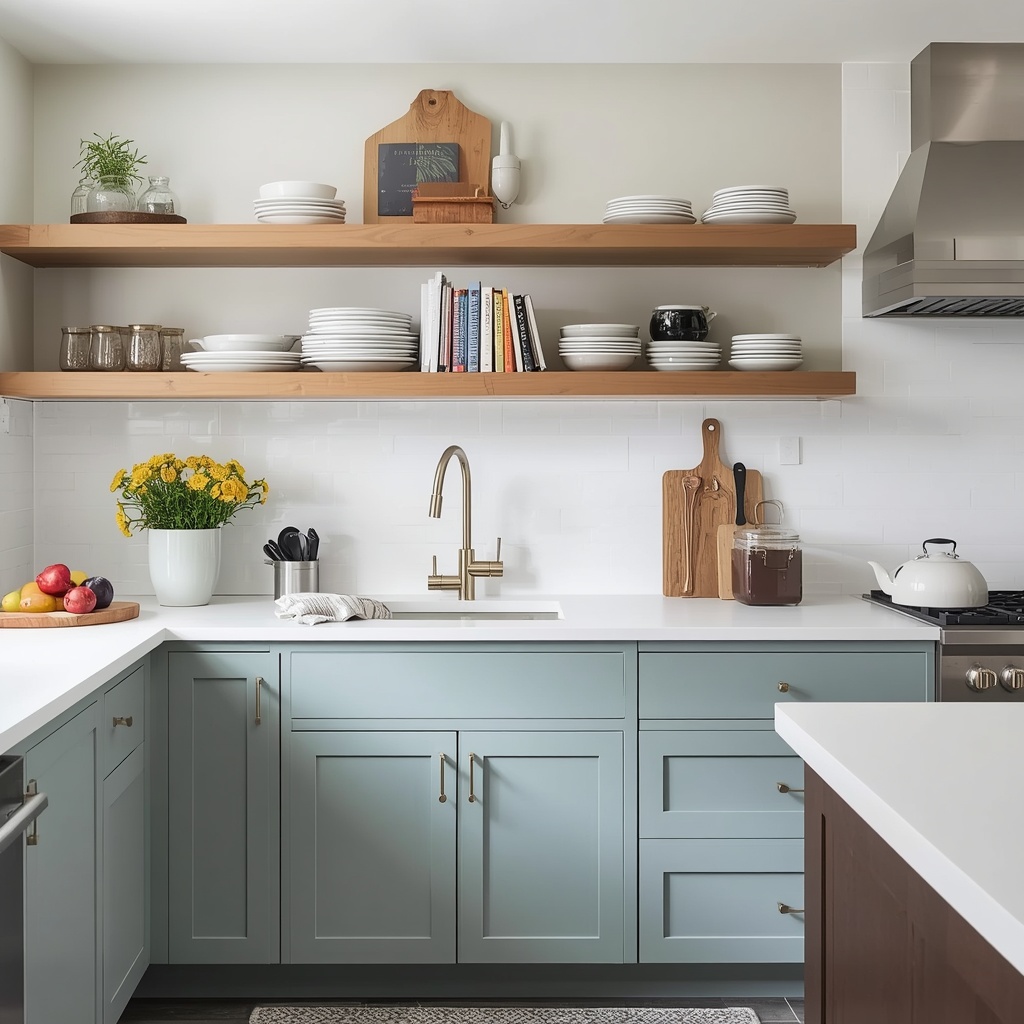
This approach lets you hide bulky, less attractive items (think mixing bowls, food storage containers, small appliances) in closed cabinetry below, while reserving open shelves for a curated display of glassware, cookbooks, or your favorite ceramics above. It’s a balanced solution that satisfies both the practical and aesthetic sides of kitchen design.
Popular hybrid layouts include:
- Closed cabinets along the main cooking wall, open shelving on an adjacent accent wall
- Glass-front upper cabinets paired with open shelving for a “best of both” display effect
- Open shelving flanking a range hood, with closed cabinets everywhere else
- A single open shelf above closed base cabinets near a coffee or bar station
Styling Tips: Making Open Shelves Look Curated, Not Cluttered
Open shelving lives or dies by styling. Here’s how to keep it looking intentional rather than chaotic.
- Group items in odd numbers (three or five) for visual balance
- Mix textures — wood, ceramic, glass — rather than uniform materials
- Leave breathing room; don’t fill every inch of shelf space
- Use matching dishware sets or a consistent color palette
- Rotate seasonal or decorative pieces to keep the display fresh
💡 Pro Tip: Store your least-used items at the top shelf and your everyday dishes at eye level. This keeps the display tidy while maintaining real functionality.
Styling Tips: Keeping Closed Cabinets From Feeling Boring
Closed cabinetry doesn’t have to mean visually flat. A few design choices can add personality without sacrificing the practicality you’re after.
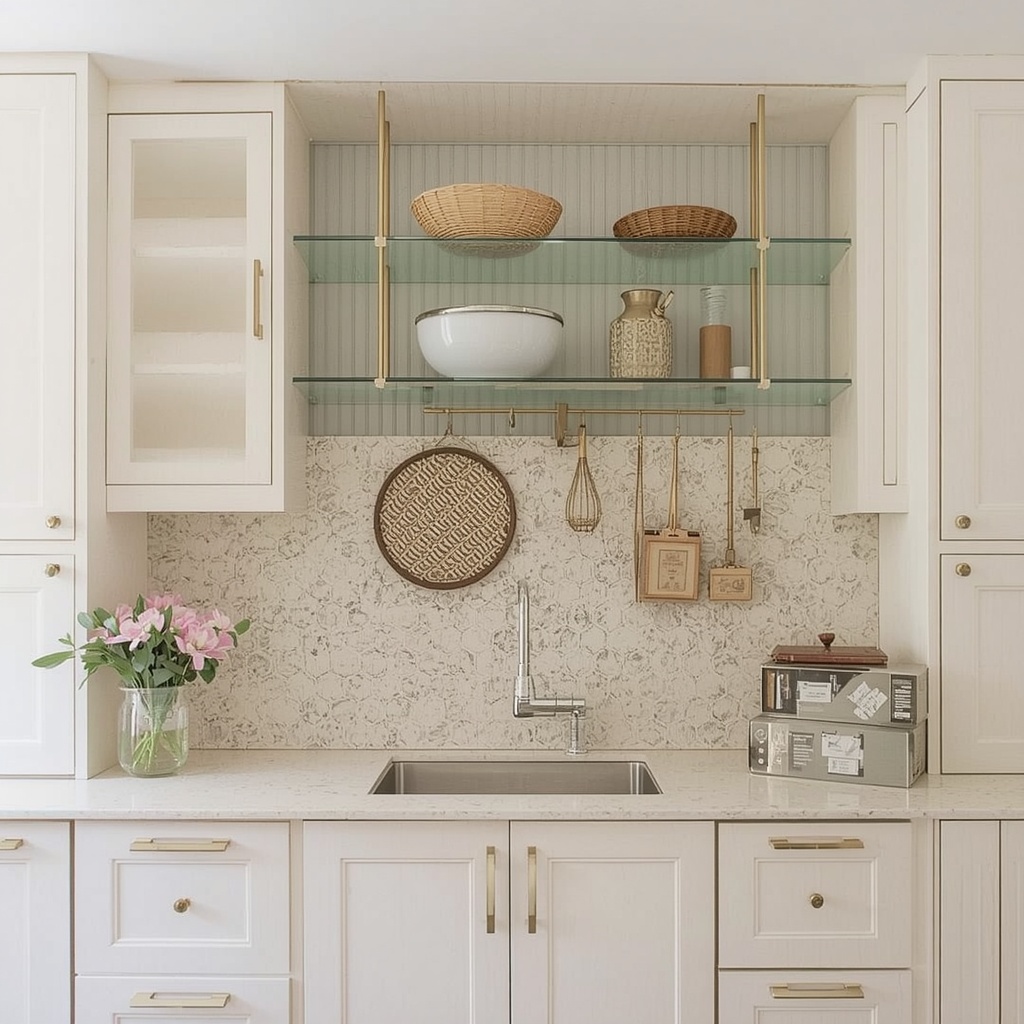
- Add glass-front doors to one or two upper cabinets for a partial display effect
- Choose a two-tone cabinet palette (e.g., dark lower, light upper) for contrast
- Invest in upgraded cabinet hardware — brass, matte black, or unlacquered finishes
- Install interior cabinet lighting for a boutique feel when doors are open
- Use a furniture-style hutch or glass cabinet as a statement piece
Maintenance Reality Check
This is where the open shelving vs. closed cabinets debate often gets decided in real life, not in mood boards. Open shelves require regular dusting and occasional washing of displayed items, especially near a stove or in humid climates.
Closed cabinets need far less day-to-day attention, but interior organization can quietly spiral out of control if you’re not intentional about it. Drawer dividers, pull-out shelves, and lazy Susans go a long way toward keeping closed storage functional rather than chaotic.
Resale Value & Buyer Appeal
If resale value matters to you, it’s worth noting that closed cabinetry remains the safer investment for most U.S. housing markets. Buyers generally expect full cabinet storage, and homes with extensive open shelving in place of cabinets can sometimes appear under-equipped to potential buyers touring the space.
That said, a tasteful hybrid approach — mostly closed cabinets with a small open shelving accent — tends to read as a deliberate design choice rather than a storage shortfall. If you’re renovating with resale in mind, lean toward closed storage for the bulk of your kitchen and use open shelving sparingly as a styling feature.
Final Verdict: So, Which Should You Choose?
There’s no single right answer here — only the right answer for your kitchen, your habits, and your household. If you love displaying beautiful dishware, cook in a small space that needs visual breathing room, and don’t mind a little extra dusting, open shelving could be a great fit. If you value low-maintenance storage, have a busy household, or care about broad resale appeal, closed cabinets are likely your safer bet.
For most homeowners, the smartest solution is a hybrid: closed cabinets doing the heavy lifting for everyday storage, with open shelving used selectively to add warmth, personality, and visual interest. Whichever direction you choose, the most important thing is designing a kitchen that fits how you actually live — not just how it photographs.
Frequently Asked Questions
Is open shelving cheaper than cabinets? Generally, yes. Open shelving typically costs less per linear foot than closed cabinetry because it requires less material and simpler installation, though high-end custom shelving can close that gap.
Does open shelving make a small kitchen look bigger? Often, yes. Removing bulky upper cabinet boxes can make a small kitchen feel more open and visually spacious, especially when paired with light wall colors.
Are open shelves out of style in 2026? Open shelving remains popular but has shifted toward more curated, minimal displays rather than fully open pantry-style storage. Many homeowners are now favoring hybrid layouts over all-open kitchens.
Do closed cabinets hurt small kitchen layouts? Not necessarily. Light-colored, slim-profile closed cabinets can work well in small kitchens — the key is choosing the right finish and proportion rather than avoiding closed storage altogether.