
A sectional sofa is the anchor of almost every American living room. It’s comfortable, it’s social, and it practically begs a family movie night. But there’s a catch: sectionals are big. And big furniture can quickly tip a cozy living space into a cramped, chaotic one if you don’t plan around it.
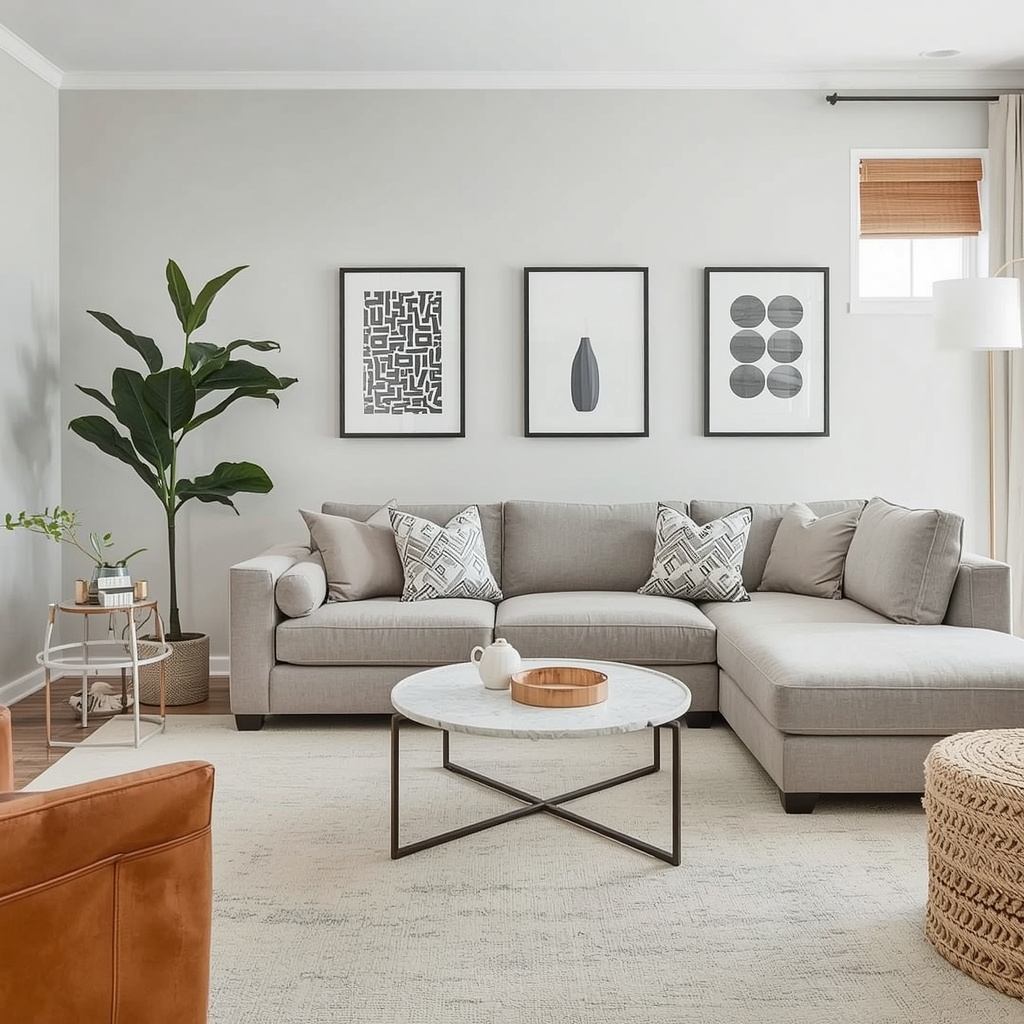
As an interior designer who works primarily with U.S. homeowners, I get asked this question more than almost any other: “I love my sectional, but my room feels crowded — what am I doing wrong?” The good news is that clutter rarely comes from the sofa itself. It comes from what surrounds it. With the right layout, scale, and styling choices, a sectional can make a room feel more spacious, not less.
This guide walks through exactly how to style a sectional sofa for a clean, curated, magazine-worthy living room — without sacrificing comfort or function.
Why Sectionals Get Cluttered So Easily
Sectionals dominate visually because of their footprint. A single large shape naturally draws the eye, so every object placed near it either supports that shape or fights against it. When too many competing elements enter the frame — extra side tables, mismatched throw pillows, a busy rug — the room reads as disorganized even if it’s technically tidy.
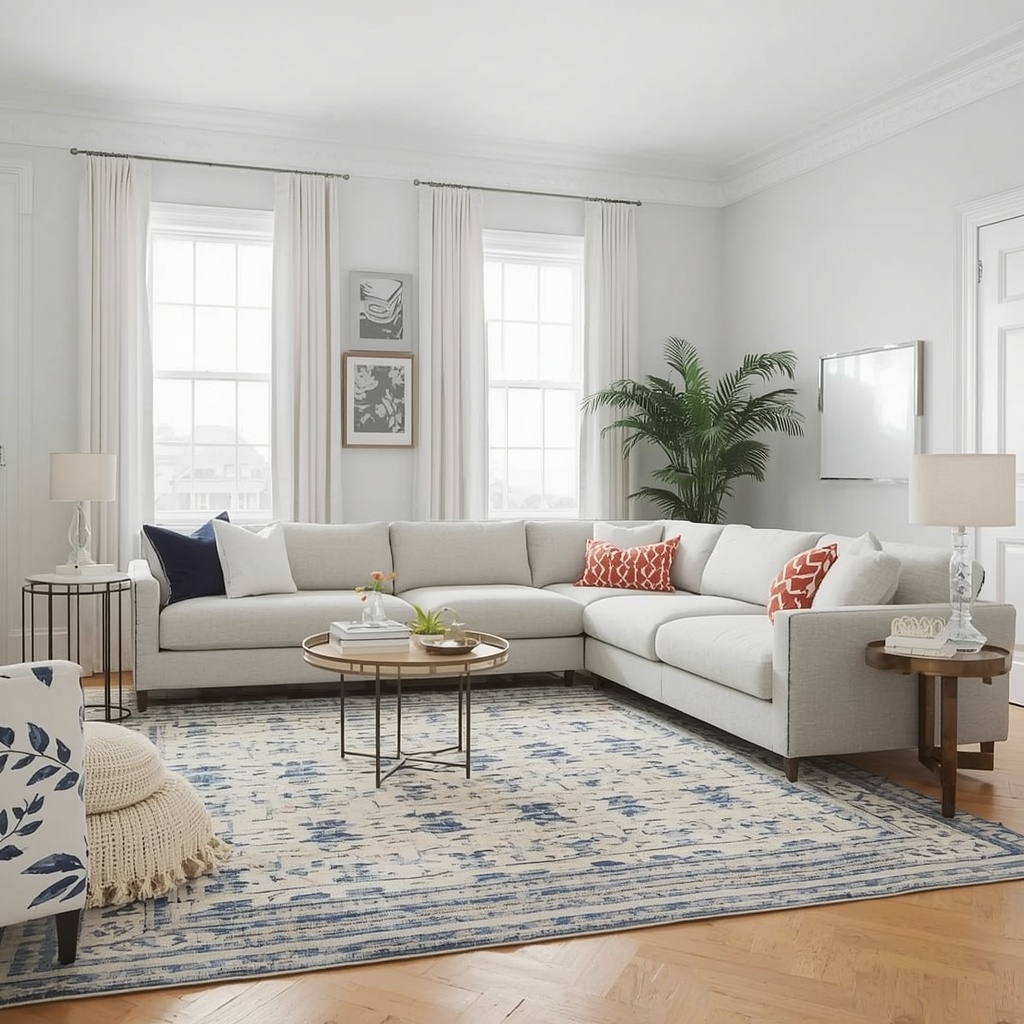
Clutter isn’t just about “too much stuff.” It’s about visual noise. A room can have plenty of furniture and still feel calm if there’s a clear hierarchy. The sectional should be the star; everything else plays a supporting role.
“Great furniture arrangement isn’t about fitting everything in — it’s about editing until only what matters remains.” — a principle every professional stager lives by.
Step 1: Get the Scale and Placement Right First
Before you touch a single throw pillow, confirm the sectional actually fits the room’s proportions. This is the single biggest factor in whether a space feels open or overwhelmed.
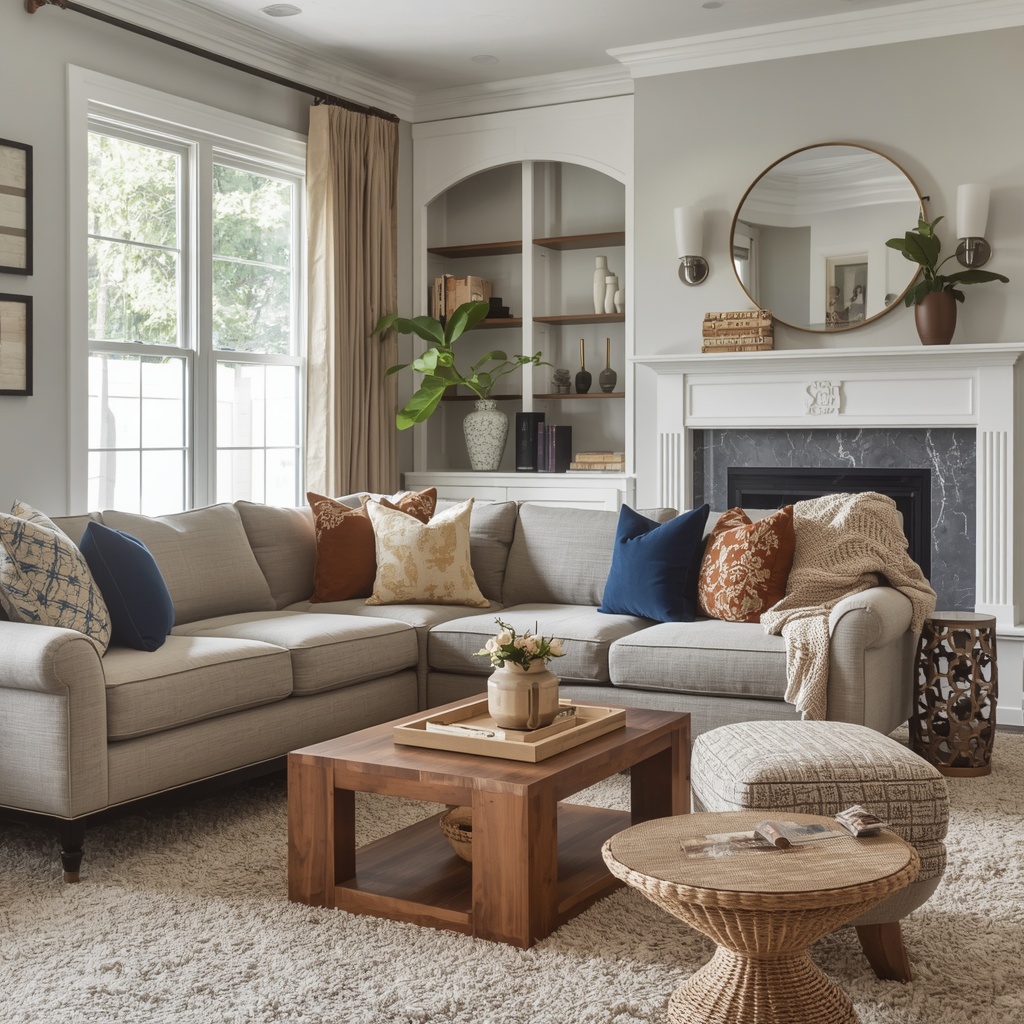
Pro Tip: Leave at least 30–36 inches of walking space around your sectional for comfortable circulation. Anything tighter than that will feel cramped no matter how well you decorate.
A few placement principles I use with every client:
- Float the sectional away from the wall when the room allows it — this creates depth and makes the space feel intentional rather than pushed to the perimeter.
- Anchor the layout with a rug that extends at least 6–8 inches beyond the sofa’s front legs.
- Keep the chaise or longer arm pointed toward the room’s natural focal point (a fireplace, TV wall, or window view).
- Avoid placing the sectional diagonally in small rooms — it eats far more usable floor space than a parallel placement.
Step 2: Choose a Cohesive Color Palette
One of the fastest ways to visually “declutter” a sectional is through color discipline. When your sofa, pillows, throws, and nearby decor all pull from the same palette, the eye reads the space as unified — even if there are several pieces in play.
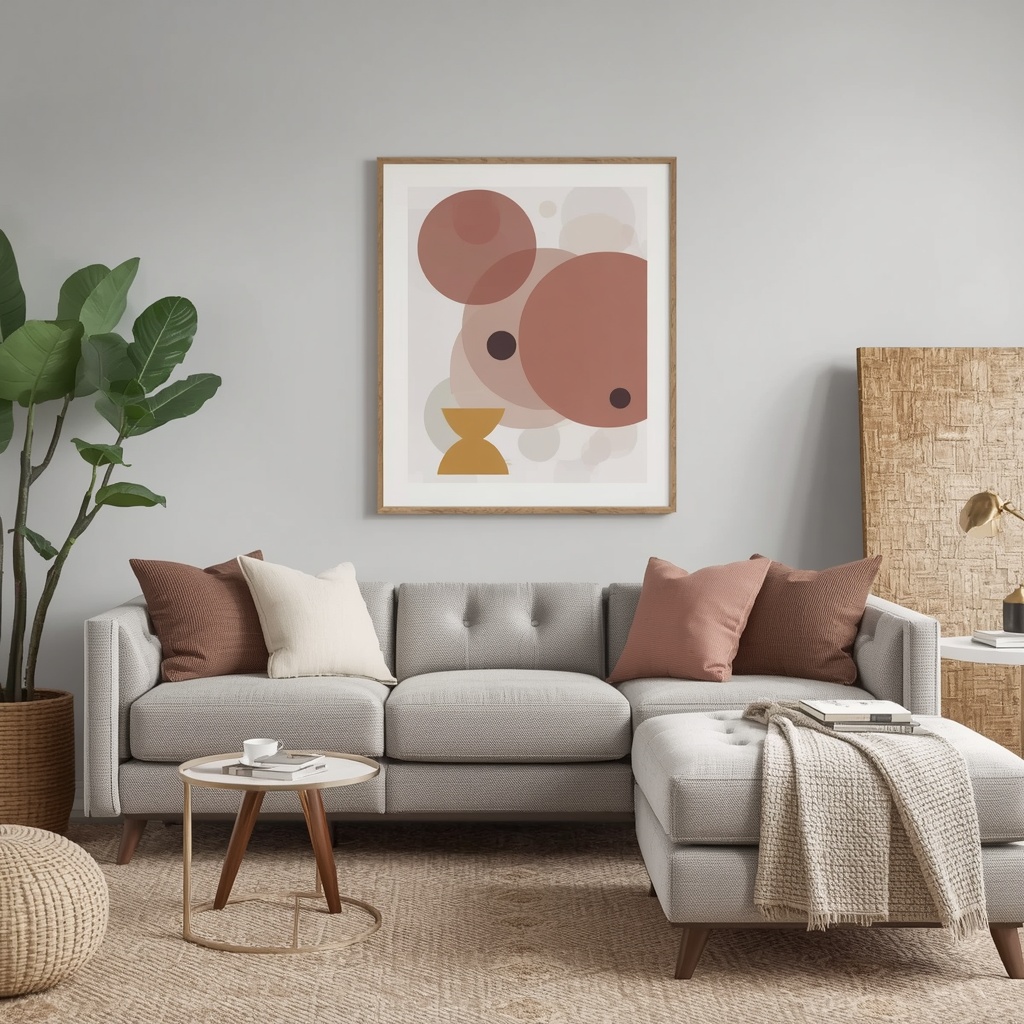
I recommend the classic 60-30-10 rule for living rooms built around a large piece like a sectional:
| Proportion | Element | Example |
|---|---|---|
| 60% | Dominant color (sectional, rug base) | Warm greige, oatmeal, charcoal |
| 30% | Secondary color (accent chair, curtains) | Deep olive, navy, terracotta |
| 10% | Accent color (pillows, art, small decor) | Mustard, rust, brass |
Sticking to this ratio prevents the “too many colors” effect that makes rooms feel busy. If your sectional is a neutral (which most are, for good reason), you have far more freedom with accent colors elsewhere.
Step 3: Master the Pillow Arrangement
Throw pillows are where most sectionals go wrong. It’s tempting to keep adding “just one more” cute pillow, but overloading a sectional with mismatched pillows is the number one styling mistake I see in client homes.
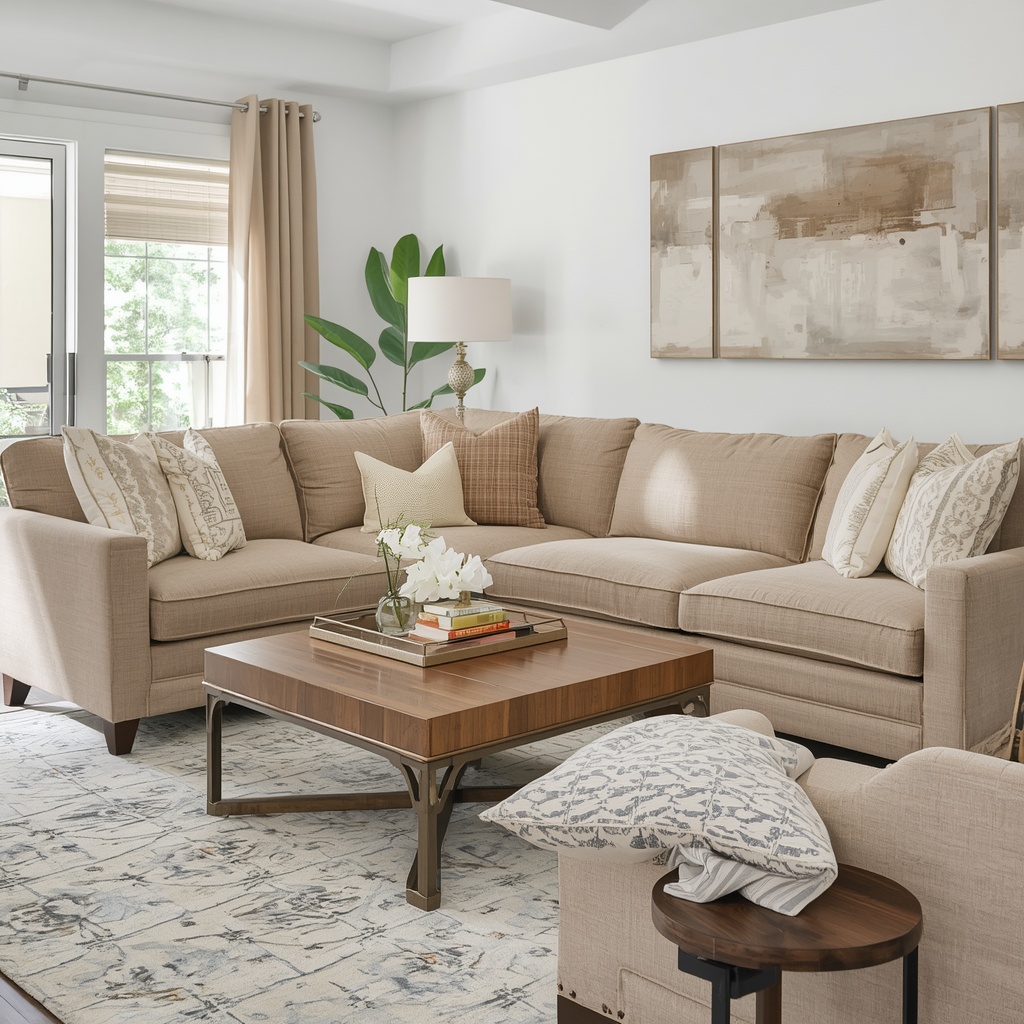
Pro Tip: Stick to an odd number of pillows per section — three on the longer run, two on the shorter one — and repeat at least one fabric or color across both sides to visually tie the sectional together.
A simple formula that works almost every time:
- One solid-color pillow in your dominant palette color (larger, 22″–24″)
- One textured or patterned pillow that includes your accent color (20″)
- One smaller lumbar or accent-shape pillow for contrast (12″x20″)
Skip matching sets from a single package. Designer-level sectionals almost always mix textures — velvet, boucle, linen, performance fabric — rather than identical prints.
Step 4: Layer in a Throw Blanket the Right Way
A throw blanket adds warmth and texture, but it can also look like an afterthought if it’s just tossed on. The trick is intentional placement, not randomness.
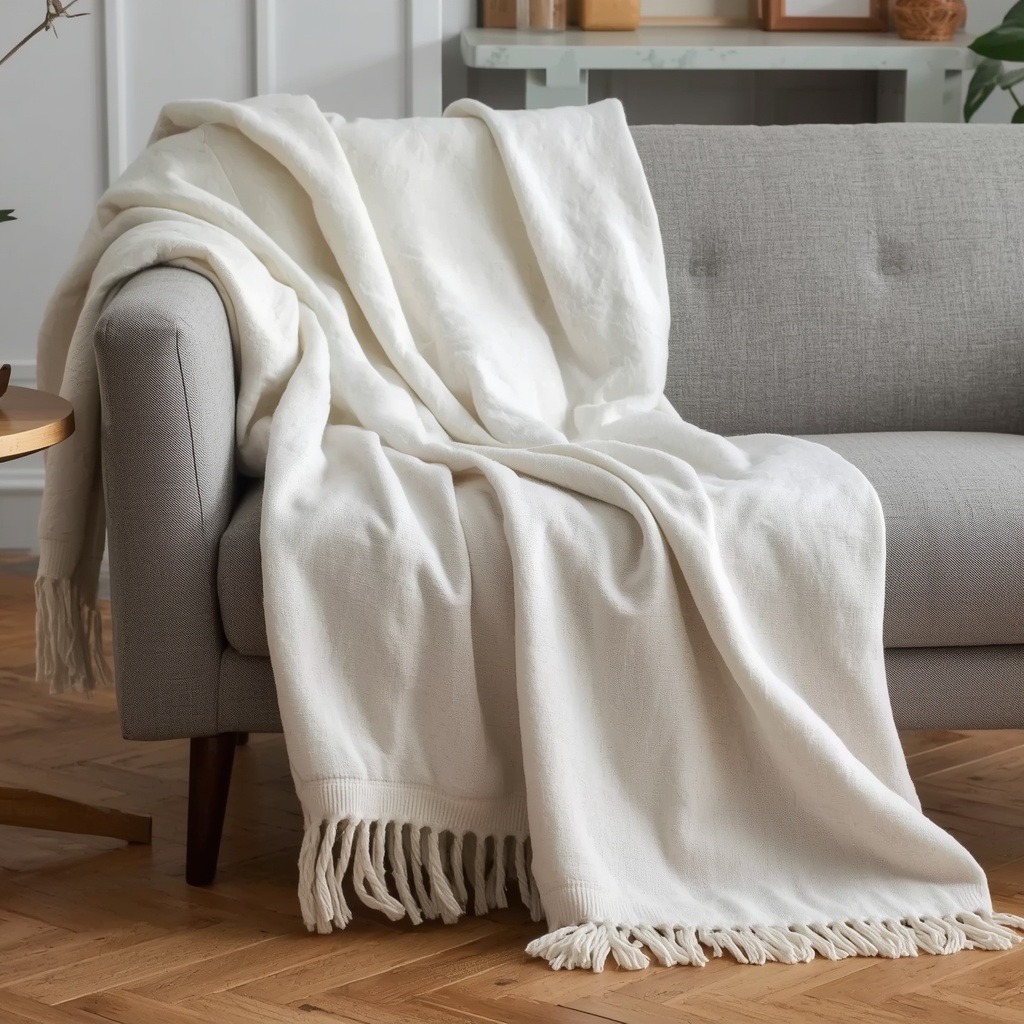
Drape it in a loose diagonal fold over one arm or the corner of the chaise, letting it cascade naturally rather than folding it into a tight square. This single detail signals “styled” instead of “lived-in mess,” and it takes about ten seconds to do.
Step 5: Anchor the Space With the Right Rug
An undersized rug is one of the sneakiest causes of a cluttered-feeling room. When a rug is too small, furniture appears to float randomly, and the whole layout reads as disconnected pieces rather than one cohesive room.
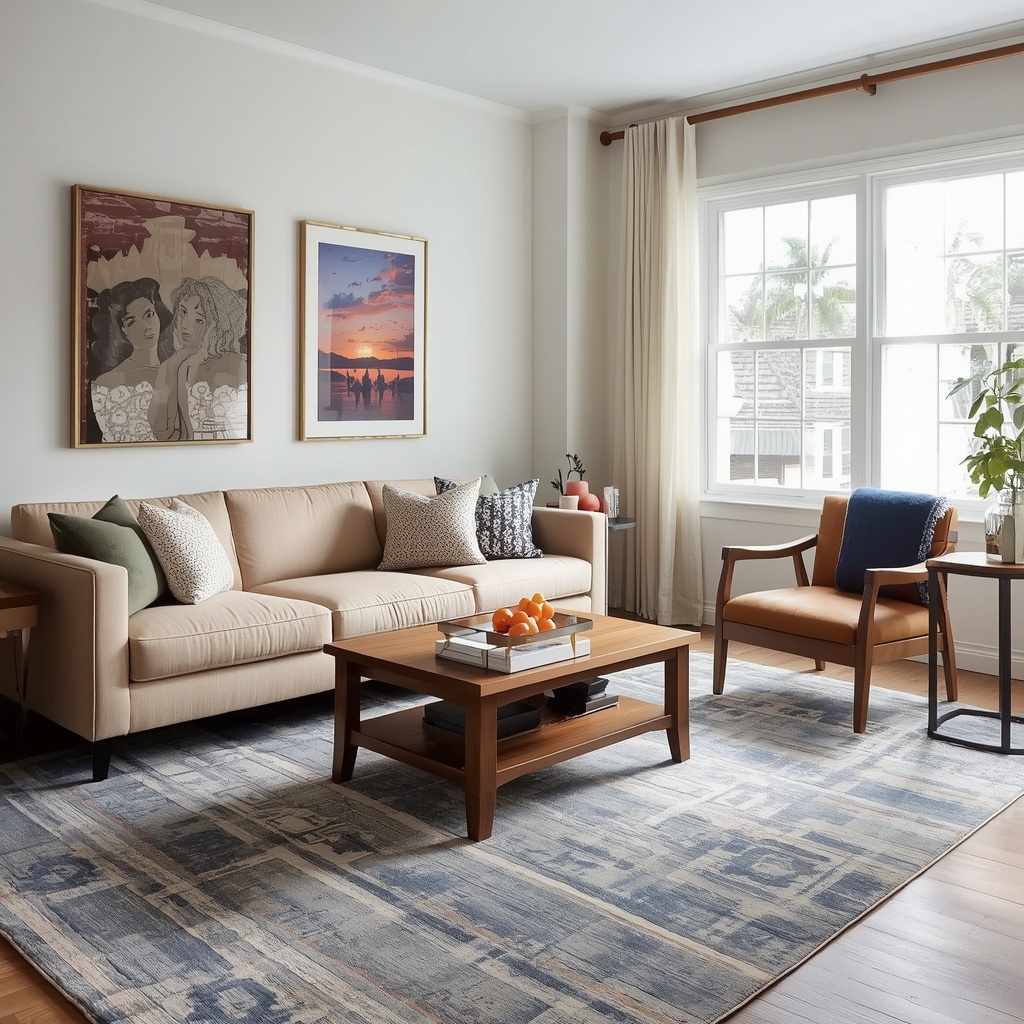
For a sectional, the rug should be large enough that at least the front legs of every seating piece rest on it. In open-concept living rooms, this often means sizing up to an 8×10 or 9×12 rug — larger than most people initially expect.
| Room Size | Recommended Rug Size |
|---|---|
| Small living room (under 150 sq ft) | 5′ x 8′ or 6′ x 9′ |
| Medium living room (150–250 sq ft) | 8′ x 10′ |
| Large/open-concept living room | 9′ x 12′ or larger |
Step 6: Choose Supporting Furniture Wisely
A sectional doesn’t need much company to function well — and adding too much only competes for visual real estate. This is where “less is more” becomes a literal design strategy, not just a slogan.
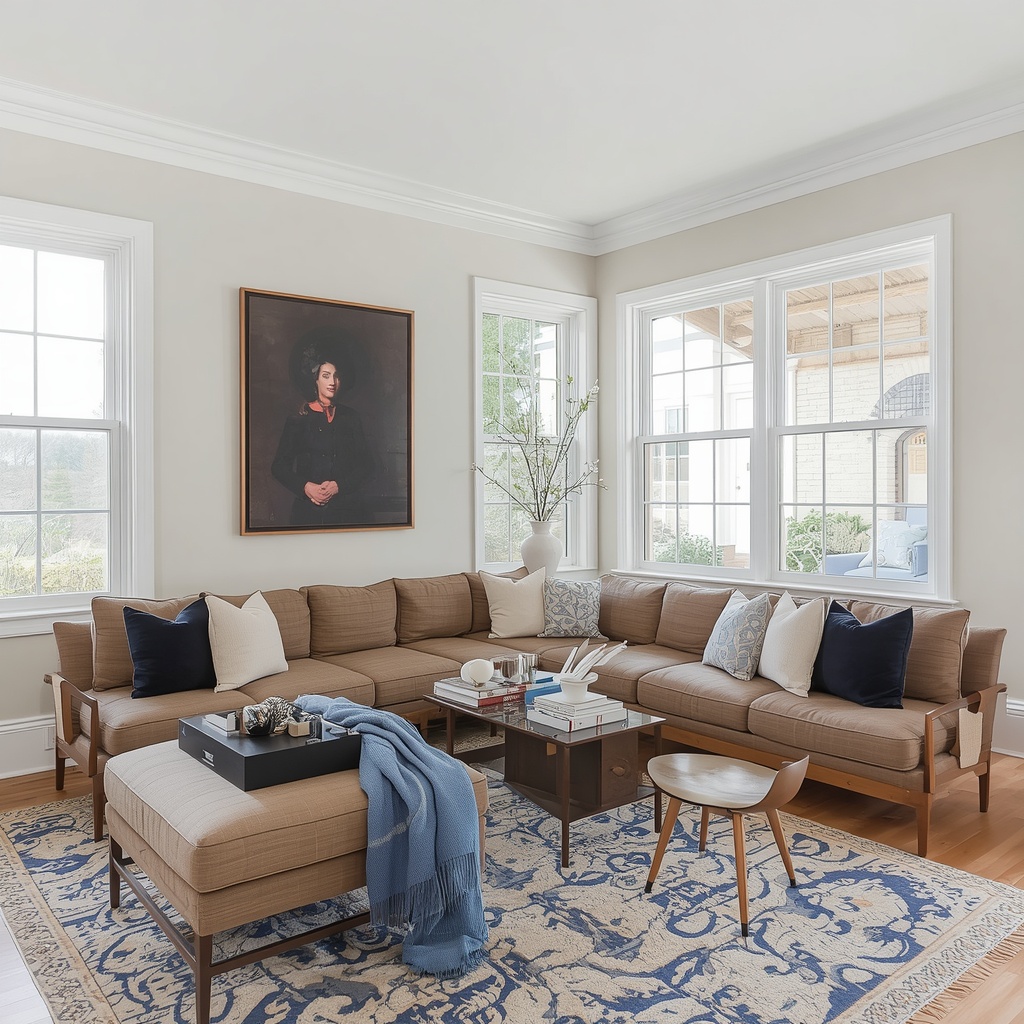
Stick to furniture that serves a clear purpose:
- One coffee table sized to the sectional (roughly two-thirds the length of the longest section)
- One or two side tables for drinks, lamps, or books
- A single accent chair, if the room allows, positioned to open the conversation area rather than crowd it
- A media console or bookshelf, kept visually light with open shelving rather than bulky cabinetry
Avoid nesting multiple small tables, extra ottomans, and floor baskets around the sectional “just in case.” Each additional piece increases visual clutter exponentially.
Step 7: Use Vertical Space to Balance the Horizontal Bulk
Sectionals are wide and low, which means they pull the eye horizontally across the room. To counterbalance that and keep the space feeling airy, bring in height elsewhere.
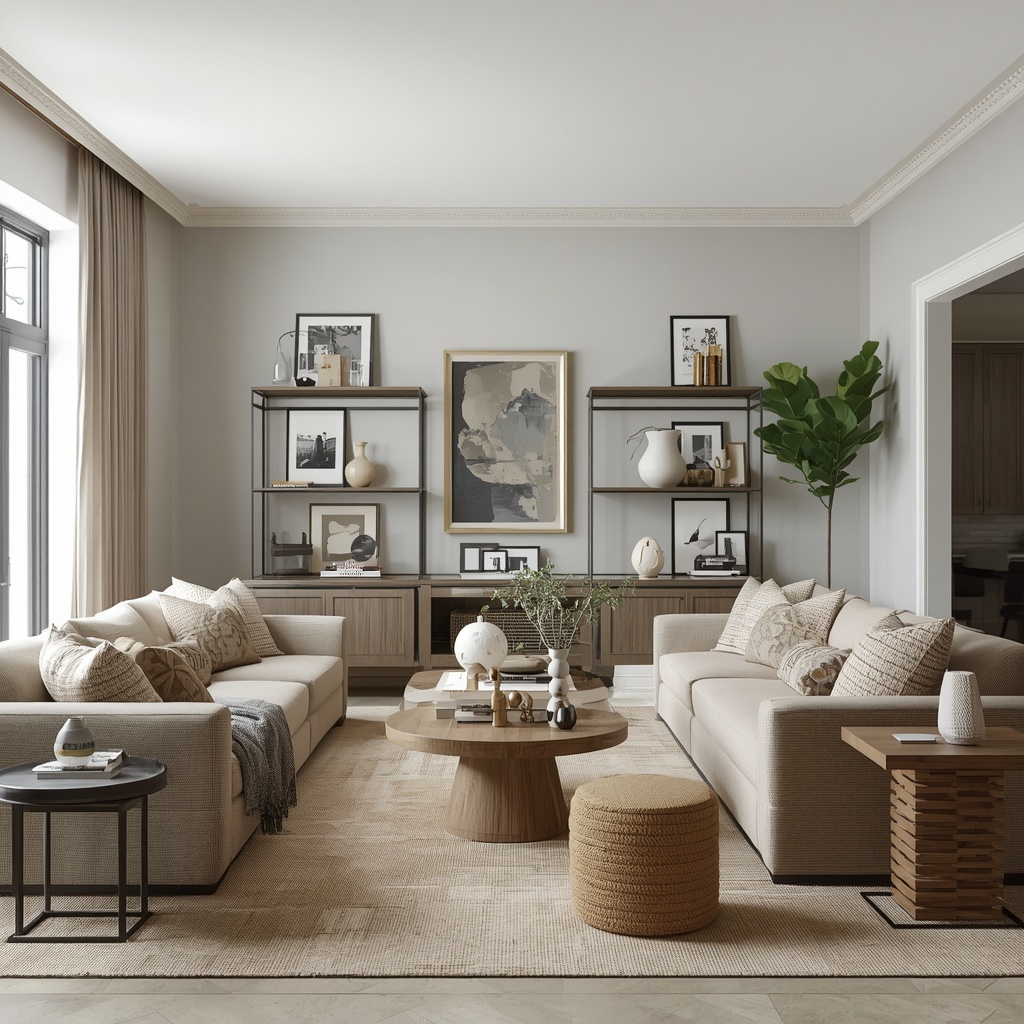
Tall floor lamps, a large piece of vertical art, or floor-to-ceiling curtains all help draw the eye upward, which makes the entire room feel taller and less dominated by the sofa’s footprint. This contrast between horizontal and vertical lines is a foundational technique in professional room composition, and it’s one of the fastest fixes for a room that feels “heavy.”
Step 8: Keep Surfaces Intentionally Sparse
Once your sectional, rug, and supporting furniture are in place, resist the urge to fill every open surface. Coffee tables and side tables should have breathing room, not a dozen decorative objects competing for attention.
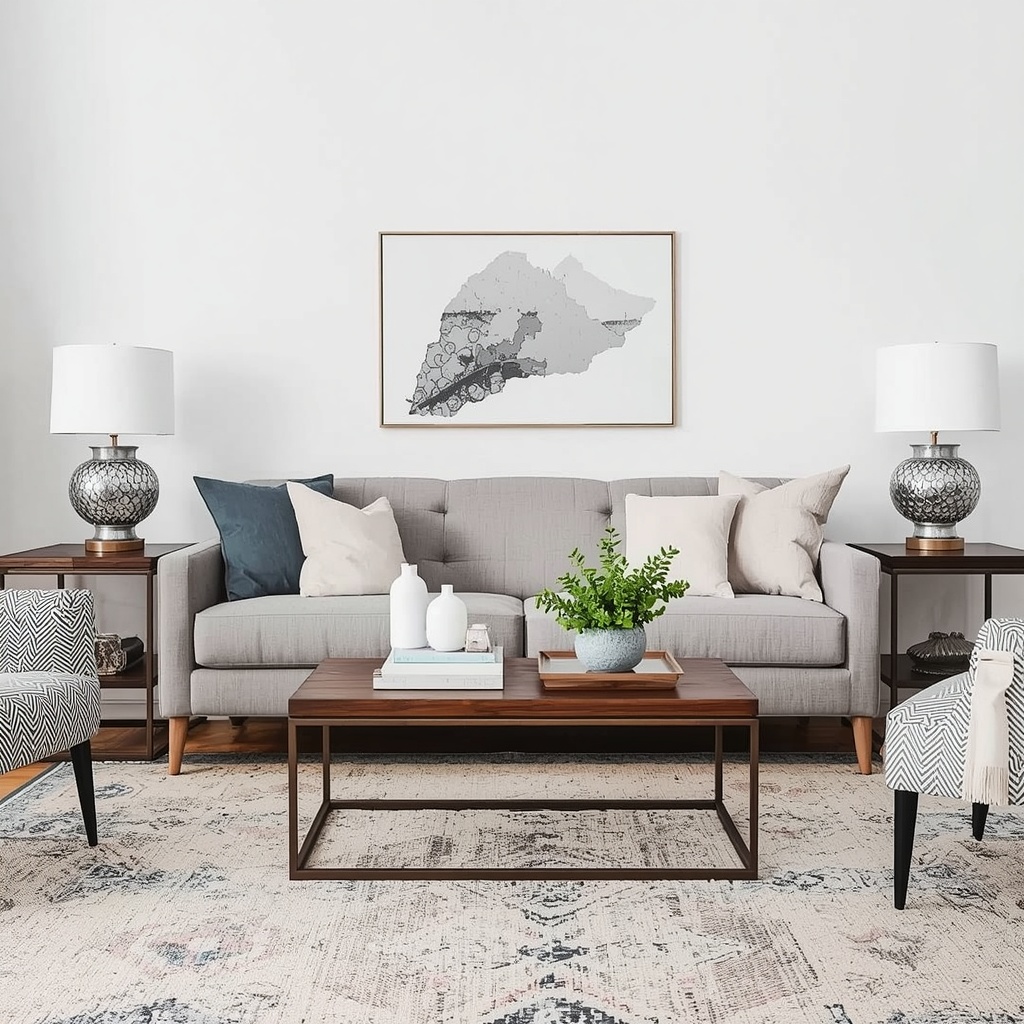
A simple styling rule I give clients: no more than three objects per surface, varying in height and grouped in odd numbers. A tray with a candle and a small stack of books reads as curated; ten random trinkets read as clutter.
Quick Reference: Do’s and Don’ts
| Do | Don’t |
|---|---|
| Use a rug that extends under the front legs | Use an undersized rug that floats furniture |
| Mix 3–5 pillows in varied textures | Overload the sectional with 8+ mismatched pillows |
| Float the sectional for depth | Push every piece against the walls |
| Keep surfaces to 2–3 curated objects | Cover every table with decor |
| Add height with lamps or art | Keep everything low and horizontal |
Common Mistakes That Make a Sectional Feel Cluttered
Even well-intentioned styling can backfire. Here are the patterns I see most often in client consultations:
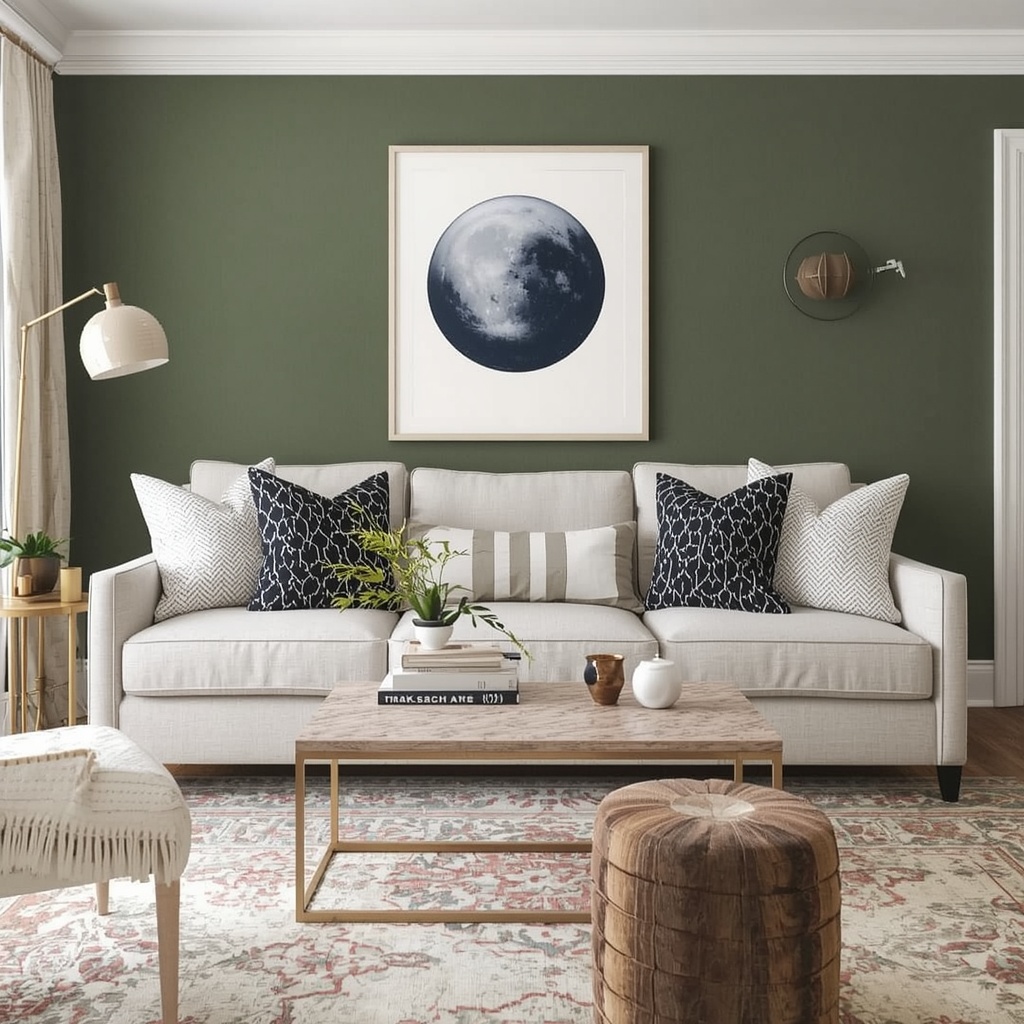
- Too many pattern clashes — mixing more than two or three patterns without a shared color thread
- Ignoring negative space — filling every gap instead of letting the eye rest
- Mismatched lighting — combining warm and cool bulb temperatures nearby, which subtly makes a room feel disjointed
- Overcrowding with side tables — one on every open arm “just in case” isn’t necessary
- Skipping the rug anchor — a common budget-driven mistake that undermines an otherwise great layout
Addressing even two or three of these issues can transform how spacious a room feels, often without buying a single new piece of furniture.
Final Thoughts
Styling a sectional sofa without cluttering the room comes down to restraint and intention. Every pillow, throw, table, and accessory should either support the sofa’s presence or give the eye somewhere calm to land. When in doubt, simplify — a slightly under-decorated sectional almost always looks better than an over-decorated one.
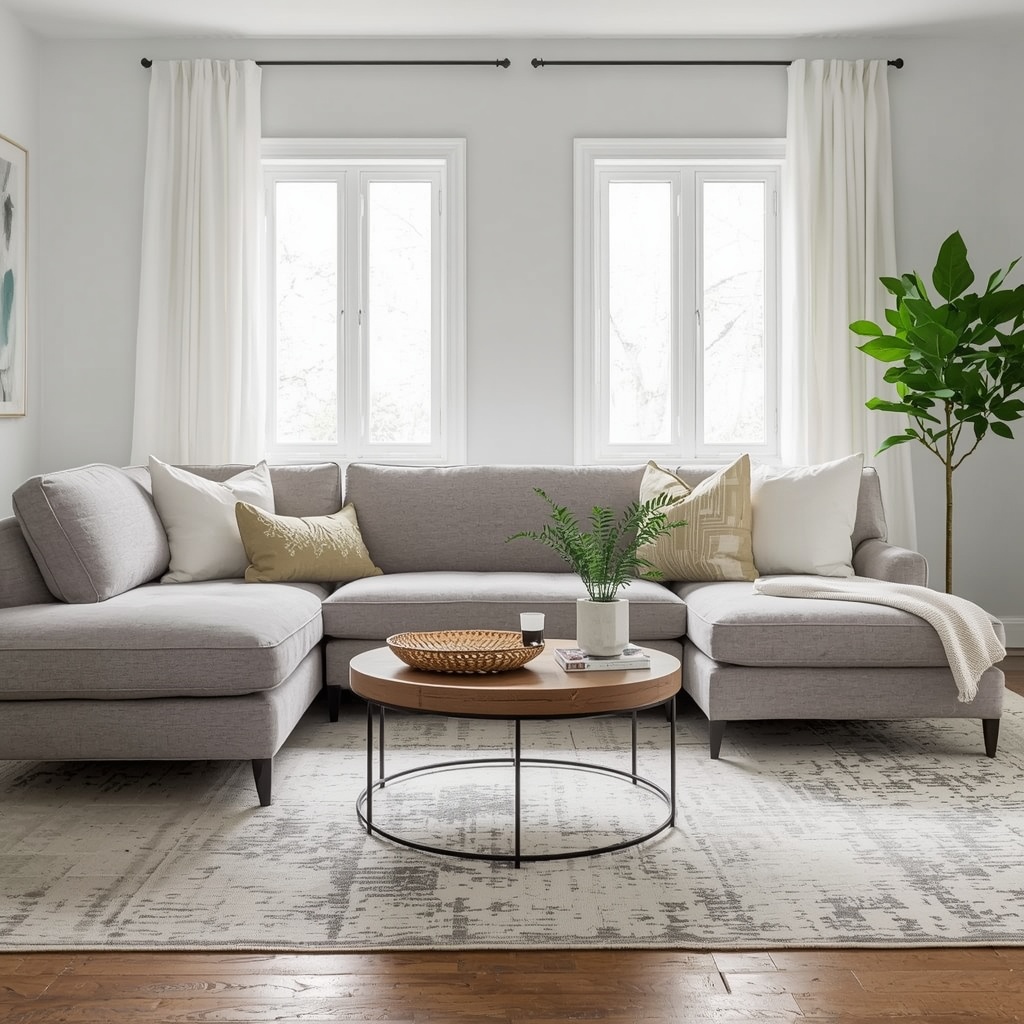
Start with placement and scale, build your palette around the sofa rather than against it, and let a handful of well-chosen accessories do the talking. The result is a living room that feels comfortable, spacious, and unmistakably put-together.