
Walking into a beautifully designed living room feels effortless — plush textures, a cohesive color story, lighting that flatters every corner. But here’s a secret most interior designers won’t tell you: that “expensive” look rarely comes from an expensive budget. It comes from intention.
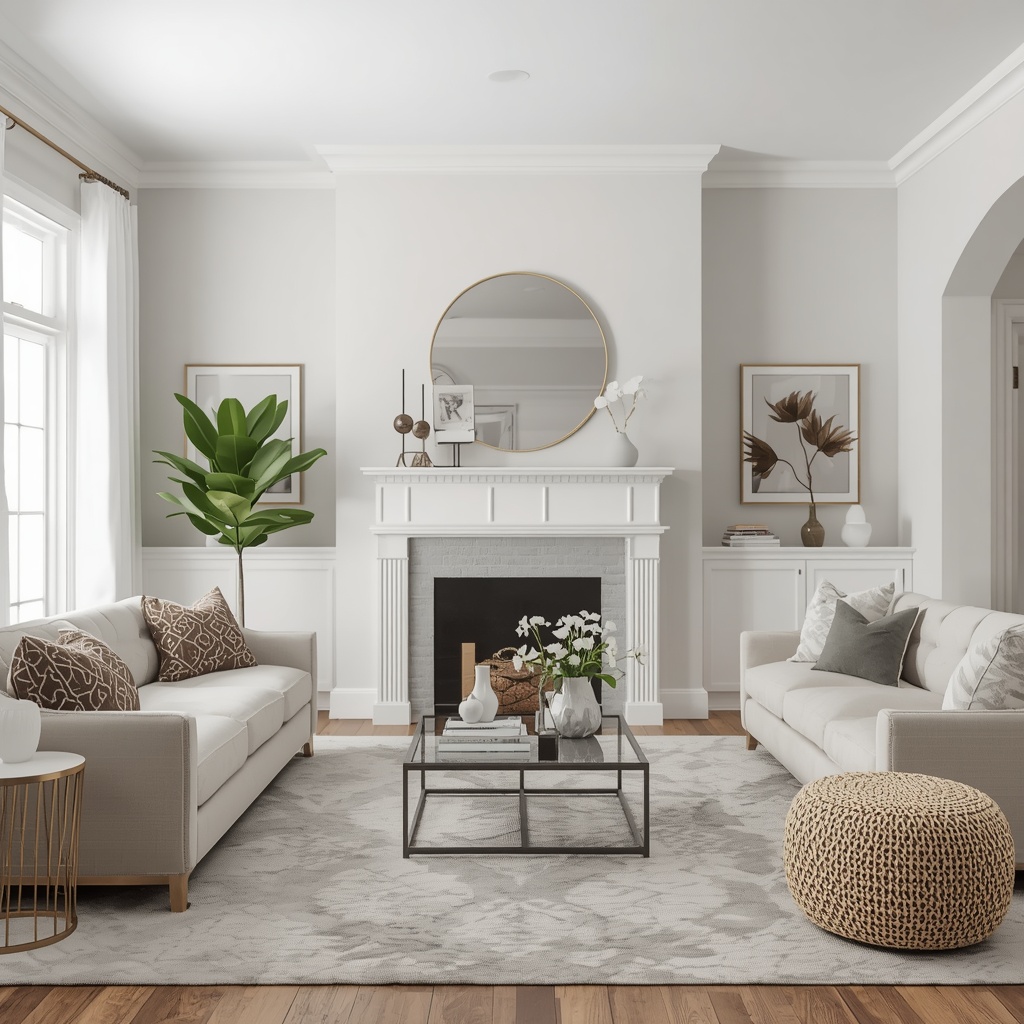
As someone who’s styled hundreds of living rooms for clients across every budget bracket, I can tell you the difference between a room that looks pricey and one that looks cheap has almost nothing to do with how much was spent. It comes down to color discipline, scale, lighting, and a handful of strategic splurges layered in with budget-friendly finds. This guide breaks down exactly how to achieve a high-end living room aesthetic without draining your savings account.
Why “High-End” Doesn’t Mean High-Priced
Luxury interiors share a few consistent traits: restraint, quality materials (or the illusion of them), and thoughtful curation. None of those require a five-figure budget. A $40 vase styled with intention can outperform a $400 piece dropped into a cluttered shelf.
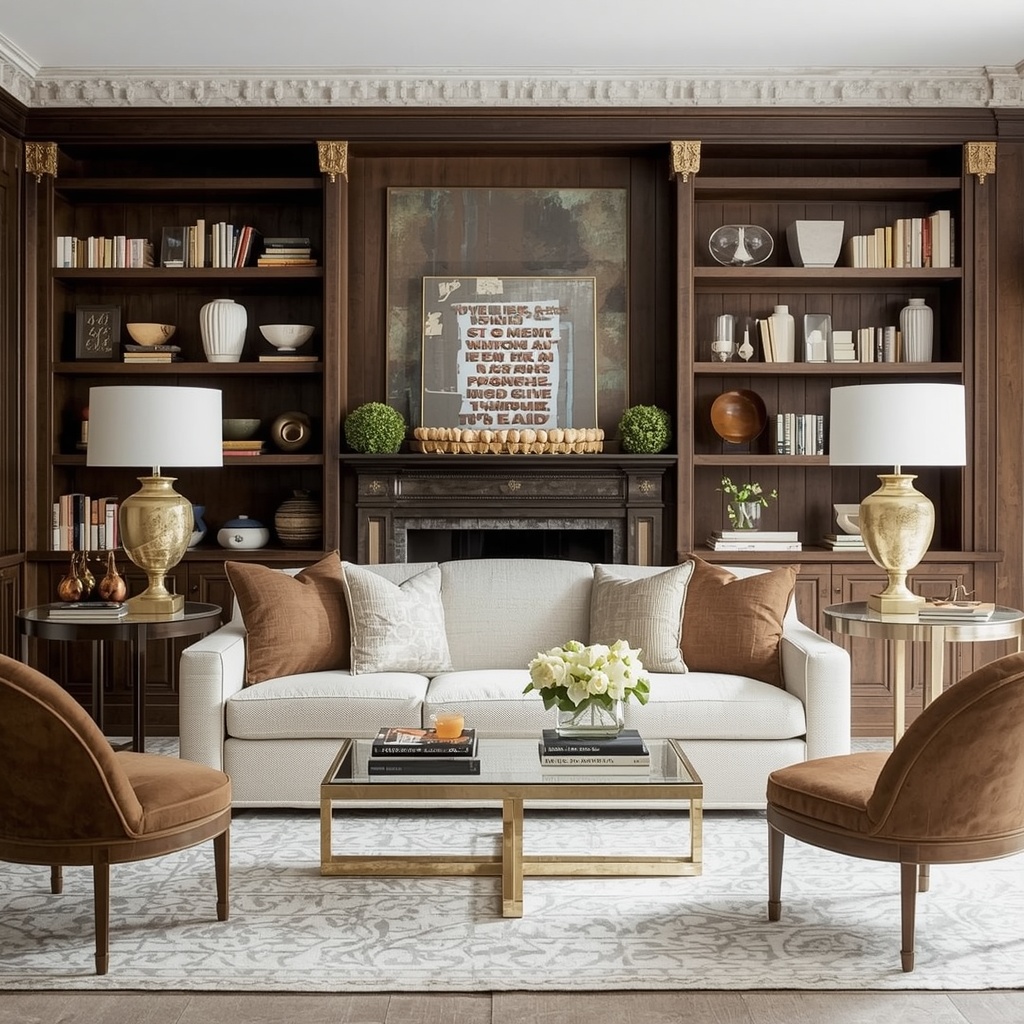
The goal isn’t to buy less expensive versions of everything — it’s to be strategic about where money goes and where clever styling does the heavy lifting instead. Designers call this “high-low mixing,” and it’s the single most powerful budget decorating principle you’ll learn in this article.
Start With a Strong, Cohesive Color Palette
Nothing screams “budget” faster than a room with too many competing colors and finishes. High-end spaces almost always work from a tight, intentional palette — typically one dominant neutral, one secondary tone, and one accent color used sparingly throughout.
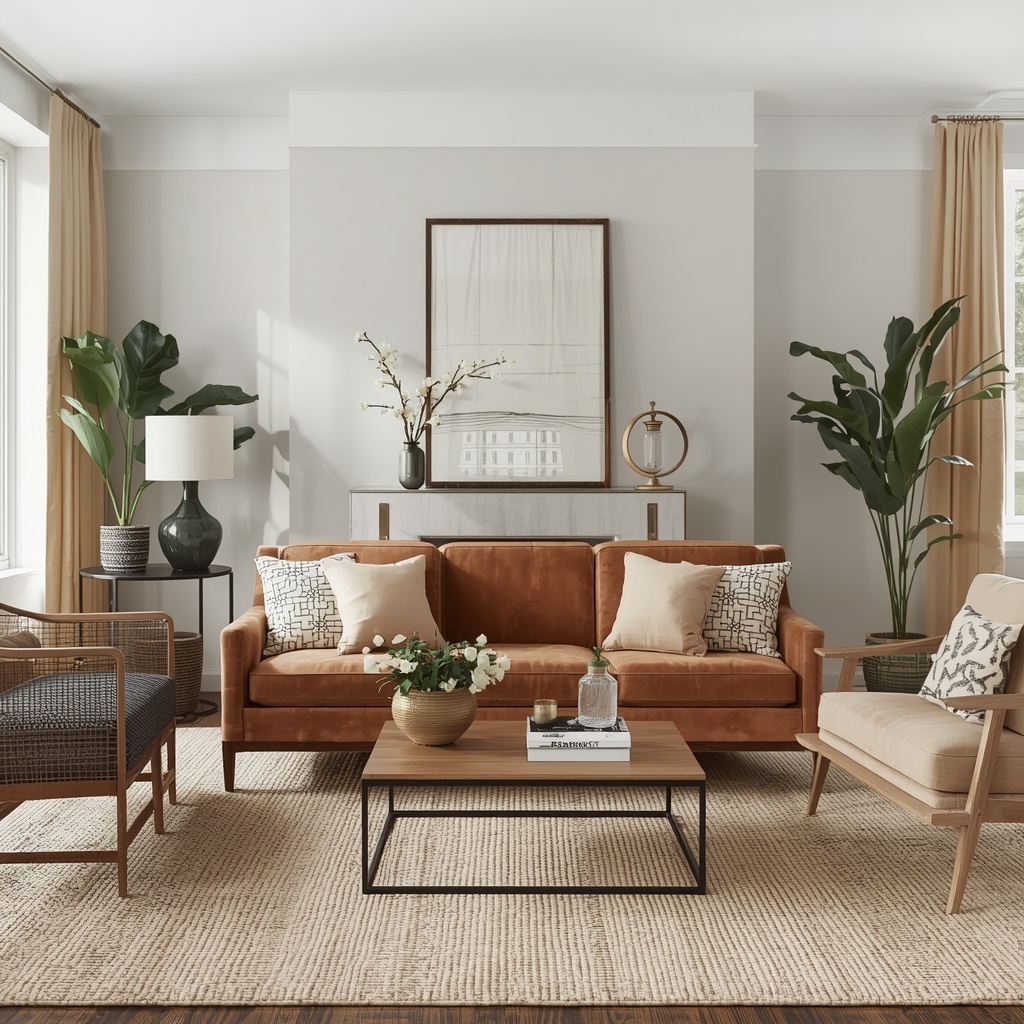
Before buying a single throw pillow, pick your palette and stick to it. This single decision will make mismatched, thrifted, and inexpensive pieces look like they were curated together by a professional, simply because the color story ties everything into one visual narrative.
Popular high-end-feeling palettes for 2026:
| Palette Name | Base Color | Secondary | Accent |
|---|---|---|---|
| Warm Minimalist | Greige | Cream | Terracotta |
| Modern Coastal | Soft White | Sandy Beige | Deep Navy |
| Moody Luxe | Charcoal | Warm Taupe | Brass/Gold |
| Quiet Nature | Sage Green | Ivory | Walnut Brown |
You can pull inspiration and matched paint chips from resources like Sherwin-Williams or Behr, both of which offer free digital color visualizers.
The Power of Layered Lighting
Overhead lighting alone is the fastest way to make a room feel flat, cold, and budget-basic. Designer-approved rooms use at least three light sources at varying heights: overhead, mid-level (table lamps), and low-level (floor lamps or accent lighting).
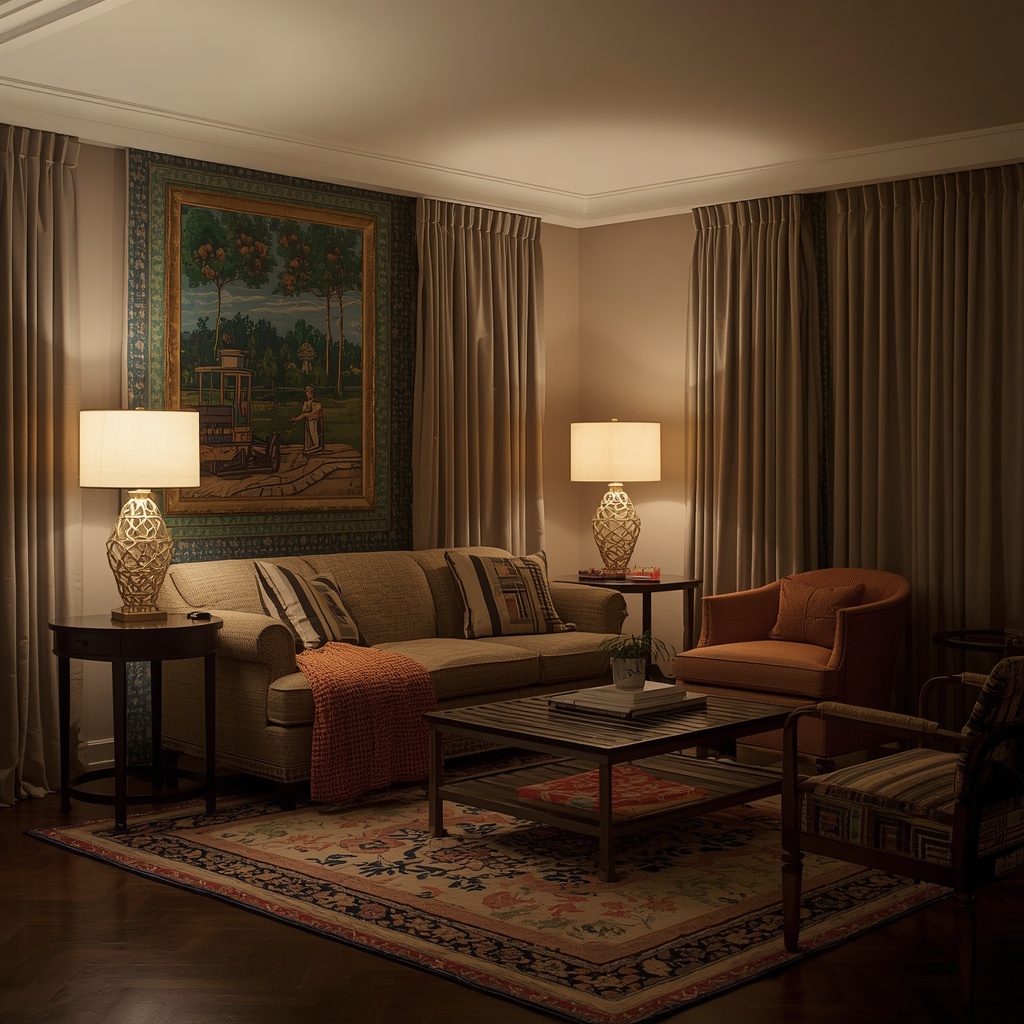
This layering creates depth and warmth that mimics the ambiance of a professionally lit space — and lamps are one of the most affordable ways to transform a room. A $30 lamp with a warm-toned bulb can do more for perceived luxury than a $500 sofa in a room lit by one harsh ceiling fixture.
“Lighting is the jewelry of a room — it’s often the last thing people think about, and the first thing that makes a space feel expensive or cheap.” This is a principle repeated across the interior design industry, and it holds true regardless of budget size.
Quick Lighting Checklist
- Use warm white bulbs (2700K–3000K) instead of cool white
- Add at least one floor lamp for ambient corner lighting
- Include a table lamp near seating for task lighting
- Consider LED strip lighting behind a TV or shelving for a “designer glow” effect
- Avoid a single bright overhead light as your only source
Invest vs. Save: Where to Spend and Where to Skip
One of the most common questions I get from clients is, “What’s actually worth spending money on?” The answer is almost always the same handful of categories. Below is a breakdown I use with nearly every client.
| Category | Splurge or Save | Why |
|---|---|---|
| Sofa | Splurge (if budget allows) | Largest visual anchor in the room; cheap fabric shows wear fast |
| Coffee Table | Save | Easy to find stylish budget or secondhand options |
| Area Rug | Splurge | Cheap rugs pill, fade, and flatten quickly |
| Throw Pillows | Save | Easy, low-cost way to refresh color seasonally |
| Lighting Fixtures | Mixed | Splurge on one statement piece, save on secondary lamps |
| Wall Art | Save | DIY, print shops, and thrifted frames work beautifully |
| Curtains | Splurge (slightly) | Floor-length, high-quality drapery elevates the entire room |
<br>
Pro Tip: If you can only splurge on one item in your living room, make it the area rug. A large, well-anchored rug (sized so front furniture legs sit on it) instantly makes a space feel intentional, layered, and expensive — even if everything else came from a clearance rack.
Textiles That Trick the Eye
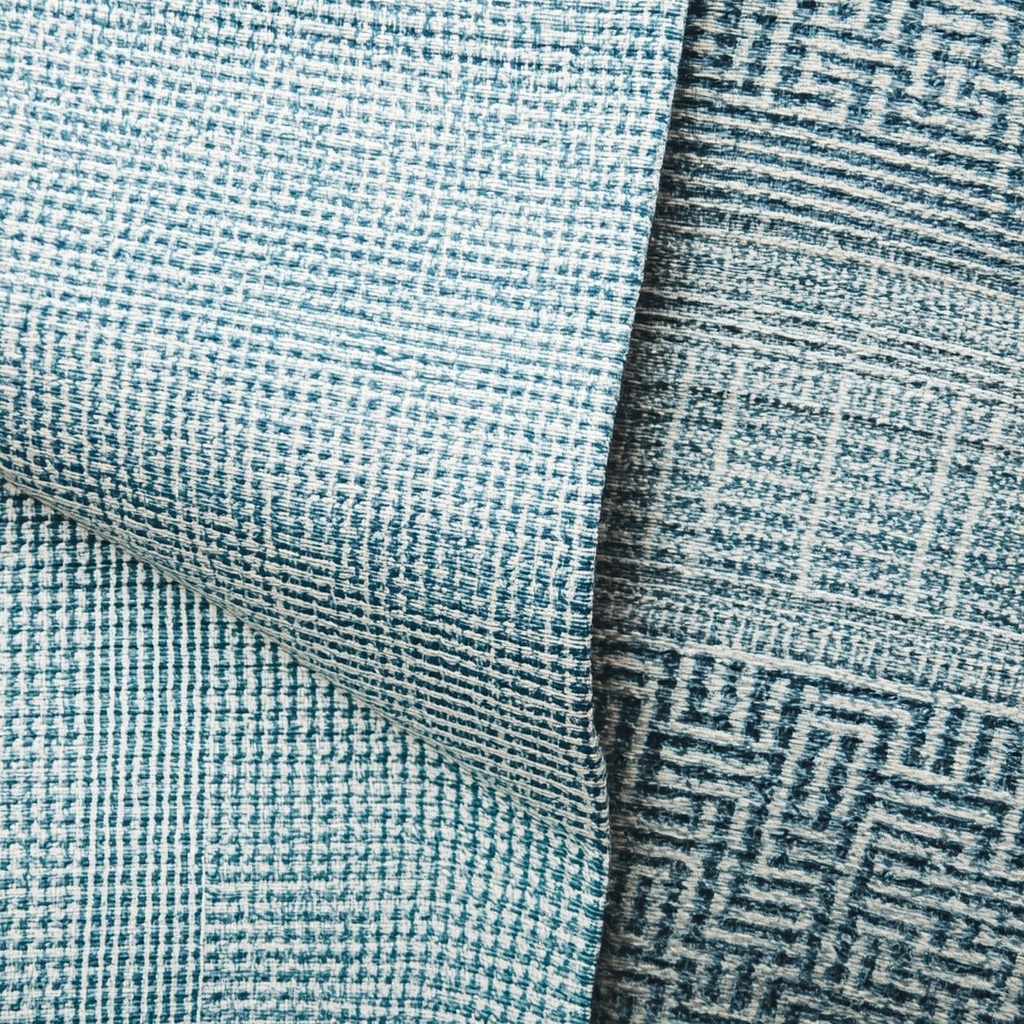
Fabric quality is one of the fastest visual cues our brains use to judge whether a space is “expensive.” The good news: you don’t need designer textiles to get a designer look — you need the right textures and proportions.

Layer a bouclé or velvet throw pillow next to a linen-look cushion, and add a chunky knit throw blanket draped over the arm of the sofa. This textural mixing creates visual richness that a single flat fabric never will, and most of these pieces are available at budget retailers like HomeGoods, Target, or IKEA.
Textures that instantly elevate a space:
- Bouclé or nubby-weave pillow covers
- Chunky knit or faux-fur throws
- Linen-blend curtains (avoid shiny polyester)
- Woven jute or wool rugs
- Velvet accent pillows in a single accent color
The High-Low Mixing Method
This is the technique professional designers rely on most, and it’s the fastest path to a high-end look for less. Instead of every item in the room being budget or every item being splurge, you strategically mix a few elevated “hero” pieces with budget-friendly supporting pieces.
Think of it like a capsule wardrobe: one great blazer paired with basics still looks polished. In a living room, that “blazer” might be a statement mirror, a beautiful coffee table book stack, or one substantial light fixture — surrounded by affordable, well-chosen supporting pieces.
Statement Pieces on a Budget
Every high-end room has a focal point — something the eye is drawn to first. This doesn’t need to be expensive; it needs to be intentional and slightly larger in scale than expected, since oversized pieces read as luxurious while undersized pieces read as an afterthought.
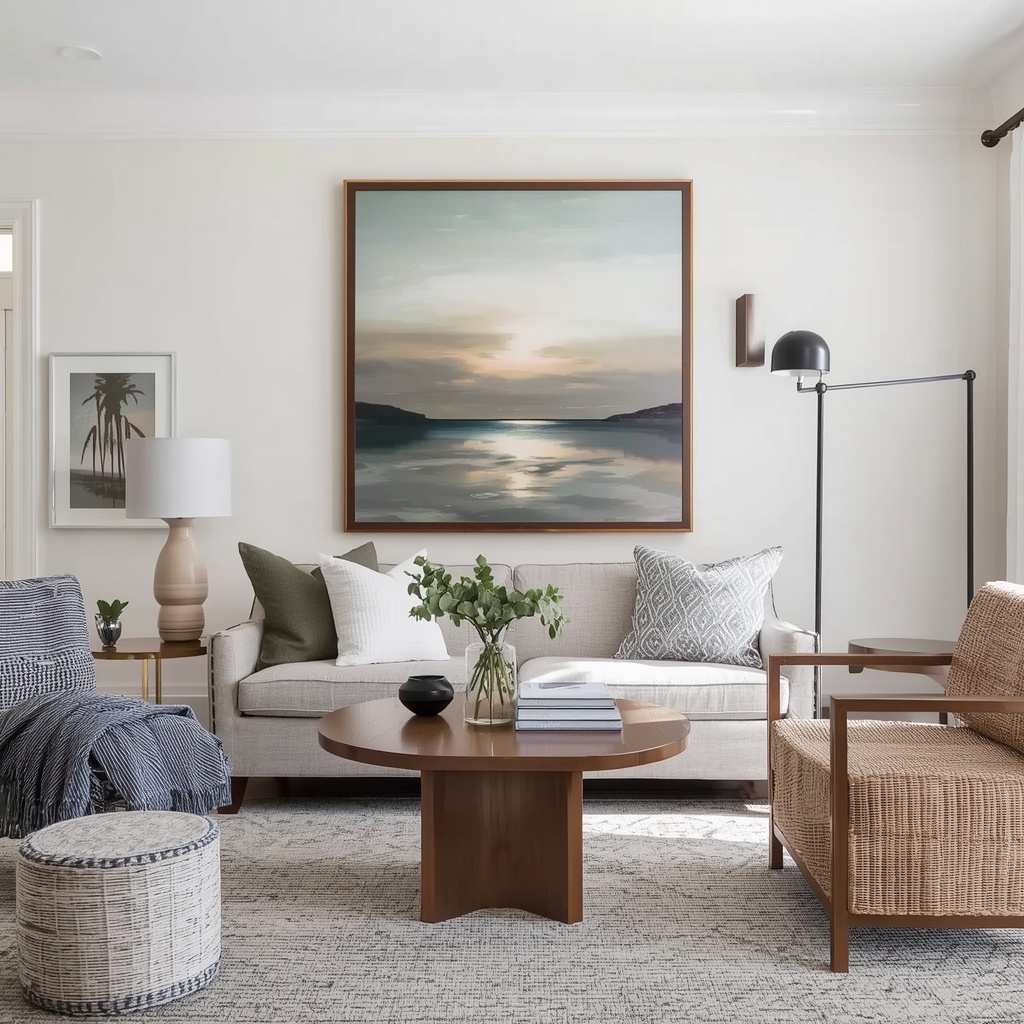
Consider an oversized wall mirror, a bold piece of framed art, or a sculptural floor lamp. These items don’t have to be costly — vintage and marketplace finds often outperform new budget furniture in both quality and character.
Thrifting and Vintage Finds: The Designer’s Secret Weapon
Almost every professionally designed room includes at least one vintage or secondhand piece — it’s what keeps a space from feeling like a showroom catalog. Vintage furniture also tends to be built from solid wood and better materials than many new budget options.
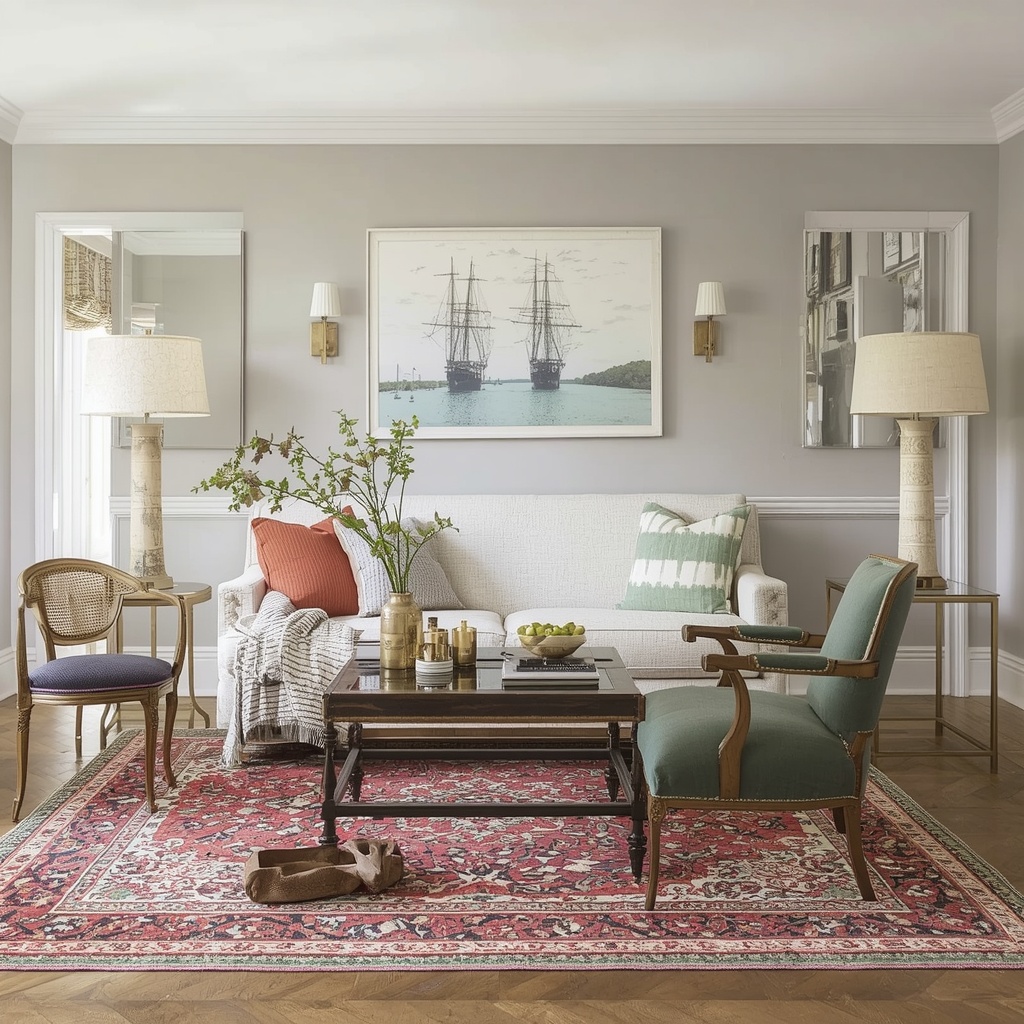
Great places to hunt for high-end-looking pieces at low prices include estate sales, Facebook Marketplace, local thrift stores, and consignment shops. A worn brass lamp or a solid wood side table can be refreshed with new hardware, a coat of paint, or simply a good cleaning.
Best items to thrift for a living room:
- Wood coffee tables and side tables
- Brass or metal lamp bases
- Framed art and mirrors
- Wooden bookshelves or console tables
- Decorative bowls, trays, and vases for styling
Styling Tricks Designers Swear By
Beyond furniture and color, the final 20% of a room’s “expensive” feeling comes down to styling — the small, deliberate touches that signal a space was thoughtfully arranged rather than simply furnished.
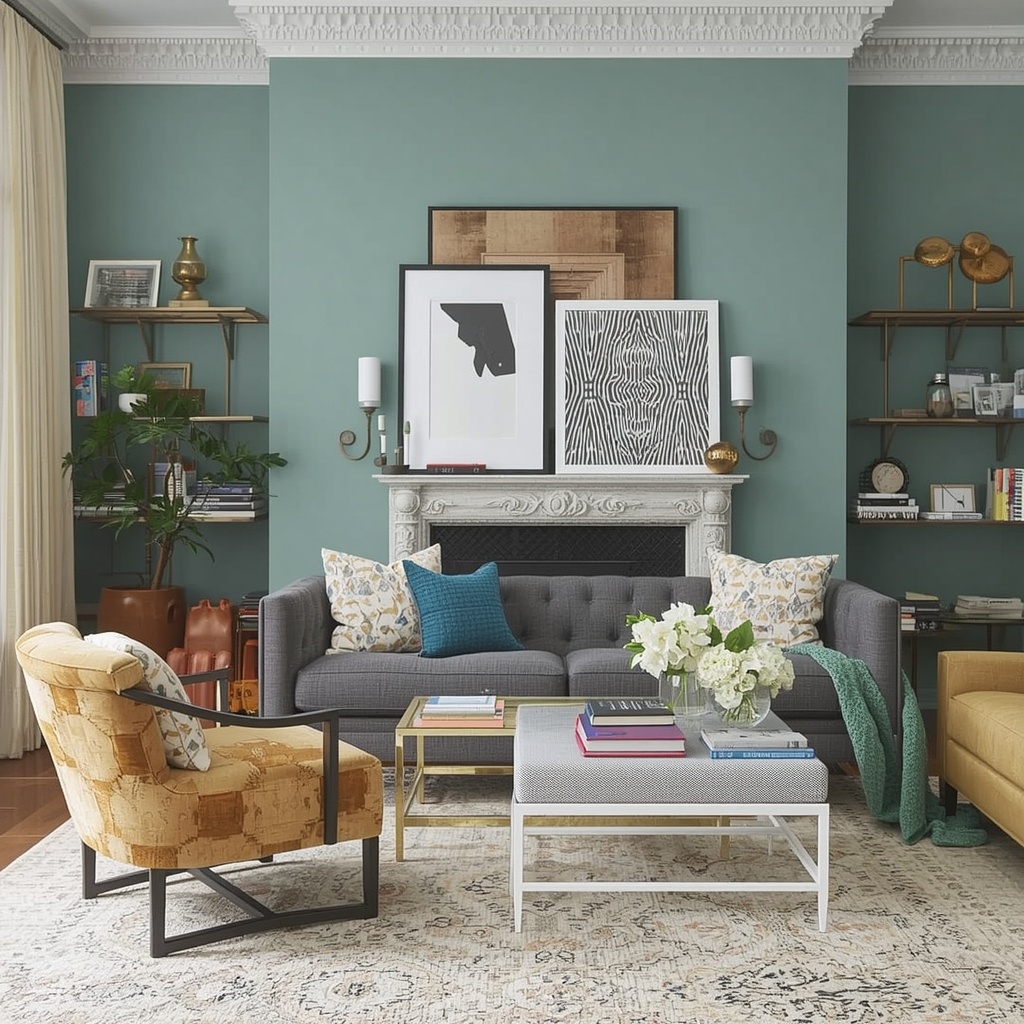
Designer-approved styling habits:
- Group in odd numbers. Décor arranged in threes feels more natural and intentional than pairs.
- Vary height on every surface. Mix tall, medium, and low objects on coffee tables and shelves.
- Add greenery. Even faux plants add life and softness that budget rooms often lack.
- Edit ruthlessly. Remove one item from every cluttered surface — negative space reads as luxury.
- Anchor with a rug. Furniture floating on bare floor instantly looks unfinished.
- Stack books with intention. A styled stack of coffee table books adds texture and personality for a few dollars.
Pro Tip: Before buying anything new, do a full “editing pass” of your current room. Removing 20% of what’s already there often creates a more expensive-looking space than adding anything new.
Common Budget Décor Mistakes to Avoid
Even with a full toolkit of tips, certain habits quietly undercut a room’s polish. Avoiding these is just as important as what you add.
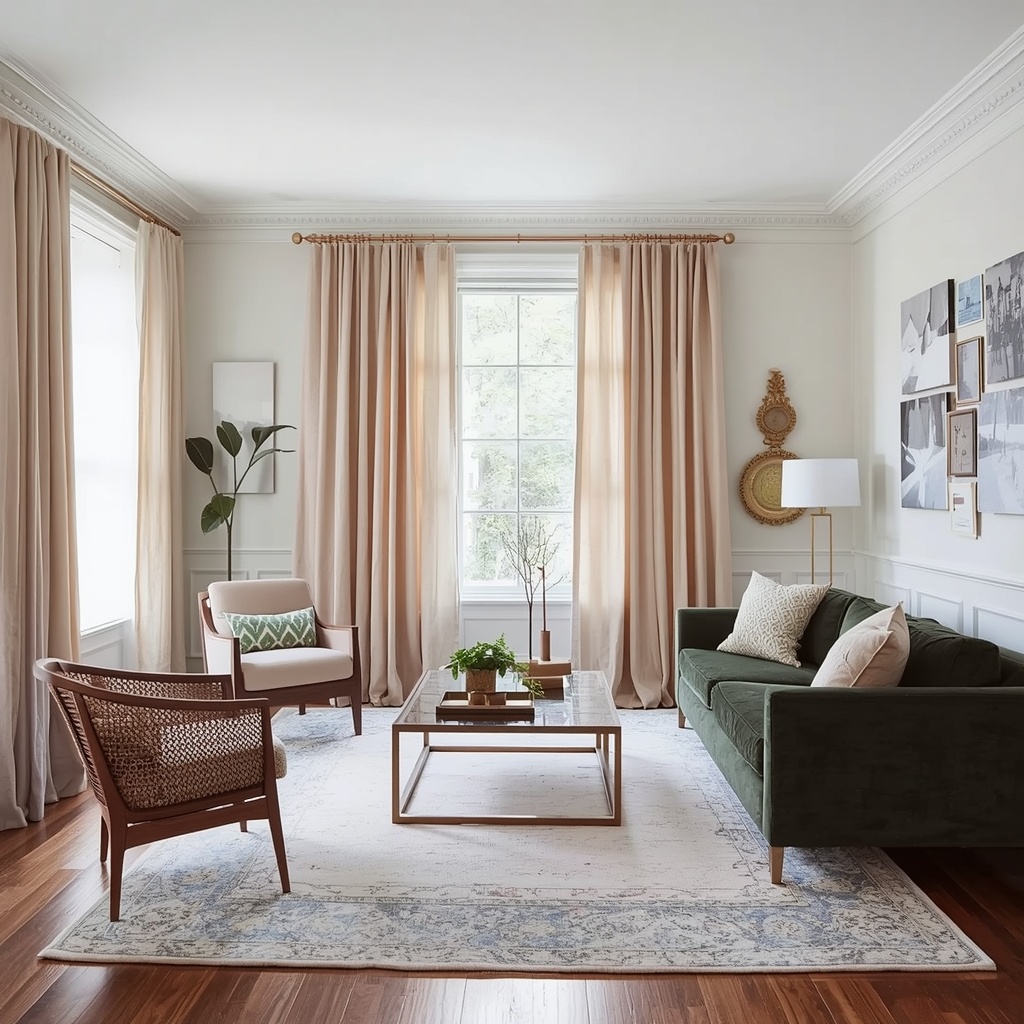
Cheap, shiny curtain fabric under bright overhead lighting is one of the fastest ways to flatten a room’s perceived value, since materials and light quality are the first things the eye registers. Similarly, undersized rugs and furniture pushed against walls instead of arranged for conversation both signal an unplanned space rather than a designed one.
Quick mistake-avoidance checklist:
| Mistake | Fix |
|---|---|
| Rug too small for furniture | Size up so front legs sit on the rug |
| Shiny, thin curtain fabric | Choose matte linen-blend fabric |
| All furniture against the wall | Pull seating in to create a conversation zone |
| Too many accent colors | Limit to 1 dominant, 1 secondary, 1 accent |
| Only overhead lighting | Add lamps at two additional heights |
| Cluttered surfaces | Edit to odd-numbered groupings with varied height |
Bringing It All Together
A high-end living room isn’t about the size of your budget — it’s about the quality of your decisions. Color discipline, layered lighting, strategic textile mixing, one or two well-chosen splurge items, and confident styling will outperform a room full of expensive furniture with no cohesive plan.
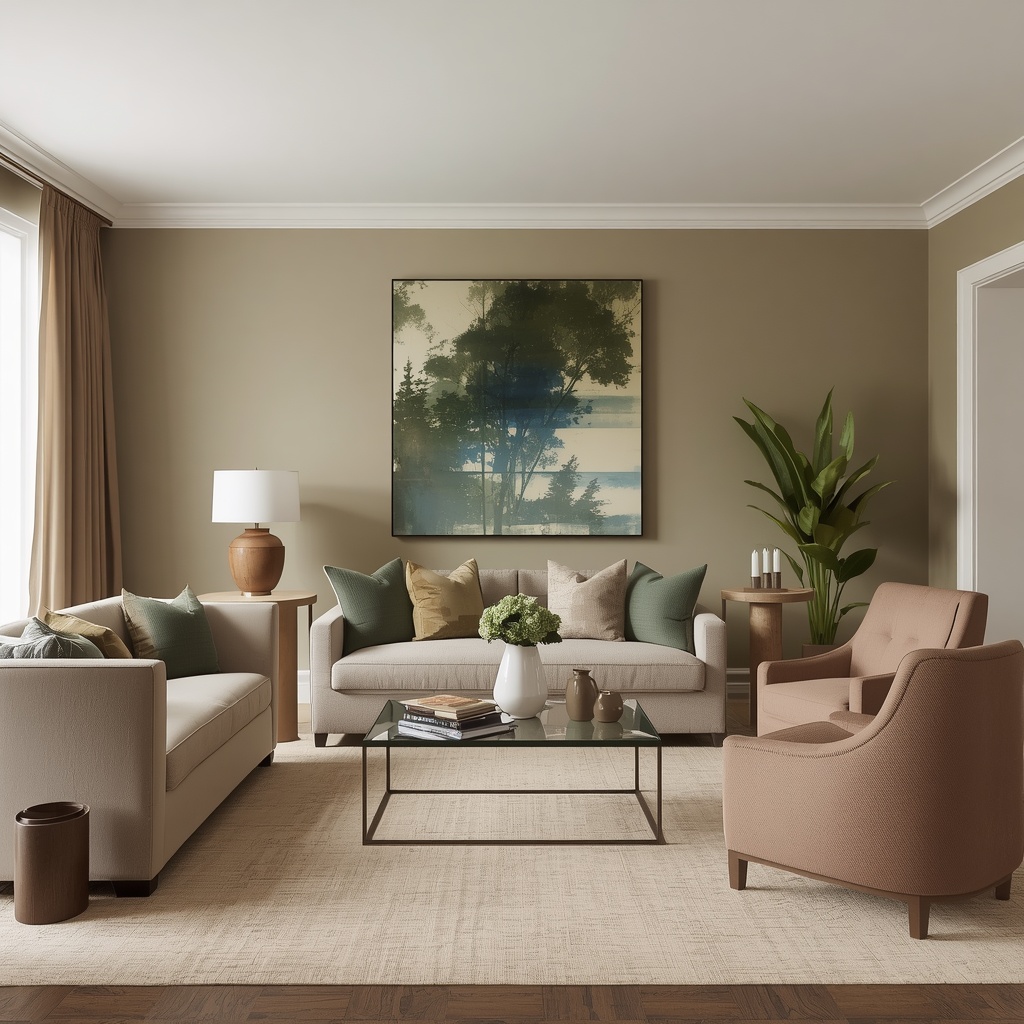
Start small: pick your palette, add a lamp, size up your rug, and edit your surfaces. Each change compounds, and before long, you’ll have a living room that looks like it came out of a designer’s portfolio — for a fraction of the price.