
Walk into a living room that feels expensive, and chances are it’s not the sofa doing the heavy lifting. It’s the ceiling. The trim. The way a doorway is framed, or how a fireplace anchors the whole space. Architectural details are the bones of a room, and even in a rental or a builder-grade home, the right ones can transform a flat, forgettable space into something that feels custom-built.
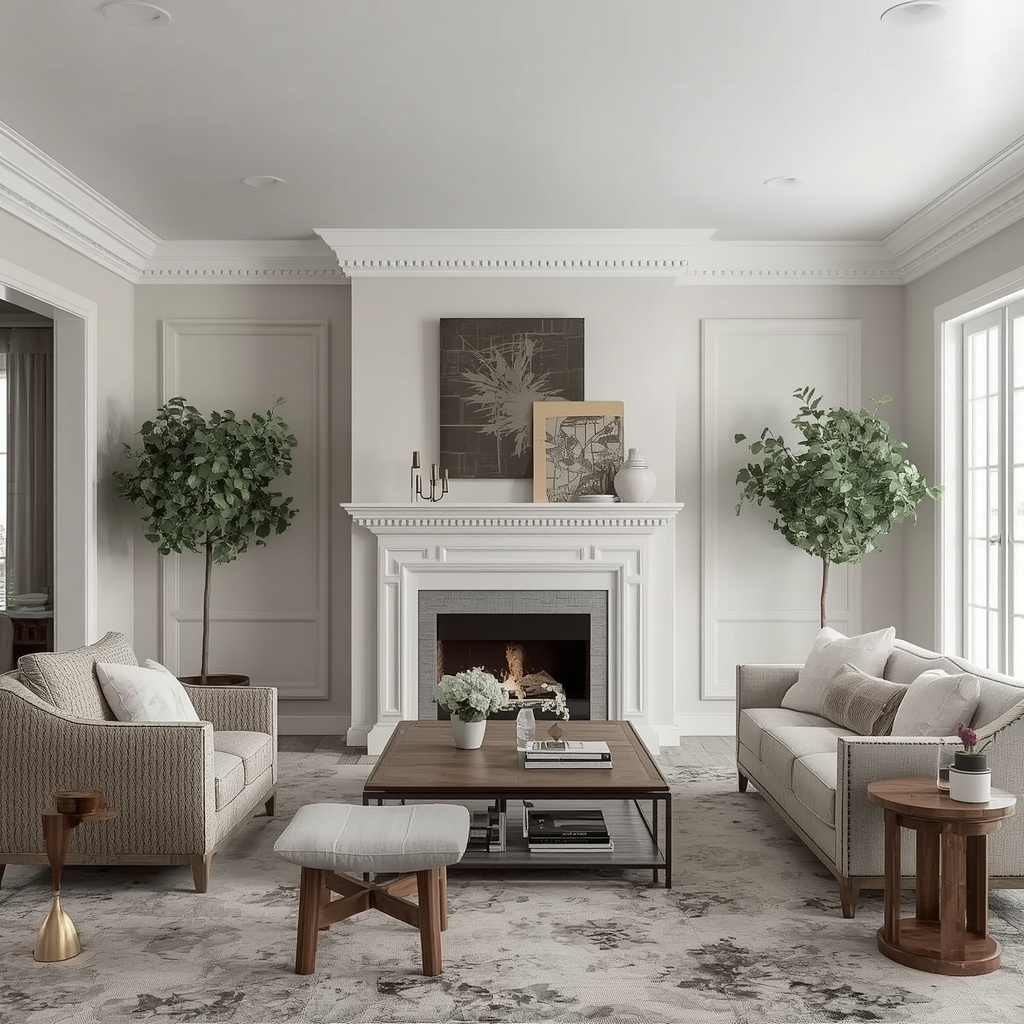
As an interior designer, I get asked constantly: “How do I make my living room look designer without a full renovation?” The answer almost always comes back to architecture, not accessories. Below, I’m breaking down the details that deliver the biggest visual return, how to add them at different budget levels, and the mistakes I see homeowners make when they try.
Why Architectural Details Matter More Than Furniture
Furniture changes, trends shift, and throw pillows get swapped out every season. Architectural details are permanent. They set the tone for everything else in the room and give your eye somewhere intentional to land.
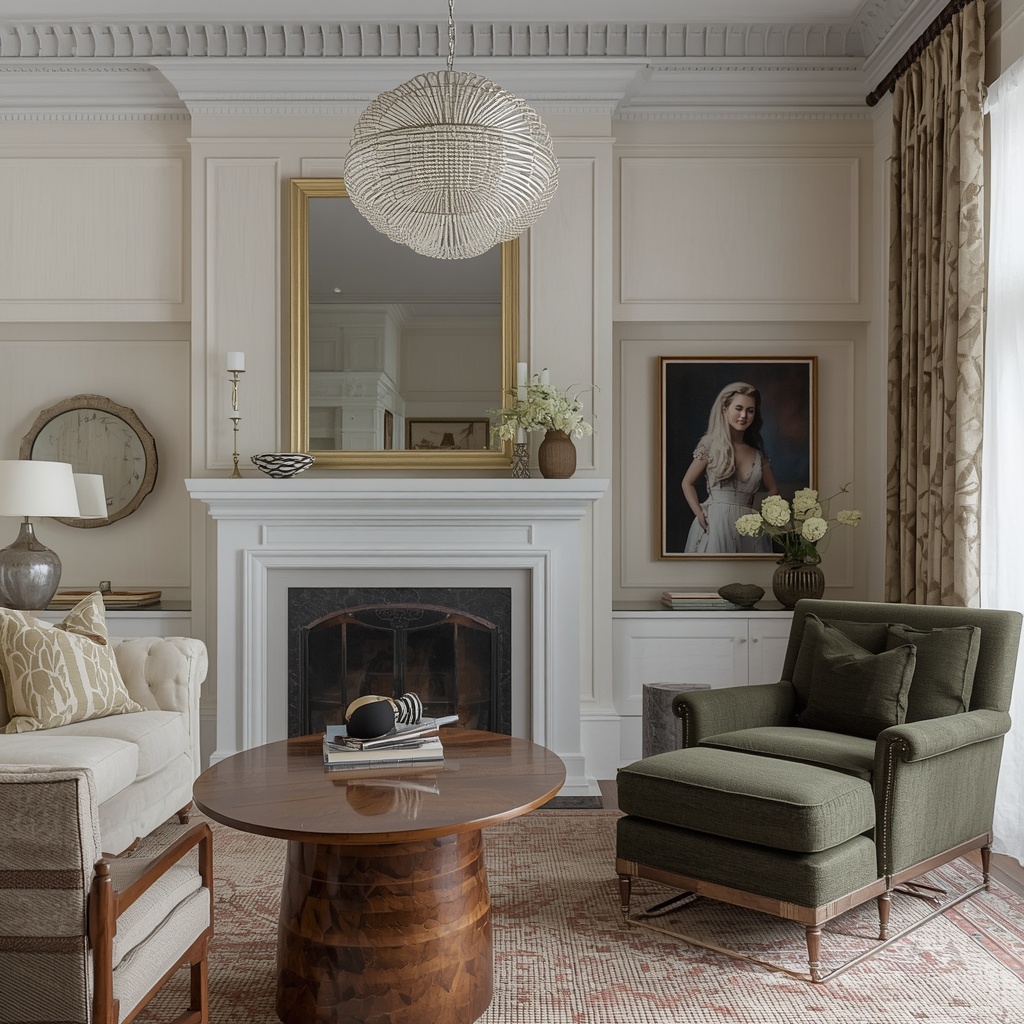
A living room without any millwork, ceiling interest, or wall dimension tends to read as “unfinished,” no matter how nice the sofa is. Add crown molding, a beam, or a textured accent wall, and suddenly the same furniture looks pulled together. This is why builders and flippers invest in trim work before staging: it does more visual work per dollar than almost anything else.
“Good architecture doesn’t shout for attention. It quietly convinces you a room was designed, not just decorated.” — a principle I repeat to every client who’s on the fence about adding trim.
1. Crown Molding and Base Trim
Crown molding is the single most requested detail in my client consultations, and for good reason. It softens the harsh line where wall meets ceiling and adds a sense of formality and craftsmanship instantly.
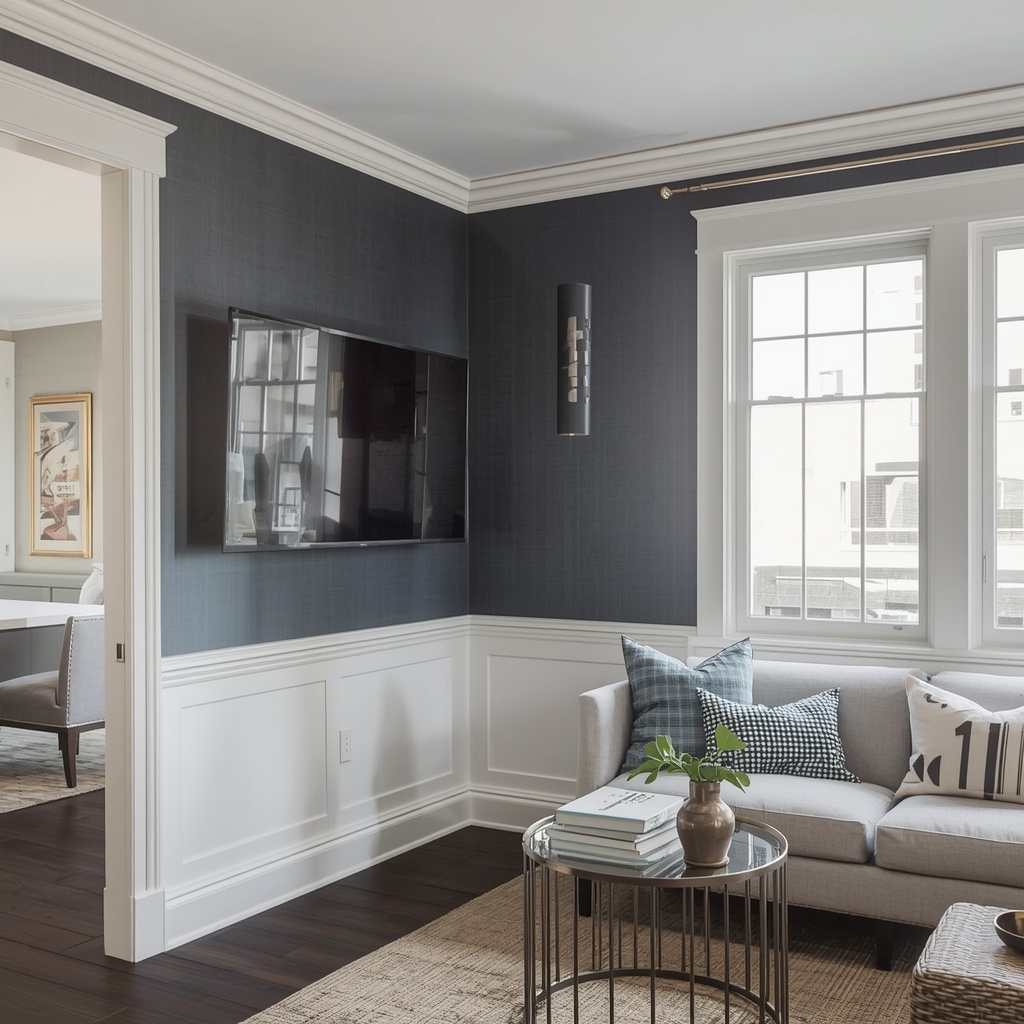
Pairing crown molding with a substantial baseboard creates a visual “frame” around the entire room. This detail works in nearly any style, from traditional to modern farmhouse, as long as the profile size matches the scale of the room.
Quick specs to know:
| Ceiling Height | Recommended Molding Size |
|---|---|
| 8 feet | 3–4 inches |
| 9 feet | 4–5.5 inches |
| 10+ feet | 5.5–7.5 inches |
💡 Pro Tip: If your ceilings are under 8 feet, skip crown molding altogether and opt for a simple ceiling-line reveal or paint the ceiling the same color as the walls. Molding on a low ceiling visually shortens the room instead of elevating it.
2. Coffered and Beamed Ceilings
Nothing says “custom home” faster than a coffered ceiling or exposed structural beams. These details introduce depth and rhythm overhead, an area most homeowners completely ignore.
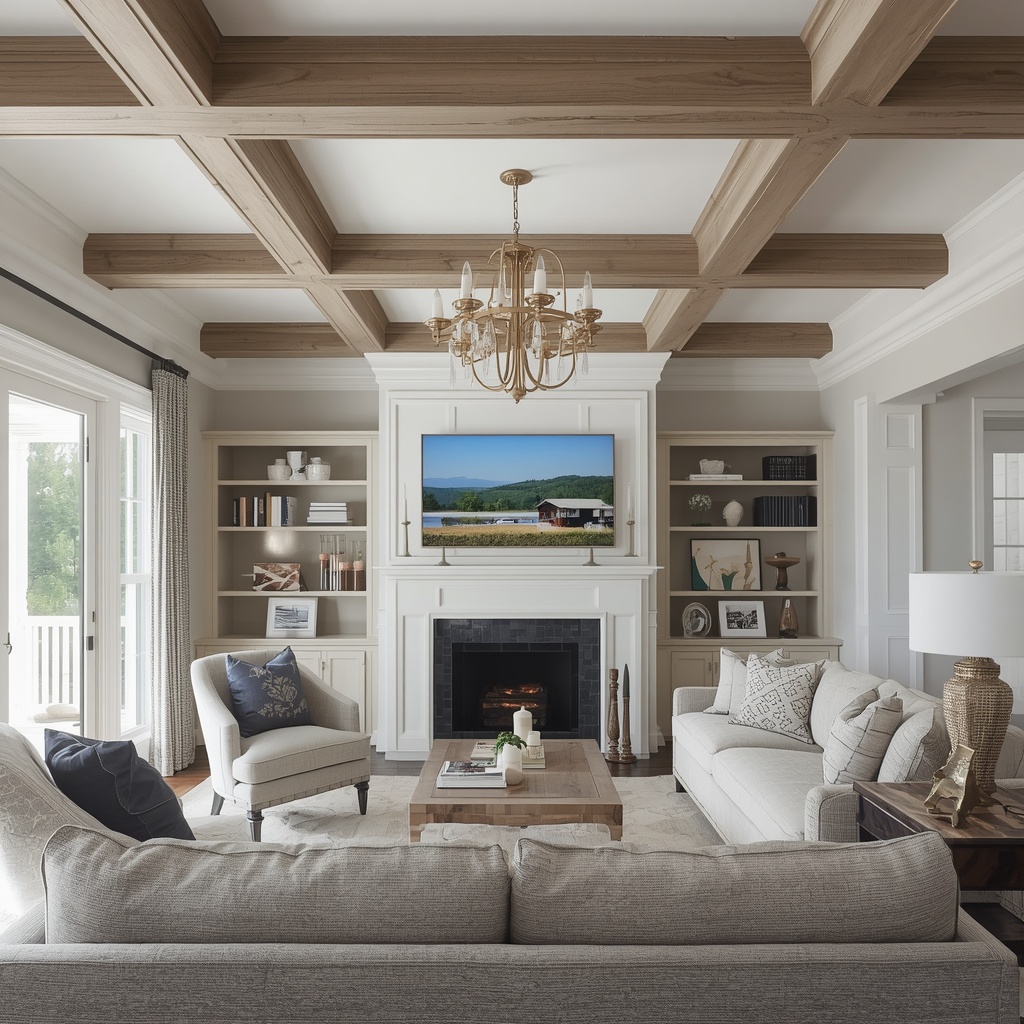
Coffered ceilings work beautifully in larger, formal living rooms, while faux wood beams suit more relaxed, modern-rustic spaces. Both tricks use shadow and dimension to make a flat ceiling plane feel architectural rather than incidental.
Living rooms that benefit most from ceiling treatments typically share these traits:
- Ceiling height of 9 feet or higher
- A large, open floor plan without many interior walls
- A need for a “focal point” since there’s no fireplace or built-in
3. Wainscoting, Board and Batten, and Wall Paneling
Wall paneling is having a major moment in American interior design, and it’s not just nostalgia. Board and batten, shaker-style panels, and classic wainscoting all add tactile richness that flat drywall simply cannot deliver.
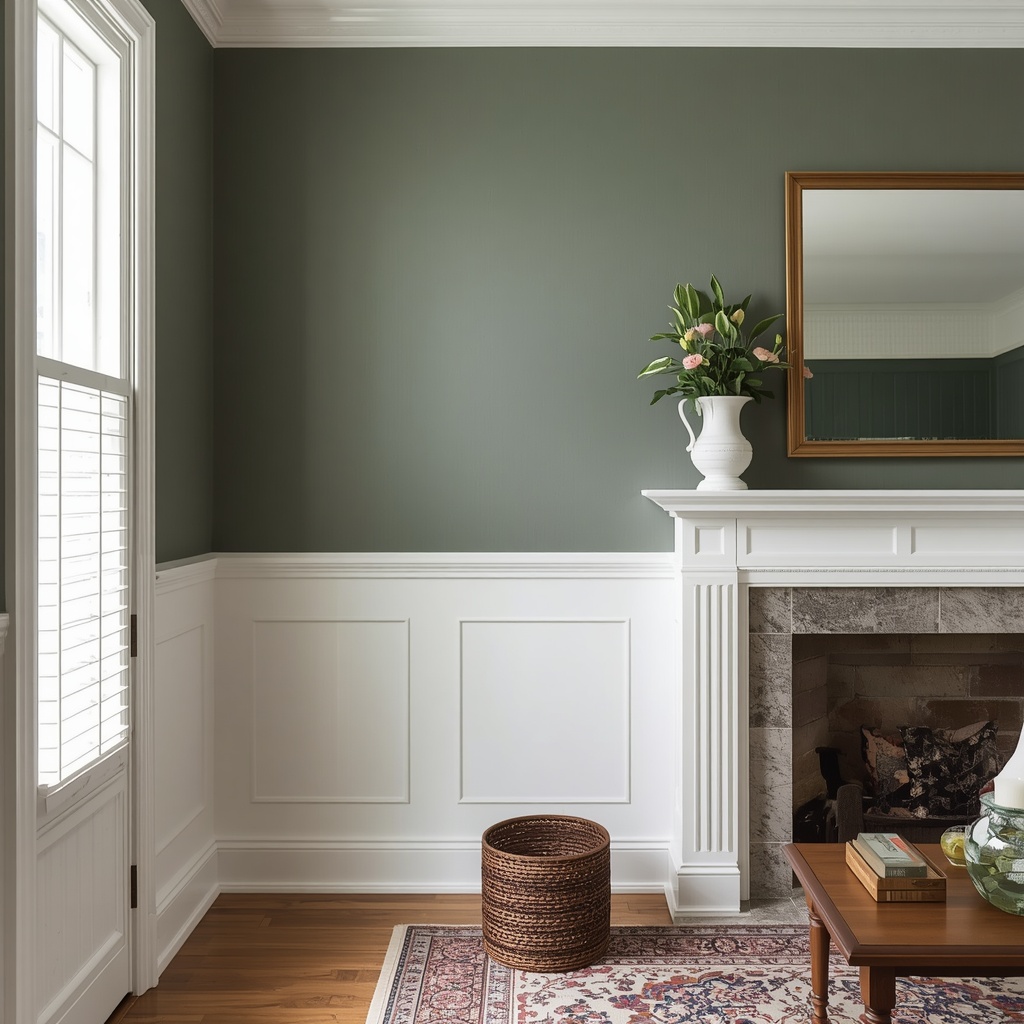
These details are particularly popular because they’re one of the more DIY-friendly architectural upgrades. A weekend project with MDF strips and a paint sprayer can completely reinvent a living room wall, especially behind a sofa or surrounding a media console.
Comparing wall treatment options:
| Style | Best For | Difficulty | Approx. Cost per Wall |
|---|---|---|---|
| Board and Batten | Modern farmhouse, coastal | Beginner | $150–$400 |
| Shaker Panel Grid | Transitional, traditional | Intermediate | $300–$700 |
| Classic Wainscoting | Formal, colonial | Advanced | $500–$1,200 |
| Picture Frame Molding | Any style | Beginner-Intermediate | $200–$500 |
💡 Pro Tip: Paint paneling and walls the same color (a technique called “color drenching”) to make the texture the star instead of a contrast line. This trick reads as high-end and works especially well in moodier, saturated colors like deep green or charcoal.
4. Arched Doorways and Openings
Arches are back, and they’re one of the fastest ways to soften a boxy, builder-grade layout. Rounded openings between the living room and adjacent spaces create movement and a sense of flow that square corners can’t match.
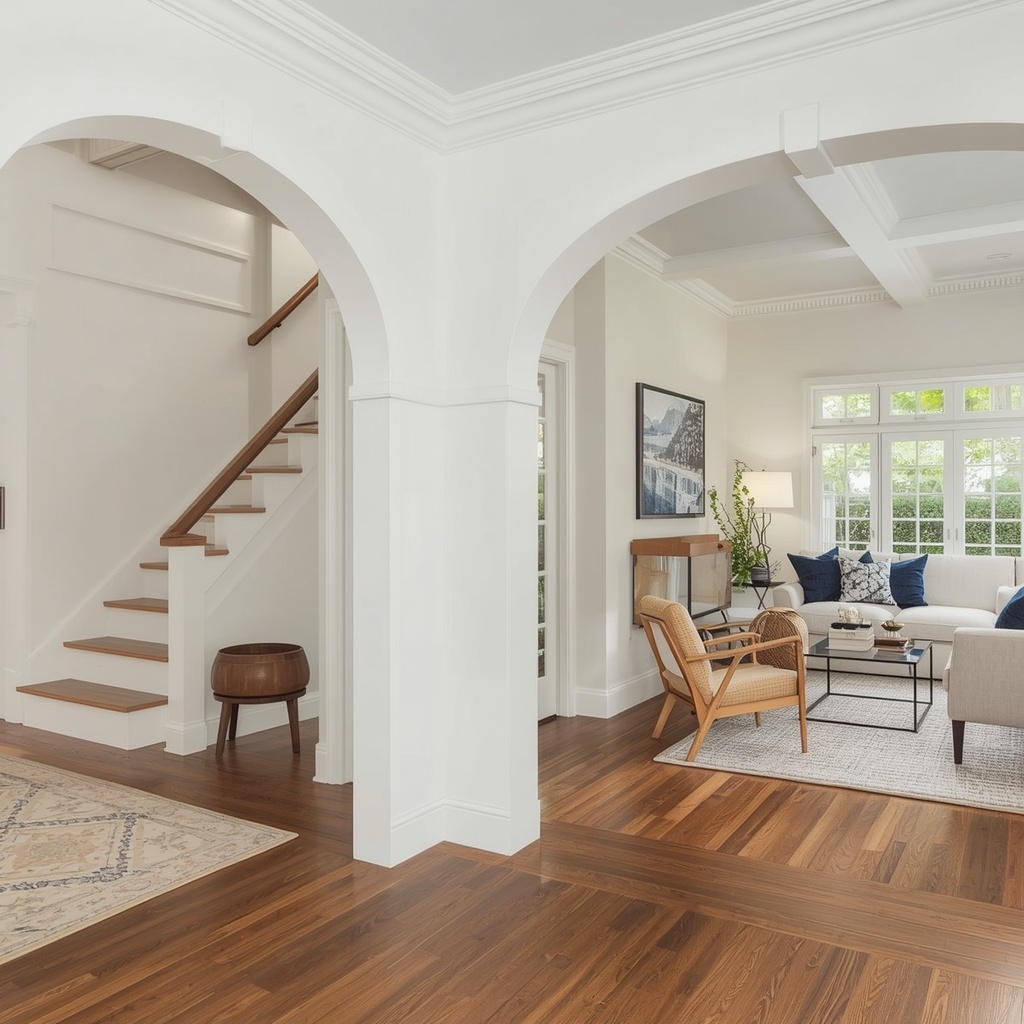
If a full structural arch isn’t feasible, an arched mirror, arched bookshelf niche, or even an arch-shaped accent detail on an existing doorway can deliver a similar effect. This detail pairs especially well with plaster-look paint finishes and warm, earthy palettes currently trending in American interiors.
5. Fireplace Surrounds and Mantels
The fireplace is almost always the natural focal point of a living room, yet so many are left plain, boxy, or outdated. Upgrading the surround with tile, limestone, plaster, or a floor-to-ceiling wood mantel instantly becomes the architectural centerpiece of the entire space.
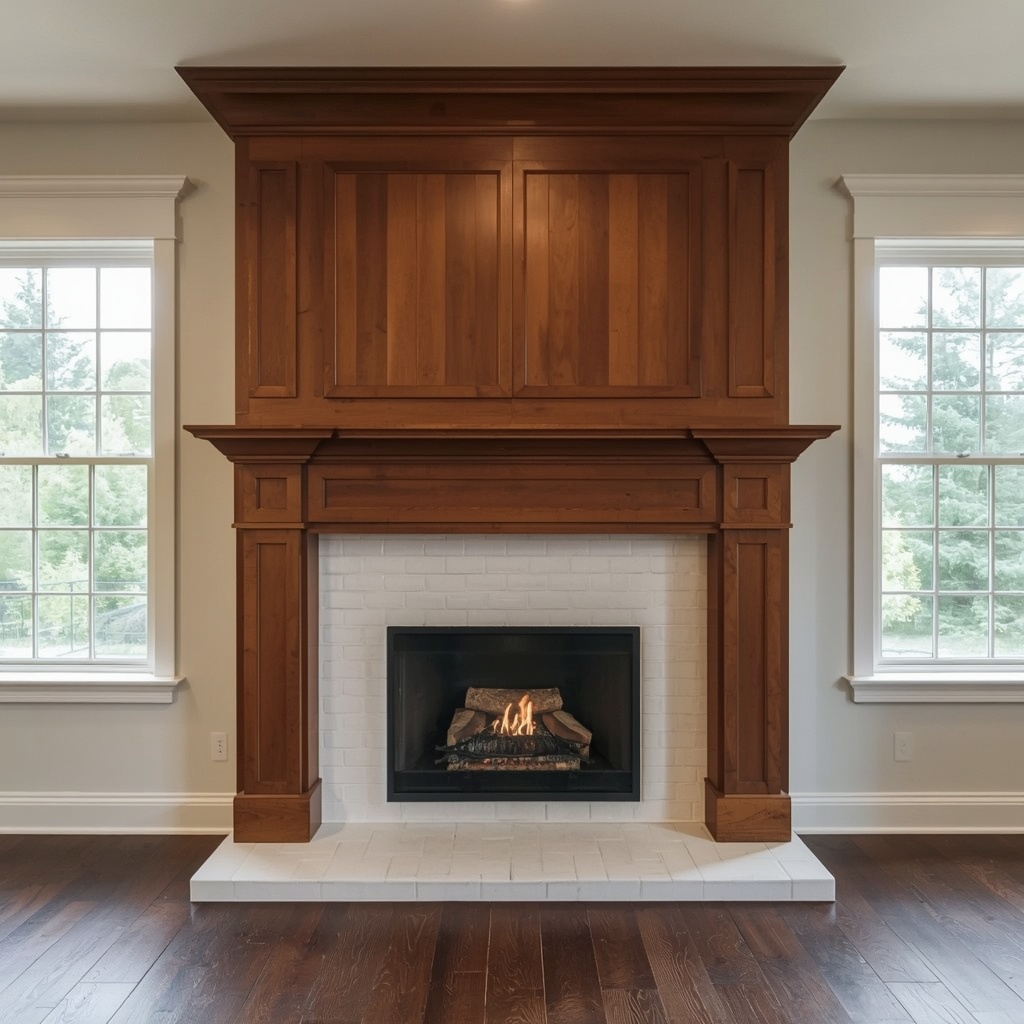
A well-designed fireplace wall does double duty: it anchors furniture placement and gives the room a clear sense of hierarchy. Even a simple change, like extending a wood mantel the full width of the wall or adding a plaster hearth, can make a dramatic difference without a full remodel.
Common fireplace upgrade paths, from lowest to highest investment:
- Paint the existing brick or tile in a matte, tonal finish
- Add a new wood mantel shelf
- Install a limewash or plaster surround
- Extend the surround to the ceiling with built-ins on either side
- Full stone or tile replacement with a custom hearth
6. Built-In Shelving and Cabinetry
Built-ins are the detail that consistently makes clients say, “This finally feels like our home.” Flanking a fireplace, filling an awkward alcove, or lining an entire wall, custom shelving adds architectural permanence that freestanding furniture never quite achieves.
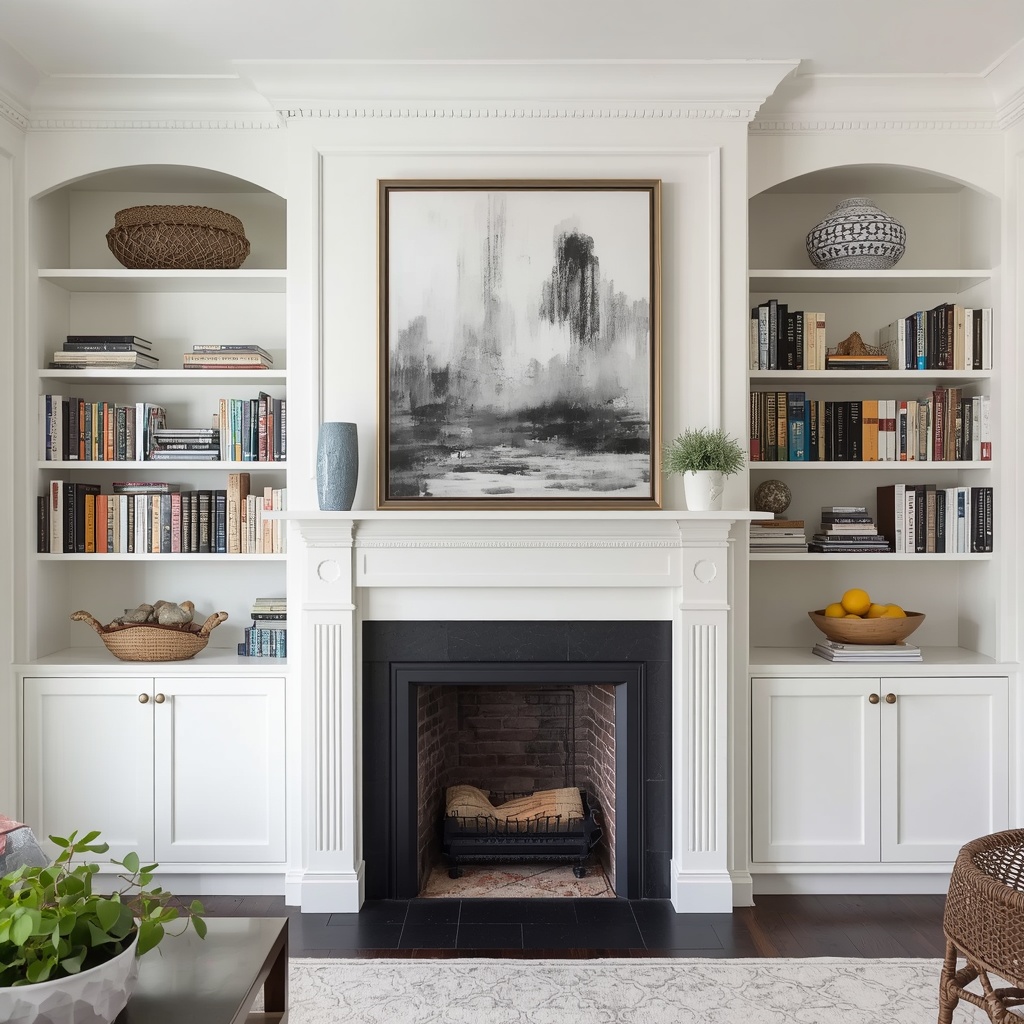
Beyond the visual impact, built-ins solve real storage problems while looking intentional rather than added on. Even semi-custom or stock cabinet built-ins from a home improvement store, dressed up with proper trim and crown detailing, can mimic a fully custom look for a fraction of the price.
💡 Pro Tip: Always run crown molding across the top of built-ins so they blend into the wall as if the house was built around them, rather than looking like a piece of furniture pushed against it.
7. Statement Ceilings
Ceilings are the most underused surface in the American living room. A statement ceiling, whether it’s wallpaper, wood slats, a bold paint color, or a decorative medallion, gives your eye a reason to look up, instantly making the room feel taller and more curated.
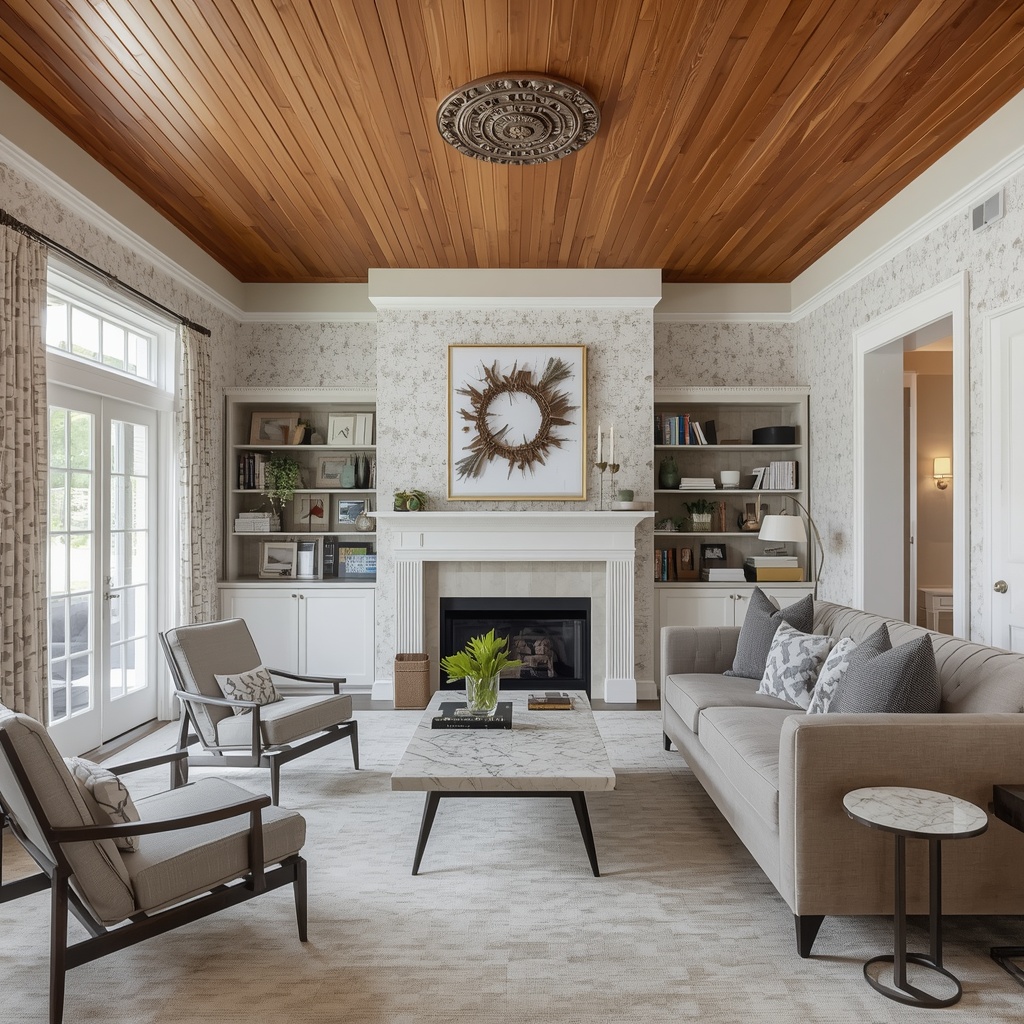
This detail is especially effective in living rooms with minimal wall space for art due to windows, doorways, or open shelving. When walls are busy or limited, the ceiling becomes prime real estate for personality.
8. Picture Rails and Wall Molding Grids
Picture rail molding and decorative wall grids (sometimes called “wall trim panels”) add classic proportion to a room without the bulk of full paneling. This detail is particularly well suited to living rooms with high ceilings that need a horizontal line to break up empty wall space.
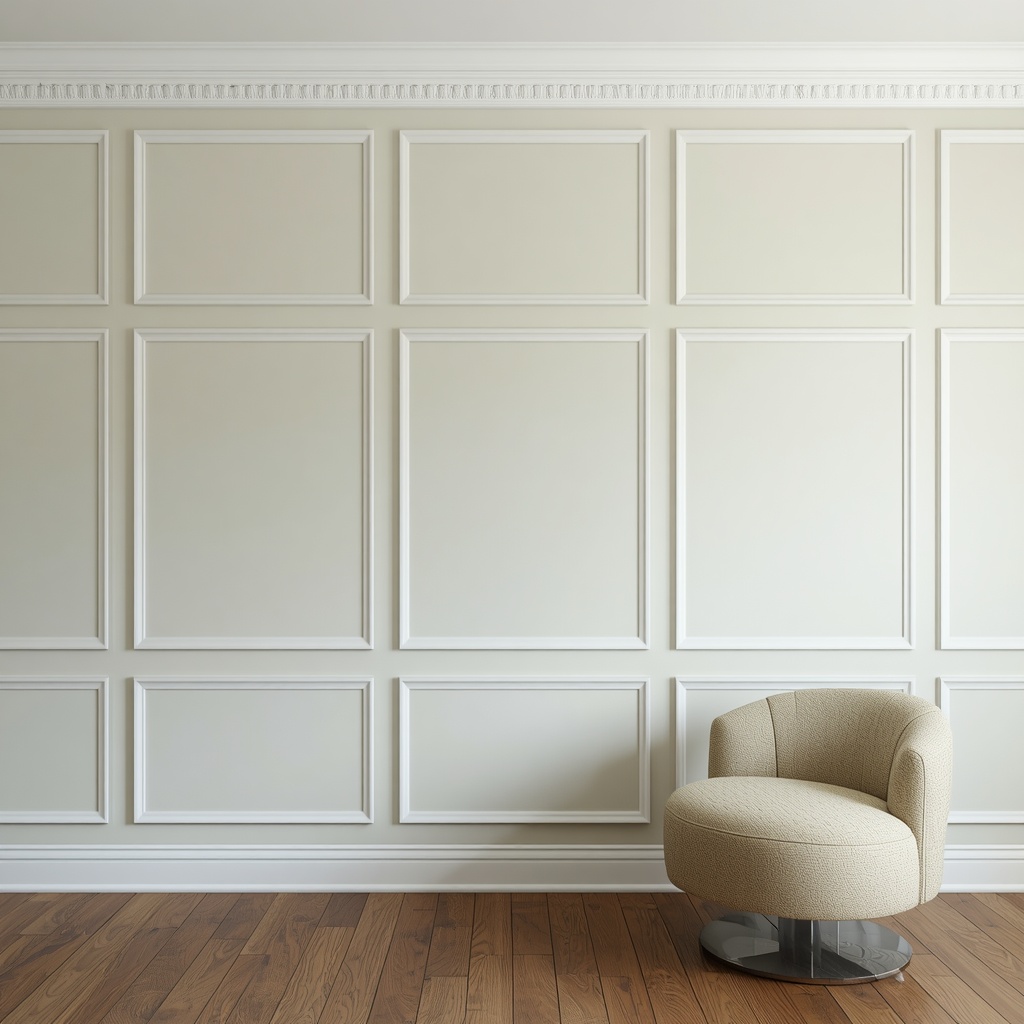
Molding grids also work beautifully as a backdrop for gallery walls or a media console, giving artwork and TVs a “built-in” appearance instead of looking mounted as an afterthought.
Choosing the Right Details for Your Home’s Style
Not every architectural detail suits every home. Matching the detail to your existing architecture keeps the finished look cohesive rather than mismatched.
| Home Style | Best Architectural Details |
|---|---|
| Modern Farmhouse | Board and batten, wood beams, shiplap |
| Traditional / Colonial | Crown molding, wainscoting, fireplace mantels |
| Contemporary / Modern | Statement ceilings, minimalist built-ins, arches |
| Coastal / Transitional | Picture rail molding, board and batten, light wood tones |
| Mid-Century Modern | Wood slat walls, low-profile built-ins, clean sightlines |
Budget-Friendly Ways to Add Architectural Character
You don’t need a full renovation budget to introduce real architectural interest. Here are approaches that consistently deliver a strong return without a contractor-level investment:
- Peel-and-stick or paintable wall panel kits for a paneled look
- Stock crown molding installed with a miter box and construction adhesive
- Faux wood beams made from lightweight polyurethane
- A single accent wall in wood slats or textured wallpaper
- Repainting an existing fireplace surround in a modern matte finish
Common Mistakes to Avoid
Even well-intentioned upgrades can backfire when scale, proportion, or consistency get overlooked. These are the missteps I see most often in living room renovations:
- Mismatched scale: Oversized molding in a small room overwhelms the space; undersized molding in a large room disappears.
- Inconsistent trim style: Mixing multiple molding profiles throughout one open floor plan reads as unplanned.
- Ignoring sightlines: Built-ins or arches that don’t align with windows or doorways can look accidental rather than intentional.
- Skipping the ceiling: Focusing only on walls while leaving a plain white ceiling wastes an entire architectural opportunity.
- Over-trending: Extremely trend-driven details (like a very specific arch shape) can date a room faster than timeless proportions.
Final Thoughts
Architectural details are what separate a room that looks “put together” from one that looks genuinely designed. Crown molding, ceiling beams, wall paneling, arched openings, and a well-considered fireplace surround all work together to give a living room permanence and polish that furniture alone can’t achieve.
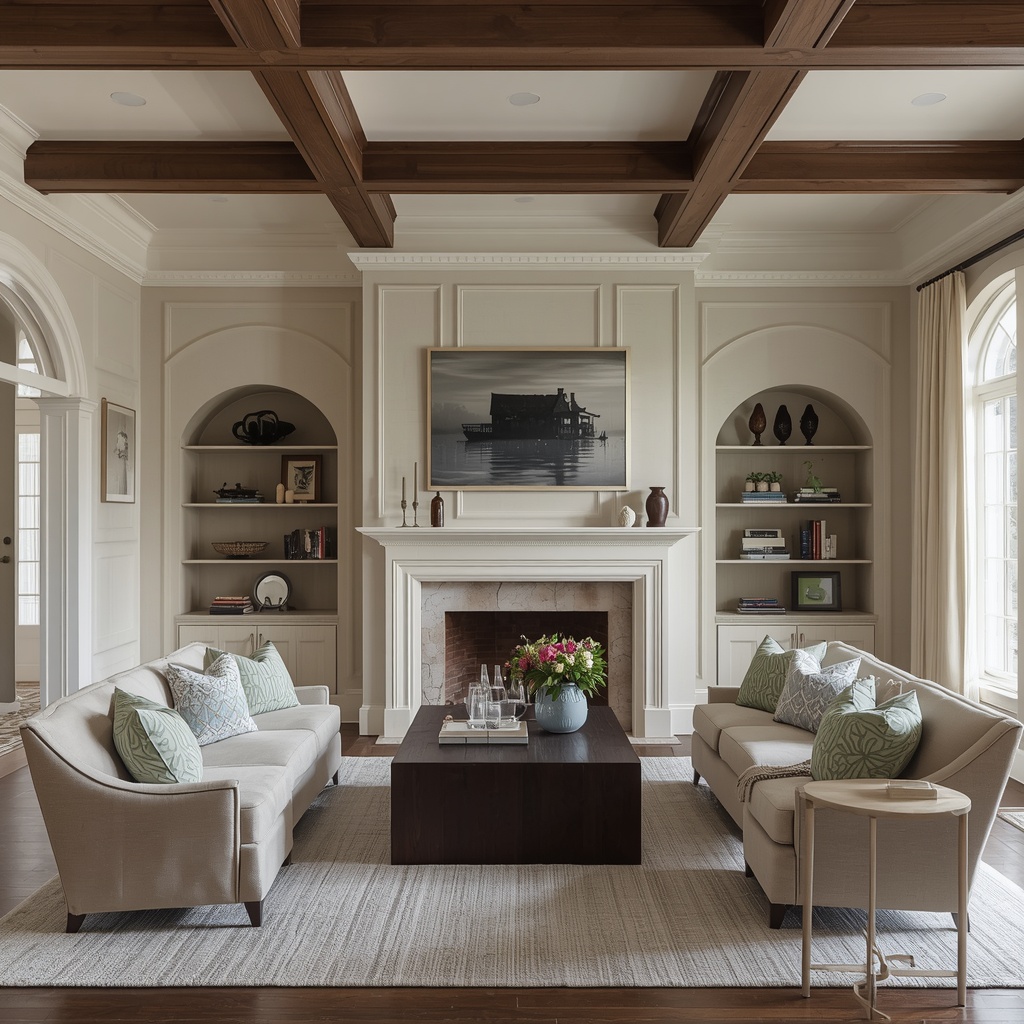
The best part is that these upgrades scale to almost any budget, from a weekend DIY project with peel-and-stick panels to a full custom built-in installation. Start with the one detail that will have the most impact in your specific room, whether that’s your ceiling, your fireplace, or your walls, and build outward from there.