
Meta title: How to Organize a Small Closet on a Budget .
Meta description: Learn how to organize a small closet on a budget with space-saving hacks, DIY storage ideas, and designer tips that make any tiny closet feel bigger.
Primary keyword: how to organize a small closet on a budget
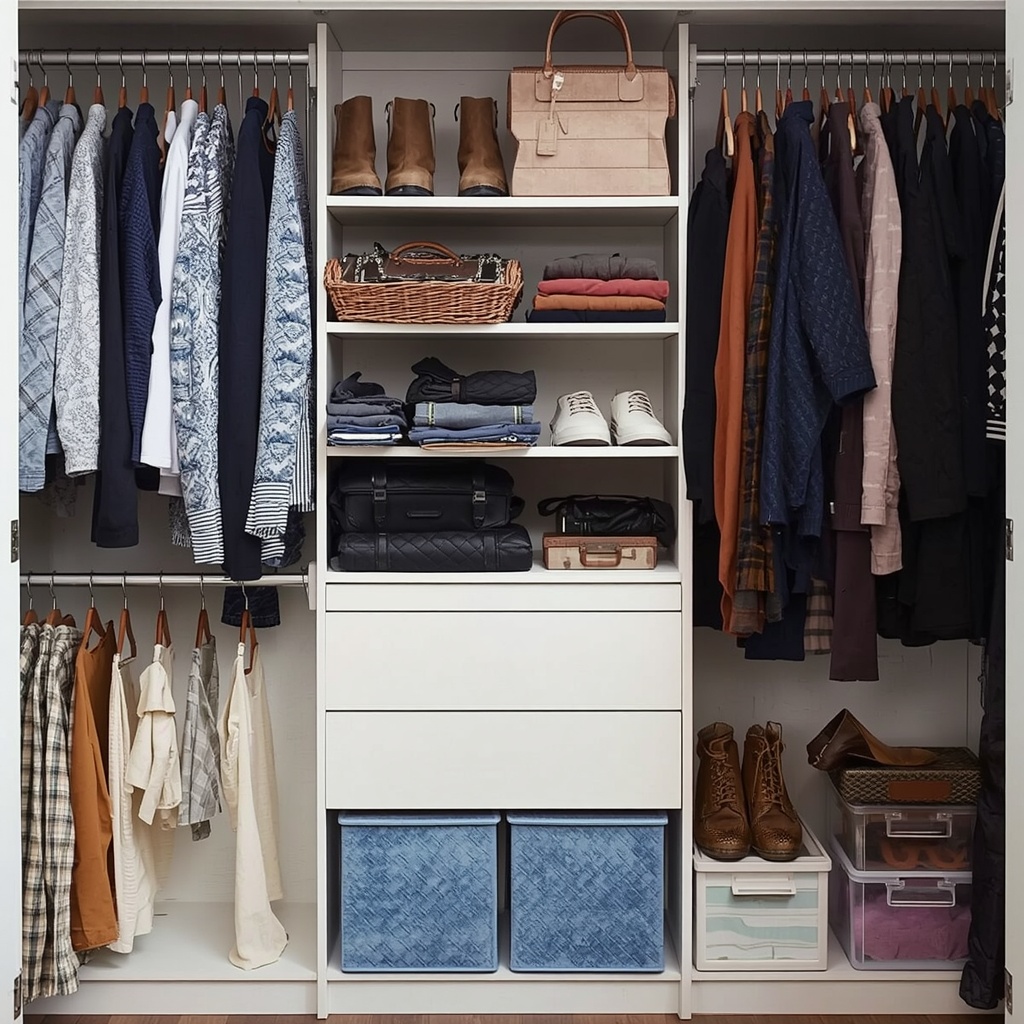
If you’ve ever opened your closet door and braced for an avalanche of sweaters, you’re not alone. After years of helping homeowners and renters across the country, I can tell you that a cramped closet is the number one storage complaint I hear. Most people assume the fix is a pricey custom closet system, but that’s rarely true.
The truth is that a small closet doesn’t need more money, it needs a better plan. With a few smart closet organization ideas, some inexpensive storage solutions, and an hour or two of effort, you can turn a cluttered cubby into a calm, functional space. Here’s exactly how I do it for my clients.
Why Small Closets Feel So Hard to Organize
Most closets in older US homes, apartments, and starter houses were built for a different era. A typical reach-in closet is only 24 inches deep and 4 to 6 feet wide, with a single rod and one shelf. That layout wastes the vertical space above the shelf, the area below the hanging clothes, and the back of the door.
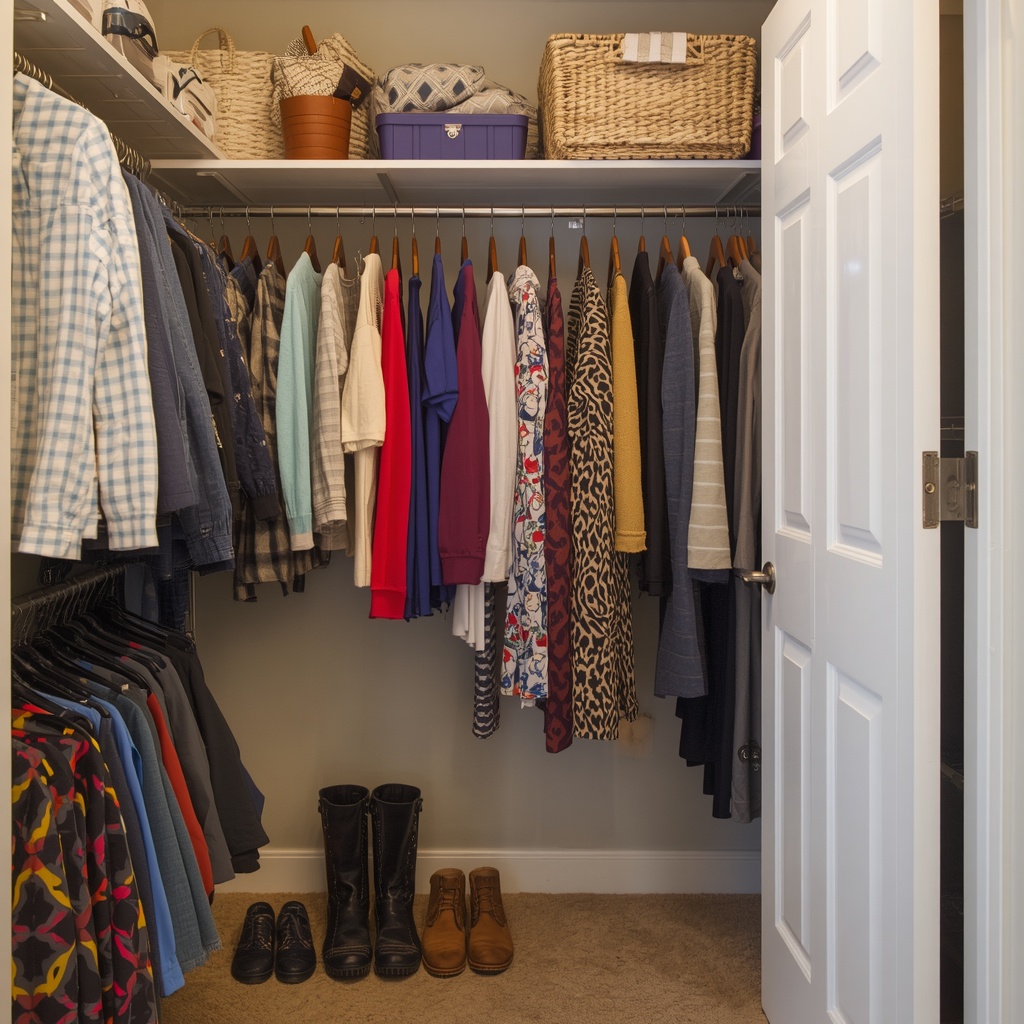
Add the fact that the average American wardrobe has grown significantly over the past few decades, and it’s no wonder things get crowded. The good news is that every one of those wasted zones can be put to work for very little money.
“Have nothing in your house that you do not know to be useful, or believe to be beautiful.” — William Morris
That quote is basically the heart of small-space design. Every item in your closet should earn its spot.
Step 1: Empty Everything Out and Declutter First
Before you buy a single bin or hanger, take everything out. Yes, everything. Lay it on your bed or a clean floor so you can see what you actually own. This one step costs nothing and does more than any organizer you’ll ever purchase.
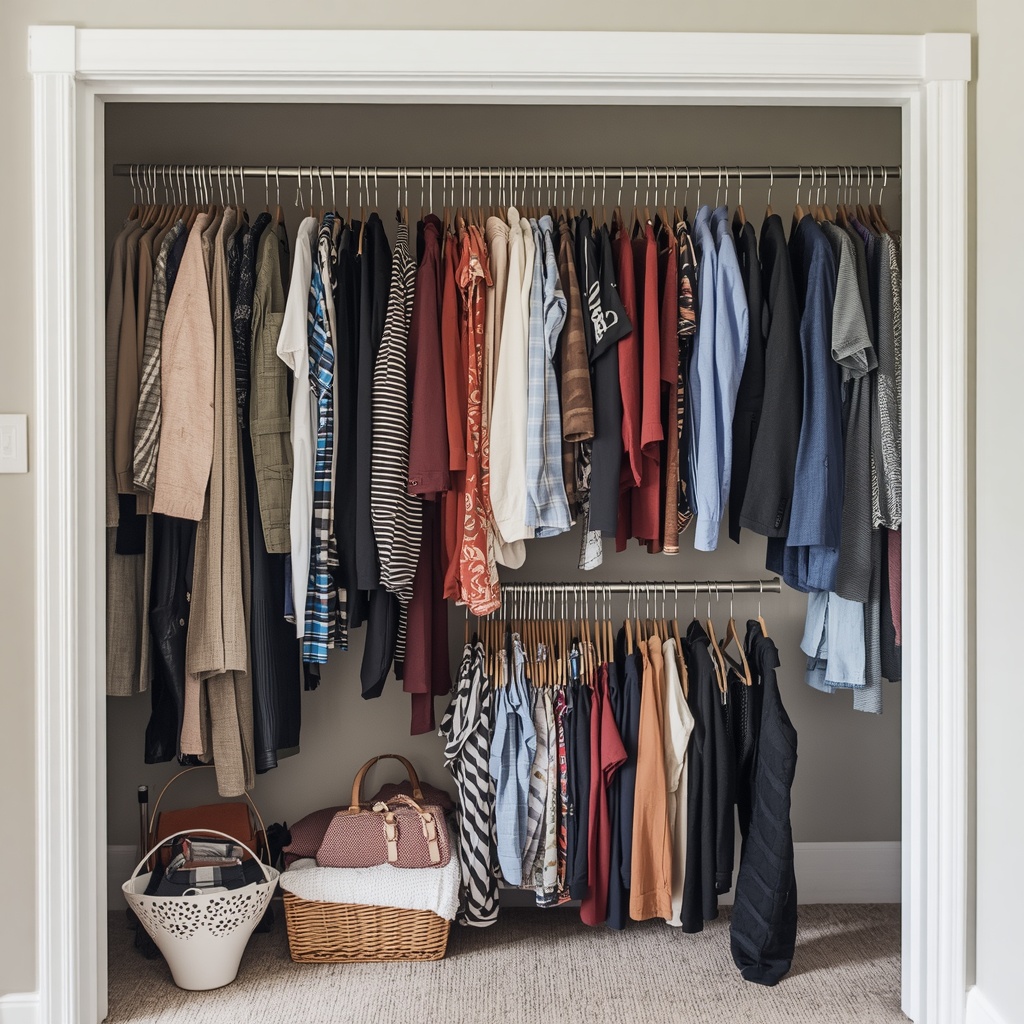
As you sort, make four piles: keep, donate, sell, and toss. Be honest about what you wear. If you haven’t worn something in a year, it’s probably taking up valuable closet real estate for no reason. Selling gently used pieces on Poshmark, ThredUp, or Facebook Marketplace can even fund your organizing supplies.
Quick declutter questions to ask yourself:
- Does it fit me right now, not “someday”?
- Have I worn it in the last 12 months?
- Is it in good condition, or does it need repairs I’ll never make?
- Do I feel confident when I wear it?
- Do I own several similar items I can narrow down?
Pro Tip: Turn all your hangers backward at the start. When you wear something and return it, hang it facing the normal direction. After three to six months, the backward hangers show you exactly what to donate.
Step 2: Measure Your Closet and Make a Simple Plan
Grab a tape measure and write down the width, depth, and height of your closet, plus the rod height and the distance from the rod to the shelf. This takes five minutes and saves you from the classic budget mistake of buying organizers that don’t fit.
Next, sketch a quick layout on paper. Mark where you want hanging space, shelf storage, and floor storage. Think about what you reach for daily, because those items belong at eye level and arm’s reach. Seasonal and rarely used pieces can go up high or down low.
| Closet Zone | Best Use | Budget Tip |
|---|---|---|
| Top shelf (above the rod) | Off-season items, spare bedding, luggage | Use matching fabric bins to look tidy |
| Main hanging rod | Daily clothes, dresses, coats | Swap in slim hangers for more room |
| Lower hanging area | Shirts, folded pants, kids’ clothes | Add a second rod or shelf stack |
| Floor | Shoes, baskets, hampers | Use stackable shoe racks or bins |
| Back of the door | Accessories, shoes, scarves | Over-the-door organizer under $20 |
Step 3: Swap Your Hangers for Slim Ones
If I could recommend only one upgrade, it would be this. Bulky plastic and wooden hangers eat up an incredible amount of rod space. Switching to slim velvet hangers or thin non-slip hangers can free up as much as a third of your hanging room.
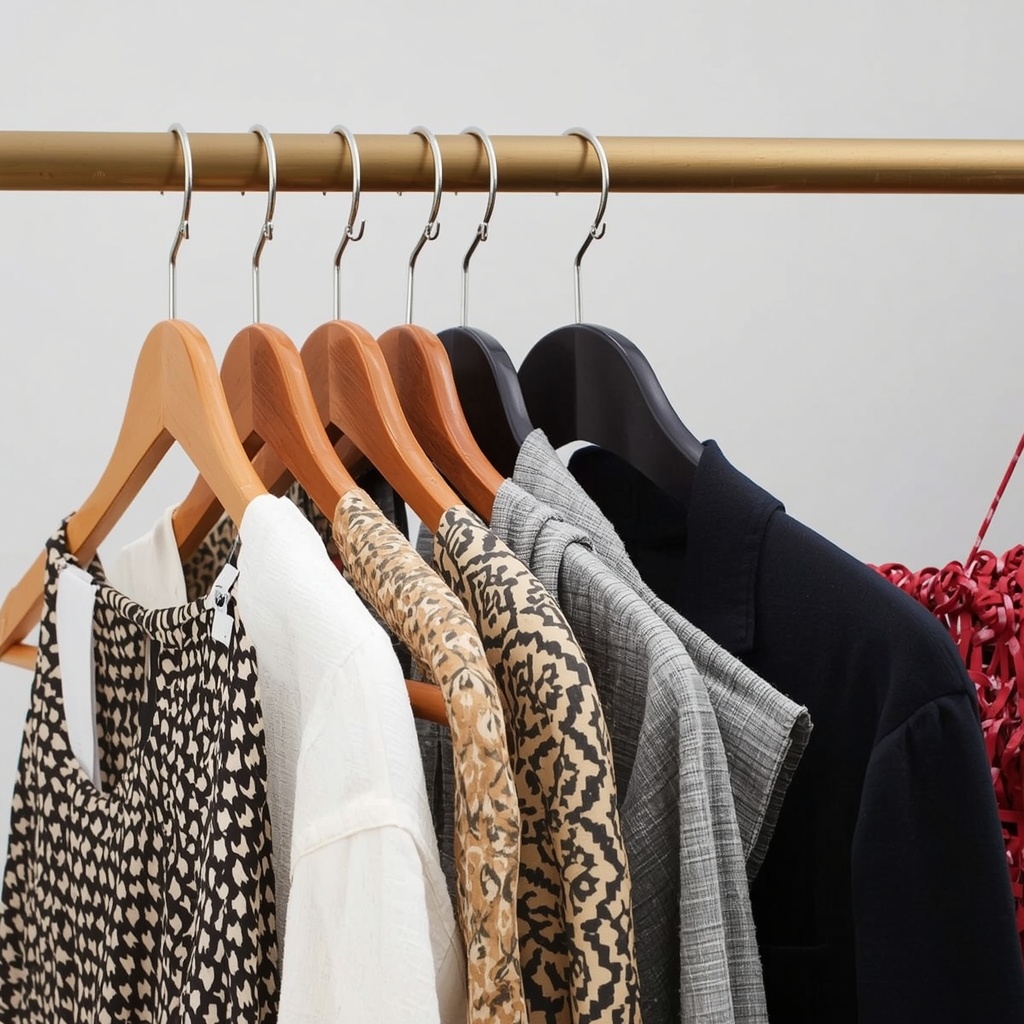
A multipack of slim velvet hangers usually runs between $15 and $25 for 50 pieces at stores like Target, Walmart, or Amazon. That’s a tiny investment for a big payoff. Uniform hangers also give your closet a clean, boutique look, which is a nice designer bonus.
Using matching hangers in one color creates visual calm. In a small closet, visual clutter makes the space feel even tighter, so consistency is your friend.
Pro Tip: Avoid wire hangers if you can. They bend, snag knits, and leave shoulder bumps. If you’re on a tight budget, buy a small batch of slim hangers for your most-worn items and upgrade gradually.
Step 4: Go Vertical with Shelves and Stacking Storage
When floor space is limited, the only direction to go is up. Most small closets have 12 to 24 inches of unused space above the top shelf, and that’s prime territory for storage bins, baskets, and boxes.
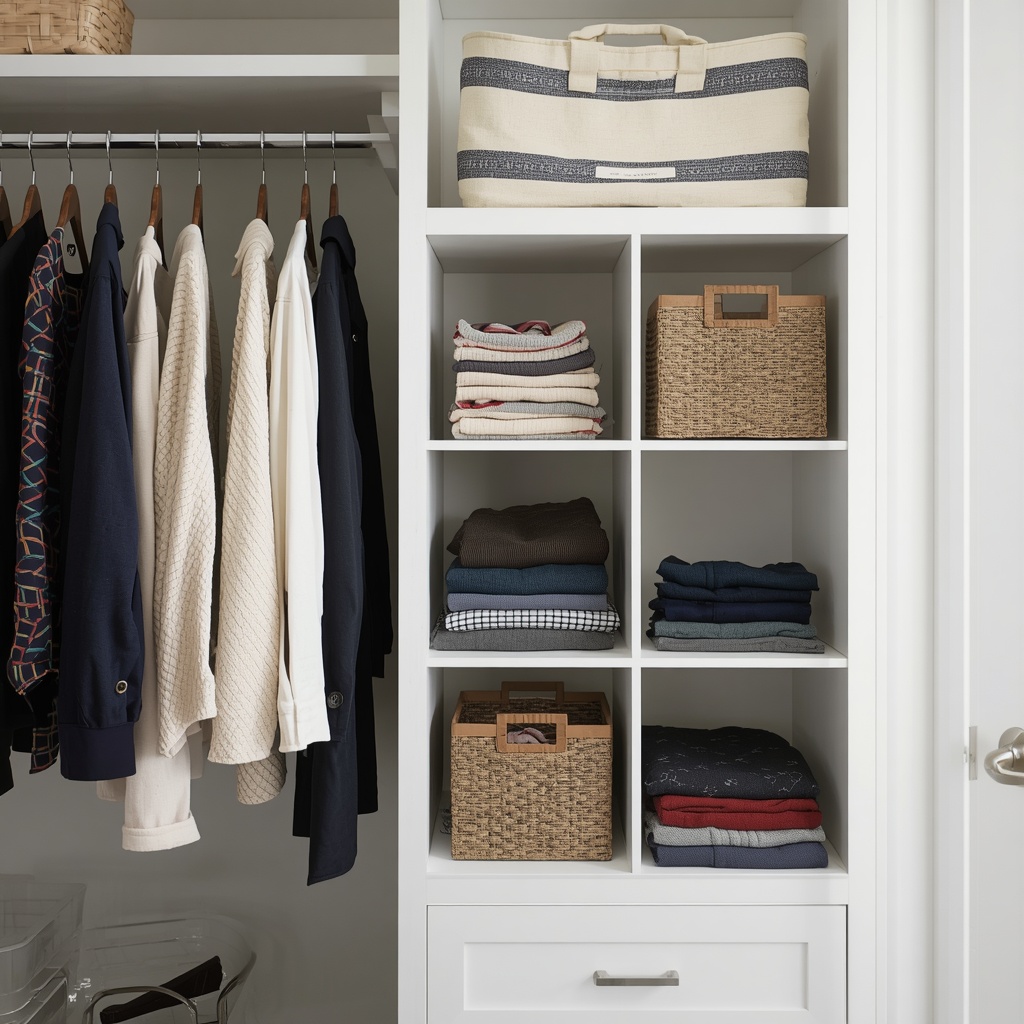
Adding a second shelf is one of the most affordable closet storage ideas out there. A simple pine board and a pair of brackets from a hardware store like Home Depot or Lowe’s usually costs under $30 and doubles your shelf space. Stackable cube organizers and shelf dividers also help keep folded sweaters from toppling.
Budget-friendly vertical storage ideas:
- Add a second shelf above or below the existing one
- Install shelf dividers to keep stacks upright
- Use stackable fabric cubes for off-season clothes
- Hang a shelf organizer from the closet rod
- Place a small bookcase inside a wider closet
Hanging shelf organizers are a favorite of mine. They clip onto the rod and give you three to six compartments for sweaters, handbags, or folded tees, with no tools or installation needed. You’ll typically find them for $12 to $25.
Step 5: Double Your Hanging Space with a Second Rod
Most closets have a lot of dead space beneath short items like shirts, skirts, and folded pants. A hanging rod doubler, also called a closet rod extender, lets you create two levels of hanging storage on a single bar.
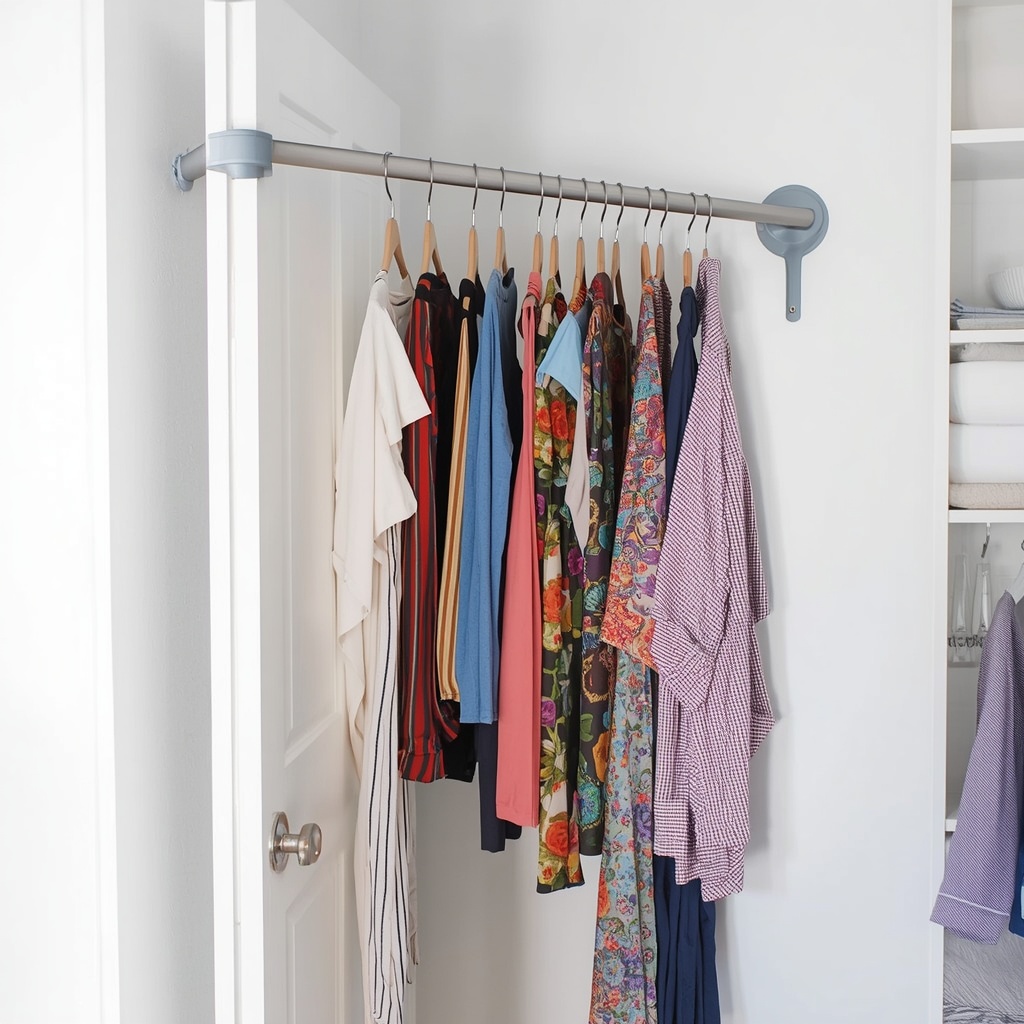
This is where small closet organization really shines on a budget. A rod doubler costs roughly $10 to $20, requires no drilling, and can nearly double your capacity for tops and blouses. Hang long items like dresses and coats on the main rod, and use the lower bar for shorter garments.
If you’re comfortable with a drill, you can also install a tension rod across the closet width for even less. Tension rods cost just a few dollars and work well in narrow reach-in closets and kids’ rooms.
Step 6: Use the Back of the Door
Your closet door is free real estate, and most people ignore it completely. An over-the-door organizer turns that blank surface into storage for shoes, scarves, belts, hats, and small accessories.
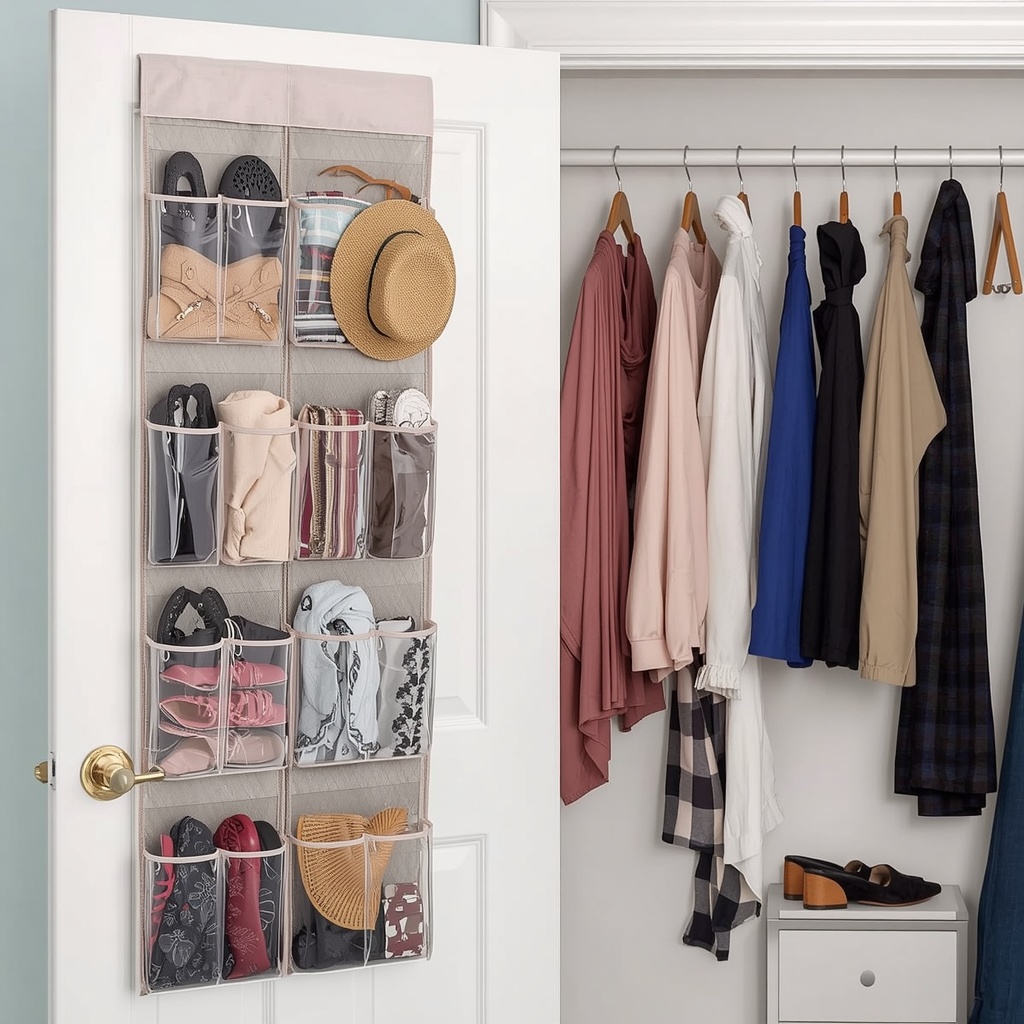
Clear pocket organizers let you see everything at a glance, which means you’ll actually use what you own. Over-the-door hooks are another cheap hero. They hold bags, robes, and tomorrow’s outfit for just a few dollars.
For a more polished look, mount a slim door-mounted rack with hooks and small baskets. It keeps the room looking intentional instead of cluttered, especially if your closet door is visible from your bedroom.
Pro Tip: Check your door’s clearance before buying. Some over-the-door organizers prevent the door from closing, which is a frustrating and avoidable return.
Step 7: Fold Smart and Roll Often
How you store clothes matters just as much as where. Folding in the “file” method, where you fold items into small rectangles and stand them upright like files in a drawer, lets you see every piece without digging. This works beautifully for T-shirts, leggings, and jeans.
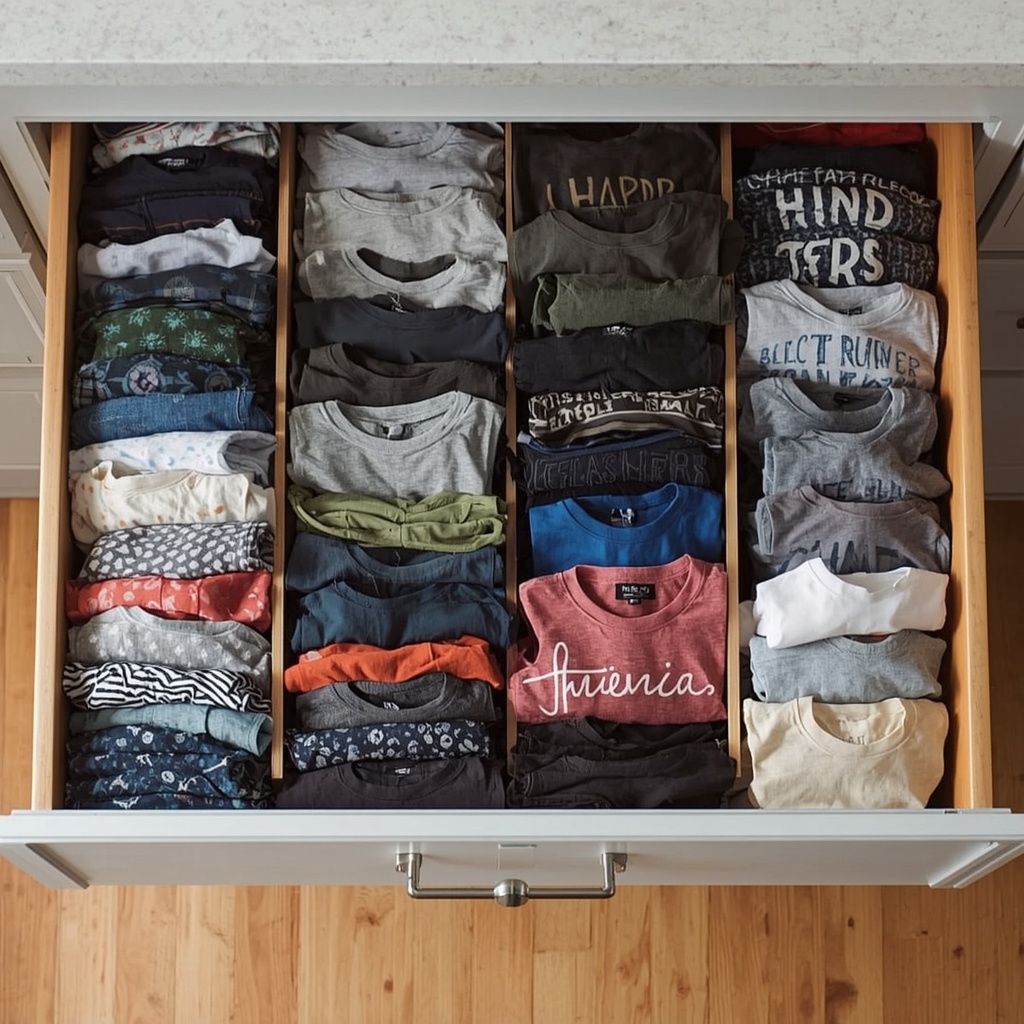
Rolling is another space saver, especially for casual tees, pajamas, and gym wear. Heavier knit sweaters should be folded flat rather than hung, since hanging stretches the shoulders over time.
| Item | Best Method | Why It Works |
|---|---|---|
| T-shirts | File fold | Easy to see and grab |
| Jeans | Fold and stack or file | Saves rod space |
| Sweaters | Fold flat on shelf | Prevents stretching |
| Dresses | Hang | Reduces wrinkles |
| Socks and underwear | Small bins or drawer dividers | Keeps small items contained |
| Scarves | Roll or hang on a shower curtain ring | Prevents tangling |
Step 8: Choose Bins and Baskets That Do Double Duty
Containers are what make a small closet feel organized, but they can also eat up space if you pick the wrong ones. Choose bins that match the shape of your shelves, and label them so everyone in the household knows where things go.
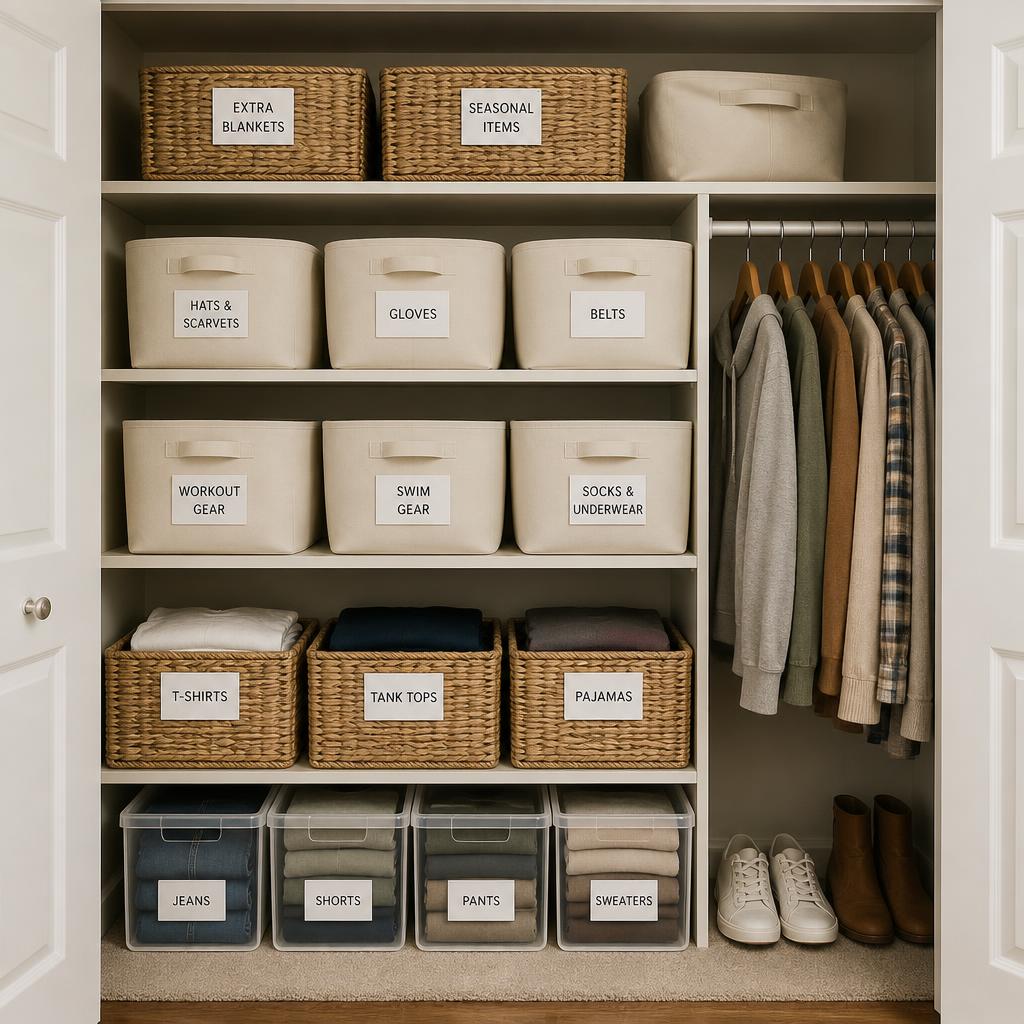
Dollar stores, thrift shops, and discount retailers like IKEA, Target, and Walmart are treasure troves for affordable storage baskets. Woven baskets, fabric bins with handles, and clear plastic containers all work. Stick to one or two styles for a cohesive look.
Clear bins are best for items you need to see quickly, such as workout gear or accessories. Opaque or fabric bins are better for items that look messy, like mismatched socks or seasonal supplies, because they hide the clutter.
Smart bin and basket uses:
- Hats and caps on the top shelf
- Belts and ties rolled in small baskets
- Seasonal gloves and scarves in a labeled bin
- Extra bedding or towels in lidded containers
- Kids’ small toys and shoes in low floor baskets
Step 9: Solve the Shoe Problem Without Spending Much
Shoes are the sneakiest space hog in any closet. Left on the floor, they create a chaotic pile that makes the whole closet feel messy. Fortunately, shoe storage solutions are some of the cheapest to find.
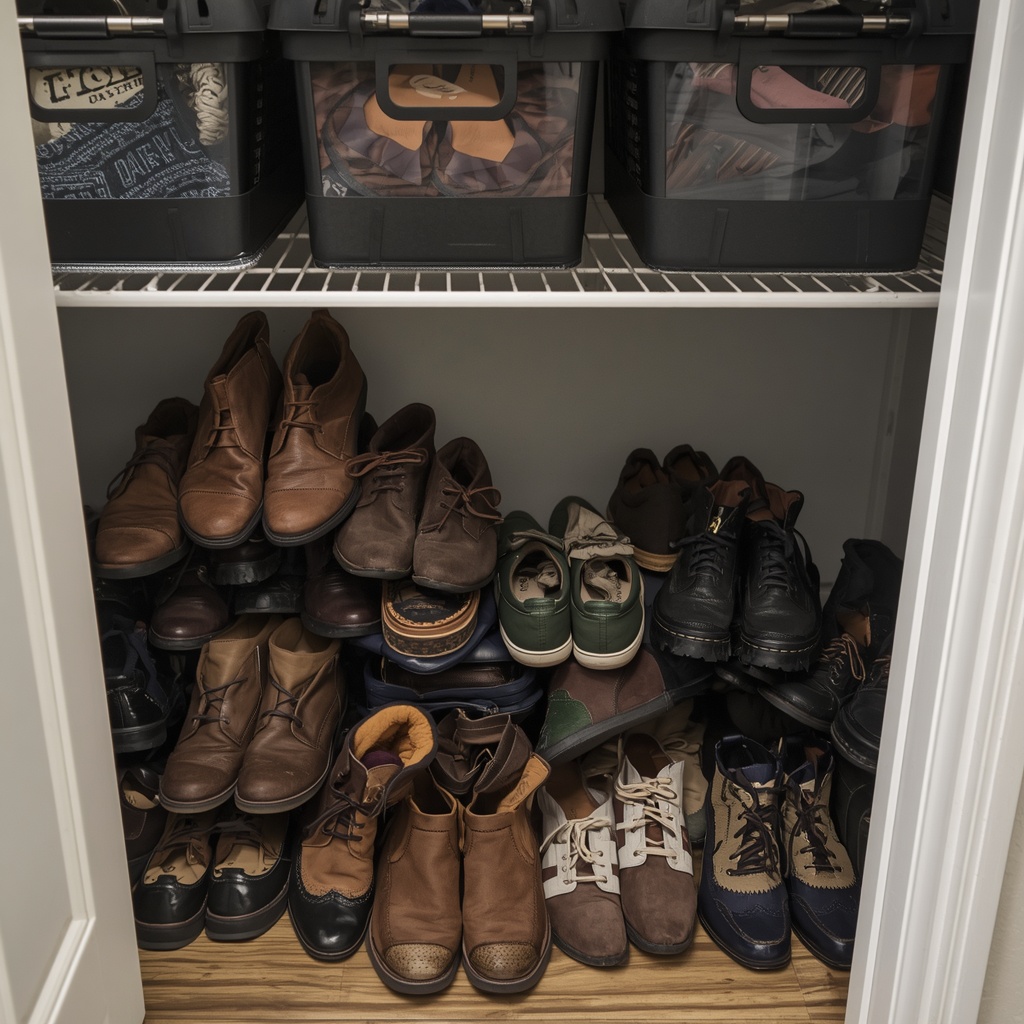
A stackable shoe rack or an over-the-door shoe organizer can hold six to twelve pairs for under $25. Angled shoe shelves tuck neatly under hanging clothes and let you see each pair. If floor space is truly tight, consider moving off-season shoes to clear boxes on the top shelf or under the bed.
Another clever option is using a shoe organizer with clear pockets on the inside of the closet wall. It’s inexpensive, and it keeps flats, sandals, and sneakers off the floor.
Pro Tip: Store only the shoes you wear regularly in the closet. Occasional pairs, like formal heels or snow boots, can live elsewhere in the home so your everyday closet stays functional.
Step 10: Try Budget DIY Closet Organization Hacks
Some of my favorite solutions come from repurposing items you may already own. DIY closet organization is not only affordable, it also adds personality to your space.
Clever DIY ideas:
- Shower curtain rings on a rod: Hook scarves, belts, or handbags onto the rings for easy hanging.
- Tension rod shelf: Place a tension rod near the back to hang tank tops or camisoles.
- Tin can pegboard: Mount a small pegboard and attach hooks for jewelry and accessories.
- Crate shelving: Stack wooden crates or milk crates to build quick, sturdy cubbies.
- Soda tab hanger stacker: Slip a soda can tab over a hanger hook to cascade a second hanger below it.
The soda tab trick is a classic, and it can free up significant rod space for almost nothing. Just remember to sand any rough edges on homemade solutions so they don’t snag your clothes.
Step 11: Organize by Category, Color, and Frequency
Once your storage is in place, arrange your clothes in a logical system. I always recommend sorting by category first: tops, bottoms, dresses, jackets. Then group within each category by color, moving from light to dark.
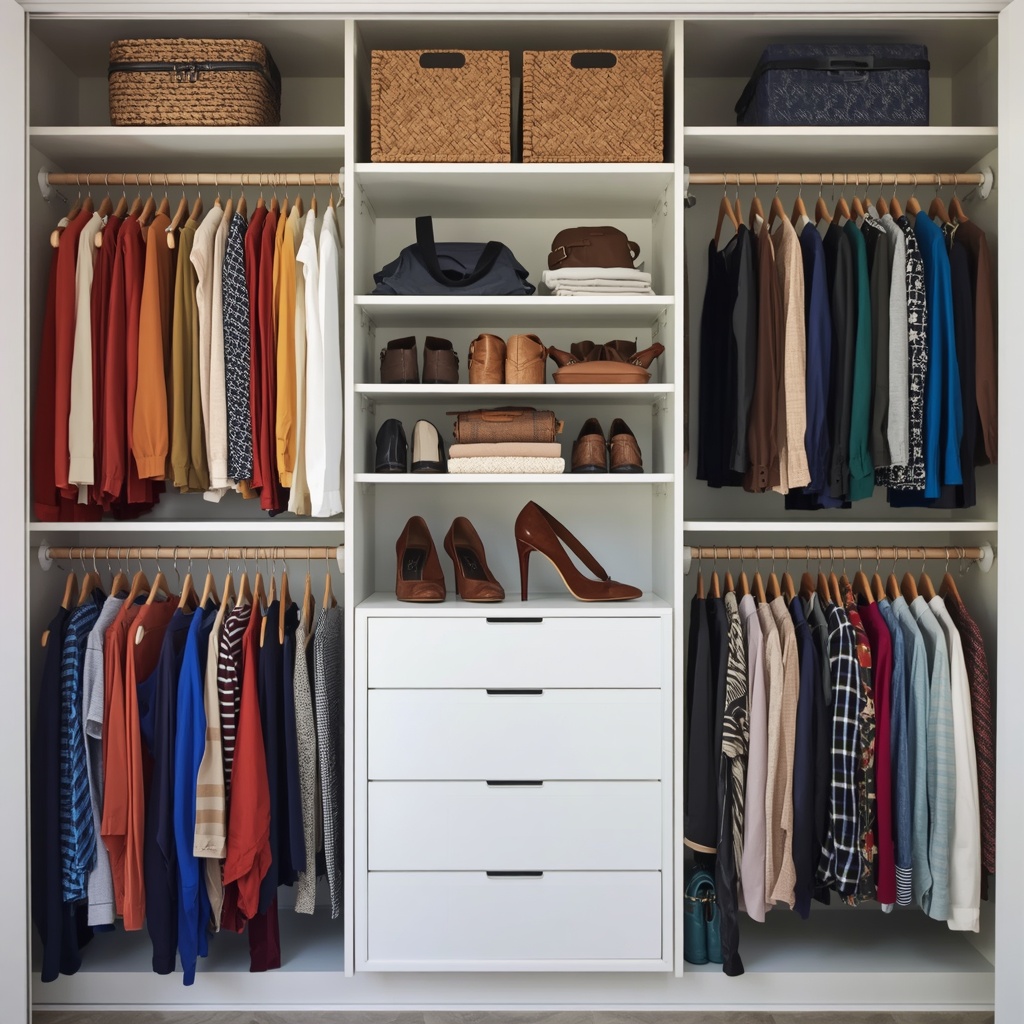
A color-coded closet looks beautiful and makes getting dressed faster. Within each section, place your most-worn items in the most accessible spots. Formalwear and special-occasion pieces can sit at the far end or in garment bags.
This system helps you spot gaps and duplicates in your wardrobe. That naturally leads to smarter shopping, which keeps your closet from refilling with things you don’t need.
Budget Breakdown: What Does It Really Cost?
Here’s a realistic look at what you might spend to transform a small closet. You don’t have to buy everything, so pick the items that solve your biggest pain points first.
| Item | Estimated Cost | Impact Level |
|---|---|---|
| Slim velvet hangers (50-pack) | $15–$25 | High |
| Closet rod doubler | $10–$20 | High |
| Over-the-door organizer | $10–$20 | Medium |
| Hanging shelf organizer | $12–$25 | High |
| Fabric storage bins (set) | $15–$30 | High |
| Stackable shoe rack | $15–$25 | Medium |
| Extra shelf and brackets | $20–$30 | High |
| Labels or label maker | $5–$20 | Medium |
| Estimated total | $100–$195 |
Even if you buy everything, you’re spending a small fraction of what a custom closet installation costs, which can run into the thousands. And if you thrift, shop sales, or repurpose, you can come in well under $100.
Make the Space Feel Bigger with Light and Color
Organization is only half the equation. A small closet also benefits from simple design touches that make it feel larger and more inviting. A fresh coat of light, bright paint on the walls instantly opens up the space.
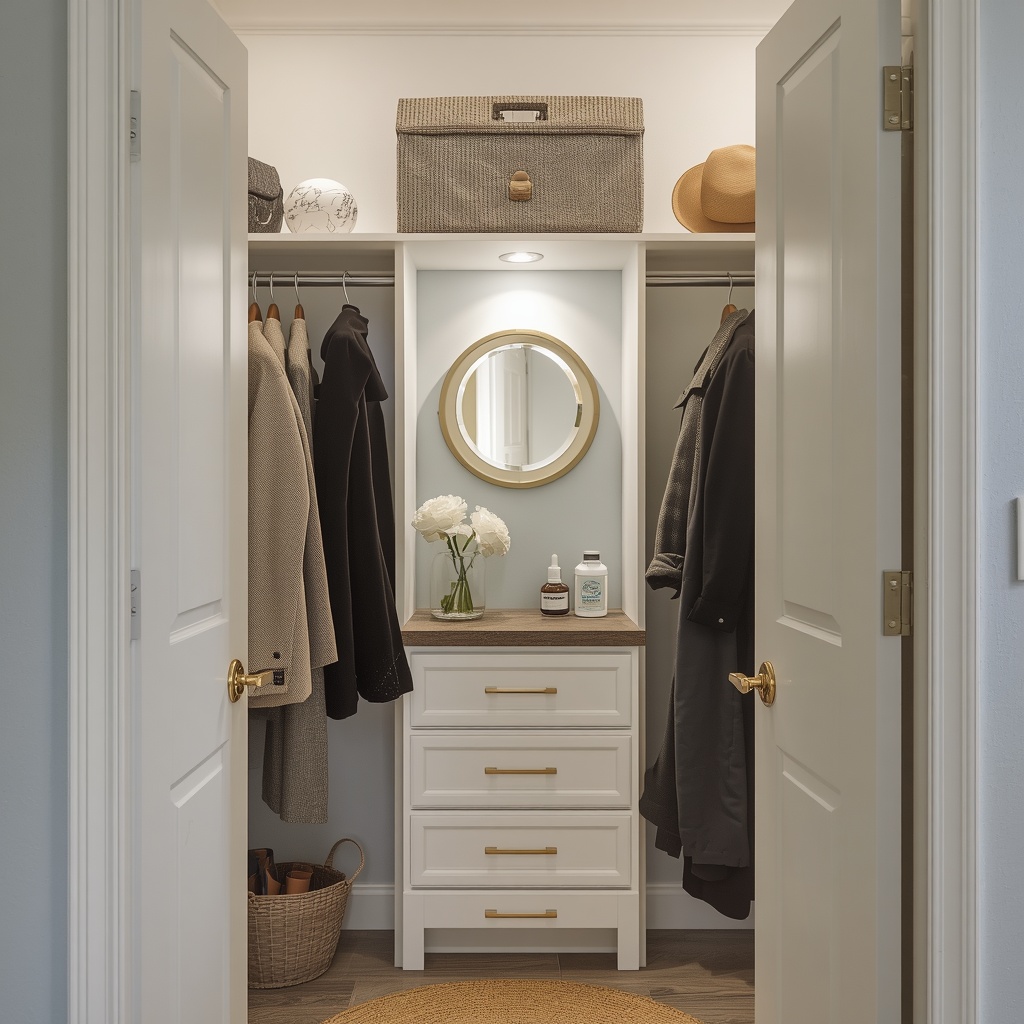
Lighting is another big win. A dark closet hides things, and you end up buying duplicates. Stick-on LED lights or battery-powered puck lights cost around $10 to $20 and require no wiring. Adding a small mirror to the inside of the door can also bounce light around and double as a handy dressing spot.
If your closet has no door or a bifold door you dislike, consider swapping it for a simple curtain on a tension rod. It’s inexpensive, easy to install, and gives your bedroom a soft, designer touch.
Common Small Closet Mistakes to Avoid
Even with the best intentions, a few missteps can derail your closet makeover. I see these all the time with clients, and they’re easy to sidestep once you know them.
- Buying organizers before decluttering. You’ll end up organizing things you don’t need.
- Skipping measurements. Ill-fitting bins waste money and space.
- Overstuffing shelves and rods. Crammed clothes wrinkle and make it hard to find anything.
- Ignoring daily habits. Even the best system fails if items don’t get put back.
- Buying trendy storage over functional storage. Pick what works first, then what looks pretty.
How to Keep Your Closet Organized for the Long Haul
The final secret to small closet organization is maintenance. A closet that stays tidy follows one simple rule: for every new item that comes in, one item goes out. This “one in, one out” habit prevents slow clutter creep.
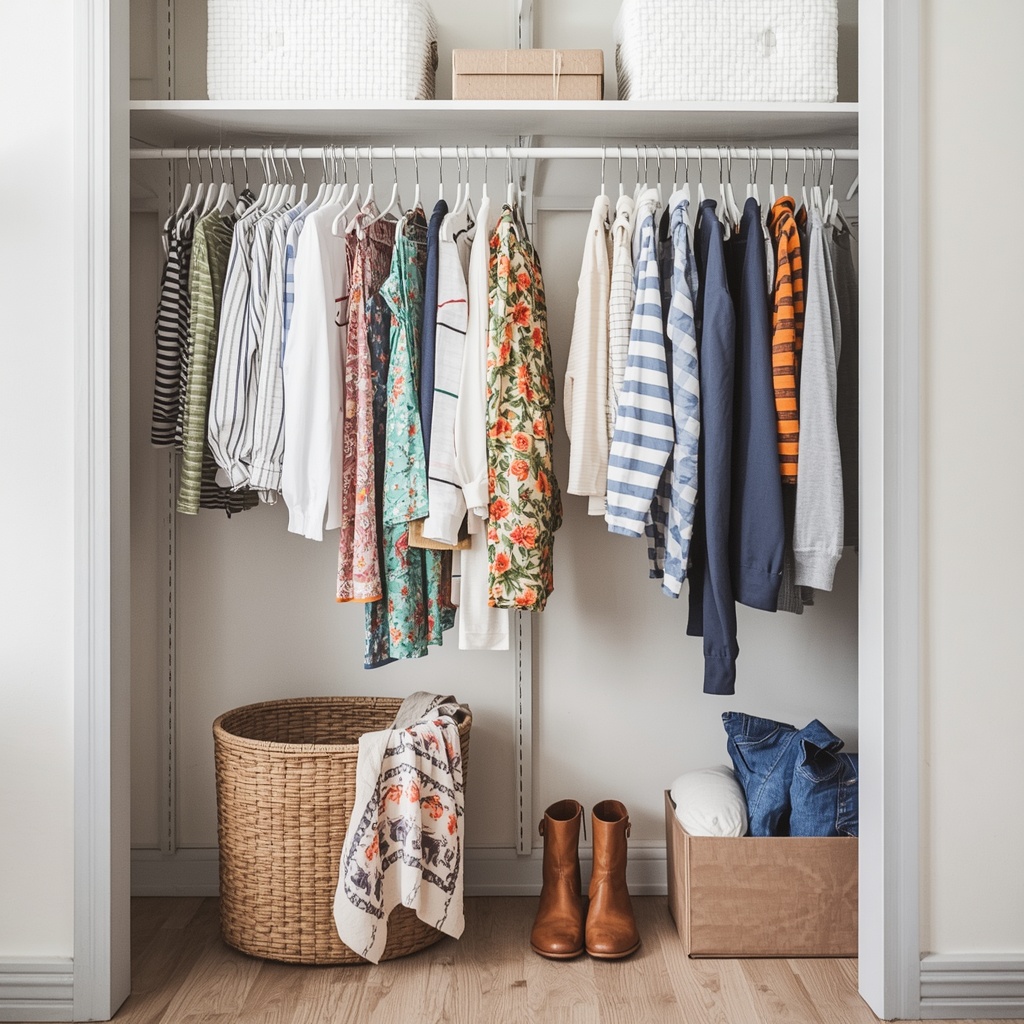
Do a quick ten-minute reset once a week to rehang strays and straighten stacks. Then do a larger seasonal edit every spring and fall, when you swap out clothing and donate anything you no longer love. Consider storing out-of-season items in vacuum bags or under-bed bins to keep your daily closet lean.
Pro Tip: Keep a small “donate” bag or box in the corner of your closet at all times. When you notice something that no longer fits or flatters, drop it in right away. When the bag is full, take it to your local Goodwill or Salvation Army.
Frequently Asked Questions
What is the cheapest way to organize a small closet?
Start by decluttering, then switch to slim hangers, add a rod doubler, and use bins you already own. These steps cost very little and make the biggest difference.
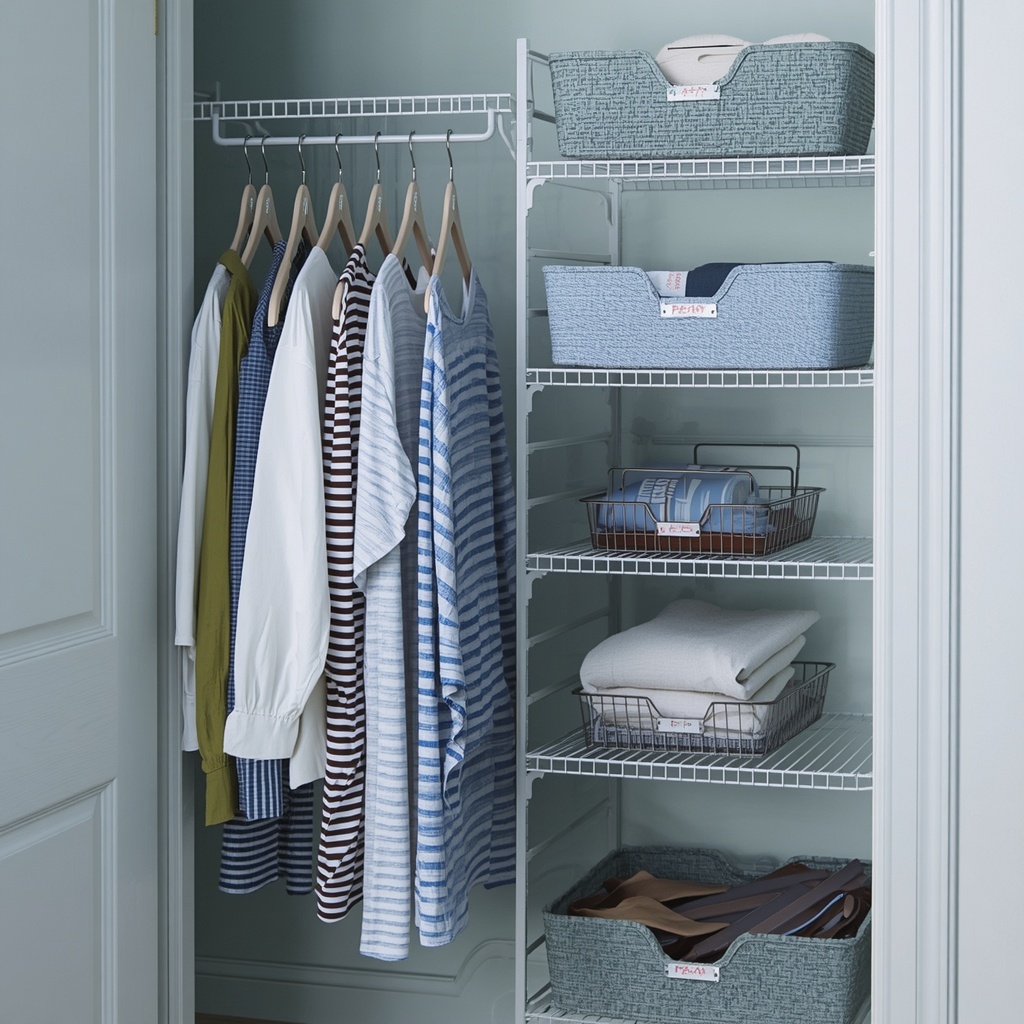
How do I add more storage to a closet without building anything?
Over-the-door organizers, hanging shelves, tension rods, and stackable bins all require no tools or permanent changes, which makes them perfect for renters.
How can I make a small closet look bigger?
Use matching hangers, keep colors cohesive, add lighting, and remove anything you don’t use. A clutter-free, well-lit closet always feels more spacious.
Should I fold or hang my clothes in a small closet?
Do both. Hang items that wrinkle easily, like dresses and button-downs, and fold knits, tees, and jeans to save rod space.
Final Thoughts: Small Closet, Big Results
Learning how to organize a small closet on a budget comes down to three things: edit what you own, use every inch of vertical space, and choose affordable organizers that fit your needs. You don’t need a huge budget or a walk-in closet to enjoy a space that feels calm and functional.
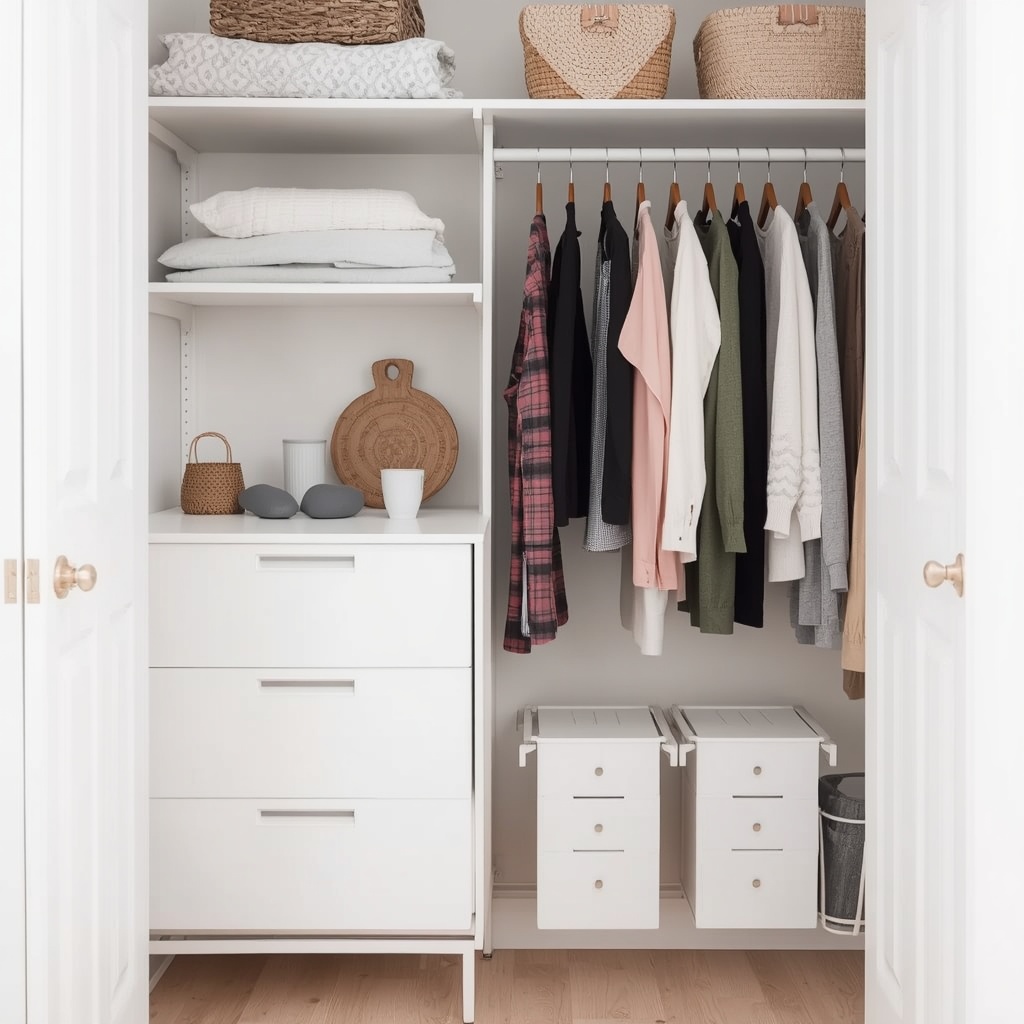
Start with one step this weekend, whether that’s decluttering a single shelf or swapping your hangers. Small wins build momentum, and before long you’ll have a closet that works as hard as you do. Your mornings will run smoother, your clothes will last longer, and your bedroom will feel instantly more peaceful.