
White furniture has a way of making a room feel bigger, brighter, and more expensive than it actually is. It’s the design equivalent of a blank canvas — airy, timeless, and endlessly versatile with any color palette you throw at it. But if you’ve ever owned a white sofa while also owning a toddler, a Labrador, or both, you already know the dirty little secret: white furniture and chaos do not naturally coexist.

As an interior designer who has spent years helping busy households fall in love with light, bright interiors, I can tell you this much: white furniture is not off-limits to families. It just requires the right fabric choices, the right habits, and a cleaning routine that fits into real life — not a showroom fantasy. Below, I’m sharing the exact strategies I recommend to clients with kids, pets, or both, so you can enjoy that crisp, hotel-lobby look without living in fear of the next juice spill or muddy paw print.
Why White Furniture Is Worth the Effort
Before we get into stain removal and fabric protectors, let’s address the elephant in the room: is white furniture even a smart choice for a busy household? My answer is a confident yes, with caveats.

White and off-white furniture reflects light beautifully, making small rooms feel more open and large rooms feel more serene. It also ages differently than dark furniture — while black and navy pieces show dust, pet hair, and lint constantly, white surfaces tend to hide those particular annoyances much better. The trade-off is that white shows liquid stains and body oils more obviously, which simply means your cleaning strategy needs to shift.
“Design is not about avoiding mess — it’s about choosing materials that make the mess manageable.” That’s a philosophy I share with every client who hesitates at the paint chip aisle or the fabric showroom, worried that light colors and family life can’t mix.
Choosing the Right Fabric From the Start
If you haven’t purchased your white furniture yet, this is the single most important decision you’ll make. The fabric determines 80% of your future cleaning workload — more than any spray, wipe, or vacuum ever will.
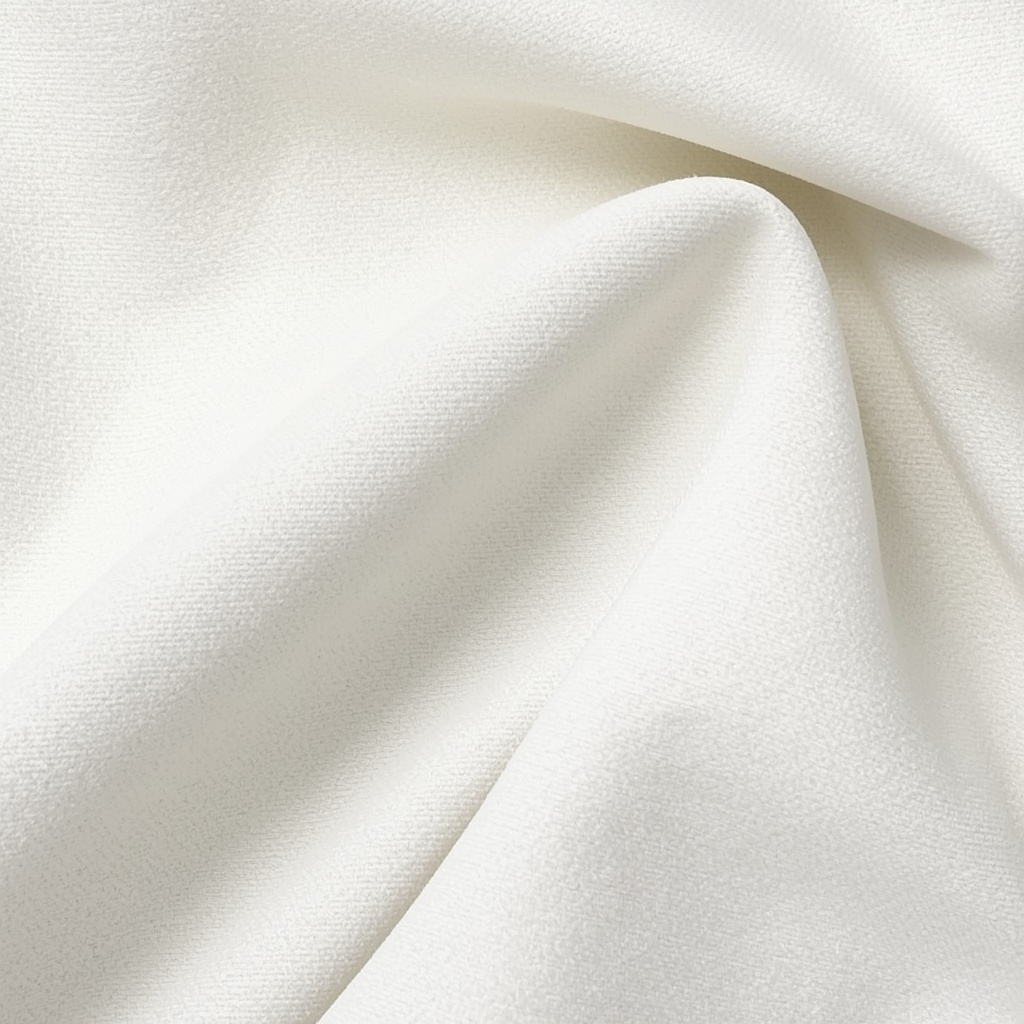
Performance fabrics have completely changed the game for pet- and kid-friendly homes. Brands like Crypton, Sunbrella, and Revolution Fabrics are engineered to resist moisture, stains, and odor at the fiber level, meaning spills bead up on the surface instead of soaking in. Leather and faux leather are also excellent choices because they wipe clean in seconds and don’t trap pet hair the way woven textiles do.
Best and Worst Fabrics for White Furniture
| Fabric Type | Stain Resistance | Pet Hair Pickup | Best For |
|---|---|---|---|
| Performance/Crypton fabric | Excellent | Low | Kids, pets, everyday use |
| Leather / faux leather | Excellent | Very low | Dogs, cats, easy wipe-downs |
| Outdoor-grade (Sunbrella) | Excellent | Low | Sunrooms, high-traffic areas |
| Cotton/linen blends | Fair | Moderate | Low-traffic formal rooms |
| Velvet | Poor | High | Adult-only spaces |
| Silk or delicate weaves | Very poor | High | Avoid with kids/pets |
Pro Tip: When shopping in-store, ask to see the fabric’s “double rub count” and stain-resistance rating. Anything above 30,000 double rubs with a built-in stain repellent finish is considered durable enough for daily family use.
Build a Simple Daily and Weekly Cleaning Routine
Consistency beats intensity every time. A quick five-minute daily habit will save you hours of deep cleaning later, and it keeps stains from setting in permanently.

I always tell clients to think of white furniture maintenance in three time buckets: daily upkeep, weekly resets, and monthly deep cleans. This layered approach means small messes never have the chance to become big problems, and you’re never left scrubbing a six-month-old stain that’s practically become part of the fabric.
Daily Habits (2–5 minutes)
- Wipe down arms and cushions with a dry microfiber cloth to catch surface dust and hair
- Fluff and rotate cushions so wear and sun fading distribute evenly
- Blot any fresh spills immediately — never rub, which pushes liquid deeper into fibers
- Do a quick lint-roller pass over pet-favorite spots like the seat edge or armrest
Weekly Habits (10–15 minutes)
- Vacuum with an upholstery attachment, including crevices and under cushions
- Spot-treat any small marks with a fabric-appropriate cleaner
- Wash removable slipcovers or cushion covers if machine-washable
- Wipe down wood or metal legs to prevent scuff buildup
Monthly Habits (30–45 minutes)
- Deep clean with a fabric steamer or upholstery shampooer
- Treat the entire piece with a fabric protector spray
- Check seams and piping for embedded dirt or pet hair
- Rotate cushions front-to-back for even wear patterns
Tackling Specific Stains: Pets vs. Kids
Not all messes are created equal, and treating the wrong stain with the wrong method can actually set it permanently. Here’s a breakdown of the most common culprits I see in family homes and how to handle each one.
Common Pet-Related Stains
Pet accidents, drool, and muddy paws are the most frequent white-furniture emergencies in households with dogs or cats. The key with pet stains is speed and enzyme-based cleaners, since regular soap often fails to break down the proteins in urine or saliva.
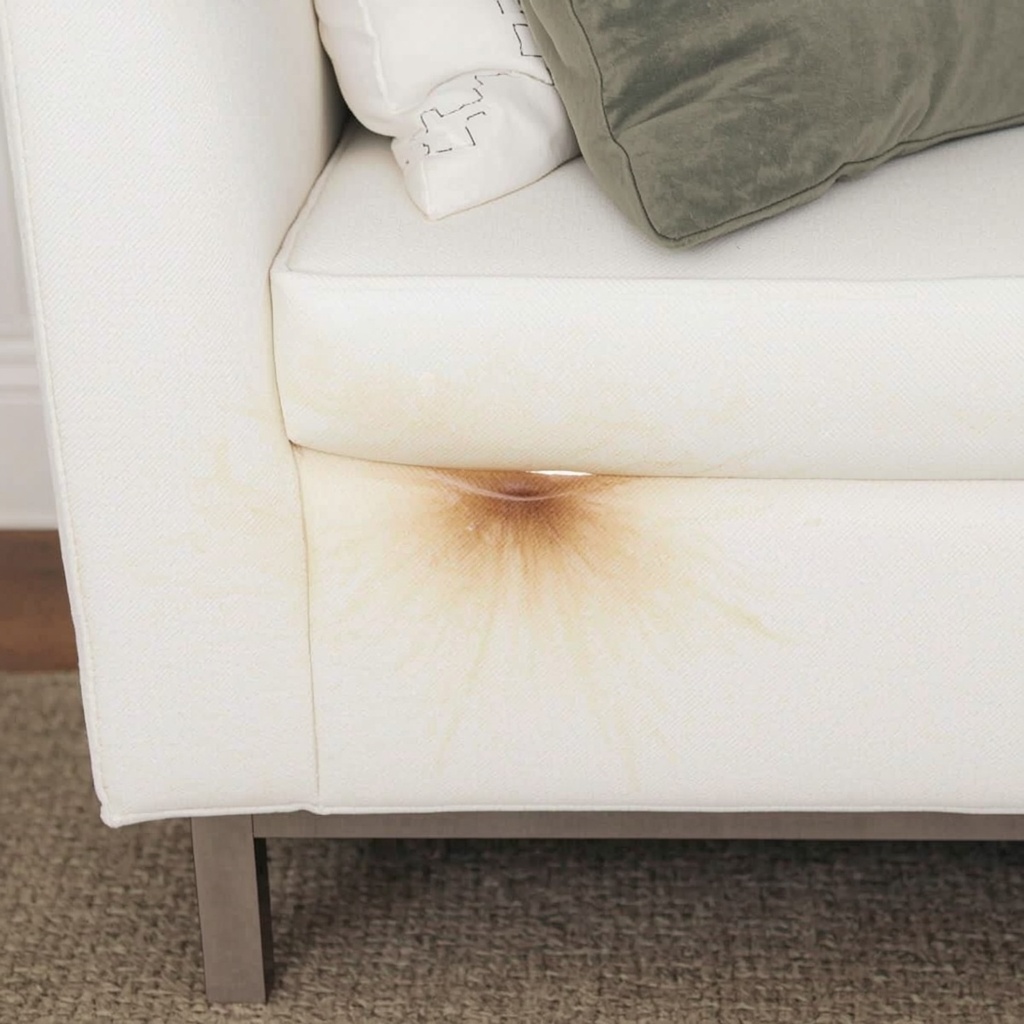
For urine or vomit, blot (don’t rub) with a clean cloth, then apply an enzymatic pet stain remover formulated for upholstery. Let it sit for the time specified on the label — usually 10–15 minutes — before blotting again with cool water. For muddy paw prints, let the mud dry completely first, then vacuum or brush it off before spot-treating any remaining discoloration with a mild dish soap and water solution.
Common Kid-Related Stains
Juice, crayon, marker, and food stains dominate the kid-mess category, and each requires a slightly different approach. Juice and food dye stains respond well to a mixture of one tablespoon of dish soap, one tablespoon of white vinegar, and two cups of cool water, applied with a soft brush.
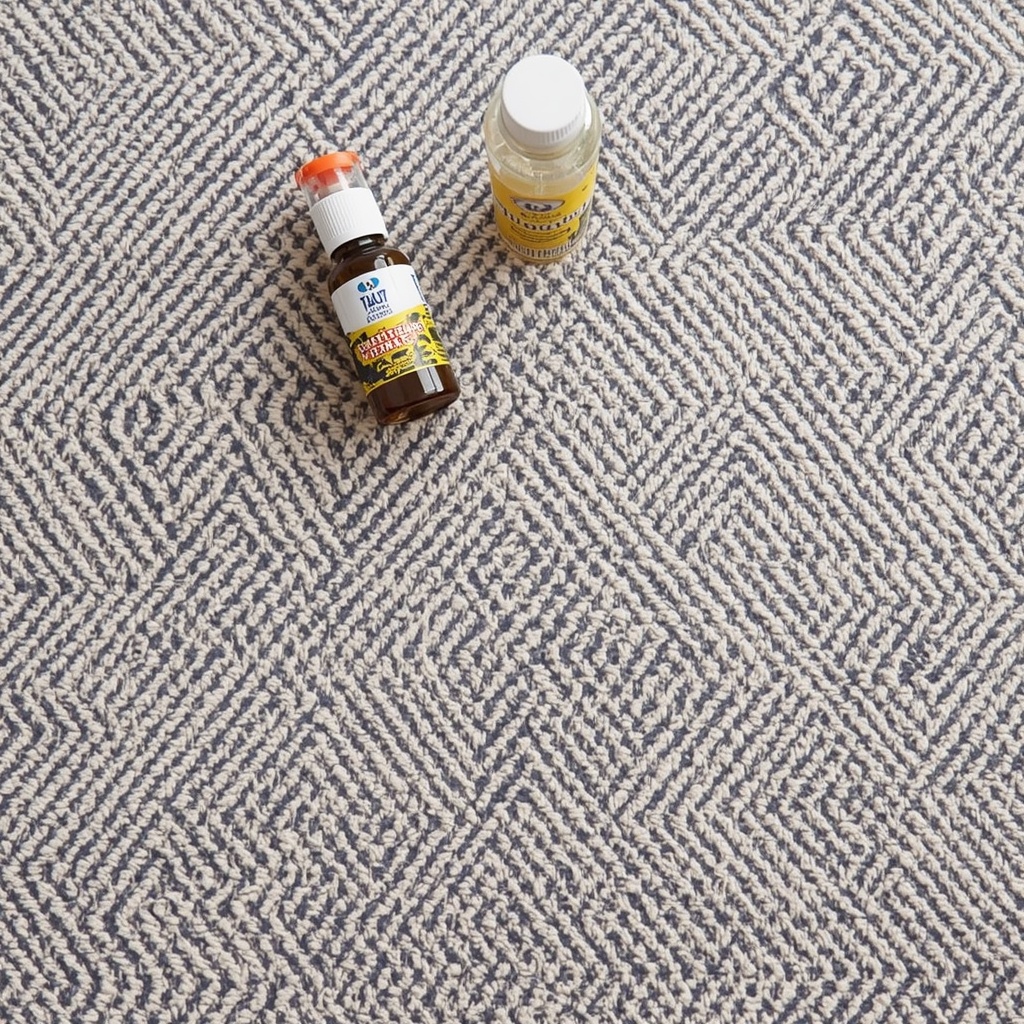
Crayon and marker are trickier because they’re often wax- or alcohol-based. For crayon, gently scrape off excess wax with a dull knife, then use a bit of rubbing alcohol on a cotton ball to lift the color. For marker, rubbing alcohol also works well — just always test on a hidden area first, since some performance fabrics react differently to alcohol-based solvents.
Pro Tip: Keep a small “furniture emergency kit” in a kitchen drawer or hallway closet — a microfiber cloth, enzymatic pet cleaner, mild dish soap, white vinegar, and rubbing alcohol. Having these five items within arm’s reach means you can treat 90% of household stains within the first crucial sixty seconds.
Protective Products That Actually Work
Prevention is always cheaper and easier than stain removal, so a good protective layer is one of the smartest investments you can make in white furniture.
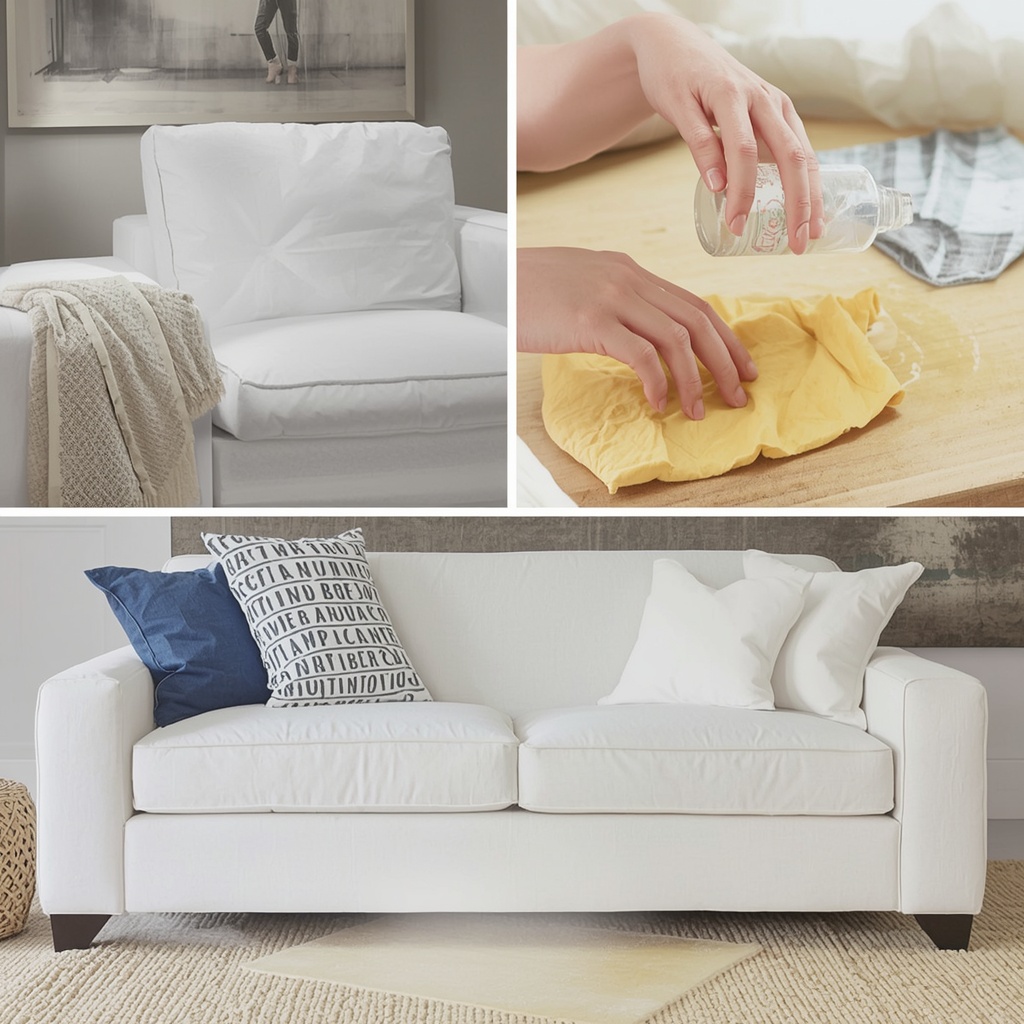
Fabric protector sprays like Scotchgard create an invisible barrier that causes liquids to bead on the surface rather than absorb immediately, giving you extra time to blot before a stain sets. For leather pieces, a dedicated leather conditioner and protector combo prevents cracking while also repelling moisture. Furniture covers or throws are another practical option, especially over cushions that see the most daily contact from kids or pets.
Protective Products at a Glance
| Product | Purpose | Reapply Every |
|---|---|---|
| Fabric protector spray | Repels liquid stains | 6 months |
| Leather conditioner | Prevents cracking, adds moisture resistance | 6–12 months |
| Washable slipcovers | Full removable protection | As needed for washing |
| Waterproof cushion liners | Blocks moisture from reaching foam | Once, during setup |
| Pet-friendly throws | Reduces direct fur/paw contact | Wash weekly |
Smart Furniture Placement and Household Habits
Sometimes the best cleaning hack isn’t a product at all — it’s simply rethinking where and how your family uses the space. A few layout adjustments can dramatically cut down on the number of messes that reach your white furniture in the first place.
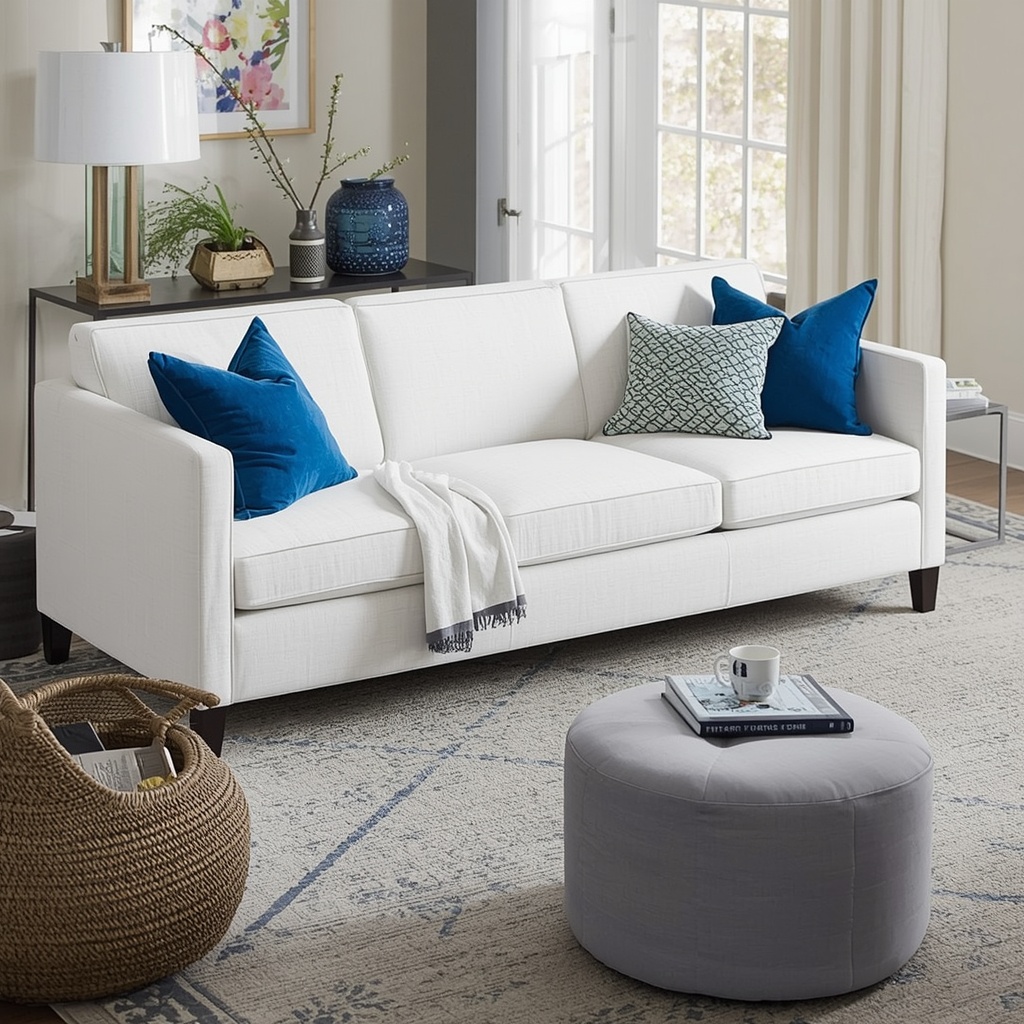
Consider placing a washable rug or runner in front of high-traffic seating to catch dirt before it transfers from shoes or paws. Designate one accent chair or ottoman as the “kid and pet zone” using a durable slipcover, keeping your main statement piece cleaner by comparison. Training pets to use a designated blanket or bed nearby, and establishing a no-food-on-the-white-sofa rule for kids, both go a long way toward long-term cleanliness.
As I often remind clients: “You’re not decorating for a magazine shoot — you’re decorating for real life. The goal is furniture that looks great and survives Tuesday afternoon.”
When to Call In Professional Upholstery Cleaning
Even with the best routine, white furniture benefits from a professional deep clean once or twice a year, especially in households with heavy pet or kid traffic. Professionals use hot-water extraction and specialized solvents that lift embedded dirt and oils far more effectively than home methods, restoring brightness that daily maintenance alone can’t achieve.
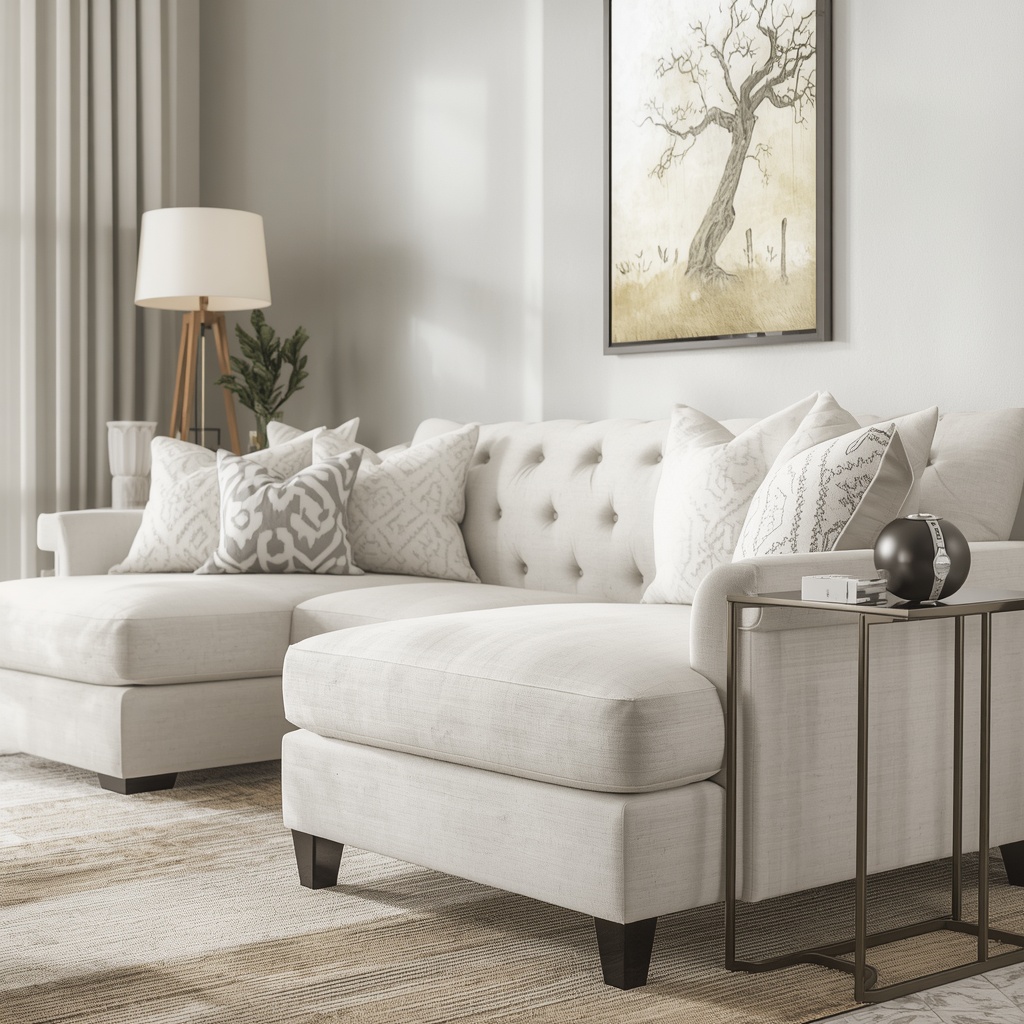
This is particularly worth it for larger investment pieces like a sectional sofa or a formal white armchair that anchors your living room design. Many upholstery cleaning services also offer fabric protection treatments as part of the visit, giving you a fresh, protected surface to start your maintenance routine over again.
Final Thoughts: White Furniture Is Still Worth It
White furniture isn’t reserved for childless, petless households living in a design magazine spread — it’s absolutely achievable for real families, as long as you set yourself up with the right fabric, the right products, and a realistic routine. The families I work with who succeed with white furniture aren’t the ones with the least mess; they’re the ones with the best systems.

Start with a performance fabric or leather, build a simple daily-weekly-monthly cleaning rhythm, keep a stain-emergency kit on hand, and don’t be afraid to bring in a professional cleaner once or twice a year. Do that, and your white furniture won’t just survive life with kids and pets — it’ll thrive right alongside them.