There’s a reason coffee bars have become one of the most requested features in American homes today. As a home decor specialist, I’ve watched this trend evolve from a niche Pinterest board idea into a genuine architectural request — clients now ask for a dedicated coffee nook the same way they ask for a kitchen island or a walk-in pantry. A well-designed home coffee station does more than brew your favorite espresso or drip coffee; it creates a small, intentional pocket of calm in an otherwise busy home.
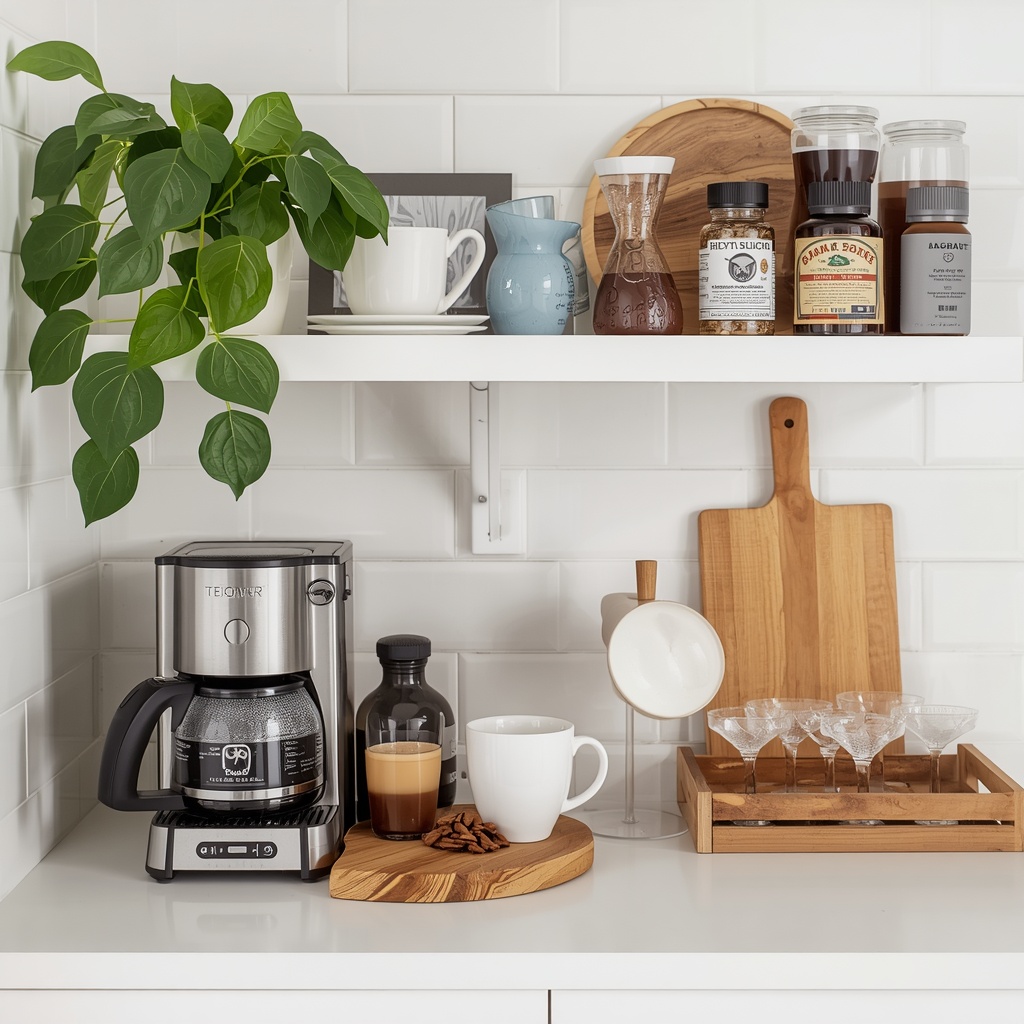
Whether you’re working with a spacious kitchen counter, a converted closet, or a narrow hallway nook, building a functional and beautiful coffee bar is one of the easiest home upgrades that delivers daily joy. In this guide, I’ll walk you through everything you need — from layout and furniture to styling details and budget-friendly hacks — so you can create a coffee corner that feels like your own personal café.
Why Every Home Needs a Dedicated Coffee Station
A home coffee bar isn’t just a design trend; it’s a functional upgrade that changes how your mornings feel. Instead of digging through cluttered cabinets for a filter or hunting for your favorite mug, everything has its place. This kind of intentional organization reduces morning stress and adds a small luxury to your daily routine.
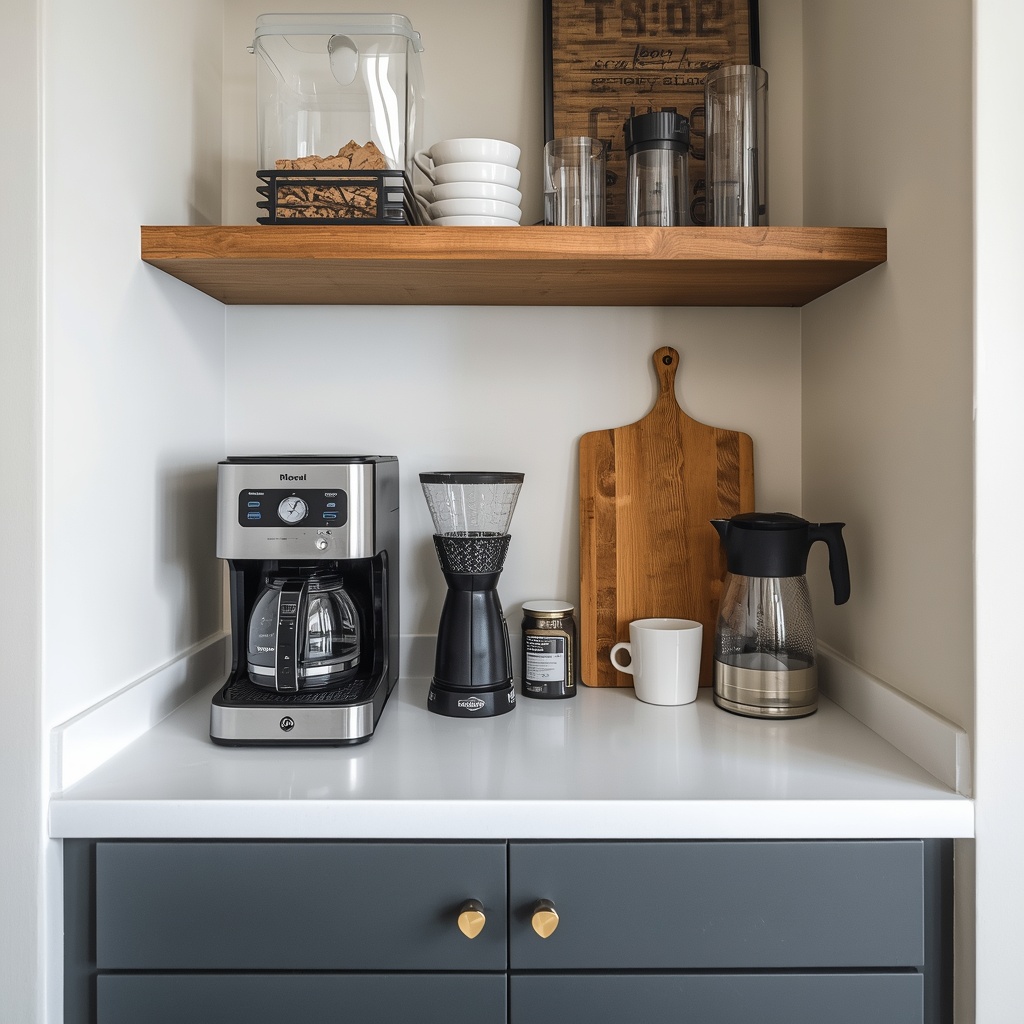
There’s also a strong design argument for it. A coffee bar setup gives you a focal point in your kitchen or dining area — a place to showcase open shelving, unique mugs, and decorative accents that reflect your personal style. It’s an affordable way to add character to a space without a full renovation.
“A coffee station is one of the few home design elements that combines function, ritual, and personality in a single square foot of space.” — a sentiment echoed by many interior designers featured in home decor publications.
Choosing the Right Location for Your Coffee Nook
Before you buy a single mug rack, think carefully about placement. The best coffee bar location depends on your kitchen layout, available counter space, and daily traffic flow.
Popular locations include:
- Kitchen counter corner – ideal if you have an underused end of countertop
- Empty wall nook – perfect for a narrow console table or bar cart
- Converted closet or pantry corner – great for hiding appliances behind doors
- Dining room sideboard – works well for open-concept homes
- Butler’s pantry or mudroom – a smart solution for busy households
Pro Tip: Always place your coffee bar within a few steps of a water source or at least near your refrigerator. This small planning detail saves countless trips across the kitchen every single morning.
Essential Coffee Bar Furniture and Storage
The foundation of any home coffee bar comes down to the furniture you choose. This is where function meets aesthetic, and it’s worth investing a little extra thought here since this piece will anchor the entire setup.
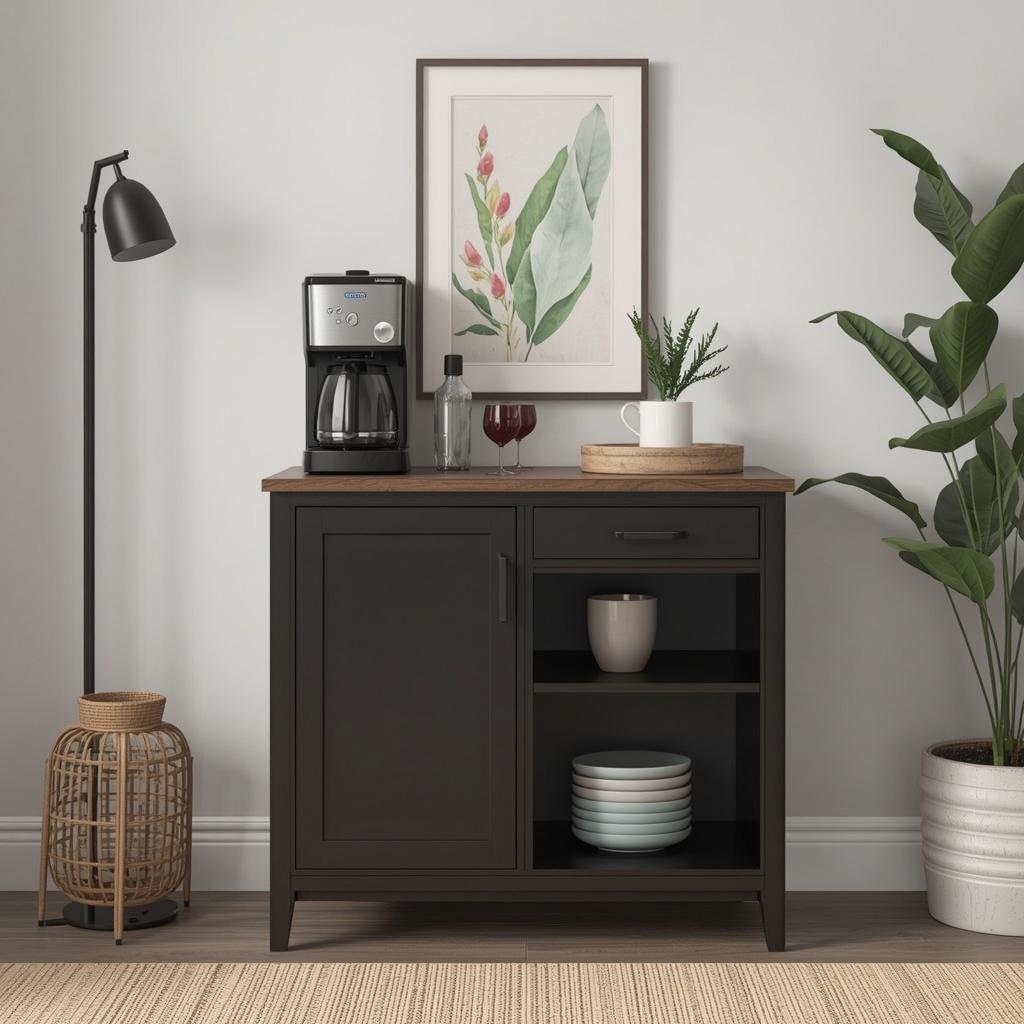
Consider these furniture options based on your available space and design style:
| Furniture Type | Best For | Approximate Cost (USD) |
|---|---|---|
| Bar cart | Small apartments, rentals | $80 – $250 |
| Console table | Hallways, open kitchen walls | $150 – $500 |
| Floating shelves | Minimalist or modern kitchens | $30 – $120 |
| Buffet or sideboard | Dining rooms, larger spaces | $300 – $900 |
| Built-in cabinetry | Custom kitchen renovations | $800 – $3,000+ |
Storage matters just as much as style. Open shelving works beautifully for displaying curated mugs and glass canisters, while closed cabinetry keeps small appliances and bulk coffee bags out of sight. A mix of both — open shelves up top, closed storage below — tends to give the most functional and visually balanced result.
Must-Have Coffee Bar Equipment
No coffee station is complete without the right equipment. The key is choosing appliances that match your actual coffee habits rather than filling your counter with gadgets you’ll rarely use.
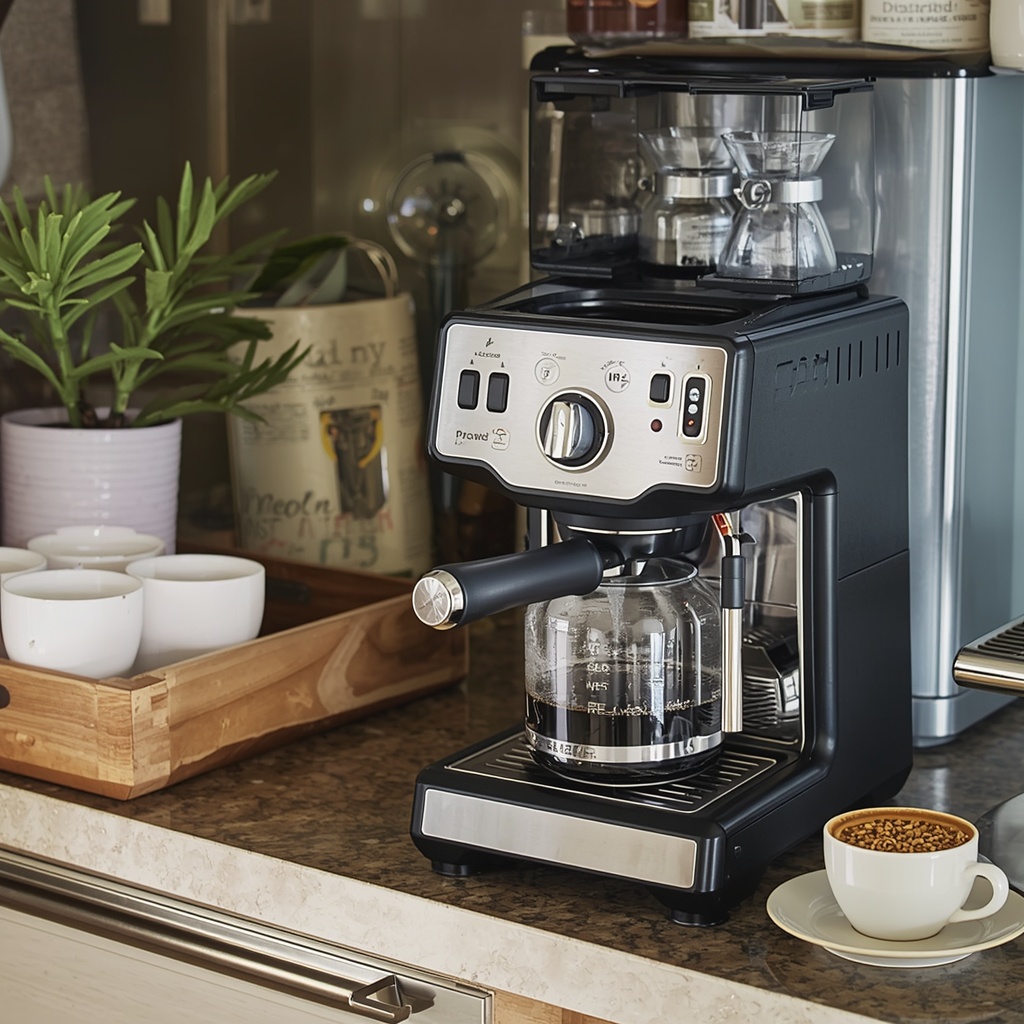
Here’s a breakdown of the essentials most home baristas rely on:
- Coffee maker or espresso machine – drip machines, pour-over setups, and espresso machines all suit different lifestyles
- Electric or manual grinder – freshly ground beans dramatically improve flavor
- Electric kettle – essential for pour-over coffee, tea, or instant options
- Milk frother – a small investment that unlocks café-style lattes at home
- Water filter pitcher – improves taste, especially in areas with hard tap water
For those exploring different brewing styles, the National Coffee Association offers helpful resources on brewing methods that can guide equipment choices based on your preferred coffee style.
Pro Tip: Group your appliances by function — brewing tools on one side, mug and accessory storage on the other. This “workflow zoning” mirrors professional café layouts and makes your morning routine noticeably smoother.
Styling Your Coffee Bar Like a Design Pro
This is where the fun really begins. Styling transforms a purely functional station into a warm, inviting corner of your home. Think of your coffee bar as a small vignette — every item should feel intentional, not just useful.
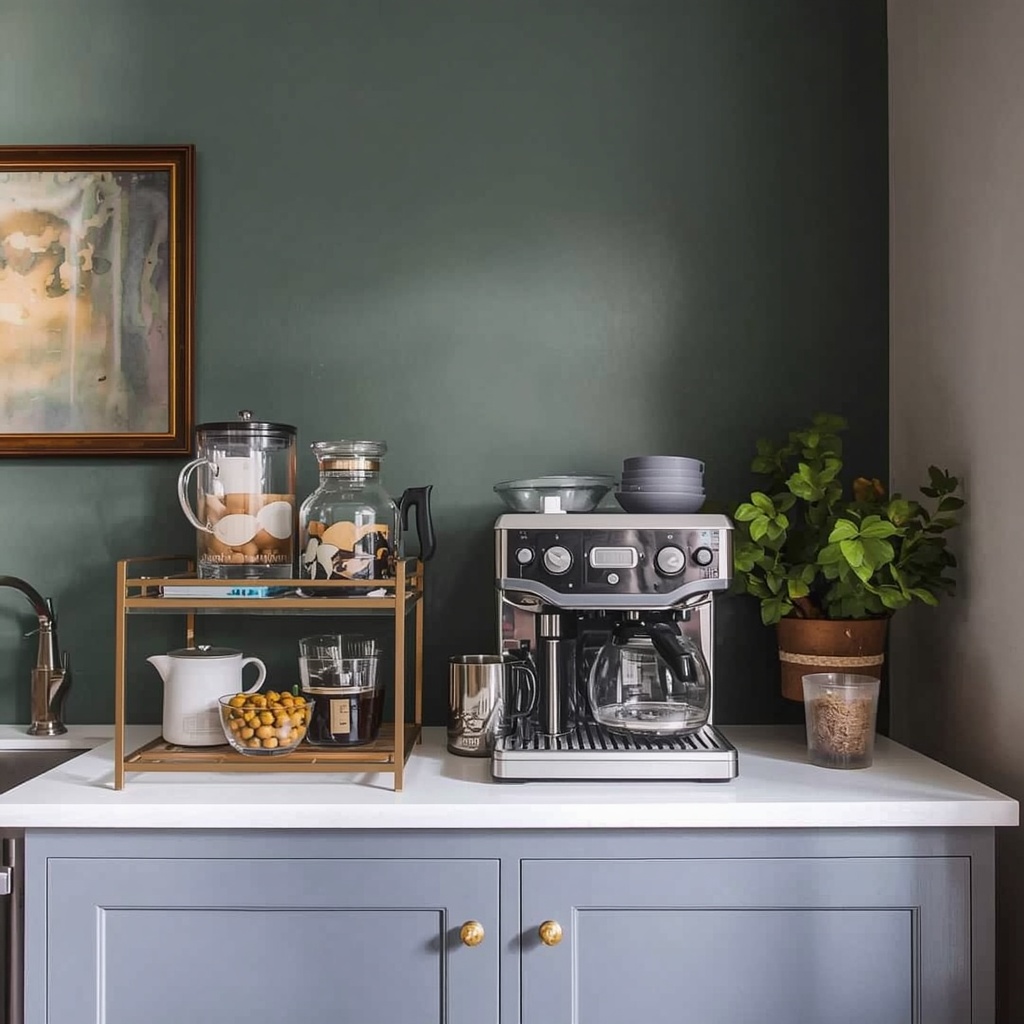
Layer textures and materials to add visual depth: pair a wood tray with ceramic canisters, or mix matte black fixtures with warm brass accents. Repetition also helps create a cohesive look, so choose two or three finishes and repeat them throughout the display rather than introducing a dozen different styles.
Some styling essentials to consider:
- A decorative tray to corral syrups, sweeteners, and stirrers
- Labeled glass jars for coffee beans, sugar, and tea bags
- A small vase with fresh or dried flowers for a touch of life
- Layered art or a small framed print above the station
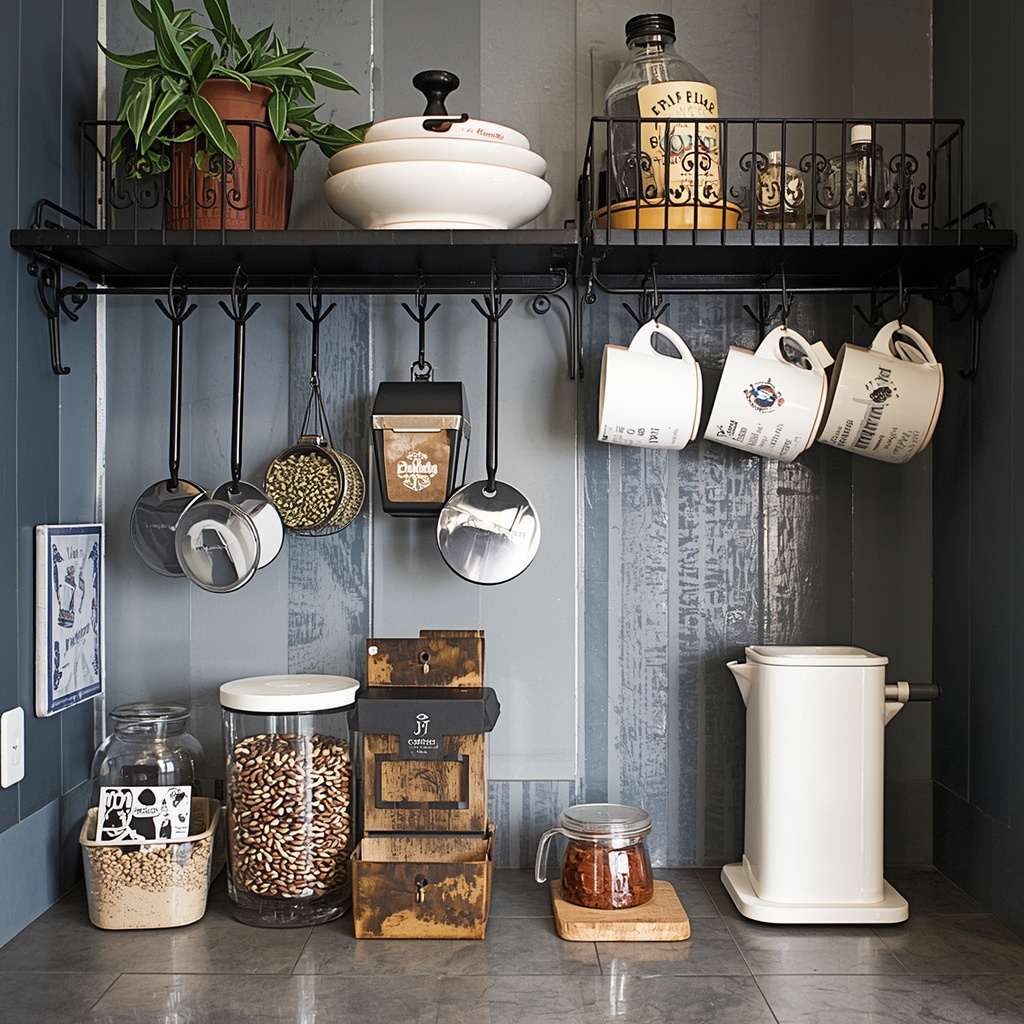
- Coordinated mug displays using a wall-mounted rack or open shelf
“Good styling isn’t about adding more — it’s about editing down to the pieces that earn their place on the counter.” This principle applies directly to coffee bar design, where clutter can quickly undermine an otherwise beautiful setup.
Color Palettes and Design Styles That Work
Your coffee bar should feel like a natural extension of your home’s existing design language, not a disconnected corner. Below are a few popular aesthetic directions homeowners are gravitating toward this year.
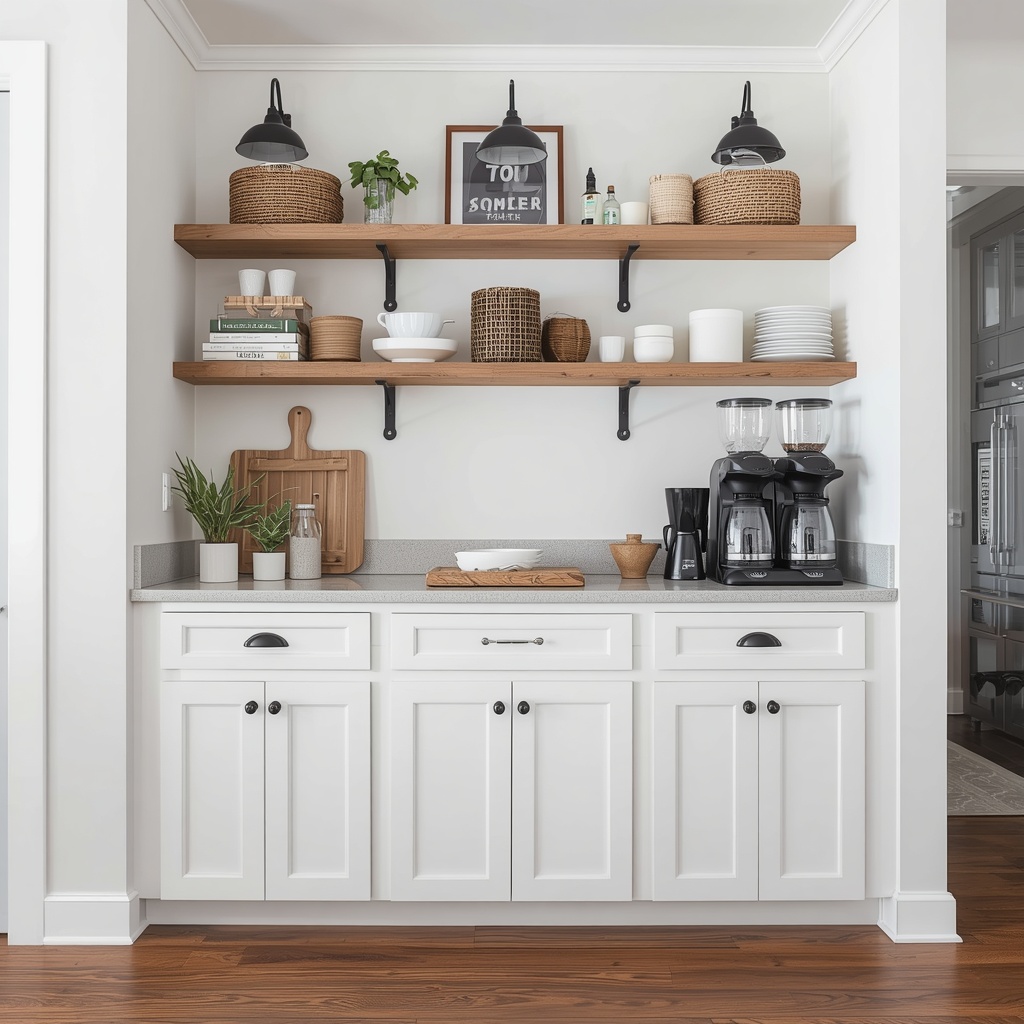
Farmhouse-style coffee bars typically lean into warm wood tones, black iron fixtures, and vintage-inspired signage, while modern minimalist setups favor clean lines, monochrome palettes, and hidden storage. Coastal and boho styles bring in rattan baskets, light woods, and soft neutral tones for a relaxed, airy feel.
| Design Style | Color Palette | Signature Materials |
|---|---|---|
| Modern Farmhouse | White, black, warm wood | Shiplap, iron, reclaimed wood |
| Minimalist | White, gray, black | Matte ceramics, glass, steel |
| Coastal | Cream, sand, soft blue | Rattan, light oak, linen |
| Industrial | Charcoal, brass, wood | Metal shelving, Edison bulbs |
| Traditional | Navy, gold, cream | Marble, brass, patterned tile |
Choosing a palette that already exists elsewhere in your kitchen ensures the coffee bar feels built-in rather than bolted on as an afterthought.
Small-Space Coffee Bar Ideas
Not everyone has a spare countertop or an empty wall to dedicate to coffee. If you’re working with a compact kitchen or apartment, these ideas can help you maximize function without sacrificing style.
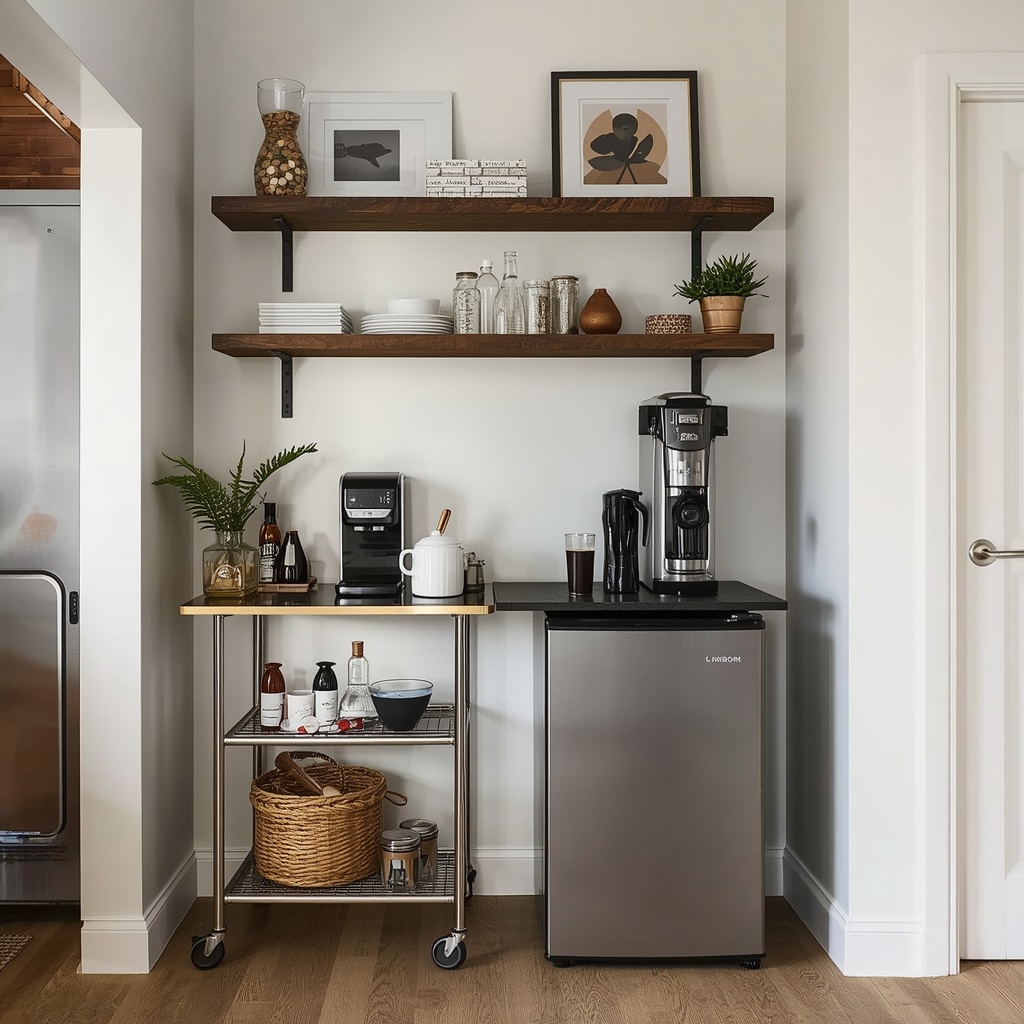
A narrow bar cart on wheels is one of the most versatile solutions for small spaces — it can be tucked into a corner and rolled out when needed. Wall-mounted floating shelves above a mini fridge or small appliance also free up valuable counter space while still keeping your coffee tools within reach.
Other smart small-space solutions include:
- Using the top of a mini fridge as your entire coffee station
- Installing a fold-down shelf that tucks away when not in use
- Repurposing a bookshelf corner with a small tray setup
- Choosing stackable, space-saving canisters instead of bulky containers
Pro Tip: In tight spaces, vertical storage is your best friend. Adding a single narrow shelf above your station can double your storage capacity without taking up any additional floor space.
Budget-Friendly vs. Luxury Coffee Bar Ideas
One of the best things about a coffee bar setup is how scalable it is. You can build a charming station for under $100, or invest in a high-end custom build that rivals a professional café.

For a budget-conscious approach, thrifted trays, secondhand glass jars, and a simple floating shelf can create a beautiful look for very little money. On the other end of the spectrum, a luxury setup might include a built-in espresso machine, custom cabinetry, marble countertops, and designer pendant lighting above the station.
| Budget Level | Typical Investment | Key Features |
|---|---|---|
| Starter | Under $150 | Bar cart, basic drip machine, thrifted decor |
| Mid-range | $300 – $800 | Espresso machine, open shelving, curated decor |
| Luxury | $1,500+ | Built-in cabinetry, plumbed espresso machine, designer lighting |
Regardless of budget, the design principles stay the same: prioritize function, choose a cohesive palette, and avoid overcrowding the space.
Lighting: The Detail Most People Overlook
Lighting can make or break the ambiance of your coffee corner. A dim, poorly lit nook feels like an afterthought, while a well-lit station feels intentional and inviting, even during those early morning hours before the sun is up.
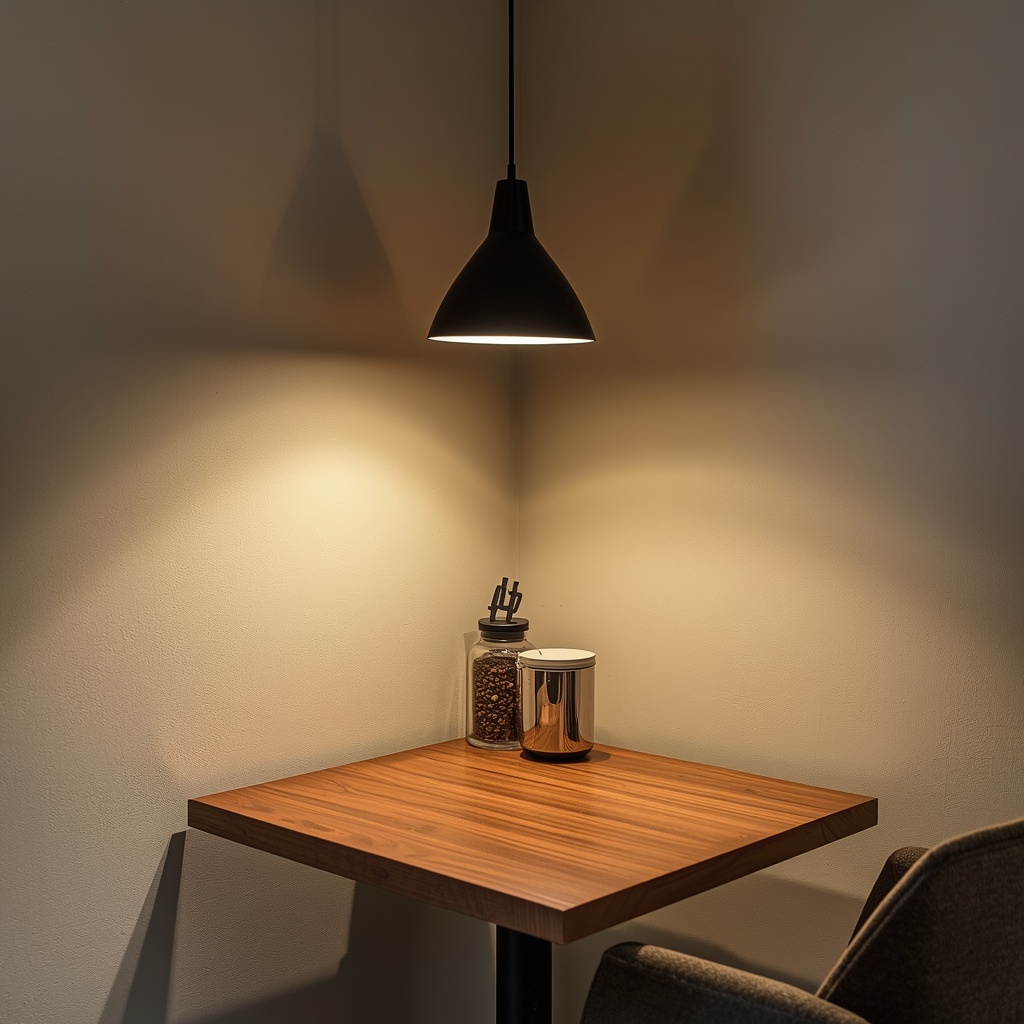
If your coffee bar sits under upper cabinets, consider installing battery-operated or hardwired LED puck lights to eliminate shadows on your workspace. For open-wall setups, a small pendant light or a warm-toned table lamp can add instant ambiance and make the space feel more like a dedicated café corner rather than a leftover countertop.
Pro Tip: Stick to warm white lighting (around 2700K–3000K) rather than cool white. Warm tones create a cozier, more inviting atmosphere that suits a morning ritual space far better than clinical, bright lighting.
Sustainable and Eco-Friendly Coffee Bar Choices
More homeowners are also thinking about sustainability when designing their coffee stations. Small choices can add up to a meaningfully lower environmental footprint without compromising style.

Consider reusable glass or bamboo canisters instead of single-use packaging, a reusable metal or cloth coffee filter instead of paper ones, and ceramic mugs over disposable cups. Sourcing beans from sustainable, ethically certified brands is another simple swap that aligns your morning ritual with broader environmental values. Organizations like the Rainforest Alliance provide certification standards that can help guide more sustainable coffee purchasing decisions.
Final Thoughts: Making the Ritual Your Own
At its heart, a coffee bar is about more than caffeine — it’s about creating a small, joyful ritual in your home. The best coffee stations aren’t necessarily the most expensive ones; they’re the ones that reflect the homeowner’s personality and daily habits.
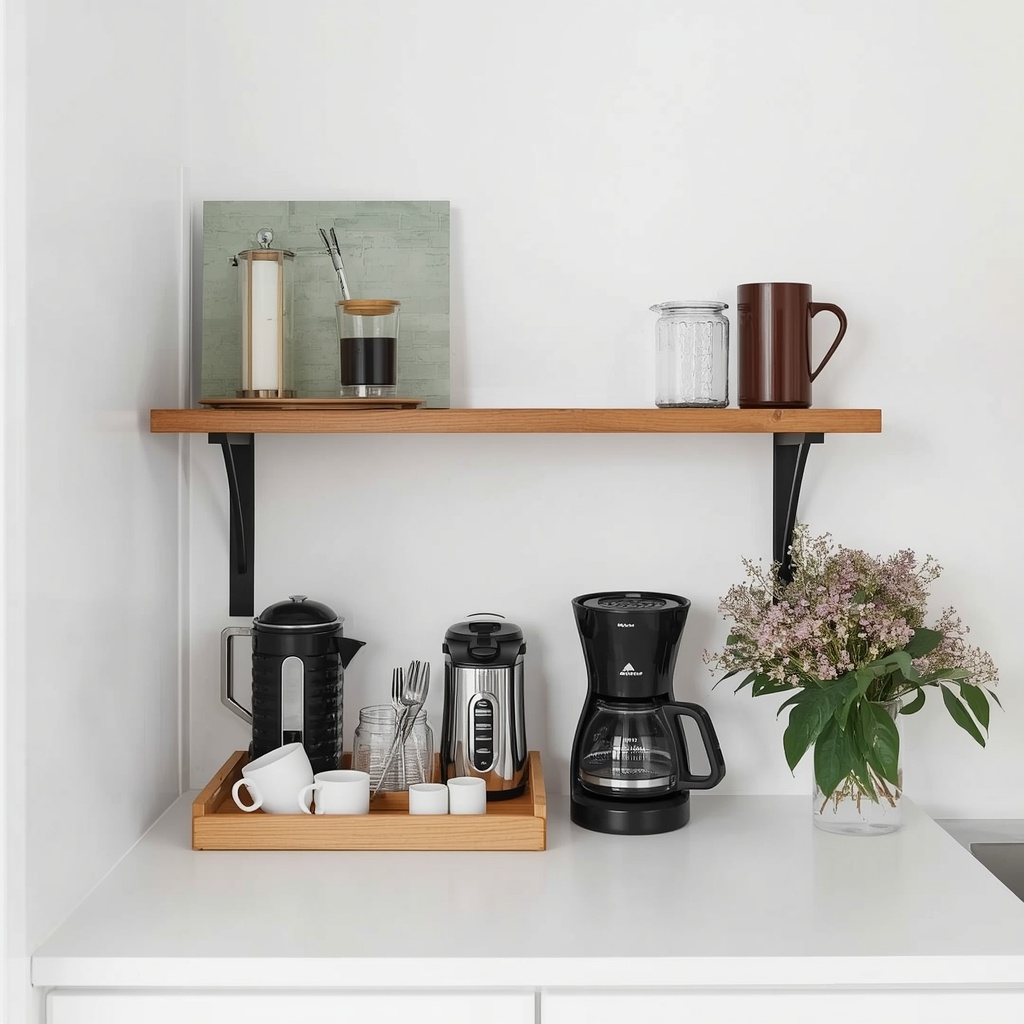
Start small if you need to. Add a tray, a few mugs, and a simple shelf, then build from there as your needs and style evolve. Over time, your coffee bar will become one of those quiet, well-loved corners of your home — the kind of space that makes even a Monday morning feel a little more special.