
Walk into any beautifully designed living room and, more often than not, your eyes are drawn upward before they land anywhere else. That’s the power of statement lighting. As an interior designer who works with homeowners across the country to reimagine their living spaces, I can tell you that lighting is the single most underrated design element in the American home. Paint colors get chosen carefully. Sofas get test-sat in showrooms. But the light fixture? Too often it’s an afterthought.
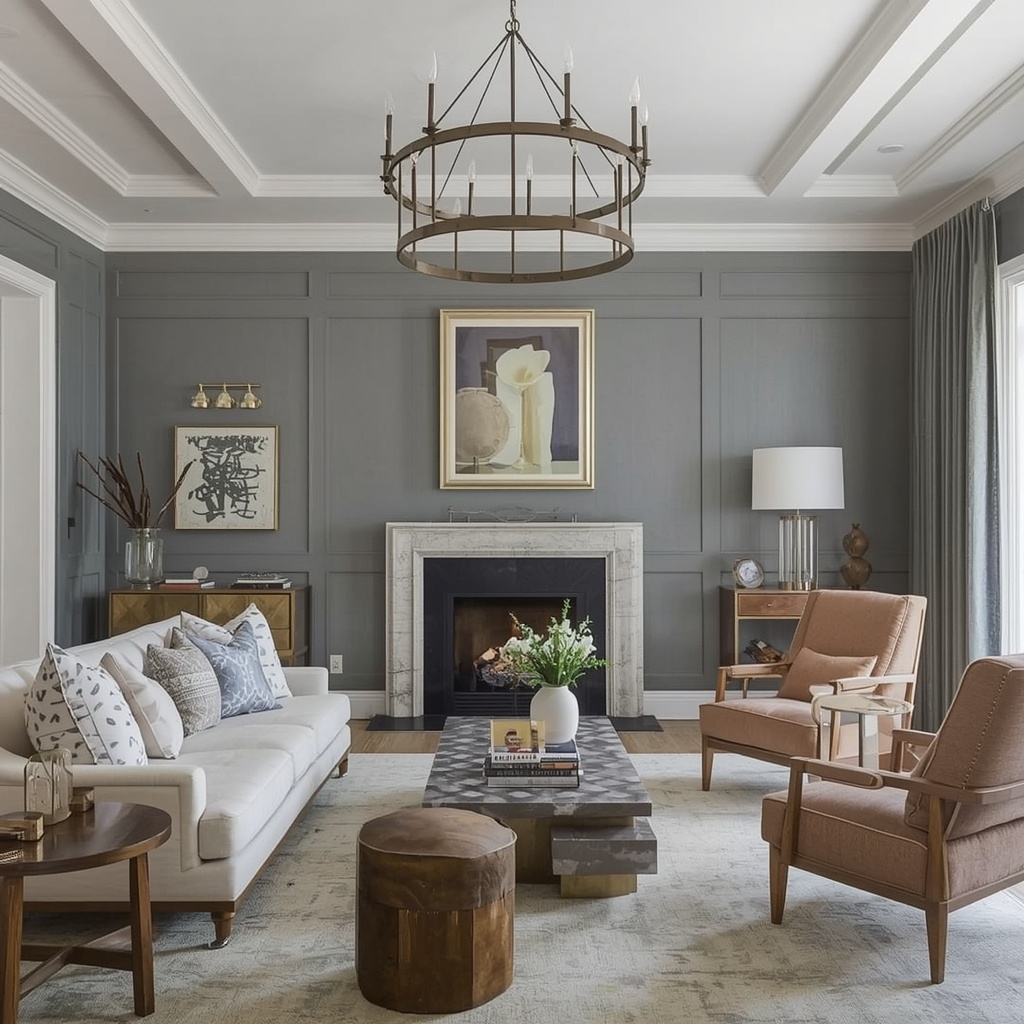
That’s a missed opportunity. Statement lighting — bold, sculptural, and visually striking fixtures — can transform a plain living room into a magazine-worthy space without a full renovation. Whether you’re drawn to an oversized pendant, a dramatic chandelier, or a sculptural floor lamp, the right fixture does double duty: it illuminates your space and acts as functional art. In this guide, I’ll walk you through everything you need to know to choose, place, and style statement lighting in a modern living room, using the same principles I apply with my own clients.
Why Statement Lighting Matters in Modern Living Rooms
Lighting shapes how a room feels long before furniture or color does. A well-chosen statement fixture sets the tone, anchors the layout, and gives your eye somewhere intentional to land. In modern interiors, where clean lines and open floor plans dominate, a single dramatic light fixture often carries more visual weight than an entire wall of decor.
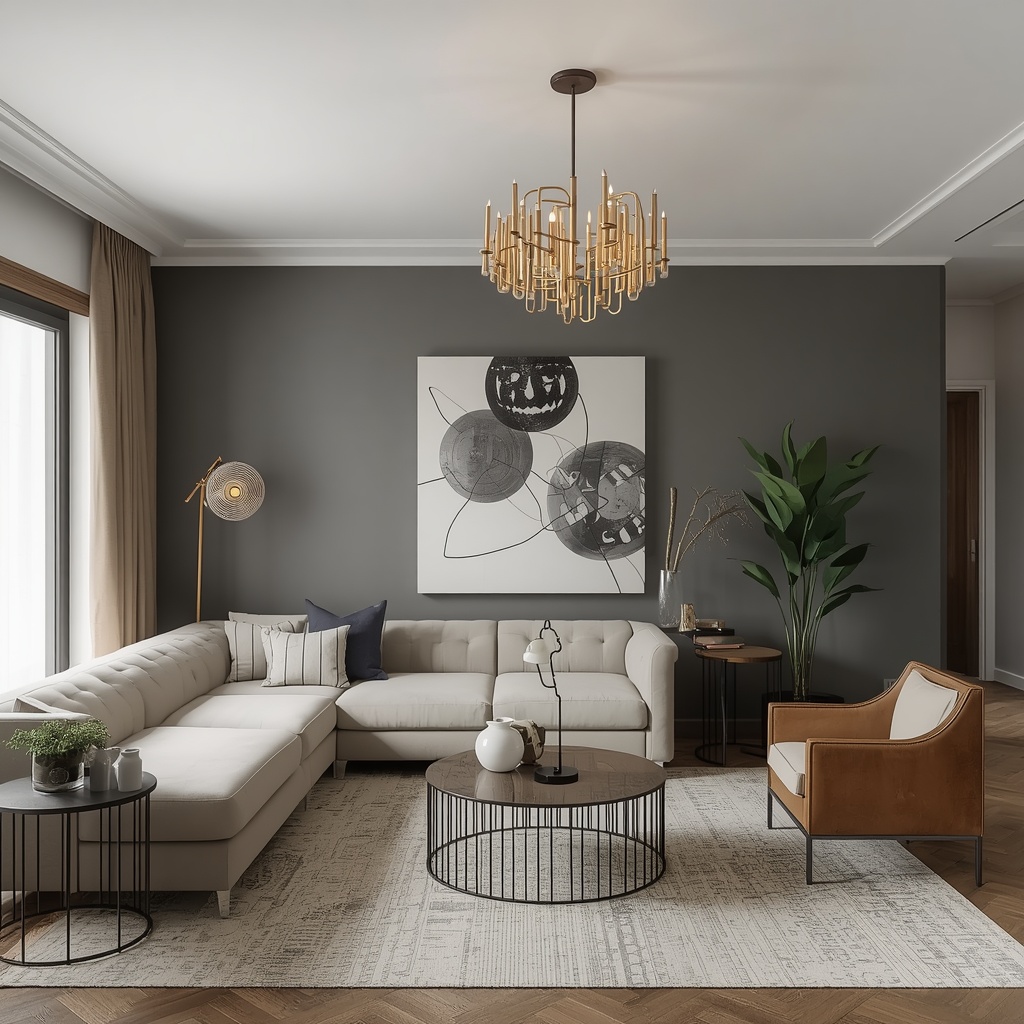
Beyond aesthetics, statement lighting solves a practical design problem: most modern living rooms lack architectural character. Builder-grade recessed lighting is functional but forgettable. Swapping it — or supplementing it — with a sculptural pendant, an artistic chandelier, or an architectural floor lamp instantly adds personality, scale, and a sense of intentional design to a space that might otherwise feel generic.
“Lighting is the jewelry of the room — it’s the finishing touch that makes everything else look intentional.” This is a philosophy I share with nearly every client who’s on the fence about investing in a bold fixture.
Types of Statement Lighting Fixtures to Consider
Not all statement lighting looks the same, and part of the fun is finding a style that matches your home’s architecture and your personal taste. Here are the categories I recommend exploring first.
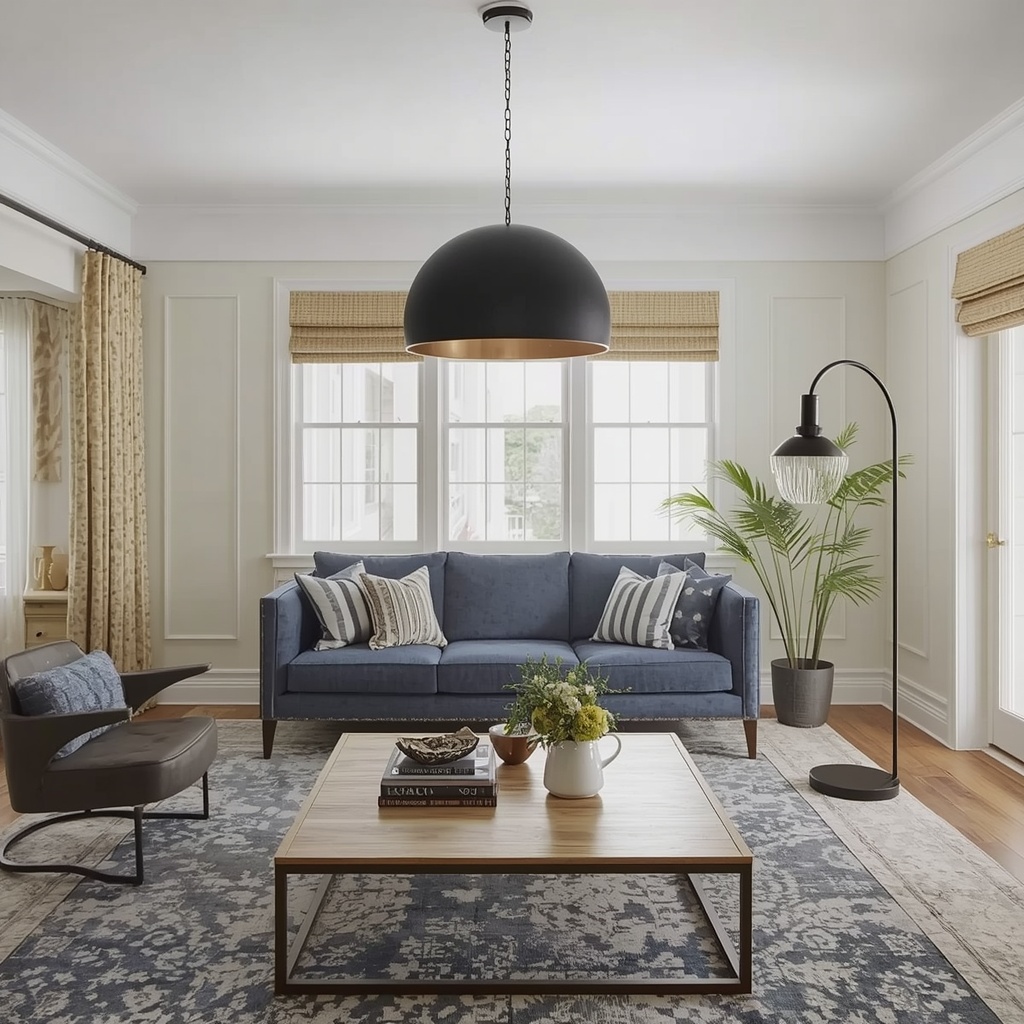
Oversized pendant lights work beautifully above coffee tables, in double-height living rooms, or centered in an open-concept space. They create a focal point without consuming floor space, which makes them ideal for smaller modern living rooms that still want a dramatic touch. Sculptural chandeliers bring old-world glamour into modern rooms when chosen in updated finishes like matte black, brushed brass, or smoked glass instead of traditional crystal. Arc floor lamps are a designer favorite because they mimic the visual effect of a pendant without any electrical or ceiling work, making them perfect for renters or anyone hesitant about installation.
Other strong options include:
- Linear or multi-drop pendants for rooms with long sofas or sectional seating
- Globe and orb fixtures for a soft, retro-modern silhouette
- Cage and lantern-style pendants for an industrial-meets-organic look
- LED sculptural wall sconces that double as wall art
- Statement table lamps with oversized shades or unusual bases for side tables and consoles
Choosing the Right Statement Light for Your Space
Scale, ceiling height, and room proportions all determine which type of statement fixture will actually work — not just look good in a catalog photo. A fixture that’s stunning in a 12-foot ceiling showroom can overwhelm a standard 8-foot living room, and vice versa.
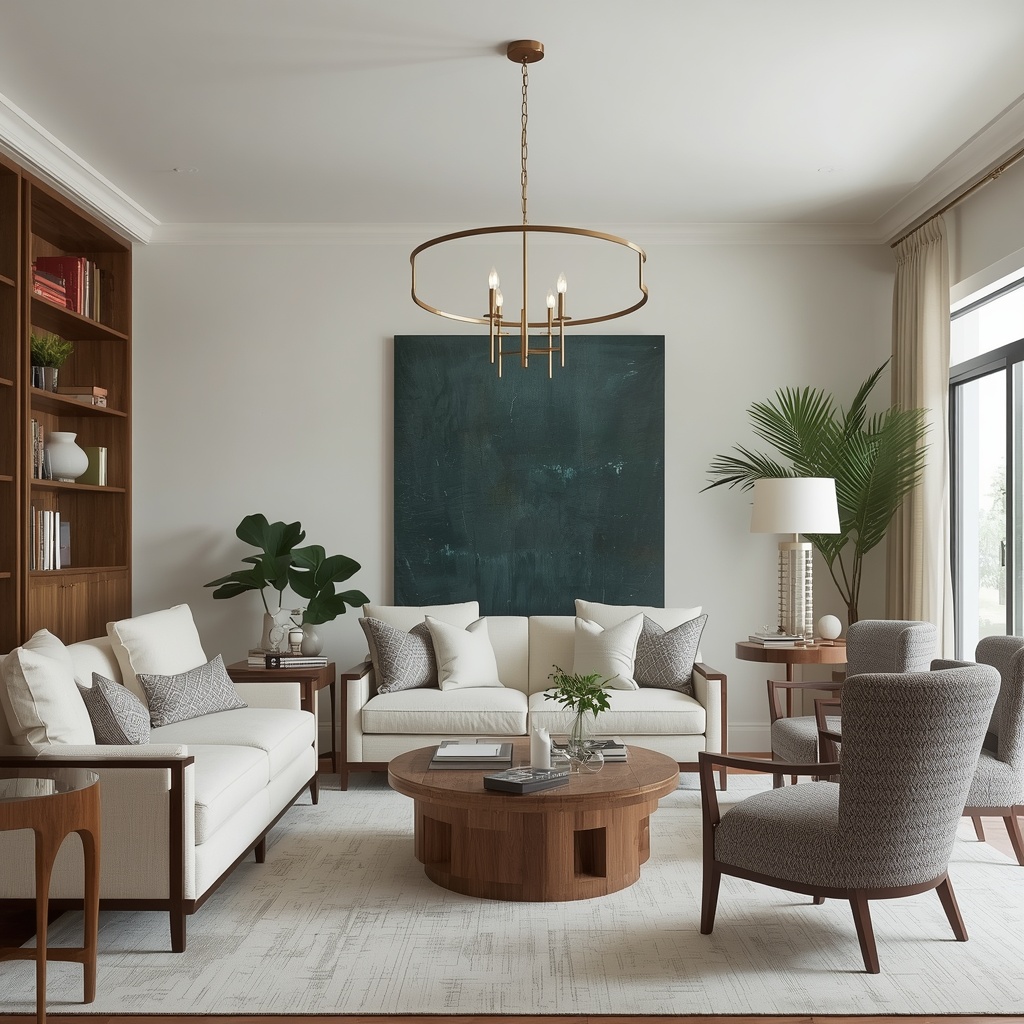
Getting this right is one of the most common questions I get from clients shopping online, where it’s easy to fall in love with a photo and forget to check real-world dimensions. Use the table below as a general starting guide before you shop.
| Room Size | Ceiling Height | Recommended Fixture Type | Suggested Fixture Diameter/Width |
|---|---|---|---|
| Small (under 150 sq ft) | 8 ft standard | Arc floor lamp, small pendant, sculptural sconce | 12–18 inches |
| Medium (150–300 sq ft) | 8–9 ft | Medium pendant, drum chandelier, linear pendant | 18–28 inches |
| Large (300–500 sq ft) | 9–10 ft | Oversized pendant, multi-tier chandelier | 28–40 inches |
| Great room / open-concept (500+ sq ft) | 10 ft+ or vaulted | Statement chandelier, dual pendants, architectural installation | 36 inches and up |
Pro Tip: A quick designer trick for sizing a ceiling fixture is to add the room’s length and width in feet, then convert that number to inches — that’s roughly the ideal fixture diameter. For example, a 12×14 foot room (26 total) suggests a fixture around 24–28 inches wide.
Trending Statement Lighting Styles
Modern living room lighting has moved away from stark, ultra-minimalist fixtures toward pieces with texture, warmth, and organic shape. Homeowners want lighting that feels curated and personal rather than mass-produced, which is reshaping what “modern” even means in this category.
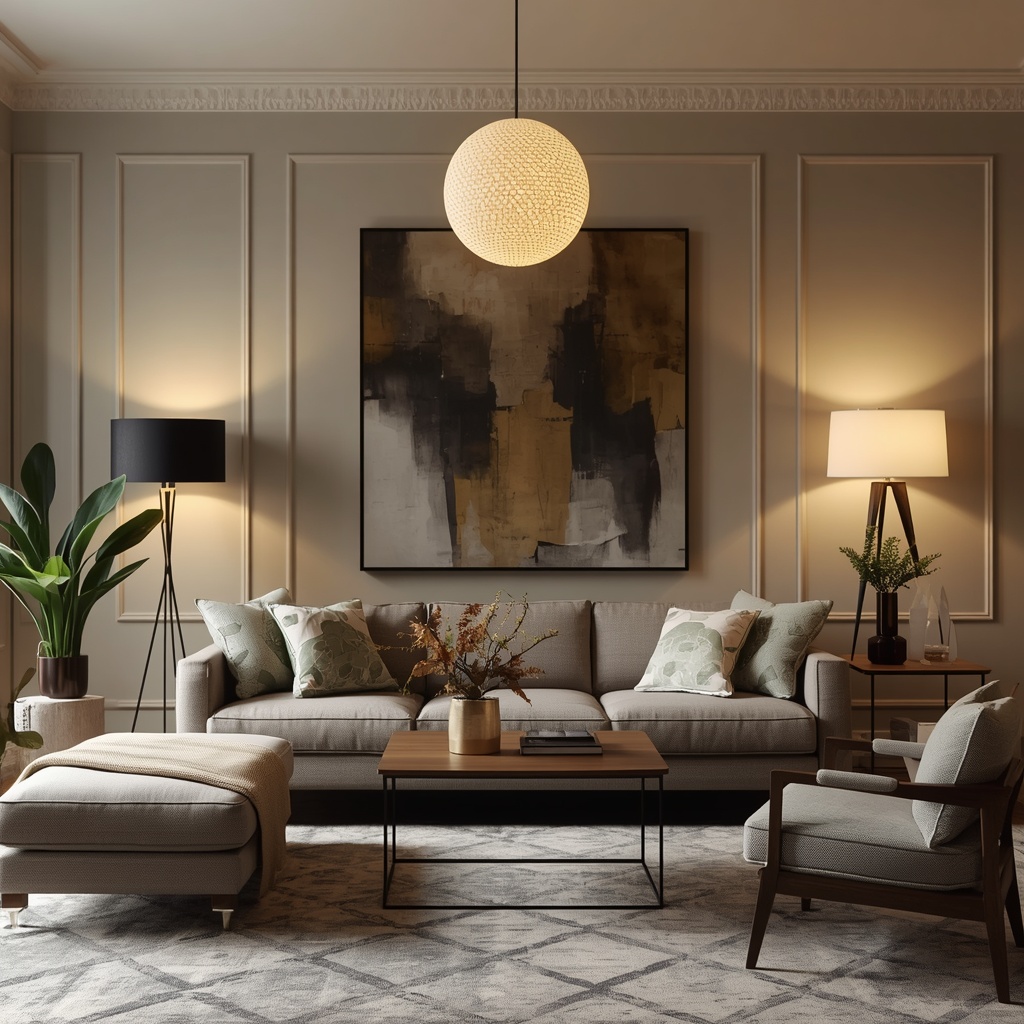
Here’s what I’m specifying most often in client homes this year, and what’s dominating designer mood boards and lighting showrooms alike.
- Organic and biomorphic shapes — sculptural fixtures inspired by natural forms like seed pods, clouds, or coral
- Mixed-material designs — combinations of woven rattan, fluted glass, and matte metal in a single fixture
- Warm metallic finishes — aged brass, bronze, and champagne gold replacing cool chrome and stainless steel
- Amber and smoked glass — softer, moodier light diffusion compared to clear glass
- Dimmable LED integration — statement fixtures built with smart, tunable lighting rather than standard bulbs
- Postmodern-inspired silhouettes — asymmetrical arms, unexpected angles, and playful geometry
- Oversized single-bulb pendants — a minimalist, almost sculptural approach using scale rather than ornamentation
Layering Light: Combining Statement Fixtures with Ambient and Task Lighting
A common mistake homeowners make is treating a statement fixture as the room’s only light source. In professional design, we always layer lighting across three categories: ambient (overall room light), task (functional light for reading or activities), and accent (light that highlights art, architecture, or the statement piece itself).
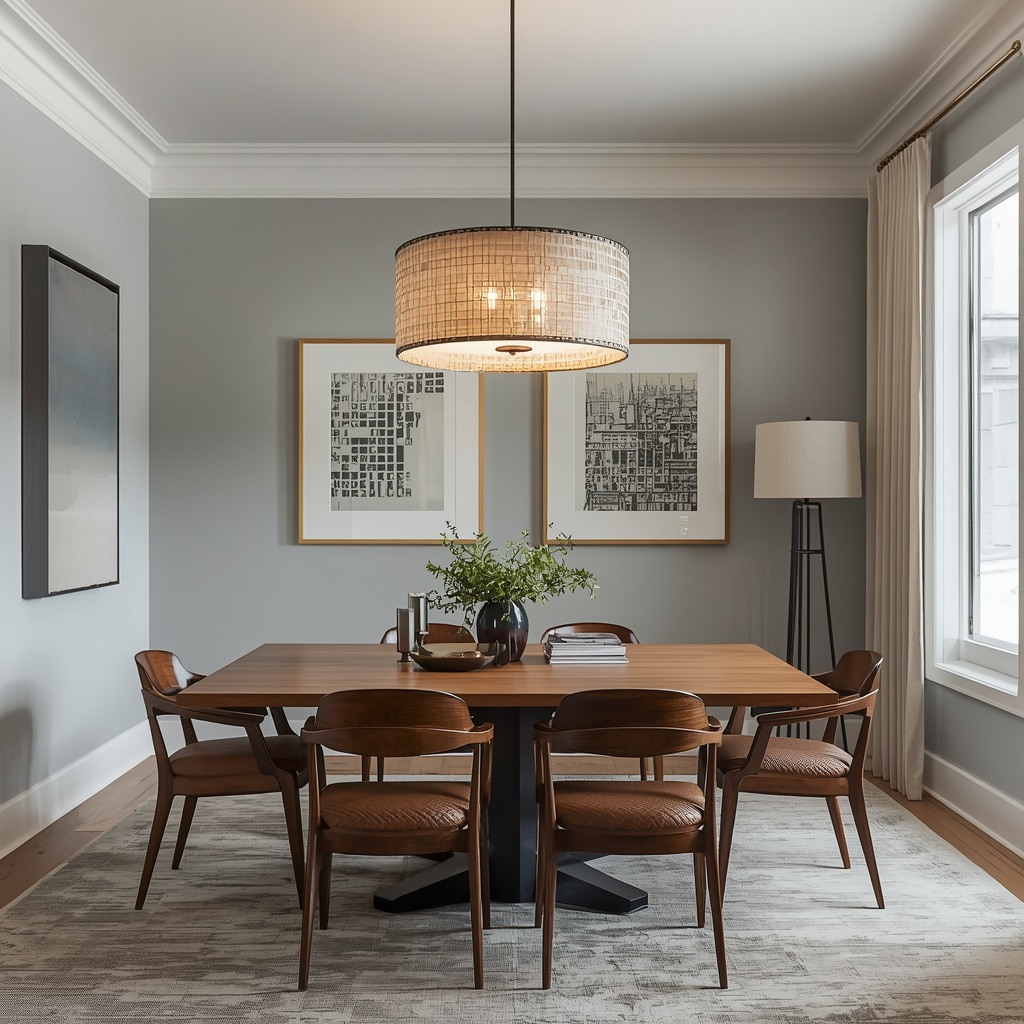
Your statement chandelier or pendant typically serves as ambient or accent lighting, but it rarely provides enough functional light on its own — especially in the evening when you’re reading, working, or entertaining. Pairing your showpiece fixture with floor lamps, table lamps, and even subtle recessed or picture lights creates a layered glow that feels warm and intentional rather than flat and overly bright.
Consider this simple layering framework:
| Lighting Layer | Purpose | Example Fixtures |
|---|---|---|
| Ambient | General overall illumination | Statement pendant, chandelier, flush mount |
| Task | Focused light for specific activities | Table lamps, floor lamps, reading sconces |
| Accent | Highlights art, texture, or architecture | Picture lights, LED strips, uplighting |
Pro Tip: Put your statement fixture on its own dimmer switch, separate from your recessed or ambient lighting. This lets you control the mood of the room independently and gives your showpiece fixture a moment to shine during evening gatherings.
Placement and Sizing Tips for Maximum Visual Impact
Where you hang or place your statement fixture matters just as much as which one you choose. A gorgeous pendant hung too high loses its impact; hung too low, it becomes a hazard or visual obstruction.
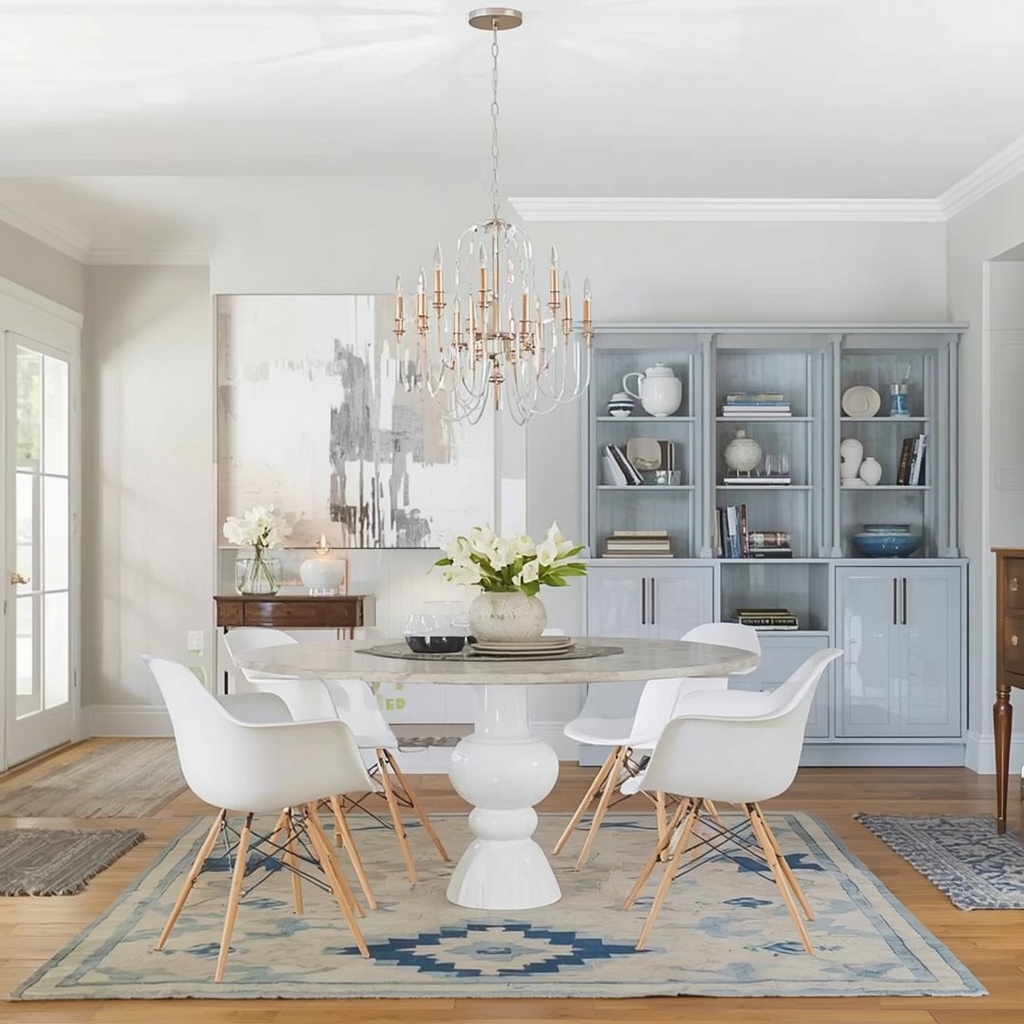
As a general rule, a ceiling pendant or chandelier in a living room should hang so its lowest point sits about 30 to 36 inches above a coffee table, or roughly 7 feet from the floor if there’s no furniture directly beneath it. In rooms with vaulted or high ceilings, don’t be afraid to let a fixture drop further — a shorter fixture in a tall room tends to look lost and disconnected from the seating area below it.
A few additional placement guidelines I share with clients:
- Center the fixture over your primary seating area or coffee table, not the geometric center of the room if they differ
- Leave at least 30 inches of clearance on all sides for wide chandeliers to avoid visual crowding
- In open floor plans, use the fixture to visually define the living room zone separate from the dining or kitchen area
- For arc floor lamps, position the base behind a sofa arm so the arm sweeps toward the seating, not away from it
Statement Lighting on a Budget
You don’t need a four-figure chandelier to make a strong lighting statement. Some of the most talked-about lighting moments I’ve styled for clients used mid-range or even budget fixtures paired with smart styling choices, like bold bulb shapes or unexpected placement.
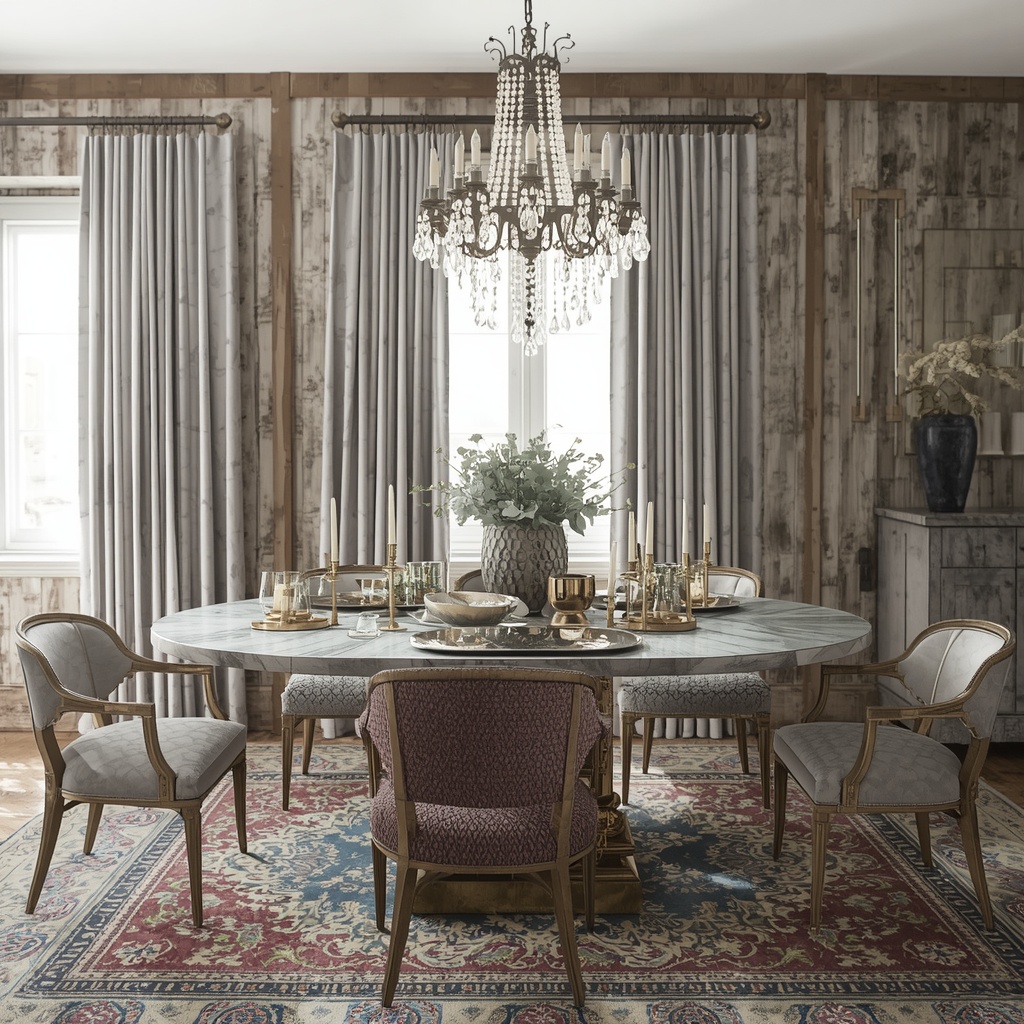
Here’s a general budget breakdown to help you plan:
| Budget Tier | Price Range | What to Expect |
|---|---|---|
| Budget-friendly | $75–$250 | Simple sculptural pendants, statement table lamps, single-bulb fixtures |
| Mid-range | $250–$700 | Designer-inspired chandeliers, mixed-material pendants, arc floor lamps |
| Investment | $700–$2,000+ | Designer or artisan-made fixtures, oversized statement chandeliers, custom pieces |
Pro Tip: If your budget is tight, spend the majority of it on one bold fixture in your main sightline (the view from your front entry or hallway into the living room) and keep every other lighting element in the space simple. One striking piece reads as intentional; five mismatched “almost statement” fixtures read as cluttered.
Common Mistakes to Avoid With Statement Lighting
Even well-intentioned lighting choices can fall flat without some basic design awareness. These are the missteps I see most often when homeowners tackle lighting on their own.
- Going too small. Undersized fixtures are the most common lighting mistake in modern homes — when in doubt, size up.
- Ignoring bulb temperature. A stunning fixture with harsh, cool-white bulbs (above 3000K) can undercut the warm, inviting look most modern living rooms are going for.
- Ceiling height mismatches. Skipping fixture height adjustments for vaulted versus standard ceilings.
- Forgetting the dimmer. Installing a beautiful statement fixture without a dimmer switch limits its versatility from day to night.
- Style mismatch. Choosing an ornate, traditional chandelier in an otherwise minimalist, contemporary room without any bridging elements like matte black finishes or clean lines.
- Overlooking scale from multiple angles. Checking a fixture’s size only from directly beneath it, rather than from the entryway or adjacent rooms where it will actually be seen first.
Frequently Asked Questions
What is considered “statement lighting”? Statement lighting refers to any light fixture — pendant, chandelier, floor lamp, or sconce — that is intentionally bold, oversized, or artistically designed to serve as a visual focal point rather than simply providing illumination.
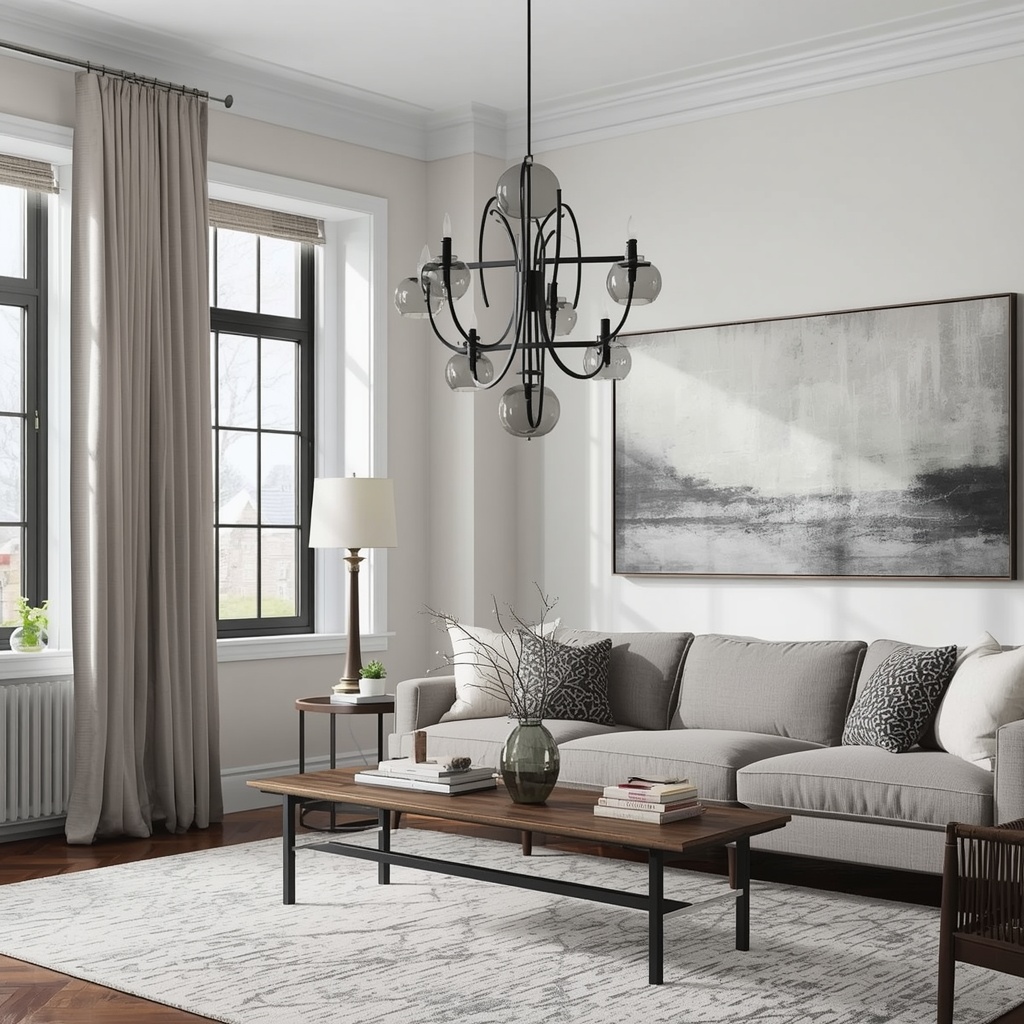
Can I use a chandelier in a modern living room, or is that too traditional? Absolutely. Modern chandeliers have moved far beyond crystal and ornate metalwork. Look for updated silhouettes in matte black, smoked glass, or organic shapes to keep a chandelier feeling contemporary rather than dated.
How high should a statement pendant hang above a coffee table? Generally 30 to 36 inches above the tabletop, though this can flex depending on ceiling height and the scale of the fixture itself.
Do I need an electrician to install a statement ceiling fixture? If you’re replacing an existing hardwired fixture, many homeowners can do it themselves with basic electrical knowledge, though hiring a licensed electrician is recommended for safety, especially when adding new wiring, junction boxes, or dimmer switches.
How many statement fixtures should one living room have? Typically just one true “hero” fixture, supported by secondary lighting like table lamps or sconces. Too many bold, competing fixtures in one room can dilute the visual impact of each.
Final Thoughts
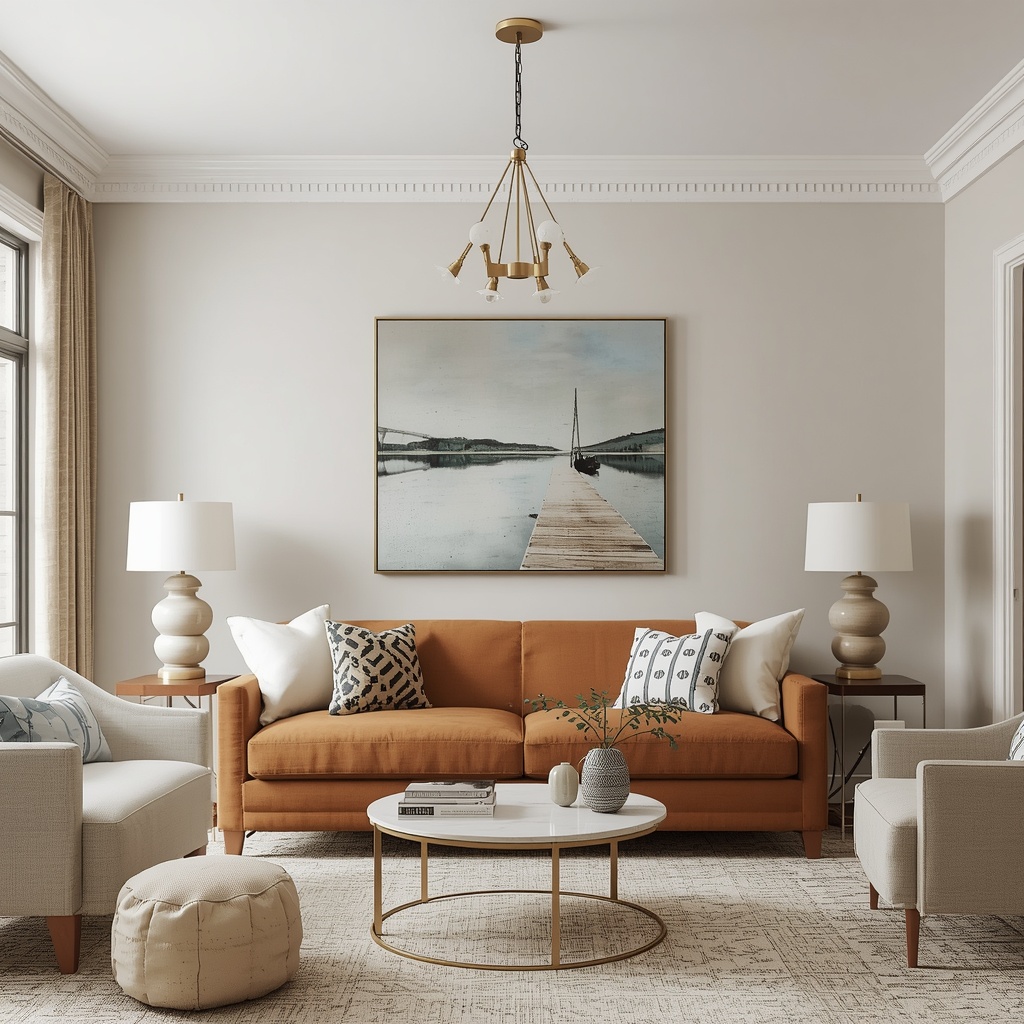
Statement lighting is one of the most impactful, cost-effective ways to elevate a modern living room without a full remodel. The right fixture does more than light a room — it defines the room’s personality, draws the eye upward, and gives your space a sense of intention that’s hard to achieve with furniture and paint alone. Start with scale, layer your lighting thoughtfully, and don’t be afraid to let one fixture be the showstopper it was designed to be.