
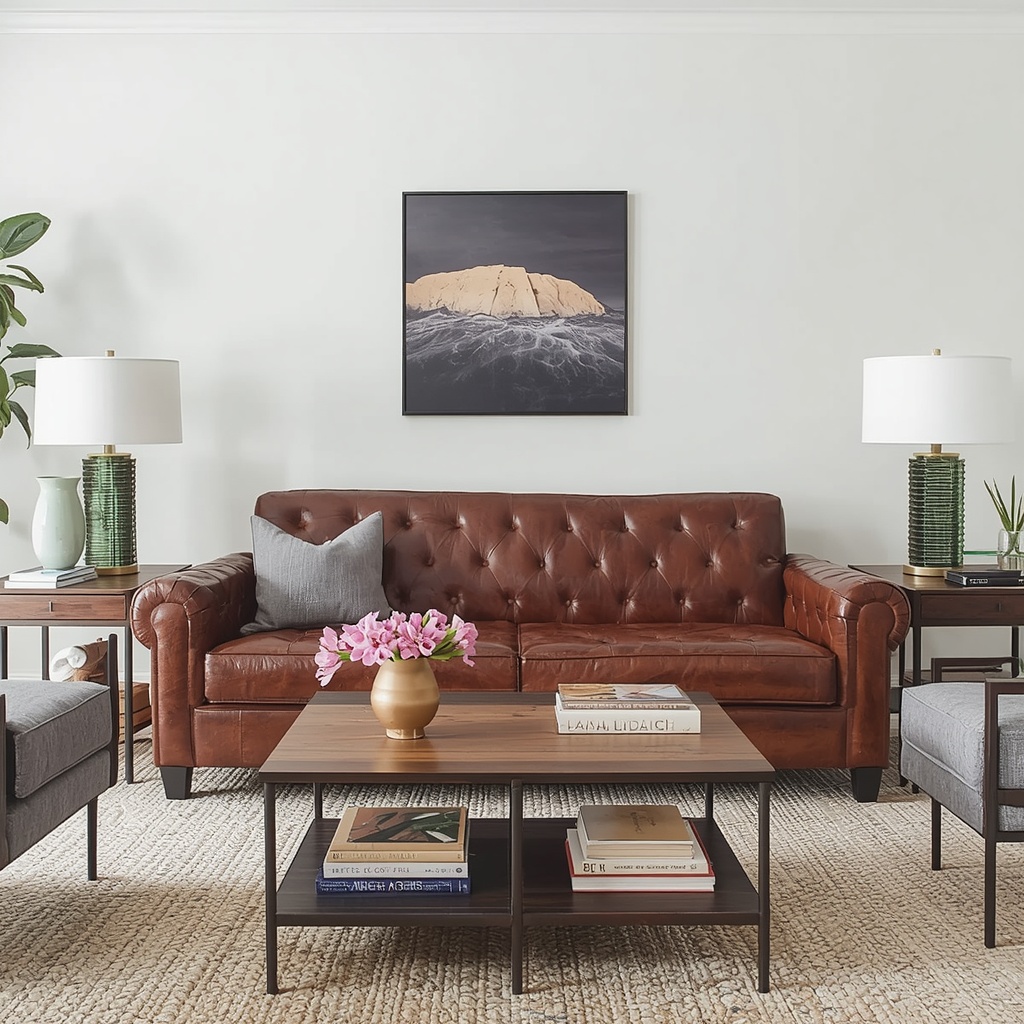
Walk into any beautifully designed American living room and you’ll notice something subtle but powerful: the furniture doesn’t match — it converses. A buttery leather armchair sits beside a linen sofa. A tufted velvet ottoman rests near a distressed leather trunk. Nothing screams “matching set,” yet everything feels intentional.
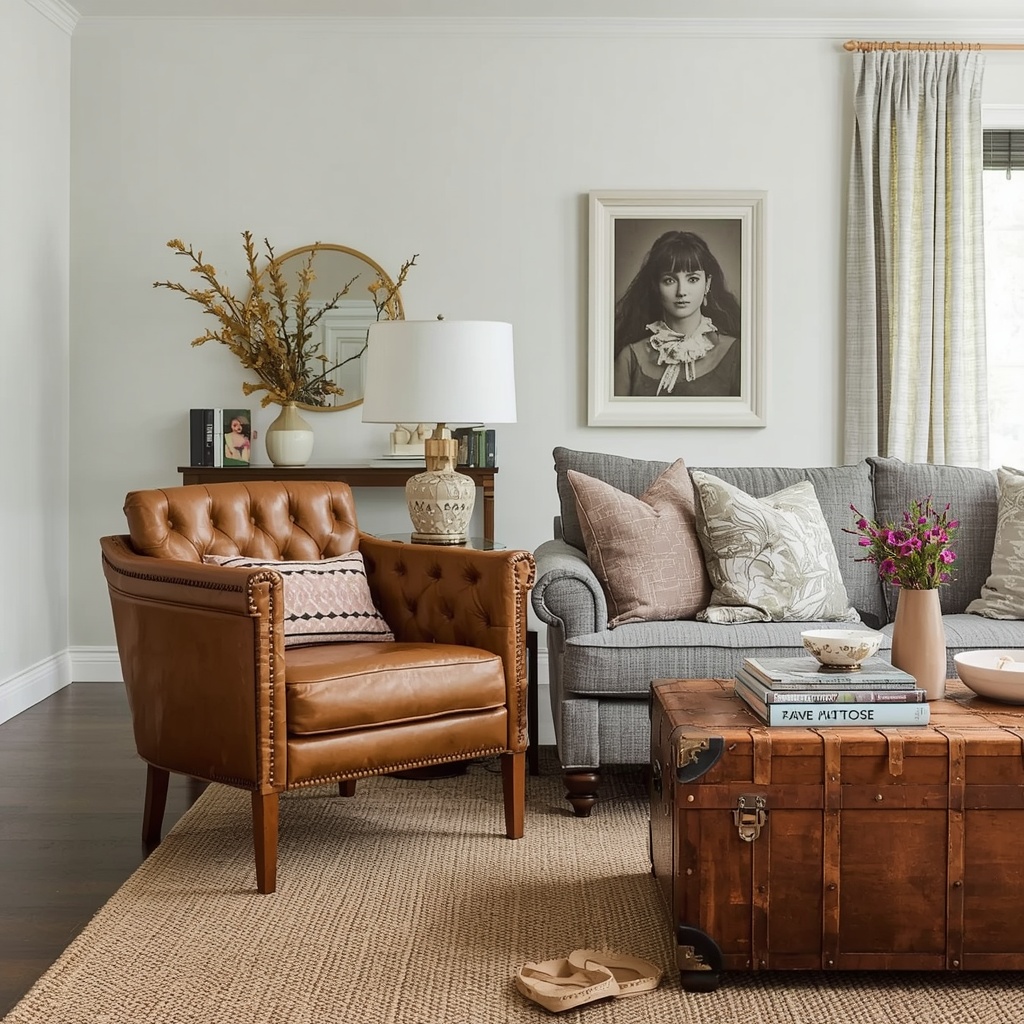
That’s the art of mixing leather and fabric furniture, and it’s one of the most requested design challenges I hear from homeowners. Done well, it adds depth, warmth, and sophistication. Done poorly, it can make a room feel disjointed or accidental. In this guide, I’ll walk you through exactly how to blend these two materials with confidence, using the same framework I use with my own design clients.
Why Mix Leather and Fabric in the Same Space?
Leather and fabric are two of the most popular upholstery materials in American homes, and each brings something the other can’t. Leather offers structure, durability, and a certain masculine polish, while fabric brings softness, color flexibility, and approachable comfort. Combining them isn’t just an aesthetic choice — it’s a practical one for busy households with pets, kids, and high-traffic living spaces.
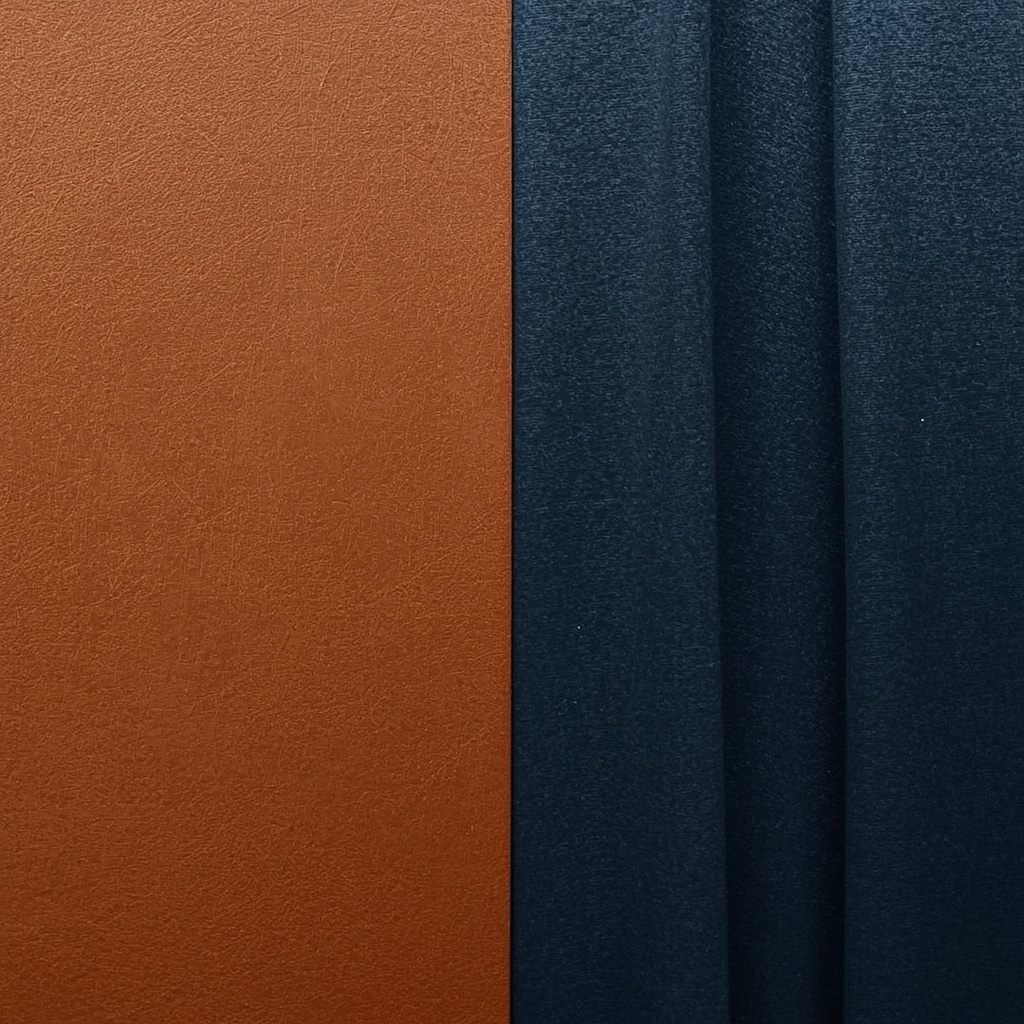
When you mix materials thoughtfully, you create what designers call “textural layering.” This is the same principle used in high-end hospitality design, where a lobby might pair a leather Chesterfield with linen accent chairs to feel both grounded and inviting. Your living room can borrow that same visual logic on a smaller scale.
Understanding the Basics: Texture, Tone, and Balance
Before you start swapping out furniture, it helps to understand the three pillars that make leather-and-fabric pairings work: texture, tone, and balance. Texture refers to how materials feel and reflect light — leather is smooth and slightly reflective, while most fabrics are matte and soft. Tone refers to color temperature and saturation, and balance refers to how evenly you distribute each material throughout the room.
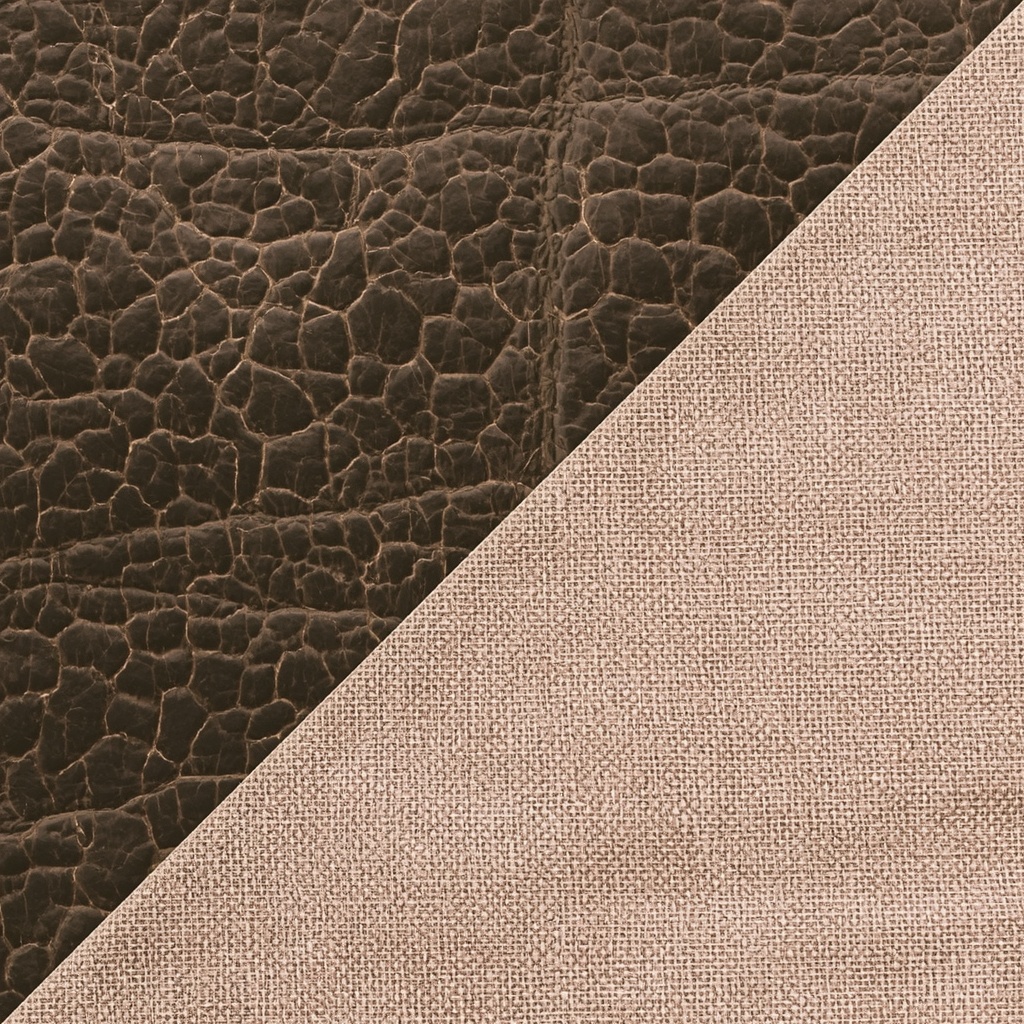
Skipping any one of these pillars is usually where mixed-material rooms go wrong. A room with too much leather can feel cold and formal, while an all-fabric room can feel flat and one-dimensional. The goal is a push-and-pull between the two, so your eye keeps moving comfortably around the space instead of snagging on one dominant material.
“Great design isn’t about matching everything perfectly — it’s about creating a conversation between materials that feels effortless.” This is the mindset I bring to every mixed-material project, and it’s the single biggest mindset shift homeowners need when they’re used to buying matching furniture sets.
Choosing a Color Palette That Works
Color is where most leather-and-fabric pairings succeed or fail. As a general rule, leather should anchor your palette in a neutral, earthy, or deep saturated tone, while fabric can introduce pattern, brightness, or seasonal color changes through pillows, throws, and accent chairs.
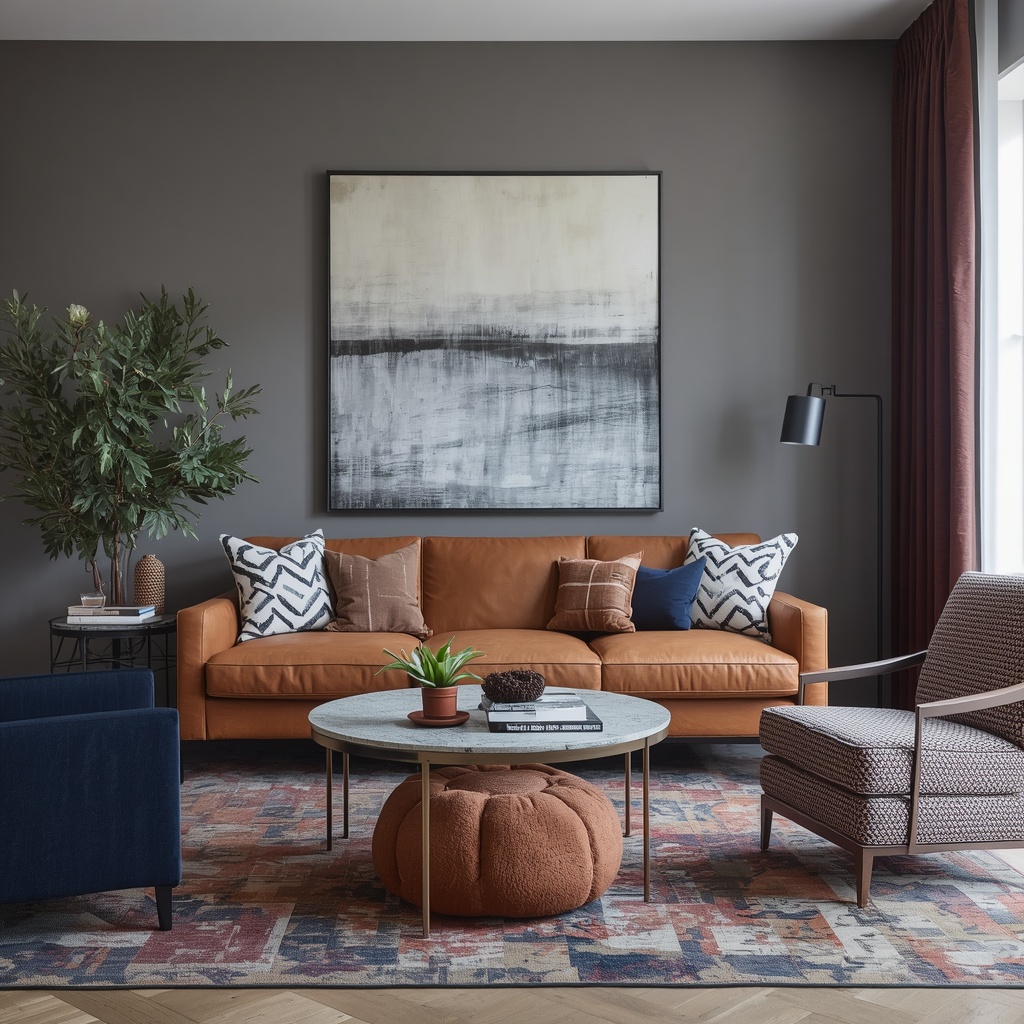
Here’s a quick reference table I share with clients when they’re stuck choosing complementary tones:
| Leather Tone | Best Fabric Pairings | Overall Mood |
|---|---|---|
| Cognac / Whiskey Brown | Cream boucle, oatmeal linen, sage green | Warm, rustic, inviting |
| Black | Charcoal wool, ivory cotton, mustard velvet | Modern, bold, high-contrast |
| Camel / Tan | Soft blue chambray, terracotta, natural jute | Californian, relaxed, layered |
| White / Cream Leather | Navy linen, blush velvet, striped cotton | Coastal, airy, timeless |
| Dark Espresso | Burnt orange, forest green, cream tweed | Moody, cozy, autumnal |
Once you’ve chosen a base pairing, stick to a three-color rule: one dominant neutral (often the leather), one secondary color (the fabric upholstery), and one accent color used sparingly in pillows or art.
Room-by-Room Mixing Strategies
Different rooms call for different ratios of leather to fabric, depending on function and traffic. Below are the strategies I recommend most often for American homes.
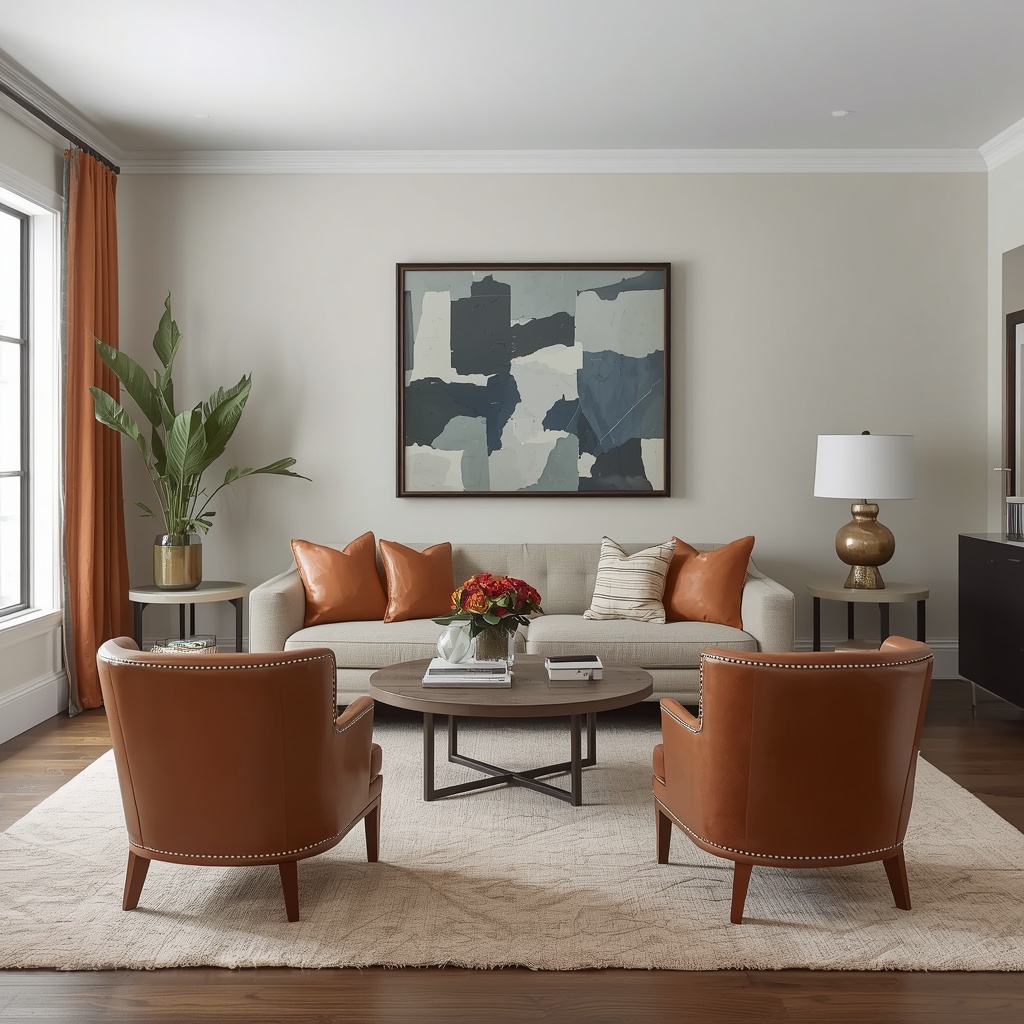
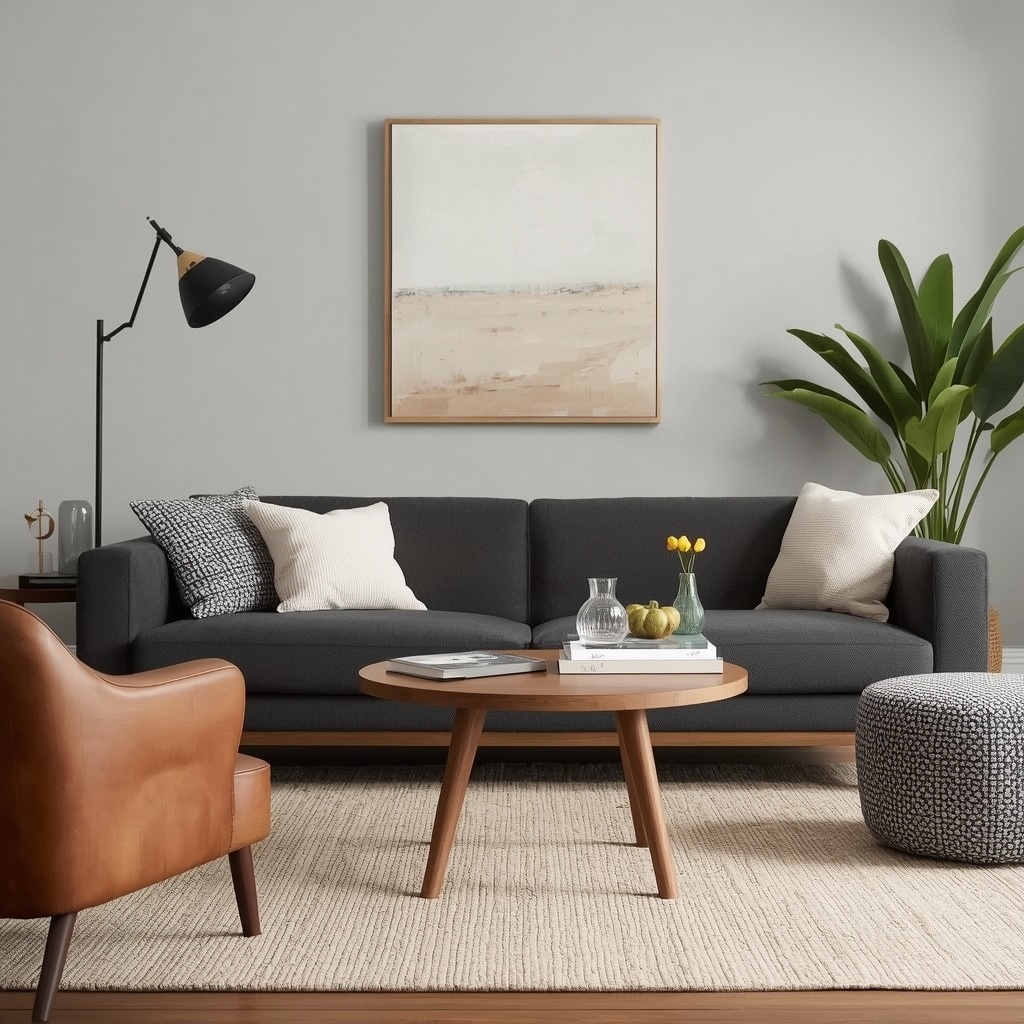
Living Room: This is where mixing shines the most. A common formula is a fabric sofa as the largest, softest anchor piece, paired with one or two leather accent chairs positioned across from it. This creates a natural focal point and gives guests a choice of seating texture, which subtly signals thoughtful hosting.
Home Office or Study: Leather tends to dominate here for its classic, professional feel — think a leather desk chair or reading chair. Balance it with a fabric-upholstered bench or a soft area rug so the room doesn’t feel like a corporate waiting room.
Bedroom: A leather bench at the foot of the bed paired with fabric headboards or upholstered accent chairs creates a boutique-hotel feel. Keep leather pieces smaller in scale here since bedrooms typically favor softness overall.
Entryway or Mudroom: A leather bench is a practical, durable choice for daily wear, while a fabric-covered ottoman or cushion adds a welcoming touch without sacrificing durability.
The 60-30-10 Rule Applied to Materials
Interior designers commonly use the 60-30-10 color rule, and it translates beautifully to material mixing as well. Think of it this way: 60% of your seating material should be your dominant choice (often fabric, since it covers larger pieces like sofas and sectionals), 30% should be your secondary material (leather, in accent chairs or ottomans), and 10% should be small leather or fabric accents like pillows, throws, or a leather-bound coffee table book styled on an ottoman.
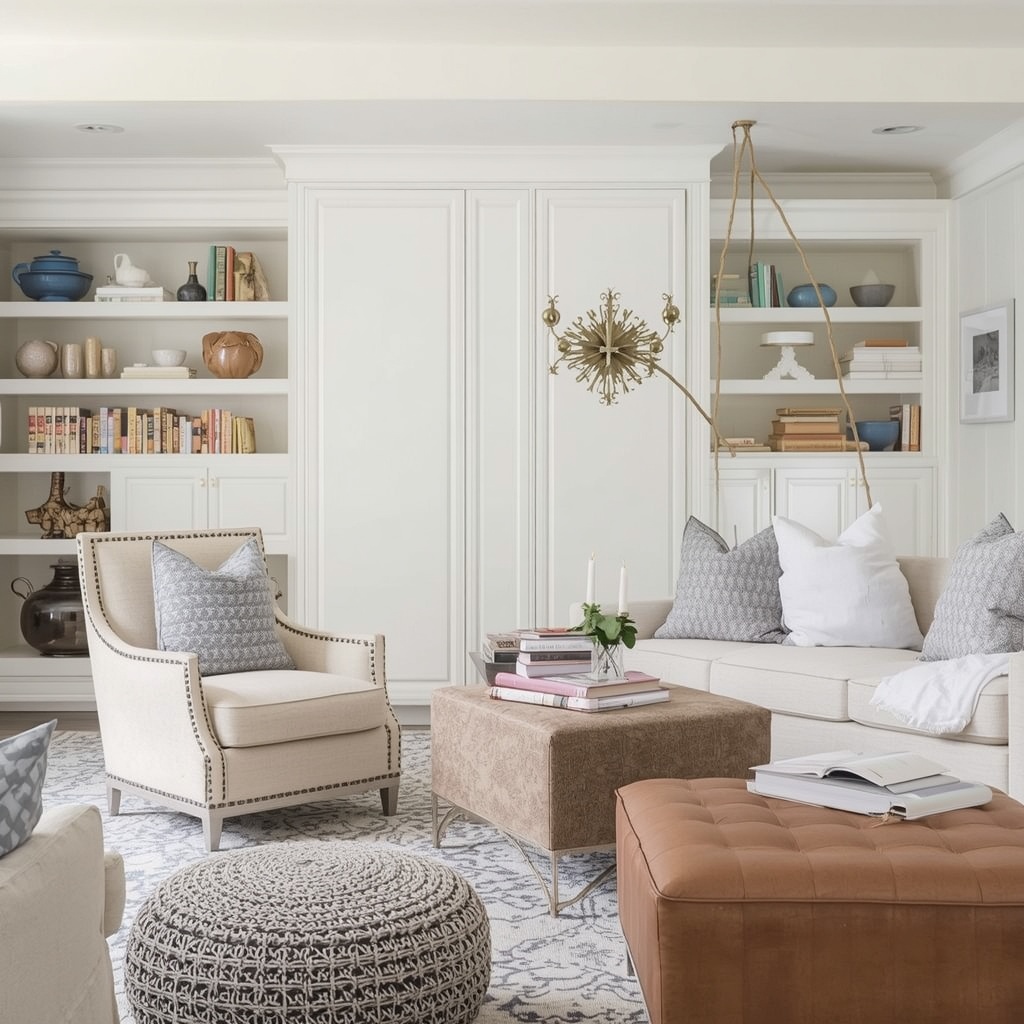
This ratio prevents either material from overwhelming the room. It also gives you flexibility to update the smaller 10% seasonally — swapping fabric pillow covers or a leather throw blanket — without committing to a full furniture overhaul.
Quick Ratio Checklist
- 60% dominant material (usually your sofa or sectional fabric)
- 30% secondary material (accent chairs, benches, or ottomans)
- 10% small accents (pillows, throws, styled objects)
- At least one shared color thread running through both materials
- One “hero” piece that draws the eye first
Common Mistakes to Avoid
Even experienced decorators can trip up when combining materials. Here are the mistakes I see most often, and how to sidestep them:
- Splitting the room 50/50. Equal amounts of leather and fabric competes for attention instead of creating hierarchy.
- Ignoring undertones. A cool-toned gray fabric next to a warm cognac leather can clash more than expected; always check undertones in natural light.
- Overlooking scale. A massive leather sectional paired with a delicate fabric accent chair can feel imbalanced; keep proportions similar.
- Forgetting texture variety within fabric itself. Pairing leather only with smooth cottons misses a chance to add boucle, velvet, or linen for extra dimension.
- Neglecting maintenance differences. Leather and fabric age differently, so plan for care needs before committing to placement near high-traffic zones or pet areas.
Pro Tip: The Fabric Swatch Test
Pro Tip: Before purchasing any new leather or fabric piece, bring home a swatch of each and place them side by side in the room at different times of day. Lighting dramatically changes how leather’s sheen interacts with fabric color, and what looks perfect under warm evening light can look mismatched under harsh morning sun. Professional designers rarely finalize material pairings without this simple, free test — it can save you from an expensive returns process later.
Layering Textures Beyond the Big Furniture Pieces
Once your primary leather and fabric pieces are placed, the real seamlessness comes from smaller layered textures. Add a chunky knit throw over a leather chair, or a woven leather pouf beside a fabric sofa. Rugs are another powerful tool — a jute or flatweave rug grounds leather furniture, while a plush wool rug softens the room around fabric-heavy seating.
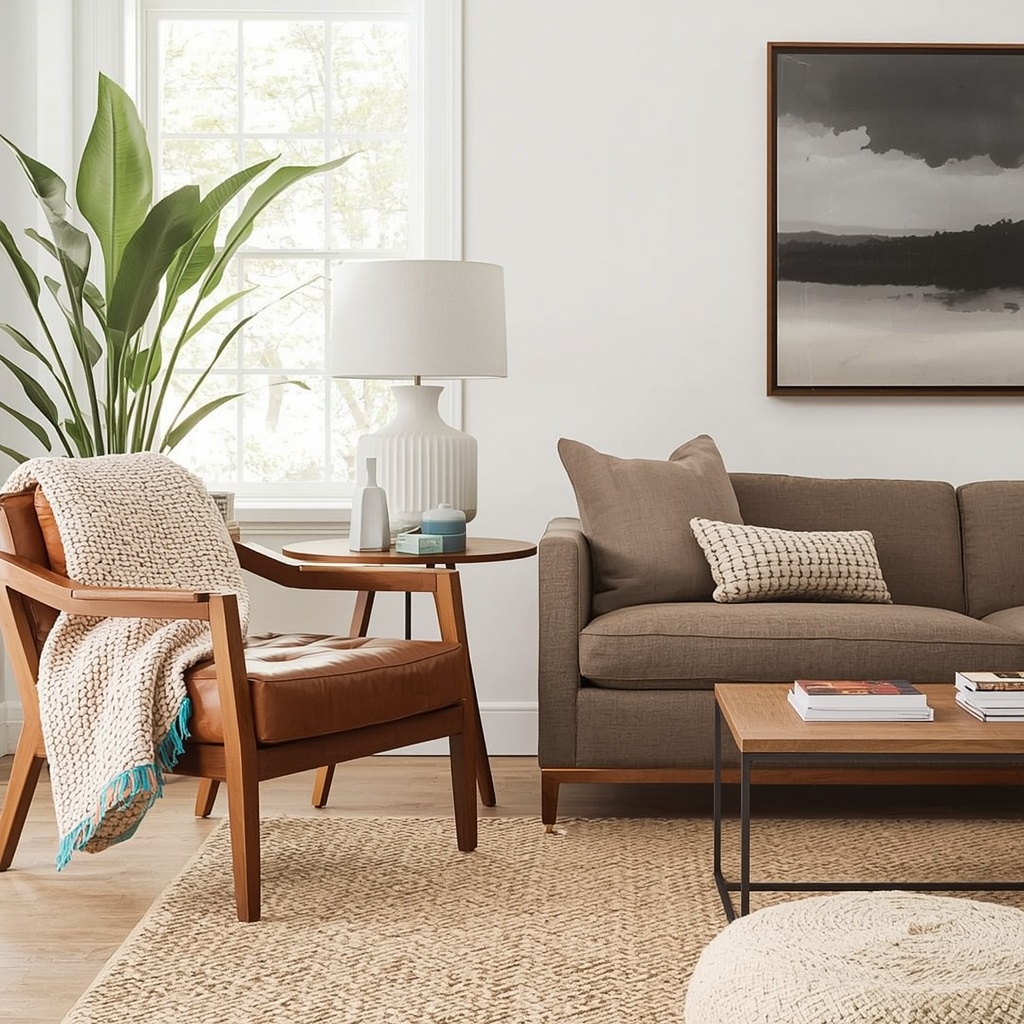
Lighting fixtures, curtains, and even hardware finishes should echo the temperature of your chosen palette. Warm brass hardware complements cognac leather beautifully, while brushed nickel or matte black tends to pair better with black leather and cool-toned fabrics. These finishing touches are what elevate a mixed-material room from “nice” to “designer-level.”
Maintenance and Longevity Considerations
Leather and fabric age at different rates and require different care routines, which is worth factoring into your layout decisions. Leather develops a natural patina over time and generally resists stains better, making it a smart choice for pet owners or homes with young children. Fabric, on the other hand, offers more flexibility for cleaning methods depending on the weave, but is more prone to fading in direct sunlight.
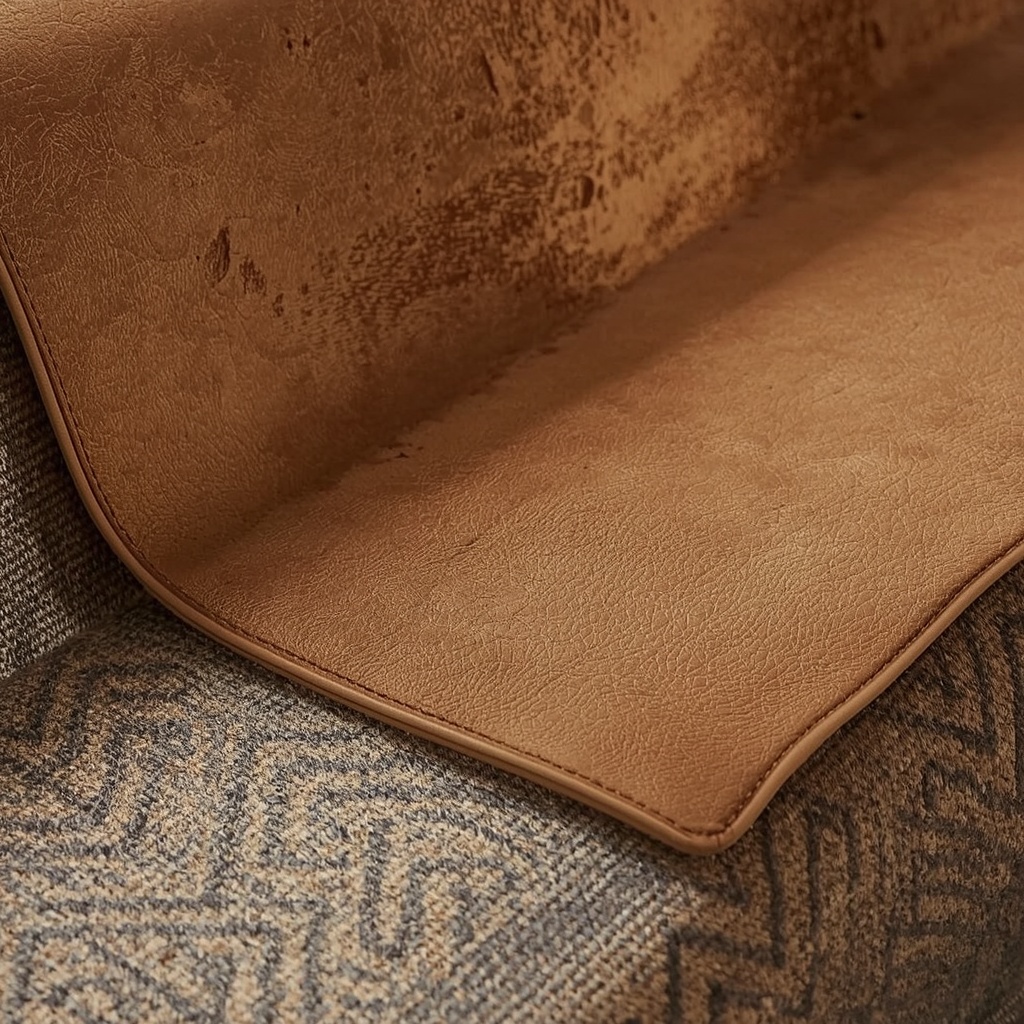
A practical approach is to place leather pieces in higher-traffic zones — near entryways, in front of TVs, or wherever spills are more likely — while reserving fabric for areas with lighter use, like formal living rooms or bedrooms. This not only extends the life of both materials but also naturally reinforces the balanced ratio discussed earlier in this guide.
Seasonal Styling: Keeping the Mix Fresh Year-Round
One underrated benefit of mixing leather and fabric is how easily the look transitions across seasons. In cooler months, lean into deeper fabric tones like burgundy, forest green, or mustard, layered with wool or knit throws against your leather pieces. In warmer months, swap in lighter linen or cotton fabric accents and let the leather breathe as the grounding neutral.
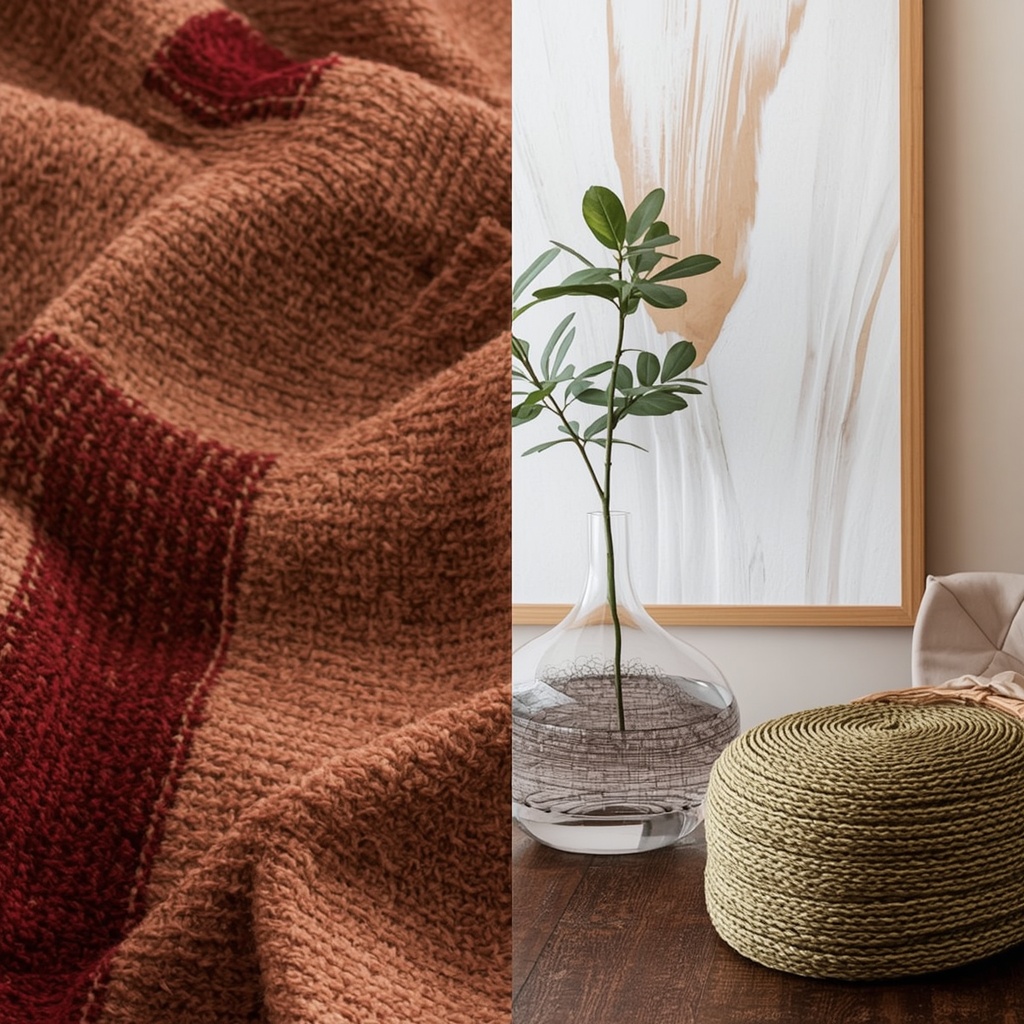
This seasonal flexibility is one reason interior designers consistently recommend mixed-material rooms over single-material matching sets — they simply adapt better to changing trends, holidays, and personal style evolution without requiring new furniture purchases.
Frequently Asked Questions
Can leather and fabric furniture go in the same small room? Yes. In smaller spaces, keep the leather piece compact — think an accent chair or small ottoman rather than a large sectional — so it doesn’t visually overpower the fabric pieces.
What’s the easiest way to start mixing if I already own a fabric sofa? Add a single leather accent chair or a leather-and-wood coffee table first. This is the lowest-commitment way to test the pairing before investing further.
Does leather always need to be brown or black? Not at all. White, cream, gray, and even deep green or navy leather are increasingly popular in modern American interiors and open up more fabric pairing options.
How do I keep the room from looking too “matchy” or too chaotic? Anchor the room with one shared color or undertone across both materials, then let texture — not color — provide the contrast.
Final Thoughts
Mixing leather and fabric furniture is less about following rigid rules and more about building a relationship between materials that feels natural and lived-in. Start with a dominant fabric piece, introduce leather through one or two intentional accents, keep your color palette tied together with a shared undertone, and layer in smaller textures to finish the look.
For further inspiration, browsing curated rooms on sites like Architectural Digest or Elle Decor can help you visualize real-world examples of this pairing before committing to your own space. With a little intention, your home can achieve that effortless, designer-approved look where every material feels like it belongs.