
You don’t need a gut renovation or a contractor’s bill that rivals a car payment. With the right design strategies, even the most cramped powder room can feel like a boutique spa retreat.

Walk into almost any home built before 2000, and you’ll find the same story: a bathroom so small you practically have to step outside to change your mind. If you’re nodding along, you’re not alone. According to the National Association of Home Builders, the average American bathroom measures just 40 square feet — barely enough room to swing a hand towel. But here’s the designer secret no one tells you: square footage is overrated. What truly matters is how you use every single inch.
I’ve transformed hundreds of cramped bathrooms across the country on budgets ranging from $300 to $3,000. Whether you rent or own, whether you’re prepping for resale or simply want to enjoy your mornings a little more, these small bathroom renovation ideas, space-saving bathroom solutions, and budget bathroom upgrades will change the way you see your smallest room.
Why Small Bathrooms Deserve Big Design Attention
Small bathroom design is one of the most searched topics in home improvement for good reason — we use this space multiple times every single day. A poorly laid-out bathroom creates daily friction: crowded countertops, dim lighting that makes you look tired before you’ve even had coffee, and storage so inadequate that your toiletries spill onto every available surface.
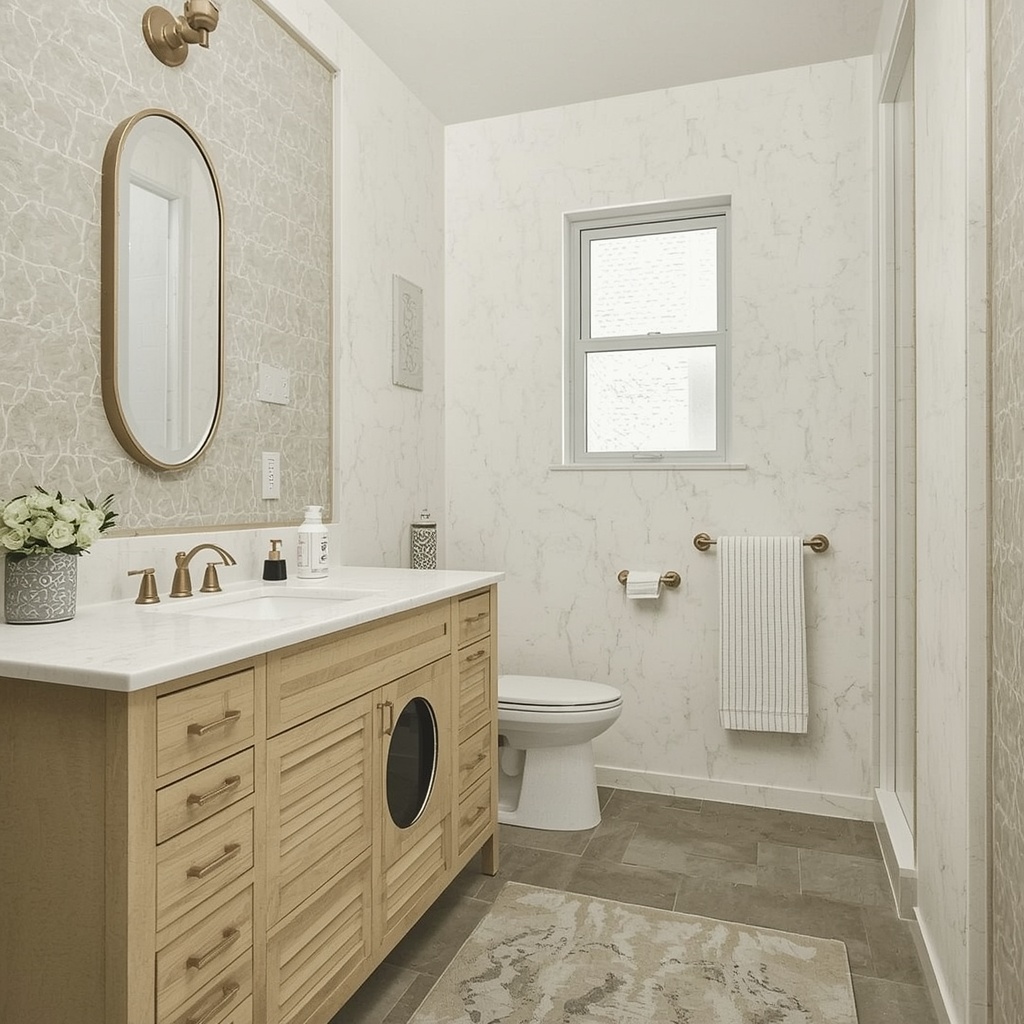
The good news? Small bathrooms respond dramatically to even minor interventions. Because the square footage is limited, a fresh coat of paint, smarter lighting, or a new mirror can transform the entire visual experience. The return on investment for bathroom upgrades consistently ranks among the highest in home improvement, with minor bathroom remodels recouping up to 102% of their cost at resale according to the Cost vs. Value report.
“The best small bathroom I ever designed was 38 square feet. The worst was 120. Size is a red herring — intention is everything.”— Alexandra Moore, Certified Interior Designer
Set Your Budget Before You Swing a Paintbrush
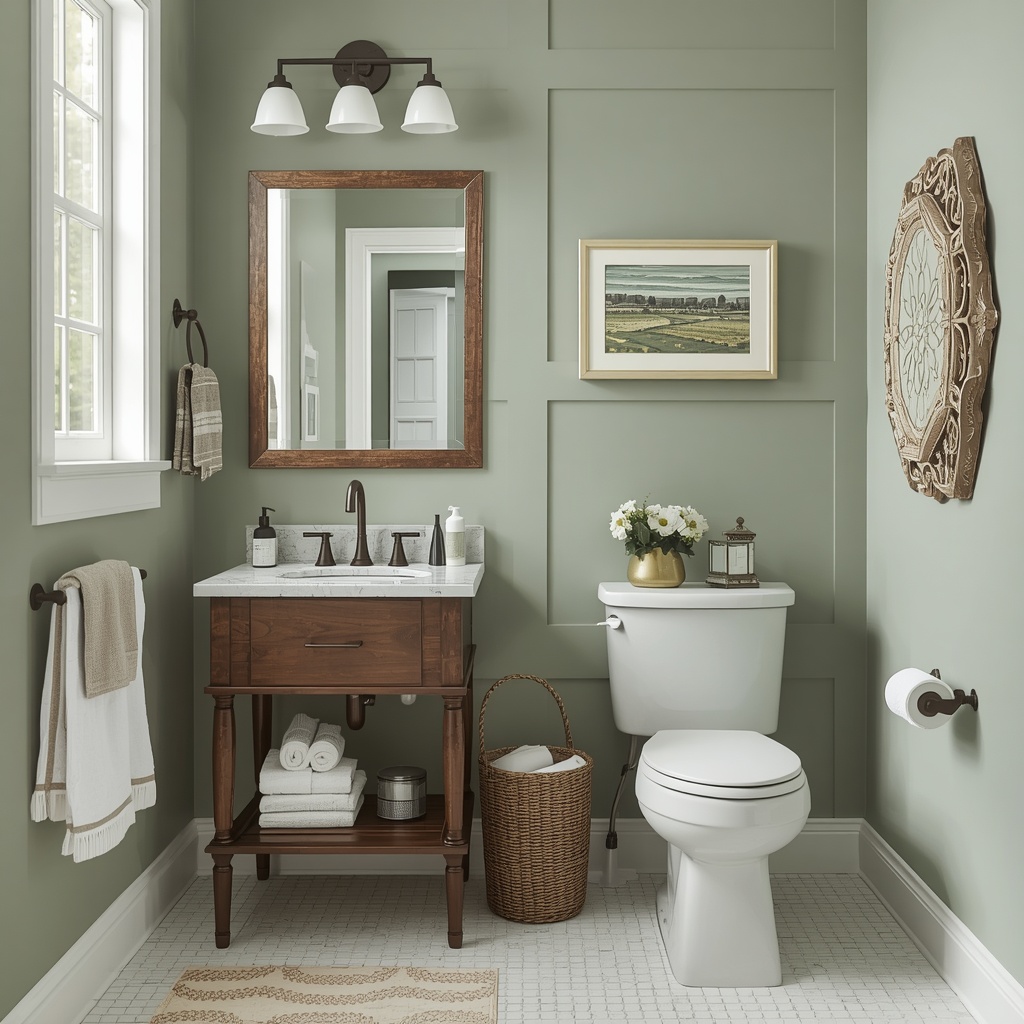
Before buying a single tile or faucet, you need a clear bathroom remodeling budget. One of the biggest mistakes homeowners make is starting with aesthetics and ending with sticker shock. Instead, define your spending ceiling first, then work backward to allocate wisely. Here’s a realistic breakdown for three common small bathroom makeover budgets:
| Upgrade Category | $500 Budget | $1,500 Budget | $3,000 Budget |
|---|---|---|---|
| Paint & Primer | $60–80 | $60–80 | $80–120 |
| Lighting Fixtures | $40–80 | $100–200 | $200–400 |
| Mirror / Medicine Cabinet | $50–100 | $120–250 | $250–500 |
| Hardware (towel bars, hooks) | $30–60 | $80–150 | $150–300 |
| Storage Solutions | $80–120 | $200–350 | $400–700 |
| Faucet / Fixtures | DIY swap | $150–250 | $300–600 |
| Tile / Peel-and-Stick Accent | $60–100 | $200–400 | $400–800 |
| 💡 Estimated Total | $320–540 | $910–1,680 | $1,780–3,420 |
Pro Tip
Always allocate 10–15% of your bathroom renovation budget as a contingency fund. Behind bathroom walls lives a surprising universe of surprises — outdated plumbing, moisture damage, or wiring that wasn’t up to code. Experienced designers never begin a project without a buffer. It’s not pessimism; it’s professionalism.
The #1 Small Bathroom Trick: Maximize Visual Space
Creating the illusion of space is the cornerstone of small bathroom interior design. This isn’t about tricking anyone — it’s about working with the eye’s natural tendencies. The human brain perceives color, light, and proportion in predictable ways, and smart designers exploit this constantly.
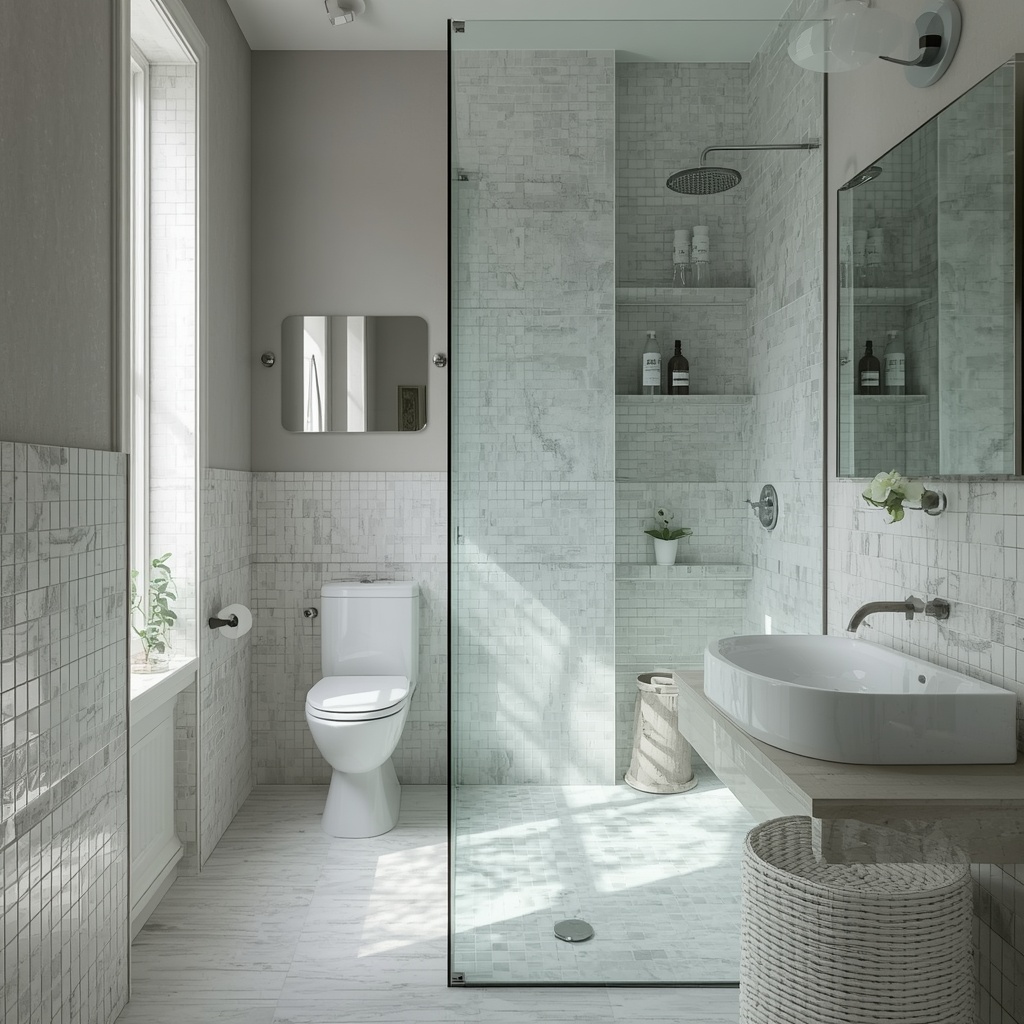
Light colors recede visually, making walls feel further apart. Large-format tiles minimize grout lines and create an uninterrupted visual field. Mirrors multiply light and reflect depth. When these three elements work together in a compact bathroom, the transformation can be stunning — guests will walk in and wonder why they ever thought the room was small.
🪞
Oversized Mirror
Floor-to-ceiling or wall-to-wall mirrors visually double the room. A $79 frameless slab from IKEA works just as well as a custom piece.
💡
Layered Lighting
Combine overhead, vanity-side, and accent lighting. Three sources at lower wattage beats one harsh overhead bulb every time.
🎨
Light & Airy Paint
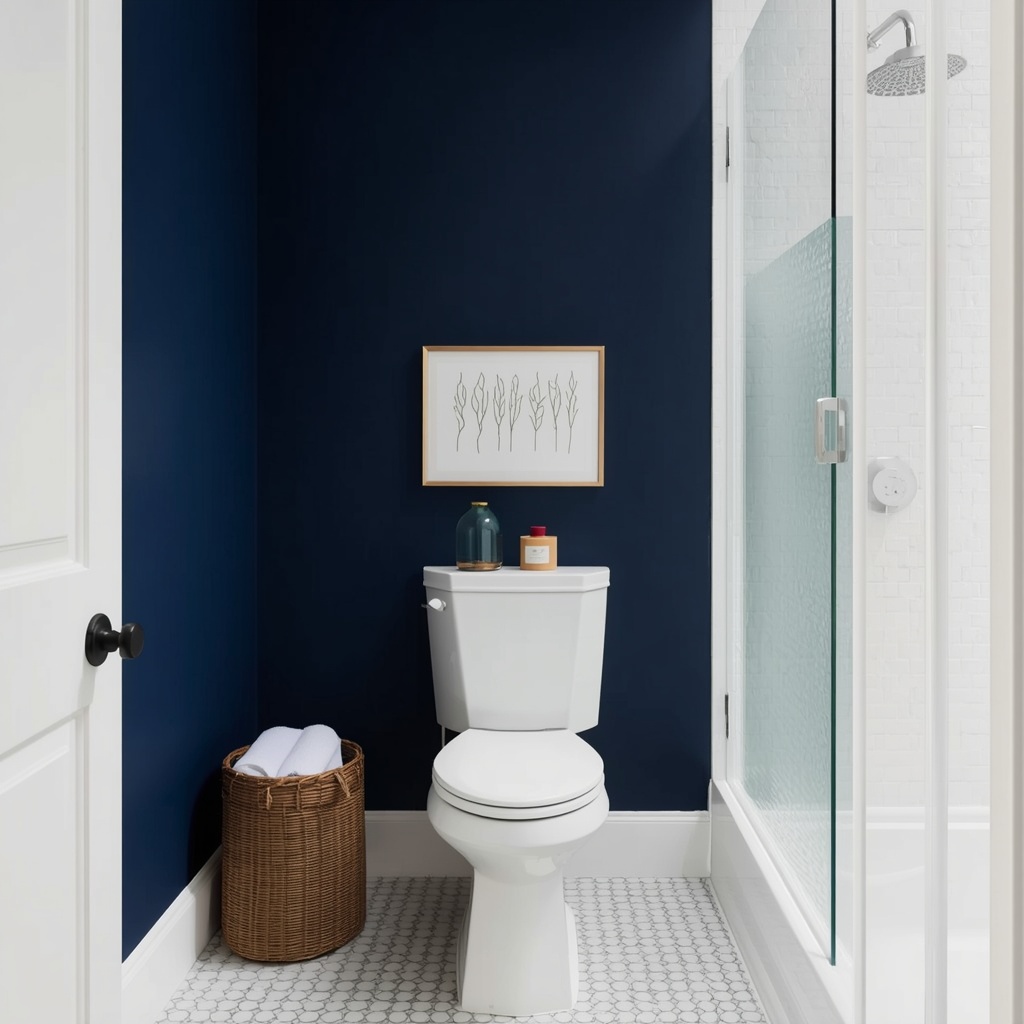
Soft whites, pale greiges, and barely-there blues expand a space visually. Avoid dark feature walls in rooms under 50 sq ft.
🔲
Large-Format Tile
12×24″ or larger tiles with minimal grout lines remove visual clutter. Fewer seams = a bigger-feeling room.
Best Paint Colors for a Small Bathroom
Color is the fastest, most affordable tool in the small bathroom designer’s arsenal. A single weekend and two gallons of paint can make a bathroom feel twice its actual size — or half, if you choose poorly. The key is understanding undertones and how bathroom lighting affects color perception.
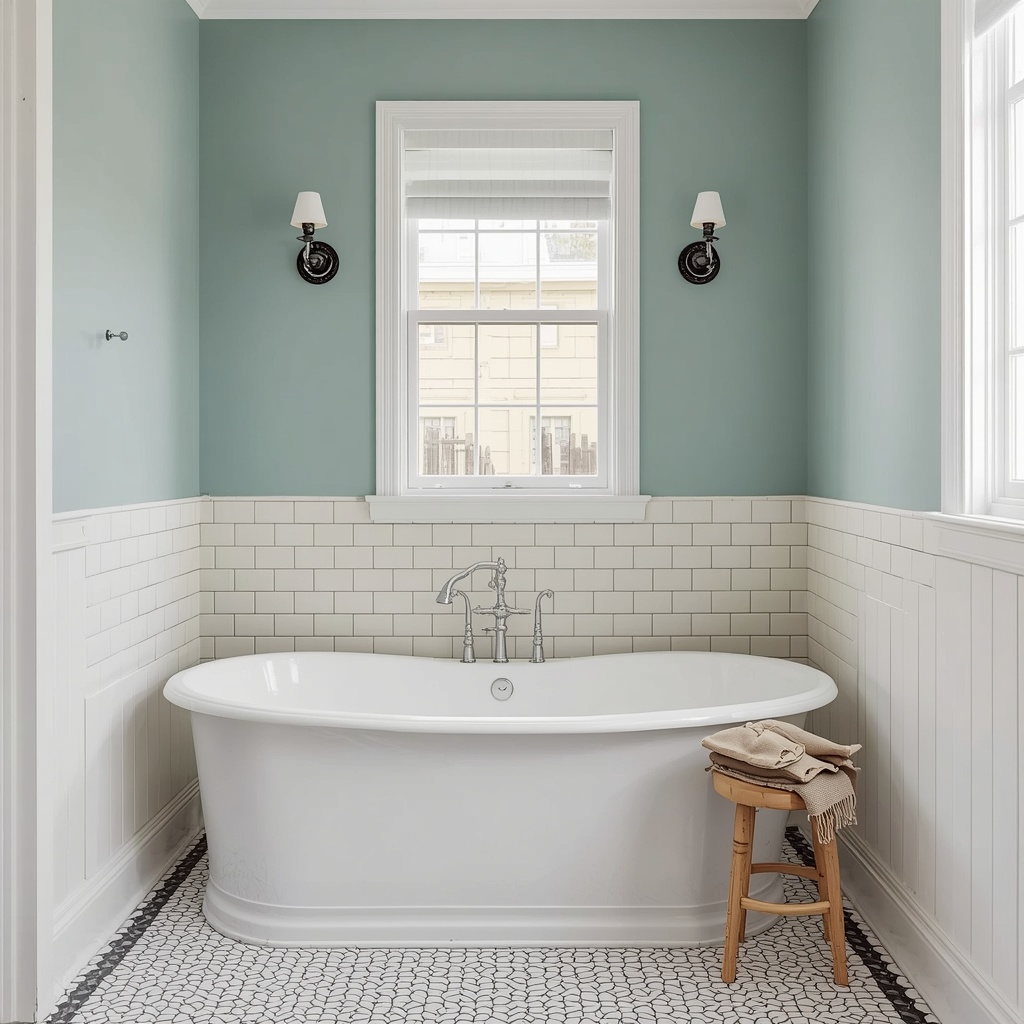
Bathroom lighting is notoriously tricky. Cool overhead lighting can turn warm whites icy, while incandescent vanity bulbs make everything look yellow. Always test paint samples on 12×12 inch boards and observe them at different times of day before committing. Here are the colors I recommend most to my US clients:
| Color Family | Swatch | Recommended Paint | Effect |
|---|---|---|---|
| Soft White | Benjamin Moore “White Dove” OC-17 | Warm, airy, universally flattering | |
| Pale Sage | Sherwin-Williams “Comfort Gray” SW 6205 | Spa-like calm, pairs with brass | |
| Soft Blue | Farrow & Ball “Borrowed Light” No. 235 | Coastal, airy, bright without harsh white | |
| Warm Greige | Behr “Wheat Bread” N-W52 | Earthy, cozy, good for north-facing rooms | |
| Crisp Linen | PPG “Antique Linen” PPG1085-2 | Timeless, flattering under all light types |
Pro Tip
When painting a small bathroom, don’t stop at the walls. Paint the ceiling the same color as the walls (or just one shade lighter) to eliminate the visual “cap” that makes rooms feel low and boxy. This single technique — beloved by every designer worth their salt — can add the illusion of a foot of height to your space.
Space-Saving Storage Solutions That Actually Work
Clutter is the number one enemy of small bathroom design. When countertops overflow with products, shelves become catch-alls, and cabinets burst at the hinges, no amount of pretty tile or designer lighting can save the space. Functional bathroom storage solutions are non-negotiable — and they don’t have to be expensive.
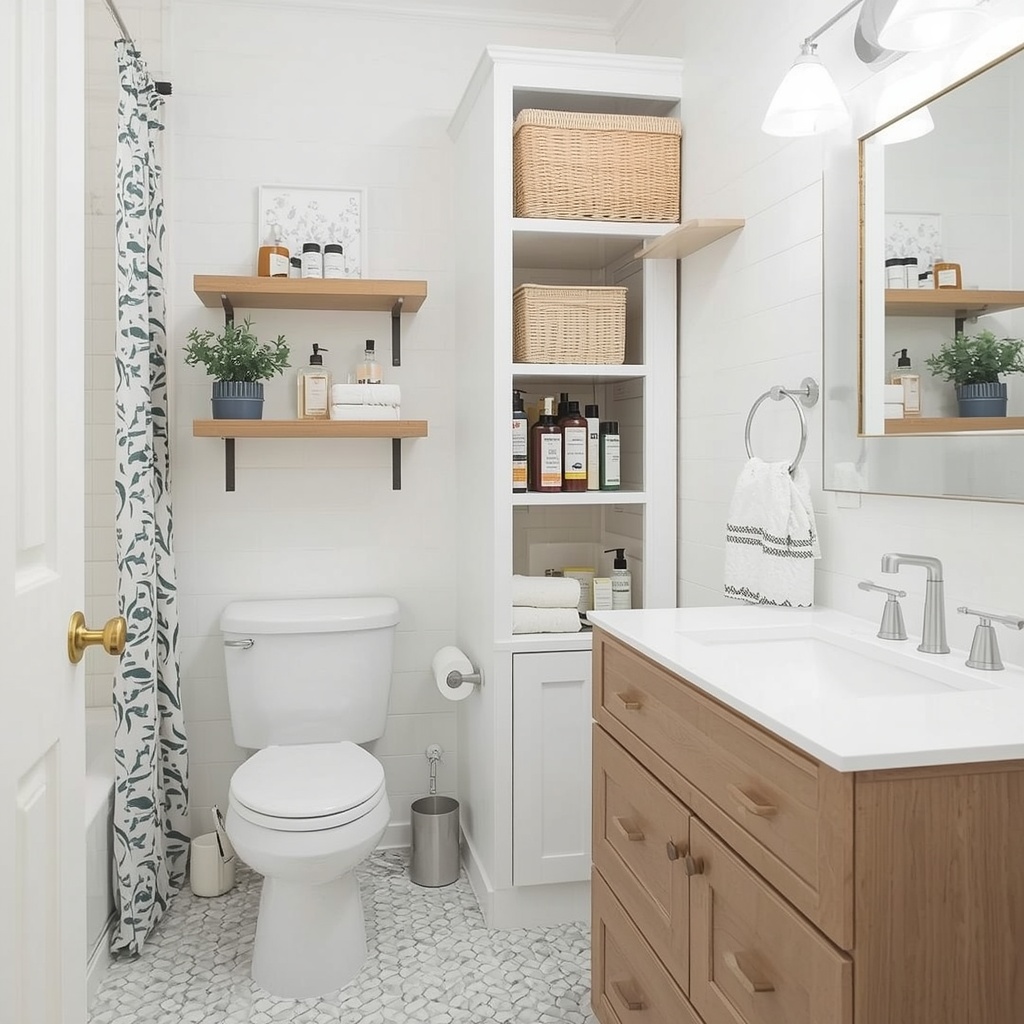
The trick is thinking vertically. Most bathroom renovations focus on horizontal surfaces, but walls are virtually unlimited real estate waiting to be claimed. From floating shelves above the toilet to recessed niches carved between studs, vertical bathroom storage solutions can triple your usable space without adding a single square foot to your floor plan.
- Over-the-toilet shelving units — Use the 15 inches of dead space above your toilet tank. A simple 3-tier shelving unit ($45–90 at Target or Wayfair) can hold towels, extra toilet paper, candles, and decor.
- Recessed medicine cabinets — Surface-mount cabinets protrude 4–5 inches from the wall. Recessed versions sit flush, keeping your countertop area visually open. Installation requires a handyman but costs under $300 total.
- Floating vanities — Raising your vanity 6–8 inches off the floor exposes the floor beneath, making the room feel larger. You also gain access to the plumbing for storage baskets below.
- Door-mounted organizers — The back of your bathroom door is prime real estate. An over-the-door organizer holds hair tools, cleaning supplies, and extras without consuming any floor or wall space.
- Shower niche inserts — A recessed shower niche between studs ($80–150 in tile) eliminates the need for shower caddies that clutter your shower walls and corrode over time.
- Magnetic spice-rack strips — Mounted inside a cabinet door, these hold bobby pins, nail clippers, tweezers, and small makeup items magnetically — a surprisingly elegant hack.
Affordable Fixture and Hardware Updates
Swapping out hardware is the equivalent of putting new shoes on an outfit — it changes the entire impression for very little investment. Old brass handles and rusty towel bars from 1995 drag down even a freshly painted bathroom. Modern finishes like matte black, brushed nickel, and unlacquered brass can modernize a bathroom instantly without touching a single tile.
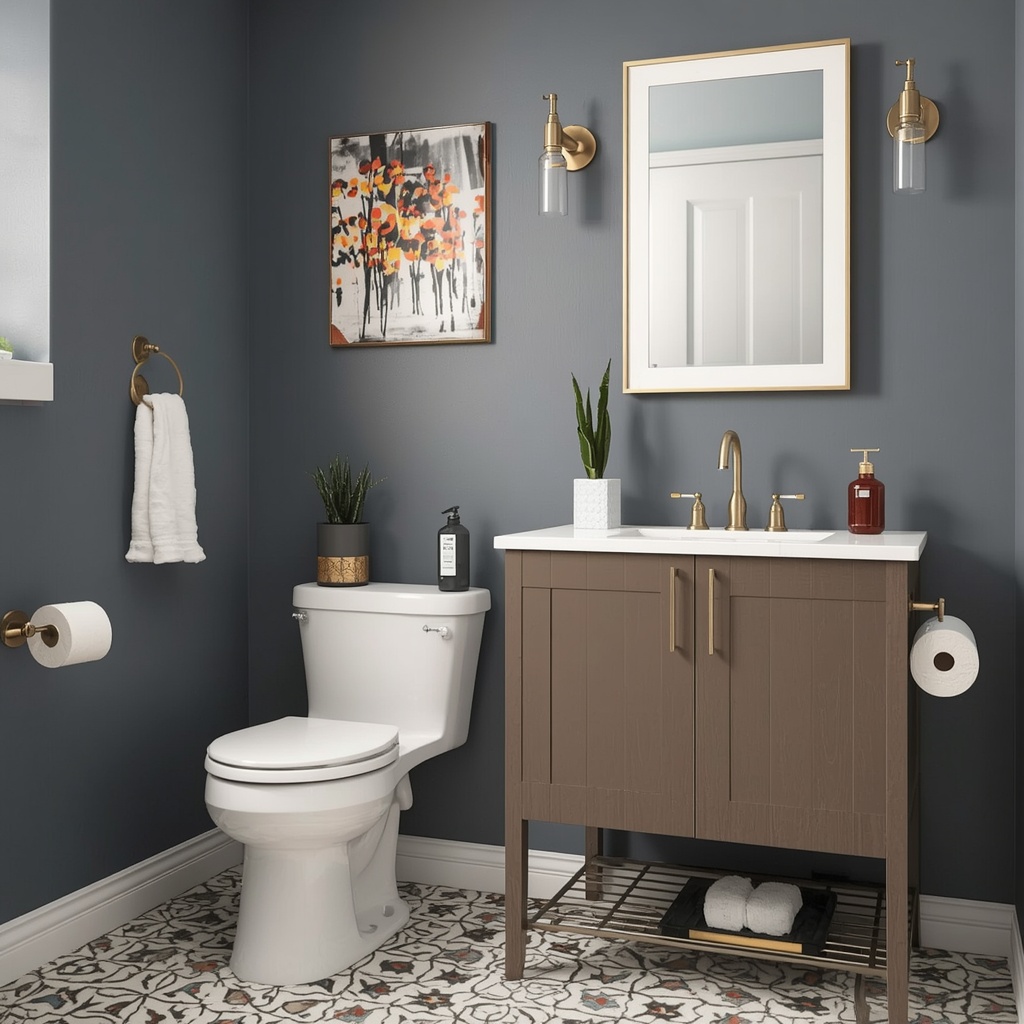
A complete bathroom hardware refresh — towel bar, toilet paper holder, robe hook, and cabinet pulls — typically runs between $80 and $200 depending on the finish and brand you choose. For faucets, a mid-range option from Moen, Delta, or Kohler runs $100–250 and can be swapped by a confident DIYer in under two hours. These are the upgrades that make buyers and guests say “this bathroom feels so updated” without being able to pinpoint exactly why.
- Replace all hardware in the same finish for a cohesive, designer look
- Matte black hardware works beautifully against white or light gray tile
- Brushed gold pairs best with warm whites and greige paint tones
- Brushed nickel is the most universally neutral and lowest maintenance finish
- Swap a builder-grade faucet for a waterfall or gooseneck style for instant drama
- Update your showerhead — rainfall heads under $60 feel luxurious every single morning
Pro Tip
Shop hardware on Build.com or Signature Hardware rather than big-box stores for designer-quality finishes at 30–50% less than boutique pricing. Many professional designers use these exact sources for client projects with strict budgets.
Lighting: The Overlooked Transformer
If I could change one thing in every American bathroom I’ve ever entered, it would be the lighting. The standard single overhead light fixture — present in roughly 80% of US bathrooms — is practically designed to make you look bad. It casts harsh downward shadows that emphasize every line and blemish, flattens the room dimensionally, and makes color appear inaccurate.
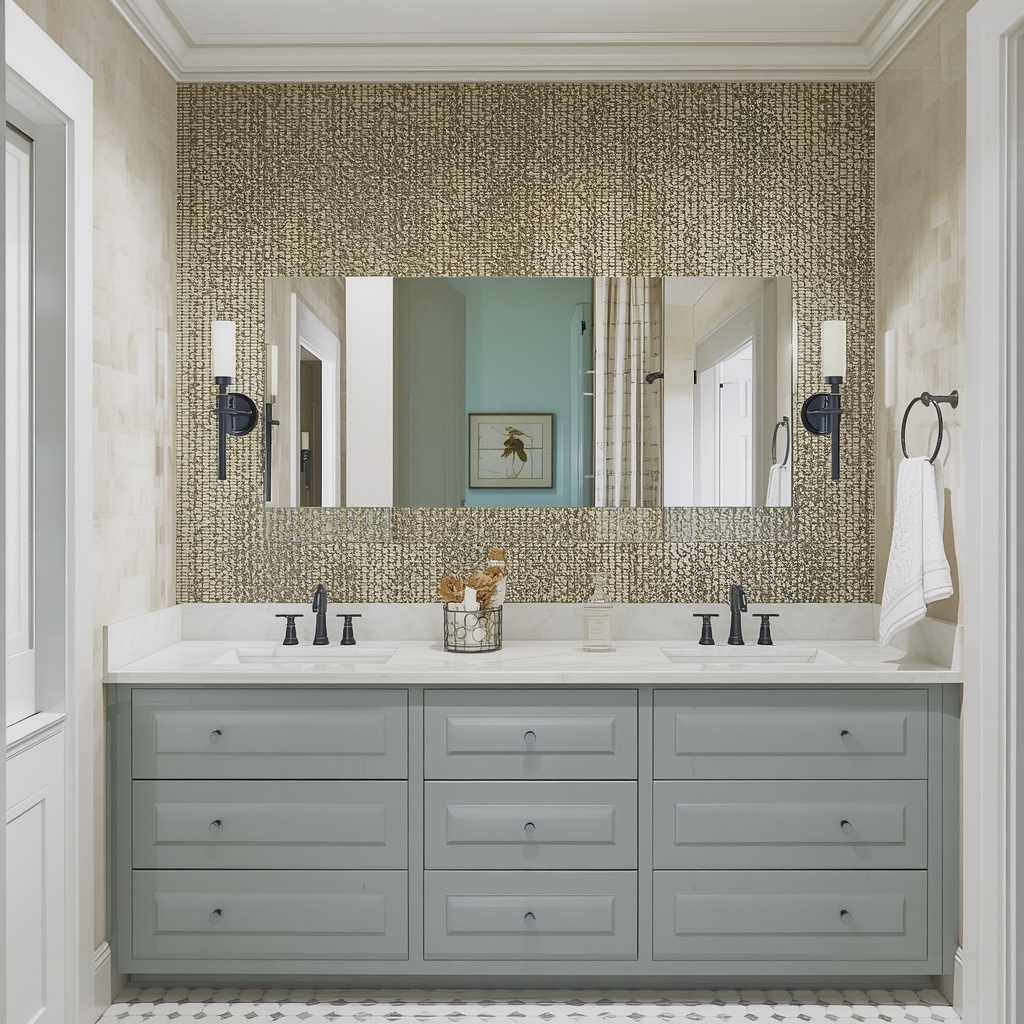
Proper bathroom lighting design uses at least two layers: ambient lighting (overhead, for general illumination) and task lighting (flanking the mirror at eye level, for grooming accuracy). A third layer — accent lighting or backlit mirrors — adds depth and that coveted spa-like glow. The good news is that upgrading your lighting can be done for as little as $150 and requires no major electrical work if you work within existing fixture locations.
Quick Lighting Upgrade Guide
- Replace overhead globe fixtures with a flush-mount LED rated at 90+ CRI for true color accuracy
- Add sconces flanking the mirror at 60–65 inches from the floor (eye level) for shadow-free grooming light
- Choose bulbs at 2700K–3000K color temperature for a warm, flattering glow — avoid cool 5000K+ in bathrooms
- Install a dimmer switch ($15–25) to control ambience — bright for morning routines, low for evening baths
- Consider a backlit LED mirror ($120–300) for an all-in-one lighting and storage upgrade
Tile and Backsplash Ideas on a Budget
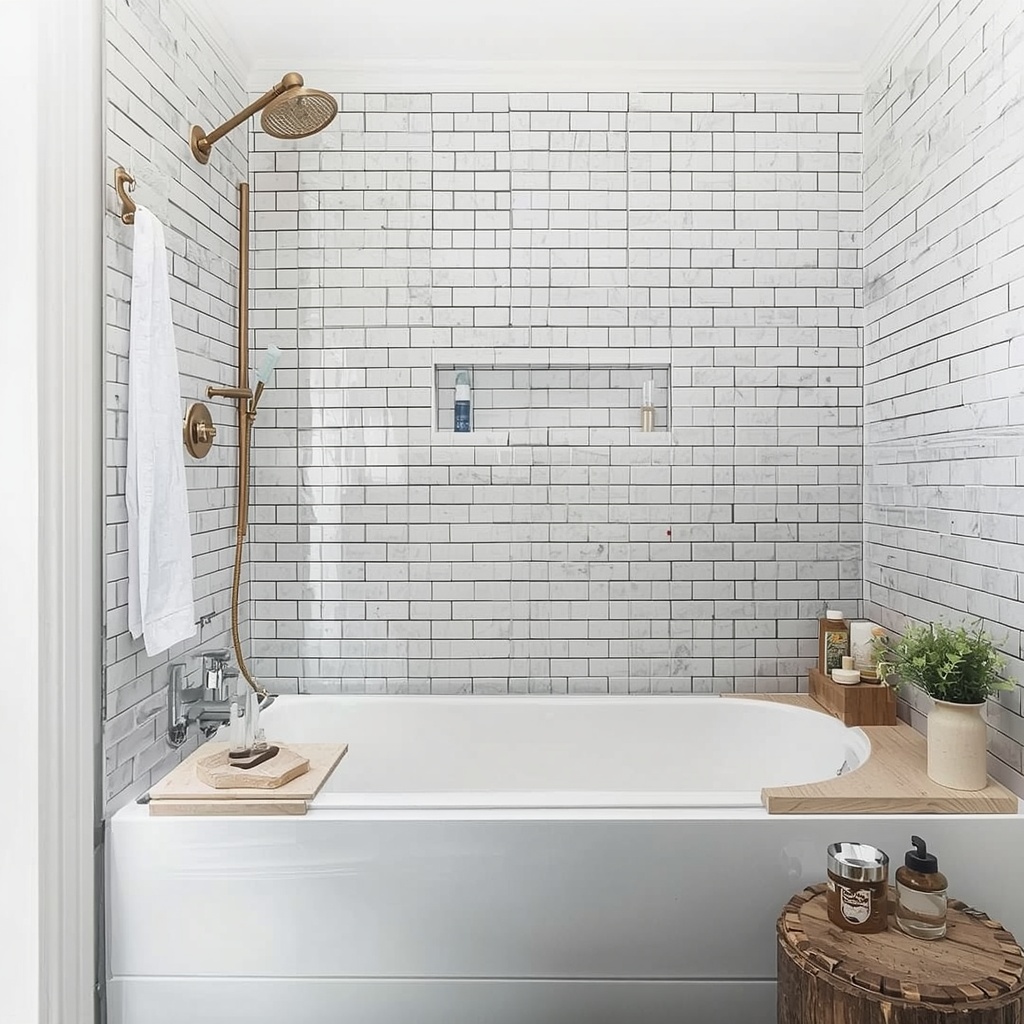
New tile is one of the most impactful transformations in a small bathroom renovation — and one of the most intimidating because people assume it requires demolition. It doesn’t. Modern peel-and-stick tiles, thin-set overlays, and self-adhesive backsplash panels allow renters and budget renovators to achieve stunning tiled surfaces without removing existing tile or hiring a contractor.
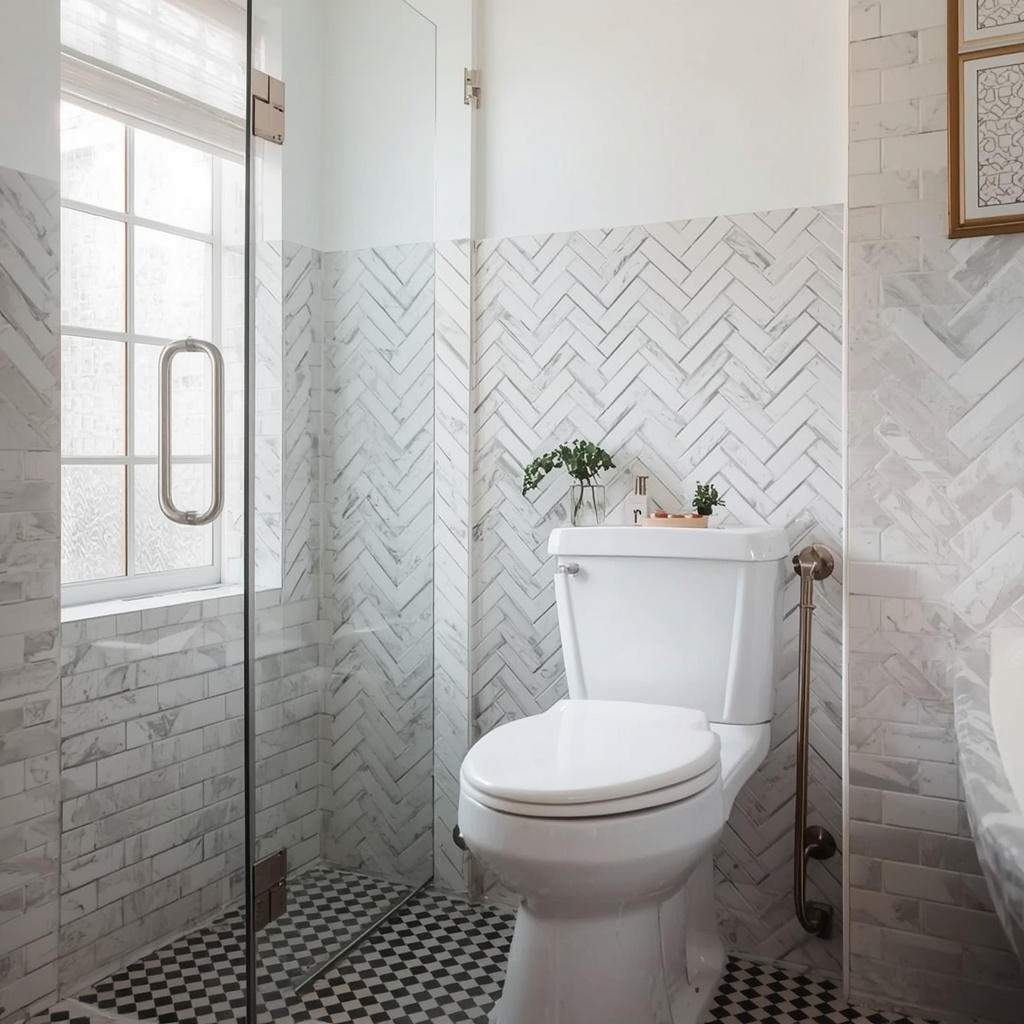
For a more permanent transformation, a tile accent wall or shower niche refresh is a weekend DIY project for the moderately handy homeowner. Subway tile remains a perennial bestseller because it’s inexpensive ($1.50–3.00 per square foot), versatile, and photographically timeless. Running it in a herringbone or vertical stack pattern rather than the traditional horizontal brick pattern immediately signals “designer” without adding a dime to the material cost.
| Tile Option | Cost per sq ft | Best For | Renter-Friendly? |
|---|---|---|---|
| Classic Subway Tile | $1.50–3.00 | Walls, shower surround | No (permanent) |
| Peel-and-Stick Backsplash | $5–12 | Vanity backsplash, accent walls | ✅ Yes |
| Peel-and-Stick Floor Tile | $2–6 | Floor refresh over existing tile | ✅ Yes |
| Zellige / Handmade Look | $8–18 | Accent niche, single wall | No (permanent) |
| Cement Tile | $10–25 | Floor statement, shower floor | No (permanent) |
| Peel-and-Stick Moroccan | $4–9 | Floors, backsplash accent | ✅ Yes |
DIY vs. Hire a Pro: Know Your Limits
One of the most expensive bathroom renovation mistakes is taking on work that’s beyond your skill set. Minor tile cracks, gaps in grout, and DIY plumbing repairs that go wrong can turn a $500 project into a $3,000 remediation. The golden rule in design and construction: the further work is from the surface, the more likely it needs a professional.
Cosmetic updates — painting, hardware swaps, mirror hanging, accessory styling, peel-and-stick surfaces — are excellent DIY territory even for beginners. Plumbing, electrical, and structural tile work are where you want licensed professionals involved, especially in older homes where code compliance matters for insurance and resale. Use platforms like Thumbtack or Angi to get competitive bids from vetted local contractors.
- DIY-safe: Painting, hardware, mirrors, lighting (with existing wiring), peel-and-stick tile, storage installs, styling
- DIY-capable (with research): Faucet swaps, toilet replacement, basic caulking and grout refresh
- Hire a pro: Moving plumbing, electrical panel work, full tile removal and reinstall, subfloor repair, shower pan replacement
Your Small Bathroom Has Untapped Potential
The most beautifully designed small bathrooms I’ve created weren’t born from massive budgets — they came from strategic thinking, intentional choices, and a willingness to challenge the assumption that small means compromised.
Start with one category: paint, lighting, or storage. Master it, enjoy the transformation, then move to the next. Small bathroom makeovers work best as an evolution, not a revolution. Every dollar invested thoughtfully in your bathroom comes back to you in daily joy and — when the time comes — in your home’s resale value.
Because the truth is, a well-designed bathroom isn’t about the square footage. It’s about how the space makes you feel when you walk in every morning. Make it feel like yours.