
There’s a persistent myth in the world of home decor: minimalism means cold, empty, and impersonal. Bare white walls. A single gray sofa. A room that looks like a furniture showroom nobody actually lives in.

As an interior designer who has spent years helping American homeowners simplify their spaces without sacrificing comfort, I can tell you this myth is exactly that — a myth. True minimalist design isn’t about deprivation. It’s about intention. When done right, a minimalist living room feels calm, curated, and deeply inviting, not sterile. This guide walks you through how to create that balance in your own home.
What “Warm Minimalism” Actually Means
Warm minimalism (sometimes called “soft minimalism” or “cozy minimalism”) is a design philosophy that keeps the core principles of minimalist decor — clean lines, limited clutter, purposeful furniture — while layering in texture, natural materials, and warm tones to avoid the sterile, clinical look that pure minimalism can sometimes create.
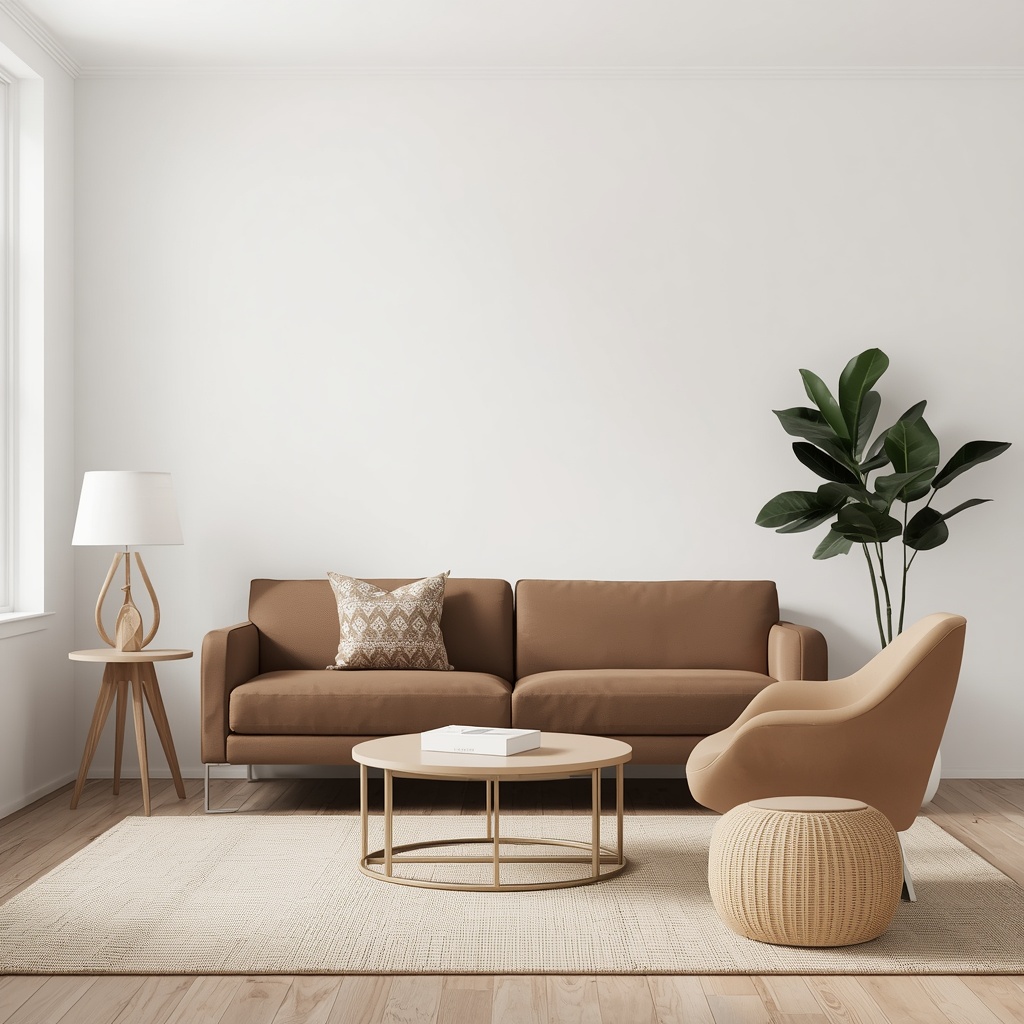
Think of it as the middle ground between stark Scandinavian minimalism and the softer, more textural Japandi style. You still edit ruthlessly. You still choose quality over quantity. But every remaining piece works harder to create comfort through material, color temperature, and layering rather than through visual noise.
“Minimalism is not a lack of something. It’s simply the perfect amount of something.” — Nicholas Burroughs
That quote captures the heart of this approach perfectly. Your living room doesn’t need more stuff to feel like home. It needs the right stuff, arranged with care.
Start With a Warm, Neutral Color Palette
Color temperature is the single biggest factor separating a cold minimalist room from a warm one. Stark white walls paired with cool gray furniture will always read as sterile, no matter how nice the furniture is.
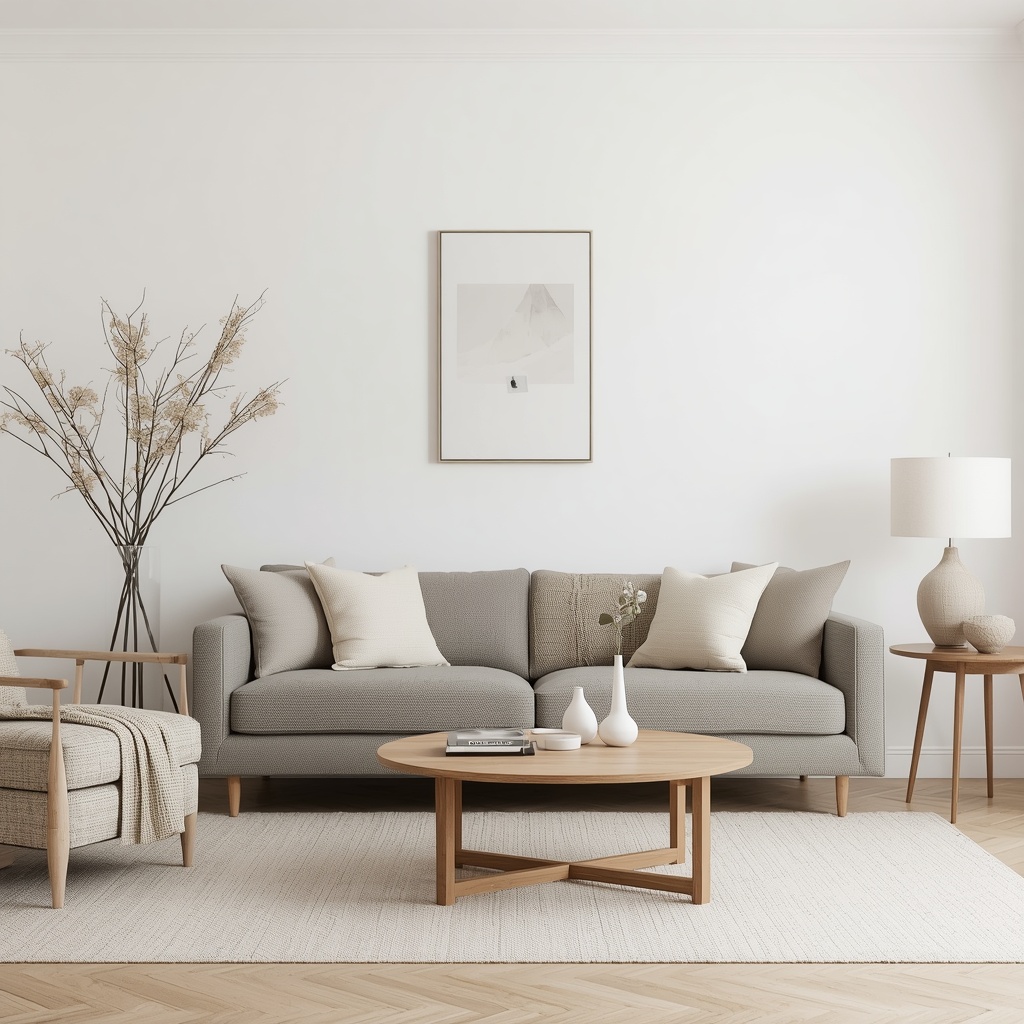
Instead, build your palette around warm neutrals: ivory, oatmeal, greige, soft taupe, and warm white. These tones still feel calm and uncluttered visually, but they carry an undertone of warmth that makes a room feel lived-in rather than staged.
Pro Tip: Before committing to a wall color, paint large sample swatches (at least 2×2 feet) on different walls and observe them at morning, midday, and evening light. Warm neutrals can shift dramatically under artificial lighting, and what looks cozy at noon can look flat and gray after sunset.
| Color Category | Example Shades | Best Used For |
|---|---|---|
| Warm whites | Alabaster, Swiss Coffee, Cloud White | Walls, trim, ceilings |
| Soft neutrals | Greige, Oatmeal, Wheat | Sofas, rugs, curtains |
| Earthy accents | Terracotta, Rust, Olive | Throw pillows, ceramics |
| Grounding tones | Espresso, Walnut, Charcoal | Wood furniture, frames |
Layer Natural Textures Instead of Adding More Objects
This is the secret most people miss. When you strip a room down to its essentials, texture becomes your primary design tool — it does the emotional work that clutter used to do, without the visual chaos.
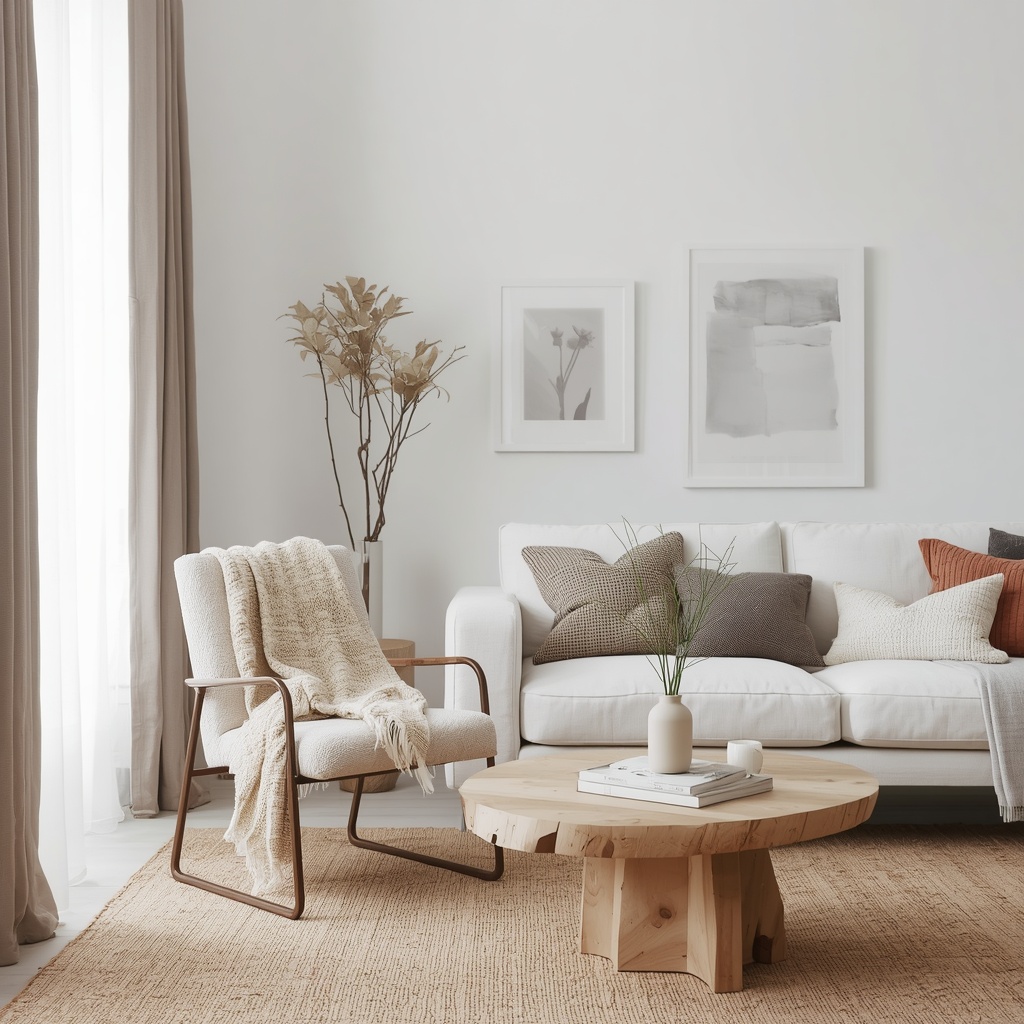
A boucle armchair, a chunky knit throw, a jute or wool rug, linen curtains, and a raw wood coffee table can all coexist in a minimalist space because they share a restrained color story while offering completely different tactile experiences. Your eye and your hand both find something to rest on, which is exactly what makes a room feel warm rather than empty.
Semantic-rich materials worth incorporating into a cozy minimalist living room include:
- Boucle and chenille fabrics on accent chairs or ottomans
- Jute, wool, or sisal rugs for natural, grounded texture underfoot
- Linen or cotton drapery for softness without pattern overload
- Raw or reclaimed wood for warmth and organic grain
- Rattan and woven fixtures for lightweight, tactile interest
- Ceramic and stoneware vases for handmade, imperfect charm
Choose Furniture With Soft, Organic Lines
Sharp, angular furniture can amplify the “cold minimalism” feeling. Swapping in pieces with curved silhouettes — a rounded arm sofa, an oval coffee table, a curved floor lamp — instantly softens a room’s visual language without adding a single extra item.

This shift toward organic modern furniture has become one of the defining trends in contemporary home decor, and it pairs beautifully with a minimalist approach because curves read as inviting even in a stripped-back space. A room can be sparse and still feel embracing if the shapes within it are gentle rather than rigid.
Pro Tip: If you’re not ready to replace your existing sofa, a curved coffee table or a pair of rounded side tables can shift the entire feel of the room for a fraction of the cost.
Prioritize Lighting Layers Over Overhead Fixtures
Nothing kills warmth faster than a single harsh overhead light. Minimalist rooms often rely on clean lines and open space, but if your only light source is a bright ceiling fixture, the room will feel flat and clinical no matter how well-curated your furniture is.
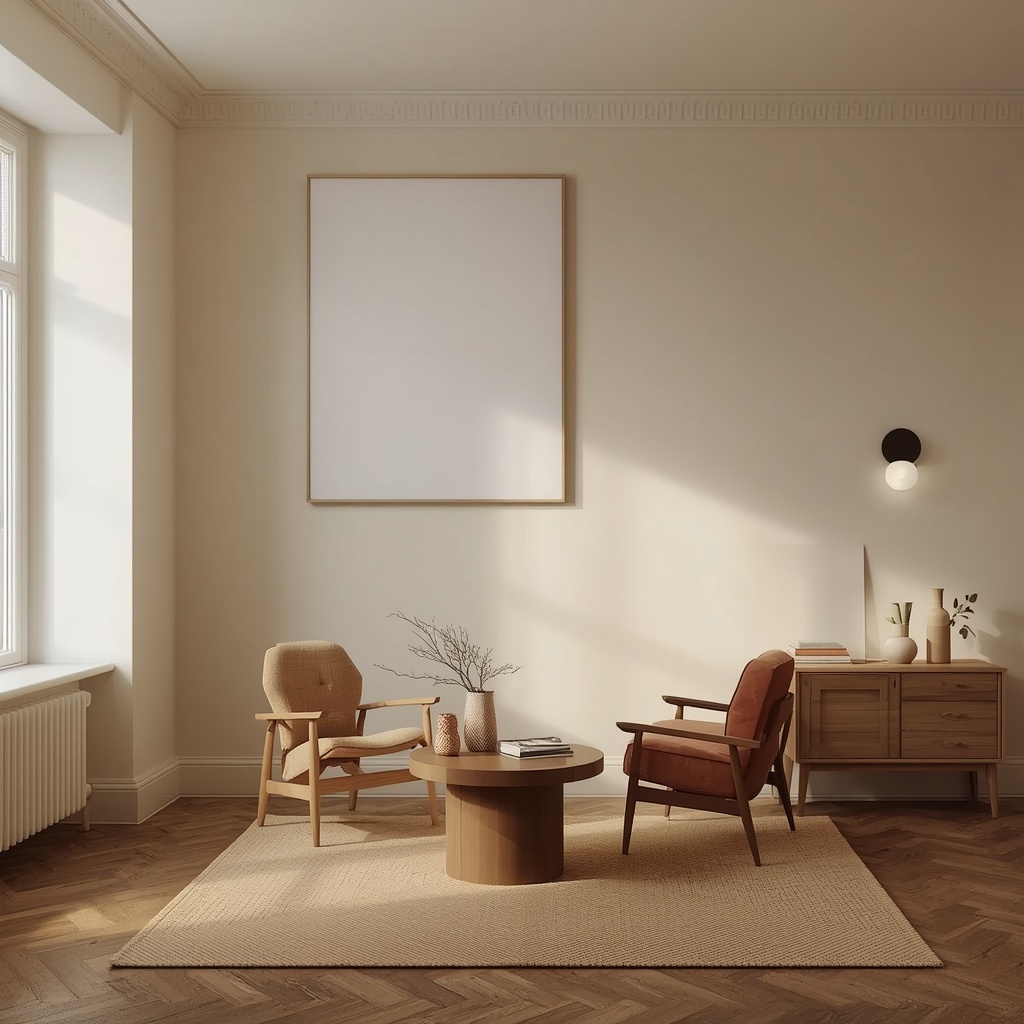
Instead, build three layers of light: ambient (overhead or recessed), task (a reading lamp near your favorite chair), and accent (a dimmable floor lamp or wall sconce). Warm-toned bulbs (2700K–3000K) are non-negotiable for a cozy minimalist space — cool white bulbs (4000K+) will undo all your color palette work in an instant.
| Lighting Layer | Fixture Examples | Recommended Bulb Temp |
|---|---|---|
| Ambient | Recessed lights, flush mounts | 2700K–3000K |
| Task | Arc floor lamp, reading sconce | 2700K–3000K |
| Accent | Table lamps, candles, string lights | 2200K–2700K |
Keep Decor Sparse but Personal
Minimalism gets a bad reputation partly because people confuse “less stuff” with “no personality.” The goal isn’t to remove everything meaningful from your shelves — it’s to remove everything that isn’t.
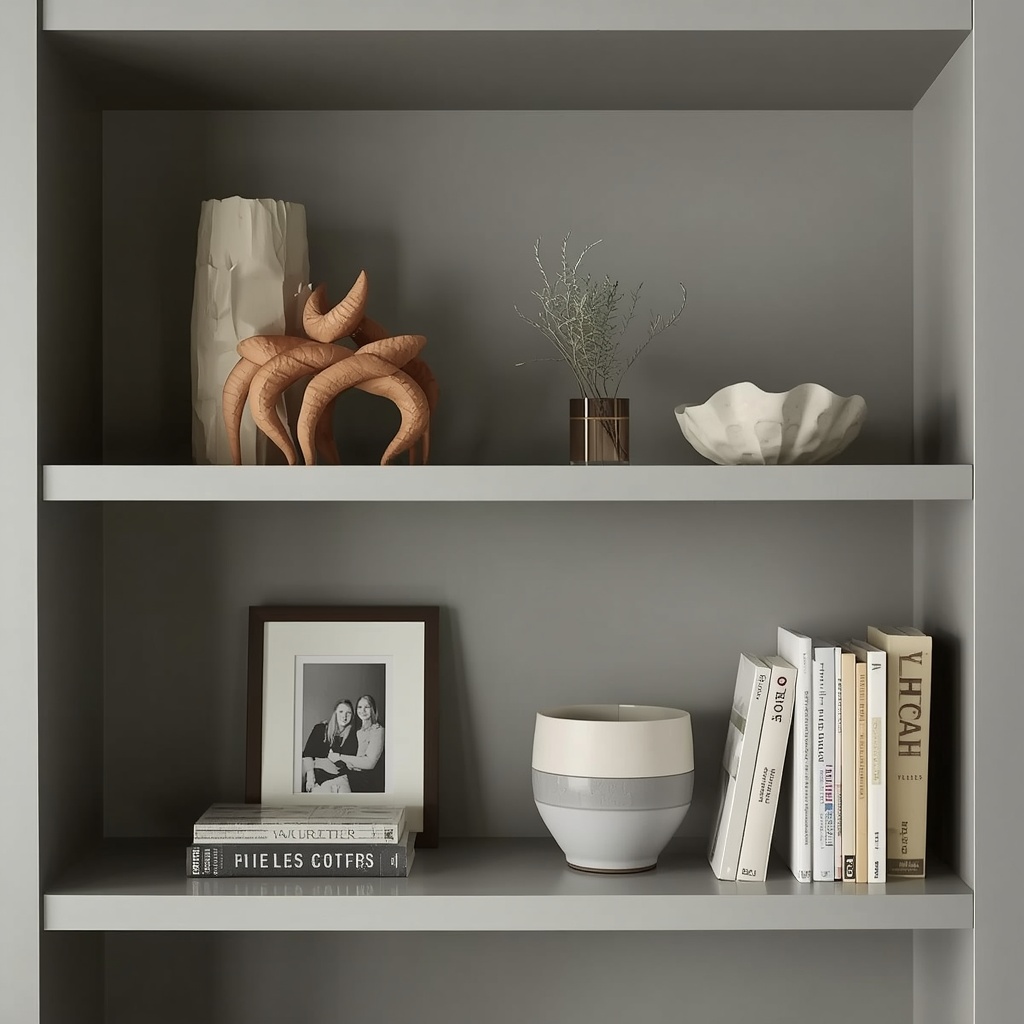
Choose a small number of objects that genuinely matter to you: a piece of pottery from a trip, a black-and-white family photo in a simple frame, a stack of well-loved books, a single plant with real presence. Group them with intention rather than scattering trinkets across every surface. A living room with five meaningful objects will always feel warmer than one with fifty forgettable ones.
“A house is not a home unless it contains food and fire for the mind as well as the body.” — Benjamin Franklin
Even in the most pared-back interiors, a room needs that “fire for the mind” — the personal touches that make a space unmistakably yours.
Bring in Greenery for Life and Softness
Plants are one of the most effective ways to add warmth to a minimalist room without adding clutter, because they contribute color, texture, and organic movement while still reading as intentional and clean.

A single large statement plant — a fiddle leaf fig, olive tree, or bird of paradise — can anchor a corner of the room and soften hard architectural lines like exposed corners or large windows. If you prefer lower maintenance, snake plants and ZZ plants offer the same visual softness with far less upkeep, making them ideal for busy households that still want that connection to nature indoors.
Don’t Skip the Rug
A bare hardwood or tile floor is one of the fastest ways to make a minimalist living room feel cold and unfinished, even when everything else is styled beautifully. A rug anchors your furniture arrangement, absorbs sound, and adds an immediate layer of warmth underfoot.
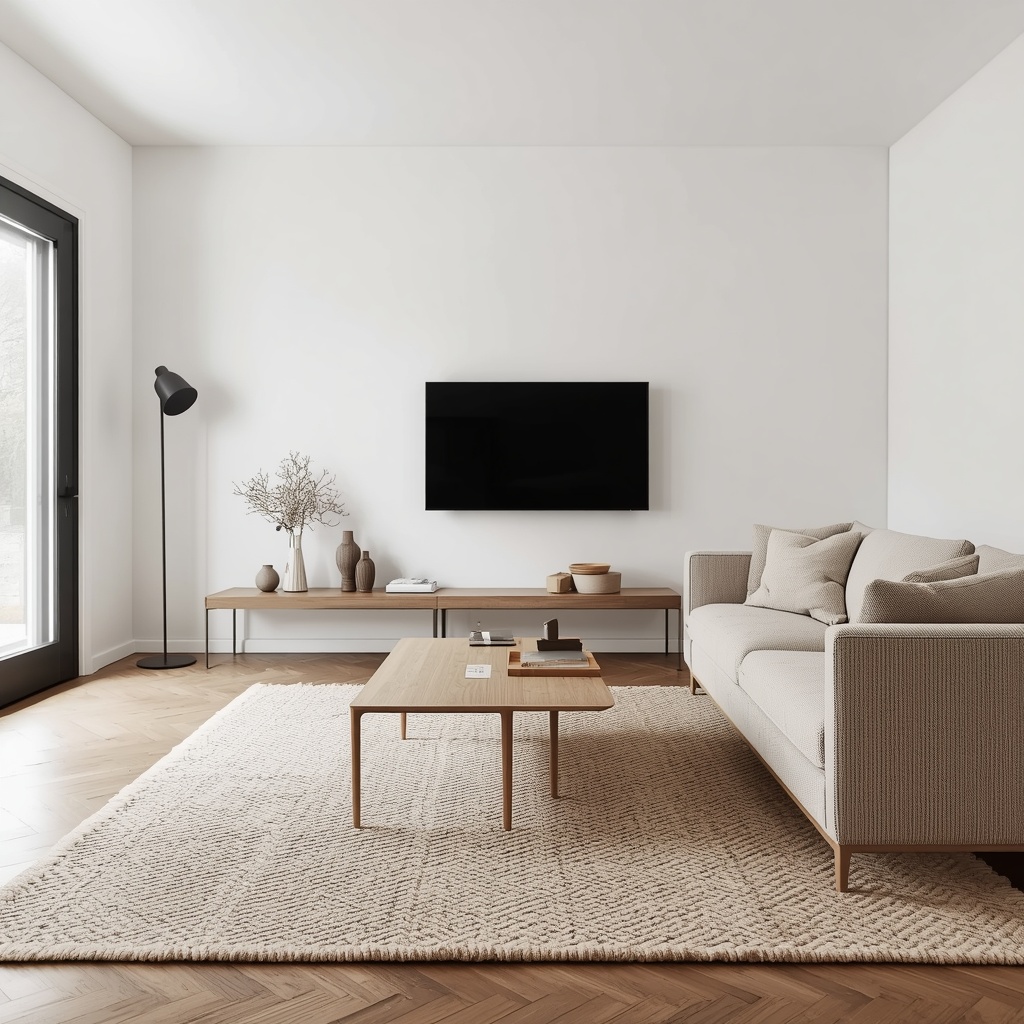
For a cozy minimalist look, choose a rug in a natural fiber or a low-pile wool in a warm neutral tone. Avoid busy patterns, which can undercut the calm visual language you’ve built elsewhere — instead, let texture (like a chunky weave or subtle herringbone) do the work that pattern would otherwise do.
Pro Tip: Size your rug so at least the front legs of every major piece of furniture sit on it. An undersized rug is one of the most common styling mistakes and instantly makes a room feel disjointed, no matter how good the individual pieces are.
A Simple Room-by-Room Checklist
Use this quick checklist when auditing your own living room for warm minimalist balance:
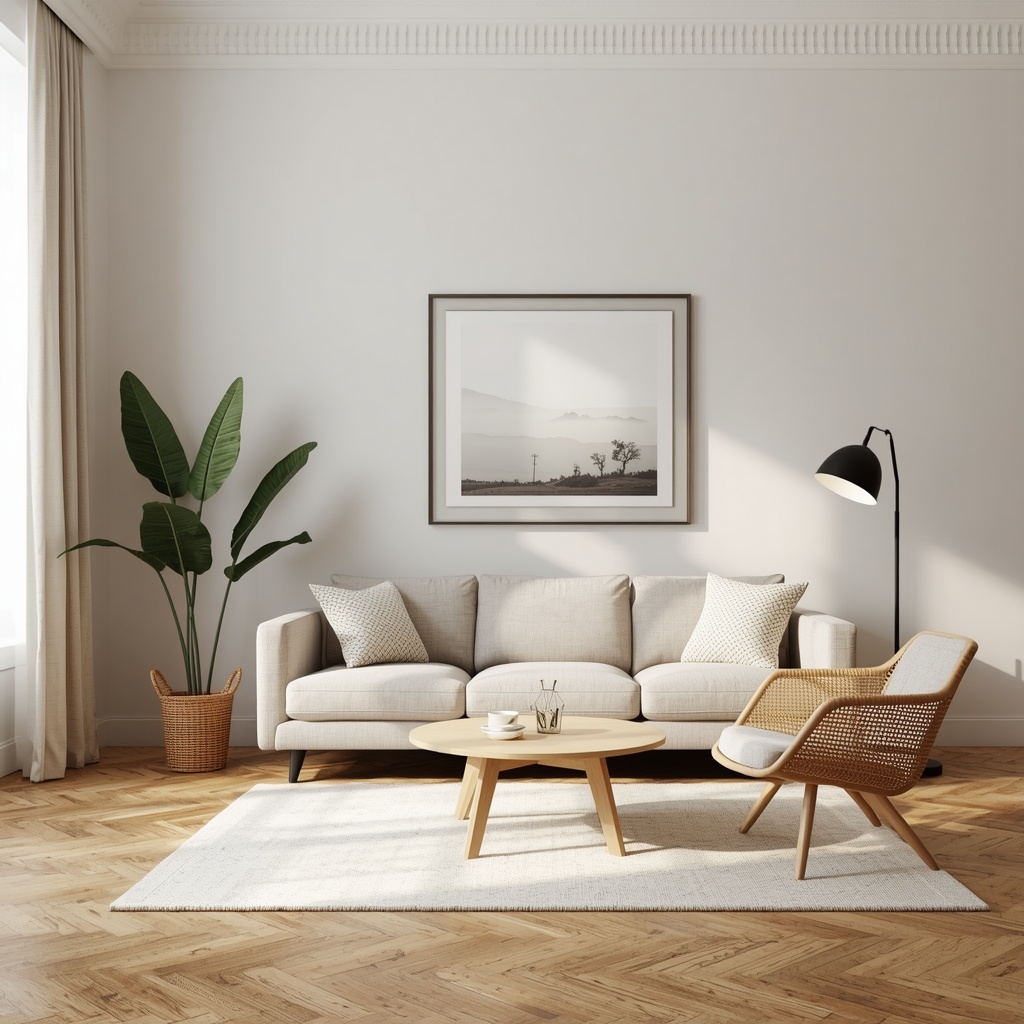
- Walls and large furniture pieces use warm neutral tones, not stark white or cool gray
- At least three different natural textures are present in the room
- Lighting includes at least two layers beyond the overhead fixture
- Every visible decor object has genuine meaning or function
- One statement plant is present
- A properly sized rug anchors the seating area
- Furniture silhouettes include at least one curved or organic shape
- Storage exists for anything that doesn’t have a “home” in the open room
Final Thoughts
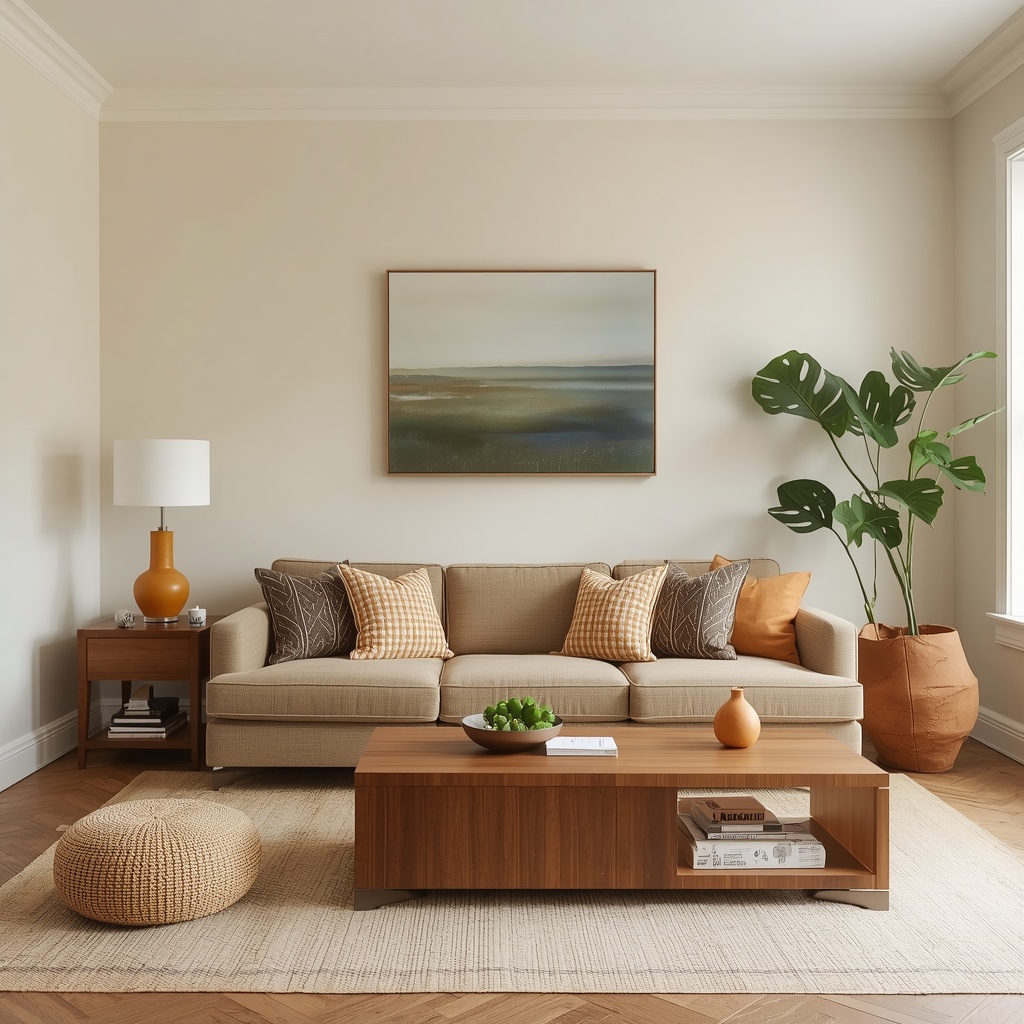
Warm minimalism proves that simplicity and comfort were never actually opposites — they just require more thoughtfulness to combine. Every choice, from wall color to lamp placement, should serve the dual purpose of visual calm and physical comfort. When you edit with intention rather than restriction, you end up with a living room that feels both spacious and deeply personal, exactly the kind of space people naturally gravitate toward at the end of a long day.
Start small. Pick one section of this guide — lighting, texture, or color — and apply it this weekend. You don’t need a full renovation to feel the shift toward a calmer, warmer home.