
There’s a reason your eye is drawn to that one Pinterest-perfect living room with a trailing pothos cascading from a bookshelf or a statement fiddle leaf fig anchoring the corner. Plants don’t just decorate a space — they transform it. As an interior designer who works almost exclusively in home decor and plant-forward interiors, I can tell you that the difference between a living room that feels flat and one that feels alive almost always comes down to how the greenery is styled, not just whether it exists.
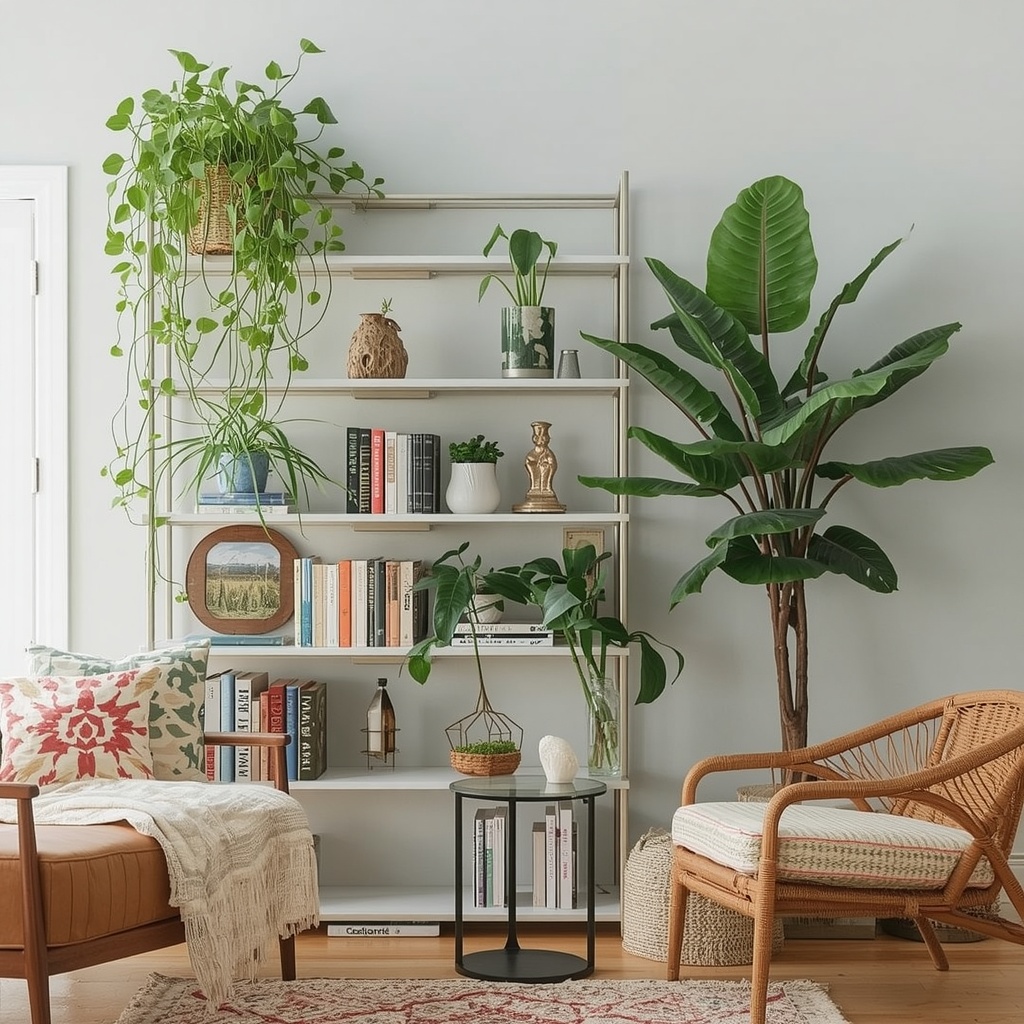
Indoor plant styling is part science, part art, and part restraint. Too many plants crammed together without intention reads as clutter. Too few, and the room feels sterile. The sweet spot lies in understanding scale, light, texture, and placement — and that’s exactly what we’re unpacking today.
Why Indoor Plants Are the Secret Weapon of Great Home Decor
Houseplants have become one of the most searched home decor trends in the U.S., and for good reason. Beyond their aesthetic appeal, indoor plants improve air quality, reduce stress, and add a layer of biophilic design that connects your living space to nature. Biophilic interior design — the practice of incorporating natural elements into built environments — is no longer a niche concept; it’s mainstream, and living rooms are ground zero for this shift.
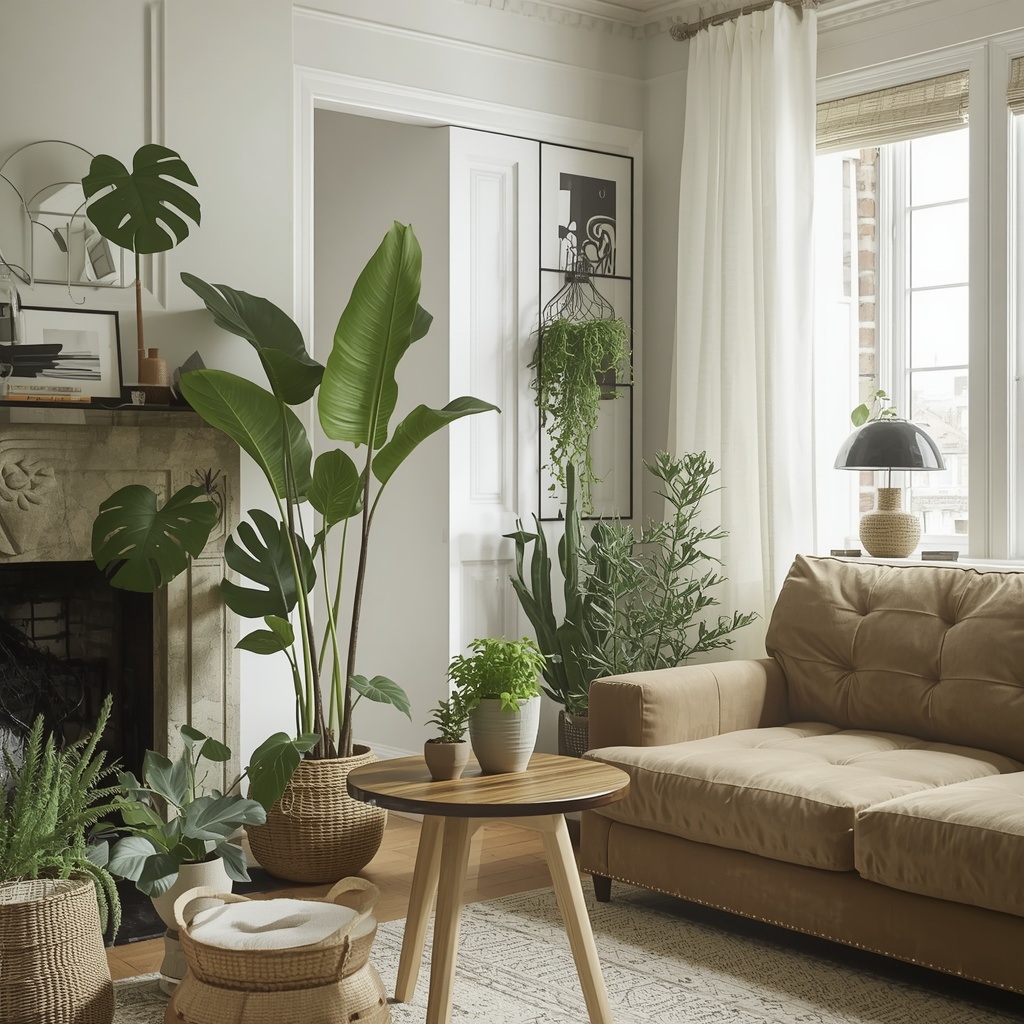
A well-styled plant corner can act as a focal point, a color accent, or even a room divider. Unlike furniture or wall art, plants are living, breathing design elements that change with the seasons, grow with your space, and require an ongoing relationship. That’s what makes plant styling so uniquely rewarding — and occasionally, so frustrating when it goes wrong.
“Plants are the punctuation marks of a room. A single trailing vine can soften an entire wall of hard edges.” — a sentiment echoed across the interior design community, and one I repeat to nearly every client who’s afraid of “too much green.”
Step 1: Understand Your Living Room’s Light Before You Buy Anything
Before you fall in love with a fiddle leaf fig at the garden center, walk your living room and track the light. This single step prevents 90% of the plant-parent heartbreak I see in client homes.
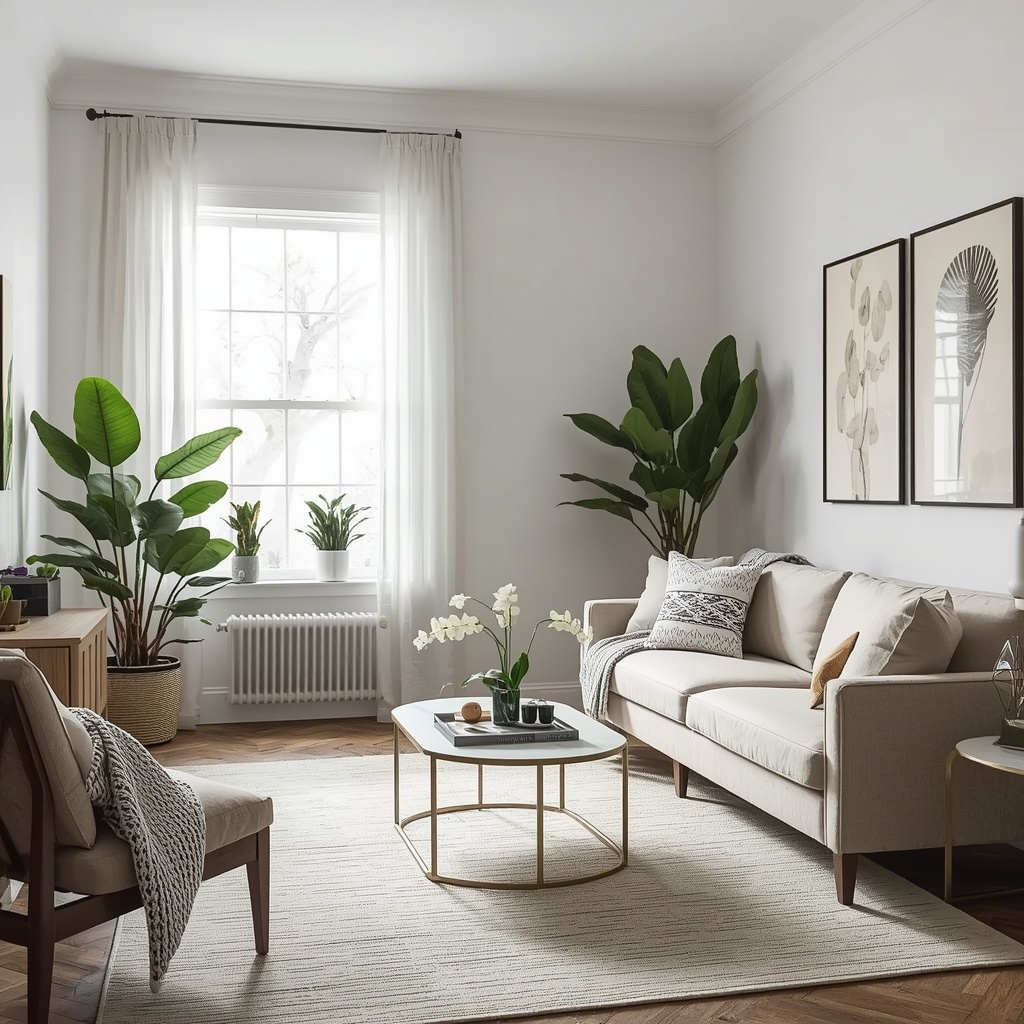
- South-facing windows: Bright, direct light most of the day — ideal for succulents, cacti, and sun-loving varieties like the ponytail palm.
- East-facing windows: Gentle morning light — perfect for pothos, philodendrons, and peace lilies.
- North-facing windows: Low, indirect light — best suited to snake plants, ZZ plants, and cast iron plants.
- West-facing windows: Intense afternoon sun — great for succulents but can scorch delicate tropical foliage.
Pro Tip: If your living room has minimal natural light, don’t force it with high-maintenance tropicals. Instead, lean into low-light champions like the snake plant (Sansevieria) or pothos, and supplement with an affordable LED grow light disguised inside a stylish planter for a subtle glow that doubles as ambient lighting.
Step 2: Choose Plants Based on Scale, Not Just Trend
One of the biggest styling mistakes homeowners make is buying plants purely because they’re trending on social media, without considering how they’ll actually function in the room’s scale. A living room needs a mix of heights and forms — just like furniture — to feel intentional rather than accidental.
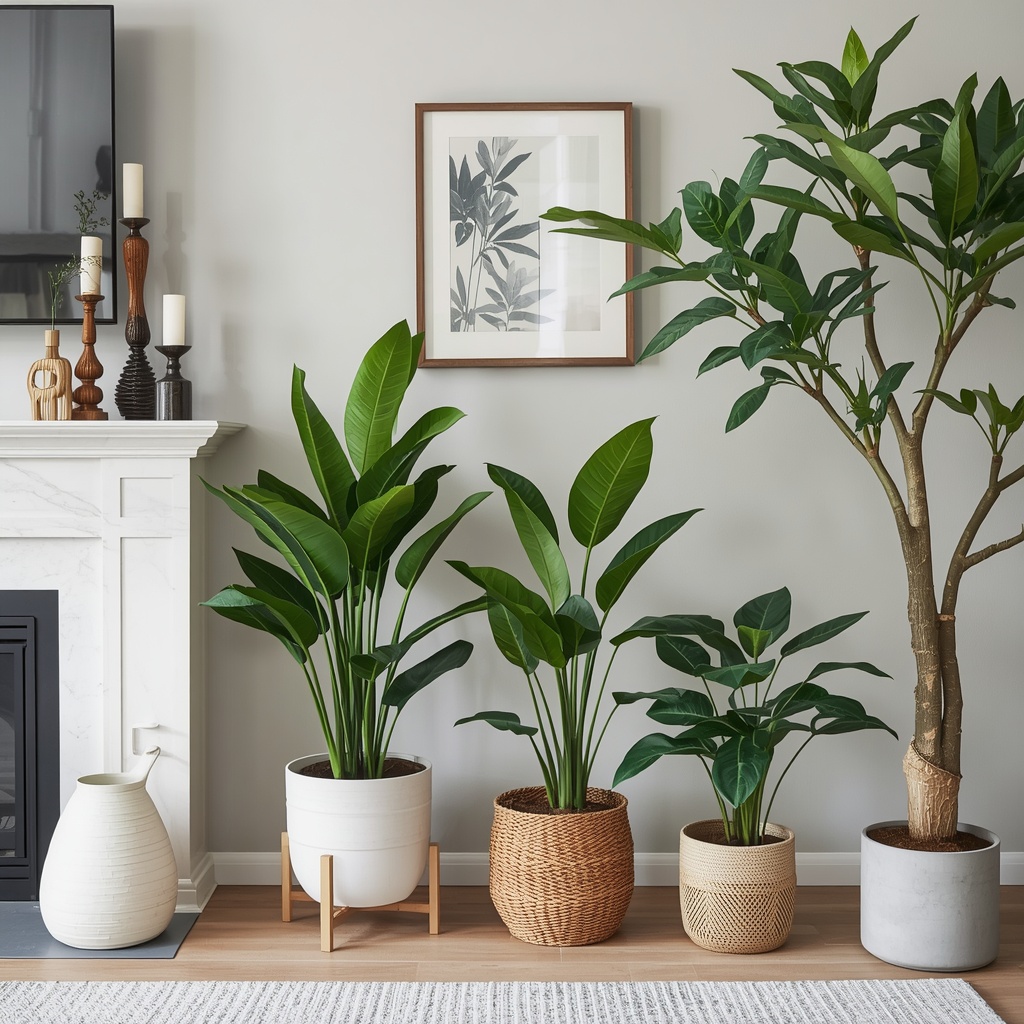
Think of plant styling the same way you’d think of layering textiles or arranging a gallery wall: you need a hierarchy. Large statement plants anchor the room, medium plants fill visual gaps, and small accent plants add detail to shelves, side tables, and windowsills.
| Plant Size | Best Use in Living Room | Popular Varieties | Light Needs |
|---|---|---|---|
| Large (statement) | Empty corners, beside sofas | Fiddle Leaf Fig, Bird of Paradise, Rubber Plant | Bright, indirect |
| Medium | Console tables, plant stands | Monstera Deliciosa, Peace Lily, Areca Palm | Medium, indirect |
| Small (accent) | Bookshelves, coffee tables | Pothos, Pilea, Succulents | Low to bright |
| Trailing | Hanging planters, high shelves | English Ivy, String of Pearls, Philodendron | Medium, indirect |
Step 3: Layer Plants Like You Would Throw Pillows
Interior stylists talk a lot about “layering” in soft furnishings, but the same principle applies beautifully to greenery. Layering plants means combining varying heights, leaf textures, and pot styles to create visual depth rather than a flat, uniform look.
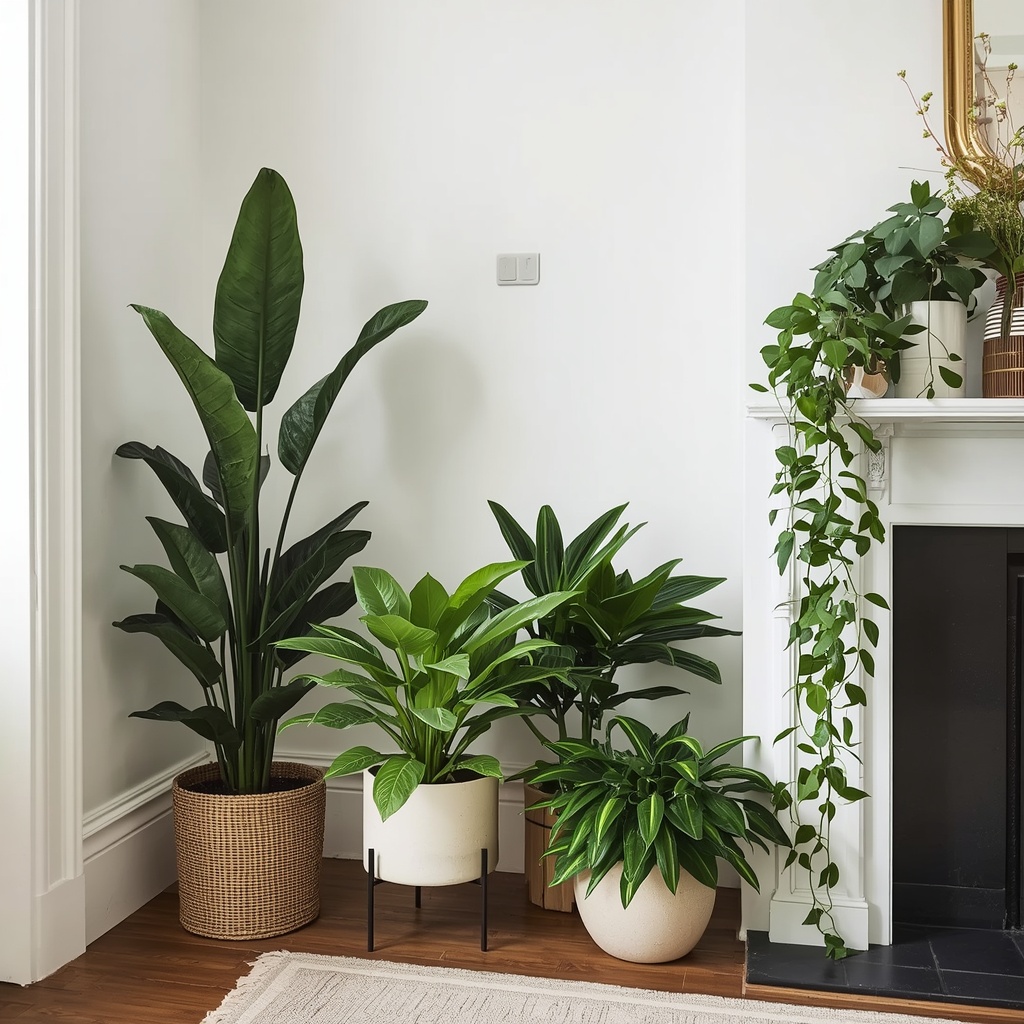
Start with a tall floor plant in one corner, add a mid-height plant on a plant stand nearby, then finish with a trailing vine on a nearby shelf or mantel. This triangular arrangement — tall, medium, cascading — mimics how professional florists design bouquets, and it works just as effectively in three-dimensional room design.
Texture matters just as much as height. Pair the broad, glossy leaves of a monstera with the delicate, feathery fronds of a fern, or contrast the architectural spikes of a snake plant against the soft, rounded leaves of a pilea. This textural contrast keeps the eye moving and prevents the greenery from reading as a single green blob.
Step 4: Let the Planter Do Some of the Design Work
Your plant’s container is just as important as the plant itself when it comes to home decor cohesion. A gorgeous monstera in a cheap plastic nursery pot will always look unfinished, while even a modest pothos in a beautifully textured ceramic planter can look like a designer statement piece.
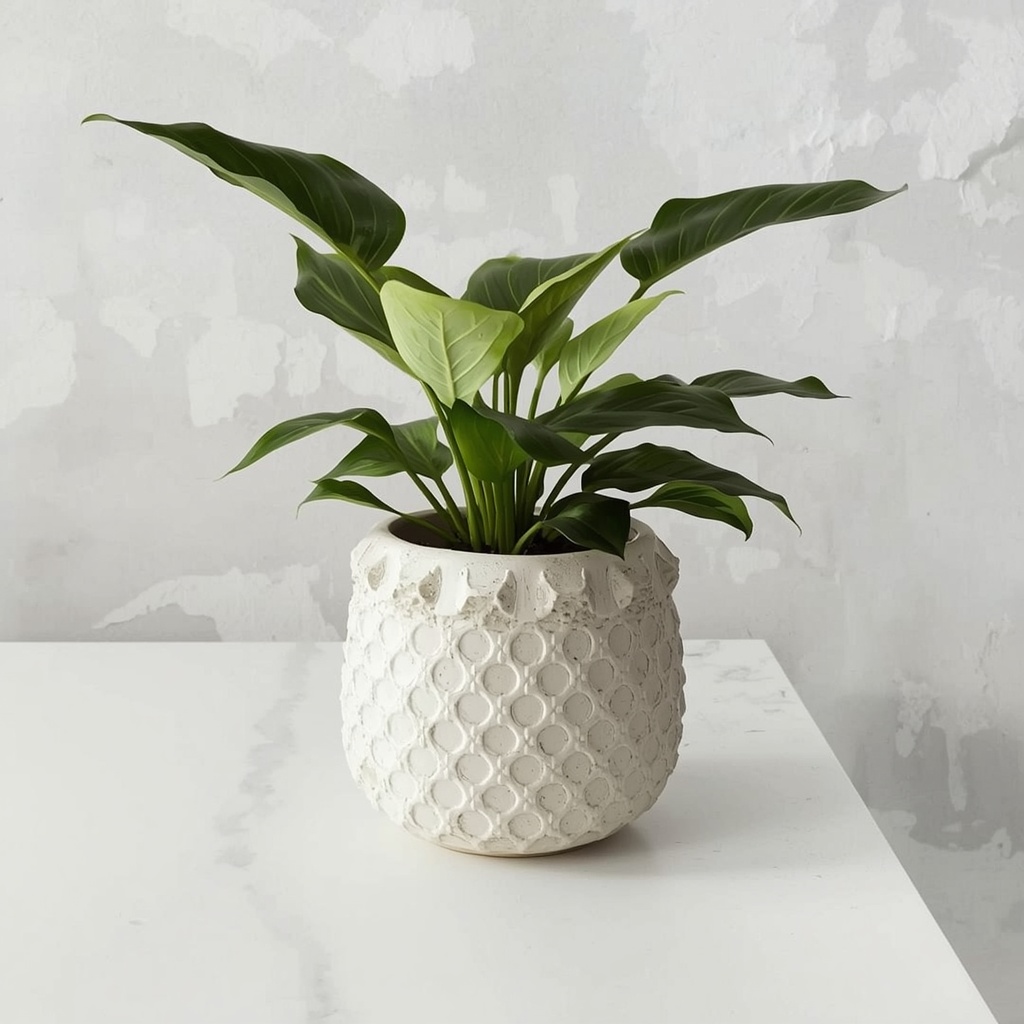
Consider these planter styling strategies:
- Match your metals. If your living room hardware is brass or gold, choose planters with matching metallic accents for a cohesive, curated look.
- Mix materials intentionally. Combine woven rattan baskets, matte ceramic pots, and concrete planters to add textural variety without visual chaos.
- Stick to a color story. Neutral planters (terracotta, white, black, stone) let the plant’s natural color be the star; colorful planters work as accent pieces when used sparingly.
- Elevate with plant stands. A simple wooden or wire plant stand instantly makes a plant feel more like furniture and less like an afterthought.
- Use varying pot heights. Even identical plants look more dynamic when displayed at slightly different heights on stands, stools, or stacked books.
Pro Tip: Repotting a store-bought plant into a decorative cachepot (a decorative outer pot with no drainage hole) rather than repotting directly saves you from messy soil transfers and lets you swap planters seasonally without disturbing the roots.
Step 5: Create Plant “Vignettes” Instead of Scattering Single Pots
A common styling hack among professional home decor consultants is grouping plants into curated vignettes rather than placing single pots randomly around the room. A cluster of three to five plants of varying heights on a console table or in a window nook creates far more visual impact than the same plants scattered individually across the space.
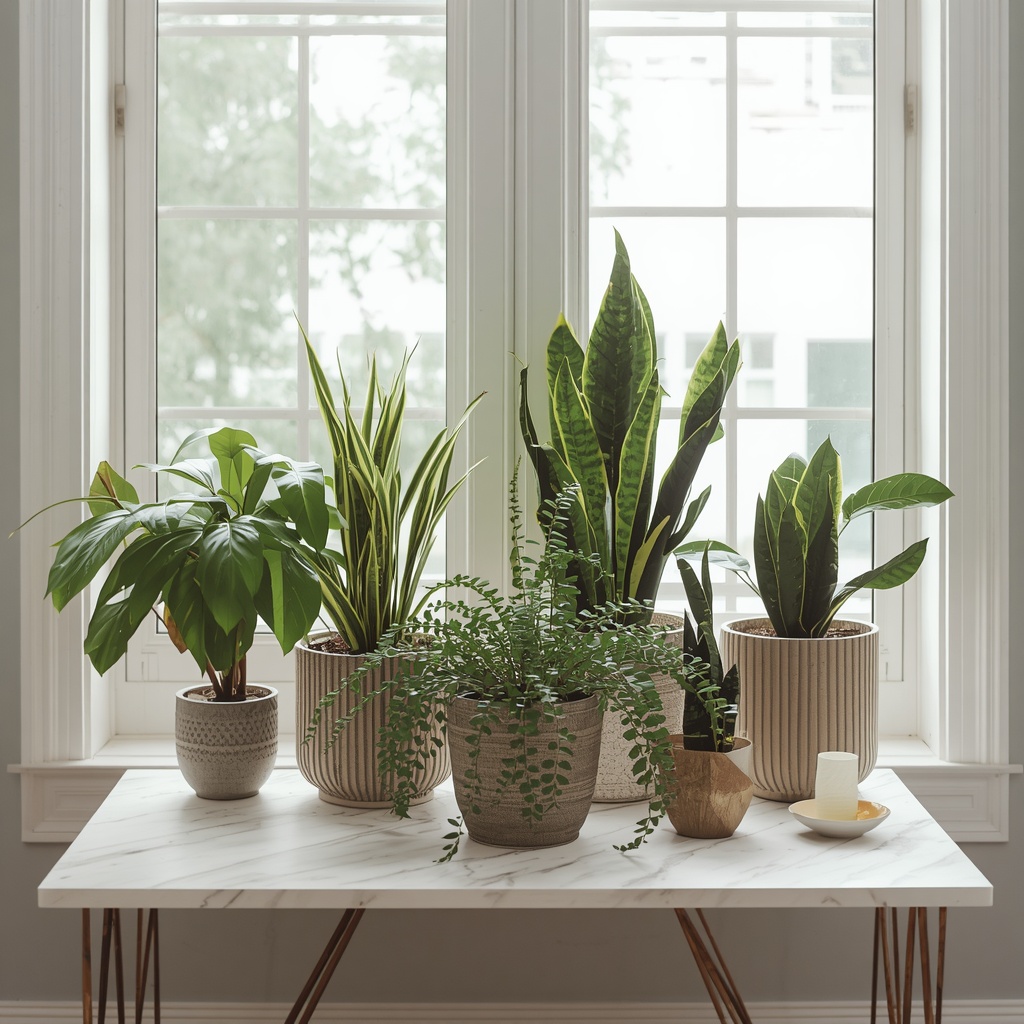
When building a vignette, use the classic “rule of odd numbers” — groupings of three, five, or seven feel more organic and visually balanced than even numbers. Combine your plants with complementary decor objects like candles, books, or a small piece of sculptural art to round out the arrangement and keep it from feeling like a plant shop display.
Living room bookshelves are an especially underrated spot for plant vignettes. Tuck a trailing pothos on the top shelf so it cascades down the sides, add a small snake plant at eye level, and let a low-light-tolerant fern soften a lower corner. This turns a plain bookshelf into a layered, lived-in focal point.
Step 6: Use Plants to Solve Real Design Problems
Beyond aesthetics, plants are functional design tools. A tall fiddle leaf fig or areca palm can visually “fill” an awkward empty corner that furniture doesn’t quite fit. A row of matching plants can act as a soft room divider in open-concept living spaces. Trailing vines can soften harsh architectural lines, like exposed beams or stark shelving units.
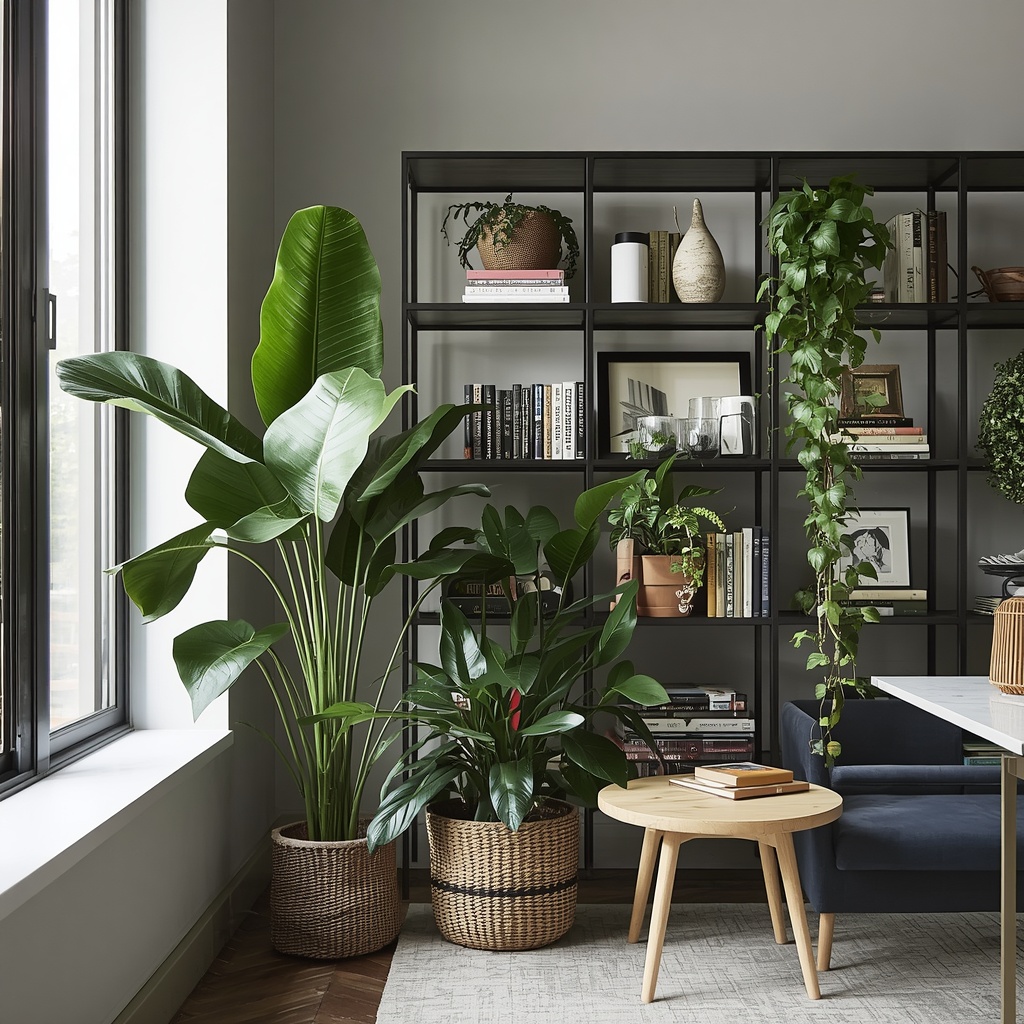
If your living room feels visually “top-heavy” with too much furniture at eye level, hanging planters near the ceiling draw the eye upward and create a sense of height. Conversely, if a room feels too tall and cavernous, grounding it with large floor plants brings the scale back down to a human level.
Here’s a quick-reference list of common living room design problems and the plant-based fixes I recommend to clients:
- Awkward empty corner → Large floor plant like a fiddle leaf fig or bird of paradise
- Bare, boring windowsill → Row of small succulents or trailing string of pearls
- Plain, empty mantel → Trio of varying-height plants in coordinating planters
- Sterile, all-white room → Deep green foliage plants to add warmth and contrast
- Open shelving that feels cluttered → One or two well-placed plants to break up books and decor
- High ceilings that feel cold → Hanging macramé planters to draw the eye upward
Step 7: Don’t Forget Maintenance in Your Styling Plan
The most beautifully styled plant corner falls apart fast if the plants aren’t cared for properly. Before committing to a design, be honest about your lifestyle. Frequent travelers or busy professionals should lean toward drought-tolerant, low-maintenance varieties like the ZZ plant, snake plant, or pothos rather than moisture-loving ferns that need daily attention.
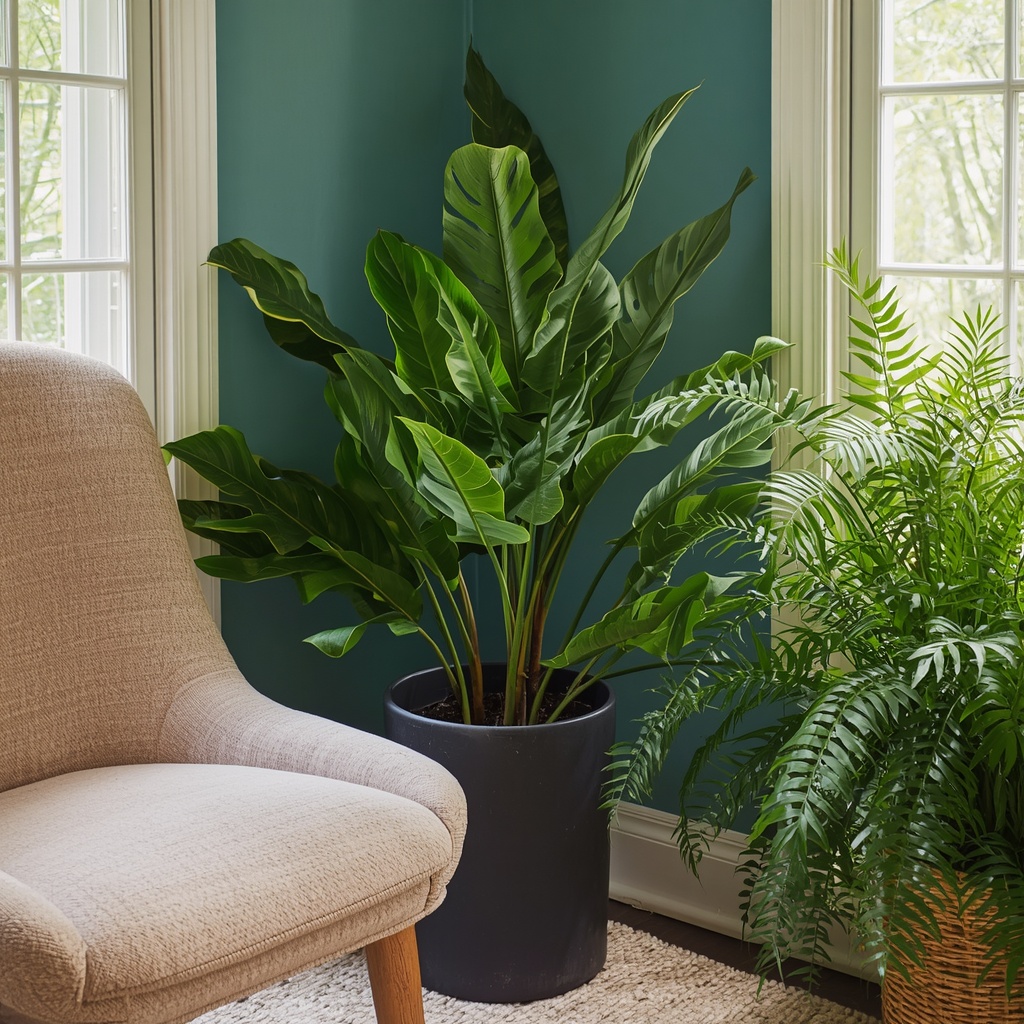
Grouping plants with similar watering needs together also simplifies your care routine and prevents overwatering mishaps. It’s a small logistical detail, but it has a big impact on whether your styled living room stays vibrant six months from now or slowly wilts into neglect.
| Maintenance Level | Watering Frequency | Best Plants | Ideal For |
|---|---|---|---|
| Low | Every 2–3 weeks | Snake Plant, ZZ Plant, Cast Iron Plant | Busy schedules, travelers |
| Medium | Weekly | Pothos, Philodendron, Spider Plant | Most households |
| High | 2–3 times per week | Ferns, Peace Lily, Calathea | Plant enthusiasts, humid climates |
Pro Tip: Set a recurring reminder on your phone labeled by plant type rather than a generic “water plants” alert. Different species have wildly different needs, and batching your care routine by plant group prevents both over- and under-watering.
Seasonal Plant Styling for Year-Round Vibrancy
Your living room’s plant styling doesn’t have to stay static all year. Rotating seasonal accents keeps the space feeling fresh without requiring a full redesign.
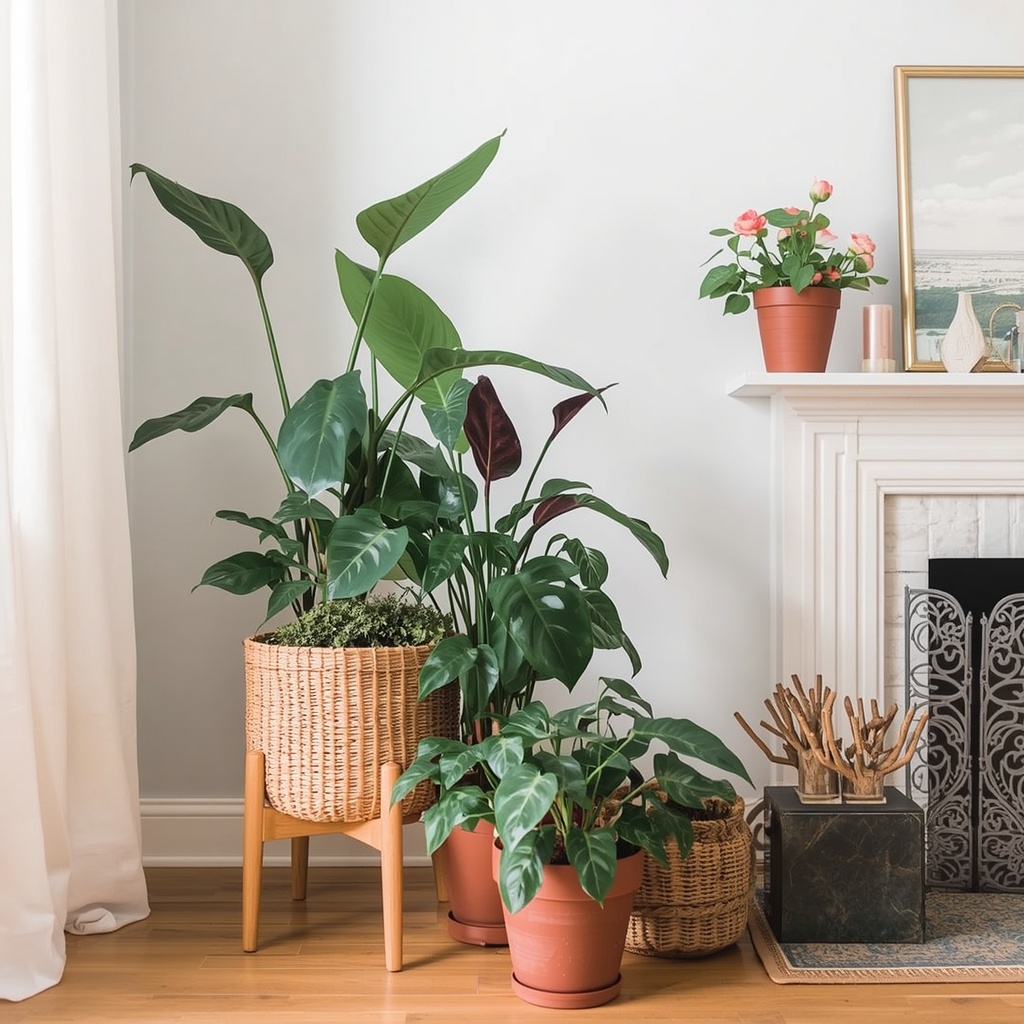
In spring and summer, lean into brighter, more colorful foliage varieties and incorporate flowering plants like peace lilies or anthuriums for a pop of color. In fall and winter, richer, deep-green foliage paired with warm-toned planters (terracotta, rust, bronze) creates a cozy, layered feel that complements seasonal throw blankets and candles.
Rotating your plants’ positions near windows as the sun’s angle shifts throughout the year also keeps them healthier and, as a byproduct, keeps your styled vignettes looking their best in every season.
Common Plant Styling Mistakes to Avoid
Even well-intentioned plant lovers fall into a few predictable traps. Here’s what to watch for:
- Overcrowding a single surface. Give each plant breathing room; a cluttered arrangement reads as chaos, not curation.
- Ignoring pot drainage. A beautiful planter with no drainage hole leads to root rot; use a nursery pot insert instead.
- Placing plants too close to heating vents or drafts. This causes leaf drop and stress, even in otherwise ideal light.
- Choosing all one plant type. Visual monotony sets in fast without variety in height, leaf shape, and texture.
- Forgetting to dust leaves. Dusty foliage looks lifeless and blocks light absorption — a quick wipe-down keeps plants looking glossy and vibrant.
Bringing It All Together
Styling indoor plants for a vibrant living room isn’t about buying every trending variety at once — it’s about intentional layering, scale awareness, and matching plant choices to your actual light and lifestyle. When done well, plants become one of the most cost-effective, high-impact home decor investments you can make, elevating a room’s warmth and personality far beyond what a new throw pillow or accent chair could achieve alone.
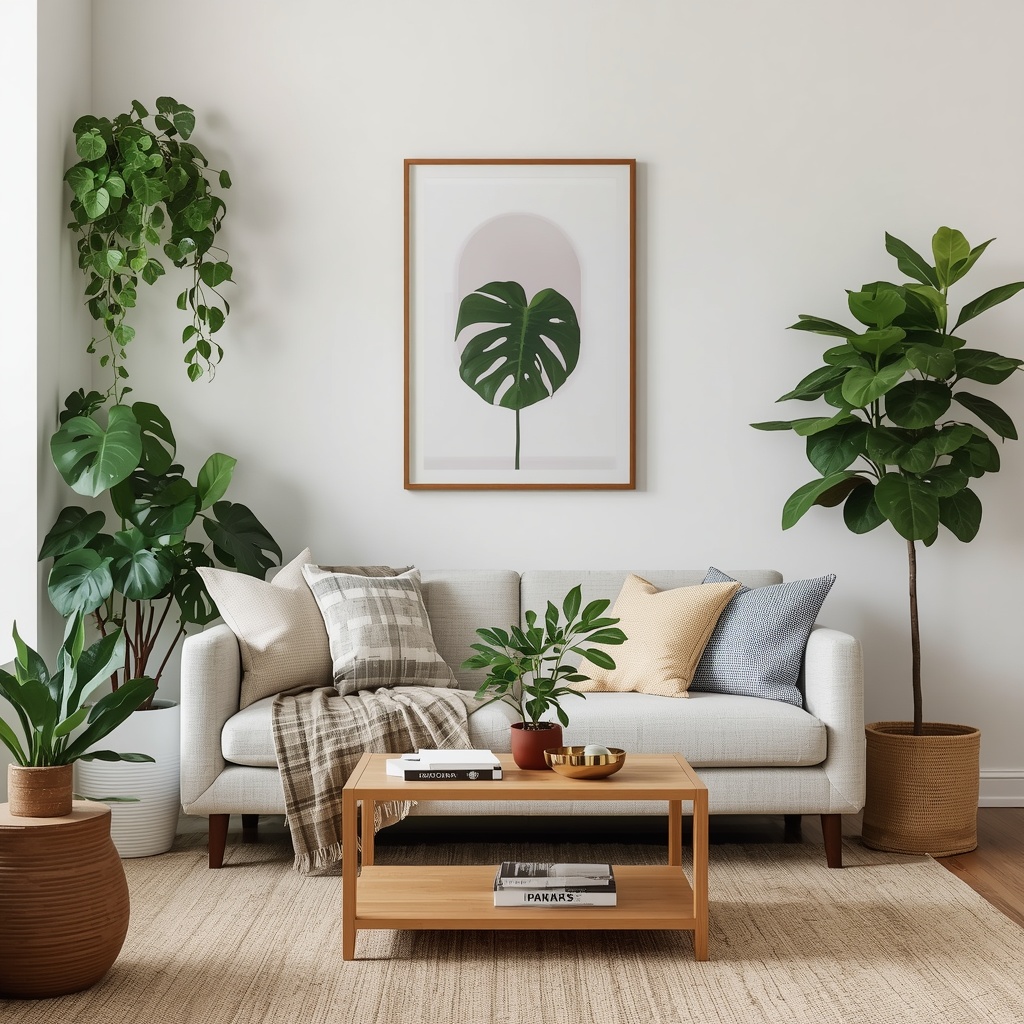
Start small. Choose one focal statement plant, build a vignette around it, and expand from there as your confidence — and your green thumb — grows. Your living room, and honestly your mood every time you walk into it, will thank you.