
There’s a reason dark and moody interiors have taken over Pinterest boards and design magazines alike. A living room bathed in deep charcoal, espresso brown, or forest green doesn’t just look sophisticated — it feels like a retreat. Unlike stark white or beige spaces that can feel sterile, dark living rooms wrap you in warmth, drama, and an unmistakable sense of luxury.
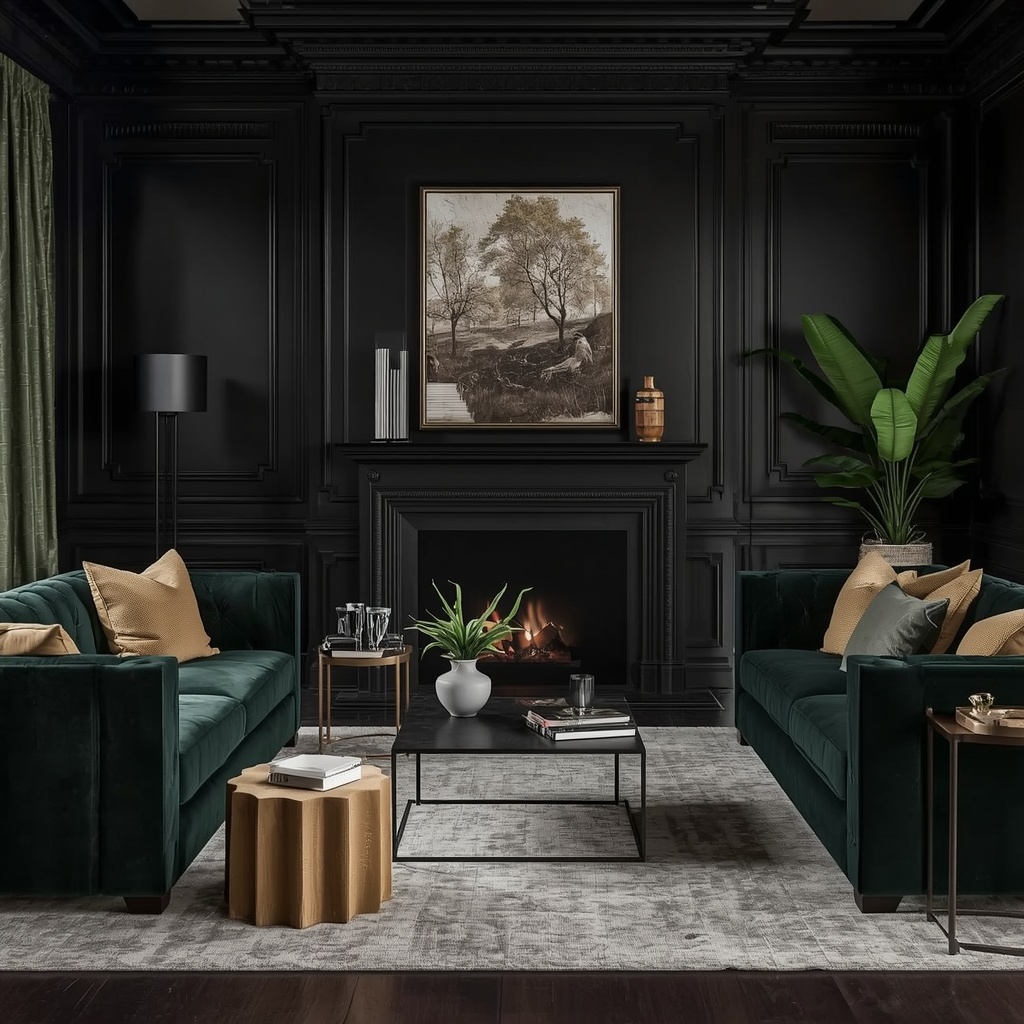
As an interior designer who works almost exclusively on residential decor for US homeowners, I can tell you that “dark and moody” is one of the most requested aesthetics I see today. Done right, it reads as high-end, editorial, and timeless. Done wrong, it can feel like a cave. This guide walks you through exactly how to strike that balance, room by room, choice by choice.
What Makes a Living Room Feel “Dark and Moody” (Without Feeling Gloomy)?
The dark and moody aesthetic isn’t just about slapping black paint on your walls. It’s a layered design philosophy built on deep, saturated color palettes, rich textures, warm metallic accents, and intentional lighting. The goal is contrast and coziness working together, not darkness for darkness’s sake.
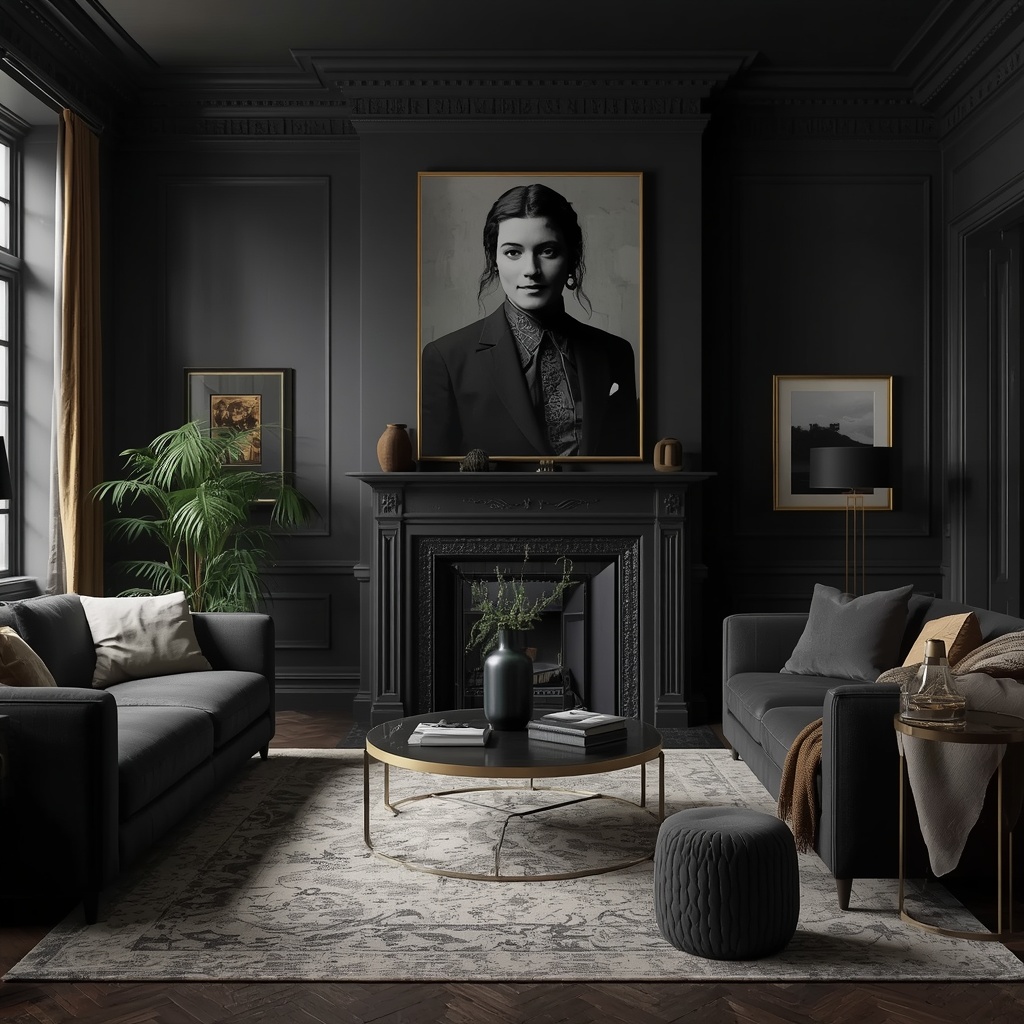
Think of it as the design equivalent of a well-lit speakeasy or a five-star hotel lounge. Every element — from your sofa fabric to your lamp shades — is chosen to create depth rather than flatness. The result is a living room that feels intimate in the evening and surprisingly elegant during the day.
Choosing the Right Dark Paint Colors
Paint color is the foundation of any dark and moody living room, and it’s also where most homeowners get nervous. The trick is choosing shades with the right undertone for your lighting conditions — warm undertones for north-facing rooms, cooler undertones for south-facing rooms that already get plenty of natural light.
| Paint Color | Best For | Popular Shades |
|---|---|---|
| Charcoal Gray | Modern, minimalist spaces | Benjamin Moore Kendall Charcoal |
| Deep Forest Green | Traditional or biophilic interiors | Sherwin-Williams Caviar accents with green trim |
| Espresso Brown | Warm, cabin-inspired living rooms | Behr Dark Chocolate |
| Navy Blue | Coastal or transitional homes | Benjamin Moore Hale Navy |
| Black (soft black, not true black) | Bold, dramatic statement rooms | Farrow & Ball Off-Black |
Pro Tip: Always test paint on a large poster board (not directly on the wall) and view it at different times of day. Dark colors shift dramatically under morning light versus evening lamplight, and what looks moody at 6 PM can look muddy at noon.
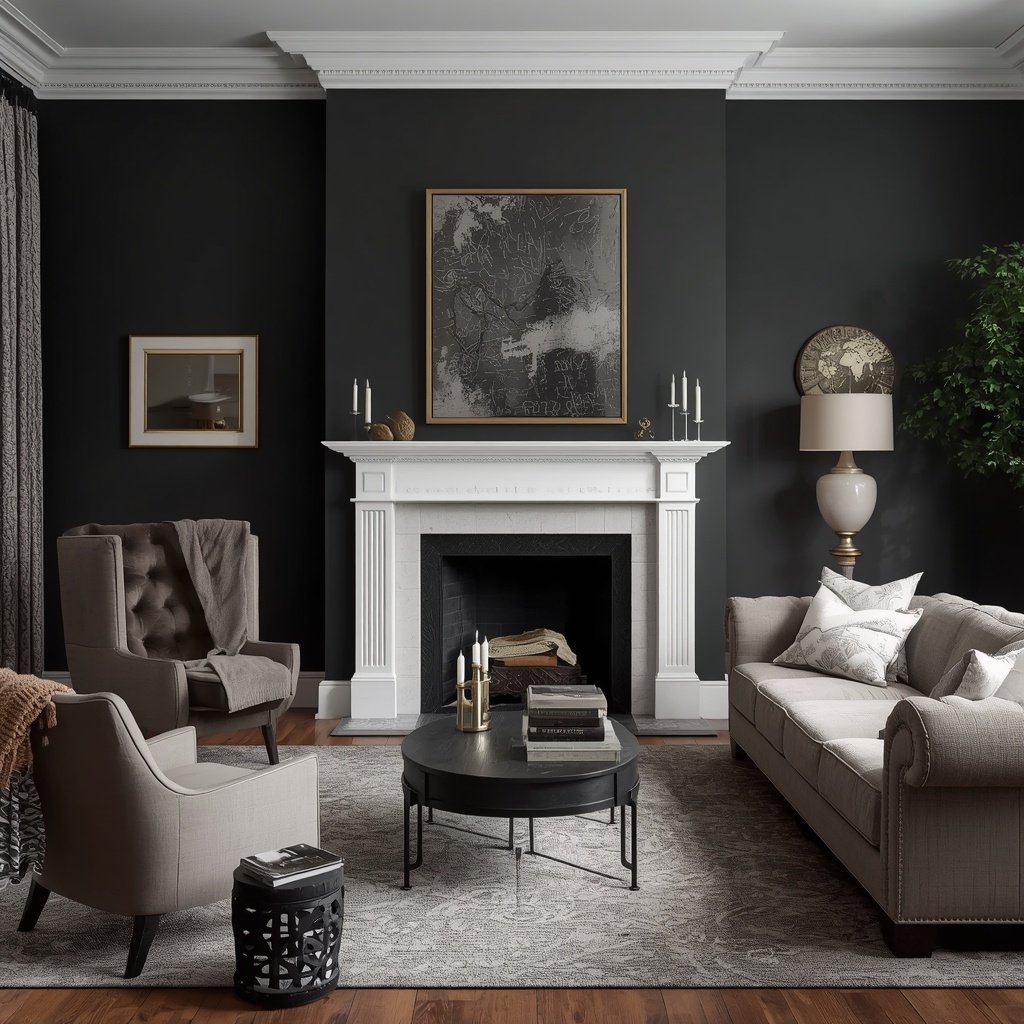
If you’re hesitant to commit to a full room, start with an accent wall behind your sofa or fireplace. This gives you the drama of a dark living room without the commitment of painting every surface.
Layering Textures for Warmth and Depth
Color alone won’t make a dark living room feel luxurious — texture is what separates a cozy, high-end space from a flat, one-dimensional one. When every surface has the same matte finish, dark rooms can feel heavy. Mixing textures creates visual movement even in low light.
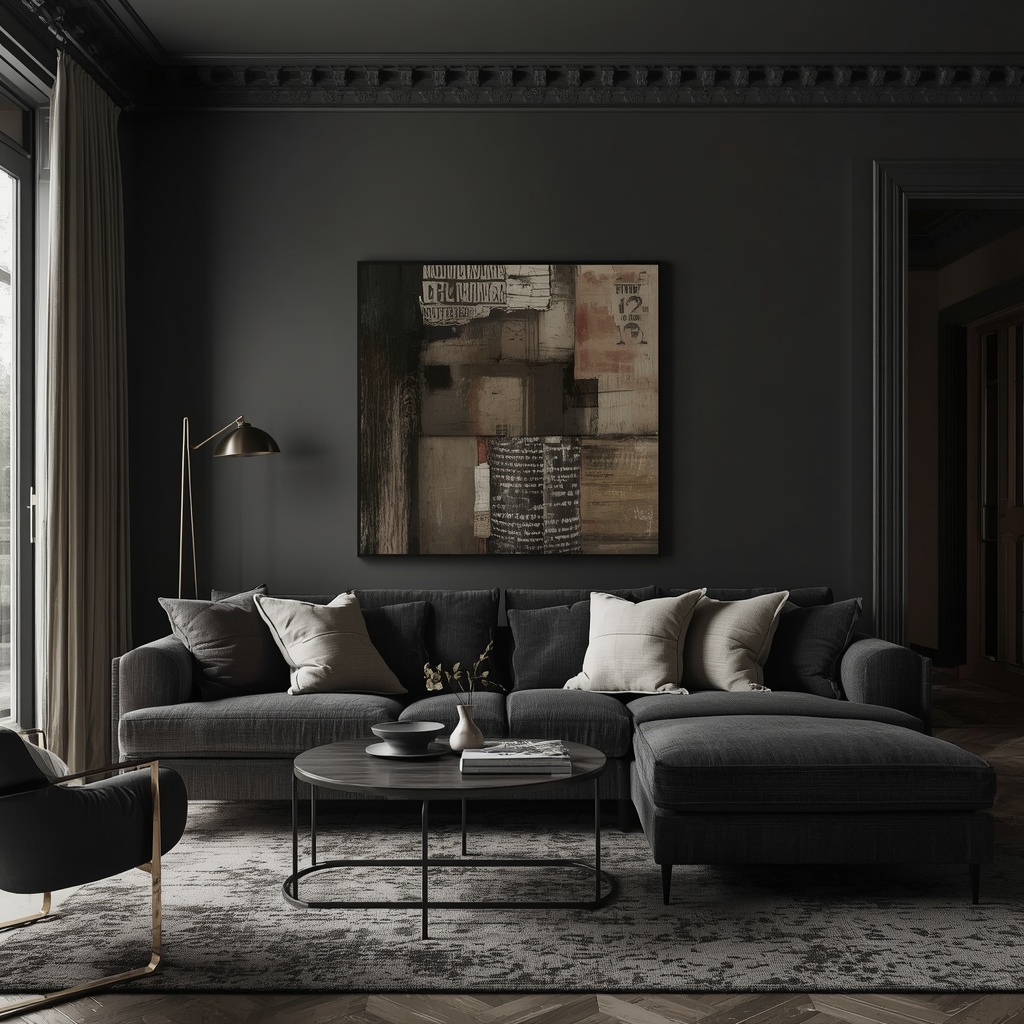
Consider combining:
- Velvet or boucle upholstery for softness and light-catching sheen
- Natural wood tones (walnut, dark oak) for grounding warmth
- Woven jute or wool rugs for tactile contrast underfoot
- Brushed or aged brass hardware for subtle shine
- Linen or heavy cotton drapery to soften hard architectural lines
- Leather accents for a masculine, lived-in feel
“Texture is the soul of a dark room. Without it, deep color just reads as absence. With it, deep color reads as depth.” — a principle every seasoned designer eventually learns the hard way.
Furniture Selection: Anchoring the Room
Your furniture needs to do double duty in a dark and moody living room — it has to be comfortable and it has to create contrast against your wall color. A common mistake is choosing furniture that’s too close in tone to the walls, which flattens the entire room.
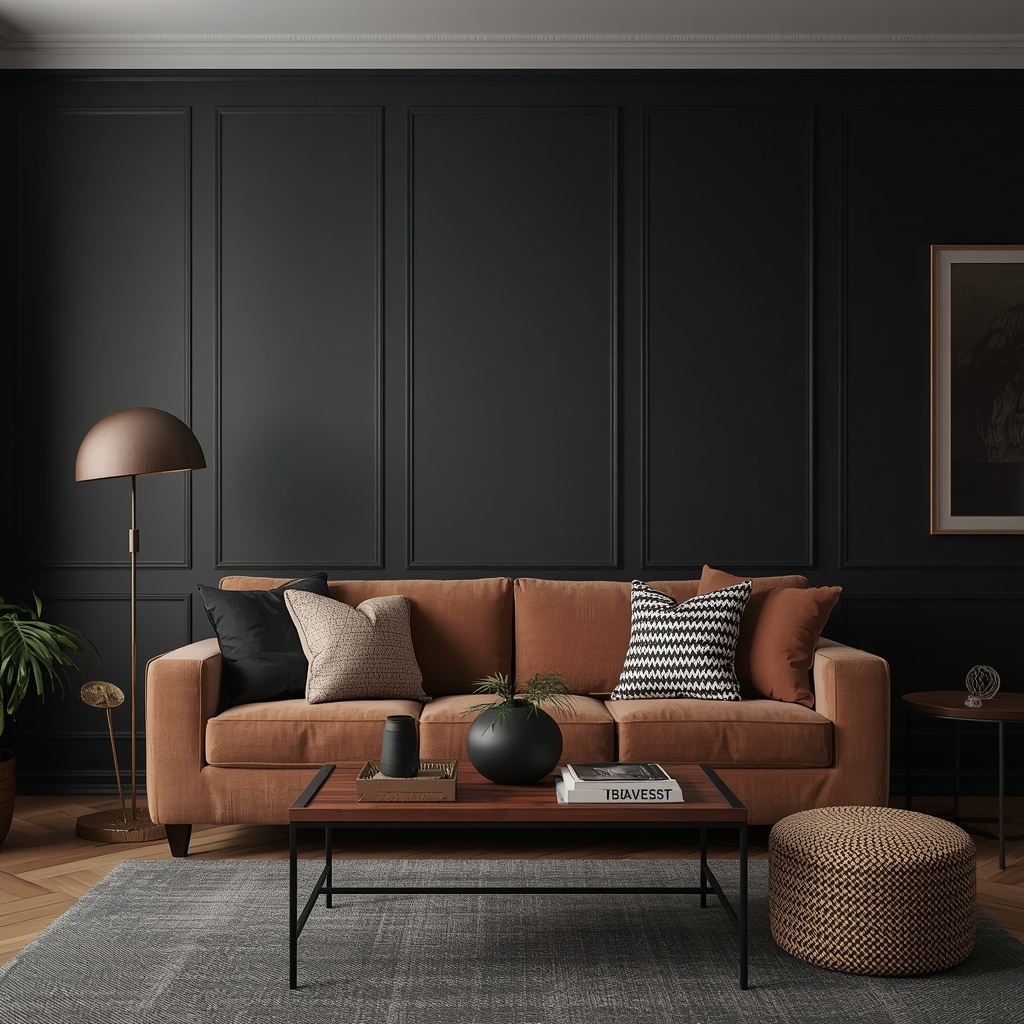
Instead, aim for tonal contrast. If your walls are deep charcoal, a camel-colored leather sofa or a cream boucle sectional will pop beautifully. If you’ve gone with forest green walls, a rust-colored velvet sofa creates a rich, editorial contrast that photographs beautifully and feels even better in person.
Here’s a quick reference for pairing furniture with dark wall colors:
| Wall Color | Complementary Sofa Tones | Avoid |
|---|---|---|
| Charcoal Gray | Cream, camel, blush | Black or dark gray sofa |
| Deep Forest Green | Rust, mustard, cream | Olive or matching green |
| Espresso Brown | Tan, ivory, terracotta | Dark brown leather |
| Navy Blue | White, camel, brass accents | Navy-on-navy |
| Soft Black | Warm gray, cream, oatmeal | True black furniture |
Lighting: The Make-or-Break Element
Lighting is, without question, the single most important factor in whether a dark living room feels luxurious or claustrophobic. Natural light matters, but layered artificial lighting matters even more, especially in the evening when your living room gets the most use.
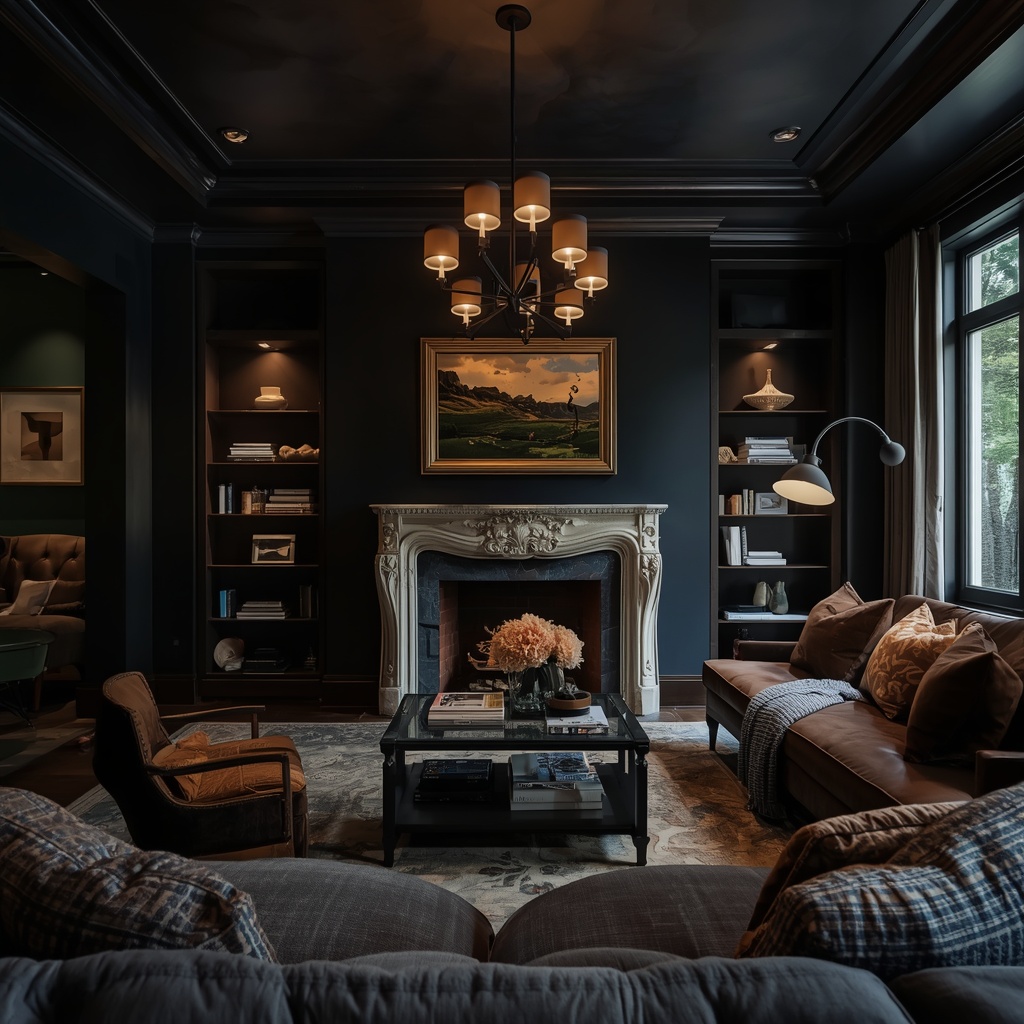
A well-lit dark room relies on multiple light sources at different heights rather than one single overhead fixture. This is called “layered lighting,” and it’s non-negotiable in moody interiors.
Your lighting layers should include:
- Ambient lighting — dimmable overhead fixtures or recessed lighting on a warm color temperature (2700K–3000K)
- Task lighting — reading lamps or floor lamps near seating areas
- Accent lighting — picture lights, LED strips behind shelving, or uplighting on plants
- Statement lighting — a sculptural chandelier or pendant that becomes a focal point
Pro Tip: Never use cool white or daylight bulbs in a dark and moody living room. Stick to warm white (2700K) bulbs exclusively — this single change can make the difference between “elegant lounge” and “poorly lit basement.”
Metallics and Accent Colors That Elevate the Space
Metallic finishes are what push a dark living room from “dark” into “luxurious.” Without a bit of shine, deep colors can feel flat and heavy. With the right metallic accents, the same room feels curated and expensive.
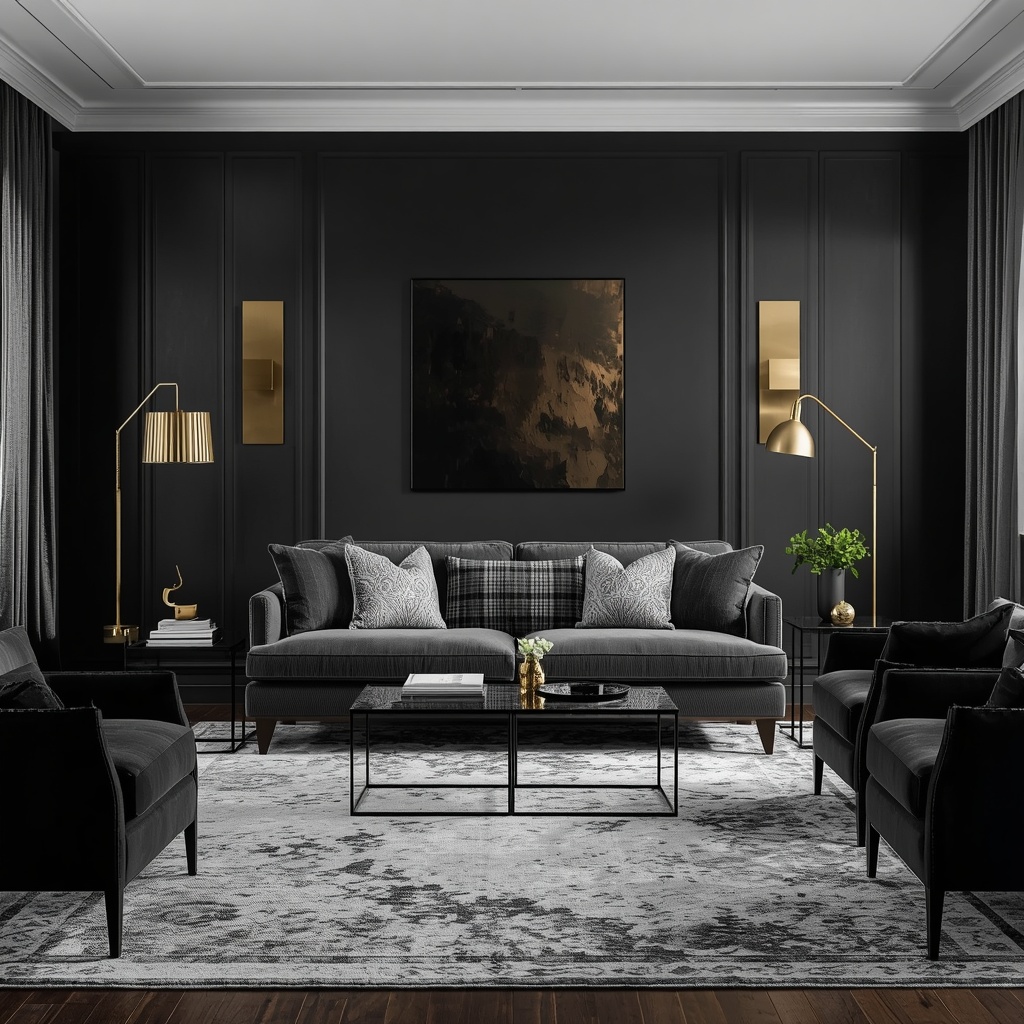
Brass and aged gold tend to read warmer and more traditional, while matte black and brushed nickel lean modern and minimal. Choose one metal family and stick with it throughout the room — mixing too many finishes can create visual clutter, even in an otherwise well-designed space.
Popular accent colors that pair beautifully with dark and moody bases include:
- Warm terracotta and burnt orange
- Deep burgundy or oxblood
- Mustard yellow in small doses
- Dusty rose for softness
- Ivory and cream for necessary breathing room
Art, Accessories, and Finishing Touches
Dark walls act like a gallery backdrop — art and accessories genuinely pop against them in a way they never could on white walls. This is one of the underrated joys of moody design: your favorite pieces finally get the attention they deserve.
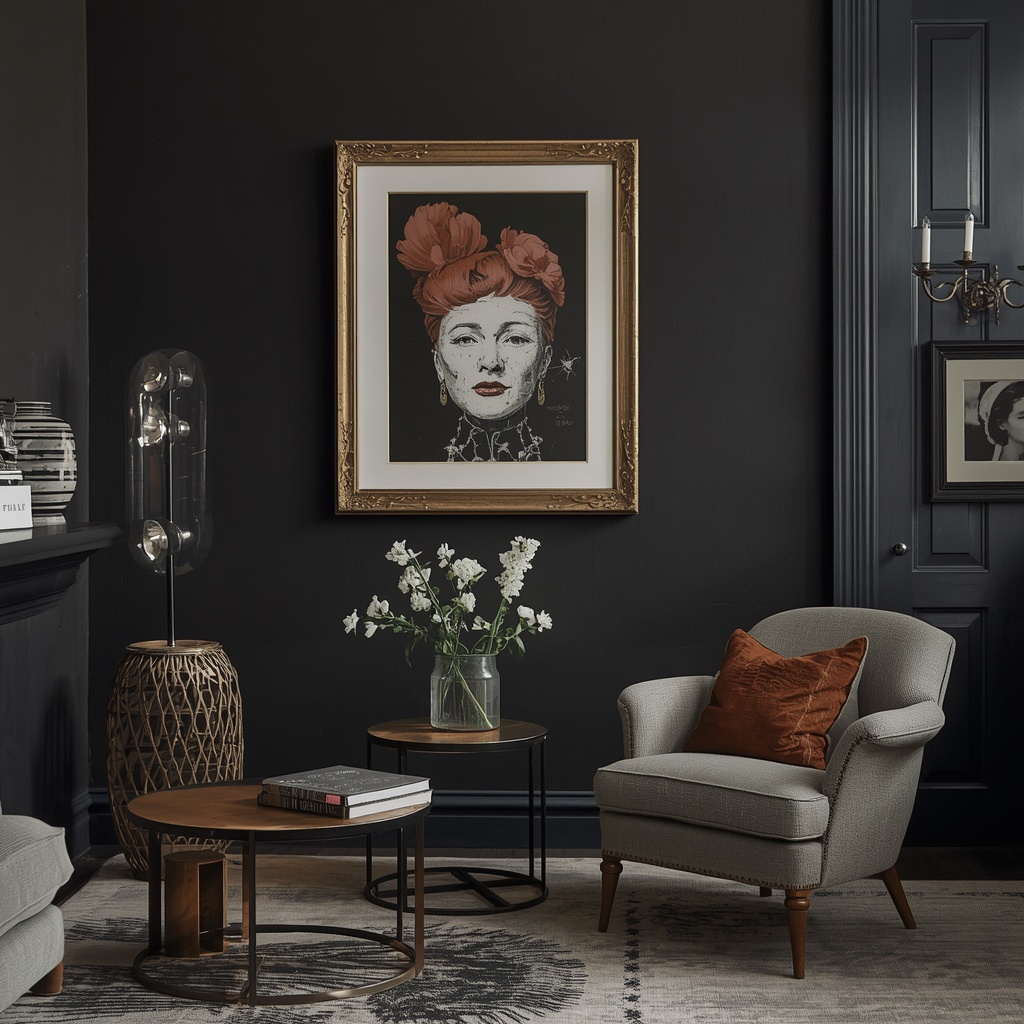
Layer in large-scale art with gold or black frames, oversized mirrors to bounce light around the room, and sculptural objects like ceramic vases or vintage brass candlesticks. Don’t be afraid of negative space either; a dark room filled with too many small accessories can start to feel cluttered and busy rather than curated.
Common Mistakes to Avoid in Dark and Moody Living Rooms
Even experienced homeowners stumble on a few predictable pitfalls when attempting this look. Here are the ones I see most often in client homes:
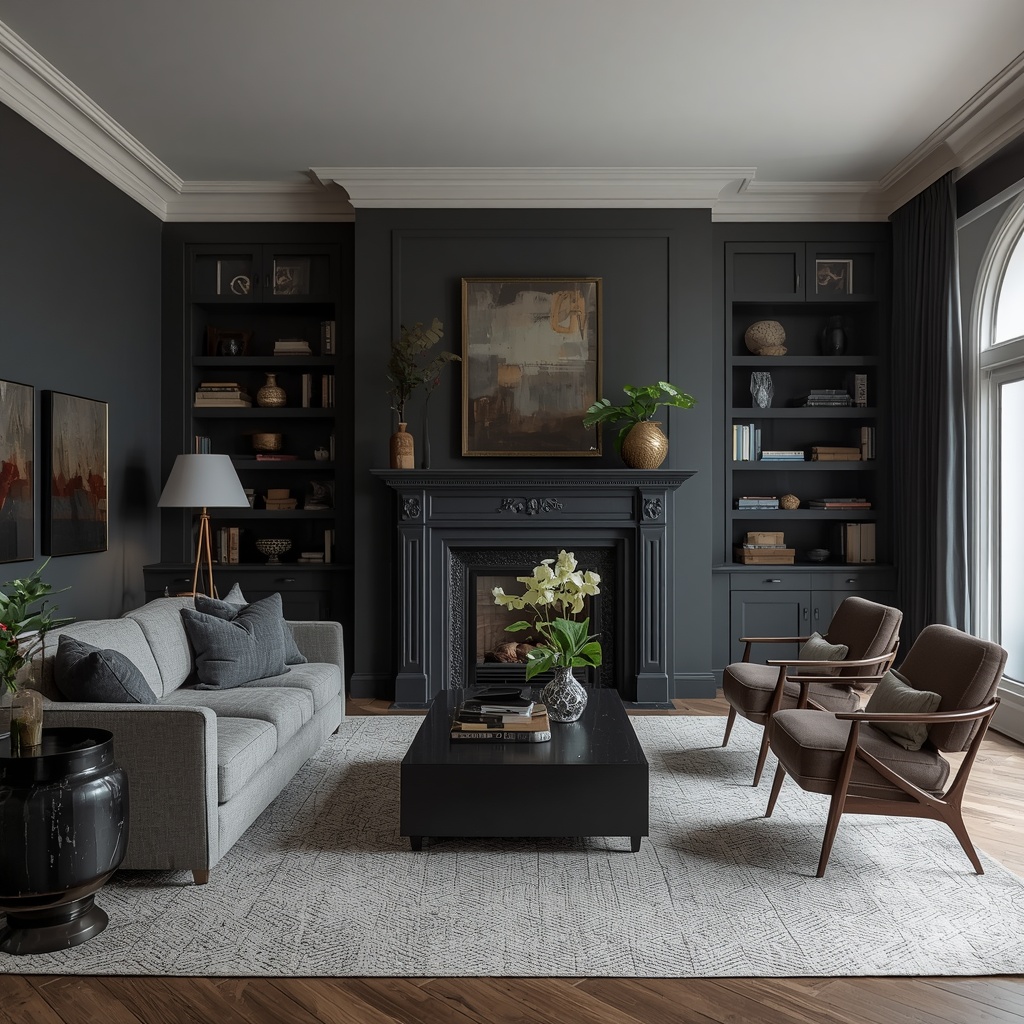
- Skipping the lighting plan – Dark walls with only one overhead light will always feel gloomy
- Choosing the wrong sheen – Flat or matte paint absorbs light poorly; opt for eggshell or satin finishes on walls
- Forgetting contrast – A room that’s dark from floor to ceiling with no light elements feels heavy and closed-in
- Overdoing cool undertones – Cool-toned darks (blue-black, cool gray) can feel cold rather than cozy without warm accents
- Neglecting the ceiling – A stark white ceiling above dark walls can create a jarring, unfinished look; consider a slightly lighter tint of the wall color instead
Room-by-Room Style Inspiration
Not every home has the same architecture or natural light, so here’s how the dark and moody aesthetic can flex across different living room styles.
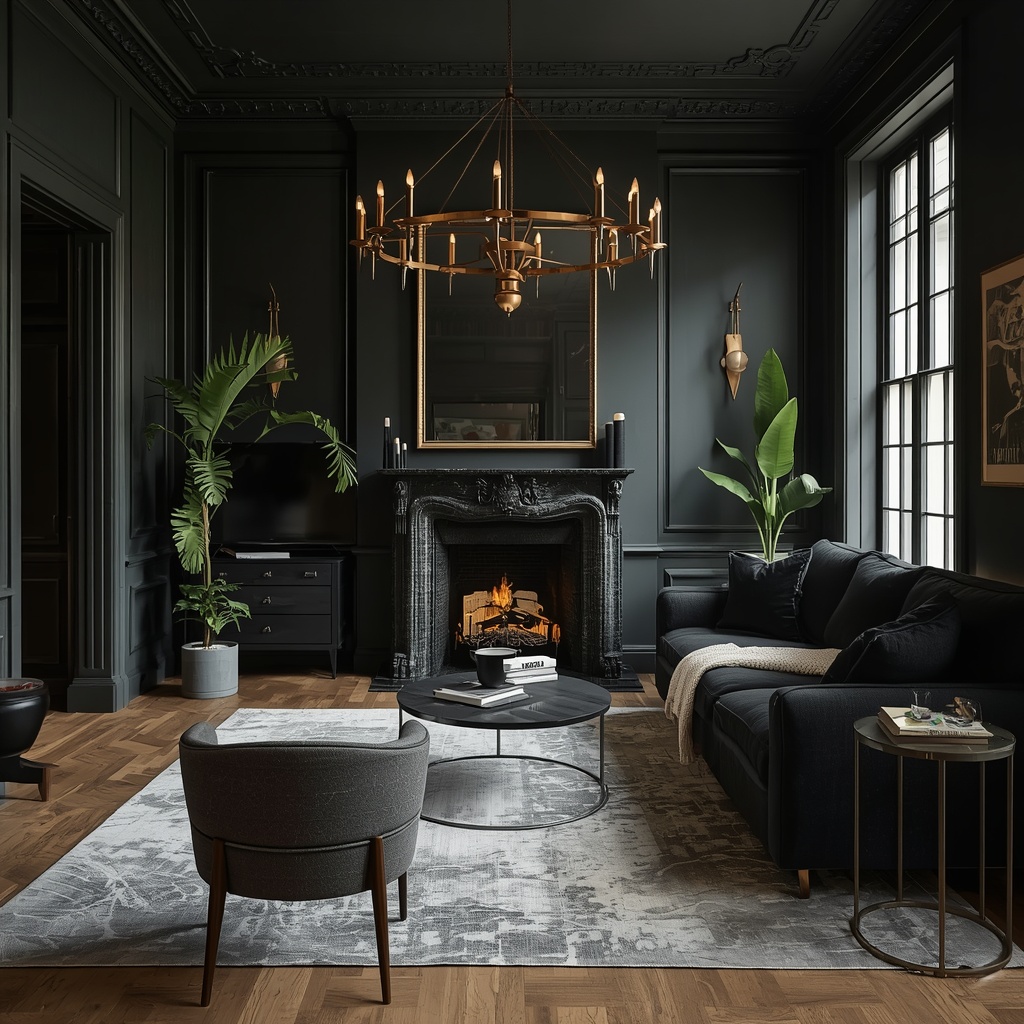
| Living Room Style | Recommended Palette | Signature Element |
|---|---|---|
| Modern Minimalist | Charcoal + brass + cream | Sculptural floor lamp |
| Traditional/Classic | Espresso + burgundy + gold | Tufted leather chesterfield |
| Coastal Moody | Navy + white + natural wood | Woven jute rug |
| Industrial | Soft black + leather + exposed wood | Vintage Edison bulb fixtures |
| Bohemian Dark Academia | Forest green + rust + brass | Layered vintage rugs |
Frequently Asked Questions
Will a dark living room make my space feel smaller?
Not necessarily. Dark walls can actually make ceilings feel higher and rooms feel more intentional when paired with proper lighting and reflective surfaces like mirrors and glass. Small rooms often benefit from full-color immersion (walls, trim, and ceiling in the same shade) because it removes visual breaks that emphasize a room’s size.
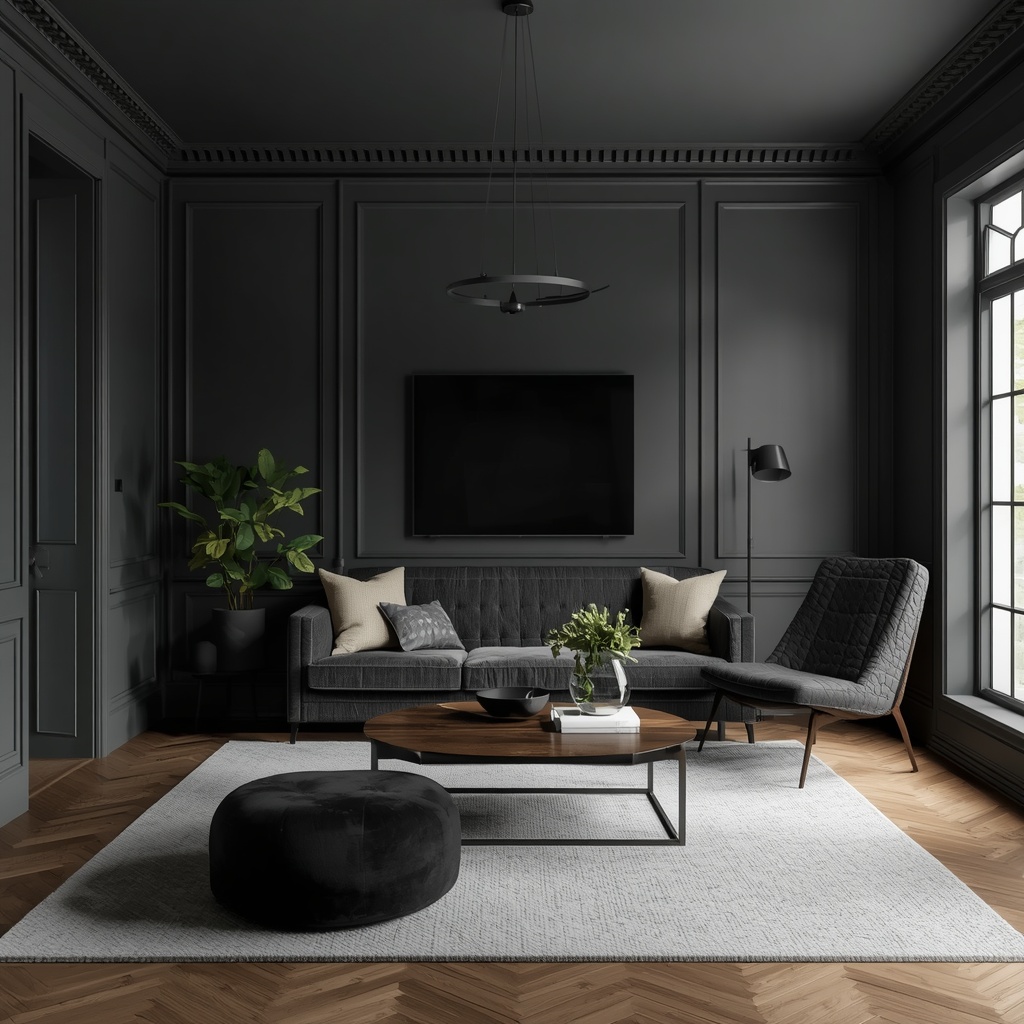
What’s the best paint finish for a dark and moody living room?
Eggshell or satin finishes are ideal because they reflect a small amount of light without showing every imperfection the way high-gloss paint does. Flat finishes tend to absorb light and can make a room feel duller than intended.
Do dark living rooms work well with natural light?
Yes, and often surprisingly well. Rooms with abundant natural light can handle deeper, cooler colors because sunlight naturally balances the intensity. Rooms with less natural light do better with warmer dark tones like espresso or deep burgundy.
Is this trend just for large or luxury homes?
Not at all. Some of the most striking dark and moody transformations happen in small apartments and rental-friendly spaces using peel-and-stick wallpaper, removable trim, and strategic lighting rather than permanent paint.
Final Thoughts
A dark and moody living room isn’t about eliminating light — it’s about controlling it, layering it, and using color to create an atmosphere that feels indulgent rather than ordinary. With the right paint undertones, tactile textures, warm lighting, and metallic accents, you can create a space that feels like it belongs in a boutique hotel rather than a big-box showroom.
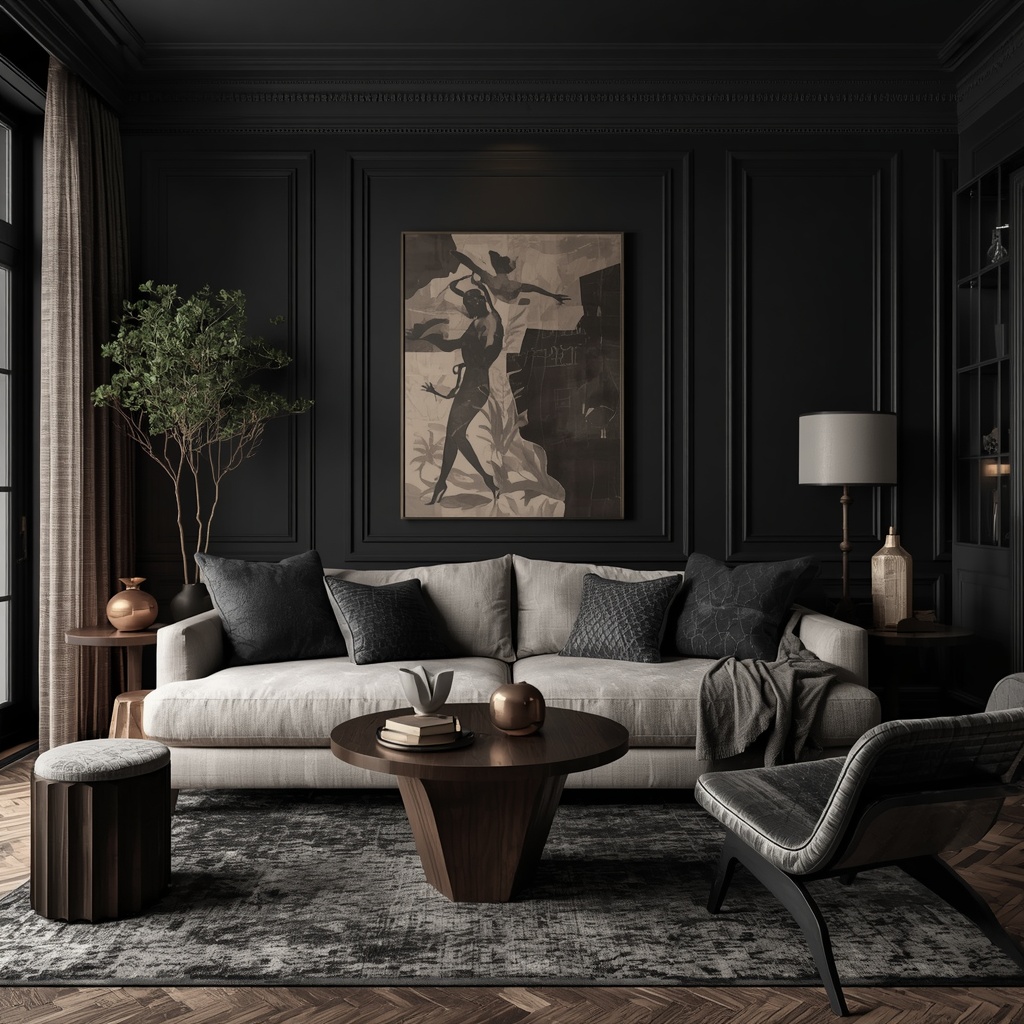
Start small if you need to — one accent wall, one velvet throw pillow, one brass floor lamp — and build the layers over time. Luxury design isn’t about doing everything at once; it’s about every choice feeling deliberate.
Want this turned into a downloadable Word document or formatted for a specific blog platform (like a WordPress-ready HTML file with meta description and alt text suggestions)? I can put it into a file for you.