
There’s a particular kind of magic in a home that doesn’t try too hard. No overflowing bins of tinsel, no clashing color schemes, no mantel so crowded you can’t find the fireplace underneath. Just a handful of beautiful, intentional touches that make a house feel like Christmas without making it feel like a craft store exploded.
As an interior designer who has decorated hundreds of American homes for the holidays, I can tell you the biggest shift I’ve seen in the last few years isn’t about having less — it’s about having better. Minimalist Christmas decor isn’t about stripping the season of its warmth. It’s about editing ruthlessly so that every ornament, candle, and garland earns its place. This guide will walk you through exactly how to create that elegant, uncluttered, unmistakably festive look in your own home.
What Minimalist Christmas Decor Really Means
Minimalism gets a bad reputation around the holidays. People assume it means bare walls, a single white light strand, and a tree that looks like it’s still waiting for ornaments. That’s not it at all.

True minimalist holiday decorating is about intentional restraint, not deprivation. It means choosing a cohesive color palette, favoring natural materials over plastic and glitter, and letting negative space do some of the visual work. A single oversized pine wreath tied with velvet ribbon can do more for a front door than five smaller ones combined. The goal is a home that feels curated, calm, and cozy — the kind of space that photographs beautifully and still feels lived-in.
“Simplicity is the ultimate sophistication.” — Leonardo da Vinci
That quote gets used constantly in design circles for a reason. It applies perfectly to holiday styling: a few well-chosen pieces, arranged with care, will always outshine a room stuffed with mismatched decorations.
Why Homeowners Are Embracing Simpler Holiday Styling
Several forces are pushing American homeowners toward a more pared-back approach to holiday decor. First, there’s fatigue with fast-fashion decorations — the cheap, mass-produced ornaments that end up in a landfill by February. Second, open-concept homes and neutral interiors (think warm whites, oak tones, and linen textiles) simply don’t pair well with a riot of red-and-green plastic decor.
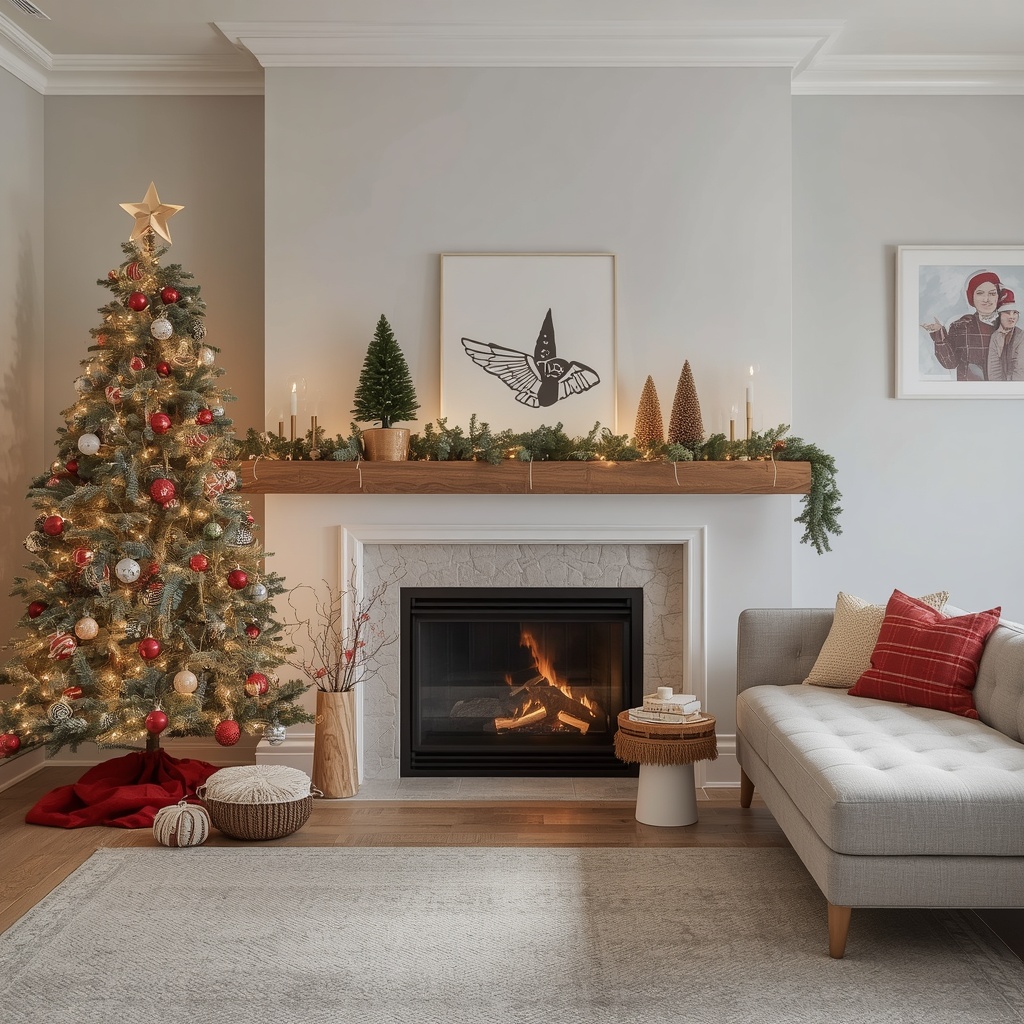
Third, and maybe most importantly, minimalist decorating is genuinely less stressful. It takes less time to put up, less time to take down, and less storage space in your garage or attic the other eleven months of the year. Interior trend forecasters note that many households increasingly favor decor with a story behind it — vintage glass ornaments, hand-tied ribbon, natural greenery — rather than items that just came off a shelf.
Choosing Your Minimalist Color Palette
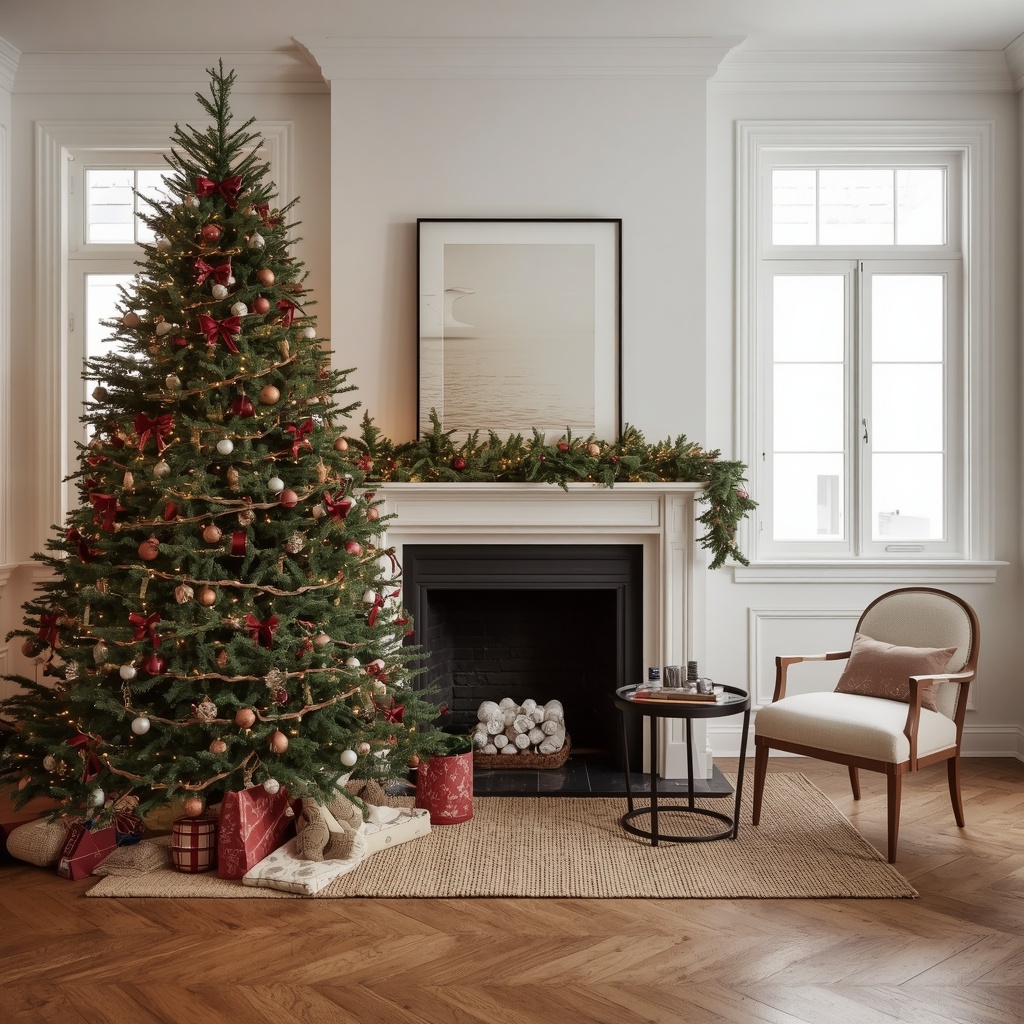
Every elegant holiday scheme starts with restraint at the color level. Pick two or three tones and let them repeat throughout the house — on the tree, the mantel, the table, and the entryway. Consistency is what makes a minimalist space feel intentional rather than sparse.
| Palette Name | Primary Colors | Best For | Mood |
|---|---|---|---|
| Winter White | Cream, white, silver | Modern & Scandinavian homes | Airy, serene |
| Natural Neutral | Beige, wood tone, ivory | Farmhouse & organic modern interiors | Warm, grounded |
| Classic Noir | Black, gold, deep green | Contemporary & moody interiors | Dramatic, elegant |
| Heritage Warm | Hunter green, brass, burgundy | Traditional homes wanting a lighter touch | Cozy, refined |
Pro tip: Before buying a single new decoration, walk through your home and photograph each room you plan to decorate. Overlay those photos with your chosen palette in a moodboard app or even just sticky notes. This ten-minute exercise will save you from impulse-buying ornaments that clash with your existing furniture and walls.
Building an Elegant Minimalist Tree
The Christmas tree is the anchor of any holiday scheme, and it’s also where most minimalist mistakes happen — either the tree is too sparse and looks unfinished, or the restraint disappears entirely once the ornament box comes out.
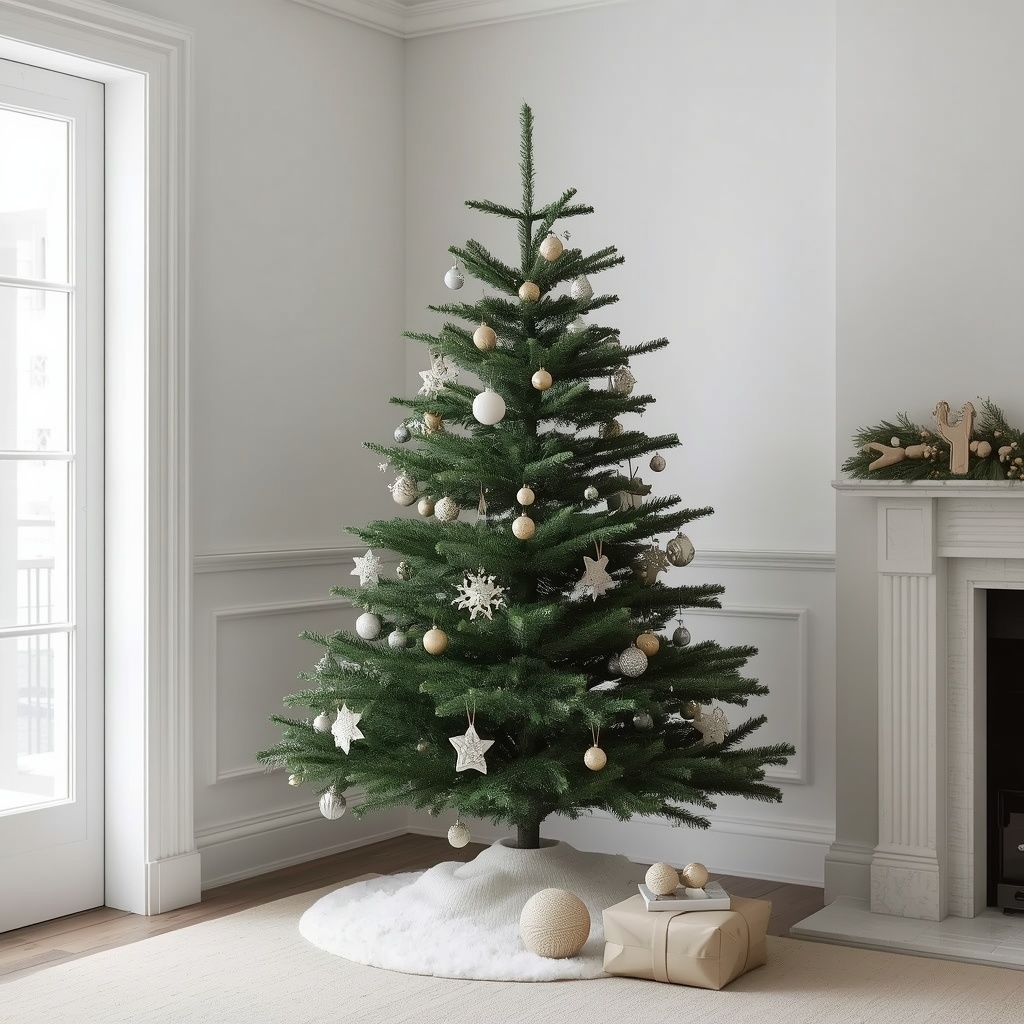
The trick is to think in layers, not quantity. Start with a solid base of warm white lights, add one type of statement ornament in bulk (glass balls in a single tone work beautifully), then finish with just one accent element — dried orange slices, pampas grass picks, or a simple ribbon garland. Skip the tinsel, skip the multicolor lights, and resist the urge to hang every single ornament you own.
- Choose a tree shape with texture — a slightly asymmetrical or “natural” cut reads more elevated than a uniform cone.
- Limit yourself to two ornament finishes: matte and glass, or metallic and matte.
- Use ribbon instead of garland for a cleaner vertical line.
- Add a tree topper that’s sculptural rather than sparkly — a wooden star or simple bow works well.
- Finish with a neutral tree skirt or a simple wrapped base in burlap or linen.
Here’s a quick before-and-after mindset shift that helps clients the most:
- Instead of covering the whole tree evenly, cluster ornaments in visual “groups” for a more organic look.
- Instead of mixing five ornament colors, commit to one dominant tone with a single metallic accent.
- Instead of hanging every strand of tinsel you own, let the branches themselves be the texture.
- Instead of a plastic tree skirt, use a woven throw or wrapped fabric for warmth.
Mantel and Tablescape Styling
Your mantel and dining table are the two areas guests notice most, which makes them ideal candidates for minimalist styling done well. Both spaces benefit from the same rule: odd-numbered groupings, varied heights, and a single unifying material like greenery or candlelight.
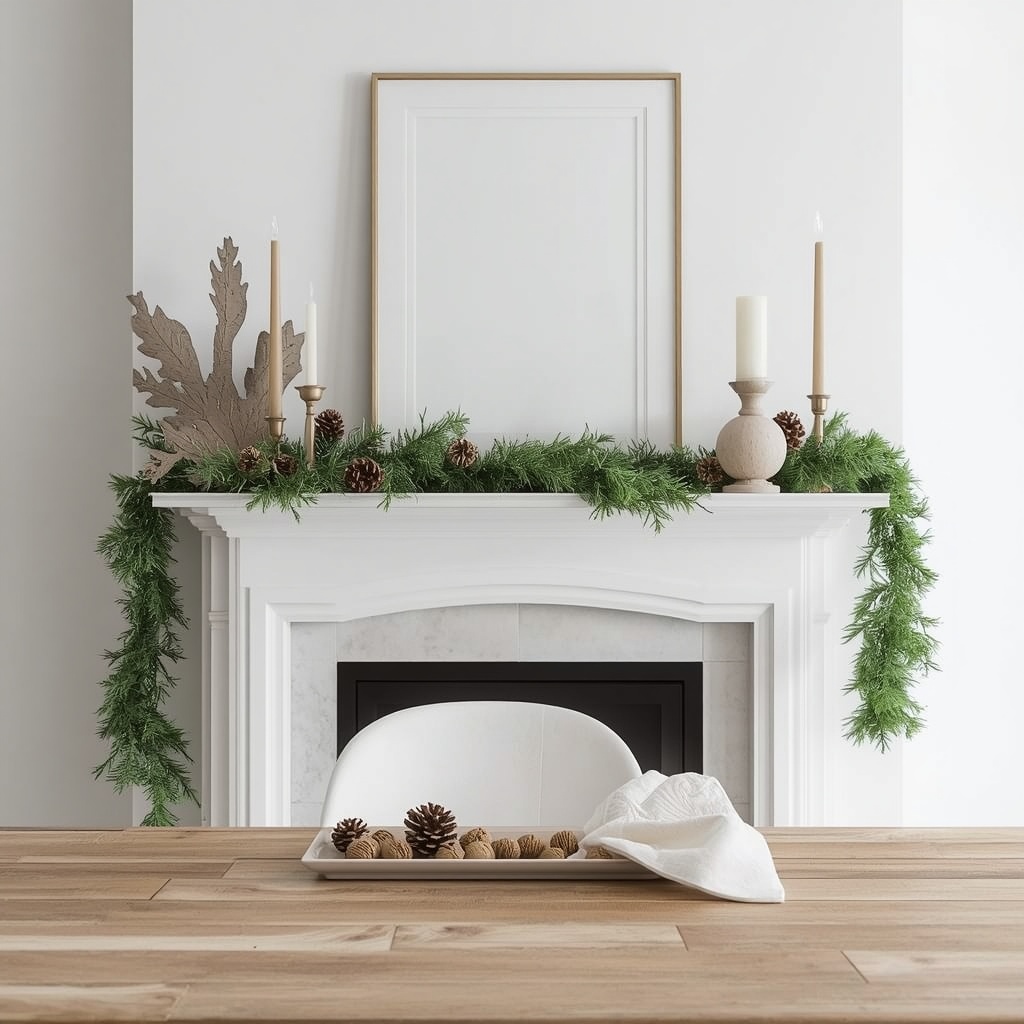
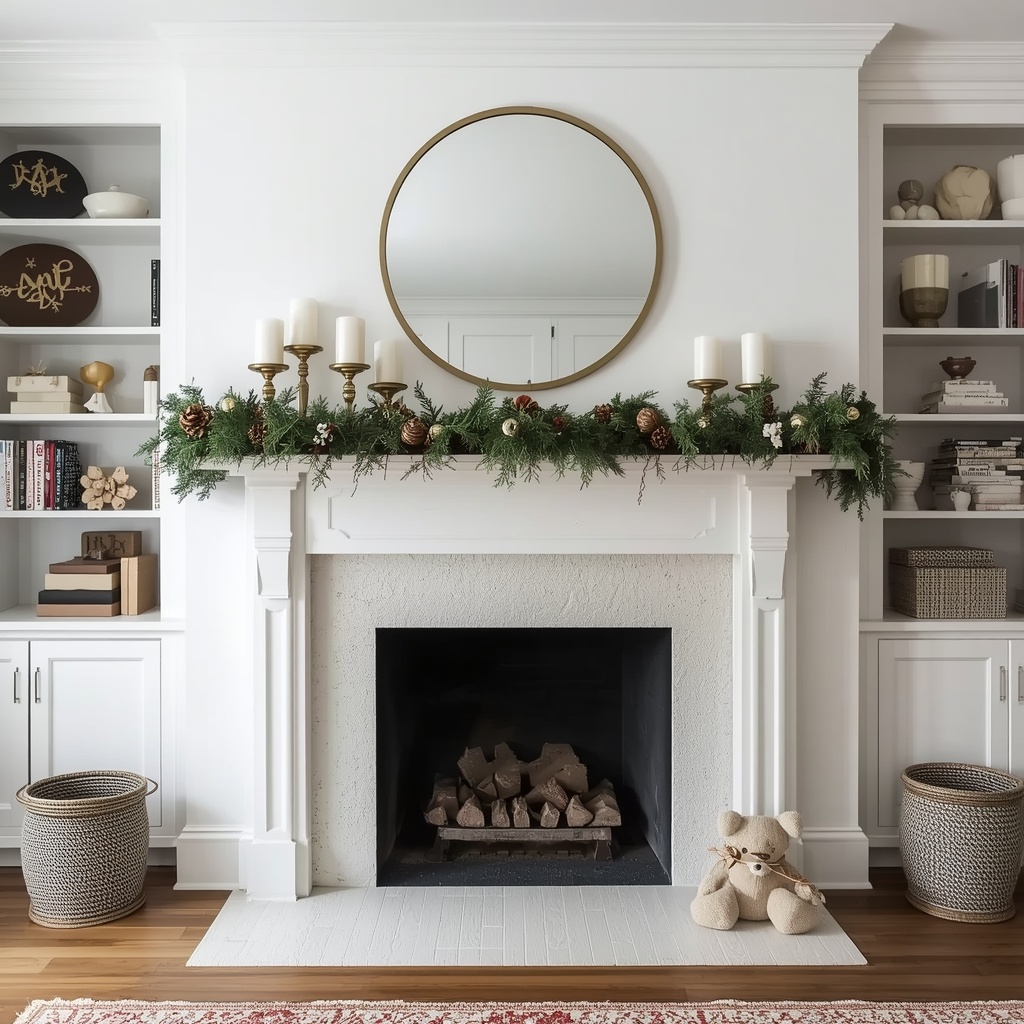
For the mantel, start with a simple, well-shaped garland — real or high-quality faux — draped loosely rather than perfectly symmetrical. Add three to five candle holders of varying heights, a handful of pinecones or dried citrus, and one focal piece such as a single oversized stocking or a framed piece of art. Resist the urge to fill every inch of space; the empty areas are what make the styled areas feel intentional.
For the table, a simple runner in linen or velvet paired with unscented taper candles and a low, loose arrangement of eucalyptus or fir branches will outperform an elaborate centerpiece every time. Add name cards in simple kraft paper or cream cardstock for a personal touch that doesn’t compete visually with the rest of the table.
Pro tip: Use candles of three different heights but the same color and material for a cohesive, editorial look. Mismatched candle colors are one of the fastest ways a tablescape starts to feel cluttered rather than curated.
Entryway and Front Door Decor
First impressions matter, and your front door sets the tone for everything inside. A minimalist entryway doesn’t mean skipping decoration — it means choosing one or two statement pieces instead of five smaller ones.
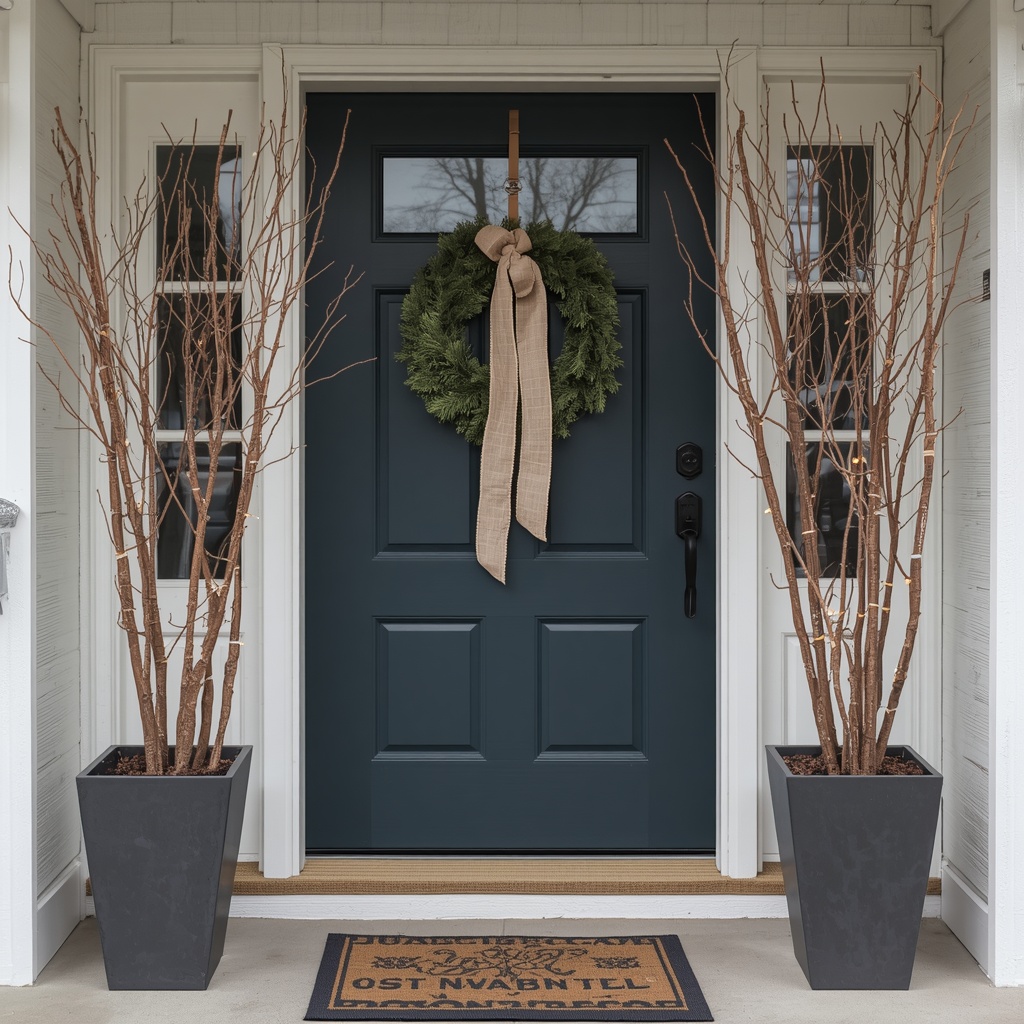
A single oversized wreath in fresh greenery, tied with a wide ribbon in your chosen palette, will always look more elegant than a door covered in multiple small decorations. If you have porch space, flank the door with two matching planters filled with birch branches, pine boughs, or even simple string lights wrapped around bare branches for texture. Keep pathway lighting simple and warm-toned rather than colorful or blinking.
Room-by-Room Quick Reference
| Room | Minimalist Focal Point | Materials to Favor | Avoid |
|---|---|---|---|
| Living Room | Tree + one accent (mantel or shelf styling) | Wood, glass, natural greenery | Inflatables, multicolor lights |
| Dining Room | Table runner + candles | Linen, brass, wax | Plastic centerpieces |
| Entryway | Statement wreath | Fresh or faux pine, velvet ribbon | Overcrowded door hangings |
| Kitchen | Simple garland on open shelving | Dried citrus, cinnamon sticks | Clutter on countertops |
| Bedroom | Single string of warm lights | Linen stocking, wood ornaments | Bright novelty decor |
Common Minimalist Decorating Mistakes to Avoid
Even design-savvy homeowners can slip into a few predictable traps when trying to keep their holiday decor simple and elegant. Here are the ones I see most often with clients:
- Buying decorations piecemeal without a defined palette, resulting in visual noise
- Mixing warm and cool-toned lights in the same room
- Over-relying on artificial greenery that reads plastic instead of natural
- Leaving too much bare space without a single grounding element
- Skipping texture entirely, which can make a room feel cold rather than calm
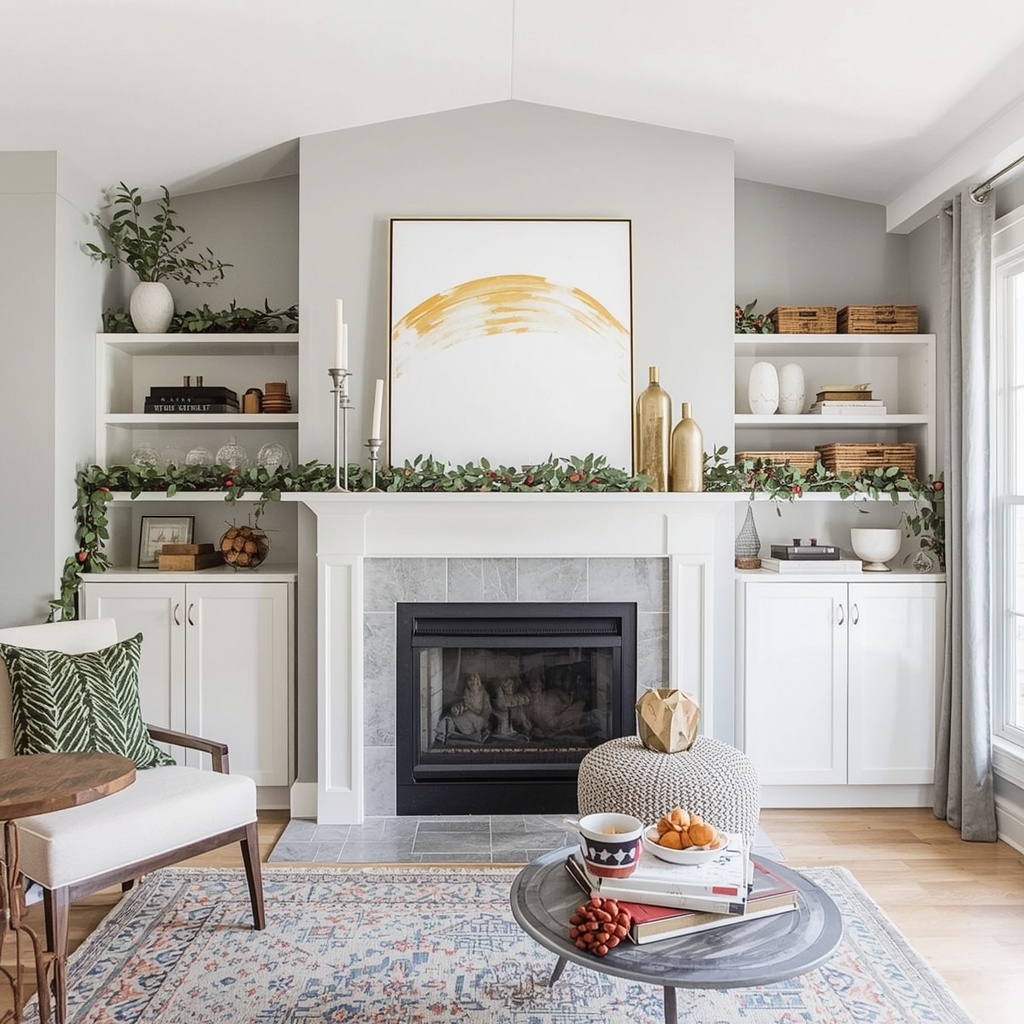
Minimalism only works when it still feels warm. If a room looks empty rather than edited, it has gone too far in the wrong direction. The goal is always restraint with warmth, not restraint for its own sake.
Sustainable and Budget-Friendly Minimalist Ideas
One underrated benefit of minimalist holiday decorating is how naturally it lends itself to sustainability and budget-consciousness. Because you’re buying fewer, higher-quality pieces, you can afford to invest in items that last for years rather than replacing cheap decorations annually.

Dried and preserved botanicals — eucalyptus, pampas grass, dried oranges — can often be reused season after season with proper storage. Natural materials like pinecones and cinnamon sticks can be sourced locally or even foraged. And because a minimalist palette relies on a few signature pieces rather than volume, it’s easier to splurge on one or two beautiful items (a hand-blown glass ornament set, a quality wool throw) instead of dozens of disposable ones.
Bringing It All Together
Elegant, minimalist holiday decorating isn’t about doing less for the sake of it — it’s about being deliberate. Choose a palette. Favor natural materials. Let empty space breathe. Repeat your chosen tones from the front door to the dining table so the whole home feels like one cohesive story rather than a collection of unrelated decorations.
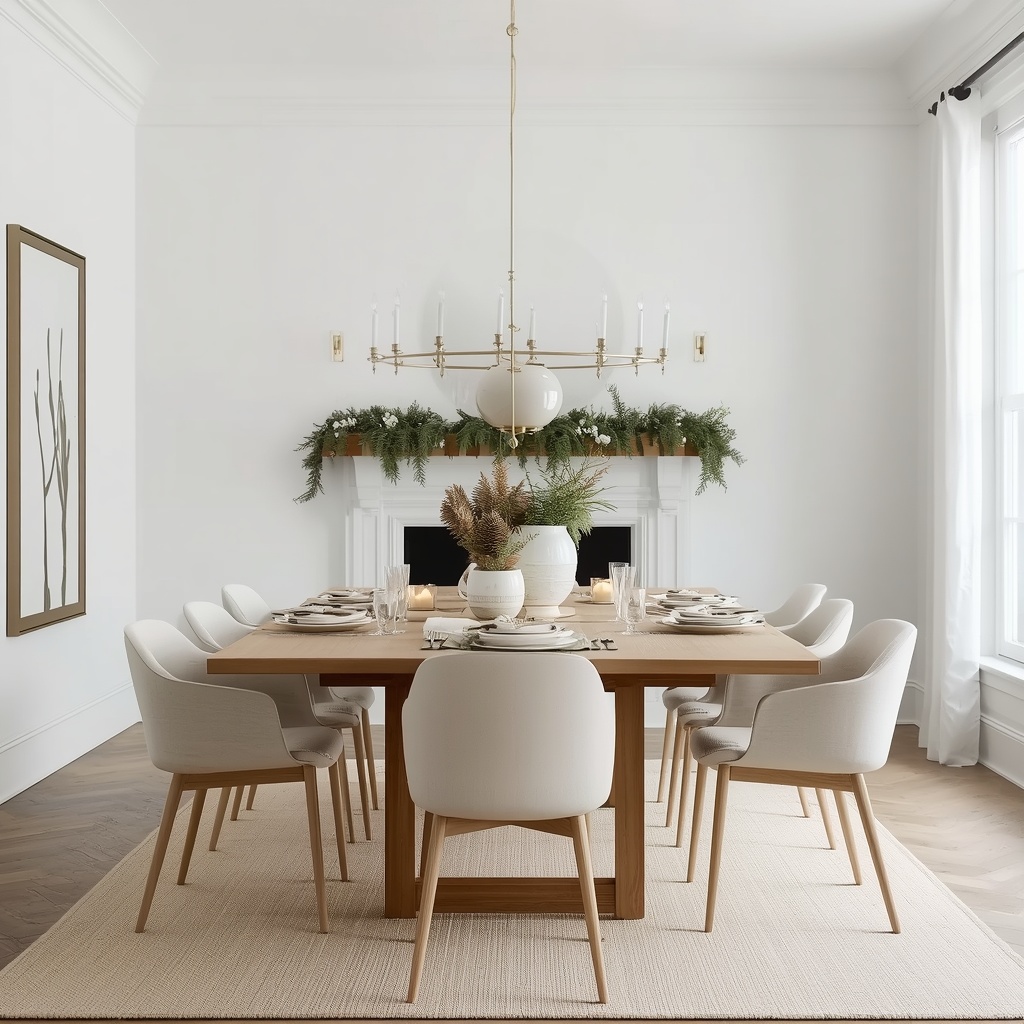
The homes that feel most magical during the holidays aren’t always the most decorated ones. They’re the ones where every piece was chosen on purpose, and where the calm, uncluttered backdrop lets the warmth of the season — the candlelight, the greenery, the people gathered around the table — actually take center stage.