
There’s a reason Boho chic has held its ground as one of the most beloved living room styles in American homes for over a decade. It’s warm. It’s personal. It doesn’t ask you to be perfect — it asks you to be interesting. As an interior designer who works with clients across the country, I can tell you that no other aesthetic gives people permission to mix, layer, and collect quite like bohemian decor does.
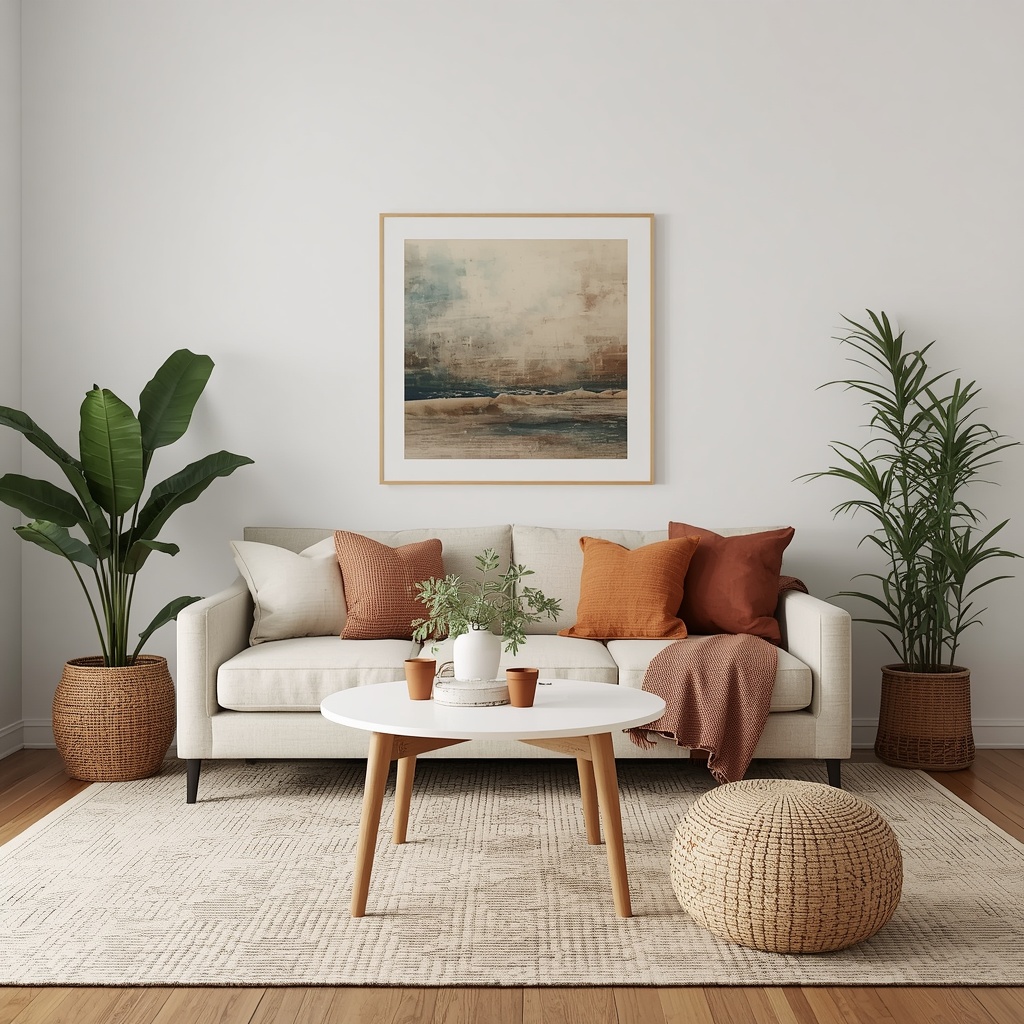
If your living room feels flat, overly matched, or like a showroom nobody actually lives in, boho chic might be exactly the reset you need. This guide walks you through the real, practical elements that make this style work — not just the Pinterest-perfect version, but the one you can actually build in your own home.
What Is Boho Chic, Really?
Boho chic (short for “bohemian chic”) is a design style rooted in free-spirited, artistic living. It borrows from bohemian communities of 19th-century Europe, blends in global travel influences, and layers on a distinctly modern, curated sensibility. Think handwoven textiles, natural materials, vintage finds, and an unapologetic mix of patterns and eras.
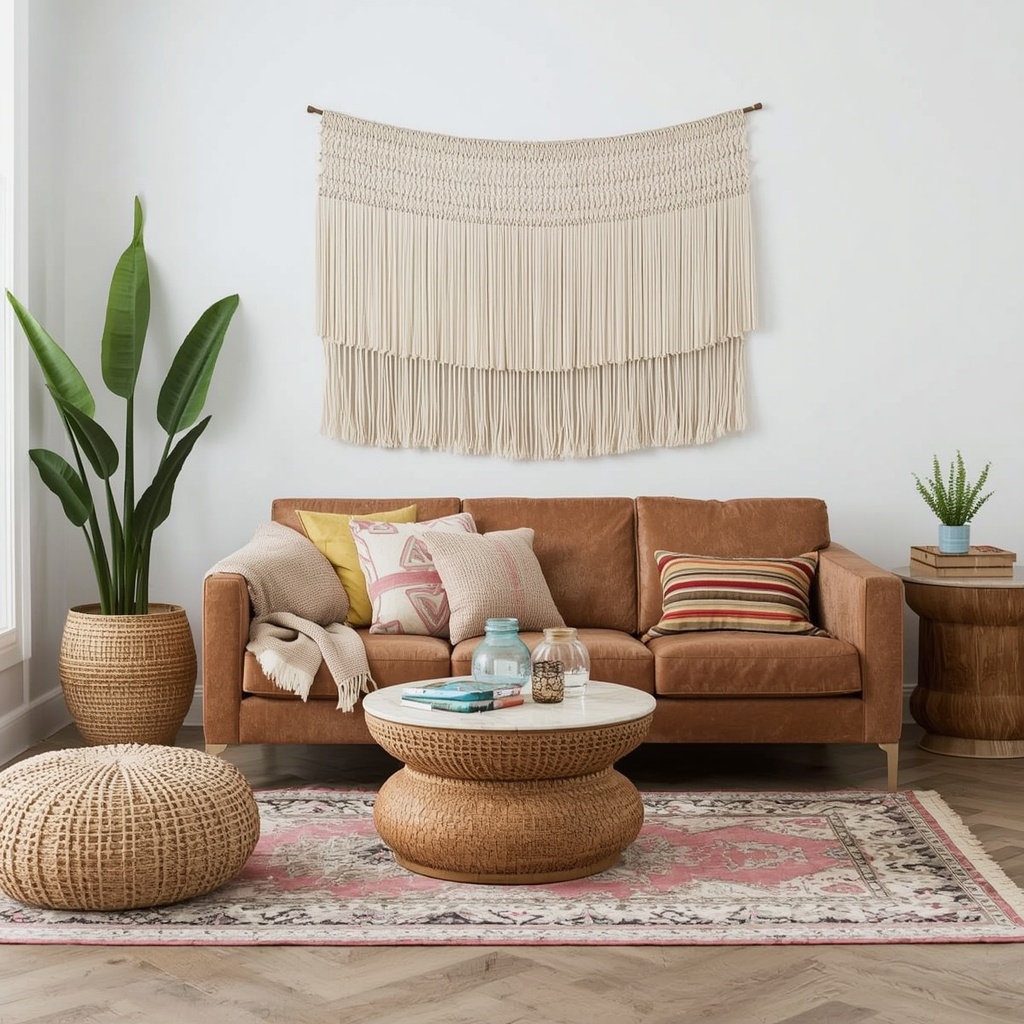
What separates true boho chic from cluttered “maximalism” is intention. Every piece feels collected rather than purchased in a matching set. There’s a rhythm to the chaos — warm neutral tones anchor the room while pops of color, texture, and pattern keep the eye moving. It’s relaxed but never careless.
Why Boho Chic Works So Well in Modern American Homes
American homeowners have gravitated toward boho chic because it solves a real problem: most people don’t want their living room to look like a catalog page. They want it to feel like them.
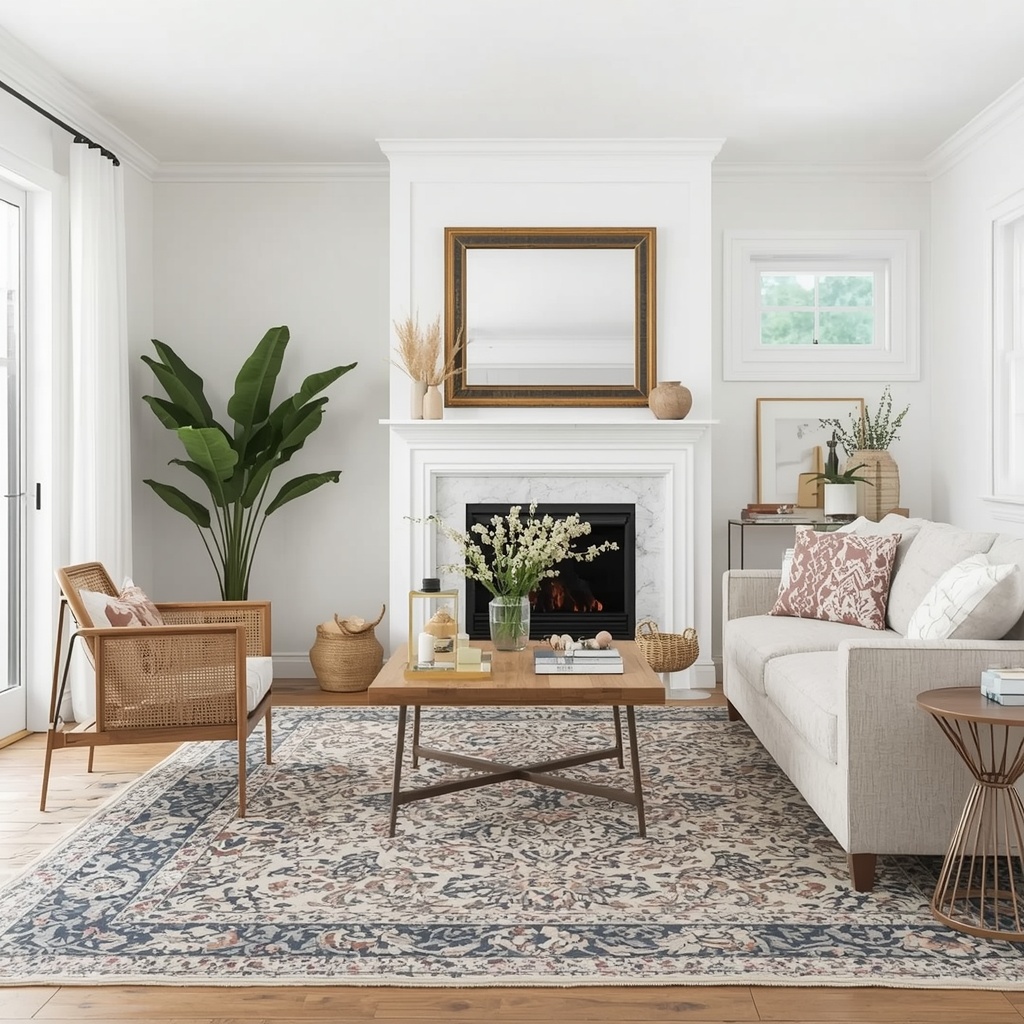
This style also plays exceptionally well with open-concept layouts, rental-friendly decorating, and mixed budgets. You don’t need designer furniture to make it work — a thrifted rattan chair sits just as comfortably next to a new sofa as it does in a $10,000 renovation. That flexibility is part of the appeal, especially for renters and first-time homeowners who want warmth without commitment.
“Bohemian style isn’t about following a formula — it’s about telling a story with objects you love.” — a philosophy nearly every seasoned designer eventually adopts, whether they started out minimalist or maximalist.
The Core Elements of a Boho Chic Living Room
Before you start pulling inspiration photos, it helps to understand the building blocks. Here’s a quick breakdown of the essential elements and what they bring to the room:
| Element | Purpose | Popular Materials/Examples |
|---|---|---|
| Warm neutral base | Grounds the space | Cream, sand, terracotta, rust walls or sofas |
| Natural textures | Adds tactile warmth | Rattan, jute, wood, wicker, linen |
| Layered textiles | Creates coziness | Kilim rugs, macrame, woven throws |
| Global accents | Adds personality | Moroccan poufs, ikat prints, batik pillows |
| Greenery | Brings life & softness | Fiddle leaf fig, pothos, hanging plants |
| Vintage or thrifted pieces | Adds authenticity | Antique mirrors, brass accents, worn leather |
| Ambient lighting | Sets the mood | Rattan pendants, string lights, floor lanterns |
Once you see these categories laid out, decorating becomes less overwhelming — you’re simply making sure each one is represented somewhere in the room.
Choosing Your Boho Color Palette
Color is where most boho living rooms either shine or fall apart. The trick is layering warmth without letting the room feel chaotic.
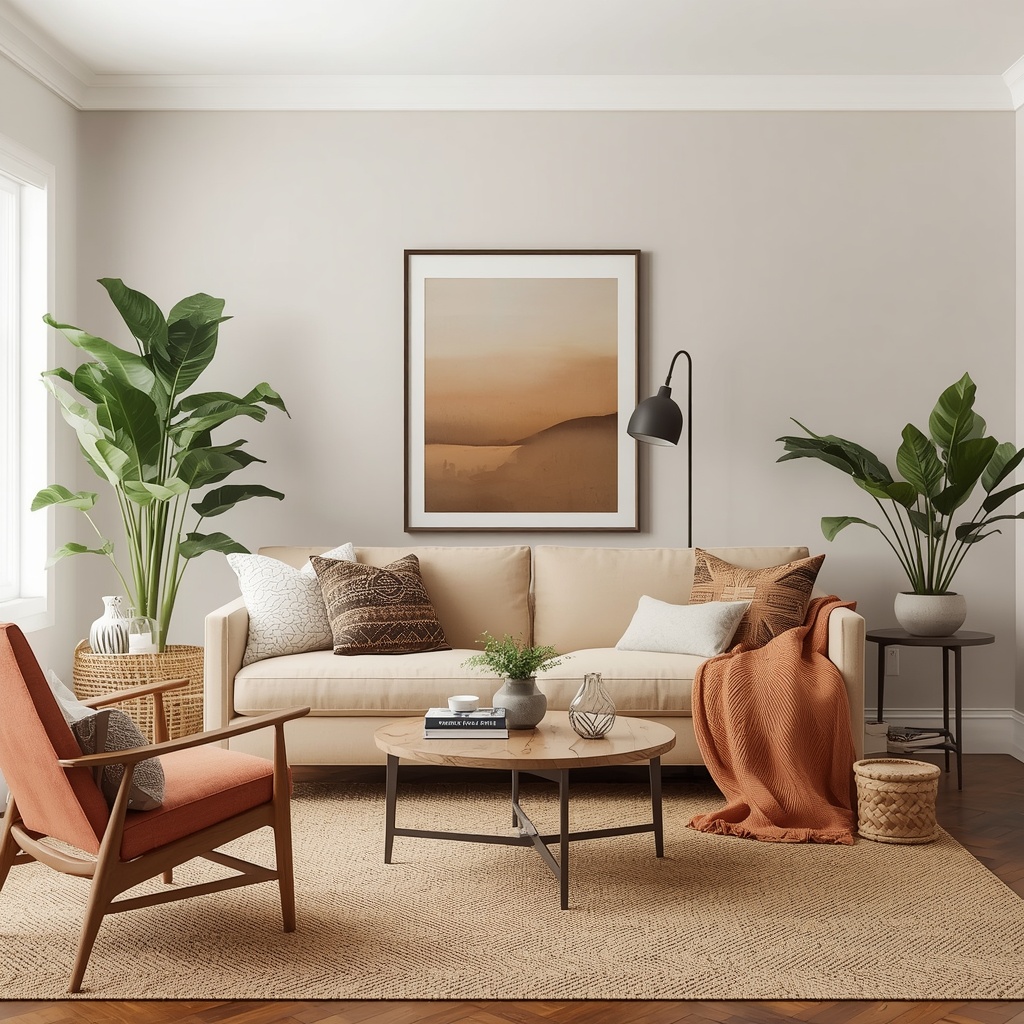
A reliable formula: start with a warm neutral base (think oatmeal, sand, or soft white), add one or two earthy mid-tones (terracotta, olive, rust, mustard), and finish with a deep grounding accent like espresso brown or charcoal. This creates depth without competing for attention.
Popular boho color palettes to try:
- Desert Sunset — terracotta, blush, cream, and burnt orange
- Earthy Neutral — sand, taupe, olive green, walnut brown
- Moody Boho — deep rust, forest green, black accents, warm wood
- Coastal Boho — bleached wood, off-white, seafoam, natural rattan
💡 Pro Tip: Keep your walls and large furniture in neutral tones, then let your color personality show through pillows, rugs, and art. This way, you can refresh the room’s mood seasonally without repainting or buying new furniture.
Layering Textures the Boho Way
If color sets the mood, texture is what makes a boho chic living room feel lived-in and rich. This is arguably the most important — and most overlooked — part of the aesthetic.
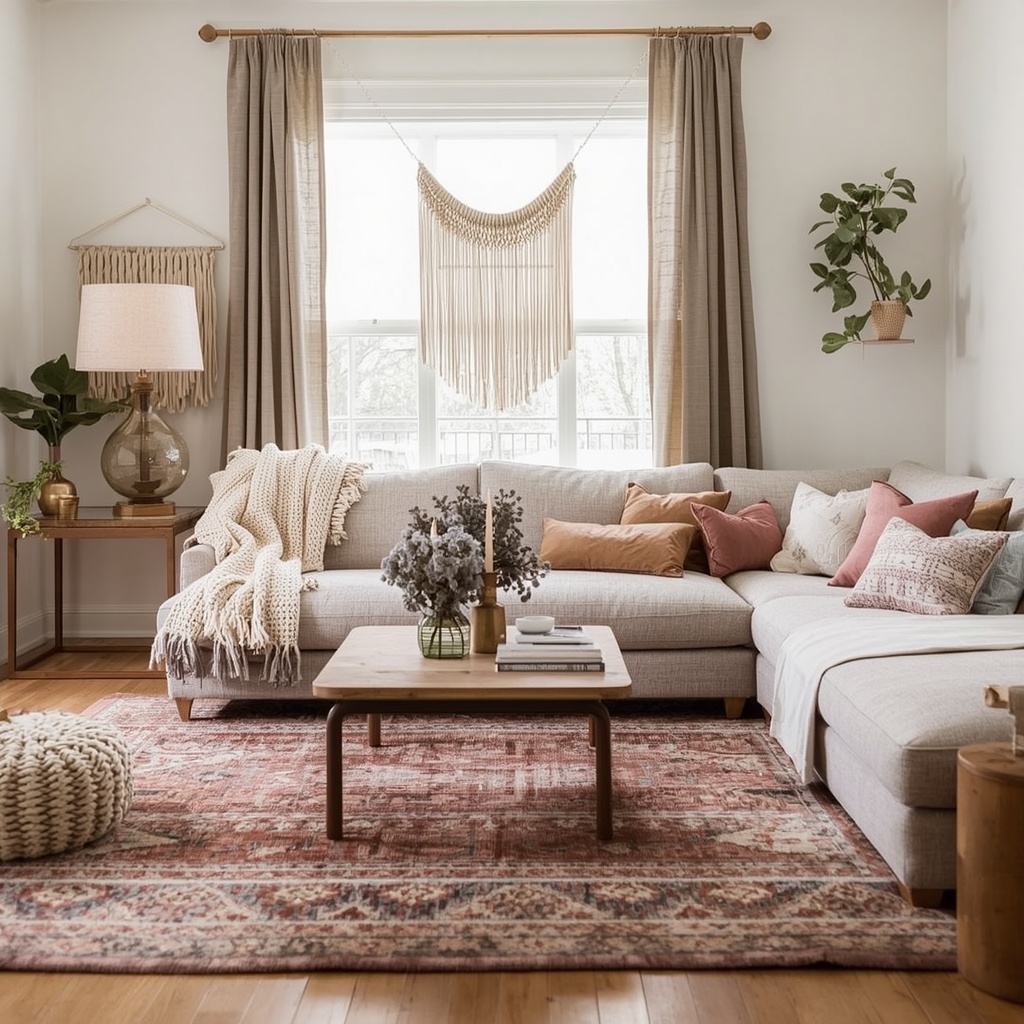
Start with your rug (a vintage-style or Persian-inspired jute or wool rug works beautifully), then layer a smaller kilim rug on top for dimension. From there, mix textiles across every surface: a chunky knit throw on the sofa, macrame accents on the wall, linen curtains, and a mix of textured throw pillows in varied fabrics like velvet, cotton, and woven wool.
Texture layering checklist:
- A natural fiber rug (jute, sisal, or wool)
- A smaller patterned rug layered on top
- At least 3–5 throw pillows in mixed fabrics
- One knit or woven throw blanket
- Curtains in linen or cotton gauze
- A macrame or woven wall hanging
Furniture That Anchors the Aesthetic
Boho chic furniture tends to be low-profile, curved, and made from natural materials. Rattan, wicker, and reclaimed wood are staples, but the real magic happens when you mix eras and finishes rather than buying a matching set.
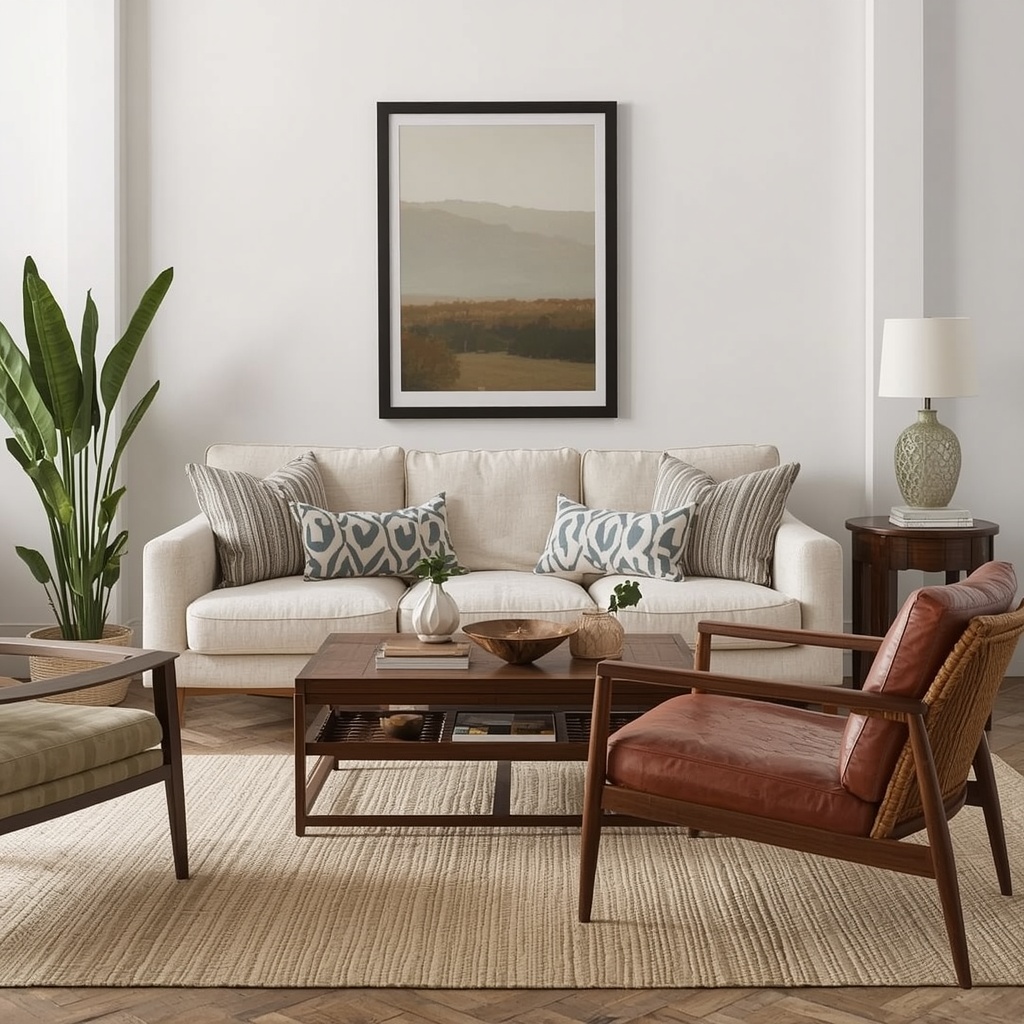
A slouchy linen sofa paired with a vintage leather accent chair, a rattan coffee table, and a carved wood side table creates the kind of “collected over time” look that defines this style. Avoid overly sleek, glossy, or ultra-modern furniture — it tends to fight against boho’s organic warmth rather than complement it.
Furniture pieces worth investing in:
- A slouchy, oversized linen or boucle sofa
- A rattan or wicker accent chair
- A low, natural-wood coffee table
- Floor cushions or poufs for extra flexible seating
- Open wood shelving for displaying collected objects
Bring the Outdoors In With Plants
No boho chic living room is complete without greenery. Plants soften hard lines, add natural texture, and reinforce the earthy, organic feel that defines the style.
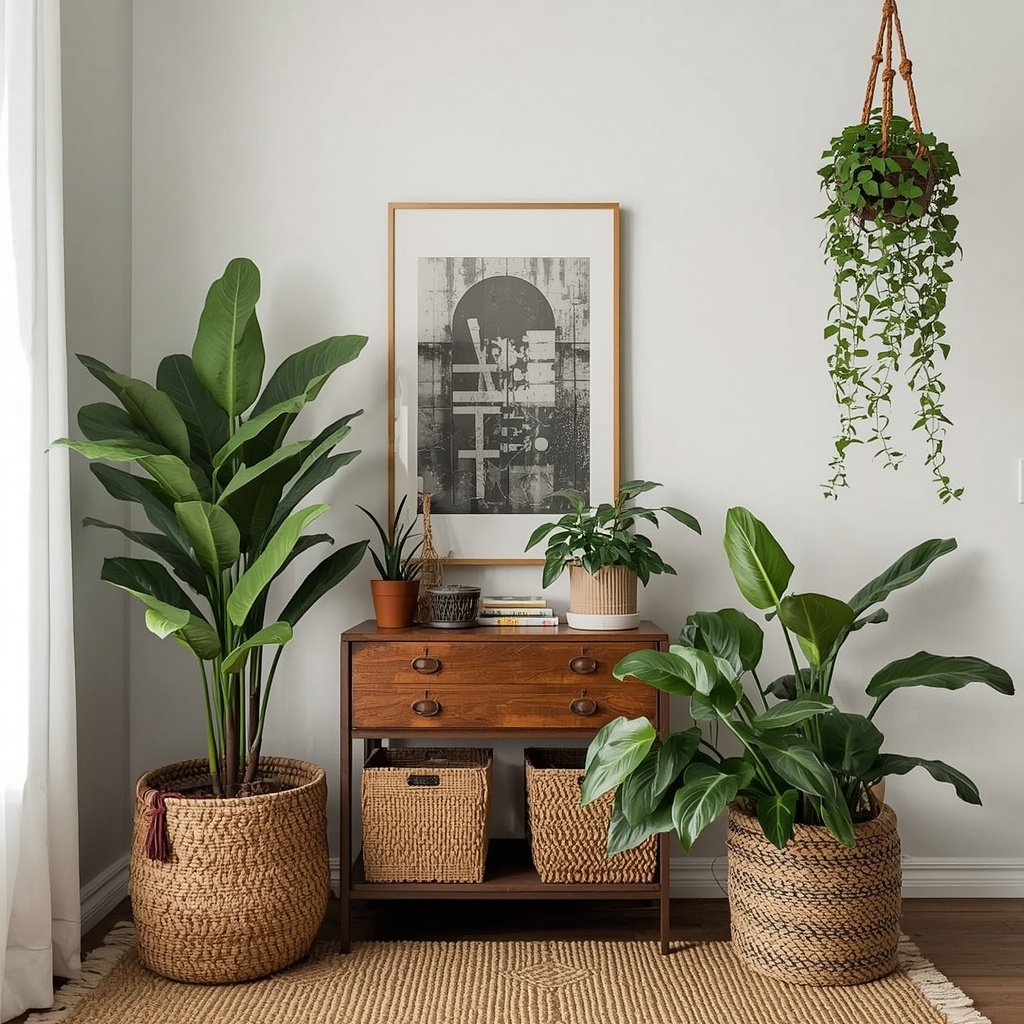
Larger statement plants like fiddle leaf figs, monsteras, or bird of paradise work well as anchor pieces in corners, while trailing plants like pothos or string of pearls look stunning on shelves or hanging from macrame plant hangers. Even a few well-placed plants can transform a sterile room into something that feels alive.
| Plant Type | Best For | Light Needs |
|---|---|---|
| Fiddle Leaf Fig | Statement corner piece | Bright, indirect |
| Pothos | Shelves, hanging planters | Low to medium |
| Snake Plant | Low-maintenance accent | Low light tolerant |
| Monstera | Bold visual texture | Bright, indirect |
| String of Pearls | Hanging planters | Bright, indirect |
Wall Art, Mirrors, and Personal Collections
Boho chic walls tell a story. Rather than one large piece of matching art, layer smaller frames, tapestries, and mirrors at varying heights for an eclectic gallery feel.
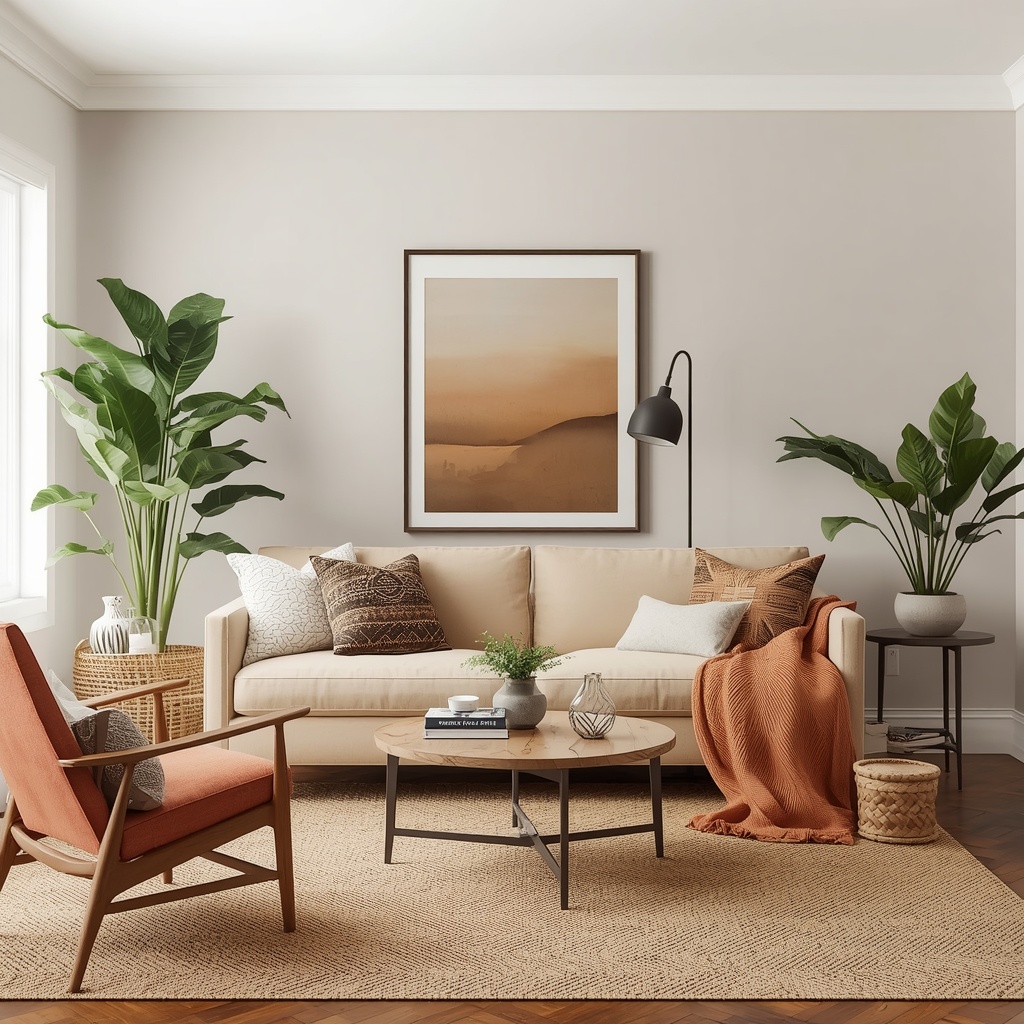
Vintage or antique mirrors — especially arched or sunburst styles — bounce light around the room while reinforcing the collected, well-traveled aesthetic. Woven wall hangings, dried florals, and framed textiles add even more dimension without overwhelming the space.
Wall décor ideas to mix and match:
- A large woven or macrame wall hanging as a focal point
- A gallery wall with mismatched vintage frames
- A sunburst or arched mirror
- Dried pampas grass or eucalyptus in a floor vase
- Framed textiles, tapestries, or global-inspired prints
Lighting That Sets the Mood
Lighting in a boho living room should feel warm, ambient, and layered — never harsh or overly bright. Avoid stark overhead lighting as your only source; instead, combine multiple light sources at different heights.
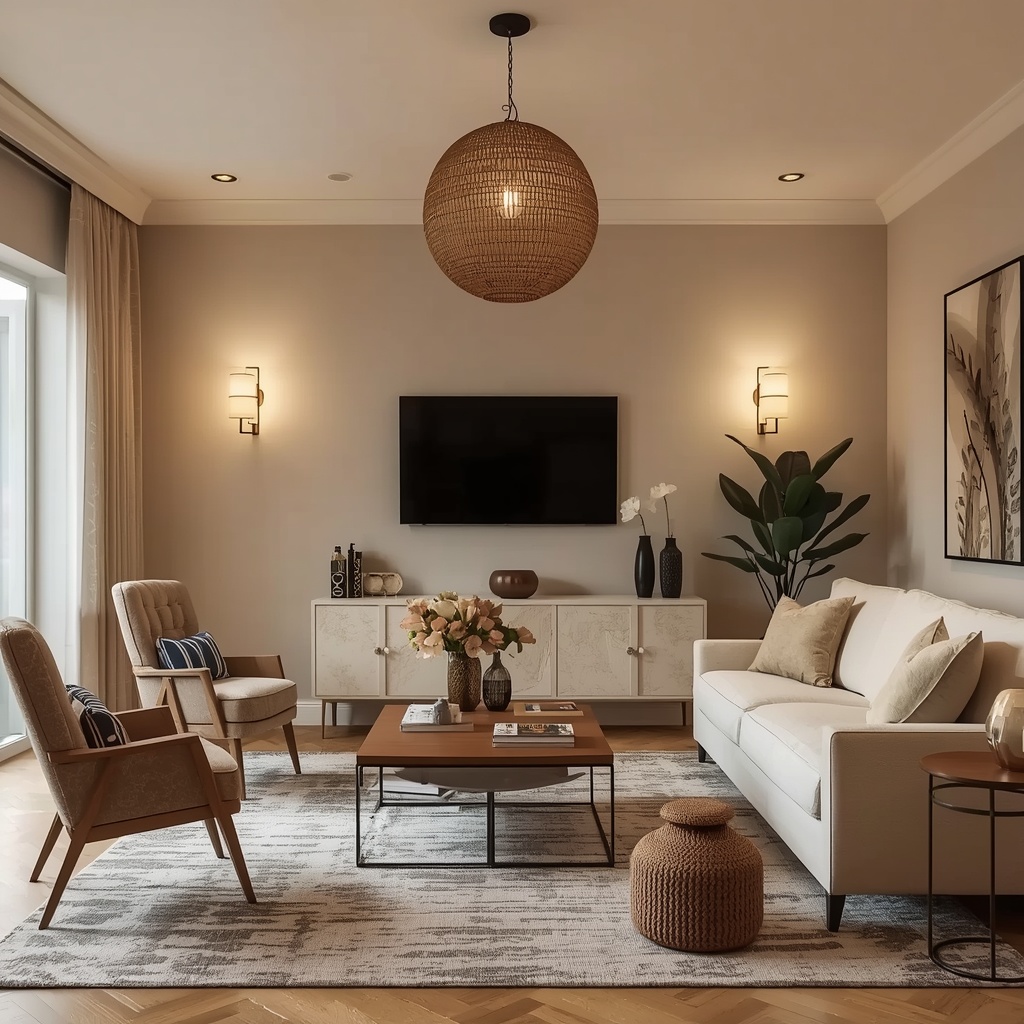
Rattan or woven pendant lights add texture even when unlit, while floor lanterns, string lights, and warm-toned table lamps create the soft, golden glow that boho spaces are known for. Candles in ceramic or brass holders round out the ambiance beautifully in the evening.
💡 Pro Tip: Stick to warm white bulbs (2700K–3000K) throughout your living room. Cool white or daylight bulbs can make even a perfectly styled boho room feel clinical and cold.
Common Boho Chic Mistakes to Avoid
Even with the best intentions, boho decorating can tip into cluttered or mismatched territory if you’re not careful. Here are the mistakes I see most often with clients:
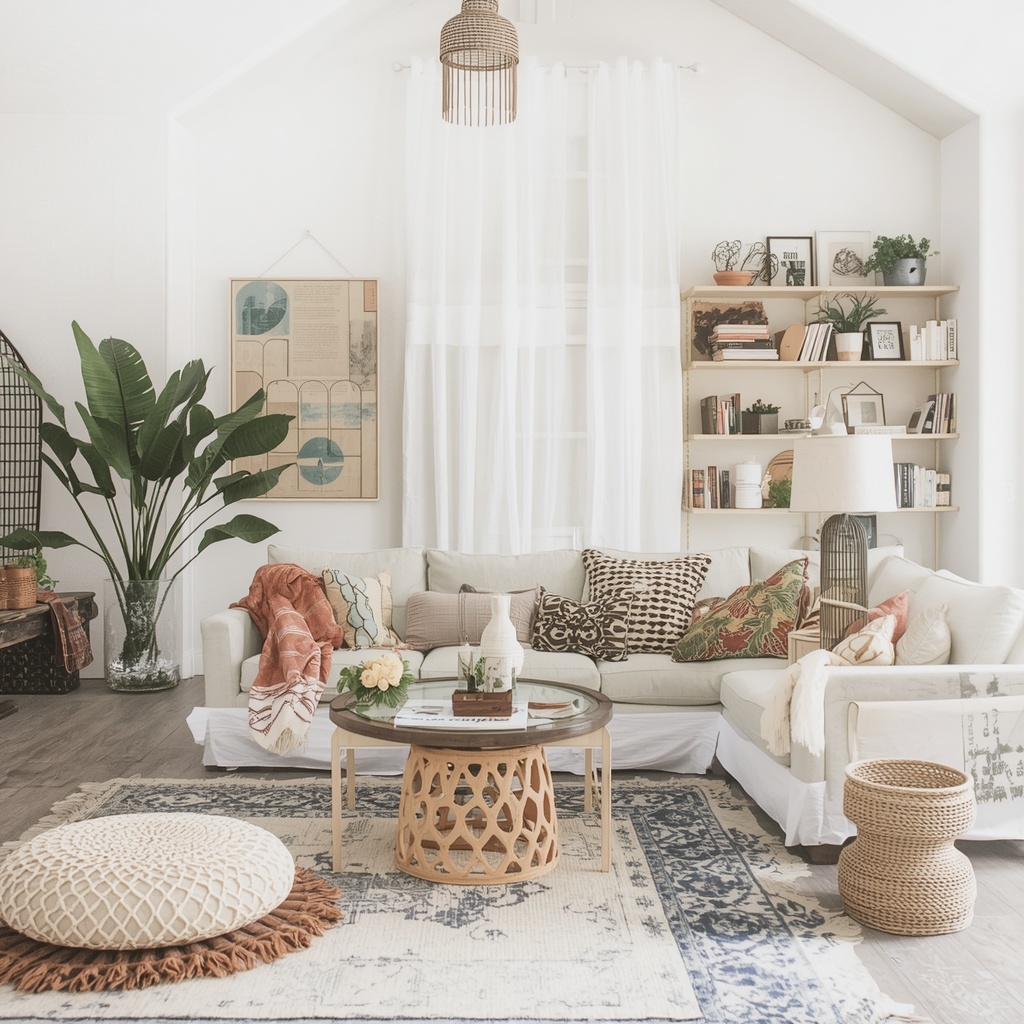
- Too many colors at once — stick to a cohesive palette of 3–4 core tones
- Skipping the neutral base — without it, the room feels busy rather than curated
- Forgetting negative space — even boho rooms need breathing room to avoid feeling cluttered
- Mixing only new items — vintage or thrifted pieces add the authenticity this style depends on
- Ignoring lighting temperature — cool lighting undercuts the whole warm, cozy vibe
Bringing It All Together
Boho chic isn’t a strict rulebook — it’s a mindset. It rewards curiosity, travel, thrifting, and personal history in a way few other design styles do. Start with a warm neutral foundation, layer in natural textures and global accents, add plants and warm lighting, and let your personality fill in the rest.
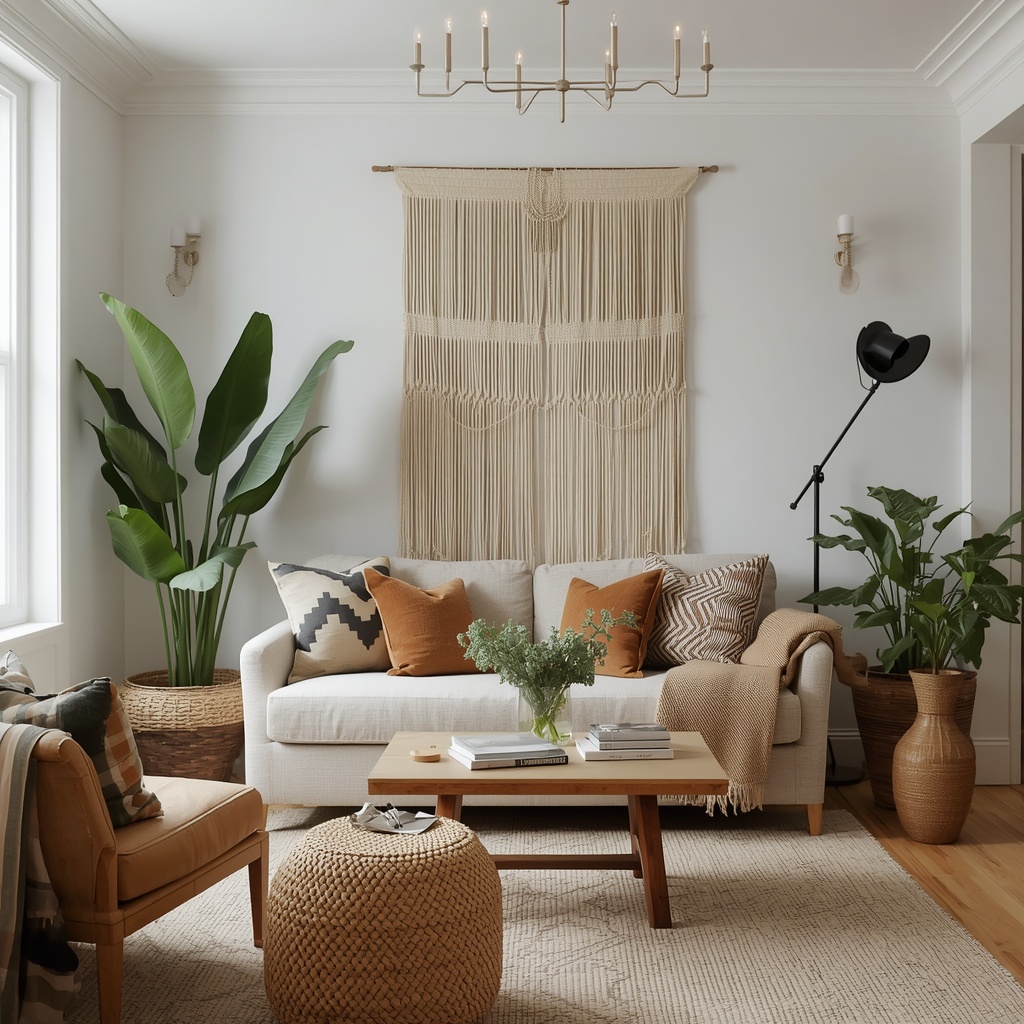
The best boho living rooms aren’t finished overnight. They’re built slowly, piece by piece, the same way a good personal style is built — through trial, error, and the occasional thrift store find that just works. Give yourself permission to collect rather than decorate, and your living room will feel like it was always meant to look this way.