
By a home decor and interior design specialist | Practical ideas for US homes, apartments, and townhouses
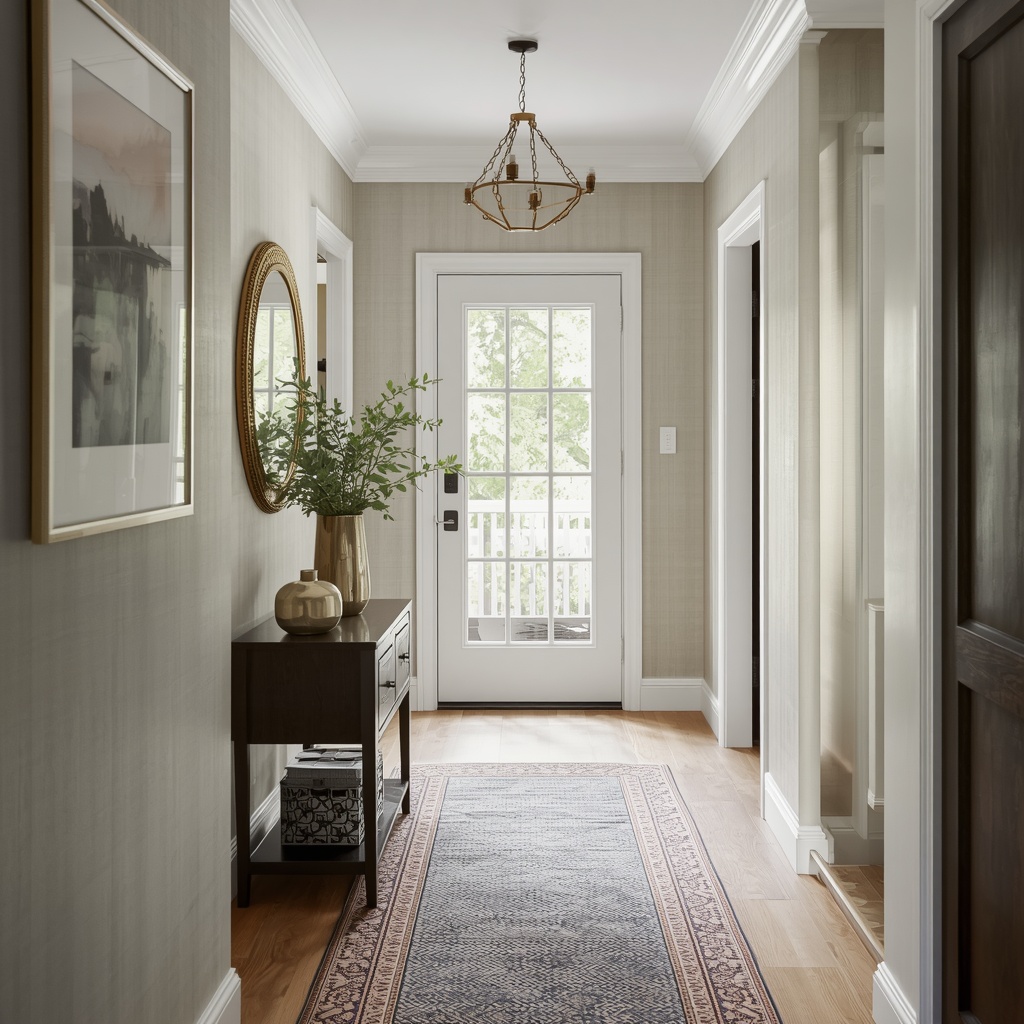
The narrow hallway is the most overlooked space in American homes. We rush through it with laundry baskets, groceries, and kids’ backpacks, and rarely stop to ask whether it looks good. Yet the hallway is the connective tissue of your home. It shapes how every room feels, and it quietly sets the mood from the moment you step inside.
The good news is that a tight corridor is not a design dead end. With smart color choices, layered lighting, and a few well-chosen pieces, you can make a slim passage feel wider, brighter, and far more welcoming. This guide walks you through every step, from measuring and planning to the finishing touches that make guests say, “Wow, I love your hallway.”
Why Narrow Hallways Are Tricky (and Full of Potential)
Most narrow hallways in US homes measure between 36 and 42 inches wide. That is enough to walk through comfortably, but not enough for bulky furniture or heavy decor. Add a lack of natural light and a long, tunnel-like shape, and the space can feel cramped, dark, and purely functional.
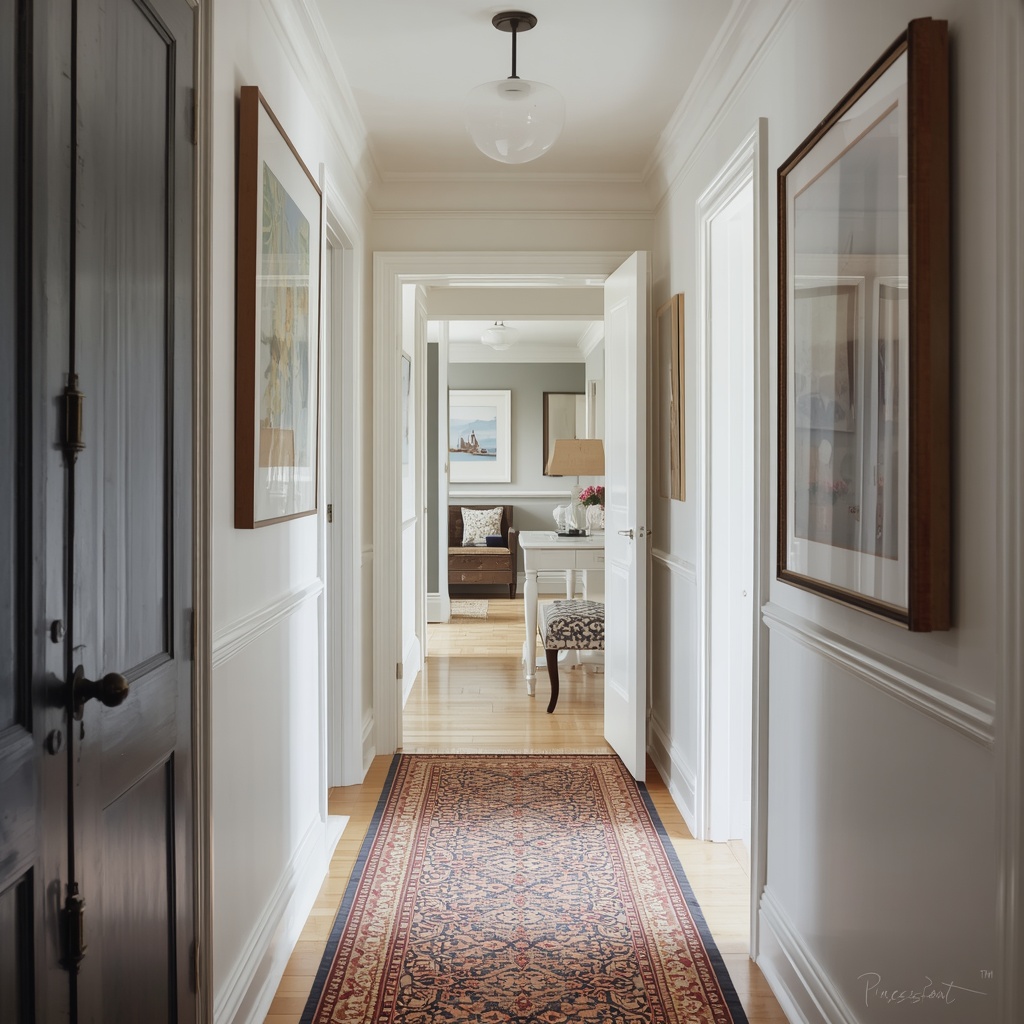
Here is the secret designers know: constraints inspire creativity. A hallway has a clear direction, which means you can guide the eye with color, lighting, and art. Treat it like a gallery, a transition zone, or even a mini mudroom, and suddenly the narrowness becomes a feature rather than a flaw.
“A hallway is not a leftover space. It is the first sentence of every room’s story.”
Before you buy a single item, remember the golden rule of small-space decorating: every piece must earn its place. In a corridor, that means each object should be slim, purposeful, and visually light. Keep that principle in mind as you work through the sections below.
Start With Measurements and Function
Grab a tape measure and record the width, length, and ceiling height of your hallway. Note where the doors swing, where outlets sit, and where light switches are located. Also measure any alcoves or niches, since these small pockets are often perfect for a console table, a bench, or a statement lamp.
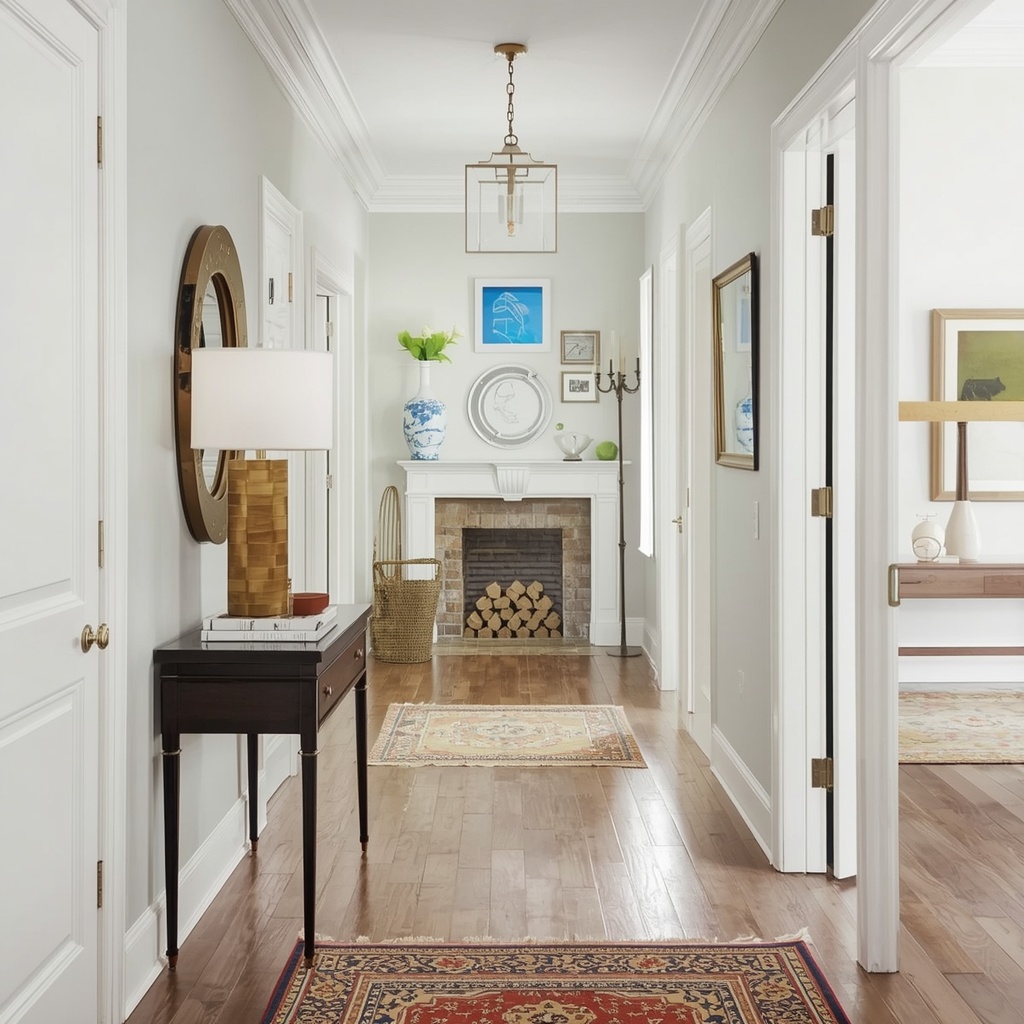
Next, decide what your hallway needs to do. Is it a pure walkway, or does it also need to hold coats, shoes, mail, and keys? A hallway that works hard needs storage, while a hallway that is purely transitional can focus on art and atmosphere. Defining the job first prevents clutter and costly mistakes later.
Quick clearance guide for narrow corridors:
- Minimum walkway: Keep at least 36 inches of clear space for comfortable movement.
- Furniture depth: Choose pieces that are 8 to 12 inches deep at most.
- Door swing: Never block a door’s full arc with furniture or decor.
- Art height: Hang artwork with its center around 57 to 60 inches from the floor.
- Accessibility: If you need ADA-friendly clearance, plan for 42 to 48 inches of open width.
Choose a Light and Bright Color Palette
Color is the fastest and cheapest way to transform a narrow hallway. Light, warm neutrals bounce light around and push walls visually outward, making the corridor feel more spacious. Soft whites, creamy ivories, pale greige, and gentle sage greens are all dependable choices for US homes, especially those with limited natural light.
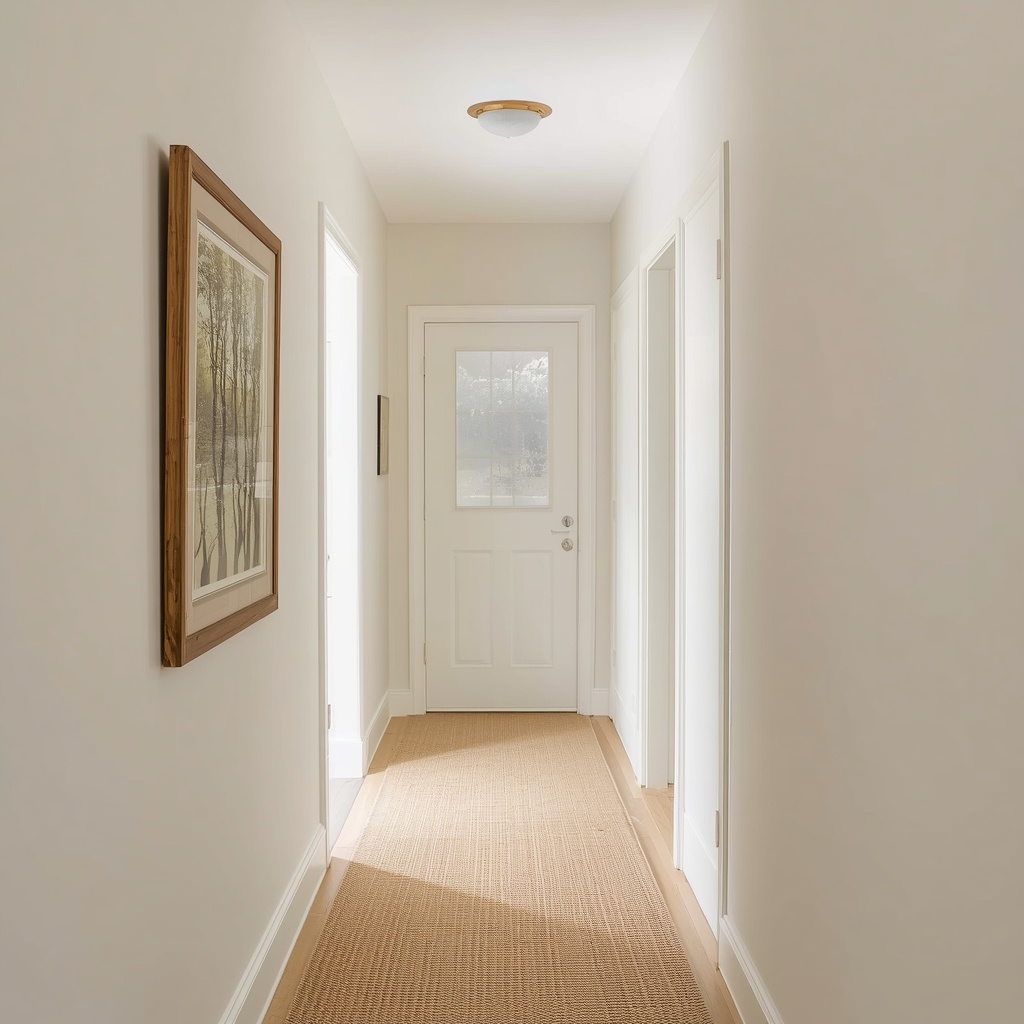
That said, you do not have to play it completely safe. A deep, moody shade like navy or forest green can feel dramatic and cozy when paired with strong lighting and metallic accents. The key is to stay consistent from wall to trim, so the eye does not stop and start along the corridor.
| Color Family | Effect on Space | Best For | Pairs Well With |
|---|---|---|---|
| Warm white or ivory | Brightens and enlarges | Dark hallways with no windows | Brass, natural wood |
| Soft greige | Cozy yet airy | Open-concept homes | Black hardware, linen |
| Pale sage or blue-gray | Calm and fresh | Hallways leading to bedrooms | White trim, rattan |
| Blush or light terracotta | Warm and welcoming | Entry corridors | Cream, walnut |
| Deep navy or forest green | Dramatic and intimate | Hallways with strong lighting | Gold, mirrors |
Pro Tip: Paint the ceiling a shade lighter than the walls, or use the same color in a satin finish on the walls and a flat finish on the ceiling. This blurs the boundary between wall and ceiling, making the hallway feel taller and more continuous. Brands like Benjamin Moore and Sherwin-Williams offer free color samples, so test two or three shades on the wall before committing.
Layer Your Lighting for Depth and Warmth
Poor lighting is the number one reason narrow hallways feel claustrophobic. A single bulb in the center of the ceiling casts harsh shadows and flattens everything. Instead, think in layers: ambient light for general brightness, accent light for art, and task light for areas where you actually need to see detail, like near a key drop.
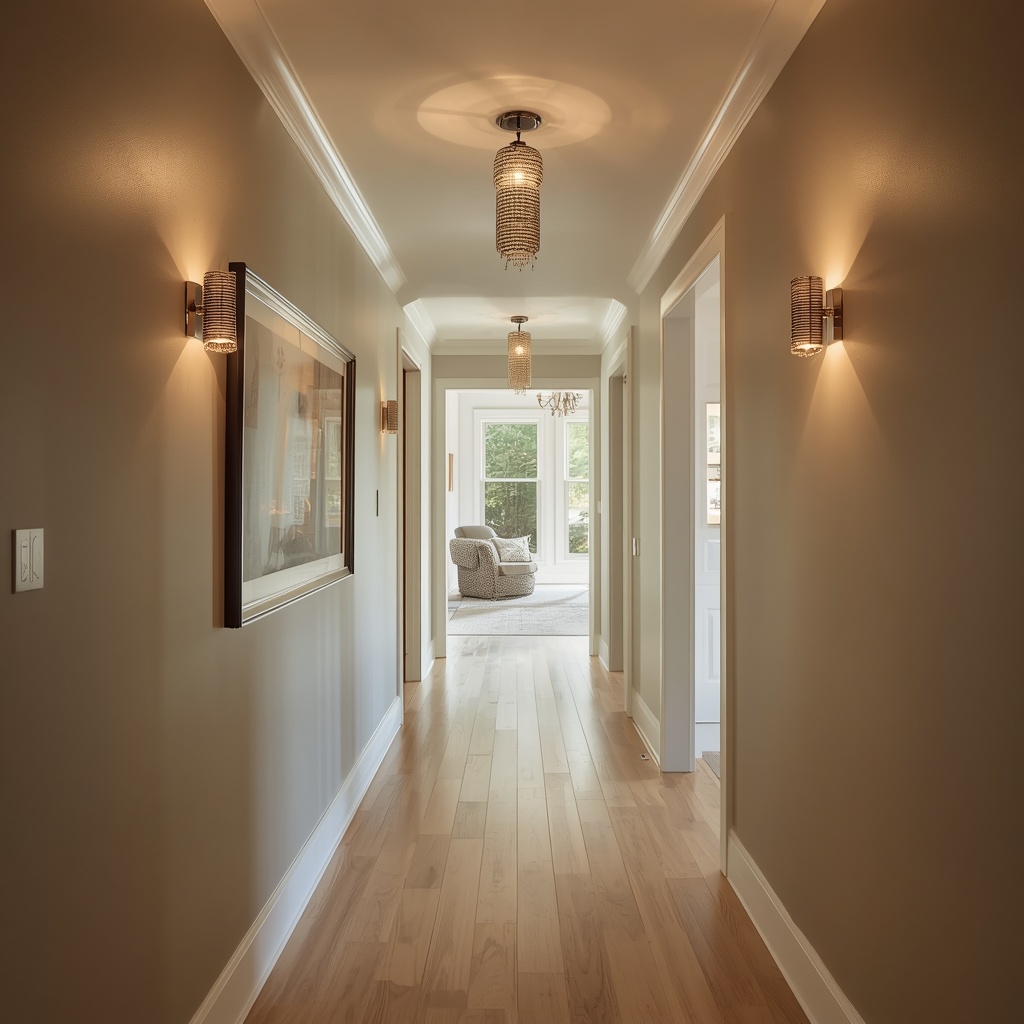
Flush-mount fixtures and semi-flush ceiling lights are ideal for low ceilings, since they do not eat into your headroom. Wall sconces are another smart option because they provide soft light without taking up floor space. Choose warm LED bulbs between 2700K and 3000K for a welcoming glow that flatters your paint color.
Lighting ideas that work in tight corridors:
- Plug-in wall sconces: Perfect for renters, no electrician required.
- Recessed lighting: Creates a clean, seamless look and adds zero visual bulk.
- LED strip lights: Tuck them under a floating shelf or along the baseboard for a subtle floor glow.
- Picture lights: Highlight your favorite artwork and add a gallery feel.
- Motion-sensor night lights: Practical and safe for late-night trips to the kitchen.
Use Mirrors to Create the Illusion of Space
Mirrors are a designer’s best friend in a narrow hallway. They reflect light, double the visual depth, and make a tight space feel far more open. Place a large mirror on one wall, ideally across from a window or a light source, so it can capture and bounce brightness down the entire corridor.
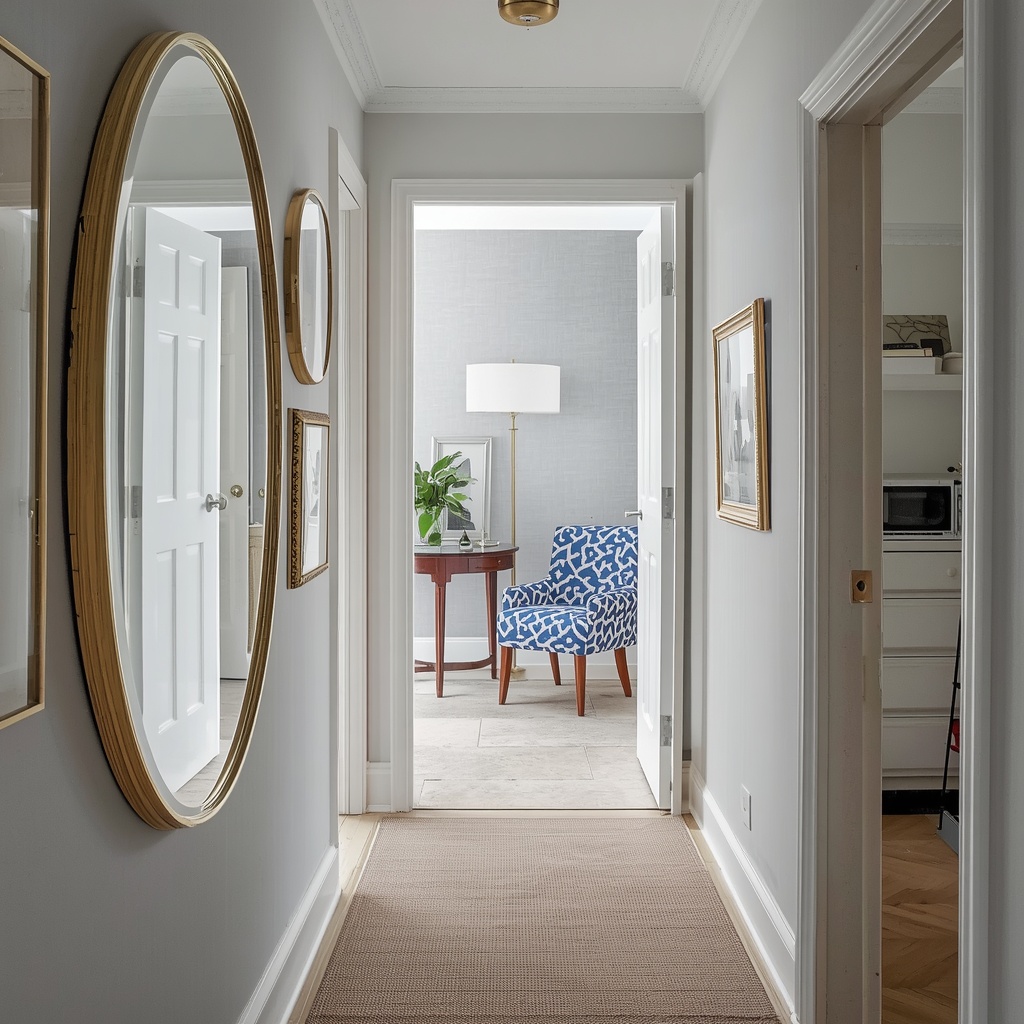
You can also hang a series of smaller mirrors in varied shapes for a more artistic look. Round and arched mirrors soften the straight lines of a corridor and add a touch of personality. Just be careful about what the mirror reflects, because it should show something beautiful, not a pile of shoes or a cluttered closet.
Mirror styling tips:
- Choose a mirror at least two-thirds the width of the furniture beneath it.
- Lean an oversized floor mirror against the wall for an effortless, modern vibe.
- Pick a slim frame in brass, matte black, or natural wood to avoid visual bulk.
- Hang mirrors at eye level, roughly 57 to 60 inches to the center.
Pick Flooring and Runners That Stretch the Space
The floor is a huge visual player in a corridor. Running planks lengthwise down the hallway emphasizes length, while planks laid across the width can make the space feel slightly wider. If you are replacing floors, light wood tones or wide-plank luxury vinyl can open up the space and withstand heavy foot traffic.
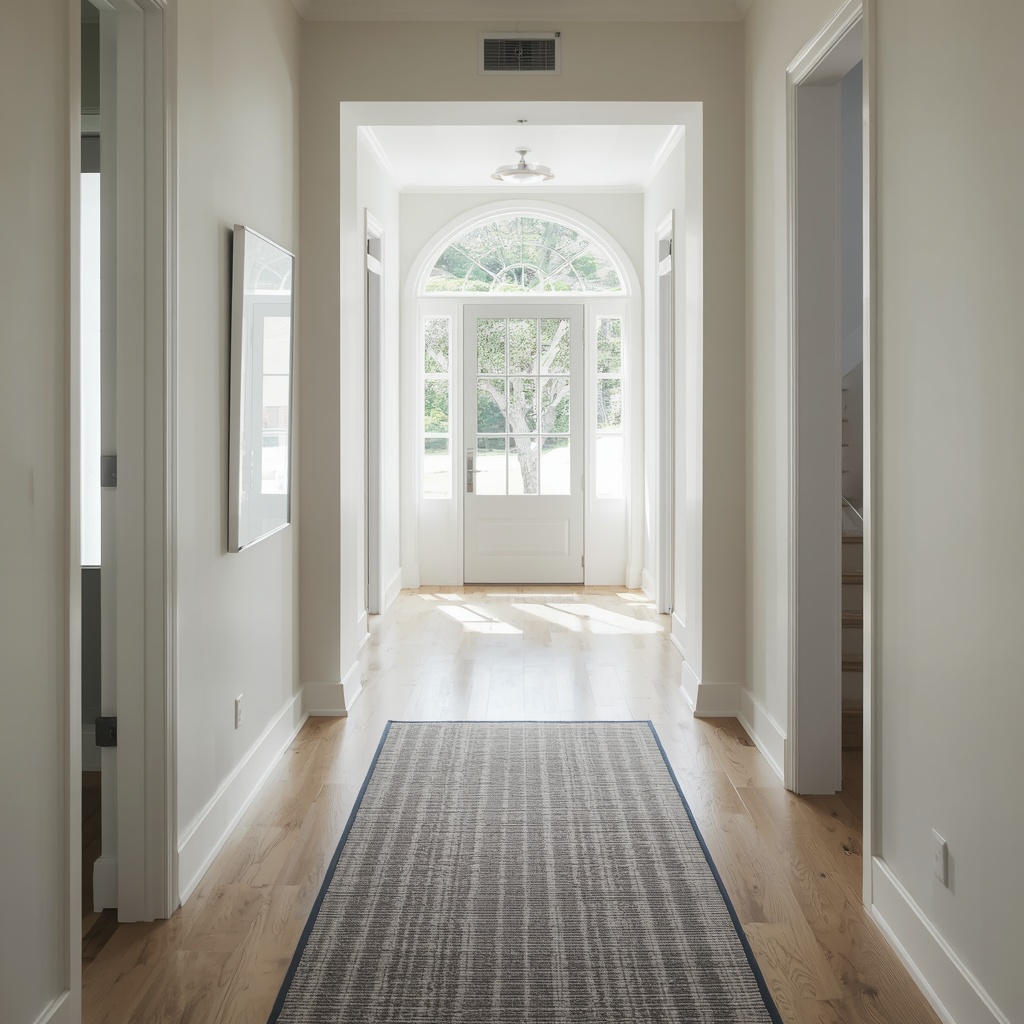
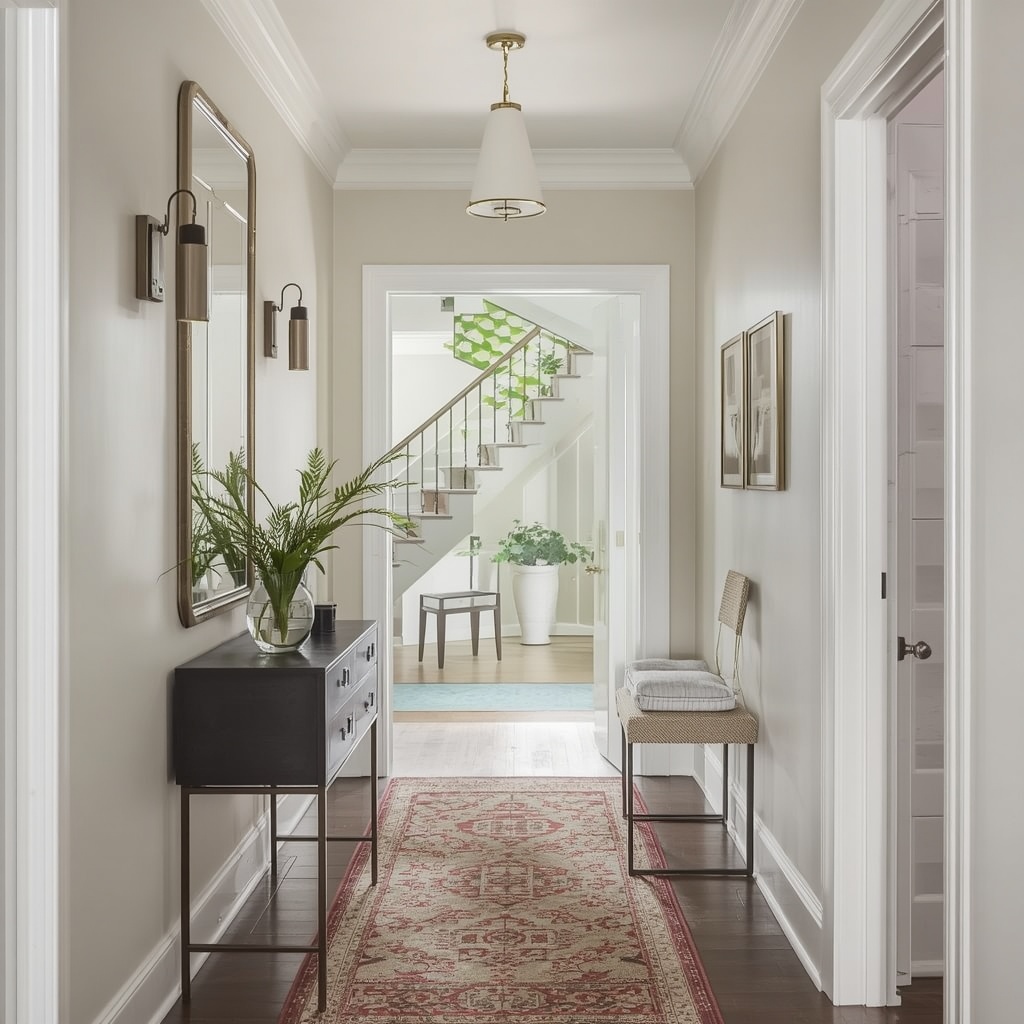
If new flooring is not in the budget, a hallway runner rug is the quickest upgrade. Choose a runner that leaves 3 to 6 inches of bare floor on each side so the hallway does not feel swallowed. Always add a non-slip rug pad for safety, especially on hardwood, tile, or laminate.
| Runner Style | Visual Effect | Maintenance | Ideal Setting |
|---|---|---|---|
| Vertical stripes | Elongates the hallway | Easy | Modern or coastal homes |
| Solid neutral | Calm and spacious | Easy | Minimalist interiors |
| Vintage or Persian-style | Rich and layered | Moderate | Traditional or eclectic homes |
| Washable flat-weave | Practical and durable | Very easy | Families with kids and pets |
| Geometric pattern | Adds energy and movement | Easy | Contemporary spaces |
Hang Wall Art That Fits the Scale
Walls are your biggest canvas in a narrow corridor, so use them wisely. Because people view artwork at close range in a hallway, smaller, more detailed pieces often work better than one giant canvas. Keep frames slim and consistent in color so the wall looks curated rather than chaotic.
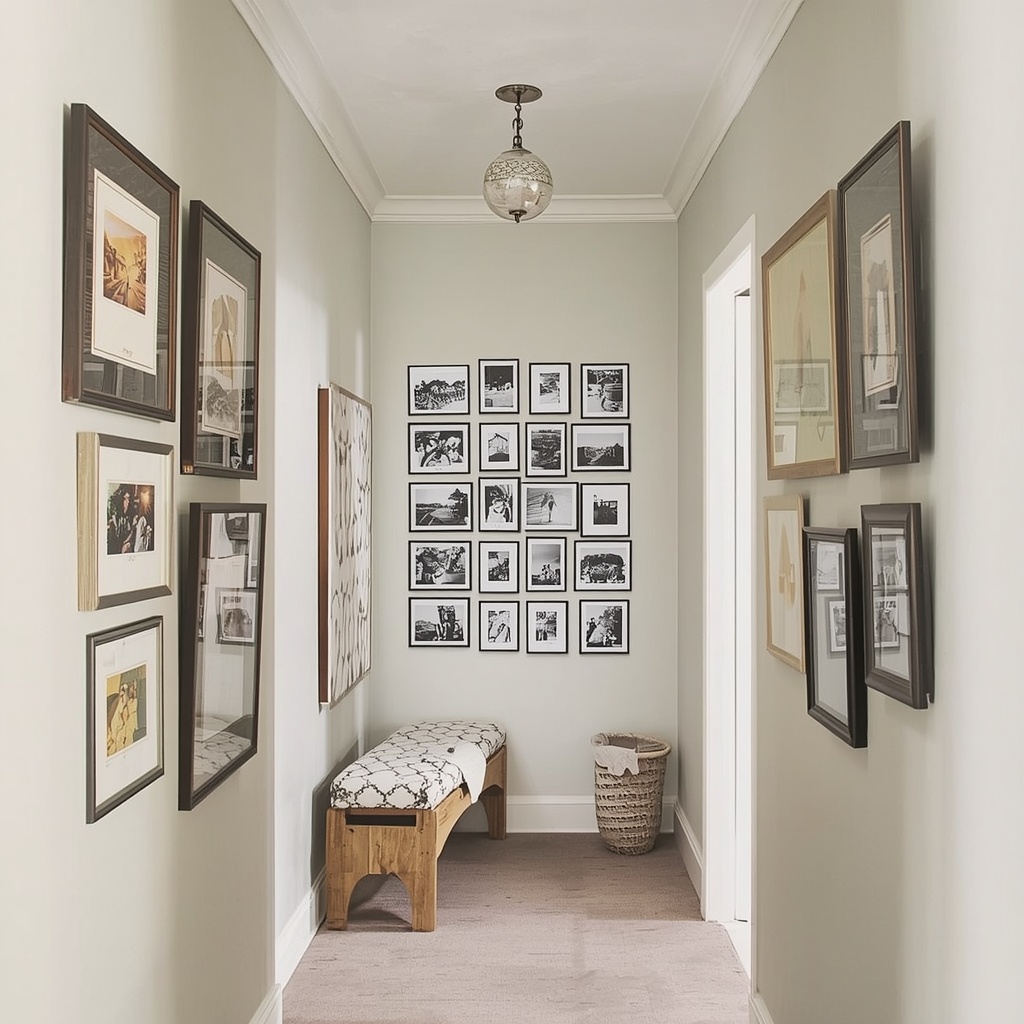
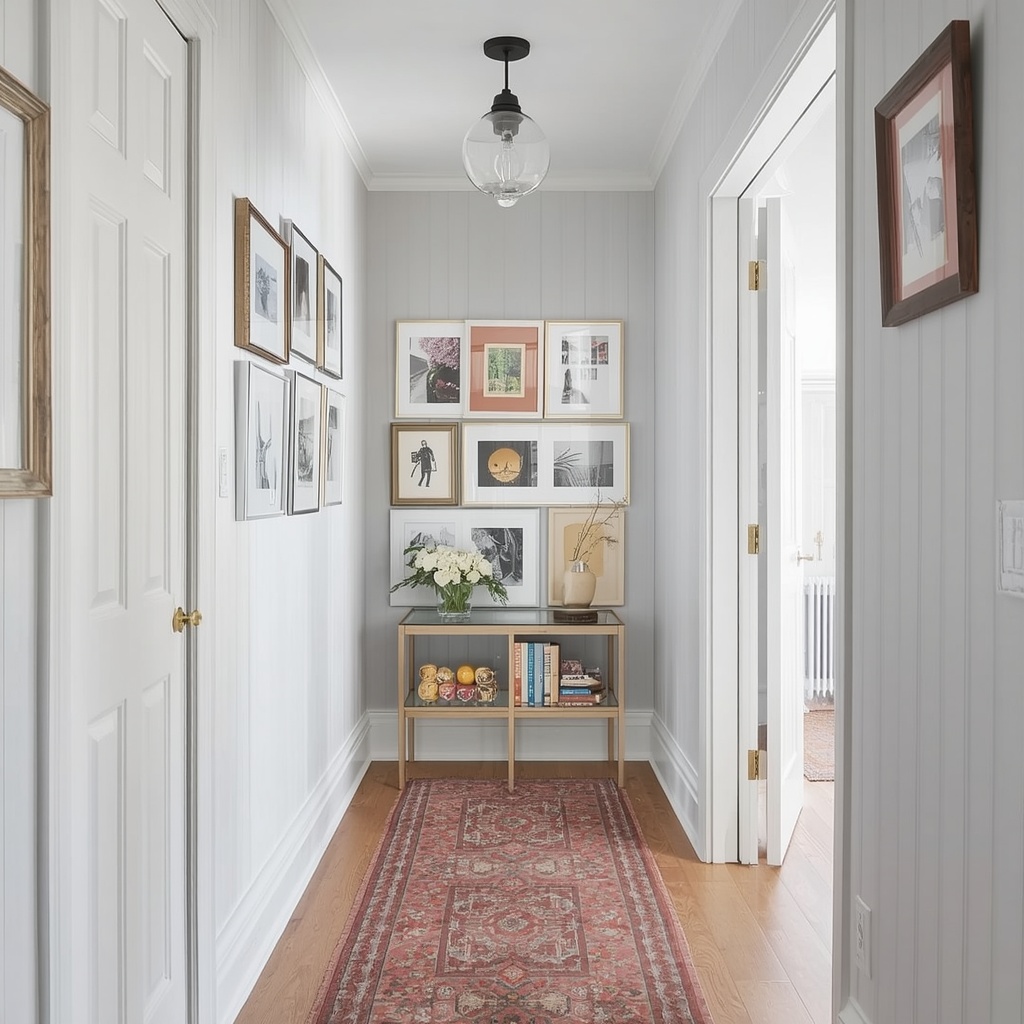
A gallery wall is a wonderful way to turn a plain hallway into a personal showcase. Arrange family photos, travel prints, or black-and-white photography in a grid or a loose cluster. Lay everything out on the floor first, trace each frame onto paper, and tape the templates to the wall to test your layout before hammering any nails.
Wall decor ideas for narrow hallways:
- Gallery wall with matching frames: Cohesive and polished.
- Single row of framed prints: Clean, rhythmic, and easy to maintain.
- Picture ledges: Swap art seasonally without new holes in the wall.
- Peel-and-stick wallpaper: A renter-friendly way to add pattern or texture.
- Woven wall baskets: Add warmth and organic texture to neutral palettes.
- Slim floating shelves: Display small plants, books, and ceramics.
For endless layout inspiration, browse the hallway galleries on Houzz and save the styles that speak to you.
Choose Slim Furniture and Smart Storage
Furniture in a narrow hallway should be slim, light-looking, and multifunctional. A console table with thin legs and a shallow top gives you a landing spot for keys, mail, and a small lamp without blocking traffic. Wall-mounted or floating consoles are even better because they free up the floor and make the corridor look larger.
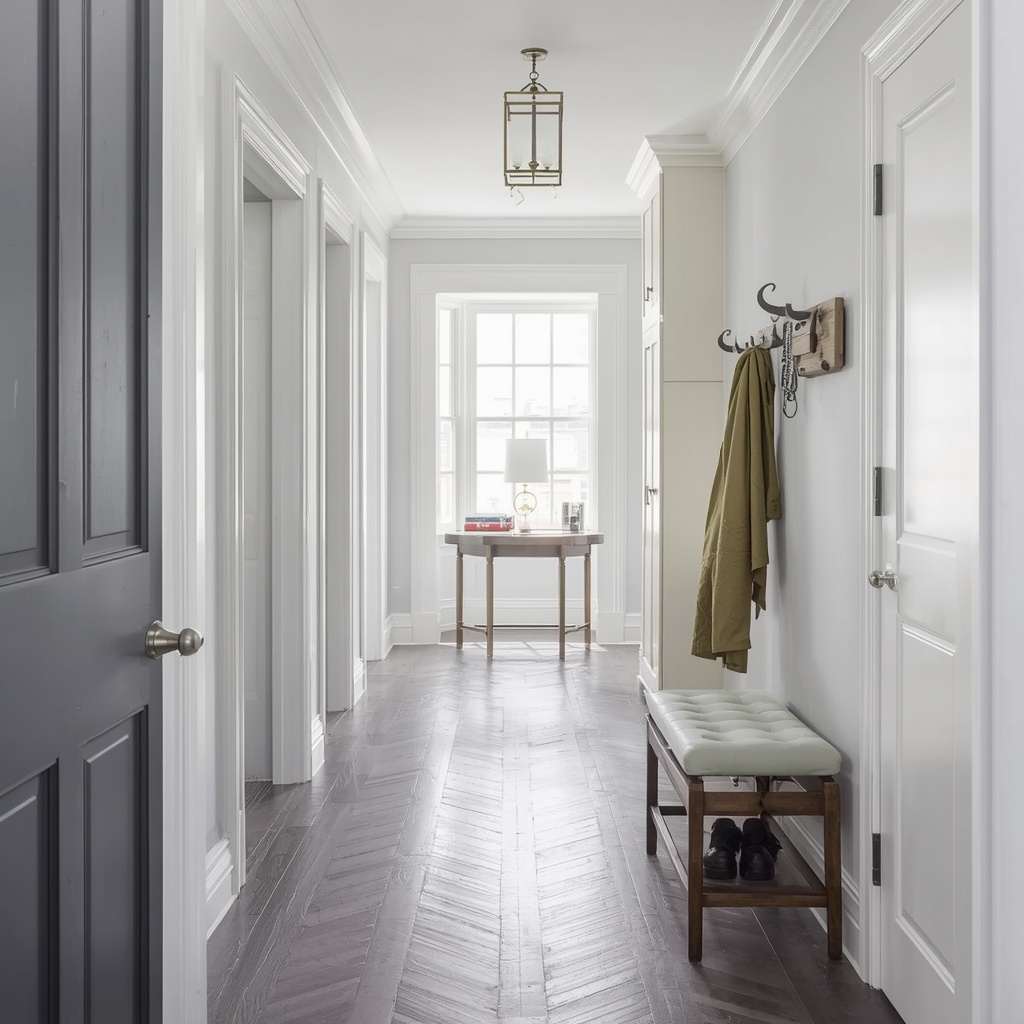
Storage is where hallways often fail, so think vertically. Wall hooks, pegboards, and shallow cabinets keep coats and bags off the floor. If your hallway has an alcove, tuck in a slim bench with hidden shoe storage. Anything with an open base or exposed legs will feel lighter than a solid, boxy piece.
| Furniture Piece | Ideal Depth | Why It Works |
|---|---|---|
| Floating console shelf | 6 to 10 inches | No floor footprint, visually light |
| Slim console table | 8 to 12 inches | Classic landing zone with a lamp |
| Wall-mounted coat rack | 4 to 6 inches | Frees floor space for walking |
| Shallow shoe cabinet | 7 to 9 inches | Hides clutter behind clean doors |
| Narrow bench | 10 to 14 inches | Seating plus hidden storage |
Pro Tip: Choose furniture with visible legs and a lifted base. When you can see the floor beneath a piece, the eye reads the space as larger. Glass, acrylic, and light wood tones are especially good at keeping a narrow hallway feeling open.
Add Greenery and Texture Without Crowding
Plants bring life to a corridor, but placement matters. Skip large floor planters that crowd the walkway. Instead, use hanging planters, wall-mounted pots, or a trailing pothos on a high shelf. Low-light favorites like snake plants, ZZ plants, and pothos thrive in dim hallways and require very little care.
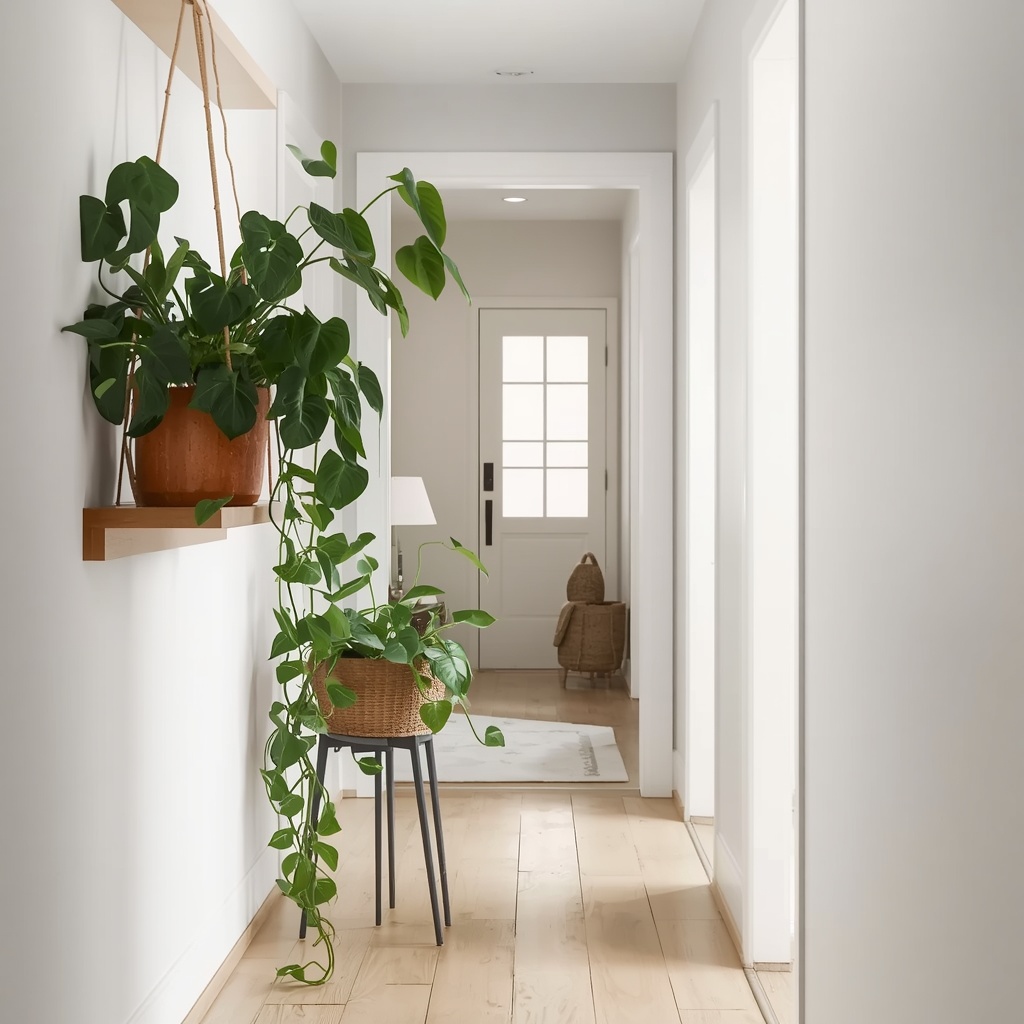
If you prefer a low-maintenance option, high-quality faux greenery can look surprisingly realistic. Pair it with natural textures such as a woven basket, a linen-shaded lamp, or a wooden bowl. These tactile elements soften the hard lines of a corridor and make it feel layered and lived-in rather than sterile.
Smart Tricks to Make a Hallway Feel Wider
Beyond the big design decisions, a few clever tricks can stretch your space visually. These are the finishing strategies that interior designers use again and again in small-space projects, and most of them cost very little or nothing at all.
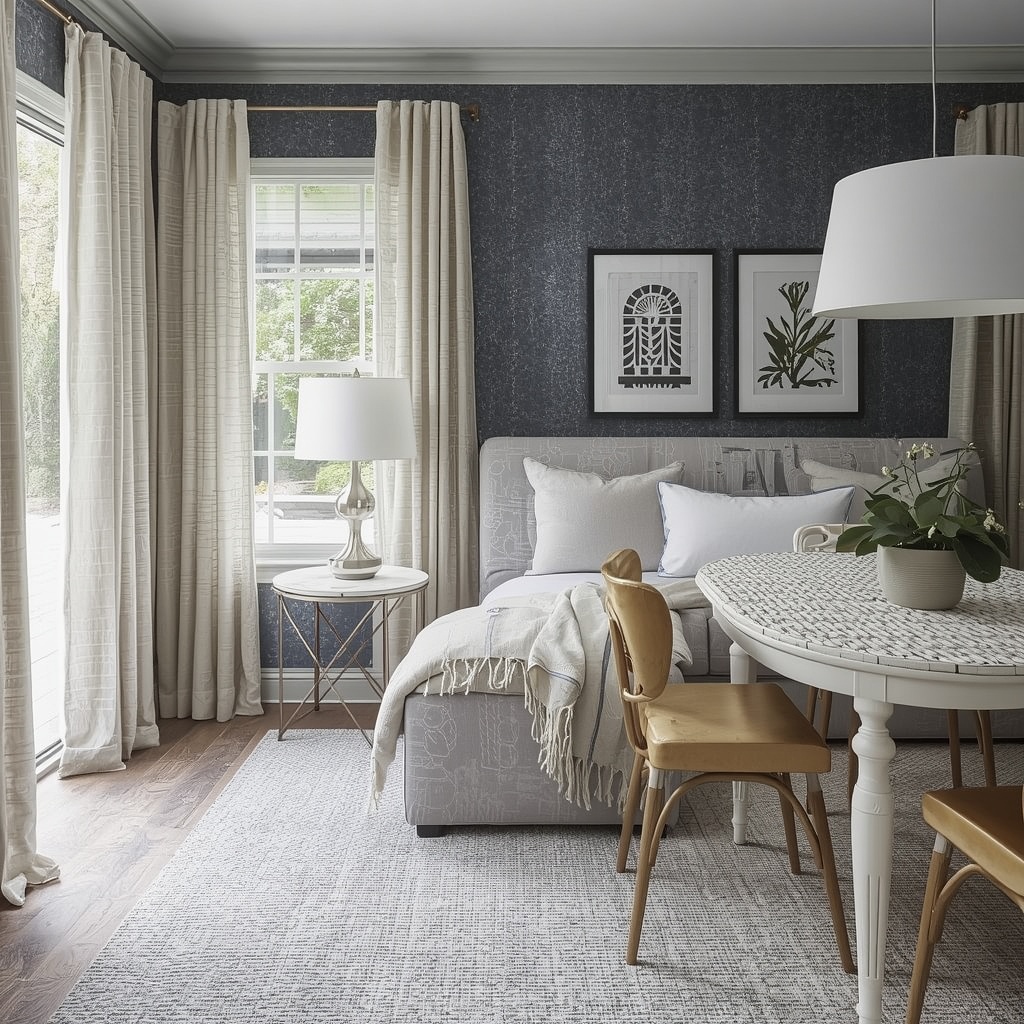
Designer tricks worth trying:
- Keep one wall busy and one wall calm: Let one side carry the art while the other stays clean.
- Paint the end wall a bolder color: A deeper shade at the end of the hallway creates a focal point and draws the eye forward.
- Remove or replace solid doors: Glass-paneled or pocket doors let light travel through.
- Use matching trim and doors: Painting doors the same color as the walls makes them recede.
- Declutter ruthlessly: Even beautiful objects feel heavy when there are too many of them.
- Create a focal point: A small console, a piece of art, or a window at the end draws the eye and adds depth.
For more small-space ideas, check out the home organization guides at The Container Store, where you can find slim hooks, baskets, and hallway-friendly organizers.
Common Hallway Decorating Mistakes to Avoid
Even experienced decorators make a few predictable errors in narrow corridors. The most common is overfilling the space with too many small items, which creates visual noise and makes the walkway feel chaotic. Another frequent mistake is using bulky furniture that forces people to turn sideways just to pass through.
Lighting and color errors are just as common. A single overhead bulb, cool blue-white lighting, or a very dark paint without enough illumination will make the hallway feel like a tunnel. Review the table below, and be honest about whether any of these mistakes are lurking in your own home.
| Mistake | Why It Hurts | Easy Fix |
|---|---|---|
| Oversized furniture | Blocks traffic and shrinks the space | Switch to a slim or floating piece |
| One central ceiling light | Creates shadows and a tunnel effect | Add sconces and warm bulbs |
| Too many small accessories | Looks cluttered and busy | Edit down to three or four items |
| Runner too wide | Swallows the floor | Leave 3 to 6 inches of bare floor |
| Dark paint with weak lighting | Feels heavy and enclosed | Lighten the color or boost lighting |
| Ignoring the ceiling | Misses a chance to add height | Paint it light or add subtle detail |
Styling Ideas for Different Hallway Types
Not every narrow hallway is the same, so tailor your approach. A long upstairs corridor leading to bedrooms calls for a calm, restful look with soft colors and gentle lighting. A main-floor entry hallway, on the other hand, needs to be durable and organized, with hooks, a bench, and a washable runner to handle everyday wear.
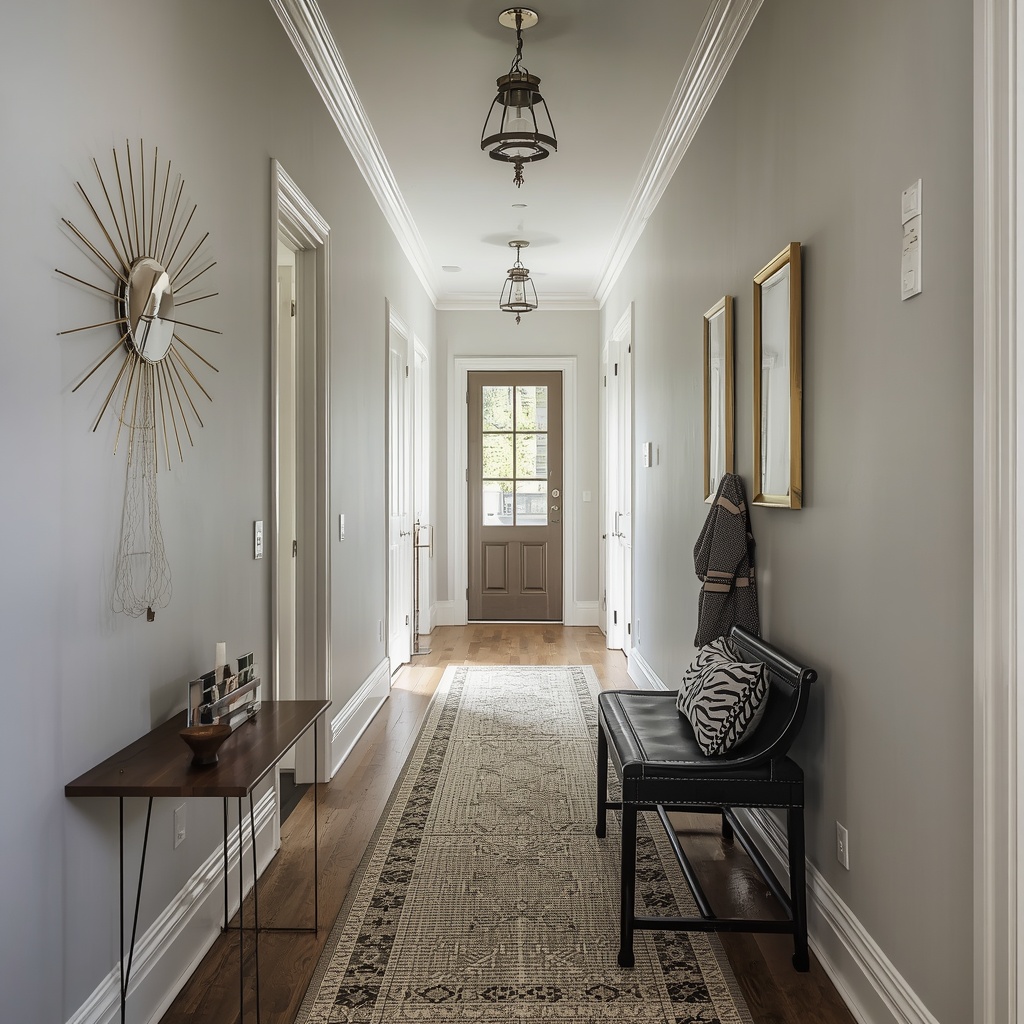
Apartment hallways and rental corridors come with their own limits, but plenty of options exist. Peel-and-stick wallpaper, plug-in sconces, and removable hooks let you personalize the space without losing your deposit. Even a dark interior hallway with no windows can shine when you combine light paint, mirrors, and layered artificial lighting.
Quick style cheat sheet:
- Modern minimalist: White walls, a floating console, one oversized mirror, and a neutral runner.
- Cozy farmhouse: Warm white shiplap, wood-framed art, a woven basket, and a vintage-style runner.
- Coastal calm: Soft blue-gray walls, rattan accents, striped runner, and airy linen textures.
- Bold and eclectic: A rich accent color, a gallery wall, patterned runner, and brass sconces.
- Traditional elegance: Chair-rail molding, framed prints, a classic Persian-style rug, and a slim wooden console.
Budget-Friendly Hallway Makeover Ideas
You do not need a big budget to refresh a corridor. A fresh coat of paint, new bulbs, and a rearranged gallery wall can transform the space over a single weekend. Thrift stores, flea markets, and online marketplaces are full of affordable mirrors, frames, and slim consoles waiting for a second life.
Big-box retailers also offer stylish, budget-friendly pieces. Shops like IKEA carry slim shoe cabinets, picture ledges, and wall-mounted organizers that suit tight hallways perfectly. Start with one or two high-impact changes, then build the look gradually as your budget allows.
Under-$100 upgrades:
- Swap old bulbs for warm LED bulbs.
- Add a plug-in sconce pair.
- Hang a large mirror from a thrift shop.
- Paint the end wall a deeper accent shade.
- Install a row of wall hooks for coats and bags.
- Add a washable runner with a non-slip pad.
Frequently Asked Questions
What is the best paint color for a narrow hallway? Light, warm neutrals such as soft white, ivory, and pale greige are the safest choices because they reflect light and make the corridor feel wider. Deep colors can work too if the hallway has strong lighting.
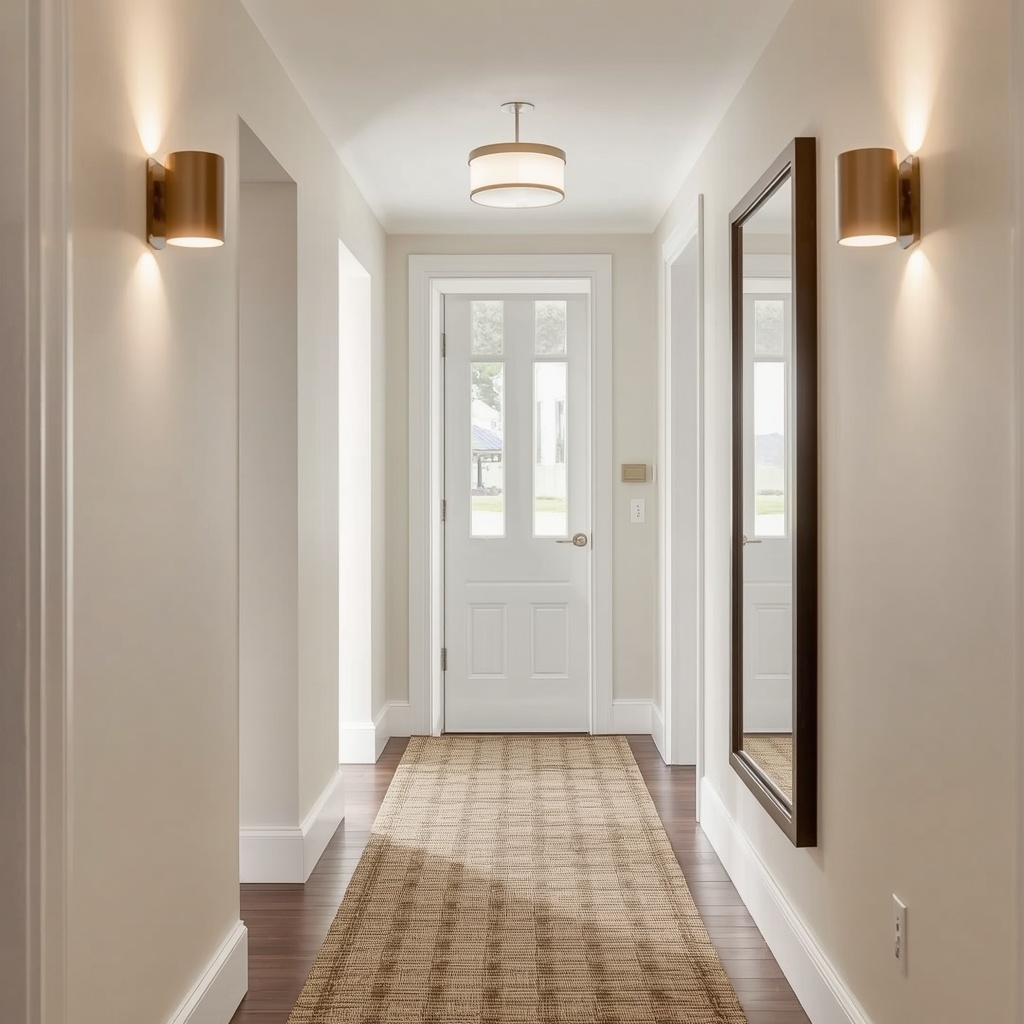
How do I decorate a narrow hallway with no windows? Rely on layered artificial lighting, light paint, and mirrors. Wall sconces and LED strips add warmth, while a large mirror bounces light and creates a sense of depth.
Can I put furniture in a narrow hallway? Yes, as long as you keep at least 36 inches of clear walking space. Choose slim consoles, floating shelves, or wall-mounted storage that is 12 inches deep or less.
What size runner should I use in a narrow hallway? Select a runner that leaves 3 to 6 inches of bare floor on both sides. Always use a non-slip pad underneath for safety.
Final Thoughts: Make Your Hallway a Destination
A narrow hallway does not have to be a forgotten pass-through. With light colors, layered lighting, strategic mirrors, slim furniture, and carefully chosen art, you can turn even the tightest corridor into one of the most charming spaces in your home. Remember to measure first, edit often, and let each piece earn its place.
Start small. Pick one idea from this guide, whether it is a fresh coat of paint, a pair of sconces, or a statement mirror, and build from there. Before long, the space you once rushed through will become the space guests remember. Your hallway is the welcome mat for your entire home, so make it beautiful.