
There’s a particular kind of living room that stops people mid-scroll — the one where a mid-century credenza sits beneath a sleek gallery wall, or a tufted velvet armchair pulls up to a minimalist glass coffee table. That’s the magic of transitional design: a style that marries the warmth and character of vintage furniture with the clean lines of modern decor.
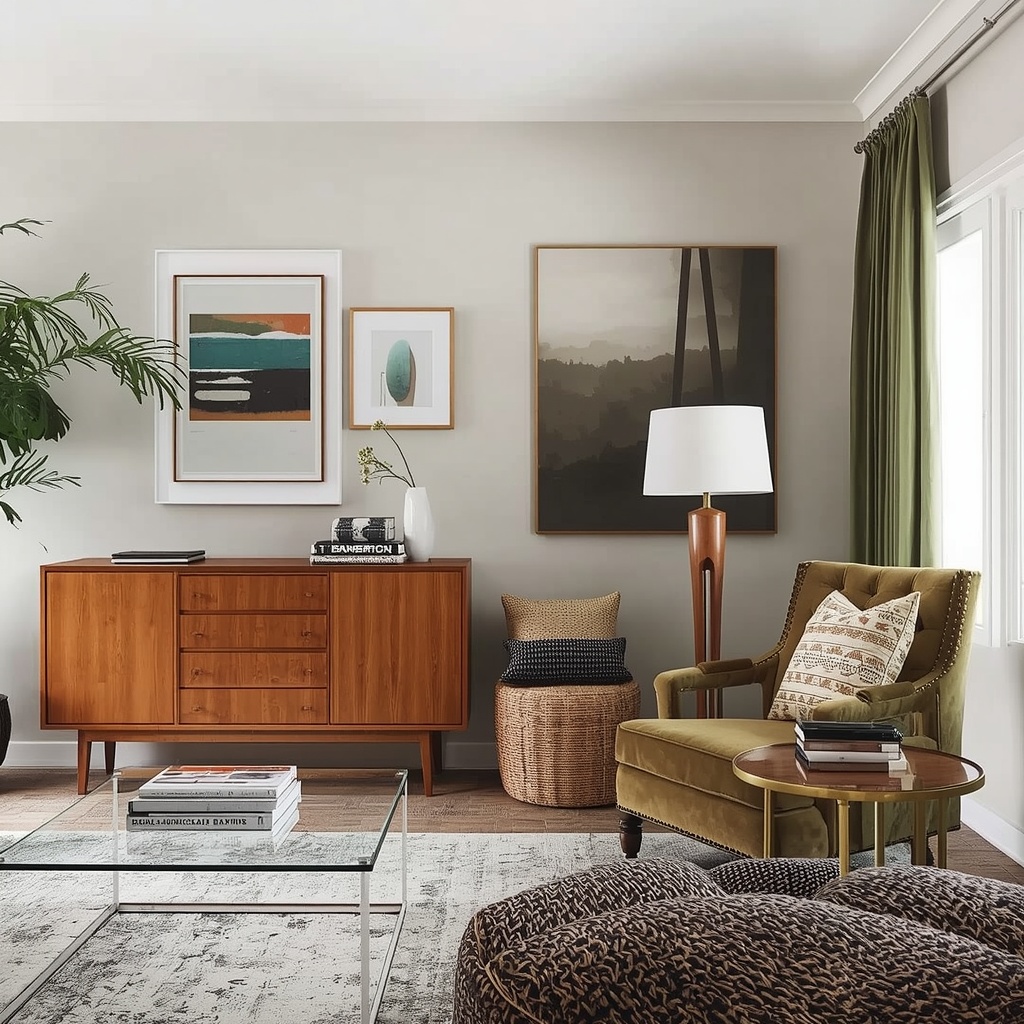
As an interior designer, I get asked constantly how to achieve this look without the room feeling like a thrift store collided with a furniture showroom. The truth is, blending eras is one of the most rewarding ways to design a living room because it tells a story — your story — rather than looking like a page ripped from a catalog. Below, I’ll walk you through exactly how to do it, room by room, decision by decision.
Why Mixing Vintage and Modern Decor Works So Well
Interior design trends come and go, but eclectic, layered spaces have staying power because they feel personal and lived-in. A living room that’s 100% modern can feel cold and showroom-like. A living room that’s entirely vintage or antique can feel dated or overly themed. The blend of both creates visual balance — old-world charm grounded by contemporary simplicity.
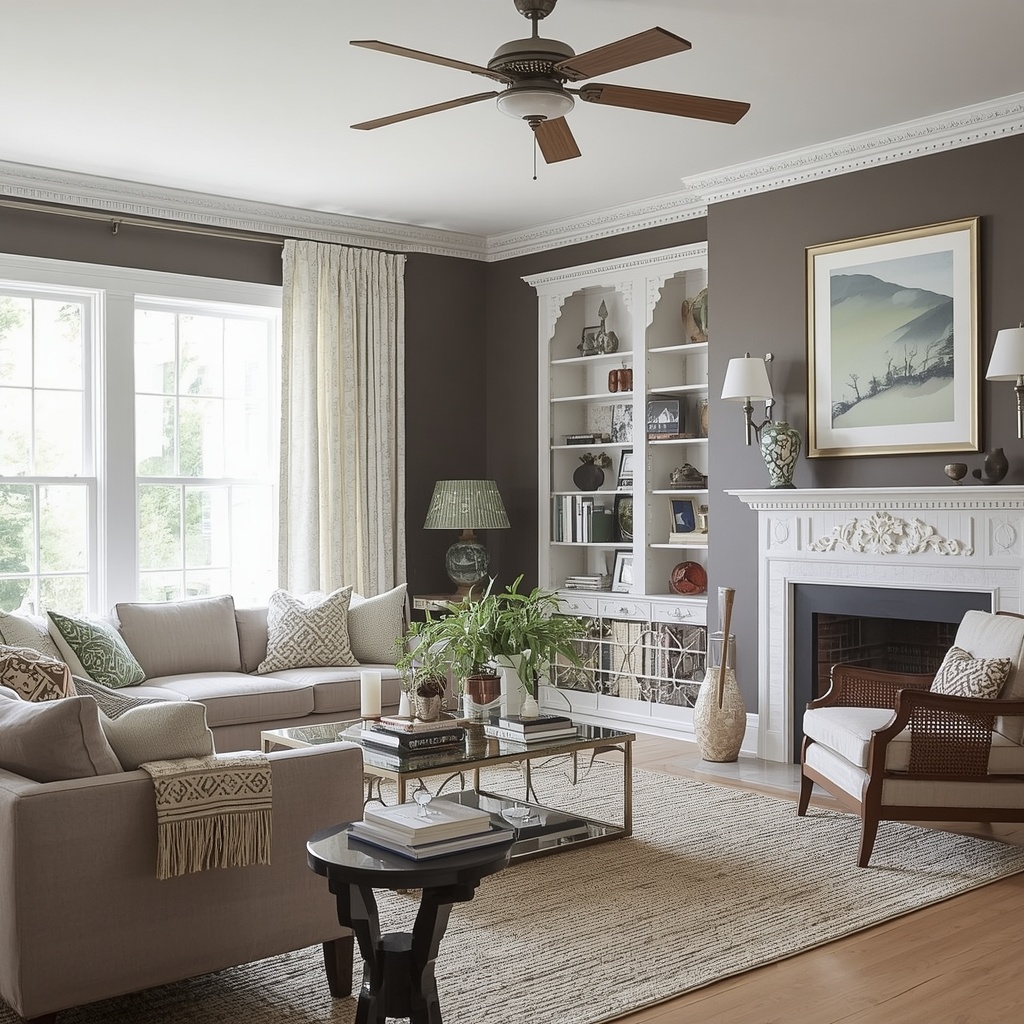
There’s also a practical upside. Vintage furniture is often better made — solid wood, genuine joinery, real craftsmanship — while modern pieces bring comfort features, cleaner silhouettes, and easier maintenance. Combining the two means you get durability and design integrity from one era, and function and freshness from the other.
“Good design isn’t about picking a side between old and new — it’s about creating a dialogue between them.” — a principle every seasoned designer lives by.
Start With a Neutral Foundation
Before you start hunting for statement pieces, get your base layer right. Walls, flooring, and large upholstered furniture should stay relatively neutral so they don’t compete with the mix of styles layered on top. Think warm whites, soft greiges, muted sage, or deep charcoal — colors that flatter both a 1960s teak sideboard and a modern boucle sofa.
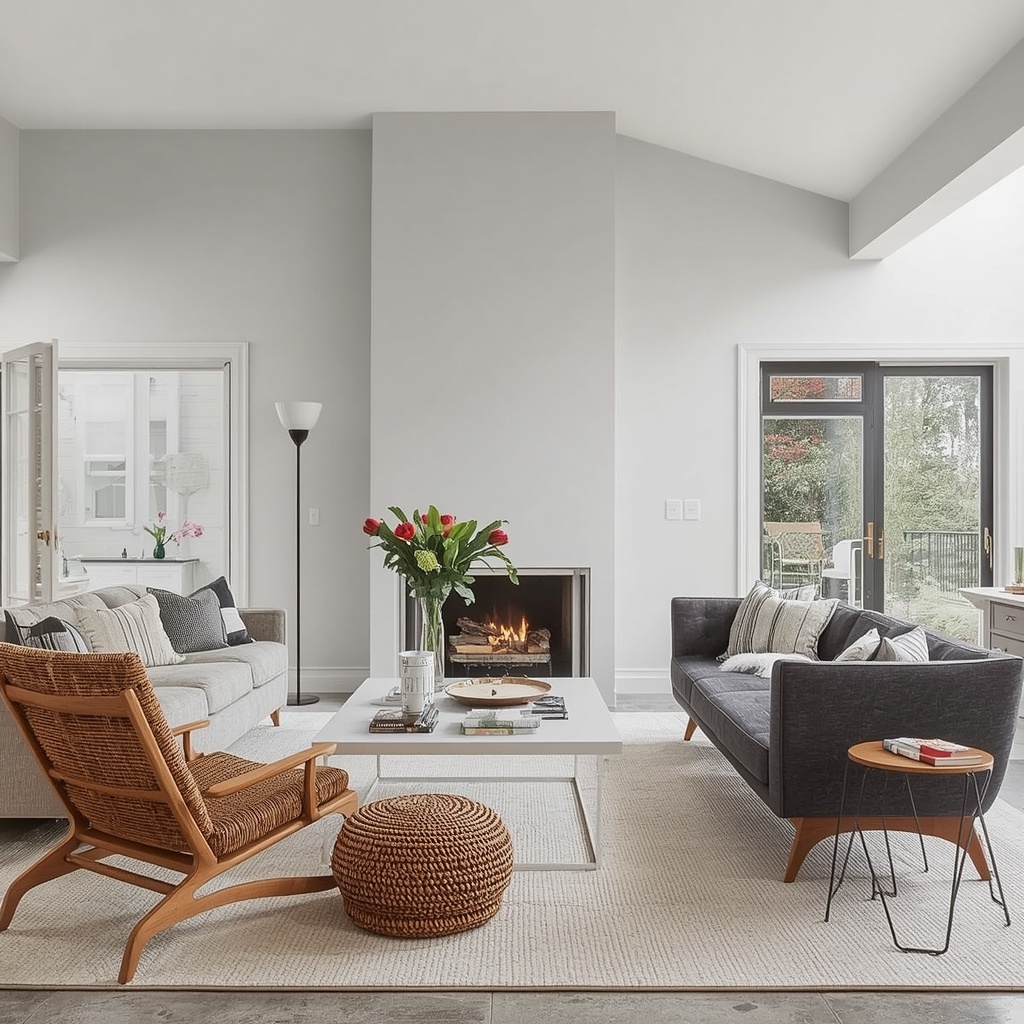
This doesn’t mean boring. Texture does the heavy lifting here: a plaster-finish wall, a linen sofa, a wool rug, or wide-plank white oak flooring all add depth without adding visual noise. Once your foundation is neutral, every vintage and modern piece you introduce will have room to shine instead of fighting for attention.
Pro Tip: Test paint colors in the actual room at different times of day. Vintage wood tones (walnut, teak, mahogany) can pull warm or cool depending on your lighting, and that affects how your modern pieces read against them.
The 70/30 Rule for Blending Eras
One of the easiest frameworks I give clients is the 70/30 rule: let one style dominate about 70% of the room, and use the other style for the remaining 30% as accents. This keeps the space from feeling chaotic or indecisive.
| Approach | Dominant Style (70%) | Accent Style (30%) | Best For |
|---|---|---|---|
| Modern-Forward | Sofa, rug, lighting, walls | Vintage side table, antique mirror, heirloom art | Minimalists who want warmth |
| Vintage-Forward | Antique furniture, patterned textiles | Modern lighting, sleek shelving, contemporary art | Traditional homes wanting freshness |
| Balanced Eclectic | Mixed 50/50 with a unifying color palette | N/A — cohesion comes from color/material repetition | Confident, collector-style homes |
Choosing your dominant style first prevents decision fatigue and gives every future purchase a clear “does this fit?” test.
Anchor the Room With One Statement Vintage Piece
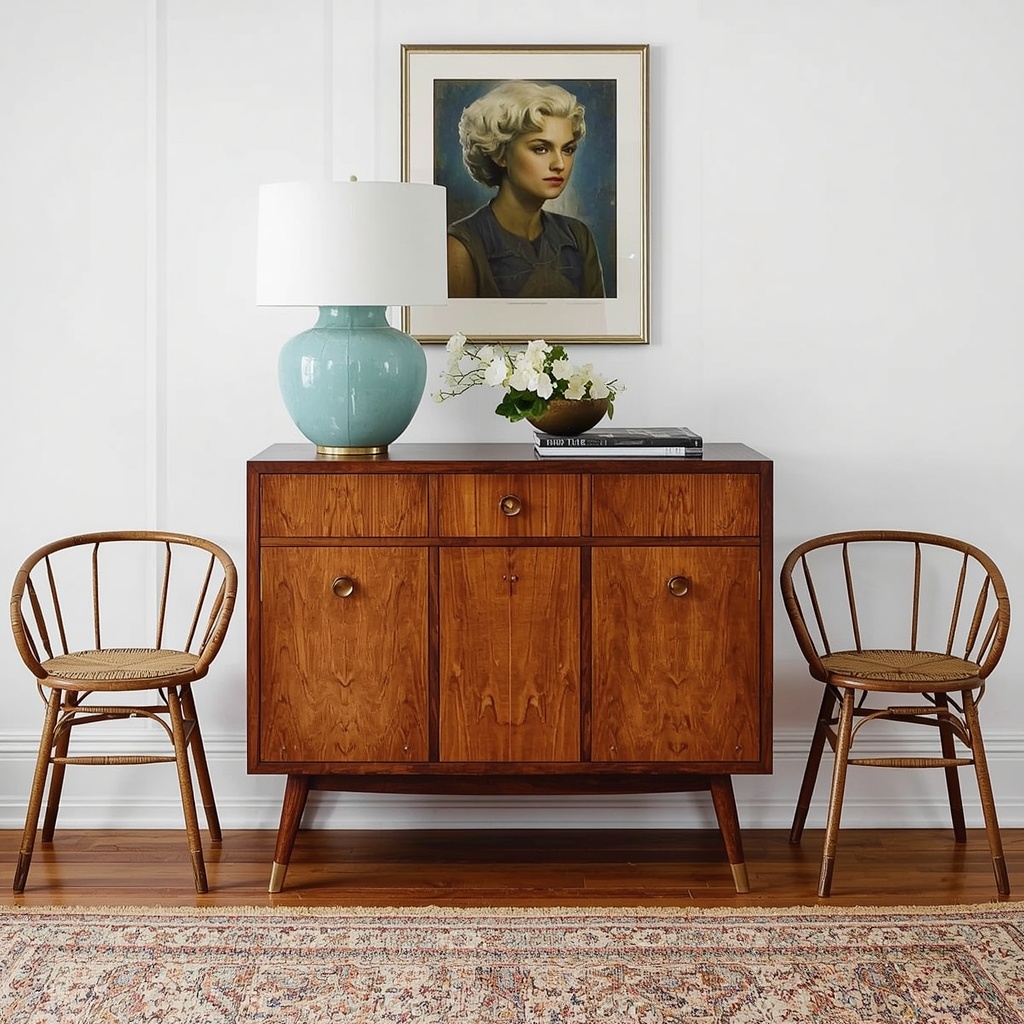
Every well-blended living room has a hero piece — usually vintage — that anchors the whole design. This could be a Danish teak credenza, an antique Persian or Turkish rug, a carved wood mirror, or a reupholstered mid-century chair. Choose one, not five. A single strong vintage anchor reads as intentional; five scattered antique pieces read as clutter.
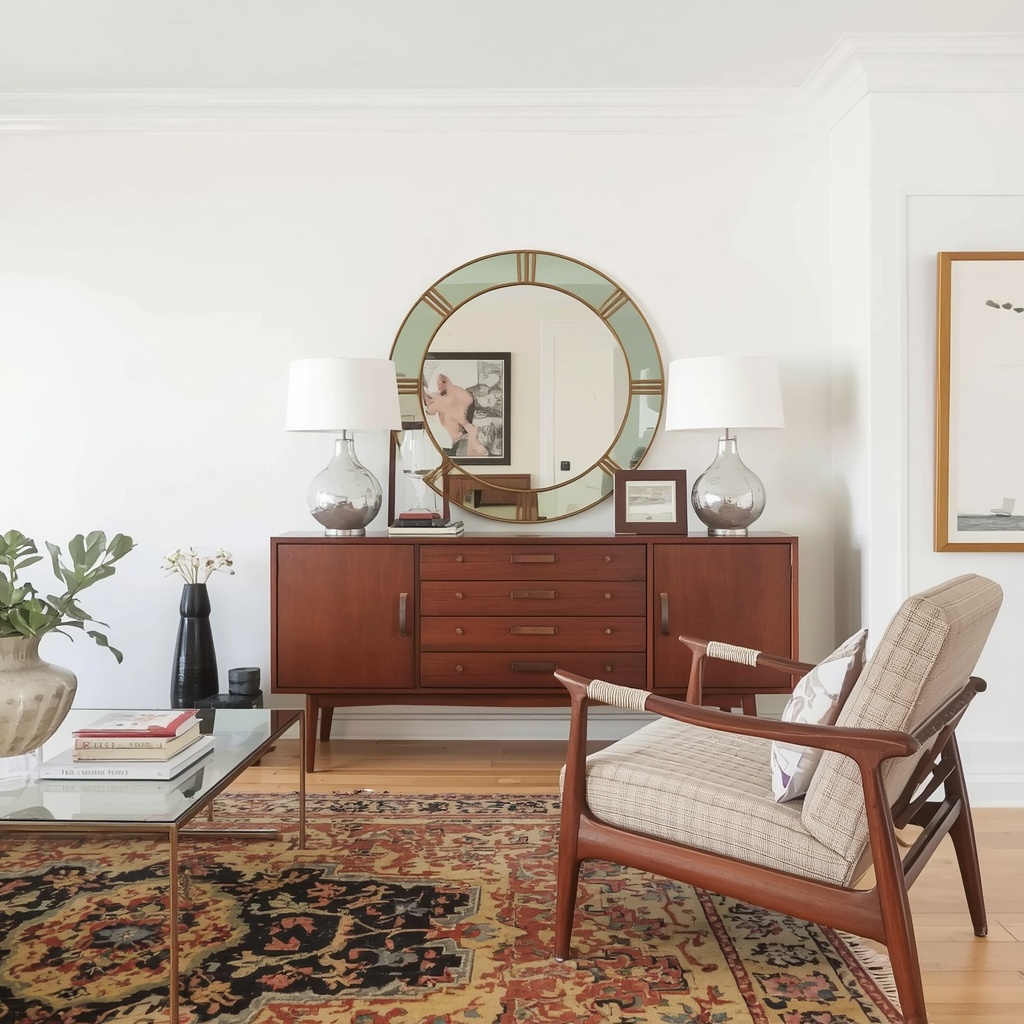
Once you have your anchor, build the rest of the room around its scale, wood tone, and color story. If your anchor piece is a walnut mid-century sideboard, echo that warm wood tone in a modern coffee table or picture frames elsewhere in the room. This repetition is what makes the mixed-era look feel curated rather than accidental.
Choosing Furniture: What to Keep Modern, What to Go Vintage
Not every piece of furniture is equally suited to being vintage or modern. Some categories benefit from an antique’s character, while others perform better with contemporary engineering.
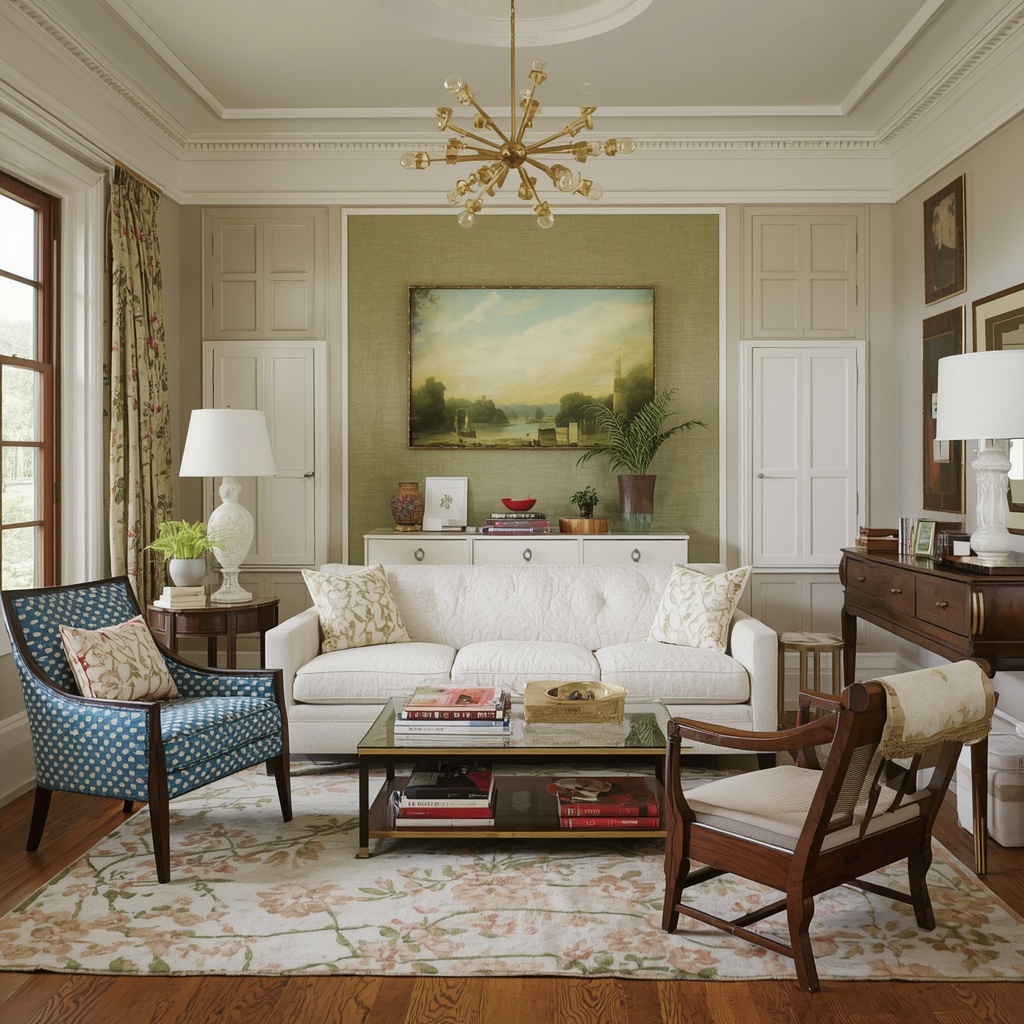
Best pieces to source vintage:
- Wood coffee tables, credenzas, and sideboards
- Statement mirrors and framed art
- Area rugs (Persian, Turkish, Moroccan)
- Brass or ceramic table lamps
- Bar carts and accent chairs
Best pieces to keep modern:
- Sofas and sectionals (for comfort and cushion support)
- Media consoles and storage systems
- Task lighting and floor lamps
- Window treatments and hardware
- Tech-integrated furniture (charging stations, smart lighting)
This division isn’t a hard rule, but it reflects where each era genuinely excels — vintage in character and craftsmanship, modern in comfort and function.
Layer Textures to Bridge the Gap
Texture is the unsung hero of transitional design. When you layer materials thoughtfully — velvet, boucle, linen, brass, rattan, aged leather, glass — you create a tactile bridge between eras that makes the whole room feel intentional rather than mismatched.
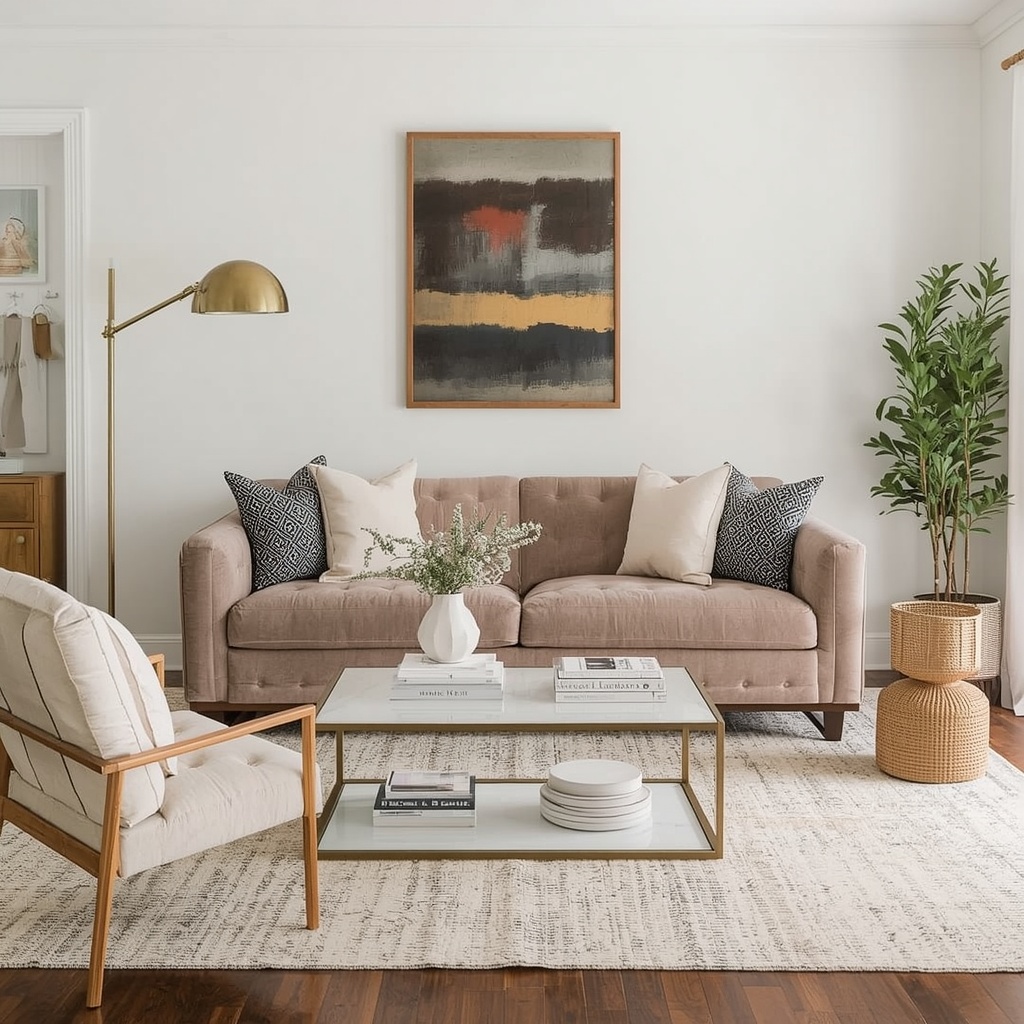
A modern boucle sofa paired with a vintage kilim rug and a brass antique floor lamp works because the textures complement rather than clash. Aim for at least three to four distinct textures in every living room: one soft (textile), one hard (wood or stone), one reflective (glass or metal), and one organic (rattan, jute, or plant life).
Pro Tip: If you only take one thing from this article, take this: repeat your accent metal finish (brass, black iron, or brushed nickel) at least three times in the room — lighting, hardware, and a decorative object. This single trick instantly makes eclectic rooms feel cohesive.
Color Palette Strategy for Vintage-Modern Living Rooms
Color is what ties disparate furniture eras together visually. Rather than matching every piece, match your palette — three to five colors that repeat throughout the room in different proportions.
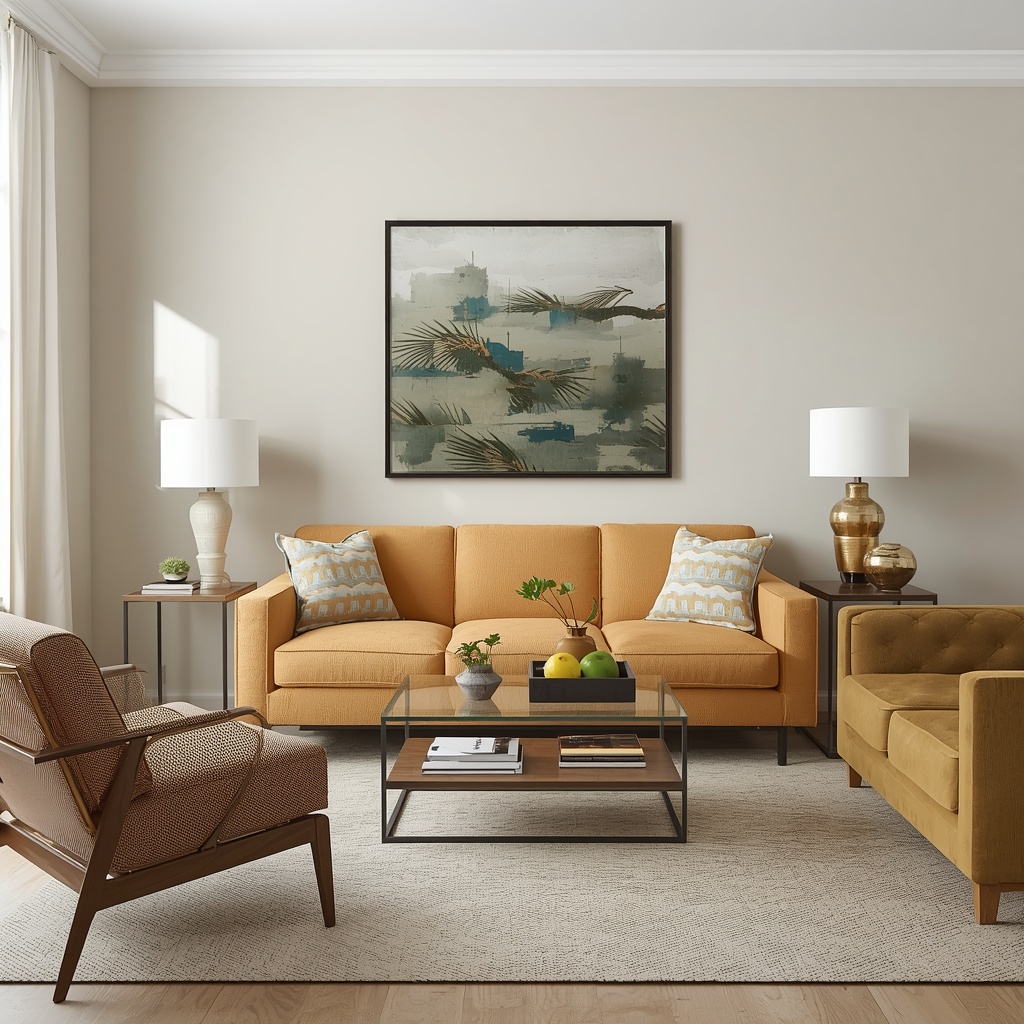
| Color Role | Example Palette | Where It Shows Up |
|---|---|---|
| Base Neutral | Warm white, oatmeal | Walls, large upholstery |
| Secondary Neutral | Charcoal, walnut brown | Vintage wood furniture, frames |
| Accent Color | Burnt orange, terracotta | Throw pillows, ceramics, art |
| Metal Accent | Aged brass | Lighting, hardware, decor objects |
| Grounding Tone | Deep green or navy | Rug, drapery, single accent chair |
Sticking to a defined palette — even a loose one — makes it far easier to shop for both antique finds and new furniture without second-guessing every purchase.
Lighting: The Modern Layer That Should Never Be Skipped
Vintage lighting can be beautiful, but it’s often dim, fragile, or wired to outdated safety standards. This is one area where I almost always recommend going modern, even in an otherwise vintage-heavy room. Layered lighting — ambient, task, and accent — is a hallmark of good modern design and instantly elevates a space.
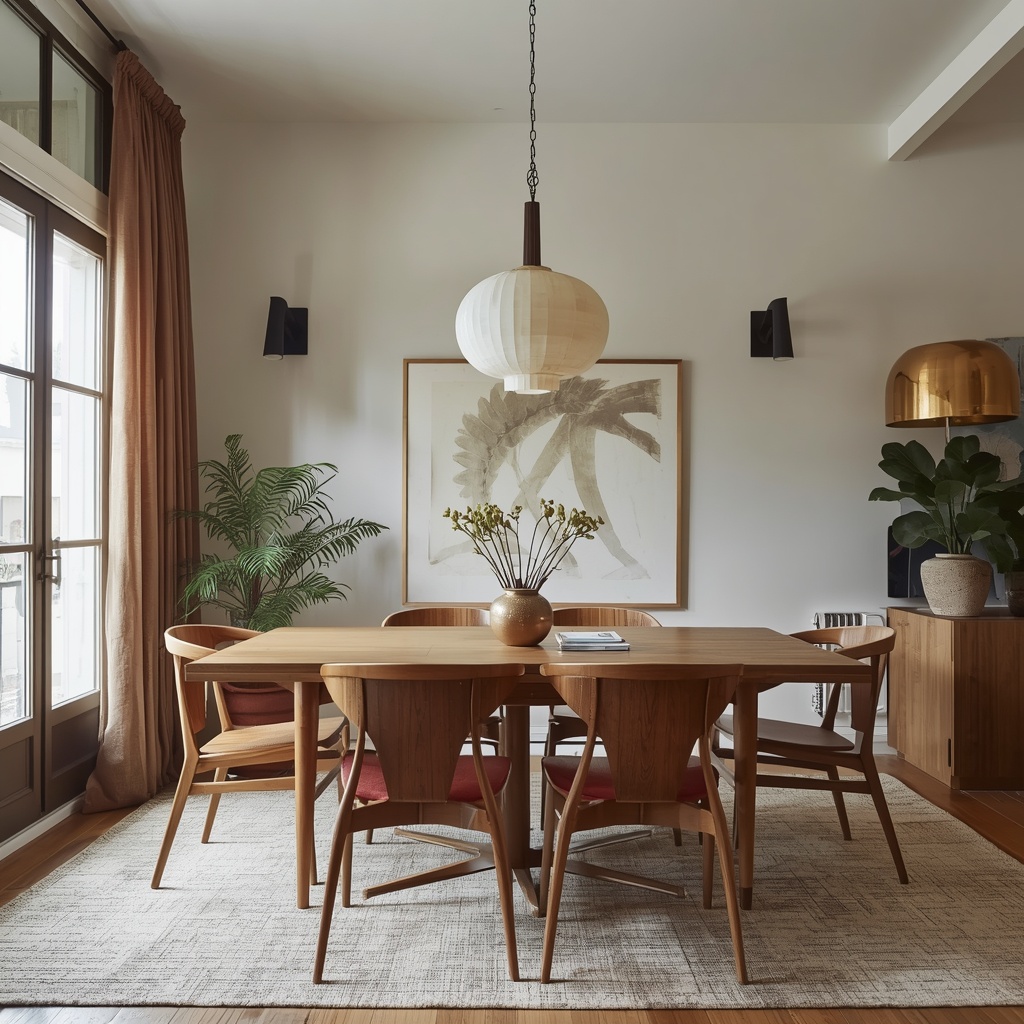
Consider a sculptural modern floor lamp next to a vintage reading chair, or contemporary picture lights above an antique mirror. The contrast of clean lighting silhouettes against ornate or aged furniture is one of the most reliable ways to signal “intentional eclectic,” not “inherited hand-me-downs.”
Art and Accessories: Where Personality Lives
Once the big furniture decisions are made, art and accessories are where you can have real fun mixing eras. A gallery wall that combines an inherited oil portrait, a modern abstract print, and a vintage botanical illustration tells a far more interesting story than a matched art set from a big-box store.
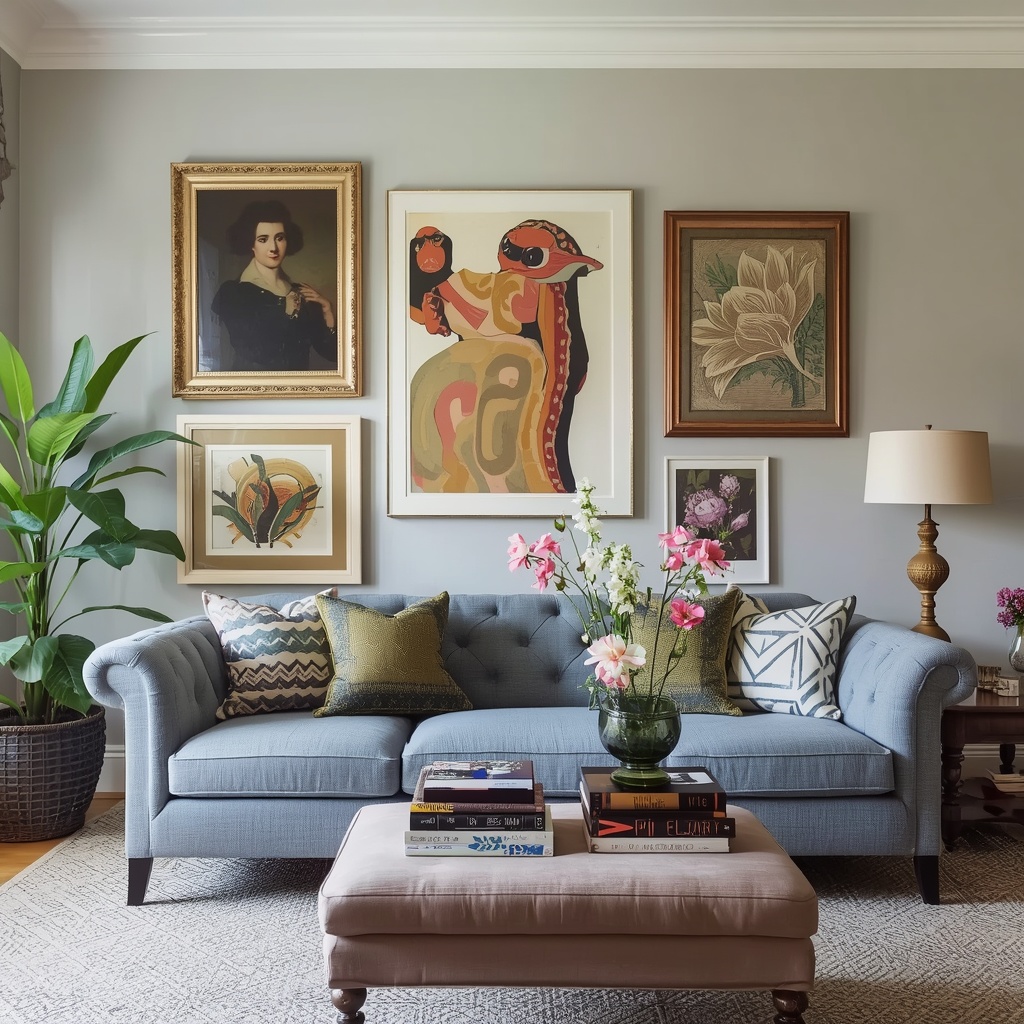
Group accessories by threes and vary their heights, materials, and eras on shelves or console tops. A ceramic vintage vase, a modern sculptural object, and a stack of coffee table books create the kind of curated vignette that photographs beautifully and feels genuinely personal.
“A room without a few imperfect, inherited, or secondhand objects rarely feels like a home — it feels like a hotel.” This is why designers consistently push clients toward at least one thrifted or family piece per room.
Room Layout Checklist for a Balanced Blend
Before finalizing your living room, run through this checklist to make sure the vintage-modern mix feels balanced rather than random:
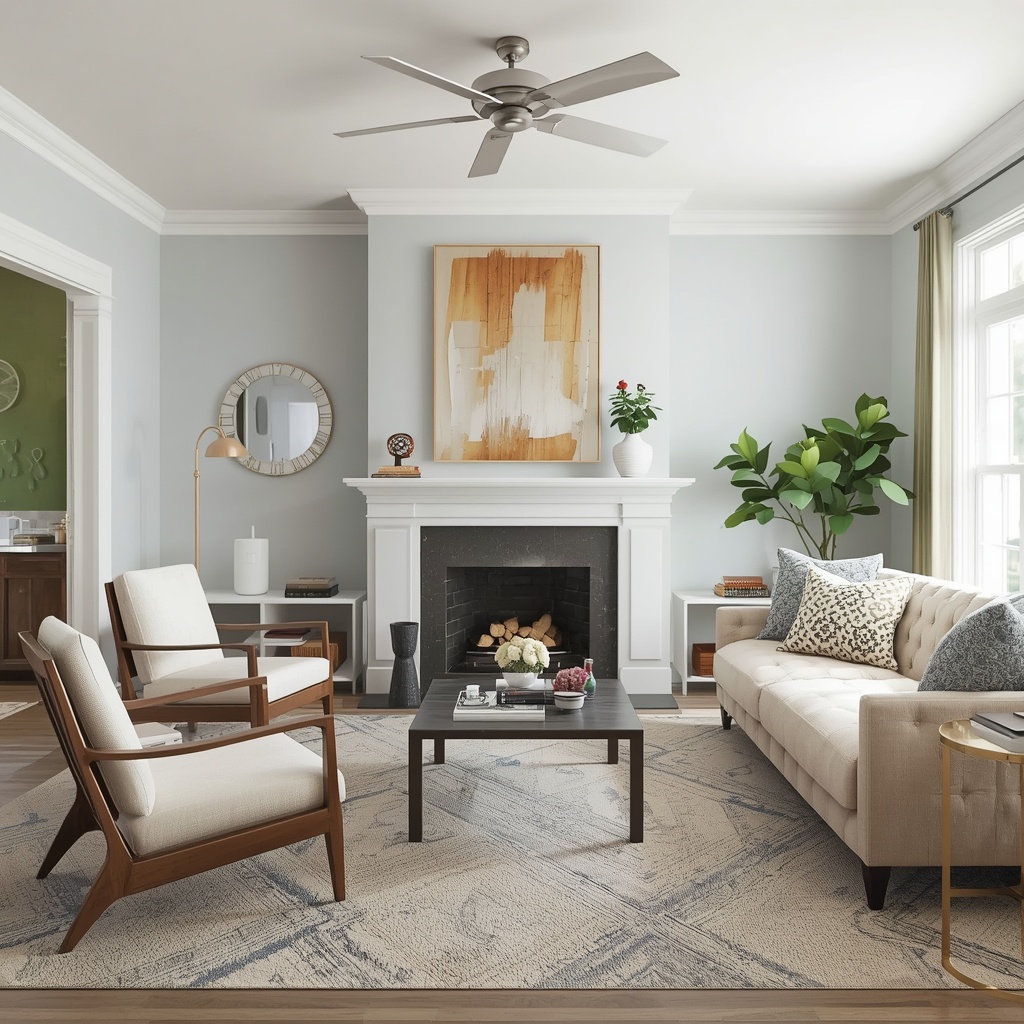
- One dominant style established at 70/30 or 50/50
- One clear anchor piece, usually vintage, that sets scale and tone
- A repeated color palette across at least four different objects
- Three to four layered textures (soft, hard, reflective, organic)
- Modern lighting layered throughout, even in vintage-forward rooms
- A mixed-era gallery wall or accessory vignette for personality
- Negative space — don’t fill every surface; let pieces breathe
This checklist works whether you’re designing from scratch or slowly integrating vintage finds into an already-modern room.
Common Mistakes to Avoid
Even design-savvy homeowners run into the same pitfalls when blending styles. Here are the most common ones I see:
- Overcrowding with antiques. Too many vintage pieces together can tip a room into “museum” or “costume drama” territory instead of eclectic-modern.
- Ignoring scale. A delicate antique side table next to an oversized modern sectional looks accidental, not curated — match proportions.
- Skipping the unifying palette. Random colors across eras make a room look thrown together rather than blended.
- Over-restoring vintage pieces. Refinishing away all patina can strip a piece of the very character you bought it for.
- Forgetting comfort. Aesthetic mixing shouldn’t come at the cost of a sofa you actually want to sit on.
Avoiding these missteps is often more important than any single styling trick — restraint is what separates “curated eclectic” from “cluttered.”
Where to Source Vintage Pieces (Without Overspending)
You don’t need a vintage furniture budget the size of a small car to pull this off. Some of the best sources for authentic vintage and antique pieces include:
- Local estate sales and auctions — often the best prices for solid-wood furniture
- Facebook Marketplace and Craigslist — searchable by city, great for larger pieces like credenzas and sideboards
- Chairish and 1stDibs — curated, higher-end vintage marketplaces with nationwide shipping
- Local vintage and antique malls — great for smaller decor: lamps, mirrors, ceramics
- Family hand-me-downs — often free, and carry the most sentimental value
For inspiration and current market pricing, resources like Chairish and 1stDibs are worth bookmarking before you start furnishing.
Final Thoughts: Let the Room Evolve
The most successful vintage-modern living rooms are rarely finished in a single shopping trip. They evolve over months or years, as you find the right antique mirror at an estate sale or finally commit to that modern sectional you’ve been eyeing. Give yourself permission to build the room slowly, prioritizing pieces you genuinely love over pieces that simply “match.”
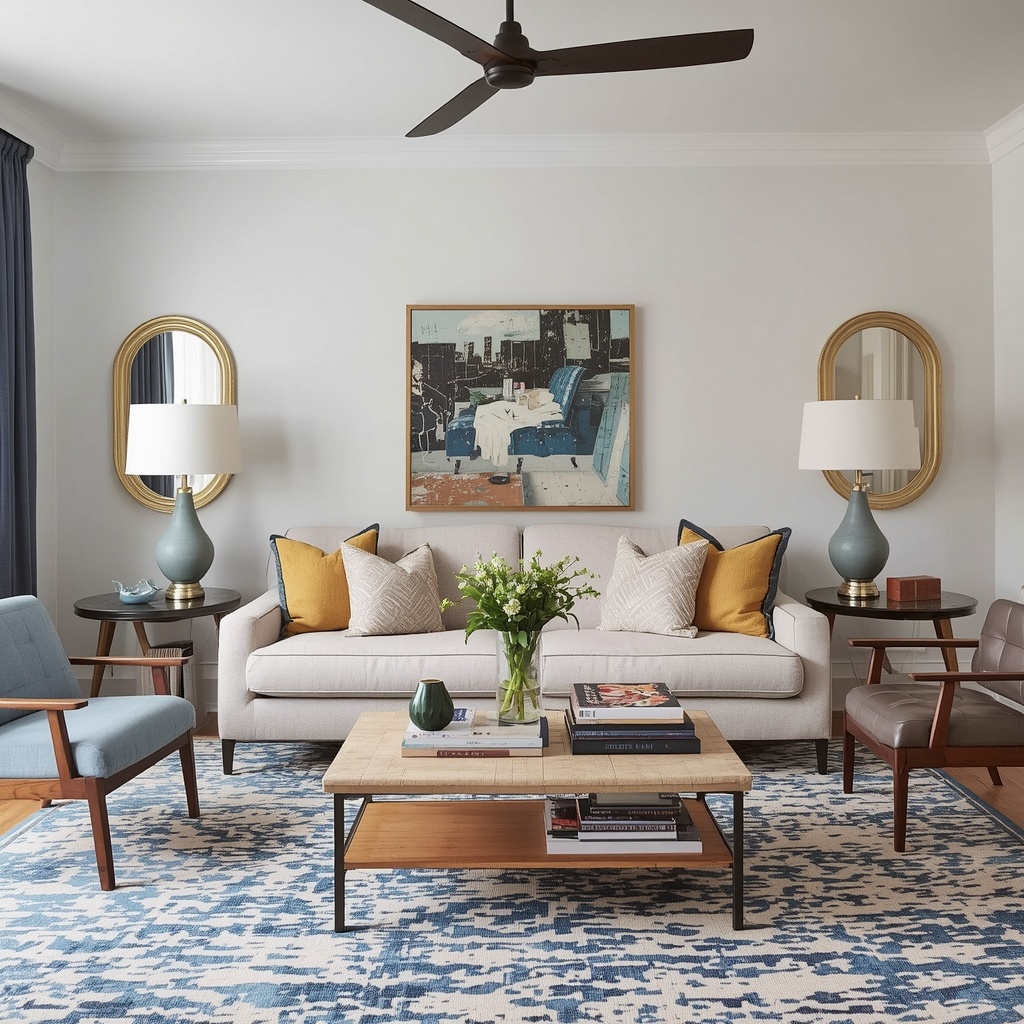
Blending eras isn’t a strict formula — it’s a design philosophy rooted in balance, restraint, and storytelling. When done well, a vintage-modern living room doesn’t just look good in photos; it feels warm, layered, and unmistakably yours every time you walk into it.