
Mid-century modern (MCM) design has outlasted nearly every design trend that came after it, and for good reason. Clean lines, warm wood tones, and a “form follows function” attitude make it feel timeless rather than trendy. The good news for budget-conscious homeowners: this style was actually born out of practicality, which means it’s one of the easiest aesthetics to recreate without a designer-sized budget.
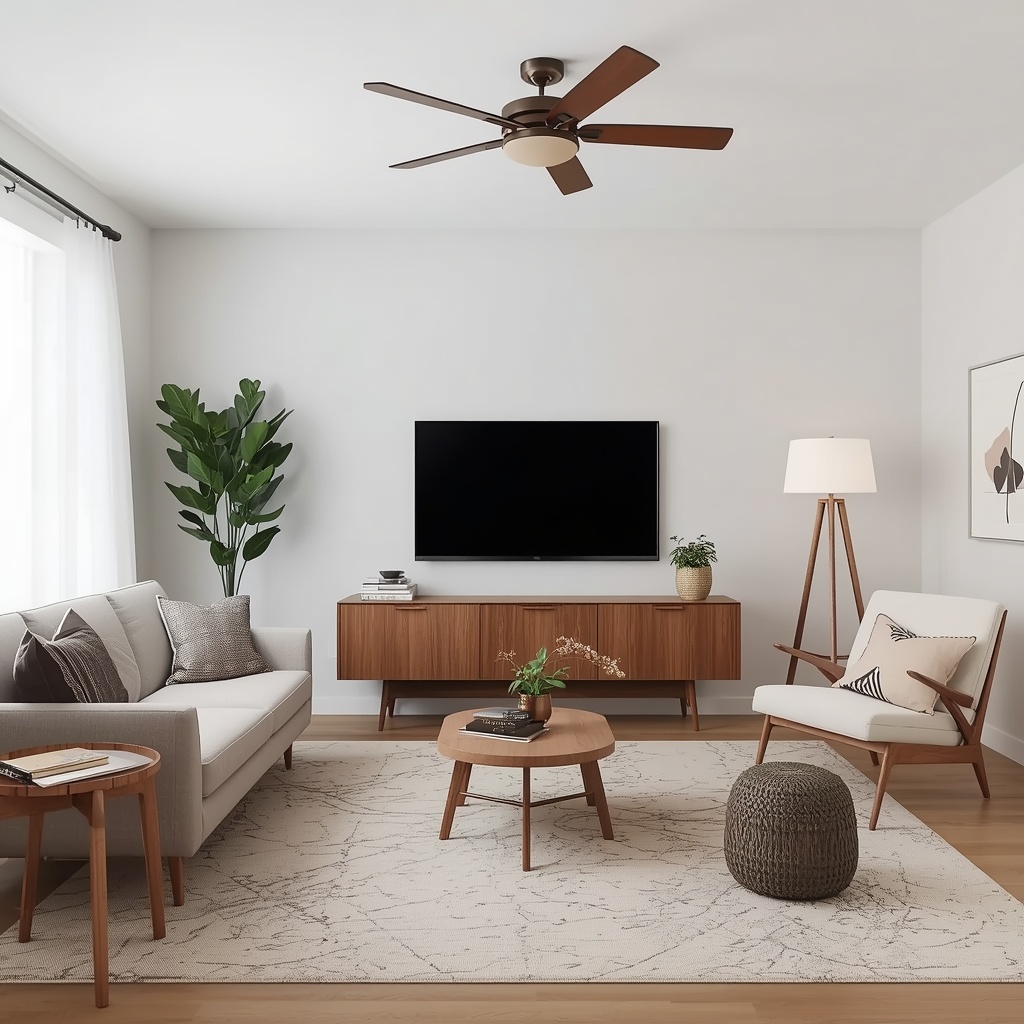
If you’ve been pinning images of walnut credenzas and sunburst mirrors but assume the look is out of reach financially, this guide is for you. Below, you’ll find everything you need — from color palettes to shopping strategy to layout — to build a mid-century modern living room that looks like it cost thousands, even if it didn’t.
What Is Mid-Century Modern Style, Exactly?
Mid-century modern refers to design produced roughly between 1945 and 1969, though the style borrows influence from the Bauhaus and Scandinavian modernism movements before it. It prioritizes organic curves, tapered legs, minimal ornamentation, and a strong relationship between indoor furniture and the natural world outside.
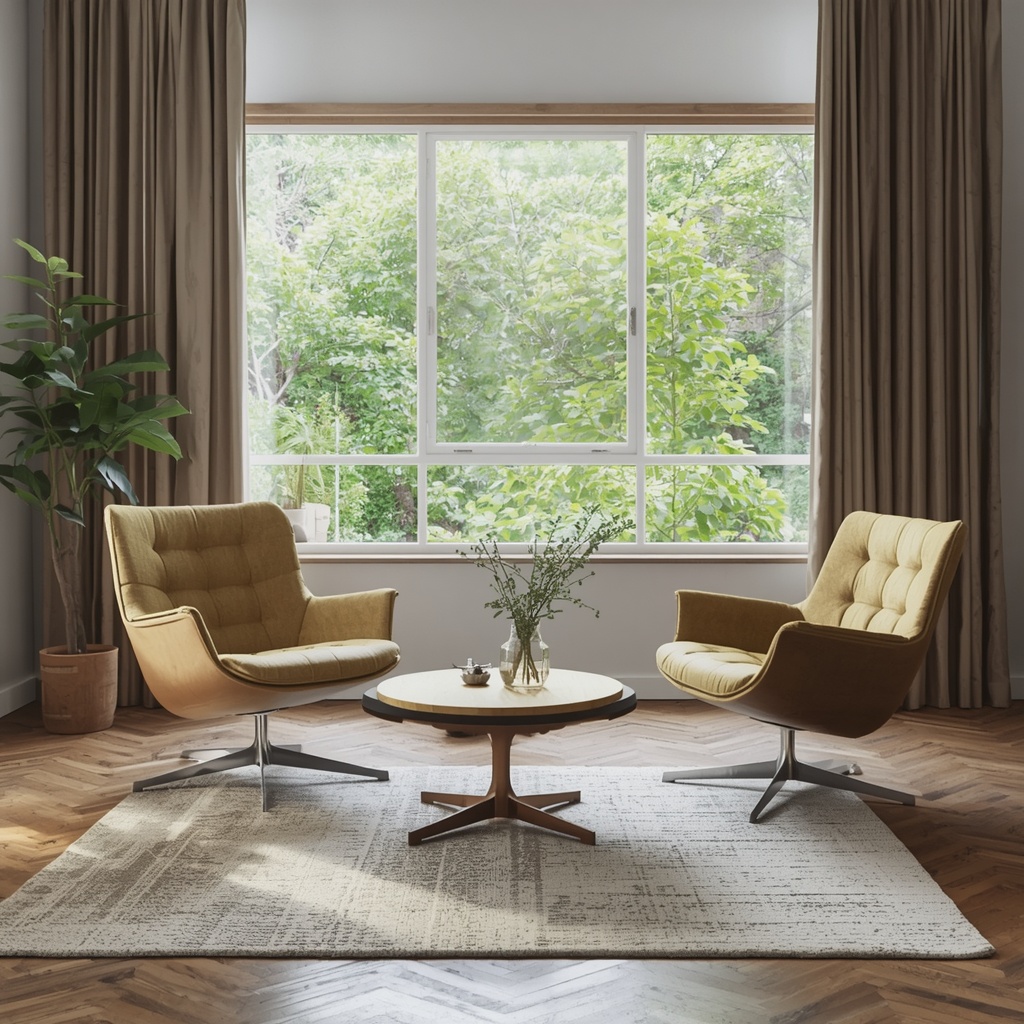
Think Danish modern teak furniture, atomic age accents, and iconic pieces like the Eames lounge chair. The style rejects clutter and heavy Victorian ornamentation in favor of function-first design that still feels warm rather than sterile. That warmth — driven by wood tones and organic shapes — is exactly what makes MCM so approachable for everyday homes.
Why Mid-Century Modern Is a Budget Decorator’s Dream
Unlike maximalist or ornately traditional styles, mid-century modern decor doesn’t rely on expensive materials or elaborate detailing to look intentional. The style was originally designed for post-war, middle-class American homes — meaning it was built around affordability, mass production, and efficient use of space from day one.
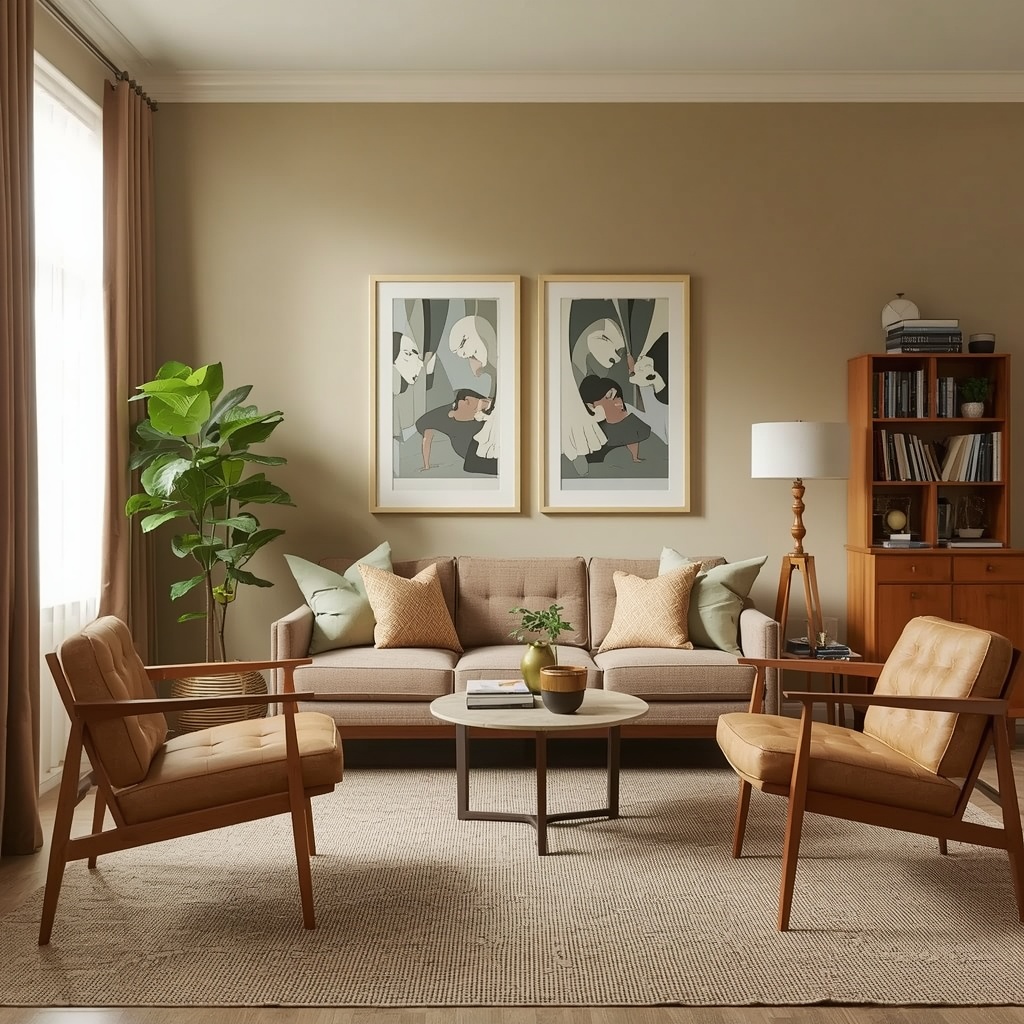
That history works in your favor now. Because MCM furniture was manufactured widely and remains extremely popular, thrifted and vintage pieces are everywhere, from estate sales to online marketplaces. You’re not fighting scarcity; you’re shopping a style with decades of secondhand supply behind it.
“Good design is not about how much you spend — it’s about restraint, proportion, and choosing pieces that actually work for how you live.” This is the guiding philosophy behind mid-century modern, and it’s exactly why the style translates so well to a smaller budget.
Key Elements of a Mid-Century Modern Living Room
Before you buy anything, it helps to understand the non-negotiable ingredients of the look. You don’t need all of these at once, but hitting several will instantly read as “mid-century modern” rather than generic retro.
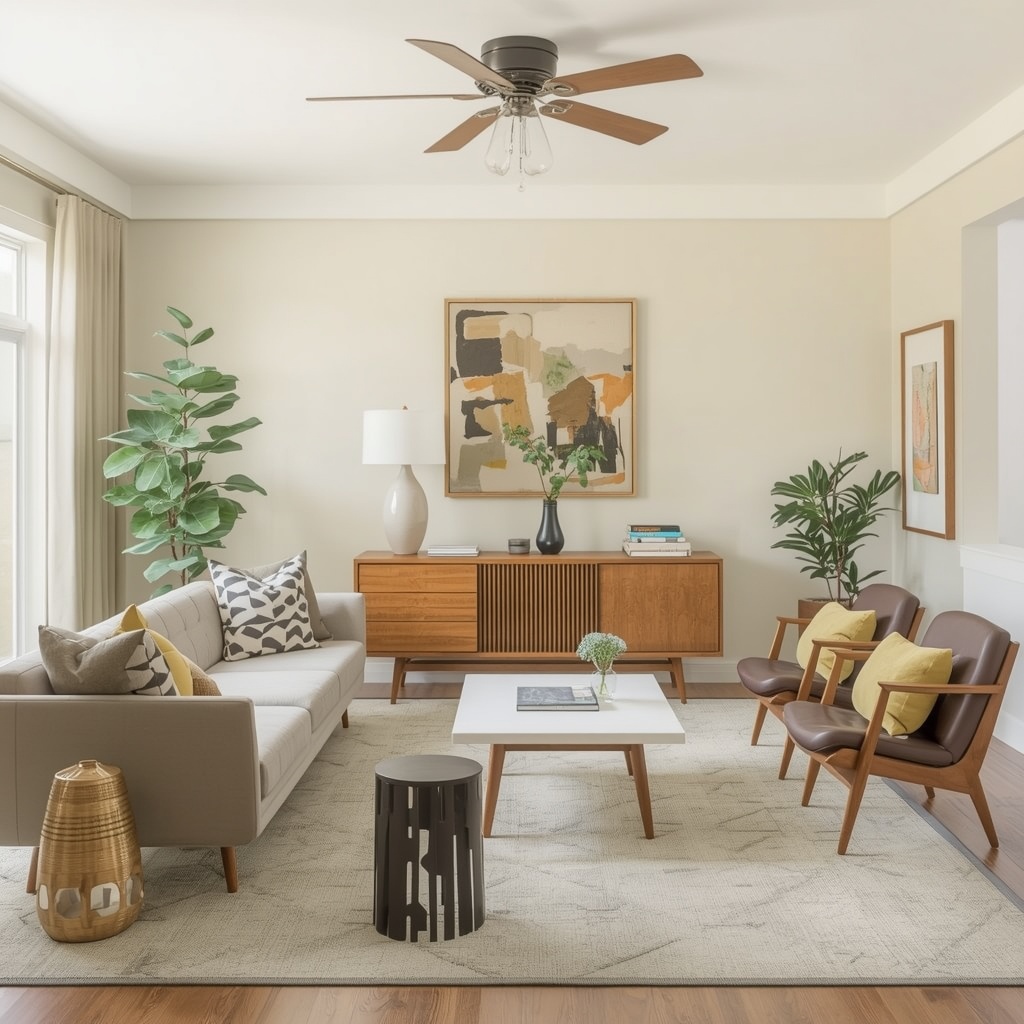
- Warm wood tones — walnut, teak, and oak in low-profile furniture
- Tapered, angled legs on sofas, chairs, and tables
- Organic and geometric shapes — kidney tables, boomerang shapes, starburst patterns
- Bold but controlled color pops — mustard, burnt orange, avocado green, teal
- Minimal, functional silhouettes with clean lines and little ornamentation
- Natural materials like leather, boucle, wool, and rattan
- Statement lighting such as sputnik chandeliers or arc floor lamps
- Art and accessories with abstract or geometric motifs
Quick Reference: MCM Elements and Budget Swaps
| Classic MCM Element | Original Price Range | Budget-Friendly Alternative | Approx. Cost |
|---|---|---|---|
| Eames-style lounge chair | $1,500–$5,000+ | IKEA POÄNG or Article accent chair with MCM lines | $150–$400 |
| Walnut credenza | $1,200–$3,000+ | Thrifted dresser refinished in walnut stain | $50–$150 |
| Sputnik chandelier | $400–$1,200 | Amazon or Wayfair sputnik-style fixture | $60–$150 |
| Vintage wool area rug | $600–$1,500 | Machine-washable geometric-pattern rug | $80–$200 |
| Teak coffee table | $500–$1,800 | Secondhand coffee table with tapered legs, restained | $30–$100 |
| Original abstract art | $300–$2,000+ | Printable art or thrifted frames with MCM prints | $10–$40 |
This table alone illustrates the core budget strategy: buy the silhouette, not the label. A $40 thrifted table with tapered legs delivers the same visual impact as a $1,000 designer original once it’s styled correctly.
Building an Affordable Mid-Century Modern Color Palette
Color is where mid-century modern decor earns its personality, and thankfully, paint and textiles are some of the cheapest ways to transform a room. The classic MCM palette pairs warm neutrals with one or two saturated accent colors.
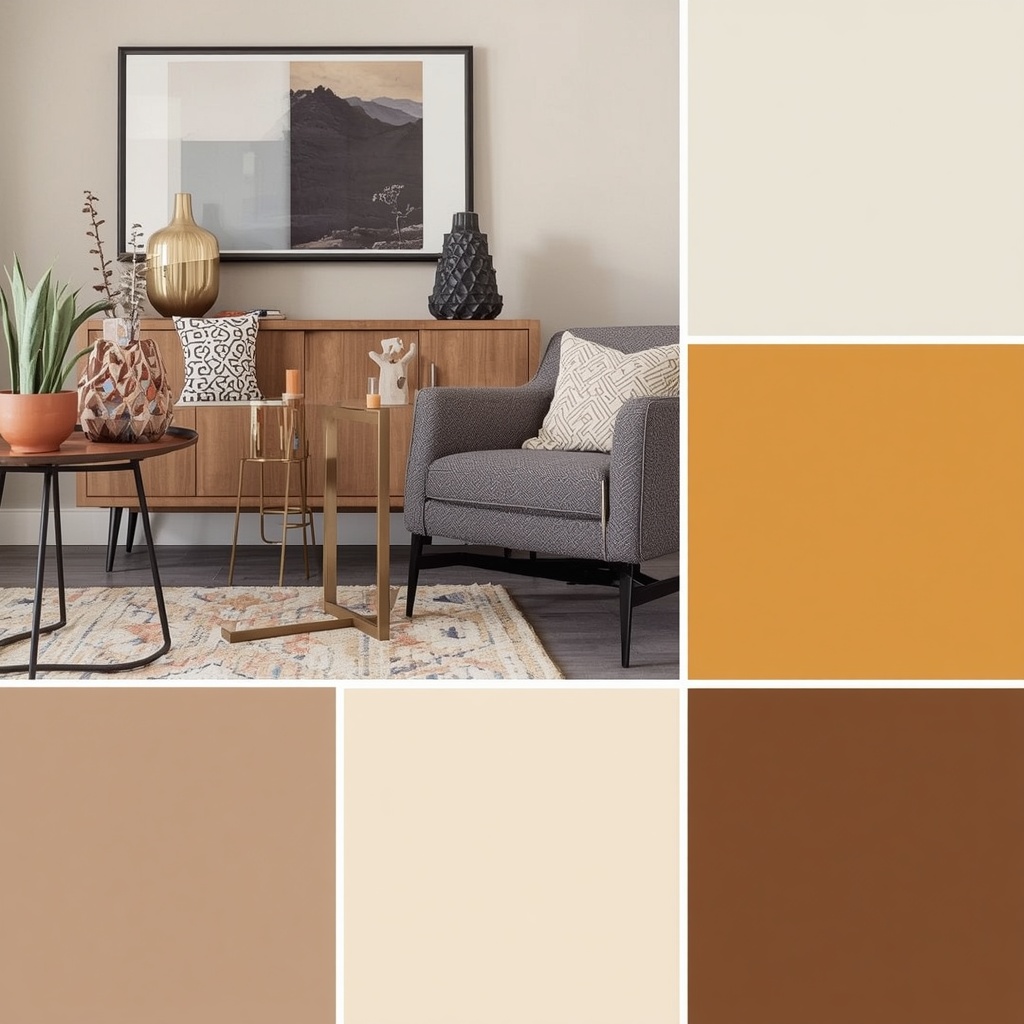
Base neutrals: cream, warm white, greige, and walnut brown Accent colors: mustard yellow, burnt orange, avocado green, teal, and brick red
A budget-friendly approach is to keep large furniture pieces and walls neutral, then introduce color through inexpensive elements: throw pillows, a single accent chair, artwork, or a area rug. This lets you swap trends or refresh the room later without repainting or reupholstering anything.
💡 Pro Tip: Paint one accent wall in a saturated MCM color like burnt orange or teal instead of committing to it on furniture. Paint costs $30–$50 a gallon, is easy to change later, and delivers the boldest visual impact per dollar of any decor decision you can make.
Where to Shop for Mid-Century Modern Decor on a Budget
Sourcing strategy matters as much as style knowledge when you’re decorating affordably. Here’s where budget-savvy shoppers consistently find the best mid-century modern pieces.
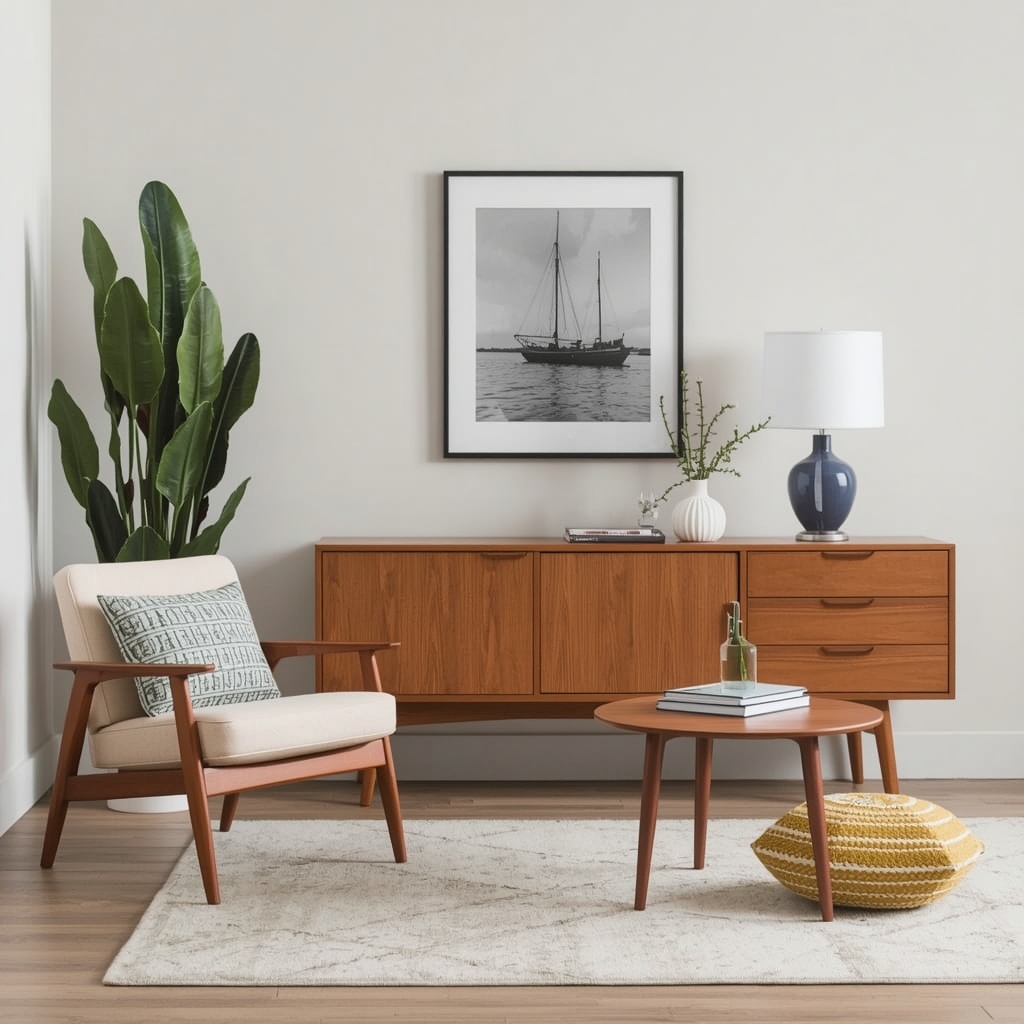
- Facebook Marketplace and Craigslist — the single best source for authentic vintage MCM furniture, often listed by people who don’t realize the resale value
- Thrift stores and Habitat for Humanity ReStores — great for smaller accent pieces, lamps, and frames
- Estate sales and auction sites like EstateSales.net — ideal for full sets at steep discounts
- IKEA — the ODGER chair, VITTSJÖ shelving, and STOCKHOLM line all echo MCM lines affordably
- Target and Walmart home sections — increasingly stock retro-inspired accent furniture and lighting
- Chairish and 1stDibs “Under $500” filters — for browsing curated vintage without a flea-market hunt
For deeper research on identifying authentic vintage pieces, resources like the Smithsonian’s design history archives and general reference sites like Wikipedia’s overview of mid-century modern design are useful starting points before you shop.
DIY vs. Thrifted Finds: Where to Spend and Where to Save
Not every mid-century modern element is worth the DIY effort, and not every piece is worth buying new. Knowing the difference keeps your budget efficient.
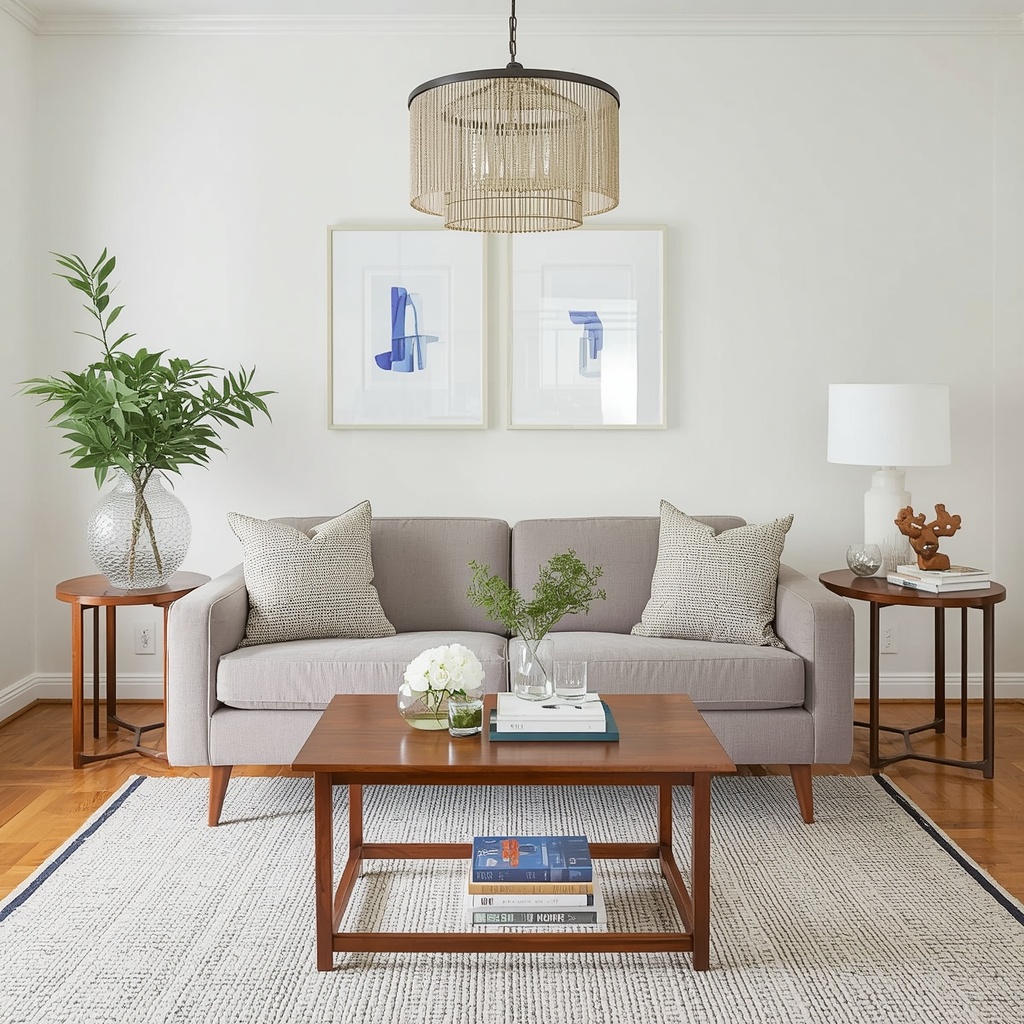
Worth thrifting and refinishing: wood furniture with good bones (dressers, side tables, credenzas), picture frames, and solid wood dining or accent chairs. A light sanding and a walnut or teak-toned stain can transform a dated piece in an afternoon.
Worth buying new (cheaply): lighting fixtures, since vintage electrical wiring can be a safety concern, and upholstered seating, since secondhand foam and fabric may carry wear, odor, or allergens that aren’t worth the discount.
Budget Room Refresh Checklist
- Choose one accent wall color or a neutral palette with one bold textile color
- Source one statement seating piece (chair or loveseat) with tapered legs
- Add a low-profile coffee table with an organic or geometric shape
- Layer in a geometric-pattern area rug
- Install one statement light fixture (floor lamp or pendant)
- Add 2–3 pieces of abstract or botanical wall art
- Introduce brass, wood, or walnut accents through small decor objects
- Add greenery — a rubber plant or fiddle leaf fig echoes the era’s love of houseplants
Lighting That Sets the Mid-Century Mood
Lighting is one of the most underrated tools in mid-century modern decorating, and it’s often the cheapest fix with the biggest visual payoff. The era favored sculptural, warm-toned lighting rather than bright overhead fixtures.
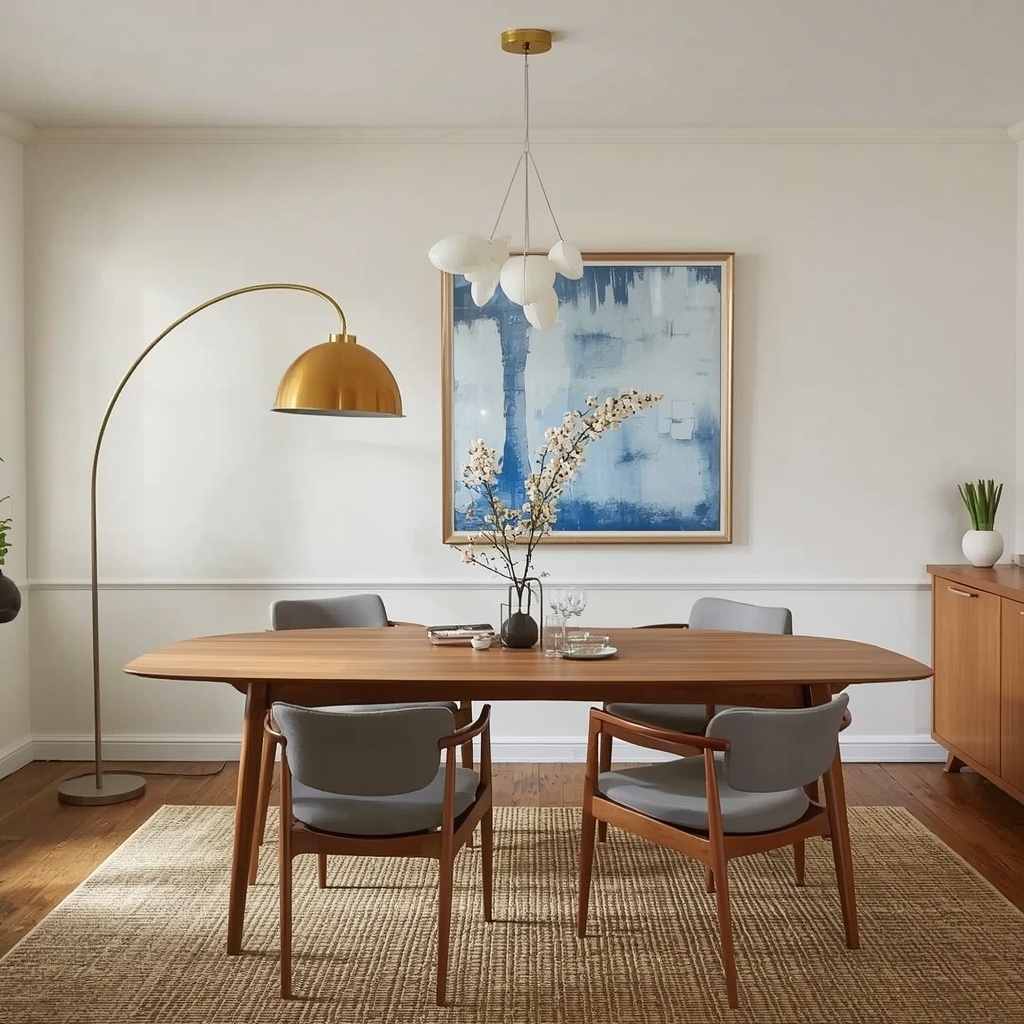
Arc floor lamps, sputnik-style chandeliers, and drum pendant shades all read as period-appropriate without requiring an electrician if you choose plug-in versions. Swapping a single overhead fixture or adding one statement floor lamp can shift an entire room’s atmosphere for under $150.
Layout Tips for a Budget Mid-Century Modern Living Room
Mid-century modern design emphasizes openness and function, so layout matters as much as individual pieces. Keep furniture low to the ground to maintain the era’s signature horizontal lines, and avoid overcrowding — negative space is a design feature, not a gap to fill.
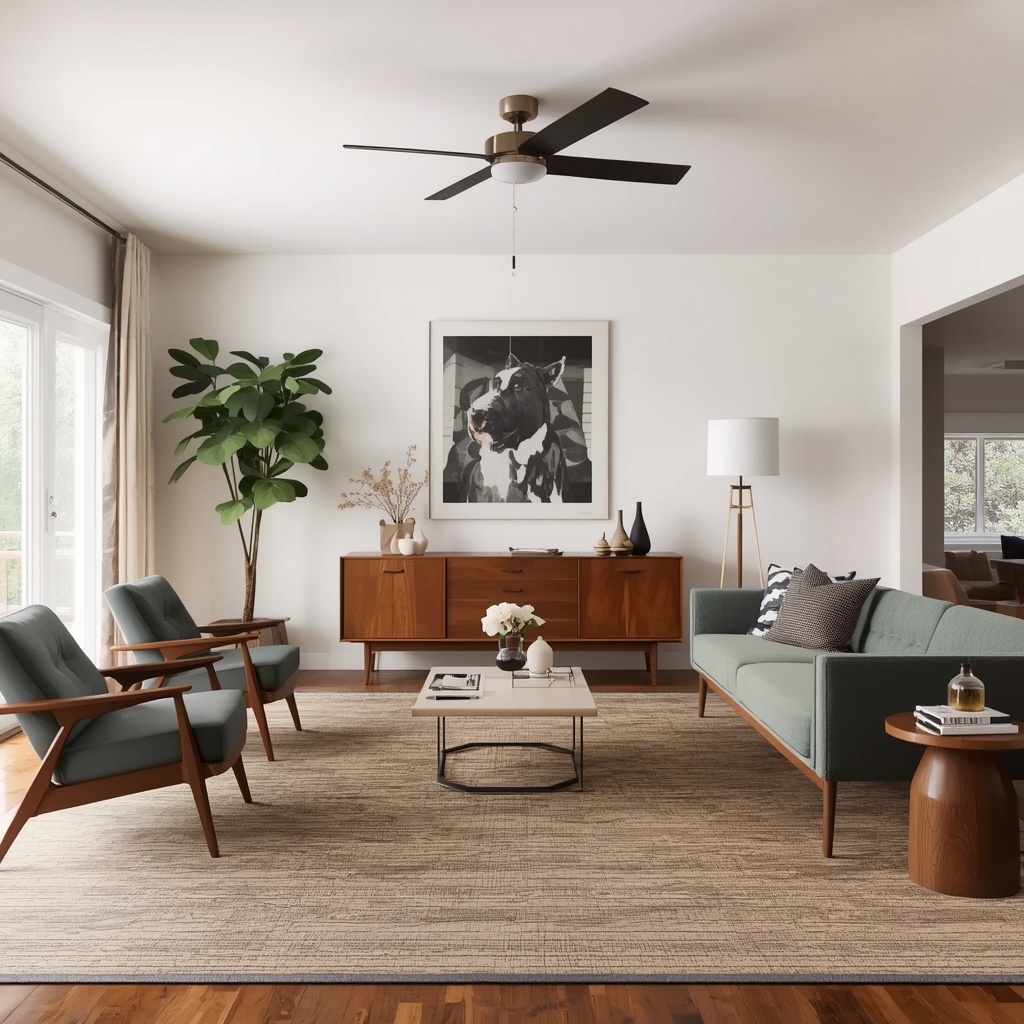
Float furniture away from walls when the room allows it, and anchor the seating area with a rug that’s large enough for at least the front legs of every piece to rest on it. This single adjustment makes budget furniture look far more curated and intentional.
Common Mistakes to Avoid
Even with the right pieces, a few missteps can make a room look more “thrift store” than “mid-century modern.” Avoiding these keeps your budget room polished rather than mismatched.
| Mistake | Why It Hurts the Look | Easy Fix |
|---|---|---|
| Mixing too many wood tones | Creates visual chaos instead of warmth | Stick to 2 dominant wood tones max |
| Overcrowding with accessories | MCM relies on negative space | Edit down to fewer, more intentional objects |
| Choosing oversized furniture | Clashes with the era’s low, slim profiles | Prioritize tapered legs and lower backs |
| Ignoring texture | Flat rooms look cheap even with the right shapes | Mix leather, wool, boucle, and wood |
| Skipping a focal point | Room feels directionless | Choose one statement chair, art piece, or light |
Frequently Asked Questions
Is mid-century modern decor expensive to achieve? Not necessarily. Because the style prioritizes simple shapes and widely-produced furniture, thrifted and budget retail options can replicate the look for a fraction of vintage designer prices.
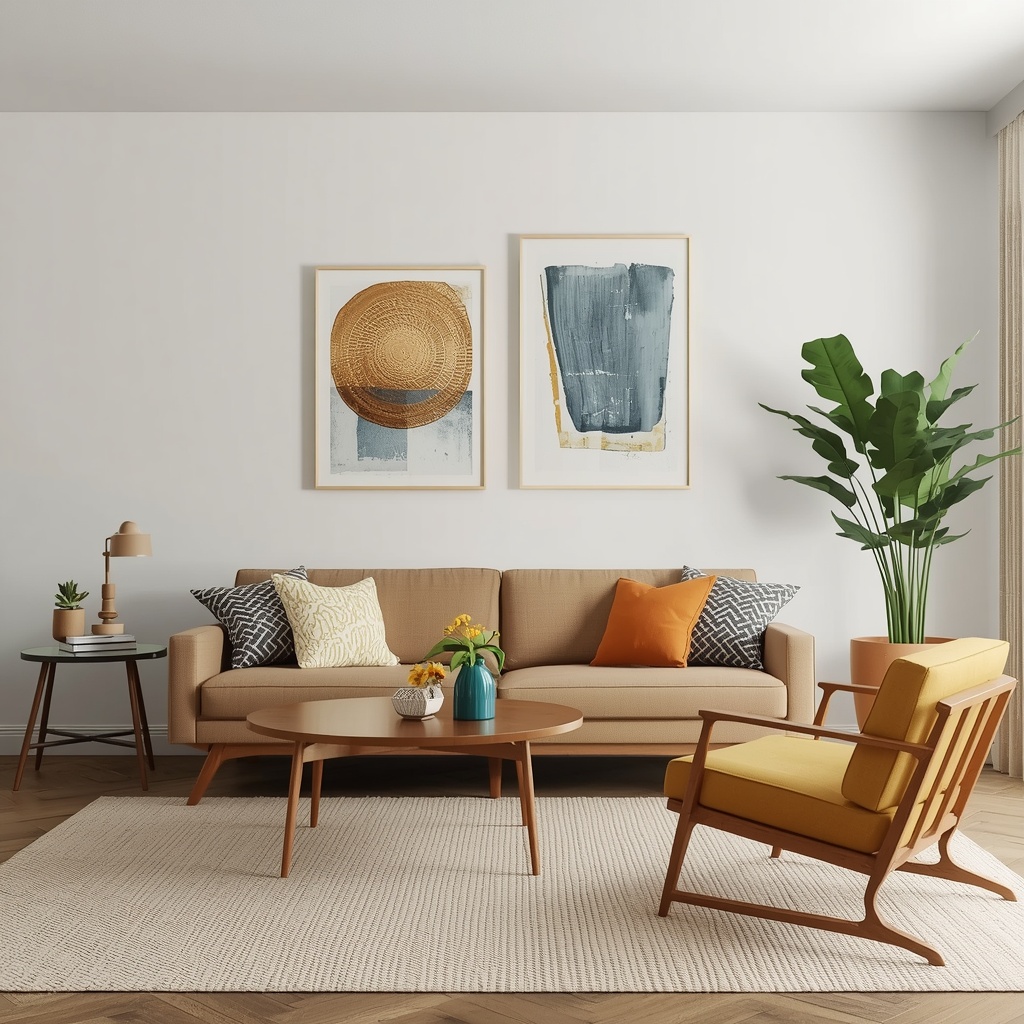
What colors work best in a budget mid-century modern living room? Warm neutrals like cream and walnut brown paired with one or two accent colors — mustard, teal, or burnt orange — capture the palette without requiring a full furniture overhaul.
Can I mix IKEA furniture with vintage mid-century pieces? Yes. Many budget decorators blend a few authentic thrifted pieces with modern retailers like IKEA, Target, or Article to balance cost and authenticity.
What’s the fastest way to make a room feel mid-century modern? Add one piece of furniture with tapered wood legs, one statement light fixture, and a geometric-pattern textile. These three changes alone shift the visual language of a room quickly and cheaply.
Final Thoughts
Mid-century modern living room decor proves that great design and a tight budget aren’t mutually exclusive. The style’s roots in accessible, mass-produced furniture mean the secondhand market is full of opportunity, and its clean, function-first philosophy means a few well-chosen pieces go further than an entire room full of clutter.
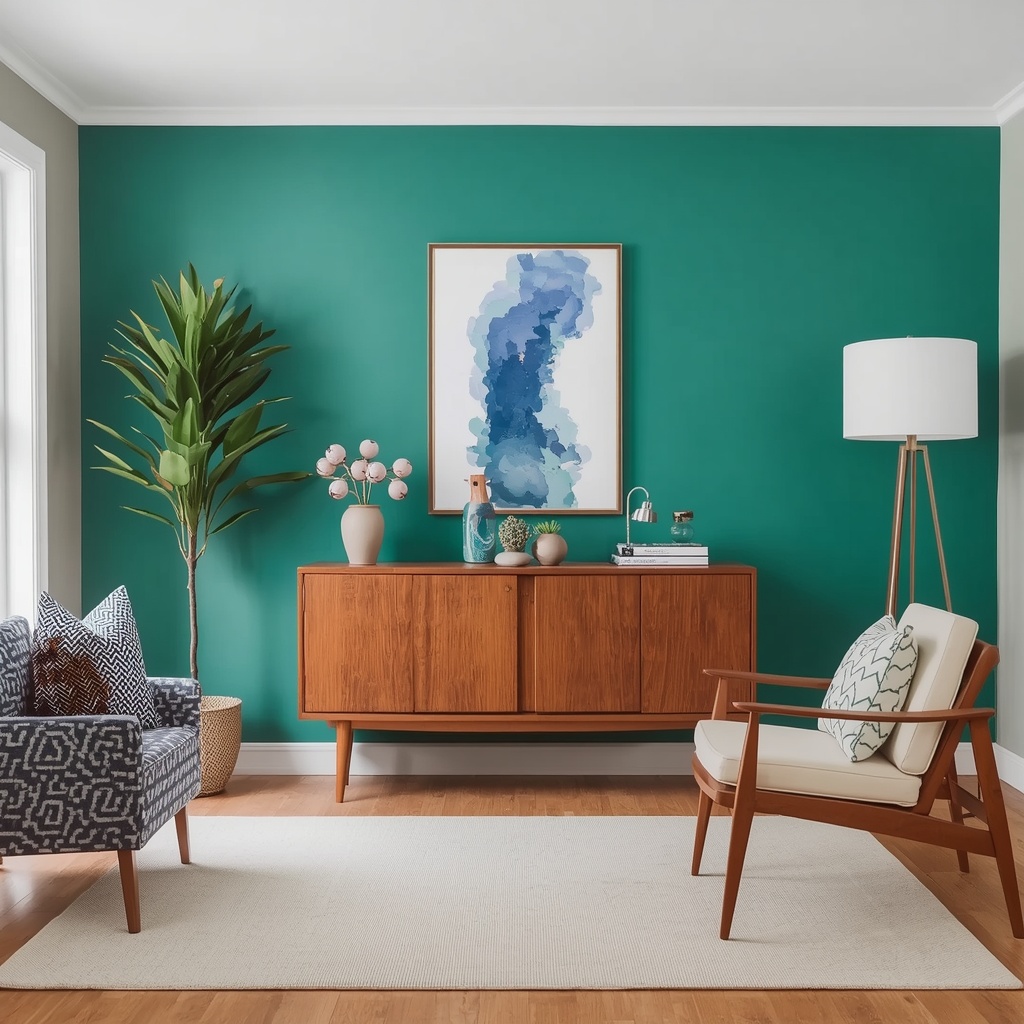
Start small: a stained thrifted credenza, one bold accent wall, a sputnik-style lamp. Layer intentionally, prioritize warm wood tones and tapered legs, and let negative space do some of the visual work. Done right, your living room will feel like it was curated over years — even if you built it in a single weekend on a modest budget.