
Walk into any living room that stops you in your tracks, and chances are your eyes land on one piece first: the coffee table. It’s not an accident. While sofas and rugs set the stage, a well-chosen coffee table is the piece that pulls everything together and gives a room its personality.
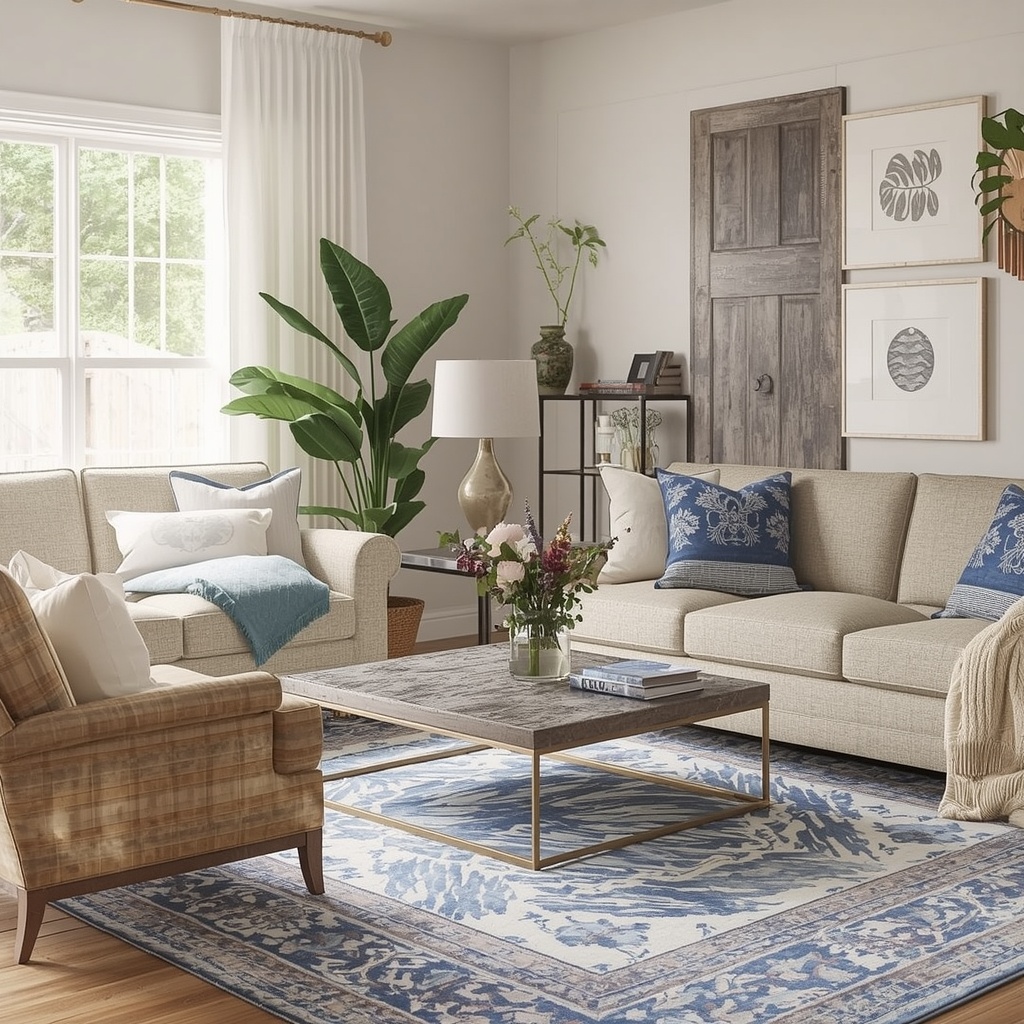
As an interior designer who’s spent years helping homeowners across the country refresh their living spaces, I can tell you this: people consistently underinvest in their coffee table. They’ll spend thousands on a sectional and then grab whatever’s on sale at a big-box store for the centerpiece of the room. That’s backwards. A statement coffee table isn’t just a surface for your coffee mug and remote — it’s the anchor that defines your living room’s entire aesthetic.
In this guide, I’ll walk you through everything you need to know about choosing a coffee table that commands attention for the right reasons, from materials and shapes to sizing rules and styling tricks designers actually use.
Why Your Coffee Table Is the Anchor of Your Living Room
Think of your living room as a story, and your furniture as the cast of characters. Your sofa is the steady, dependable lead. Your accent chairs are the supporting roles. Your coffee table? That’s the character everyone remembers after they leave.

A coffee table sits at the literal center of most living room layouts, which means it’s the first thing your eye catches when you walk into the space. It also sits at eye level when you’re seated, making it the piece you interact with and look at most often during day-to-day life. Designers call this a room’s “focal point,” and getting it right does more heavy lifting for your overall decor than almost any other single purchase.
“The coffee table is the jewelry of the living room. Everything else can be neutral and quiet, but this is the piece allowed to make noise.” This is something I tell every client who hesitates to spend on this piece — it’s the detail that elevates a room from furnished to designed.
What Makes a Coffee Table a True “Statement Piece”?
Not every coffee table qualifies as a statement piece, and that’s okay — some rooms call for something quieter. But if you’re aiming for a table that anchors the space, look for a few defining traits.
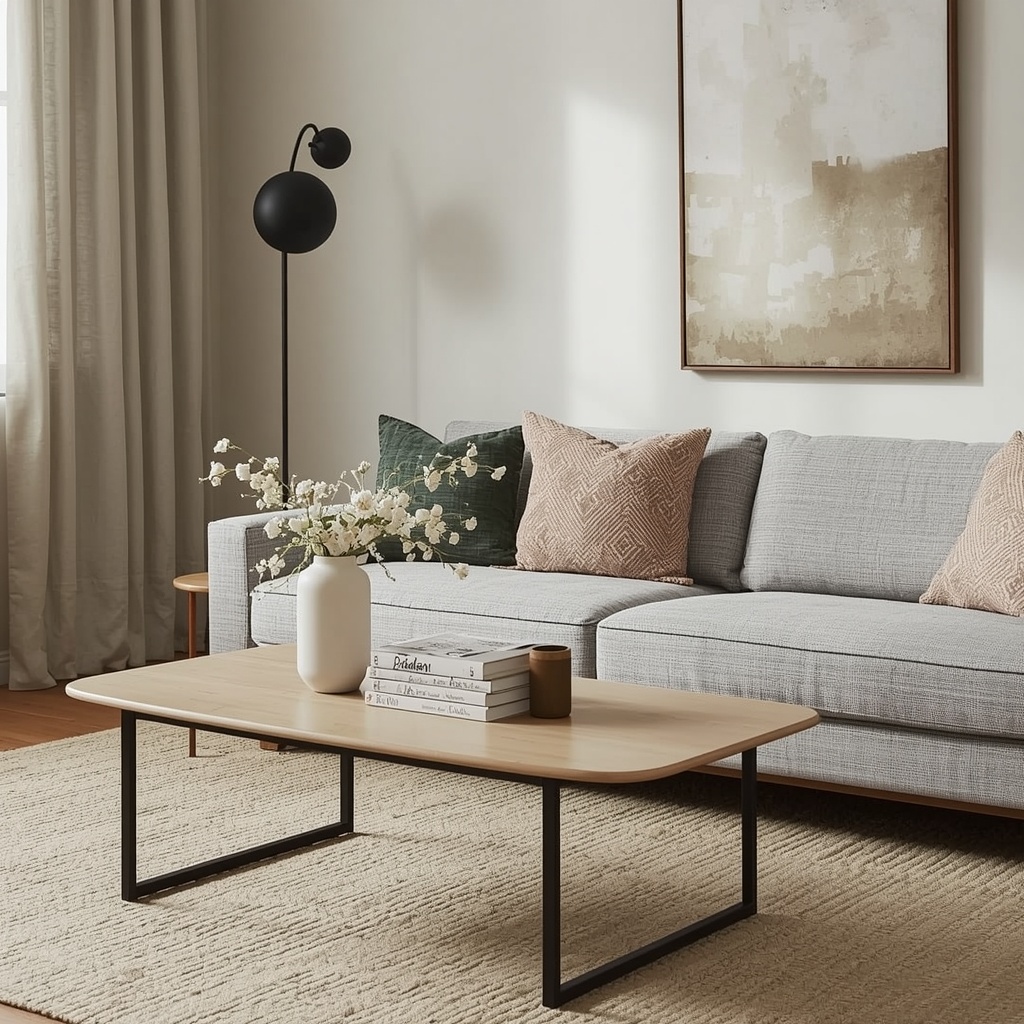
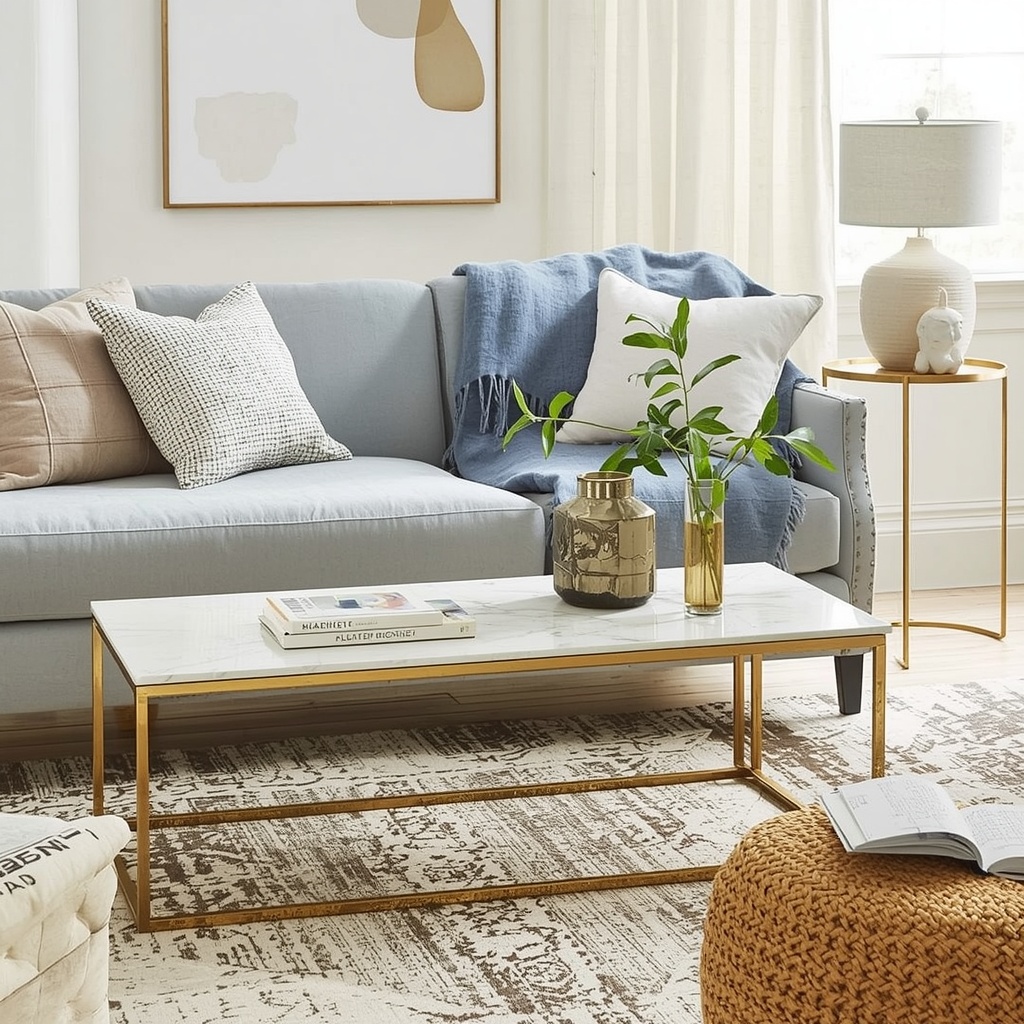
A statement coffee table typically has unexpected materials, bold geometry, or a sculptural silhouette that reads more like art than furniture. It often uses contrast — light wood against dark metal, smooth marble against raw edges — to create visual tension that draws the eye. Scale matters too: these tables tend to be slightly larger or more dramatically shaped than a standard rectangle, without overwhelming the room.
Here’s a quick checklist I use with clients to evaluate whether a piece earns “statement” status:
- Distinct silhouette — organic curves, asymmetry, or architectural lines instead of a basic rectangle
- Premium or unusual materials — marble, travertine, smoked glass, reclaimed wood, hammered metal
- Visible craftsmanship — joinery, carving, or finishing details you can see and feel
- Color or texture contrast with the rest of the room
- Conversation-starting quality — would a guest ask “where did you get that?”
Popular Statement Coffee Table Styles for 2026
Trends shift, but a handful of styles have proven themselves as reliable statement-makers in living rooms across the U.S. Here’s how the most popular options compare right now.
| Style | Best For | Common Materials | Typical Price Range |
|---|---|---|---|
| Sculptural / Organic | Modern, curved layouts | Resin, plaster, ceramic | $600 – $2,500 |
| Live-Edge Wood | Rustic, organic modern homes | Walnut, acacia, oak | $400 – $3,000 |
| Stone & Marble | Glam, transitional spaces | Marble, travertine, terrazzo | $700 – $4,000 |
| Mixed Metal & Glass | Industrial, contemporary | Brass, iron, tempered glass | $300 – $1,800 |
| Vintage & Antique | Eclectic, traditional rooms | Mahogany, brass, lacquer | $250 – $5,000+ |
| Geometric / Architectural | Minimalist, mid-century homes | Powder-coated steel, travertine | $400 – $2,200 |
Each of these styles brings a different mood. Live-edge wood feels grounded and warm, perfect for a cabin-inspired or organic modern living room. Stone and marble pieces lean luxurious and work beautifully in spaces that already lean glam or transitional. If your home skews more industrial or contemporary, mixed metal and glass combinations introduce just enough edge without feeling cold.
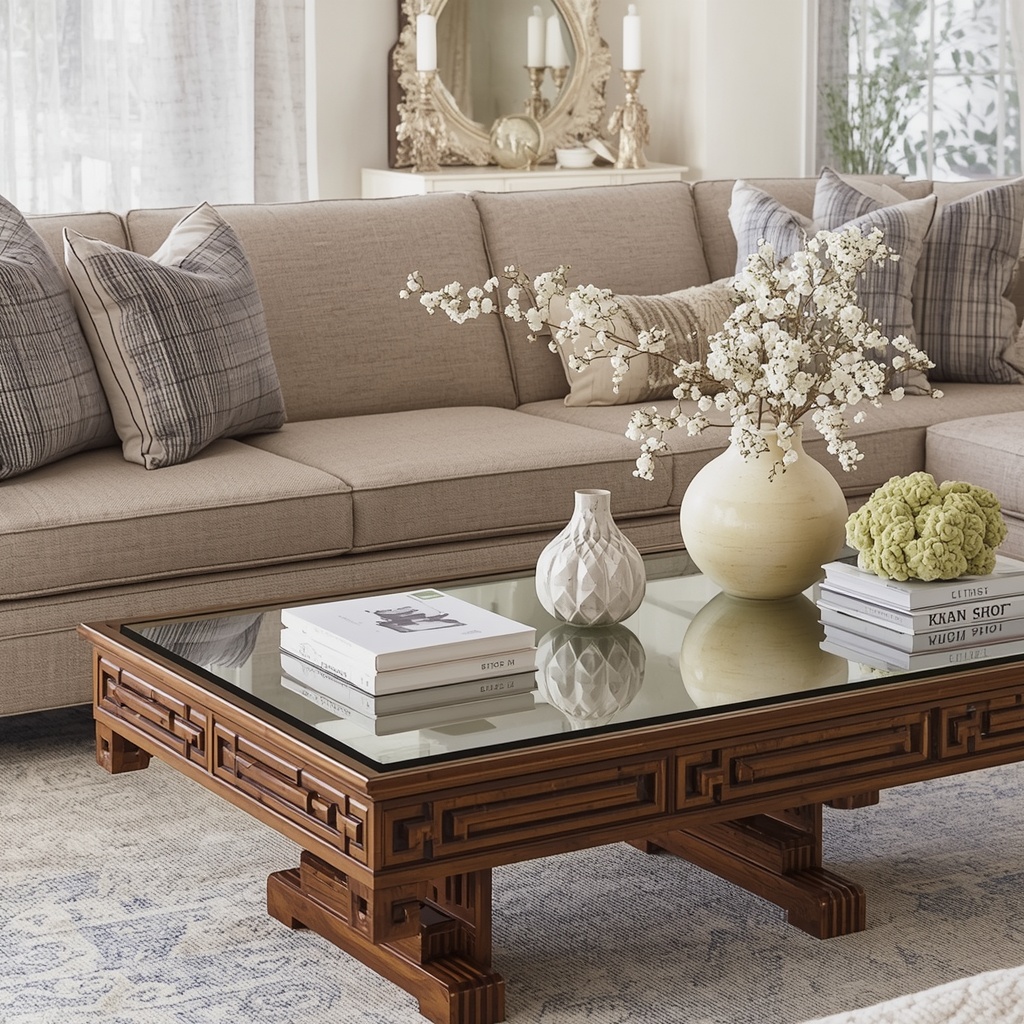
Vintage and antique tables deserve a special mention. A well-sourced vintage piece — think a 1970s brass and glass table or a carved Asian-inspired chest repurposed as a coffee table — instantly adds depth and story to a room. These pieces rarely match anything else in your space exactly, and that’s precisely the point.
Choosing the Right Size and Shape
Before falling in love with a silhouette, run the numbers. Even the most beautiful coffee table becomes a tripping hazard — or worse, an eyesore — if it’s mis-sized for your room.
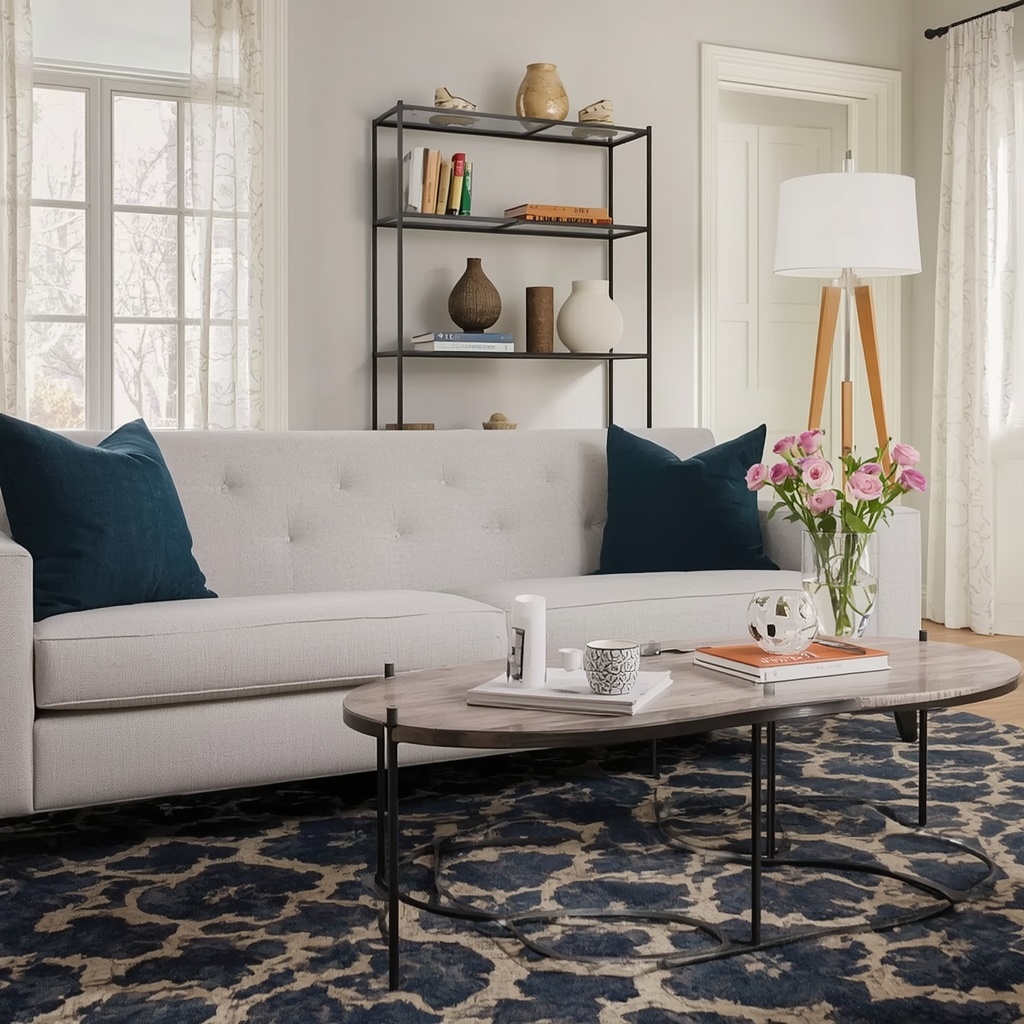
A good rule of thumb: leave 14 to 18 inches of breathing room between the edge of your coffee table and your sofa or sectional. This gives you enough space to walk through comfortably while still keeping the table within easy reach. For table height, aim for something within an inch or two of your sofa’s seat height, so drinks and remotes aren’t a stretch in either direction.
Shape should follow your room’s layout, not just your personal taste. Here’s how to think about it:
| Room Layout | Recommended Shape |
|---|---|
| Long, narrow living room | Rectangular or oval |
| Square or symmetrical layout | Round or square |
| L-shaped sectional | Round, organic, or two nesting tables |
| Open-concept, large space | Oversized rectangular or sculptural |
| Small apartment living room | Round or compact organic shape |
Pro Tip: If you’re torn between two shapes, choose the one that contrasts with your room’s dominant lines. A boxy, angular sectional almost always looks better paired with a round or organic-shaped coffee table — the curves soften the room and keep it from feeling too rigid.
Material Guide: Pros, Cons, and What to Expect
Material is where most of the “statement” magic happens, but it also affects maintenance, durability, and price. Here’s an honest breakdown of the most popular options.
| Material | Pros | Cons |
|---|---|---|
| Marble / Travertine | Luxurious look, unique veining, very durable | Heavy, can stain, pricier |
| Solid Wood | Warm, durable, ages beautifully | Susceptible to scratches, can be heavy |
| Glass | Light, modern, makes small rooms feel open | Shows fingerprints, needs frequent cleaning |
| Metal (Brass/Iron) | Sculptural, long-lasting, great contrast | Can scratch or tarnish over time |
| Resin / Acrylic | Lightweight, bold colors and shapes available | Can scratch, less heat-resistant |
| Reclaimed/Live-Edge Wood | One-of-a-kind character, eco-friendly | Inconsistent shapes can complicate styling |
If you have kids, pets, or simply want low-maintenance living, lean toward sealed wood or metal over high-polish marble or glass, which require more upkeep to stay looking sharp.
How to Style a Statement Coffee Table
A great coffee table deserves styling that highlights it rather than burying it under clutter. The goal is curated, not cluttered — every item on top should earn its spot.
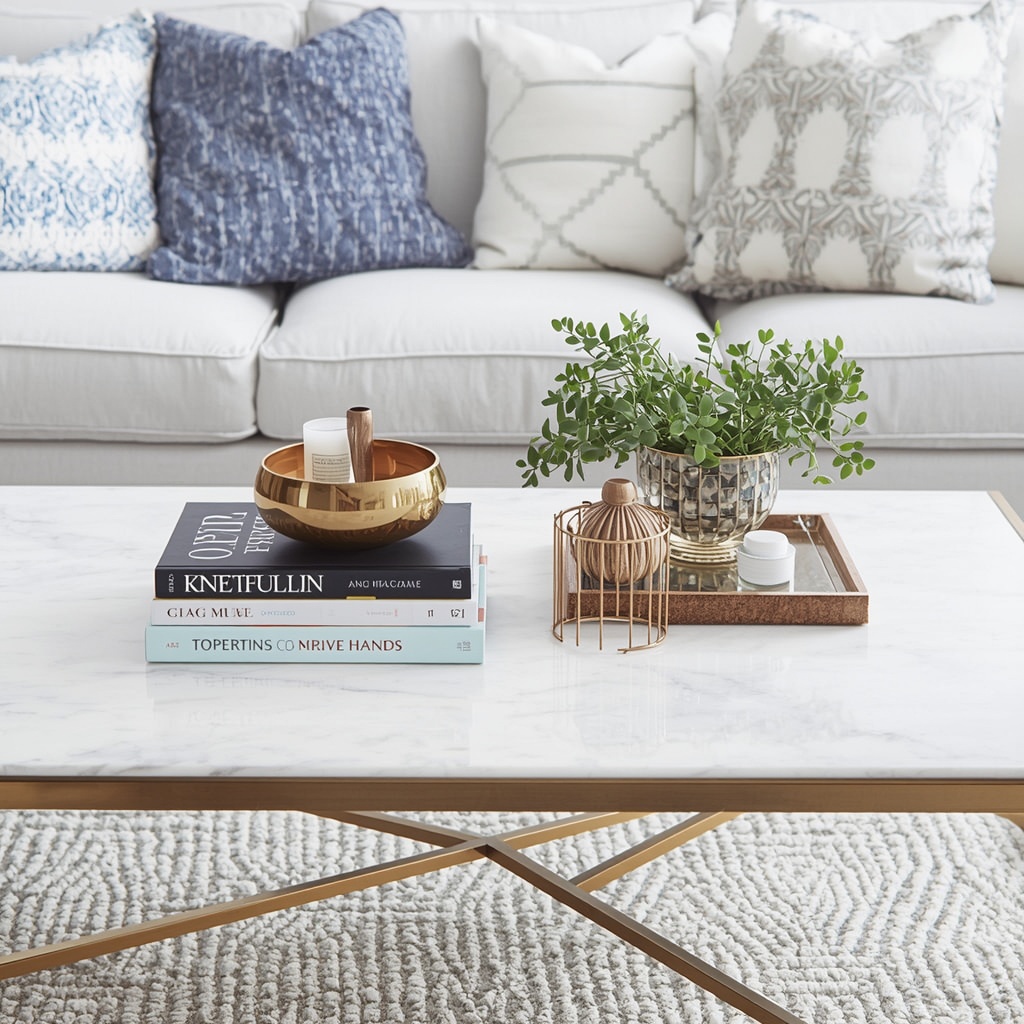
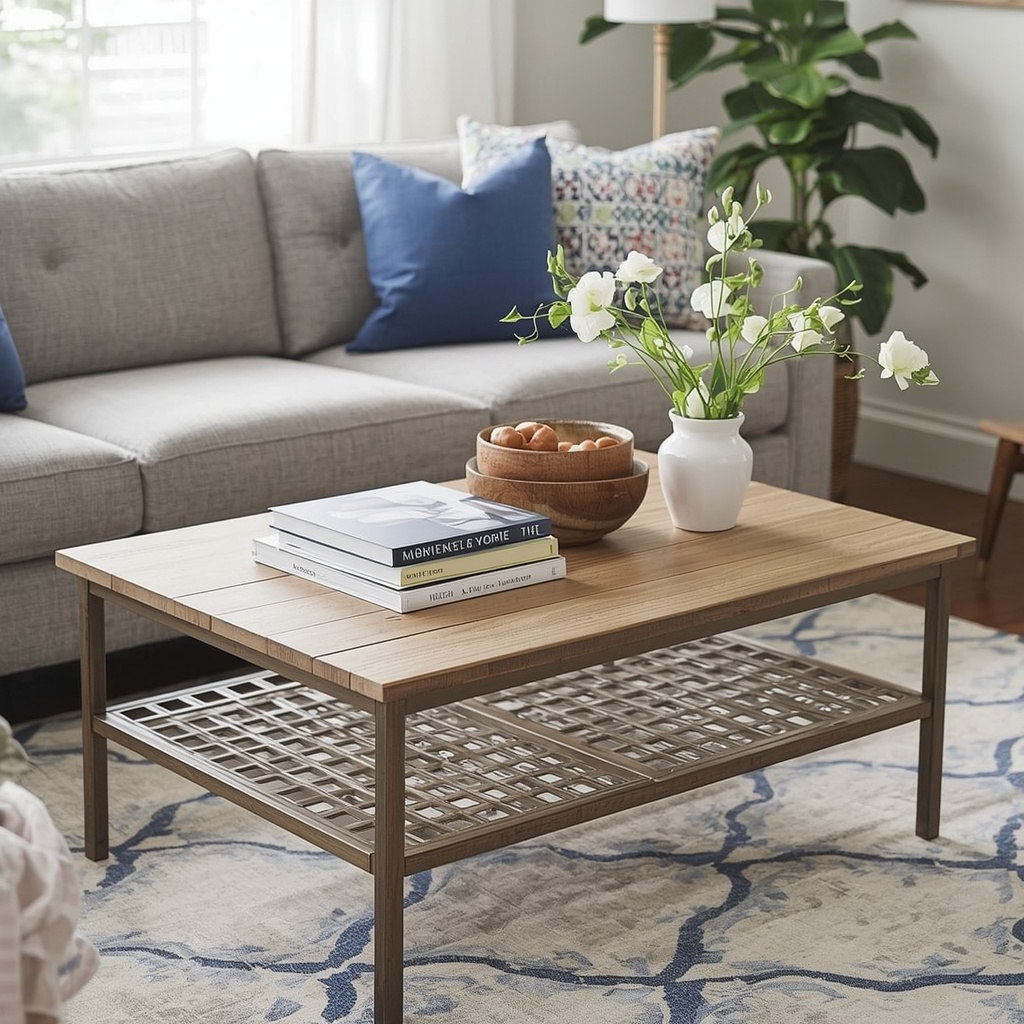
My go-to formula is the “rule of three”: a stack of books, a decorative object (bowl, sculpture, or candle), and one organic element like a small plant or fresh flowers. This combination creates visual balance without competing with the table’s own design. Leave at least a third of the surface completely empty — negative space is what makes a styled table look intentional instead of crowded.
A few more styling principles worth keeping in mind:
- Vary height across your styled objects — short, medium, and tall — to create rhythm
- Use a tray to “anchor” smaller items and keep groupings looking organized
- Echo one material or color from the table itself in your accessories (brass table, brass candle holder)
- Swap seasonal items in and out rather than overloading the surface permanently
- Leave the table’s most striking feature — a unique edge, a bold leg, a vein in the stone — visible and unobstructed
Statement Coffee Tables by Budget
You don’t need a five-figure budget to make a statement. Here’s how I’d allocate spending across different price points for clients with different goals.
| Budget | What to Prioritize |
|---|---|
| Under $400 | Bold shape over premium material — look for sculptural resin, painted wood, or geometric metal frames |
| $400 – $1,000 | Solid wood, quality glass-and-metal combinations, or smaller marble-top tables |
| $1,000 – $2,500 | Genuine stone tops, designer-collaboration pieces, vintage finds from reputable dealers |
| $2,500+ | Custom or artisan-made pieces, large-format natural stone, investment vintage furniture |
Retailers worth browsing for statement pieces across these price points include West Elm, CB2, Article, Anthropologie, and Crate & Barrel. For vintage and one-of-a-kind options, Chairish and 1stDibs are excellent starting points.
Common Mistakes to Avoid
Even with the best intentions, it’s easy to undercut a beautiful coffee table with a few avoidable missteps. Watch out for these:
- Going too small. A tiny coffee table in a large room looks lost and underwhelms the space rather than anchoring it.
- Matching too perfectly. A coffee table that’s the exact same wood tone and style as every other piece in the room reads flat instead of curated.
- Ignoring traffic flow. Beautiful doesn’t matter if guests can’t comfortably walk around it.
- Skipping the texture test. A room full of smooth, similar textures (all wood, all glass) feels one-note; contrast is what makes a statement piece pop.
- Overstyling the surface. Too many objects competing for attention cancels out the table’s own visual impact.
Final Thoughts
Your coffee table works harder than almost any other piece in your living room — visually and functionally. It’s the spot for movie-night snacks, the surface for your favorite design books, and often the very first thing a guest notices when they walk in. Choosing one with intention, rather than convenience, is one of the most impactful upgrades you can make to your space.
Start with the mood you want your living room to convey, narrow down a material and shape that supports your existing layout, and don’t be afraid to let this single piece carry a little drama. A coffee table that anchors a room doesn’t just hold your coffee — it holds the whole design together.
Frequently Asked Questions
What size coffee table should I get for my living room? As a general guide, your coffee table should be about two-thirds the length of your sofa, with 14–18 inches of clearance between the table and seating.
Are statement coffee tables practical for everyday use? Yes, as long as you choose a durable material suited to your lifestyle. Sealed wood and metal tend to hold up best for everyday wear, while marble and glass may need a bit more care.
Can a small living room handle a statement coffee table? Absolutely. Choose a piece with a compact footprint but a bold material or shape — a small round marble table or a sculptural resin piece can make just as much impact as a larger one.
How do I match a statement coffee table to an existing sofa? Look for one point of contrast (shape, material, or color) rather than trying to match everything. A neutral sofa pairs especially well with a bold, sculptural coffee table.