
If you’ve ever walked into a home and felt an instant sense of warmth and life, chances are there was a big, beautiful plant in the room. As an interior designer who works with clients across the country, I can tell you that nothing transforms a space faster — or cheaper — than a well-placed statement plant. A six-foot fiddle leaf fig in the right corner can do more for a room than a $2,000 sofa.
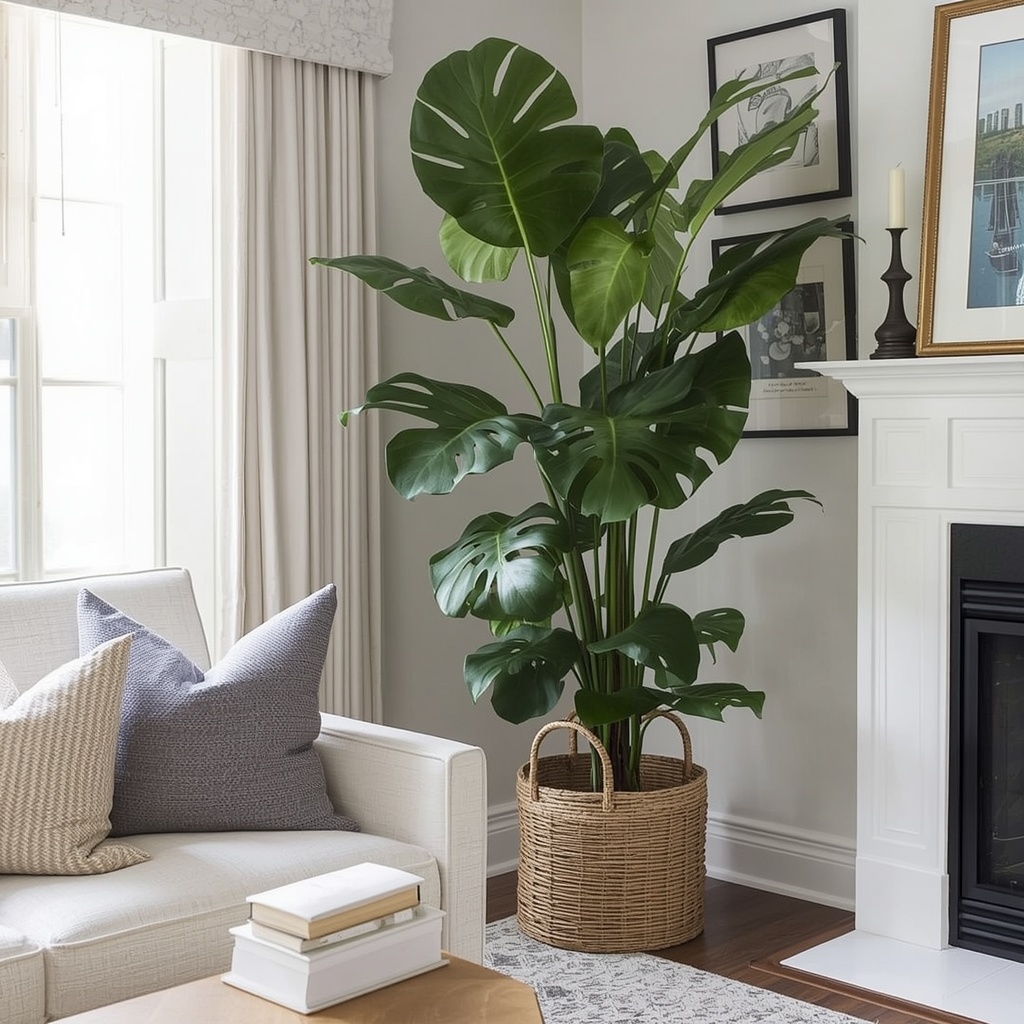
Large statement plants like the fiddle leaf fig (Ficus lyrata), Monstera deliciosa, bird of paradise, and rubber plant have become the darlings of modern interior design, and for good reason. They add height, texture, color, and a living, breathing quality that no artwork or furniture piece can replicate. But styling them well is an art form of its own. Plunk a plant in a corner without a plan, and it can look like an afterthought. Style it intentionally, and it becomes the focal point your whole room was missing.
This guide walks you through everything you need to know to style large statement plants like a professional, from choosing the right species for your space to picking the perfect planter, arranging them for maximum visual impact, and avoiding the mistakes that make even gorgeous greenery look off.
Why Statement Plants Are a Design Essential
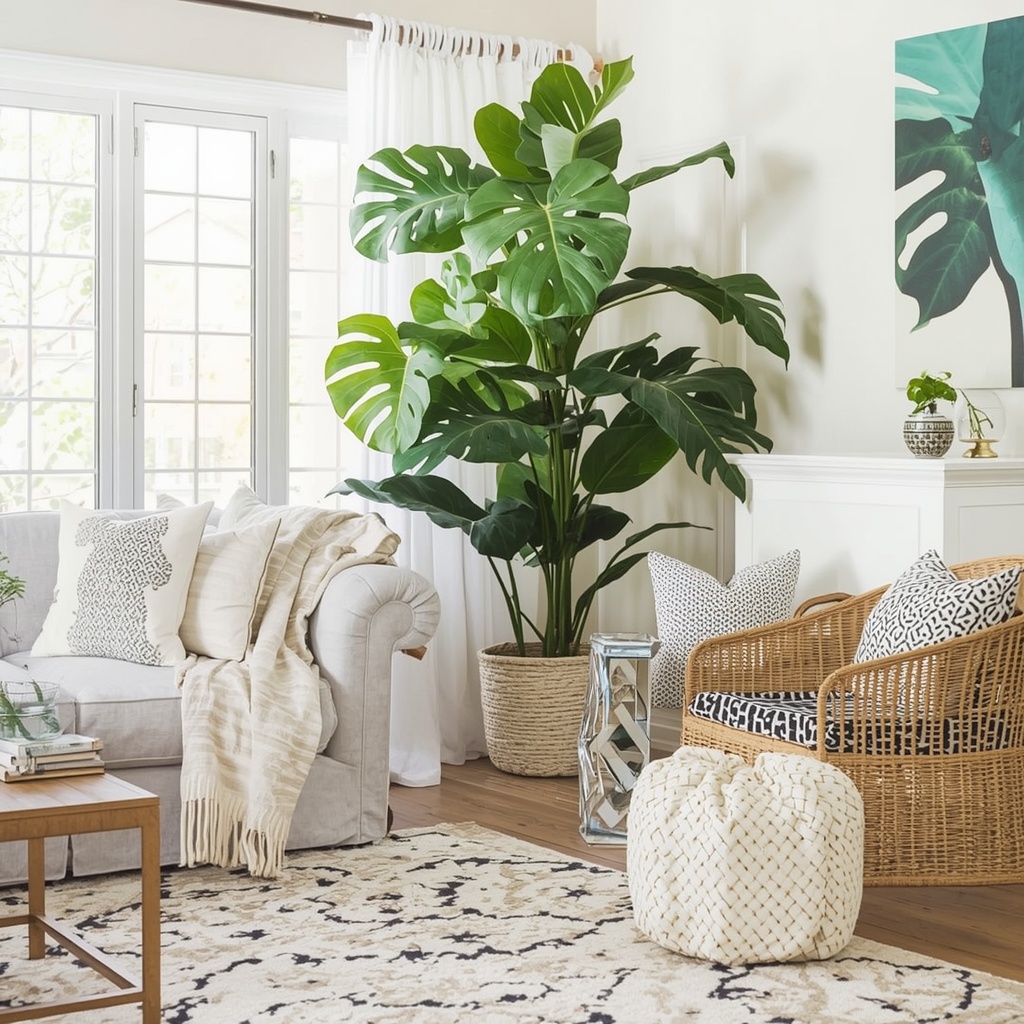
Interior design has fully embraced biophilic design — the idea that humans have an innate need to connect with nature, even indoors. Large-leaf houseplants are the easiest, most affordable way to bring that concept into a home.Big, bold houseplants with oversized leaves are a perfect way to embrace biophilic design and the nature-based decor trend that’s everywhere right now, and all that leafy growth can’t help but add life and lushness to a room.Beyond aesthetics, statement plants solve real design problems. They fill awkward empty corners, soften hard architectural lines, add much-needed height to rooms with low furniture, and create a sense of scale that grounds a space. Large indoor plants make stunning focal points, boosting your interior aesthetic with lots of visual appeal, and they’re also a great way to bring literal and figurative life to an empty corner or awkward space.
“A great statement plant works the same way a great piece of art does — it draws the eye, anchors the room, and gives your space a sense of intention.” — a philosophy I share with nearly every client who’s on the fence about going big with greenery.
Quick Takeaways
- Statement plants act as living focal points, not just decor filler.
- They soften harsh lines and fill vertical or empty space furniture can’t.
- They support the biophilic design trend that’s dominating 2026 interiors.
- The right plant, pot, and placement matter just as much as the plant itself.
Choosing the Right Statement Plant for Your Space
Before you fall in love with a plant on Pinterest, it’s worth matching the plant to your home’s actual light, humidity, and lifestyle conditions. A stunning fiddle leaf fig in a dim hallway will drop leaves and sulk; the same plant in a bright, sunny living room will thrive and become the centerpiece of the room.
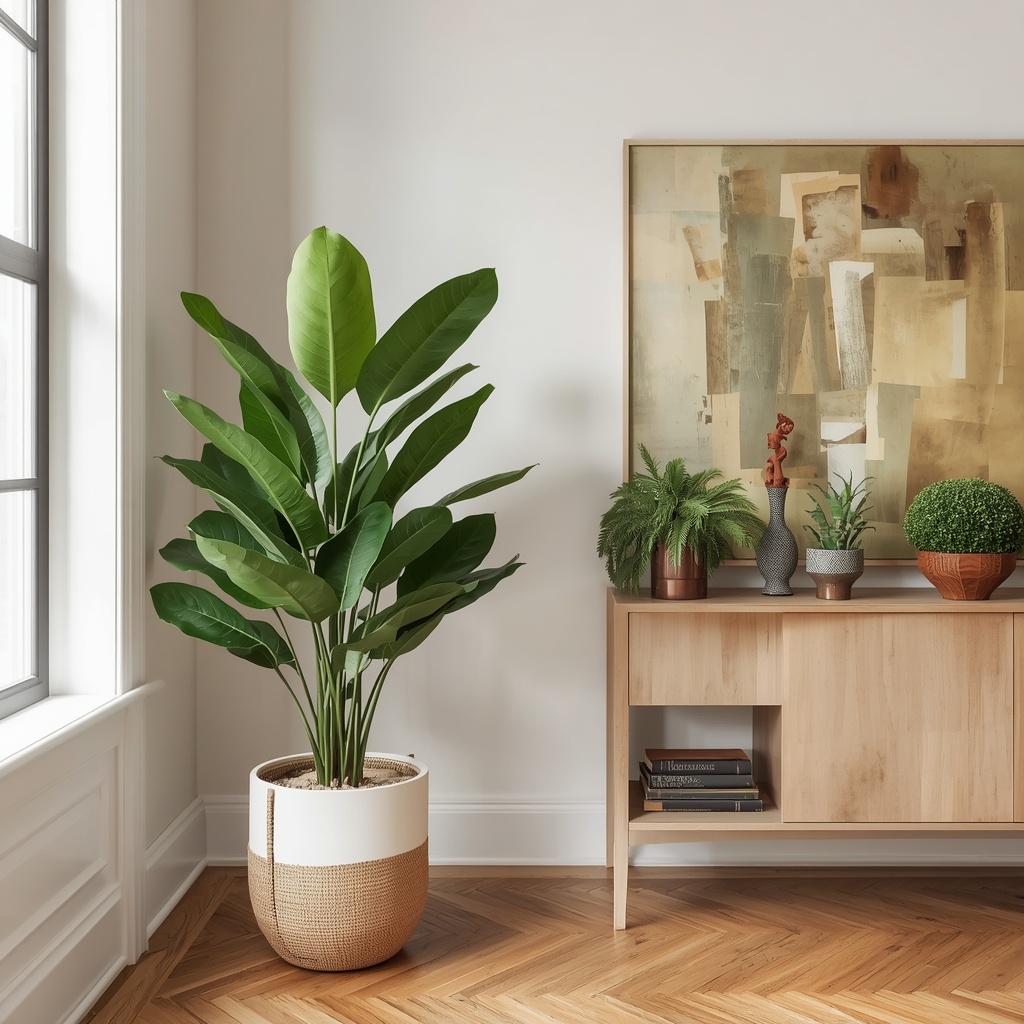
Here’s how the most popular statement plants compare:
| Plant | Mature Height (Indoors) | Light Needs | Difficulty | Design Vibe |
|---|---|---|---|---|
| Fiddle Leaf Fig (Ficus lyrata) | 6–10 ft | Bright, indirect light | Moderate–High | Sculptural, modern, editorial |
| Monstera Deliciosa | 6–8 ft | Medium to bright, indirect light | Easy | Tropical, boho, lush |
| Bird of Paradise | Up to 10 ft | Bright, indirect light | Moderate | Exotic, dramatic, resort-style |
| Rubber Plant (Ficus elastica) | 6–8 ft | Medium to bright light | Easy | Glossy, warm, versatile |
| Corn Plant (Dracaena fragrans) | 6–8 ft | Medium, indirect light | Easy | Architectural, minimalist |
| Weeping Fig (Ficus benjamina) | 6–7 ft | Bright, indirect light | Moderate | Airy, classic, elegant |
A few notes from experience: The rubber plant is a fantastic choice for statement decor because its large, glossy leaves instantly grab attention and create a bold focal point in any room which makes it one of the most forgiving options for beginners who still want drama. Meanwhile, index bird of paradise thrives in warmer temperatures between 60–80°F and should be kept away from heating and cooling vents to prevent it from drying out something to consider if you’re eyeing it for a spot near a radiator or air vent.
💡 Pro Tip: If your space gets low-to-medium light but you still want that oversized, tropical look, skip the fiddle leaf fig (notoriously light-hungry) and opt for a Monstera or corn plant instead. You’ll get the same visual scale without the constant leaf-drop drama.
The Design Principles Behind Styling a Statement Plant
Great plant styling isn’t just about buying a big plant and setting it down. It follows the same principles designers use for furniture and art: scale, balance, negative space, and focal points.
Think of your statement plant as you would a floor lamp or an accent chair. It needs breathing room around it, a clear sightline from the room’s main entry point, and a relationship to the furniture around it. A plant crammed against a wall of clutter reads as messy; the same plant given open space on either side reads as curated and intentional.
1. Use the Rule of Thirds
Place your plant roughly one-third of the way into the room rather than dead center or flush against a wall. This creates visual asymmetry that feels more natural and dynamic than a perfectly symmetrical layout.
2. Respect Ceiling Height
A statement plant should reach roughly two-thirds of your ceiling height for the most balanced look. In a room with 8-foot ceilings, a 5–6 foot plant (in its pot) is ideal. In rooms with vaulted or 10+ foot ceilings, don’t be afraid to go bigger — a lonely 5-foot plant can get visually swallowed by a tall room.
3. Anchor, Don’t Float
Statement plants look best when they relate to a piece of furniture — flanking a sofa, filling the corner behind a reading chair, or standing beside a media console — rather than floating in the middle of an empty floor.
💡 Pro Tip: Stand at the main entrance of the room and look straight ahead. Whatever your eye lands on first should ideally be your statement plant, a piece of art, or a window. If your eye lands on a plant that’s awkwardly placed, that’s usually a strong sign it needs to move.
Where to Place Large Statement Plants (Room by Room)
Different rooms call for different plant strategies. Here’s how to think through placement by space:
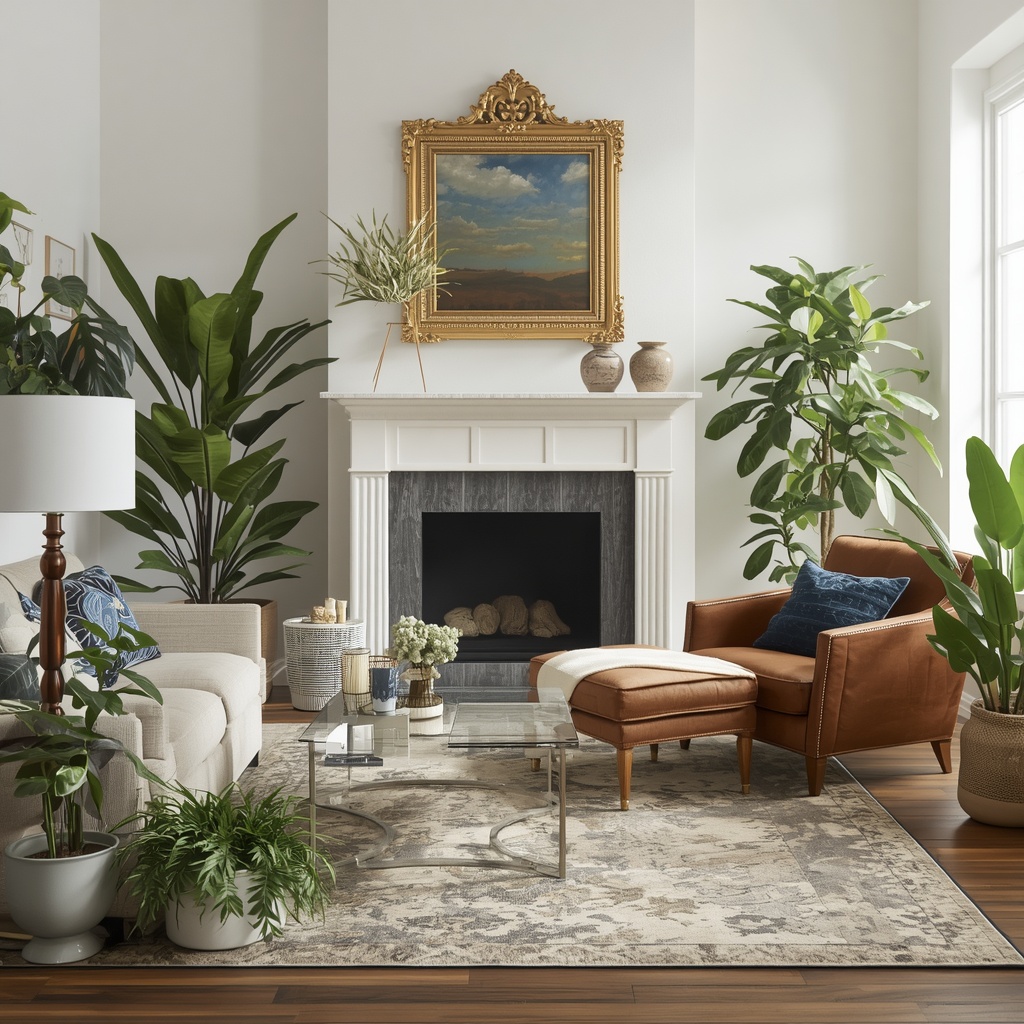
- Living Room: Flank a sofa with a single large plant, or place one in the corner opposite your seating area to balance the room’s visual weight.
- Entryway: A tall, narrow plant like a corn plant or weeping fig makes a striking first impression without blocking foot traffic.
- Bedroom: Choose a plant that thrives in slightly lower light, like a rubber plant, and place it in an empty corner to soften the room’s hard edges.
- Home Office: A Monstera beside a desk or bookshelf adds a lush, calming backdrop for video calls.
- Staircase Landing: Use the vertical space to your advantage with a tall fiddle leaf fig that draws the eye upward.
- Dining Room: Position a large plant near — but not directly behind — the table to avoid interfering with sightlines during meals.
Choosing the Right Planter and Plant Stand
The pot is not an afterthought — it’s 30% of your statement plant’s visual impact. A stunning Monstera in a flimsy plastic grow pot will always look unfinished, no matter how healthy the plant is.
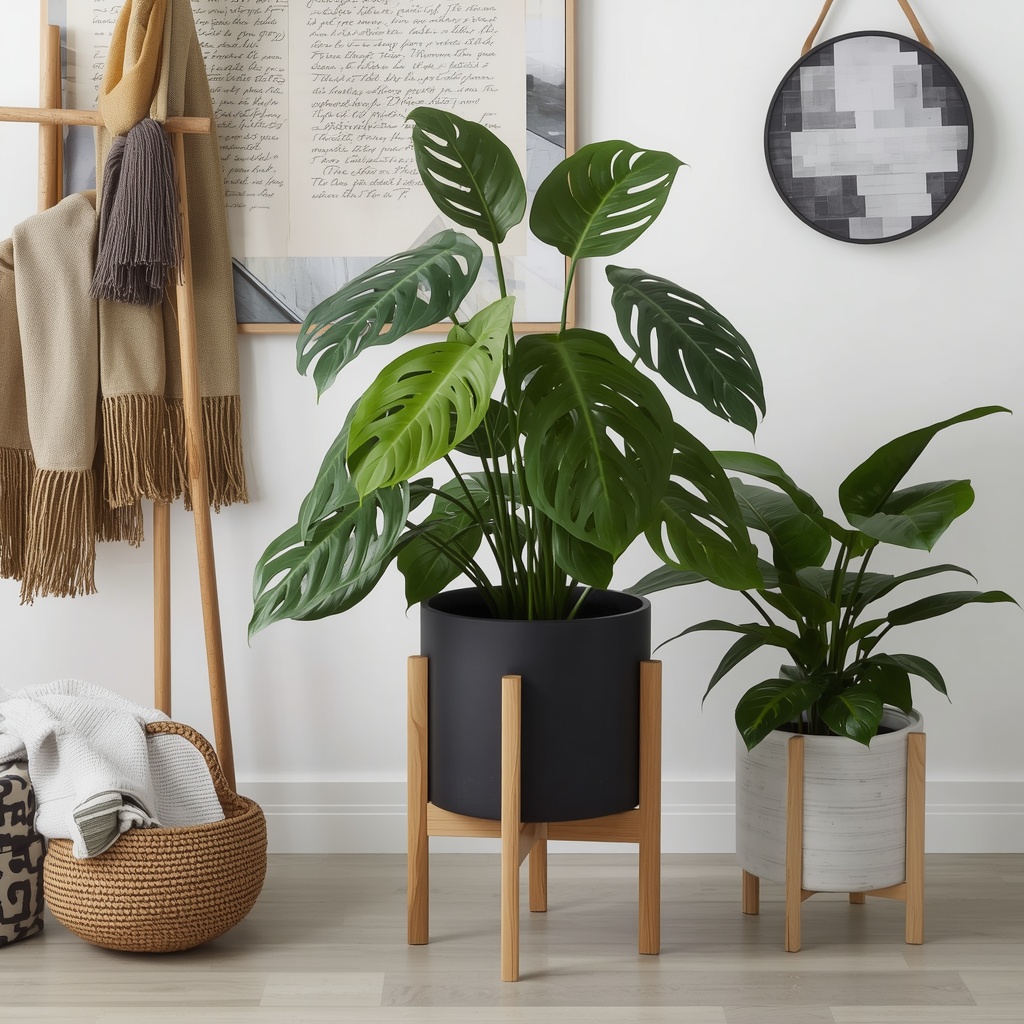
When selecting a planter, consider:
- Material — Terracotta and matte ceramic read as organic and warm; concrete and matte black planters feel modern and architectural; woven rattan or seagrass baskets suit boho and coastal interiors.
- Proportion — As a general rule, the planter should be roughly one-third the height of the plant (including foliage) for a balanced look.
- Color — Neutral pots (white, terracotta, charcoal, sage) let the plant’s foliage do the talking. Save bold colors or patterns for smaller accent plants.
- Drainage — A nursery pot with drainage nested inside a decorative cachepot gives you the best of both worlds: healthy roots and a polished look.
- Elevation — A plant stand adds height, casts interesting shadows, and keeps leaves from trailing on the floor — especially useful for trailing or lower-growing varieties.
“The planter is the frame around your living artwork. Choose it with as much care as you’d choose a picture frame.” — a rule I repeat to every client shopping for statement greenery.
Styling Multiple Statement Plants Together
One large plant makes a statement; a thoughtfully grouped cluster makes a moment. If you’re leaning into the “urban jungle” trend, grouping plants of varying heights and leaf shapes together creates depth and richness that a single plant can’t achieve alone.
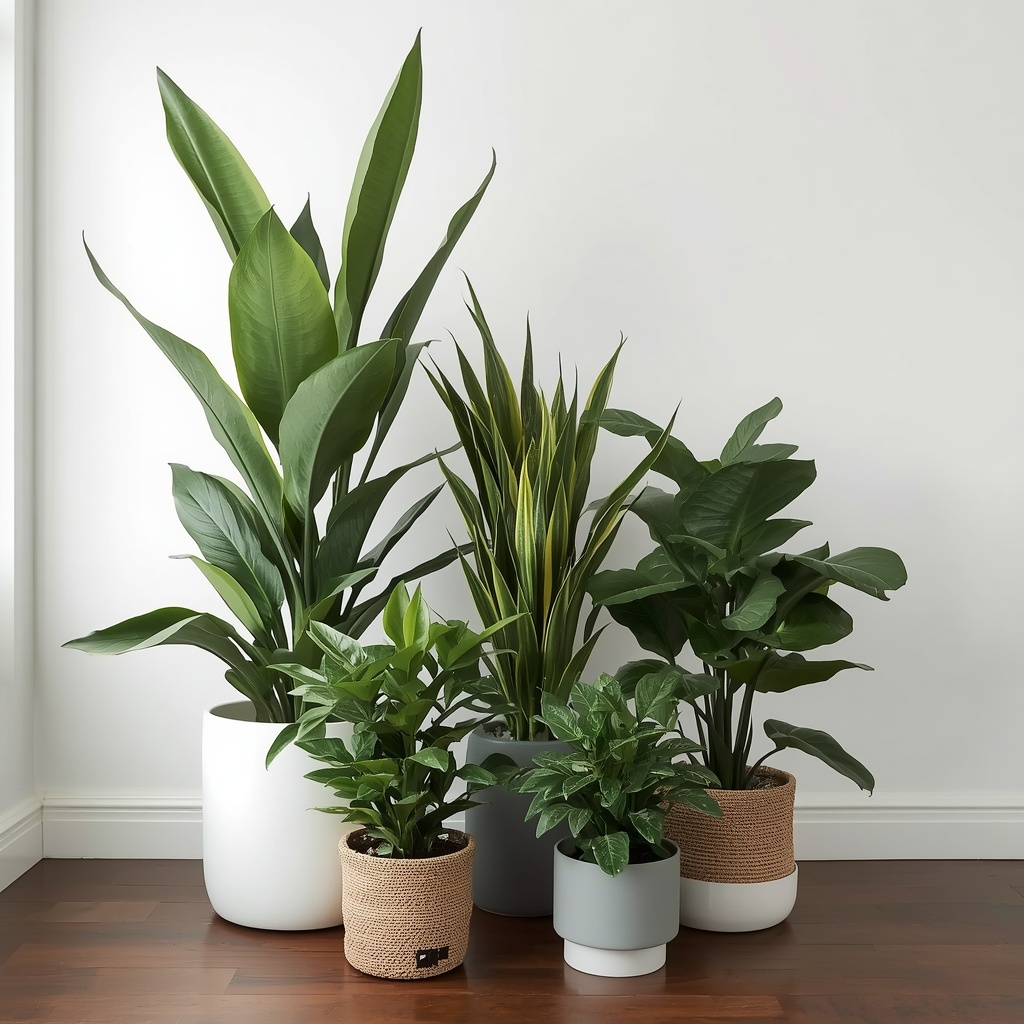
The key is variation. Group plants with different silhouettes — a broad-leafed Monstera, an upright snake plant, and a trailing pothos — rather than three plants that all look the same. Odd numbers (three or five) tend to read more naturally than even groupings, and staggering heights prevents the cluster from looking like a flat wall of green.
💡 Pro Tip: When grouping plants, place your tallest plant slightly behind and off-center from your medium plant, with a low, trailing plant in front. This creates a natural, layered silhouette instead of a straight, stair-step line that feels too rigid.
Coordinating Plants with Your Existing Decor
Your statement plant should feel like it belongs to your room’s color story, not like it was dropped in from a different house. Deep green foliage pairs beautifully with warm neutrals, terracotta, brass, and rattan — the palette behind most modern boho and Japandi interiors. In cooler, more minimalist spaces, a single structural plant like a fiddle leaf fig in a matte black or white planter can act as a striking contrast against white walls and clean lines.
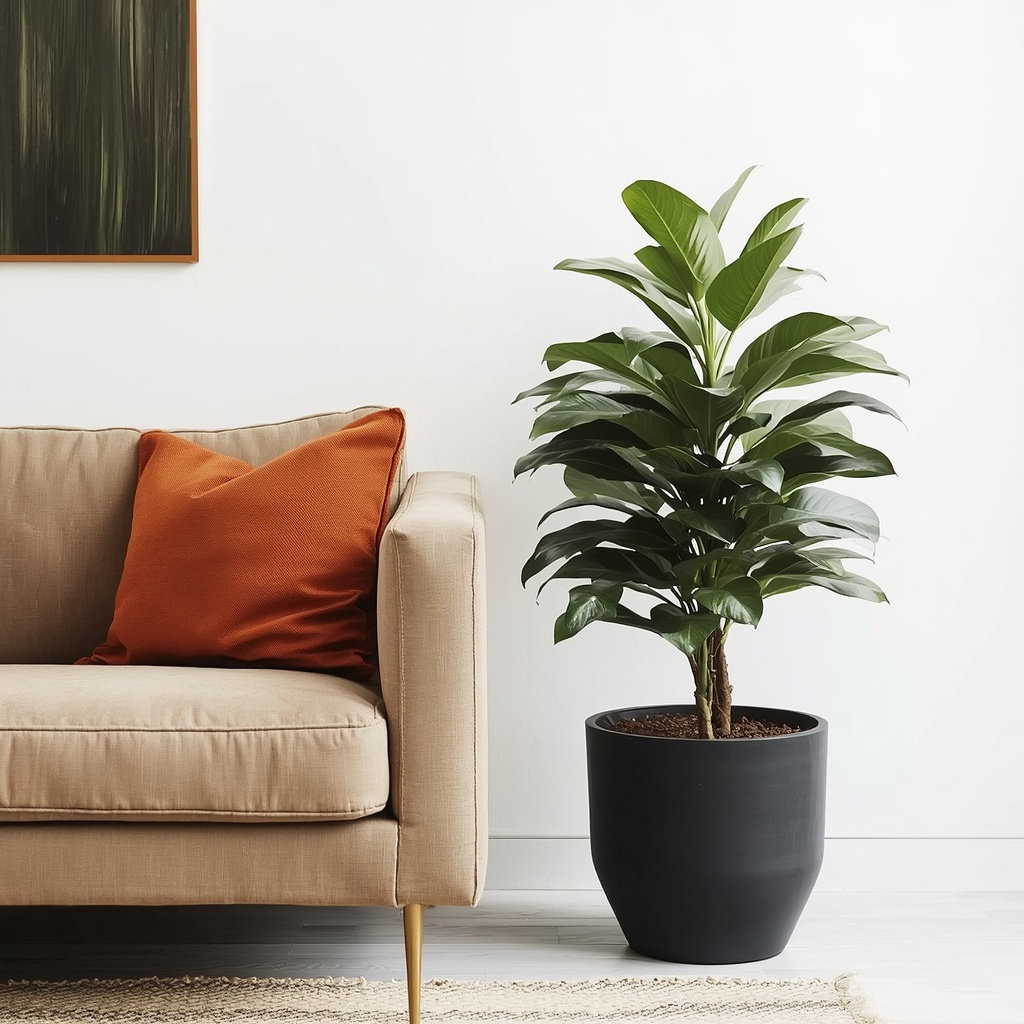
Pay attention to leaf shape as a design element, too. The rounded, glossy leaves of a rubber plant soften an otherwise angular room full of hard furniture lines, while the deep splits and holes of a Monstera’s leaves (called fenestrations) add organic texture to minimalist spaces that might otherwise feel a little sterile.
Common Statement Plant Styling Mistakes to Avoid
Even beautiful, healthy plants can undercut a room’s design if they’re styled poorly. Here are the mistakes I see most often:
- Choosing a plant too small for the space — a 3-foot plant in a room with 10-foot ceilings gets visually lost.
- Skipping the decorative planter — leaving a plant in its plastic grow pot instantly cheapens the look.
- Overcrowding the plant — statement plants need negative space around them to actually read as a focal point.
- Placing it in the wrong light — even the most beautifully styled fiddle leaf fig will drop leaves and look sad in a dark corner.
- Matching plant and pot too literally — an all-green pot with an all-green plant can flatten the visual contrast that makes the display pop.
- Forgetting maintenance — dusty, drooping, or lopsided plants undo all your styling effort; rotate and wipe leaves regularly.
Seasonal and Rotational Styling Tips
Statement plants don’t have to be static. Many designers treat large plants the way they’d treat a rug or throw pillows — an element that can shift with the seasons. In cooler months, pair deep green foliage with warm textiles like wool throws and amber-toned lighting nearby. In summer, let the plant breathe with lighter, airier styling around it — fewer knick-knacks on nearby surfaces, more natural light.
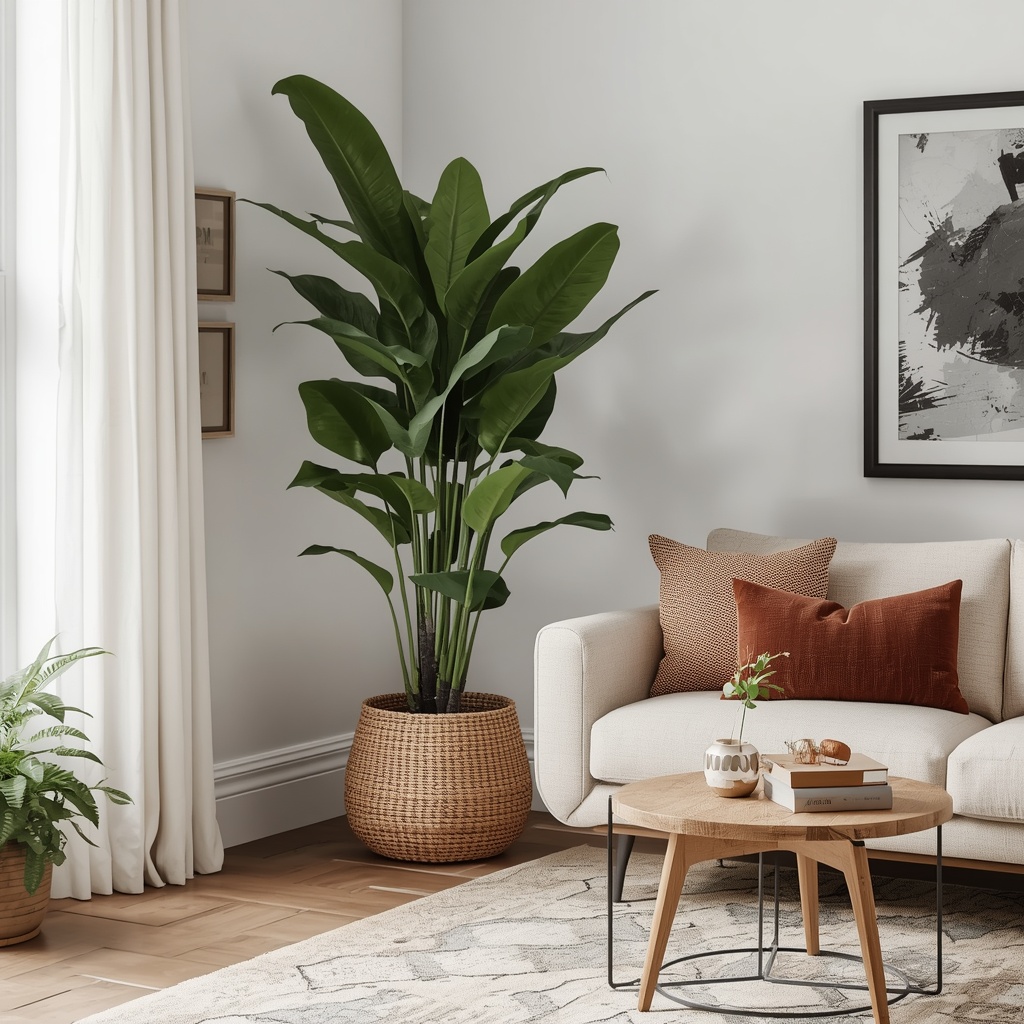
If you have multiple plants across your home, consider rotating them between rooms every few months. This not only keeps your space feeling fresh, it also gives each plant more even light exposure over time, which supports healthier, fuller growth.
Statement Plant Styling Checklist
| Step | What to Check |
|---|---|
| 1 | Does the plant’s mature height suit your ceiling height? |
| 2 | Does the room have enough natural light for the species? |
| 3 | Is the planter proportionate and finished (not a plastic grow pot)? |
| 4 | Is there breathing room — negative space — around the plant? |
| 5 | Does the plant relate to a piece of furniture or architectural feature? |
| 6 | Do the leaf shape and pot color complement the room’s existing palette? |
Frequently Asked Questions
How many statement plants should one room have? Generally, one true statement plant per room keeps it feeling intentional. Larger or open-concept spaces can support two, as long as they’re placed far enough apart to each command their own visual moment.
Should statement plants match each other throughout the house? Not necessarily. Aim for a cohesive planter style (same material or color family) rather than identical plant species — it creates flow without feeling repetitive.
Is a fiddle leaf fig or a Monstera easier for beginners? <cite index=”7-1″>Monstera brings drama, elegance, and a touch of the tropics into a living space with its oversized leaves and bold appearance</cite>, and it’s generally far more forgiving of inconsistent watering and lower light than a fiddle leaf fig, making it the better starter statement plant for most homes.
Can I style a statement plant in a low-light room? Yes — lean toward corn plants, rubber plants, or ZZ plants, which tolerate medium or lower light while still offering the bold silhouette of a true statement plant.
Bringing It All Together
Styling a large statement plant is really an exercise in restraint and intention. The plant itself does most of the visual work — your job as the designer of your own space is simply to give it the right light, the right pot, and the right amount of room to shine. Resist the urge to surround it with too much else; let it stand, quite literally, on its own.
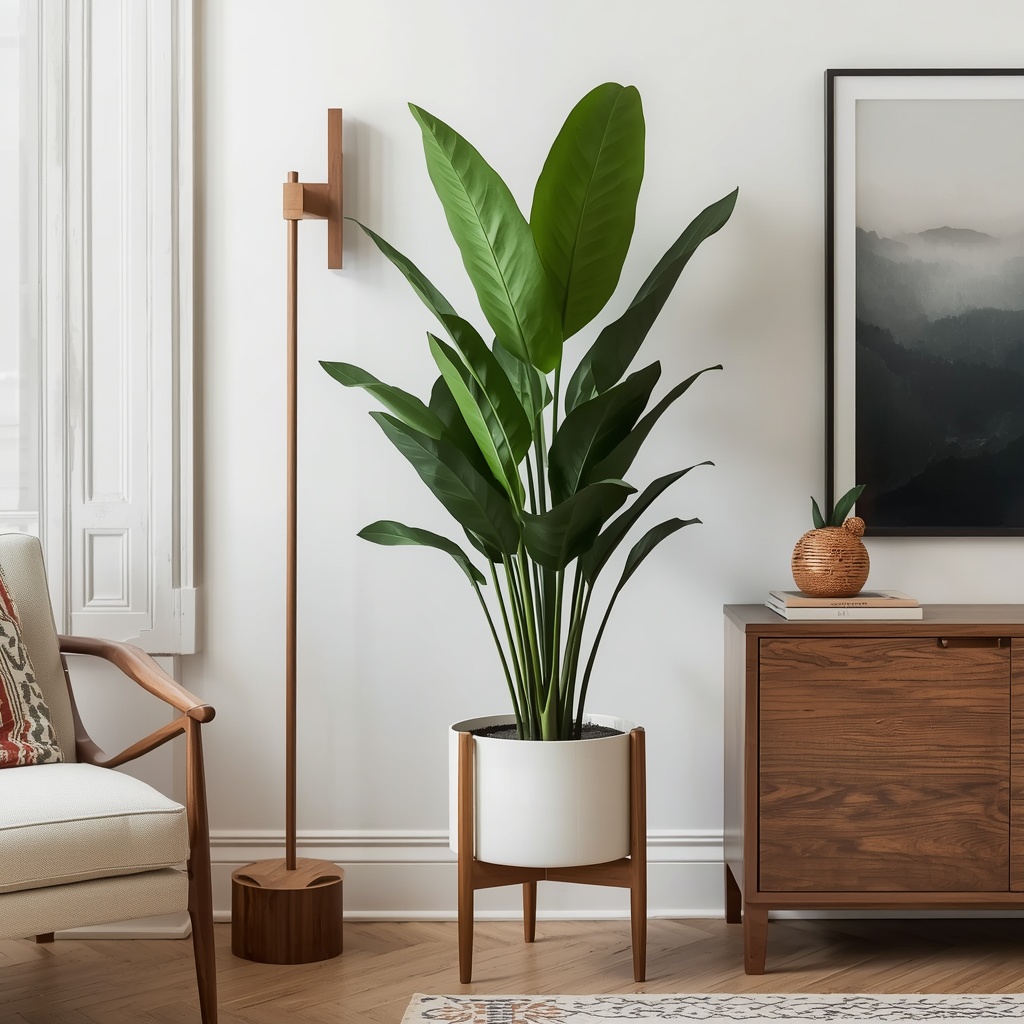
Whether you choose the sculptural drama of a fiddle leaf fig, the lush, split-leaf charm of a Monstera, or the tropical flair of a bird of paradise, the right statement plant — placed thoughtfully — will do more to elevate your home than almost any other single design choice you can make. Start with one great plant, style it with intention, and watch how much life it brings to the room around it.