
How to Style a Small Balcony into an Outdoor Oasis.
Meta description: Learn how to turn a tiny balcony into a cozy outdoor oasis with smart small balcony ideas on furniture, plants, lighting, privacy, and budget-friendly decor.
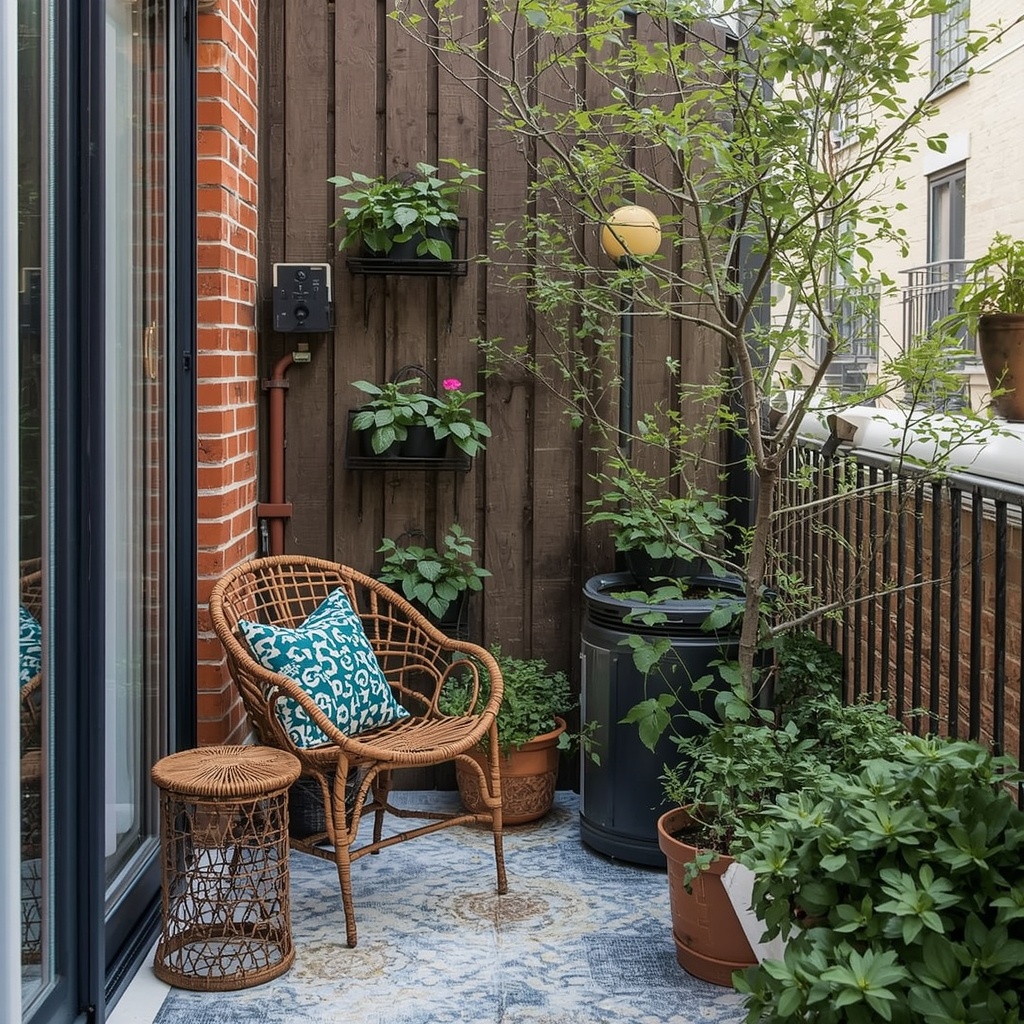
You open the sliding door, step outside, and find a few square feet of concrete, a forgotten broom, and a view of the neighbor’s air conditioner. It doesn’t have to stay that way. Some of the most memorable outdoor spaces I’ve designed for clients were tiny, because limits force creativity.
A small balcony can be your morning coffee spot, a reading nook, a mini herb garden, or a cocktail corner for two. This guide walks you through the same process I use with my own clients, from measuring and planning to the final styling touches. Let’s turn your small outdoor space into an outdoor oasis you’ll actually want to use.
Why Your Small Balcony Deserves a Makeover
Outdoor living isn’t just a trend. A balcony is an extension of your home, and a well-styled one makes your apartment feel larger. Step outside, even for ten minutes, and your mood, focus, and stress levels benefit.
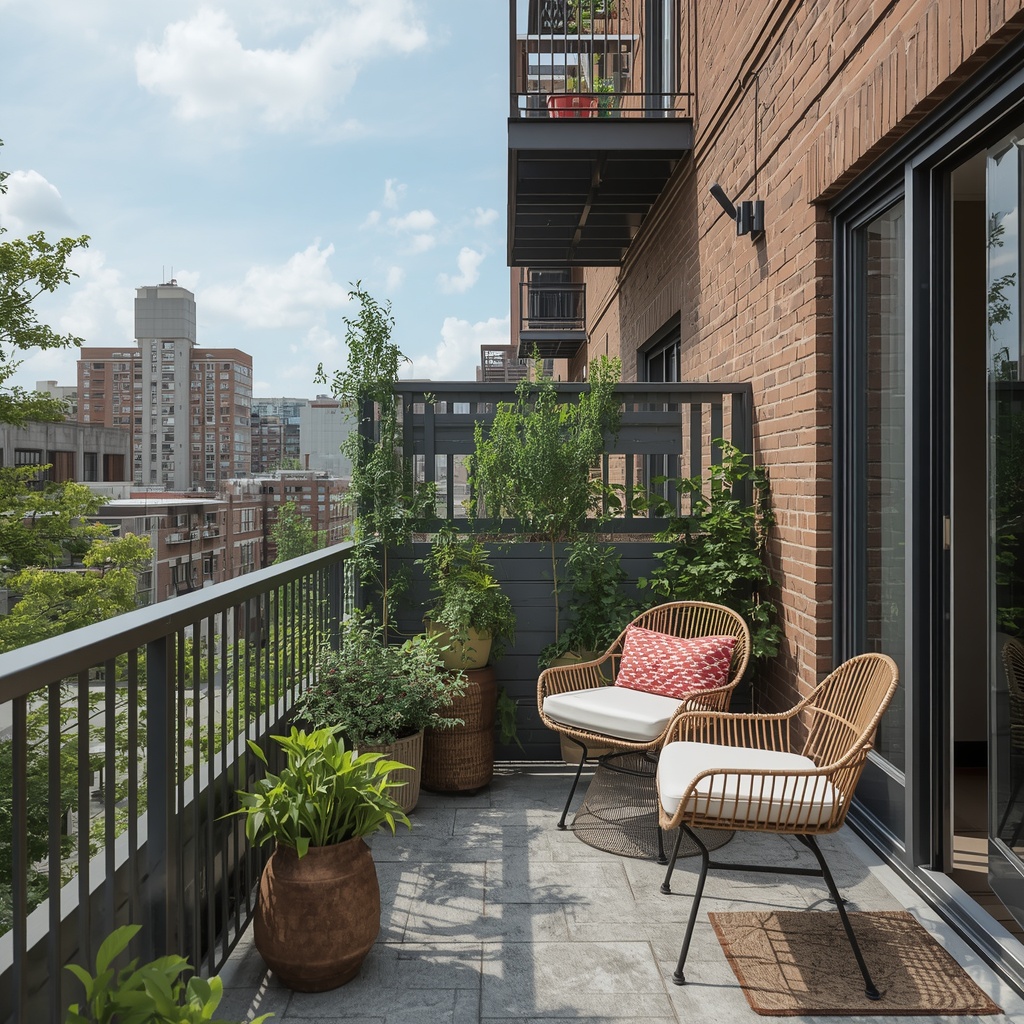
A styled balcony also adds real value. It improves the look of your building’s exterior, boosts your apartment’s appeal if you ever rent or sell, and gives you a private retreat without a backyard. You don’t need a big budget, only a clear plan.
“In a small space, every single item has to earn its place.”
A rule of thumb I repeat to every client
Step 1: Measure, Plan, and Check the Rules
Before you buy a single cushion, get your numbers. Measure the length, width, and railing height, then note where the sun hits at different times of day. Sketch a rough floor plan on graph paper, or use a free room-planning app.
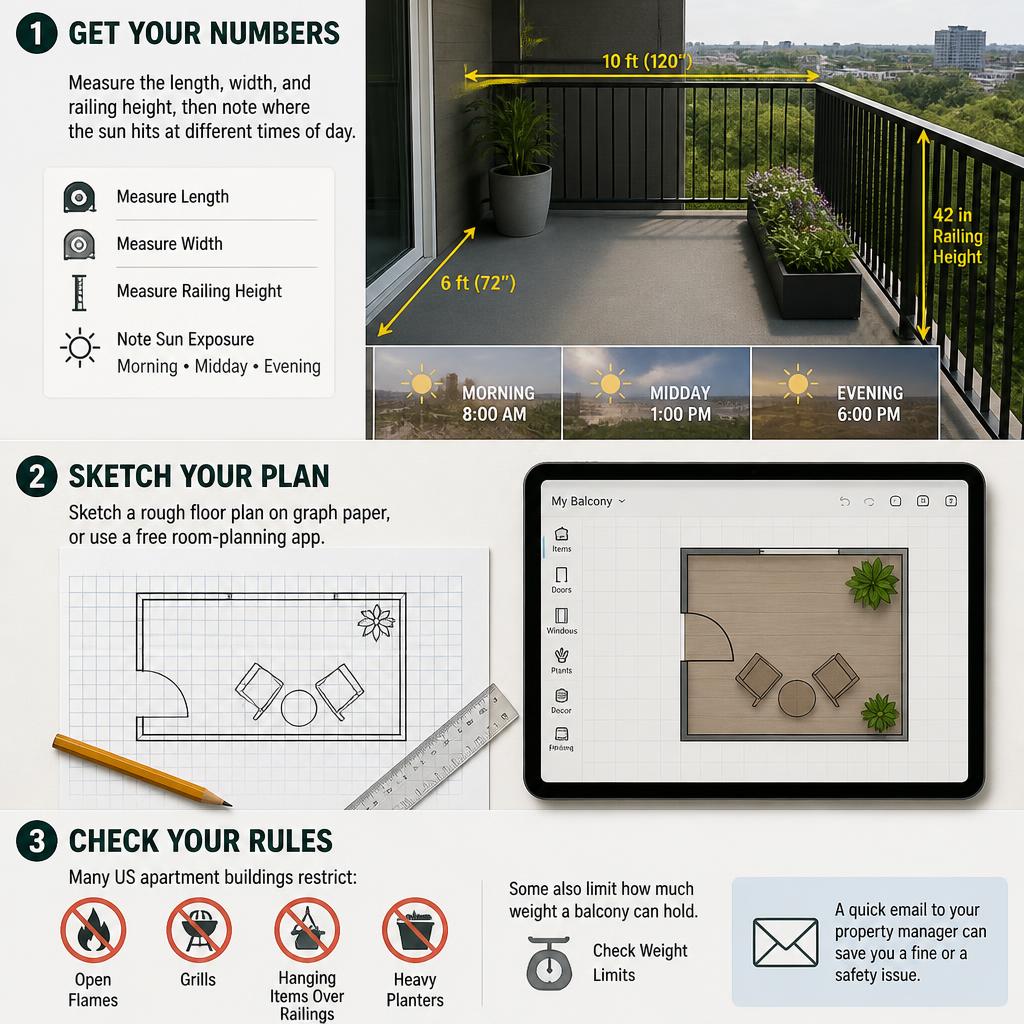
Next, check your lease or HOA rules. Many US apartment buildings restrict open flames, grills, hanging items over railings, and heavy planters. Some also limit how much weight a balcony can hold. A quick email to your property manager can save you a fine or a safety issue.
Pro Tip: Use painter’s tape to mark furniture dimensions on the floor before buying. Live with the “tape outline” for a day or two to confirm you can still walk through comfortably. You need at least 24 to 30 inches of clear walking space.
Know Your Balcony’s Personality
Every balcony has its own conditions, and these shape what you can do. Use this quick reference table to match your setup with the right strategy.
| Balcony Condition | Best Design Strategy | Ideal Plants | Furniture Tip |
|---|---|---|---|
| South-facing (full sun) | Add shade sails or an outdoor umbrella | Lavender, rosemary, geraniums, succulents | Light-colored fabrics resist fading |
| North-facing (low light) | Use light colors and mirrors to brighten | Ferns, hostas, pothos, impatiens | Add warm lighting for evenings |
| Windy (high-rise) | Choose low, heavy planters and secure everything | Ornamental grasses, sedum, boxwood | Skip lightweight pieces and umbrellas |
| Narrow (under 4 ft wide) | Go vertical and use fold-away pieces | Trailing ivy, herbs in railing planters | Wall-mounted bistro table |
| Covered or shaded | Layer lighting and textiles for coziness | Snake plant, ZZ plant, peace lily | Weather-resistant rugs and poufs |
Step 2: Pick a Style and Color Palette
A cohesive look is what separates a designed balcony from a cluttered storage space. Choose one style direction, then stick with a limited palette of three to four colors. On a small balcony, restraint reads as luxury.
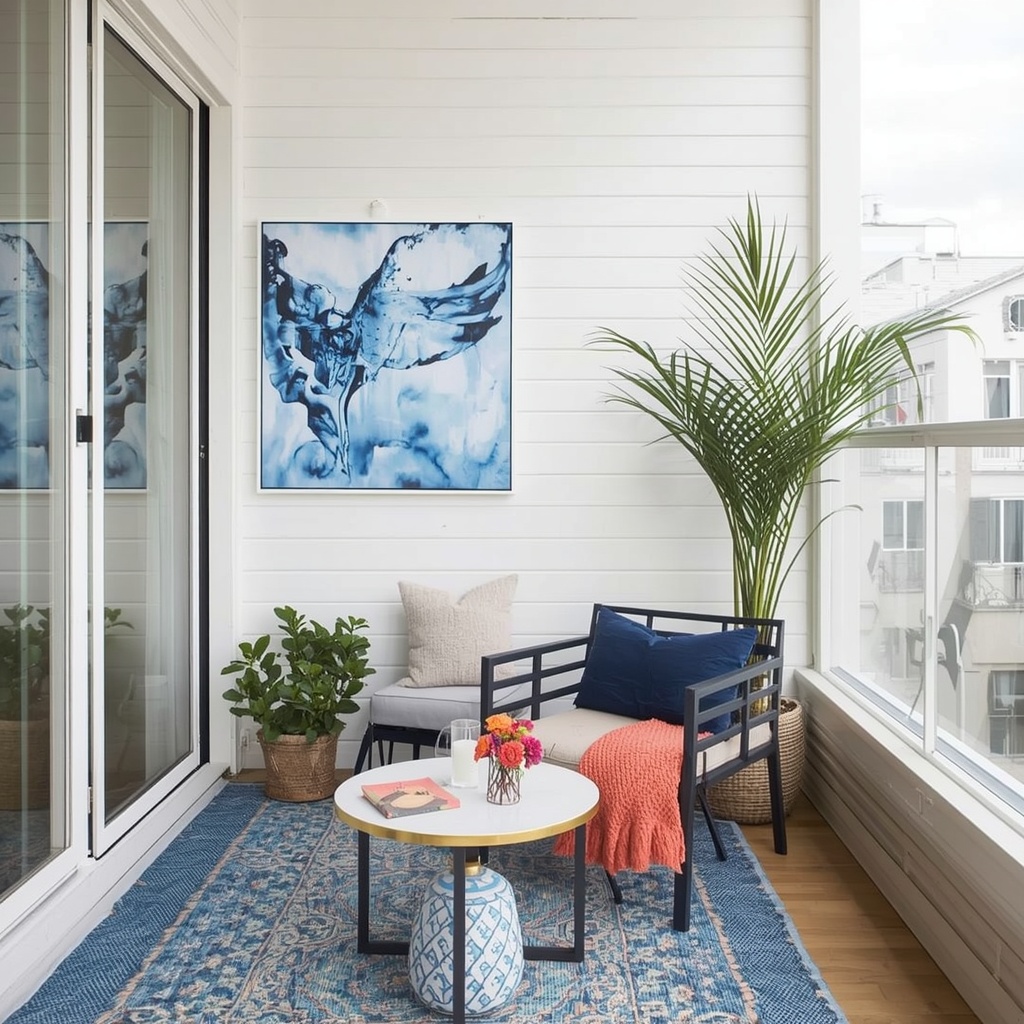
Here are four popular looks that work well in compact spaces:
- Mediterranean retreat: terracotta pots, white walls, blue accents, and olive or citrus trees.
- Modern minimalist: black metal furniture, concrete planters, neutral cushions, and sculptural greenery.
- Boho jungle: layered rugs, rattan, macramé, and lots of trailing plants.
- Scandinavian calm: light wood, white and soft gray textiles, and simple herb planters.
Pro Tip: Follow the 60-30-10 rule. Use one dominant neutral for 60% of the space, a secondary color for 30%, and a bold accent for 10%. Your accent can be as simple as bright throw pillows or a colorful planter.
Step 3: Choose Furniture That Works Hard
Furniture is where most small-balcony makeovers go wrong. Oversized sets crowd the space and make it feel smaller. Look for space-saving balcony furniture that folds, stacks, tucks away, or serves two purposes.
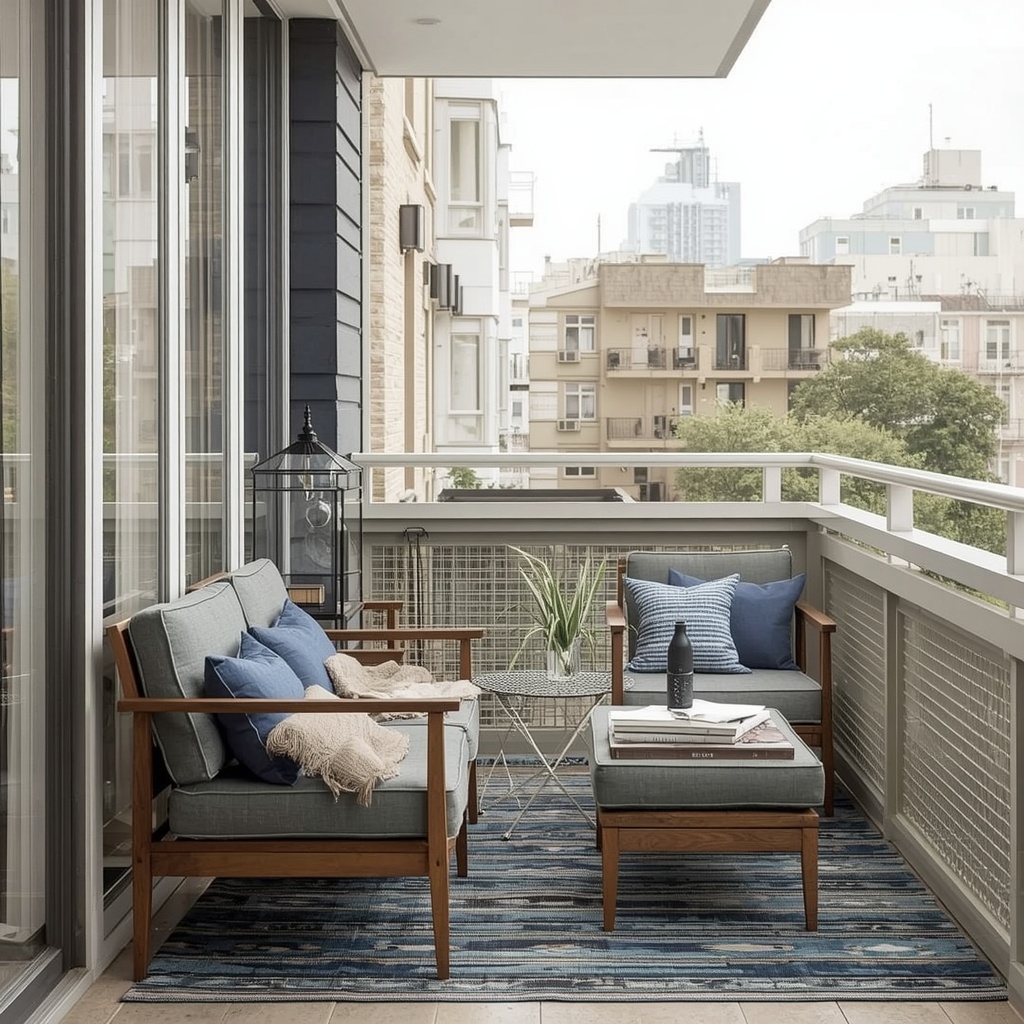
The best pieces for tiny balconies include:
- A folding bistro set: a wall-mounted drop-leaf table and two foldable chairs give you a dining spot that disappears when you don’t need it.
- A storage bench: it gives you seating plus a hidden spot for cushions, garden tools, and blankets.
- Poufs and floor cushions: they add flexible seating and tuck under a table when not in use.
- Railing tables: a narrow ledge for drinks or a laptop that sits on top of your balcony rail.
- A compact loveseat or two-seater: if you have the width, one small sofa creates a true lounge feel.
Choose weather-resistant materials such as powder-coated aluminum, teak, synthetic rattan (resin wicker), and solution-dyed acrylic fabric. These stand up to sun, rain, and the occasional spilled drink.
“Choose fewer, better pieces. A small balcony with two beautiful chairs beats a crowded set of six.”
Step 4: Layer in Greenery with Vertical Gardening
Plants are the heart of any outdoor oasis. Since floor space is limited, think up instead of out. Vertical gardening gives you a lush look without sacrificing room for furniture.
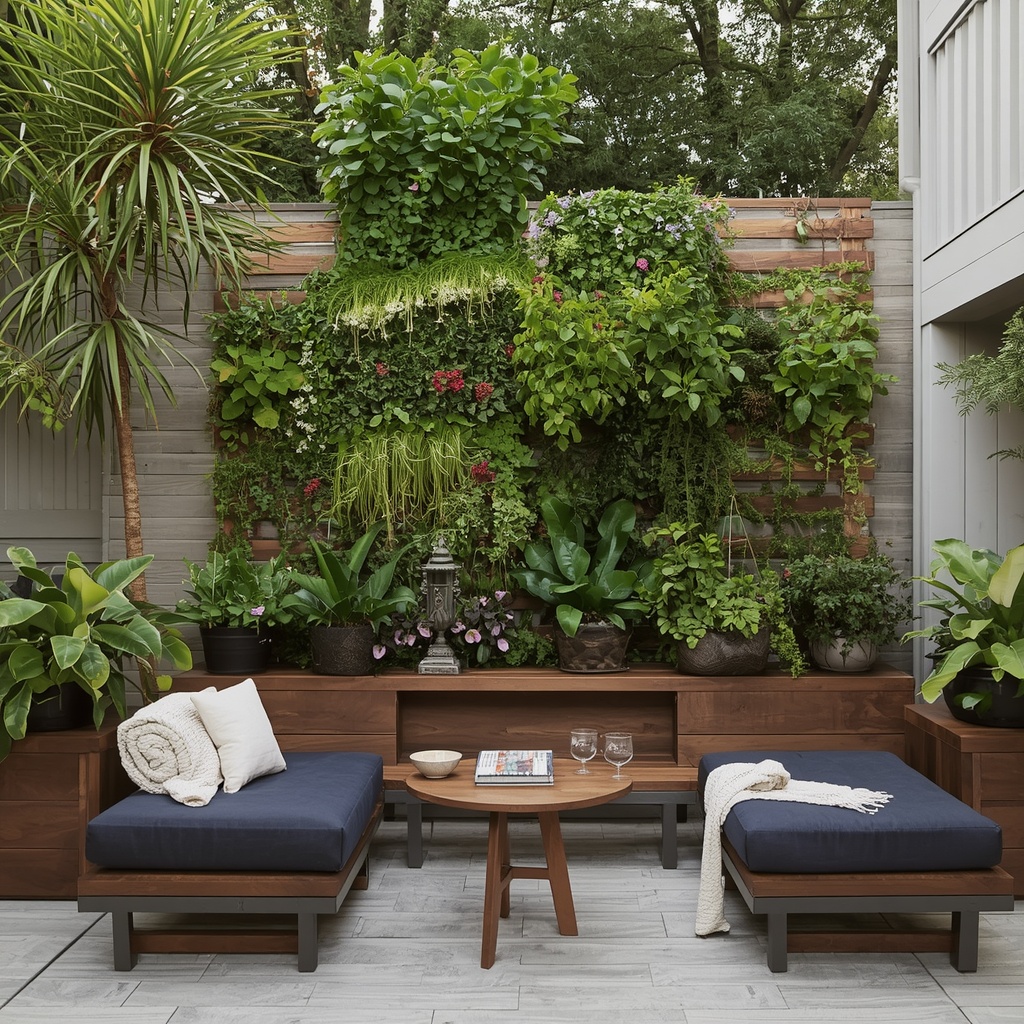
Vertical and Space-Saving Plant Ideas
- Railing planters: these clip onto your balcony rail and work well for herbs, flowers, and trailing plants.
- Wall-mounted shelves or pocket planters: turn a bare wall into a living green wall.
- Tiered plant stands: stack several pots in the footprint of one.
- Hanging baskets: hang them from a ceiling hook or a rod to add color at eye level.
- Trellises: train climbing plants like jasmine, clematis, or sweet peas to grow upward.
Group your pots in odd numbers (three or five) and vary their heights for a natural, layered look. Mix textures too: pair spiky grasses with soft ferns and glossy leaves.
Pro Tip: Check your USDA Plant Hardiness Zone using the USDA Plant Hardiness Zone Map before shopping. If you have pets, confirm your plants are safe by reviewing the ASPCA toxic and non-toxic plants list.
Best Plants by Sunlight
| Light Level | Easy-Care Plants | Why They Work |
|---|---|---|
| Full sun (6+ hours) | Lavender, rosemary, petunias, sedum | Heat and drought tolerant |
| Partial sun (3 to 6 hours) | Begonias, coleus, mint, parsley | Flexible and fast growing |
| Shade (under 3 hours) | Ferns, hostas, pothos, peace lily | Thrive with low light |
Don’t forget a balcony herb garden. Basil, thyme, chives, and mint are practical, fragrant, and beautiful. Cooking with herbs you grew ten feet from your stove is one of the best small joys of apartment living.
Step 5: Create Privacy Without Losing Light
Nothing ruins a relaxing moment like feeling watched. The good news is that balcony privacy ideas are plentiful, affordable, and renter-friendly. The goal is to block sightlines while still letting in light and airflow.
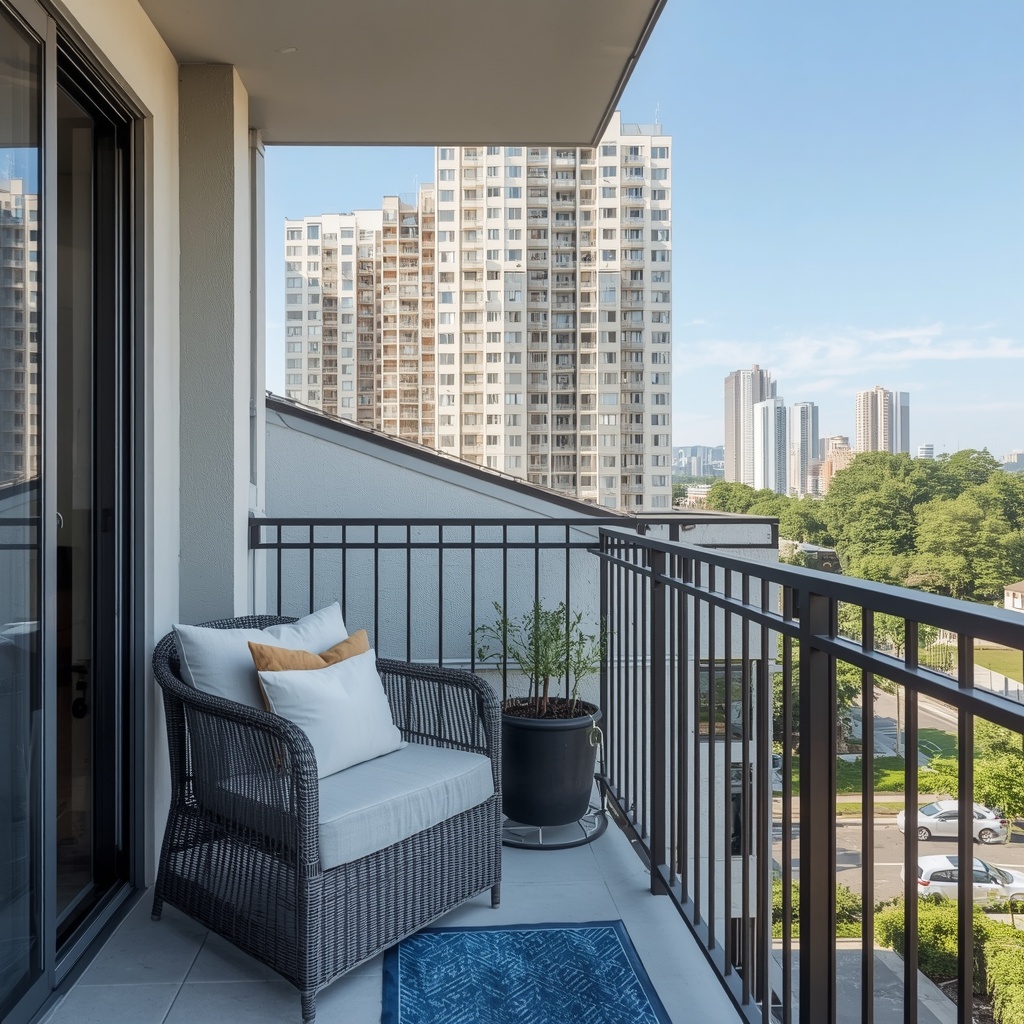
Try these options:
- Bamboo or reed screening: natural, affordable, and easy to attach to railings with zip ties.
- Faux hedge panels: realistic greenery that offers instant privacy with zero watering.
- Outdoor curtains: sheer, weather-resistant panels soften the space and add a romantic feel.
- Lattice or slatted screens: these filter views while keeping the space airy.
- Tall planters with bamboo or ornamental grasses: a living privacy wall that also adds beauty.
Pro Tip: Aim for partial screening rather than total enclosure. Fully walling off a small balcony can make it feel like a box. Leave some openness so you still enjoy the view and the breeze.
Step 6: Define the Floor with Outdoor Rugs and Flooring
Your balcony floor is likely bare concrete or worn tile. Covering it is one of the fastest ways to transform the look and feel of the whole space. A defined floor also makes your balcony feel like a true outdoor room.
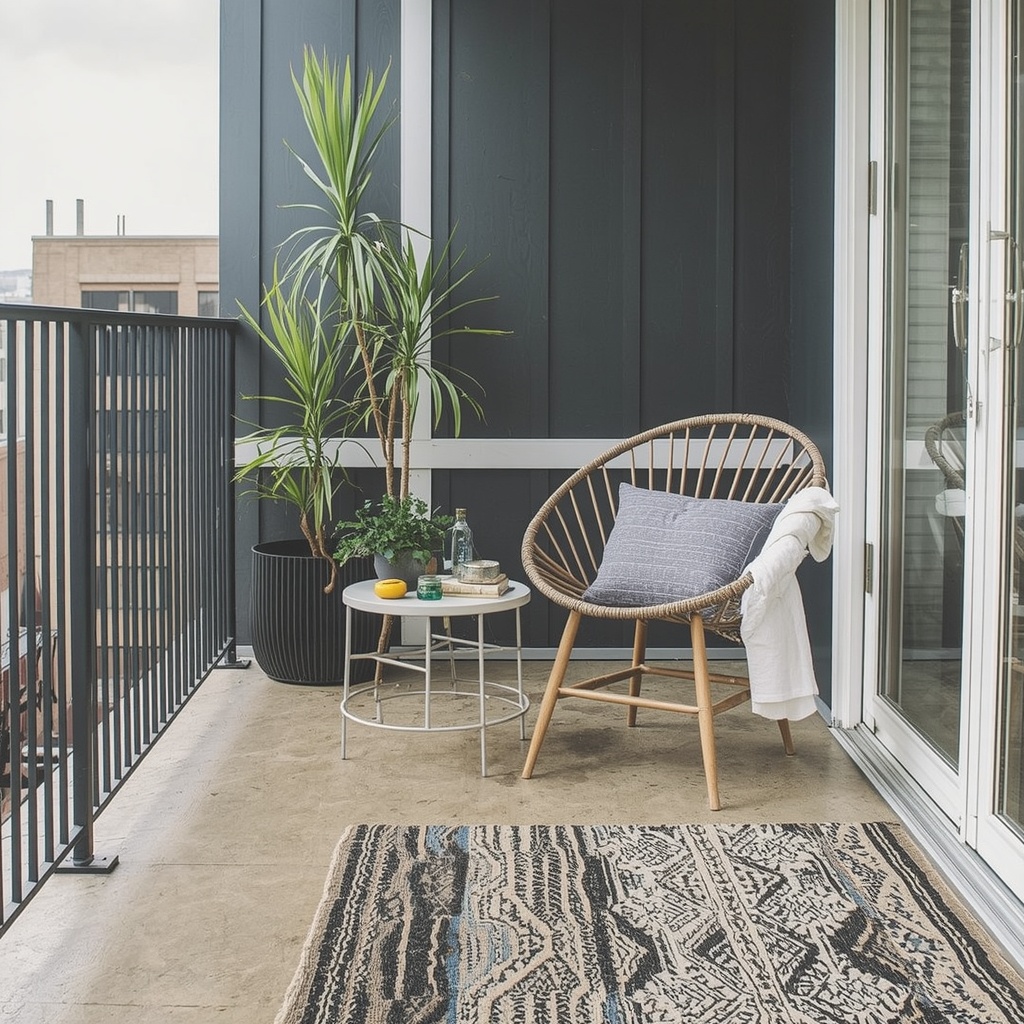
For renters, interlocking deck tiles snap together with no tools or adhesive. They come in wood, stone, and composite finishes, and you can pull them up when you move. If you prefer softness, an outdoor rug made from polypropylene or recycled plastic is mildew-resistant and easy to hose off.
Choose a rug that fits your furniture layout. Ideally the front legs of your chairs sit on the rug, which visually anchors the seating area. Stripes and geometric patterns can make a narrow balcony feel wider or longer, depending on the direction you lay them.
Step 7: Light It Up for Evening Ambiance
Lighting transforms a balcony from a daytime spot into an evening escape. Layering different light sources creates depth and warmth, the same way we do indoors. Aim for soft, warm tones (2200K to 2700K) rather than harsh white.
Outdoor Lighting Options Compared
| Lighting Type | Best For | Power Source | Approx. Cost |
|---|---|---|---|
| String lights | Overall glow and festive mood | Solar or plug-in | $15 to $50 |
| LED lanterns | Tabletop ambiance, portable | Battery or solar | $20 to $60 |
| Solar stake lights | Lighting plant pots | Solar | $15 to $40 |
| Wall sconces (plug-in) | Task and accent lighting | Plug-in | $30 to $120 |
| Flameless candles | Cozy touches, safe near fabric | Battery | $10 to $30 |
For safety, choose solar or battery-powered options if your balcony lacks an outlet, and always follow your building’s rules about open flames. LED candles give you the flicker without the fire risk.
Pro Tip: Use a smart plug or a timer for your string lights so they switch on at dusk automatically. Coming home to a glowing balcony feels wonderful.
Step 8: Add Texture with Soft Furnishings
Soft goods make a space feel inviting rather than purely functional. Layer in outdoor cushions, throw pillows, and a lightweight throw blanket. Mix textures like woven, chunky knit, and smooth linen-look fabric to create visual richness.
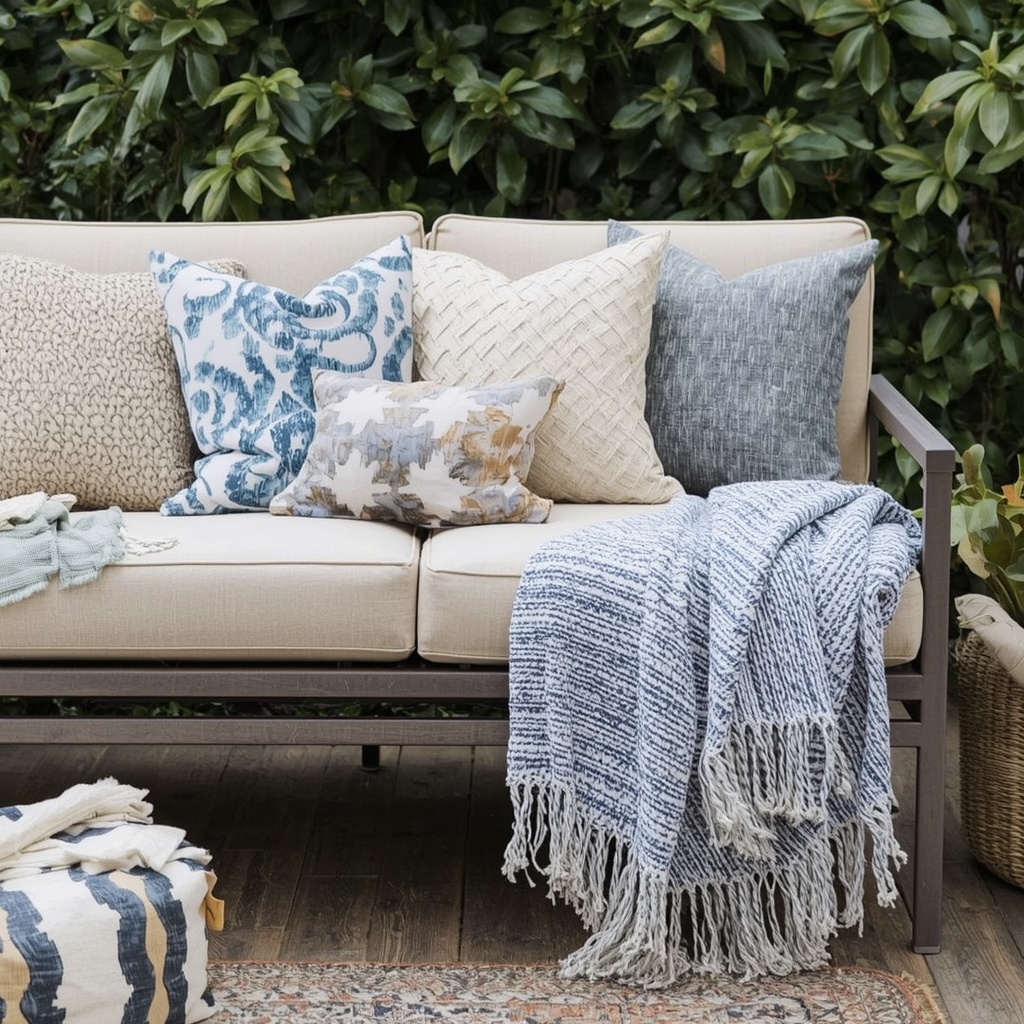
Stick with performance fabrics labeled as fade-, mildew-, and water-resistant. Store them in your bench or a deck box when it rains, and they’ll last for years. A few well-chosen pillows in your accent color are a budget-friendly way to refresh your look each season.
Don’t overlook the vertical plane. Hang a weatherproof outdoor wall mirror to bounce light and make your balcony feel larger. Outdoor wall art, woven wall hangings, or a simple row of hanging lanterns can personalize the space.
Step 9: Style the Details Like a Designer
The final layer is where your balcony develops personality. Think of these as the “jewelry” of your outdoor room. Keep them intentional rather than abundant.
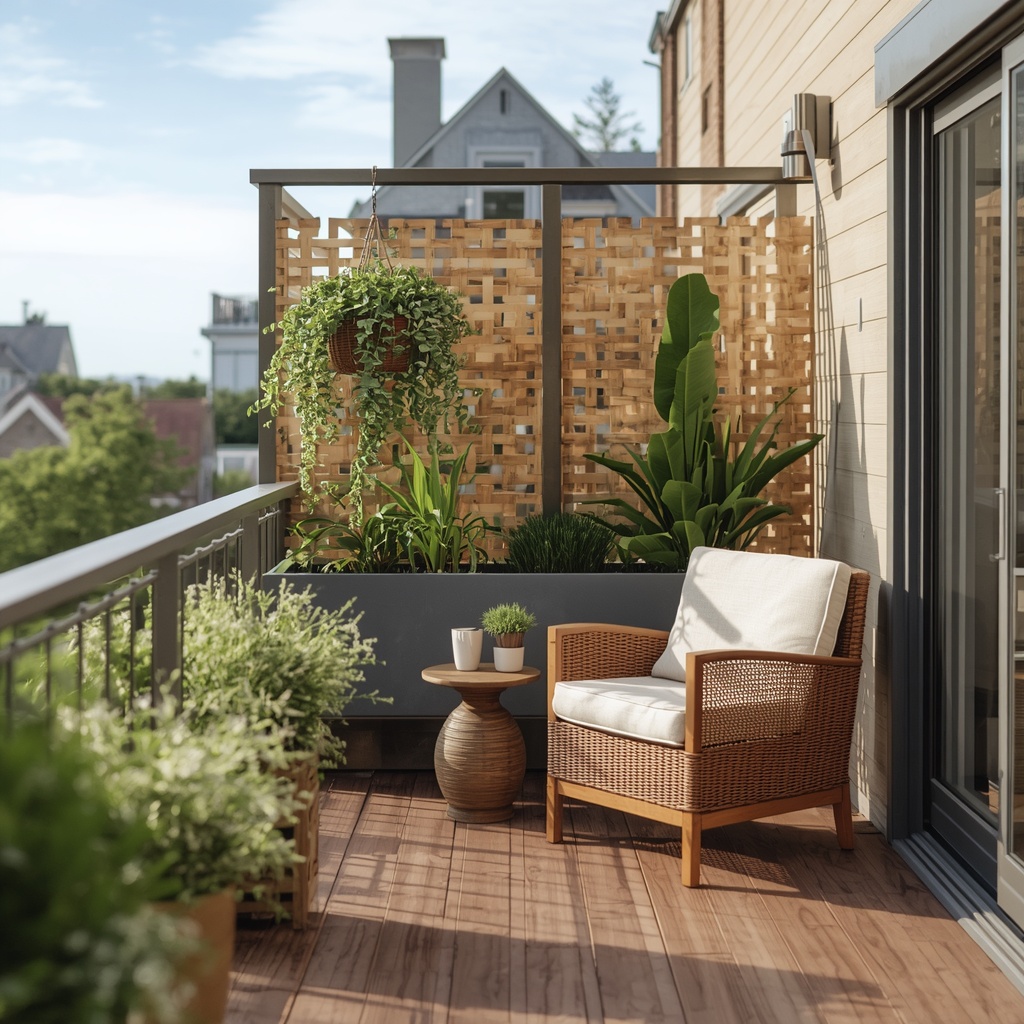
Consider adding:
- A small side table or stool to hold drinks and candles.
- A tray to corral coasters, a lantern, and a small vase.
- Decorative planters that coordinate with your color palette.
- A wind chime or small water feature for soothing sound. A tiny tabletop fountain can mask city noise beautifully.
- A bar cart or drinks trolley if you love entertaining.
Edit ruthlessly. Odd-number groupings, varied heights, and negative space (empty areas that let the eye rest) are what make a balcony look styled rather than stuffed.
Step 10: Plan for Every Season
A truly great balcony works year-round, not just in July. A little seasonal planning keeps your oasis inviting from spring through winter.
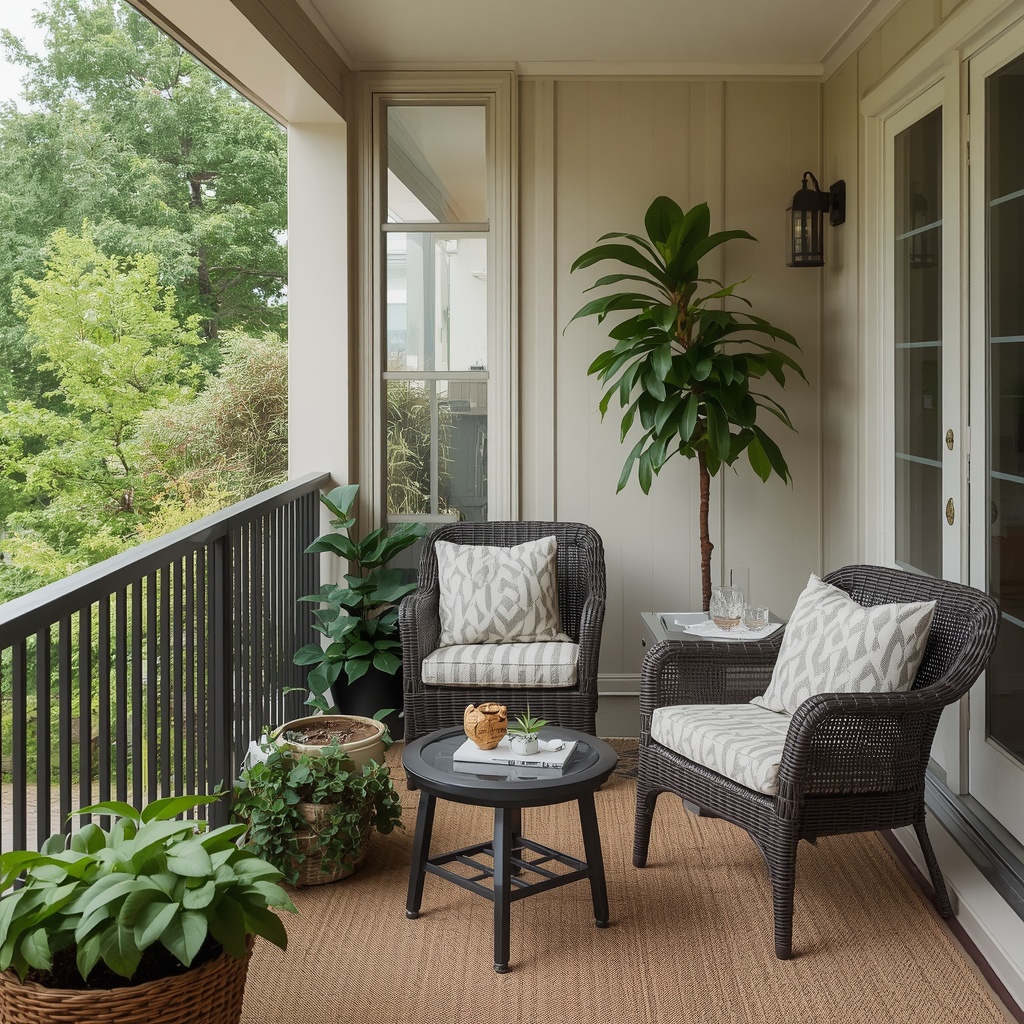
- Spring: plant bulbs and fresh herbs, and wash your cushions and rug.
- Summer: add shade, keep plants well watered, and bring in cooling touches like a pitcher station.
- Fall: swap in mums, ornamental cabbage, and warm-toned throws.
- Winter: move tender plants indoors, add evergreens, and use blankets, lanterns, and a tabletop fire pit if your building permits one.
Cold-weather accessories extend your use of the space. A weatherproof outdoor heater (where allowed), a stack of cozy blankets, and warm lighting make a crisp evening feel special.
Small Balcony Makeover on a Budget
You don’t need to spend thousands. Here’s a realistic look at how to prioritize your spending across three budget levels.
| Budget | What to Buy First | What to Add Later |
|---|---|---|
| Under $150 | Deck tiles or small rug, string lights, 3 to 4 plants, 2 cushions | Railing planter, small side table |
| $150 to $500 | Bistro set, outdoor rug, privacy screen, layered lighting | Storage bench, wall decor, mirror |
| $500 to $1,000+ | Quality loveseat or storage bench, planters, curtains, flooring | Heater, smart lighting, water feature |
Pro Tip: Shop end-of-season sales (late August and September) for deep discounts on patio furniture, planters, and cushions. Secondhand marketplaces are also a goldmine. A coat of outdoor spray paint can give a dated metal chair a brand-new look for under $15.
Common Balcony Styling Mistakes to Avoid
Even experienced decorators slip up in tight spaces. Watch out for these frequent errors:
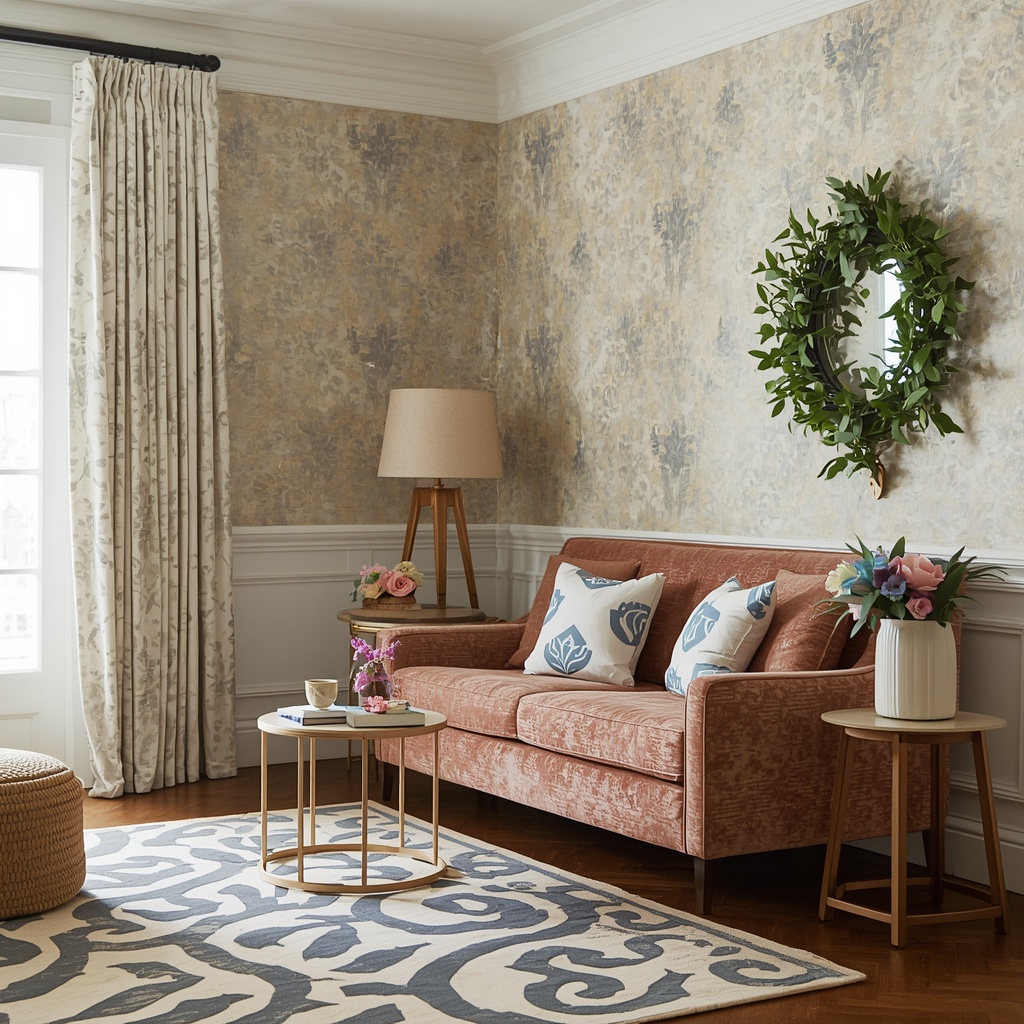
- Buying furniture that’s too large. Always measure first.
- Ignoring weight limits. Heavy planters filled with wet soil add up quickly.
- Skipping drainage. Use saucers or trays so water doesn’t stain the floor or drip onto your neighbor below.
- Choosing too many colors. A tight palette feels calm and intentional.
- Forgetting storage. Clutter kills the oasis vibe, so hide the watering can and extra pots.
- Overlooking maintenance. Choose low-maintenance plants if you travel often.
Quick Balcony Oasis Checklist
Use this list as your final walkthrough before you declare the project done:
- Measured and planned the layout
- Confirmed lease, HOA, and weight-limit rules
- Chosen one style and a 3 to 4 color palette
- Added foldable or multifunctional furniture
- Included vertical planters and a mix of plants
- Created privacy with screens, curtains, or greenery
- Covered the floor with tiles or an outdoor rug
- Layered warm lighting
- Added soft textiles and a few decorative details
- Planned for storage and seasonal changes
Final Thoughts: Your Tiny Escape Is Waiting
Styling a small balcony isn’t about squeezing in as much as possible. It’s about choosing a clear style, using every inch wisely, and layering greenery, lighting, and texture until the space feels like a retreat. Start with one corner, one plant, and one string of lights. Then build from there.
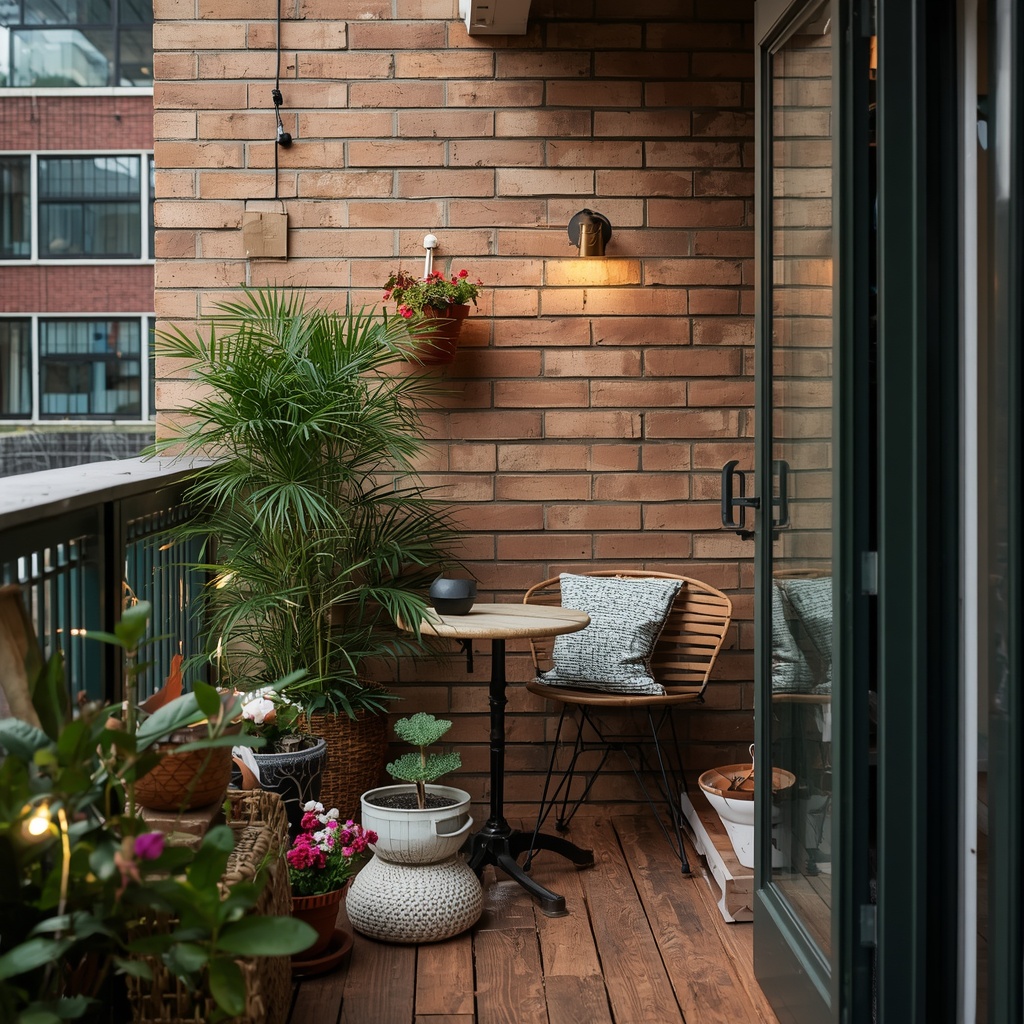
Before long, that forgotten concrete slab becomes the spot where you drink your morning coffee, host friends at sunset, and unwind at the end of a long day. Your outdoor oasis is closer than you think.