
Meta title: How to Create a Home Office in a Small Corner (Designer Guide)
Meta description: Learn how to create a stylish, productive home office in a small corner with space-saving desks, smart storage, lighting, and budget-friendly decor ideas.
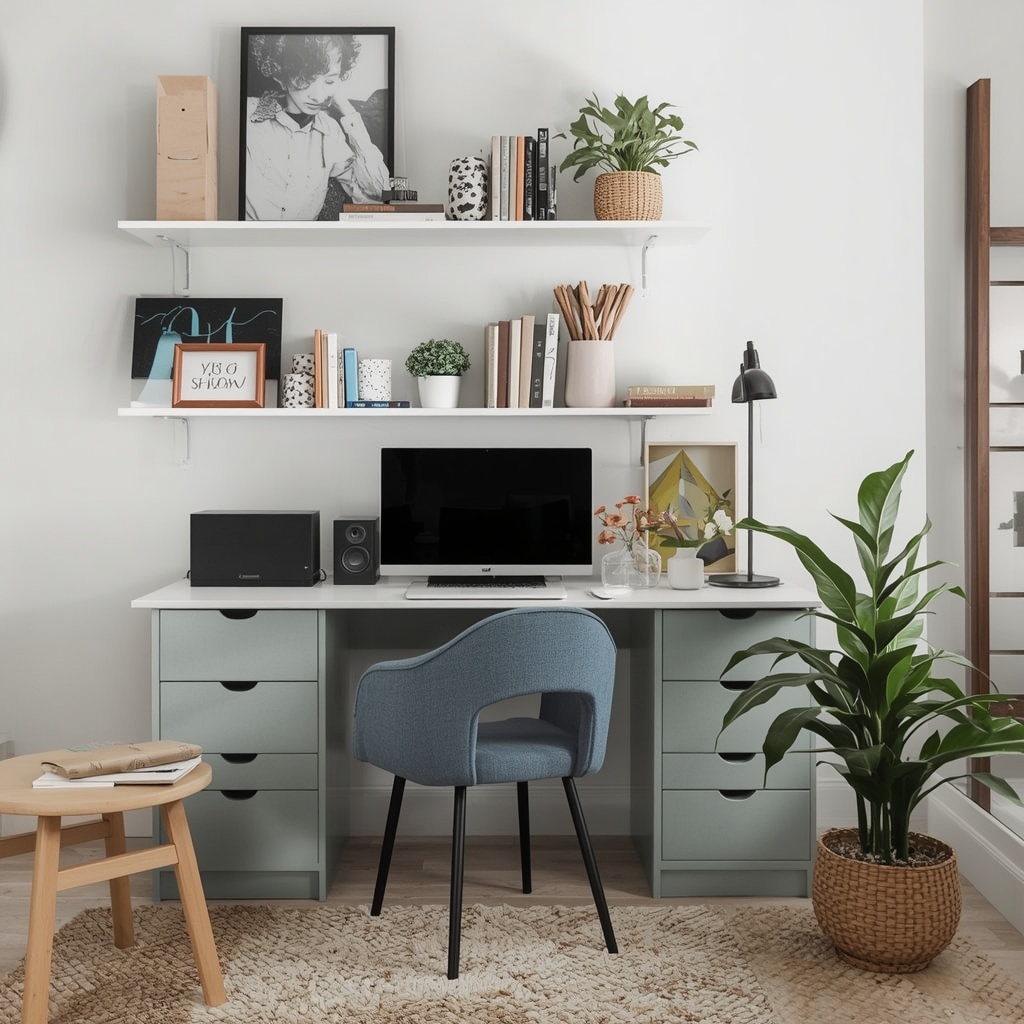
Remote and hybrid work is now a permanent part of American life, but most of us don’t have a spare bedroom to spare. If you live in a city apartment, a starter home, or a busy family house, the dream of a dedicated study can feel out of reach. The good news is that a small corner home office can be just as productive and far more charming than a sprawling room.
As an interior designer who specializes in home decor, I’ve turned awkward nooks, stair landings, and bedroom corners into polished workspaces. The secret isn’t square footage. It’s planning, proportion, and a handful of smart choices. In this guide, I’ll walk you through every step of creating a compact home office that looks beautiful and works hard.
Why a Small Corner Home Office Works Better Than You Think
Corners are naturally defined spaces. Two walls give you built-in structure, which means you can anchor a desk, add shelving, and hang art without fighting an open floor plan. That sense of enclosure also helps your brain focus, which is why many designers prefer a corner work-from-home setup over a desk floating in the middle of a room.
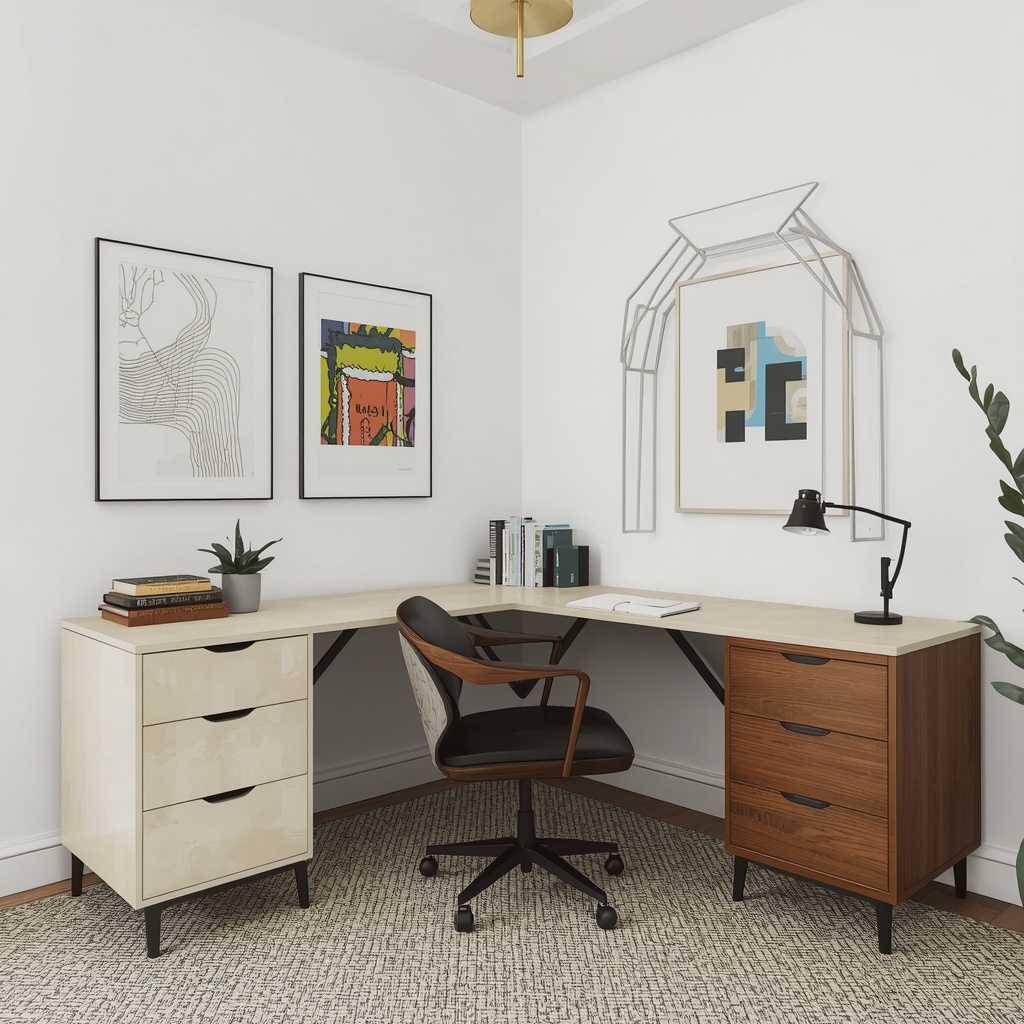
A small footprint also forces better decisions. You can’t buy a bulky credenza or a drawer-heavy executive desk, so every item has to earn its place. The result is a minimalist home office that feels calm, clutter-free, and intentional, which is exactly what you want when deadlines hit.
“Have nothing in your house that you do not know to be useful, or believe to be beautiful.” — William Morris
That Victorian design principle is the perfect rule for a tiny workspace. Every object in your corner should be either useful or beautiful, and ideally both.
Step 1: Choose the Best Corner in Your Home
Not every corner is equal. Start by walking through your home at different times of day and noting where you feel energized. Natural light is the biggest factor, so look for corners near a window, but not directly in front of one, where glare will wash out your screen. A corner at a right angle to a window is often the sweet spot.
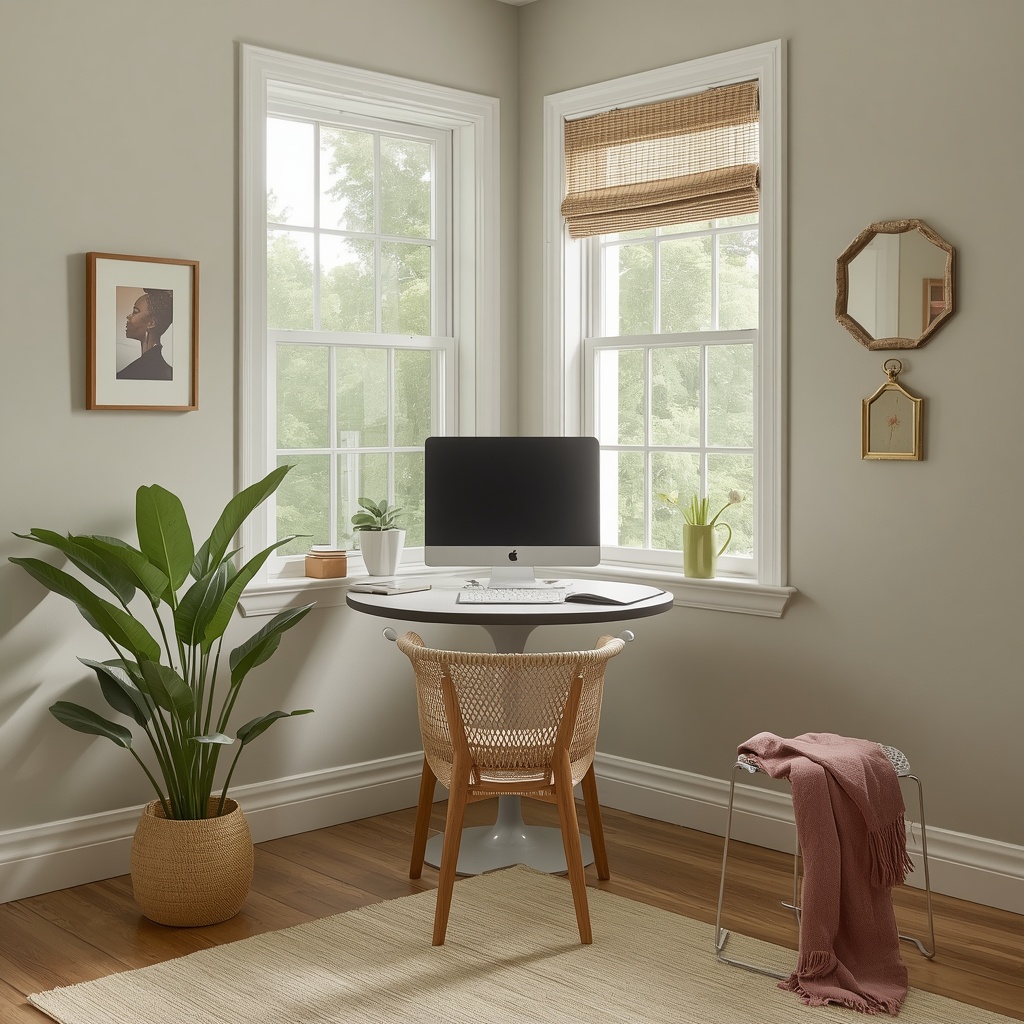
Next, consider noise and traffic. A corner beside the kitchen or the front door will pull your attention constantly. Bedroom corners, living room nooks, dining room ends, and even deep closets can work well. Wherever you land, make sure there’s at least one wall outlet nearby, because extension cords across floors look messy and create tripping hazards.
Quick checklist for picking your spot:
- Access to natural light without screen glare
- A nearby electrical outlet (and strong Wi-Fi signal)
- Minimal foot traffic and household noise
- At least 3 feet by 4 feet of usable floor space
- A wall behind you that looks good on video calls
Pro Tip: Test your corner for a full workday before you buy anything. Set up a laptop on a TV tray or ironing board and note how the light, temperature, and noise change. Ten minutes of testing can save you from a very expensive mistake.
Step 2: Measure and Plan Your Layout
Before you shop, grab a tape measure and sketch your corner on paper. Measure the width of each wall, the ceiling height, and the distance from the corner to any windows, outlets, baseboard heaters, or doorways. Designers never skip this step, because a desk that’s two inches too wide can ruin the whole plan.
Then think vertically. In a small space, the walls are your most valuable real estate. Floating shelves, pegboards, and wall-mounted organizers free up floor area and draw the eye upward, making the room feel taller. Aim to keep at least 30 inches of clearance in front of your chair so you can move comfortably.
Here’s a quick reference for common corner sizes:
| Corner Size | Best Desk Type | Ideal Layout | Storage Strategy |
|---|---|---|---|
| 3′ x 3′ (tight nook) | Wall-mounted floating desk | Single wall | Vertical shelves, wall pockets |
| 4′ x 4′ (standard) | Compact writing desk | Single wall or L-shape | Shelves above, bin below |
| 5′ x 5′ (roomy) | Corner L-shaped desk | Corner-wrapped | Hutch, shelving, drawer cart |
| Closet (2′ x 4′) | Fold-down wall desk | Built-in | Hooks, shelves, over-door organizer |
Step 3: Pick a Space-Saving Desk That Fits
The desk is the heart of your small space office, so choose carefully. A floating or wall-mounted desk is my top recommendation for tiny corners, because it leaves the floor visible, which makes the space feel larger. If you need to hide your work at the end of the day, a fold-down or secretary-style desk is a clever option that closes up like a cabinet.
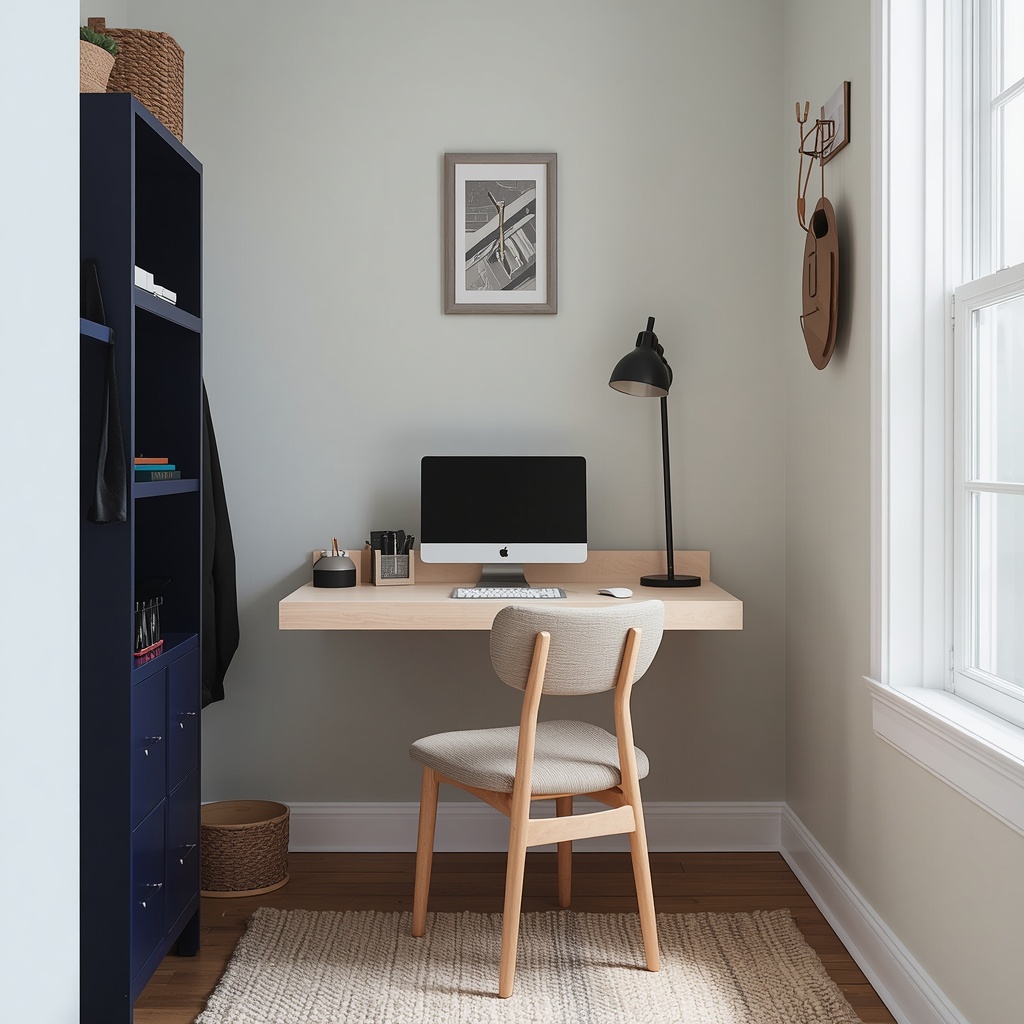
If you prefer a freestanding piece, look for a slim writing desk with a depth of 20 to 24 inches. Glass or acrylic tops reduce visual weight, while light wood tones feel airy and Scandinavian. Retailers like IKEA and Wayfair carry dozens of compact options at nearly every price point.
Desk styles compared:
| Desk Style | Pros | Cons | Best For |
|---|---|---|---|
| Floating wall desk | Saves floor space, modern look | Limited weight capacity | Tiny nooks, laptop users |
| Corner L-shaped desk | Maximum surface area | Takes more room | Dual-monitor setups |
| Fold-down desk | Hides away, great for closets | Less storage | Part-time remote workers |
| Slim writing desk | Stylish, easy to move | Small surface | Light, laptop-based work |
| Standing desk converter | Ergonomic, adjustable | Adds visual bulk | Long workdays |
Step 4: Invest in an Ergonomic Chair
Your chair matters more than your desk. You’ll spend hours in it, and a poor seat leads to back pain, stiff shoulders, and lost focus. Look for adjustable seat height, lumbar support, and armrests that tuck under the desk. The Mayo Clinic offers helpful ergonomic guidance on posture and seating if you want to learn more.
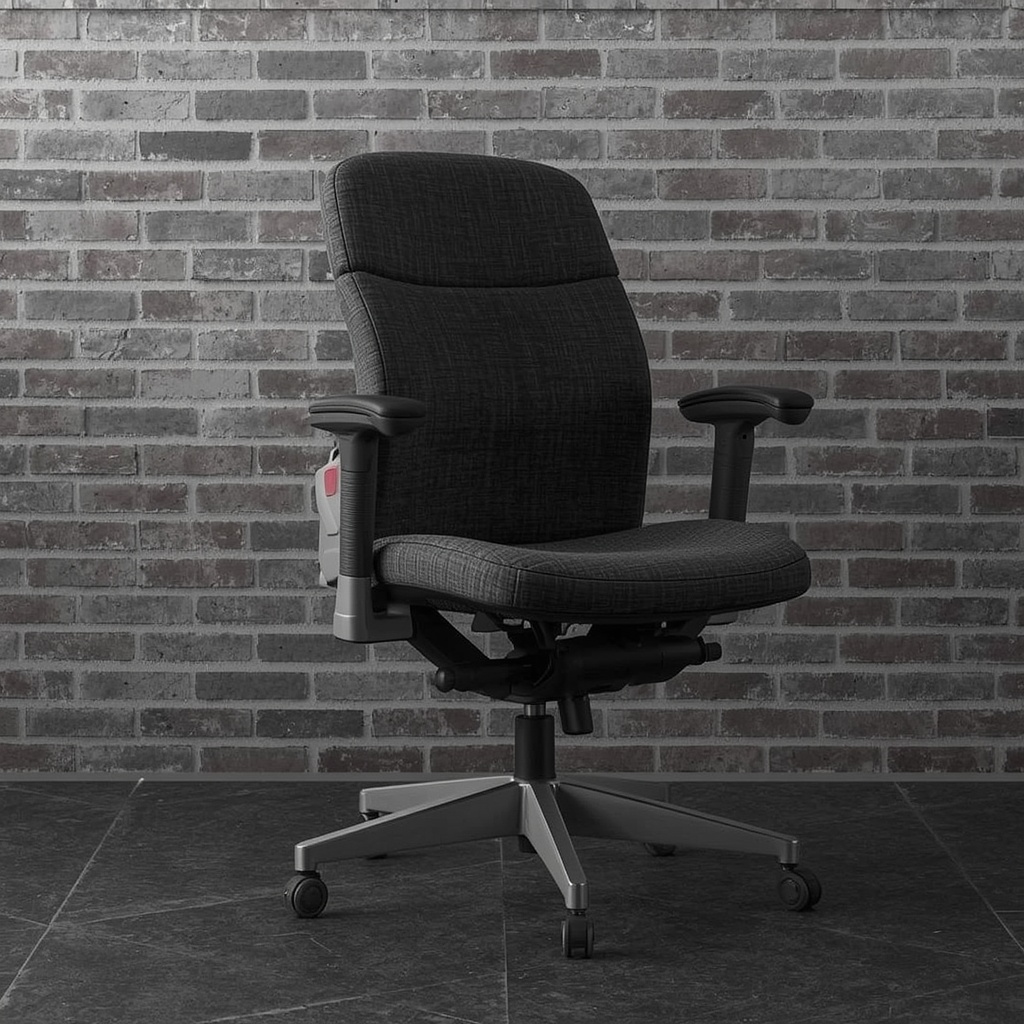
In a small corner, an oversized executive chair will overwhelm the room. Choose a streamlined task chair with a mesh back, or an upholstered armless chair that doubles as occasional seating. If you love a vintage look, a slim wooden chair with a cushion and a separate lumbar pillow can feel more like decor than office equipment.
Pro Tip: Your elbows should rest at roughly 90 degrees when typing, your feet flat on the floor, and your screen top at or just below eye level. A small footrest or a stack of sturdy books can fix a desk that’s too tall.
Step 5: Maximize Storage Without Adding Clutter
Storage is where small home offices succeed or fail. The golden rule is to go up, not out. Install two or three floating shelves above the desk, and use matching baskets, boxes, or file organizers to hide loose paper. Uniform containers in the same color family make even a busy shelf look serene.
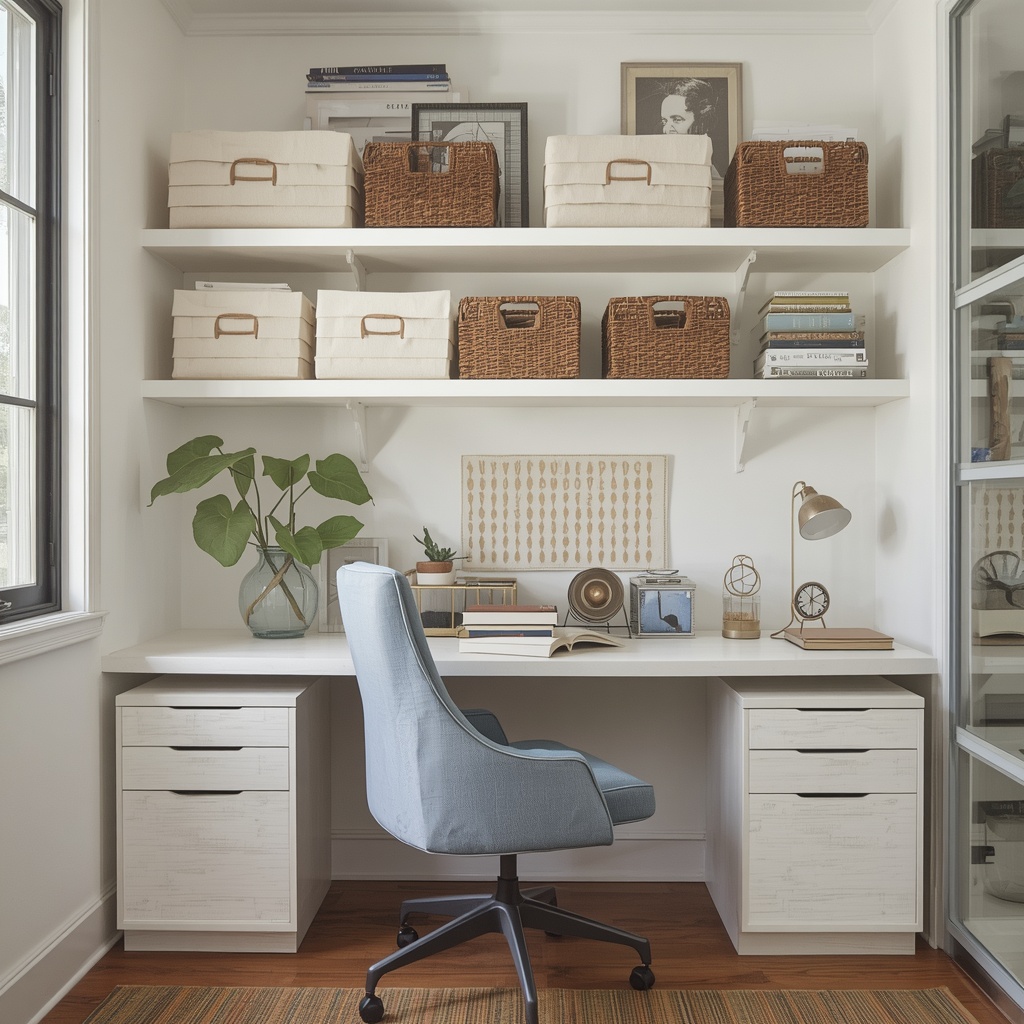
Hidden storage deserves a spot, too. Rolling drawer carts slide under the desk, ottoman storage can hold supplies, and desks with built-in cubbies keep essentials within reach. Take a few minutes each Friday to clear your surface so Monday starts fresh.
Smart storage ideas for tiny corners:
- Pegboards or slatted wall panels for flexible, reconfigurable storage
- Wall-mounted file holders for active projects
- Under-desk rolling carts for supplies and chargers
- Over-the-door organizers when using a closet office
- Magnetic boards and cork strips for reminders and inspiration
- Lidded baskets that disguise paperwork as decor
Step 6: Layer Your Lighting for Productivity
Great lighting transforms a corner. Start with natural light, and if your window is bright, add a sheer curtain or light-filtering shade to soften glare. Position your desk so daylight comes from the side, which reduces eye strain on your screen.
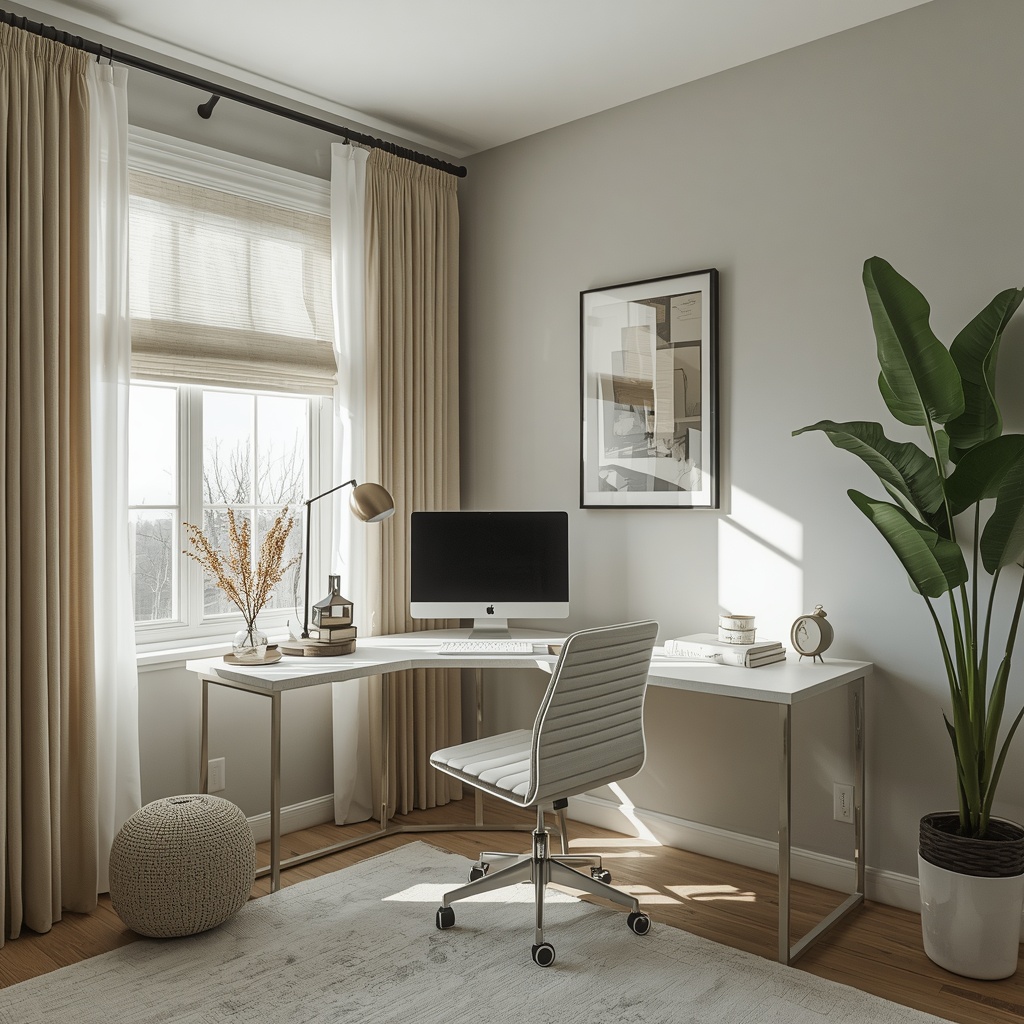
Then layer in artificial light. Use an adjustable task lamp for focused work, a warm ambient lamp for evenings, and optionally an LED strip behind a shelf for a soft glow. Look for bulbs with a color temperature between 3000K and 4000K, which feels bright and alert without being harsh. The U.S. Department of Energy has useful tips on efficient LED lighting.
Here’s a simple lighting formula:
| Light Layer | Purpose | Recommended Fixture |
|---|---|---|
| Task | Reading, writing, detail work | Adjustable desk lamp (3500K) |
| Ambient | General glow | Table lamp or wall sconce |
| Accent | Mood and depth | LED strip or picture light |
| Natural | Energy and wellness | Sheer curtains, light-colored walls |
Step 7: Choose a Color Palette That Expands the Space
Color is the cheapest design tool you have. Light, soft shades like warm white, pale gray, sage green, and soft blue reflect light and make a tight corner feel open. If you crave drama, painting just the corner in a deep navy or forest green can create a cozy, jewel-box effect, as long as you balance it with plenty of lighting.
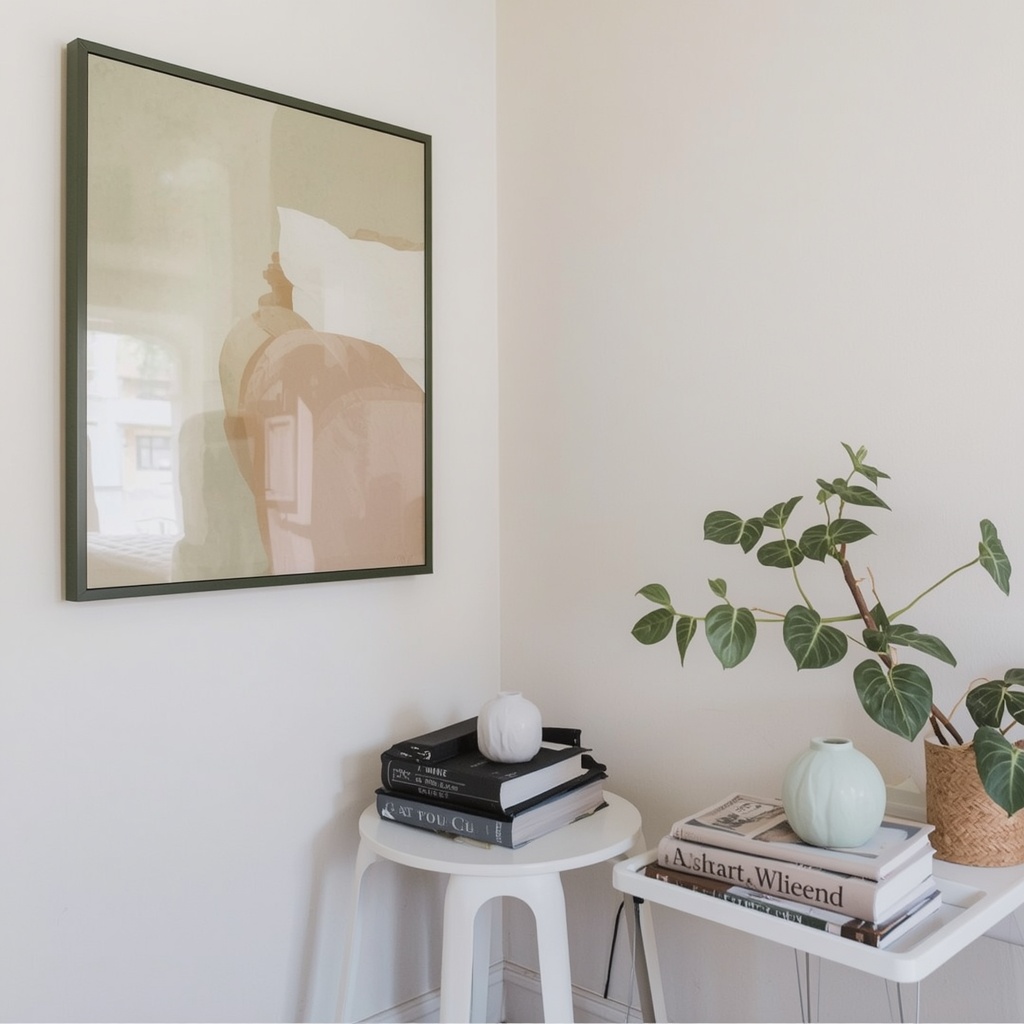
Paint brands such as Benjamin Moore and Behr offer free online color tools to preview shades. Stick to a palette of three colors: a dominant neutral, a secondary tone, and one accent. This restraint keeps a small corner from feeling busy and helps your workspace look professionally styled.
Pro Tip: Paint the ceiling a shade lighter than the walls, or use a soft white. It bounces light around the room and visually lifts the whole corner.
Step 8: Make It Personal With Smart Decor
A home office should inspire you, not feel like a cubicle. Add a few personal touches, such as framed art, a small plant, a favorite candle, or a textured throw over your chair. Aim for a mix of materials like wood, metal, ceramic, and linen to create depth without crowding the desk.
Plants are particularly effective. A pothos, snake plant, or ZZ plant thrives in low light and improves the feel of any room. A round mirror above the desk bounces light and doubles the sense of depth. Keep decor to about one-third of your surface so the workspace stays functional.
Decor ideas that work in a small corner:
- A large piece of art hung slightly higher than eye level
- A woven rug or small runner to define the zone
- A gallery wall of 3 to 5 frames in matching tones
- A tiered plant stand to save desk space
- A statement desk lamp that doubles as sculpture
Step 9: Tame Cables and Tech
Nothing ruins a beautiful corner faster than a tangle of cords. Use cable clips, adhesive raceways, and a surge protector mounted under the desk to keep everything tidy. A wireless keyboard, mouse, and printer reduce clutter even further, and a monitor arm frees up valuable desk surface.
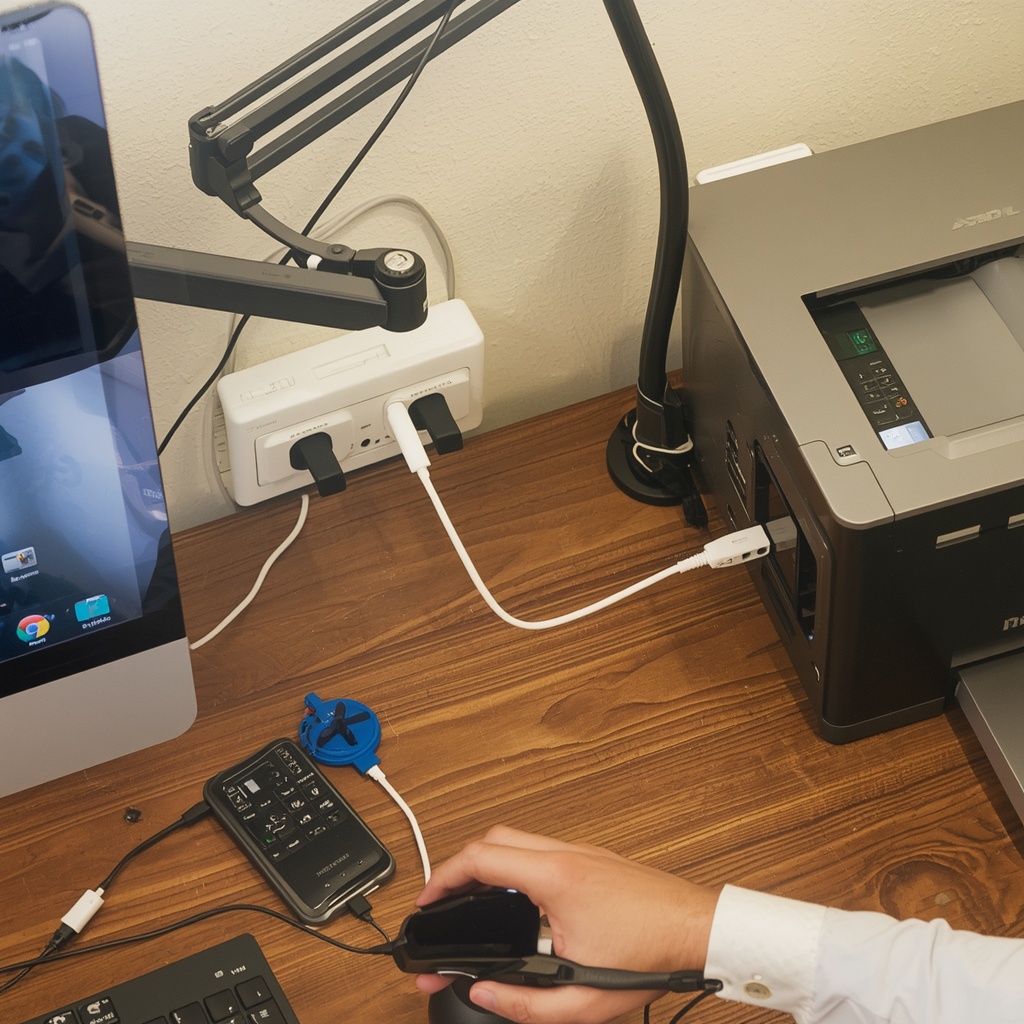
Consider a docking station if you use a laptop, so one cable connects everything. Label each cord with a small tag, which saves time during troubleshooting. For video calls, a ring light or a simple lamp behind your webcam makes you look polished, while a bookshelf or textured wall behind you looks professional.
Step 10: Create Boundaries Between Work and Home
When your office lives in your living room or bedroom, mental separation is just as important as physical separation. A folding screen, a tall bookcase, or a curtain on a ceiling track can visually close off the corner. These dividers also add privacy during calls.
Ritual helps, too. Turn on your task lamp when you start work and switch it off when you finish. Some people tuck their laptop into a drawer or cover the desk with a cloth at the end of the day. These small habits tell your brain that work is over, which protects your downtime and your sanity.
Budget Breakdown: What a Small Corner Office Really Costs
You don’t need a huge budget to create a standout space. Here’s what to expect at three different spending levels:
| Item | Budget ($) | Mid-Range ($$) | Splurge ($$$) |
|---|---|---|---|
| Desk | $60–$150 | $200–$400 | $500–$1,200 |
| Chair | $80–$150 | $200–$400 | $500–$1,500 |
| Lighting | $20–$50 | $60–$150 | $200–$500 |
| Storage and shelving | $30–$80 | $100–$250 | $300–$800 |
| Decor and plants | $25–$60 | $80–$200 | $250–$600 |
| Total estimate | $215–$490 | $640–$1,400 | $1,750–$4,600 |
Pro Tip: Spend your money where your body touches the furniture. A great chair and a good lamp matter more than an expensive desk. Secondhand shops, Facebook Marketplace, and estate sales are fantastic sources for solid-wood pieces.
Common Mistakes to Avoid
The biggest error I see is buying furniture before measuring. Even a half-inch miscalculation can make a desk impossible to use. The second is ignoring ergonomics. A beautiful setup that hurts your back isn’t a success, no matter how good it looks on Instagram.
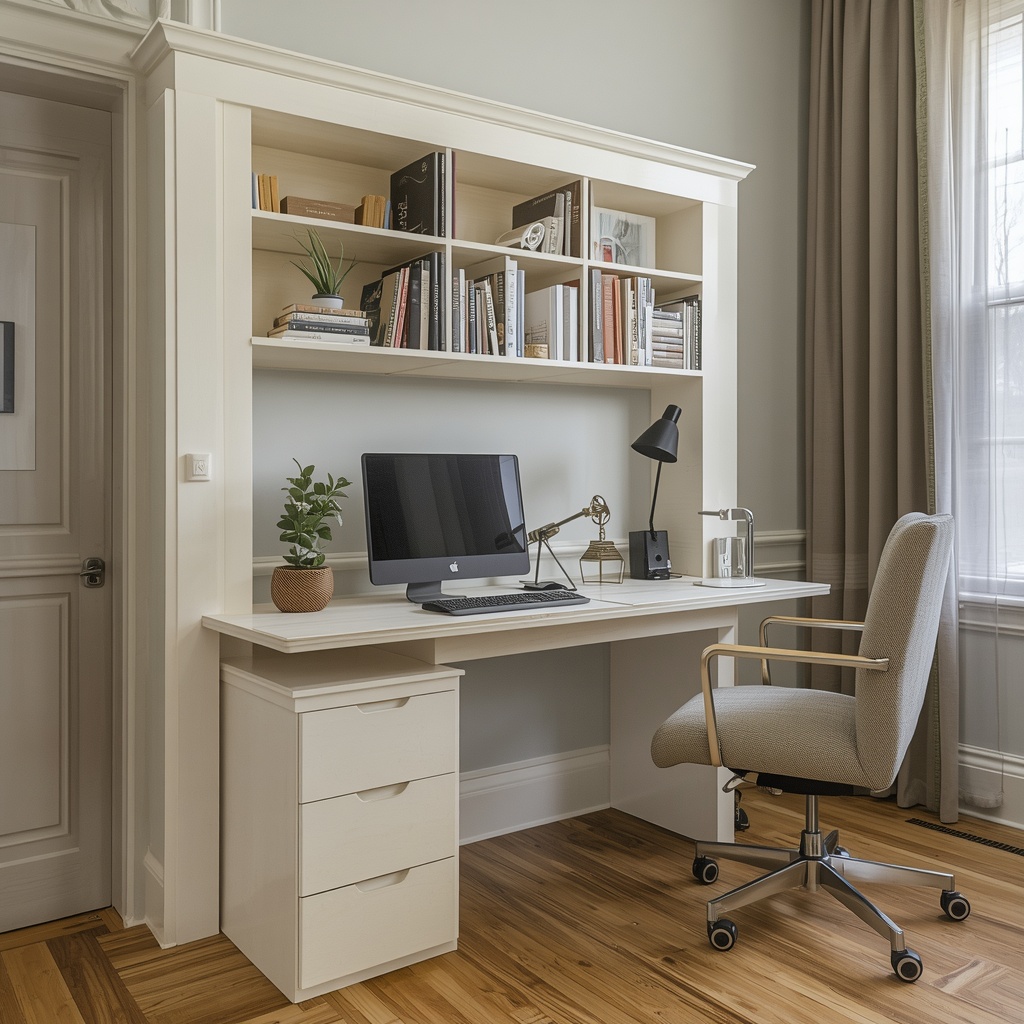
Other pitfalls include overcrowding the walls, relying on a single overhead light, choosing a dark palette without enough illumination, and letting cables run wild. Remember that a small space rewards restraint. Edit ruthlessly, and let each piece breathe.
Frequently Asked Questions
How much space do I need for a home office?
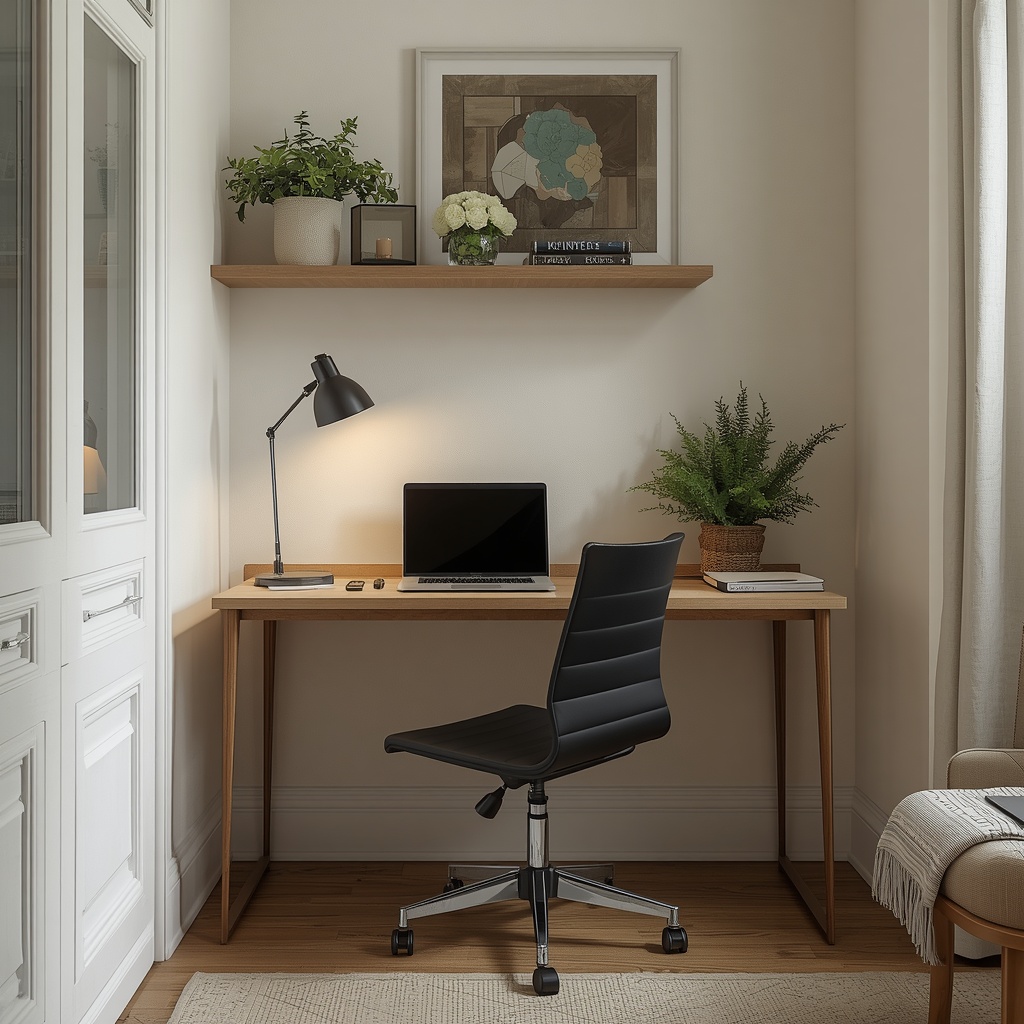
A functional corner can be as small as 3 by 4 feet. With a wall-mounted desk and a compact chair, that’s enough for a laptop, notebook, and lamp.
Can I put a home office in a bedroom corner?
Yes. Use a screen or bookcase to separate it from the bed, and keep the colors calming so it doesn’t feel like work spills into sleep.
What’s the best desk for a very small corner?
A floating wall-mounted or fold-down desk is usually best, since it leaves the floor open and can be hidden away at the end of the day.
How do I make a small home office look expensive?
Stick to a tight color palette, use matching storage containers, hide cables, and invest in one statement piece, such as a beautiful lamp or piece of art.
Final Thoughts: Small Corner, Big Productivity
A great home office in a small corner isn’t about having more space. It’s about using the space you have with intention. Choose the right spot, measure carefully, go vertical with storage, layer your lighting, and add a few personal touches. Before long, that forgotten nook will become the most inspiring spot in your home.
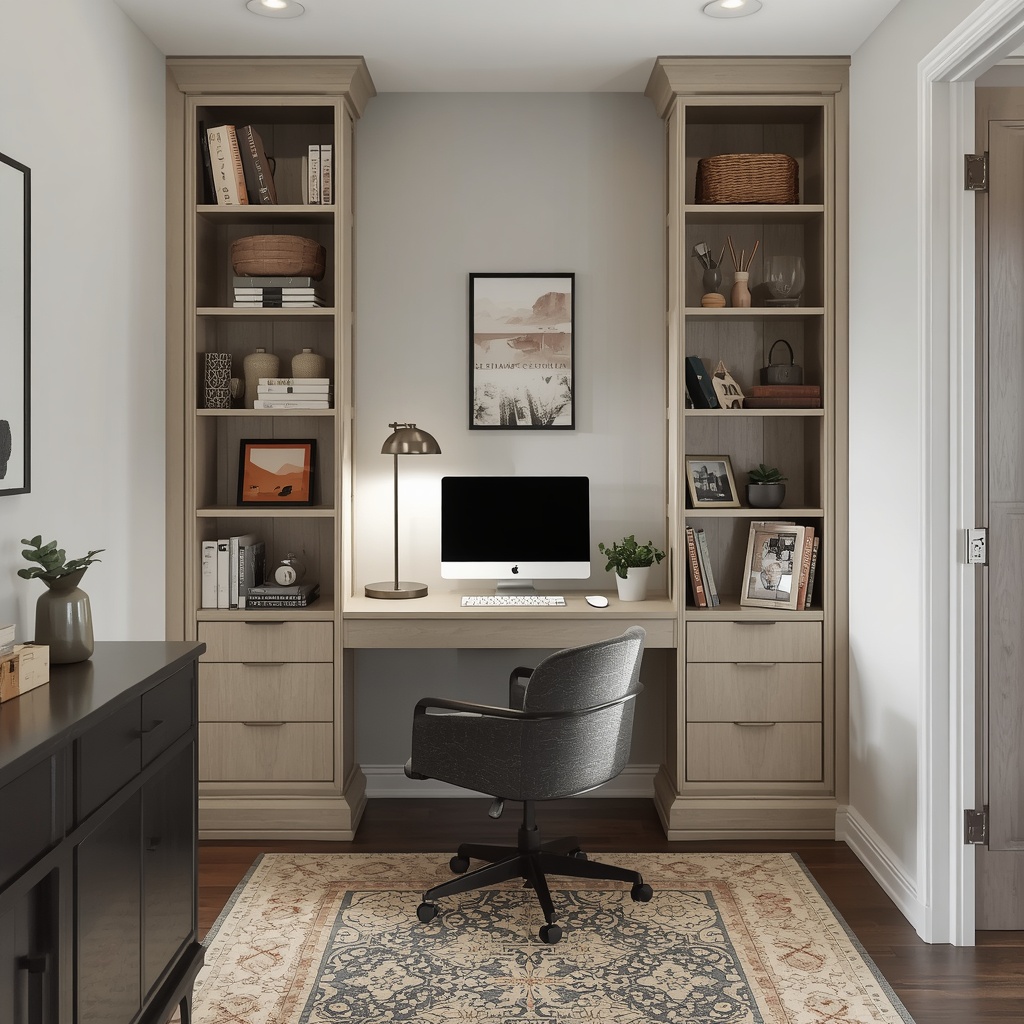
Start small, test your setup, and adjust as you go. Your corner will evolve with your work habits, and with a little creativity, it can look as good as it functions. Now grab your tape measure and claim that corner. You’ve got this.