
Meta description: Discover 25+ designer-approved space-saving kitchen hacks for small apartments, from vertical storage to renter-friendly upgrades that make a tiny kitchen work harder.
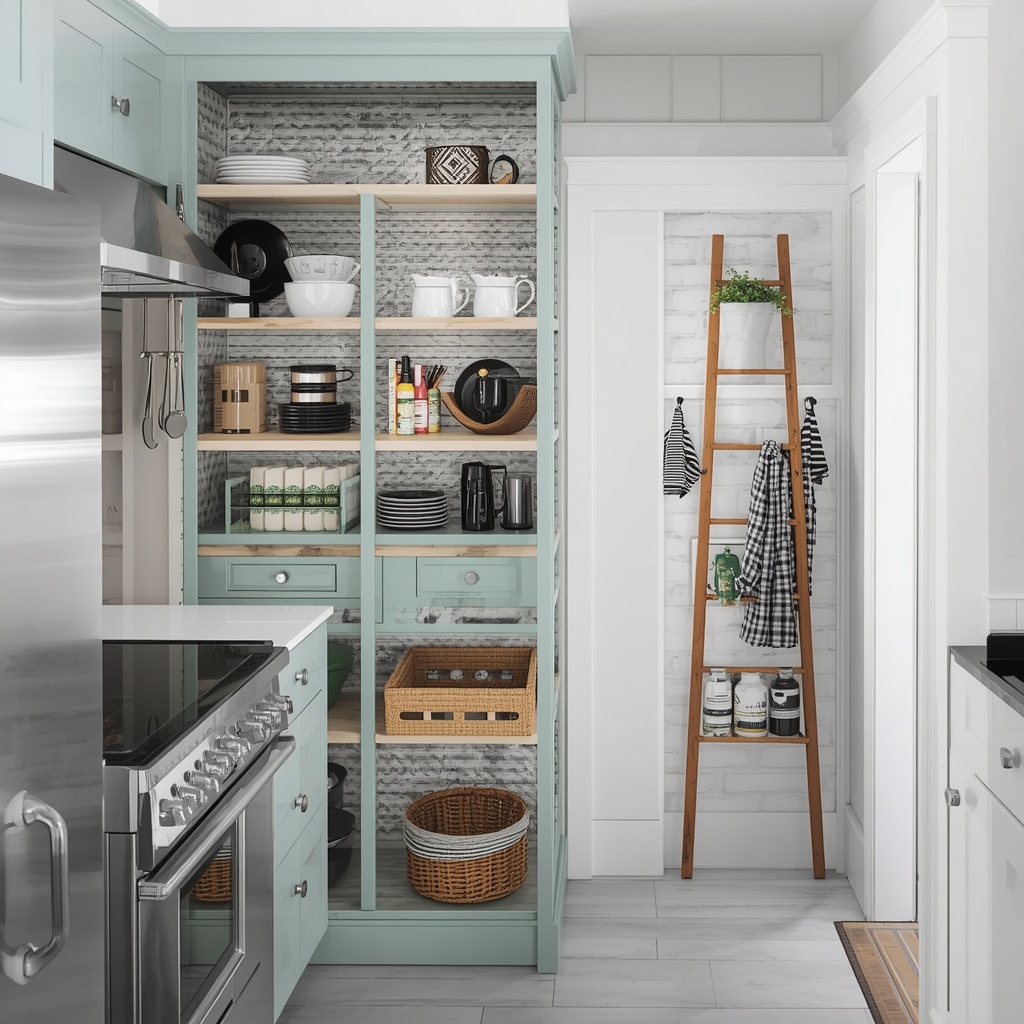
I’ve designed kitchens ranging from 400-square-foot studios in Brooklyn to narrow galley layouts in Los Angeles. The same lesson applies in all of them: a small kitchen isn’t a problem to fix, it’s a puzzle to solve. The best compact kitchens aren’t the ones with the fewest things. They’re the ones where every inch has a job.
In the U.S., apartment kitchens are often just 40 to 70 square feet, with limited cabinets and almost no counter space. The good news is that you don’t need a renovation, a big budget, or a landlord’s permission to transform yours. Here are the space-saving kitchen hacks I recommend most.
Why Small Kitchen Design Is About Strategy, Not Square Footage
Most cramped kitchens suffer from three issues: too many items, poor use of vertical space, and zero zoning. When everything lives in one overstuffed cabinet, cooking feels like an obstacle course. A few strategic changes can make a 50-square-foot kitchen feel twice as functional.
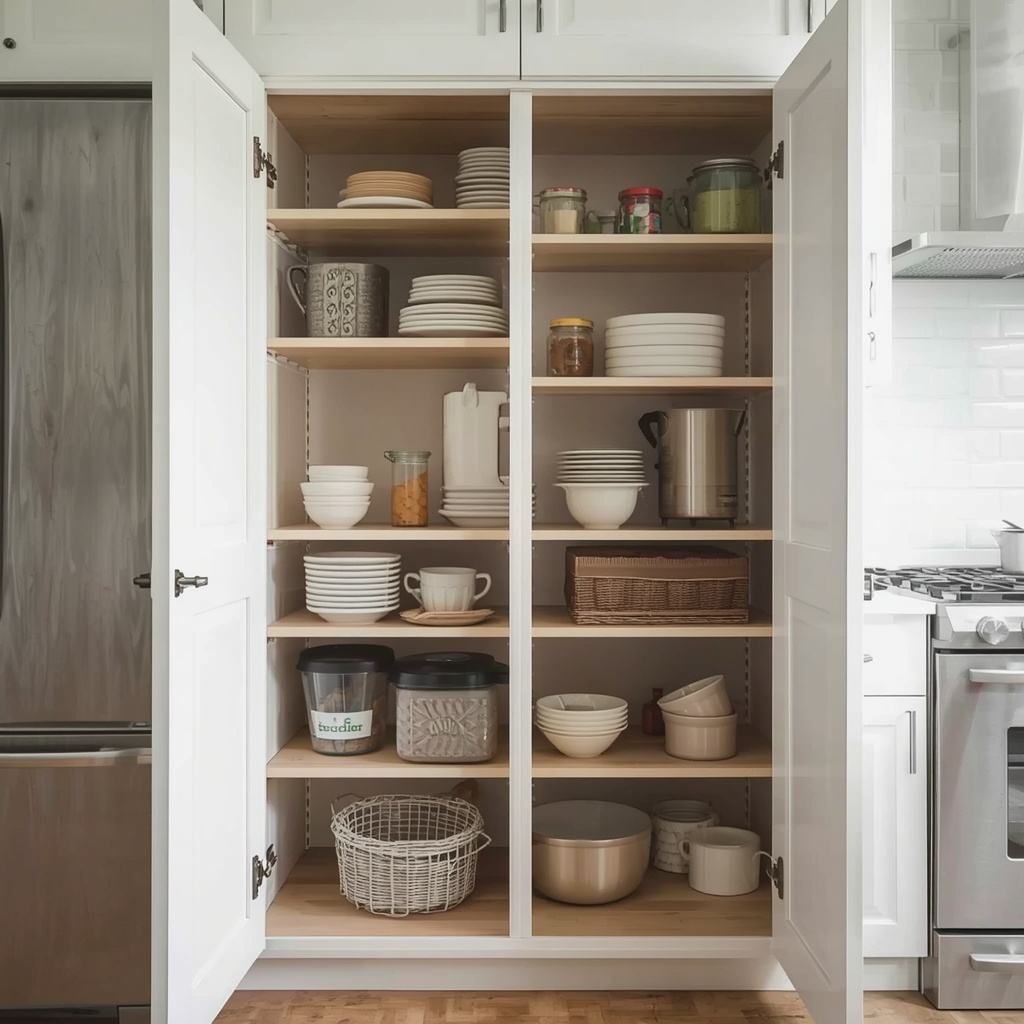
Think of your kitchen as a set of “stations”: prep, cook, clean, and store. Even in a tiny footprint, assigning each activity a specific zone reduces clutter and saves time. Keep that framework in mind as you work through the hacks below.
Step One: Declutter Like a Designer
Before you buy a single organizer, edit what you own. I tell every client the same thing: organizing clutter just gives you neat clutter. A smaller inventory is the foundation of every other hack in this article.
Start by pulling everything out of your cabinets and drawers, then sort it into three piles: use weekly, use occasionally, and donate or toss. Most people discover they own duplicate spatulas, mismatched lids, and gadgets they haven’t touched in a year.
Quick declutter checklist:
- Keep only one or two versions of each tool (one chef’s knife, one paring knife, one peeler)
- Donate single-purpose gadgets like avocado slicers and egg separators
- Toss expired spices, stale pantry items, and lidless containers
- Limit dishes to what you actually use, typically a set for 4 in a one- or two-person home
- Store seasonal items (holiday baking pans, the punch bowl) outside the kitchen
“If you wouldn’t buy it again today, it doesn’t deserve prime real estate in your kitchen.”
Go Vertical: Use Your Walls and Ceiling
When floor and counter space run out, the only direction left is up. Walls are the most underused asset in a compact apartment kitchen, and vertical storage is also one of the easiest upgrades for renters.
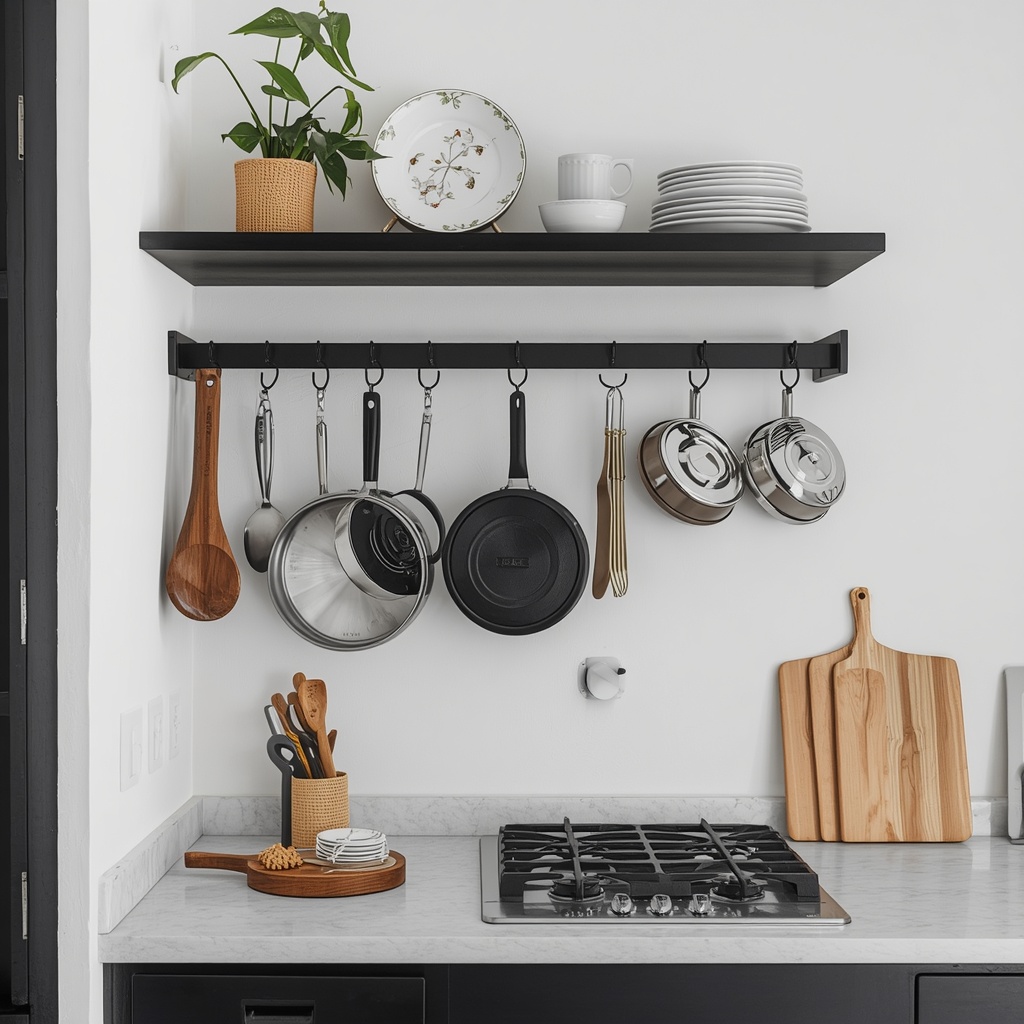
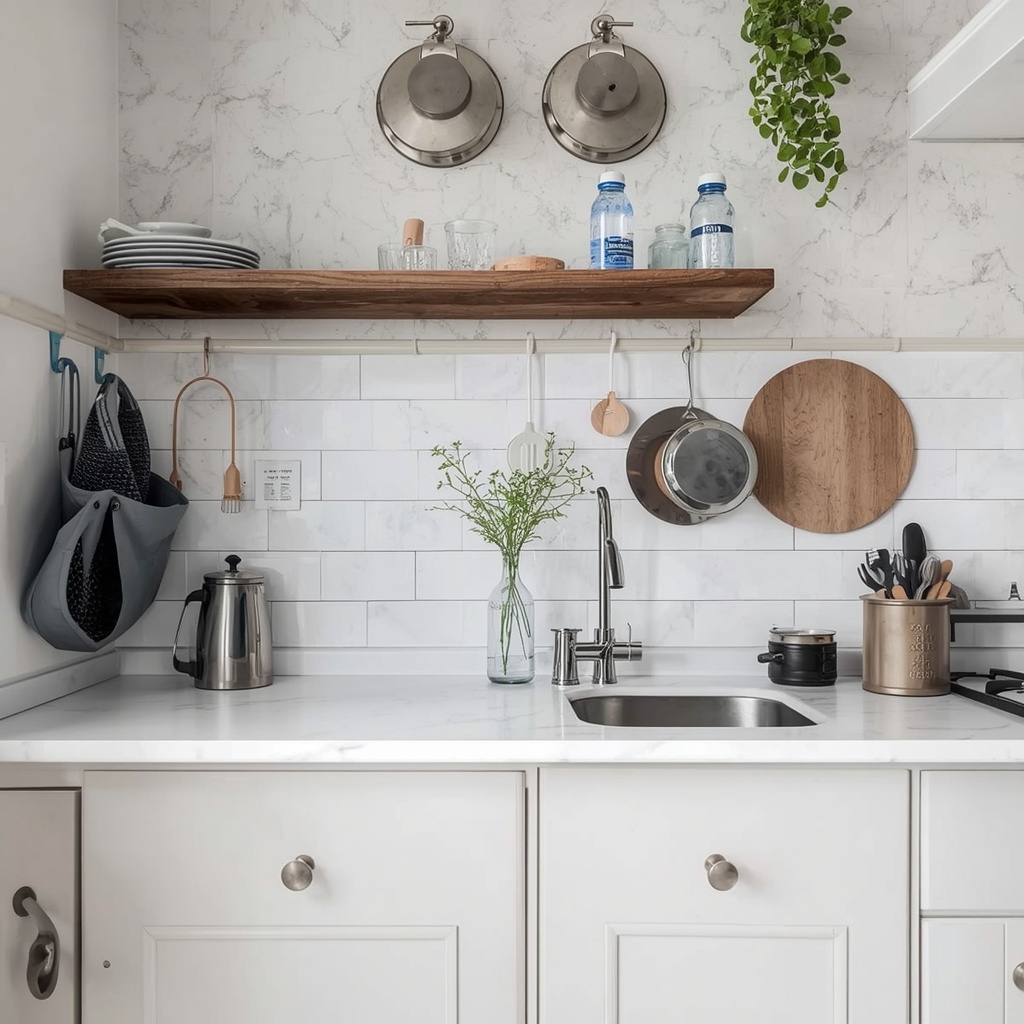
Install a sturdy rail system with hooks for pots, pans, utensils, and mugs. Stainless steel rails look polished, while matte black or brass rails add a designer touch. A magnetic knife strip frees up an entire drawer, and open shelving above the stove or sink holds everyday dishes within easy reach.
Best vertical storage ideas for small kitchens:
- Wall-mounted rail with S-hooks for utensils and cookware
- Magnetic knife strip to replace a bulky knife block
- Floating shelves for dishes, jars, and cookbooks
- Hanging pot rack mounted on the wall or ceiling
- Over-the-door organizers on the pantry or cabinet doors
- Pegboard panels, which are customizable and easy to restyle
Pro Tip: Hang your most-used items at eye level and store heavier, less-used pieces lower. Reserve the top shelves for lightweight or seasonal items. You’ll reach for what you need without a step stool.
Cabinet and Drawer Hacks That Double Your Storage
Inside your cabinets, there’s often a lot of wasted air between shelves. Adding tiered or stackable organizers effectively doubles your usable space without adding a single square inch to your kitchen’s footprint.
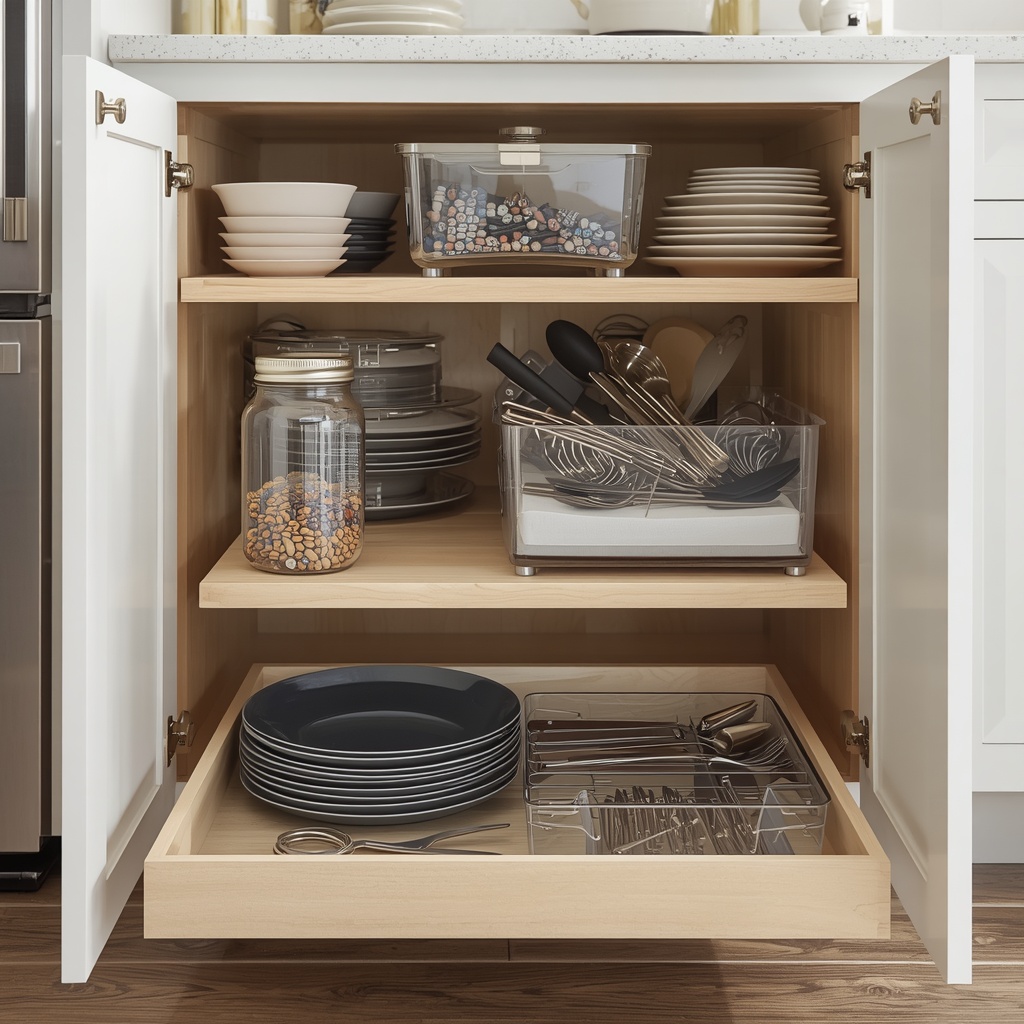
Drawers deserve the same attention. Adjustable dividers keep utensils from becoming a jumbled mess, and shallow drawer trays stop junk drawers from taking over. For deep base cabinets, pull-out shelves or sliding bins make the back of the cabinet accessible instead of a black hole for forgotten cookware.
| Problem | Space-Saving Solution | Approx. Cost |
|---|---|---|
| Wasted cabinet height | Shelf risers or stackable organizers | $10–$30 |
| Messy pots and pans | Adjustable pan rack or vertical dividers | $15–$40 |
| Lost items in deep cabinets | Pull-out sliding bins or lazy Susans | $20–$60 |
| Cluttered utensil drawers | Expandable drawer dividers | $12–$25 |
| Unused cabinet doors | Over-the-door or adhesive hooks and racks | $8–$25 |
| Bulky food storage | Nesting or collapsible containers | $15–$35 |
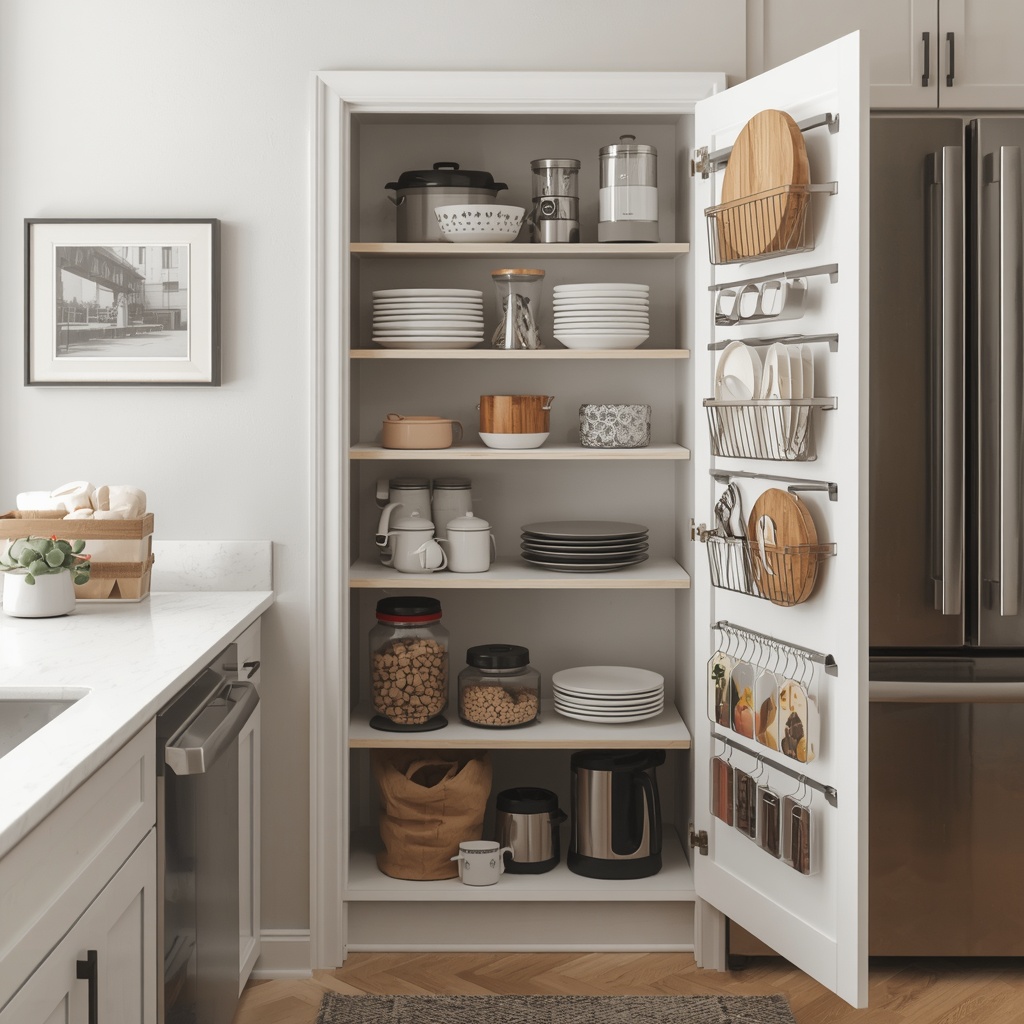
Don’t overlook the inside of cabinet doors. Slim racks can hold cutting boards, pot lids, spices, and foil or wrap boxes. A rack like this turns dead space into prime storage.
Make Every Inch of Counter Space Work
In a compact kitchen, counter space is precious, so guard it fiercely. The goal is a clear prep zone at all times. Anything that doesn’t earn its spot on the counter should move to a cabinet, shelf, or wall.
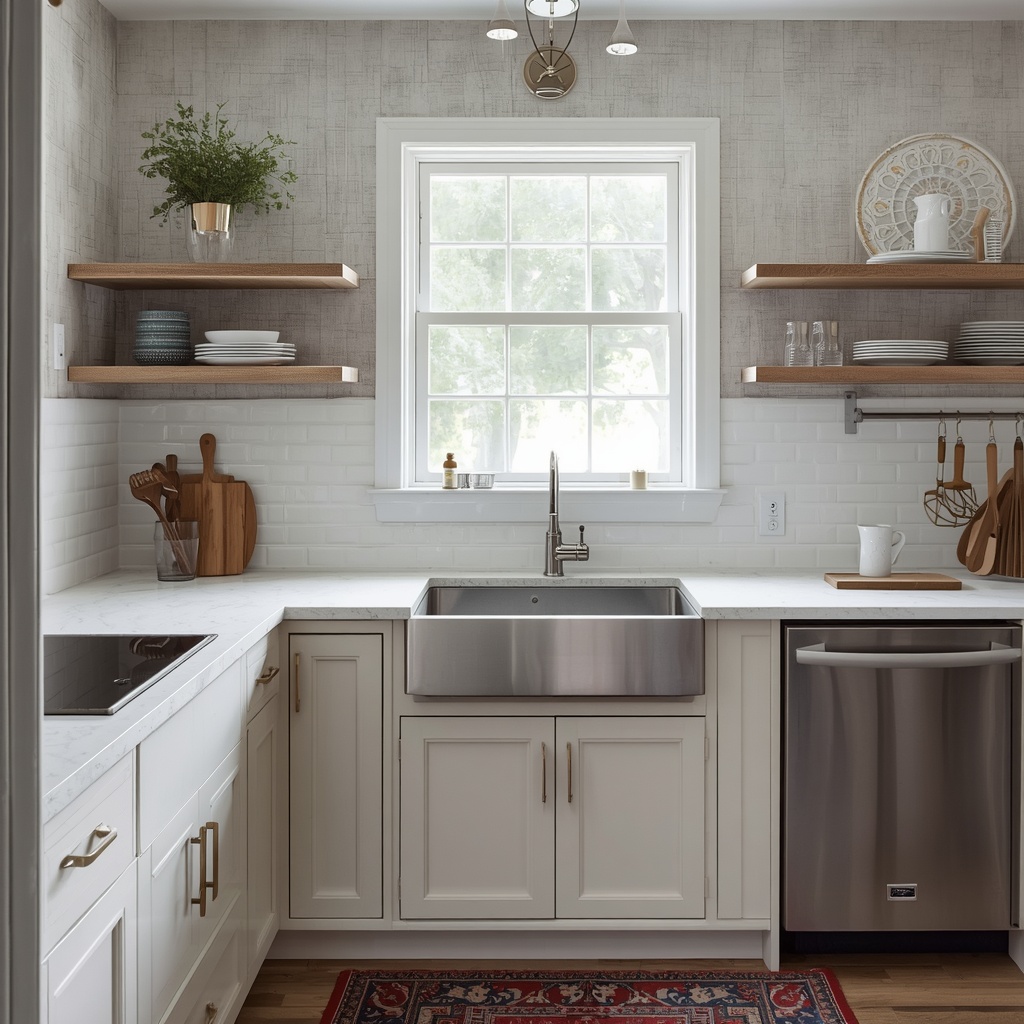
Consider a sink cover or cutting board that fits over one side of a double sink to create instant prep space. A rolling cart can serve as extra counter, storage, and even a coffee station, then tuck away when you need floor space. A fold-down wall-mounted table or drop-leaf counter gives you a dining spot and work surface in one, then disappears when it’s not needed.
Counter-clearing strategies:
- Use a stove-top cover or cutting board to extend your prep surface
- Choose a tiered fruit basket or hanging produce baskets instead of a flat bowl
- Install a wall-mounted paper towel holder under a cabinet
- Mount a spice rack on the wall or the back of a cabinet door
- Keep only daily-use items out, such as a kettle or coffee maker
“A clear counter isn’t about being minimalist. It’s about giving yourself room to actually cook.”
Invest in Multifunctional Furniture and Appliances
Multitasking pieces are a small-space designer’s best friend. One item that performs three jobs beats three items that each take up space. This principle matters most in studio apartments, where the kitchen, dining area, and living room often blend together.
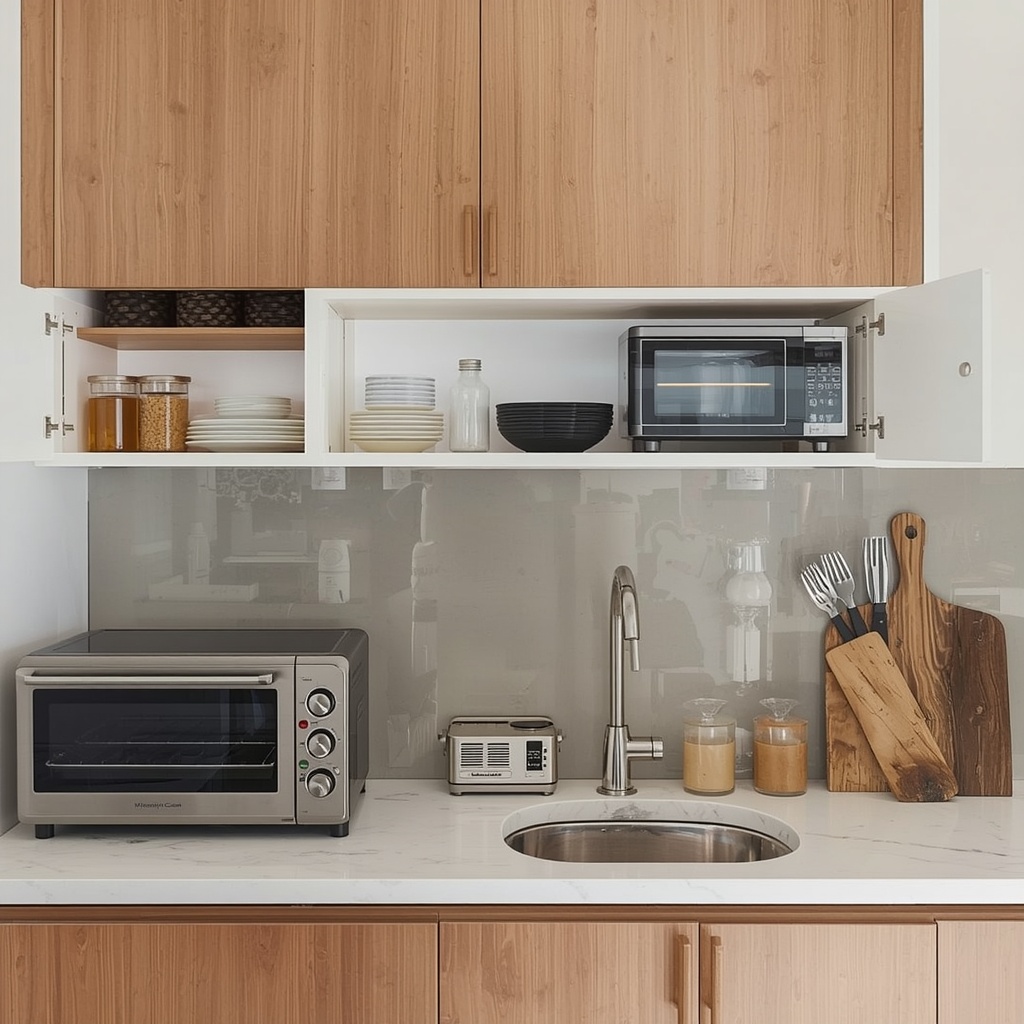
For appliances, think “compact and combined.” A toaster oven that also air-fries can replace two countertop appliances. An electric multicooker pressure-cooks, slow-cooks, steams, and sautés, so one device replaces several. Even better, choose appliances that store easily or fit under a cabinet.
| Single-Use Item | Multifunctional Replacement | Space Saved |
|---|---|---|
| Toaster + air fryer + small oven | Air-fry toaster oven | 2 appliances |
| Slow cooker + rice cooker + steamer | Electric multicooker | 2 appliances |
| Blender + food processor | Combo blender/processor | 1 appliance |
| Dining table + prep counter | Drop-leaf or fold-down table | 1 furniture piece |
| Kitchen island + storage cabinet | Rolling cart with shelves and butcher block top | 1 furniture piece |
| Separate bar cart | Cart that doubles as coffee station | 1 furniture piece |
When shopping for furniture, look for pieces with built-in storage, such as a bench seat with a lift-top, stools that nest under the counter, or a narrow bar cart that slides between the fridge and wall. Retailers like IKEA and The Container Store offer many compact, apartment-friendly options at different price points.
Renter-Friendly Hacks (No Drilling Required)
Not everyone can drill holes or swap out cabinetry, and that’s fine. Plenty of effective solutions work with your lease, not against it. The best renter-friendly upgrades are removable, reversible, and damage-free.
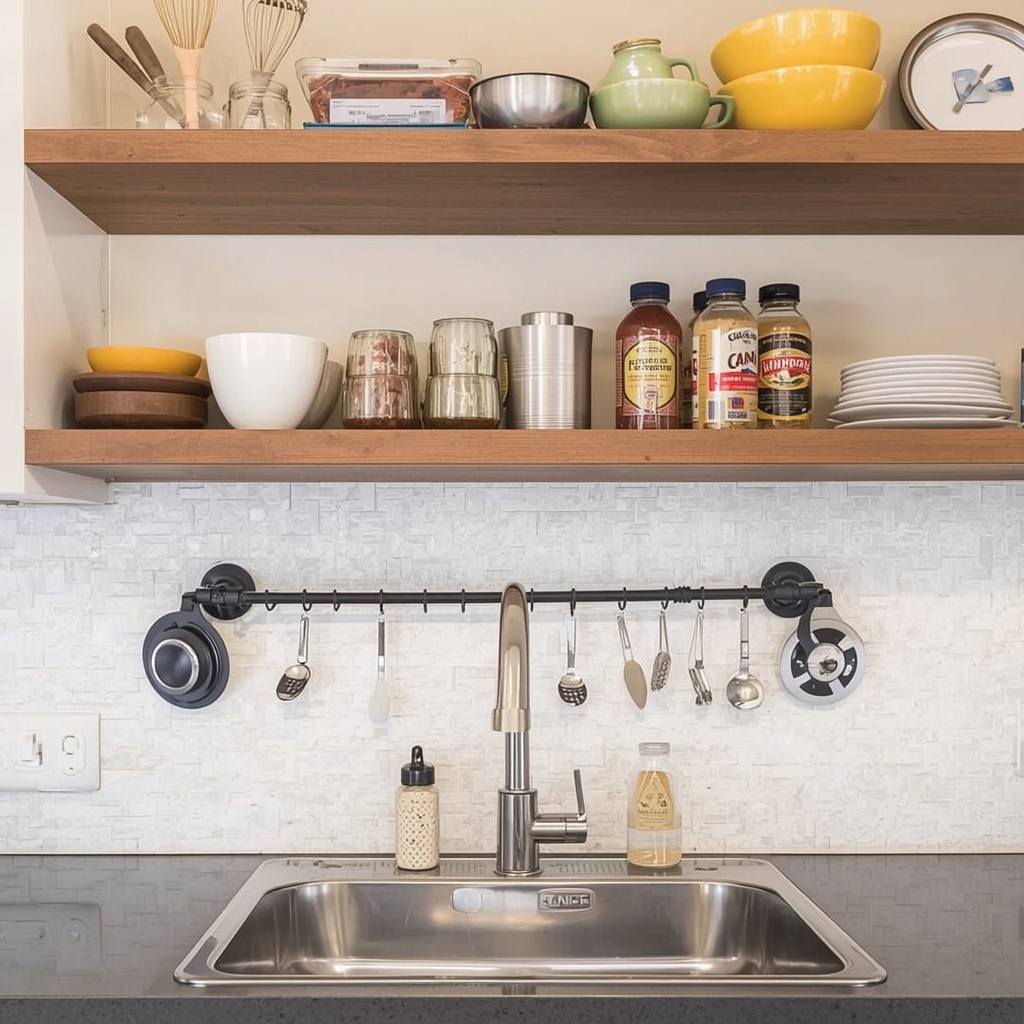
Adhesive hooks and strips hold lightweight tools and towels. Tension rods create instant dividers under the sink or double your cabinet shelf capacity. Over-the-cabinet hooks and over-the-door organizers add storage without a single screw. A freestanding shelving unit or baker’s rack brings storage where none exists.
Top no-drill upgrades:
- Tension rods under the sink for spray bottles and cleaning supplies
- Adhesive-backed hooks for mugs, oven mitts, and towels
- Freestanding baker’s rack or slim shelving unit
- Over-the-cabinet-door hooks and baskets
- Peel-and-stick backsplash to add style without tile
- Removable wallpaper or contact paper to refresh cabinet interiors
Pro Tip: Test adhesive hooks on a small, hidden spot first, and always check the weight limit on the packaging. Overloading is the #1 reason these hooks fail.
Smart Fridge and Pantry Organization
Even in a tiny kitchen, the refrigerator and pantry can quietly eat up your efficiency. Clear, stackable bins keep like items together and make it easy to see what you have, which cuts down on food waste and duplicate purchases.
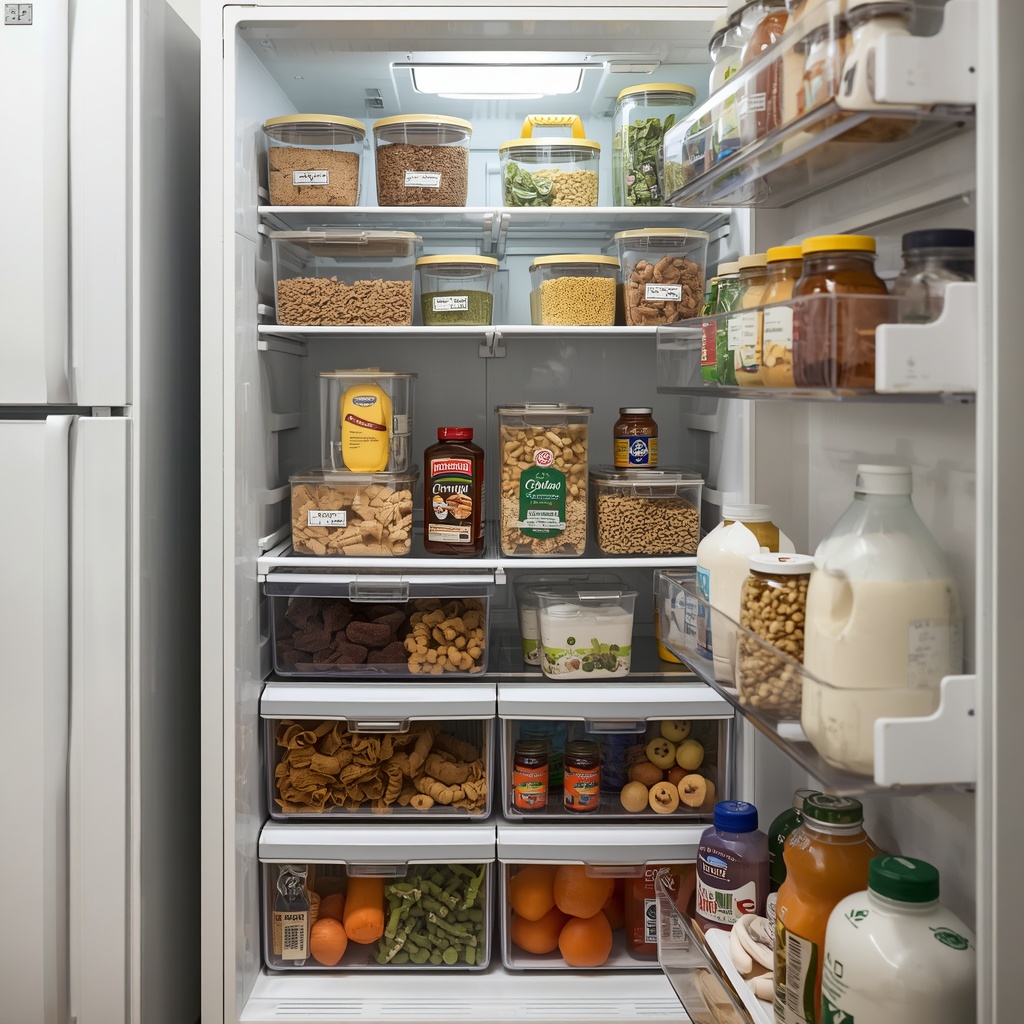
Use clear containers for dry goods like pasta, rice, and cereal, and label them so everything is easy to find. Risers and lazy Susans help you reach the back of shelves. In the fridge, group items by category, such as dairy, produce, and leftovers, and keep everyday items at eye level. If you have no pantry, a slim rolling cart or a tall, narrow shelf can serve as one.
Pantry and fridge quick wins:
- Decant staples into uniform, stackable containers
- Use shelf risers to create a second level on cabinet shelves
- Add a lazy Susan for oils, sauces, and condiments
- Store bulky items like paper towels on a wall-mounted holder
- Use a hanging basket for onions, garlic, and potatoes
- Keep a “use first” bin in the fridge for items nearing expiration
Lighting and Color Tricks That Make a Small Kitchen Feel Bigger
Space-saving isn’t only about storage. Perception matters too. Smart lighting and color choices can make a compact kitchen feel open, airy, and more inviting, even if the layout can’t change.
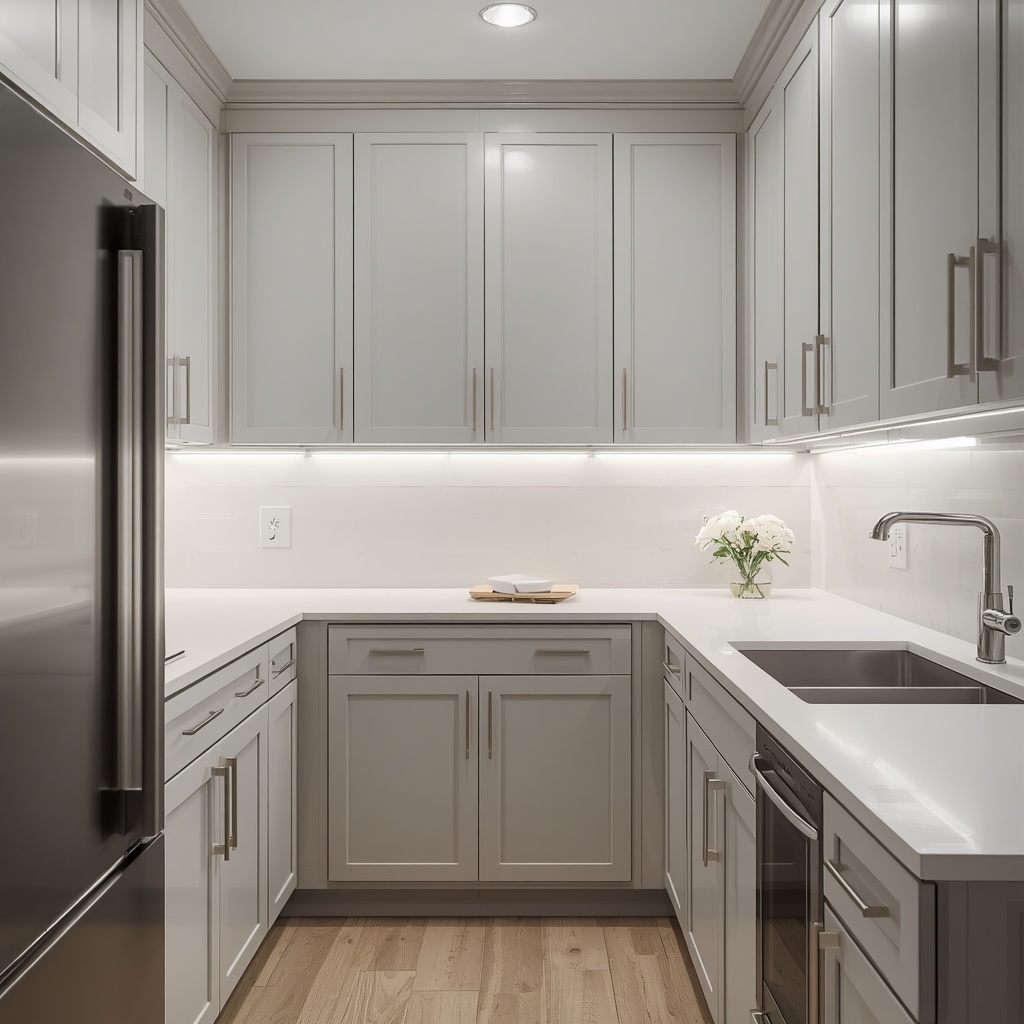
Under-cabinet LED lighting brightens work surfaces and eliminates shadows, which also makes the room feel bigger. Light, neutral colors like soft white, pale gray, or warm greige reflect light and create visual space. Reflective finishes, such as a glossy backsplash, glass cabinet fronts, or a small mirror, bounce light around and add depth.
If you love color, use it intentionally. A single bold accent, like a deep green lower cabinet or a colorful runner, adds personality without overwhelming a small room. Keep upper cabinets and walls light for an open feel. For guidance on efficient lighting, check out ENERGY STAR’s lighting resources.
| Design Element | Effect on Small Kitchens |
|---|---|
| Under-cabinet LED strips | Adds task lighting, reduces shadows |
| Light wall and cabinet colors | Reflects light, feels more open |
| Glossy or mirrored backsplash | Creates depth and brightness |
| Glass-front cabinets | Lightens visual weight |
| Open shelving (styled sparingly) | Reduces bulk of upper cabinets |
| Continuous flooring | Visually extends the space |
Common Small Kitchen Mistakes to Avoid
Even well-intentioned updates can backfire. Here are the most common mistakes I see when people try to organize or redesign a tiny kitchen:
- Buying organizers before decluttering. You’ll just organize things you don’t need.
- Overloading open shelves. Too many items make a small kitchen feel chaotic.
- Ignoring traffic flow. Keep at least 36 inches of walkway where possible, per common guidelines from the National Kitchen & Bath Association.
- Choosing oversized furniture. Scale matters. Measure twice and buy once.
- Forgetting about function. Beautiful but impractical storage defeats the purpose.
- Skipping lighting. Poor lighting makes any kitchen feel smaller and harder to use.
Sample Budget Plan for a Compact Kitchen Refresh
You don’t need to tackle everything at once. Here’s how I’d phase a small-kitchen upgrade depending on your budget:
| Budget Level | Focus | Example Upgrades |
|---|---|---|
| Under $100 | Declutter + basics | Drawer dividers, adhesive hooks, shelf risers, tension rod |
| $100–$300 | Vertical + counter space | Wall rail system, rolling cart, magnetic knife strip, LED under-cabinet lights |
| $300–$750 | Multifunctional upgrades | Air-fry toaster oven, multicooker, drop-leaf table, pull-out organizers |
| $750+ | Custom touches | Custom shelving, backsplash upgrade, compact appliances |
Start with the lowest-cost, highest-impact changes first, namely decluttering and vertical storage. They give you the biggest improvement per dollar and help you figure out what else you really need.
Frequently Asked Questions
How can I add storage to a kitchen with no cabinets?
Use freestanding shelving, a rolling cart, wall-mounted rails, and over-the-door organizers. Vertical storage is your best friend.
What’s the best way to organize a tiny kitchen?
Declutter first, create zones (prep, cook, clean, store), and use vertical and inside-cabinet storage to maximize every inch.
What appliances are best for small apartments?
Look for multifunctional, compact options like an air-fry toaster oven, multicooker, or combo blender/processor.
How do I make a small kitchen look bigger?
Use light colors, good lighting, reflective surfaces, and keep counters as clear as possible.
Final Thoughts: Make Your Compact Kitchen Work Harder
A small kitchen doesn’t have to feel limiting. With a clear editing process, smart vertical storage, multifunctional pieces, and thoughtful lighting, even the tiniest apartment kitchen can feel organized, efficient, and beautiful.
Start small. Pick one hack from this list this weekend, whether that’s clearing the counters, installing a wall rail, or adding a tension rod under the sink. Once you feel the difference, you’ll be inspired to keep going. After all, the best kitchens aren’t the biggest ones. They’re the ones designed around how you actually live and cook.