
Meta description: Learn designer-approved mirror placement tricks to double natural light, make small rooms feel bigger, and brighten dark corners without a renovation.
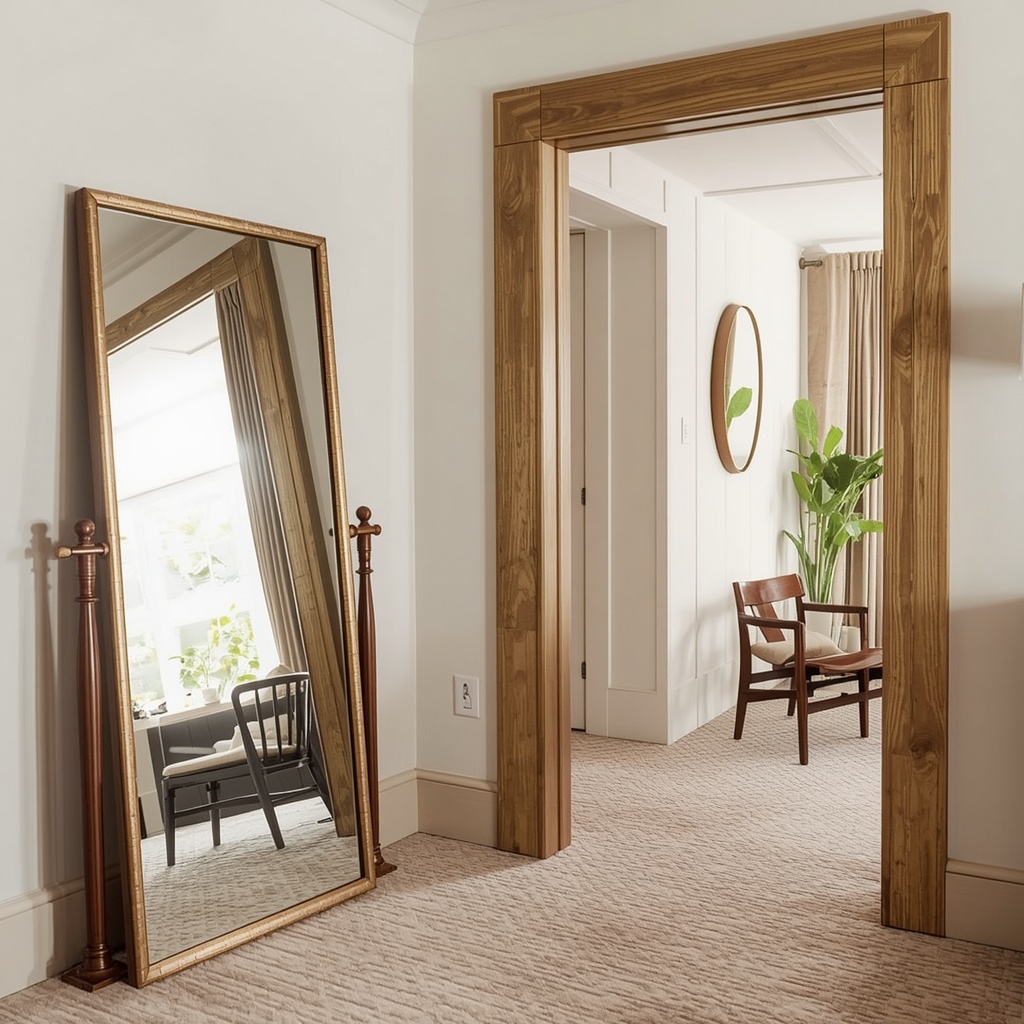
A small room doesn’t have to feel cramped or dim. Some of the best spaces I’ve designed for clients in city apartments, starter homes, and tight bungalows had one thing in common: a few well-placed mirrors doing the work of a second window. You don’t need a construction crew or a big budget, just a little strategy.
Here’s the secret most homeowners miss. Mirrors don’t just decorate a wall, they redirect light. Place one correctly and it carries daylight deep into the room, erases shadowy corners, and makes the whole space feel larger and calmer. Place it badly and you’ll reflect a pile of laundry or a blank wall. This guide walks you through the tricks I use on real projects.
Why Mirrors Double the Light in a Small Room
A quality glass mirror reflects most of the visible light that hits it, typically somewhere in the range of 80 to 90 percent. That is far more than even bright white paint can manage. When a mirror catches daylight from a window and bounces it back into the room, you’re effectively adding a second light source without adding a single fixture.
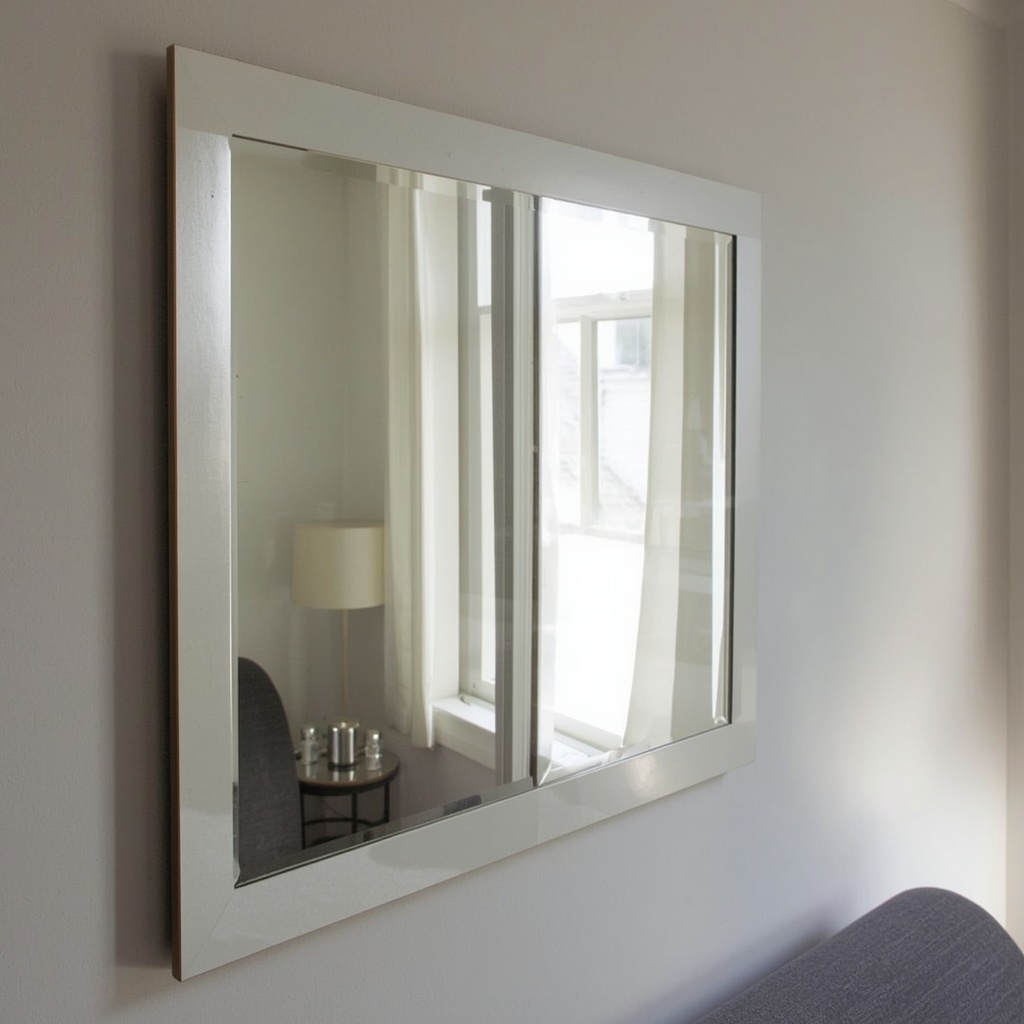
Mirrors also create the illusion of depth. Your eye reads the reflection as additional space, so a 10-by-10 bedroom can feel closer to a 10-by-14. Bright and spacious are the two things people want most from small-space interior design, and mirrors deliver both for less than the cost of a new lamp.
“Light is the first thing you notice in a room, and the last thing most people plan for.”
That idea drives every tip below. Before you buy or hang anything, think about where your light comes from and where you want it to go.
How Different Surfaces Reflect Light
| Surface | Approximate Light Reflected | Best Use in Small Rooms |
|---|---|---|
| Clear glass mirror | 80–90% | Primary light-bouncing tool |
| Antiqued mirror | 60–75% | Softer glow, vintage warmth |
| Bright white matte paint | 70–80% | Walls and ceilings |
| Glossy or satin paint | 75–85% | Trim and accent walls |
| Light wood flooring | 30–50% | Adds warmth, moderate bounce |
| Dark wood or carpet | 5–20% | Absorbs light; balance with mirrors |
Figures are general estimates and vary by product, finish, and angle.
Trick #1: Hang Your Mirror Opposite a Window
If you remember only one tip from this article, make it this one. The most effective mirror placement for natural light is directly across from a window. The glass captures incoming daylight and throws it back across the room, which can nearly double the brightness of the space.
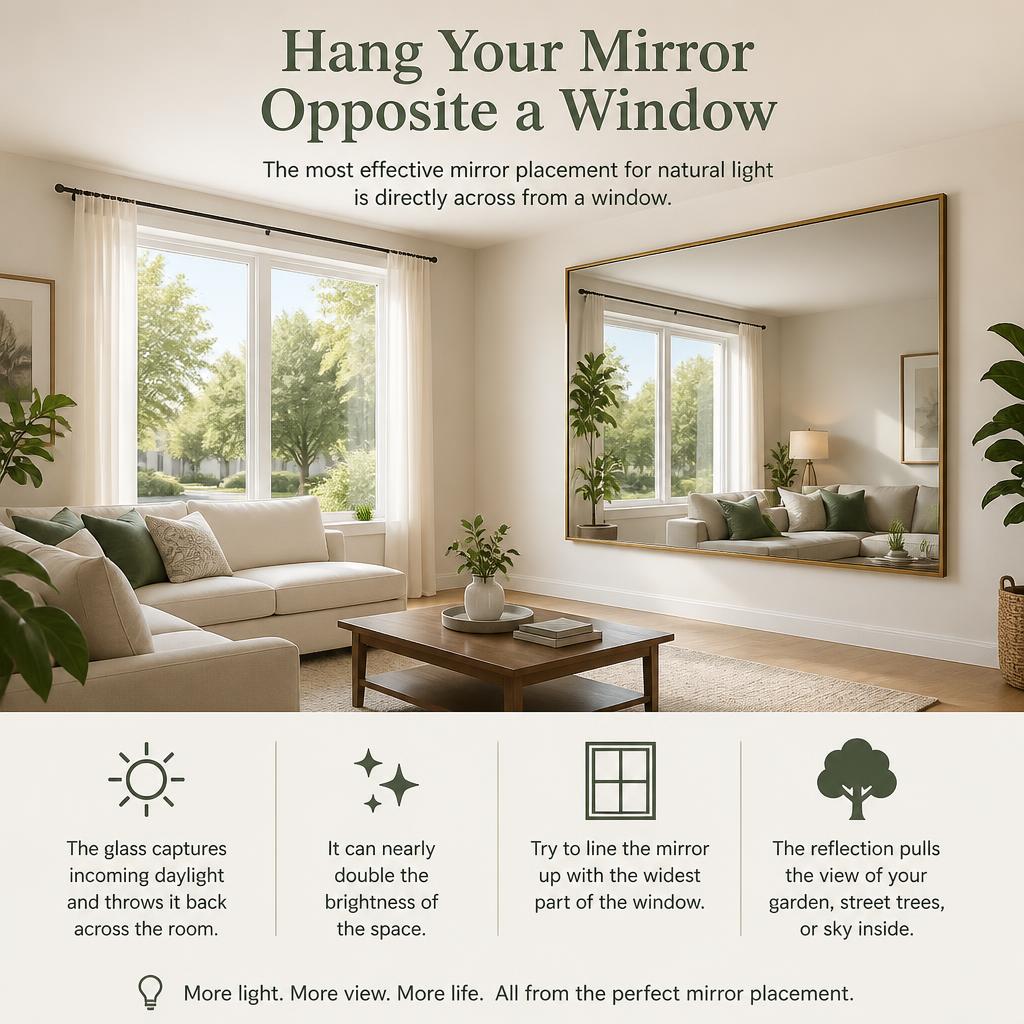
Try to line the mirror up with the widest part of the window. The reflection will also pull the view of your garden, street trees, or sky inside, which adds a layer of greenery and movement that flat walls can’t give you.
Pro Tip: Stand where you’d normally sit and look at the mirror. If you see a pretty view or a bright wall, you’re set. If you see a cluttered closet or a messy desk, shift the mirror a few inches or move the clutter.
Trick #2: Use the Right-Angle Method for Hard-to-Light Rooms
What if the wall across from your window isn’t available? Maybe it holds a door, a TV, or a built-in. You can still catch the light. Hang the mirror on a wall that sits at a right angle to the window, slightly angled or placed closer to the window side.
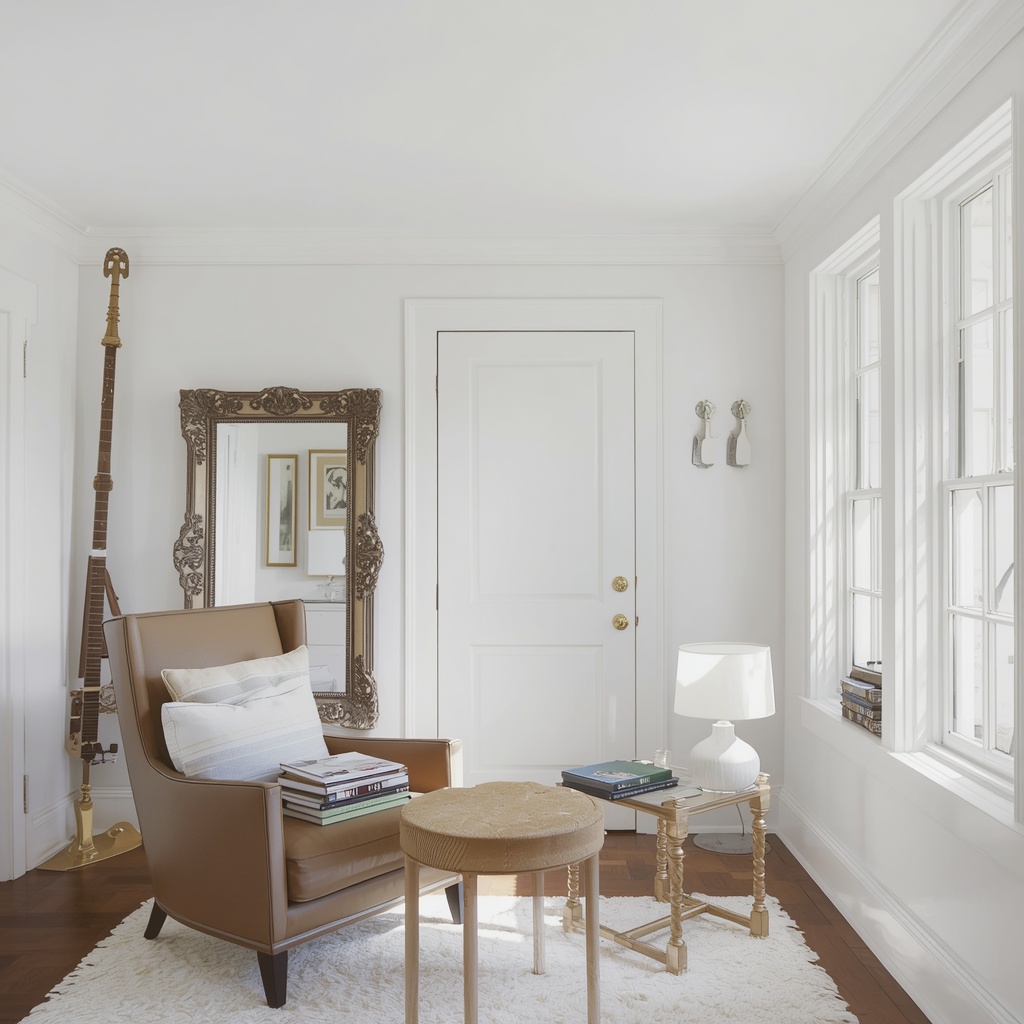
This works because light enters a room at an angle, not straight on. A mirror on an adjacent wall catches the glancing rays that would otherwise skim past and hit nothing. It’s a favorite solution in narrow living rooms and galley-style spaces.
- Place the mirror within 2 to 3 feet of the window frame for the strongest catch.
- Use a leaner or a slightly tilted hanging mirror to fine-tune the angle.
- Test the position by holding the mirror in place and watching where the light lands.
Trick #3: Size Matters, So Go Bigger Than You Think
The number one mistake I see is a mirror that’s too small. A tiny round mirror above a console looks cute, but it barely moves the needle on brightness. In a small room, go big. A large mirror reflects more light, shows more of the room, and reads as architecture rather than an accessory.
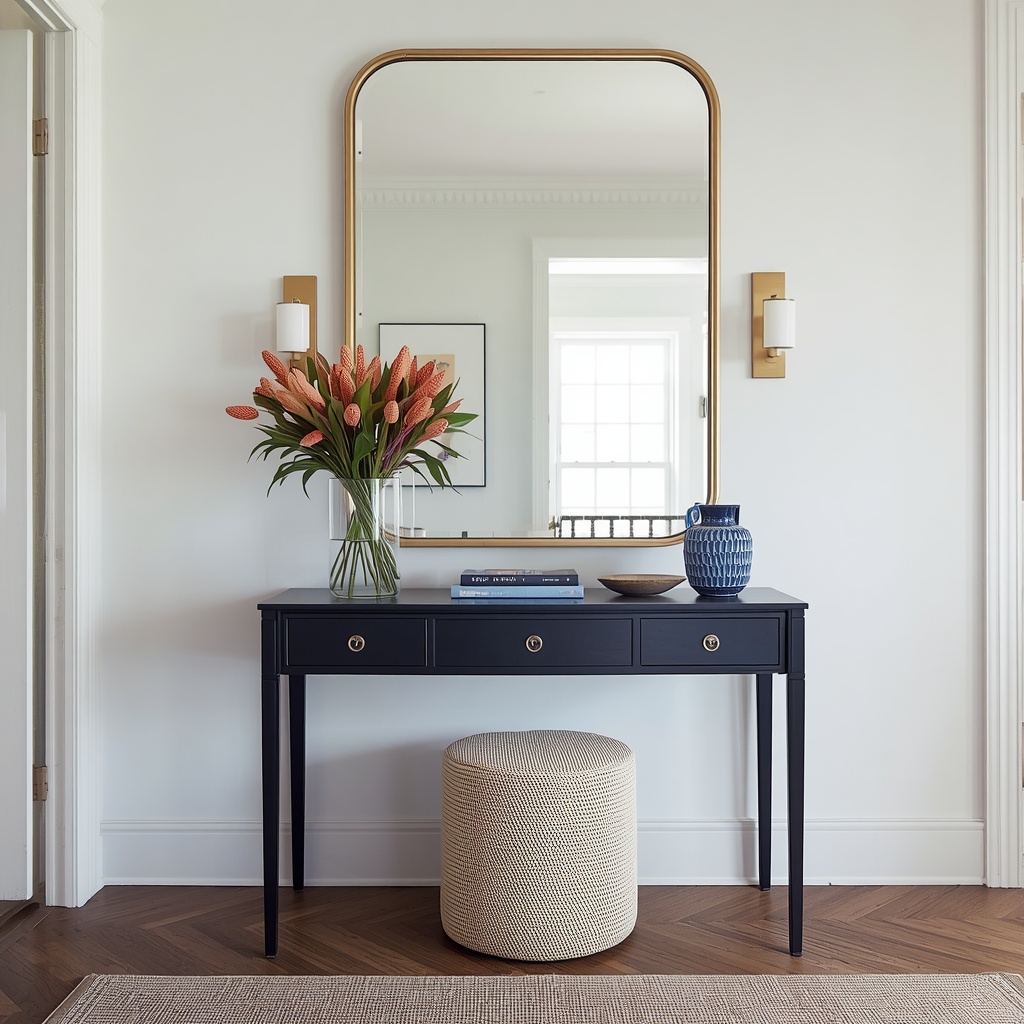
As a general rule, choose a mirror that’s about two-thirds the width of the furniture beneath it. For a bolder effect, consider a floor-length mirror or a full-wall mirror. In a dark entryway, a single oversized piece can change the entire mood.
Mirror Size Guide for Small Spaces
| Room Type | Suggested Mirror Size | Placement Idea |
|---|---|---|
| Small living room | 30″ x 40″ or larger | Opposite the main window |
| Bedroom | 24″ x 60″ floor mirror | Leaning beside the window wall |
| Tiny entryway | 30″ x 48″ or oversized round | Facing the door or a side window |
| Galley kitchen | 20″ x 30″ | Backsplash-adjacent wall or window-facing |
| Home office nook | 24″ x 36″ | Beside the desk, at a right angle to the window |
Trick #4: Choose a Shape That Suits the Room
Shape changes how a mirror feels in the space, even though all shapes bounce light. A tall rectangular mirror stretches the ceiling visually, which is ideal for rooms with low ceilings. A round mirror softens hard corners and adds a gentle, organic note to boxy rooms.
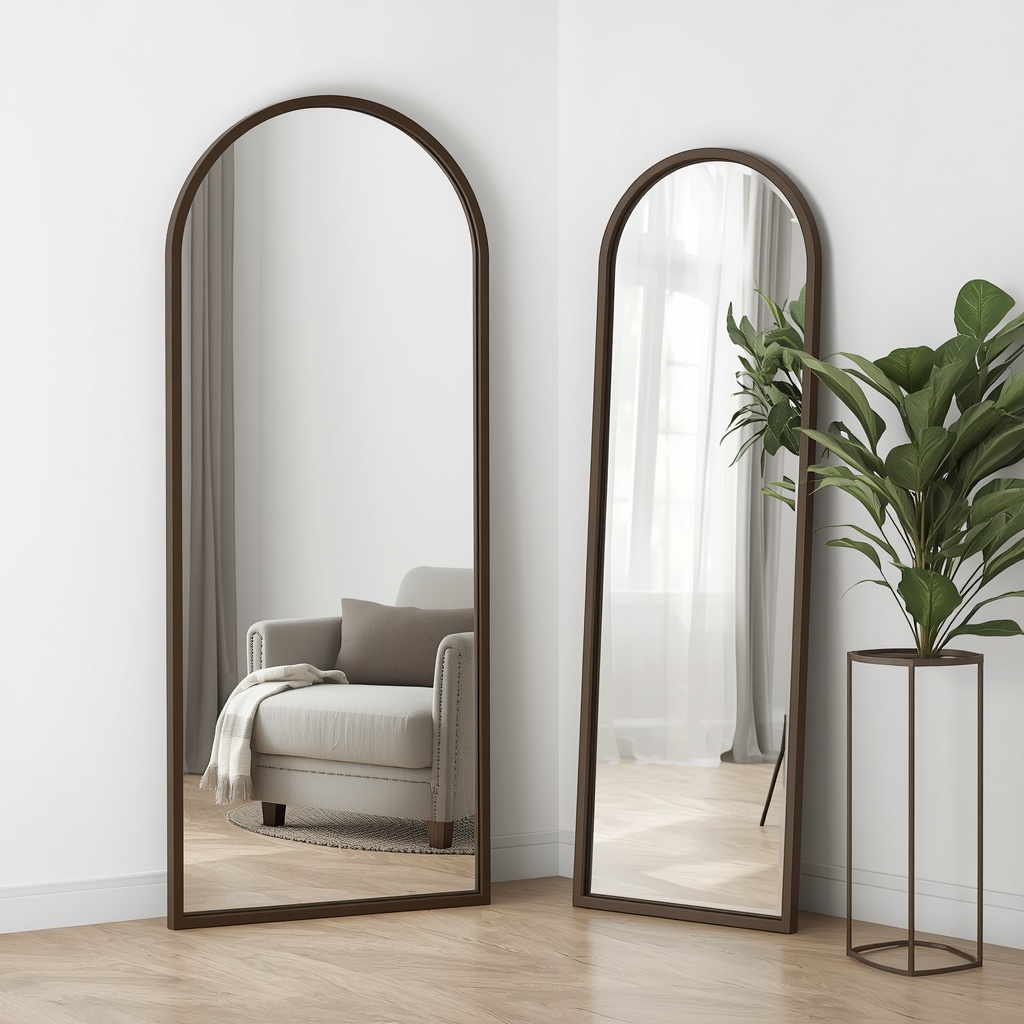
Arched mirrors have been a huge hit in American home decor lately because they bring a touch of classic architecture. Leaner mirrors in a slim frame give a relaxed, modern look without any wall damage. If your room is full of straight lines, try a curved mirror. If it already has lots of curves, try a clean rectangle.
- Tall and narrow: Makes ceilings feel higher.
- Round or oval: Softens a room and works well above a sofa or bed.
- Arched: Adds elegance and works in transitional, farmhouse, and modern spaces.
- Sunburst or decorative: Doubles as wall art, but reflects slightly less light.
Trick #5: Mirror a Light Source, Not Just a Wall
Natural light isn’t your only option. A mirror can also multiply the glow from lamps, pendants, and sconces. Hang one behind a table lamp, beside a sconce, or across from a chandelier, and each light source appears to double in the reflection.
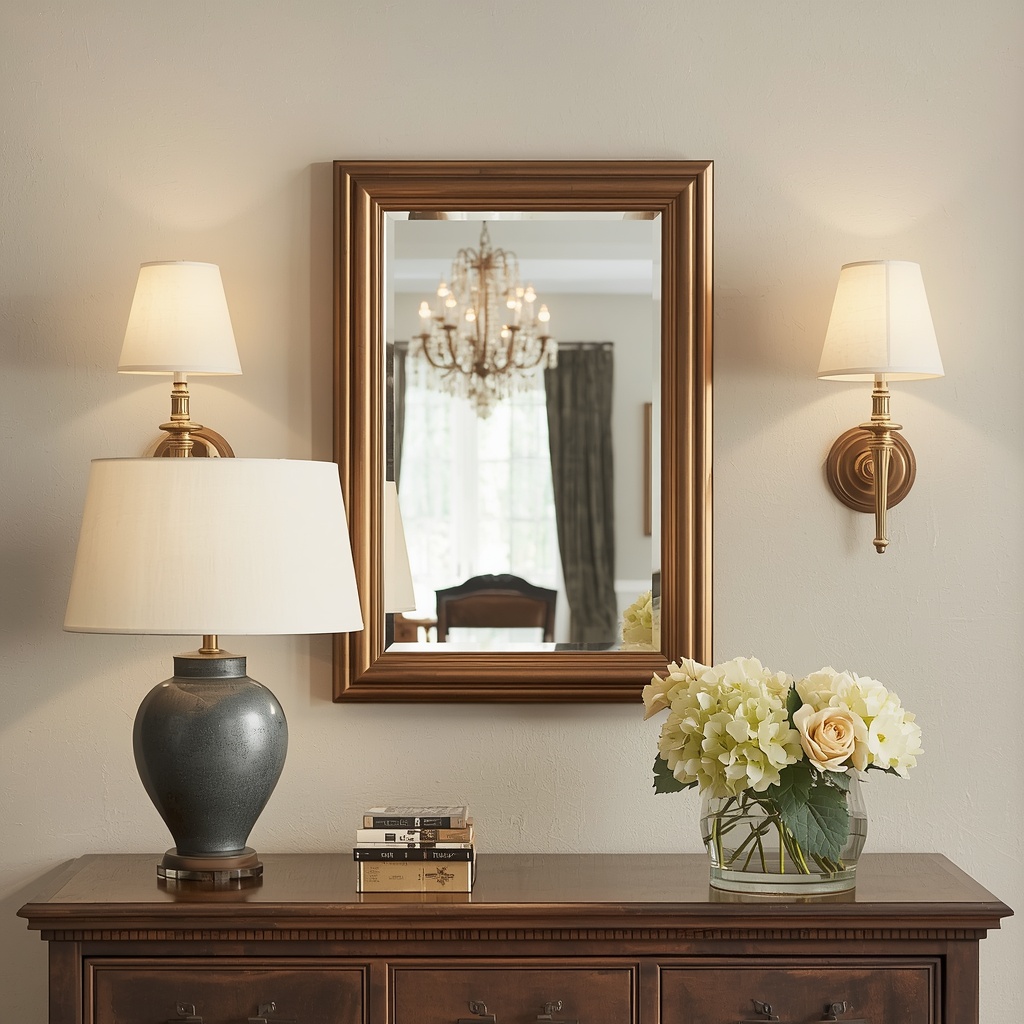
This trick is gold for evenings and for rooms with limited windows. A mirror beside a bedside lamp creates a warm, layered look, while a mirror behind a console lamp gives the entry a welcoming glow the moment you walk in.
Pro Tip: Choose warm white bulbs around 2700K to 3000K for cozy rooms. Cool white reflected in a mirror can feel harsh and clinical, especially in a bedroom or living room.
Trick #6: Reflect the Best Part of Your Room
Think of a mirror as a frame for the prettiest thing in front of it. A reflection of a stack of bills looks bad. A reflection of a leafy plant, a colorful piece of art, or a bright window looks wonderful. Before you hang anything, decide what you want to double.
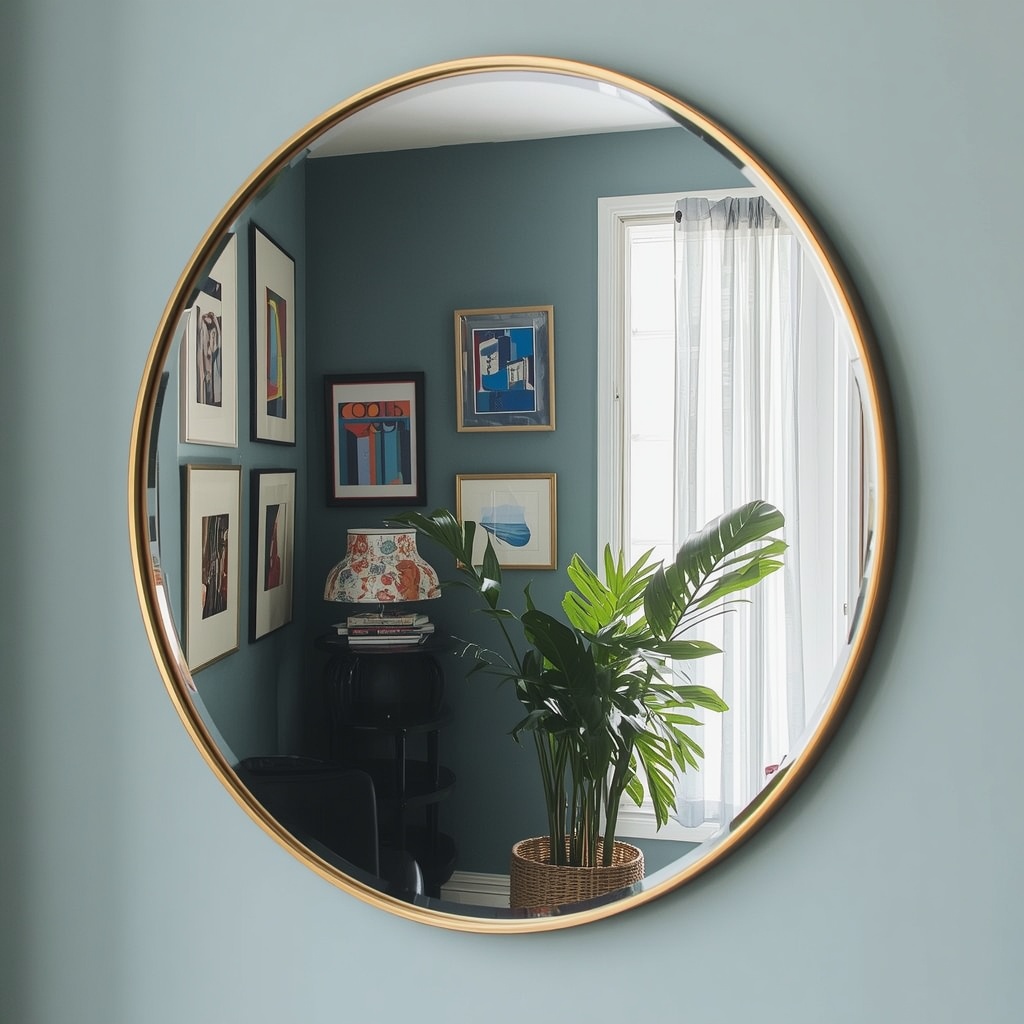
Good candidates include a window with a nice view, a gallery wall, a houseplant, an interesting light fixture, or a bookshelf styled with care. Avoid mirroring blank walls, the TV, or the messy side of the room.
- Double the greenery: A mirror near a fiddle leaf fig or a trailing pothos makes a small room feel like a garden.
- Double the art: Reflect a colorful piece to create instant depth.
- Skip the clutter: Never point a mirror at a pile of shoes, cords, or laundry.
Trick #7: Room-by-Room Mirror Placement Ideas
Every space has its own rhythm. Here’s how I approach the most common small rooms in American homes.
Living Room
Hang a large mirror on the wall opposite your biggest window, or above the sofa if the window sits to the side. Pair it with light, reflective fabrics and a pale rug to keep the brightness moving. If you have a fireplace, a mirror above the mantel is a timeless choice that adds height.
Bedroom
Lean a full-length mirror against the wall beside your window, or hang a pair of round mirrors above matching nightstands. This gives you a practical dressing mirror while brightening the room. Avoid placing a mirror directly facing the bed if you like a calmer, more restful feel.
Kitchen
In a compact kitchen, a mirror on the wall beside a window reflects daylight over the counters. You can also use a mirrored or glass-front cabinet for subtle shine. Keep it away from direct splatter zones, and choose a moisture-resistant frame.
Bathroom
Most bathrooms already have a mirror, but size it up. A wide mirror that spans the vanity width, or two mirrors above a double sink, bounces more light and makes a cramped bath feel spa-like. Sconces on either side will add even, flattering illumination.
Entryway
Dark entries are common in small homes and apartments. A large mirror facing a side window or a bright hallway brings instant cheer, and it gives everyone a last-minute check before heading out. Add a slim console and a lamp for a polished first impression.
Home Office
Place a mirror at a right angle to your window so it lifts brightness without creating screen glare. Never hang it directly behind your monitor, as reflections can be distracting during video calls.
Quick-Reference Table: Best Mirror Spot by Room
| Room | Best Placement | Bonus Tip |
|---|---|---|
| Living room | Opposite window or above sofa | Add a pale rug to keep light bouncing |
| Bedroom | Beside window or above nightstands | Avoid facing the bed directly |
| Kitchen | Adjacent to window | Use moisture-safe frames |
| Bathroom | Full vanity width | Add sconces on each side |
| Entryway | Facing side window or hall light | Pair with a console lamp |
| Home office | Right angle to window | Keep it away from the screen |
Trick #8: Stack the Odds with Two Mirrors
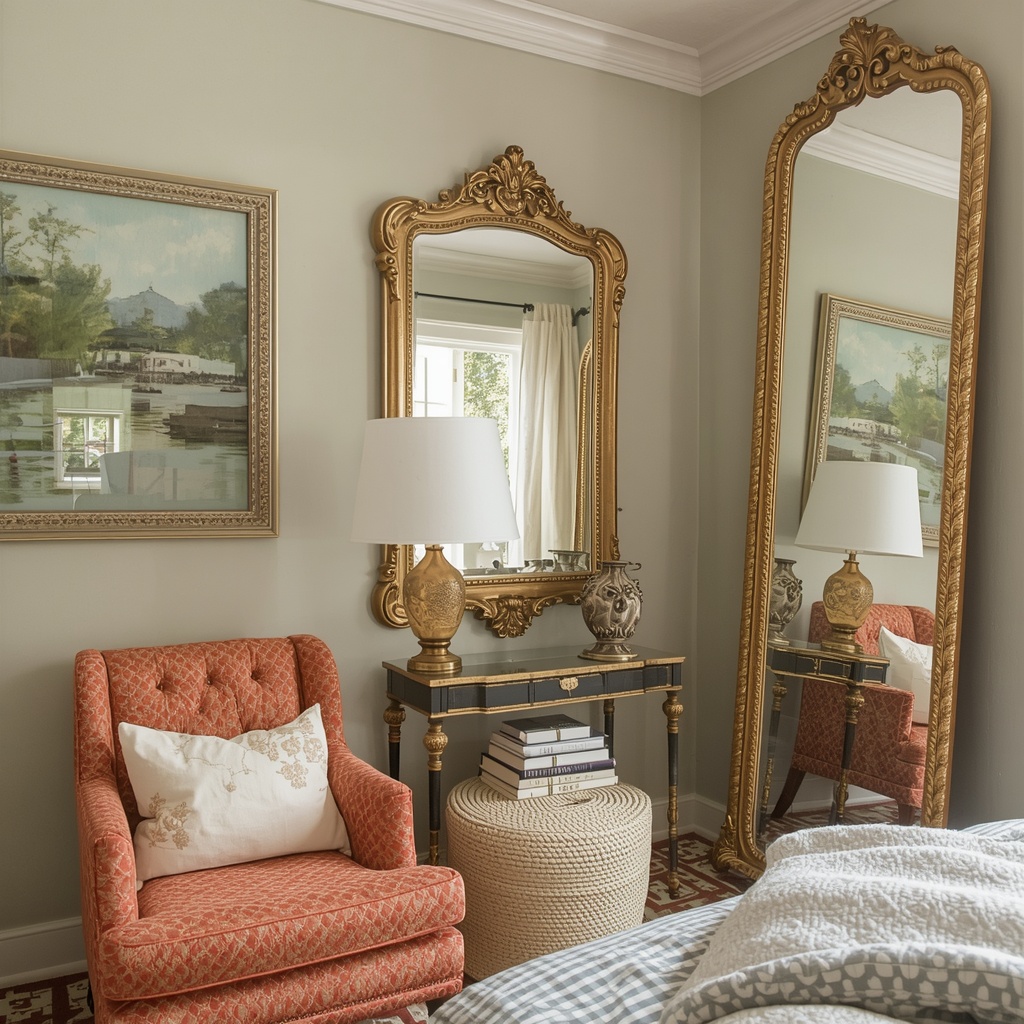
Why stop at one? Two mirrors placed on opposite walls can pass light back and forth, which is great for long, narrow rooms. A mirror at one end and another at the far end carries brightness along the entire length.
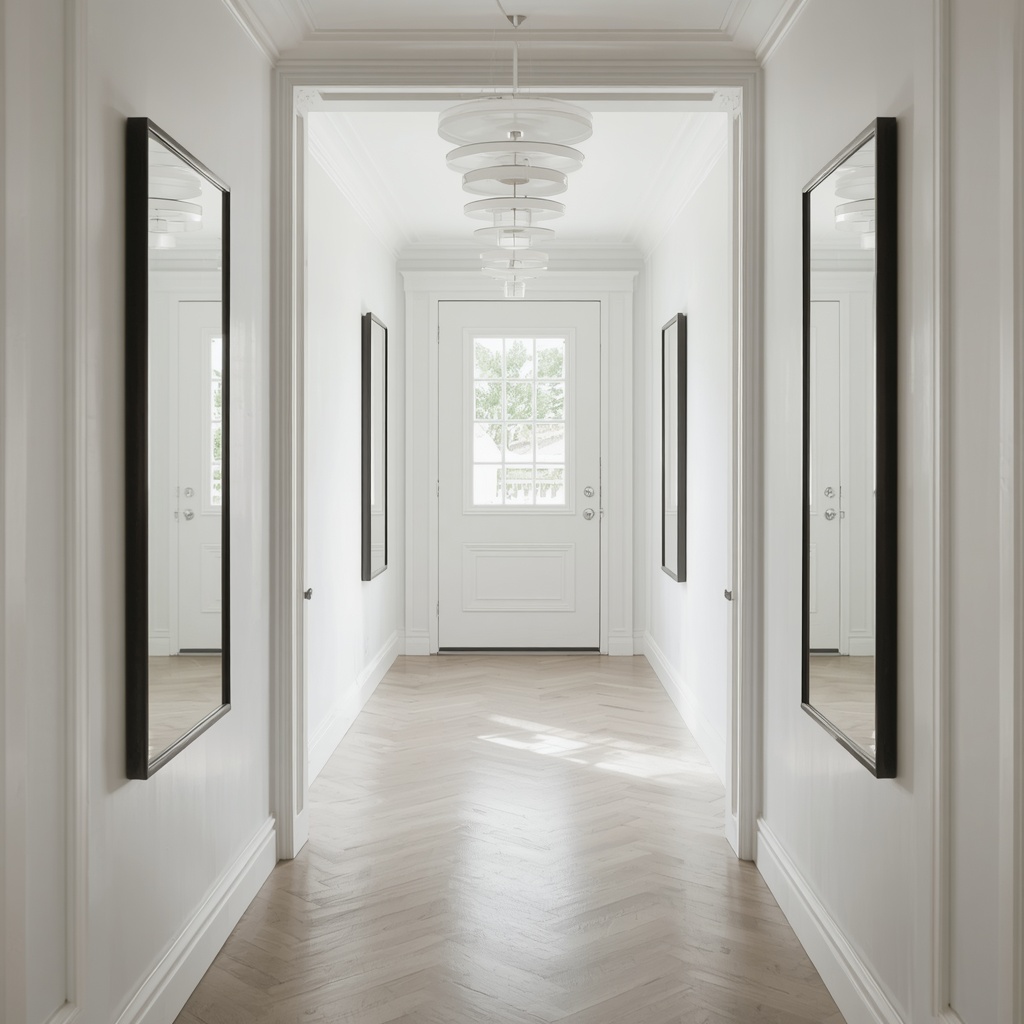
Keep it elegant and restrained, though. Facing mirrors can create an endless-tunnel effect if they sit directly across from each other, which some people find dizzying. Offset them slightly or vary their heights to keep the look pleasant.
- Use one large statement mirror and one smaller complementary piece.
- Keep at least a few feet between two mirrors in a tiny room.
- Match the finishes so the pair looks intentional.
Trick #9: Hang Mirrors at the Right Height
Height affects both function and style. The center of your mirror should sit around 57 to 60 inches from the floor, which is standard gallery height and puts it at eye level for most adults. Above a sofa or console, leave about 6 to 8 inches between the furniture and the bottom edge of the mirror.
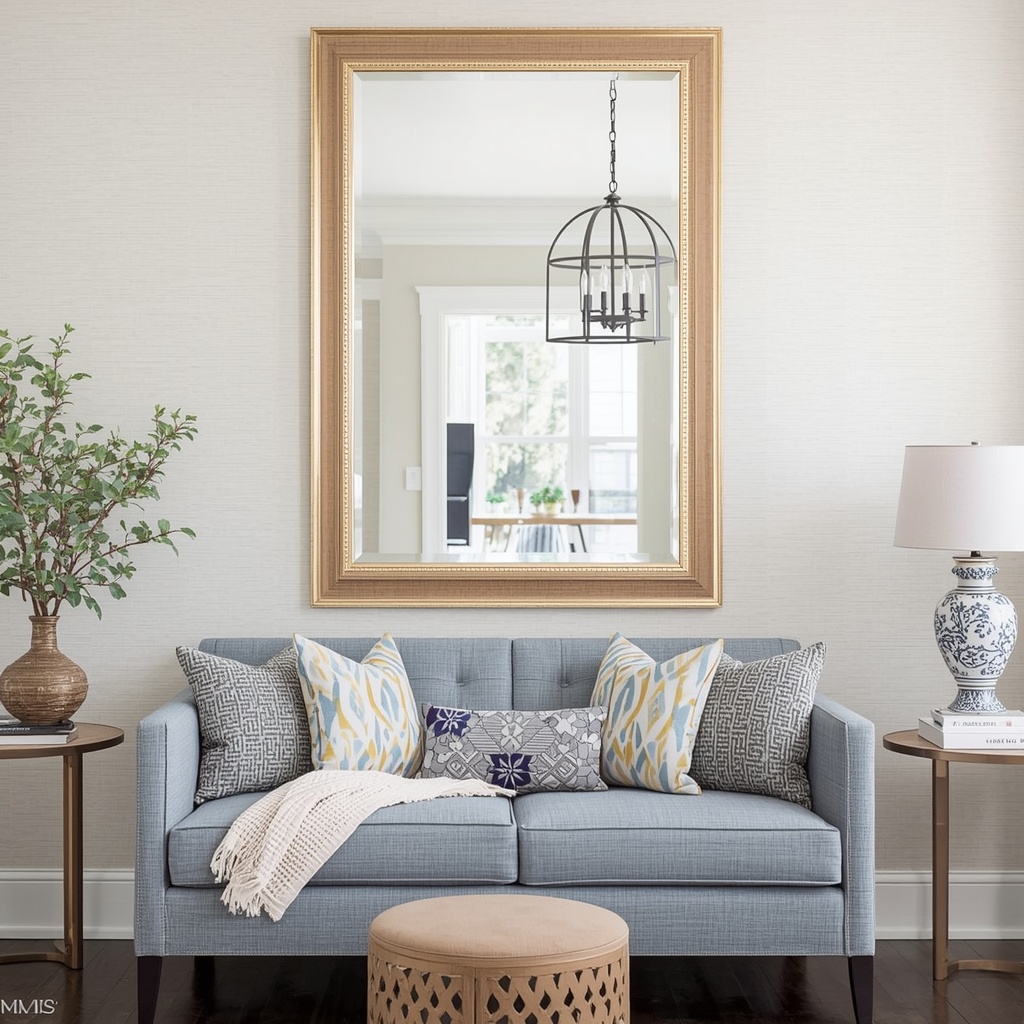
For a dramatic effect, hang a tall mirror so it nearly touches the ceiling line. This draws the eye upward and makes low rooms feel taller. In a dining nook or bedroom, you can lower the mirror slightly to catch a table lamp or the light from a window.
Pro Tip: Tape craft paper to the wall in the shape of your mirror before you drill. Live with it for a day or two. You’ll spot glare, awkward reflections, and height issues before you commit to a single hole.
Trick #10: Pick the Right Frame and Finish
The frame sets the tone. Thin black metal frames feel modern and crisp. Natural wood frames bring warmth and work beautifully in Scandinavian, boho, and farmhouse rooms. Gold and brass frames add a little glamour and subtly warm the reflected light.
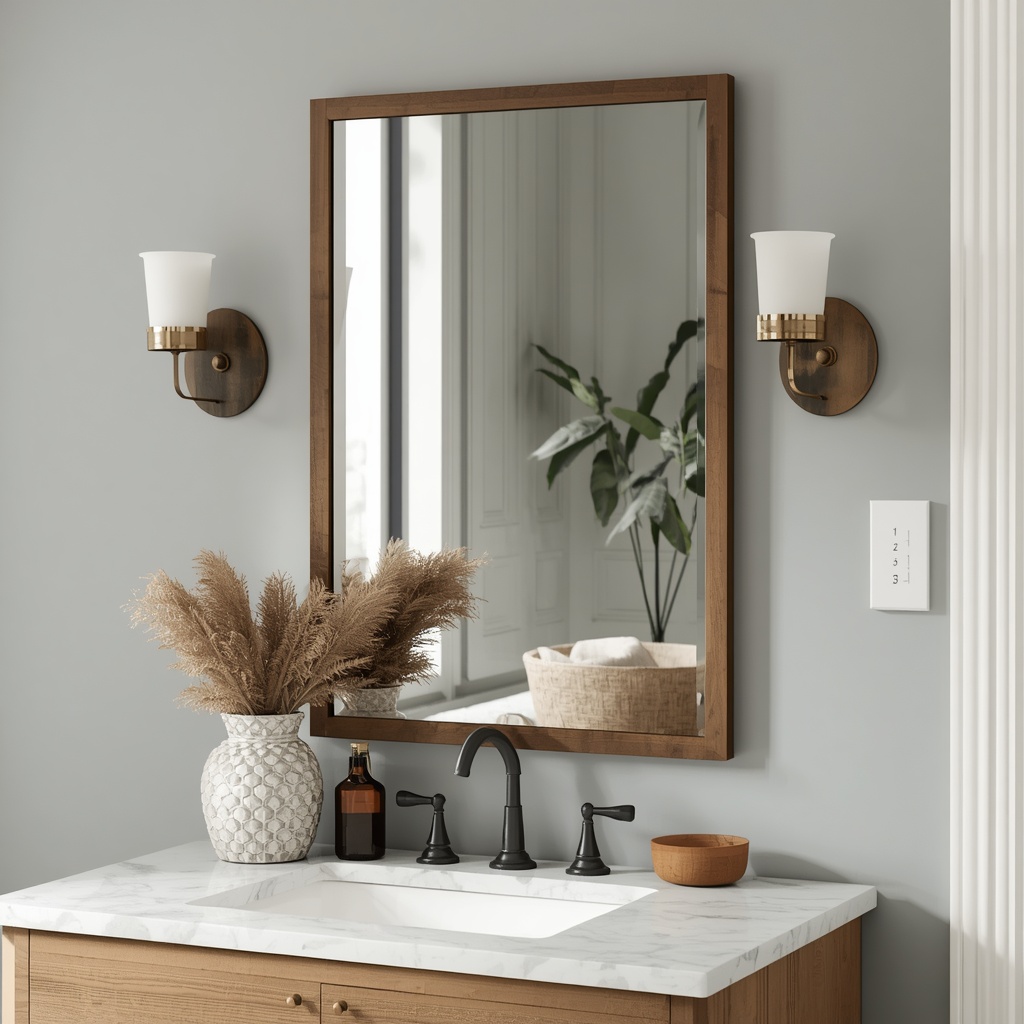
In very small rooms, keep frames slim so they don’t visually crowd the wall. Frameless mirrors offer the cleanest look and reflect the most light, making them a smart pick for ultra-compact spaces. If you love a vintage feel, an antiqued mirror softens the reflection and adds character, though it bounces slightly less light.
| Frame Style | Best For | Vibe |
|---|---|---|
| Slim black metal | Modern, industrial rooms | Crisp and clean |
| Natural wood | Farmhouse, boho, Scandinavian | Warm and relaxed |
| Brass or gold | Traditional, glam, transitional | Elegant and bright |
| Frameless | Tiny spaces, minimalist homes | Seamless and airy |
| Ornate or carved | Vintage or eclectic rooms | Statement-making |
Trick #11: Pair Mirrors with Light-Friendly Décor
Mirrors work best when the rest of the room cooperates. If your walls, curtains, and furniture all absorb light, even a giant mirror can only do so much. Support your mirror with a few smart choices.
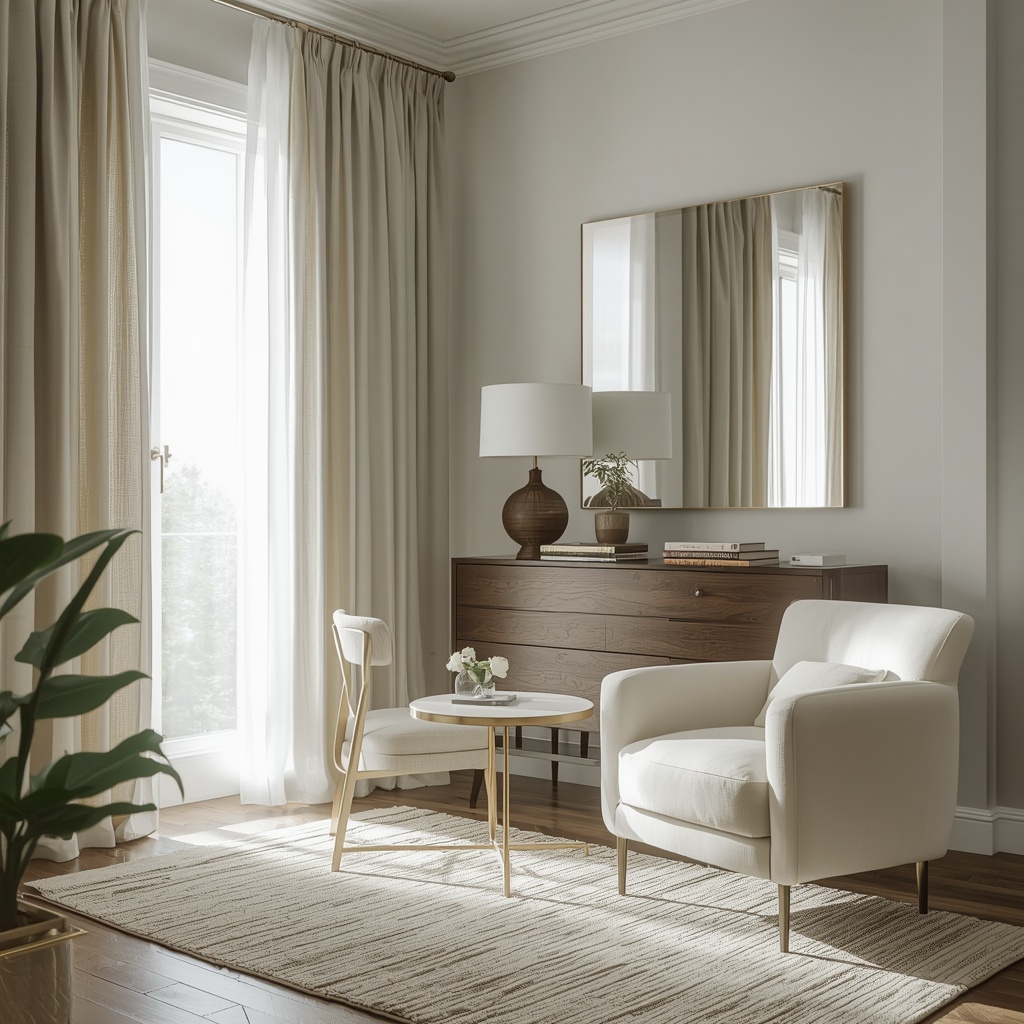
- Paint: Choose soft whites, warm creams, or pale neutrals with a high light reflectance value (LRV).
- Window treatments: Swap heavy drapes for sheer curtains or light linen panels that let daylight pour in.
- Furniture: Pick pieces with slim legs and lighter upholstery so light can travel under and around them.
- Accents: Add metallic touches, glass lamps, or acrylic accessories to catch and scatter light.
- Rugs: A pale or patterned rug keeps the floor from swallowing brightness.
For more on choosing energy-smart lighting to complement your mirrors, see the U.S. Department of Energy’s lighting resources at energy.gov and product guidance at ENERGY STAR.
Trick #12: Renter-Friendly Mirror Ideas
If you rent, you may not be allowed to drill into the walls, but you can still brighten your space. Leaner mirrors are your best friend. A tall leaning mirror needs no hardware and looks effortlessly chic, and you can move it when you change apartments.
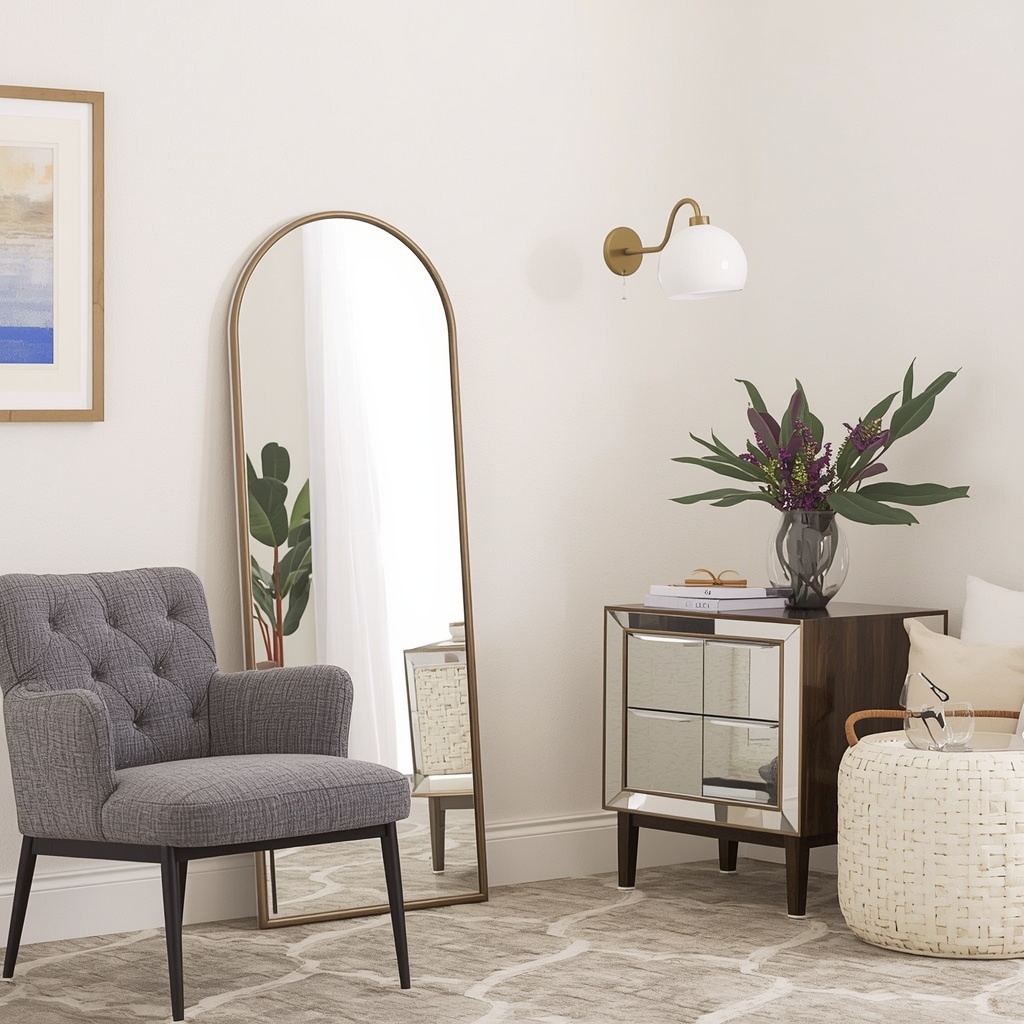
You can also use removable adhesive hanging strips rated for your mirror’s weight, or place a mirror on top of a dresser or console. Mirrored furniture, such as a nightstand or a small sideboard, adds reflective surface area without touching your walls at all.
- Lean a floor mirror against the wall, angled slightly toward the window.
- Use heavy-duty removable strips only for lightweight mirrors.
- Choose a mirrored tray to bounce light on a coffee table.
- Try a tabletop mirror on a desk or vanity for a small boost.
Common Mirror Placement Mistakes to Avoid
Even seasoned decorators get this wrong sometimes. Here are the pitfalls I see most often, and how to fix them.
- Hanging the mirror too small: Upsize to get real brightness.
- Reflecting clutter: Edit the view before you hang.
- Facing a dark wall: The mirror just doubles the gloom, so aim for light.
- Creating glare: Avoid reflecting direct afternoon sun into seating areas or onto screens.
- Hanging too high or too low: Aim for eye level as a baseline.
- Ignoring safety: Use proper anchors and wall studs for heavy mirrors, and secure leaners with anti-tip straps or furniture putty, especially with kids or pets around.
Pro Tip: Test your mirror at different times of day. Morning light and late-afternoon light hit walls very differently, and a spot that glows at 10 a.m. might glare at 5 p.m.
Mirror Placement FAQs
How many mirrors are too many in a small room?
Two or three well-chosen mirrors are usually plenty. More than that and the room can feel busy and confusing. Let each mirror have its own job, whether that’s catching daylight, doubling a lamp, or framing a view.
Can a mirror make a room feel bigger without a window?
Yes. Pair a large mirror with a strong lamp or sconces, and it will brighten the space and add depth. The light source still matters, so make sure there’s something to reflect.
Is a mirror on the ceiling or floor ever a good idea?
For most homes, no. Stick to walls. They’re safer, easier to style, and far more flattering.
Does mirror color affect the light?
Clear glass reflects the most. Tinted or antiqued mirrors add character but soften the brightness a little.
Your Step-by-Step Mirror Plan
Ready to try it? Here’s a simple plan you can finish in an afternoon.
- Map your light. Note where your windows are and when the sun hits each wall.
- Pick your target. Decide what you want to reflect, like a window, a plant, or a lamp.
- Choose your size and shape. Go larger than feels natural, and match the shape to your room.
- Test the spot. Hold or lean the mirror in place and check the view from several seats.
- Mark and mount. Use paper templates, a level, and the proper anchors.
- Style around it. Add a console, plant, or lamp, and keep the surrounding area tidy.
Final Thoughts: Let Your Mirrors Do the Heavy Lifting
Small rooms aren’t a design problem, they’re a design opportunity. With the right mirror placement, you can bring in more natural light, create the illusion of space, and give even the tiniest corner a sense of calm and style. Start with one big mirror opposite a window, then build from there.
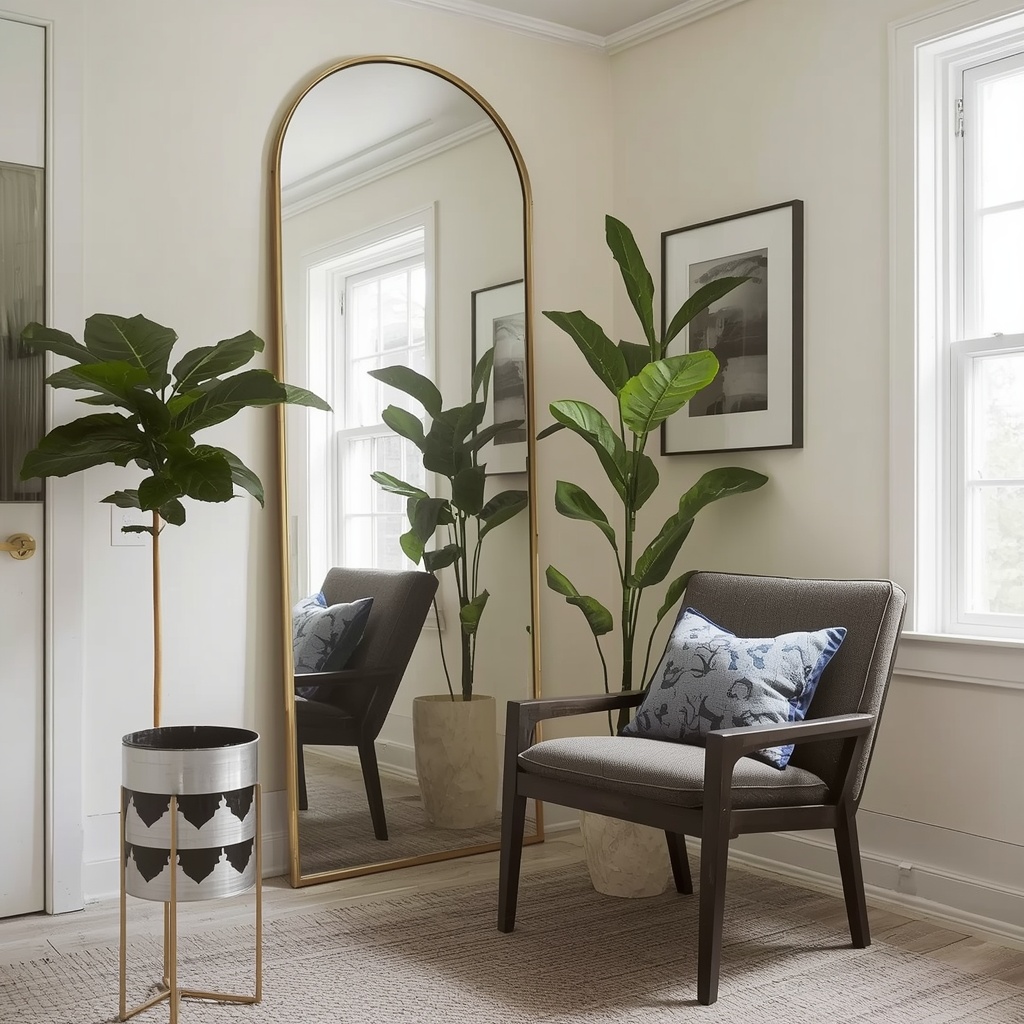
Remember the core rules: face the light, reflect something beautiful, size up, and support the mirror with light-friendly paint and décor. Your room may not get any bigger, but it will feel brighter, taller, and far more inviting.
Tried one of these tricks at home? Share your before-and-after in the comments, and explore our other small-space decorating guides for more ideas.