
There’s a particular feeling you get when you walk into a well-designed boutique hotel room. The lighting is soft. The bed looks impossibly inviting. Everything has a place, and nothing feels like an afterthought. As an interior designer who works on residential projects across the country, I get asked constantly how to bring that same feeling home — specifically, into the guest room.
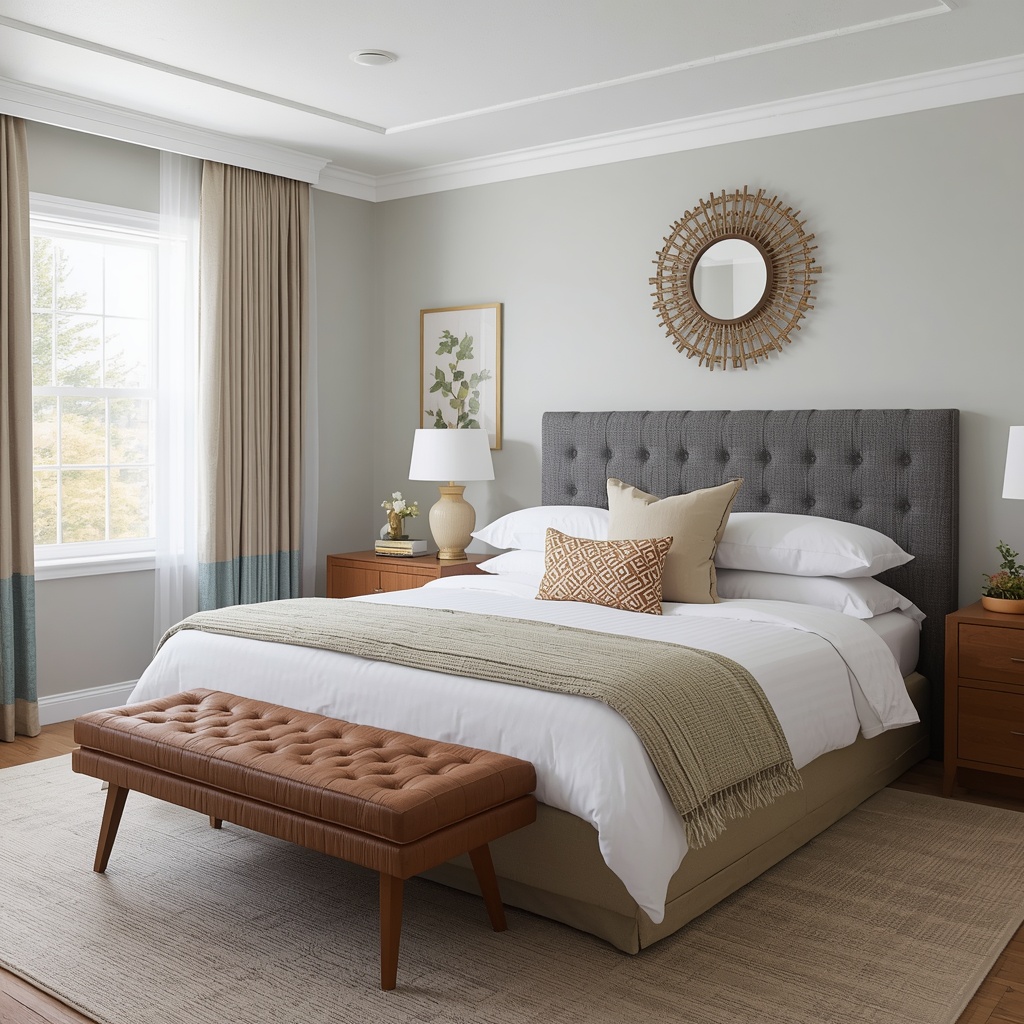
The good news is that boutique hotel style isn’t about spending a fortune. It’s about intention. Hotels design every square inch of a room to make guests feel cared for, comfortable, and a little bit spoiled. You can absolutely do the same for the people who stay in your home, whether that’s your in-laws twice a year or a steady stream of Airbnb guests.
In this guide, I’ll walk you through exactly how to transform an ordinary guest bedroom into a warm, elevated retreat using the same principles hospitality designers rely on — layered bedding, hotel-style lighting, a curated color palette, and thoughtful little amenities that make guests feel genuinely welcome.
Whether you’re furnishing a dedicated guest suite, converting a home office into a dual-purpose space, or refreshing a room that’s hosted short-term rental guests for years, the same core framework applies. Boutique hotel style is a formula you can learn, repeat, and adjust to your own budget — it isn’t reserved for design magazines or five-star properties.
Why Boutique Hotel Style Works So Well for Guest Rooms
Boutique hotel design succeeds because it solves a very specific problem: making a stranger feel instantly at home in an unfamiliar space. That’s actually the exact same challenge you’re solving with a guest room. Your guests don’t live there full-time, so the room needs to feel welcoming without requiring them to “figure out” anything.

Hotel designers also work within tight footprints and modest budgets per room, which means every element has to earn its place. There’s no clutter, no mismatched furniture inherited from other rooms in the house, and no decorative dead weight. That efficiency is exactly what makes a guest room feel calm rather than like a storage overflow zone — which, let’s be honest, is what most guest rooms quietly become.
“A guest room should never feel like the room where unwanted furniture goes to retire. It should feel like the nicest room in the house that nobody gets to use every day.” — a sentiment shared by nearly every hospitality designer I’ve worked alongside.
Start With a Restrained, Hotel-Inspired Color Palette
Boutique hotels rarely use loud, trend-driven colors on the walls. Instead, they lean on warm neutrals, tonal layering, and one or two moments of depth through textiles or millwork. This creates a backdrop that feels timeless rather than dated in three years.
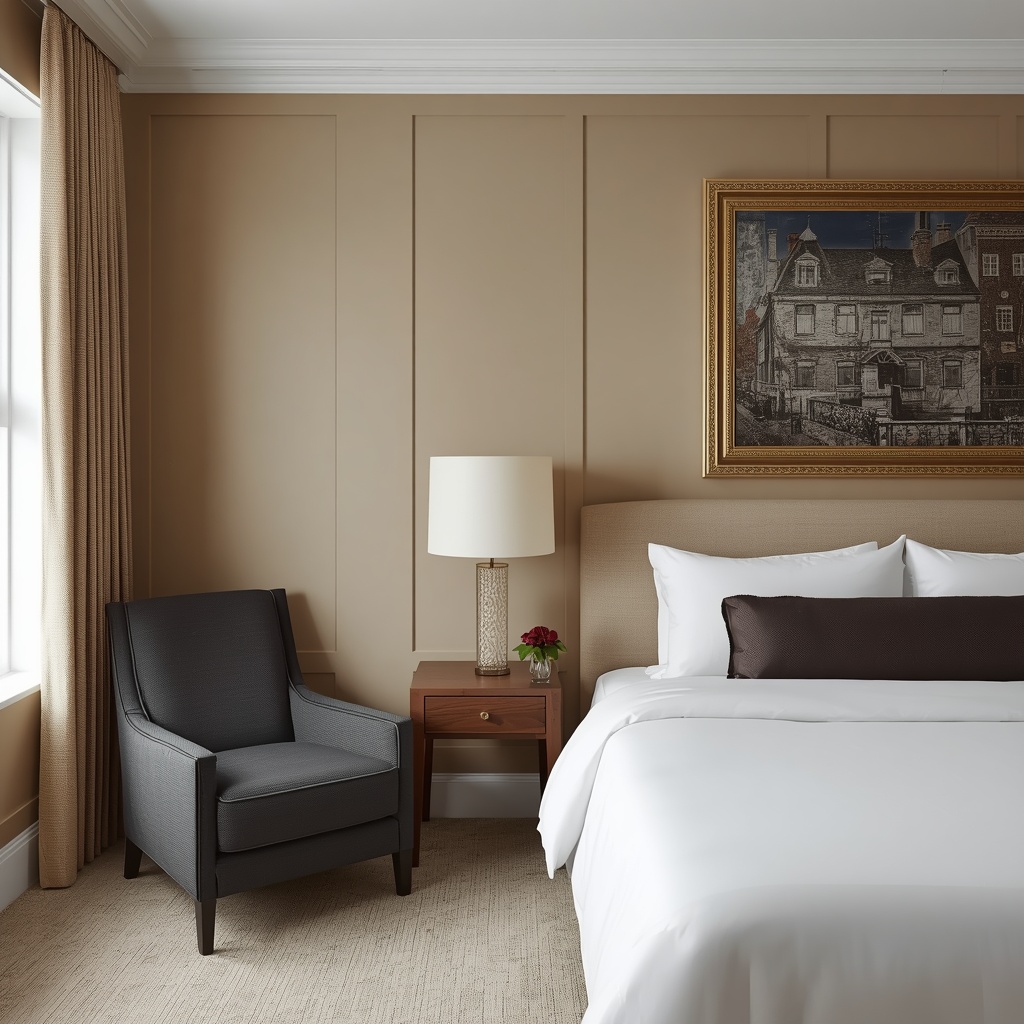
For 2026, paint brands are moving in exactly this direction. Sherwin-Williams named Universal Khaki SW 6150 — a warm, grounded neutral positioned as a timeless, go-anywhere shade that brings a sense of grounded elegance to any space — as its 2026 Color of the Year. Benjamin Moore went slightly deeper and moodier with Silhouette AF-655, an espresso-and-charcoal hue built around refinement and distinction. Both are excellent starting points for a guest suite that should feel calm, current, and a little luxurious.
Guest room color palette formula:
| Layer | Boutique Hotel Approach | Easy At-Home Swap |
|---|---|---|
| Walls | Warm neutral or soft greige | Universal Khaki, warm taupe, or soft putty |
| Trim & Millwork | Slightly lighter or matte white | Off-white or matching wall tone (tone-on-tone) |
| Bedding | Crisp white with one accent tone | White duvet + a single textured throw |
| Accent Color | One grounding, saturated tone | Espresso brown, deep olive, or navy |
| Metals | One consistent metal finish | Brushed brass or matte black only |
<br>
Quick List — Colors to Avoid in a Guest Room:
- Overly bright or saturated accent walls
- More than one strong “statement” color
- Cool, sterile whites that read clinical rather than cozy
- Mismatched metal finishes (gold lamp, chrome mirror, black hardware)
Invest in Hotel-Quality Bedding — It Matters More Than the Bed Frame
If there’s one line item worth splurging on, it’s the bedding. This is the single biggest driver of whether a room “feels like a hotel.” Hotels layer bedding in a specific, repeatable way: a fitted sheet, a flat sheet, a lightweight duvet or coverlet, and then a folded throw or runner at the foot of the bed.
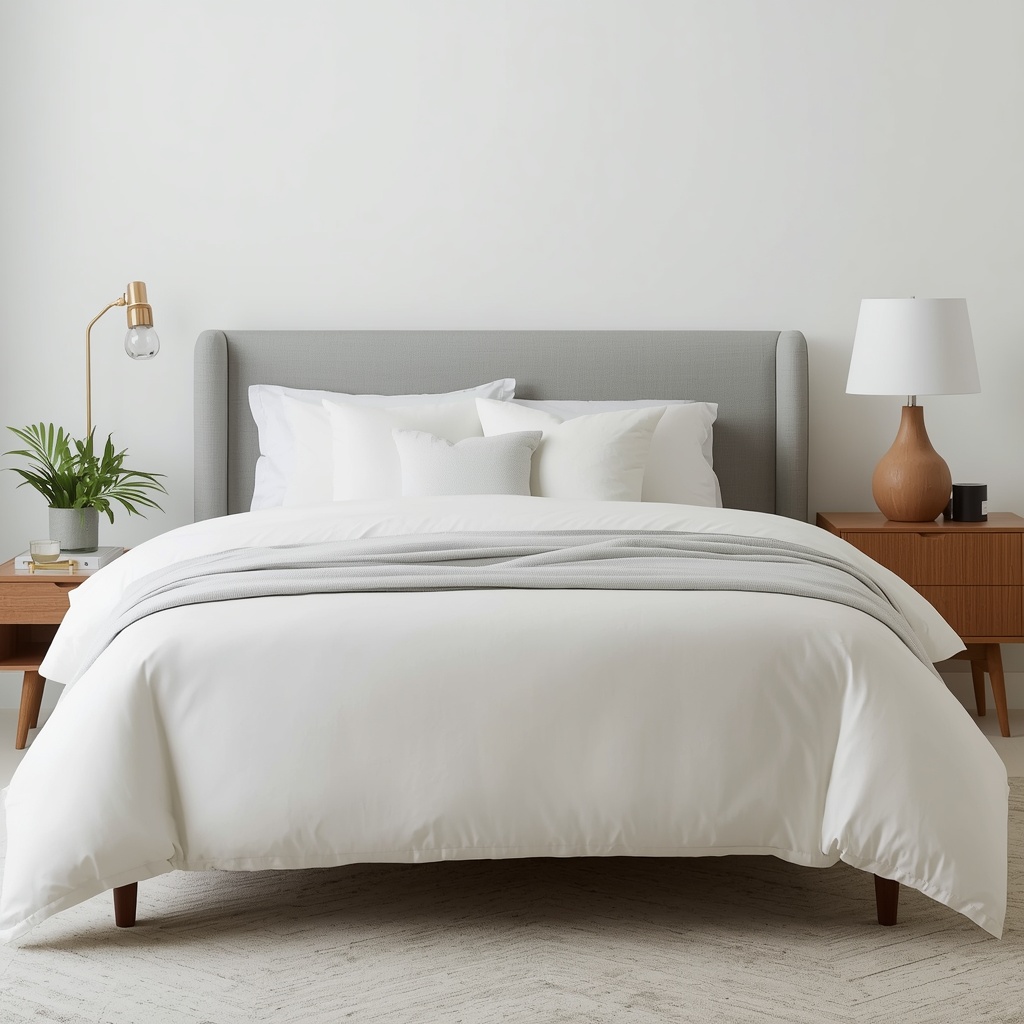
The trick is restraint paired with texture. You don’t need six decorative pillows fighting for space — you need two to four pillows in complementary (not matching) textures, a crisp white duvet, and one anchor throw in a natural fiber like linen, wool, or waffle cotton. This layered, tactile approach is what separates a “made bed” from a genuinely inviting one.
Pro Tip: Buy one size up on your duvet insert relative to your duvet cover. A queen duvet cover with a king insert creates that plush, cloud-like puff you notice in high-end hotel rooms — it’s a five-minute trick that instantly upgrades the entire bed.
Boutique bedding checklist:
- High-thread-count, cotton sateen or percale sheets in crisp white or soft ivory
- A lightweight, oversized duvet insert for that plush, hotel-style loft
- Two Euro pillows stacked behind two standard pillows
- One textured lumbar pillow for a tailored finishing touch
- A folded throw blanket or bench runner at the foot of the bed
Layer Your Lighting Like a Hotel Designer Would
Boutique hotels almost never rely on a single overhead fixture. Instead, they layer light at multiple heights: ambient light from the ceiling, task light at the bedside, and accent light somewhere softer, like a floor lamp or picture light. This layering is what creates that warm, moody, “golden hour” feeling hotel rooms have even at 9 p.m.
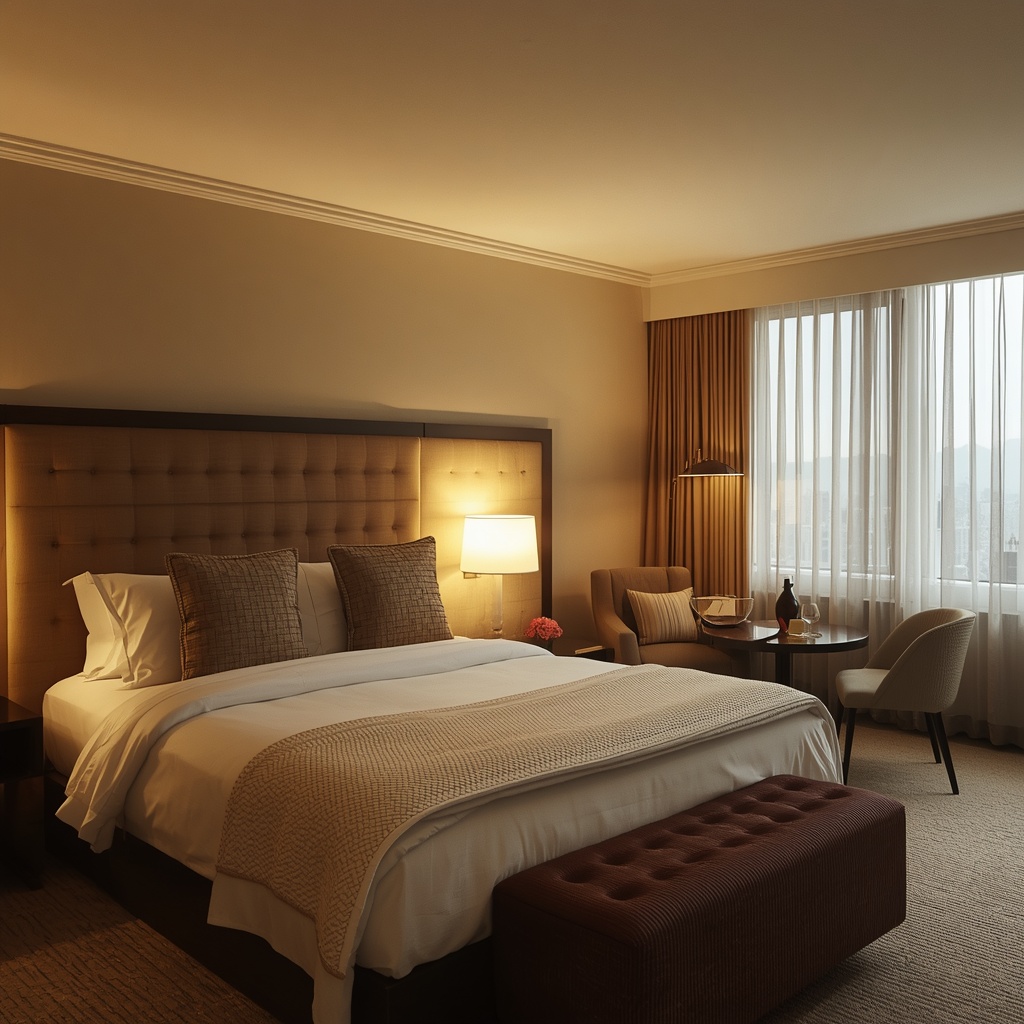
For a guest room, aim for at least three light sources on a warm color temperature (2700K–3000K), and put the overhead light on a dimmer if your electrical setup allows it. Bedside lighting should be functional enough for reading but soft enough that it never feels like an interrogation room. Wall-mounted sconces are a favorite hospitality trick because they free up nightstand surface area entirely.
Pro Tip: Skip cool white or daylight bulbs entirely in a guest room. Anything above 3000K reads as clinical rather than cozy, and it’s one of the fastest ways to make a beautifully decorated room feel flat and uninviting.
Curate the Furniture Layout for Function, Not Just Looks
Hotel rooms are designed around a guest’s actual routine: where they’ll set a suitcase, where they’ll charge a phone, where they’ll get dressed. Your guest room should be designed the same way, rather than around whatever furniture happened to be free.
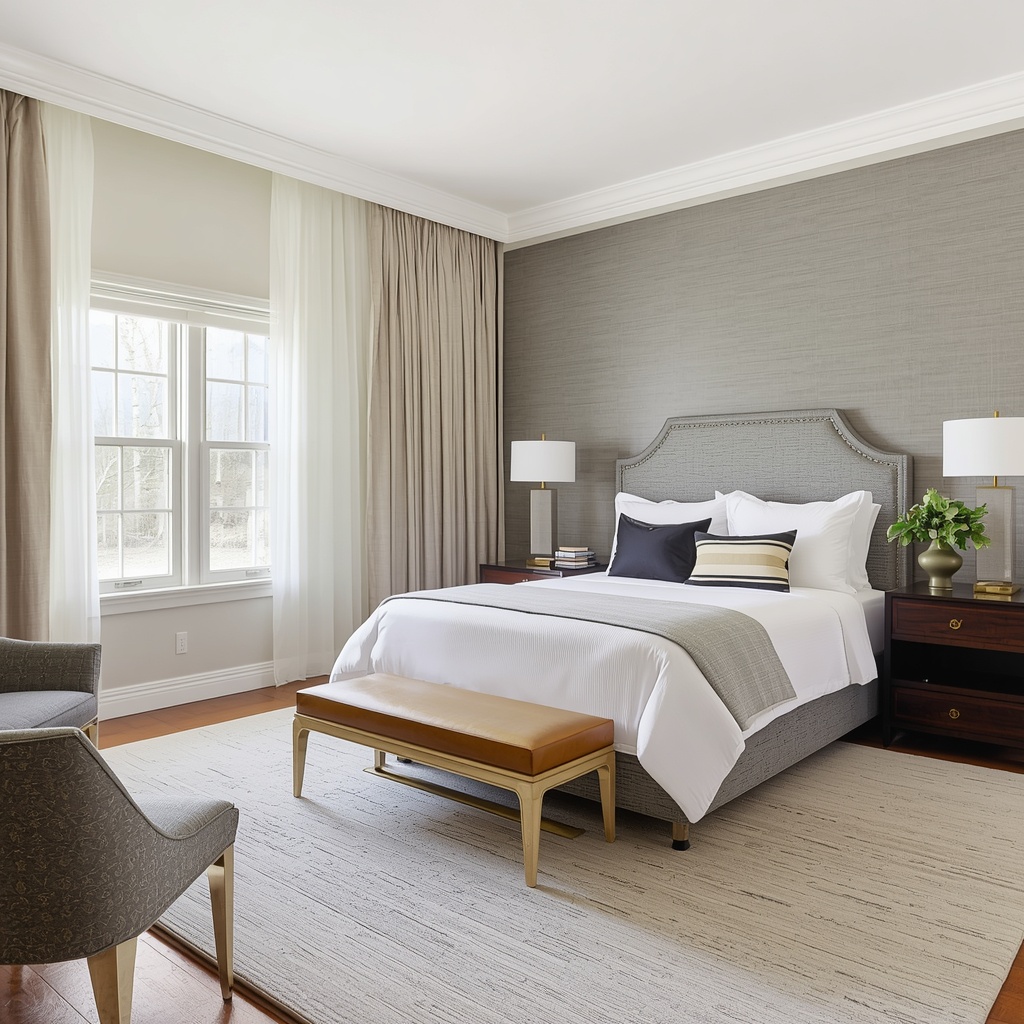
At a minimum, a boutique-style guest room needs a place to unpack (a luggage rack or bench), a place to sit that isn’t the bed, a nightstand on each side if space allows, and a full-length or well-placed mirror. These aren’t luxuries — they’re the functional backbone that makes a room feel considered rather than incidental.
Scale matters just as much as selection here. Oversized furniture in a small guest room reads as cramped no matter how nice each individual piece is, while furniture that’s too small or scattered can make even a generous room feel unfinished. Hotel designers typically work backward from the bed, sizing every other piece — nightstands, a bench, a chair — to sit in proportion to it rather than treating each item as a separate decision. <br>
Essential Guest Room Furniture Table:
| Furniture Piece | Why Hotels Include It | Budget-Friendly Option |
|---|---|---|
| Luggage rack or bench | Keeps suitcases off the bed and floor | Folding luggage rack (under $50) |
| Nightstands (both sides) | Symmetry + functional storage | Small matching side tables |
| Reading chair or bench | Somewhere to sit besides the bed | Slipper chair or upholstered bench |
| Full-length mirror | Guests always appreciate one | Leaning floor mirror |
| Blackout curtains | Hotel-quality sleep experience | Blackout curtain liners |
Add the Small, Thoughtful Details That Guests Actually Remember
This is where boutique hotels truly separate themselves — not in the big furniture decisions, but in the small, human touches. A folded washcloth. A tray with water glasses. A note with the Wi-Fi password already written out. These details cost very little but communicate an enormous amount of care.
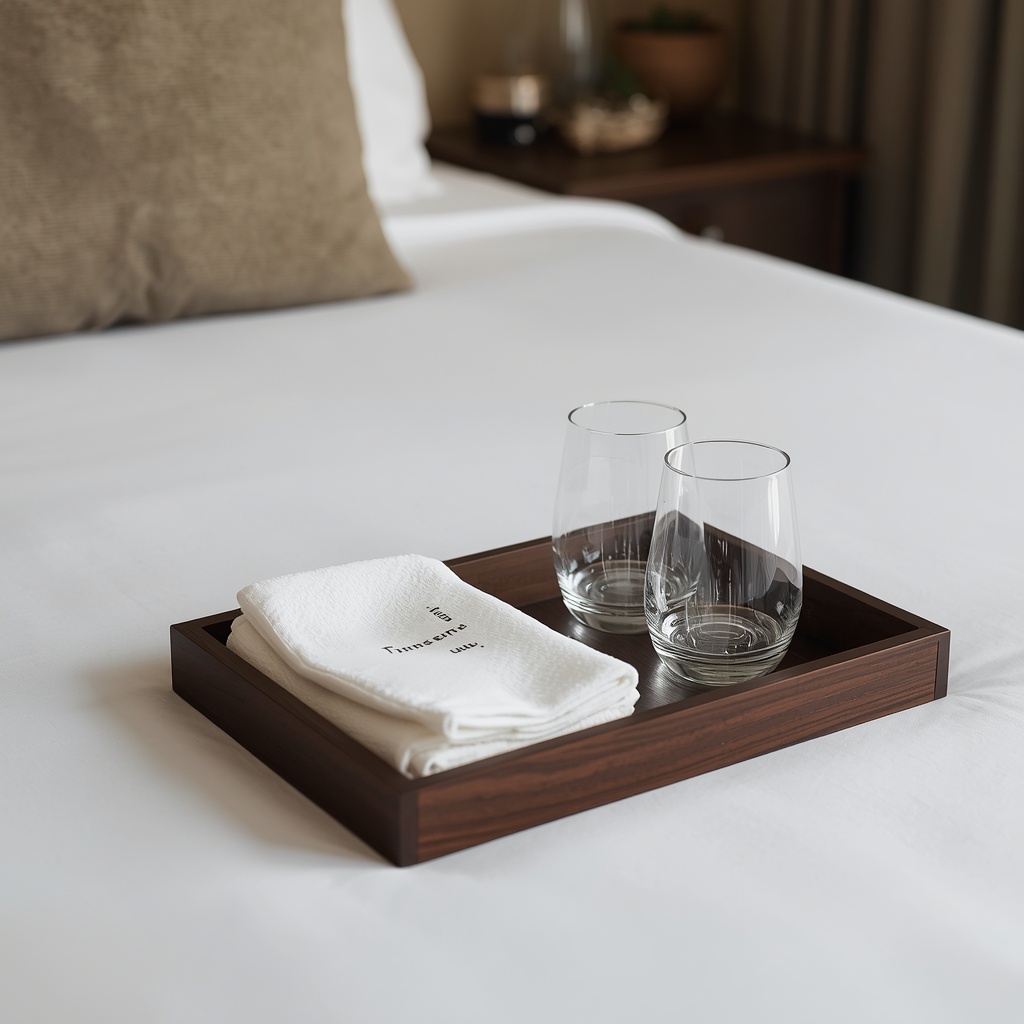
Think about what you’d want if you were the one staying overnight in an unfamiliar space. A charging station within reach of the bed. Extra pillows and blankets visible (not hidden in a closet guests are afraid to open). A small stack of local snacks or a coffee station if your guests tend to be early risers. None of this requires a renovation — it requires empathy for the guest experience.
Guest amenities checklist:
- Fresh water carafe or bottled water on the nightstand
- A printed card with Wi-Fi password, house rules, and breakfast timing
- Extra pillows and a spare blanket, clearly accessible
- A small basket with toiletries: travel toothpaste, a phone charger, hand lotion
- A scented candle or diffuser for a signature “welcome” scent
“Luxury isn’t about how expensive something looks. It’s about how few problems a guest has to solve on their own.” That’s essentially the entire philosophy behind boutique hospitality design, and it applies just as well to a spare bedroom as it does to a five-star suite.
Don’t Forget the Guest Bathroom Experience
If your guest room shares or has access to its own bathroom, this space deserves the same hotel-level attention. Spa-inspired guest baths rely on soft, matching towels, a decluttered counter, and a few sensory touches like a candle or a diffuser. Rolled towels stacked on an open shelf or ladder instantly read as “hotel” rather than “shared family bathroom.”
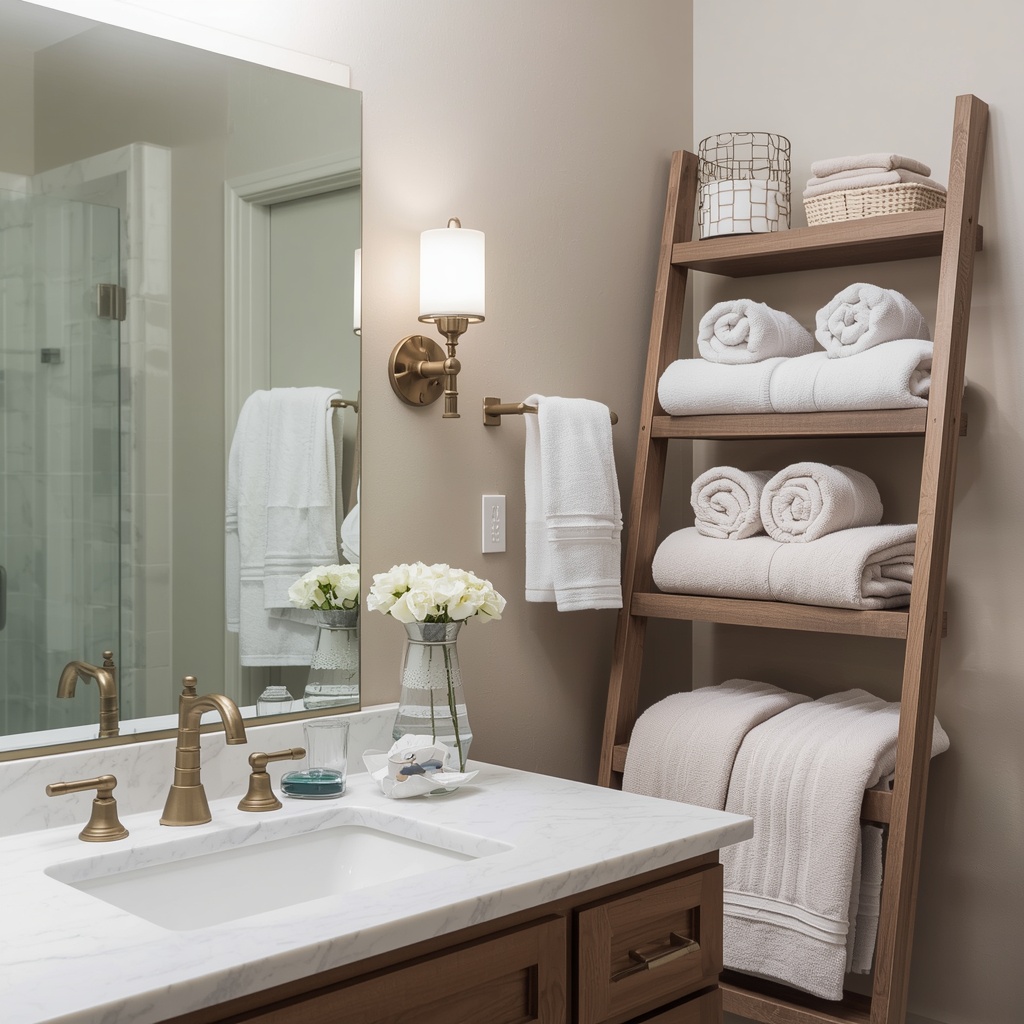
Keep the counter as empty as possible before guests arrive, and set out fresh, matching towels in a neutral tone rather than whatever mismatched set is currently in rotation. A small dish with individually wrapped soap or a nice bar of soap goes a long way for very little cost.
A Simple Room-by-Room Planning Checklist
Use this as a final walkthrough before guests arrive, or as a shopping list while you’re building the room out from scratch.
Before guests arrive:
- Wash and freshly make the bed with layered, hotel-style bedding
- Check that every light source is on a warm bulb and working
- Clear nightstands down to a lamp, a small tray, and a water carafe
- Set out fresh towels and any bathroom amenities
- Leave a printed note with Wi-Fi info and any house details
- Do a final scent check — light a candle or run a diffuser an hour before arrival
Final Thoughts: Small Changes, Big Impact
You don’t need to gut-renovate a spare bedroom to make it feel like a boutique hotel. Most of what makes hospitality design so effective is restraint, layering, and attention to the guest’s actual experience rather than just how the room photographs. A quiet, warm color palette, genuinely comfortable bedding, layered lighting, and a handful of thoughtful amenities will take you further than any single “statement” piece of furniture ever could.
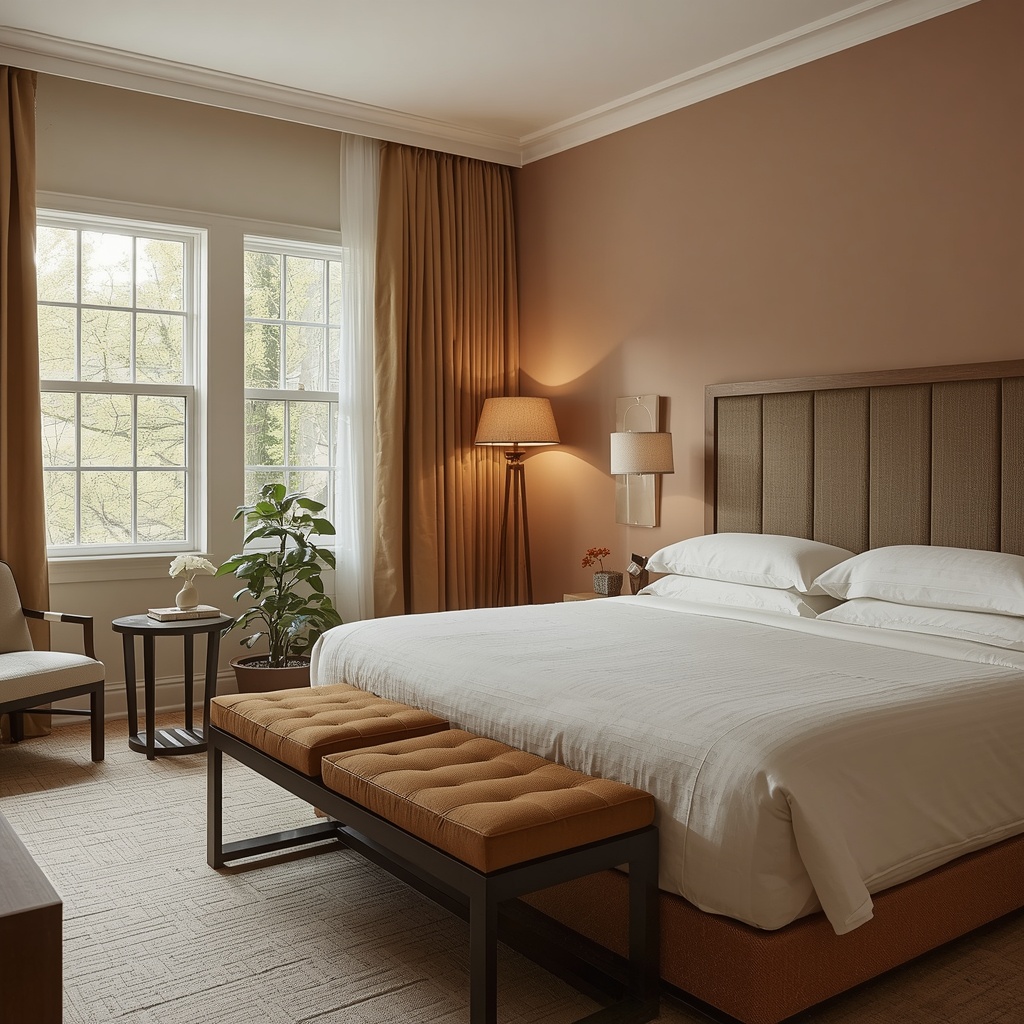
Start with the bed, since that’s the single highest-impact change you can make. Then work outward — lighting, furniture function, and finally those small human touches that guests will actually remember and mention to you afterward. Do that, and the next time someone stays over, don’t be surprised if they ask where you found “that hotel-looking duvet.”