
If you’ve ever stood in the doorway of your primary bedroom wondering how a “master suite” ended up the size of a walk-in closet, you’re not alone. While the average master bedroom in the U.S. spans roughly 14 by 16 feet, millions of homes — especially condos, townhomes, and older builds — fall well below that benchmark, some dipping into the 120-to-160-square-foot range.
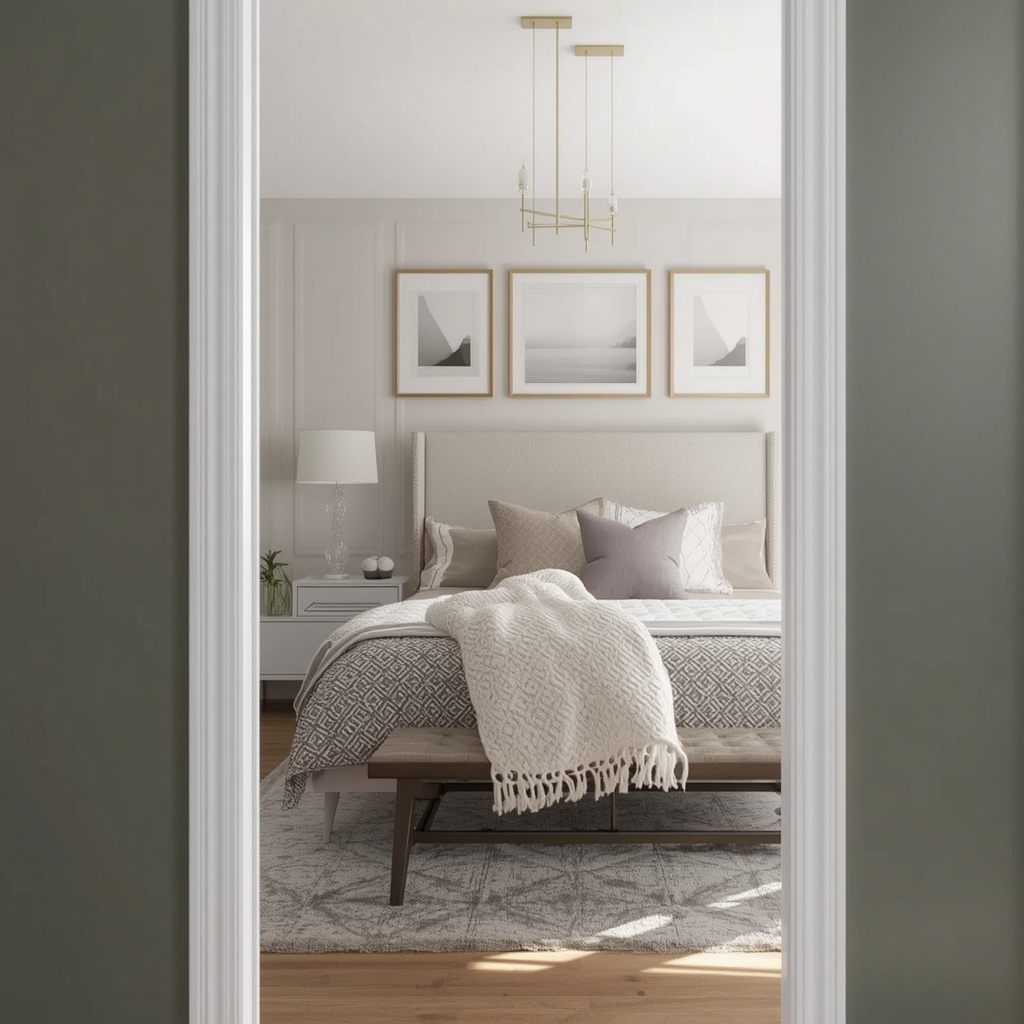
The good news? Square footage and comfort are not the same thing. As an interior designer who’s spent years reworking cramped primary bedrooms into restful retreats, I can tell you that the right layout, color story, and storage strategy will outperform extra square feet every time. Below, you’ll find the exact small master bedroom ideas I use with clients across the country — practical, budget-friendly, and genuinely livable.
Why Small Master Bedrooms Need Smart Design (Not More Stuff)
A small bedroom doesn’t fail because it lacks space — it fails because it’s asked to do too much with the wrong tools. Most cramped primary bedrooms are overloaded with furniture that was sized for a larger room, leaving no breathing room around the bed. Designers generally recommend at least 24 to 30 inches of walking clearance around a bed and at the foot of it, and in a small room that clearance is the first thing to disappear.
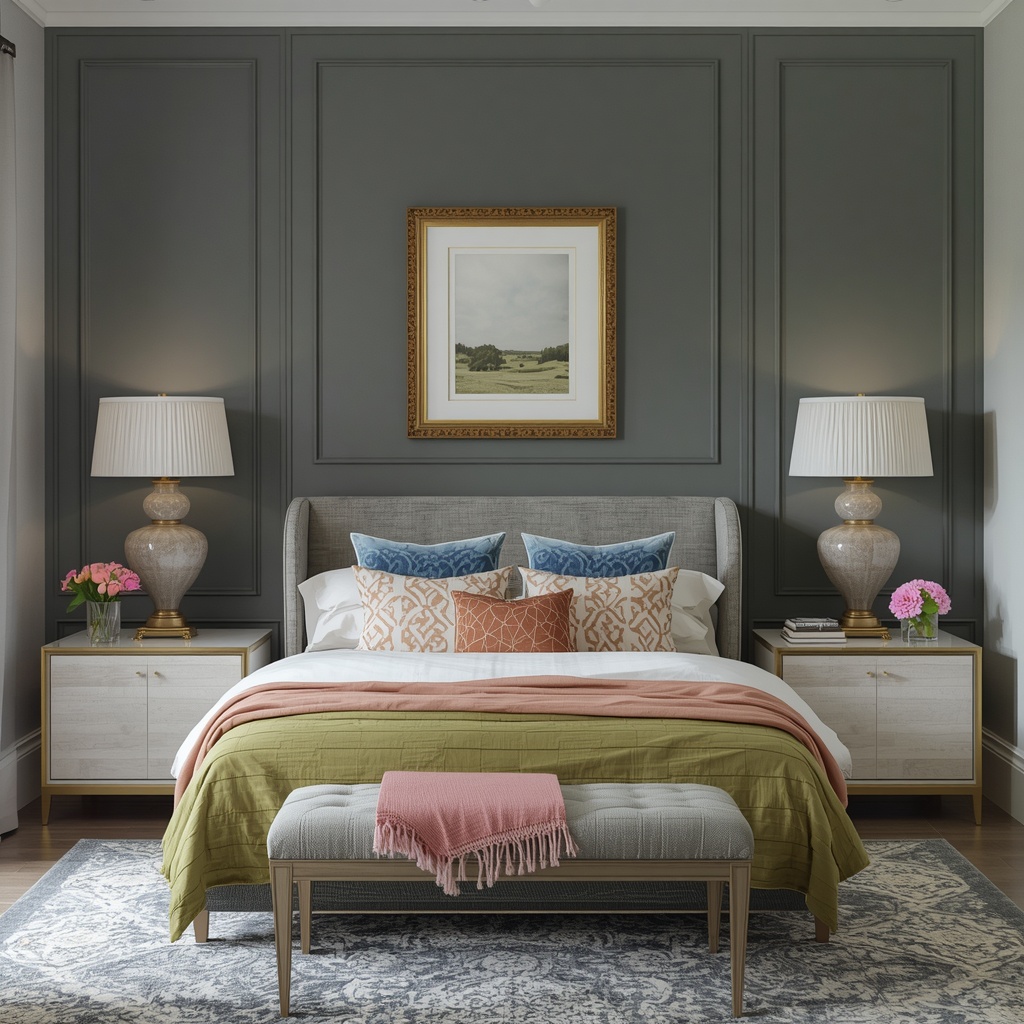
The fix isn’t subtraction for its own sake — it’s intention. Every piece in a small bedroom should earn its place by serving more than one function, every color choice should work to expand the perceived volume of the room, and every inch of vertical wall space should be treated as prime real estate. That mindset shift is the foundation for everything else in this guide.
“A small bedroom isn’t a problem to hide — it’s a puzzle to solve. The most comforting primary suites I’ve designed were never the biggest ones; they were the most deliberate ones.”
Choose a Calming, Space-Expanding Color Palette
Color does more visual heavy lifting in a small room than almost any other design choice. Soft, warm neutrals and muted earth tones bounce light around a room and blur the hard edges where wall meets ceiling, which tricks the eye into reading the space as larger and calmer than it is. For 2026, paint brands have leaned heavily into exactly this kind of grounded warmth — Sherwin-Williams named the soft, earthy Universal Khaki its Color of the Year, a shade designers are using specifically to make tight bedrooms feel cocooning rather than cramped.
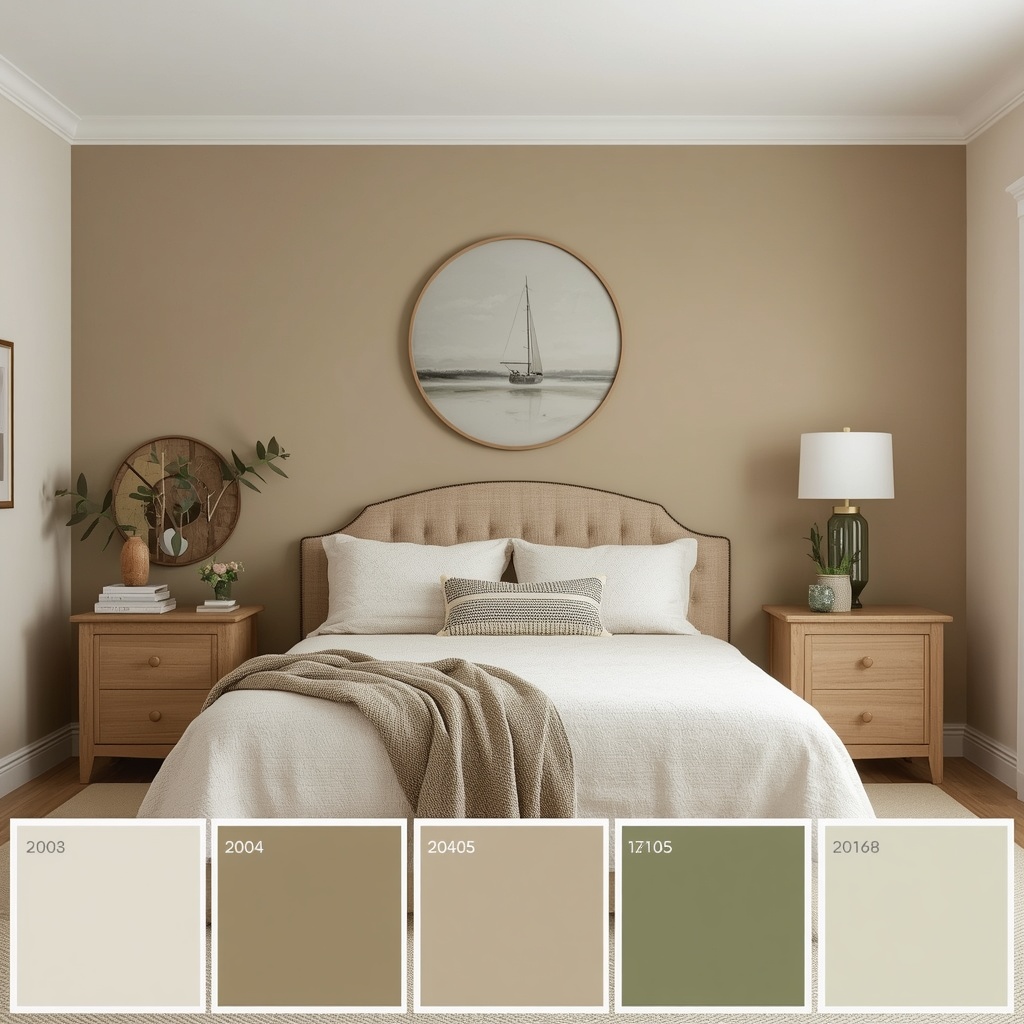
Avoid stark white if you want true coziness — it can read as clinical in a small footprint. Instead, lean into tone-on-tone layering: a soft greige or warm khaki on the walls, one or two shades lighter on the trim, and matching or near-matching bedding so the whole room flows as one continuous, restful surface.
| Color Strategy | Best For | Mood Created |
|---|---|---|
| Warm neutrals (khaki, greige, sand) | Most small bedrooms | Cozy, grounded, timeless |
| Soft sage or muted jade | North-facing rooms needing warmth | Calm, nature-inspired |
| Monochromatic tone-on-tone | Rooms under 150 sq ft | Seamless, visually larger |
| Deep moody color (one accent wall) | Bedrooms with high ceilings | Intimate, hotel-like |
| Crisp white | Bright, sun-filled rooms only | Airy but can feel sterile if overused |
💡 Pro Tip: Paint the ceiling one or two shades lighter than the walls instead of stark white. It softens the line where wall meets ceiling and pulls the eye upward, making the whole room feel taller.
Multi-Functional Furniture for Small Master Bedrooms
In a compact primary bedroom, furniture has to multitask. A storage bed with drawers built into the base can replace an entire dresser’s worth of capacity without adding a single square foot to the room’s footprint. Nightstands with shelving instead of bulky drawers keep sightlines open, and a slim bench at the foot of the bed can double as a seating spot and a landing pad for folded throws.
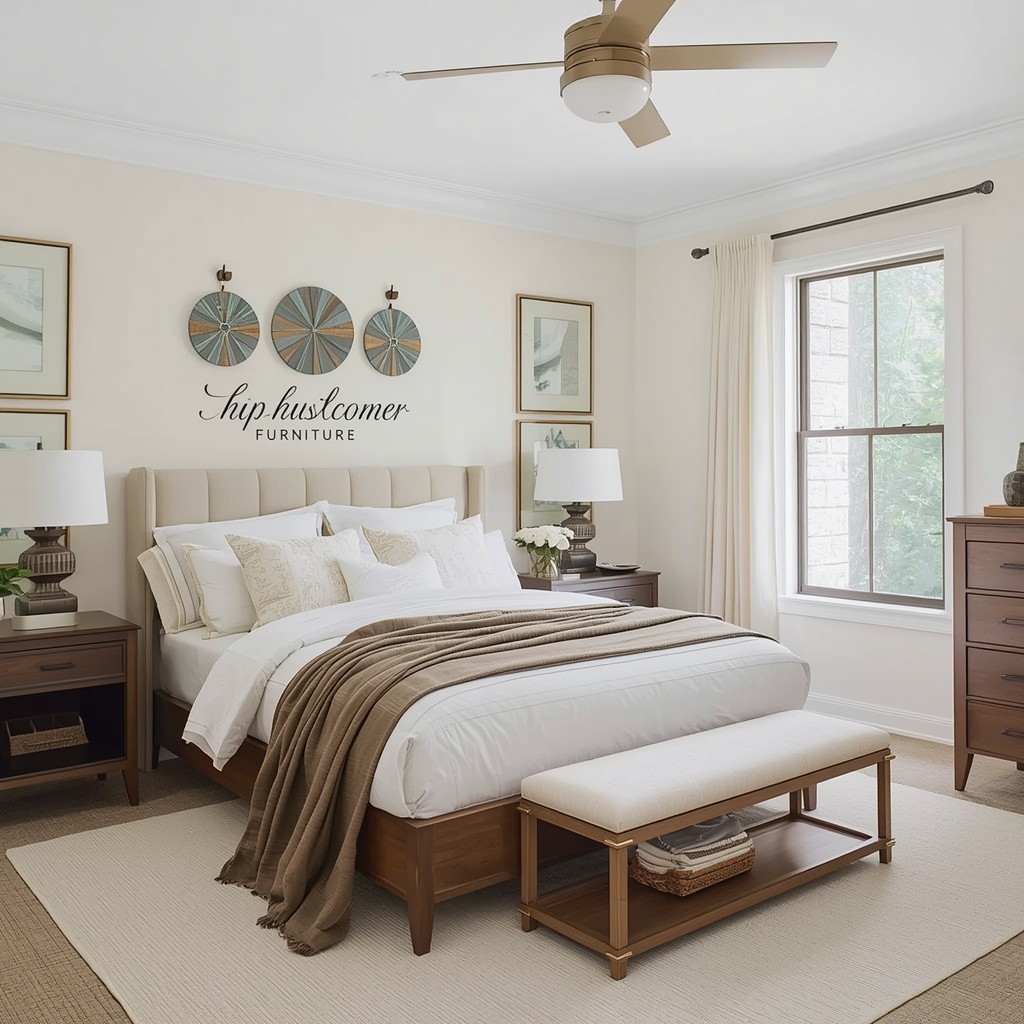
Skip oversized matching bedroom sets — they’re designed for showrooms, not small rooms. Instead, mix a few well-scaled pieces: a platform or low-profile bed frame (which visually opens up the space above it), one tall narrow dresser instead of a wide one, and wall-mounted nightstands if floor space is truly tight.
| Furniture Swap | Why It Works in Small Rooms |
|---|---|
| Platform bed instead of a tall frame | Lowers visual weight, opens up ceiling height |
| Wall-mounted nightstands | Frees floor space for walking clearance |
| Storage bed base | Replaces a dresser without adding footprint |
| Narrow, tall dresser | Maximizes storage without eating into walkways |
| Mirrored or glass-top furniture | Reflects light, reduces visual bulk |
Maximize Vertical Storage Space
When floor space runs out, the walls are still wide open. Floating shelves above the headboard or flanking the bed give you display and storage without sacrificing an inch of walking room. Tall, narrow wardrobes or built-in cabinetry that runs to the ceiling also store far more than a standard dresser while occupying the same footprint.
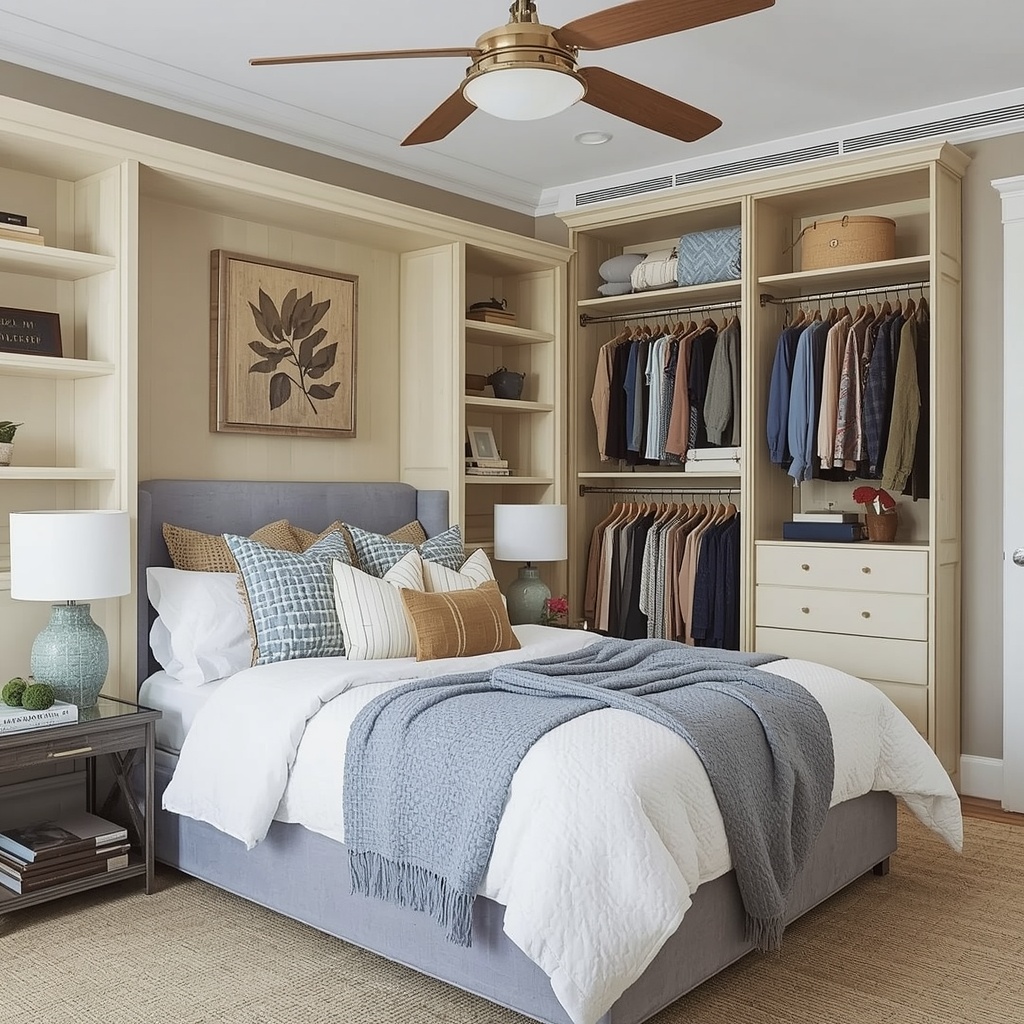
Closet organization systems are another underused win — a well-designed closet system can often absorb what would otherwise become a freestanding armoire. Think in layers: low storage for everyday items, mid-height for things you use weekly, and high shelving (with a small step stool) for seasonal or rarely used items.
Vertical storage ideas worth trying:
- Floating shelves on either side of the headboard for books, lamps, or decor
- A ceiling-height wardrobe instead of a standard 6-foot closet
- Over-the-door organizers for shoes, accessories, or linens
- Built-in window seats with lift-top storage
- Hooks and pegboards behind the door for robes, bags, or jewelry
Layered Lighting for Coziness and Function
Comfort in a small bedroom depends as much on lighting as it does on furniture. A single overhead fixture creates flat, harsh light that exposes every inch of a tight room. Layering in wall sconces, a soft-glow table lamp, and dimmable LED strips behind a headboard creates depth and lets you control the mood from bright and functional to warm and sleep-ready.
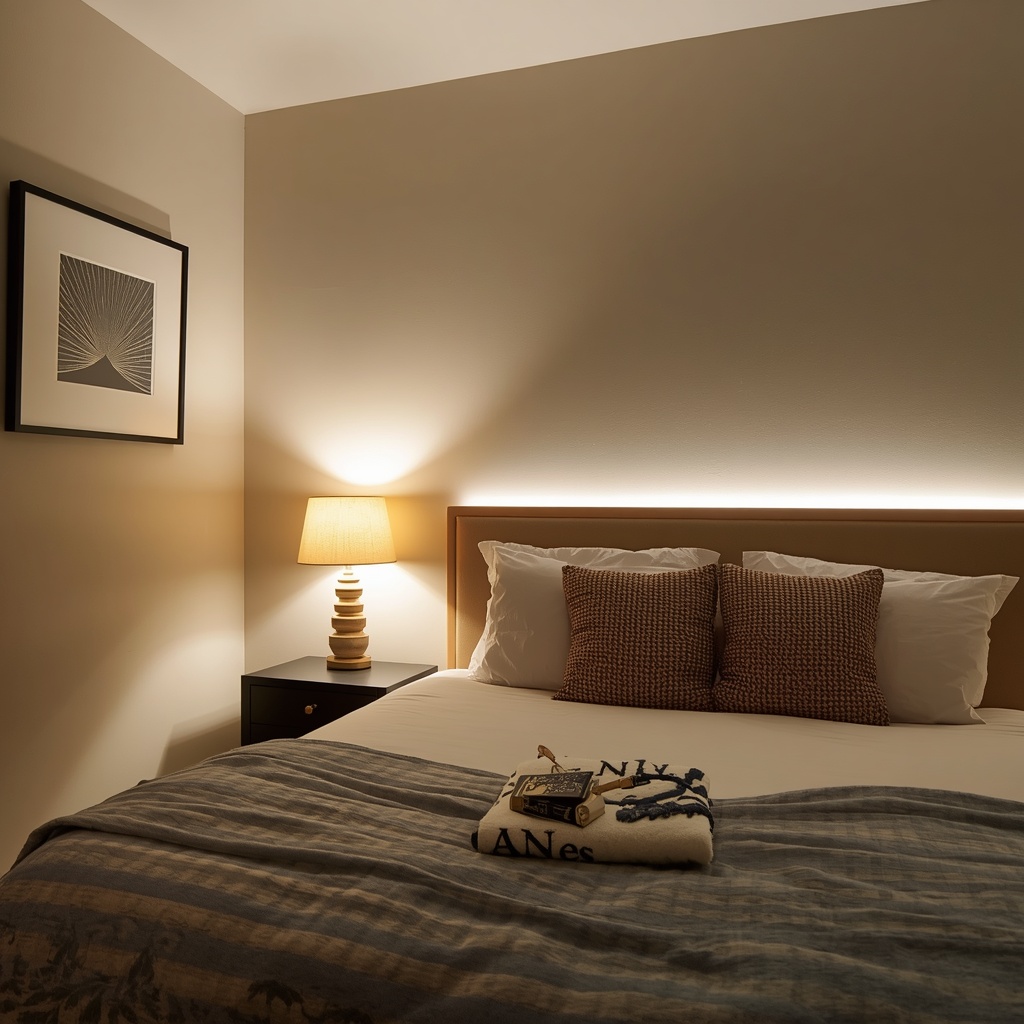
Wall-mounted sconces beside the bed are especially valuable in small primary bedrooms because they free up nightstand surface area while still providing reading light. Pair warm-temperature bulbs (around 2,700K) with a dimmer switch, and the room will feel like a boutique hotel suite rather than a storage closet with a bed in it.
💡 Pro Tip: Install your bedside sconces about 20 inches above the mattress and slightly toward the center of the bed — this angle reduces glare and gives you even reading light without a lamp eating up nightstand space.
Bedding and Textiles That Add Comfort Without Clutter
It’s tempting to pile on decorative pillows and heavy layers for a “cozy” look, but in a small bedroom, restraint actually reads as more luxurious. A high-quality duvet, two to three pillows maximum, and one textured throw will feel far more comfortable — visually and physically — than a bed buried under twelve cushions.
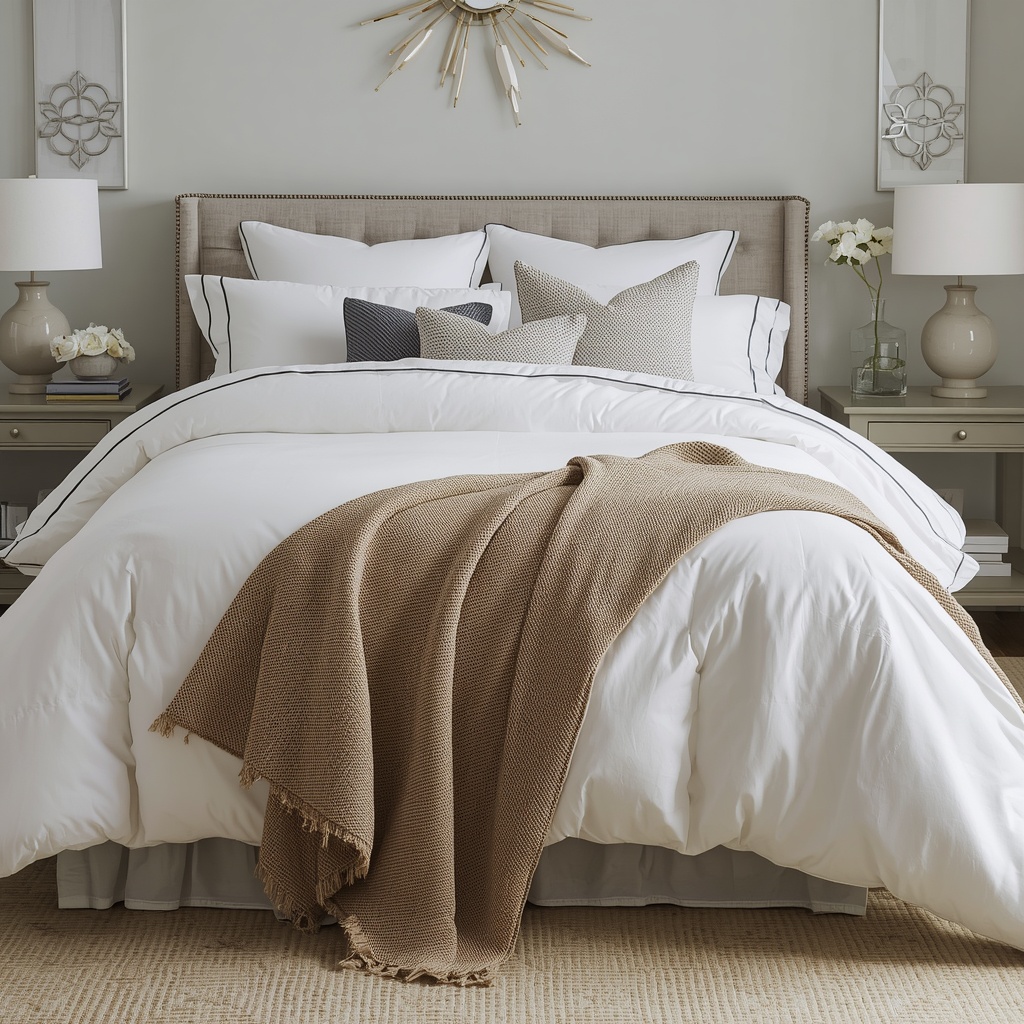
Texture is where you can add richness without adding clutter: a chunky knit throw, linen sheets, or a woven bench cushion bring tactile warmth that a small, color-quiet room needs. Stick to two or three textures max so the room still feels calm rather than busy.
Comfort-first textile checklist:
- One substantial duvet or quilt in a breathable natural fiber
- Two to three pillows, varying texture rather than just color
- A single textured throw blanket, draped (not folded into a square)
- A soft area rug underfoot for warmth and sound absorption
- Lined curtains for both insulation and a quieter, darker sleep environment
Mirror Placement Tricks to Visually Expand the Room
Mirrors remain one of the fastest, cheapest ways to make a small master bedroom feel significantly larger. Placed opposite a window, a mirror doubles the natural light bouncing around the room. Placed on a closet door or as a full wall panel, it can make a narrow room feel nearly twice as deep.
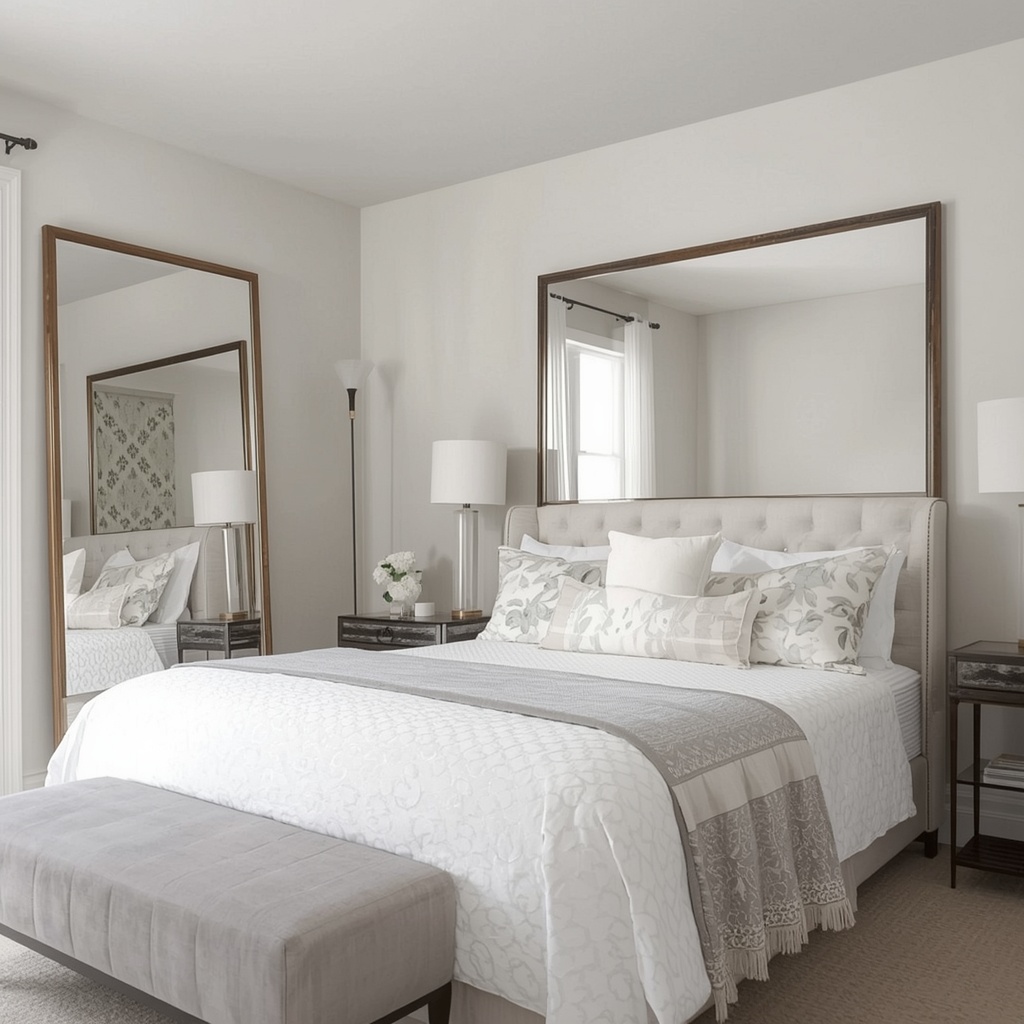
The trick is intention: a single oversized mirror leaning against a wall or hung above a dresser will do more for the room’s perceived size than several small decorative mirrors scattered around. Avoid positioning a mirror directly across from the bed if you’re sensitive to seeing your reflection while falling asleep — angle it toward a wall or window instead.
Window Treatments That Enhance Comfort and Privacy
In a small bedroom, heavy, floor-grazing drapery hung close to the ceiling (rather than just above the window frame) draws the eye upward and makes the whole wall feel taller. Choose curtains in a color close to your wall tone so they extend the wall line rather than interrupting it with a bold contrast.
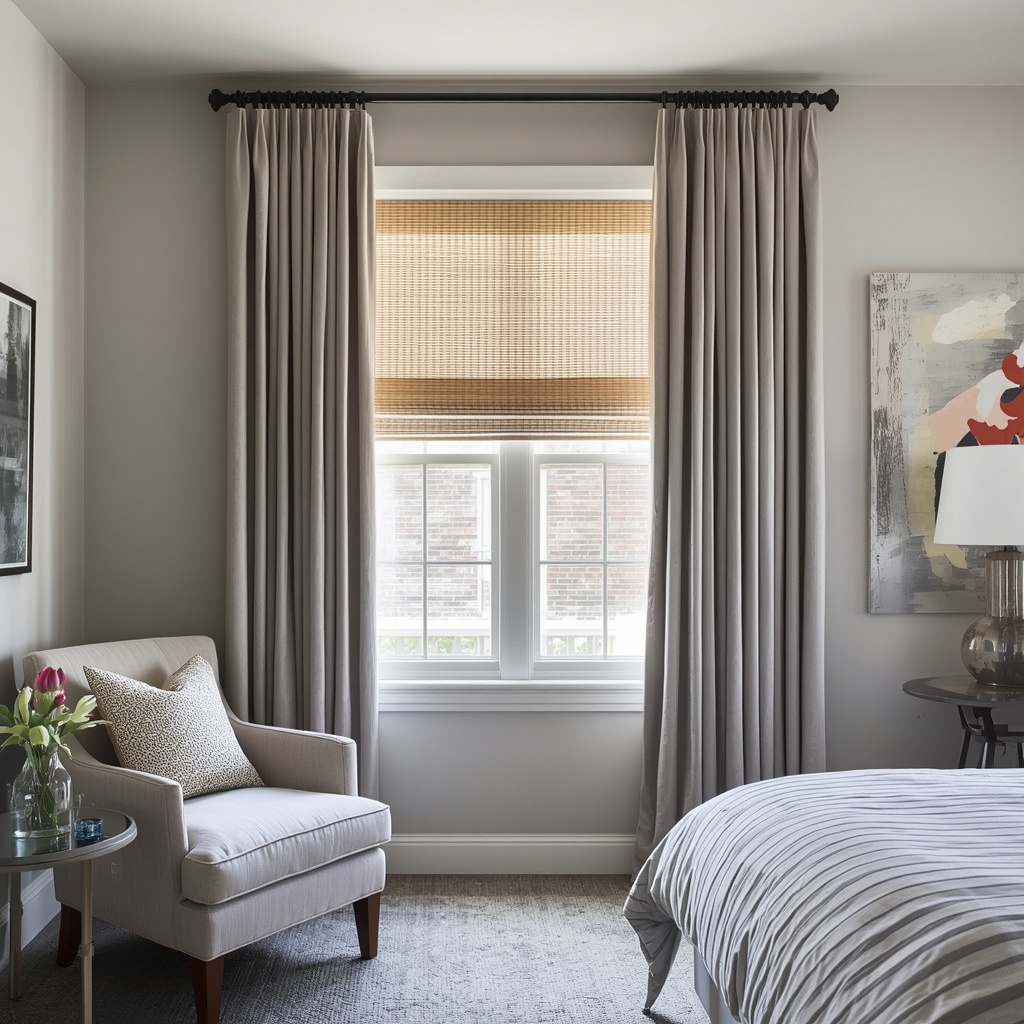
For both comfort and energy efficiency, blackout-lined curtains or cellular shades are worth the investment in a primary bedroom — they regulate temperature, block streetlight glare, and meaningfully improve sleep quality, which is really the entire point of a “comfortable” bedroom in the first place.
Flooring and Rugs for a Grounded, Cozy Feel
Hard flooring like wood or laminate can make a small bedroom feel cold and echoey if left bare. A large area rug — ideally one that extends a few inches beyond each side of the bed — grounds the furniture grouping, absorbs sound, and gives your feet a soft landing on cold mornings.
Choose a rug pattern with some texture or subtle pattern rather than a stark, busy design; in a small room, the floor is competing for visual attention with the walls and bedding, and a quieter rug keeps the whole space feeling unified rather than fragmented.
| Bedroom Size | Comfortable Bed Size | Recommended Rug Size |
|---|---|---|
| Under 120 sq ft | Twin XL or Full | 5′ x 7′ |
| 120–160 sq ft | Full or Queen | 6′ x 9′ |
| 160–200 sq ft | Queen | 8′ x 10′ |
| 200+ sq ft | Queen or King | 9′ x 12′ |
Sizing approximations based on standard mattress dimension guidelines and recommended walkway clearance.
Decluttering and Organization Tips That Actually Stick
No design strategy survives a room that’s drowning in stuff. The single highest-impact thing you can do for a small master bedroom is remove anything that doesn’t belong in a bedroom — exercise equipment, off-season clothing, paperwork, and the inevitable “catch-all chair” pile of clothes.
Once the room is edited down, give every remaining item an assigned home so clutter has nowhere to accumulate. A consistent nightly “reset” — putting clothes away, clearing nightstands, making the bed — takes under five minutes and keeps a small room from feeling chaotic the next morning.
A simple decluttering framework:
- Remove anything not related to sleep, dressing, or relaxation
- Sort remaining items into “daily,” “weekly,” and “seasonal” use
- Assign daily items to the most accessible storage (nightstand, top drawer)
- Box seasonal items and store them on high shelving or under the bed
- Repeat a 5-minute nightly reset to maintain the system
💡 Pro Tip: Underbed storage bins with low-profile lids are one of the most overlooked wins in a small master bedroom — they can absorb an entire off-season wardrobe without taking up a single inch of visible floor or closet space.
Frequently Asked Questions
What is considered a small master bedroom? Most designers consider anything under 150 to 160 square feet a small primary bedroom, though even rooms in the 160–200 square foot range often benefit from the same space-saving strategies.
Can a king bed fit in a small master bedroom? It can, but it’s tight — a king bed needs roughly 12 by 12 feet at minimum to maintain comfortable clearance. In smaller rooms, a queen or even a full bed paired with smart storage will usually feel more comfortable day-to-day.
What color makes a small bedroom look bigger? Soft, warm neutrals and tone-on-tone palettes (where walls, trim, and bedding sit close in value) tend to expand a small room visually far more than stark white or high-contrast color schemes.
Do small master bedrooms need a sitting area? No — and trying to force one in is one of the most common mistakes. A small primary bedroom should prioritize comfortable sleep and storage first; a sitting area is a luxury for rooms with square footage to spare.
Final Thoughts
A small master bedroom can absolutely deliver the comfort and calm of a much larger room — it just asks for more intention in every decision, from the paint sheen on the walls to the height of your bedside sconce. Start with one or two changes from this list (a tone-on-tone paint refresh and a decluttering pass are the fastest wins), live with them for a few weeks, and layer in the rest as budget and energy allow.
Comfort was never really about square footage. It’s about a room that feels calm the moment you walk in, functions without a daily fight against clutter, and gives you a genuinely good night’s sleep — which a small, well-designed master bedroom can deliver just as well as a sprawling one.