
If I had to pick the most underrated surface in the American home, it wouldn’t be the kitchen island or the entry console — it would be the nightstand. As an interior designer who has styled hundreds of bedrooms across the country, I can tell you that this small bedside table carries an outsized amount of visual and emotional weight. It’s the last thing you see before you close your eyes and the first thing you reach for when you wake up.
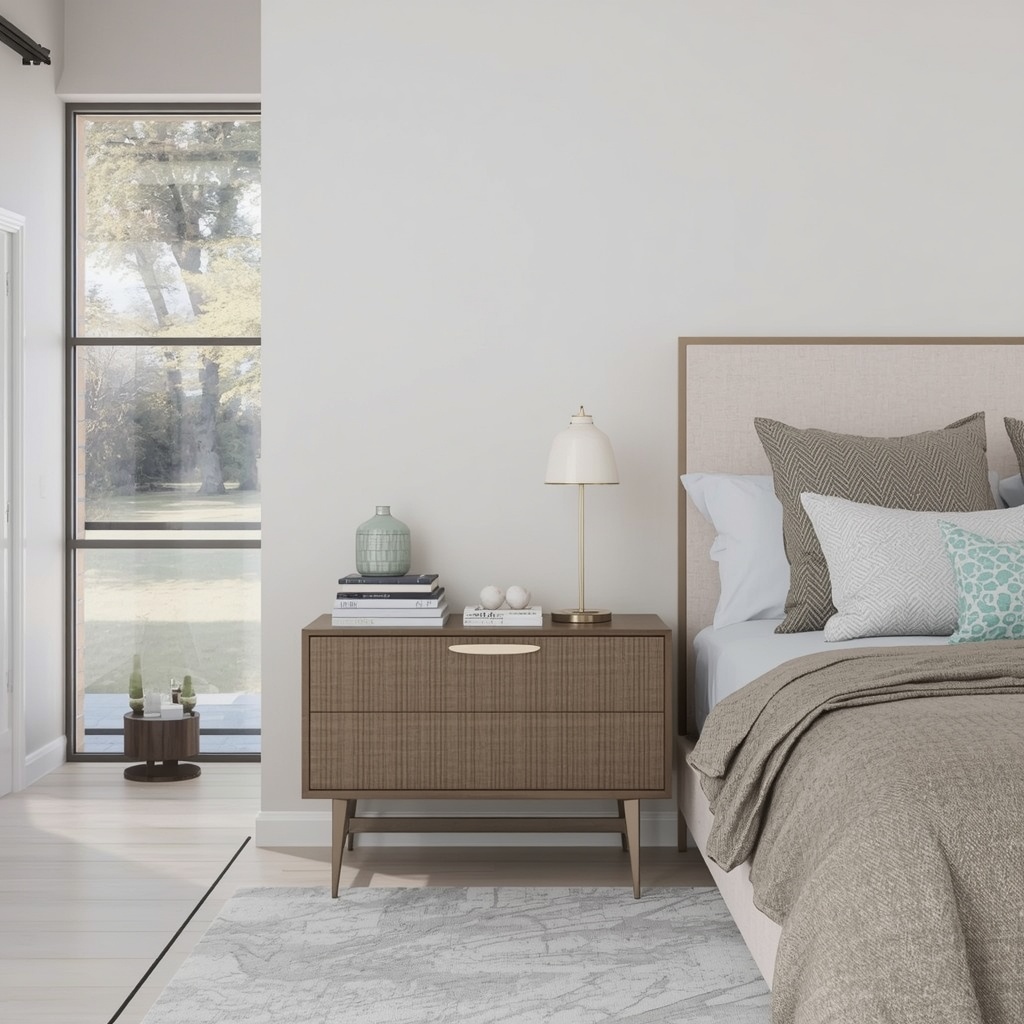
Yet most nightstands are either cluttered chaos zones (chargers, half-empty water glasses, a stack of unread mail) or sterile, hotel-room-style surfaces with nothing but a lamp. Neither extreme serves you. Great nightstand styling lives in the sweet spot between function and fashion — and that balance is exactly what this guide will help you find.
Why Your Nightstand Deserves More Attention Than You Think
Your bedside table isn’t just bedroom decor — it’s a daily-use station that supports your sleep routine, your morning ritual, and even your mental wind-down at night. A well-styled nightstand can lower bedtime stress, while a cluttered one can quietly raise it.
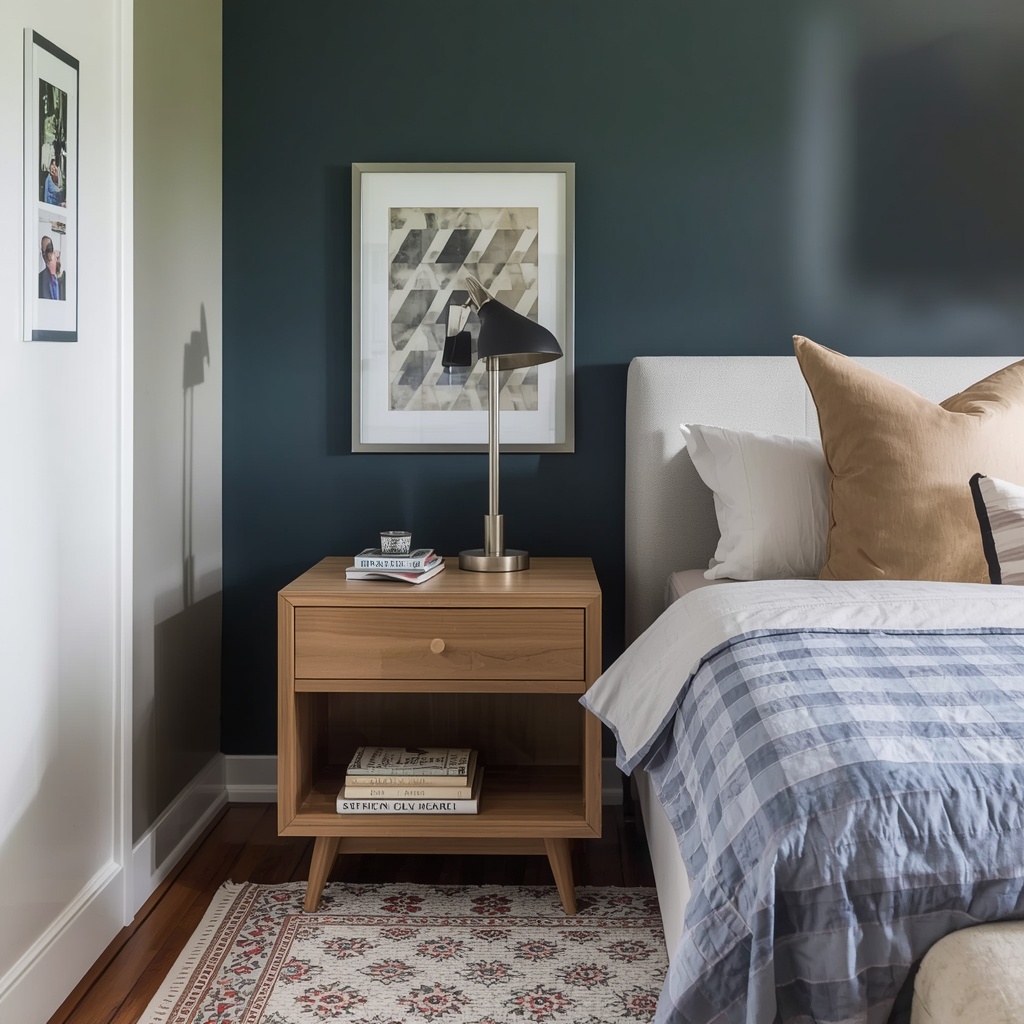
Designers often talk about “vignettes” in a room, and the nightstand is one of the most intimate vignettes you’ll ever create. Unlike a coffee table styled for guests, this one is styled for you. It should reflect your personal rhythm: are you a reader, a tea drinker, a skincare devotee, a meditator? Your nightstand top should answer that question at a glance.
“A nightstand is a self-portrait in miniature. What you choose to keep within arm’s reach of your pillow says more about your daily life than almost any other surface in the home.”
The Golden Rule of Nightstand Styling: Function First, Fashion Follows
Before we talk about styling tricks, let’s establish the foundation. In my design practice, I always tell clients to style a nightstand in this order:
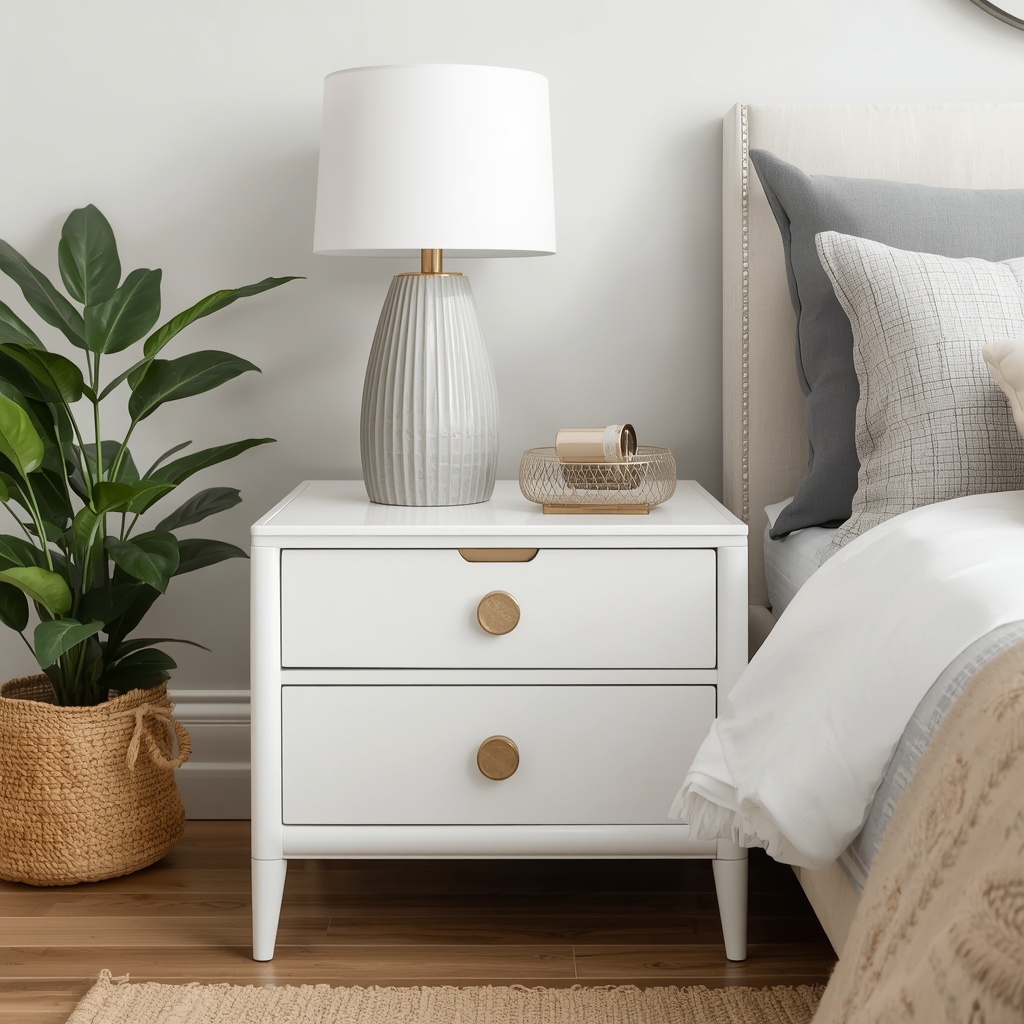
- Identify the must-have functional items (lamp, alarm clock, charging station)
- Add one or two comfort items (water carafe, current book, reading glasses)
- Layer in décor (a small tray, a candle, a single stem in a bud vase)
- Edit ruthlessly — if the surface feels crowded, something goes back in the drawer
This sequence matters because it prevents the most common nightstand mistake: decorating first and functioning never. A beautiful bedside table that doesn’t hold your phone charger or your glasses isn’t doing its job, no matter how good it looks on Pinterest.
Pro Tip: Use the “one hand” test. Everything on your nightstand should be reachable without sitting all the way up. If you have to lean or stretch for it, it’s either positioned wrong or doesn’t belong on top at all — move it to a drawer or a nearby shelf.
The Essential Nightstand Checklist
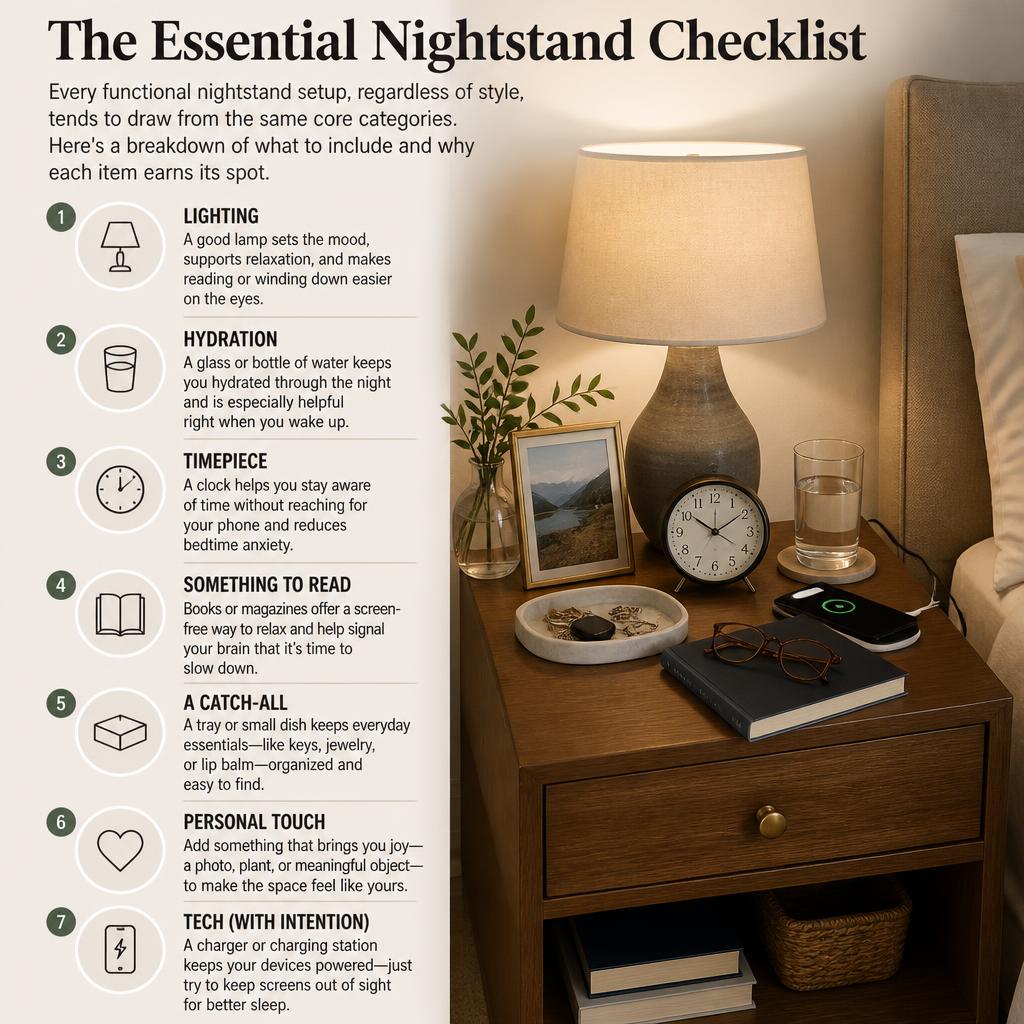
Every functional nightstand setup, regardless of style, tends to draw from the same core categories. Here’s a breakdown of what to include and why each item earns its spot.
| Category | Examples | Why It Matters |
|---|---|---|
| Lighting | Table lamp, touch lamp, smart bulb | Sets mood and supports nighttime reading |
| Timekeeping | Analog clock, sunrise alarm | Reduces blue-light phone use before bed |
| Hydration | Carafe and glass, insulated tumbler | Encourages better hydration habits |
| Reading material | One current book, e-reader | Curated, not a “to-read” pile |
| Personal care | Hand cream, lip balm, eye mask | Keeps nighttime routine within reach |
| Decorative accent | Candle, small vase, framed photo | Adds warmth and personality |
| Organization | Small tray, catch-all dish | Anchors small items and prevents clutter |
A nightstand that includes a representative from most of these categories — without piling on multiples of each — will feel both livable and styled, which is the entire goal.
The Lighting Layer: More Than Just a Lamp
Lighting is the single most important functional element on any nightstand, and it’s also one of the easiest to get wrong. Too bright, and it disrupts your wind-down routine; too dim, and you’ll strain your eyes reading that last chapter.
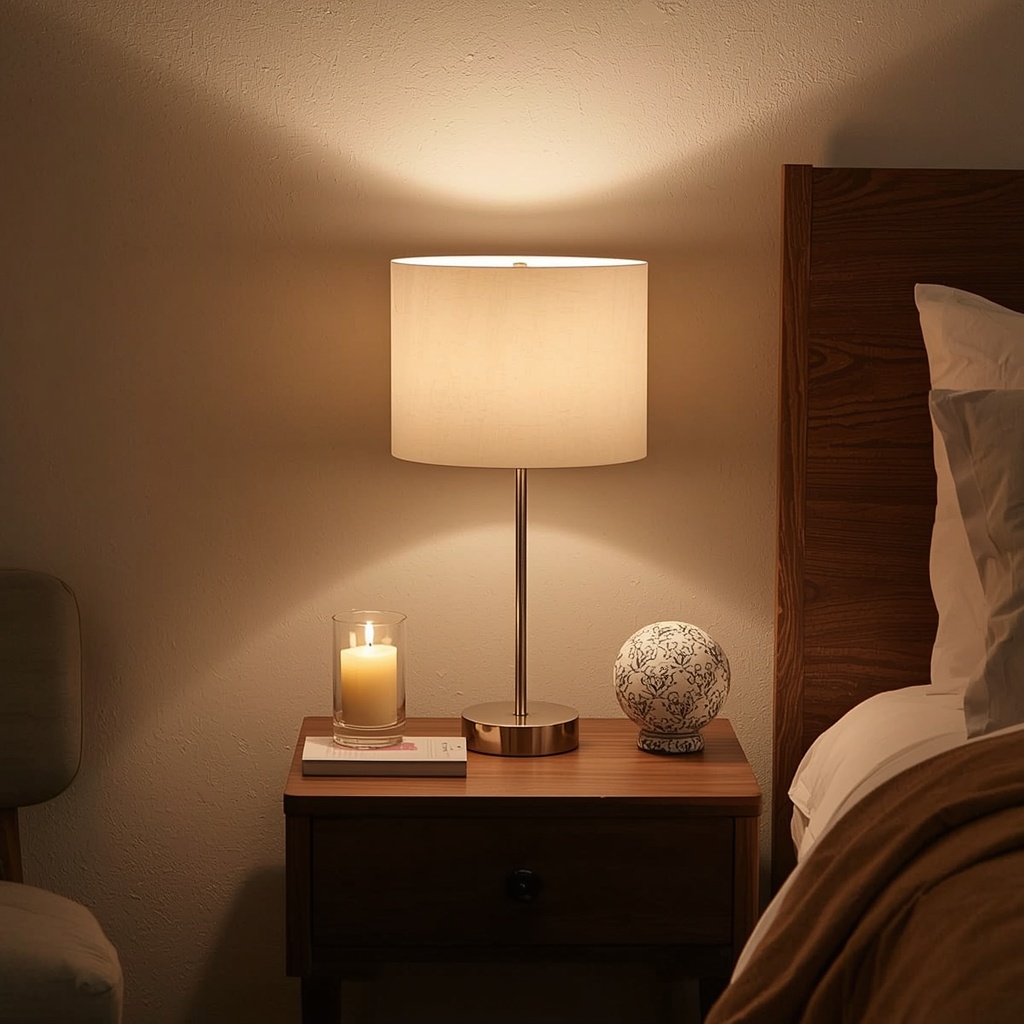
I recommend a layered approach: a primary lamp with a warm-toned bulb (look for 2700K–3000K) for ambient light, paired with a smaller accent light, like a flameless candle or a plug-in night-light, for those middle-of-the-night moments. According to sleep researchers, warm, dim lighting in the evening supports your body’s natural melatonin production, which is why harsh white light has no business on a nightstand.
For more on how light temperature affects sleep quality, the National Sleep Foundation offers helpful, research-backed guidance worth bookmarking.
Pro Tip: Choose a lamp base that’s proportionate to your nightstand — roughly one-third the width of the surface — and make sure the switch is easy to find in the dark. A touch-activated lamp or one with a large, low switch is a small upgrade that makes a real difference at 2 a.m.
Books, Beauty, and Personal Touches: The Decorative Layer
Once function is covered, it’s time to bring in personality. This is where nightstand styling shifts from purely practical to genuinely beautiful, and where most of the “fashion” half of our equation comes alive.
I always encourage clients to choose decorative items that double as conversation starters or daily comforts — a small framed photo, a single stem in a bud vase, a worn leather jewelry tray. These objects should feel curated, not collected; the goal is a tight edit, not a display case.
A few decorative additions that consistently work well:
- A scented or flameless candle in a coordinating finish to your lamp
- A small ceramic or brass catch-all dish for rings and earrings
- One meaningful framed photo, kept small in scale
- A short stack of two to three books, spines facing out
- A textured coaster for your water glass or mug
“Styling a nightstand is less about adding things and more about choosing the right things. Every object should either work for you or speak for you — ideally both.”
If candles are part of your nighttime ritual, the U.S. Consumer Product Safety Commission publishes useful safety guidance on candle placement near bedding and soft furnishings — worth a quick read before you light up each night.
What NOT to Keep on Your Nightstand
Knowing what to remove is just as important as knowing what to add. Over the years, I’ve developed a mental “no” list that I bring to almost every bedroom consultation:
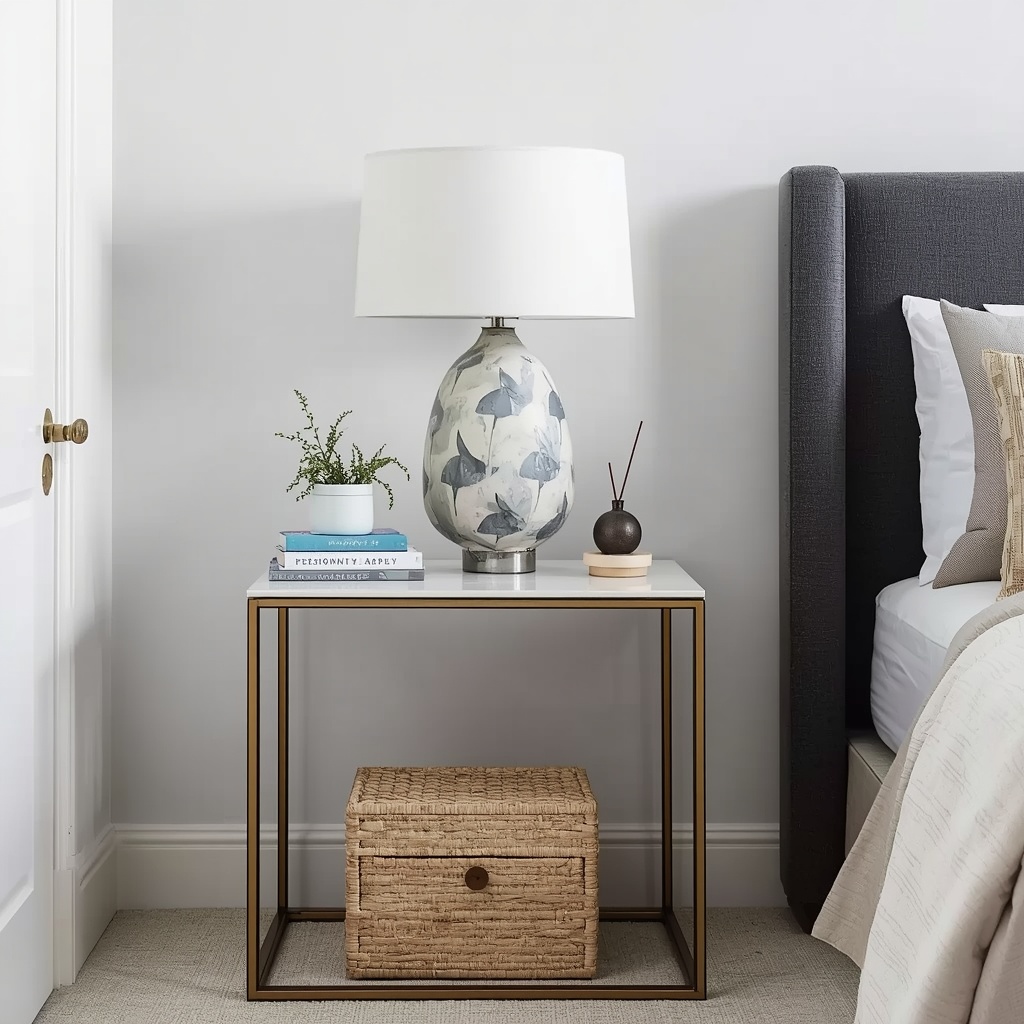
- Phone chargers tangled in a visible nest of cords — use a cord clip or a drawer grommet instead
- Stacks of unread mail or paperwork — the nightstand is not a filing cabinet
- Multiple half-empty water glasses — wash and reset nightly
- Medication bottles in plain view — store in a drawer or small lidded box for both tidiness and privacy
- Oversized decor that overwhelms the surface — scale matters more than people expect
- More than one “to-read” stack — limit it to your current book only
Removing even two or three of these instantly transforms a chaotic nightstand into a calm one, often without spending a single dollar.
Nightstand Styling by Bedroom Style
Function stays consistent, but the fashion layer should shift depending on your overall bedroom aesthetic. Here’s how I approach styling across the most requested design styles in American homes.
| Bedroom Style | Lamp Style | Decorative Accent | Color Palette |
|---|---|---|---|
| Modern Minimalist | Sculptural metal or matte ceramic | Single bud vase, no clutter | Black, white, warm gray |
| Coastal/Casual | Rattan or linen-shade lamp | Driftwood tray, woven basket | Sandy neutrals, soft blue |
| Traditional | Brass or porcelain table lamp | Framed family photo, books | Deep wood tones, cream |
| Boho | Textured ceramic or rattan lamp | Dried florals, beaded tray | Terracotta, mustard, cream |
| Scandinavian | Simple wood-base lamp | Single candle, ceramic dish | White, light wood, soft gray |
Notice that across every style, the underlying formula doesn’t change: one light source, one organizing vessel, one or two decorative accents, and a curated edit of personal items. Only the materials and color story shift to match the room.
The Rule of Three (and Other Styling Tricks Designers Swear By)
Professional stylists rely on a handful of repeatable tricks to make any surface — nightstands included — look intentional rather than accidental. Here are the ones I use most often with clients.
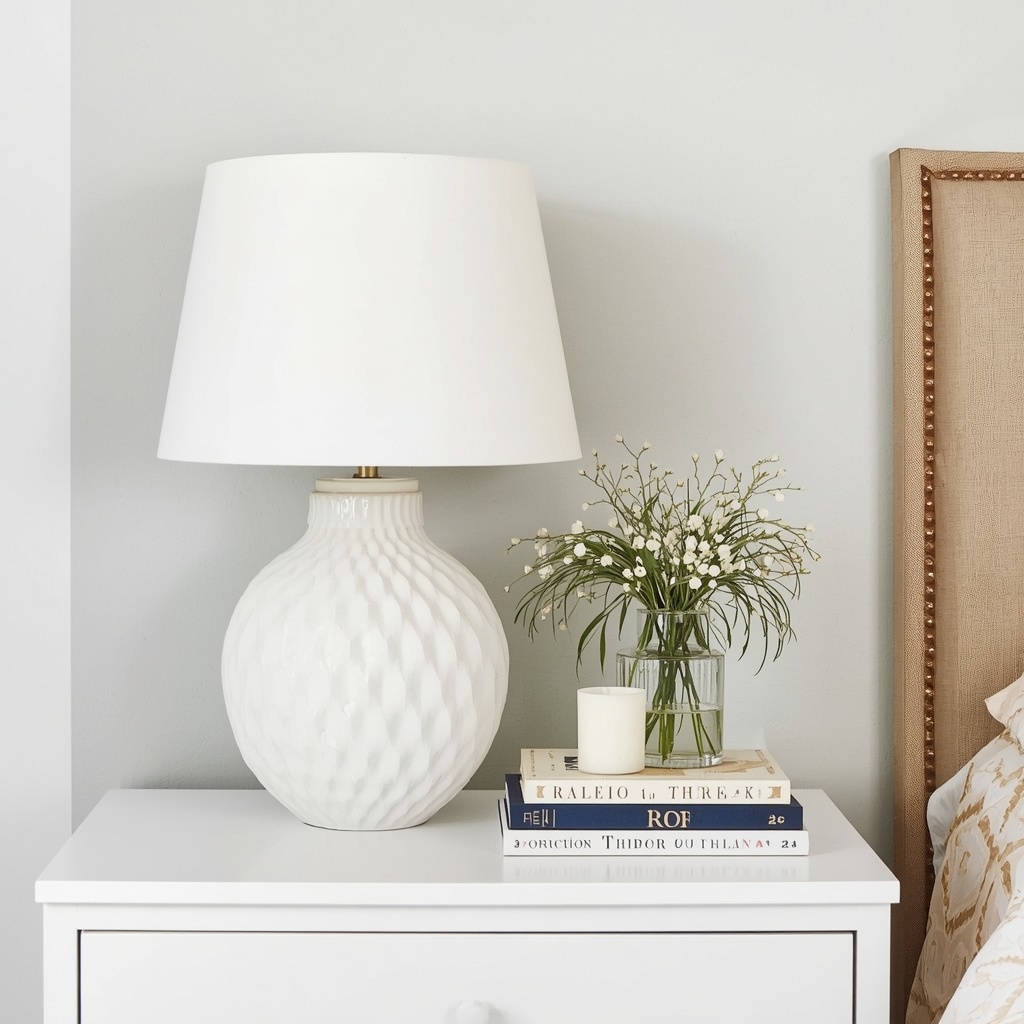
The Rule of Three: Group items in odd numbers, typically three, for natural visual balance. A lamp, a small stack of books, and a candle create a more pleasing arrangement than two items alone or four crowded together.
Height Variation: Vary the height of your grouped objects. If your lamp is tall, pair it with something low and wide, like a tray or a short stack of books, rather than another tall item.
Pro Tip: Place a small tray beneath your smaller decorative items (jewelry dish, candle, hand cream). It instantly visually “contains” the grouping, making even a busy nightstand look styled rather than cluttered — and it makes nightly dusting much faster.
Nightstand Organization for Small Spaces
Not every bedroom has room for a full-sized bedside table, and small nightstands require even more editing discipline. If your surface is 12 inches wide or less, prioritize ruthlessly: a slim lamp, your phone or e-reader, and a single small dish for jewelry is often all you can comfortably fit.
Wall-mounted shelves or floating nightstands are a smart workaround for tight bedrooms, since they free up floor space while still giving you a surface for lighting and essentials. Pair a narrow floating shelf with a slim, vertical lamp to maximize usable surface area without crowding the wall.
Pro Tip: When square footage is tight, let the drawer (if your nightstand has one) do the heavy lifting. Store chargers, lip balm, and bedtime supplements inside, and reserve the top surface for just the lamp, your current book, and one decorative accent.
Seasonal and Easy Refresh Tips
A nightstand doesn’t need a full overhaul to feel fresh — small seasonal swaps keep the space feeling current without much effort or cost.
In cooler months, swap a bud vase for a textured ceramic dish or a wood-handled candle, leaning into cozy, tactile materials. In warmer months, lighten the palette with a glass vase and a single fresh stem, and swap heavier candles for lighter, citrus-forward scents.
A few easy refresh ideas to keep in your back pocket:
- Rotate your “current read” stack monthly so it never feels stagnant
- Switch out a single decorative object (vase, dish, or frame) seasonally
- Refresh linens and pillowcases to coordinate loosely with your nightstand accent color
- Replace a worn lampshade — it’s one of the most affordable, highest-impact swaps in bedroom decor
Bringing It All Together
Great nightstand styling isn’t about following a rigid formula; it’s about understanding the underlying structure — function first, fashion second — and then making it your own. Whether your bedroom leans modern minimalist or richly traditional, the most successful bedside tables I’ve styled all share the same DNA: thoughtful lighting, a tight edit of personal essentials, and one or two decorative touches that feel genuinely yours.
Start by clearing your nightstand completely. Then rebuild it one category at a time — lighting, hydration, reading material, personal care, and finally, decor. You’ll be surprised how quickly a few small, intentional choices can transform the most personal surface in your home.
For more bedroom styling guidance, explore our related guides on layered bedroom lighting design and choosing the right area rug for your bedroom.
Quick-Reference Recap:
- Keep only what passes the “one hand” reach test
- Layer warm lighting for better sleep support
- Use the Rule of Three for visual balance
- Edit decor to one or two meaningful pieces
- Store chargers, meds, and clutter in a drawer, not on top