
Tailored Tranquility in Night-Time Spaces
By a Certified Interior Designer · Bedrooms & Sleep Sanctuaries
Your bedroom is the one room in your home that belongs entirely to you. Yet so many American homes treat it as an afterthought — a leftover space after the living room gets the good rug and the kitchen gets the renovations. What if your night-time space was intentionally designed to work for your nervous system, not just your aesthetic? That’s the heart of tailored tranquility, and it’s changing the way we think about sleep sanctuaries from coast to coast.

Tailored tranquility is more than a design trend. It’s a philosophy rooted in circadian rhythm support, sensory comfort design, and deeply personal expression — all layered together to create a bedroom environment that feels uniquely, unmistakably yours. Whether you live in a studio apartment in Chicago or a craftsman home in Portland, the principles apply the same way.
What Is a Tailored Night-Time Space — and Why Does It Matter?
A tailored night-time space is a bedroom designed around your specific sleep habits, sensory preferences, and lifestyle. It’s the opposite of a generic “hotel aesthetic” — though there’s nothing wrong with clean lines and neutral palettes. The key word is intentional. Every material, every light source, every layer of bedding is chosen with purpose.
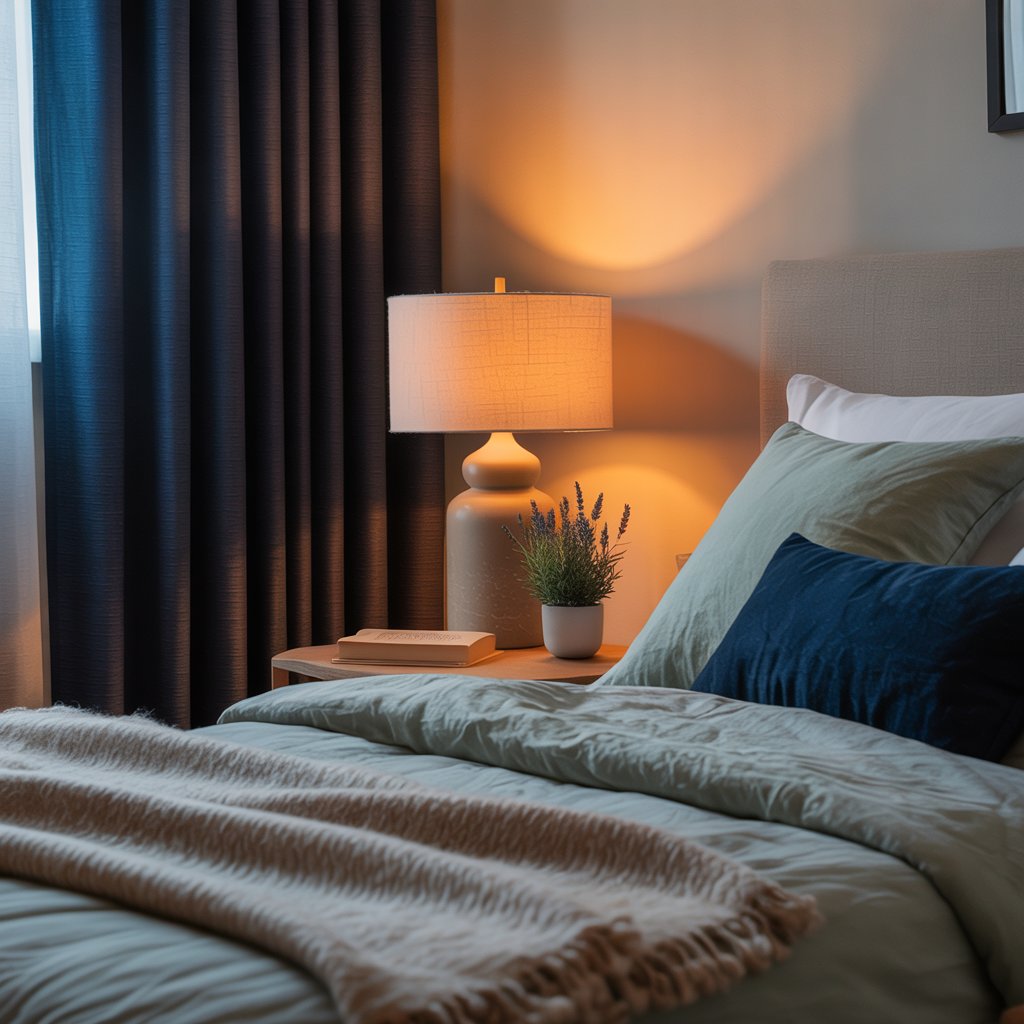
Research in environmental psychology consistently shows that our surroundings directly influence our cortisol levels, melatonin production, and overall sleep quality. According to the Sleep Foundation, the bedroom environment — including lighting, temperature, noise, and visual clutter — is one of the most powerful determinants of sleep onset and sleep duration. In other words, good bedroom design isn’t vanity. It’s healthcare.
“The bedroom should be the most considered room in your home — it’s where your body does its most important work. Design it accordingly.”— A guiding principle of restorative interior design
For US homeowners and renters alike, investing in a thoughtfully curated sleep sanctuary pays dividends not just in rest, but in daytime productivity, mood regulation, and even relationship health. The bedroom is where we’re most vulnerable, most ourselves. It deserves the most care.
The Layers of Tranquil Design: A Framework for Your Bedroom
Think of a tailored night-time space in layers — each one building on the last to create a cohesive, calming environment. Experienced interior designers use this layered approach to ensure nothing feels disjointed or out of place. The goal is a room that feels like it exhales.
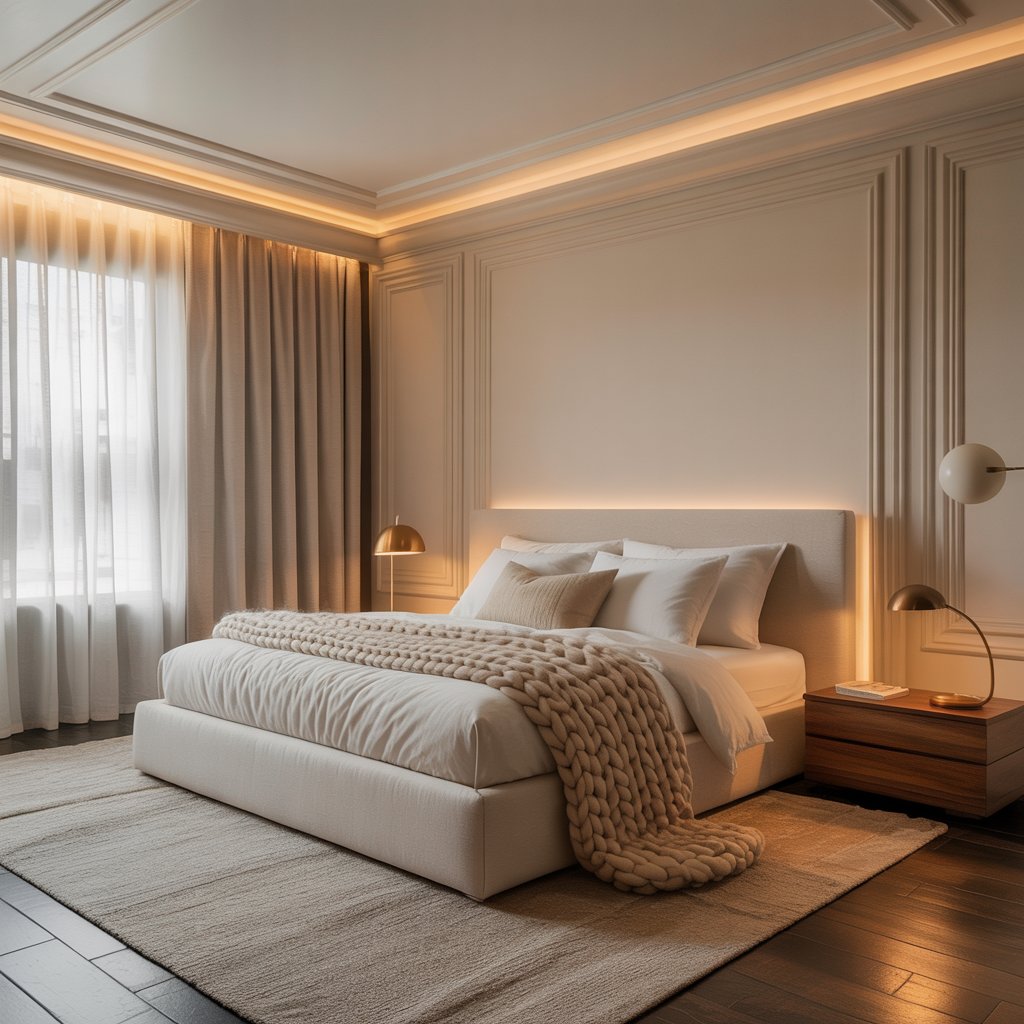
The four primary layers are: architectural foundation (walls, flooring, ceiling treatment), functional furniture placement and scale, textile and material softness, and finally, lighting and atmospheric control. Each layer addresses a different sensory channel — visual, tactile, olfactory, and acoustic — and together they create what designers call a “full-body welcome” the moment you walk in.
| Design Layer | Sensory Channel | Key Elements | Tranquility Impact |
|---|---|---|---|
| Architectural Foundation | Visual | Wall color, flooring, ceiling height treatment | Sets psychological baseline; calm colors lower heart rate |
| Furniture & Layout | Spatial | Bed placement, flow paths, scale balance | Reduces subconscious tension from poor traffic flow |
| Textiles & Materials | Tactile | Bedding, rugs, window treatments, upholstery | Tactile warmth signals safety to the nervous system |
| Lighting & Atmosphere | Circadian | Layered lighting, dimmer controls, blackout solutions | Directly regulates melatonin production and sleep onset |
Circadian Lighting: The Single Biggest Game-Changer in Bedroom Design
If you take nothing else from this article, take this: lighting is the most powerful design lever in your bedroom. Not your paint color. Not your throw pillows. Lighting. Human biology is calibrated to respond to changes in light color and intensity across a 24-hour cycle, and most American bedrooms are actively working against that biology with overhead LED fixtures set to 4000K cool white — essentially telling your brain it’s noon when it’s 10 PM.
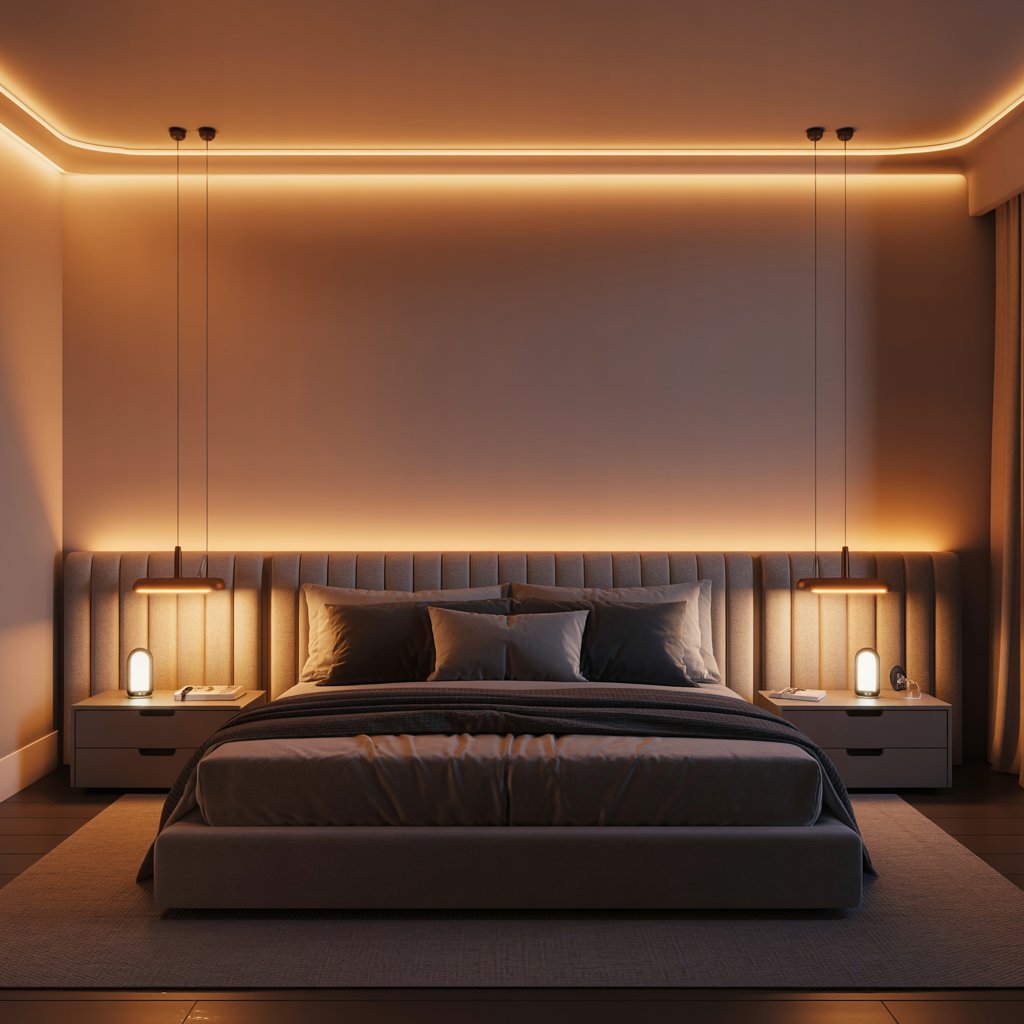
Tailored night-time spaces use a concept called layered circadian lighting — multiple light sources at different heights and color temperatures that can be adjusted throughout the evening. As the sun sets, your bedroom lighting should shift from warm-neutral (2700K) to deep amber (2200K or lower), dimming progressively to signal the brain that sleep is approaching. Smart bulbs from brands like Philips Hue or Lutron make this automation effortless.
Pro Tip
Never rely on a single overhead fixture as your only bedroom light source. Instead, plan for at least three lighting zones: ambient (overhead or cove lighting on a dimmer), task (bedside reading lamps at 18–20 inches above your mattress), and accent (floor lamp, wall sconces, or LED strip behind a headboard). This tri-zone approach lets you choreograph the room’s mood from energizing to deeply restful within minutes — no renovation required.
For bedrooms without smart home infrastructure, simple plug-in dimmers and warm-toned bulbs achieve 80% of the effect at a fraction of the cost. The rule of thumb: no light source in your bedroom should exceed 2700K after 7 PM. Pair that with blackout curtains or cellular shades for light control from the outside, and your circadian environment is transformed.
Color Psychology for Sleep Sanctuaries: Choosing Your Palette with Purpose
Color affects us at a neurological level — not just aesthetically. For night-time spaces, the research consistently points toward muted, low-saturation hues in the cool-to-neutral spectrum: soft sage greens, warm taupes, dusty blues, creamy off-whites, and chalky clay tones. These colors visually “recede,” making a room feel larger and quieter at the same time.
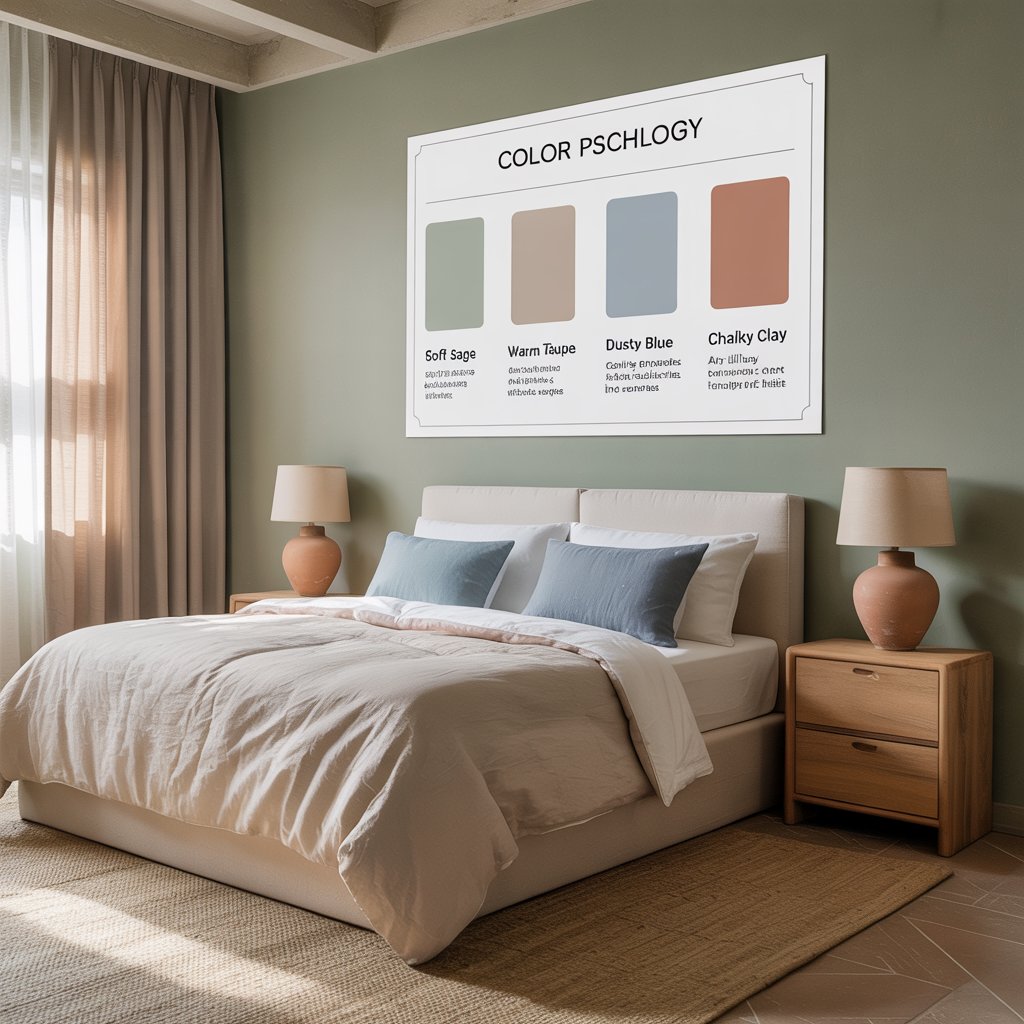
High-saturation colors — bright white walls, bold navy, deep jewel tones — aren’t automatically off-limits in bedroom design. But they require careful handling. A deep forest green on one accent wall, paired with warm natural wood tones and linen bedding, can create a deeply cocooning effect. The mistake most homeowners make is pairing bold color with cold finishes and bright lighting, which creates visual stimulation rather than rest.
| Color Family | Psychological Effect | Best Used As | Pair With |
|---|---|---|---|
| Soft Sage / Eucalyptus | Grounding, restorative | Main wall color or bedding | Raw linen, warm oak, terracotta accents |
| Warm Taupe / Greige | Neutral calm, timeless | Walls and ceiling | Ivory, cream, aged brass fixtures |
| Dusty Blue / Slate | Slows heart rate, peaceful | Accent wall, upholstered headboard | Natural white oak, warm wool textiles |
| Chalky Clay / Terracotta | Warm, womb-like enclosure | Ceiling, accent pillows, artwork | Cream linen, jute rug, muted olive |
| Deep Forest / Moody Olive | Cocooning, immersive | Single accent wall | Warm brass, ivory bedding, rattan |
Textile Intelligence: Building Softness That Speaks to Your Body
In sensory terms, your bedroom textiles are the most-touched surfaces in your home — literally. Your bedding, rug, window treatments, and upholstered headboard are in constant tactile conversation with your skin and nervous system. Selecting them based purely on aesthetics is a missed opportunity. Tailored tranquility means choosing materials that feel as intentional as they look.
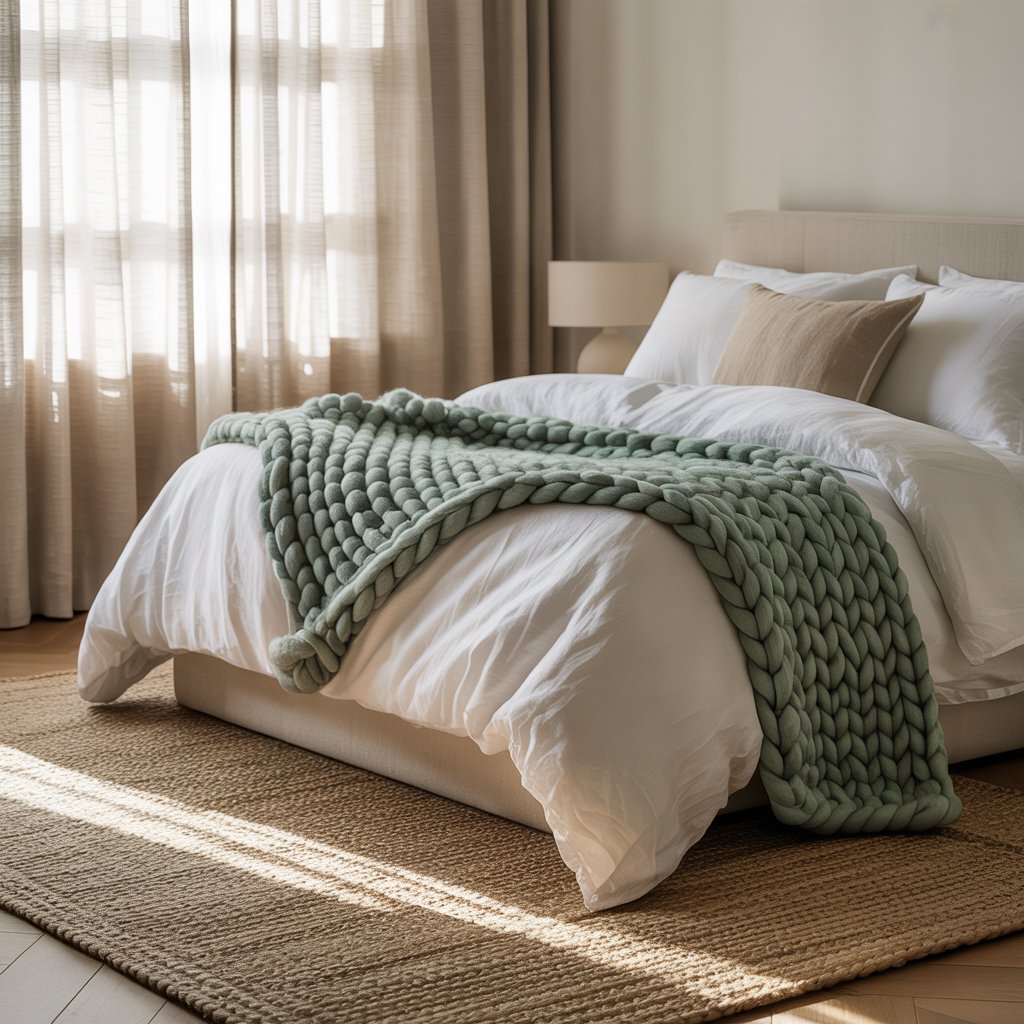
For bedding, the holy trinity of sleep-sanctuary textiles is 100% linen (temperature-regulating and gets softer with every wash), long-staple cotton percale (crisp and breathable for warmer sleepers), and Tencel/lyocell (silky-smooth and excellent for those prone to night sweats). Wool blankets and chunky-knit throws add weight and tactile warmth — which activates the same neurological response as a weighted blanket, grounding the body for deeper rest.
“Bedding is the most underestimated investment in bedroom design. Clients spend thousands on furniture and twenty dollars on sheets — then wonder why they don’t feel rested. The math doesn’t add up.”— Common wisdom among sleep-focused interior designers
Rugs deserve special mention in bedroom design. A properly sized area rug — extending at least 18 to 24 inches beyond the sides and foot of the bed — creates visual warmth that grounds the entire room composition. It also provides a soft, warm landing for bare feet in the morning, which is one of those small sensory details that makes a bedroom feel cared for. Jute, wool, and cotton flatweave all work beautifully in a tranquil bedroom palette.
Furniture Placement and Spatial Flow: The Feng Shui of Function
You don’t have to subscribe to any particular philosophy of space to appreciate that furniture placement has a profound effect on how a bedroom feels. The most common mistake in American bedrooms — regardless of size — is pushing all furniture to the perimeter walls. This creates a “storage unit” feeling where the center of the room is empty and cold, and every piece feels disconnected.
Thoughtful furniture placement starts with the bed: ideally positioned against a solid wall with a clear sightline to the door (not directly in the path of the door). This arrangement activates what designers call the “command position” — a subconscious sense of security and control that reduces ambient anxiety during sleep. Secondary furniture like nightstands, dressers, and reading chairs should be scaled to the room and the bed, not chosen independently.
Essential Elements for a Tailored Night-Time Space
- Bed and headboard: Upholstered headboards in linen or velvet add acoustic softness and visual weight — they anchor the room.
- Nightstands at correct height: Should sit level with or 2–3 inches above your mattress surface. Lamp height matters as much as nightstand height.
- A reading chair or chaise: Creates a dedicated wind-down zone separate from the bed — powerful for training your brain to associate the bed only with sleep.
- Adequate closed storage: Visual clutter activates the same part of the brain as an unfinished task. Wardrobes or built-ins with closed fronts dramatically reduce subconscious tension.
- A scent anchor: A consistent, subtle scent — lavender, cedarwood, or sandalwood via a reed diffuser — creates a powerful olfactory cue for sleep over time.
- Sound management: Heavy drapes, an upholstered headboard, and a wool rug work together to reduce echo and ambient noise — an often-overlooked acoustic design tool.
- Natural materials: Wood, linen, cotton, stone, and rattan ground the space visually and biologically, connecting us to the natural world in a way synthetic materials cannot.
- Intentional negative space: What you leave out is as important as what you put in. Resist the urge to fill every surface.
Technology in the Bedroom: What Stays, What Goes
Let’s address the elephant — or rather, the glowing rectangle — in the room. Most sleep researchers and interior designers agree that screens are among the most disruptive elements in modern bedroom design. Blue light from phones, tablets, and TVs suppresses melatonin production, while the psychological engagement of social media and streaming keeps the prefrontal cortex active exactly when it needs to wind down. The CDC’s sleep research consistently links screen use before bed to delayed sleep onset and reduced sleep quality.
That said, “no technology” is an unrealistic standard for most American households. The goal of tailored design is harm reduction paired with intentional integration. Televisions, when they must be present, benefit from being concealed inside a media cabinet or armoire so the screen isn’t the dominant visual element when off. Phones can be charged across the room — a detail that sounds minor but statistically improves sleep by reducing middle-of-night checking by over 60%, according to behavioral sleep medicine research.
Pro Tip
If a TV in the bedroom is non-negotiable for your household, mount it at the foot of the bed (not the side wall — side-wall placement forces neck rotation that causes muscle tension). Choose a frame TV option like the Samsung Frame TV, which displays art when not in use and blends into your decor instead of dominating it. Add a fabric panel or sliding barn door option so you can conceal the screen entirely at bedtime.
Small Bedroom, Big Tranquility: Adapting These Principles to Any Space
One of the most common questions I hear from clients is: “These ideas are beautiful, but my bedroom is 10 by 12 feet — what can I actually do?” The answer is: almost everything. Tailored tranquility is a design philosophy, not a square footage requirement. In fact, smaller bedrooms often achieve a deeper sense of enclosure and intimacy that larger primary suites have to work harder to create.
In a compact bedroom, the principles of sensory layering, circadian lighting, and intentional material selection apply exactly the same way — just with more careful editing. A platform bed with built-in storage eliminates the need for a bulky dresser. Wall-mounted sconces free up nightstand surface area. A single upholstered accent chair in a corner, paired with a floor lamp, creates that coveted wind-down zone without consuming significant square footage. Mirrors, placed on a side wall rather than directly facing the bed, amplify natural light and expand the perception of space without the nervous-system disruption of sleeping “in front of” your own reflection.
Building Your Personal Tranquility Blueprint
The most important step in designing a tailored night-time space is the one most people skip: auditing your current bedroom with honesty. Walk in right now and ask yourself — what does this room ask of me? Does it ask me to relax, or does it ask me to deal with the pile of laundry on the chair, the too-bright overhead light, and the stack of books on the nightstand that I’ll never finish?
Start your personal tranquility blueprint with three simple priorities: choose one thing to remove (clutter, a piece of furniture that doesn’t serve you, harsh lighting), one thing to soften (add a rug, swap out bulbs, introduce a textile layer), and one thing to personalize (a piece of art that genuinely moves you, a plant, a candle in a scent you love). Transformation doesn’t require a renovation — it requires intentionality, applied consistently over time.
- Week 1: Swap overhead lighting for warm-toned bulbs (2700K max) with a dimmer switch.
- Week 2: Clear all surfaces except nightstand essentials — lamp, one book, water glass.
- Week 3: Layer bedding with one additional textile (a linen duvet, a weighted throw).
- Week 4: Introduce a consistent scent element and move your phone charger out of arm’s reach.
- Month 2: Evaluate furniture placement; try moving the bed if possible for a fresh sightline.
- Month 3: Invest in one quality piece — a reading chair, a better rug, or a new headboard — that elevates the entire room.
Your bedroom is a design investment in yourself. Tailored tranquility isn’t about perfection — it’s about creating an environment that genuinely supports the rest your