
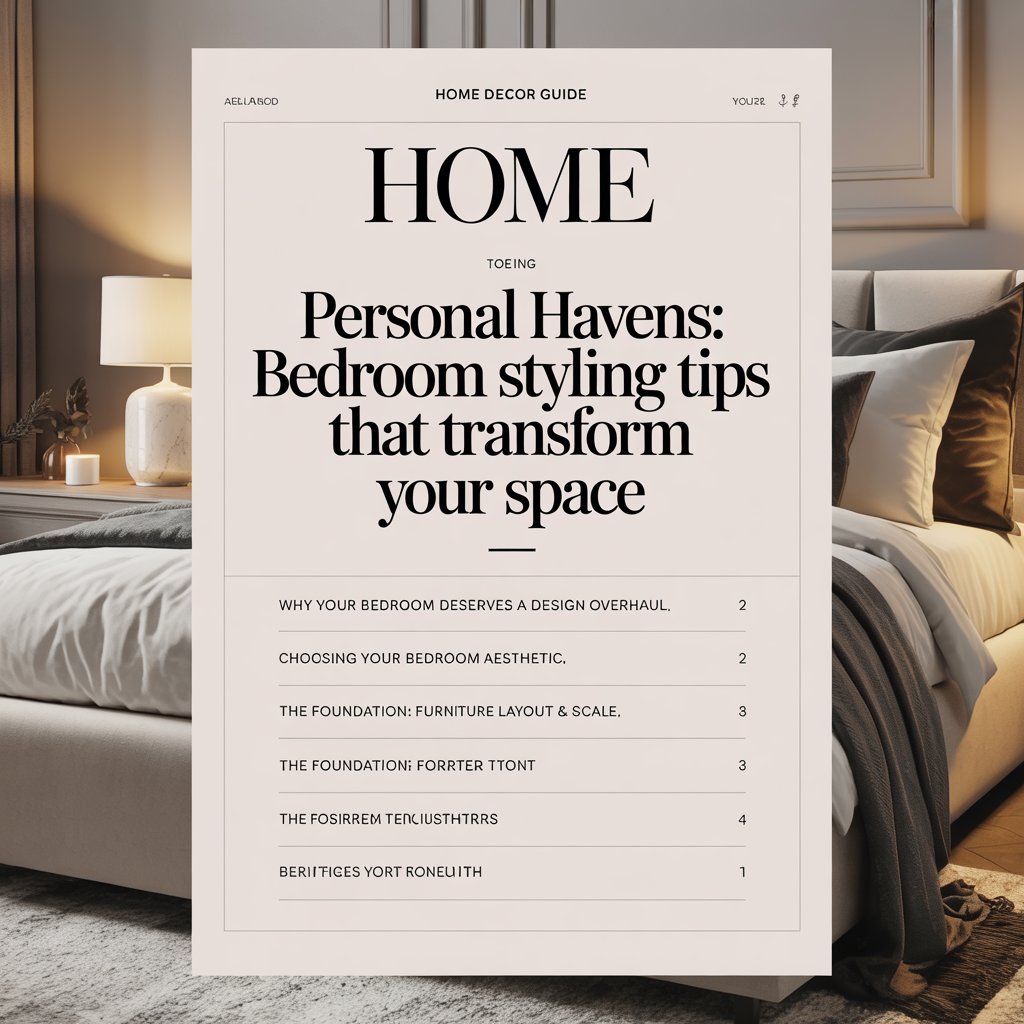
Personal Havens:
Bedroom Styling Tips
That Transform Your Space
Your bedroom is more than a room — it’s a sanctuary. Whether you’re starting from scratch or refreshing a tired space, these expert-backed tips will help you design the restful, beautiful retreat you deserve.
Read By an Interior Design Specialist
Table of Contents
- Why Your Bedroom Deserves a Design Overhaul
- Choosing Your Bedroom Aesthetic
- The Foundation: Furniture Layout & Scale
- Color Psychology for Better Sleep & Style
- Layering Textiles for Luxurious Comfort
- Lighting Design: The Secret to Ambiance
- Storage Solutions That Look Beautiful
- Styling Your Nightstand Like a Pro
- Budget Breakdown: What to Splurge vs. Save
- Final Touches: Scent, Sound & Personalization
Why Your Bedroom Deserves a Design Overhaul
According to the National Sleep Foundation, adults spend roughly one-third of their lives in their bedroom — yet it’s often the last room in the home to receive thoughtful design attention. We invest in living rooms for guests and kitchens for gatherings, but the space where we recharge, dream, and begin every morning is frequently overlooked. That ends today.

A well-designed bedroom isn’t about having an expensive bed frame or a designer duvet. It’s about intentionality — crafting an environment that signals safety, rest, and personal identity to your brain. Research in environmental psychology consistently shows that our physical surroundings directly influence cortisol levels, sleep quality, and morning mood. By applying key principles of bedroom interior design — scale, color theory, layered lighting, and tactile comfort — you can transform even the smallest room into a deeply personal haven.
“The bedroom should be a place that feels like a hug — warm, familiar, and entirely your own.”— Nate Berkus, American Interior Designer
Choosing Your Bedroom Aesthetic
Before buying a single throw pillow, define your bedroom style. Your aesthetic is your design compass — it determines every color, texture, and furniture choice that follows. The most popular bedroom design styles in American homes right now range from cozy maximalism to serene minimalism. Knowing where you land saves you from costly impulse purchases and creates a space that feels cohesive rather than chaotic.
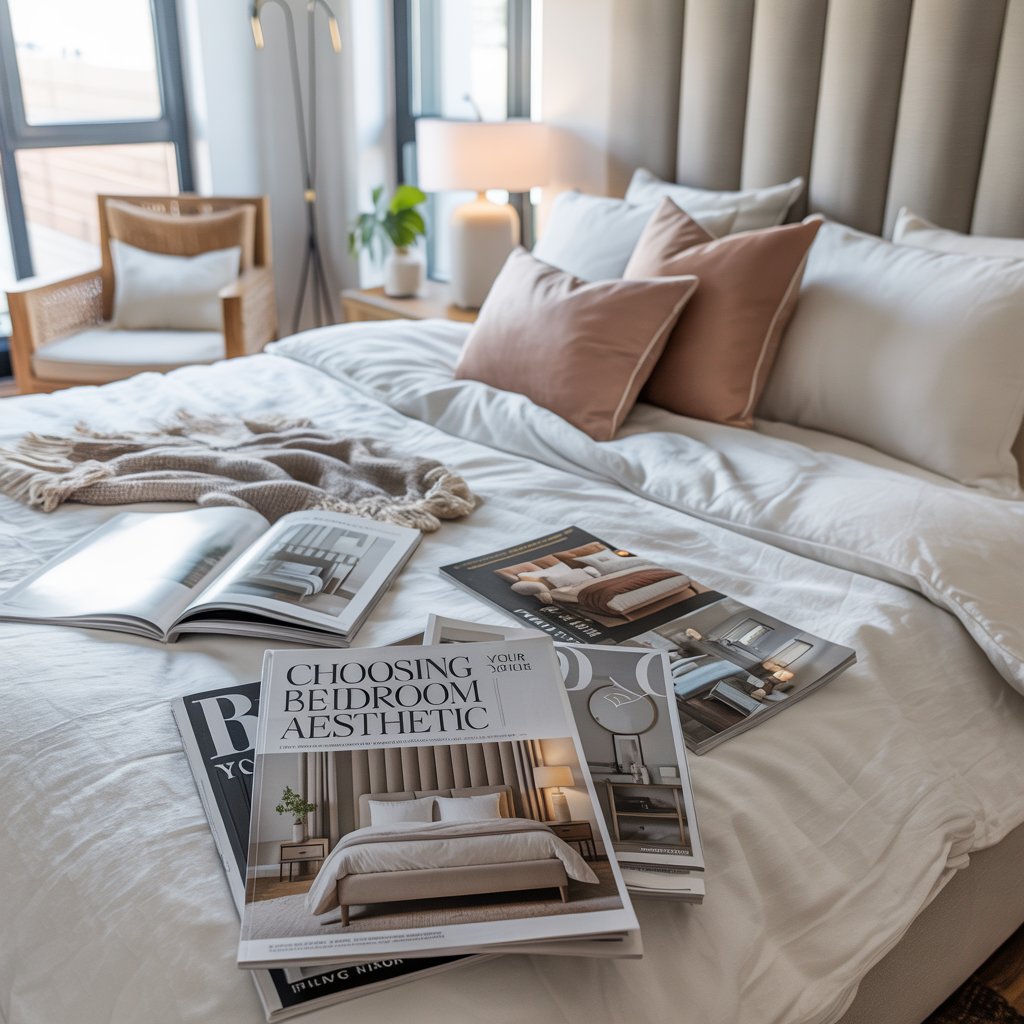
Take a moment to explore mood boards on Pinterest or Houzz before committing to a direction. Save at least 20 images that genuinely excite you, then look for patterns: Do you gravitate toward warm neutrals and linen textures? Or does your eye go to bold jewel tones and dramatic headboards? Your instinct is your best design tool — trust it.
Popular Bedroom Styles Right Now
Warm Coastal Modern Minimalist Biophilic / Nature-Inspired Moody Maximalist Japandi Mid-Century Modern Cottagecore Hollywood Regency
The Foundation: Furniture Layout & Scale
The biggest mistake homeowners make in bedroom furniture arrangement is pushing everything against the walls. This creates dead space in the center and makes a room feel like a motel rather than a curated retreat. The bed should be your anchor — ideally centered on the main wall with equal breathing room on both sides. If space allows, aim for at least 24 inches of clearance on each side of the bed for comfortable movement and symmetrical nightstand placement.
Scale is equally critical. An oversized California King in a 10×10 room will feel suffocating, while a full-size bed in a sprawling master suite looks abandoned. Before ordering furniture, tape out dimensions on your floor using painter’s tape. Many professional interior designers use this low-tech trick religiously — it gives you a truthful preview of how a piece will live in your space before a single dollar is spent.
Pro Tip
Always leave at least 30–36 inches of clearance at the foot of the bed if it faces a dresser or TV console. This prevents the room from feeling cramped and allows doors to swing freely. Use a free tool like Roomstyler 3D Planner to test layouts before you move a single piece of furniture.
Color Psychology for Better Sleep & Style
Color is perhaps the most powerful and most affordable design tool at your disposal. Bedroom color palettes directly influence your nervous system — certain hues lower blood pressure and heart rate, while others stimulate alertness. As an interior designer, I always start with the feeling I want a bedroom to evoke, then work backward to the palette that delivers it. For most people, the goal is a restful, welcoming space with a distinct personal identity.
Soft, muted tones tend to perform best for sleep quality. Think dusty sage, warm greige, pale blush, or slate blue — these calming bedroom colors work with your body’s natural wind-down process rather than against it. If you crave something bolder, consider a feature wall or accent headboard in a deeper hue like terracotta, forest green, or navy, keeping the surrounding walls soft and neutral. This gives you drama without overwhelming your senses.
| Color Family | Mood Effect | Best For | Avoid If… |
|---|---|---|---|
| Soft Blue / Slate | Calming, lowers heart rate | Restless sleepers, small rooms | You run cold — can feel chilly |
| Warm Greige / Taupe | Grounding, universally relaxing | Neutral lovers, rental spaces | You want personality and boldness |
| Dusty Sage / Olive | Restorative, earthy | Nature lovers, boho aesthetics | North-facing rooms (can go grey) |
| Blush / Warm Pink | Romantic, soft, nurturing | Feminine spaces, cozy retreats | Minimalist or masculine aesthetics |
| Terracotta / Clay | Energizing warmth, cozy | South/West-facing bedrooms | Anxious sleepers — too stimulating |
| Deep Navy / Charcoal | Dramatic, cocoon-like | Accent walls, large rooms | Very small, dark rooms |
Layering Textiles for Luxurious Comfort
Nothing communicates luxury in a bedroom quite like beautifully layered textiles. This is the area where I see the most opportunity for transformation in American homes. Most people use a single comforter on their bed and call it a day — but the difference between a hotel-quality bed and an ordinary one comes down entirely to intentional textile layering. Think of it as dressing your bed the way you’d dress yourself: with depth, texture, and intention.
A professionally styled bed typically includes at least five distinct layers: a fitted sheet, a flat sheet, a primary duvet or comforter, a coverlet or quilt folded at the foot, and an assortment of pillows in varying sizes and textures. For pillow arrangement, work in odd numbers when possible — they feel more organic and less catalog-staged. Mix materials: linen pillowcases alongside velvet shams and a chunky knit throw create the kind of tactile richness that makes a bed irresistible.
🛏
Bedding Essentials Checklist
- Fitted sheet (300–500 thread count)
- Flat sheet or top sheet
- Duvet with insert (season-appropriate)
- Duvet cover in your accent texture
- Euro shams (2–3 behind sleeping pillows)
- Standard sleeping pillows (2–4)
- Decorative lumbar or accent pillow
- Throw blanket at foot of bed
✨
Best Textile Combinations
- Relaxed & Airy: Linen duvet + cotton sheets + woven throw
- Cozy & Warm: Flannel sheets + down comforter + faux fur accent
- Hotel Luxe: Percale sheets + white duvet + matelassé coverlet
- Boho Warmth: Waffle weave + printed quilt + macramé pillow
- Minimalist: Linen in one neutral tone, no extras
Lighting Design: The Secret to Ambiance
Lighting is the single most underrated element in bedroom interior design. Most American bedrooms rely on a single overhead fixture — the design equivalent of wearing only one piece of clothing. A beautifully designed bedroom uses at least three distinct light sources at varying heights, and critically, all of them should be dimmable. Overhead lighting is functional, but it’s rarely flattering or atmospheric on its own.
Layer your bedroom lighting with purpose: ambient (overhead or ceiling fan light), task (bedside reading lamps at eye level when seated), and accent (wall sconces, LED strips behind a headboard, or a glowing table lamp on a dresser). Warm-toned bulbs between 2700K–3000K are ideal for bedrooms — they mimic candlelight and support your body’s natural melatonin production. Smart bulbs like Philips Hue allow you to program warm scenes for evening wind-down automatically.
Designer Tip
Always place bedside lamps so the bottom of the shade sits at shoulder height when you’re sitting up in bed. This eliminates glare and positions the light perfectly for reading without straining your eyes.
Storage Solutions That Look Beautiful
Clutter is the enemy of calm. In bedroom design, every object that lives in the space either contributes to the aesthetic or detracts from it — there is no neutral ground. The most serene, well-designed bedrooms have robust storage systems that keep daily necessities accessible but visually quiet. This doesn’t require a massive walk-in closet (though we’d all love one). It requires strategic thinking about where things live and how they’re contained.
Consider these bedroom storage ideas that marry function with style:
- Under-bed storage — Invest in a bed frame with built-in drawers or use matching fabric bins for seasonal clothing and extra bedding. Keep only off-season or rarely used items here.
- Floating shelves — These add storage and visual interest without consuming floor space. Style them with a mix of books, small plants, a candle, and one decorative object (the rule of three applies here).
- Ottomans with hidden storage — A fabric-upholstered storage ottoman at the foot of the bed doubles as a styling element and a practical place to stash throw blankets or pillows.
- Nightstand with drawers — Avoid open nightstands if you’re prone to accumulating items. Drawered options keep bedtime essentials accessible and out of sight.
- Armoires and wardrobes — For rooms without a proper closet, a statement armoire can become a focal point while solving a major storage problem.
- Decorative baskets — Woven seagrass or rattan baskets add organic texture while corralling books, chargers, or yoga gear with style.
Styling Your Nightstand Like a Pro
Your nightstand is a tiny stage — and what you place on it sets the tone for the entire bedroom. A cluttered nightstand communicates chaos; a bare one feels cold. The sweet spot is intentional curation: three to five items that serve both form and function. Think of it as a tiny vignette, a design term for a small grouping of objects arranged with purpose and visual balance.
A great nightstand vignette typically includes a light source (lamp or wall sconce), something living (a small plant, a bud vase with stems), something functional (a book you’re actually reading, a glass of water), and one decorative object that brings personality (a small sculpture, a dish for jewelry, a crystal). Keep the height varied — a tall lamp, a mid-height object, and something low — to create visual movement and depth.
Pro Tip
The “nightstand rule of 5”: lamp + book/reading material + something living + something personal + one functional item (water carafe or phone tray). Remove everything else. Edit ruthlessly — restraint always reads as sophistication in small spaces.
Budget Breakdown: What to Splurge vs. Save
Great bedroom design doesn’t require an unlimited budget — it requires smart allocation. Knowing where quality matters and where you can economize makes the difference between a space that looks expensive and one that merely cost a lot. As a rule, invest in the items you interact with daily through touch and sleep, and be more flexible on purely visual or decorative pieces.
| Element | Strategy | Why | Where to Shop |
|---|---|---|---|
| Mattress | Splurge | Sleep quality is non-negotiable | Saatva, Purple, Casper |
| Bed Frame | Splurge or mid-range | Structural centerpiece of the room | Pottery Barn, Arhaus, Article |
| Sheets & Pillowcases | Splurge | You feel them every night | Parachute, Brooklinen, Boll & Branch |
| Duvet Insert | Mid-range | Good down alternative works as well as luxury | IKEA, Amazon Basics, Casper |
| Decorative Pillows | Save | Easily swapped seasonally | TJ Maxx, Target, HomeGoods |
| Nightstands | Save or DIY | Vintage finds or budget buys work great | Facebook Marketplace, CB2 sale |
| Lamps | Mid-range | Silhouette matters; bulb does the work | West Elm, Lamps Plus, IKEA |
| Art & Decor | Save | Prints, thrifted frames, DIY all work beautifully | Society6, Etsy, thrift stores |
| Window Treatments | Splurge | Light blocking = better sleep; height = visual height | The Shade Store, RH, Loom Decor |
Final Touches: Scent, Sound & Personalization
The most memorable bedrooms engage all the senses, not just the visual. Once your space looks beautiful, the final layer of a true personal haven is sensory atmosphere. Scent is particularly powerful — our olfactory system is directly linked to the limbic brain, the region responsible for emotion and memory. A consistent bedroom scent — whether from a diffuser, linen spray, or a simple candle — trains your brain to associate that smell with rest and relaxation. Lavender, sandalwood, cedarwood, and chamomile are the most research-backed sleep-promoting scents.
Personalization is what separates a staged showroom from a genuine personal haven. Don’t be afraid to display the things that matter to you: a gallery wall of family photos, the vintage lamp you found at an estate sale, the quilt your grandmother made. These objects carry meaning and energy that no designer piece can replicate. The best bedrooms tell a story — and that story should be unmistakably, unapologetically yours. Return to that vision often, edit when needed, and never stop making the space feel more like you.
Avoid These Common Mistakes
Hanging art too high (eye level when standing, not seated), using bright cool-white bulbs (swap for warm 2700K), buying furniture before measuring twice, using too many competing patterns, and neglecting window treatments. Even beautiful rooms feel unfinished without proper window coverage.
Quick-Reference: Bedroom Styling Checklist
✓Define your aesthetic first
✓Tape furniture layout before buying
✓Choose calming, muted palette
✓Layer at least 5 textile elements
✓Install dimmable, warm-tone lighting
✓Cure clutter with smart storage
✓Curate your nightstand to 5 items
✓Add scent and personal objects
✓Hang art at seated eye level
✓Invest in quality window treatments
ID
Interior Design Specialist
Specializing in residential bedroom design and home sanctuaries for the American homeowner. Helping real people turn ordinary rooms into extraordinary retreats — with style, intention, and smart budgeting.