
Walk into a truly transitional living room and you’ll feel it before you can name it. Something familiar, something fresh — comfortable but never boring, elegant but never fussy. This is the design language that has quietly become the most requested style in American homes today, and for good reason: it doesn’t force you to choose between your grandmother’s love of curves and your partner’s obsession with clean lines.
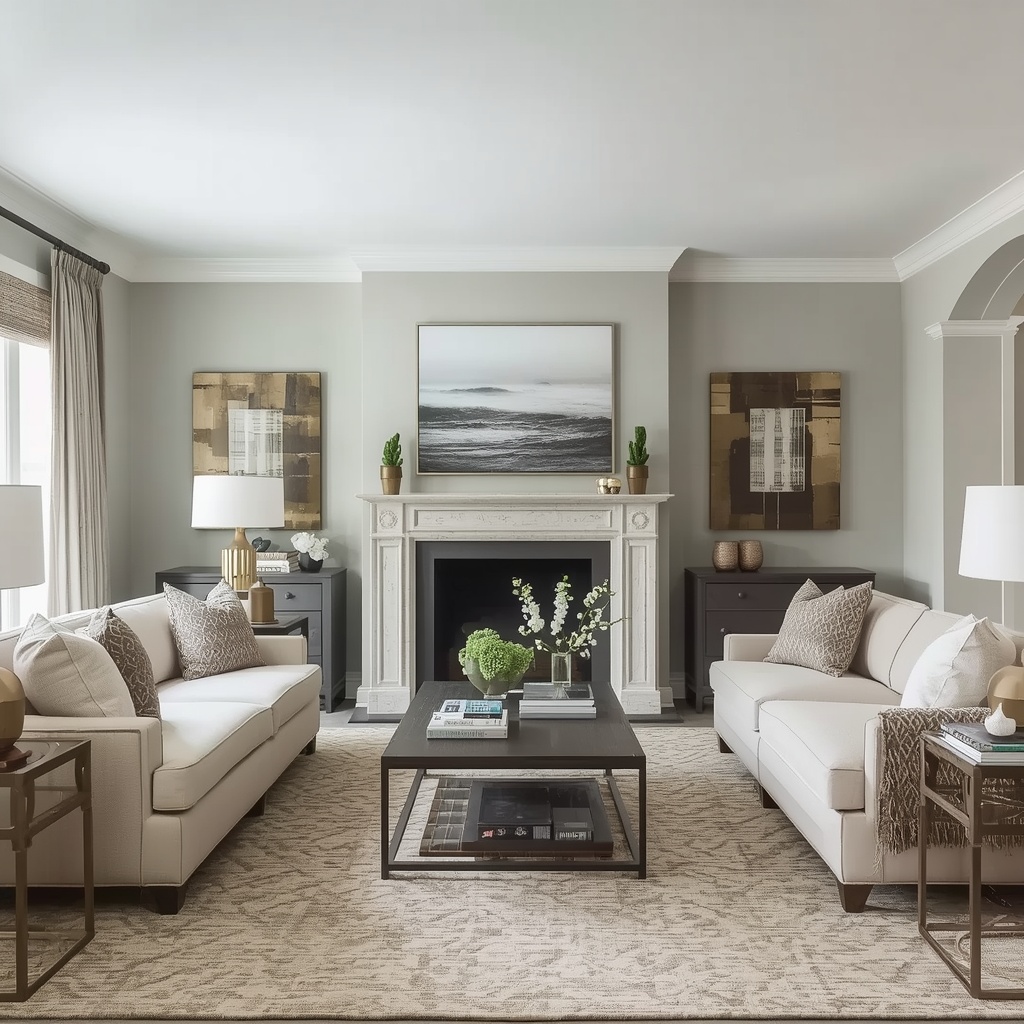
Transitional design is the art of compromise elevated into a style of its own. It borrows the warmth and detail of traditional interiors and pairs it with the simplicity and function of modern design, creating a living room that feels collected, current, and completely livable.
What Is Transitional Living Room Design?
Transitional style sits directly between traditional and contemporary design — hence the name. It’s not a trend chasing the next big thing, nor is it stuck in the past. Instead, it takes the best of both worlds: the classic silhouettes, rich textiles, and warm woods of traditional decor, combined with the streamlined shapes, neutral palettes, and uncluttered surfaces of modern interiors.
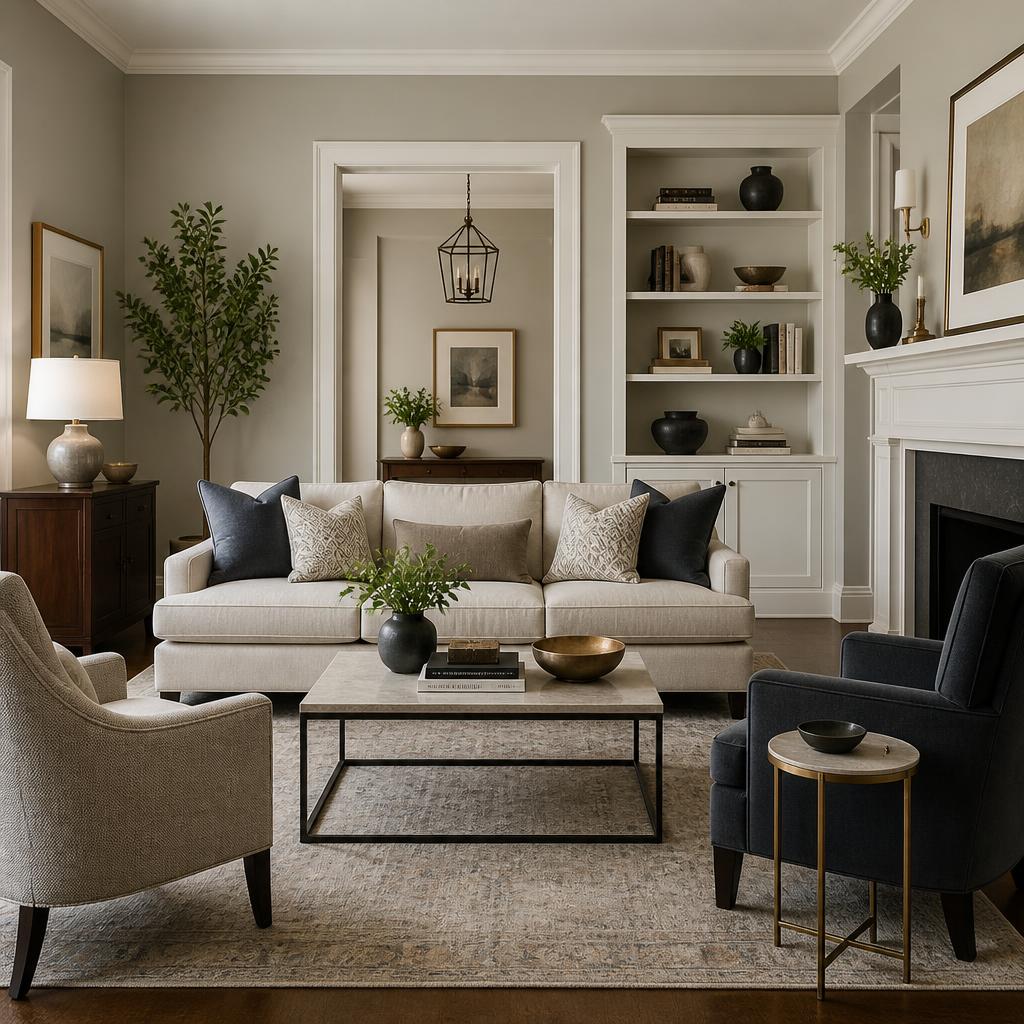
Think of a rolled-arm sofa (a traditional shape) upholstered in a solid, textured linen (a modern material choice). Or a classic wingback chair paired with a sleek glass coffee table. That balance — old meets new, ornate meets minimal — is the entire philosophy behind transitional interior design.
This style has become a favorite among American homeowners because it’s forgiving. You don’t need to overhaul your entire living room to achieve it, and it ages well, meaning your investment in furniture and decor won’t feel dated in five years.
Why Transitional Style Works for Modern American Homes
American homes today are more multifunctional than ever. Living rooms double as home offices, playrooms, entertaining spaces, and quiet retreats — sometimes all in the same day. Transitional design accommodates this reality better than a strict traditional or ultra-modern approach because it prioritizes comfort and flexibility alongside aesthetics.
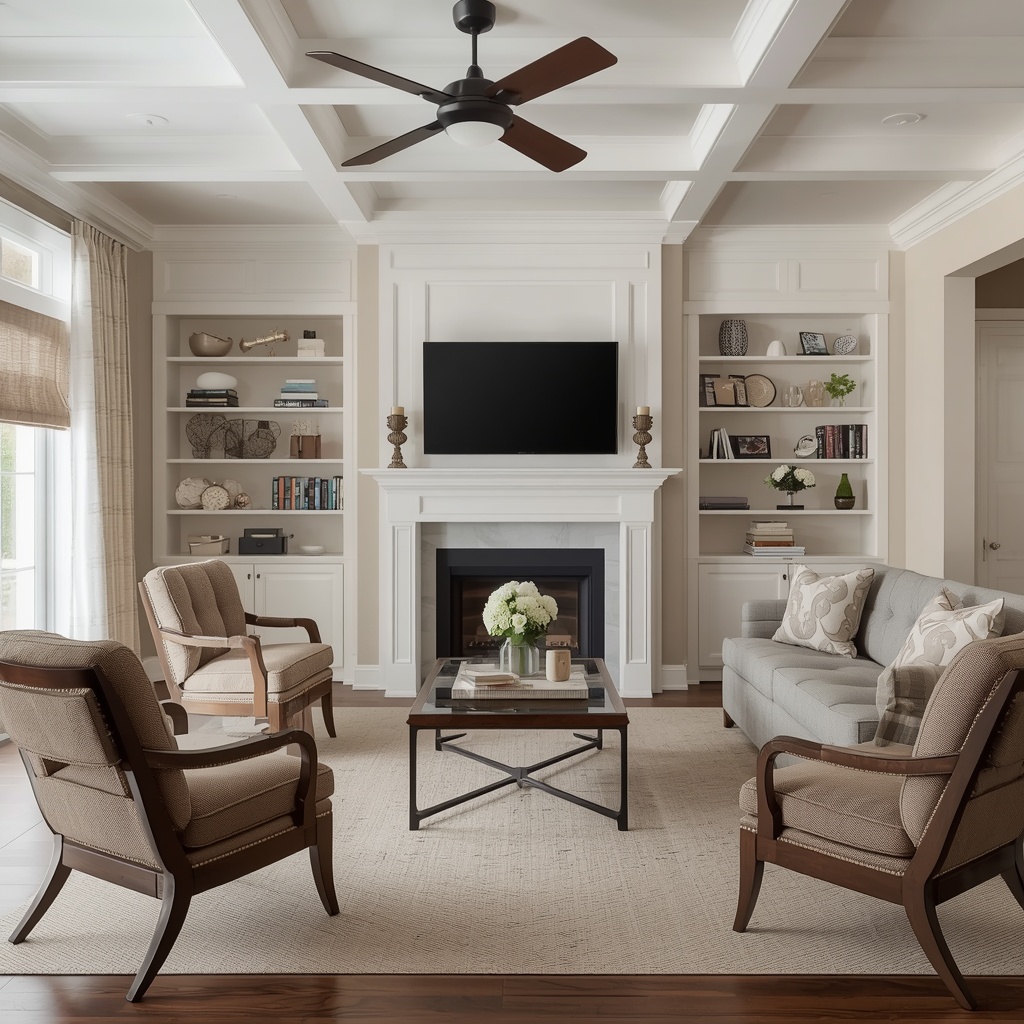
It also appeals to resale value. Real estate agents and home stagers frequently recommend transitional interior design because it has broad, cross-generational appeal. A too-modern or too-traditional living room can feel niche; a transitional living room feels like home to almost anyone who walks through the door.
“Good design should feel effortless, not staged. Transitional style works because it doesn’t ask a room to pick a side — it lets warmth and simplicity coexist.” — a principle echoed by interior designers across the country
Key Elements of Transitional Living Room Design
Every transitional living room, regardless of size or budget, tends to share a handful of defining characteristics. Here’s what separates it from other design styles:
- Neutral, layered color palette — soft whites, warm grays, taupe, and greige as a base
- Mixed furniture silhouettes — curved traditional shapes paired with straight, modern lines
- Natural materials — wood, linen, wool, and stone used generously
- Minimal ornamentation — traditional details without heavy carving or excess trim
- Textural contrast — smooth leather next to nubby boucle, or matte finishes against polished metal
- Balanced symmetry — furniture arranged with intention, not rigid formality
- Statement lighting — fixtures that bridge classic form with modern materials (think a linen drum shade on a brass frame)
Quick Comparison: Transitional vs. Traditional vs. Modern
| Feature | Traditional | Transitional | Modern |
|---|---|---|---|
| Color palette | Rich, warm, deep tones | Neutral, layered, soft contrast | Bold or monochrome, high contrast |
| Furniture lines | Curved, ornate | Mixed curved and straight | Straight, geometric |
| Materials | Heavy wood, brocade, velvet | Wood, linen, wool, mixed metals | Glass, chrome, lacquer |
| Ornamentation | Detailed carvings, trim | Subtle, restrained detail | Minimal to none |
| Overall feel | Formal, classic | Balanced, collected, comfortable | Sleek, minimal, cool |
Building a Timeless Color Palette
Color is where transitional design earns its “timeless” reputation. The palette is almost always rooted in neutrals — but not flat, boring neutrals. Successful transitional living rooms layer multiple shades of the same family to create depth: a warm white ceiling, a greige wall, a camel-toned sofa, and charcoal accents, for example.
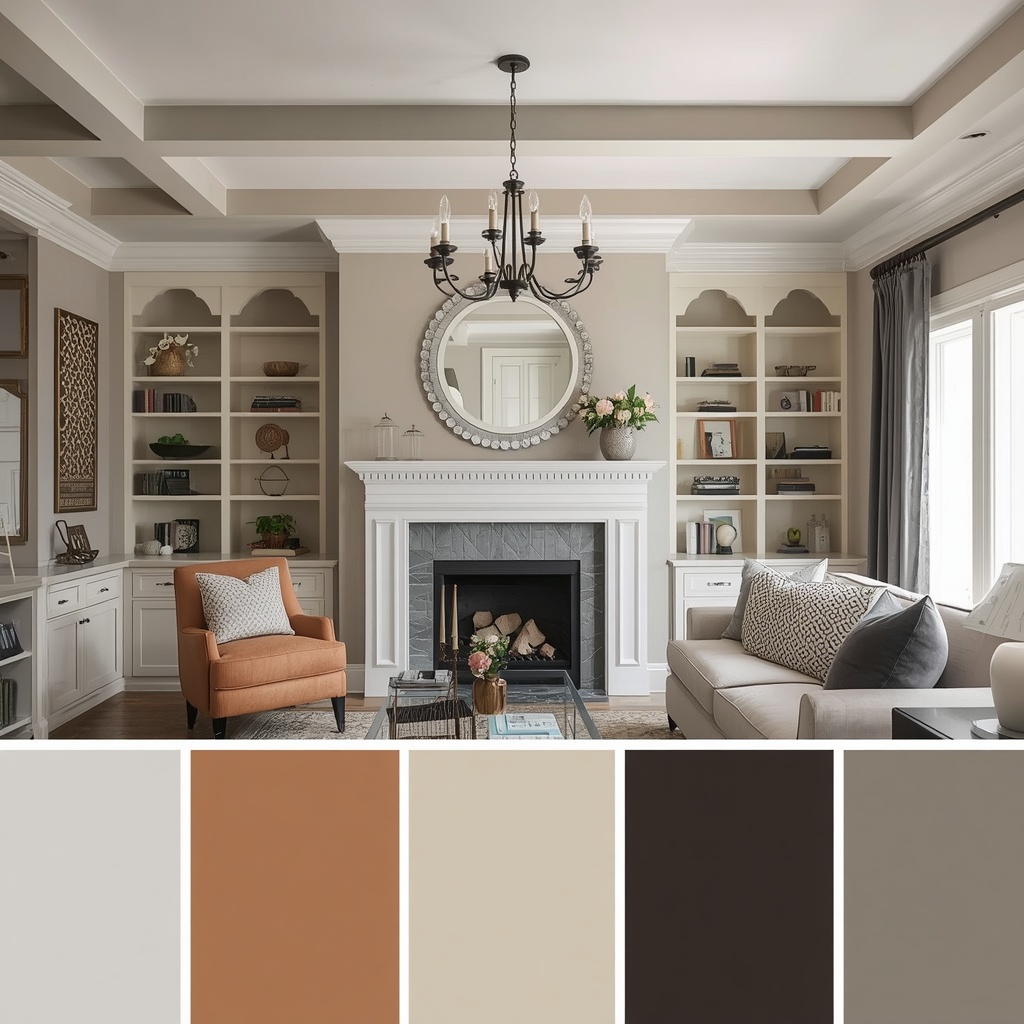
Accent colors are used sparingly and with purpose. Muted blues, soft sage greens, and dusty terracotta are popular choices for throw pillows, art, or a single upholstered accent chair. The goal isn’t a colorless room — it’s a room where color feels intentional rather than trendy, so the space won’t feel outdated when the next color-of-the-year is announced.
Popular transitional color combinations:
- Warm white + camel + espresso brown
- Greige + soft sage + brass accents
- Cream + navy + natural wood tones
- Taupe + dusty blue + black metal accents
Furniture Selection: Mixing Old and New with Confidence
This is where most homeowners get nervous — and where transitional design actually gives you the most freedom. The rule of thumb is simple: pair one traditional piece with one modern piece in every furniture grouping, then let the finishes and fabrics do the unifying work.
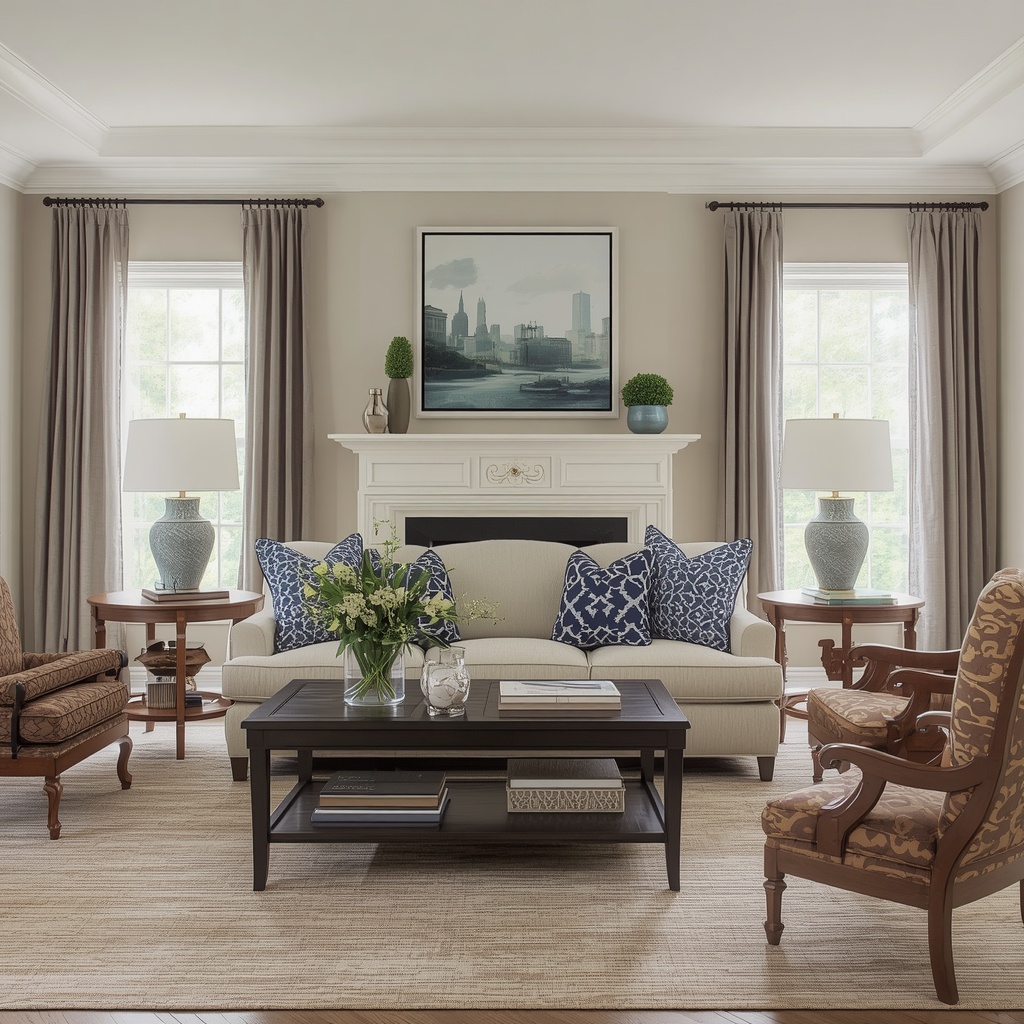
A tufted, rolled-arm sofa can sit comfortably next to a low-profile modern console. A traditional wood coffee table with turned legs can be updated instantly with a matte black or brass finish instead of a dark stain. The key is restraint — pick one or two “traditional” statement pieces and let everything else lean simple.
| Furniture Piece | Traditional Choice | Modern Update |
|---|---|---|
| Sofa | Rolled arms, skirted base | Straight arms, exposed wood legs |
| Coffee table | Carved wood, ornate legs | Simple silhouette, mixed materials |
| Accent chair | Wingback, tufted | Slipper chair, clean lines |
| Area rug | Traditional medallion pattern | Solid or subtly textured |
| Lighting | Crystal chandelier | Linen shade with metal frame |
Blending Textures and Materials
Because the color palette in transitional design tends to stay neutral, texture becomes the star of the show. Without contrast in materials, a neutral room can quickly feel flat or unfinished. This is where designers layer in nubby wool throws, smooth leather ottomans, woven jute rugs, and soft linen drapery to keep the eye engaged.
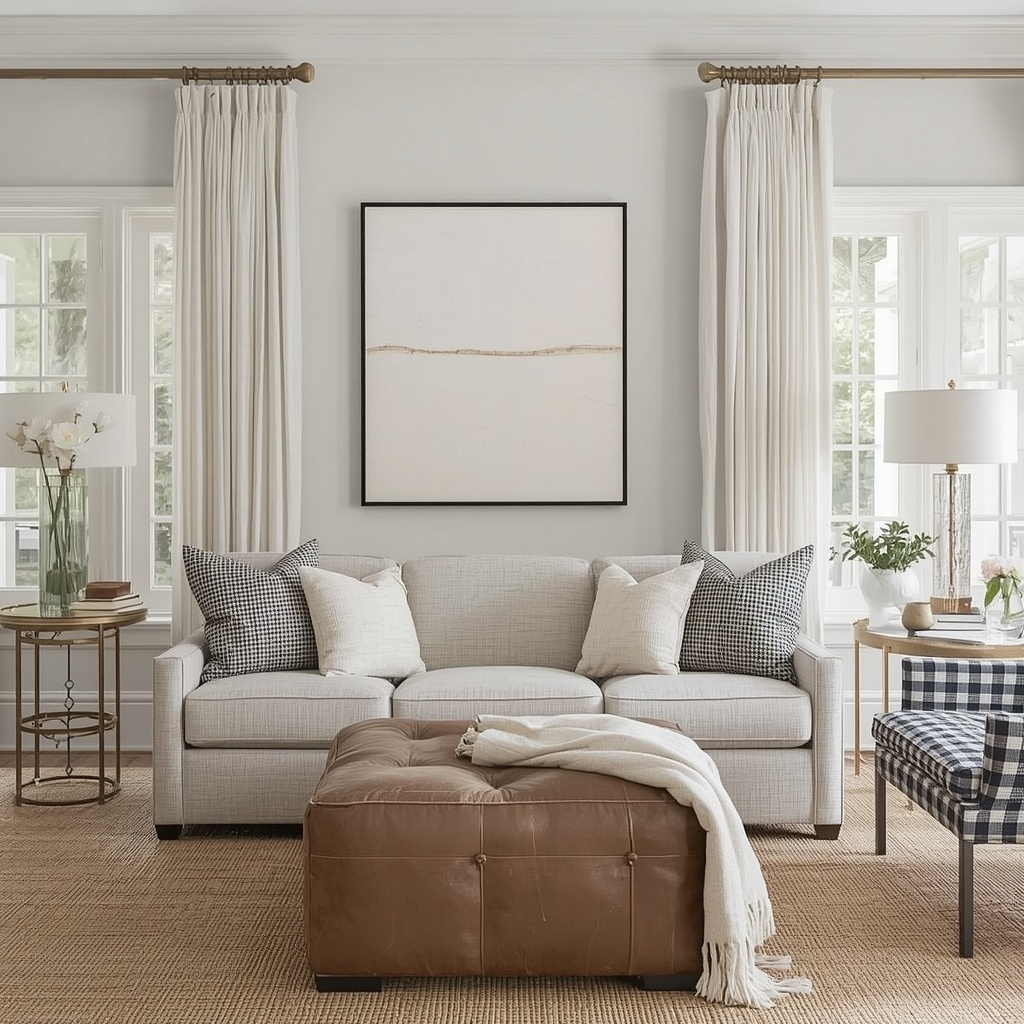
Natural materials — wood, stone, wool, cotton, and linen — anchor the space and reinforce warmth, while a touch of metal (brass, matte black, or brushed nickel) adds a modern edge. The mix should feel curated, not accidental, so it helps to choose one dominant wood tone and one dominant metal finish, then repeat them throughout the room for cohesion.
Lighting That Bridges Both Worlds
Lighting fixtures are one of the easiest ways to nail the transitional look because so many are designed specifically for this in-between aesthetic. Look for fixtures that combine a classic shape — like a drum pendant or a candlestick chandelier — with modern materials like matte black iron, brushed brass, or frosted glass.
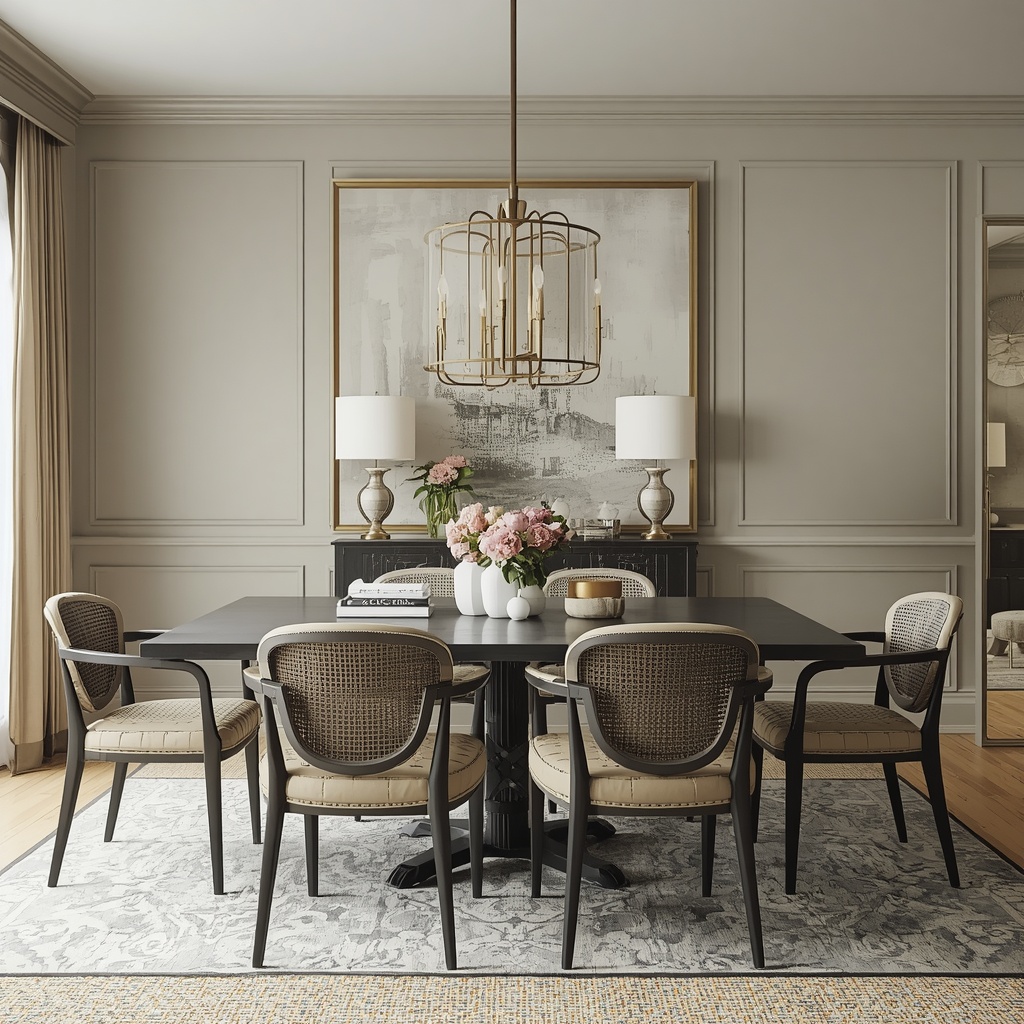
Layer your lighting the way a professional would: ambient overhead lighting, a floor lamp for reading corners, and table lamps for warmth in the evening. This layered approach isn’t just aesthetically pleasing — it makes the living room function better for both movie nights and entertaining guests.
💡 Pro Tip
When mixing metals in a transitional living room, stick to a maximum of two finishes — one warm (brass, gold, copper) and one cool (matte black, chrome, brushed nickel) — and repeat both throughout the space at least twice. This creates intentional contrast instead of visual clutter, which is one of the biggest differences between a professionally styled room and a DIY attempt.
Layout and Furniture Arrangement Tips
Transitional living rooms favor balanced, symmetrical layouts without feeling stiff or overly formal. A classic approach is to anchor the room around a central rug, float the sofa away from the wall when space allows, and create conversational furniture groupings that encourage face-to-face interaction rather than everything pointed at a TV.
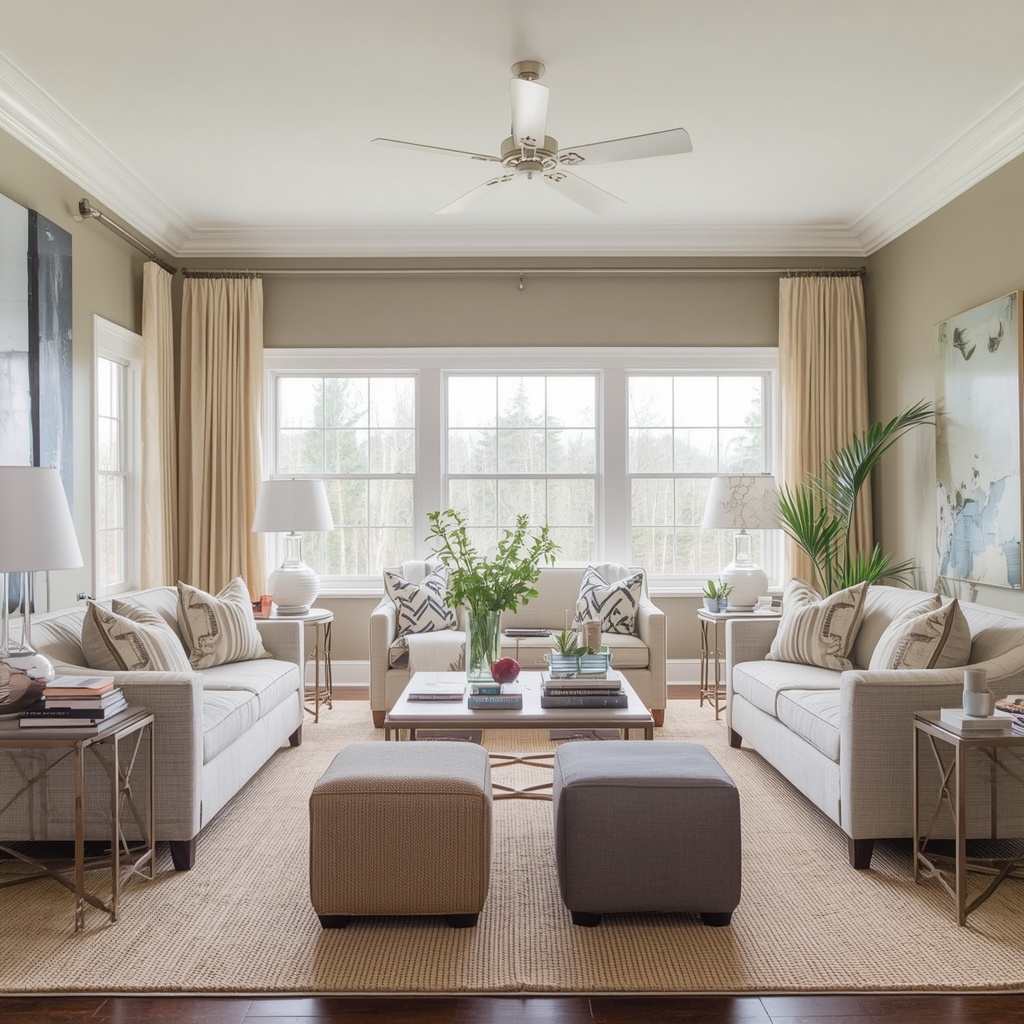
Leave breathing room between furniture pieces — transitional design relies on negative space to let each piece feel intentional rather than crowded. If your living room is smaller, choose furniture with visible legs (rather than skirted bases) to keep the floor visually open and the room feeling larger.
Common Mistakes to Avoid
Even homeowners who love the transitional aesthetic can accidentally veer too traditional or too modern. Here are the most common missteps:
- Overloading on pattern — one or two patterned elements (a rug or throw pillows) is enough
- Choosing furniture that’s too ornate — heavily carved, dark wood pieces can tip the room into traditional territory
- Going too cold and minimal — an all-white, all-straight-lined room reads as modern, not transitional
- Ignoring texture — a room without textural layering can feel flat despite a good color palette
- Mismatched metal finishes used inconsistently — pick your finishes and repeat them deliberately
Budget-Friendly Ways to Achieve the Look
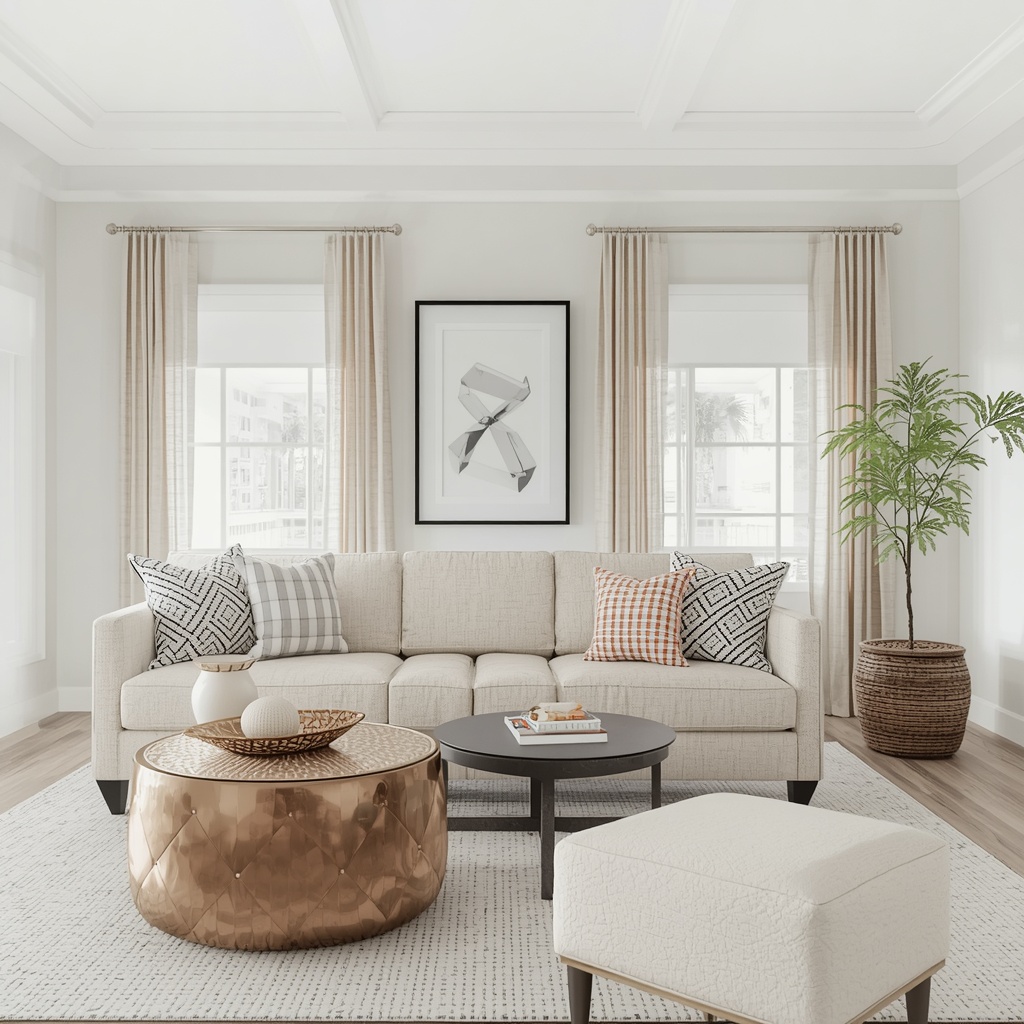
You don’t need a full furniture overhaul to shift your living room toward transitional style. Small, strategic swaps can make a significant visual impact without a significant financial one.
| Budget Level | Suggested Update |
|---|---|
| Under $100 | New throw pillows in neutral, textured fabric; a woven basket for storage |
| $100–$500 | A statement floor lamp; a natural fiber area rug |
| $500–$1,500 | Reupholstering an existing chair; a new coffee table |
| $1,500+ | A new sofa in a transitional silhouette; a lighting fixture upgrade |
Even repainting your walls in a warm neutral, swapping out dated brass hardware for a matte black finish, or adding linen drapery can shift a traditional or overly modern room firmly into transitional territory.
Bringing It All Together
Transitional living room design endures because it reflects how people actually want to live — surrounded by comfort and warmth, but without clutter or excessive formality. It respects craftsmanship and classic form while embracing the ease and simplicity of contemporary life.
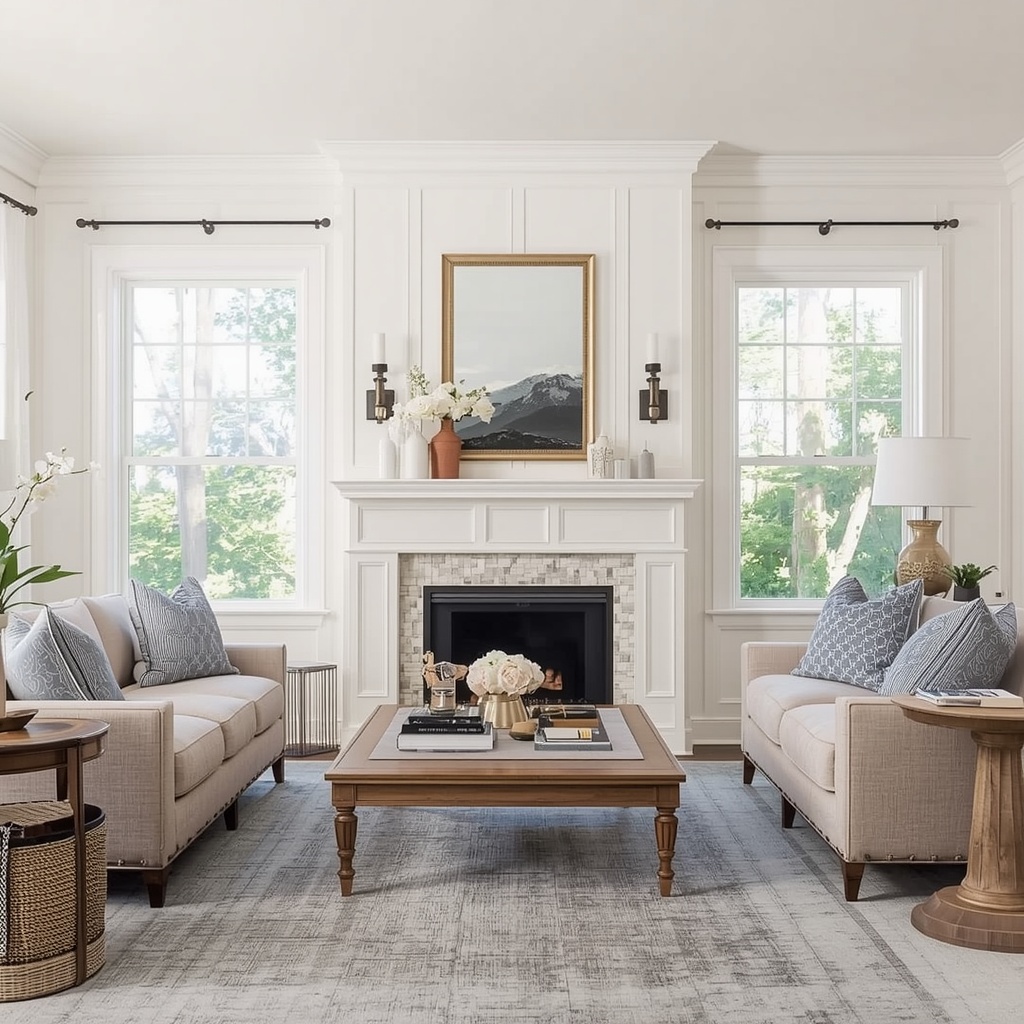
The best transitional spaces don’t feel decorated; they feel collected — as though every piece was chosen with intention over time rather than purchased as a matching set. That’s the quiet confidence of this style, and it’s exactly why it continues to top the list of most-requested looks among American homeowners and interior designers alike.
Whether you’re starting from scratch or slowly transforming a room you already love, the formula stays the same: neutral base, mixed silhouettes, layered textures, and lighting that bridges old and new. Start with one or two changes, live with them, and let the room evolve — that patience is, fittingly, the most transitional part of the whole process.