
If there’s one design lesson I’ve learned after years of styling homes across the country, it’s this: a room isn’t finished until something in it is alive. Succulents have become my go-to recommendation for clients who want greenery without the guesswork. They’re sculptural, low-maintenance, and endlessly photogenic — which is exactly why they’ve taken over Pinterest boards, coffee tables, and, yes, sunny windowsills nationwide.

But not every succulent thrives in the same spot. A plant that loves blasting afternoon sun on a south-facing sill will sulk on a shaded side table, and vice versa. In this guide, I’m breaking down the best succulents for bright, sun-drenched spaces, how to style them like a pro, and the care habits that separate a thriving plant from a mushy disappointment.
Why Succulents Are the Perfect Home Decor Plant
Succulents aren’t just trendy — they’re functional design tools. Their sculptural shapes, varied textures, and compact size make them ideal for filling awkward negative space on shelves, desks, and tabletops. Unlike leafy tropicals that demand humidity and constant attention, most succulents are drought-tolerant plants that store water in their fleshy leaves, which means they forgive the occasional missed watering.

From a design standpoint, succulents also offer incredible versatility. A single echeveria in a matte ceramic pot can read as minimalist and modern, while a cluster of mixed varieties in terracotta feels earthy and bohemian. They pair beautifully with natural materials like wood, linen, and stone, which is why designers lean on them so heavily for warming up sleek, contemporary interiors.
Understanding Light: What “Sunny” Really Means
Before choosing plants, it helps to understand what your window is actually offering. “Sunny” isn’t one-size-fits-all in interior design or horticulture.
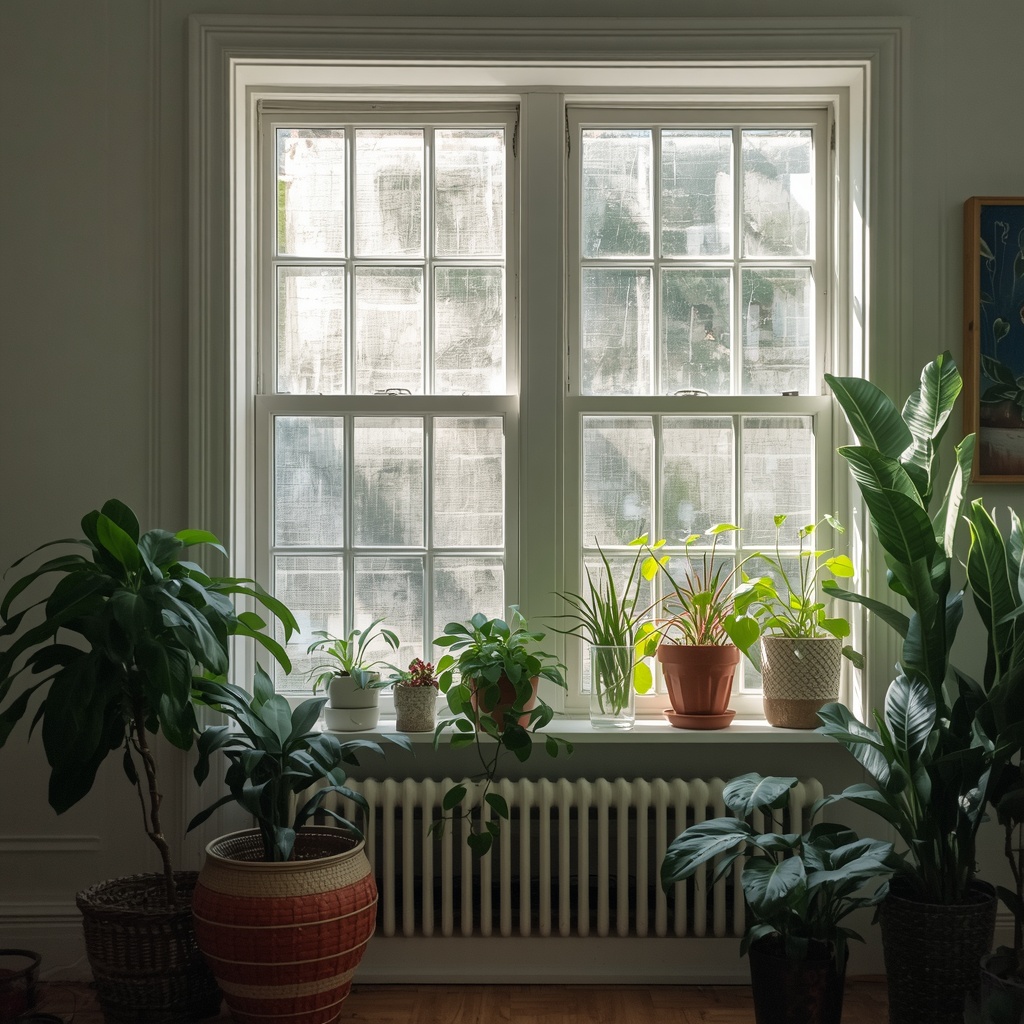
- South-facing windows get the most direct, intense sunlight throughout the day — ideal for sun-loving succulents.
- West-facing windows receive strong afternoon sun, which can be intense in summer months.
- East-facing windows offer gentler morning light, better suited to succulents that prefer partial sun.
- North-facing windows are the shadiest and generally too low-light for true sun-loving succulents.
Side tables set back from a window often get filtered or indirect light rather than direct rays, so it’s worth matching your succulent choice to the actual light quality in that spot, not just the room’s general brightness.
Top Succulents for Sunny Windowsills
These varieties are true sun-worshippers. They tolerate — and often need — several hours of direct light daily to maintain their tight, compact growth and vivid coloring.
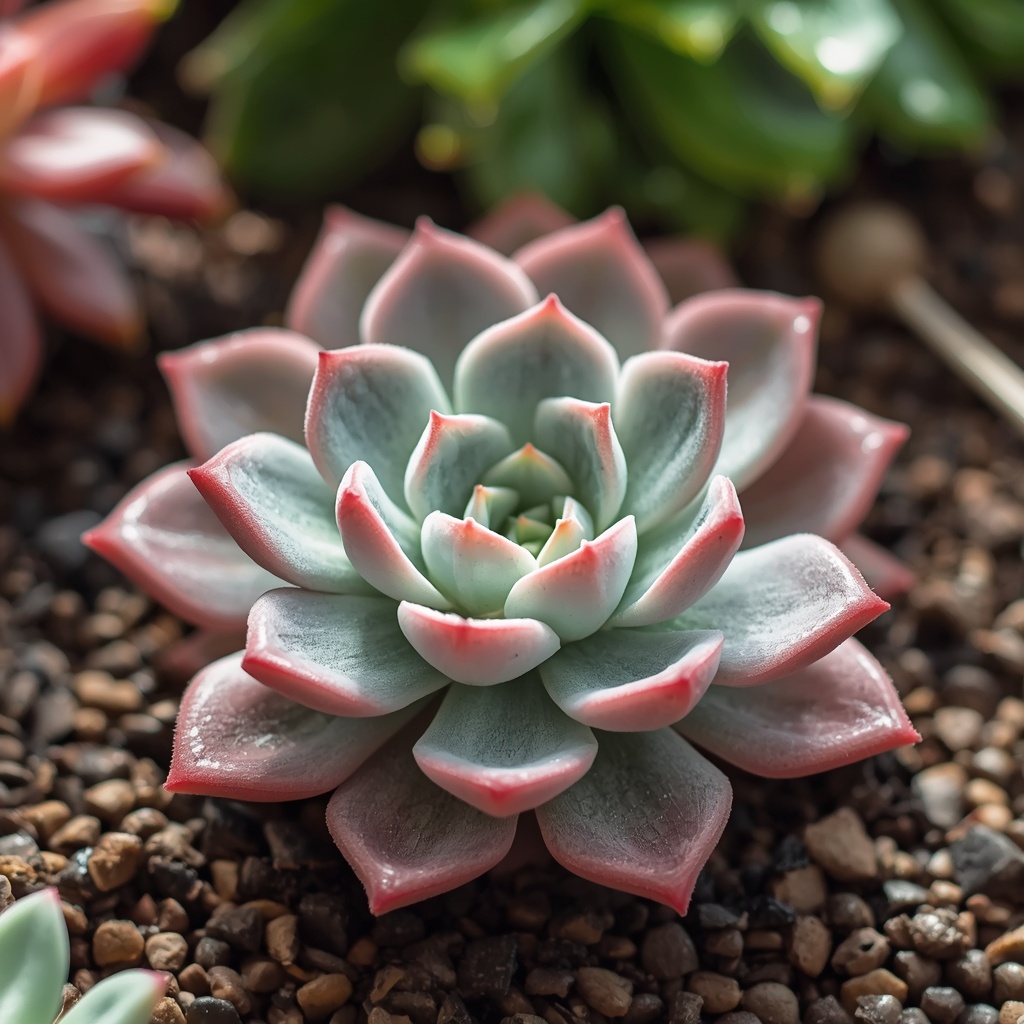
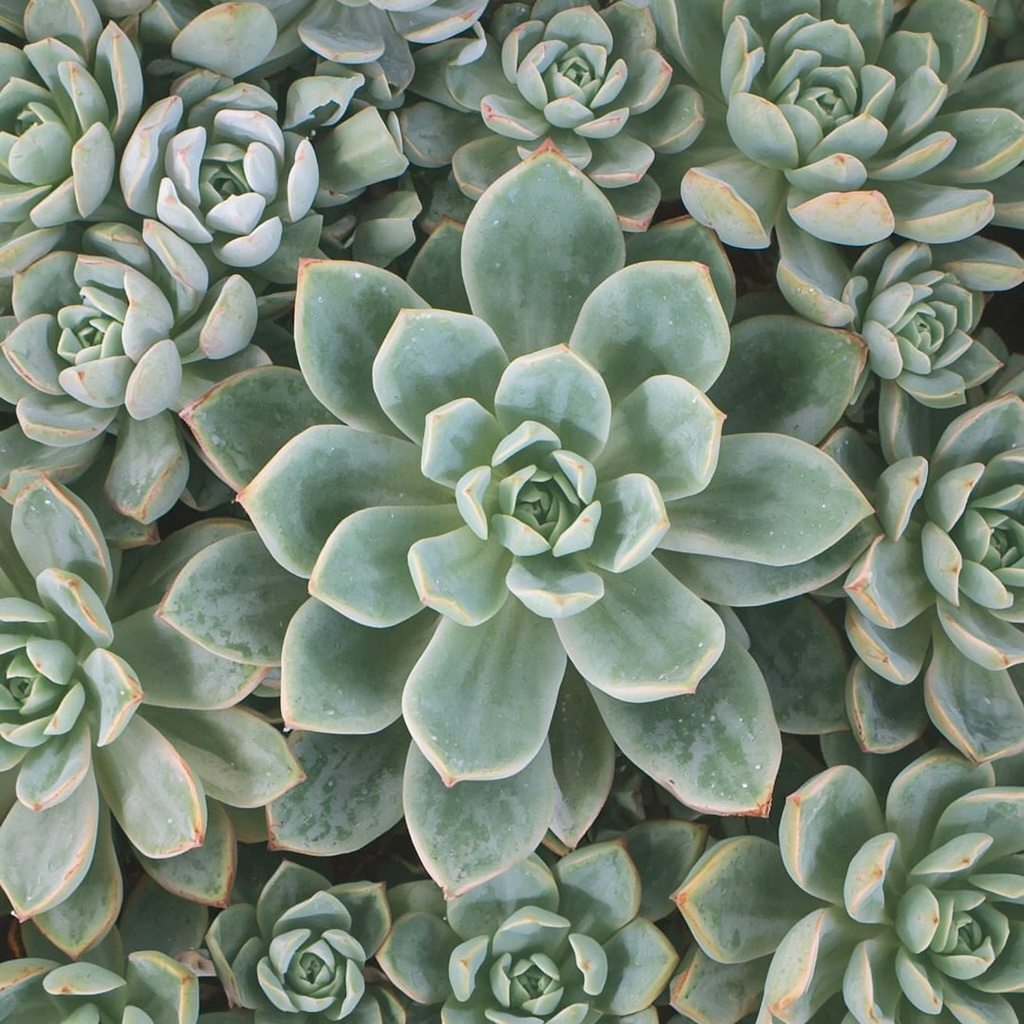
Echeveria tops nearly every designer’s list for good reason. Its rosette shape looks like a living sculpture, and varieties like ‘Perle von Nürnberg’ or ‘Lola’ bring soft lavender and blue-green tones into a space. Give it bright, direct light and it will reward you with tight, symmetrical growth instead of the stretched, leggy look that signals insufficient sun.
Sedum (Stonecrop) varieties are hardy, fast-spreading, and forgiving of inconsistent watering. Many types develop reddish or golden hues when exposed to strong sunlight, adding seasonal color variation to your windowsill display. They’re a favorite for mixed succulent arrangements because of their trailing or mounding habits.
Aloe Vera is both decorative and functional — a genuinely useful plant to keep on hand for minor kitchen burns. It craves bright, direct light and well-draining soil, and its architectural, upright leaves add height and structure to a windowsill grouping.
Crassula ovata (Jade Plant) is a classic for a reason. This tree-like succulent develops a thick, woody trunk over time and can live for decades with proper care, often becoming a genuine heirloom piece. Full sun keeps its rounded leaves compact and encourages the reddish leaf-tips many collectors love.
Kalanchoe brings something most succulents don’t: showy, long-lasting flowers in shades of pink, orange, and red. It needs plenty of direct sun to bloom reliably, making it one of the few succulents that doubles as seasonal color in a sunny window display.
Best Succulents for Bright Side Tables
Side tables usually sit a few feet from the window, so they receive bright but slightly less intense, filtered light. These varieties handle that in-between zone beautifully.
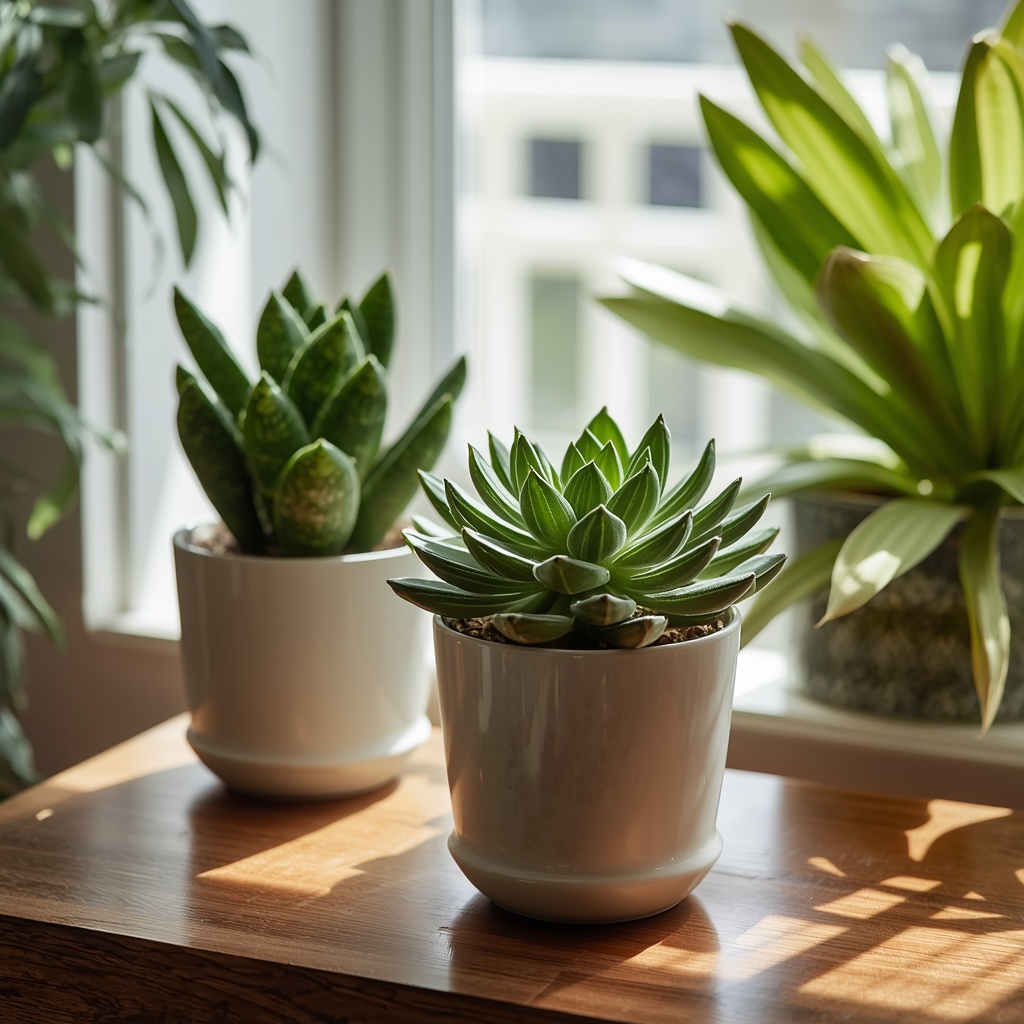
Haworthia is compact, striking, and far more shade-tolerant than most succulents, which makes it ideal for tables that get bright but indirect light. Its translucent-striped leaves catch the light beautifully, creating a jewel-like effect even without direct sun exposure.
String of Pearls (Senecio rowleyi) is a trailing succulent that looks stunning cascading over the edge of a side table or elevated stand. It prefers bright, indirect light and adds movement and softness to an otherwise rigid tabletop arrangement.
Zebra Plant (Haworthiopsis attenuata) offers bold white-striped patterning that reads almost graphic against a plain ceramic pot. It’s compact, slow-growing, and content with bright indirect light, making it nearly maintenance-free.
Panda Plant (Kalanchoe tomentosa) has velvety, silver-green leaves edged in brown that feel almost like plush fabric. It tolerates lower light than most kalanchoes and adds wonderful tactile contrast next to smoother-leafed varieties.
Quick Comparison Table
| Succulent | Light Needs | Watering Frequency | Design Style | Growth Habit |
|---|---|---|---|---|
| Echeveria | Full sun, direct | Every 2–3 weeks | Modern, minimalist | Rosette, compact |
| Sedum | Full sun, direct | Every 2 weeks | Bohemian, mixed arrangements | Trailing/mounding |
| Aloe Vera | Full sun, direct | Every 2–3 weeks | Architectural, functional | Upright |
| Jade Plant | Full sun, direct | Every 2–3 weeks | Classic, heirloom | Tree-like |
| Kalanchoe | Full sun, direct | Every 1–2 weeks | Colorful, seasonal | Mounding, flowering |
| Haworthia | Bright, indirect | Every 3 weeks | Jewel-toned, sculptural | Compact rosette |
| String of Pearls | Bright, indirect | Every 1–2 weeks | Soft, cascading | Trailing |
| Zebra Plant | Bright, indirect | Every 2–3 weeks | Graphic, patterned | Upright rosette |
| Panda Plant | Bright, indirect | Every 2 weeks | Tactile, textural | Bushy |
“The best indoor plants aren’t just decoration — they’re the finishing layer that makes a styled shelf or tabletop feel intentional rather than staged.” — a principle I share with nearly every client who asks where to start with plant styling.
Pro Tip: The Terracotta Trick
Pro Tip: If you tend to overwater, always choose unglazed terracotta pots over ceramic or plastic for your sunny-spot succulents. Terracotta is porous, allowing excess moisture to evaporate through the pot walls rather than pooling around the roots. Pair it with a fast-draining cactus and succulent soil mix, and you’ll dramatically reduce the risk of root rot — the number one killer of indoor succulents.
Styling Succulents Like an Interior Designer
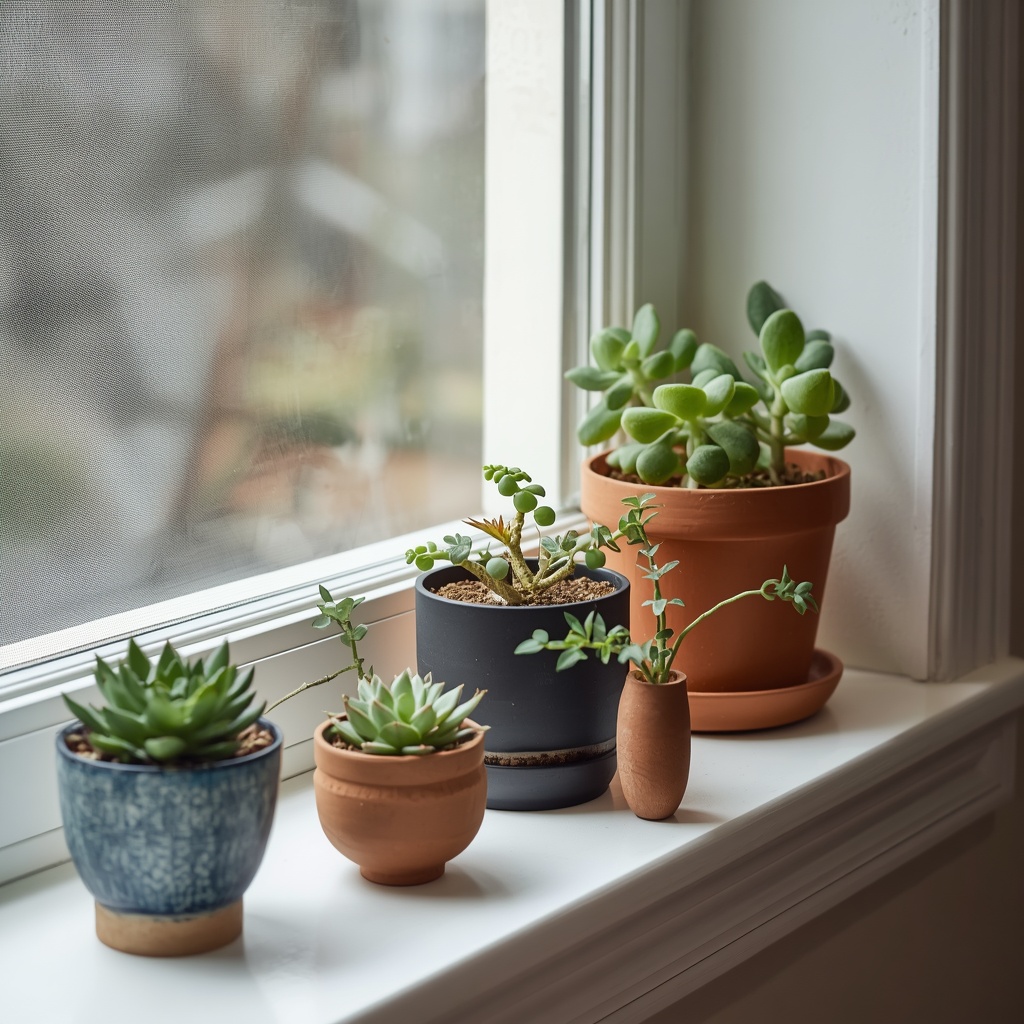
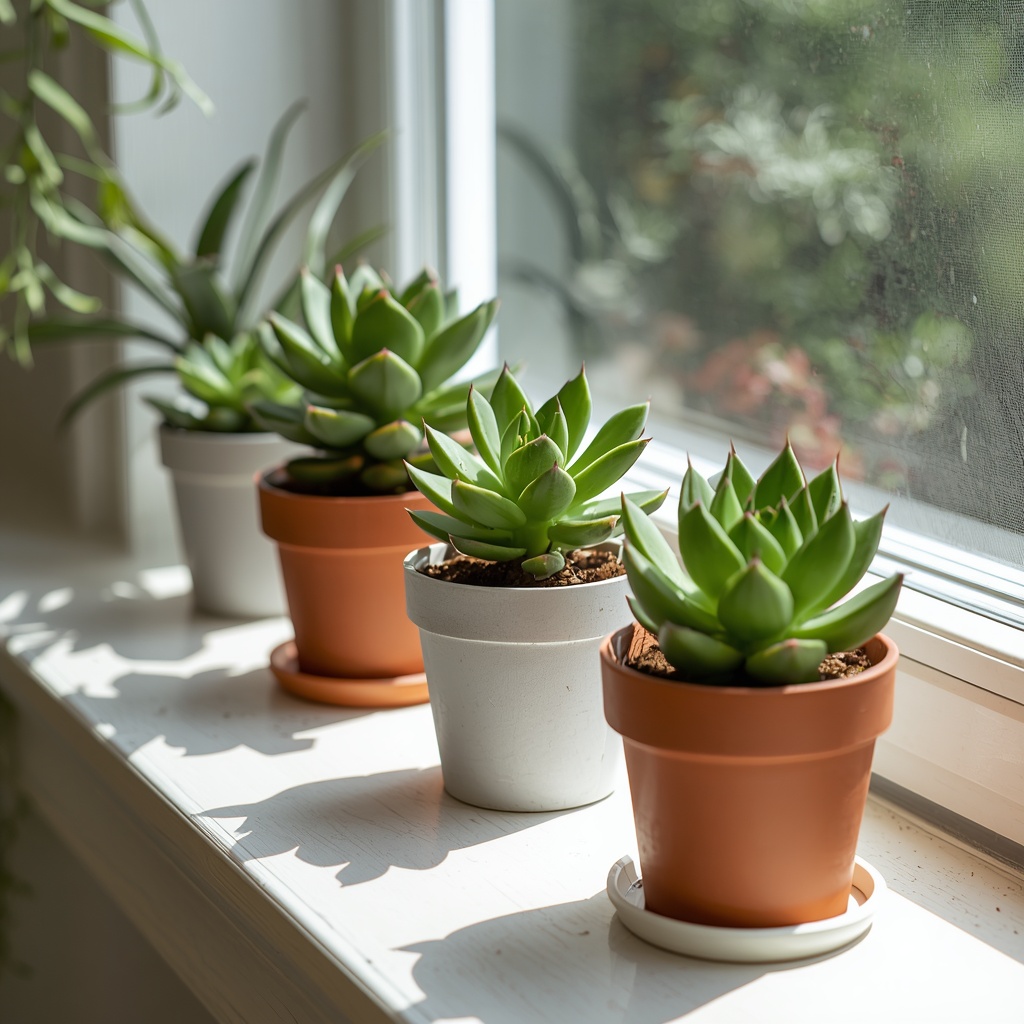
Grouping matters more than most people realize. Instead of placing a single small pot alone on a large windowsill, cluster three to five succulents of varying heights and pot sizes together. Odd numbers create more visual interest than even ones, and varying textures — a spiky aloe next to a soft panda plant, for instance — keeps the arrangement from feeling flat.
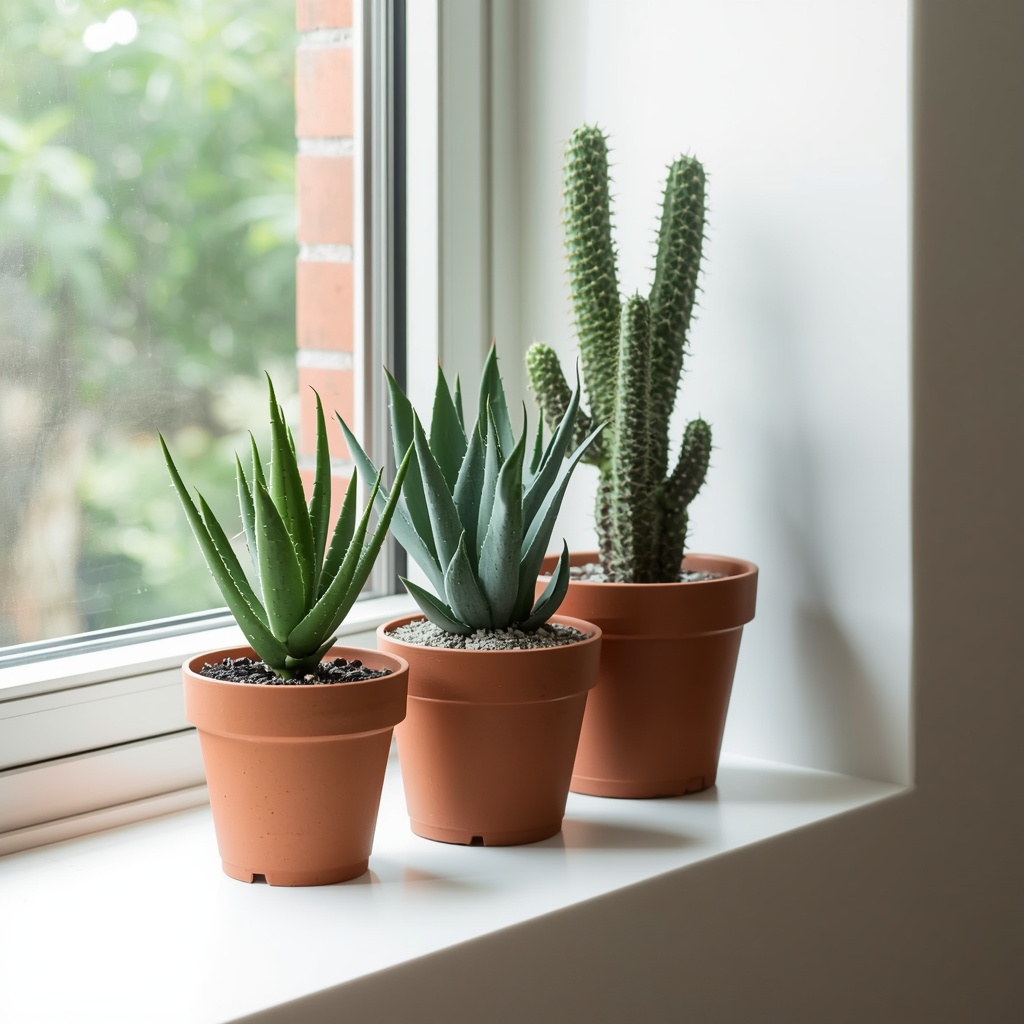
Container choice is just as important as plant choice. Matte, neutral-toned pots (think warm white, sand, charcoal) let the succulent’s natural color and shape take center stage, while a mix of heights — using small risers, books, or wood blocks — adds dimension to an otherwise flat tabletop display. For side tables specifically, a single striking specimen in an elevated planter often makes more impact than a cluttered grouping.
Here’s a simple styling checklist to keep your arrangement cohesive:
- Choose a consistent color palette for pots (2–3 complementary tones max)
- Vary plant height and leaf texture within each grouping
- Use odd-numbered groupings (3 or 5 plants) for visual balance
- Add one trailing variety to soften hard edges
- Leave breathing room — avoid overcrowding the surface
Essential Care Tips for Long-Term Success
Succulents fail far more often from overwatering than underwatering, so the golden rule is: when in doubt, don’t water. Check the soil with your finger, and only water once it’s completely dry to a depth of an inch or two. During winter months, when growth slows, most succulents need watering even less frequently than in summer.
Drainage is non-negotiable. Always choose pots with drainage holes, and use a specialized succulent or cactus soil mix rather than standard potting soil, which retains too much moisture. If you love a particular decorative pot without drainage, use it as an outer cachepot and keep the plant in its original nursery pot inside — you can simply lift it out to water.
Rotate your succulents a quarter turn every week or two so all sides receive even light exposure; this prevents the lopsided, leaning growth that happens when a plant stretches toward its light source. And if you notice a succulent stretching upward with wider gaps between leaves — a condition called etiolation — it’s a clear sign the plant needs more direct sunlight than it’s currently receiving.
Common Mistakes to Avoid
Even seasoned plant owners run into a few recurring pitfalls with sun-loving succulents:
- Using the wrong soil. Standard potting mix holds too much moisture and suffocates succulent roots over time.
- Watering on a fixed schedule. Succulents’ water needs shift with season, light, and humidity — check the soil, don’t just follow a calendar.
- Choosing pots without drainage. Even light, infrequent watering can cause rot if excess water has nowhere to go.
- Placing shade-tolerant varieties in blasting direct sun. Haworthia and zebra plants can scorch in intense, unfiltered afternoon light.
- Ignoring seasonal light changes. A windowsill that’s bright in summer may be too dim in winter, especially at northern latitudes — you may need to rotate plants closer to the glass or supplement with a grow light.
Bringing It All Together
Choosing the right succulents for your sunny windowsill or side table comes down to matching plant to light, prioritizing drainage, and styling with intention rather than randomness. Sun-loving varieties like echeveria, sedum, aloe, jade, and kalanchoe will thrive with several hours of direct light daily, while haworthia, string of pearls, zebra plant, and panda plant handle the softer, bright-indirect conditions typical of a side table a few feet from the window.
Whichever varieties you choose, remember that succulents reward patience over perfection. Start small, observe how your plants respond to their specific spot, and adjust from there — within a season or two, you’ll have a thriving, designer-worthy display that asks for very little in return.
Frequently Asked Questions
Do succulents need direct sunlight indoors? Most true succulents need at least four to six hours of bright light daily, and many sun-loving varieties like echeveria and aloe do best with several hours of direct sun. Lower-light varieties like haworthia can tolerate bright, indirect light instead.
How often should I water succulents on a sunny windowsill? Generally every two to three weeks, but always check that the soil is fully dry before watering again. Sunnier spots and warmer months typically mean slightly more frequent watering than shaded, cooler conditions.
Can succulents get sunburned? Yes. Succulents that are moved suddenly from low light to intense direct sun — especially through unfiltered south-facing glass in summer — can develop white or brown scarred patches. Acclimate plants gradually over one to two weeks when increasing their light exposure.
What’s the best pot material for succulents? Unglazed terracotta is widely favored because its porous walls help excess moisture evaporate, reducing the risk of root rot, which is especially useful for anyone still learning their new plant’s watering rhythm.