
There’s a reason your shoulders drop the second you step onto a hiking trail or sit near a river. Natural textures — rough stone, weathered wood, glinting mineral — speak a language our nervous systems understand instinctively. And you don’t need a mountain cabin or a beach house to tap into that feeling. With the right mix of stones, driftwood, and crystals, you can build that same sense of calm right into your living room, bedroom, or entryway.
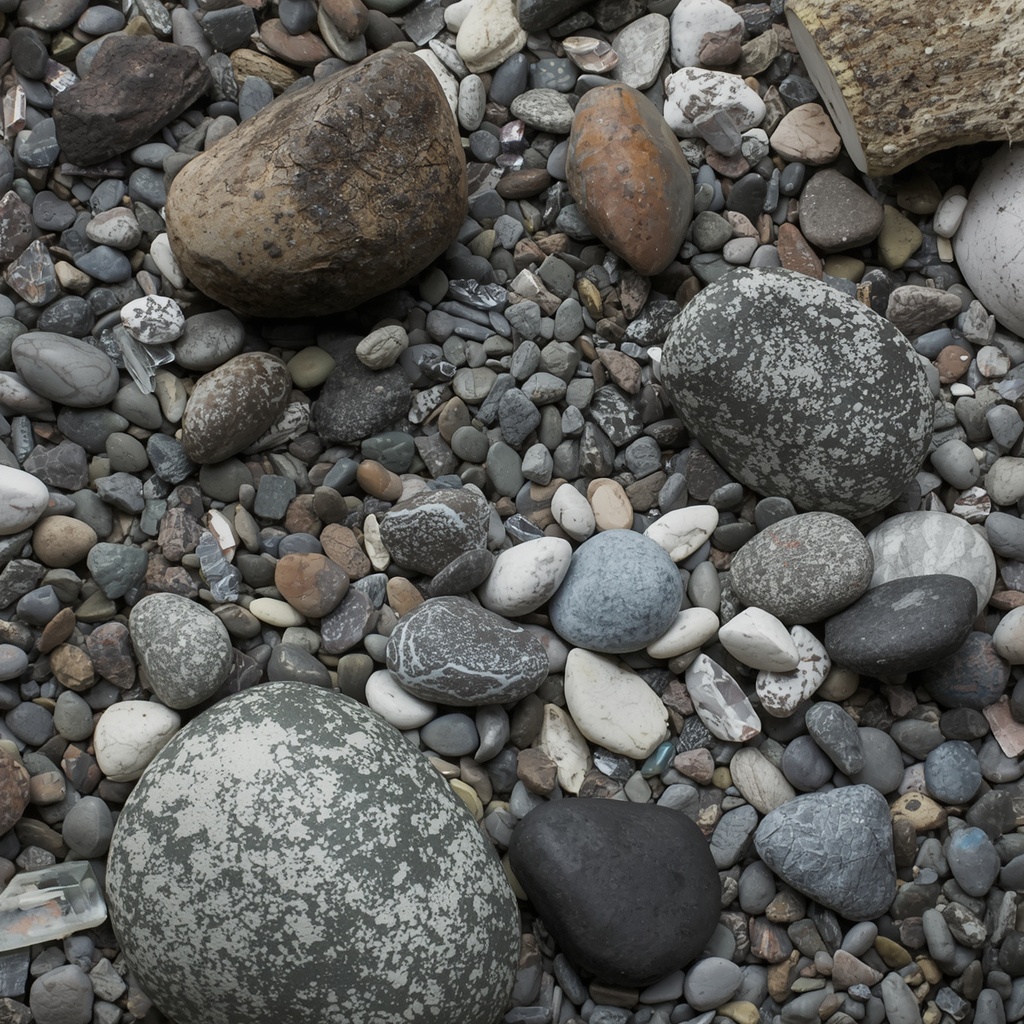
This kind of decorating isn’t a passing fad. It’s rooted in biophilic design, the practice of weaving natural materials, textures, and forms into the built environment so interiors feel more grounded and less sterile. Designers, real estate agents, and wellness researchers alike are pointing to nature-driven décor as one of the defining home trends of the decade — and stones, driftwood, and crystals are three of the easiest, most budget-friendly ways to get there.
Why Natural Elements Belong in Every Home
Organic materials do something that mass-produced décor simply can’t: they carry a story. A piece of driftwood pulled from a lakeshore, a chunk of quartz mined from the earth, a smooth river stone worn down over centuries — each one is one-of-a-kind. No two pieces are identical, which means your home automatically feels less like a showroom and more like yours.

There’s also a growing body of interest in the wellness side of this trend. Biophilic decor leans on natural materials like wood, stone, rattan, ceramic, and metal, paired with organic textures, warm layered lighting, and earthy color palettes — and it doesn’t take a full renovation to make an impact. A shelf of stones or a driftwood mirror can shift the entire mood of a room.
“A home filled with natural texture doesn’t just look good — it feels lived-in, personal, and calm the moment you walk through the door.”
Pro Tip
Start small. Pick one natural element — a bowl of stones, a driftwood candle holder, a cluster of crystals — and place it somewhere you look every day, like your entryway console or nightstand. Once you see how much warmth it adds, you’ll want to layer in more.
Decorating with Natural Stones
Stone is the most versatile of the three materials because it works in nearly every design style — coastal, modern minimalist, farmhouse, Scandinavian, or industrial. It brings weight, texture, and an earthy color palette without competing with anything else in the room.
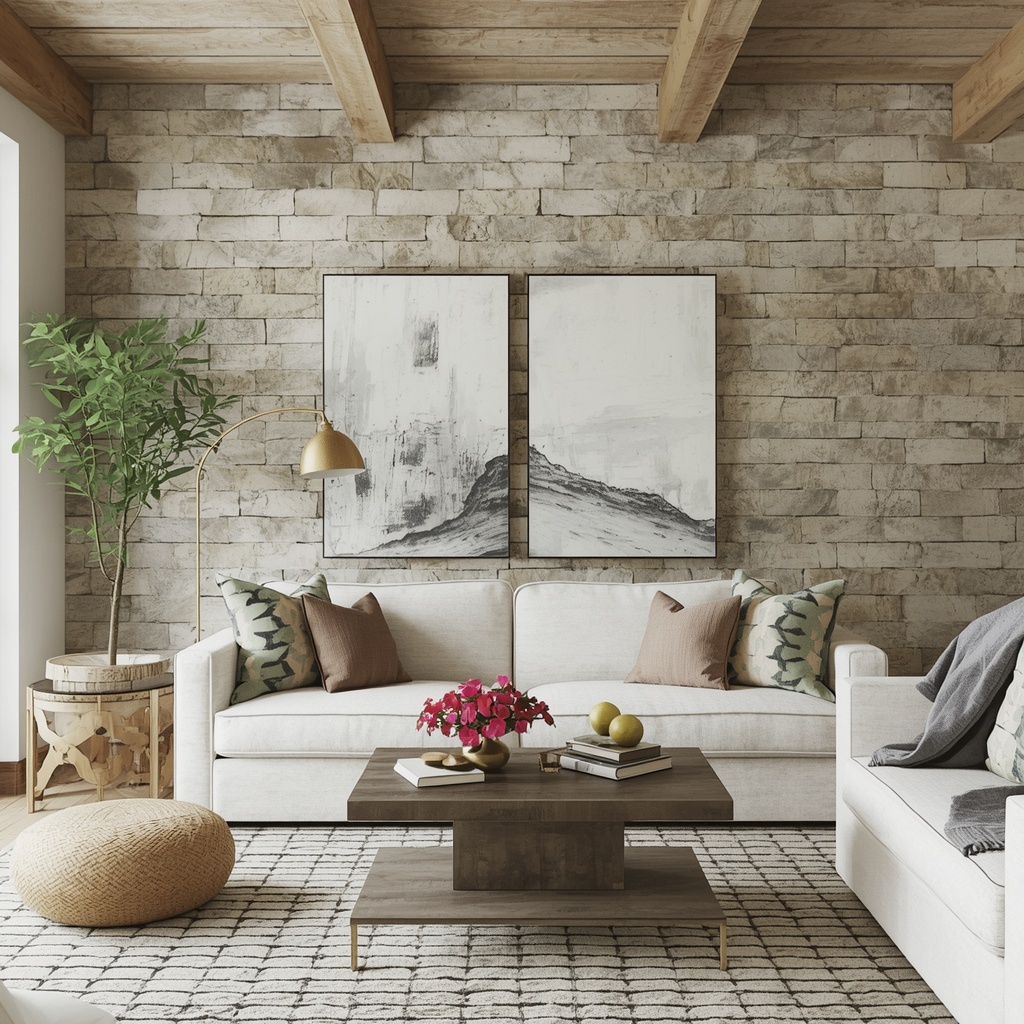
Large stones and pebbles can anchor a coffee table vignette or line the base of a candle arrangement, while polished slabs make striking coasters, bookends, or even bathroom vanity tops. Because stone is so neutral, it pairs beautifully with warm wood tones, linen textiles, and matte black or brass hardware — the combination that defines the “organic modern” look so many homeowners are chasing right now.
Popular ways to use stone indoors:
- River rocks layered in a glass vase as a plant base or vase filler
- A raw stone slab used as a floating shelf or side table
- Stacked stone bookends for a rustic-modern office
- Pebble trays under houseplants to mimic a riverbed
- A stone accent wall or fireplace surround for a bold, architectural statement
- Marble or travertine trinket dishes on a dresser or vanity
| Room | Stone Décor Idea | Style Pairing |
|---|---|---|
| Living Room | Stacked stone side table | Modern rustic |
| Bathroom | Pebble bath mat or river-rock floor accent | Spa/Zen |
| Bedroom | Stone bookends or lamp base | Minimalist |
| Kitchen | Marble cutting board display | Farmhouse |
| Entryway | Stone bowl for keys and mail | Coastal |
Driftwood: Coastal Charm With a Story
Driftwood carries the marks of its journey — sun-bleached, salt-worn, and shaped by years of water and wind. That imperfection is exactly what makes it such a powerful design element. Unlike polished furniture, driftwood looks intentional because it’s irregular, and it instantly softens a room that feels too matched or too new.
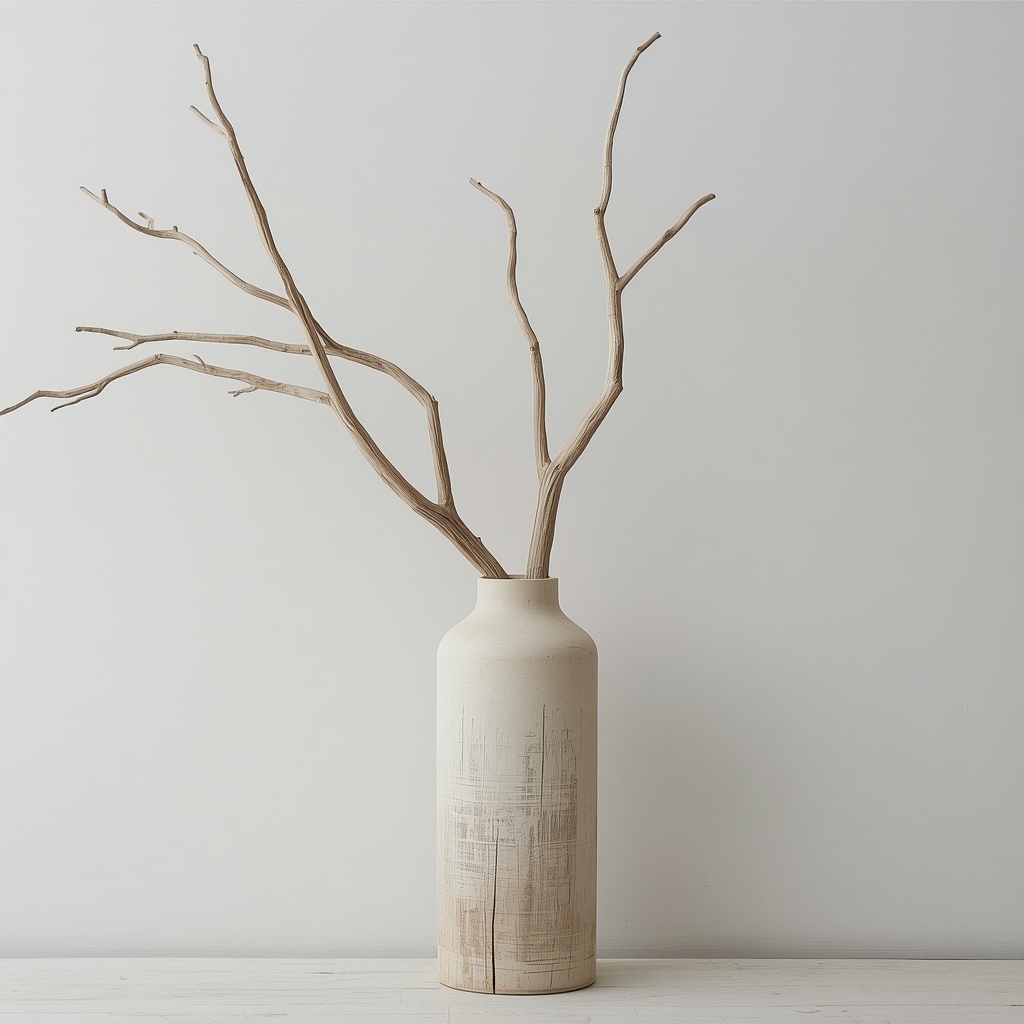
You’ll find driftwood decor across coastal, bohemian, and Scandinavian-inspired interiors, but it also works beautifully in neutral, minimalist spaces where you want one striking organic focal point. A single branch in a tall vase can do more visual work than an entire shelf of trinkets, which makes it a favorite for anyone who prefers a curated, uncluttered look.
Ways to bring driftwood into your space:
- Prop a large driftwood branch in a floor vase as a sculptural statement piece
- Mount a driftwood mirror or wall art frame above a console table
- Use small driftwood pieces as napkin rings or place-card holders
- Build a driftwood shelf for plants, books, or candles
- Hang a driftwood curtain rod for a subtle textural upgrade
Pro Tip
If you’re sourcing driftwood from a beach or lakeshore yourself, let it dry fully indoors for a few weeks before decorating with it, and give it a light scrub with a vinegar-water solution first. This helps remove salt residue, sand, and any hitchhiking critters before it becomes part of your décor.
Crystals: Adding Energy and Elegance
Crystals bring something the other two materials can’t: shine. Where stone and driftwood are matte and grounded, crystals introduce light, dimension, and a touch of glamour. A cluster of amethyst on a shelf or a chunk of raw quartz on a coffee table catches the eye without needing bright colors or bold patterns to stand out.
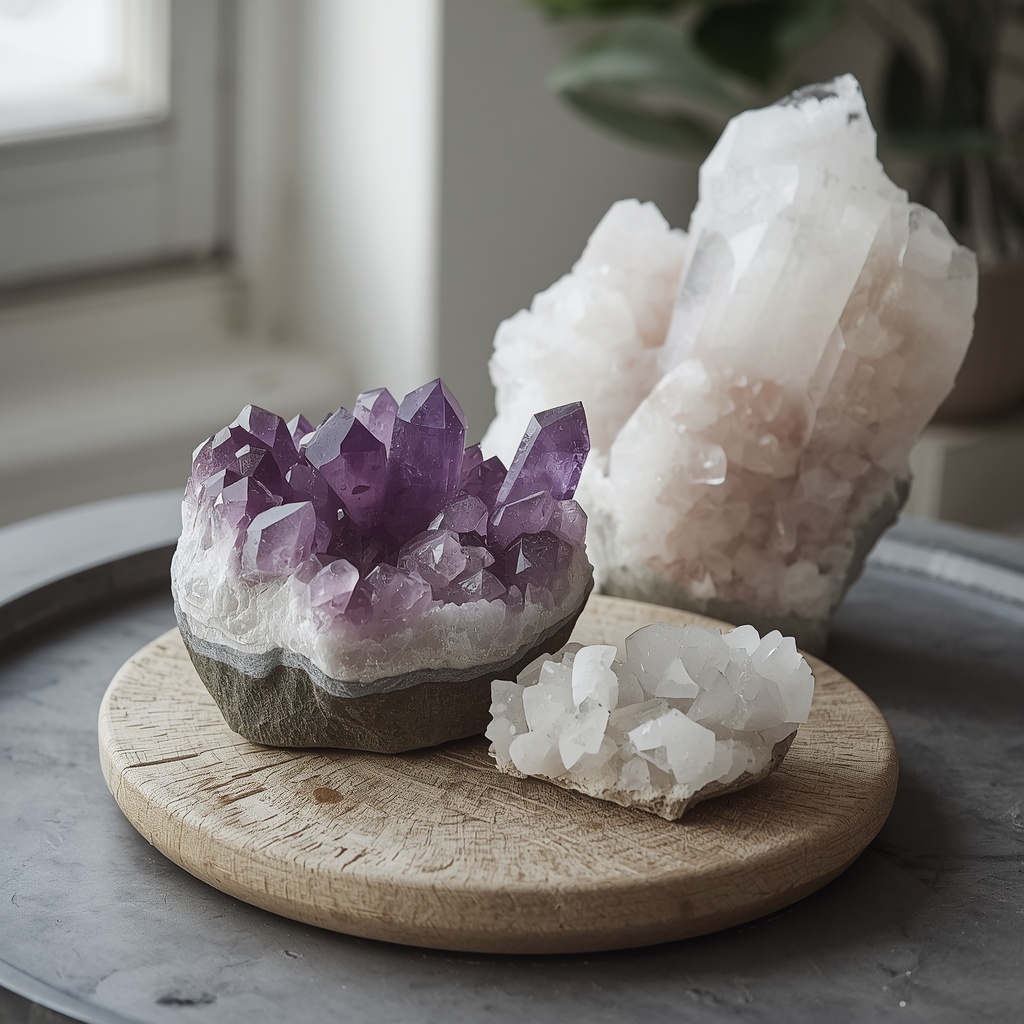
Beyond aesthetics, many homeowners are drawn to crystals for the intentionality they represent — whether that’s a personal wellness practice, a love of mineralogy, or simply an appreciation for a naturally formed object that took millions of years to create. Whatever your reason, crystals are an easy way to add texture, sparkle, and a sense of the earth’s geology to a room.
Popular crystals for home decor and their look:
| Crystal | Color/Look | Best Used For |
|---|---|---|
| Clear Quartz | Clear, glassy | Bookshelves, bedside tables |
| Amethyst | Purple, geode-shaped | Statement centerpiece |
| Rose Quartz | Soft pink | Bedroom, vanity accents |
| Black Tourmaline | Matte black, angular | Modern/industrial spaces |
| Citrine | Golden yellow | Sunny kitchen or dining nook |
| Selenite | White, translucent | Minimalist, Scandinavian rooms |
Large geodes and crystal clusters make excellent standalone centerpieces, while smaller tumbled stones can be scattered into bowls, terrariums, or bookshelf styling. If you want a more architectural moment, a raw amethyst geode on a stone pedestal instantly becomes a conversation piece.
Room-by-Room Styling Guide
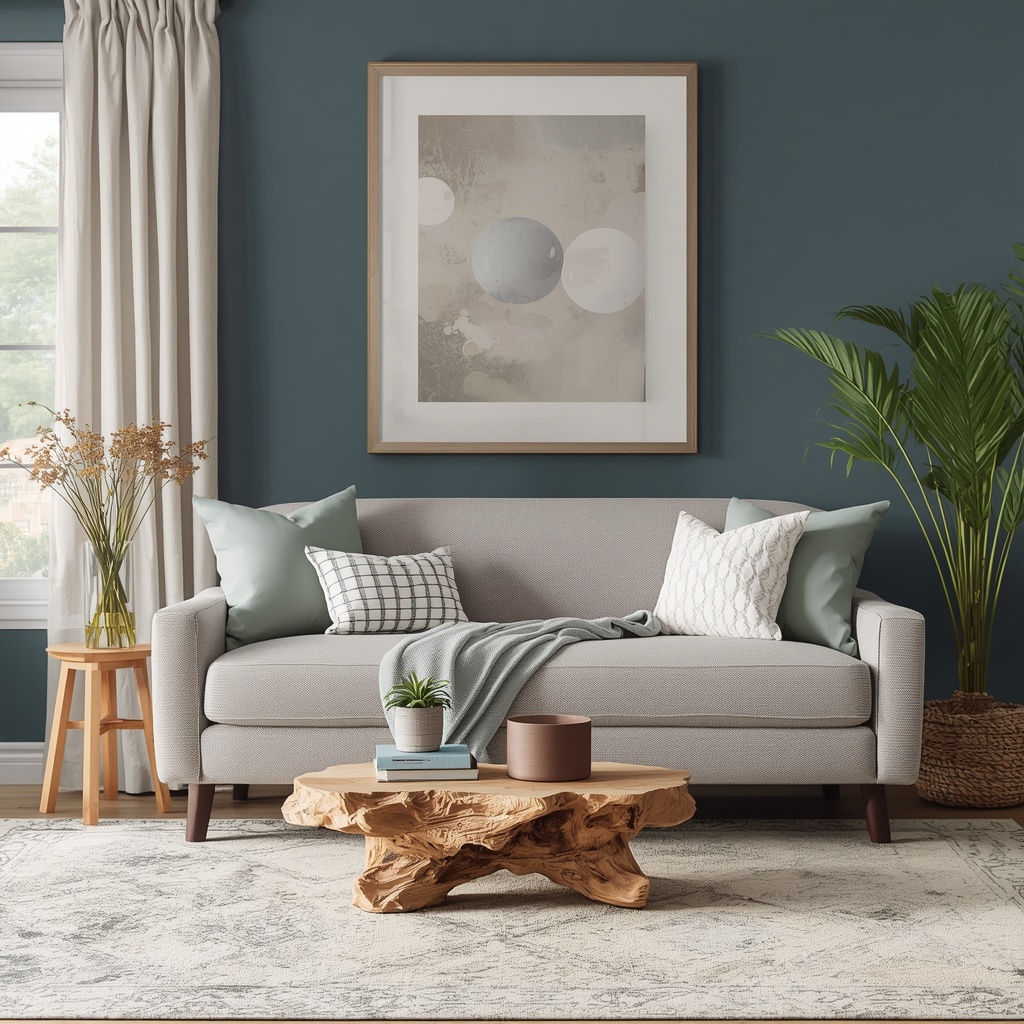
Not every space calls for the same approach. Here’s a quick breakdown of how to apply stones, driftwood, and crystals depending on the room.
| Room | Stone | Driftwood | Crystals |
|---|---|---|---|
| Living Room | Stone coffee table or coasters | Statement branch in a vase | Quartz cluster on a shelf |
| Bedroom | Smooth stone tray for jewelry | Driftwood headboard accent | Rose quartz on nightstand |
| Bathroom | Pebble bath mat | Driftwood towel ladder | Selenite on the vanity |
| Home Office | Marble bookends | Driftwood pen holder | Citrine near your desk lamp |
| Entryway | Stone catch-all bowl | Driftwood mirror frame | Small crystal dish for keys |
Common Mistakes to Avoid
Even a great trend can be overdone. Keep these pitfalls in mind as you decorate:
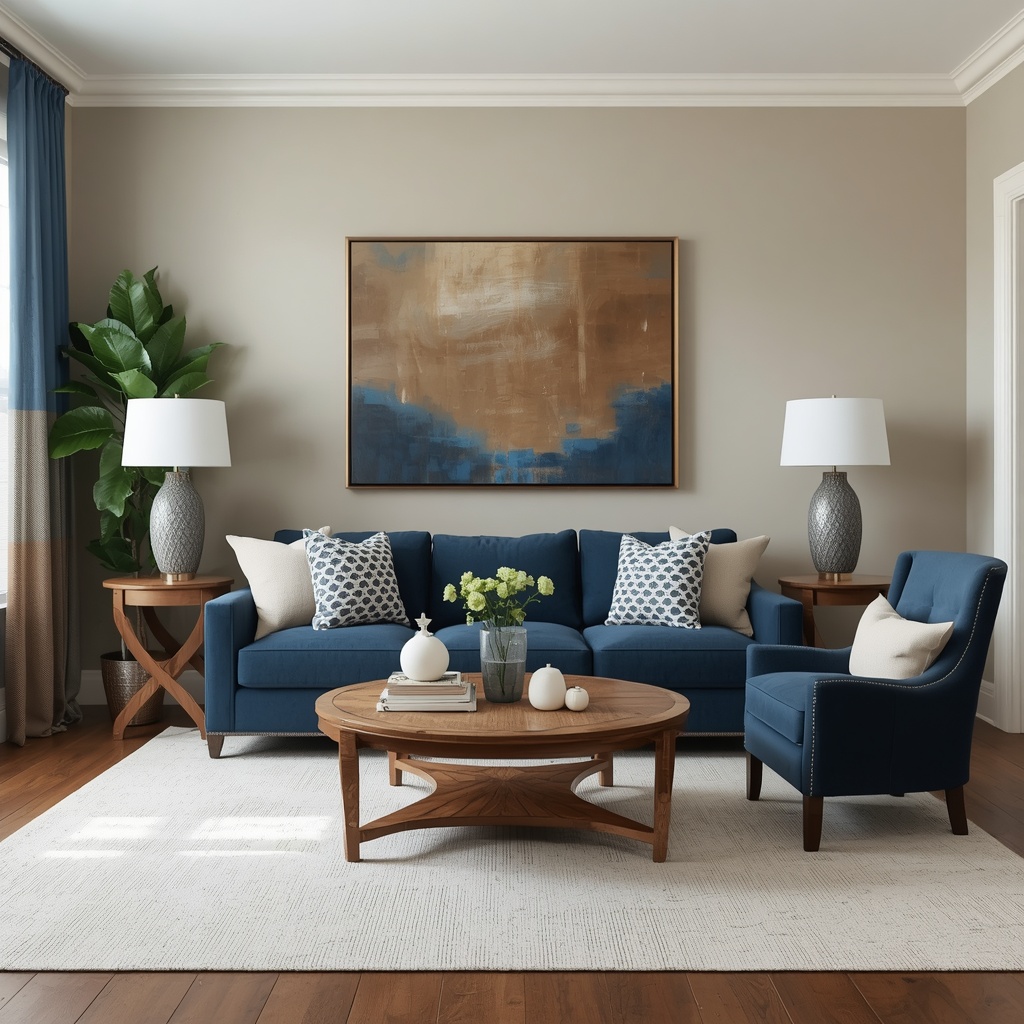
- Overcrowding the space. Natural elements work best as focal points, not filler. Three well-placed pieces beat fifteen scattered ones.
- Ignoring scale. A tiny stone on a massive table gets lost; a huge driftwood branch in a small apartment can overwhelm the room.
- Mixing too many finishes. Pair natural materials with one or two consistent metals (brass, matte black, or brushed nickel) rather than four different finishes at once.
- Forgetting maintenance. Driftwood can shed bark or dust over time, and porous stones can stain — wipe them down regularly and seal porous stone surfaces if they’re near water or food.
- Skipping the story. Whenever possible, choose pieces you actually gathered, gifted, or chose intentionally. It’s the personal connection that makes this style feel authentic rather than staged.
Where to Source Stones, Driftwood, and Crystals
You don’t need a design budget to pull this off. Here are a few reliable places to start:
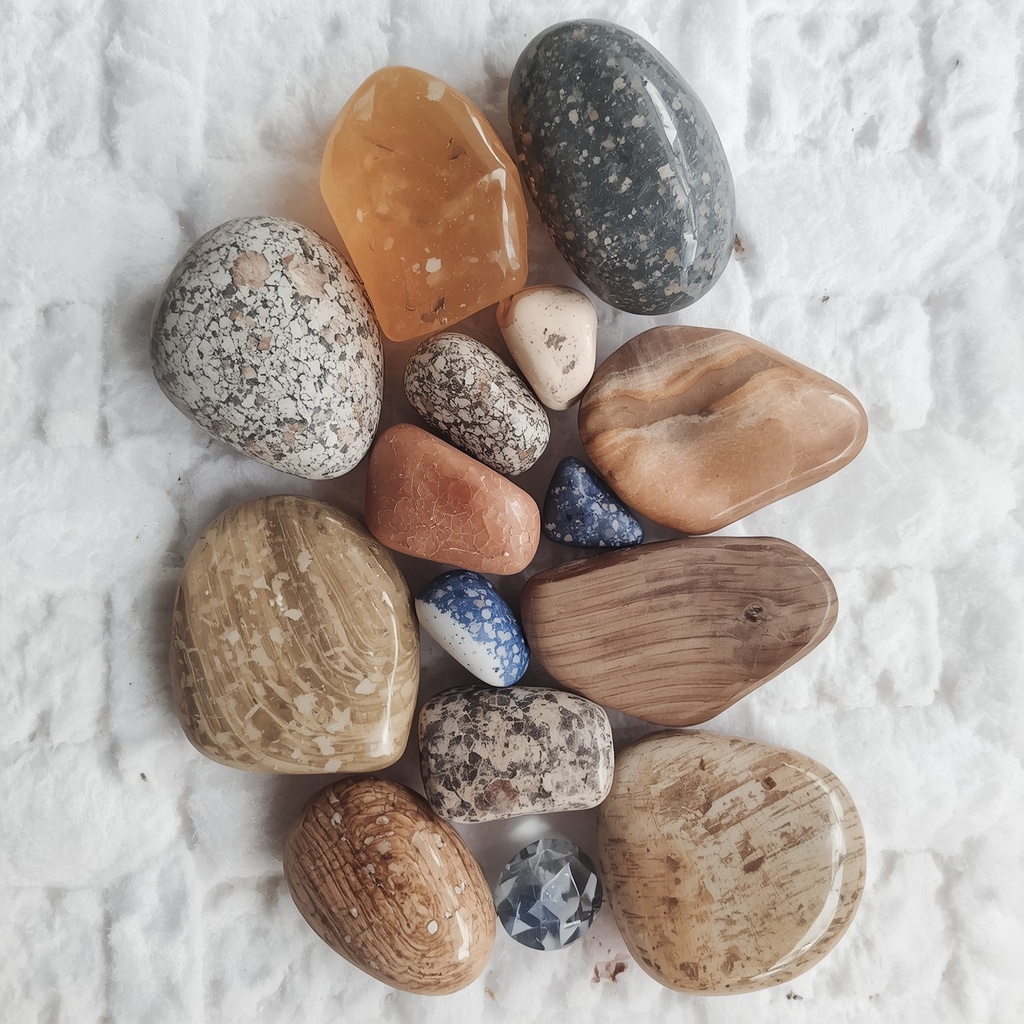
- Local rock and mineral shops — great for ethically sourced crystals and geodes
- Beaches, lakeshores, and riverbanks — free driftwood and smooth stones (check local regulations before collecting)
- Home improvement and garden centers — polished river rocks, pebbles, and stone slabs
- Estate sales and flea markets — one-of-a-kind driftwood art and vintage stone bookends
- Online marketplaces — wider selection of crystal clusters, geodes, and specialty stones
For a broader look at how this style fits into the larger design conversation, Home Depot’s guide to biophilic design is a solid starting point on why nature-driven interiors are gaining traction across the U.S.
Bringing It All Together: A Sample Styling Formula
If you’re not sure where to begin, use this simple formula for any shelf, console, or coffee table vignette:

- One large anchor piece (a stone slab, driftwood branch, or crystal geode)
- One mid-size textural piece (a woven basket, ceramic vase, or stack of books)
- One small detail piece (a tumbled crystal, tiny stone dish, or single stem)
This “large, medium, small” rule is a classic styling trick used across interior design, and it works especially well with organic materials because their irregular shapes naturally create visual interest without needing extra ornamentation.
Pro Tip
Group items in odd numbers — three or five pieces per vignette tend to look more natural and intentional than even numbers, which can feel too symmetrical and staged.
Pairing Colors, Lighting, and Textures With Natural Elements
Stones, driftwood, and crystals don’t exist in a vacuum — they lean on the colors and lighting around them to really shine. Because these materials are already visually rich, the rest of your palette should stay quiet enough to let them lead.
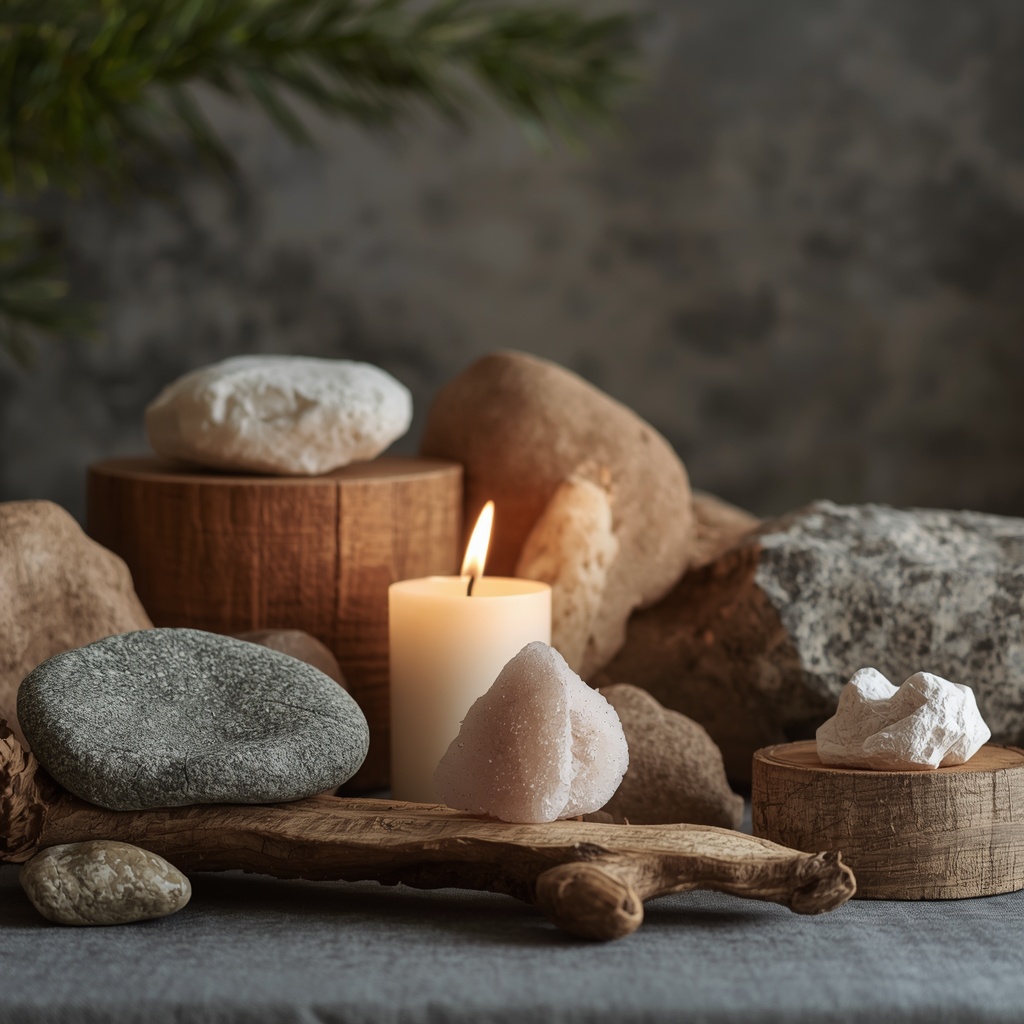
Warm neutrals — sand, oatmeal, terracotta, warm white, and soft greige — form the ideal backdrop. They echo the natural tones already present in stone and driftwood, so nothing fights for attention. If you want a bolder accent, look to colors you’d actually find outdoors: moss green, ocean blue, or a warm clay orange. These hues reinforce the “brought outside in” feeling without tipping into a themed or costume-y look.
Lighting matters just as much as color. Natural materials tend to look flat under harsh overhead lighting, but they come alive under warm, layered light sources — a table lamp with a linen shade, a few flickering candles, or afternoon sun streaming across a windowsill. Crystals in particular benefit from this kind of light, since they catch and refract it in a way that fluorescent bulbs simply can’t replicate.
Quick pairing guide:
- Textiles: Linen, jute, wool, and raw cotton echo the same organic feel as stone and driftwood
- Metals: Matte black, aged brass, and brushed bronze feel more grounded than polished chrome
- Wall colors: Warm whites, clay, sage, and soft taupe let natural materials stand out
- Lighting: Warm-toned bulbs (2700K–3000K) and layered lamp lighting over single overhead fixtures
Pro Tip
If a room feels flat even after adding natural elements, check your light temperature before adding more decor. Swapping a cool, blue-toned bulb for a warm one can instantly make stone and wood tones look richer and more inviting.
Matching the Trend to Your Existing Design Style
One of the best things about this approach to decorating is that it isn’t tied to a single aesthetic. It adapts to whatever style you already love — you’re simply adjusting the finish, shape, and pairing of each material.
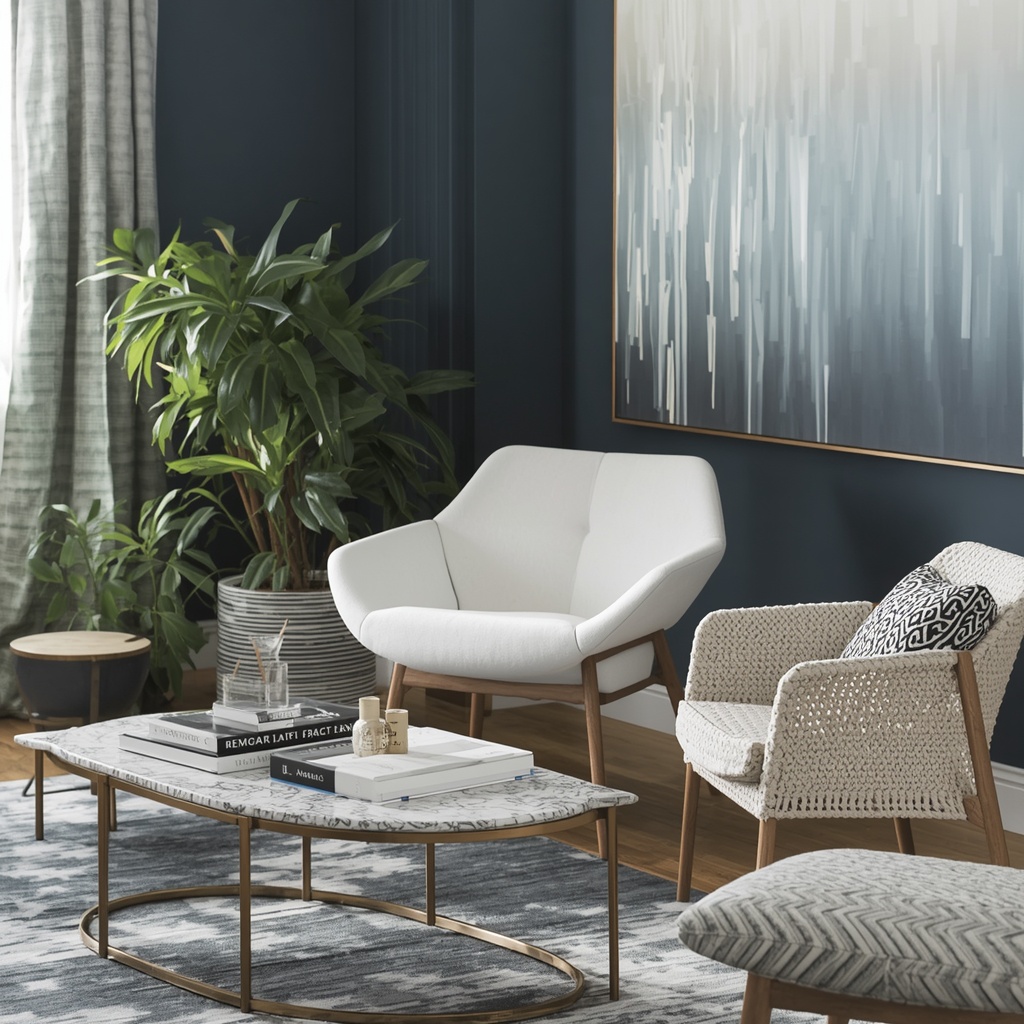
- Coastal: Lean into driftwood heavily, pair with white and sandy neutrals, and choose sea-glass-like crystals such as aquamarine or pale quartz
- Scandinavian/Minimalist: Use fewer, larger pieces — a single stone bowl or one clean-lined driftwood branch — and keep crystals small and understated
- Bohemian: Layer freely — mix multiple crystal clusters, textured stone bowls, and driftwood wall hangings alongside plants and woven textiles
- Modern Farmhouse: Pair rough-hewn stone and driftwood with matte black hardware and warm wood furniture
- Industrial: Choose raw, angular crystals like black tourmaline or smoky quartz, and pair stone with metal and concrete finishes
No matter which style resonates with you, the underlying principle stays the same: let the material’s natural imperfections do the talking, and resist the urge to over-polish or over-arrange.
Frequently Asked Questions
Is decorating with stones, driftwood, and crystals expensive? Not necessarily. Many of these materials can be foraged for free (where legal) or purchased inexpensively at garden centers, thrift stores, and mineral shops. A few well-chosen pieces go further than a room full of mass-produced decor.
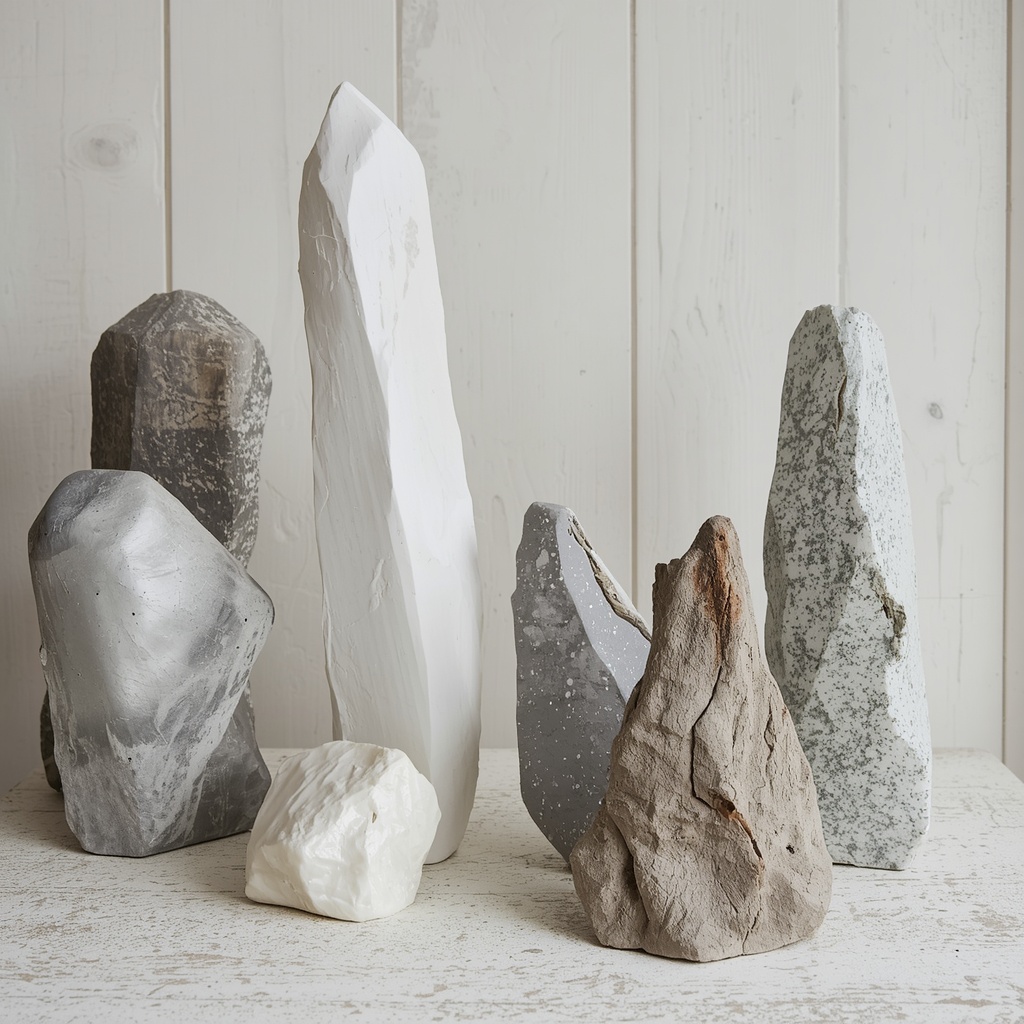
Does this style work in modern or minimalist homes? Yes. Natural materials pair beautifully with clean lines and neutral palettes — in fact, a single stone or driftwood piece often reads as more sophisticated in a minimalist space than a room full of matching decor.
How do I keep driftwood and stone décor clean? Dust regularly with a soft cloth, and avoid harsh chemical cleaners on porous stone. Driftwood can be lightly sealed with a matte wood finish if you want to reduce shedding and preserve its color over time.
Can I mix crystals with other decor styles, like farmhouse or industrial? Absolutely. Choose crystals with rougher, raw edges for farmhouse and industrial spaces, and save the polished, glassy varieties for more refined or glam interiors.
Final Thoughts
Decorating with stones, driftwood, and crystals isn’t about following a rigid formula — it’s about inviting a little bit of the outside world into the spaces where you live, rest, and recharge. Start with one piece that speaks to you, build outward with intention, and let the natural imperfections do what they do best: make your home feel warmer, more textured, and entirely your own.
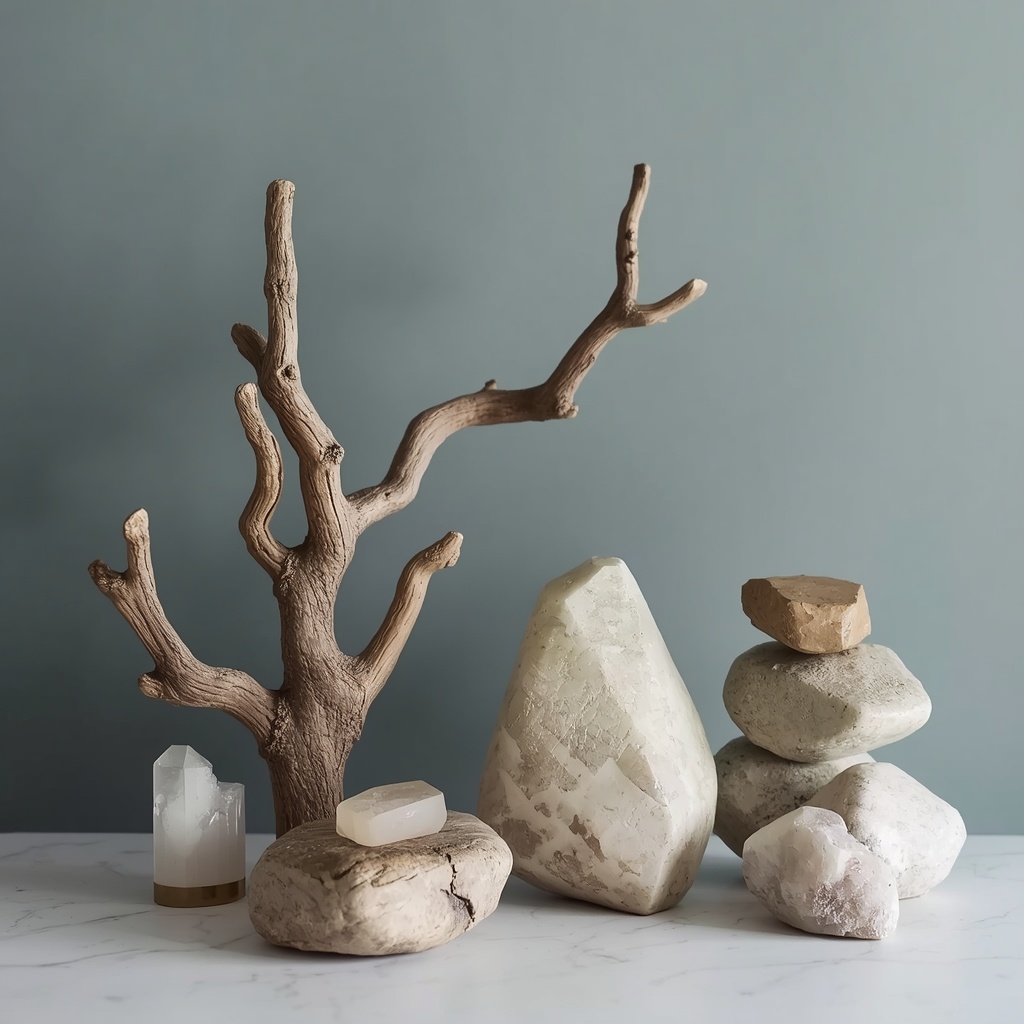
Whether you’re drawn to the rugged simplicity of a driftwood branch, the grounded weight of natural stone, or the quiet sparkle of a crystal cluster, this is a design trend that rewards patience and personal taste over quick fixes — and that’s exactly why it’s built to last well beyond a single season.