
Textured Walls in Modern Kitchens
How layered surfaces, tactile finishes, and dimensional detail are redefining the heart of the American home.
Walk into a beautifully designed modern kitchen and you’ll feel it before you can fully explain it — a certain depth, warmth, and personality that plain painted walls simply can’t deliver. That feeling? It almost always comes from texture. Textured walls in modern kitchens have moved well beyond a passing trend; they’ve become one of the most powerful design tools available to homeowners who want a space that’s not just functional, but genuinely soul-stirring.
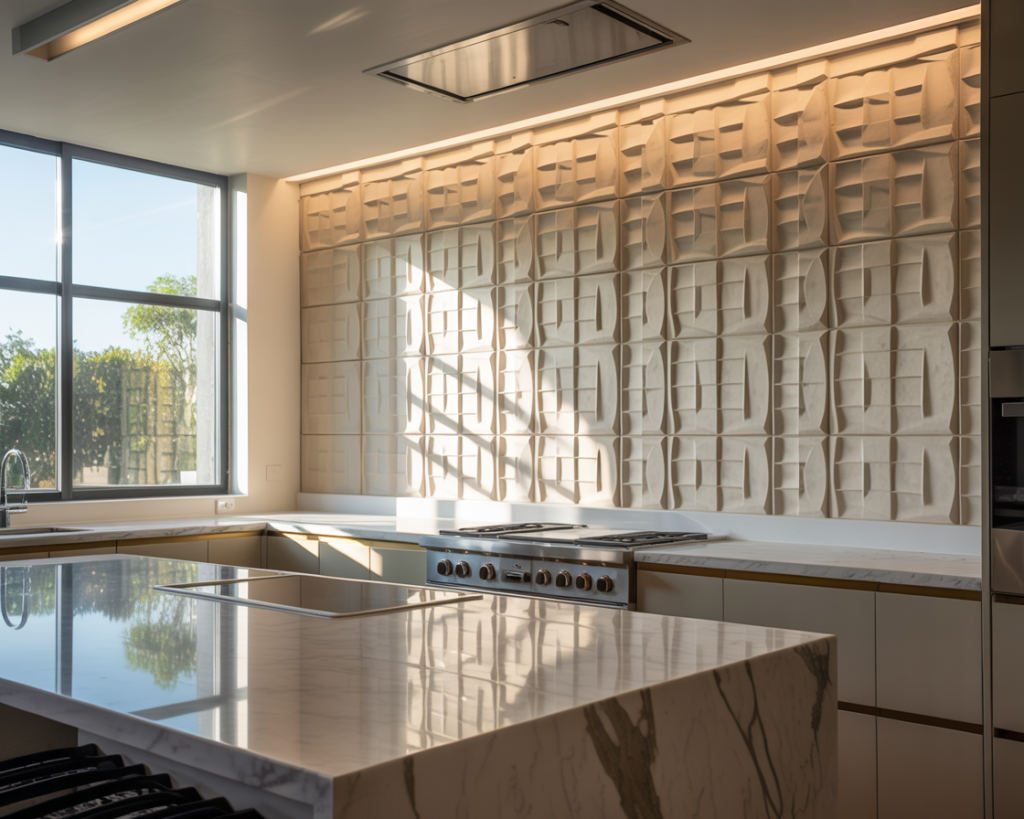
As an interior designer who has worked on hundreds of American kitchen renovations, I’ve watched homeowners fall in love with their kitchens all over again — simply by rethinking their walls. Whether you’re drawn to the artisanal appeal of Venetian plaster, the earthy warmth of exposed brick, or the clean-lined sophistication of fluted wood panels, textured walls offer a level of visual richness that flat paint could never achieve. In this guide, I’m pulling back the curtain on everything you need to know.
1. Why Textured Walls Are Having a Major Moment in American Kitchens
The open-concept, all-white kitchen dominated American homes for nearly two decades. Crisp cabinets, polished countertops, and smooth walls were the safe, sell-your-home formula. But something shifted. Homeowners grew tired of sterile spaces and started craving warmth, character, and individuality — and textured walls answered that call beautifully.
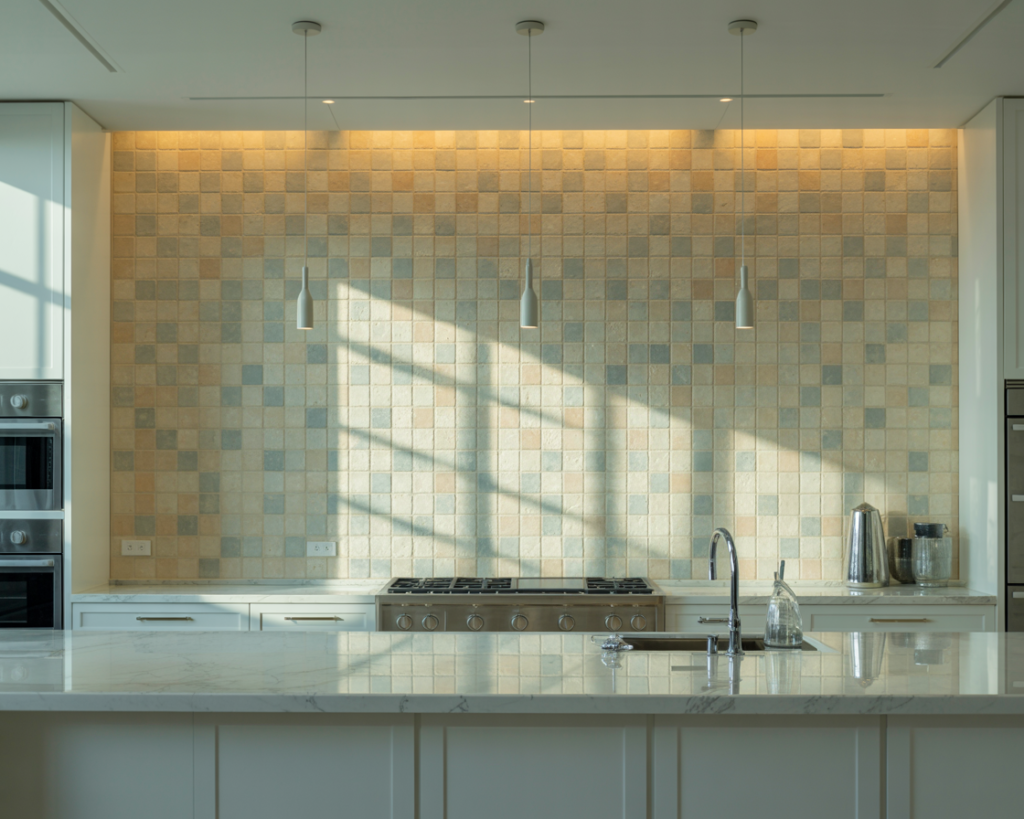
Interior design forecasters at Houzz and the National Kitchen and Bath Association (NKBA) have both noted the surge in clients requesting dimensional wall treatments. The rise of social media platforms like Pinterest and Instagram amplified it further. When a single photo of a limewash plaster kitchen wall racks up half a million saves, the design industry listens. Today, textured kitchen walls are no longer “bold” — they’re expected in any high-design home.
🏡
Warmth
Adds visual coziness flat walls can’t replicate
✨
Character
Each finish creates a truly one-of-a-kind space
📈
Value
Buyers respond to design-forward kitchens
🎨
Flexibility
Works across farmhouse, modern, transitional styles
2. The Most Popular Textured Wall Finishes for Modern Kitchens
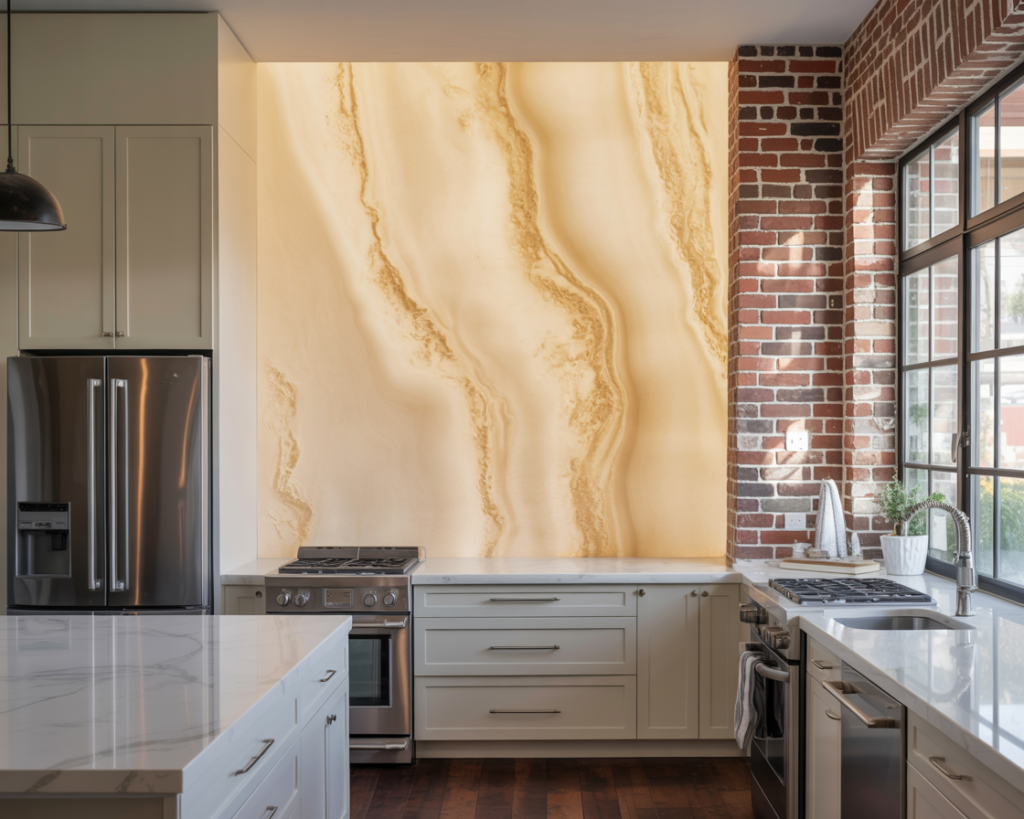
Not all textures are created equal, and choosing the right finish is everything. The material you select will influence the mood, maintenance needs, durability, and overall aesthetic of your entire kitchen. Below is a breakdown of the most sought-after options I recommend to my clients across the country.
| Finish Type | Style Vibe | Durability | Avg. Cost (per sq ft) | DIY Friendly? |
|---|---|---|---|---|
| Venetian Plaster | Luxe, European, Timeless | ⭐⭐⭐⭐⭐ | $8–$20 | No |
| Limewash Paint | Rustic, Organic, Soft | ⭐⭐⭐⭐ | $3–$8 | Yes |
| Exposed Brick | Industrial, Farmhouse | ⭐⭐⭐⭐⭐ | $10–$30 | No |
| Fluted Wood Panels | Contemporary, Warm Modern | ⭐⭐⭐⭐ | $12–$25 | Partial |
| Shiplap | Coastal, Farmhouse, Casual | ⭐⭐⭐⭐ | $6–$14 | Yes |
| Stone Veneer | Rustic Luxe, Mountain Modern | ⭐⭐⭐⭐⭐ | $15–$40 | No |
| Textured Wallpaper | Eclectic, Bold, Pattern-Led | ⭐⭐⭐ | $5–$18 | Yes |
Each of these materials has its own set of benefits and trade-offs. My personal top recommendation for most modern American kitchens? Venetian plaster or limewash — both offer incredible depth without overwhelming the space, and they age beautifully over time.
Before committing to any textured wall finish, always test it on a 2-foot section of your actual kitchen wall, in your actual lighting. Natural light changes dramatically throughout the day, and what looks stunning at noon can feel completely different under warm evening pendant lights. Always live with your sample for at least 48 hours.
3. How to Choose the Right Texture for Your Kitchen Style
The biggest mistake homeowners make is picking a texture they love in isolation — on a Pinterest board, in a showroom, or in someone else’s home — without considering how it will interact with their specific kitchen layout, cabinetry finish, and lighting conditions. Texture is a relationship, not a solo act.
A few guiding principles I swear by: contrast creates drama, harmony creates calm. If your cabinetry is sleek and handle-free, a rough stone veneer or exposed brick wall will create an exciting tension that makes both elements pop. If you prefer a cohesive, serene kitchen, a soft limewash wall that echoes the undertones of your countertop is pure magic. Consider the following when making your selection:
- Cabinet finish (matte vs. glossy vs. natural wood)
- Countertop material (quartz, marble, butcher block, concrete)
- Lighting type (recessed, pendants, under-cabinet LED)
- Kitchen size (smaller kitchens benefit from lighter, finer textures)
- Existing flooring material and tone
- Overall home style (transitional, contemporary, farmhouse, industrial)
The best kitchen designs don’t just look beautiful — they feel like the people who live in them. Texture is how walls get a personality.— Interior Design Principle, NKBA Guidelines
4. Venetian Plaster: The Gold Standard of Kitchen Wall Texture
If there is one textured wall finish that consistently makes clients cry happy tears when they see the final result, it is Venetian plaster. This ancient Italian technique — which involves applying multiple thin layers of marble dust-infused plaster and burnishing each layer to a high sheen — creates a depth and luminosity that photographs can’t fully capture. In a modern kitchen, it acts like a living piece of art on your walls.
The key advantage of Venetian plaster in a kitchen environment is its practical durability. Unlike standard drywall finishes, properly sealed Venetian plaster is moisture-resistant, washable, and mold-resistant — three non-negotiable qualities in a kitchen. Expect to invest between $8 and $20 per square foot for professional application, but this is one area where cutting corners costs you the magic. Visit resources like Architectural Digest to see stunning real-home examples.
For modern kitchens with white or off-white cabinetry, try Venetian plaster in a warm greige or soft terracotta tone rather than matching white. The contrast gives your cabinets a cleaner, crisper look while the wall adds all the warmth your space needs.
5. Limewash Paint: The Approachable, Budget-Friendly Texture Option
Not every budget stretches to Venetian plaster — and that’s perfectly fine, because limewash paint delivers a similarly beautiful, organic, depth-rich finish at a fraction of the cost. Limewash is made from limestone that’s been slaked and aged, producing a breathable, matte finish with natural variation in tone and depth. The result is a wall that looks like it has history and soul.
Brands like Portola Paints and Roman Clay by Sherwin-Williams have made limewash-style finishes accessible for the everyday homeowner. Many DIY enthusiasts successfully apply limewash themselves over a weekend, making it one of the highest-impact, lowest-cost kitchen transformations available. It pairs especially well with open shelving, warm wood tones, and unlacquered brass or matte black hardware.
🌿 Sustainability Note
Limewash paint is one of the most eco-friendly wall finishes available. It’s made from natural minerals, contains no VOCs (volatile organic compounds), and is completely safe for indoor air quality — an important consideration in the kitchen where your family spends so much time.
6. Fluted and Ribbed Wood Panels: The Contemporary Texture Statement
Walk through any high-end kitchen showroom in 2025 and you’ll see them everywhere — fluted wood panels, their rhythmic vertical grooves adding a sense of architectural sophistication that feels simultaneously contemporary and warmly tactile. Originally used in furniture design, fluting has migrated to kitchen walls and even cabinetry faces, bringing a graphic, almost sculptural quality to the space.
Fluted panels work brilliantly as an accent wall behind a kitchen island, as a backsplash alternative in a dry prep zone, or as a feature wall framing a range or hood. They’re available in natural oak, walnut, painted MDF, and even waterproof composite materials suitable for humid environments. Their vertical lines visually elongate ceilings and create a quietly glamorous effect without any overt ornamentation.
- Behind the island: Creates a stunning focal point visible from the living room in open plans.
- Range wall: Fluted panels flanking a hood add architectural gravitas to the cooking zone.
- Pantry or butler’s pass-through: Adds personality to transitional zones often overlooked.
- Lower wall accent: Pair with smooth plaster above for a two-texture design that reads intentional.
7. Exposed Brick and Stone: Bringing the Outdoors In
There’s a reason exposed brick walls in kitchens have endured for generations — they carry something no manufactured material can replicate: genuine history and permanence. In modern kitchens, the pairing of raw brick or stacked stone against sleek cabinetry, integrated appliances, and polished countertops creates a layered contrast that feels collected and lived-in rather than designed and staged.
If your home doesn’t have existing masonry to expose, brick veneer slips and thin stone panels are excellent alternatives that achieve the same aesthetic without structural work. Seal exposed brick properly with a breathable masonry sealer to prevent moisture issues and make cleaning easier — crucial in a kitchen environment where splatter is inevitable. The Brick Industry Association offers excellent guidance on sealing and maintenance for interior applications.
8. Color Pairing Guide: What Colors Work Best With Textured Walls
Texture and color are inseparable partners. A beautifully applied Venetian plaster in the wrong tone can feel heavy and oppressive; the right color can make a small kitchen feel like an Italian villa. Understanding how undertones interact with your existing palette is fundamental to a successful textured wall design.
| Wall Texture | Best Color Family | Cabinet Pairing | Hardware Finish |
|---|---|---|---|
| Venetian Plaster | Warm Whites, Greige, Terracotta | White, Sage, Navy | Unlacquered Brass |
| Limewash | Ochre, Dusty Rose, Sage Green | Natural Wood, Cream | Matte Black, Bronze |
| Exposed Brick | Warm Neutrals, Deep Blues | White, Charcoal, Olive | Matte Black, Oil Rubbed Bronze |
| Fluted Wood | Natural Oak Tones, Ebony | White, Black, Greige | Brushed Nickel, Gold |
| Shiplap | Crisp White, Soft Gray, Cream | Natural Wood, Navy | Nickel, Antique Brass |
When working with a textured wall in a warm tone (terracotta, ochre, clay), balance it with one cool-toned element — a blue-gray island, slate tiles, or stainless appliances. This prevents the kitchen from feeling too warm or cave-like and keeps the energy balanced and inviting.
9. Practical Considerations: Maintenance, Sealing, and Kitchen-Safe Applications
The kitchen is the hardest-working room in the house. Before committing to any textured wall finish, you need to think realistically about grease, steam, splatter, and humidity. The beauty of texture is undeniable — but it has to be able to stand up to scrambled eggs on a Tuesday morning and a Thanksgiving dinner on a Thursday.
Here’s a practical zone-by-zone approach I give every client before their installation begins:
- Directly behind the range or cooktop: Only use tile, sealed stone, or metal. No plaster, wood, or porous finishes within 18 inches of an open flame or active cooking surface.
- Adjacent to the sink: Seal any plaster or limewash finish with two coats of a water-based topcoat. Verify it’s rated for high-humidity areas.
- Dining-adjacent or open living walls: Full creative freedom — these walls see less direct moisture and heat, making them ideal for expressive textures.
- Island-facing accent walls: Excellent zone for fluted wood or stone veneer — impact without direct exposure to cooking zones.
10. How to Get Started: A Step-by-Step Approach for Homeowners
Ready to transform your kitchen walls? The process is more approachable than most homeowners think, especially when you break it into clear, manageable steps. Having guided hundreds of clients through this journey, I’ve refined this process into a sequence that consistently produces stunning, stress-free results.
- Define your kitchen’s dominant style. Pull three to five reference images that genuinely excite you. Look for the common thread — is it warmth, drama, softness, or bold contrast?
- Select your texture category using the comparison table above. Narrow it to two finalists before requesting samples.
- Get large samples applied to your actual wall. Never decide from small paint chips or showroom displays.
- Identify your accent wall versus full-room application. One bold textured accent wall often delivers more impact than four mediocre ones.
- Hire a specialist for professional finishes. Venetian plaster, stone veneer, and exposed brick require skilled tradespeople. Check credentials on Houzz Pro Directory or the National Association of the Remodeling Industry (NARI).
- Seal and protect your finished walls with appropriate products based on zone and material type.
- Style thoughtfully. Textured walls are a backdrop — keep décor simple so the wall remains the star.
A textured kitchen wall isn’t a trend — it’s a return to how humans have always wanted to live: surrounded by materials that feel alive, imperfect, and real.— Design Philosophy, American Institute of Interior Designers
Final Thoughts
Textured walls in modern kitchens represent one of the most rewarding investments you can make in your home. They transform a functional space into one with genuine emotional resonance — a kitchen that not only works beautifully but feels beautiful every single time you walk into it. Whether you choose the refined elegance of Venetian plaster, the earthy soul of limewash, the sculptural rhythm of fluted wood, or the timeless grit of exposed brick, you’re choosing to live in a home with character.
The walls of your kitchen tell a story. Make sure it’s a good one. Start small if you need to — one accent wall, one bold sample, one conversation with a specialist. But start. Because once you experience what texture does to a space, smooth painted walls will never quite feel like enough again.
Written by a Certified Residential Interior Designer specializing in kitchen and bath renovations across the United States. For personalized consultations, connect via the NKBA designer directory.