
Mixed-Stone Mosaic Backsplashes: How to Transform Any Kitchen or Bathroom
Your complete guide to choosing, installing, and styling nature’s most versatile surface treatment
By a Certified Interior Designer.

Walk into any showroom-worthy American kitchen today, and there’s a good chance the first thing that stops you cold is the backsplash. Not the appliances, not the island — the backsplash. And increasingly, that showstopper is a mixed-stone mosaic: an artful marriage of marble, travertine, slate, quartzite, and more, assembled into patterns that feel both ancient and completely of-the-moment.
Mixed-stone mosaic backsplashes have surged in popularity across the US, from New York loft renovations to Austin new-builds and Pacific Northwest farmhouse kitchens. And it’s not hard to see why. They bring a layered depth, organic warmth, and one-of-a-kind character that no single-material tile can match. If you’re thinking about making the leap, this guide will walk you through everything — from understanding stone types and design patterns to installation realities and ongoing care.
What Exactly Is a Mixed-Stone Mosaic Backsplash?
A mixed-stone mosaic backsplash is a wall surface treatment made up of multiple types of natural stone — typically cut into small pieces, chips, or uniform tiles — arranged in a deliberate pattern and set against a mesh backing or individually applied to a substrate. Unlike a standard subway tile or single-slab approach, the beauty here lies in the intentional contrast: different stones chosen for their complementary colors, textures, veining, and finishes.
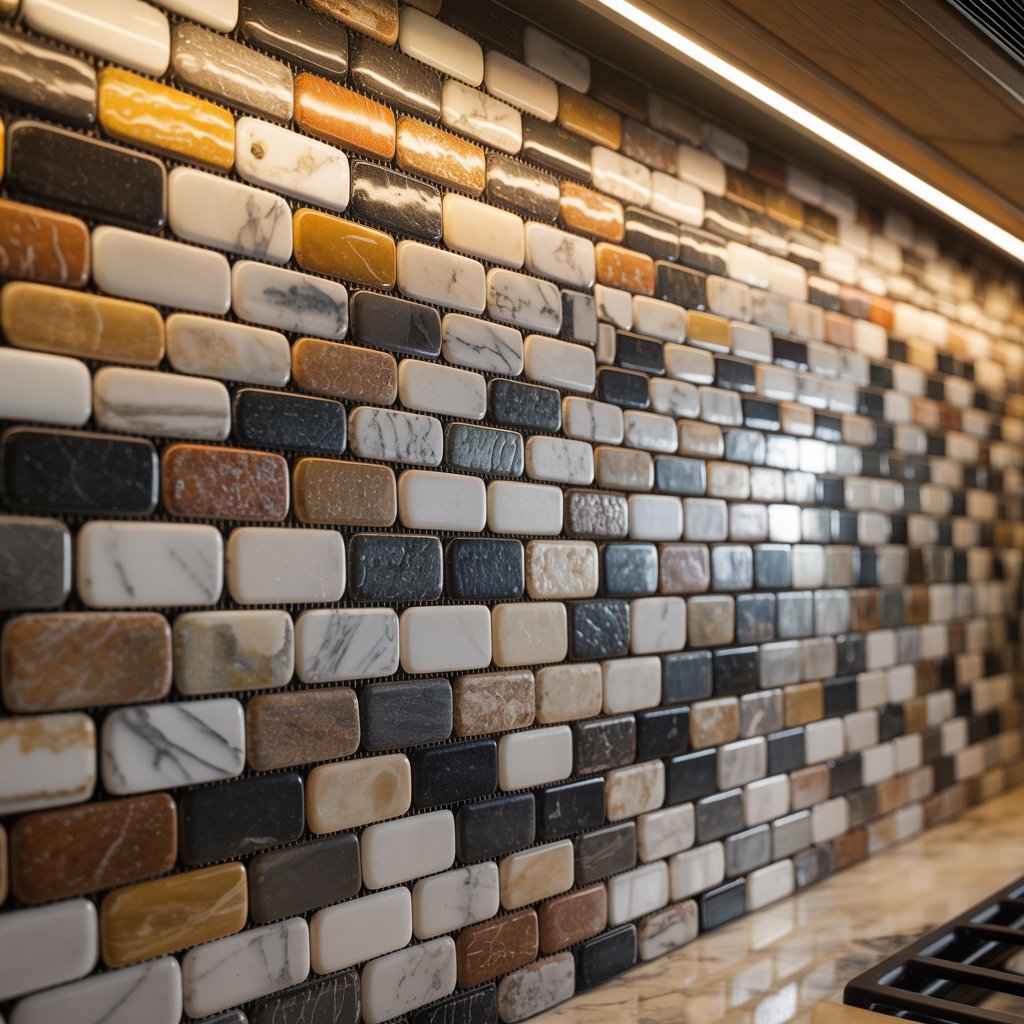
The term “mosaic” in the interior design world refers to the scale and composition, not any specific stone. You might see a NKBA-trending herringbone mosaic that mixes Carrara marble with black slate, or a random pebble mosaic that blends river stones of warm amber travertine, cool gray limestone, and cream onyx. The result is a surface that reads as both natural and curated — which is exactly why designers love it.
“Mixed-stone mosaics are one of the rare design choices that get better with time. The more you look, the more you see — and that’s what separates truly great interiors from just pretty ones.”— Sandra Morales, NCIDQ-certified Interior Designer, Chicago
The Most Popular Stone Combinations for Mosaic Backsplashes
Not all stones play nicely together — and not all combinations work in every room. The best mixed-stone mosaics are intentional about tonal range, texture contrast, and finish compatibility. Here’s a breakdown of the most sought-after pairings in today’s US design market:

| Stone Combination | Best For | Mood / Style | Price Range (per sq ft) | Durability |
|---|---|---|---|---|
| Carrara Marble + Nero Marquina | Kitchen, bath | Timeless luxury | $28–$55 | Moderate |
| Travertine + Slate + Limestone | Kitchen, mudroom | Rustic / organic | $15–$32 | High |
| Quartzite + Quartz Blend | Kitchen, laundry | Modern organic | $22–$48 | Very High |
| River Pebble Mix (multi-tone) | Bathroom, shower | Spa / zen | $12–$25 | High |
| Onyx + Marble (translucent blend) | Feature walls, bath | Glamorous / bold | $45–$90 | Low–Moderate |
| Sandstone + Basalt + Travertine | Outdoor kitchen, BBQ | Southwest / earthy | $18–$38 | Very High |
Pro Tip
When mixing stones, always request physical samples and hold them together against your cabinet and countertop materials in your actual kitchen lighting — natural stone looks dramatically different under warm incandescent vs. cool LED vs. daylight. Never order based on a website photo alone. Your local stone yard should let you borrow samples for 48 hours.
Design Patterns That Define the Look
The arrangement of your mosaic is just as important as the stones themselves. A random pebble pattern evokes a completely different feeling than a structured herringbone or a geometric Arabesque, even with identical stones. Understanding pattern language is key to getting the specific aesthetic you’re going for in your home.

Here are the six patterns driving the most installation requests , according to designers working across major US markets from San Francisco to Miami:
◆HerringboneClassic motion, works with any stone mix
⬡HexagonalModern structure, great with two-tone blends
◉Random PebbleOrganic, spa-like, ideal for bathrooms
▣VersaillesFrench-inspired, mixed sizes, timeless
✦ArabesqueArtisan feel, intricate, statement-making
▬Linear StackSleek, contemporary, easy to DIY
Room-by-Room Design Considerations
Mixed-stone mosaic backsplashes aren’t a one-size-fits-all proposition. The right stone combination, finish, and pattern shift significantly depending on which room you’re working in — and the functional demands of that space matter as much as the aesthetic ones.

Kitchens demand stones that can withstand heat, cooking grease, and frequent wiping, which means highly porous stones like soft limestone or unfinished travertine need extra thought about sealing. Bathrooms, on the other hand, are more forgiving of porous materials if properly sealed and ventilated, and this is where pebble mosaics and softer organic stones really shine. Outdoor applications — backyard kitchens, BBQ stations, pool surrounds — call for frost-resistant, non-slip stones like slate, basalt, and quartzite.
- Kitchen backsplash: Prioritize sealed, honed, or polished stones. Grout lines should be tight (1/16″ to 1/8″) to minimize food trapping. Consider a contrasting dark grout to disguise grease buildup.
- Bathroom backsplash / shower surround: Pebble mosaics excel here. Use epoxy grout for moisture resistance. Natural stone in showers requires sealing every 1–2 years.
- Powder room accent wall: Low moisture means you can go dramatic — onyx, mother of pearl mixed with marble, even semi-precious stone chips are all viable here.
- Fireplace surround: Heat-resistant stones like slate, quartzite, and dense marble work best. Avoid onyx and highly polished surfaces near direct flame.
- Outdoor kitchen: Non-porous, freeze-thaw rated stones only. Basalt, quartzite, and dense slate are your workhorses here.
How to Choose the Right Finish for Your Mixed-Stone Mosaic
One of the most nuanced decisions in any stone selection process is the finish — and in a mixed mosaic, you’re often working with multiple finishes simultaneously, which can either create incredible depth or visual chaos if not handled thoughtfully. Understanding the relationship between finish and function is what separates a durable, beautiful installation from one that shows wear and disappointment within the first year.
Polished finishes on marble and quartzite create a mirror-like reflectivity that makes small kitchens feel larger and bounces light beautifully under under-cabinet LEDs. Honed finishes — matte, smooth but not shiny — are forgiving of fingerprints and water spots, making them the practical darling of busy family kitchens. Tumbled and brushed finishes give stone a naturally aged, handcrafted quality that pairs especially well with transitional and farmhouse-style interiors currently dominating mid-size US cities.
“The finish is what makes a mosaic feel curated versus collected. Mixing polished and tumbled surfaces in one installation? That’s where the magic lives.”— James Whitfield, Principal Designer, Studio Whitfield, Nashville
Pro Tip
Try mixing one polished stone with one honed or tumbled stone in your mosaic — never mix three different finishes. The brain reads two finishes as intentional contrast; three reads as unresolved. This single rule will make your mix look deliberately designed rather than improvised.
Installation: What You Need to Know Before You Begin
Mixed-stone mosaic installation is more complex than standard tile work, and understanding the process upfront will save you from costly surprises. The main variables are substrate preparation, adhesive selection, grout choice, and sealing sequence — all of which are affected by the specific stones in your mix.
Because different stones have different absorption rates, thermal expansion coefficients, and surface sensitivities, the mortar and grout you’d use for a single-material installation may not be appropriate for a multi-stone mosaic. This is the most common mistake homeowners make when attempting DIY mosaic installations: assuming that one product works for all stones. It doesn’t.
- Surface Prep: Substrate must be flat, clean, and structurally sound. Use cement board (not drywall) in wet areas. Any flex in the wall will crack grout over time.
- Adhesive Selection: Use a polymer-modified white thinset for light-colored stones to avoid bleed-through. Gray thinset can ghost through translucent onyx and white marble.
- Layout Planning: Dry-lay your mosaic sheets across the floor before installing. Check that veining and color variation flows naturally across sheet seams.
- Mesh-Back Installation: Press firmly but evenly. Use a rubber float, not a mallet — mosaic pieces on mesh backing can crack from impact force.
- Grout Selection: Use unsanded grout for joints under 1/8″. Sanded grout can scratch polished stone surfaces. Epoxy grout for showers and heavy-use areas.
- Sealing: Apply a penetrating stone sealer before grouting (to protect stone faces from grout haze) AND after grouting. Most natural stones need resealing annually in kitchens.
Should You DIY or Hire a Pro?
Mixed-stone mosaics on mesh backing are among the more forgiving DIY tile projects — if your substrate is in good shape and you’re working on a flat backsplash (not a shower). However, for anything over 30 square feet, irregular layouts, shower installations, or premium stones like marble or onyx, hiring a tile setter with demonstrable mosaic experience is strongly recommended. Ask to see their portfolio specifically for natural stone mosaic work — ceramic tile skill doesn’t automatically translate.
Realistic Budget Planning for Your Mosaic Backsplash
Cost is always a conversation in home renovation, and mixed-stone mosaics span a genuinely wide range depending on stone selection, pattern complexity, and labor market (which varies significantly by US region). Here’s a realistic framework for budget planning based on a standard kitchen backsplash of 30–40 square feet:
Entry-Level
$800–$1,400
Pebble mix or travertine blend, standard pattern, DIY install
Mid-Range
$1,800–$3,200
Marble/slate mix, herringbone or hex, professional install
Premium
$4,000–$8,000+
Quartzite/onyx blend, custom pattern, artisan tile setter
For the most accurate pricing in your market, get quotes from at least three licensed tile contractors. Resources like Houzz and Angi can help you find vetted local professionals with reviews from homeowners in your area. Always request itemized quotes that separate material costs from labor so you know where your money is going.
Care and Maintenance: Keeping Your Mosaic Beautiful for Decades
Natural stone is an investment — and like any investment, it rewards consistent care and penalizes neglect. The good news is that a well-sealed mixed-stone mosaic backsplash is far easier to maintain than most homeowners expect. The key is establishing simple habits from day one rather than attempting to reverse years of accumulated damage.
Daily or weekly cleaning should use only pH-neutral stone cleaners — never vinegar, lemon juice, bleach, or ammonia-based products, which etch and strip the sealer from calcareous stones like marble, travertine, and limestone. Acidic foods and beverages (tomato sauce, wine, citrus) that splash on the backsplash should be wiped promptly rather than left to sit. For grout maintenance, a tile-specific grout brush used monthly prevents the buildup that makes grout look perpetually dingy.
- Seal all natural stone surfaces before first use, and reseal kitchen backsplashes annually
- Use only pH-neutral, stone-safe cleaners — Method, StoneTech, Miracle Sealants brands are widely available at US home improvement stores
- Wipe up cooking grease, wine, and citrus immediately — do not let acidic substances dwell
- Re-grout any cracked or missing grout lines promptly; compromised grout allows moisture infiltration behind the stone
- In showers, squeegee walls after each use to prevent mineral deposit buildup on stone surfaces
- Deep clean quarterly with a stone-safe degreaser for kitchen installations near the range
Pro Tip
Apply a color-enhancing impregnating sealer (rather than a standard penetrating sealer) on tumbled or textured stones in your mix — it brings out the natural richness and depth of the stone’s color without adding a shiny topcoat. Brands like Miracle Sealants 511 Impregnator are available at most tile specialty stores nationwide.
2025 Trend Forecast: Where Mixed-Stone Mosaics Are Headed
The interior design landscape is always moving, and mixed-stone mosaics are evolving alongside broader shifts in how Americans want their homes to feel. The dominant direction in 2025 is toward what designers are calling “grounded luxury” — materials that feel genuinely tactile, warm, and imperfect in a beautiful way, as a direct counter-reaction to years of cold, gray, hyper-minimalist aesthetics.
Warm-toned stone combinations are surging: think honey travertine with terracotta slate, creamy limestone with sandy quartzite, or soft blush marble with brushed bronze travertine inserts. Earth tones — ochre, clay, warm greige — are replacing the cooler palette that dominated the 2010s. Additionally, smaller format mosaics (1/2″ to 3/4″ chips) are making a comeback, giving surfaces a more artisan, hand-crafted quality. And mixed-material mosaics that incorporate natural stone alongside glass, brass inserts, or reclaimed wood are increasingly appearing in high-end renovation projects across Los Angeles, Miami, and New York.
| Trend | Key Stones | Color Story | Best Style Match |
|---|---|---|---|
| Warm Earth Revival | Travertine, Sandstone, Ochre Slate | Honey, clay, rust | Mediterranean, Boho, SW Modern |
| Cool Contrast Classics | Carrara + Nero Marquina | White, black, soft gray | Contemporary, Transitional |
| Artisan Chip Mosaics | Mixed limestone chips | Neutral multi-tone | Farmhouse, Cottage, Eclectic |
| Stone + Metal Hybrid | Marble + brass/bronze inserts | Cream + warm gold | Glam, Art Deco, High-End Traditional |
| Forest Bathing Palette | Basalt, Mica Schist, Green Slate | Charcoal, sage, forest | Japandi, Modern Organic |
Final Thoughts: Is a Mixed-Stone Mosaic Backsplash Right for Your Home?
Mixed-stone mosaic backsplashes aren’t for every home or every homeowner — and that’s actually part of what makes them special. They demand a bit more investment upfront, a bit more thought in selection, and a bit more attentiveness in care. But in return, they deliver something that no painted wall, ceramic tile, or even single-stone installation can fully replicate: a surface that feels genuinely alive, that rewards close attention, and that becomes more personal over time as it develops its own patina and story.
If you’re renovating a kitchen or bathroom and you want a backsplash that will still feel fresh and meaningful in twenty years — something that photographers will reach for and guests will ask about — the mixed-stone mosaic is one of the most enduring answers the design world has to offer. Start with a style direction, choose your stones thoughtfully, invest in quality installation, and commit to proper maintenance. Do those four things, and you’ll have a backsplash that defines your space for decades to come.
“Great stone work is like great architecture: it doesn’t call attention to itself. It just makes every moment in the room feel better.”— Interior Design principle attributed to the late Albert Hadley
Home Decor Insider · Written by a Certified Interior Designer · For informational purposes only
Always consult a licensed contractor for installation work in your home.