Coffee Stations with Vintage Touches
Transform any corner of your home into a charming, nostalgic coffee bar that tells a story — one cup at a time.
There’s something deeply comforting about a coffee station that feels lived-in, curated, and a little bit timeworn. Whether you live in a sun-drenched farmhouse in Vermont or a sleek urban apartment in Chicago, a vintage-inspired home coffee bar can become one of the most personal and welcoming spots in your entire home.

As an interior designer who has spent years helping American families build spaces they truly love, I’ve watched the home coffee station trend evolve from a simple countertop setup into something far more intentional. Today’s homeowners are craving warmth, authenticity, and character — and the vintage coffee nook delivers exactly that. It’s not about spending a fortune. It’s about telling your story through thoughtfully sourced pieces, layered textures, and a design philosophy that honors the beauty of imperfection.
In this guide, I’ll walk you through everything you need to know to design a stunning vintage coffee station at home — from the best antique finds to space-saving layouts, mood-setting accessories, and the small details that turn a functional space into a daily ritual you genuinely look forward to.
Let’s brew something beautiful together.
Why Vintage Coffee Stations Are Having a Moment
The retro-kitchen aesthetic isn’t just nostalgia — it’s a design movement rooted in warmth, sustainability, and slow living.
The rise of the vintage home coffee bar isn’t accidental. After years of sterile, minimalist kitchens dominated by stainless steel and cold white countertops, American homeowners are leaning hard into warmth and character. The farm-to-table movement, the cottagecore aesthetic, and the growing popularity of slow mornings have all fueled interest in spaces that feel nostalgic and nourishing at the same time.
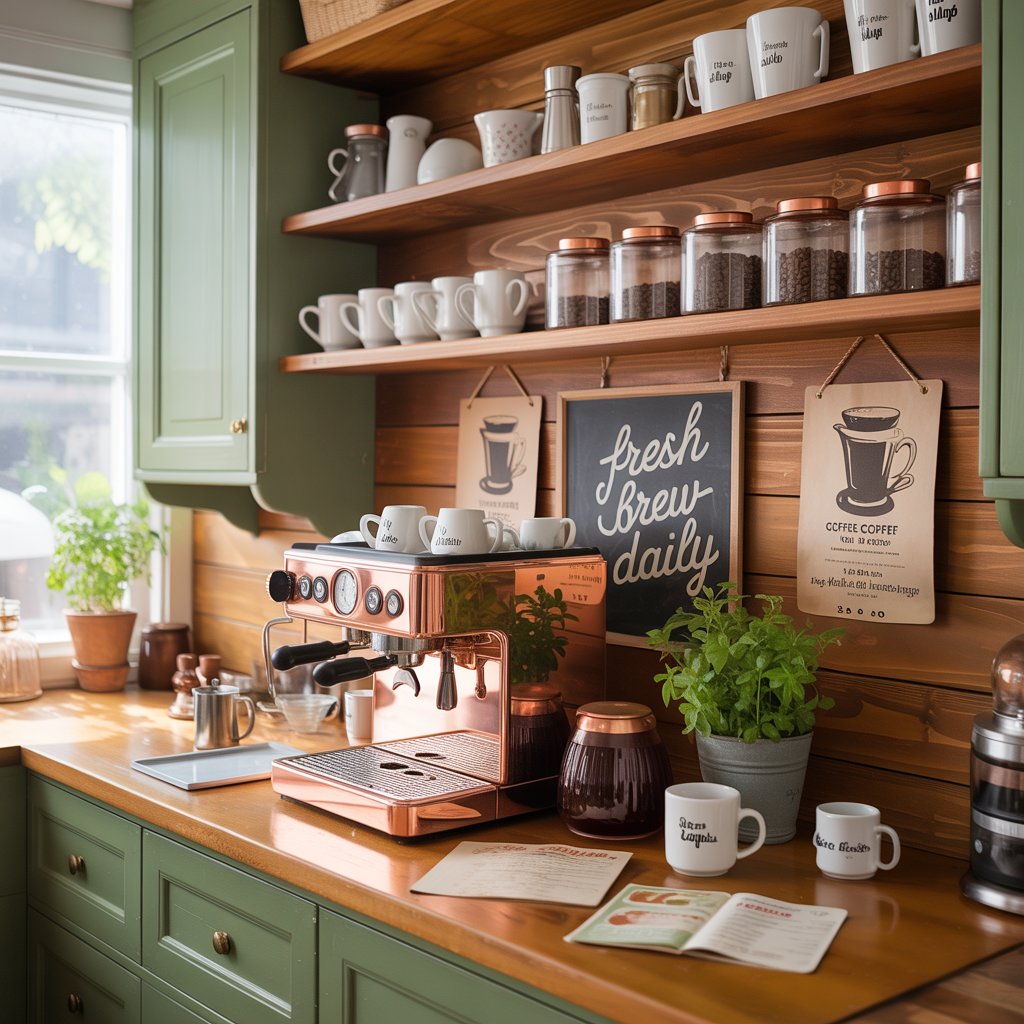
According to the Houzz Kitchen Trends Report, over 60% of homeowners who renovated their kitchens last year incorporated a dedicated coffee or beverage station — and the top aesthetic request was “warm and lived-in.” The vintage style fits that desire perfectly. It blends the charm of antique markets with the functionality of a modern kitchen, creating a space that’s simultaneously beautiful and deeply practical.
Beyond aesthetics, vintage coffee stations align beautifully with sustainable living values. Repurposing old furniture, sourcing secondhand accessories, and working with natural materials like wood, copper, and ceramic all reduce your environmental footprint while adding layers of authenticity that new, mass-produced items simply can’t replicate.
“The most beautiful kitchens I’ve ever designed weren’t the ones with the biggest budgets — they were the ones where every object had a history and a reason for being there.”— Elena Voss, Certified Interior Designer
Choosing the Right Location for Your Vintage Coffee Nook
Location sets the entire tone. A well-chosen spot transforms a corner into a destination.
Before you buy a single mug or antique tray, you need to decide where your coffee station will live. The good news: vintage coffee bars work in almost every setting. A butcher-block cart tucked beside a bay window, a reclaimed wood console against an open kitchen wall, or a repurposed sideboard in a dining room corner — all of these make genuinely stunning setups.
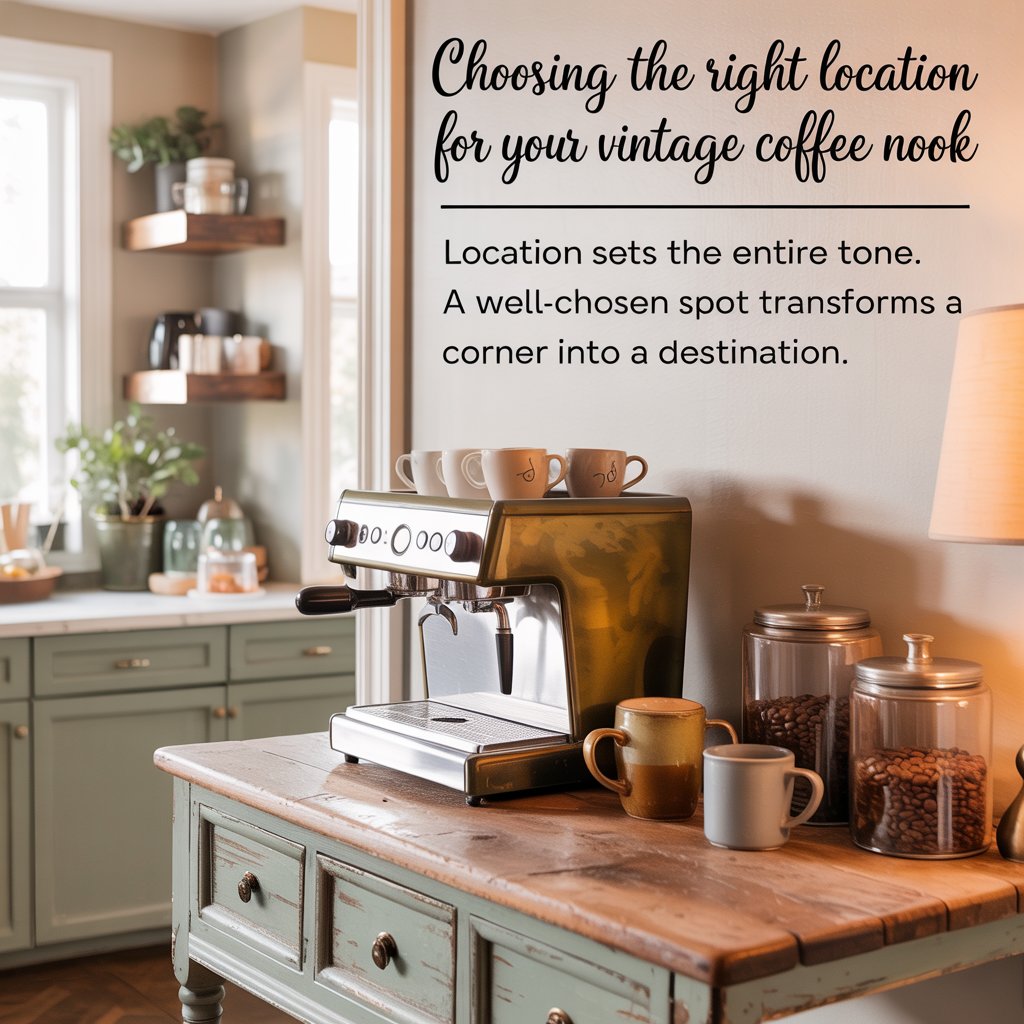
Here are the most popular locations American homeowners choose for their DIY vintage coffee stations:
- Kitchen countertop corner — The most practical option. Keep it near an outlet and the sink for easy access.
- Dining room sideboard — Perfect for vintage lovers who want a formal, “host-ready” display that doubles as everyday function.
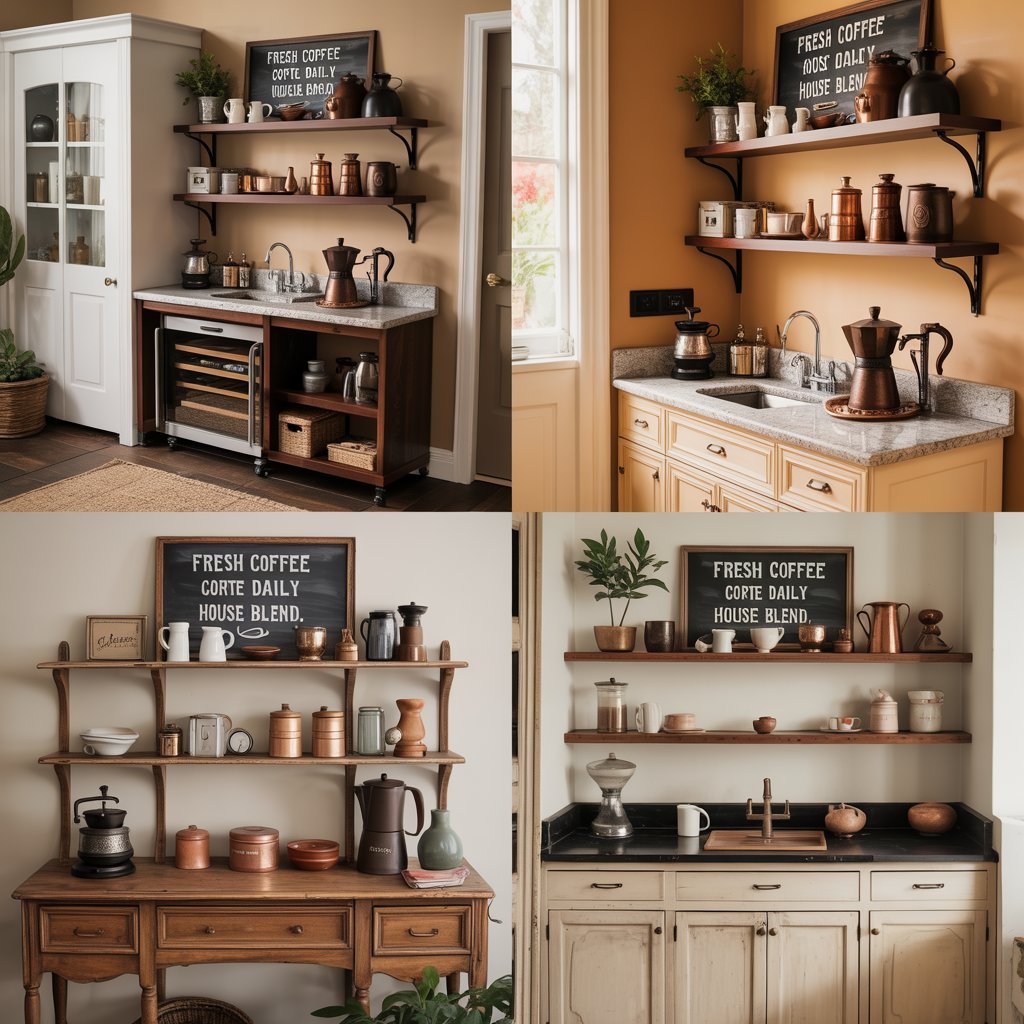
- Open shelving wall — Great for small apartments. Floating shelves in reclaimed wood with hooks below create vertical drama without floor space.
- Butler’s pantry or breakfast nook — A natural home for an elaborate vintage setup with plenty of room for a full espresso bar.
- Repurposed bar cart — Mobile, flexible, and completely charming. Wheels allow you to move the whole setup seasonally or for entertaining.
✦ Pro Tip
Always check for a dedicated electrical circuit before finalizing your location. Espresso machines, kettles, and grinders running simultaneously can trip a standard 15-amp circuit. If you’re serious about your coffee setup, consult an electrician about adding a 20-amp dedicated outlet to your chosen wall — it’s a small investment that makes a huge difference in daily usability.
The Essential Vintage Aesthetic: Colors, Materials & Textures
Vintage design is a conversation between materials — wood speaks to copper, linen answers ceramic, rust talks to cream.
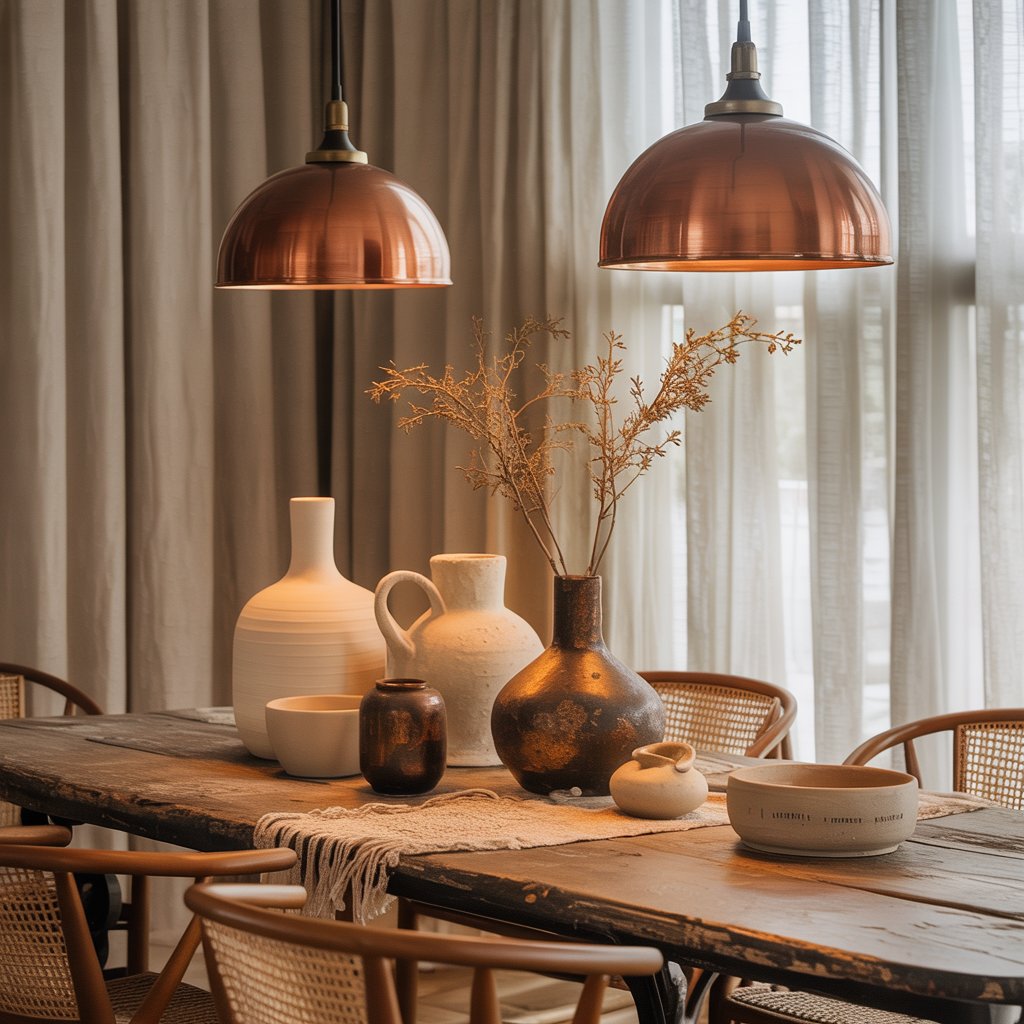
Getting the vintage look right is about layering, not matching. Forget the idea of a perfectly coordinated set. Instead, think in terms of a warm, earthy color palette with intentional material contrast. The goal is a space that looks collected over time, not purchased in one afternoon.
🪵
Reclaimed Wood
Shelves, trays, and cutting boards in weathered oak or pine bring immediate warmth and authenticity.
🟫
Copper & Brass
Aged metal finishes on kettles, hooks, and hardware add luxurious warmth and patina that improves with time.
🏺
Ceramic & Stoneware
Hand-thrown mugs, stoneware canisters, and ceramic pour-over drippers ground the space in tactile, artisan craft.
🪡
Linen & Burlap
Small runners, dish towels, and burlap wrapped mason jars soften hard surfaces and add farmhouse charm.
For color, stay within a palette of cream, warm ivory, soft terracotta, muted sage, and deep espresso brown. These tones photograph beautifully, complement natural light, and age gracefully. Avoid anything too cool-toned — gray or blue-based neutrals strip the warmth right out of a vintage setup.
| Material | Best Used For | Where to Find It | Difficulty |
|---|---|---|---|
| Reclaimed barn wood | Floating shelves, backing panels | Etsy, local salvage yards | Medium |
| Aged brass hardware | Hooks, pulls, towel bars | Rejuvenation, antique shops | Easy |
| Speckled stoneware | Mugs, canisters, serving pieces | West Elm, Anthropologie, Etsy | Easy |
| Copper kettle | Statement pour-over or stovetop | Fellow, Hario, vintage markets | Easy |
| Wicker & rattan | Trays, small baskets for pods/packets | HomeGoods, thrift stores | Easy |
| Tin signage & ironwork | Wall décor, coat hooks, frames | Flea markets, Magnolia Market | Advanced |
Curating Vintage Coffee Station Accessories That Tell a Story
Every object earns its place — from the hand-painted espresso cups to the dog-eared recipe card tucked behind the grinder.
The accessories are where vintage coffee stations truly come alive. This is the part of the process that’s most personal — and most fun. You’re not shopping for a “set.” You’re curating a collection. Think like an antique dealer who also happens to love a perfect latte.
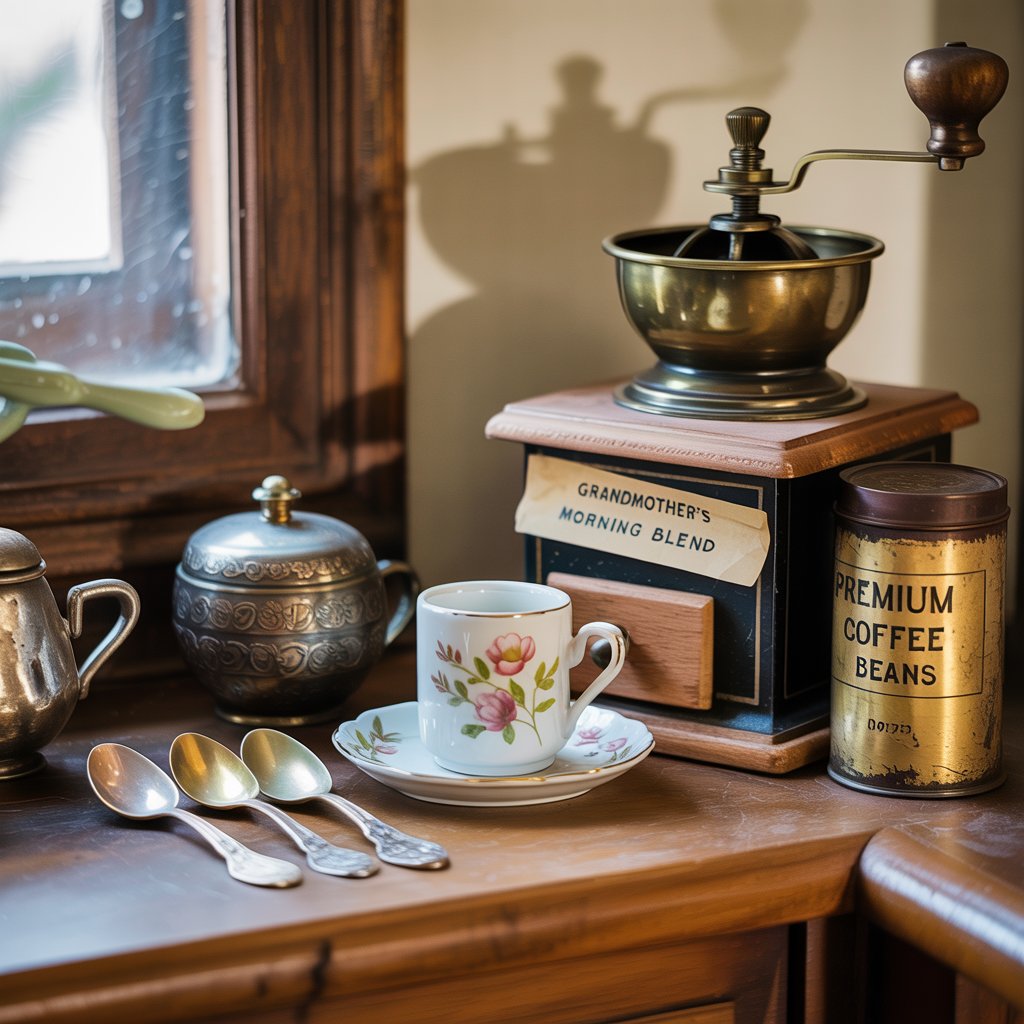
Here are the must-have categories for a charming vintage coffee bar setup:
- Vintage espresso machine or percolator — A refurbished Italian moka pot or a restored 1970s percolator on display (even non-functional) instantly anchors the space in history.
- Antique coffee grinder — Wall-mounted cast iron hand grinders are both decorative and functional. They’re a genuine conversation starter and a tactile joy to use.
- Mismatched ceramic mugs — Resist the urge to buy a matching set. Collect mugs from thrift stores, estate sales, and road trips. Each one has a story.
- Chalkboard menu board — A small framed chalkboard listing your “specialty drinks” adds café culture charm and lets you get creative with seasonal offerings.
- Glass apothecary jars — Use these to display coffee beans, sugar cubes, or loose-leaf teas in a way that’s both organized and visually stunning.
- Vintage botanical or café prints — Framed 1920s French café illustrations or botanical coffee plant prints elevate the wall space above your station.
- Copper or enamel tray — A tray corrals your everyday essentials and creates a “stage” for your most beautiful pieces. It also makes cleanup a breeze.
✦ Pro Tip
Shop estate sales and thrift stores in wealthy zip codes for the best vintage coffee finds. You’ll discover genuine mid-century ceramic pieces, quality copper items, and antique café signage at a fraction of the cost of reproduction pieces. Apps like EstateSales.net let you preview estate sale inventory before you go — a total game-changer for serious vintage hunters.
Vintage Coffee Station Layouts for Every Home Size
Great design works within your constraints — not around them.
One of the most common misconceptions about home coffee bars is that you need significant square footage. You absolutely don’t. Some of the most stunning small space vintage coffee stations I’ve ever designed were in New York City apartments with barely 18 inches of counter space. The secret is verticality and intentional curation — every inch earns its keep.
| Home Size | Best Setup | Key Vintage Pieces | Est. Budget |
|---|---|---|---|
| Studio / Small Apt | Wall-mounted floating shelves + bar cart | Cast iron grinder, 2–3 mixed mugs, copper kettle | $150–$400 |
| Standard Apartment | Countertop corner with open shelving above | Moka pot, stoneware canisters, chalkboard sign | $300–$700 |
| Townhouse / Condo | Dedicated sideboard or console table | Repurposed dresser, vintage espresso machine display | $600–$1,500 |
| Single-Family Home | Full butler’s pantry or kitchen nook conversion | Full vintage setup with refurbished appliances + signage | $1,000–$3,5 |
.