
Living in a small home doesn’t mean you have to live small. In fact, some of the most breathtaking interiors in the world are compact spaces transformed by the quiet power of minimalist design. Whether you’re working with a studio apartment in New York City, a cozy bungalow in Austin, or a townhouse in Chicago, minimalist decor can make every square foot feel intentional, airy, and deeply personal.

If you’ve been scrolling through Pinterest boards and Instagram feeds wondering how people make tiny spaces look so effortlessly calm and beautiful — the answer is almost always minimalism done right. In this guide, I’m breaking down the most effective minimalist decor ideas for small homes, backed by real design principles and practical tips you can start using today.
What Is Minimalist Home Decor (And Why It Works So Well in Small Spaces)?
Minimalism in interior design is more than just owning fewer things. It’s a philosophy rooted in the idea that every object in your space should earn its place — either through function, beauty, or meaning. When applied to small homes, minimalist decor creates the illusion of more space, reduces visual noise, and brings a sense of calm that cluttered rooms simply cannot achieve.
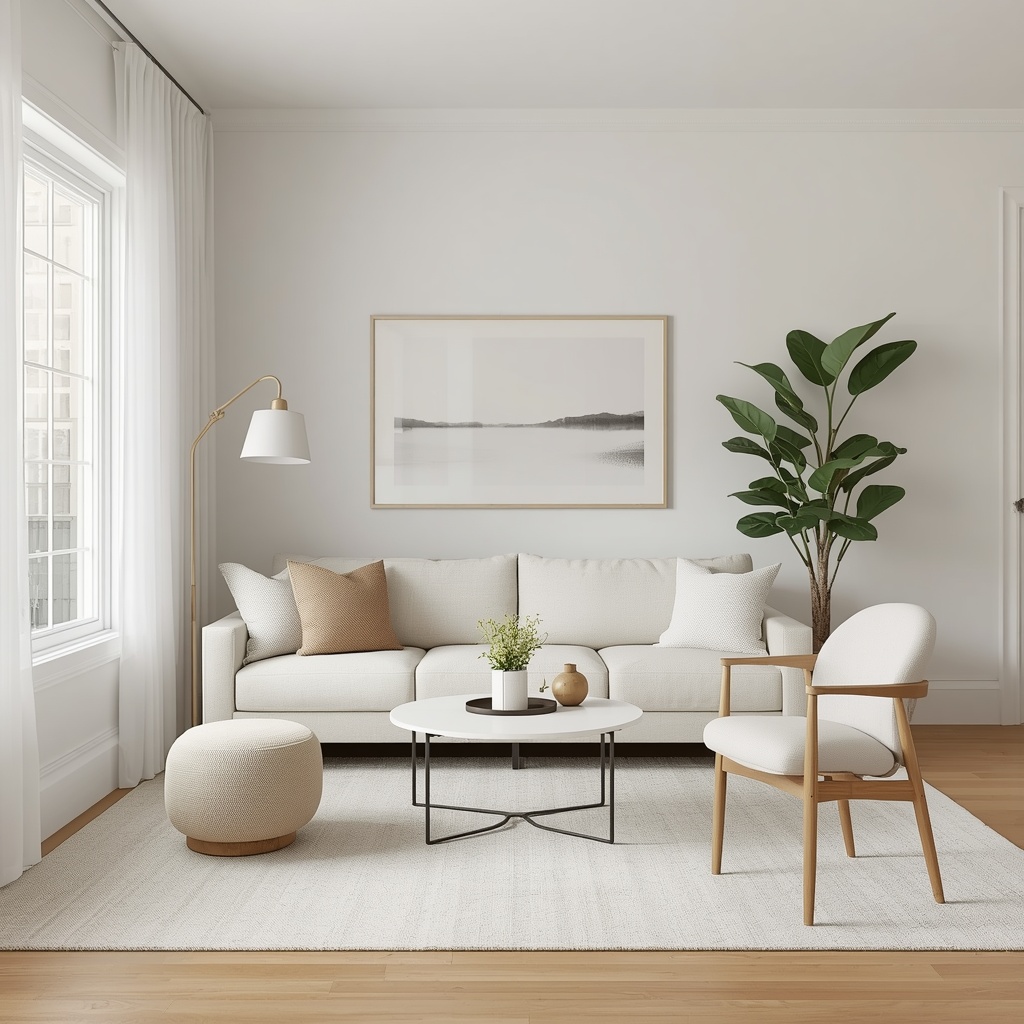
The beauty of minimalist decorating lies in what you don’t see. Clean lines, neutral color palettes, smart storage, and purposeful furniture arrangements work together to make even the tiniest room feel open and livable. For American homeowners and renters dealing with rising square footage costs, this design approach isn’t just aesthetic — it’s a smart, budget-conscious lifestyle choice.
“The secret of happiness, you see, is not found in seeking more, but in developing the capacity to enjoy less.” — Socrates (and every minimalist designer ever)
Start With a Neutral, Light-Reflective Color Palette
The foundation of any minimalist small home is its color story. A well-chosen palette can visually expand a room by several feet without touching a single wall.
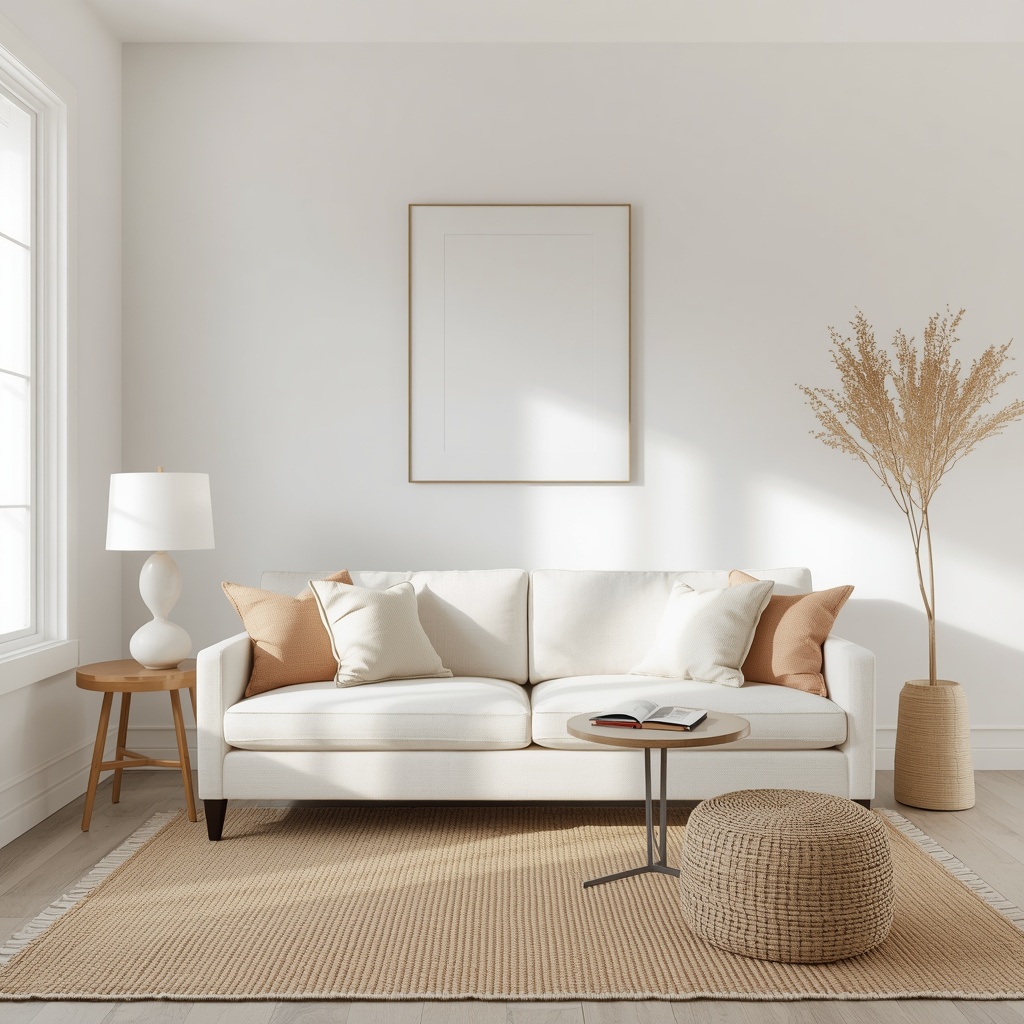
Stick to soft whites, warm creams, light grays, and gentle beiges as your base tones. These shades reflect natural light beautifully, making rooms feel larger and more breathable. Layering different textures within the same neutral family — think linen throw pillows on a cream sofa beside a natural jute rug — adds depth without the visual clutter of competing colors.
If all-white feels too sterile for your taste, introduce one or two muted accent colors like sage green, dusty blue, or warm terracotta. These earth-toned hues are trending heavily in American minimalist interiors right now and pair beautifully with natural wood elements.
Pro Tip 💡: Use the 60-30-10 color rule in small spaces: 60% dominant neutral (walls, large furniture), 30% secondary tone (textiles, rugs), 10% accent (artwork, plants, decorative objects). This keeps the palette cohesive and prevents sensory overload.
Choose Multi-Functional Furniture That Works Harder
In a small minimalist home, every piece of furniture needs to pull double — or even triple — duty. The days of buying a decorative side table that just holds a lamp are over. Smart furniture choices are the backbone of clutter-free small-space living.
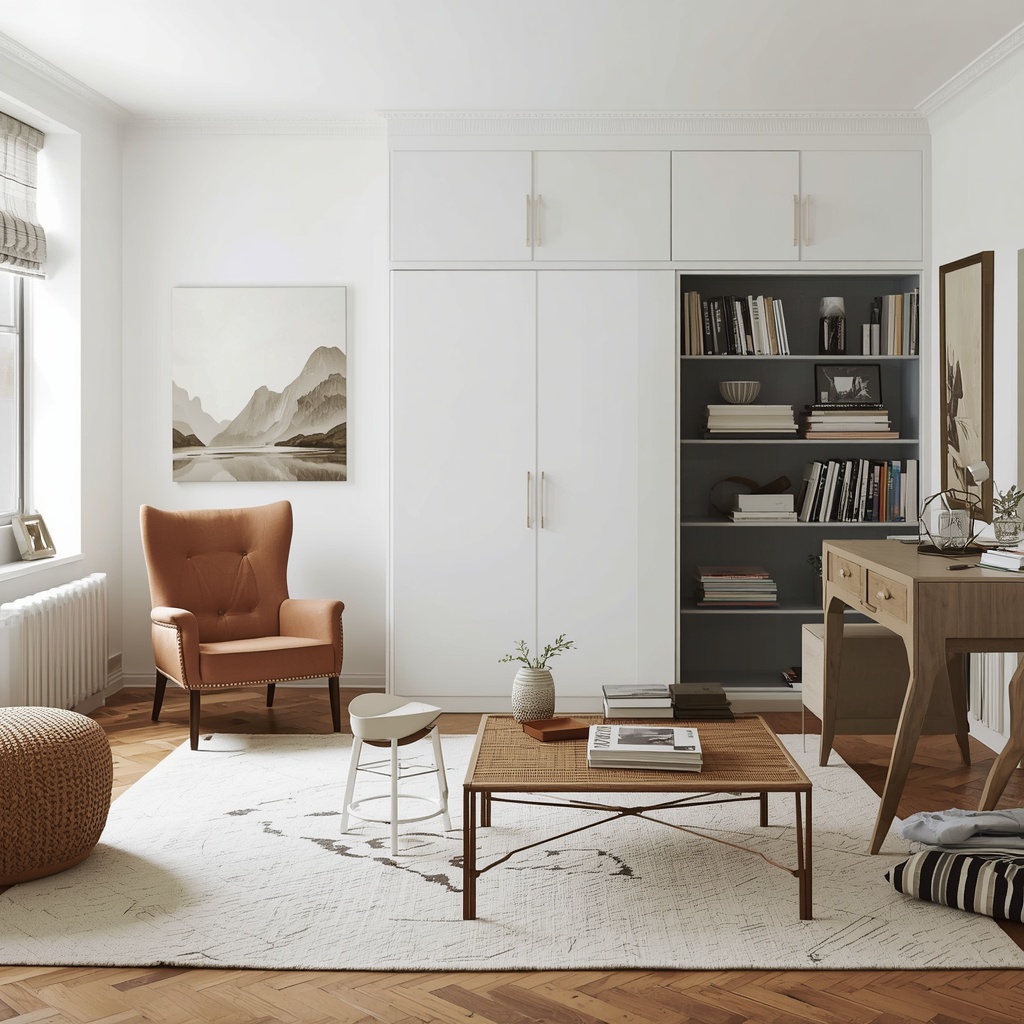
When shopping for furniture, always ask: Does this piece serve more than one purpose? A storage ottoman replaces both a coffee table and a blanket chest. A Murphy bed with built-in shelving converts a bedroom into a home office. A dining table with foldable leaves saves floor space when you’re not entertaining.
| Furniture Piece | Minimalist Multi-Function Option |
|---|---|
| Coffee Table | Storage ottoman with tray top |
| Bed Frame | Platform bed with built-in drawers |
| Dining Table | Drop-leaf or fold-down wall table |
| Sofa | Sleeper sofa with under-frame storage |
| Side Table | Nesting tables that stack when not in use |
| Bookshelf | Floor-to-ceiling built-ins that double as room dividers |
Invest in pieces with clean silhouettes and raised legs — furniture that sits close to the floor visually “shrinks” a room, while pieces with visible legs create an open, airy feel beneath them.
Embrace the “One In, One Out” Rule for Long-Term Minimalism
One of the most powerful habits in minimalist home decor isn’t about decorating at all — it’s about discipline. The “one in, one out” rule means that every time you bring a new item into your home, something else must leave. This single habit prevents the slow creep of clutter that gradually suffocates small spaces.
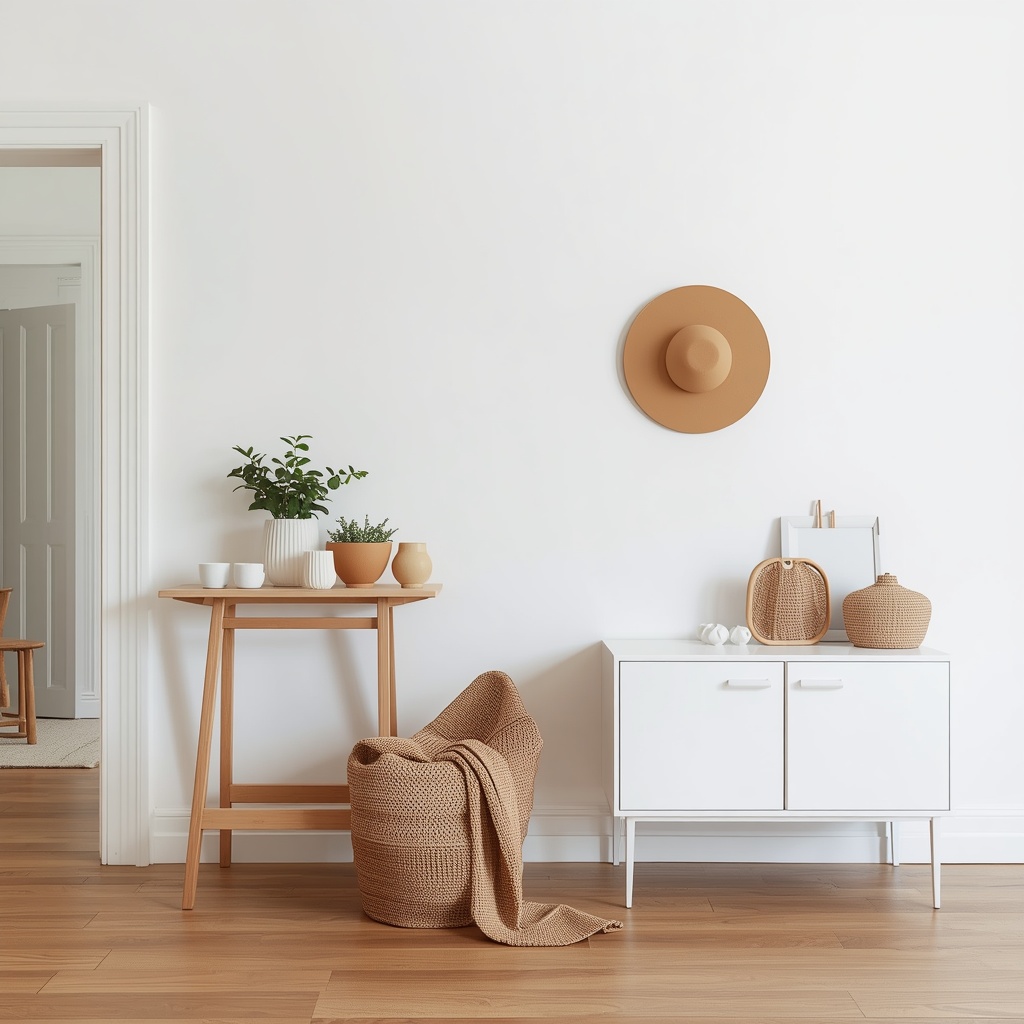
This rule applies to everything: throw pillows, kitchen gadgets, decorative objects, clothing, and even books. It forces you to be intentional about every purchase and helps you evaluate whether a new item truly adds value to your space or simply adds noise. Over time, this mindset transforms the way you shop, decorate, and live.
Pair this habit with a seasonal declutter session every three months. Walk through each room with honest eyes and ask: Does this item belong here? Does it serve a purpose? Does it bring genuine joy? If the answer is no — donate it, sell it, or let it go.
“Have nothing in your house that you do not know to be useful or believe to be beautiful.” — William Morris
Master Minimalist Storage: Hide the Mess, Keep the Calm
Visible clutter is the enemy of minimalist small-space design. The solution isn’t to own less of everything (though that helps) — it’s to create smart, hidden storage systems that keep everyday items out of sight without sacrificing accessibility.
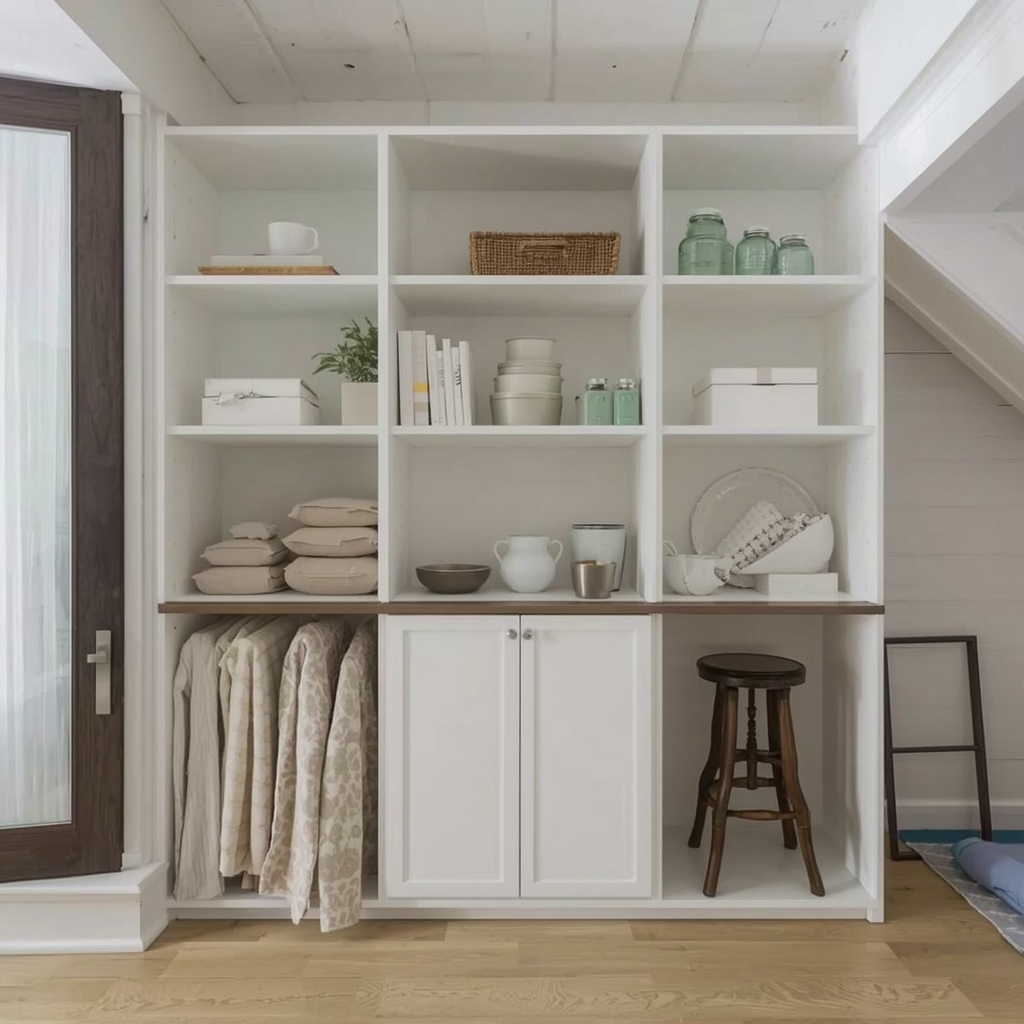
Here are the most effective minimalist storage strategies for small American homes:
- Built-in shelving along walls maximizes vertical space without eating into floor area
- Under-bed storage with low-profile bins or drawers keeps linens and seasonal items hidden
- Floating shelves in bathrooms and kitchens replace bulky cabinets and feel visually lighter
- Closed cabinetry in living areas conceals electronics, remotes, and everyday items
- Woven baskets and fabric bins on open shelves corral small items while adding organic texture
- Pegboards in kitchens keep tools visible but organized without countertop chaos
- Mirrored cabinet doors in bathrooms reflect light and double the perceived size of the room
Pro Tip 💡: In open-plan small homes, use a large piece of furniture like a bookcase or a slatted room divider to create zone separation between living and sleeping areas. It defines the space without closing it off — a key principle in minimalist open-plan living.
Let Natural Light Be Your Best Decorating Tool
Nothing opens up a small home quite like maximizing natural light. Light is the most powerful design element available to you — and the best part? It’s completely free.
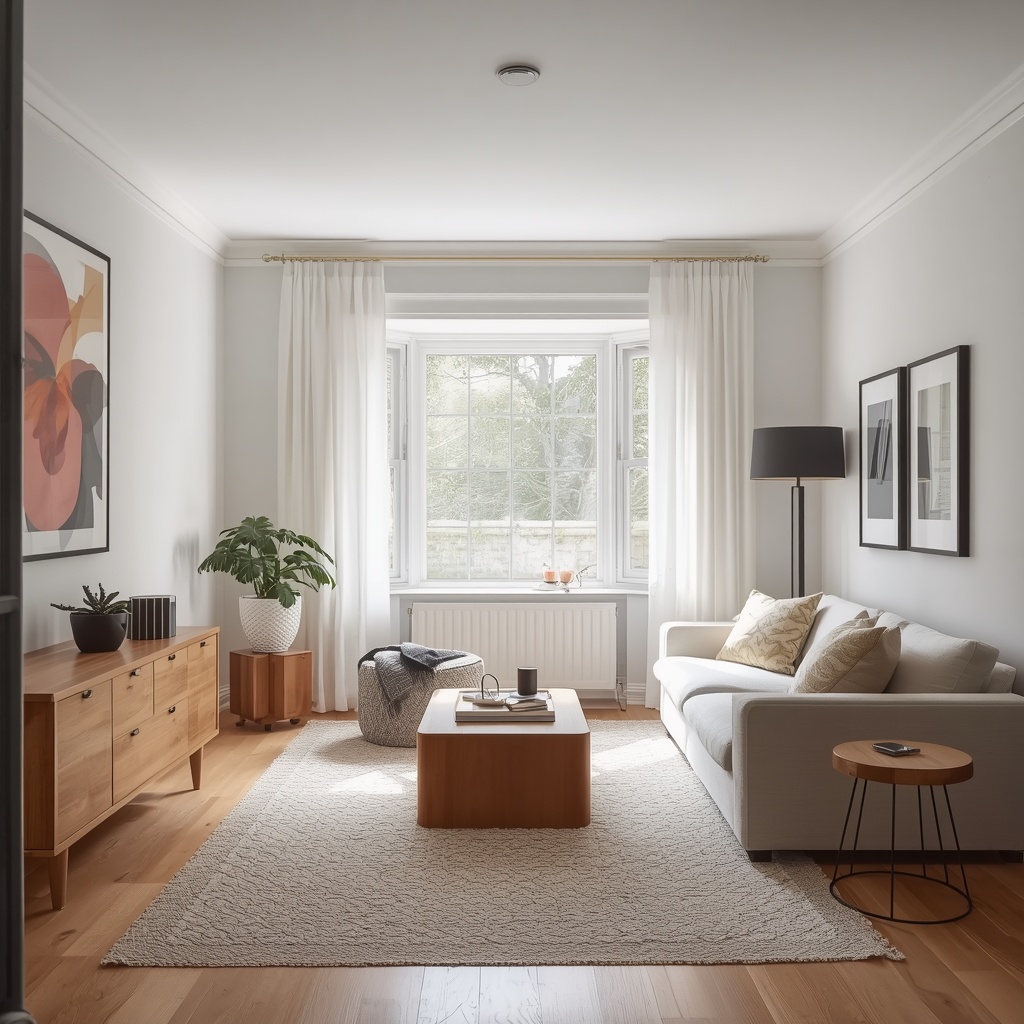
Swap out heavy, dark curtains for sheer white linen panels or Roman shades that can be lifted entirely during the day. Position mirrors strategically across from windows to bounce light deeper into the room and create the illusion of an additional window. Choose furniture upholstered in light fabrics that reflect rather than absorb light.
If your small home has limited windows, layer your artificial lighting thoughtfully. Avoid relying solely on harsh overhead lighting, which flattens a room. Instead, combine ambient lighting (ceiling fixtures), task lighting (floor lamps, desk lamps), and accent lighting (LED strip lights, candles) to create warmth and dimension at different heights throughout the space.
| Lighting Layer | Purpose | Minimalist Example |
|---|---|---|
| Ambient | General room illumination | Recessed ceiling lights, flush mounts |
| Task | Focused activity lighting | Slim arc floor lamp, wall-mounted reading light |
| Accent | Mood and dimension | LED shelf lighting, candles, string lights |
| Natural | Free, expansive, mood-boosting | Sheer curtains, mirrors opposite windows |
Incorporate Biophilic Design With Intentional Greenery
Minimalism doesn’t mean cold or sterile. One of the most effective ways to add warmth, life, and visual interest to a clutter-free small home is through strategic use of plants. Biophilic design — the practice of connecting interior spaces to nature — is one of the hottest trends in American home decor right now, and it fits beautifully within a minimalist framework.
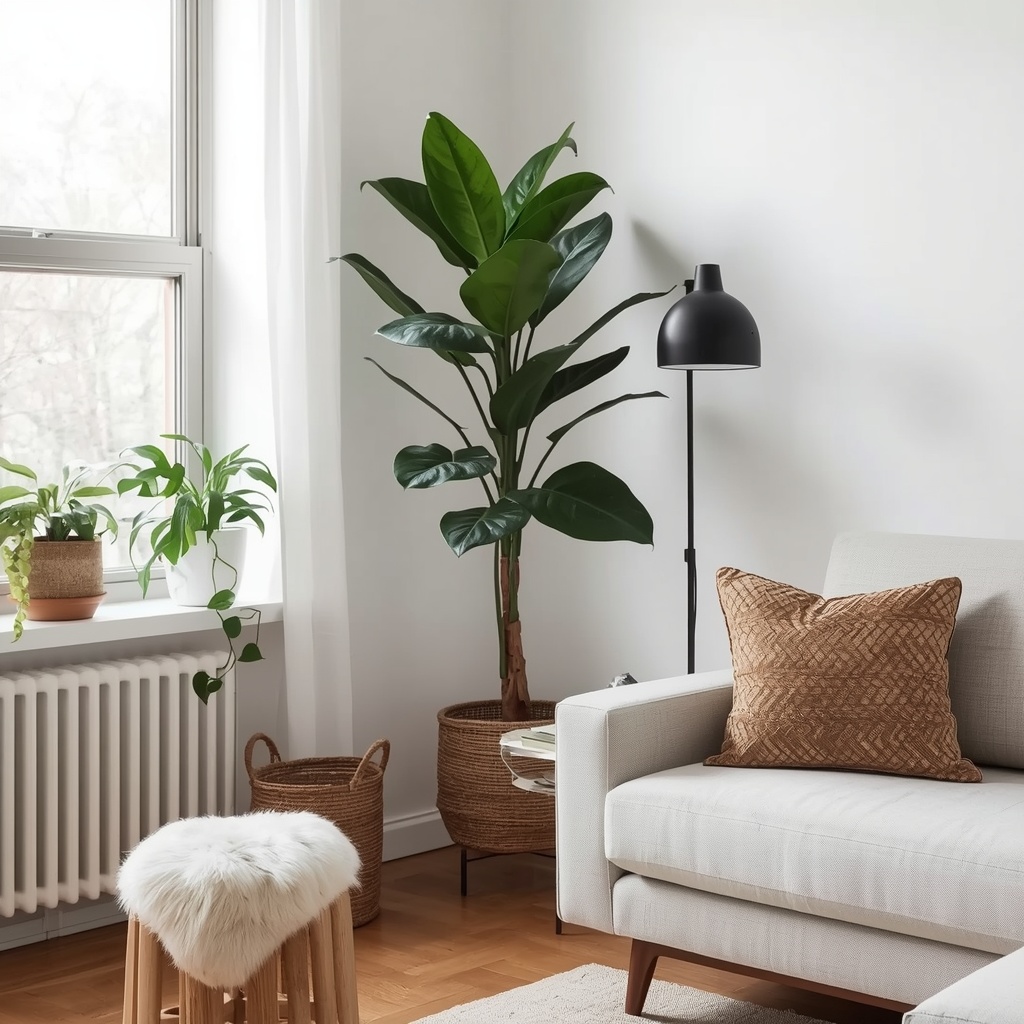
The key word here is intentional. Don’t crowd windowsills with a dozen mismatched pots. Instead, choose two or three statement plants that complement your space — a tall fiddle-leaf fig in a corner, a trailing pothos on a floating shelf, or a sculptural snake plant beside the sofa. Let the plant breathe and become a focal point rather than background noise.
Stick to simple, neutral planters in terracotta, white ceramic, or matte black to keep the minimalist aesthetic intact. The plant itself provides all the visual interest you need.
Best Low-Maintenance Plants for Small Minimalist Homes:
- Snake Plant (Sansevieria) — tolerates low light, air-purifying
- Pothos — trailing, forgiving, grows in indirect light
- ZZ Plant — drought-tolerant, glossy, architectural shape
- Rubber Tree — bold statement, easy care
- Peace Lily — flowers indoors, thrives in shade
- Monstera Deliciosa — iconic tropical shape, grows in medium light
Define Zones in Open-Plan Small Spaces
Open-plan layouts are common in American apartments and small homes, but without clear zone definition, they can feel like one undifferentiated room. Minimalist design solves this with visual boundaries that don’t require walls.
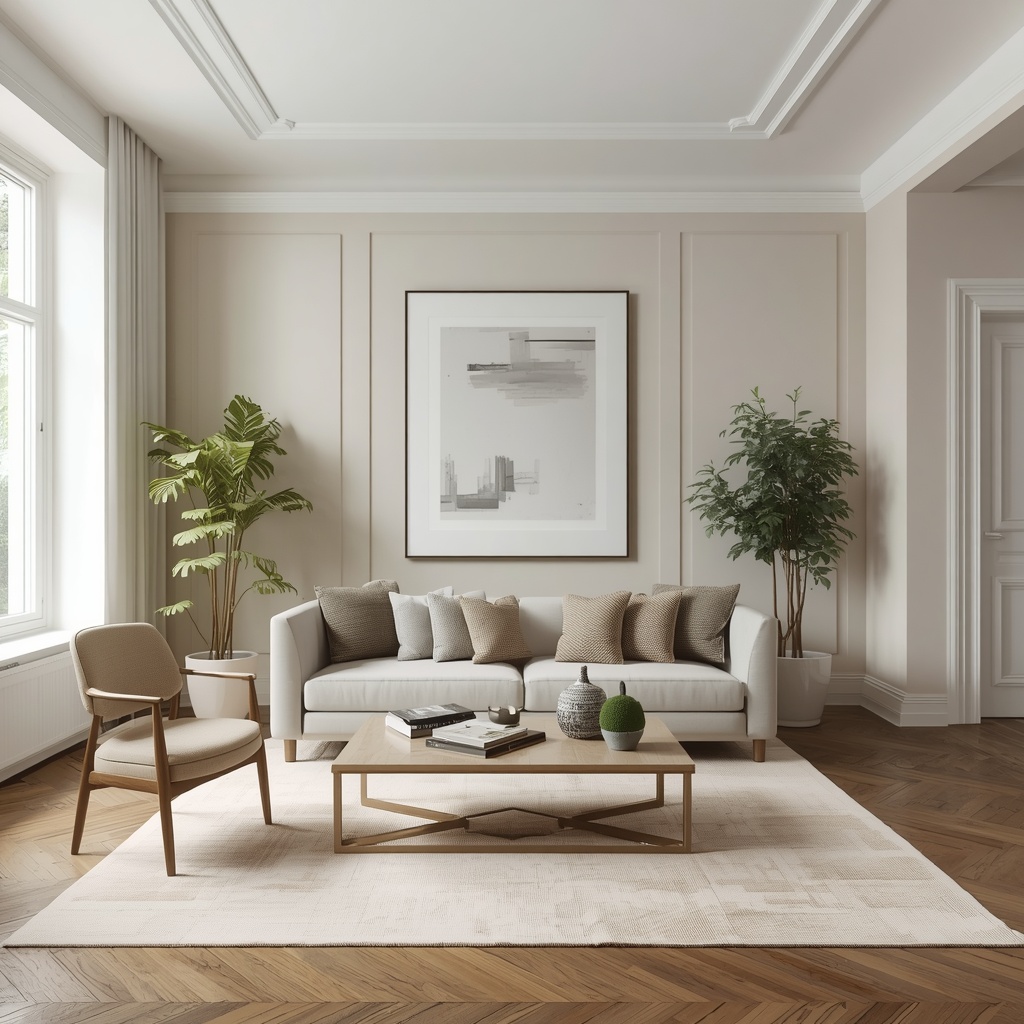
Use a large area rug to anchor the living zone — it immediately signals “this is the seating area” without any physical barrier. Position furniture with its back to the next zone (a sofa facing away from the dining table, for example) to create an implied boundary. Vary ceiling heights with pendant lighting that hangs lower over the dining area to distinguish it from the living zone.
Color and texture can also define zones subtly. A slightly different wall treatment — a textured wallpaper panel, a painted accent wall, or even a gallery wall — behind the bed or sofa creates a visual anchor for that zone without overwhelming the space.
“In a small home, every design decision should serve the space — not compete with it.” — Interior Design Principle
Curate Your Decor: Quality Over Quantity, Always
The most common mistake people make when attempting minimalist decor is removing everything and ending up with a space that feels empty rather than calm. True minimalism isn’t about bare walls and zero accessories — it’s about curating with intention.
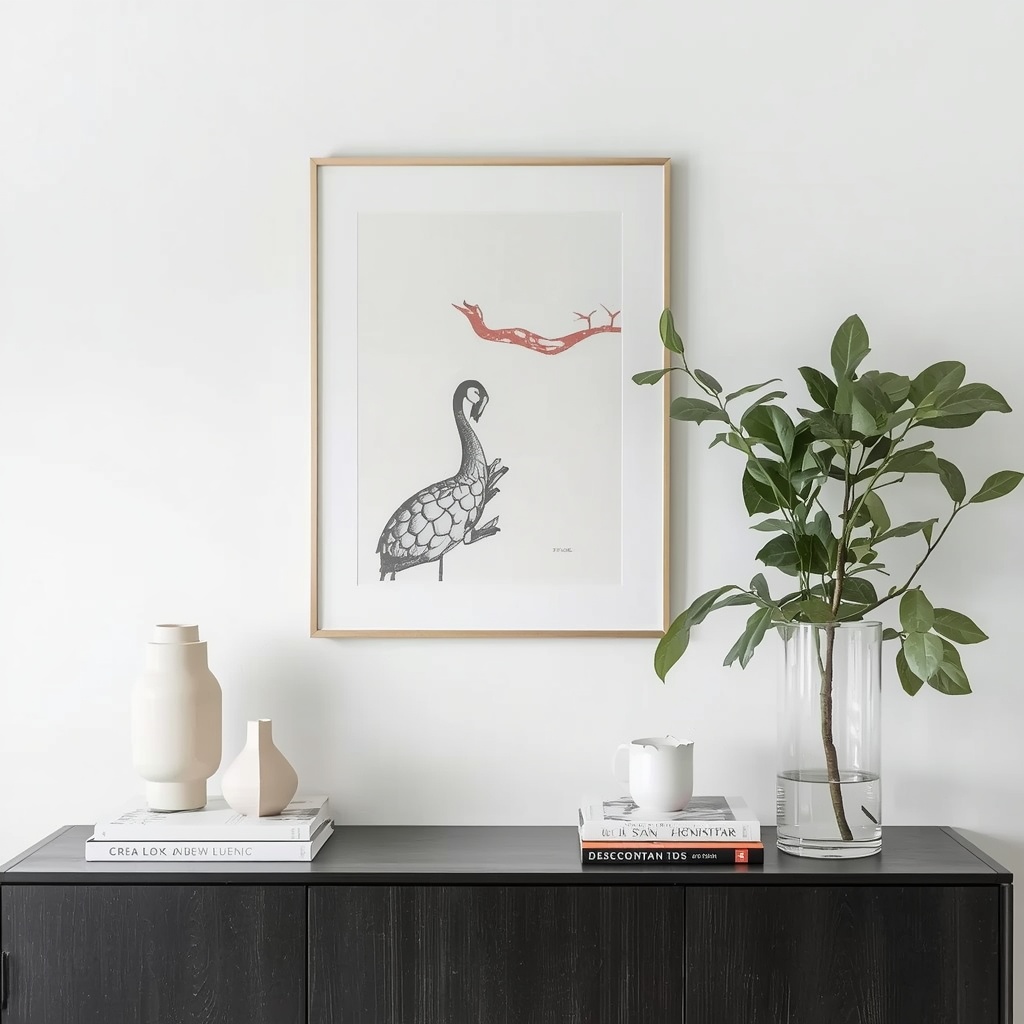
Choose a few meaningful decorative objects and give them room to breathe. A single piece of original artwork hung on a white wall makes far more impact than a dozen small frames fighting for attention. A beautiful ceramic bowl on a coffee table, a sculptural vase on a shelf, a stack of three design books with a small plant on top — these small, curated vignettes tell a story without creating visual chaos.
When selecting decor pieces for a small minimalist home, apply this simple filter:
- Does it have a strong, clean silhouette?
- Does it complement the existing color palette?
- Does it add texture, height, or visual interest without clutter?
- Would I notice and miss it if it were gone?
If a piece passes all four questions, it belongs. If not, it’s likely filling space rather than enhancing it.
Pro Tip 💡: Shop Etsy’s minimalist home decor section for handmade, one-of-a-kind pieces that add personality without visual weight. For affordable, design-forward minimalist furniture, IKEA’s KALLAX and LACK series remain gold standards for small-space living. For higher investment pieces, West Elm and Article offer beautiful minimalist furniture with clean lines suited to American small-home aesthetics.The Minimalist Kitchen: Declutter the Heart of Your Home
The kitchen is often the hardest room to keep clutter-free, especially in a small home. Countertops become landing zones for appliances, mail, produce, and random objects. A minimalist approach to kitchen decor transforms this busy space into a calm, functional workspace.
Clear your countertops of everything except the two or three appliances you use every single day — for most American households, that’s a coffee maker and a toaster. Everything else lives in a cabinet or drawer. Decant pantry staples like pasta, coffee, and grains into matching glass containers for a cohesive, organized look that also keeps food fresher.
Choose cabinet hardware in a single finish — matte black, brushed gold, or satin nickel — and stick with it throughout the kitchen. Consistency is a cornerstone of minimalist design, and nowhere is it more visible than hardware choices.
Minimalist Bedroom Design: Your Sanctuary From the World
The bedroom should be the most serene room in your small home — a true sanctuary designed for rest and recovery. Minimalist bedroom decor achieves this by stripping away everything that doesn’t serve sleep, relaxation, or intimacy.
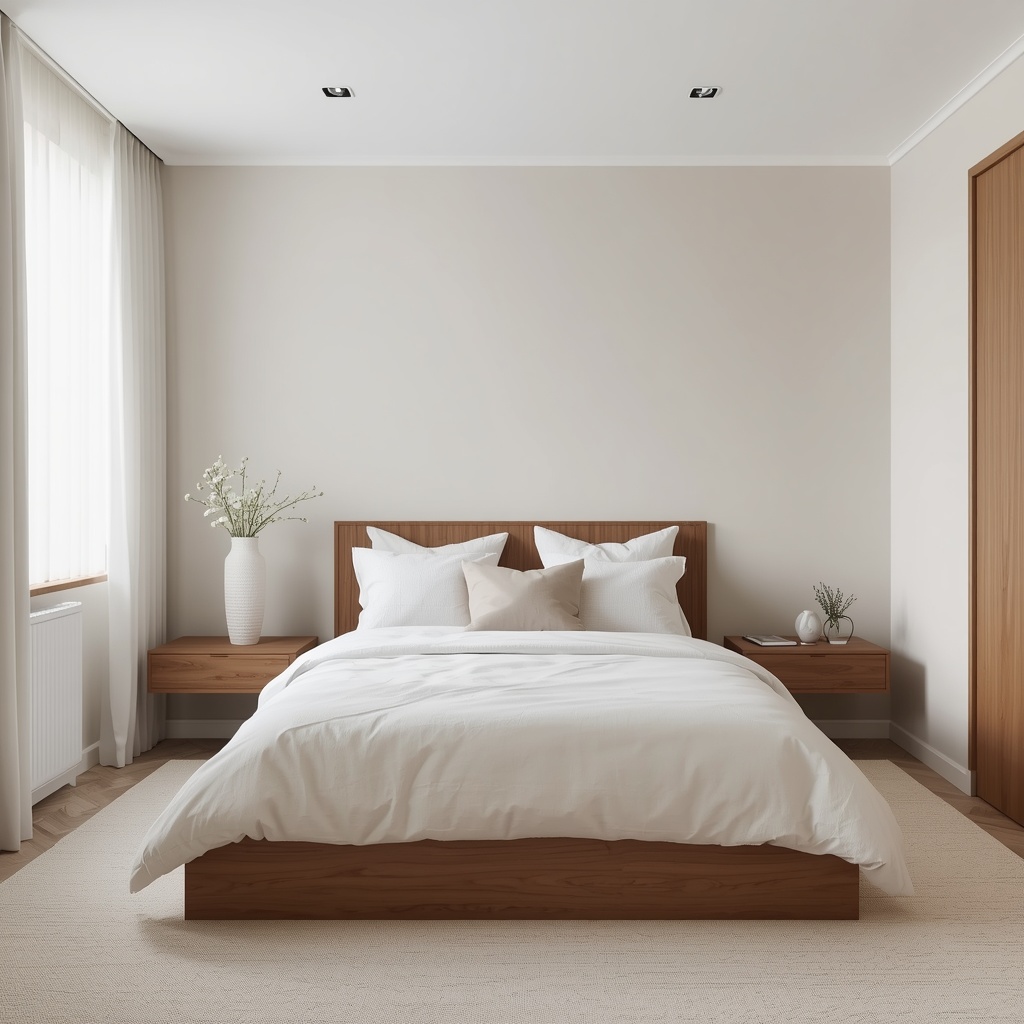
Start with the bed. In a small bedroom, the bed is the focal point — invest in quality bedding in soft, neutral tones and keep pillows to a practical minimum (no more than four). Choose a bed frame with storage drawers or a platform design that sits low and clean. Remove the TV from the bedroom if possible; screens are the antithesis of minimalist bedroom design.
Keep nightstands simple — one drawer, a lamp, and a book. That’s all you need. If floor space is tight, consider a wall-mounted bedside shelf instead of a traditional nightstand. Paint the walls a soft, warm white or a calming greige (gray-beige blend) and let the simplicity do the work.
Final Thoughts: Minimalism Is a Practice, Not a Project
Achieving a clutter-free minimalist small home isn’t a weekend project — it’s an ongoing practice of thoughtful living. Start small: tackle one room, one drawer, one shelf at a time. Celebrate the progress rather than chasing perfection.
The goal of minimalist home decor is not an Instagram-ready showroom. It’s a home that feels like a deep breath — a space where you can think clearly, rest fully, and live intentionally. In a world of constant noise and endless consumption, a calm, clutter-free small home might be one of the most radical and rewarding choices you can make.
Start with what you have, remove what you don’t need, and let your home become a reflection of who you truly are — not how much you own.
Ready to start your minimalist home transformation? Begin with one room this weekend. Clear the surfaces, identify three things to donate, and notice how the space immediately breathes. Small steps, big impact.