
You don’t need a whole room — or even a large one — to carve out the reading retreat you’ve always dreamed of. That awkward corner by the staircase, the underused nook beside your bedroom window, or the forgotten alcove off the hallway? Each one is a cozy reading corner just waiting to happen. As a home decor specialist who has helped hundreds of American homeowners maximize small spaces, I can tell you that some of the most beautiful, functional reading sanctuaries I’ve ever designed measured fewer than 25 square feet.
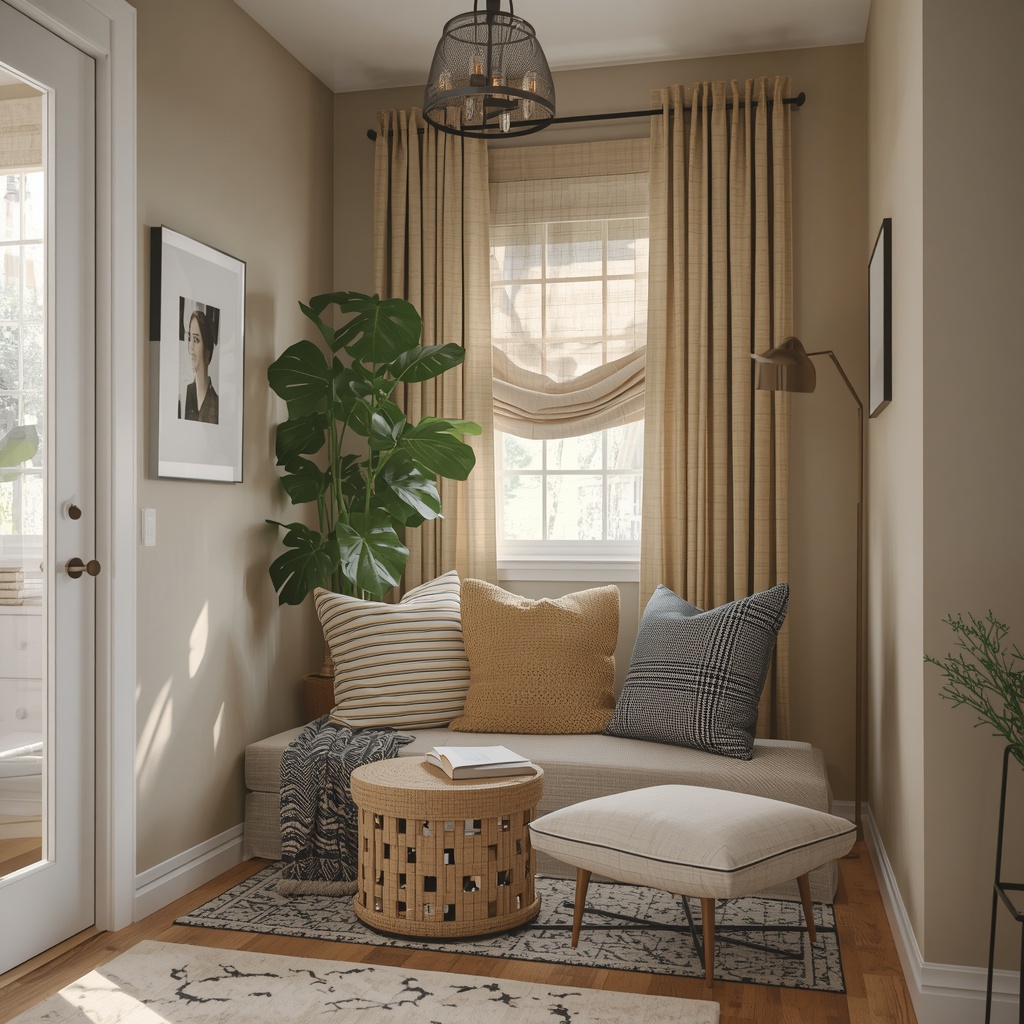
In this guide, we’re going to walk through everything — from choosing the right chair to layering textures, mastering lighting, and picking the perfect color palette — so you can build a space that genuinely invites you to sit down, open a book, and forget the world exists for a while. Whether you’re working with a bay window bump-out, a closet conversion, or simply a corner that’s been collecting clutter, this is your complete roadmap to a cozy reading nook that looks and feels like it’s always been there.
· · ·
Why a Reading Nook? The Psychology of Cozy Corners
There’s a reason humans have always been drawn to small, enclosed spaces for rest and focus. Architects and psychologists call it the concept of “prospect and refuge” — we feel safest and most relaxed when we have a sense of enclosure behind us and an open view in front. A corner reading nook delivers exactly that: walls at your back, a warm lamp overhead, and the open room ahead. It’s instinctively comforting.
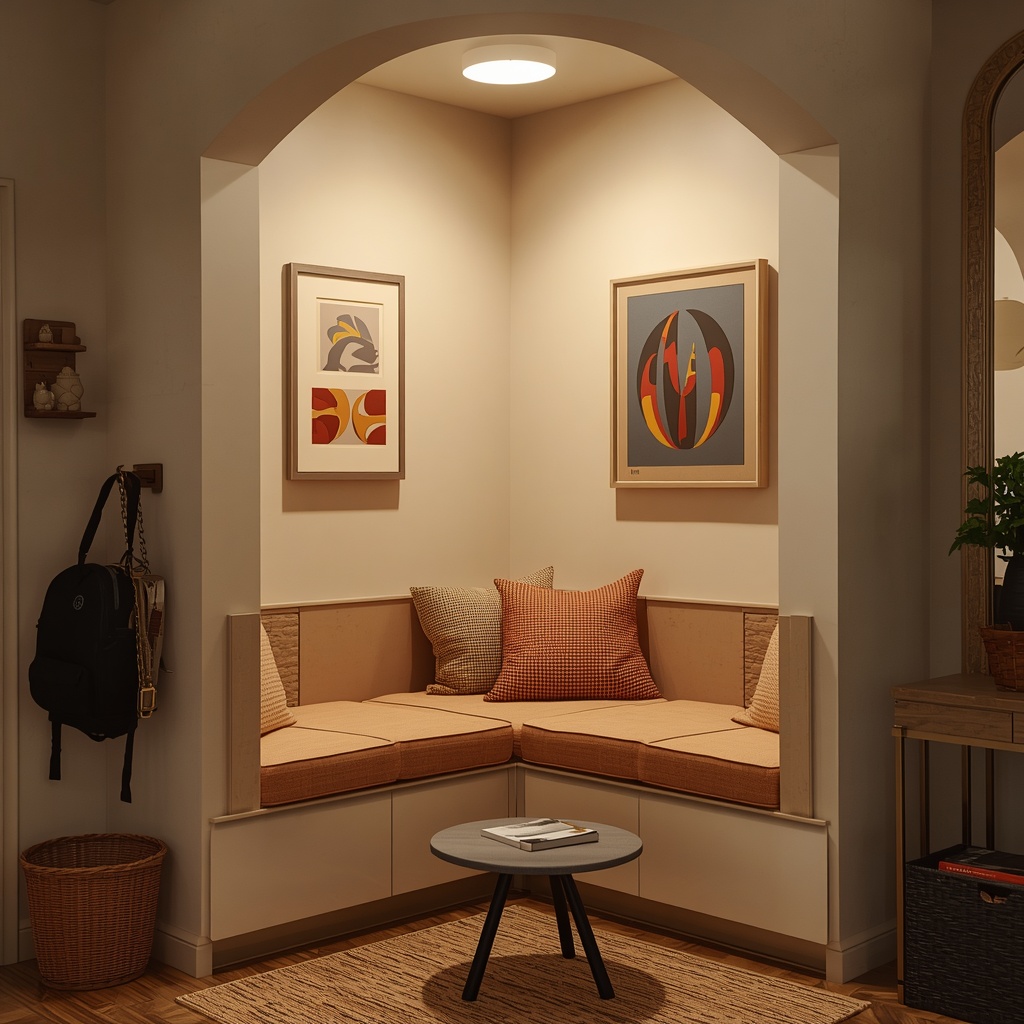
Interior designer and author Ingrid Fetell Lee, who writes about joy and aesthetics, notes that dedicated personal spaces with soft lighting, natural materials, and warm color create measurable boosts in wellbeing. A reading nook isn’t an indulgence — it’s an investment in your daily mental health. According to the American Psychological Association, regular reading reduces stress by up to 68%, and having a dedicated, beautiful place to read dramatically increases how often people actually do it.
A reading nook is not just furniture in a corner. It is permission — permission to stop, to breathe, to be still. Everyone deserves a space that says: this is for you.— Nate Berkus, Interior Designer
Step 1 — Choose the Right Corner (Not All Corners Are Equal)
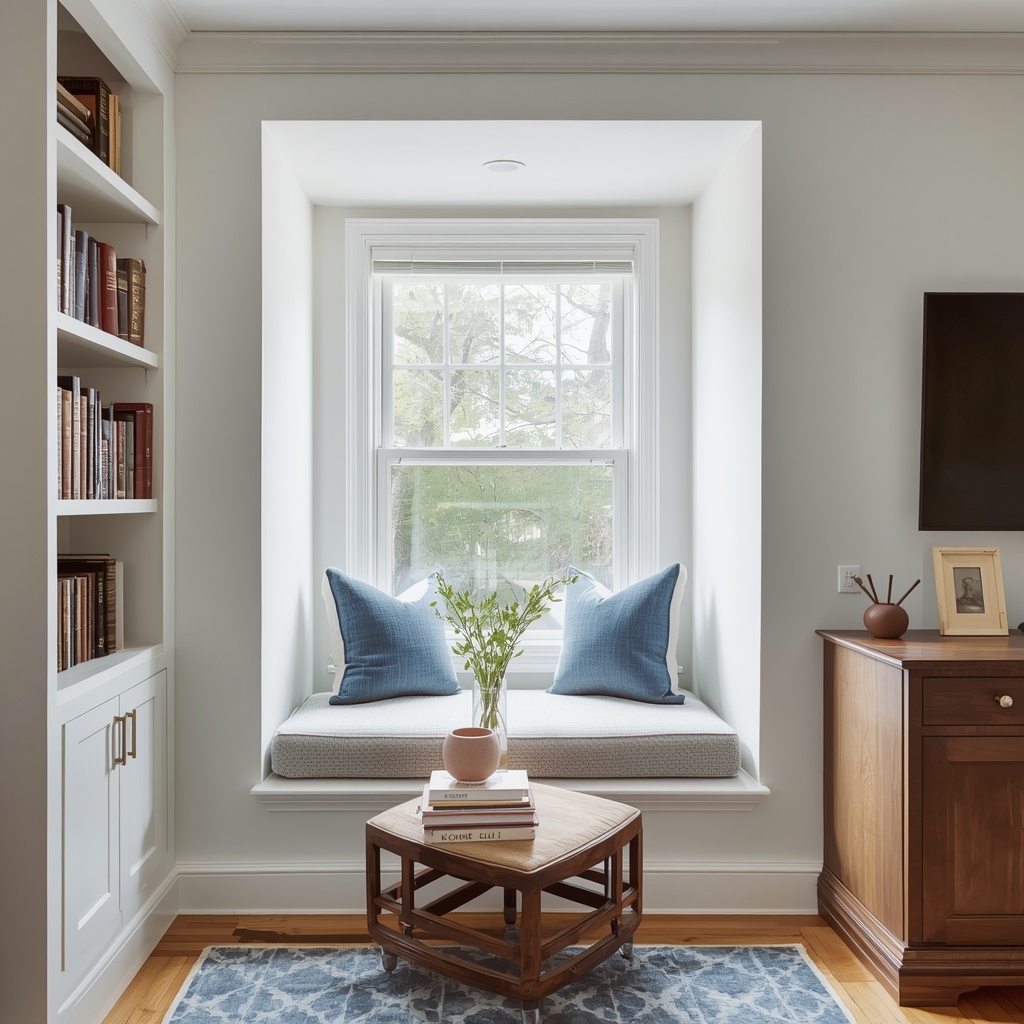
Before you buy a single throw pillow, spend a few days observing your home. Which corner gets the best natural light in the morning? Which one is naturally quiet, away from the TV and kitchen traffic? Which feels most tucked-away and private? Ideal candidates for a built-in reading nook include bay windows, under-stair alcoves, bedroom corners flanked by two walls, and converted closets. The best reading nook location will have at least one of these three qualities: natural light, acoustic separation, or a sense of architectural enclosure.
If you’re torn between spots, use this simple scorecard to evaluate your options:
| Corner Feature | Why It Matters | Priority |
|---|---|---|
| Natural light (window nearby) | Reduces eye strain; makes the space feel alive and connected to outdoors | High |
| Two adjacent walls | Creates the “refuge” feeling; allows built-in shelving on both sides | High |
| Away from main foot traffic | Reduces distraction; makes the nook feel truly separate from busy spaces | High |
| Near an electrical outlet | Essential for a reading lamp and phone charging without visible cords | Medium |
| Existing architectural feature (alcove, bay) | Gives instant structure; reduces the need for dividers or curtains | Medium |
| Near a radiator or vent | Comfort in winter; avoid placing upholstered furniture directly over vents | Low |
✦ Pro Tip
If your chosen corner lacks natural light, don’t give up on it. A well-placed warm-toned arc floor lamp (2700K color temperature) mimics the golden quality of afternoon sunlight and can transform even a windowless corner into a supremely cozy retreat. Look for lamps with adjustable arms so you can direct light precisely over your shoulder — the reading sweet spot.
Step 2 — Pick Your Seating: The Heart of the Nook
Your chair or built-in bench is the single most important decision you’ll make. Everything else — the shelves, the lighting, the pillows — serves and surrounds the seat. For tight corners, you have several excellent options, each with distinct advantages. The key is balancing scale (it must fit the space without crowding it) with comfort (you’re going to be in it for hours at a time).
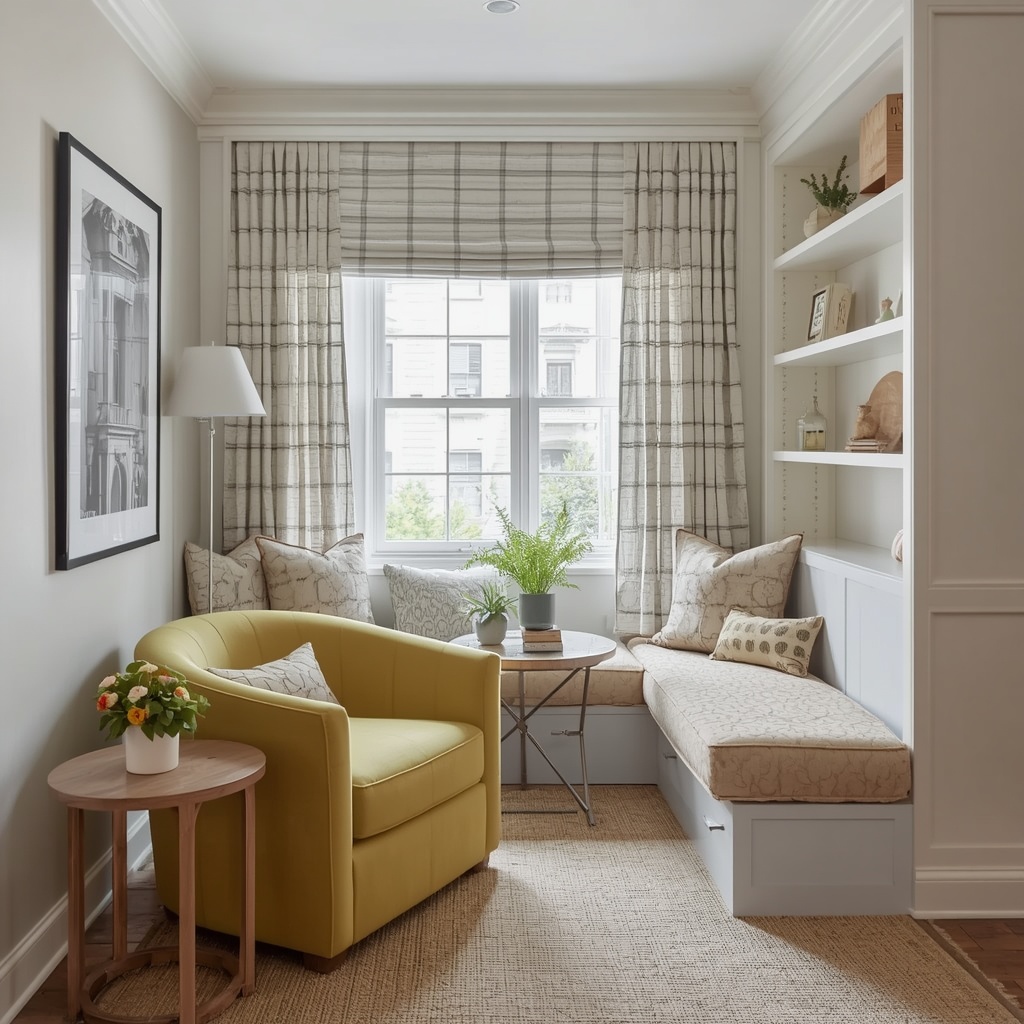
Barrel Chair
Compact, curved back creates built-in enclosure. Perfect for corners under 4 ft wide. Pairs beautifully with a small side table.
Built-In Window Bench
The gold standard. Custom-fitted to your bay or alcove, with lift-up storage underneath. Adds real estate value to your home.
Papasan Chair
Bohemian, deeply enveloping. Great for informal spaces and young readers. Needs at least a 4.5 ft radius to feel comfortable.
Floor Cushion + Bolster
The most space-efficient option. Perfect for children’s nooks or Japandi-inspired homes. Easy to rearrange or store away.
When sizing your seating, follow the rule of breathing room: leave at least 18 inches of clearance on the sides where you’ll enter and exit, and 12 inches between the seat and any shelving you plan to add at arm height. In a very tight corner (less than 36 inches across), a custom built-in bench is almost always the superior choice — it uses every inch without the visual bulk of a freestanding chair.
Step 3 — Lighting Your Nook Like a Pro
Lighting is the element that most powerfully determines how a reading nook “feels.” Poor lighting — too harsh, too dim, poorly positioned — can ruin an otherwise beautifully designed space and make reading uncomfortable within minutes. The ideal reading nook uses a layered lighting approach: ambient, task, and accent. Think of ambient as the room’s general glow, task as the directed light for actually reading, and accent as the decorative warmth that makes the space feel intentional and inviting.
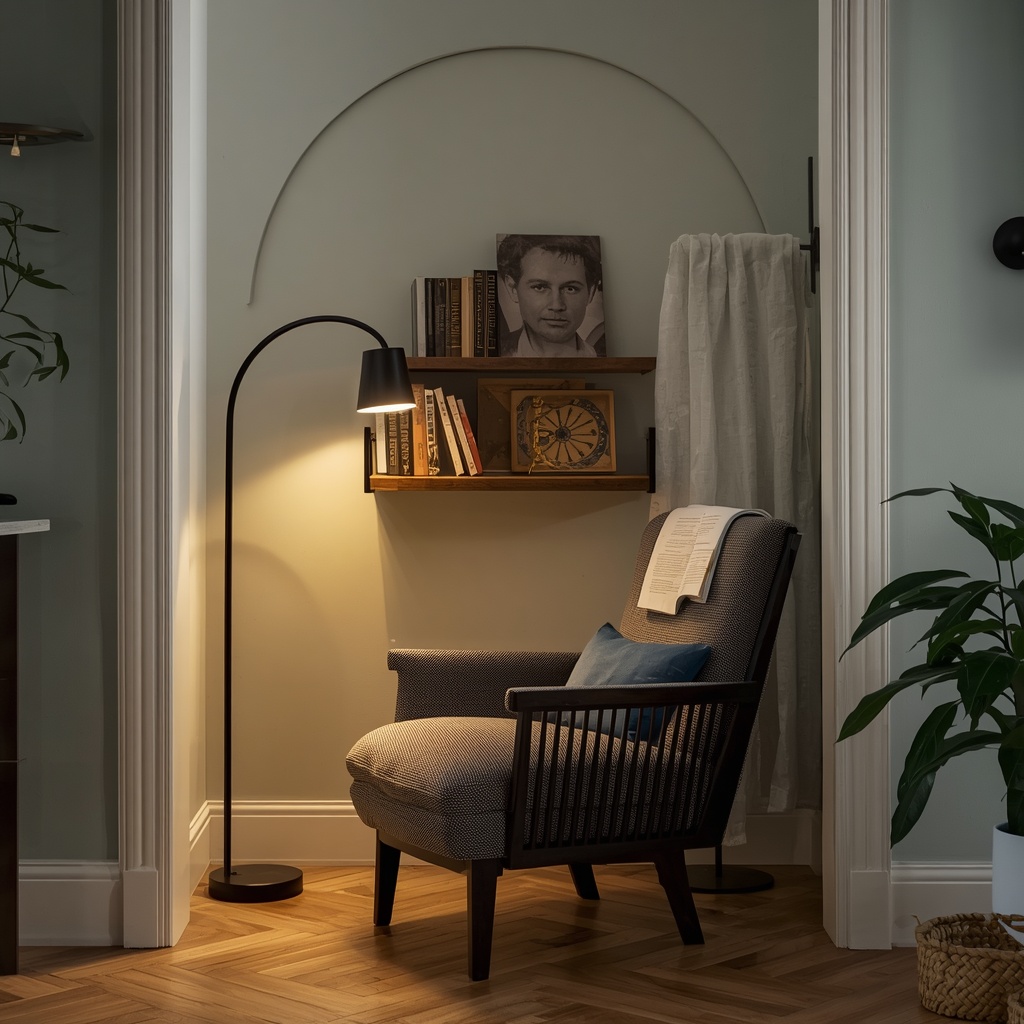
For task lighting specifically, position your light source so it falls over your dominant shoulder and slightly to the side — never directly overhead (which creates harsh shadows on the page) and never behind you (which creates glare). The bulb color temperature should be between 2700K and 3000K, which sits in the warm amber-white range and reduces eye fatigue over extended reading sessions. The American Lighting Association recommends a minimum of 50 footcandles of illumination at the reading surface for comfortable extended reading.
- Arc floor lamp: The most flexible option. Can swing over a chair from behind without requiring wall installation.
- Swing-arm wall sconce: The most elegant and space-efficient. Frees up floor space entirely and looks built-in.
- Clip-on shelf light: A clever solution for built-in shelving — tucks neatly onto a shelf edge above seat height.
- String lights (Edison or fairy): Not for actual reading, but transformative as ambient accent. Drape along built-in shelves or the ceiling line of an alcove.
- Table lamp on a floating shelf: Combines storage and light. Mount a small floating shelf at arm height on the adjacent wall.
✦ Pro Tip
Install a simple smart bulb (like a Philips Hue or LIFX) in your reading lamp. Program it to your preferred reading warmth during the day and set it to auto-dim slightly in the evening. Many readers report this single upgrade dramatically improves how long they can read comfortably without eye strain — and it doubles as a beautiful ambient mood light when you’re not reading.
· · ·
Step 4 — Shelving and Storage That Works Harder Than You Think
A reading nook without bookshelves is like a kitchen without countertops — technically functional, but missing its whole point. Shelving does double duty: it stores your current reads and beloved volumes, and it frames and defines the nook architecturally, making it feel like a dedicated room within a room. In tight corners, built-in floating shelves flanking the seating area are almost always the right answer. They go floor-to-ceiling (maximizing storage), keep the visual weight off the floor (making the space feel larger), and create that irresistible “library ladder” look that photographs beautifully.
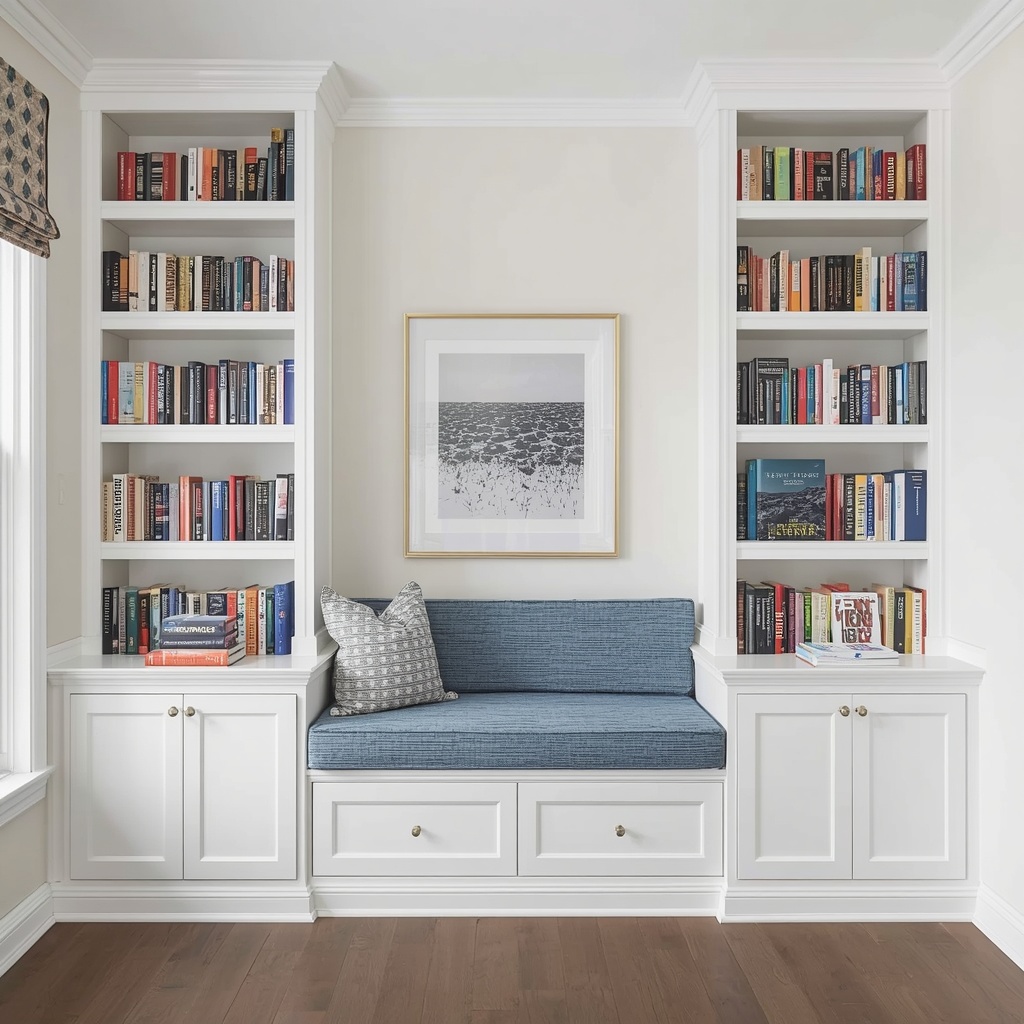
If built-ins aren’t in your budget, consider leaning a tall, narrow bookcase (like the IKEA Billy or the Target Threshold ladder shelf) against one of the adjacent walls. Style the shelves with a mix of books, small plants, a candle or two, and one or two decorative objects at eye height — this “shelfie” styling technique prevents the shelves from looking like a storage wall and makes them feel curated and intentional. Leave roughly 30% of each shelf visually empty; negative space is what separates a styled bookcase from a cluttered one.
Step 5 — Layering Textures for Maximum Coziness
Here’s the secret that separates a truly cozy reading nook from one that merely looks like it should be cozy: texture. A single throw pillow on a chair reads as an afterthought. Three different textures — say, a chunky knit throw, a velvet lumbar pillow, and a boucle seat cushion — read as intentional, layered, and deeply inviting. The goal is to engage multiple senses simultaneously. When someone sits down in a well-styled reading nook, they feel the different weights and softnesses, they see the visual richness, and the whole experience signals: this is a place designed for rest.
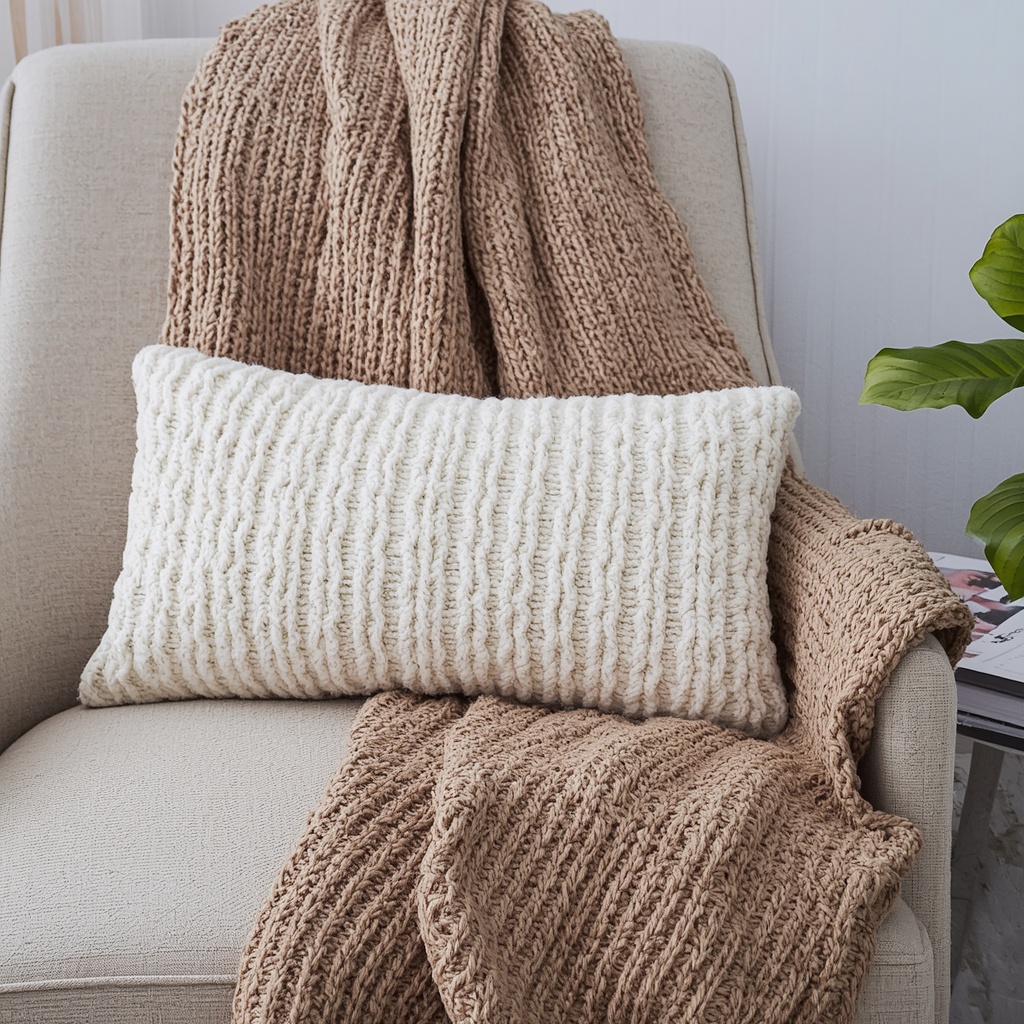
The warmest, most universally appealing reading nook palettes lean on natural materials: wood (the shelf or a side table), linen or cotton (curtains, if you add them), wool or sherpa (throws), and leather or velvet (accent pillows). Avoid synthetic-looking materials like plastic chairs or shiny metal shelves in reading nooks — they work against the psychological warmth you’re trying to create. For color, the Benjamin Moore palette of warm neutrals — HC-172 Revere Pewter, OC-17 White Dove, or the richly earthy AF-150 Amulet — are consistently popular choices for reading nook accent walls among US homeowners in 2024 and 2025.
| Layer | Recommended Material | Budget Option | Splurge Option |
|---|---|---|---|
| Seat cushion | Boucle or linen blend | IKEA Söderhamn cushion ($49) | Pottery Barn custom bench cushion ($280+) |
| Throw blanket | Chunky knit or sherpa | Amazon Basics sherpa throw ($28) | Jenni Kayne cashmere throw ($195) |
| Lumbar pillow | Velvet or embroidered cotton | Target Studio McGee line ($22) | Anthropologie velvet lumbar ($78) |
| Area rug | Wool or jute | Ruggable washable rug ($119) | Loloi hand-knotted wool ($450+) |
| Curtains (optional) | Linen or cotton voile | IKEA RITVA linen panels ($35) | Restoration Hardware Belgian linen ($220) |
Step 6 — Adding Plants, Candles & the Details That Make It Yours
The most memorable reading nooks I’ve designed always have one or two unexpected personal details — a small ceramic vase with a single stem, a vintage globe on the top shelf, a framed pressed botanicals print at eye level. These are the elements that make a nook feel lived-in and personal rather than staged. For plants, low-light varieties are your friends in corner nooks: pothos, ZZ plants, peace lilies, and snake plants all thrive in conditions far from a sunny window. A small trailing pothos draped across the edge of a bookshelf adds organic softness that no throw pillow can replicate.
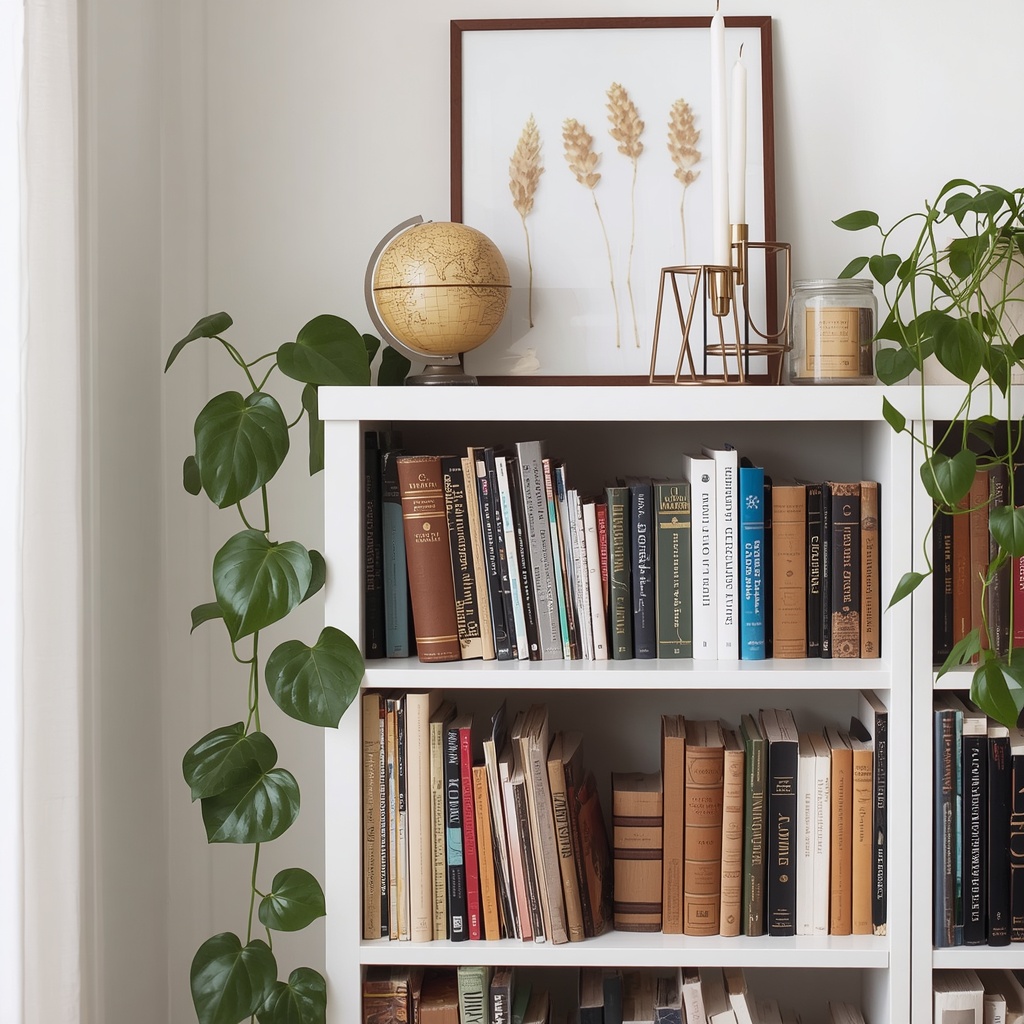
Candles (or flameless LED candles for safety) add the final layer of warmth and sensory richness. A warm vanilla, cedar, or sandalwood scent is particularly well-suited to reading nooks — these woody, grounding notes are associated with calm focus and comfort. Place one on your side table and one tucked among the books on a shelf for that “discovered warmth” effect. Keep the rest of the styling minimal: resist the urge to over-accessorize. In a small nook, every object is visible and reads as intentional, so edit ruthlessly and let each piece breathe.
✦ Pro Tip
Create a small “nook kit” on your side table or nearby shelf: a coaster, a small tray for your phone (face down!), a pencil and sticky notes for marginalia, and your current read. Having everything you need within arm’s reach — without having to get up — is the difference between a nook you use occasionally and one you retreat to every single day.
· · ·
Reading Nook Styles to Match Your Home’s Aesthetic
One of the most common mistakes homeowners make is creating a reading nook that feels stylistically disconnected from the rest of the room. Your nook should feel like a natural, intimate extension of your home’s existing design language — not a room within a room that jars visually. Here are five popular American home decor styles and how to translate each into a reading nook:
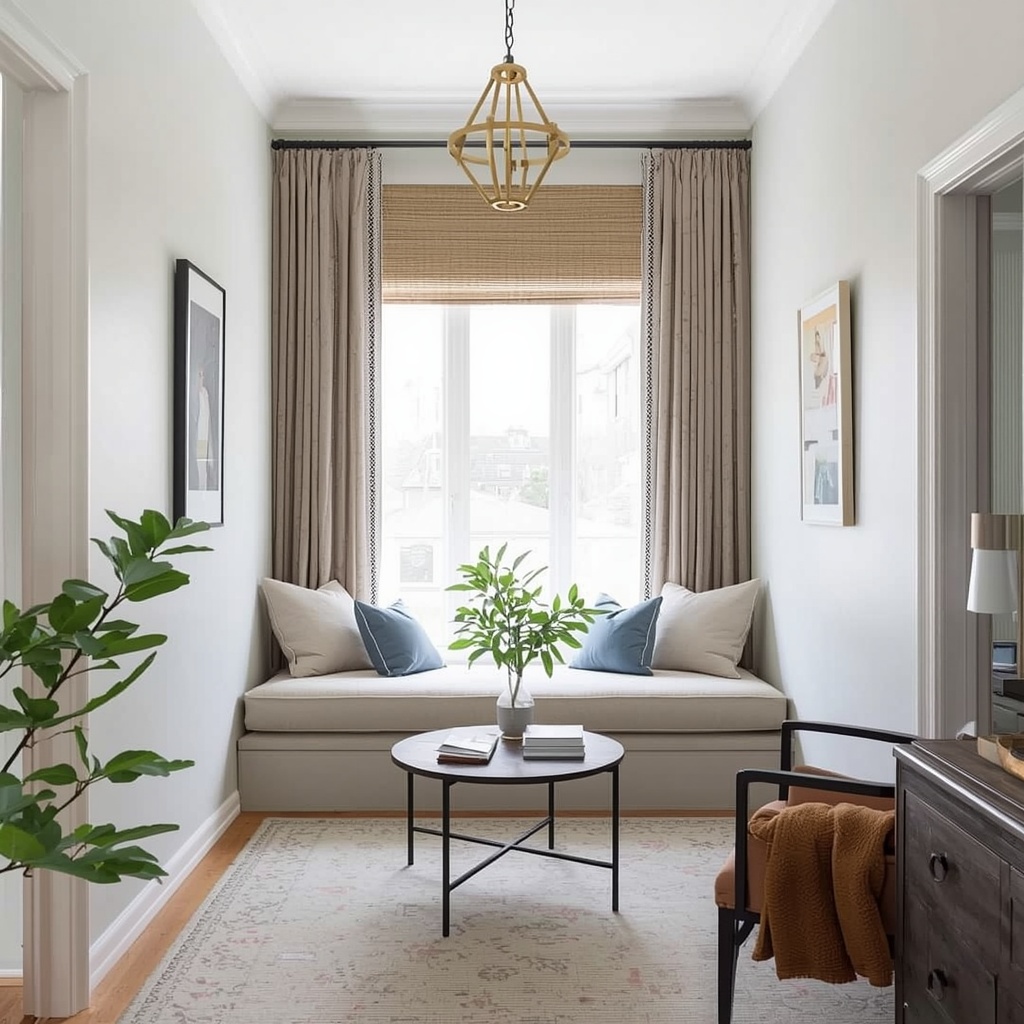
- Cottagecore / Farmhouse: Shiplap or beadboard on the back wall, a painted bench with a floral or gingham cushion, mason jar of wildflowers, warm Edison bulb task lamp, and open shelves with a mix of vintage and contemporary books.
- Modern Boho: Rattan or woven chair, macramé wall hanging, layered kilim-style rug, trailing pothos plant, warm terracotta and cream palette, and an arched floor lamp in matte black.
- Scandinavian / Japandi: Built-in floor cushion platform in natural wood, clean linen cushions in oatmeal or dusty sage, minimal floating shelves, single pendant light, and one curated plant (fiddle leaf or olive tree).
- Dark Academia: Deep forest green or navy accent wall, leather club chair, brass swing-arm sconce, built-in bookcases packed with hardcovers, antique globe, vintage map print, and a chenille throw in caramel or burgundy.
- Coastal / California Casual: White-painted shiplap, woven seagrass chair, linen cushions in coastal blue or sandy beige, driftwood-toned shelves, a potted succulent, and natural rope or jute details throughout.
Budget Breakdown: How Much Does a Reading Nook Actually Cost?
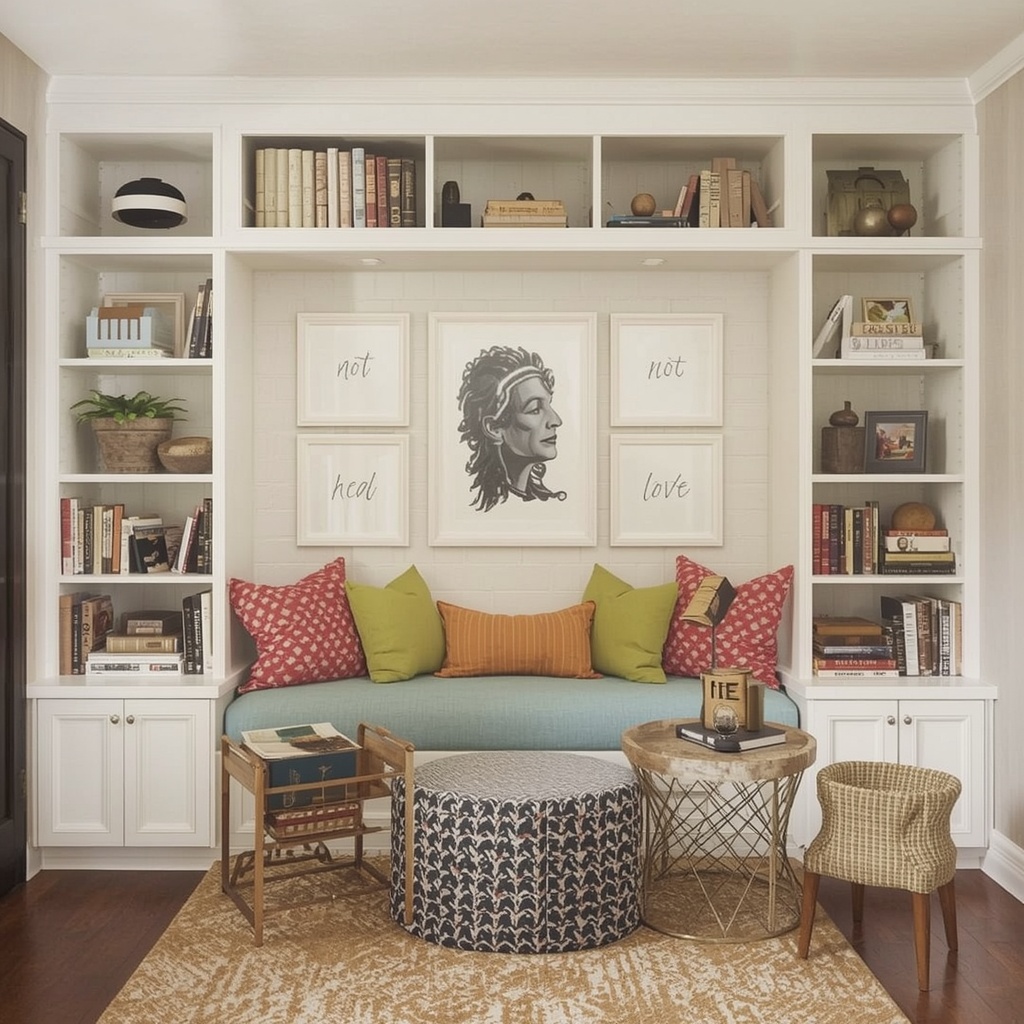
One of the most refreshing truths about reading nooks is that they scale beautifully to almost any budget. A weekend refresh using existing furniture, paint, and a few well-chosen accessories can be accomplished for under $150. A more intentional built-in nook with custom shelving, quality seating, and layered textiles typically runs between $600 and $1,800 for a DIY project, or $2,500 to $6,000+ for a professionally built built-in with custom millwork. Here’s a realistic breakdown by tier:
Weekend Refresh — $75–$200
DIY Build-Out — $400–$1,200
Semi-Custom — $1,500–$3,000
Full Custom — $3,500–$8,000+
Regardless of budget, the three things worth spending a little more on are: the seat cushion (you’ll feel every dollar of quality every time you sit down), the task lamp (cheap lighting causes eye strain and defeats the purpose), and the throw blanket (a quality knit or sherpa throw that actually keeps you warm makes the nook ten times more usable on cooler evenings).
Common Reading Nook Mistakes to Avoid
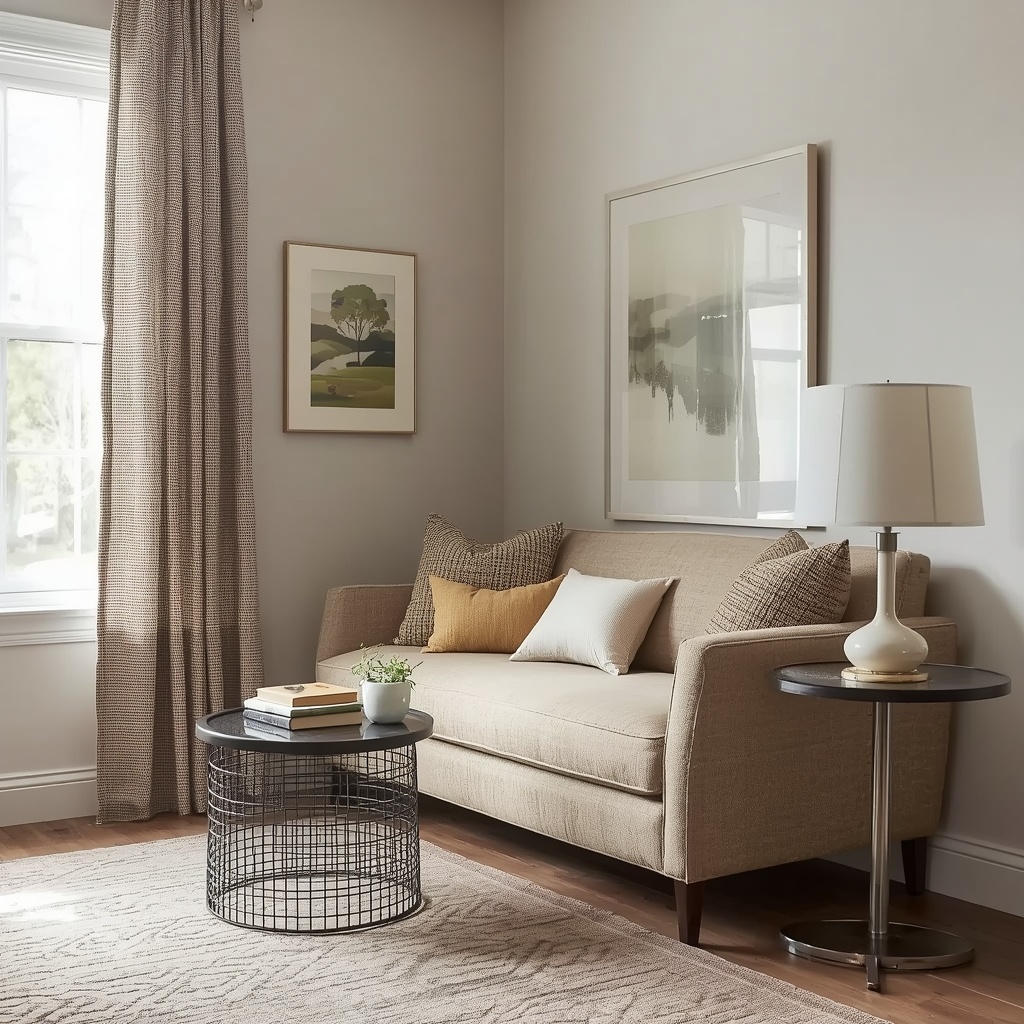
- Scaling up seating: A large sectional piece pushed into a corner isn’t a nook — it’s a corner that’s been blocked. Keep seating proportionate to the space (max 36″ wide for tight corners).
- Overhead lighting only: A ceiling fixture directly above your nook creates harsh downlighting that makes reading uncomfortable. Always add a dedicated task lamp at shoulder height.
- Too many throw pillows: Three pillows maximum in a small seat. More than that leaves no room for the actual person — the nook becomes a display, not a destination.
- Ignoring acoustics: Hard surfaces (tile, bare walls, wood floors) make corners feel echo-y and cold. A rug, curtains, and upholstered furniture absorb sound and make the nook feel genuinely tucked away.
- No side surface: You need somewhere to set a mug, a phone, or a bookmark. A small floating shelf, a C-table, or even a stack of beautiful coffee table books serves as a functional side surface without crowding the space.
- Forgetting about cords: A reading lamp with a visible cord snaking across the floor breaks the magic immediately. Plan cord management from the start: use cord clips, run the cord behind a baseboard, or choose a battery-operated or rechargeable lamp.
Your Corner Is Ready — Now Go Read Something
A cozy reading nook doesn’t require a large home, a big budget, or a background in interior design. It requires attention: attention to how light falls, to what textures invite you to stay, to what details make a space feel personal rather than generic. Start with the corner you already have. Add a seat, a lamp, a shelf, and a throw. Edit until only the essentials remain. And then sit d