
If you’ve ever walked into your living room on a gray afternoon and felt like you were sitting in a cave, you’re not alone. Dark, light-starved living rooms are one of the most common complaints I hear from homeowners across the US, especially in older homes, north-facing rooms, or apartments with small windows. The good news? You don’t need to knock down walls or install skylights to fix it.
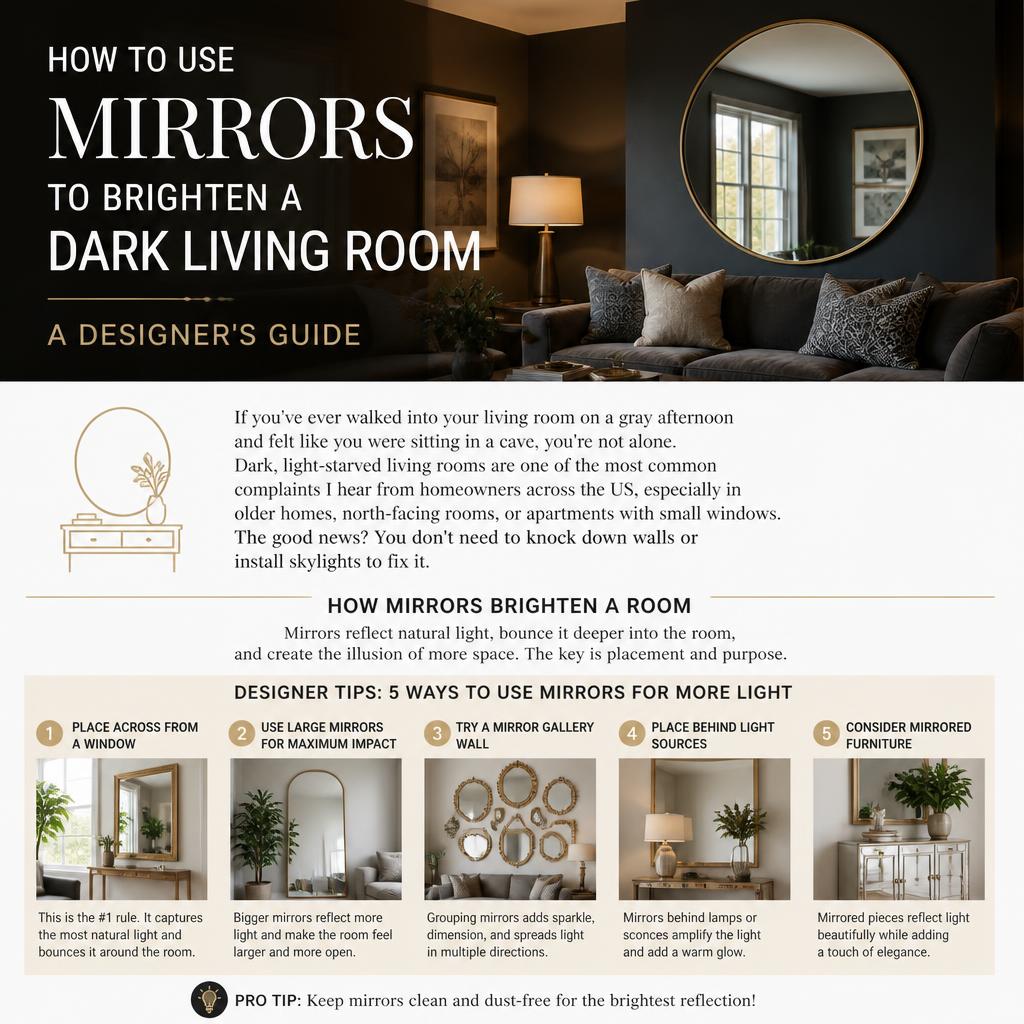
As an interior designer who specializes in home decor, mirrors are one of the first tools I reach for when a client says, “This room just feels flat and dark.” Used strategically, mirrors can bounce natural light around a space, visually double your square footage, and make even the gloomiest room feel airy and alive. In this guide, I’ll walk you through exactly how to use mirrors to brighten a dark living room, the mistakes to avoid, and the design principles that separate a stunning mirror placement from an awkward one.
Why Mirrors Are a Designer’s Secret Weapon for Dark Rooms
Mirrors work because they don’t just decorate a wall, they actively manipulate how light travels through a space. A well-placed mirror can catch sunlight from a window and throw it deeper into the room, illuminating corners that would otherwise stay dim all day. This is basic physics dressed up as home decor.
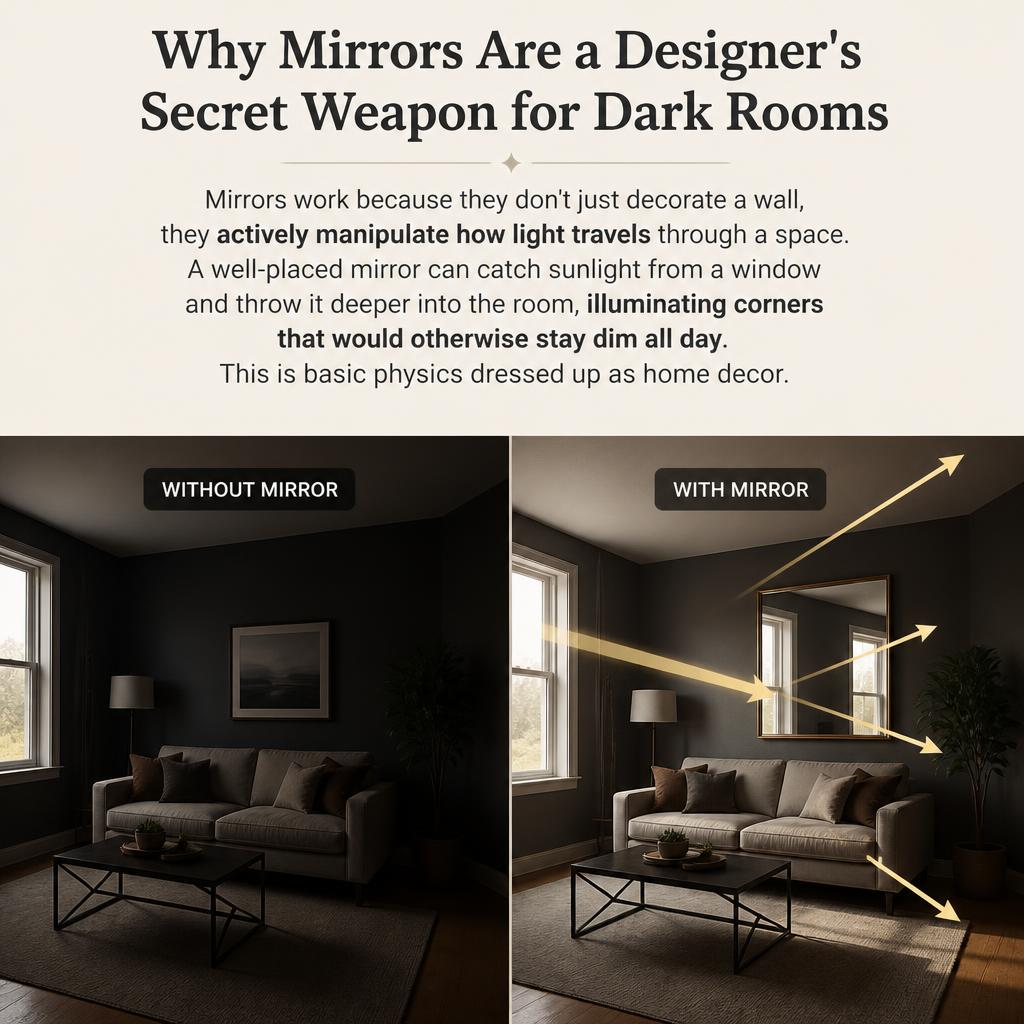
Beyond function, mirrors add visual depth. A dark room often feels small and closed-in, and reflective surfaces trick the eye into perceiving more space than actually exists. This combination of light amplification and spatial illusion is why mirrors remain one of the most cost-effective, high-impact upgrades in interior design.
Understanding Your Room’s Light Challenges First
Before you buy a single mirror, take a walk through your living room at different times of day. Notice where natural light enters, how far it travels, and which corners stay shadowed even at noon. This “light audit” takes ten minutes and will completely change how you approach mirror placement.
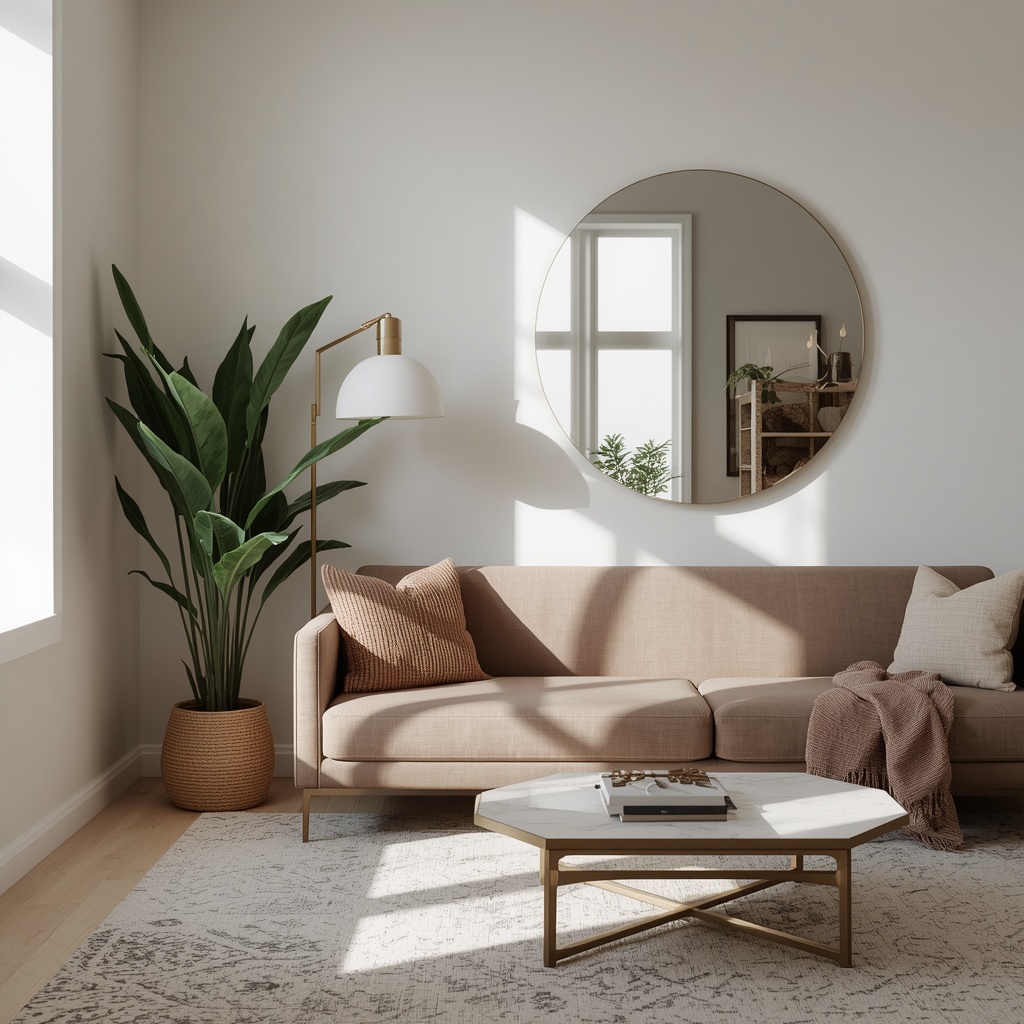
Rooms with north-facing windows, small window openings, or heavy tree cover outside tend to struggle most with natural light. Dark wall colors, heavy drapery, and bulky furniture near windows can also block what little light does come in. Identifying the root cause helps you decide whether you need one statement mirror or a more layered lighting-and-mirror strategy.
“Light is the fourth wall of any room. When you can’t add more of it through architecture, mirrors become your best design collaborator.” — a principle I share with nearly every client working with a dark floor plan.
The Best Types of Mirrors for Brightening a Living Room
Not all mirrors perform the same job. Some are built to maximize reflected light, while others work better as decorative accents. Here’s a quick breakdown to help you choose the right one for your space.

| Mirror Type | Best For | Light-Reflecting Power | Ideal Placement |
|---|---|---|---|
| Oversized wall mirror | Small or narrow living rooms | High | Directly across from the main window |
| Mirrored gallery wall | Eclectic or gallery-style decor | Medium-High | Feature wall opposite a light source |
| Full-length floor mirror | Corners and awkward nooks | Medium | Leaning near a window or entryway |
| Round mirror | Softening angular furniture | Medium | Above a console table or fireplace |
| Mirrored furniture (coffee tables, cabinets) | Subtle light bounce | Low-Medium | Anywhere natural light hits the surface |
| Antique or framed statement mirror | Traditional or vintage interiors | Medium | Above a mantel or sideboard |
Choosing the right type depends on your room’s layout, your existing furniture, and how much natural light you’re working with. In most dark living rooms, a single large mirror will outperform several small decorative ones.
Where to Place Mirrors for Maximum Light Reflection
Placement is everything. A gorgeous mirror in the wrong spot will do almost nothing for your room’s brightness, while a modest mirror in the right spot can transform the entire space. Here are the placement rules I use with every client.
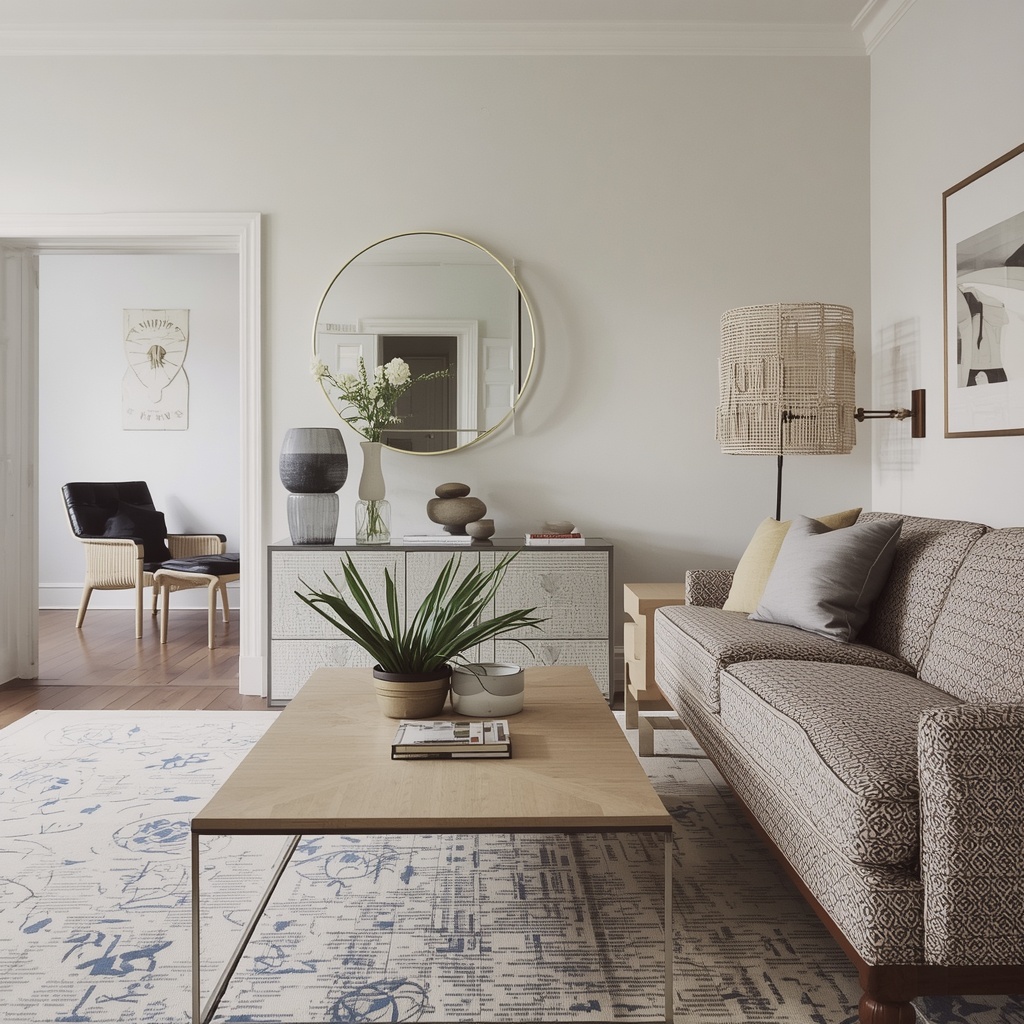
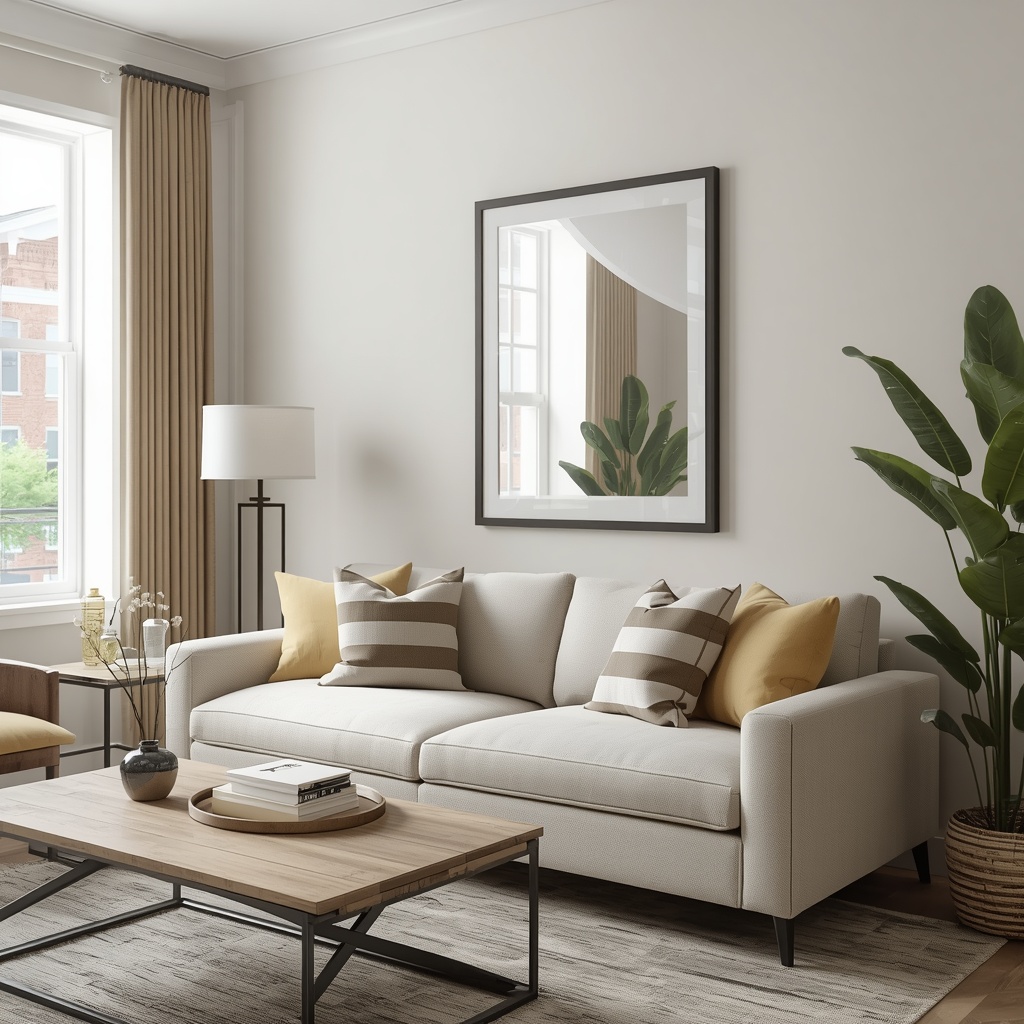
- Opposite the main window: This is the golden rule of mirror placement. A mirror positioned directly across from your largest window will catch incoming daylight and reflect it back across the room.
- Perpendicular to light sources: If a mirror directly across from a window isn’t possible, angling one on an adjacent wall still reflects usable light.
- Behind or near a lamp: Placing a mirror behind a table lamp or floor lamp amplifies artificial light in the evening, which matters just as much as daylight.
- At the end of a hallway leading into the room: This draws light from adjoining spaces into your dark living room.
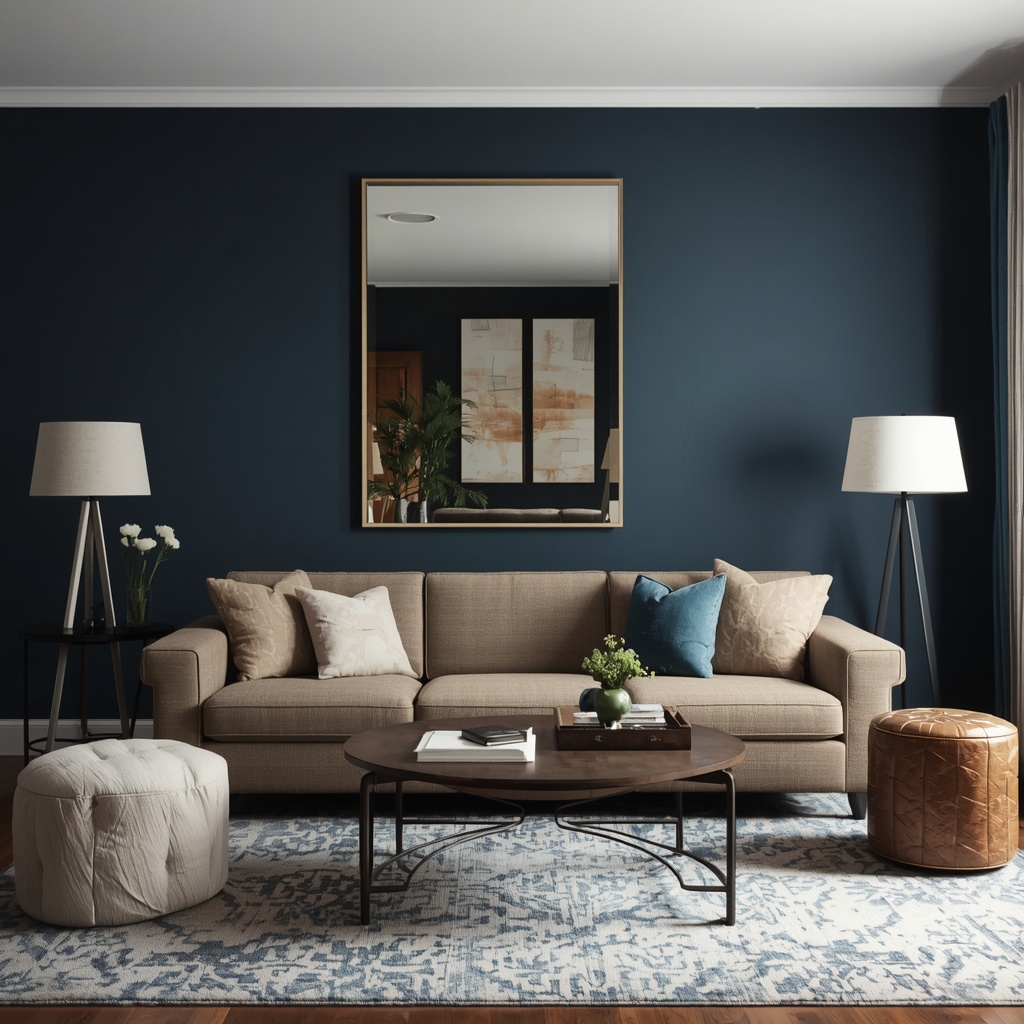
- Above furniture, not floating alone: Mirrors look most intentional when anchored above a console, sofa, or mantel rather than placed in isolation.
<br>
Pro Tip: Hang your mirror so its bottom edge sits roughly 6 to 8 inches above your sofa back or console table. This keeps the reflection at eye level for seated guests and ensures the mirror actually reflects the window or light source, not just your ceiling.
Mirror Placement Mistakes to Avoid
Even well-intentioned mirror placement can backfire if you’re not careful. A few common missteps show up again and again in dark living rooms, and they’re worth flagging before you start hanging.
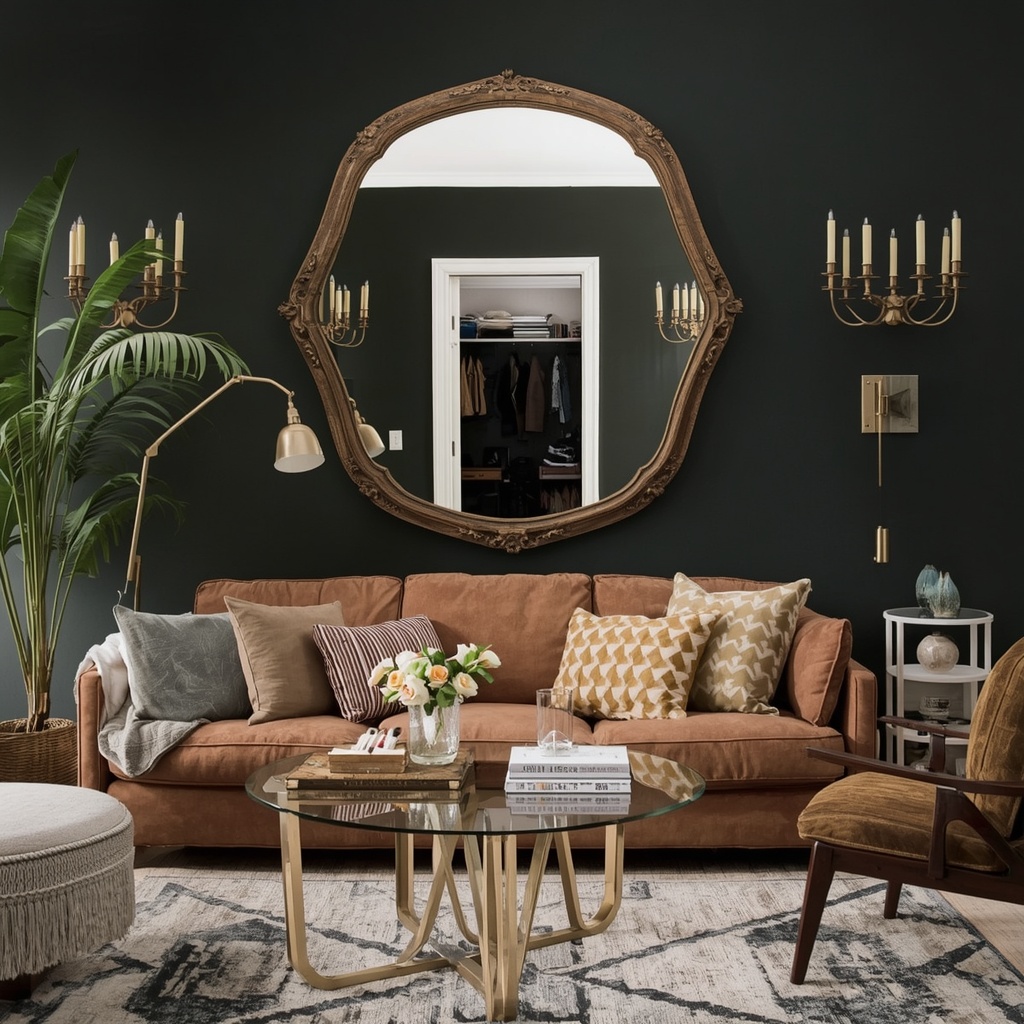
Reflecting clutter, a messy closet, or an unflattering view of the hallway will draw the eye toward exactly what you don’t want highlighted. Similarly, hanging a mirror too high, too small for the wall, or at an awkward tilt can make a room feel disjointed rather than expansive.
- Avoid mirrors that reflect a blank wall instead of a window or light source.
- Don’t oversize a mirror in a room with low ceilings, it can feel top-heavy.
- Skip heavily tinted or smoked-glass mirrors if brightness is your main goal.
- Never place a mirror directly facing a doorway used at night, the sudden reflection can feel jarring.
- Avoid clustering too many small mirrors, which fragments light instead of amplifying it.
Pairing Mirrors with Other Light-Enhancing Decor
Mirrors work best as part of a broader light-maximizing strategy, not as a standalone fix. Pairing them with the right wall colors, textiles, and furniture finishes multiplies the brightening effect considerably.
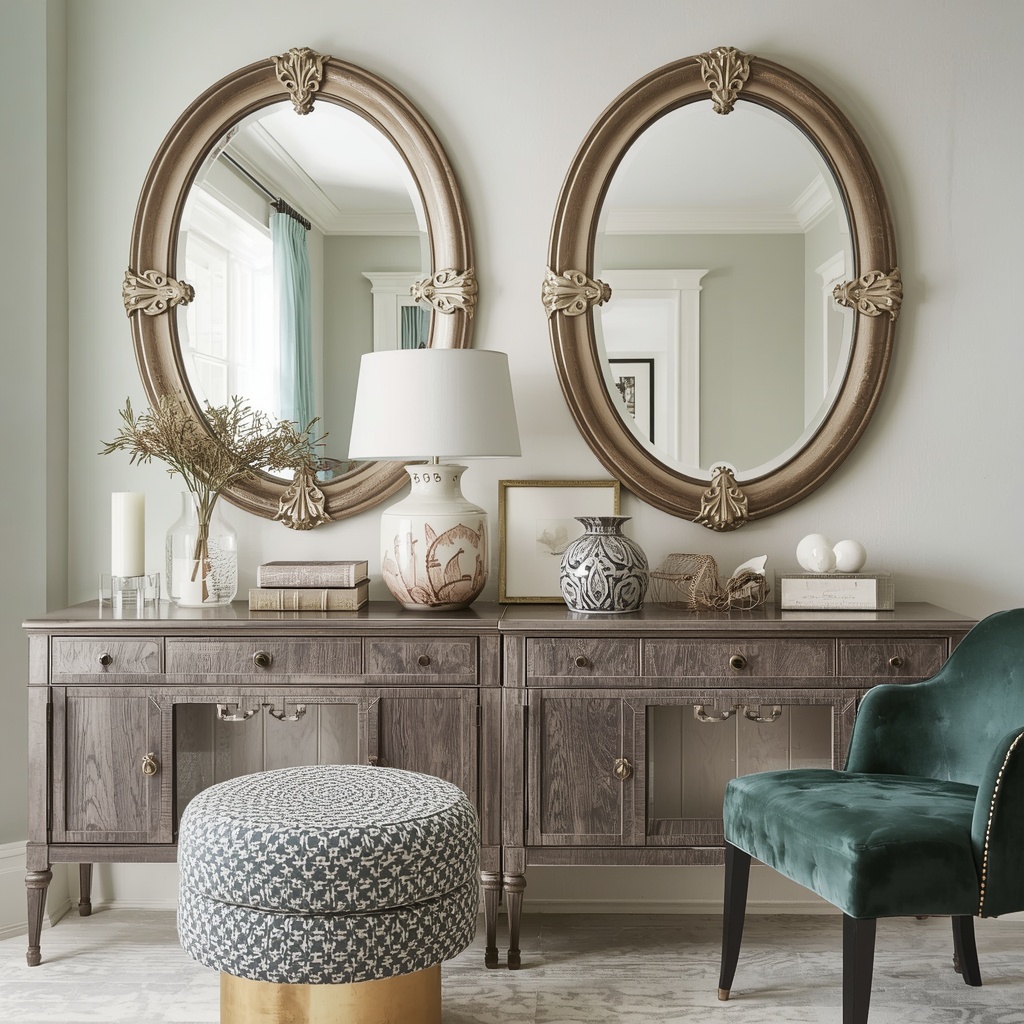
Light, warm wall colors like soft whites, greige, or pale sage reflect more light than deep, saturated tones. Glossy or satin paint finishes also bounce light more effectively than flat matte paint, especially on trim and ceilings.
| Complementary Element | Why It Helps | Designer Suggestion |
|---|---|---|
| Sheer curtains | Let daylight filter through without blocking it | Swap heavy drapes for linen or cotton sheers |
| Glossy paint finishes | Reflect ambient and natural light | Use eggshell or satin on trim and ceilings |
| Metallic or glass accents | Add secondary reflective surfaces | Brass lamps, glass side tables, chrome hardware |
| Light-toned rugs | Prevent visual “light traps” on the floor | Choose ivory, oatmeal, or light gray tones |
| Layered lighting | Fills gaps mirrors alone can’t fix | Combine ambient, task, and accent lighting |
Room-by-Room Mirror Ideas for Common Living Room Layouts
Every living room has its own quirks, so the “best” mirror strategy really depends on your specific layout. Below are a few scenarios I encounter often, along with tailored solutions for each.
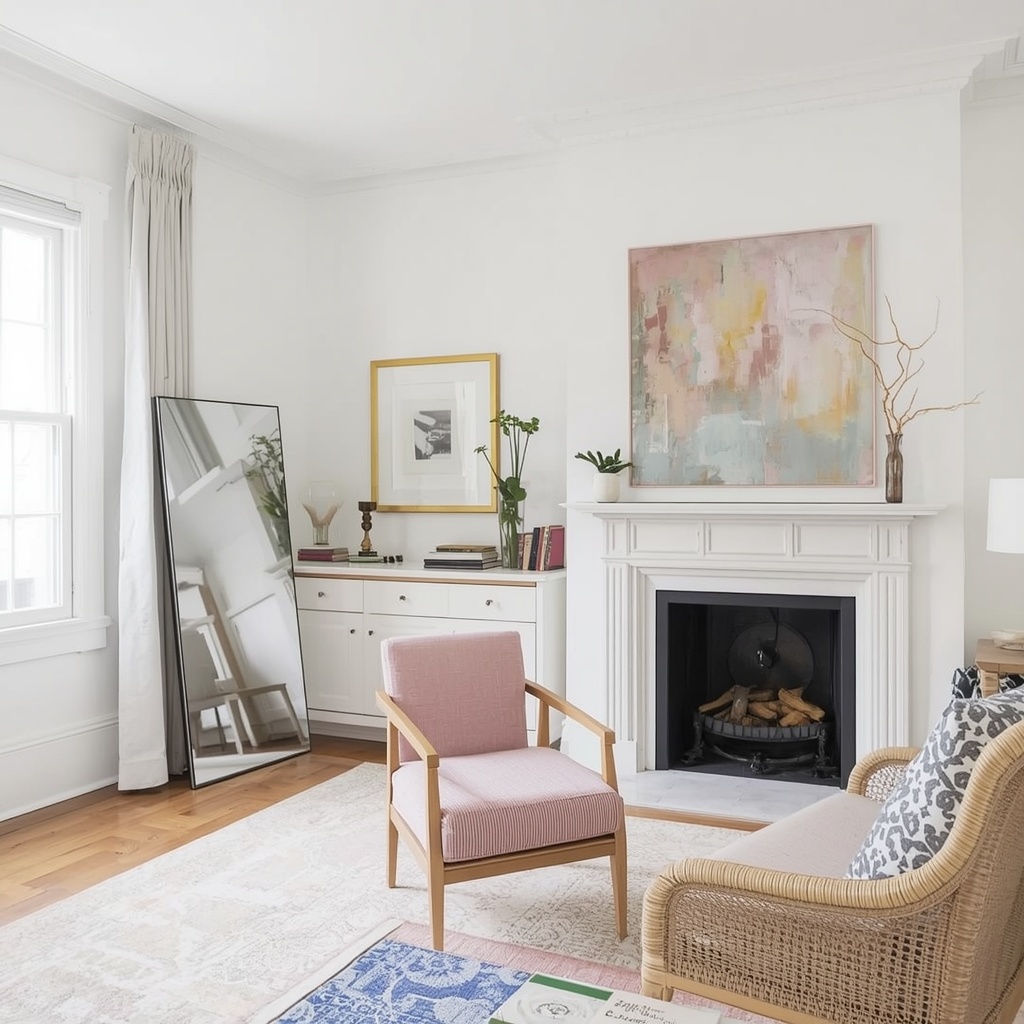
For a small apartment living room, an oversized leaning floor mirror in a corner can double the perceived square footage while brightening the whole space. In a long, narrow living room, a horizontal mirror on the shorter wall helps widen the visual proportions and pulls light down the length of the room. For a living room with a fireplace as the focal point, a substantial mirror above the mantel reflects light from adjacent windows while anchoring the room’s design.
In open-concept spaces where the living room shares light with a kitchen or dining area, positioning a mirror to reflect light from an adjoining window-filled room can dramatically improve brightness even without direct sun exposure. And in basement or below-grade living rooms with minimal natural light, pairing large mirrors with daylight-mimicking LED bulbs creates the most noticeable transformation.
How Mirror Placement Affects Perceived Room Size
Beyond brightness, there’s a psychological element at play. Our brains interpret reflected space as additional space, even when we consciously know it’s an illusion. This is why designers often use mirrors in small, dark rooms as a dual-purpose tool: brightening and visually expanding at the same time.
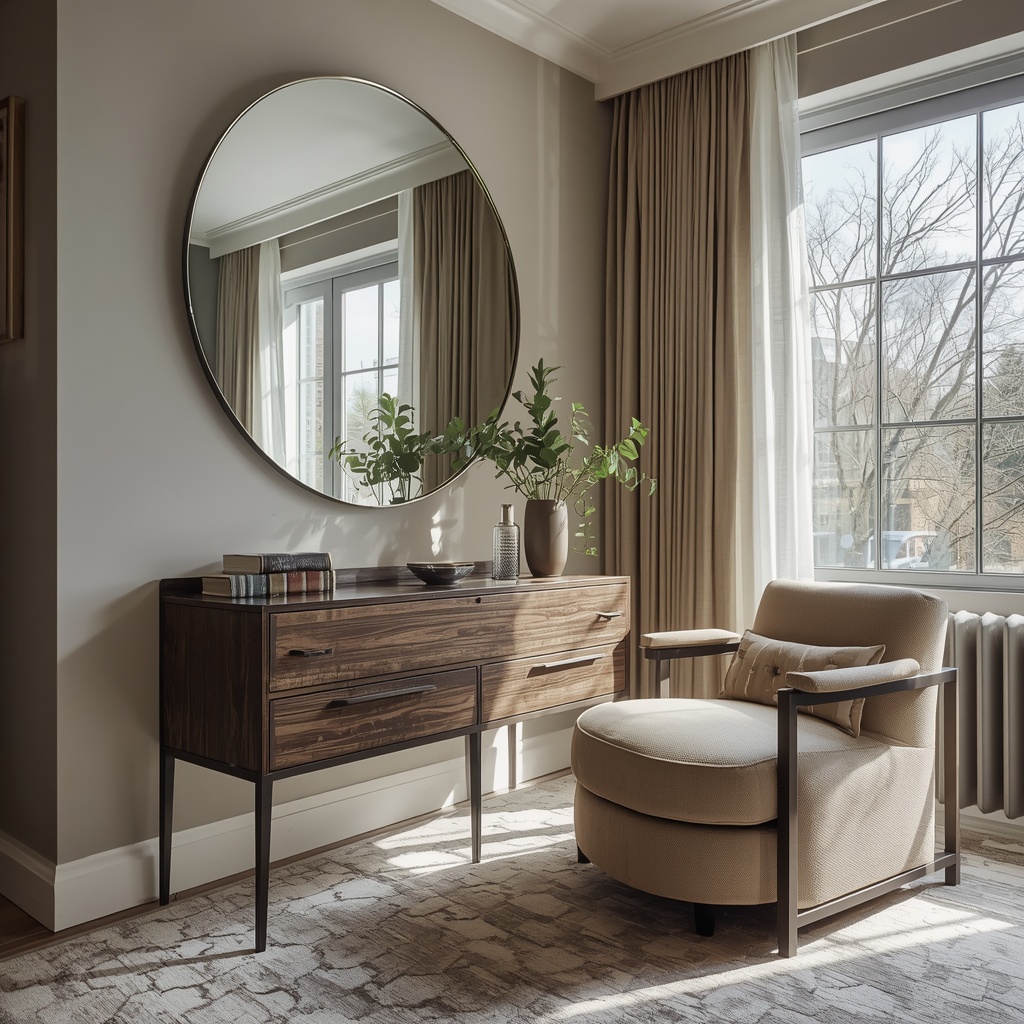
A general rule of thumb is that a mirror covering roughly 30 to 50 percent of a wall’s width creates a strong effect without overwhelming the room. Anything smaller tends to read as decorative rather than functional, while anything larger can feel excessive in a small space.
Maintenance and Styling Tips for Long-Term Brightness
Mirrors only do their job well when they’re clean and properly maintained. Dust, grime, and streaks reduce reflectivity over time, quietly undoing the brightening effect you worked to create.
- Clean mirrors weekly with a microfiber cloth and a vinegar-water solution to avoid streaking.
- Reassess mirror placement seasonally, since the sun’s angle shifts throughout the year.
- Rotate accessories near mirrors occasionally to keep reflections feeling fresh rather than static.
- Check mirror frames for tarnish or wear, especially in humid climates common across the Southeast and Gulf Coast.
Frequently Asked Questions
Do mirrors actually make a room brighter, or is it just visual perception?
Mirrors genuinely reflect and redistribute existing light, both natural and artificial, making rooms measurably brighter, not just visually different.
What’s the ideal mirror size for a small, dark living room?
As a general guideline, choose a mirror that’s at least two-thirds the width of the furniture piece it hangs above, such as a sofa or console table.
Can too many mirrors make a room feel busy instead of bright?
Yes. One well-placed, appropriately sized mirror almost always outperforms several small mirrors scattered around a room.
Should mirrors face windows directly or at an angle?
Direct placement across from a window maximizes reflection, but angled placement still works well when a direct opposite wall isn’t available.
Final Thoughts
Brightening a dark living room doesn’t require a renovation, it requires strategy. Mirrors, when chosen and placed thoughtfully, do double duty: they amplify whatever light your room already receives and make the entire space feel larger, airier, and more inviting. Start with a light audit, choose a mirror sized appropriately for your wall, and pair it with light-friendly paint, textiles, and layered lighting for the best results.
For more inspiration on layout and lighting principles, resources like the American Society of Interior Designers and National Kitchen and Bath Association offer helpful design standards that apply well beyond kitchens and bathrooms.