
There’s a reason a single vase of well-arranged flowers can make an entire room feel finished. As an interior designer who works with home decor clients across the US, I can tell you that fresh floral styling is one of the fastest, most affordable ways to elevate a space — faster than repainting, cheaper than new furniture, and infinitely more forgiving if you change your mind next season.
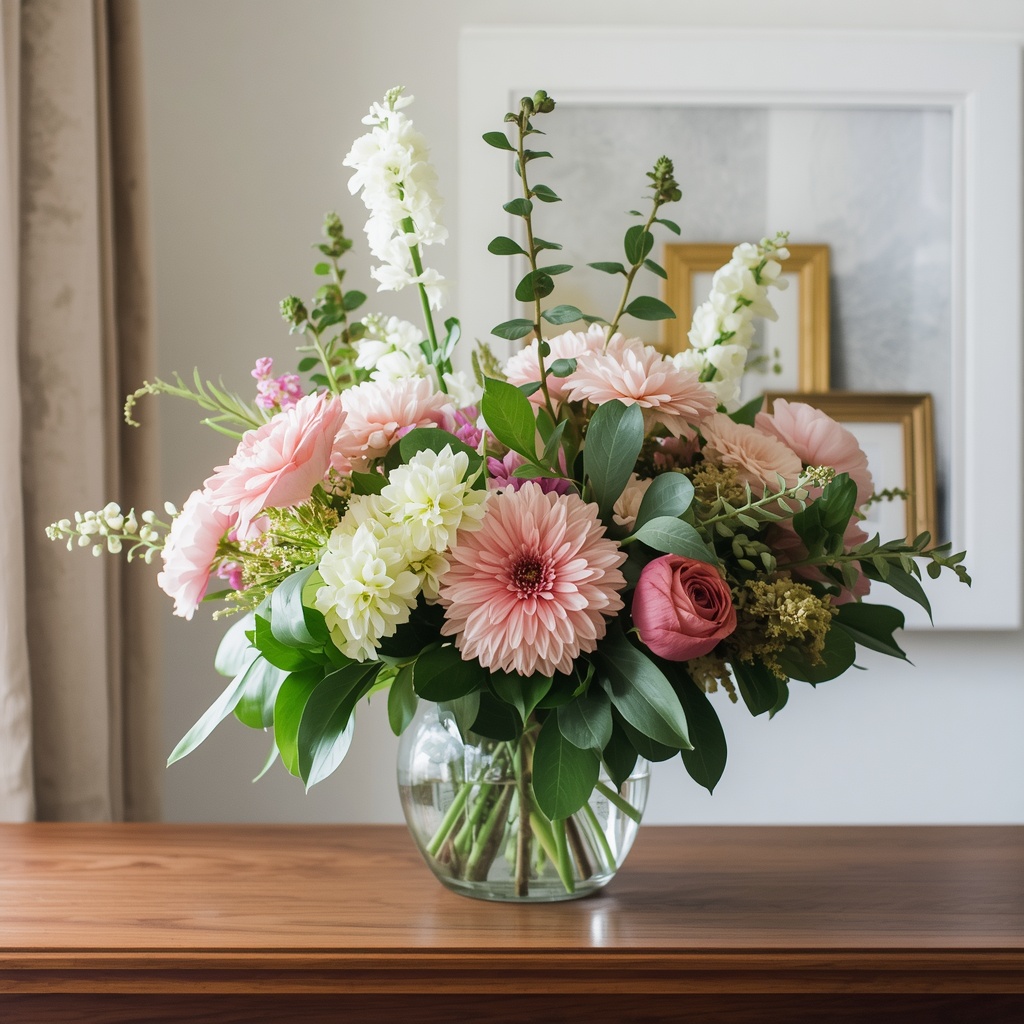
Yet most people buy a beautiful bouquet, plop it in whatever vase is closest, and wonder why it doesn’t look like the arrangements they see in boutique hotels or designer showhomes. The difference isn’t the flowers. It’s the styling. High-end florists follow a handful of principles around proportion, color theory, vessel selection, and placement that anyone can learn. This guide breaks down exactly how to style fresh flowers like a professional, room by room, so your home decor looks intentional instead of accidental.
Why Fresh Florals Matter in Home Decor
Fresh flowers do something that artificial decor simply can’t replicate: they bring texture, movement, and a living quality into a space. A well-placed arrangement softens hard architectural lines, adds a pop of seasonal color, and signals that a home is cared for and lived-in rather than staged.
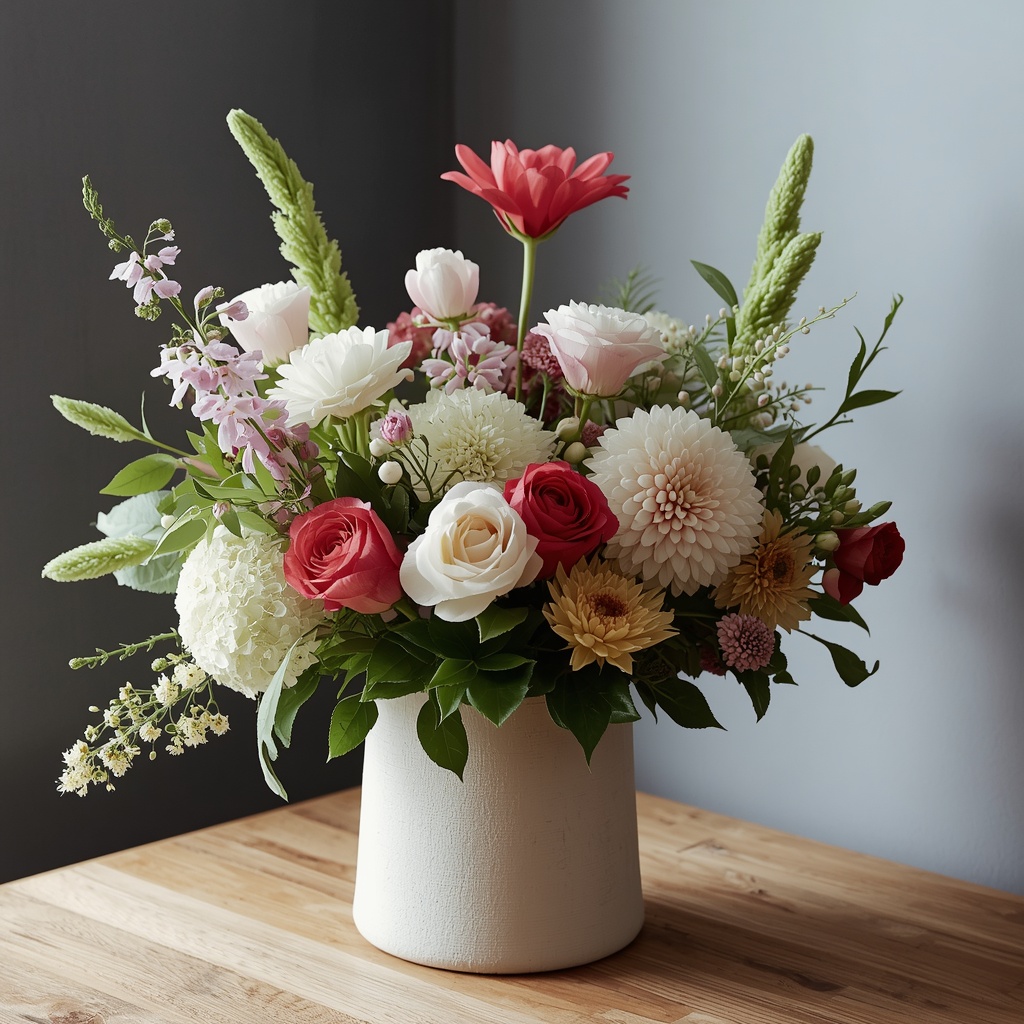
Designers often call flowers the “jewelry” of a room — the finishing accessory that pulls together furniture, wall color, and textiles into a cohesive story. Interior stylists also use florals strategically to introduce color palettes that would be too bold in a permanent fixture like a sofa or an accent wall, since blooms can be swapped out with the seasons at almost no cost or commitment.
“Flowers are the quickest way to change the emotional temperature of a room. A single stem can do what a whole redecorating project sometimes can’t.” — a philosophy echoed by luxury florists from New York to Los Angeles.
The High-End Florist Mindset: Think Like a Stylist, Not a Shopper
Professional florists don’t start with the flowers. They start with the room. Before buying a single stem, ask what mood, color palette, and scale the space calls for. This “room-first” approach is the single biggest shift that separates amateur arrangements from designer ones.
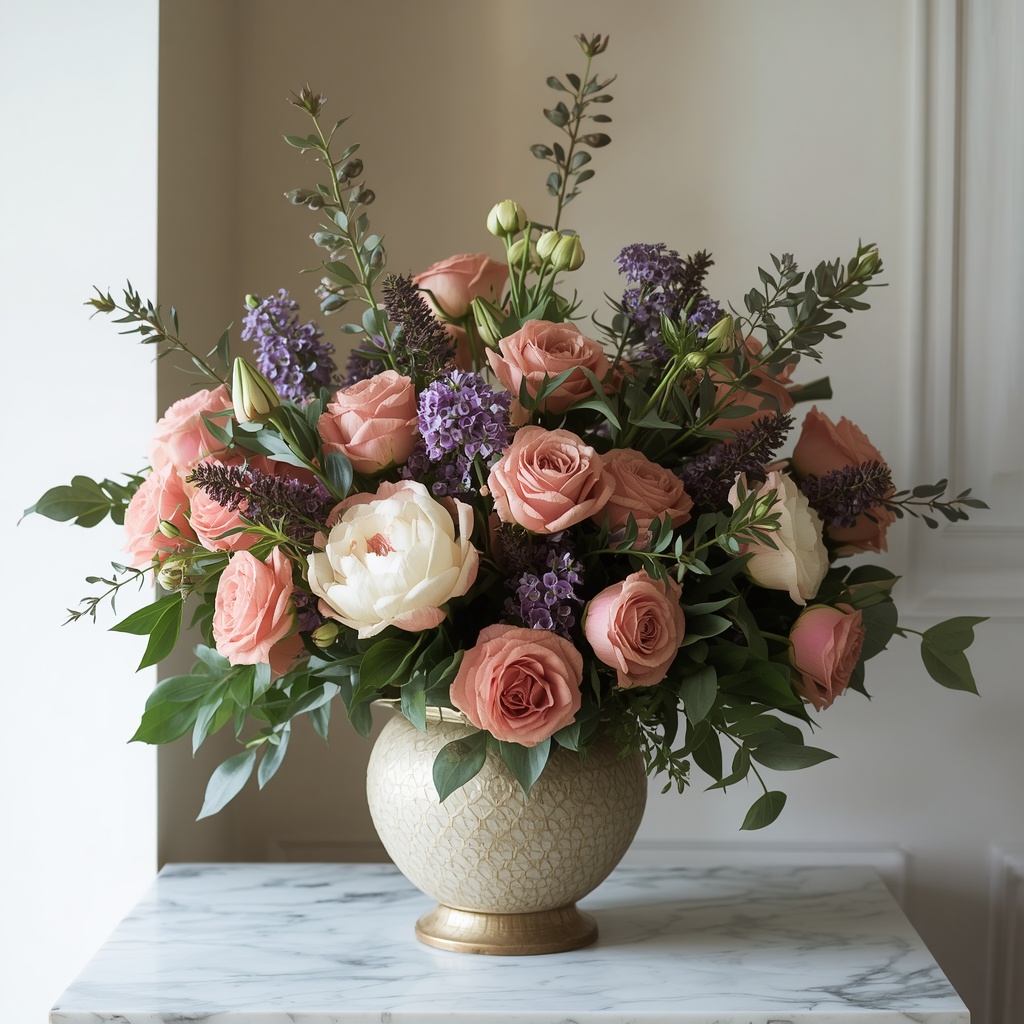
Walk into any five-star hotel lobby and you’ll notice the florals always relate to something else in the room — the marble veining, the drapery color, or the wood tones of the furniture. That’s not a coincidence; it’s intentional styling. Once you start shopping for flowers the way a designer shops for throw pillows — with the room’s existing palette in mind — your arrangements will instantly look more expensive.
Choosing the Right Vase: The Foundation of Every Arrangement
The vessel matters just as much as the flowers themselves. Florists typically keep a small rotating collection of vases in varying heights, textures, and materials so they can match the container to the room and the bloom.
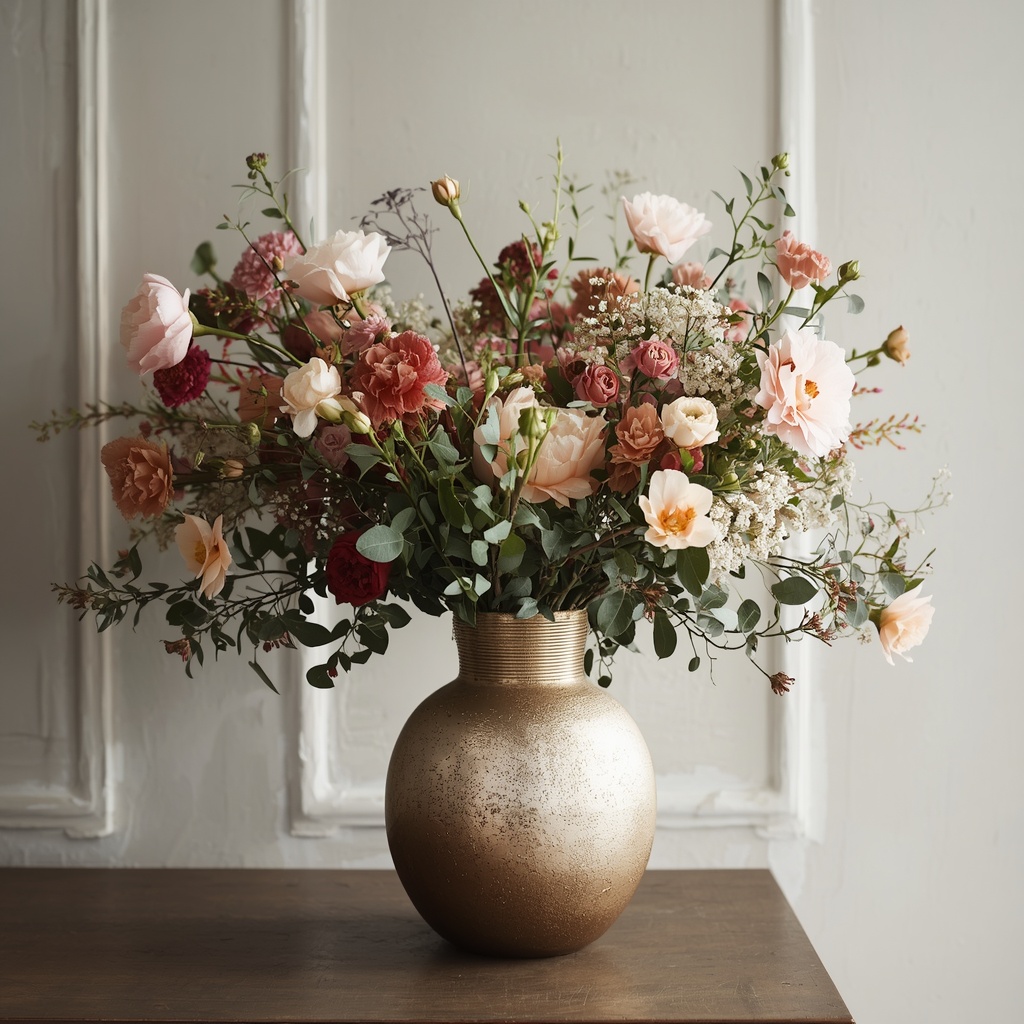
A general rule: the vase should be about one-third the height of the total arrangement, and its opening should be proportional to the stem thickness — wide-mouth vases for airy, garden-style bunches, and narrow-neck vessels for structured, minimalist looks. Material matters too: ceramic and stoneware read as warm and organic, glass feels clean and modern, and metallic vessels add a glam, editorial touch.
| Vase Style | Best For | Design Mood |
|---|---|---|
| Clear glass cylinder | Tulips, ranunculus, tall stems | Modern, minimalist |
| Ceramic pitcher or jug | Garden roses, wildflowers | Rustic, organic |
| Low compote bowl | Peonies, dahlias, hydrangeas | Romantic, lush |
| Bud vase (single stem) | Orchids, anemones, poppies | Editorial, sculptural |
| Textured stoneware | Eucalyptus, dried grasses | Earthy, minimalist |
| Brass or metallic vase | Roses, lilies, statement blooms | Glam, luxury |
Pro Tip: Keep at least three vase sizes on hand — small (6–8 inches), medium (10–12 inches), and large (14+ inches) — so you can restyle the same flowers into different vessels depending on the room and occasion, without buying new decor every time.
Color Theory for Floral Arrangements
Color is where most home arrangements go wrong. Professional florists rarely mix more than two or three color families in one arrangement, and they always tie those colors back to the room itself — pulling a hue from a rug, a piece of art, or a cushion fabric.
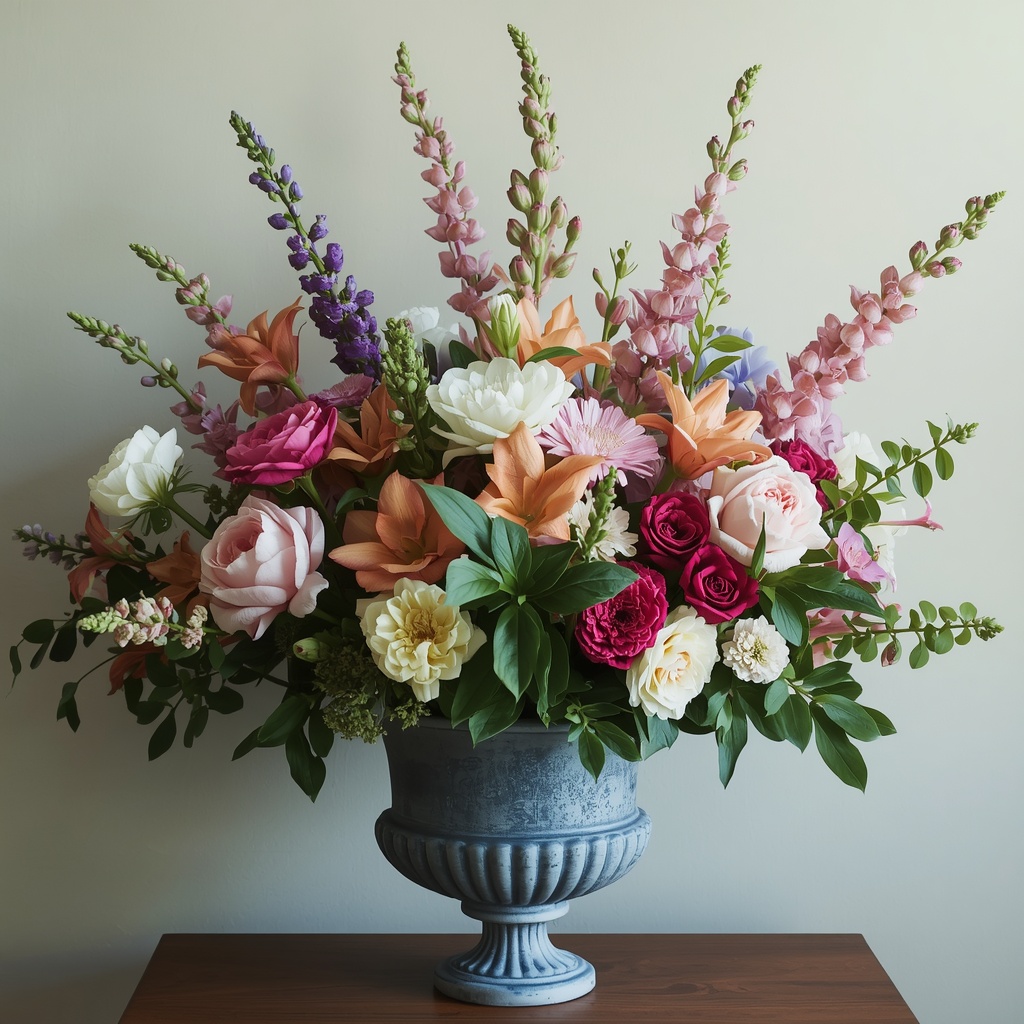
There are three reliable color approaches florists rely on. Monochromatic arrangements use varying shades of a single color (blush, rose, and deep pink together) for a sophisticated, gallery-like effect. Complementary arrangements pair opposite hues on the color wheel, like orange ranunculus with blue delphinium, for high-impact drama. Neutral-and-green arrangements lean on whites, creams, and foliage for a timeless, universally flattering look that works in almost any room.
Quick Color Pairing Guide
- Blush + terracotta + cream — warm, Mediterranean-inspired living rooms
- White + green + touches of black (like scabiosa pods) — modern, minimalist spaces
- Deep burgundy + mustard + rust — moody dining rooms, autumn styling
- All-white with varied textures — bedrooms, bathrooms, spa-like spaces
- Lavender + sage + dusty blue — coastal or cottagecore-inspired kitchens
Mastering Proportion and Scale
Scale is the technical skill that instantly signals professional styling. Florists follow a general guideline: an arrangement should be roughly one-and-a-half to two times the height of its vase, and it should feel proportional to the surface it sits on — a coffee table gets something low and wide, while an entry console can support a tall, dramatic silhouette.
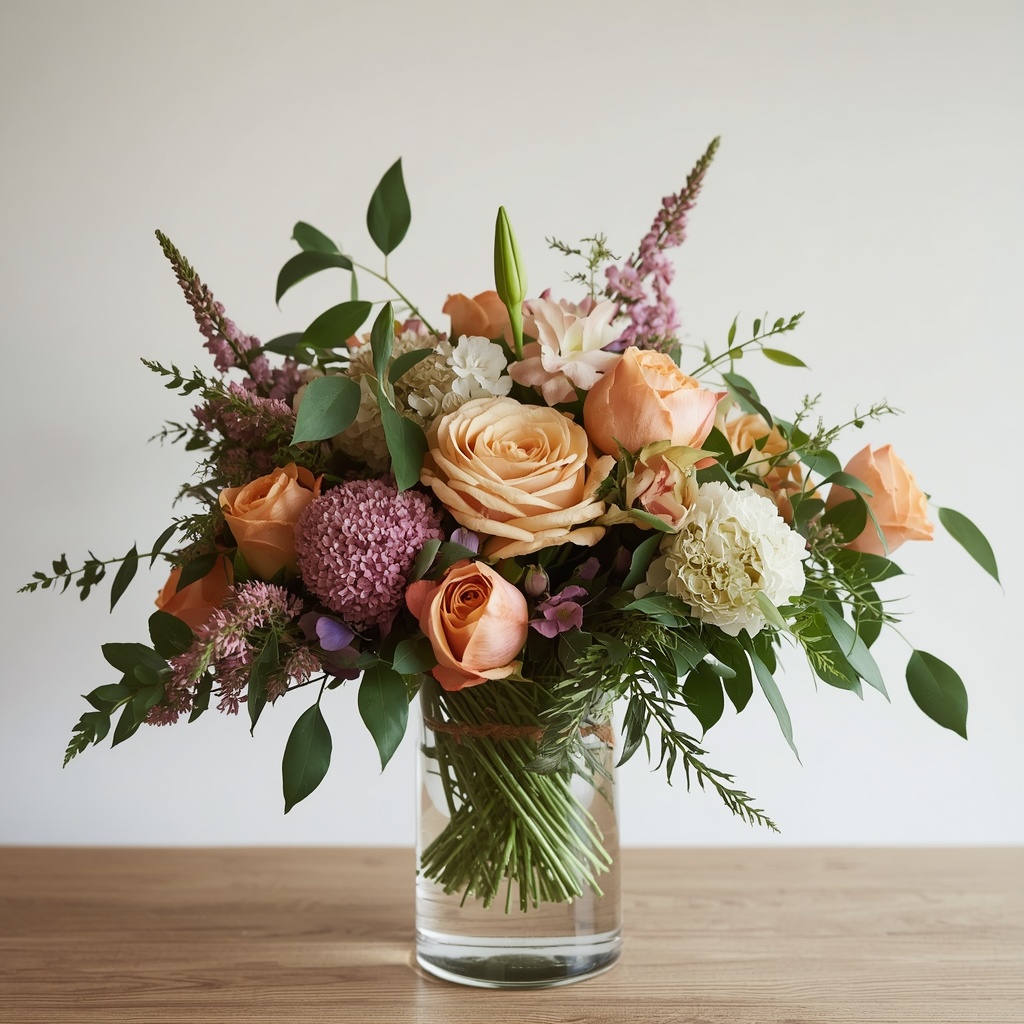
Odd numbers of stems (three, five, seven) tend to look more natural than even numbers, because asymmetry mimics how flowers grow in the wild. Florists also build arrangements in layers: greenery and filler first to create the shape, focal flowers second to draw the eye, and airy accent stems last to add movement and prevent the arrangement from looking too dense or “grocery-store” uniform.
Pro Tip: Before placing your arrangement in its final spot, step back ten feet and squint at it. If one side visually outweighs the other, professional florists call this “leaning” — a subtle imbalance that reads as amateur. Rotate the vase and add or trim stems until the silhouette feels balanced from every angle, not just head-on.
Where to Place Florals for Maximum Impact
Placement is a styling decision, not an afterthought. High-end florists treat flowers as a room’s focal point, positioning them where the eye naturally lands — an entryway console, a dining table centerpiece, or a kitchen island.
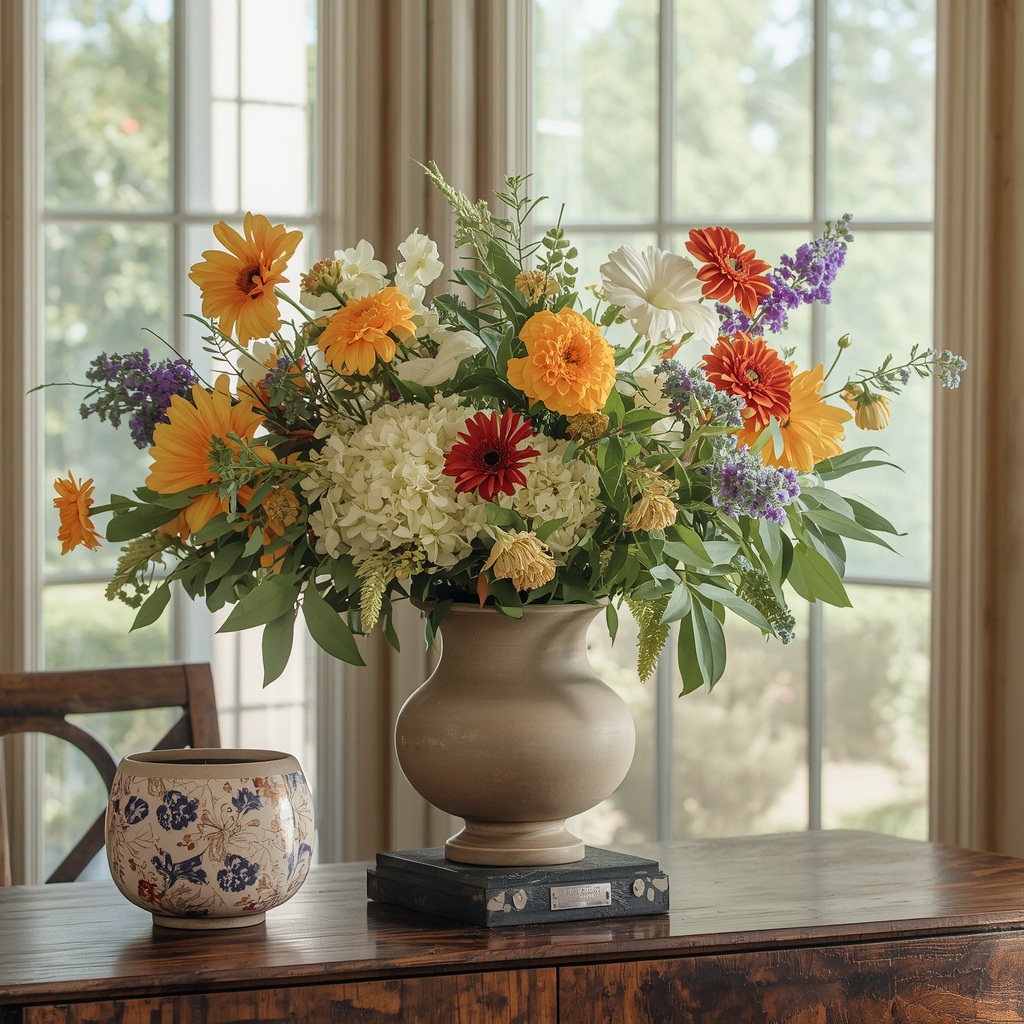
The mistake most homeowners make is scattering small, disconnected arrangements throughout a room instead of committing to one or two strong focal points. A single striking arrangement on a console table will always look more expensive and intentional than three mismatched vases spread across different surfaces.
Best Placement Spots, Room by Room
- Entryway — a tall, dramatic arrangement that sets the tone the moment guests walk in
- Dining table — a low, horizontal centerpiece that doesn’t block sightlines across the table
- Kitchen island — a casual, garden-style bunch in a pitcher or jug
- Living room coffee table — a compact, textural arrangement guests can see from every seating angle
- Primary bedroom nightstand — a single bud vase with one or two stems for a quiet, calming touch
- Powder room — a small, fragrant arrangement (think eucalyptus or lavender) for sensory impact in a small space
Seasonal Styling: Rotating Blooms Throughout the Year
Part of what makes florist-styled homes feel current is seasonal rotation. Committing to seasonal blooms not only keeps costs down (in-season flowers are more affordable and last longer) but also keeps your home decor feeling fresh and aligned with the time of year.
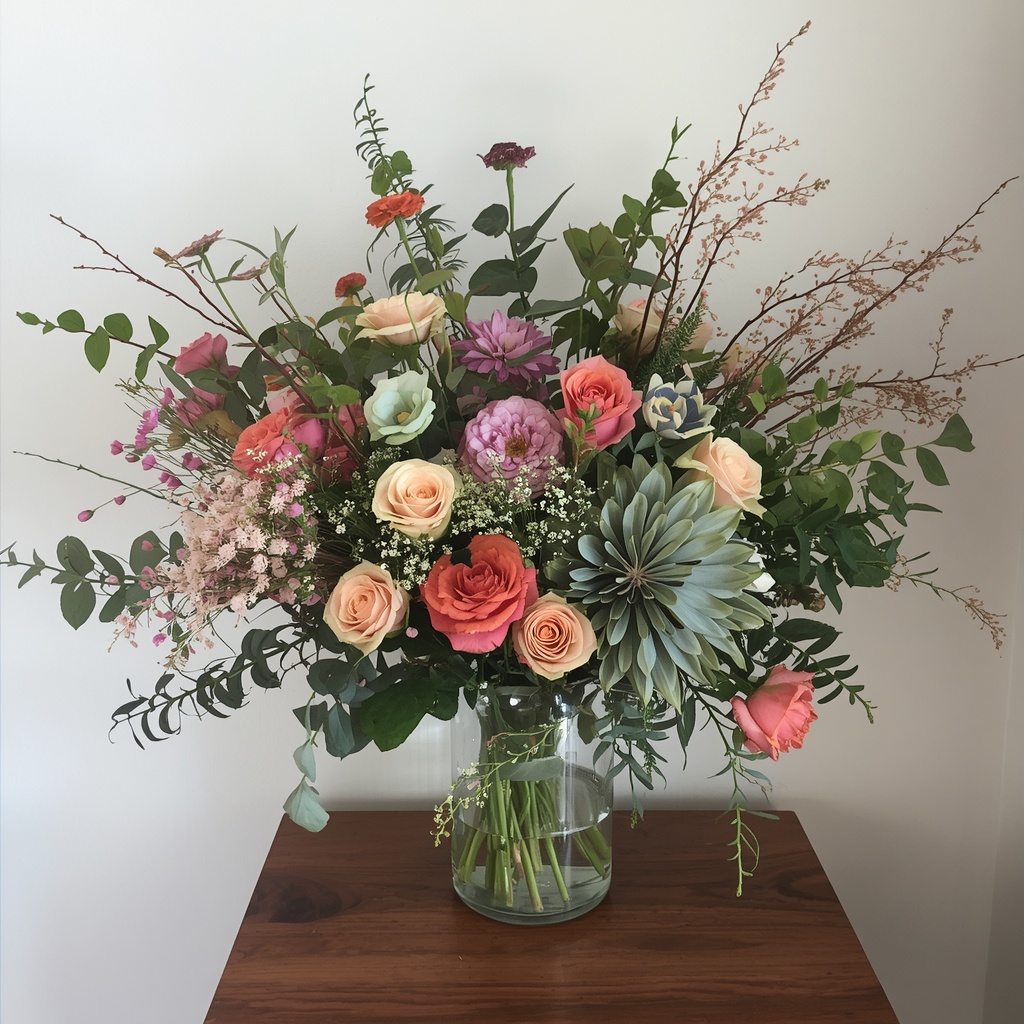
| Season | Signature Blooms | Styling Mood |
|---|---|---|
| Spring | Tulips, ranunculus, peonies, cherry blossom | Light, airy, pastel |
| Summer | Dahlias, garden roses, zinnias, sunflowers | Bold, saturated, lush |
| Fall | Chrysanthemums, amaranth, dried grasses, marigold | Warm, earthy, textured |
| Winter | Amaryllis, eucalyptus, anemones, white ranunculus | Minimal, elegant, crisp |
Pro Tip: Shop your local farmers market or a wholesale flower district instead of a standard grocery store when possible. In-season, locally sourced blooms tend to be sturdier, last longer in the vase, and often cost less than imported off-season varieties — a trick most working florists rely on to keep client budgets in check.
Extending the Life of Your Arrangement
Even the most beautifully styled arrangement falls flat if it wilts within two days. Florists use a few simple, non-negotiable habits to extend vase life significantly.
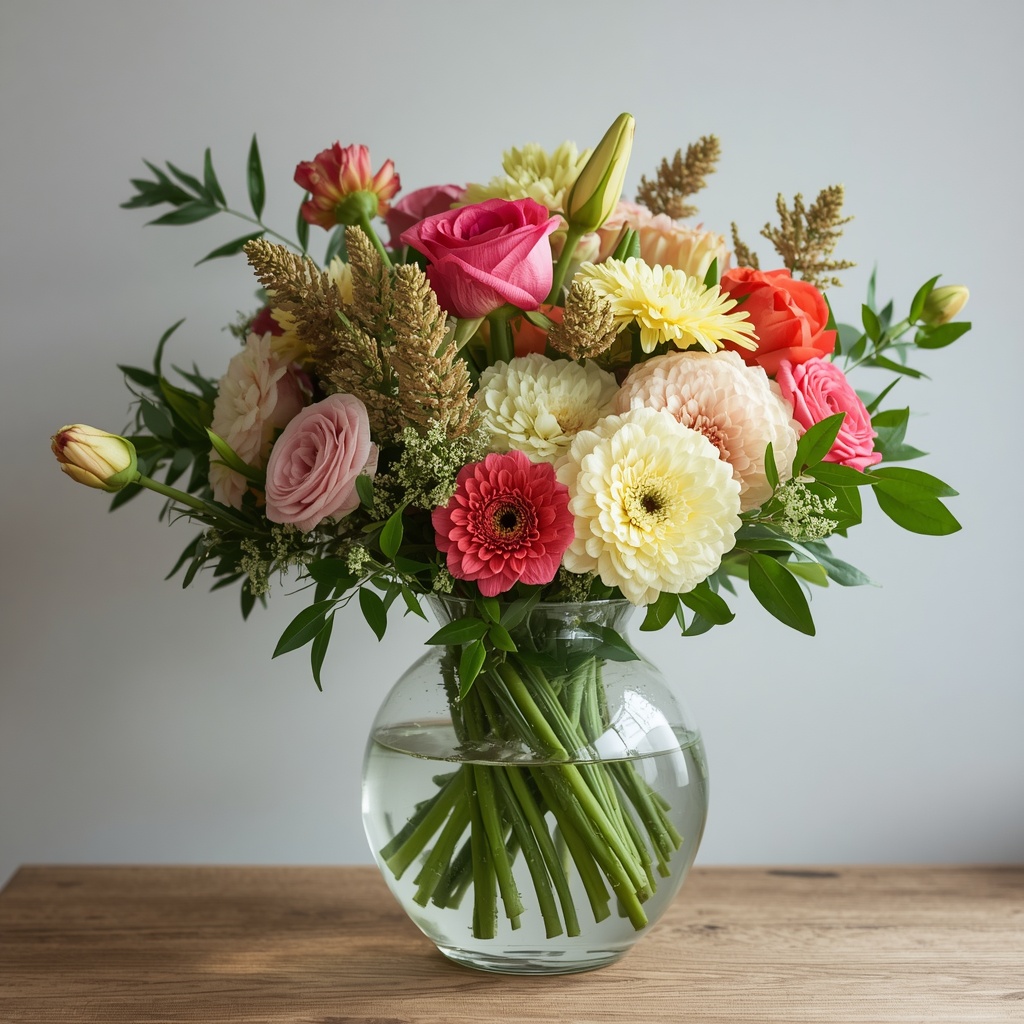
Always start with a clean vase, since bacteria buildup is the number one cause of premature wilting. Cut stems at a 45-degree angle under running water immediately before placing them in the vase, and remove any leaves that would sit below the waterline, since submerged foliage rots quickly and clouds the water. Change the water every two to three days, re-cutting stems slightly each time, and keep arrangements away from direct sunlight, heating vents, and ripening fruit bowls (fruit releases ethylene gas, which accelerates wilting).
- Use flower food packets if provided, or make a DIY version with a teaspoon of sugar and a few drops of bleach per quart of water
- Keep arrangements in a cool spot, ideally under 75°F
- Mist delicate petals like hydrangea or ranunculus lightly with water
- Remove any wilting stems immediately so they don’t affect the rest of the bouquet
Common Styling Mistakes to Avoid
Even well-intentioned arrangements can miss the mark. Overcrowding the vase, mixing too many competing colors, and choosing a vase that’s mismatched in scale to the flowers are the three mistakes florists see most often in home settings.
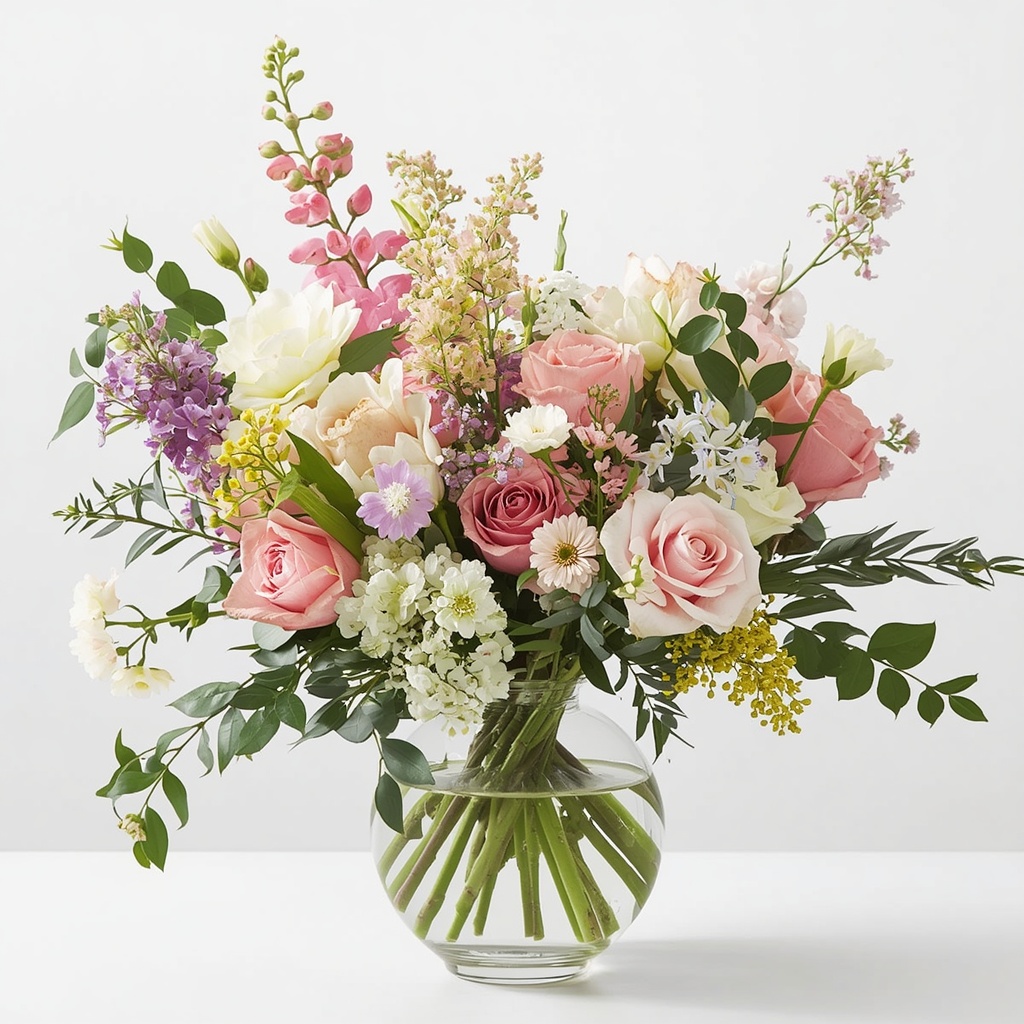
Another frequent misstep is trimming all stems to the exact same length, which creates a flat, uniform “supermarket bouquet” look instead of the organic, varied silhouette florists aim for. Varying stem height by even an inch or two between flowers creates natural movement and depth that instantly reads as more expensive.
Bringing It All Together
Styling fresh florals like a high-end florist isn’t about spending more money — it’s about applying a handful of intentional design principles: choosing the right vase, respecting proportion and scale, working within a considered color palette, and placing your arrangement where it will have the most visual impact. Once these habits become second nature, even a simple grocery store bouquet can look like it came from a design magazine.
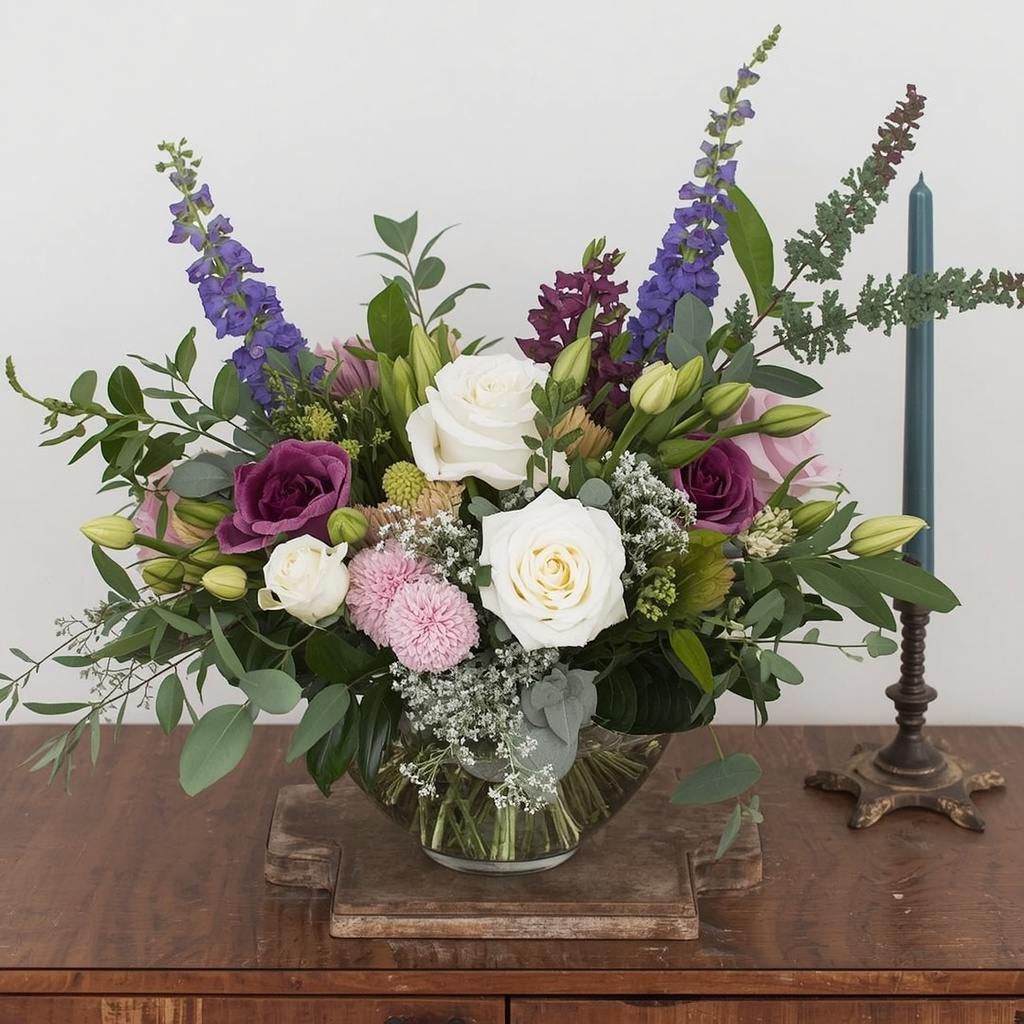
Start small. Pick one focal point in your home — your entryway console or your dining table — and apply just two or three of the tips above. You’ll notice the difference immediately, and so will anyone who walks through your door.
For more home decor inspiration, explore resources like the American Institute of Floral Designers or your local florist’s seasonal guides, which often publish region-specific tips on what’s blooming near you.